
In short
Contrast therapy recovery and SweatHouse’s private-suite model (infrared sauna + cold plunge + vitamin C shower) positioned as a distinct category for stress relief, sleep improvement, and inflammation reduction; also discusses growth, unit economics, solitude vs community, and a “Resilience Score” using wearables/app data without requiring them.
Guests
Nico Varano, CEO of SweatHouse (first franchisee to become CEO). Background: grew up in his father’s restaurant business/hospitality; private equity background; discovered SweatHouse in 2023 while training for a charity boxing match; became first franchisee, built five Boston studios, later joined the board and became CEO in January.
Key claims
SweatHouse creates a “gap” between home and shared gyms via 60-minute private suites; contrast therapy lowers stress and improves sleep; solitude is the differentiator vs DJ/coach communal concepts; members can track benefits via an app “Resilience Score” (wearables optional).
Notable examples
2023 first visit (Rocky music, 45–60 min infrared sauna, vitamin C shower, cold plunge) led to best sleep and a boxing win (third-round knockout). Competitors mentioned: Remedy Place, OtherShip, Bathhouse; also Whoop adding contrast therapy.
Written by AI. May contain mistakes. Listen to the episode to check what was said.
Chapters
Tap a time to open that second in VONico's Introduction to Sweathouse
0:00 to 1:23
Nico Varano shares his journey into recovery and the concept behind Sweathouse.
“Like you mentioned I was training for a charity boxing match.”
Cultural Shift in Recovery Practices
2:18 to 6:00
Hosts discuss how sauna and recovery practices are becoming mainstream.
“So today, from my perspective, I'm curious, you know, is this just another fad?”
Nico's Journey and Sweathouse's Growth
6:00 to 7:00
Nico explains his transition from being a franchisee to CEO and Sweathouse's expansion.
“So today, I want to introduce our special guest.”
Sweathouse's Unique Offerings and Philosophy
7:00 to 14:00
Nico discusses Sweathouse's focus on private recovery suites and the philosophy behind its services.
“I want to kind of kick this off with a question for you.”
Sweat House Overview and Membership Options
14:00 to 14:58
Learn about the features and pricing model of Sweat House, including suite amenities.
“So, Nico, I've got a few questions just around the unit economics of Sweat House itself, and then we could kind of back into the more technical parts of the experience.”
Target Demographics and Competitive Landscape
14:58 to 19:28
Explore the diverse clientele of Sweat House and its competitive positioning in the wellness market.
“Now, each suite is going to have the infrared sauna, a cold plunge, and a vitamin C shower.”
Private Suites vs. Communal Experiences
19:28 to 23:28
Discuss the benefits of private suites at Sweat House compared to communal wellness spaces.
“When we talked about competitors and other forces in the market coming in, before we hit record, we talked about a good friend, Dr.”
Data Integration and Personalized Recovery
24:02 to 27:48
Understand the role of wearables and data in enhancing recovery experiences at Sweat House.
“So it seems like there's two directions that recovery is going, which hasn't been there previously.”
Personal Recovery Insights and HMB Discussion
27:48 to 28:00
Hear personal experiences with recovery methods and supplements like HMB.
The Impact of HMB on Recovery
28:00 to 30:01
Learn about the benefits of HMB and its impact on recovery and performance.
“on the other wrist i don't i just have a ring on an apple watch right now but i've tried them all you have two rings a lot you have been known to be wearing two rings i have been but i have one right now.”
Show all 16 chapters
Expansion of Sweathouse: Domestic and International
30:01 to 31:18
Explore the growth potential of Sweathouse both in North America and internationally.
“But I've seen that it have a positive impact.”
Cultural Perspectives on Sauna Therapy
31:18 to 32:48
Discuss the cultural significance of sauna therapy in different regions and its relevance in wellness.
“So today we actually have a conversation tonight about – and this counts for international expansion, but Canada, so right over the border, not technically the U.S.”
Building a Strong Brand for Sweathouse
32:48 to 36:18
Delve into the importance of branding and community engagement for business success.
“When I go out to Asia, it seems to be part of the community in places like China, Indonesia, Thailand.”
Enhancing Client Experience and Value
36:18 to 39:29
Learn about enhancing client lifetime value through innovative membership models and services.
“But that member is still going to be high intent.”
The Experience at Sweat House
42:00 to 43:50
Learn about the unique customer experience at Sweat House and its impact on mental health.
“And I'm not saying we want people all of a sudden to start coming to Sweat House and doing cannonballs in our cold plunges, but we take care of everything for you.”
Franchise Model and Growth Plans
43:50 to 44:34
Discover the franchise model of Sweat House and future expansion goals.
“I appreciate you sharing the story with us, Nico, like anything that you've not shared about the category or about your brand that you, you feel is worth mentioning before we, before we wrap up.”
Transcript
Automatic transcript. May contain errors.0:00Like you mentioned I was training for a charity boxing match. I had never fought it you know never even killed a fly. So I was getting my head kicked in you know sparring three three nights a week you know training seven seven days a week. And I saw Jamie Weeks talk about Sweathouse. Now at the time there were nine corporate studios around the country. From my private equity background I love the business model. I mean it made a lot of sense. but just from getting my head kicked in I said I need to go there I need to get ready for this fight coming up um so I went I signed up for an intro session walked in now at the time this was Sweathouse V1 it was nine sauna suites and one cold plunge and it was all still private suites but it was nine sauna suites and you had to walk across the hall to the cold plunge first time I ever done a cold plunge uh really first time I had done an infrared sauna I did I did 45 minutes in the sauna, rinsed off in the vitamin C shower, walked across the hall, put on some Rocky music, and got in the cold plunge.
1:05And I left that day not only feeling great, my body, especially from getting, like I mentioned, getting my head kicked in, but just felt great mentally too. I'm not a great sleeper. It was the best I ever slept.
1:23Matthew Januszek:Welcome to this week's episode of Lifts. I'm Matthew Januzek and today's topic is recovery, one of the fastest growing and most misunderstood categories in health and wellness. On a personal reflection, I love to say that I was ahead of the curve but probably wasn't. But as a teenager, I used to look forward to going into this tiny little gym in the middle of nowhere and they had this thing called a sauna. And I remember I must have been sort of like 14 or 15 and went in there and it was just a very different experience than I'd had because you know the extreme heat but it was something that used to go in there after the gym and look forward to so and I also used to look forward to jumping into rivers when I was a kid and just swimming in extreme cold but but it's not really you know even me doing it back then which was probably 40 years ago it's it isn't really new it's an old tradition that's been reimagined and what seems as though it's a fast growing commercial category we've got significant investment, there's new business models, and there seems to be recently a lot more innovation, technologies, and protocols.
2:25Matthew Januszek:So today, from my perspective, I'm curious, you know, is this just another fad? We've seen many in the industry, as I've been in it for the last sort of two or three decades, or is this recovery category something that could really reshape the health and wellness industry as we know it? So I'll hand this over to my co-host, Mohamed Iqbal, to introduce today's guest. I love what you just said, Matthew, and how you kind of framed that. It's interesting because I think you and I have even talked about saunas and you talked about in Europe. There's really a sauna culture. We talk about the Finns. In fact, Finnish sauna is actually a term which is more heat-based saunas.
3:04Then Russians have something called, I think, banias. The Japanese have their own version of it. And this is something that's been in their cultures for hundreds, maybe even thousands of years. And somewhere in the last few years, what has really been a cultural or ritual or community thing has become something that is really converted to being mainstream. In fact, I think we talked about this in the last episode, Matthew, but I'm shopping. I don't know if this is on air or off air, but I want to put a sauna in my house because I enjoy the experience so much. And the numbers actually tell the story.
3:34The global cold plunge market hit$354 million last year. The sauna sector is closing in on a billion. Nordic-inspired wellness experience grew 62.5 % globally from 2024 to 2025. And here's my favorite stat. 26 % of Gen Z and millennials say that they are actively looking at recovery experiences built around heat, cold, and shared discomfort, which I want to unpack here in a minute. But think about that shared discomfort. Young people are choosing to suffer together. 10, 15 years ago, we were talking about people doing that, running a Spartan race. Today, they want to experience that in contrast to therapy.
4:20And the other big difference here is that they want to do it sober. And this has really kind of replaced a lot of the nightlife and bar experiences. Our industry has responded by turning up the volume. You look at brands like other ships, which we were just talking about off air, raised eight and a half million dollars. And they're backed by the Winklevosses, Kerry Washington, the founders of SoulCycle, to build sauna experiences that feel like nightclubs. And I'm at you and I have done that in the Flatiron location in New York, which are based on having sauna guides, breath work, kind of this rave experience.
4:54And I think we see other brands like Bathhouse that are expanding as well. But then there's one brand that looked at all of that and kind of went the other direction. They focus more on private suites. You won't find a DJ. You won't find a coach. You're not going to be in a sauna with strangers. You get an hour. It's an infrared sauna. It's cold plunge and in silence. And I have to say that's something that I've really enjoyed. And to me, that whole philosophy is something that is becoming a habit. At least that's what they're trying to do is to make it into habitual thing that you do frequently, not just into an event.
5:30And that little bet is really winning loud. This brand today has over 100 studios across 25 states, 20 ,000 plus members, and 1.9 million private recovery sessions that they have delivered last year alone. They have more than 500 franchise licenses already awarded. And this fall, they walk into the most crowded and competitive wellness market on the planet, New York. And I'm really looking forward to that. So today, I want to introduce our special guest. And I don't think that was his plan to end up here as being CEO of this company. He grew up in the restaurant business. His father built one of the city's most iconic restaurant groups.
6:14So he understands hospitality. And then in 2023, three and a half days, or three days before an amateur boxing match, rather, he walked into a sweat house for the first time and looked for an edge in his recovery. One hour later, he walked out and told the founder he wanted to franchise all of New England. So I can't wait to hear a bit more about that. He became the brand's first ever franchisee, built five studios in Boston that he still owns and operates today, joined the board. And this past January, he became CEO of the entire company. First franchisee in history to do it. And now he leaves more than 100 studios with four to seven new ones opening every single month.
6:56So with that, I'll introduce Nico. Nico, welcome to Lifts. I want to kind of kick this off with a question for you. Take us back to the day in 2023 before Boxing Mesh. Tell us more about what was going through your head, what led you to Sweat House and this big transformation. Yeah, well, first, I want to say thank you to both of you for having me on to share the story of Sweathouse and talk just about contrast therapy. I think everybody in this world can benefit from a little contrast therapy, and I look forward to chatting about that. But to kick off with my own journey, like you mentioned, I was training for a charity boxing match.
7:34I had never fought it, you know, never even killed a fly. So I was getting my head kicked in, you know, sparring three nights a week, you know, training seven days a week. And I saw Jamie Weeks talk about Sweathouse. Now, at the time, there were nine corporate studios around the country. From my private equity background, I love the business model. I mean, it made a lot of sense. But just from getting my head kicked in, I said, I need to go there. I need to get ready for this fight coming up. Um, so I went, I signed, I signed up for an intro session, walked in. Now at the time, this was Sweathouse V1.
8:12It were nine sauna suites and one cold plunge. And it was still private suites, but it was nine sauna suites. And you had to walk across the hall to the cold plunge. First time I'd ever done a cold plunge, uh, really first time I had done an infrared sauna. I did 60, I did 45 minutes in the sauna, rinsed off in the vitamin C shower, walked across the hall, put on some Rocky music and got in the cold plunge. And I left that day, not only feeling great, my body, especially from getting, you know, like I mentioned, getting my head kicked in, but just felt great mentally too. I'm not a great sleeper.
8:48It was the best I ever slept. I think it was a big reason I ended up winning that charity boxing match, which was awesome. Third round knockout, no big deal. But the biggest win of it all was I called Jamie and said, I want to be your first franchisee. I believe in what you're building. I see the vision. And I want to own Boston. I want to own all of it and then grow into New England. So a few months later, I acquired one of their corporate studios that they had opened, the one that I actually went to visit in Assembly Row in Somerville, Massachusetts. And then from there, I started building my own studios.
9:18We went from one to five in Boston. At the end of this, it'll be close to eight. Hopefully we can squeeze that eighth in, which I'm really excited about. And for me now in this new role, it's been amazing because I don't ask any franchisee in our system to do anything I wouldn't do myself. And a lot of their problems they deal with, guess what? I deal with them too. And it allows me to operate here at a level that I think will help us drive the success of this brand for the next five to seven years and then beyond that.
9:49Matthew Januszek:Well, Nico, I've been in the industry for quite some time. I've seen a wave after wave of these new concepts arriving from spinning, functional training, boutique fitness, and eventually many of these ideas have found their ways into the major health clubs. Like even now on a podcast just a few weeks ago, we were talking about how people like EOS are incorporating boutique spinning studios and recovery suites. And looking at Sweat House today, someone could easy to say, well, this is just another boutique concept and what's the difference? But looking into some of your background and reading about Sweathouse, you talk about technology protocols and it seems as though your goal is to build something much bigger than just another boutique studio business.
10:36Matthew Januszek:So just for myself and the listeners today, give us an idea about what business you're actually building and what category do you think you're helping to define that others possibly haven't recognized yet? Yeah, I think I'll start simple, right? When Sweat House was launched in 2019, it was to fill a real gap that existed today. At that time, I think people were training harder than ever before. In premium recovery options, we either put one in your house or go to a big box gym. You're gonna share a sauna with somebody. You know, they may have a cold plunge, they may not, right? There was nothing really in between that gave the everyday person, the opportunity to come in and have a private suite with the sauna, with the cold plunge, with the shower.
11:23What I believe Sweathouse created and what we still create today is its own category. It's a private suite that you can come in and spend 60 minutes in. You can take this, the phone, put it down for an hour. There's no dinging, no noise. It's a real escape, right? Now we can talk about the science, right? We can talk about how contrast therapy reduces of inflammation. We can talk about how it prevents diseases. It improves sleep. But at the end of the day, it also lowers stress. And in today's world, I think there's more stress than anything else. So when we talk about protocols and where we're going next and what we're trying to create, look, our model, our model is built.
12:01It's contrast therapy, private suites. We're not going to alter that. We're not going to change that. Will we dabble with red light therapy? Absolutely. We'll probably add a red light suite in each studio eventually. But we're not chasing something that doesn't already exist that we built. Where we're taking it next is how do people tie that in to their wellness routine, to how do they track their overall wellness? You know, we talked offline earlier about, you know, blood tests. And, you know, everybody's wearing a wearable nowadays. and tracking data is amazing. Our next three months, it's how do we tie that data in.
12:39It's also how do we tie in that data for somebody that maybe doesn't want to wear wearable and somebody that doesn't want to look at a screen and track the performance, but how do we give them a score or a metric that they can follow that measures their resilience to things like stress, anxiety, as well as the physical recovery benefits. So when I think about our place in contrast therapy, when people think sauna and plunge, I want them to think about sweat house. When they think about I'm feeling stressed and I need to escape, I want them to think about sweat house. When they need a break from work or if they need to take a meeting that's somewhere not the office and they want to put their AirPods in and sit in a sauna and cold plunge, they come to sweat house.
13:18But then on the other end, when two friends want to go out and do something that, you know, isn't dinner or isn't going clubbing or, you know, isn't going to the beach because maybe it's the middle of winter in Boston, they think about coming to Sweathouse because where else can two friends connect with no distractions? Same thing for couples, right? You know, if a couple gets one night a week, they get to go out to date night. Sweathouse is a perfect place. There's no distraction. There's no waiter or waitress coming and interrupting your conversation, you know, or mid-bite. Sweathouse is the perfect place for people to come in to spend 60 minutes, whether solo, whether with someone.
13:57And we just look forward to opening up more studios across the country because our model is figured out. So, Nico, I've got a few questions just around the unit economics of Sweat House itself, and then we could kind of back into the more technical parts of the experience. So just speak a bit about how many of these pods you have, how many people you could potentially see at any given time and also pricing, because it's about, I think, when I came, but$60 to$70 a session or so. But how does that work if you bring someone versus going solo and so on? All right. Well, first off, Mo, we've got to get you a membership at a very good price.
14:34We've got to – we'll make sure your membership isn't paying$60 to$70 because our memberships are much more price advantageous than that. But I'll talk about the studio first with the suites, and then we can get into pricing a little bit too because we're really changing our revenue architecture over the next three months to have an option that works for everybody. And I can go into that a little bit later on. But when you come into a sweat house studio, you're going to have anywhere from six to nine suites. Now, each suite is going to have the infrared sauna, a cold plunge, and a vitamin C shower.
15:09In that suite, you shut the door, your timer starts, you have a TV where you can play music, catch up on Netflix if you want to do a little Netflix and sweat, even chill with the cold plunge. You have a full entertainment center. But for the next 60 minutes, that's your suite. Nobody's interrupting you. In addition to the suites, we also have a beauty bar. We'll have the Dyson Airwrap, the Dyson Air Straight, where you can refresh after your session. But that's pretty much it. That's our box. You talk about how many people we can see in a given day, most of our studios open up around 6 a.m. or 7 a.m., and then they close around 7 p.m., anywhere from 7 p.m.
15:51to 9 p.m. You're seeing people all day. We stagger our sessions. So, you know, you'll have two suites start at 6 a.m., the next two start at 6.15, the next two start 6.30, and so on. And then the sessions are one hour long, and then there's 15 minutes in between for us to reflip the suite, deep clean the suite, and get it ready for that next client. So it's constantly all day that we're seeing clients.
16:15Matthew Januszek:I want to talk about the competitive position, and I'm sure you guys have looked at this. And as you're speaking, and it relates a little bit to my previous question about, are you looking for a new demographic for Sweathouse? Because if you think about recovery following the same path as boutique fitness, it is only a matter of time before an equinox, a lifetime, a planet, a David Lloyd, whoever can probably look at a lot of the technology. They've got probably underutilized space that they've already got. They've got people that are already doing what you did on your, you know, preparing for your boxing in the same club.
16:53Matthew Januszek:And it's like, look, let me do this. So what are your thoughts about the future when the gyms come in and check it out about them building this in? Or, you know, going back to my original comment, are you actually looking for a totally new demographic, which is people that may not even be thinking about going to a gym where they can go here instead of the restaurant? Well, that is why I love your question because our net is so wide. When I came on to Sweat House as a franchisee, one of my earliest conversations with Jamie and the team here was around, unlike fitness, anybody can come to Sweat House.
17:29Anybody can benefit from 60 minutes, sitting in a sauna for 45, rinsing off in the vitamin C shower, and then hitting a cold plunge. Everybody can benefit. Everybody from the age of 18. And believe it or not, I have 75-year-old clients that come in and just put their arms in the cold plunge because they have arthritis, right? It's crazy to think about, but that is true. Yes. Do we have a core client that's 25 to 40 years old? Absolutely. But our range is much bigger than fitness. We have people that come into Sweathouse who have never seen the inside of a gym. We have some people that come to Sweathouse that just finished a high rocks race that are probably the most fit people in the world.
18:05If you can do a high rocks race, all the kudos in the world to you because those things look very intense. But I say that because we don't have a type. And when you don't have a type, it allows your business to have much more white space and ultimately a bigger tan, right? Everybody talks about total addressable market. I think Sweathouse has one of the biggest tams in all of wellness because we don't have a specific type. So when I think about, yeah, could Equinox do this? Yeah, maybe. I don't see them building private suites. And if they do, hopefully they'd want to partner with us because our brand is so strong.
18:38Same thing with Lifetime. I just don't see anybody taking the time to build private suites. If you look at even some of our competitors, a lot of them don't build the private suites because who wants to build eight showers? Who wants to do framing on eight. We found a secret sauce that makes it work. But I think the goal is how do we get so far ahead of everybody else? And I think that's where we are today, right at 101 Studios. And now it's how do we build the brand so sticky that when you come to Sweathouse and you see our beautiful suites and you download our app and it keeps you in the system and it keeps that stickiness, you never want to leave.
19:16And that's really where we're taking the brand over our next chapter. It's increasing that stickiness, lowering attrition, and making sure that Sweathouse is here for you, not just for one session, not just for one month. We're here for as long as you need us. When we talked about competitors and other forces in the market coming in, before we hit record, we talked about a good friend, Dr. Jonathan Leary, who we've actually had on the podcast with Remedy Place. Again, I've been there many times to get different types of therapies, but they also have a suite. I've used their suite before. I've gotten an IV drip, kind of spent, you know, a few hours there before a long trip.
19:56And it's been great. That's one example. But I would say that's really on the premium side of things. Then you've got other ship and bath houses. And I think your studio that you're opening up in New York is also going to have this larger room, I believe. I'd love to understand that. But how would you compare? So you talk about the benefits of having private, you know, really well-appointed suites for one to two people compared to what other ship is doing, which is really community-led, you know, even instructor-led. How do you view the difference? Is it a different consumer? Is it a different experience?
20:32Is the outcome different? And what, from your opinion, do you think is more sustainable? Yeah, I think the biggest thing that I want to start off with is what Dr. Leary is doing, what Robbie is doing with other ship. It is incredible. Like it is fully incredible. The Remedy Place in Boston, and I grew up in the restaurant business and I've seen a lot of beautiful places built out. The Remedy Place in Boston may be the most gorgeous build out I've ever seen. It's phenomenal. But it is a different experience, right? Nowadays, everybody's searching for that third space, that fourth space. And I think when you go to Othership or you go to Bathhouse or you go to Remedy, you're likely going, and I'll talk about Bathhouse and Othership first, you're probably going with a friend or you're going to meet people and establish that community.
21:20Community is huge. People need that engagement now more than ever. When you go to Remedy, you have a full list of offerings, right? You could do the hyperbaric chamber. You could do the IVs. You can do contrast therapy. You could do the escape massage bed, the robotic AI massage, which looks pretty awesome, right? The way we address it is twofold. When you look at other shipping, you look at bathhouse in these communal places, we're actually searching for solitude, right? Solitude is really the bet we made. You know, well, all these other concepts and there's, you know, others out there. There's one in Denver, the name's escaping me right now.
21:58But, you know, everybody's adding DJs, coaches, is, they're working you through breath work. We stayed true to two things, a single modality, which is contrast therapy, and we stayed true to solitude. Now, if you want to bring a friend to your private suite, absolutely. In Boston, a quarter of our sessions across five studios come with the guest. They bring a friend, they bring their partner, but again, it's still their private suite. They're not engaging with others. Where else can you get that type of experience that type of privacy while also getting the recovery benefits. In New York, similar to Boston, we are adding a penthouse suite.
22:38So penthouse by sweat house, it's a great play on words. The penthouse suite in Boston, and I believe New York will look exactly the same, has two larger infrared saunas. So you can fit up to six to eight people, three in each or four in each, has two cold plunges and two showers. Now, you're still picking your group to go. So we've had, you know, work groups come in, bachelorette parties. We've had obviously groups come in midweek that are in a book club, which is always interesting, right? But we also have run clubs. I mean, run clubs are amazing. And again, we wanted to create a space where you could bring your community rather than having the need to, you know, be sweating and plunging around others.
23:23So you still have that level of privacy, that level of comfort. So again, just to circle back, our bet was made on two things, remaining true to who we are, which is just contrast therapy and not confusing that for a second. And then the second one is betting on solitude.
23:36Matthew Januszek:Today's episode of the lifts podcast is sponsored by eGym. eGym delivers smart strength solutions that help gyms and health clubs attract, engage and retain members while improving health outcomes at scale from intelligent equipment to AI powered training programming and corporate wellness by WellPass. eGym is leading the way in smart fitness. Visit eGym.com to learn more.
24:01Matthew Januszek:so so i want to stay on that point then um because from what i understand or what i've read you're investing in wearables and some sort of personalized protocols and data um we had uh the guys on from escape uh the massage machine a few weeks ago as well and he was talking about how they're taking massage to another level where you can actually get a score about tissue how your tissues are doing and how you're improving from that perspective. So it seems like there's two directions that recovery is going, which hasn't been there previously. Because if you go into a cold plunge or a sauna, you don't really know what it's doing.
24:39Matthew Januszek:You can kind of look at your aura ring and see if you sleep a little bit better. But it's not that great at telling me how well the protocol I'm doing is working for me. So where do you see things going? Because it sounds like you're creating this really interesting experience like you're talking about the penthouse and I can imagine it almost becomes this almost like entertainment thing where you go there and you you know you could have quite a lot of fun in a sauna together I'm guessing but you've also got the data thing which which you did mention before where you leave your phones outside but you're talking about the the biometrics which which again almost like turns my brain back on again and I'm thinking about well am I am I actually having a great time or or am I coming out and improve my data score.
Read the full transcript
25:22Matthew Januszek:So from your perspective, which road are you guys taking? Are you sort of really passionate about, look, this is purely experiential and you leave the data at the door? Or can we see Sweathouse in future doubling down on the technology, some of the biometric data to be able to show you what's actually happening within those experiences? Yeah, my answer here is interesting. I grew up, like you mentioned before, I grew up in the restaurant business. And, you know, we basically, my father, not me, but just learning from him, he never said no to clients or guests at the restaurant, right? We ran an Italian restaurant, but if you wanted pork fried rice, we'd figure it out and make it for you, right?
26:04That's just what we did. And the reason I say that is because you need to create something that works for everyone. And that's what we've done at Sweathouse. That's what Jamie and what we've all created, right? The experience works for everyone. It doesn't matter if you're a professional athlete, It doesn't matter if you've never been to the gym before. It works for everyone. The reason I answer it that way is because it is a fine line. You don't want to be all about the data because then you stress people out, and we're trying to solve stress for people. But there is a population of people that want to know.
26:37If you look at Whoop, they just added contrast therapy to their protocols on their app, right? So people want to know what is it doing for you. We're creating an app in a score called the Resilience Score. and this will launch in the second half of this year, that rewards people on building habit, rewards people on momentum of how often they're visiting, but also rewards people for doing the things such as having less screen time on their phone. So yes, are we going to allow you to connect your wearable? Absolutely. Do you have to? Nope. What we want to provide is a score that shows you, hey, you've been doing a good job coming into Sweathouse.
27:22You're getting the benefits and here are the benefits you're seeing. But if you don't want to tie it to your wearable and you really don't care about your HRV, no big deal. That's why we're giving you a score that isn't really tied to anything other than the commitment you're making to yourself on a mental and physical recovery basis. And I'm extremely excited to roll that out because I think we're doing something that's so different and so unique, which hopefully clients love in the long run. yeah i think what you find is i think people are going to appreciate it i'll give an example as matthew knows or most people listening know i'm a wearable junkie not that i wear a bunch at a time but i definitely invest you don't have like the whoop the aura the you know the garment on the other wrist i don't i just have a ring on an apple watch right now but i've tried them all you have two rings a lot you have been known to be wearing two rings i have been but i have one right now.
28:13I have one right now, but I haven't been known to wear two rings. But I've worked with so many of them over the last 15 years. But one of the things that I've found, I'll give you a real world example just with myself. I started taking HMB about three weeks ago after not taking it for probably 15 years. And immediately I saw my recovery, my sleep scores improved, my recovery scores improved. And that's the only thing that I changed. What is that?
28:38Matthew Januszek:What's HMB, Mo? You've never taken HMB, Matt? Come on, share the secret to people who, like me, do not know what it is. I take it with creatine. It's part of my creatine. I'll send you a link. I'll text it to you. Do you know what it is, Nico? Do you take? I was going to ask if you didn't. I mean, I'm used to chicken cutlets and meatballs, so HMB sounds like something I need to learn more about. Yeah, so HMB, I used to take it back when EAS was around, Matthew. We're going a bit off topic here, but I took it along with zinc, and that was supposedly at the time was meant to improve your recovery.
29:14But here's the thing, 20 years ago, I didn't really know that. Like I couldn't really quantify it unless I've seen my running time improve or maybe my physical strength improved. But you really, that change happens more slowly. The interesting thing about wearables is that for some of these interventions that you do, like whether you're adding an HMB or if you're not drinking alcohol in one night, you go to a sweat house, on one day, you immediately see that impact that night. You go to a sweat house session, you'll see that impact that night. And a part of it is the feeling, but you can also quantify it, which just validates your feeling because you're like, oh, maybe it's just mental.
29:52And yes, it is mental because it matters a lot. So I do think that once you release these features, I'm happy to bring you back and take a look at it and dig in further once you have that. But I've seen that it have a positive impact. And of course, the thing that we always want to watch and be careful about is you don't want to over-inundate people with data. It's this fine line between how much data do you provide versus what is the data that you need to provide in order to be helpful. So I'm excited to be able to see that. Let's talk about awareness a little bit. So obviously sauna culture, really sauna culture, it is cultural in Europe.
30:30It's cultural in a lot of places around the world. I think it's becoming cultural, at least within the wellness community here in the United States. When you think about the growth of Sweathouse, you're doing a phenomenal job with growth, mostly in the US. Is this a brand that you think can go global? Do you think that this brand can resonate in a place like Europe, where they literally have been doing this for hundreds of years? Or do you think that it would really not relate because they view sauna and a cold river or breaking ice and getting into the ice if you're in the Nordics. I'm just curious to get your thoughts on you guys.
31:09You think about the next couple of phases of growth. Is it predominantly North American-focused? Do you look at international as being an opportunity as well? Yeah, we're having conversations now. So today we actually have a conversation tonight about – and this counts for international expansion, but Canada, so right over the border, not technically the U.S. But we are also discussing with a few other franchisee, prospective franchisees in areas like the UAE, in areas like Europe. Look, I think Sweathouse, what we're solving is stress, anxiety, muscle pain, inflammation. Last time I checked, every human, no matter what language you speak, no matter where you reside, is stressed, probably has a few headaches here and there, and needs a place where they can escape the noise.
31:59If until we change off that pivot, which I don't see us doing and where that's our key focus, we are going to open up anywhere and everywhere. Now, I say that, but also I want us to be realistic and say we have to continue to perfect our model. And what I mean by that is our model is pretty good. I think our private suites, I think our experience is next level. I think this next evolution of, you know, building the gamification, building the stickiness, lowering attrition, that is what we need to solve before we really just, you know, hit the gas. And we're learning every single studio. You know, what we knew at Studio 5 is much different than what we know at Studio 25, which is much different than we know now at Studio 101.
32:45And the more we learn, the more dangerous it makes us as a concept. and I look at a lot of the competition that's coming up you know in the private space or trying to replicate some of what we do and my hope is is that our footprint and our brand just is so far and beyond above what they're going to offer and how they compete and that gives us a leg up on all of them.
33:07Matthew Januszek:I think the interesting thing you said about that I was I was thinking a similar question to what Mo is like how do you look at this internationally and because no doubt that this is a category that's been around for hundreds of years so it's not it's not going away it's not like a new idea it's not like someone's come up with spinning for example and it's going it's going to be here for you know probably for another few hundred years because it's it's it's solid it makes sense for for all the reasons that you've said internationally as as mo mentioned like places like in germany have a have a sauna culture uh when i met my wife almost 20 years ago we went out to a place in holland and the families go there and it was this whole you know these things have been there for a very long time, these sort of Dutch saunas.
33:49Matthew Januszek:When I go out to Asia, it seems to be part of the community in places like China, Indonesia, Thailand. It seems to be very, very relevant there. So I was thinking like, well, how do you take that? Because in America, that isn't the culture. And as someone who's come from Europe into America, you can see there's a big difference. However, I think you mentioned one interesting thing there, and I just wanted to get you to sort of share your thoughts on this because you could say the same thing about tea and coffee. Like they've been around for hundreds of years. People are going to continue to drink it.
34:20Matthew Januszek:And yeah, Howard Schultz managed to do a great job at selling coffee back to the Italians or selling espresso back to the Italians. So I suppose creating the brand and positioning that seems to be really where there's almost like a lot of value as you take it internationally. So just talk to us a little bit about how you look at the brand and what your thoughts are around that and how important that is going to be for your strategy going forward. Yeah, I mean, look, if you don't have a brand and you don't have people that build a cult-like following to your brand, in today's times, it's very tough to survive.
34:59And I think we've done a great job of that. We need to continue to press the gas on it in a lot of different ways. I'm not sure if you guys have seen this, but we have a 30-foot trailer with six cold plunges on it. And we bring it around the country because we want that brand exposure. We want people to see our logo and say, oh, that's the place that we can do contrast therapy and these beautiful suites with floor-to-sailing tile and a mirror and dark lights, but cool saunas. But the other part of that is how do you build a brand that exists outside of the studio? And that's the app. That's, you know, what people see on whether it's Instagram or TikTok.
35:38talk. And that's where we're spending a lot of time now, making sure we're building the right relationships with the right creators so that people continue to see our brand. Not in just, hey, it looks great. It looks really sexy. But I can go get a private suite with a sauna and a cold plunge and totally decompress. Oh, I can go try cold plunging in a private suite and don't have to worry about screaming in front of 60 other people the first time I hit the cold water. so building the brand works both ways we're going to continue to do grassroots we're going to continue to do all the old school marketing things that still work in today's world but we're also going to do the gamification we're going to build in data uh and we're going to continue to elevate the brand on all social networks out there nico one one final question for you when we speak to a lot of operators they're constantly thinking about increasing lifetime value and i think there's a couple ways to do that obviously with yours it's it's having this membership idea having them come more frequently into the facility.
36:36But that member is still going to be high intent. They might not be, to your point, someone that goes to the gym would rather come to Sweat House, but they're still focused on their wellness, which means that they're spending a bigger share of their wallet on other things like HMB maybe, or it could be protein, could be an IV drip. Have you thought about outside of the app and digital and kind of building a 360 holistic environment, but have you thought about adding other services to what Sweat House offers? Yeah, the only thing we have being tested right now, and then I want to go back and answer your question a little bit about client lifetime value.
37:11The only thing we're experimenting right now is red light. And we have red light suites in a few select studios. And again, it's a great driver because it drives in potentially a different type of client that then you can introduce to contrast therapy and vice versa. And we're seeing some success with it. We've been running the test for about 8 to 12 months now. but you talk about client lifetime value and I want to take it back to the beginning of your question that you know high intent clients are the ones that ultimately buy a membership right the people who come in that buy a membership likely had a feeling that they were going to buy a membership right yeah our experience may convince people as well but that's what we are doing a great job of including packs in our business so we have these you know session packs We have a five pack and a 10 pack.
37:56We're going to introduce a few new packs in the next 30 days as well, because a recurring pack holder is just as valuable in the long run as a member. If somebody buys a five pack every three months, at the end of the year, 12 months, their value is the same to us as a member that may be paid for a Forex membership for 12 months. and we have to be flexible in our approach. A membership doesn't work for everybody. Somebody may not want, we don't have commitments. It's a one, it's a, you know, it's a monthly membership. So it's not like you're signing up for a year, but some people are afraid of the word membership.
38:34They got their Pilates membership. They have their, you know, lifetime fitness membership. They don't want another membership. And that's where I think we've done a really great job with PACS, but I want to take it a step further. It's not memberships. It's not just memberships, it's not just packs. We're also going to introduce programs. So we're going to have a 28-day program this fall that is eight sessions over 28 days so you can introduce yourself to Sweathouse and see the transformation over eight sessions over the course of 28 days. Then we're going to do the same thing with the, it's going to be called the 100.
39:0330 sessions over 100 days where you see the transformation, where you're part of a client flow and a client journey where you're actually getting and seeing the benefits that you're coming in for. Now you may ask like, all right, are you overcomplicating the model? My answer to that would be no, because we're staying true to one modality. It's just contrast therapy. We're just making sure we're opening up our flywheel big enough for people to enter the funnel.
39:27Matthew Januszek:Well, look, I think we're just about on time now. Normally, Nico, we do a quick wrap up at the end and we share some of our takeaways from the conversation. So I'm going to give Mo the first one this week. Mo, What are your takeaways from the conversation that we've had today? Well, you know, I was really excited about building this in my house. And now I'm really rethinking that. What a sweat house. I'm thinking, yeah, I was going to build a little contrast studio. We talked about this. But now I'm rethinking it. Maybe I should just sign up for a sweat house membership. So that's what I'm going to say.
40:05I know a guy that can help you. I'll talk about that. Do I make that investment, which I've been planning now for about a year or so, or do I just, you know, I've got to go, yeah, I've got to go check out the Arlington, Virginia locations. And so, no, I think the other thing that, you know, to that point, just because I know the cost and the build-out it would take, it is a material investment that you have to make. Obviously for me, when I'm home, I do work out at home the majority of the time, just because of my schedule, it works the best. I said, I want to bring, just because I really this is the benefits of contrast therapy.
40:42I want to bring it into my house. But perhaps in the way that you've described and the product that you've built, you know, looking at the convenience of it. So I think that's it. It's the accessibility that you're providing where you might not be able to afford a lifetime on Equinox or Remedy Place, but really your membership is relatively affordable, especially if you break it down in these packs format, if you replace it with a date night. So I'm really excited to see the growth. And I think I do believe that Sweat House is not peaking. I still think that there's a lot of room in TAM, even if you're just within North America.
41:14But the international part is what I'm really excited about. Matthew, how about you? Well, real quick, just Matt, before you go, you know, the other thing we didn't really talk about, Mo, and I know we're running up on time. You know, you can come into Sweat House. You just leave after your session. We take care of all the cleaning. We take care of everything. We warm the sun up for you. You don't have to set a timer on your phone to wait for the sauna to warm up. You can put your preferences in. You know, the cold plunges, ice cold for you. You have a shower. We give you all the towels. Again, we're not a spa, but we give you the same type of feeling when you leave that, hey, I just, I feel completely relaxed.
41:52Think about this. You put it in at your house. You have to clean the sauna when you're done, right? You don't want to just leave the sweat there. You have to, you might have splashed some water on the floor. Now you got to dry it, right? And I'm not saying we want people all of a sudden to start coming to Sweat House and doing cannonballs in our cold plunges, but we take care of everything for you. And you also get the next level hospitality. So, you know, you're going to be greeted. They know your name. They make you feel special. That one interaction also helps the mental health of just escaping your house or your office for 60 minutes.
42:2460 minutes is 4 % of your day. If you can't take 4 % of your day to come to Sweat House, we've got to work on your scheduling.
42:31Matthew Januszek:yeah so i i am just just to go back to your question i think it's an interesting concept i believe there's one near me but i'd love to check it out because i'm where are you honest i'm in newport beach oh yeah we have one in newport beach right on the right on the water over there okay on lido i think i know where it is but so i'm gonna have to check it out like personally i i do this five to six times a week and i feel great and um me and my wife every now like once a month maybe we go to a Korean spa where we sort of invest some time. So I'll be curious to see what you guys have like experienced to see what that's like and how that differs from what I've got.
43:09Matthew Januszek:But I like, as I'm learning a little bit more about it, I like the fact that what you're talking about is very, you know, it's clearly differentiated from some of those other experiences. And as I said, like it's not, it's nothing new necessarily, but I think the way that you've packaged it. I like your comments that you mentioned a number of times about the brand and the importance of that because I think that obviously that's going to be a differentiator in itself and I'm really just curious to see we should certainly follow up again and see how the brand evolves but I think I think you've got a great concept and it seems as though the approach that you're taking to it is the right one and I'm sure that you guys are going to do really well.
43:51Matthew Januszek:So, but, but yeah, that's yeah. I appreciate you sharing the story with us, Nico, like anything that you've not shared about the category or about your brand that you, you feel is worth mentioning before we, before we wrap up. No, I just want to say thank you guys again for, for having me on. I love what everybody's doing in the category. I think we do have something really special at Sweathouse. You know, one thing we didn't spend a lot of time talking about is we are a franchise model. So we have, you know, corporate studios. I also own studios as a franchisee, but we do have a group of 40 franchisees that are phenomenal operators and help us every day grow this business.
44:29So I'd be remiss not to miss, to mention them and the appreciation we have for them as well. But yeah, look forward to building the next hundred studios to go from 100 to 200 and what that evolution looks like. Maybe we'll go international, but at the end of the day, We're just making convenience, accessibility, and bringing something that's existed for 2 ,500 years, so on a cold plunge to the masses. Well, that's it for this week's episode. 2 ,500 years might be a stretch. I might hold these up. But you know what I mean.
44:57Matthew Januszek:Yeah. Well, I hope you enjoyed this week's episode of Lyfts. If you did, we'd really appreciate the support. Please leave us a comment, give the episode a like, and share it with one or two other people that you feel would enjoy this conversation that we had with Nico, as it will allow us to get more great guests on and continue with the journey that we're on. So thank you very much for listening, and I hope you've enjoyed it.
45:41The пример masterstraught sin was done in store and pagdavost. Changes 150ügen
From the publisher
Welcome to another episode of LIFTS, where we explore the future of fitness, wellness and human performance.
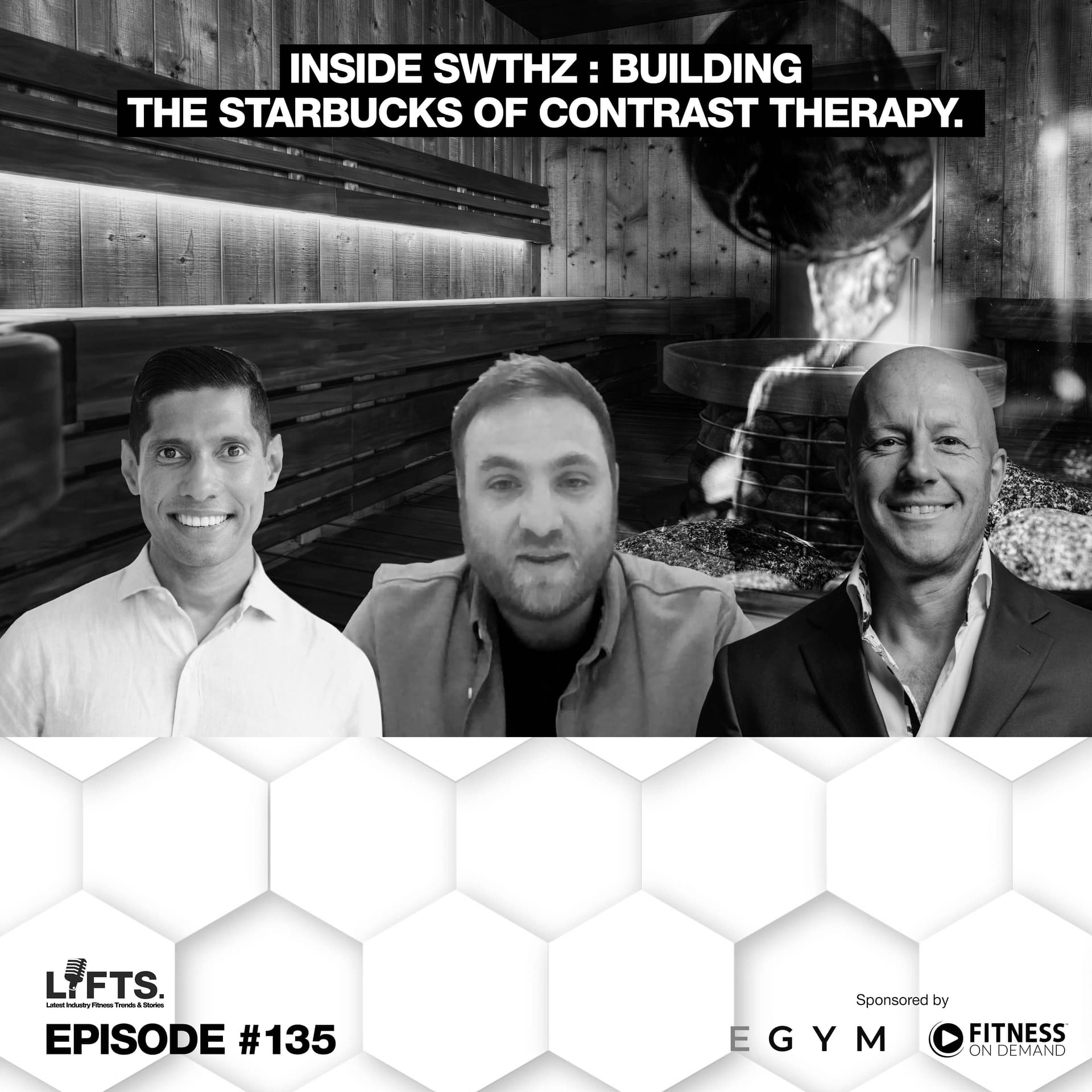
In this episode, hosts Matthew Januszek and Mohammed Iqbal are joined by Nico Varano, CEO of SWTHZ, one of North America's fastest-growing recovery and wellness brands.
Recovery has become one of the biggest growth opportunities in health and fitness, with consumers increasingly seeking experiences that help them reduce stress, improve performance and build healthier habits. But what does it take to build a business around recovery?
Nico shares his journey from becoming SWTHZ's very first franchisee to leading the company as CEO. Together, they explore why recovery is becoming a category in its own right, how contrast therapy is evolving beyond a wellness trend, and why hospitality, technology and habit-building are central to creating lasting customer experiences.
The conversation also looks at the role of AI, wearables and personalised data, the differences between private and communal recovery experiences, and what the future holds as SWTHZ continues its expansion across North America.
In this episode, we cover:- Nico's journey from customer to CEO
- Why recovery is becoming a category of its own
- Building a scalable wellness franchise
- The rise of private contrast therapy experiences
- How hospitality is redefining customer expectations
- The role of AI, wearables and data in recovery
- Why habit-building matters more than one-off experiences
- The future of recovery, wellness and preventative health
👉 Connect with Nico Varano on LinkedIn: https://www.linkedin.com/in/nicovarano/
Support fitness industry news by sponsoring future LIFTS episodes. Contact us at wendy@liftspodcast.com for advertising opportunities.
Subscribe to our YouTube channel and turn on notifications so you never miss a new video when it's published:
https://www.youtube.com/user/EscapeFitness
Or if you prefer, you can receive the latest news direct to your inbox by subscribing here:
https://www.liftspodcast.com/newsletter
Join the conversation at LIFTS:
LinkedIn: https://www.linkedin.com/company/liftspod
Instagram: https://www.instagram.com/lifts.podcast/
00:00 From Customer to CEO
01:23 Why Recovery Is Booming
06:03 Building the SWTHZ Vision
09:49 Why Recovery Is Its Own Category
16:20 Can Gyms Compete with SWTHZ?
19:31 The Power of Private Recovery
24:01 Wearables, AI & the Resilience Score
30:25 Taking SWTHZ Global
36:21 Growing Beyond Memberships
39:27 Key Takeaways & Final Thoughts