In short
The episode is a wrap-up of LIFTS Episode 93, covering (1) mergers and acquisitions in health/wellness, (2) the future of recovery, and (3) modalities shaping fitness. Guests discuss Aura’s $11B valuation after raising $875M, selling 5.5M devices, and targeting $1B revenue; they argue this signals investors backing “infrastructure” wearables and “walled gardens” vs open interoperability. Lauren (Midtown) says wearables help premium clubs deliver longevity via sleep/recovery data and better member experiences. Star (Hyperice) connects recovery data to in-club products (e.g., compression/percussion) and notes recovery as a retention moat.
Notable examples
Aura/Whoop/Apple Health integration; Hyperice strain-score context. Next: Tom Brady becomes chief innovation officer at “Ascape” (AI robotic massages), with 25,000 massages across 100 locations and Brady-linked recovery protocols; debate centers on cost/scalability vs premium fit. Finally: Dua Lipa co-founds Frame Fitness (connected at-home reformer Pilates, ~$5,000) to reach Gen Z and mainstream Pilates; guests weigh celebrity headline vs conversion.
Written by AI. May contain mistakes. Listen to the episode to check what was said.
Chapters
Tap a time to open that second in VOMergers and Acquisitions in Fitness
0:45 to 2:16
Discussion on Aura's valuation and its implications for wearables in the fitness industry.
“There's a recent story, Mergers and Acquisition.”
Wearables and Member Experience
2:17 to 4:34
Exploring how wearables enhance the member experience and provide data for longevity.
“or we should be thinking about as an industry is clearly investors are betting on walled gardens.”
Effects of Wearables on Recovery
4:35 to 7:22
Examining the connection between wearables and recovery methods for high-end consumers.
“Yesterday, we talked a little bit about the recovery space and how there's arguably confusion about what people should do, how they should do it, when they should do it.”
Tom Brady Joins Ascape
7:23 to 10:05
Discussion on Tom Brady's involvement with Ascape and the impact of AI in massage therapy.
“We read this this morning, which is Tom Brady has joined Ascape, not Escape, it would be nice if it was Escape, but Ascape, which is an AI robotic massage company as the chief innovation officer.”
Human Interaction vs. Automation
10:06 to 11:13
Debating the balance between human interaction and automated services in fitness and wellness.
“I think it's a perfect fit for Equinox and Midtown and maybe even Lifetime, the Four Seasons.”
Dua Lipa and Frame Fitness
11:14 to 14:00
Discussion on Dua Lipa's role in Frame Fitness and the influence of celebrities in fitness trends.
“But on the other side, it also seems that there's a real value where qualified instructors and trainers can really take things to a slightly different level than you can with a machine or a robot.”
The Impact of Celebrity Endorsements in Fitness
14:00 to 15:11
Explore how celebrity partnerships can raise awareness but may not always lead to conversions.
“design-driven aesthetic and positioned to bring Pilates into mainstream strength and lifestyle culture.”
The Younger Demographic and Wellness Culture
15:11 to 16:20
Discuss the importance of targeting younger demographics in wellness and fitness.
“I think overall it's been having any type of visibility into something that we're doing is always a good thing.”
Pros and Cons of Athlete Partnerships
16:20 to 18:31
Examine experiences with athlete investors and the implications of their partnerships.
“Maybe it complements their sports, great for their mental health.”
Investment Trends in Fitness Infrastructure
18:31 to 20:09
Understand the investment focus on infrastructure in the fitness industry.
“Well, one, I had no idea how much we text during these podcasts.”
Show all 12 chapters
The Importance of Intentional Experiences in Recovery
20:09 to 21:56
Highlight the need for intentionality in creating recovery experiences for members.
“I'm really excited for the conversations that we were able to have over the last couple of days.”
Harnessing Industry Knowledge for Future Growth
21:56 to 24:40
Discuss the need for the fitness industry to leverage its collective knowledge for growth.
“we work well team are awesome so definitely thank them if you haven't um this is my second year at And the format of it allows for me to see a lot of new faces and also a lot of partners that I've known over the years.”
Transcript
Automatic transcript. May contain errors.0:00Matthew Januszek:Good morning. Welcome to the, I think we'll call it the wrap-up session of lifts and what we typically do at the end of our podcast is we talk through a few subjects and then we go through some of our takeaways. And over the last couple of days the key subjects that we've been talking about is mergers and acquisitions in the health and wellness space, the future of recovery and then some of the modalities that are shaping the fitness industry going forward. And so conveniently, there's been a few stories that have dropped in those three categories over the last 48 hours. So we've got a couple of guests with us where we're going to be talking through those this morning.
0:39Matthew Januszek:And then we're going to share some of our ideas and takeaways at the end. So I'm going to start today with Mo. There's a recent story, Mergers and Acquisition. Aura has an$11 billion valuation, and they're raising$875 million, double last year's valuation. And they've sold 5.5 million devices, and they expect$1 billion in revenue this year. So I'm going to pass this over to you, Mo. Why does this matter, and what do you think the relevance of this pretty crazy valuation is? Yeah, it's interesting because yesterday we were talking about companies like ABC, Club Essentials, Explore, and others. And these are still in the billions, but they're in like$1 to$4 billion range.
1:26This is an$11 billion valuation. I didn't see it coming, right? So the last valuation that they raised, they got$75 million from Dexcom to integrate CGMs. They acquired Vari, and that put them at a$5.5 billion valuation. valuation. Whoop is about$5 billion as well right now, and they supposedly are in another raise. $11 billion is something that we did not expect or see. For context, Aura is now worth more than Under Armour. So just think about that for a second. They're worth more than Under Armour. And I think what this signals from an investor perspective that wearables aren't just, you know, things that we put on ourselves, but they're really the infrastructure towards accelerating the intersection between fitness and healthcare.
2:12So this is the rails, and clearly investors are signaling that. I think the big question that we're thinking about or we should be thinking about as an industry is clearly investors are betting on walled gardens. When you think about what Apple released with Apple Health last week, you look at this play from Aura. Everyone is building out these kind of walled ecosystems. And we're here, think about interoperability. we're here trying to push for integration. So the question really is, and this is now a trillion dollar question, do wearables become open platforms, or do they continue to be these closed gardens?
2:49And I think the investors are betting on walled gardens, but I think that consumers are going to prefer open platforms. But Lauren, I want to start with you first. Lauren, you're with Midtown, and I've had a chance to visit your club many times, stay at the hotel. We work together on a couple of things too, So that's been fun. But looking at your consumer, you, I would say, represent a premium segment. I don't know the data. I should know this, I feel like. But I would guess that more than half of your members have some sort of wearable in that. I know you've invested a lot in building a data warehouse and all the things.
3:25How do you think, you know, Aura and other wearables would impact your member experience? That's a great question. Well, I think it really reaffirms that people are looking for value in the membership. They're looking for data. They want to know that what they're investing their heart and money and their time on is really providing them longevity. It's giving them, it's really giving back to them. So I think for us, hopefully we're able to start getting better information from wearables. I use a whoop. And to me, it's like really even I'm in the fitness industry my entire life. And it's really pushed me to look at sleep and recovery and how I'm investing my time in mobility versus just high-intensity interval training six, seven days a week.
4:05So I think it's going to help us continue to learn about our members, meet them where they're at, be able to deliver a premium experience that not only gives them a great movement experience and a great sweat, so to speak, but it's delivering to them what they're looking for, which is longevity, moving better, feeling better, aging gracefully. So I think that data is going to really help us curate, like you spoke about yesterday, Really great experiences that are valuable, especially in the premium market.
4:33Matthew Januszek:One of the things that is clear is that this, you know, measuring sleep and this hitting the more general consumer is going to become more and more important as it seems going forward. Yesterday, we talked a little bit about the recovery space and how there's arguably confusion about what people should do, how they should do it, when they should do it. having more access to some of this data particularly around sleep could potentially guide some of these decisions going forward from a high price perspective which is an area that you um live in star like what do you see the connection with some of the wearables that people are using out of the gym and when they come into some of these spaces where they've got high price areas for example how if any do you see those two things potentially coming together um i actually want to take a poll like how many people wear wearables in the room okay so like this is like 80 how many people have worn it for two years three years four okay so like we're all early adopters here so i think this group is going to be most skeptical about it but most knowledgeable on it um when you get outside of why the valuations of auras are so big is that the people that we are servicing i've i go on and off you're testing me so i've been a guinea pig I think all of us are in terms of like what the metrics say on a Garmin versus a whoop versus an aura versus an apple watch so I agree with you that I think it'd be really interesting to see it being an open um API for it and where hyper ice fell into is that the term recovery when I joined the company over 10 years ago was it was for athletes to recover from their physical performance and to perform at their best and then our clients and members want to get the same access to it and our company works in hardware yes like ormup is technically hardware but it's hardware immersed with software um and so i remember a few years ago when we met with whoop and i was testing out and it says my strain score is in the red and i still want to go to my midtown and still get my training in that i'm training for my next marathon and i remember meeting with like kristin holmes and her team at the time and i go so now what like i'm just going to be like deflated for the rest of the day and she we like kick the tires on this and so as you've seen and with aura and with whoop you can now input things like our compression into it our percussion and hopefully you see your strain go up and especially with the people who have had it for three plus years your information knows you well um so we see as an advantage because it just shows the efficacy of our product i still think that i always am wanting us as leaders in the space to be able to tell people like just because your score says that like i don't think it doesn't mean you shouldn't train or knowing like it's supposed to improve your habits which is what we all know so i think it's just a matter of like how in physical spaces we can make better habits of it so instead of being all cardio and getting all your training in is there more recovery areas with our products so it's been advantageous for us obviously during that time should we move on to the next story Tom Brady is in the news.
7:43Matthew Januszek:We read this this morning, which is Tom Brady has joined Ascape, not Escape, it would be nice if it was Escape, but Ascape, which is an AI robotic massage company as the chief innovation officer. Ascape has delivered 25 ,000 robotic massages across 100 locations, priced at around about$29 to$60, and now has exclusive rights to some of Brady's personal recovery protocols. What do you think on this story? A big name, certainly a significant investment into having someone like that on board. What do you think is the play? We've spoken about this. How would you feel about having a robot massaging you?
8:21Matthew Januszek:Do you think that the AI could go crazy and start sort of strangling you on the bed or something like that? How do you feel about AI massager. Yeah, you know, it's interesting because I think Escape is a premium offering. I've known the team there for many years. I think they've done a phenomenal job in the product that they've created. But I always go back to what the consumer wants. And, you know, been going through it, you've got to put on this suit, you've got these two robotic arms in there. It is a little bit freaky, right, on it. And you're also paying, it's not cheap, it's$60 for 30 minutes.
8:58And I was speaking to a pretty significant investor in our space last week when we had lunch in New York, and he just said, look, I can go to my massage place in the Upper East Side, and it's the same, maybe a little bit more for a human. And is this scalable? The cost of these machines, if you lease it, is about$7 ,000 a month to lease it, right? So yeah,$7 ,000 a month for a gym to lease it and then you get a rev share of that i just to me that's not accessible it's not scalable and when we think about strategy we think about what we want to incorporate and invest in these things take investment to do you there's investment in training and i think it's not it may be for midtown it could be a good fit it i know it's it's going in into equinox i think it's an impressive impressive product um but here's the the story with tom brady and with them acquiring the protocols i think that's a smart play because clearly, one, they can incorporate those protocols into the AI that is driving the massage.
9:56I think it also will help expand the application of who it's for and be a lot more prescriptive. So I think it's a good move. I think regarding escape, the cost needs to come down. I think it's a perfect fit for Equinox and Midtown and maybe even Lifetime, the Four Seasons.
10:17I think market, mid-market, or HVLP, probably not the right product for that.
10:26I would just say, well, first of all, Tom Brady has more high-profile jobs than anybody in the world at the moment. But it's interesting, too, like you mentioned to those units going into Equinox, and we've talked about that. Our director of wellness is Richard Ernie, and we'll always at Midtown keep a very intentional focus on a person, a personal experience. So I do think it's really cool for the market you know more obvious of the celebrity influence and experience on our industry which is is cool more names more revenue um just more eyes on the industry but for us at midtown we would will likely not do something that fully like um robotic ai generated but i think it's it's super interesting and and to see kind of how successful it happens at at equinox will be will
11:09Matthew Januszek:be interesting to look at but i've got a question if you start with technology moving more into our lives this is a great example of where now we replace first first example where we're replacing humans with with robots uh your brand sits into pro sports teams hotels spas fitness centers how do you consider the interaction with a human because yesterday we when we were discussing this there's definitely a move towards being able to have a lot more automated stuff where there's no staff, you go in, you swipe, very, very low maintenance and great from a revenue perspective. But on the other side, it also seems that there's a real value where qualified instructors and trainers can really take things to a slightly different level than you can with a machine or a robot.
11:58Matthew Januszek:What are your thoughts on that? And what are some of the things maybe you've seen where success stories where, you know, you've kind of had that human interaction really, really sort of add a lot of value? So I appreciate the Venn diagram for us of fitness, where we sit is we have a lot of high value, low price gyms that they have eight to 12 of our compression boots. And it becomes this kind of viral more community aspect. I think for us, when you're sitting compression boots, most people are on their phone. So we'd rather them talking. And it's an upsell for a lot of those trainers and coaches to get them more involved in staying at that gym for longer.
12:34So it's a good retention tool, actually. in hotels and spas with the amount of limited therapists or staff you have on hand those areas that were using to be four walls for one therapist to one uh client coming in is now the walls are being broken and now it's recovery areas because we're now like this premium water cooler moment where you have conferences like us coming in like the cove you've seen in these fitness areas that are now we built something at the fairmont in century city that used to be a cycling room Instead, they want it to be 24 hours that someone can come in on their own or they can offer it as a plus-up service.
13:07So we work with hotels, and instead of it being a food and beverage option, it's now can we have a Normatec section during the duration of the conference is really fun. So that for us, I think using our products is the best form of marketing for us and that you get to try it. And so if you have the person sitting next to you and you're like, what do you think? and you're like, this is weird, but this is really cool for my first time, it creates that viral effect for us. So it's just, it's been very advantageous.
13:35Matthew Januszek:Okay, we'll move on to the final story, which is Dua Lipa. I kind of got into Dua Lipa because of my daughter, and now she kind of comes up every day on my Instagram and YouTube feed, and quite difficult to swipe away from that, to be honest. But Dua Lipa and Frame. Dua Lipa has joined Frame Fitness as a co-founder and chief creative officer. Frame makes at-home reformer Pilates machines and aesthetic, sorry, it's a design-driven aesthetic and positioned to bring Pilates into mainstream strength and lifestyle culture. Mo, I know you're familiar with the founders of this company. I thought it was quite big because from the little I know about Jure Leeper, it seems as though she's now a megastar, probably one of the top in the field.
14:21So again, significant investment.
14:23Matthew Januszek:My guess, knowing a lot of the audience, it's probably to really target a much younger demographic and to get them involved into this modality. But just curious to know, what do you know about the company frame and what are your thoughts on this partnership? So one I think, having celebrities in is great because it raises awareness and you get this initial spike, but it doesn't always convert to members or convert to acquisitions. So you've got to follow through with that. But we talked about Tom Brady, Jennifer Aniston with P-Volve, I think Chris Hart with Hydro many years ago, and now DoLipa with Frame.
14:57So Frame is an at-home,$5 ,000 connected Pilates product. It's a different kind of Pilates, so it's not a traditional Pilates product. Melissa and Lee are the founders. I think they've been struggling to have some sales come through, so this partnership is phenomenal. I think overall it's been having any type of visibility into something that we're doing is always a good thing. Pilates is now a 12 billion, we talked about this yesterday, but a 12 billion dollar industry in the U.S. Post-pandemic, it's grown even faster than yoga. But this is signaling and why these celebrities are getting involved in it is because wellness is part of culture.
15:35Like we talked about Diplo's Run Club yesterday, right? So wellness has become a true part of culture. So Dua Lipa has 90 million Instagram followers. so the fact that she's even posting about this is going to get people thinking about it. I think that that's always a good thing.
15:52Matthew Januszek:Lauren, any comments on this? Is this your demographic? Are you a Dua Lipa fan? I thought this was awesome when I saw it. I was surprised. I didn't see that coming, but I think you're right. It's getting that Gen Z younger crowd. It's probably going to inspire maybe moms and daughters training together, maybe just some youth like 14, 16, 18 ages getting into Pilates or just movement in general sooner than maybe they would have. Maybe it complements their sports, great for their mental health. So I thought that was a fantastic partnership. I love seeing that with Dua Lipa, especially for that younger age range.
16:29And striking while Pilates is like the top of the top right now, I thought it was super smart.
16:33Matthew Januszek:And Star, you guys have had a lot of experience of partnering with athletes. um what what are i guess when when choosing to do something like this and we've we've covered two with one with tom brady one with duolipo what are some of the pros and the cons of these types of partnerships because obviously um you know that you're building a brand for for the long term and and celebrities do come and go and things can happen um what what's what's been your experience in this area um so high prices playbook has been they've been athlete investors and i think the business models for Tom Brady or Dua Lipa.
17:09Innovation or chief creative officer, you're seeing that also with like fitness apparel brands that they're also bringing on athletes for it. Without knowing the deliverables of these contracts, I think it is really good headline. I would be curious to see in the next six months, like what they're providing and pushing for it. She actually came in as a co-founder also. Right. And so it's like, how much are they pushing it? Like for Dua Lipa, for example, like yes women are using it I see more men doing it would it be something that Doolip is bringing in who her fiance is a director and it's more guys are doing it for Tom Brady it's like his protocols post retiring like what are the things that you're doing for us at Hyperice it's been yes they were athlete investors so the likes of Patrick Mahomes um but his trainers actually or the trainers to this celebrity athletes or the celebrities have been our secret sauce for us because they're the ones that are actually we're getting the footage and content and protocol of how they're using our products with those athletes they're talking to the other trainers and experts so I think all of the celebrities are becoming way more savvy with their investments and their time and I think it's just challenging in their portfolio of how much they're impacting these products within wellness and fitness is what I'm really curious and wanting to push the envelope and see.
18:31So takeaways. Well, one, I had no idea how much we text during these podcasts. We message a lot and we can't be doing that. So I'm like looking at you trying to, you know, what's that term? ECG or something to get the ESP. To go to you about like what I'm thinking because we're texting so much during the podcast. So that's been different. We've got to figure that communication out. No, I think it's been great. So one thank you for W3 for having us here. The conversations that I've had since we had the session yesterday, I've enjoyed workouts and meetings. It's number one, capital that's coming in is clearly investing on the infrastructure.
19:05It's investing on the rails. And I think that that's a key signal. So if you're thinking about what technologies to invest in, what to build, think infrastructure. Think how do I build something that could help scale something else? Recovery is no longer a park. I think this is, it's a moat. So I think recovery is a moat. It's a must-have. Everyone needs to include it. But you've got to be thoughtful on how you execute that strategy. You just can't. It's almost like we had some good podcast recordings yesterday, but thinking about a gym layout. Like we, as an industry, know very well on how to adjust gyms, how to optimize square footage, what the equipment layout should look like.
19:40There's an art to it, right? It's not just a science. There's an art to that. I think recovery could use some of that. I know, HyperX, you guys do some good job in consulting there. And I think finally, culture, culturally, the conversations I've had is it's become an identity. So fitness, like the way you look and what you wear and the kind of work that you do, strength, the Pilates, it's become a part of who you are today. It's part of our identity as Americans. And I think that's a shift we've seen in the last couple of years, especially post-pandemic. So lots of good takeaways. I'm really excited for the conversations that we were able to have over the last couple of days.
20:15Matthew Januszek:um do you want to my ASP is not quite working we asked the ladies we should ask yeah um Lauren we'll start with you any any what were your key takeaways from the last couple of days here yeah yeah I'd say I'd say probably the most insightful was the conversation with you and Matthew yesterday just sometimes when you come to these events or trade shows or um there's a bunch of presentations and conversations, but your topic yesterday, specifically about being intentional, about curating great experiences, especially in recovery right now, which is the hot topic, but making sure that before you throw, you know, red light therapy into your clubs to create an experience, make sure that it's programmed out, you have a really intentional point of view, you have success metrics, how do you want your members to feel, what's the emotion that you want to invoke through them throughout those experiences, so that really affirms to me the importance of no matter what the trend is or what's up and coming, but making sure that you're spending the time, research, energy, effort in figuring out what your members want.
21:17We're in the premium market, so we really want to make sure that we're programming out those experiences really well and thoughtfully, but exactly knowing what they want and kind of teaching them. I think the member education point that you guys talked about is huge and so important and something that we heavily invest in, especially from new member onboarding. So I'd say that really premium experience is thoughtful um there's research put into it you're really meeting the members where they're at and providing different experiences for what people are looking for depending on what their um aspirations are so i think that intentionality behind the experience is probably my the affirmation of that the reaffirmation of that was really my key takeaway so what are your takeaways over the last couple of days um well monica lucy and cameron and the we work well team are awesome so definitely thank them if you haven't um this is my second year at And the format of it allows for me to see a lot of new faces and also a lot of partners that I've known over the years.
22:13I think what I'm still always curious about, and it's really nice to be in this type of format, is I ask a lot of the buyers that I've spoken to is like, who are your best clients and members right now? How have you retained them? And where are you struggling? and I think allowing that space to talk about the weaknesses in our business where like the missing points is a really nice format that we don't get to do often. And so I think for us it's like I'm still always at Hyperice thinking like how we can help retain members in your facilities and that's something that you're always like hungry for more to do.
22:45So I think this type of format is nice to discuss it in a better format than some of the bigger conferences. So, yeah. Yeah, we have to work on the communication, but Matthew, any key takeaways?
22:54Matthew Januszek:Yeah, I think this the last couple of days has really got me thinking about the the power that's in this room I think as an industry we we underestimate the influence that we have within this health and wellness space We've talked about Dua Lipa Tom Brady or and and for those of you that have come to the trade shows And I see us as almost like a bit of a niche within the niche area People who go to events like this, you know, if you think about it, we're probably the tip of the spear Yes, celebrities are great, but, you know, how much do they really understand about people that are doing health and fitness?
23:30Matthew Januszek:How many sort of millions of people of their businesses interacted with within this space? And it's very little. So when we think of what we have collectively as an industry, whether that's the manufacturers that are developing these products and working with operators like many of you, or operators that are working with hundreds of thousands of millions of people looking for this goal, then collectively, you know, a lot of these brands really should be figuring out how they can speak to, how they can partner, and how they can leverage a lot of the information that we've got within the industry.
24:01Matthew Januszek:And I think, you know, I don't have the answer about how that's achieved. But sometimes when we have these conversations, it's almost as though this part of the industry is kind of squeezed out and the big players are coming in and almost sort of like leading the way. But over the last couple of days, we've had a number of conversations with many people. And the depth of the information and how far back that goes and just how solid the knowledge is in here is pretty amazing. So, again, I don't have the answer about how that can be harnessed and how that can be used. But I'm sure there's a much bigger part that we can be playing in the future of this space.
24:40So that's my takeaway. Just that, I think it's tied to ecosystems, right? So it's what I've heard from a lot of operators and even suppliers the last two days is they've stopped selling the workouts and they're selling ecosystems. We've had conversations with some operators talking about you've got to do an assessment and we want to sell you something that is going to apply specifically to you, not just to say, look at the great equipment that we have. It's more about how do you use it? How can you make the most use of it? So one, thank you so much for joining our session. And I want to thank the conference as well.
25:11Monica, I'll hand it off to you. Thank you. Thank you guys. Thanks to Star and Lauren for contributing and thank you to Mo and Matthew for running our Grow Well session these last couple of days. So why don't we give them a round of applause. Thank you guys.
25:43you
From the publisher
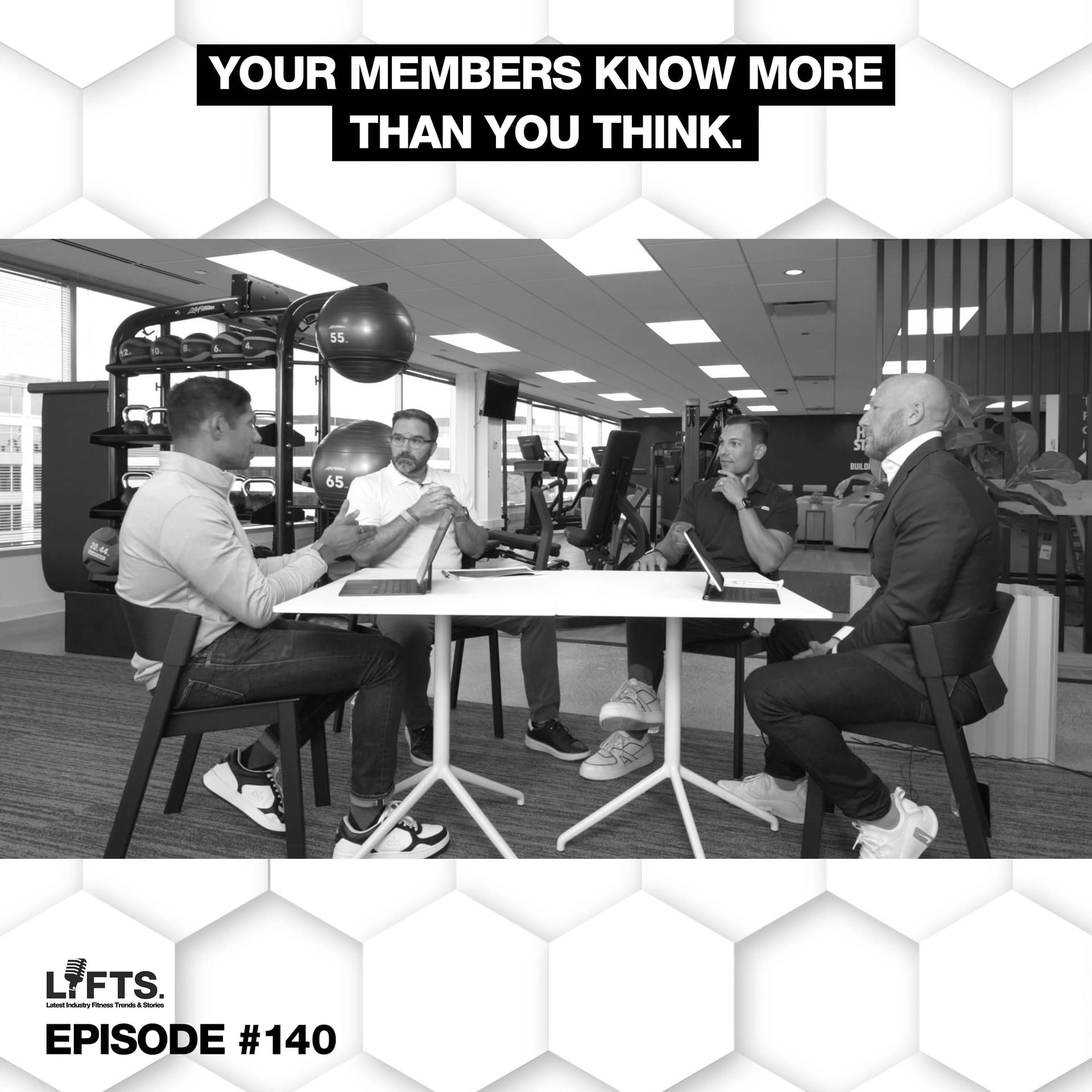
Live from W3Fit North America, Matthew Januszek and Mohammed Iqbal sit down with guests Star Sage and Loryn Huff to discuss the latest fitness industry trends.
From billion-dollar wearable valuations to AI-powered recovery and celebrity-backed fitness ventures, this panel explores the future of wellness.
Key Topics:
- Oura's $11B valuation and the future of wearables.
- Closed vs. open data ecosystems in fitness tech.
- Tom Brady's AI-powered massage company and scalability concerns.
- The evolving role of recovery as an essential moat for gyms.
- Dua Lipa's investment in Pilates and Gen Z engagement.
- How premium clubs deliver longevity, not just sweat.
- Celebrity partnerships vs. real consumer impact.
- Industry identity, intentionality, and member retention strategies.
👉 Learn more about W3Fit:
https://weworkwellevents.com/w3-fit/
Support fitness industry news by sponsoring future LIFTS episodes.
Contact us at wendy@escapefitness.com for advertising opportunities.
Subscribe on YouTube and turn on notifications so you never miss a new video:
https://www.youtube.com/user/EscapeFitness
🛒 Shop gym equipment: https://escapefitness.com/shop
📘 View our full catalog:
US – https://escapefitness.com/support/catalog
UK – https://escapefitness.com/support/catalogue
Follow Escape Fitness on social media:
Facebook: https://www.facebook.com/Escapefitness
Instagram: https://www.instagram.com/escapefitness
Twitter: https://www.twitter.com/escapefitness
LinkedIn: https://www.linkedin.com/company/escapefitness/
00:00 Intro & Welcome
01:14 Oura's $11B Valuation – What It Means
07:37 Tom Brady & AI Massage Debate
14:37 Dua Lipa Joins Pilates Movement
18:32 Recovery as the New Fitness Moat
20:27 Intentional Member Experiences
21:57 Industry Takeaways
24:42 Ecosystems, Not Just Workouts
25:12 Closing & Thanks