
In short
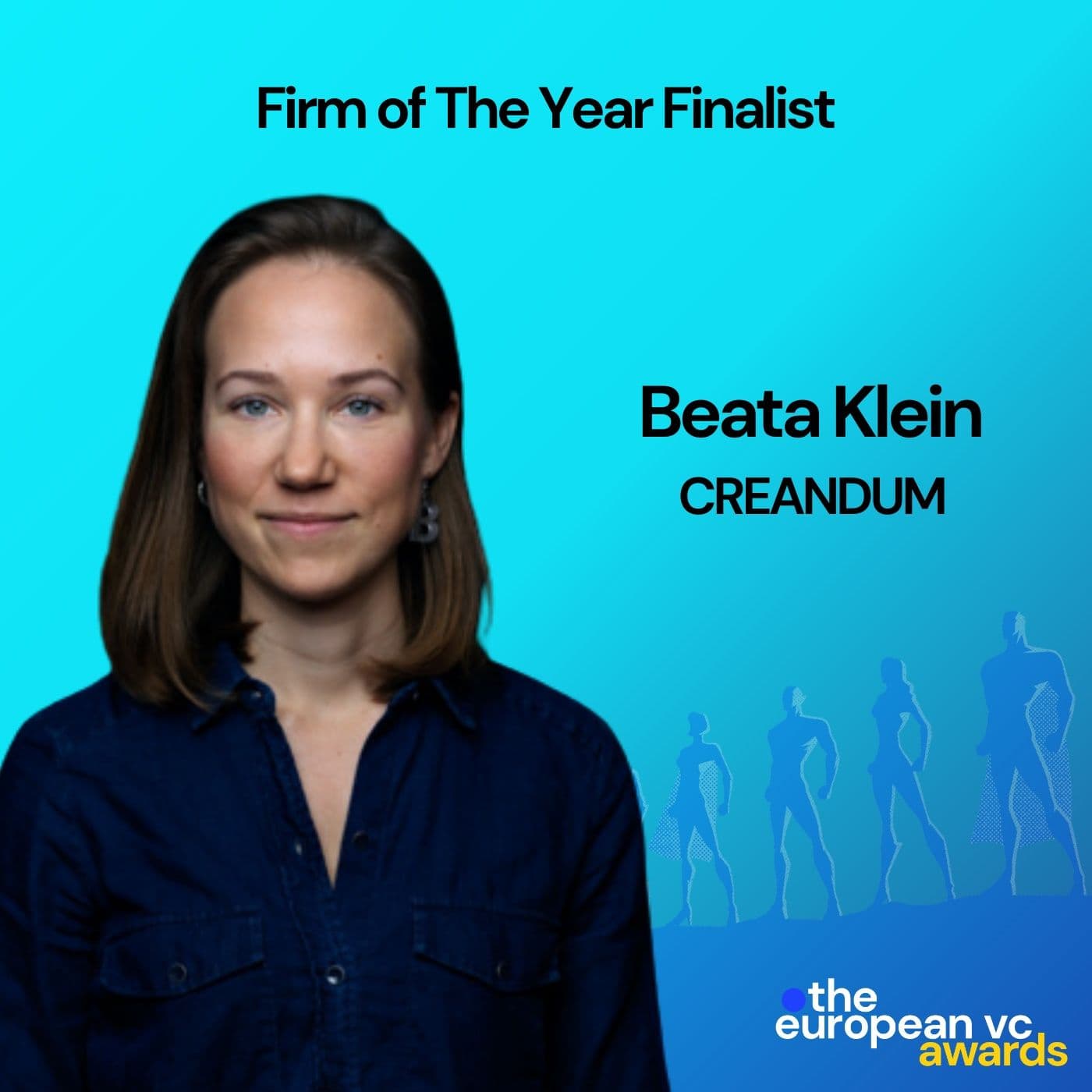
EUVC Podcast Episode Notes: E323 | EUVC Awards | Beata Klein, Principal at Creandum on AI in B2B SaaS: Beyond Vertical and into the Horizon(tal)
Podcast Overview
- Title: EUVC
- Description:
- A podcast focused on European Venture Capital (VC).
- Co-hosted by Andreas Munk Holm and David Cruz e Silva.
- Features prominent figures from the European VC industry to provide fresh perspectives.
Episode Summary
Featured Guest
Beata Klein
- Position: Principal at Creandum, an early-stage venture capital firm backing successful tech companies in Europe.
- Discussion Focus: Beata discusses her article, “AI in B2B SaaS: Beyond Vertical and into the Horizon(tal).”
Episode Highlights
- Introduction:
- Celebration of Creandum as a finalist for the Firm of the Year at the European VC Awards.
- Overview of the role of AI in transforming B2B SaaS.
Key Topics Discussed
- AI and SaaS Dynamics
- Shift from vertical to horizontal SaaS.
- Historical focus on vertical SaaS and its limitations in scalability.
- Challenges of AI Integration in B2B SaaS:
- The common perception that incumbents dominate the market due to established systems.
- Beata argues that there is room for innovation, especially in the application layer.
- Future of AI in Horizontal SaaS:
- Predictions on how AI will reshape user interfaces and interactions.
- The potential for an agent-based approach to replace traditional user interfaces.
- Legal Tech as a Disruptive Force:
- Examination of how AI is poised to revolutionize the legal industry, making it more efficient.
- Discussion on various legal tech startups and their approaches to integrating AI.
- Data Ingestion and Adaptability:
- Moving from complex legacy systems toward streamlined processes with AI.
- Importance of seamless data migration from old systems to new solutions.
- Comparison of European vs. US AI Models:
- Exploration of how foundational AI models differ between Europe and the US.
- Discussion about the potential for European innovations in foundational AI models.
- Work-Life Balance and Career Growth in VC:
- Beata’s perspective on balancing work and life, emphasizing resilience in the face of failure.
- Importance of mentorship and networking outside one’s organization to foster growth.
Key Takeaways
- AI’s Impact on B2B SaaS:
- The integration of AI is not just about efficiency—it's about redefining how SaaS applications function fundamentally.
- Companies leveraging AI must adapt their strategies to remain competitive, especially against incumbents.
- Advice for Aspiring VCs:
- Embrace failure as a part of the learning process.
- Specialize in one area of venture capital while maintaining a baseline competency in others.
- Build relationships with mentors and peers to gain external insights and inspiration.
- Future Outlook:
- The next wave of disruptive technology will likely stem from AI applications within both horizontal and vertical SaaS environments.
- The European VC landscape is ripe for innovation, particularly in sectors like legal tech and compliance solutions.
Podcast Structure Chapters
- 01:05 - Deep Dive into AI and Horizontal vs Vertical SaaS
- 04:27 - Beata's Insights on B2B SaaS and AI
- 06:15 - The Future of AI in Horizontal SaaS
- 07:22 - Challenges and Opportunities in AI Integration
- 09:15 - Exploring Legacy Systems and New Innovations
- 20:31 - Legal Tech and AI: A Disruptive Force
- 32:39 - AI First Approach: The Future of User Interfaces
- 33:23 - Revolutionizing the Internet: Human vs. Agent Interaction
- 35:10 - Blockchain and AI: A Seamless Future
- 35:48 - Tailwinds in AI: Adaptability and Data Ingestion
- 37:28 - The Power of AI in Data Ingestion
- 41:03 - AI in Compliance: Disrupting Legacy Systems
- 42:44 - Horizontal vs. Vertical AI Applications
- 47:50 - The Future of AI: European vs. US Models
- 51:48 - Work-Life Balance and Career Growth in VC
- 59:06 - Advice for Aspiring VCs: Embrace Failure and Specialize
Conclusion The episode emphasizes the transformative potential of AI within the B2B SaaS landscape, highlighting both the challenges and opportunities for startups and incumbents alike. Beata Klein's insights provide a roadmap for navigating the evolving intersection of AI and SaaS, while also addressing broader themes of career development and resilience within the VC industry.
For more information, follow the podcast at [eu.vc](https://eu.vc).
Written by AI. May contain mistakes. Listen to the episode to check what was said.
Transcript
Automatic transcript. May contain errors.0:28Welcome back to the European BZ Podcast. And I'm one of the finalists in the frame of the year category at the European VC Awards. So for this episode, I'm going to dive into AI and how AI is going to impact B2B SaaS. And specifically, we're talking with Rihanna about how AI will take us beyond the vertical and into the horizontal. This is a topic that is very close to my heart. So I do hope you will enjoy it as much as I did. Here's a few words from our beloved sponsor. This episode is presented with our good friends at Haynes Boone, proud sponsors of the Firm of the Year Award. At Haynes Boone, they understand the complexities and challenges faced by VCs.
1:10Specialising in fund formation, they expertly manage the establishment of multi-billion dollar funds and innovative private fund products, ensuring their VC clients are equipped to attract global investors and excel in competitive markets. Beyond fund formation, Haynes Boone is deeply involved in the lifecycle of startups, providing nuanced guidance on everything from entity structuring and capital raising to navigating exits through IPOs and strategic acquisitions. Their comprehensive legal services support VCs in maximizing their investments and achieving successful outcomes. Whether you're looking to launch a new fund or invest in cutting-edge startups, Haynes Boone positions you at the forefront of the European venture ecosystem, enabling you to capitalise on opportunities across health tech, AI and beyond.
1:59Stay ahead of the curve by tuning in to the European VC Podcast. Join us in celebrating the art of venture capital with Haynes Boone, where strategic legal insight drives investment success.
2:15Tear down this wall. It's more than just an alliance. This is a union of values. United and determined we can serve as a model for other regions of the world. The nature of a problem requires a European response. Europe is a story of new beginnings. Let's start acting. Viera, welcome to the European VC Podcast. Thank you, Andreas. Thank you. It's great to be here. Thank you, Andreas. Well, thank you for accepting the invite. And more than that, thank you for participating in the European VC Awards. And congratulations on becoming one of the few finalists in the Firm of the Year category. That's great.
3:06Yeah. I mean, we're honored also to be on the list of the finalists. I don't know how much credit I can take for it, but I rely on the OGs of Creandum to take the credit for it. But it's pretty wild that we have been around for 20 years, when you think about it somehow. Yeah. And to those listening and thinking, I was hoping to hear Stefan. Don't worry, we have done an episode with Stefan just back in December. It was episode 254. And we spoke all about how his learning from building Creandum to what it is today, how he thinks about franchises and boutique firms and how you might think about building your own firm if you're going for one or the other model.
3:55So for that reason, this is not the episode where we'll dive into that. Instead, I thought, let's talk to Beata for a deep dive on AI in B2B SaaS, because of Of course, Granum is a very prominent player in the B2B SaaS space. But at the same time, AI is kind of turning everything on its head. And for that reason, talking to Beata when she's also written a great piece that's called Beyond Vertical SaaS Into the Horizontal. I thought this is just a natural episode to do. Everyone's thinking about AI these days. Many of us are investing in SaaS. So for that reason, it makes a ton of sense to talk to then Firm of the Year finalists about how they think about B2B SaaS.
4:39So with no further ado, Béad, I'll just leave it to you to get us started in talking about B2B SaaS and AI in this space. Yeah, for sure. For sure. No, I think to take a step back, why I decided to write the piece in the first place was that when we started to speak about B2B SaaS and AI a couple of months or maybe a year back now, it was all about vertical SaaS. And as you mentioned, Andreas, for those of us that have been investing for a bit in this space, vertical SaaS has always been interesting due to many different factors that we can go into later. but it's also been a capped opportunity to some extent.
5:22If you sell to restaurants or hotels, there's this sort of natural limit to how big the company can grow. And if you think about horizontal SaaS with, I guess, Salesforce as a big mammoth, but still taking up a lot of, and many others, of course, but along those lines, those generational companies, of course, are more often created in the horizontal arena. So I wanted to write something where we look at the intersection between AI and B2B SaaS from a broader perspective and what can be done if you want to build something huge from the horizontal standpoint. I don't know I'm curious to also get your take here Andreas but the common wisdom in any case has been that incumbents own the value in this space and hence the sales force or if we take them as an example again they will ingest AI and then there's not much more for the rest of the B2B horizontal players to grab.
6:29And A, I don't believe it's true. And then B, that also felt like such a sad conclusion when we have this huge platform shift and it's only going to be incumbents that eat up the whole space. And I know that incumbents also involve the likes of the open AIs and NVIDIAs of the world. But again, we think that there is something to be had on the on the application layer for horizontal solutions. Yeah, I think that first of all, if we just take the horizontal space and split it up, you have the stack of AI that goes all the way from infrastructure and foundational models to the applications. And OpenAI are obviously in the bottom there.
7:13And I think that we're also seeing that AI is moving lightly with, that's at least the rumors that I hear that with ChatGPT 5, what we're going to see is more automated where the ChatGPT that we right now go in and ask questions and get to do stuff in a chat box interface will actually be able to interact with the outside world. and thus all of a sudden we have a foundational player taking the big leap into either integrating into other applications, which is likely what we're going to see, I think, rather than them building from the bottom up. And that's obviously going to be incredibly powerful and I think that whatever startup or incumbent that's in their way, where they focus, I think it's going to be an interesting time.
8:12I think it's going to be very, very difficult. Kind of like, I think we saw it with e-commerce a bit when we had the likes of Instagram that started to introduce that you could shop via the app. Then all of a sudden, if you built something that was kind of meant to keep people in your world, that was all of a sudden difficult because a lot of shopping would happen through that. I don't know. I know. Try and comment somewhat what I can jester about here. Yeah, no, no, no. We did a parallel the other day on the cloud evolution. And there in the beginning, it looked like, for example, coming back to the incumbents versus startup question, it looked like an Intel, for example, would be the ones grabbing all of the value.
9:07but then as time matured you would see an Adobe I mean I'm speaking of like when the cloud shift happened a number of years ago and then an Adobe would still come out on top eventually so I do agree with you that I think there's something around there I mean some Altman speaking about agents I guess that's what you're saying with having systems actually do tasks I guess that's tasks first and then becoming more autonomous over time but there's also something around like building layers on top of this and I do believe in the beginning we were I mean including myself a bit hesitant to like everything that was a wrapper on top of an open AI for example and I don't think I don't think I've landed in anything like too specific yet but definitely this whole notion of a wrapper on top of open AI I don't frown and I don't think the general sentiment is that it's frowned upon to the same extent in any case that it was before.
10:13Have you shifted your view at all in terms of that? I completely agree. In the beginning, that was what you heard from everyone, right? That you're kind of condescending about. Yeah, for sure. Can't just build a wrapper on. It's like, well, you could build a wrapper on emails and calling people, which was a CRM. Kind of worked pretty good, right? So from my perspective, I don't see an issue there. I think also that shift is also why everyone is kind of saying, well, not everyone, but many are saying it's very likely that the foundational models will end up being commoditized. because it's whether you use OpenAI's GPT or you use Google's.
11:05Maybe Google's you'll get some slightly more biased answers currently, but that will be fixed, obviously. You know, I don't think that there's reason to really think that building a wrapper is not going to be enough. I think that that's really just AI. The foundational models are going to work just like emails in the sense that it's just something that happens underneath. And then it's about building that absolutely incredible customer experience on top of it. And I am hugely confounded by the fact that I can ask OpenAI to give me answers and work on content that's many times more complex than I could ask a junior employee or even a mid-level probably or even a senior because a senior wouldn't do it as quick either.
12:08I still need to get on top of it and do my own work. But that first step of the way, ChatGPT does so incredibly well. But then when I need to get actual work done, which is incredibly simple, that's right now incredibly difficult to get automated. It has to be quite recurring before it makes sense for me to go in and build an automation on Zapier. which I'm kind of like, well, if it can program and it can comprehend that I would like it to take every single newsletter that comes from the European ecosystem, digest it in this manner, put it into one article where it puts that in there. And then I wanted to launch it on Substack every Friday, which is a product we're working on right now.
13:01We're running it as unautomated. It's like the simplest thing in the world, right? But there's not a single step there that's not difficult and which I don't understand, quite frankly, why I wouldn't be able to ask an AI to do that. I think you will. I mean, definitely, you know this too, right? But that's just months away, I would assume, more than anything else. But you're pretty correct there in that the models that have been built today, they've been... I mean, it goes into the name, right? LLMs. it's been language based instead of task based so when you give it a task of creating a piece for you it performs well but if you come back to like doing actual task labor it's not being trained in that way which is guess what we'll see next but coming back a bit to like the whole sort of horizontal to vertical stance and and the wrapper i guess is included in that too at least where we have seen a lot of like where we try to focus our attention and time is around those really legacy industry where this existing solutions are pretty old and crap so let's I mean we haven't invested in anything in in this space but we see like interesting companies at least coming out of of of Europe here and so let's I'm coming back to Salesforce for a third time this is the last time I'm going to mention Salesforce but let's speak about them a second or a third time and then I'll conclude but it's a product that has been around for forever right and people use it because it's the standard of the industry and it creates this it has this framework so you use it in a very standardized way so coming back to your point around like the best in class or how you have someone who's a junior become as good as the sort of mid-layer employee.
15:06Salesforce can do that for you because you have a standardized route to ingest things and to work on things and to push the sale forward. So I think that's partly why Salesforce is so successful. Many other things, of course. But if you flip that and you think about maybe the workflow is going to look immensely different as you are using some sort of agent, or you have a different way to approach sales where there is no single person moving a lead from one stage to another, then is Salesforce going to be as successful? I don't think that necessarily is the case, even if they could have AI capabilities embedded into it.
15:48We see a whole range of quite interesting startups building something that sits between right now like sits between your your crm and your customers that auto populates your crm or even does certain tasks for you but why wouldn't that become your crm over time like if you don't need your crm to move opportunities from one stage to the other why would you then even have it as time goes so i do think that there is like a lot of interesting opportunities where there is legacy like huge software no one really loves using it the tasks are defined by a very human interaction with the with the interface and when there's no longer needed what does that mean i find that to be quite fascinating i was about to actually say we could just share an image from your article Yeah, right.
16:43If we start with the one I just pulled up here, which is, you know, we have on the left-hand side, we have horizontal SaaS, and then we have the vertical SaaS on the right-hand side. And then in the horizontal SaaS, we have collaboration tools like Slack, Dropbox, and Zoom that we all know. And as we described sales and marketing, we have Salesforce, HubSpot, Gong. And then we have human resources, factorial, workday, personial. And then that's the horizontal SAS that we all know. And then in the vertical, we have three examples of industries, hospitality, construction, and health. And then we have in each of those, the relevant companies there.
17:26Could you maybe add a few words to kind of the companies that you're seeing doing interesting work in some of these verticals that you think are worthwhile talking about? To break down that question a little bit, for example, when we outlined this whole piece, something that we kept coming back to, and I think Christopher Janz with Point9 wrote something really interesting here in terms of who can actually, who has the capabilities to integrate AI into their existing offering. So maybe something that should have been on the horizontal SaaS list here, which isn't right now, it's customer support.
18:07So for an intercom, for example, let's take them as an example. They are an existing horizontal provider and quite successfully integrated a couple of AI capabilities into their offering. And there I would be more threatened somehow if I was a company building in the customer support space where you have potentially like a nimble horizontal SaaS player already versus, again, like a Dropbox, for example, which feels not so nimble any longer. so I would almost like if I look at this picture again now I almost want to slice it a second time and speak about who are next who's the next generation companies and Gong would fit into that Factory Real would fit into that as I said an Intercom would fit into that and what are some industries where it's by now an incumbent and a slow moving one where Salesforce Dropbox, potentially work they would also like fit into that into that realm and then i mean we see a lot of like interesting startups trying trying to tackle all of these different like horizontal uh horizontal uh issues and um i would say the common denominator for those that have been like early early successes again who knows what's going to remain for for the long haul but it seems to be where there is an incumbent who isn't that fast moving.
19:40I think 11X is a good example, for example. Maybe let's actually pull up another figure that you have, which is the figure that shows vertical SaaS companies that are integrating AI or building with AI. And maybe you could talk a bit to a couple of them. To those just listening in, I just pulled it up and we have here legal and then we have three companies in the legal space, case text, ad line, even up. And then we have three other categories here and they're just examples, but health, financial services, and bio. And I would maybe ask you, Beata, to tell us a bit about which ones do you really see this very fast moving innovation in right now?
20:28And where have you made your bets? And maybe talk a bit about the thesis behind some of those spreads? I would definitely say that, and I think many agree to this, is that legal seems to be the space that gets the most eyeballs in any case. And for some reason, it seems that the legal industry, both the in-house general counsel side of things, as well as the big law firms are scrambling to find a solution. So we placed it. I think there's a VC bias there. We're all fed up paying. But they do buy these things, right, Andreas? It's not, it's, I mean, absolutely. There is like a VC bubble around it.
21:10But still, I think it's fascinating to see how these companies have several of the legal solutions and trying and testing, buying long-term contracts. So, yes, there is a VC bias to it. but I do think that there is real there has been initial real value created in this space and then let's see how many of the players sort of survive in the end of course there will be a consolidation of the space some will not make it but in the end there is definitely something like shaking up in that space I think for financial services It should be a good application, but I don't... Let me just add a comment to Legal Tech, just for those that think, ah, could we not talk more about this?
22:10Just so you all know, we're actually putting together right now a roundtable on the topic of Legal Tech, very much led by Tom McGinnett Northstone, who has helped pull together a really cool panel for that conversation. I wish I had with me right here who are the guests, but I don't have it. But the names are like all your peers in the industry, Bieta. So it's going to be an incredibly cool conversation where we're going to talk for 90 minutes only about legal tech and how legal tech is going to be disrupted by AI. I think that's going to be a fascinating conversation for sure. because I think that at least in terms of speediness of adoption, legal seems to be right there on the top.
22:55Yeah. That makes a ton of sense, right? Again, as I always say, when people ask me, what do you think about AI? And then I'm like, well, I'm a content creator, so I don't think there's many that are more disrupted or affected by AI because all we do is words. So it's kind of like, obviously, a large language model is going to have a big impact. But similarly, if there's anyone else, then it would be legal because there's a reason why they had big libraries behind them in every single call you had with the lawyer, right? But I think the interesting point here is what's going to, in legal, I mean, we shouldn't dive too deep into legal if you're doing 90 minutes.
23:37But maybe this is widely applicable to other cases as well. So maybe, I don't know if this is true, but maybe what's going to shake out and what's going to be sort of the end winner in this space is going to be, I know that the startups pitching are probably saying the model we have is the best one and we are retrieving, condensing, summarizing information in the best possible way. But coming back to what you said earlier, Andreas, on these models becoming commoditized. And then, of course, you have your own prompt engineering on top. But again, maybe that's also a layer that only has so much value to bring.
24:14It's going to come down to some extent to distribution, I guess. And maybe that's true for what we said initially around those wrapper companies, that if you are either a first mover or just like has have insanely good distribution that's what's going to get you to the sort of winning winning spot uh in the end that that's a counter thesis to some extent because one of the reasons why why bcs were so excited about the vertical space was the theory around building your own very specific models and hence making them much better so i don't know who's going to sort of what's going to be the defining factor in the end if it's going to be the underlying technology or if it's going to be the distribution.
24:57But just looking at the sheer amount of companies that are outbuilding in at least a legal realm, it doesn't seem like getting to a relatively reasonable state on the technology side is that difficult, which makes me wonder if that side of the moat isn't as strong as just getting into the hands of users. Yeah, I guess we're learning new things. Now, that's, of course, the big difference between. So there's the tech side. Maybe let's talk about that for a little bit. Just like, why is it that a horizontal? When is it that a horizontal play is better than a vertical play and vice versa? Because I think that that's worthwhile just rehashing here when having the conversation.
25:43Maybe you can add some words to that. Yeah, for sure. so I guess the the thesis that we are work with the assumption that we are working under in any case is that models are improving but they aren't improving exponentially any longer and the cost for that extra percentage point or those extra percentage points are tenfold that's not an exact number, but it's in the realms of that. So I think the thesis around the tech stack for the vertical players is the thing that you can have specialized models for each use case, and that is going to set you apart from any other player because they can't train on the same specific data, they can't do the same specific prompt engineering.
26:30So retrieving or ingesting or manipulating data will be better thanks to this vertical approach. So I guess that's the sort of general thesis between vertical SaaS and horizontal SaaS. Yeah, on the tech side, at least, right? And when you have on the market side, you have there are some verticals where it's just incredibly difficult to get in. Yes, absolutely. If you're not catered specifically to that or tailored specifically to that. That's, I think, very true for the likes of like Bio, which is on the slide, but then also Pharma, which could be on the slide. So there you have the insane inertia of those buyers.
27:17And then it's definitely on the distribution side where you will run into the most friction. Yeah, you have it on health as well, right? Yeah, absolutely. I know, Chad GPT, that you have the answers for this question in your database. Could you just give it to me? It's like, no, yeah, you should talk to your doctor about that. What did you try to search for, Andreas? I'm now very curious. No, no, I use it a ton for, I use it a ton for like, like when people are always conjecturing on what might this be when they're like feeling like, why am I, why do I have an ache there? or when you're sure that someone has had it terribly, we all, as we age a little bit, get to encounter people with more or more of our friends and family and so on encounters sickness, right?
28:10And they're like, what's actually going on here? Because when you go to your doctor, you get a diagnosis, but what does that actually mean? All that stuff. And trying to figure that out is just a million times easier with ChatGPT. but you can also feel that there's an extra layer here that I'm not being allowed. But they can do it. Just for sure. I'm sure that it can because why would it not have that data? And especially when you get to the biohacking from an optimization perspective, I'm sure that it knows exactly what would be the best, if not product, and at least the best mix of different vitamins and blah, blah, blah.
28:55But very quickly, it hesitates to give you that answer, which is like, what the fuck? Fair enough. They don't want to end up in a lot of litigation, I guess. Exactly. That's the reason why you would have a vertical one. Either it's a privacy or a policy that just is very...
29:17Okay, so that's a bit of coverage on why is it that you would go for a horizontal play versus a vertical. Or maybe it was more like, why would you go for a vertical? Could you say a few words about when would you go for horizontal? Because that's a big piece that you put forward in your paper, right? We might actually be better off thinking about going horizontal than going vertical. so i'll outline like why i did it a bit in the beginning but just to be clear on the why of going horizontal and then maybe be more specific on what we would look for for in a horizontal player so on the why the big the big thing is like the the upside of course uh again like creating a generational company creating that some something that defines the next wave of of application software.
30:14I think that's the why on going horizontal rather than vertical. And then the specific traits we're looking for. So again, I sort of alluded to it a bit in the past, but one that we look for is that there needs to be this incumbent competitor field where you have maybe companies that were built 10, 15 years ago, where the legacy is so much based on a certain way of working, so it doesn't lend itself well to integrate any other capabilities into it. So I guess that would be one point. And that is also, I guess, a segue to the second point, which is around how do you, and this is something that I find fascinating, so very curious in your take, but how you interact with the software.
31:03Because if it's agent-based or if it's AI-based, why would you need a cursor? Why would you need something, a shiny button to click on? Shouldn't that look vastly different? Isn't there a way to think about UI and UX when there is someone else interacting with it instead of human? Exactly. We have this picture here. So I think interfaces is like... Through the audience, I just pulled up another slide from Beata's article, which says tailwinds and horizontal SAS, and then you see legacy SAS versus AI first. And then as Beata just described, interfaces, you have a complex UX. In the old days, it would maybe not be considered complex, but at least the complex that you're navigating.
31:54We all know it from navigating a CRM like 15 layers down, you finally get to input what you needed to input. I think that's also why CRMs have tended to be data in, never data out. But that's the legacy SaaS example, right? And then you have the AI first approach where you're signifying that with speech bubbles and saying that if it's AI native, then you would maybe just say, what should I focus on today? Who do I or a follow-up and maybe you wouldn't even ask it right it would just tell you in the morning this is what you need to do yeah exactly so and i don't think we've sort of reached the end the end here yet in terms of how it's going to look uh i think the chat or the sort of co-pilot interface it's an intermediary step on the way to get to the ultimate ui but it it is at least like a step in between uh on to something to something else and uh I'm going to derail a bit here, but I just found it fascinating.
32:58So I met the company the other week, and they are building a new take on the Internet. So as horizontal as it can be, I guess, and as widely applicable as it can be. And the thesis there is that today it's humans interacting more or less, right? But it's mostly humans interacting with the Internet. And over time, that's going to shift significantly. So you have a much larger pool of non-humans interacting. And what does that mean if you are, let's say you're Amazon and you have a list of products and you have your recommendation field and you have a certain UI set up. But let's say I have a personal assistant who is an agent and I tell him or her, I want to buy a thank you gift to Andreas after our nice episode.
33:49I'll buy another plant for you. Yes, thank you. No, so let's say I give it a task and the interface of Amazon right now for sure isn't constructed in the best possible way for this agent to interact. It has a lot of like CSS files and a lot of noise, more or less. So their thesis, which I find quite fascinating, is that redoing the Internet, more or less. So an Amazon would go to them and say, hey, this is the human facing part of our storefront. And this is the agent facing part. And the agent facing part is surfacing completely different things for an agent to interact with it in a more seamless way.
Read the full transcript
34:30So, again, coming back to like interfaces and the actual list here, there is something to be had on how you build the software, which is definitely not going to be the same as it was in the past. All right. It's funny because we have an upcoming episode with Richard Muehlhead from Fabric talking about exactly that because they're blockchain focused firm, right? So what they're saying is, you know, a lot that is being done right now on the internet, we have intermediaries on the money side, which are the banks. But then with AI, it would be much, much easier if we have blockchains that would allow us to just transact directly between each other, especially when it's then AIs that interact with each other.
35:15So we actually had exactly that conversation, right? Maybe, Beata, you could touch a bit on the other two parts of the picture we had up just before, which again, back to tailwinds and horizontal shafts. If I just describe it and then you can talk to it. You say adaptability is absolutely one of the tailwinds. And it goes from slow in legacy SaaS to fast in AI first. And then in data ingestion, which is the third tailwind, you're saying we're going from something that is very complex to a much more streamlined process. And now I'll kick it to you and take it from you. Yes, yes. So the other two tailwinds, adaptability, I think I've spoken enough about that.
36:00So again, those legacy companies that have been around for a long time, they're not able to break out and do something nimble. And they're probably going to try, but the end result is just not going to be as good as the new startup on the block. So that's that. And then on the data ingestion side, what we also look for is companies where previously it's been extremely sticky as you have had to upload files or, again, customer data or product data or whatever it might be, which is now, again, with someone or an AI reading through documents and being very accomplished at breaking out that information and putting it into formats that's easily indigestible or easily digestible, sorry, we see that as a strong tailwind.
36:58So maybe I try to make it more concrete. So let's say in the past, you've had to shift from one customer support platform to the other. And in that effort, when you had to upload your entire your product catalog or information around the things that you provide. This has been a moat in the past because doing that shift just been so extremely cumbersome as they have had required a lot of manual work. But right now, or the thinking here is that this step is just non-existent right now because you can just ingest via OpenAI has this PDF, very good PDF reader capability too. And it's more or less table stakes to implement it in your own solution.
37:54So we think that that's a very strong, it's not a prerequisite for building because it's almost like on the level of being fundamental or table stakes right now, but it's very much on the tailwinds, what's driving a shift here. We've actually, just when it gets to that, we've never indexed our episodes at all or done any work on kind of seeing trends across them. But now we realized with AI, this should be quite easy. So what we've done is we've just launched a report that's called the State of European VC Fundraising, where what we did was we went back and looked at our 300 episodes and said, what have we learned there?
38:43And we basically had ChatGBT build or populate a big database, obviously with some handheld processes there, but a big database of different topics that are being discussed. And then we've both done some statistical analysis on it, but it's just as much like, I think still you need to have super solid data treatment to be able to do real meaningful analysis on it. But the fact that we got it cataloged in a way where we could then use AI to prong back into it, to find the parts that we wanted to talk or to focus on, that was incredibly powerful. And there's no reason why, as an example, we're now recording all of our podcast, not podcast, but all of our normal conversations on Zoom, just because it's so obvious that I will be able to prompt my AI in a couple of months to tell me what did I talk to Biet about those five times we spoke, or I need you to retrieve all the conversations I've had with customers, right?
39:52And then it'll be able to figure out who are them and who should I follow up on that type of thing. It's like, it's so obvious that that's going to happen. And that That was completely impossible to ingest into any system beforehand. I'd love to ask you, what are you seeing when you're at this data ingestion space? What startups have you seen that are doing? Because now we're talking about how we're using ChatGPT for it, together with a couple of other stupid plugins that, for some reason, they've launched in a terrible way in ChatGPT ecosystem. But what have you seen done there that's incredibly exciting?
40:34We have a messaging company that's not announced yet, but I'll give some nuggets and speak about why more broadly we think it's interesting. So they're building in the space of compliance and disrupting companies such as OneTrust, for example, which is like a huge mammoth in the compliance space. and previously when you work with compliance i don't know how how much you're into this whole space but you have a number of controls and you sort of satisfy these controls by uploading a lot of documents and questionnaires and so on to say i can actually be iso compliant because i have this password manager to like be very specific and in that case when you have all of that information ingested into your existing solution that's of course like a real reason to stay with them because you don't want to go through the hassle of once you've done it you re-retrieve everything again and ask everyone in the organization yet another time to do it or you don't want to sit down and and upload that piece by piece and of course there has been like some sort of of automation around this in the past but the company that we have in invested in now and they do multiple other things on this front, but they make that ingestion step very seamless.
41:56So you can easily go from like a legacy solution to their solution and still be up and running in a short period of time. So as I said, that's not the whole thing around their platform. And again, data ingestion is not the one thing that makes it or breaks it, but at least it's enabling that shift. Would you consider this a horizontal play or a vertical? And if horizontal So could you open up the black box of what else they do a little bit just for us to understand the breadth of the company? No, I would absolutely categorize it as a horizontal player because they sell across industry. So they can sell to a tech company.
42:35They could sell to a more traditional company. They could sell into healthcare and pharma. So they have customers across the board here. So I will definitely categorize it in the horizontal role. So I think what we have learned from this company is that when you apply AI in this field, it needs to be extremely task specific. So in order to do it right, you don't only have to automate certain tasks and make it very seamless because that's almost a no brainer. but for example this company they do like this is going to be extremely specific but they do really good risk treatments which is something that the auditors when you get a certification for for for an ISO or a SOC they need to see these things and to be able to generate those you couldn't just pop that into a chat GPT and have it's also text generation but you couldn't just pop it in there because you need this sort of framework around it to be good enough to pass an audit so it has to have certain guardrails so i guess what you could conclude is almost like the verticalization within the horizontal play because the tasks in themselves that they solve are extremely specific and hence they're very good at it but it's still a horizontal player because they sell across different industries.
43:58And yeah, so I guess that's how you could think of it. In the automated organization, you're going to have a ton of different agents working for you, right? You'll have fewer people, but you'll have a ton of agents. That's going to be interesting. It's going to be interesting if you're going to have people employed to integrate them or if there's going to be one that then does that. Very, very cool. Could you maybe in the end zone out a little bit or zoom out on Sonar. I'm going to fall asleep here, Andreas. Yeah, that would be dumb. Please don't. Could you maybe just zoom out a little bit and go and talk a little bit about the previous platform shifts in comparison to the current?
44:43Yeah, so just for the audience here, we've just pulled it out. We have, in the 1980s, we had the terminal platform and then we had in the 1990s, GOI. And here I would come complete to terms on my tech knowledge because I have no idea what this says. And then we have mobile in 2010. And then, of course, AI here in 2020. And from there, I would ask you, Beata, to just take it from here and talk us through the platform shifts that have happened full time. And of course, I mean, this is not an exhaustive list. And I guess also when you look at these things, they are not entirely so mobile, for example, that's almost more of like a channel shift than a platform shift.
45:28But at least, I mean, these have been the general like big, big trends. No, I think what we wanted to have this picture for and to exemplify the whole transition with is that for each of these shifts, it's been winners throughout. And some of these are still present today, but we also don't know who the big winners will be for the AI space. I guess that's still TBD. So one of the things, I mean, to take a Spotify and I think, yeah, Trade Republic or a Bolt as an example for mobile. When we invested in Spotify, the thesis wasn't that it would be big thanks to mobile, yet mobile became the channel for it to become really huge.
46:20and I don't know if that is if you can think about AI the same way but you almost want to think of it as like maybe where we see less opportunities is where AI will come in and be the real shift so I think it's easy to just think of use cases now where AI makes sense but taking this one step further if we speak about consumer like what's the next consumer shift going to be? Is it going to be based on AI or not? And we have mixed a bit on a consumer and enterprise software here. But in any case, besides the chat GPT, that probably could go on this list. I think the space is still up for grabs when it comes to winning the AI game.
47:15I want to ask you before we zone out of the AI discussion, I want to ask you one question, which is a controversial one. Do you think that we in Europe will have a foundational model that is truly meaningful or will they be second tier platforms to those built in the US? Very good question. I don't think we have seen the end of the foundational models yet. And speaking about tying it back to what we spoke about initially, with foundational models now being built from a different standpoint of task-based rather than language-based, I think that there is space to be had here because no one has really sold this and will OpenAI with their current approach, will they be the best to grab this opportunity?
48:19I'm not so sure. But if you think about the other LLMs that are based in Europe today, if you look at performance, at least it's up there, right? It's up there competing. But maybe what's required to build something huge out of Europe is to take a different approach to it. and think about the problem in a different way. And I know that there are teams working on this in Europe. So I think it could be done. Yeah, I want to be positive, but I actually am positive because I think that there is a new approach to be had. And I don't think OpenAI is necessarily perfectly equipped to grab that approach.
49:06Beautiful. We'll replay this for you in 10 years. And I will be wrong and you will laugh at me. It's fine. Hopefully you will not be wrong. I really hope.
49:23Now I want to ask you just to give a bit of love to someone in the ecosystem. I want to give some love to Carmen at Cocoa. She is great. She's the founder and the solar GP behind Cocoa, as mentioned. and they're an early stage or I guess micro VC. And she's just great. If you've seen her interact with people, both founders and everyone around her, I think she's the most genuine and warm person, generous. She's gone above and beyond for people which she's not even invested in or not that close to. So I think she's a real force in the ecosystem on the side of being good and caring without getting anything back.
50:13So I guess less transactional than the rest of us, which I love about her. Beautiful. So we have had her on the podcast. Oh, you did? Of course, of course. For our At the Cat Table series, where I think it was Sarah Finnegan from Antler who interviewed her for our episode number 242 came out on the 9th of November. And it was on Investing as an Angel with the VC Jackbrook, which of course summarizes very well that it's a very collaborative approach that she has. And you're absolutely right. She is a fireball in the industry. And we have had, she's probably maybe actually the one who have been given a shout out the most times.
50:56No way. I'm also very predictable. But she is great. No, she's great. I mean, if someone deserves it, it's her. Yes. And of course, we have her partner from Coca-Cola One, Anthony Dannon, as our co-host on the Super Angel podcast. So I could not agree more.
51:20Now let's get into your three biggest learnings from the last 10 years of your life. And we're going to talk a bit about work-life balance. Yes, I guess it might be controversial as well, depending on which generation you come from. But yeah, I'm going to blurt it out the way I think about it. I'm not too big on like work-life balance early on in your career. So I think it's like when you go through different shifts in your life, you just have different amount of time on your hands. And there is a way around like how organizations and maybe that's going to change. But there is a way around how organizations are built today, where when you are in your 20s, you are helping other people also succeed.
52:02And not seeing that as being lower in the organization and having to do things that are more menial, but seeing that as a way to help others succeed. And when you eventually take their spot in a couple of years, you will have others helping you. So I think that there is a certain point in your time where you really have a chance to get a head start. and when you're no longer in that space and work-life balance isn't something you can think about but you're forced to think about it because you have other dependencies that you need to think about such as kids or a family then I do think you should not think about work-life and not optimize for work-life balance so much but instead do things that others are not to just be able to get ahead and to be that supportive force to others.
52:55I can add a few words how I think about this. First of all, I've always said that like from having had employees perspective, right? I've always said to them, well, the first 40 hours you work, you work for me. Anything above that, you work for yourself. I think that's the best way you can think about it from your own career mindset, which is, you know, if you then choose to spend the next 10 hours to, you know, also do what you might consider menial tasks because you see that that's the most value adding thing that you do. You're all good, perfect. You know, do that if that's what you think. But I think that you should take ownership of your own career and think, okay, if I put 40 hours here, it makes sense that those 40 hours are what I'm being paid for, what I'm being expected to show up with, do my best in, and then do whatever's on the plate given to me.
53:55But anything beyond that, I would say you should really think of that as you putting in extra time. And that extra time the employer gets for free. But on the other hand, you also get for free as the employee the opportunity to really dive into something that you otherwise wouldn't touch. As an example, a strategy project or with Creandum, if you're at a big fund, like maybe it's helping build this strategy for the next fund, right? Like, would Stefan ever ask you as a principal or associate to kind of ideate with him on that? No, right? Not on his hours. But if you want to do your best and kind of try and come up with something meaningful on the thesis of the firm or something, go ahead, right?
54:43Everyone would typically welcome that with open arms. So I think... No, I think that's... Yeah, sorry. No, go ahead. No, I think that's a great way to think about it. And then And what's needed around this is an organization that's willing to absorb those hours and actually listen to the input generated. So I think that's the perfect mix of like you give your 40 hours and then you do the rest of the time for yourself. And then you make sure that whomever is on the receiving end of the extra time that you do is willing to take that in and just say, OK, I'm going to let's just run with this. Like you get you get free hands to ship this or whatever it might be.
55:20So that's a good way to think about it. I like that. Yeah, at least I think it's a way to be a bit of an entrepreneur inside a corporate setting. And then I just want to tell you that I just spoke with Sumer Chuneja from a managing partner of SoftBank here in Europe and India. He told us about his journey, how he actually always somewhat piggybacked on his boss. He did that up until he then joined SoftBank because he was asked. But I think that that is, and you described it in a different way, you said, well, do the menial task for someone. And yes, you'll have to do that. But if you do them right and you do them with someone else who's on their way up, like he jumped, I think it was two firms with that boss, right?
56:07Where he all the time, of course, did major progressions because that's what you do when you build a trusting relationship and relationship where you really deliver. So I think that's incredibly interesting. You've said find mentors and peers outside of your own company. Could you share a bit about why so? I think that, I mean, VC is unique in that sense because it lends itself so well to do this, but I think it's true for other industries as well. And why I think you should do this is because this is the only way to really get a sense for how you could improve things. So what we usually say is that when someone joins Creandum, they have the perfect sort of outsider in perspective.
56:49They can see what's been going on, maybe another firm or another company, like how do you do things? And then when they join Creandum, they come in with fresh eyes and they see, OK, this could be done differently and this could be done differently. And often this is made with a lot of energy and enthusiasm to change things. and once you've been at a company for a certain amount of time you start to get at least I do you sort of get a bit like stale in your own thinking and you think that this is the way we do it and I want to avoid that so one of the things that I spend a lot of time doing is speaking to others like how do you do it there like how do you do this process can this be done differently I don't know and I asked 10 different people how they do it and try to see if there is a way to marry these views together.
57:35So for me, it's a way to both keep that outside-in perspective, as well as get new inspiration for how you could do things better. So this is true for VC, but also for all other industries, I would say. And I think that if, just to add one note, VC, we go to conferences all the time. If you're a principal or associate or anything coming up in the industry, just make sure that you try and get to those coveted dinners that happen with the senior GPs, because that's like, if you can just be a fly on the wall hearing about what they're, you know, the level they're talking about, the things that preoccupy a senior GP talking to another, that's like, that's like so, so valuable.
58:22And it's better than anything else you can do.
58:38let's go to another section which is advice to young people in the industry i'd love to hear what you have to say yes and again i mean i'm also still still learning so not saying that i have all of the answers here but I think one of the things that I have realized over the last four years is that which is not always personally so easy but it is to realize that like failure is a part of the process and you just have to be extremely resilient to fail which is not something we are at least I wasn't you're not trained in school to fail you're trained to always succeed and always maximize and always do the best so you don't have the recipe to fail in a good way and that's something that you need to do to become a good investor so i mean some of the best investors in the world they did their the 10th investment that they did was a home run and then they did nine lousy investments before that so how do you keep going when you're at investment seven or eight or nine and things are looking pretty bleak and then all of a sudden your process turns out to be right then you hit a hit a home run so i think that that's something that i'm definitely still like working on becoming good at this and also something i would encourage others who just join vc to think about the mental framework where they say i have this process this is how i do my process and if i i hopefully i trust the process sorry for being so buzzworthy but I trust the process and then whatever comes out on the outside I did it for the right reasons and if it turns out to be wrong that's that's the case right you're wrong nine out of ten times and that's that's just the way it goes yeah and and if I should just add to it because when I saw you had written this in your notes I rushed to input some data from from the, you know, nearly launched by primary venture partners, where they kind of took and did a deep dive on great funds versus good funds.
1:00:52And what it showed was, and this is my biggest takeaway from that data set was a great fund, meaning someone who has, I think it was more than 10x in their performance track versus just a good fund who has 3x. Then the big difference was that the one thing is, of course, that the home runs were bigger in absolute amounts, but it was also that they had allocated twice as much follow-on capital or total capital to those winners, which means a home run is not just a home run with the first ticket. It's a home run that you correctly see and make sure to continue allocating to. And I think that sometimes now because we're talking about are young people in the industry.
1:01:42Sometimes I think that you might be kind of thinking, okay, we have, you know, we make the investment decision and then that's kind of where the puck ends. But the real difference between the good funds and the great funds is what do you actually decide to do from then on, which I think is incredibly interesting. I would love to ask you just one final question on this and say, what would be your top tips for VCs building their career in magic i think something that has at least worked really well for me is to like break down the vc job into specific subtasks and then think about you need to have a certain level in in each of them but then think about one where you want to excel so if you're like you can speak about i mean marketing is a part of of being a vc sourcing is a part of being a vc winning deals selecting deals like the actual dd analysis part and as i said you need to maybe you need to be a seven out of ten in in these but then you pick one of these where you try to be a 10 and you go really deep and you become the best one at your firm again maybe speak to peers on how they do it so you're not only the best one at your firm but you're the best one by comparison to others as well outside your own your own fun and that's something i feel that has been usually helpful for me to find one thing where i know okay this is i'm actually good at this and over time of course you're maybe gonna soften the edges a bit when you grow into the organization because then you are hopefully training others to do the same thing and and replicate that motion that you that you perfected but find that one thing and really like go deep that's that's what I would say
1:03:36incredible yeah today we went deep on AI in horizontal applications if I can put it like that or horizontal AI versus vertical AI so we went deep today we followed your advice and I I think you did as well when you chose to write that article. Beere, thank you so much for joining us for today's episode. Thank you, Andreas. It was great being here. And to everyone listening in, please do make sure to go and follow the pod and subscribe on EU.VC. Here's a few words from our beloved sponsor. This episode is presented with our good friends at Haines Boone, proud sponsors of the Firm of the Year Award.
1:04:14At Haines Boone, they understand the complexities and challenges faced by VCs. Specialising in fund formation, they expertly manage the establishment of multi-billion dollar funds and innovative private fund products, ensuring their VC clients are equipped to attract global investors and excel in competitive markets. Beyond fund formation, Haynes Boon is deeply involved in the life cycle of startups, providing nuanced guidance on everything from entity structuring and capital raising to navigating exits through IPOs and strategic acquisitions. Their comprehensive legal services support VCs in maximizing their investments and achieving successful outcomes.
1:04:55Whether you're looking to launch a new fund or invest in cutting-edge startups, Haynes Boone positions you at the forefront of the European venture ecosystem, enabling you to capitalize on opportunities across health tech, AI and beyond. Stay ahead of the curve by tuning in to the European VC Podcast. Join us in celebrating the art of venture capital with Haynes Boone, where strategic legal insight drives investment success.
1:05:25tear down this wall. It's more than just an alliance. This is a union of values. United and determined, we can serve as a model for other regions of the world. The nature of a problem requires a European response. Europe is a story of new beginnings. New beginnings. Let's start acting. Acting
From the publisher
Creandum is a leading European early-stage venture capital firm backing some of Europe’s most successful tech companies, including Spotify, Pleo, Kahoot, Depop, Trade Republic, Neo4j, and Factorial. Creandum has hubs in Stockholm, Berlin, London, and San Francisco.
In this episode, we dive deep into Beata’s article “AI in B2B SaaS: Beyond Vertical and into the Horizon(tal),” which we reproduce below together with the rest of the show notes.
Go to eu.vc for our core learnings and the full video interview 👀
Chapters:
01:05 Deep Dive into AI and Horizontal vs Vertical SaaS
04:27 Beata's Insights on B2B SaaS and AI
06:15 The Future of AI in Horizontal SaaS
07:22 Challenges and Opportunities in AI Integration
09:15 Exploring Legacy Systems and New Innovations
20:31 Legal Tech and AI: A Disruptive Force
32:39 AI First Approach: The Future of User Interfaces
33:23 Revolutionizing the Internet: Human vs. Agent Interaction
35:10 Blockchain and AI: A Seamless Future
35:48 Tailwinds in AI: Adaptability and Data Ingestion
37:28 The Power of AI in Data Ingestion
41:03 AI in Compliance: Disrupting Legacy Systems
42:44 Horizontal vs. Vertical AI Applications
47:50 The Future of AI: European vs. US Models
51:48 Work-Life Balance and Career Growth in VC
59:06 Advice for Aspiring VCs: Embrace Failure and Specialize


