
In short
EUVC Podcast Episode Notes
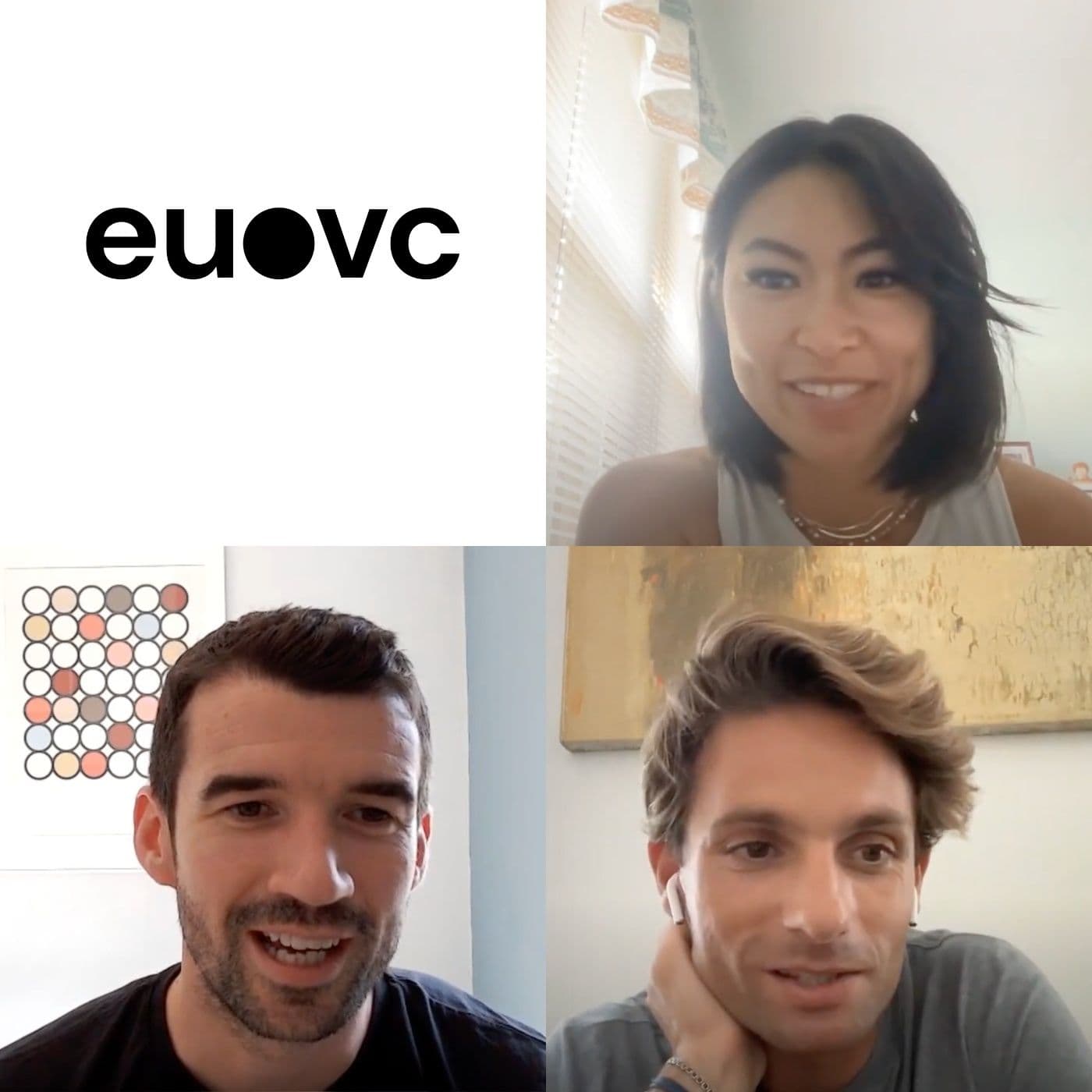
Episode Overview Title: E363 | Tom Wilson (Seedcamp) and Anthony Danon (Cocoa): Angel Investing Insights with Dorothy Chou, Director of Policy & Public Engagement at DeepMind Description: In this episode, hosts Tom Wilson and Anthony Danon converse with Dorothy Chou about her transition to angel investing, focusing on diversity in the startup ecosystem and the transformative power of AI.
Key Themes and Discussions
- Dorothy's Journey to Angel Investing
- Background: Dorothy's career spans major tech companies, including Google, Dropbox, and Uber, culminating in her current role at DeepMind.
- Realization During COVID: Began questioning the lack of diversity among founders and sought to support underrepresented groups in the startup ecosystem.
- Importance of Diversity in Founding Teams
- Cultural Influence: Founders shape company culture and investing in diverse founders can activate overlooked markets.
- Women’s Health Focus: Dorothy emphasizes the need for investment in women’s health, noting unique challenges such as societal norms around women's spending on health.
- Angel Investment Experiences
- First Investment: Dorothy's first investment was in JusticeText, a legal tech company aiding public defenders, which exemplifies aligning with socially impactful ventures.
- Notable Investments: Other investments include:
- The Lowdown: A platform aggregating women’s health experiences (contraceptives, IVF, menopause).
- Cusp AI: Focused on material science and climate.
- Leveraging Networks in Angel Investing
- Value of Access: Recognizing her extensive network as an asset in sourcing deals and supporting founders.
- Importance of Relationships: Building genuine connections rather than transactional relationships enhances deal sourcing and collaboration.
- Systemic Change in Venture Capital
- Reevaluation of 'Safe' Investments: Traditional metrics often overlook high-potential diverse founders. The need exists to redefine what constitutes a sound investment.
- Public-Private Partnerships: Highlighting their necessity in advancing social change and fostering innovation, particularly in AI.
- AI’s Role in Science and Society
- Impact of AI: Discussing AI's potential to expedite scientific discoveries, particularly in healthcare, and its importance in solving neglected diseases.
- Regulatory Collaboration: Emphasizing the need for collaboration between startups, governments, and regulatory bodies to ensure AI is utilized safely and effectively.
Core Learnings from Dorothy Chou
- Diversity Drives Innovation: Investing in diverse founders can lead to discovering untapped markets and solutions.
- Rethinking Investability: Acknowledging unconscious biases and redefining what constitutes a 'safe' founder can uncover new opportunities.
- Need for Structural Change: Advocating for systemic changes in venture capital to support underrepresented founders not as a charitable act but as a business imperative.
Quick Fire Questions
- Most Counterintuitive Learning: Hype does not necessarily equate to quality investments; diligence is often lacking.
- Tips for International Investing:
- Understand local regulations and market dynamics.
- Build a network of local insights.
- Look for solutions that address local needs with global scalability.
- Advice for Younger Self: Trust your instincts and judgments, as VC is as much art as it is science.
Conclusion This episode provides a comprehensive look into the perspectives of angel investing, highlighting the importance of diversity, innovative thinking, and the intersection of technology and social impact. Dorothy Chou’s insights underscore the need for a transformative approach to venture capital that embraces underrepresented founders and fosters systemic change.
---
For more insights and to stay updated on European VC, visit [eu.vc](https://eu.vc).
Written by AI. May contain mistakes. Listen to the episode to check what was said.
Transcript
Automatic transcript. May contain errors.0:28Welcome everyone to the Super Angel Podcast. collaborate and co-create the future. Mark your calendar. 13th to the 16th October 2024 at Dubai Harbour, where dreams meet scale. Expand Northstar is not just an event. It's an all-in-one opportunity offering a massive value with a single free pass. Expand Northstar provides the ideal ecosystem to turn your ambitions into reality. Back to reality, man! Secure your free pass now and join us in Dubai. Dream big, scale bigger. Is this a dream? No, it's not a dream. I'm an angel. Why would God send me an angel? Because God knows that everyone needs a little coaching now and then.
1:09I'm loving angels. I saw an angel. All angels say. Angels. All along. Yeah, you say it's me, an angel. The smile on her face. We're here to get that little angel. You think so is by an angel, girl. This show is not investment advice, and the hosts of this episode may be invested in the funds and companies featured. Thanks for joining the show, Dorothy. Very interesting background. Dropbox, Uber, now DeepMind. So excited to learn more. Thank you for joining. Thanks for having me. This is a lot of fun. I'm excited. Let's get started then. So do you want to tell us a bit more about your story and what led you to kind of angel investing in the first place as well?
1:53Yeah. So I'm American. And I went to school in Washington, D.C., always wanted to study politics, really interested in social change and what drives that. But after school, I spent a few years in D.C., went to the Silicon Valley and then came to London about seven years ago. So it's been a journey. I would say I've always been in scale ups, basically. So I joined other than Google, I joined companies at like a couple hundred and then take them to a couple thousand. So it's that scale up hyper growth phase that I'm super interested in, usually around just pre IPO. And during COVID, I came to this realization that I've been taking bets on people my whole life.
2:39Right. I bet on founders, obviously, and giving them my time and my energy is a real thing. and it's the same profile of founder over and over. And that was a really tough realization for me as somebody who considers herself progressive and wanting to really drive change in the world. And so when I looked around, I was thinking to myself, what are the ways that I can support more diversity in the ecosystem? And I think having worked at these major scale-ups you realize that founders drive so much of the culture. And usually, a lot of these companies are built in the image of their founders. And so I started thinking, what would happen if I really thought hard about backing overlooked founders?
3:32And could that activate some of the undervalued markets that we deeply need? So I actually started doing angel investing in women's health in particular, just because I wanted to understand a single vertical. I had never done this before, so I was thinking if I stuck with one topic, I could probably do better pattern matching. And what I found was a couple dynamics that were really tough. One being women, especially in place where there's socialized health care, aren't used to paying for their own health. And I was working with Atomico at the time, who did a survey that showed if you ask women to stack rank their needs and what they'll spend money on over other household expenses, they will always spend money on other people.
4:18And so it's not just a, oh, there's lack of investment in the system and people don't think women's health is real. There is a fundamental social interaction in your brain that enables women to basically put themselves last. And that is a combination of factors that are social, political, cultural, in addition to financial that I found super interesting and also really wanted to do something about. because what Atomica was saying to me was that even if there is a need, we're not sure if there's a market if women won't pay for their own health. So there's so many interesting things I've learned along the way like that and have really pushed me into doing even more angel investing to kind of shift these different dynamics.
5:05So I really see it as a lever to create social change. It's quite inspiring, and I wish we had more of you. And so maybe to make it a bit more real on some of the kind of like since then interesting founders you've met or kind of companies you've backed, do you want to kind of share a few? I mean, the first deal I did was actually, now I remember it, not in women's health. I had called a very good friend in San Francisco named Roy Bahat at Bloomberg Beta who does future of work investing. And I said, I have no idea what I'm doing, but I really want to get started. This is what I care about. and a couple weeks later he emailed me saying i have a deal for you it also happened to be a former deep mind intern which was perfect for me so i felt kind of like kismet i was like oh this is meant to be and they were building uh a company called justice text after um george floyd was murdered uh to create legal tech for public defenders so they were storing archiving and basically using AI to comb through police body camera footage for public defenders who, frankly, were doing that manually.
6:13And we're having a really hard time finding the right pieces of evidence. They could have done that with white collar law firms, but they went in a different direction instead. And now they're expanding across with all these public agencies. And if you start to understand the power, the purchasing power of public procurement is incredibly high. So I'm super proud of them and also happened to be on the cap table with Reid Hoffman and John Legend with my first deal, which was just wild to me. I did not know that's what was happening. So I think sometimes for me, if you follow your instincts and your intuition, that does lead you strangely in the right direction.
6:55And other deals that I love, the lowdown Alice Pelton, who's in the UK, collating experiences from women with different contraceptives, as well as IVF and also menopause. It's amazing to me that we have no data on women's health out there. And so how are you for, you know, I work in AI. How are you supposed to build anything? So really collating that and getting that into the four, especially around just side effects of the different things we're using and doing. And there's a number of other ones. There's like Cusp AI, which I just invested in with Max Welling and Chad Edwards that works specifically on material science and climate.
7:35And so I kind of invest across the board now, but really in traditionally underrepresented founders who are working on really big, interesting problems that are important for society. Amazing. Super cool. And John Legend and Reid Hoffman, what a combo. for a while what a fun cap table that must be um yeah it's no it's fascinating to hear and fascinating to hear the story obviously you know you've you've worked at some of the biggest companies in the world and some of the you know fastest scale-ups from like google dropbox uber and now obviously a deep mind you touched upon this a little bit of your last answer but when you think about the network access that you have now through those companies are you leaning more into that?
8:19Or are you actually trying to look at people who are kind of outside of that, I suppose, you know, very, very like elite access. And it's just interesting, yeah, to understand a little bit how you kind of think about those points. Yeah, it's pretty wild. I didn't realize that access was an asset, if that makes sense. And it's a good friend at Atomico once told me, because I said that I wasn't sure if I was good at this, if that makes sense. And, you know, being brought up in a household where I was very structured and disciplined, I wanted to be good at whatever I was doing. And his point to me was, here's the thing, you've built this network over decades, or two decades, precisely, and you don't understand that other people aren't getting access to the deals that you are.
9:09And so I think that's sometimes what I love about being an angel investor is that you get to realize your own value in a way and what you bring to the table and just being who you are. And that is really rare in the work environment, I think. And so that was a good learning for me. But to your question, I would say, I actually just believe that how you invest reveals what you believe about the future. So do you believe that things should continue the way they are? or do you believe that things should change? And so in my network, I actually have to look harder if I want to find the kind of founders I'm looking for.
9:53And so, you know, backing women and people of color in particular, you know, I'm assessing what makes a safe investment in a quite a different way. And so sometimes it's easy to find them in my network, but sometimes you have to really dig. Often if you focus on areas that are underserved, it's a little bit easier because I think good founders tend to build on their lived experience. But yeah, it's about getting access to both quality, I think, in terms of who's building, as well as looking for people who are specifically, maybe not like the first person you would go to to address this topic, but might be the most relevant.
10:34So one of the examples I have is I have backed a woman named Amber, who's working on Research Grid. And it's a two-sided clinical trial platform to both recruit more diverse people into clinical trials, as well as manage the clinical trials themselves. And she is a woman of color from Canada, living in the UK. And she actually She recently told me that somebody literally pitched her same exact deck with three Caucasian guys trying to build a more inclusive platform, and they raised more money than she did. So the question I think we have to ask ourselves is, who is better suited to solve this problem?
11:17And why is that the case that these three guys would more easily get funding than she would for this kind of idea, right? It's a huge question. I think it was the most recent unicorn or the first unicorn in women's health coming out of Europe was also created by men. It was a period tracking platform, which is great for them. I'm glad that women's health is making it to unicorn status. But also, there's something very strange about that because I'm sure there are women building that. It goes way back, by the way. Sorry to interject. I know, Tom, we have to go to the next segment. But my uncle was a bit like a role model to me.
11:53He did a year on McKinsey, which he disliked. nothing wrong with mckinsey but back back then he told me that his first project was like him and like six other white dudes excuse my language to basically consult a company about the kind of future women's health and kind of like period tracking and tampon technology and i was okay that makes sense anyways hopefully we've come a bit a bit way forward since then but uh loads of work to be done still yeah yeah yeah for sure oh no not about the thesis
12:34that was the sound of the investment thesis segment that means we'll now move to talk a little bit more about strategy and your approach to angel investing kind of like generally we've touched upon a couple of portfolio companies already in the kind of segments but what countries maybe you've invested into. Obviously, you've spent time in the US, spending time obviously in London now. So it'll be great to kick off the conversation around that. Yeah. So I've made over 30 investments in the past three years. Check size is between usually around 5K and 15K, depending on the size and stage of the round.
13:12It's basically a broad set of different areas, all the way from health and women's health to, I would say, climate. I have some infrastructure deals and deep science. I think what I'm really looking for these days is the application of AI to interesting spaces. And the reason I say that is twofold. One, I just think it's sad that we're going to get personalized soda drinks and coffees from AI before we get any impact in health, energy, or education. And it's funny when I say it, because everybody nods, like, yep, that's true. And yet, what are we doing about it? The second reason for that is because I believe that the barriers to those applications are, yes, somewhat technical, but actually really they're people challenges.
14:02And it leverages my expertise in public policy and public engagement to get that done. I mean, applying AI in regulated spaces is very different from other general technologies. So if you take Google search as an example, when we were plugging search mechanisms into different verticals, it kind of just plugged and played and it probably worked better than what was there before. That's just not true for AI. You actually need a certain level of partnership with experts to make sure you're getting the right results and that everything is working as intended. You need like transportation experts, for example, medical experts, you know, energy experts to make sure that things are working the way they're supposed to.
14:43It just takes a lot more groundwork and infrastructure work to make that fly. And I think my area of expertise based on work actually just puts me in a sweet spot to be able to help founders with that. So that's the most important reasons, I think, why. And I've just loved doing it. I mean, it's really interesting to see how the founders solve problems, why things aren't working. It's just as interesting as why they are. You're very intentional with your angel investing in some respects, right? Which I think is really nice and refreshing to hear from an angel perspective. And I think, you know, on the one hand, you talked about comms and some of your superpowers and kind of wanting to utilize those as kind of a key value you want to bring to the table to the founders.
15:33On the other hand, the clear agenda and kind of where you want to play increasingly. How do you think about, I don't know, positioning yourself in a way where you can see more of those founders from a sourcing perspective, right? Whether it's partnering with others or just being discovered more easily. I think you have to be out and about, right? You have to be constantly meeting people. I mean, I think having a really fun network of values aligned VCs has just been amazing. I mean, as soon as they know what you're looking for, you get past deals that are just so fun to look at. And I think on top of that, I really believe it's not transactional.
16:11You're building real friendships, right? If you believe in the same things, you're trying to create the same kind of change and people get you, it's a fun community to be a part of and also learn from. I wasn't always the best networker, if I'm being totally honest. I was professionally raised in Washington, D.C., and so everything there is fairly transactional. And I didn't like that. That's why I left. And so what I've learned about myself is, like, if you can connect on similar values and similar experiences, there's something really amazing about you're looking for the same things and you can find them together.
16:48And I actually think going in on deals with other angels or with funds that I have gotten really close to is some of the greatest partnerships I have because you can kind of bounce ideas off of each other. I think what I'm trying to do is learn from and with other VCs and from and with other founders. And so if you put yourself in that environment, it becomes easier to source the things that you're looking for. Very cool. And I 100 % agree. And I think that the thing I love about this podcast and, you know, having the opportunity to speak with so many interesting people is loads of crossover with some of the stuff, the deals that I like to look at.
17:24So look forward to sending you a load of things over email after this. But a question which I wanted to ask, you know, again, looking through your work history and who you've been exposed to, do you feel that on a founder level that has kind of influenced how you think now about angel investing and backing founders? So if you look at, obviously, the leaders of the companies that you've worked at, and in particular, a lot of those companies, obviously Google and now even more so DeepMind, have been very, very technical missions. And from an investment perspective, I think it's always challenging sometimes to identify some of the traits in those types of founders when they're building businesses in spaces, like you said, that are like AI applied to interesting or hard industries.
18:09So, yeah, I'd love to see if you've taken any learnings from any of those people you've worked with. I mean, one of my big lessons is the question of what does it mean to, there's no good phrase for it, but like disrupt well. And what I mean by that is, when I came into Uber, all the relationships they have with government were basically broken. lack of trust of journalists, all kinds of things that were going on. And I mean, we were brought in with the express purpose of fix this ahead of the IPO. And I got a really good sense of the culture that that created. You had young people who were intending to do amazing things, not really asking the right questions.
18:50And so I really thought about, you know, what is it, what is the moral fiber and attitudes towards collaboration with governments while still being aggressive in terms of how you build the business, because you have to be at pace when you're doing that, that I wanted to see in the founders that I was backing. And I think I want to see a certain level of discipline and going after the problem. But I also want to see a level of scientific rigor in that. And I think that's what I love about DeepMind. And what I've learned the most there is the value. I didn't even know I had that. I couldn't name it before, but my parents are both drug discovery scientists.
19:33My brother's a doctor. It's how I grew up. And so that level of scientific integrity and questioning is incredibly important to me. And I also think I look for founders that are relationally competent. Having high EQ isn't always valued in deep tech, some of these founder circles. But actually, if you look at the biggest reasons why founders fail, a lot of them are deeply relational. They have nothing to do with the financing or the tech. And that is something that I don't think we value or talk about enough. We talk a lot about you know, like market opportunity and size, execution, product market fit, and all these things are important, ability to accelerate.
20:15But at the end of the day, what makes a founder a safe bet or a strong founder is probably very different for this generation and what we want to achieve versus what we've seen before. And I think the system works to structurally push a certain kind of founder to the forefront. And I'm not sure that's yielded the results that we want to see in the world. So we have to do it differently and think about what we believe to be true about these founders in order to really make that change. Totally agree. And I think it's, I hope anyway, and I think I do see, you know, signs in, I've been kind of doing this not for about just over 10 years, and you see some changes in some industries within startups, maybe more than others i think one of the most kind of new to change industry is this kind of like science meets startup world yeah that's the one which i actually think is almost one of the most exciting markets to to be potentially investing in and backing founders but that space obviously has had a history of being funded in a very very different way for so long and now it's now we're seeing that kind of startup mentality almost applied to sciences which i think is really really exciting.
21:31And obviously, DeepMind is probably one of the biggest pioneers in that space, right? Yeah. And I think it has to do with the advent of AI too. It's speeding up the pace that science can be done in a way that wasn't possible before. I mean, you used to take a four-year PhD to structure a single protein and we released 200 million in one go, right? So it's like years to seconds kind of thing. And I think, look, the pace of VC and the returns it requires doesn't allow for as-patient capital, right? And so I think that if you look at the macro trends of science speeding up and VCs looking at that saying, okay, now we can invest because it creates the return profile in the amount of time that we typically would expect.
22:10That makes sense to me. I think it's still going to take a little longer. Like science is not something that you can't just build, like kind of brute force it to happen. So that's something I've really learned at DeepMind. And yet I think it could yield some of the biggest changes. I mean, science is really at the heart of progress, right? Like a lot of, if we look at the pace of scientific discovery and the fact that everybody's saying it's slowing down, and maybe that's a health indicator in society of, are we finding the things that we need to at the pace we need to? I mean, if you look at history, the Renaissance is when everything was flourishing and we found out all kinds of things about ourselves and arts and culture.
22:50And then the dark ages were referred to us when nothing really happened. You know, the speed of the pace of science is incredibly important and how we fund it is incredibly important. And you're right that it's moved from public funding largely to private. And yet I think at least what I've learned at DeepMind is you need public private partnerships to really make science fly and to really encourage that social development aspect of it. I look at, you know, governments and I think you're going to be the number one or two purchaser of AI in the world. And people aren't, and yes, there's the whole defense part, but there's actually so many other parts as well, like in public services that we haven't thought about.
23:30And I think I'm really excited about, you know, some of these new markets that will be created. And I also think about trends like, you know, what is a valuable market that presents a good opportunity? Are we looking just at the existing purchasers in power today? Or are we thinking about how there's a rise in purchase power coming from elsewhere? That will affect the ability to execute quickly and who can accelerate and capture that value faster. I think you can think about how that acceleration could happen tomorrow and who's going to be on top of that. So yeah, I love the idea of science being at the heart of progress and how do we really make sure that can get into the right places to spur that forward.
24:23I almost see this like a generational piece to particularly where it's science. I think that the tools are there. I think, you know, companies like Google DeepMind are making incredible advancements. And I think it's fantastic that they're sharing those openly to get the kind of like understanding that this is possible and i think that would only be possible for from a company which is you know funded to the extent that google deep mind is because you know having like family similar similar to yourself not on my wife's side in in and around this space that the skepticism is is real and the results haven't been fantastic so far but within particular fields but now it feels like we're at a bit more of a tipping point where even that generation are waking up to you know the potential for this kind of as a tool which makes everyone's job not only easier, but could result in amazing breakthroughs.
25:15And then for sure, probably the next generation, probably people kind of our generation who are coming through are going to be even more native within that. And I think the potential for it is gigantic. So it's definitely a fun area. It's one of those areas that whenever I speak to a founder, I'm always reminded of, you know, always feel like the stupidest person in the room, which is the place I like to be. Well, I'm also excited about how it kind of democratizes scientific results. Like, yeah, if you think about working on a neglected disease and there being like no funding in that because there's no profit in that, right?
25:48And now you get access to something that otherwise you would have had to raise funding for to spend four years trying to figure out. Like, it's an amazing thing in terms of what breakthroughs can do to spur on like discoveries where they would never have been found before. If that makes sense. I mean, it is. I absolutely agree. Right. I think we could probably get on that rabbit hole for another hour. Maybe Anthony, do you want to take us into kind of like exploring some core learnings? Because for sure, for sure. You've been in flows. I didn't want to interrupt. And actually I've been leveraging both of your minds.
26:20It's been amazing. Thank you for that. You're out here learning more about them angels, are you?
26:30Let's switch gears a bit into the third segment, core learning. So going back to the craft of angel investing, but kind of blending your experiences and a lot of what you've done within that, if you had to kind of pick two, three core learnings from your time, angel investing, what would those be? I would say diversity and how that is going to lead you to new markets and activating new markets that maybe haven't been tapped yet is a real key. I think the more I talk to diverse founders who frankly aren't getting funding as easily, the more I find novel and different solutions for frankly, currently just underserved, but also under activated markets.
27:18And that can be really crucial for filling some of these gaps that haven't been addressed yet. Like women's health, you know, sometimes you uncover all kinds of reasons why things are underserved. And then if you can unravel that with your skill set, like with me on, you know, policy, reputation, and comms, I do think government needs to get involved where there are market failures. That can make a real difference for not just the founders, but people who need those services. So that's one. I think two is, you know, redefining what safe and investability looks like. I do think traditional VC metrics really miss some high potential founders.
28:00You know, we, in society, we let certain, we're very comfortable with certain types of people, you know, trying something and failing and not others. Like I, being a woman of color myself, I feel like I've been on this tight rope my whole life. Like I remember early on dating somebody and he was like, yeah, you know, I just breezed through high school and college and it's all fine. And I was like, I've been working hard since I was 10 years old. I've had no margin for error. And I think to myself, and A, that makes me risk averse, but also if I were to start something, that means I will be very exacting in how I do it.
28:36And I had very strong convictions about how I work. And so So I do think, you know, really rethinking what we think is a safe and investable founder and what that profile and looking at some of our unconscious biases is what's going to drive the next wave of amazing founders. And I think the third alongside that is that we do need some systemic change in the way we do venture capital. There's a lot of funds that I think do support underrepresented founders as like a CSR activity, and they think we all need extra help. rather than just looking at that as a complete asset. So, you know, those are the kinds of learnings I've had is that I don't have to do it the way everybody else is.
Read the full transcript
29:21And I can think about who is a valuable market that presents a good opportunity in a very different way. And that can lead you to some really interesting things and conversations. Like, you know, when we angel invest, we're not doing it solely to make tons of money. Maybe some people are, I just think that's, you're also not going to be the check that makes the founder succeed. Like, that's just not the case. And so you have to think about the real drivers for why you're doing it and how that aligns with your personal values. I think that's what makes it fun. Otherwise, it's just another piece of work, right?
30:01Very interesting. I must say, very additive to some of the other guests we've had. So thank you for sharing. And also on the second point around kind of unconscious bias, you know, stereotyping over generalizing. I do think context really matters. People don't probe, you know, enough. And I think going back to what you were discussing with Tom before around kind of now the more kind of scientific twist to what we're seeing. I think there is, you know, both an opportunity, but also kind of a bit of a reset to kind of end the risk potentially kind of using some of that unconscious bias might harm.
30:35because we might not be kind of like rethinking how we look through some of those types of founders, but also an opportunity to actually say, oh, there's a very different type of founders in terms of like the ways we used to assess until now. There's a bit of a shift and maybe that's an opportunity where kind of we can all proactively change a bit. But yeah, it's interesting. Totally. Like I think local, like we don't, for whatever reason, we didn't used to look at local context to your point and personal experience, right? Like there was a whole trend of, oh, all these industries are broken and tech founders will come in and save it and fix it.
31:10And yes, we bring some like tech founders bring something to the table. But you really do need industry expertise, especially like I was saying in AI, to be able to apply it effectively. Like, you know, it used to be that we said regulation was just a barrier to innovation. It's a problem. And then I had to think, I was like, well, actually, you know, things that come from elected officials might be your best user signal. They are literally elected to represent users. Let's figure out how we're going to use that and how we can shape that. You know, it's a lot of what we work on in AI regulation right now is about safety.
31:47And that is important. But actually, industrial policy and how you get AI implemented into energy education and health context is just as important. So how do you work with policymakers on creating the right sandboxes to be able to do that? I mean, at this point, what I'm nervous about is that, to Tom's earlier point, bad AI gets adopted because the regs are too antiquated. And then people don't trust it because the results are bad. Right. And so how do you get the highest quality services into the places where they're going to make the biggest difference? Like that takes more than just VC funding.
32:31It takes structural change. And I think picking up on the second of your learning around, you know, the investability of individuals and working out your unconscious bias, which I think is incredibly important. It comes back. One of the things I take away from that, and I always try to remind myself that sometimes you do get lost, is that inevitably this is like a huge outlier business. right you know we're looking back like people who are not conforming in the middle and perfect kind of you know a grade individuals in whatever sense that is and however you define it it is it there is going to be spikes there is going to be kind of like outlier things and probably the next great founder will be someone who doesn't look necessarily like the last great founder or one of the last great founders and so it is that outlier thing that it's what makes this kind of job or angel investing generally incredibly difficult but also what makes it so interesting and so i think it's a really really important point i've had um number of guy friends leave deep mind and have no like literally put words on a screen and get like millions of dollars in investments and then the women who are leaving wanting to solve more tangible problems like not just create foundation models, for example.
33:48And one of them called me and she was like, I know you gave me investment, but I'm going to have to give it back because I can't raise. And she was the same exact technical credentials, like a technical manager, which is very rare, you can imagine, a research manager with an AI who was doing really well. And that will tell you something because you would think that that's not the case. I have friends who are people of color trying to leave or who have left DeepMind to start their own companies as well. Similar journey, very difficult. You would think the brand gets you there, but it doesn't. And so that's how I know it's still a real issue.
34:24It's not just me, you know, generalizing about it. I've seen it personally and close up. Absolutely. Well, you've got to send those companies to me and Anthony next time. I will. Definitely. Cool. Anyway, thank you so much for opening up on those points. So really, really interesting to dive into those. Now, one way we love to end all of these episodes is with a bit of a quick fire.
34:56It's 30, 60 seconds each per answer. How does that sound? Yeah, let's do it. Let's kick things off. So what was the most counterintuitive thing you have learned since you started angel investing? Oh my gosh. So the hype cycles don't always create the best investments. Like the hottest deals aren't always the best ones. It turns out people don't diligence that much. And hype is created by just the same thing over and over again. And if you're going to look for something different, I mean, it's not that every deal that's hyped isn't good, but it's more you have to be very clear about what you're looking for and does the criteria of the hyped thing fit that?
35:42And then also the question is, how do you create hype around the deals that matter? So hype is a really strange thing for me. And I find that the VC flywheel is not scientific at all, which I did not know. So yeah, that was the most counterintuitive thing. 100 % agree. Okay, next one. What would be your top tips to angels wanting to do more international investments? So the first thing I would say is that it requires you either understanding or trusting someone to understand the local context. So regulation, culture, market dynamics really vary significantly. And the best example of this is you look at Uber and Stripe, to regulated businesses, one in transportation, one in finance.
36:26Turns out transportation and money are deeply cultural, and they're different in every single market. And so it's crucial to either trust that the founder understands it or make sure that you understand it is the first thing. I think regulatory environments, you know, I'm sensitive to that chain. They're different, and they regulate based on their cultures. The second one is just really making sure you have a strong network of people who have that local context to provide you on the ground insights. I want to say that I have a friend that's raising for a startup that he primarily wants to build in developing countries to ensure people have AI skills.
37:05There's a lot of outsourcing some of the data labeling work for AI to developing countries. And his point was, well, we need to help those people rise through the system to become bigger players in AI, not just data labelers over time. and he's having a hard time finding investment because he wants to focus on Africa. And then the investors say, well, I don't understand Africa, but this guy does. And so you just have to think through like, what is the proxy for that? You're trusting to take a bet on something anyway, no matter what. And usually you don't understand the whole deal, especially if you're an angel.
37:35So what is that thing that you're going to trust and take a bet on? And I would say if somebody comes from a place, they probably have better knowledge of that than some person who's learned it. So there you go. And then the third, I think I look for solutions that address local needs, but really have potential for global impact. So it might be that, you know, you start in one location, but there are things that are generalizable about what's being built. And then the question is, you know, if you're someone like me and believe that you have the skills to help people do go to market, like that's actually real value that you're bringing to the table.
38:09and so it doesn't matter where that solution is coming from and hopefully from at least somebody who values hyper local context and then taking that to different markets um at a global level is is what you're hoping for right over time so last last question of the quick fires and probably my favorite one always my favorite one um so what advice would you give your 10 year younger self if you only had 30 seconds? Well, I think it's trust yourself is a big one. I think I, you know, really grew up in a performance culture where I was, and a lot of Asian Americans, I think share this trait of somebody says jump and you say how high, and that's just kind of how you're raised.
38:52But I think in more recent years, I've found that actually I know where I want to jump and I can figure out how high that goes. and when it comes to VC, it's more of an art than a science in some ways. I know we've talked about scientific method, but actually like there's the big part of me that is just, I want to trust and then verify, right? So I look for the thing that I'm intuitively drawn to and then I verify that down the line. And I think for women of color, you're taught that your way of doing it is almost intuitively wrong um you're constantly being gaslit so for me i think through my life i wish i had trust my own judgments and standards more and i think i'm really getting there now and vc has actually really helped me to do that weirdly um it's helped me to come into my own which is why i enjoy it so much great way to end great answer anthony absolutely no no i mean just just to say thank you i mean thank you for joining us dorit it's very much one of the most additive shows we've had to date for sure.
39:59And I think it's a privilege to have you as part of the ecosystem. So thank you again for joining and contributing. It's been so much fun. Thanks so much for having me. Here's a few words from our beloved sponsor. Enter the world's largest and most dynamic space for startups, investors and corporate innovators at Expand Northstar. There you'll find 70 ,000 plus international visitors, 1 ,800 plus startups, 1 ,200 plus investors, 450 plus global speakers and infinite opportunities to connect, collaborate and co-create the future. Mark your calendar. 13th to the 16th October 2024 at Dubai Harbor, where dreams meet scale.
40:41Expand Northstar is not just an event. It's an all-in-one opportunity offering a massive value with a single free pass. Expand Northstar provides the ideal ecosystem to turn your ambitions into Back to reality, man! Secure your free pass now and join us in Dubai. Dream big, scale bigger. Is this a dream? No, it's not a dream. I'm an angel. Why would God send me an angel? Because God knows that everyone needs a little coaching now and then. I'm loving angels. I saw an angel. All angels sing for a long day. You sing to me an angel. The smile on her face. We in it together. Don't want me, Johnny.
41:23You've been touched by an angel, girl.
From the publisher
Dorothy shares her journey from working at major tech companies to becoming an angel investor. She raises the importance of diversity in the startup ecosystem, particularly in supporting underrepresented founders. Dorothy highlights the need for a systemic change in venture capital and how her experiences have shaped her investment strategy. She also discusses AI's potential for driving social change and innovation.
Go to eu.vc for our core learnings and the full video interview 👀
Chapters:
01:45 Dorothy's Journey to Angel Investing
03:12 Focusing on Diversity in Founding Teams
03:38 Venturing into Women's Health
03:56 Challenges in Women's Health Investment
05:23 First Angel Investment Experience
05:54 Success Stories and Notable Investments
06:25 The Power of Public Procurement
08:09 Leveraging Networks in Angel Investing
09:29 The Importance of Access and Diversity
09:54 Backing Underrepresented Founders
19:40 The Role of Relational Competence
21:35 AI's Impact on Science and Society
22:43 Public-Private Partnerships in AI
26:35 Core Learnings in Angel Investing
35:09 Counterintuitive Insights in Investing


