
In short
EUVC Podcast Episode Summary: E532 | Eoghan O’Neill, European Commission AI Office: Unpacking the AI Act & Europe's Global AI Play
Podcast Details
- Title: EUVC
- Description: The go-to podcast for everything European VC, co-hosted by Andreas Munk Holm and David Cruz e Silva, featuring prominent figures from the European VC industry.
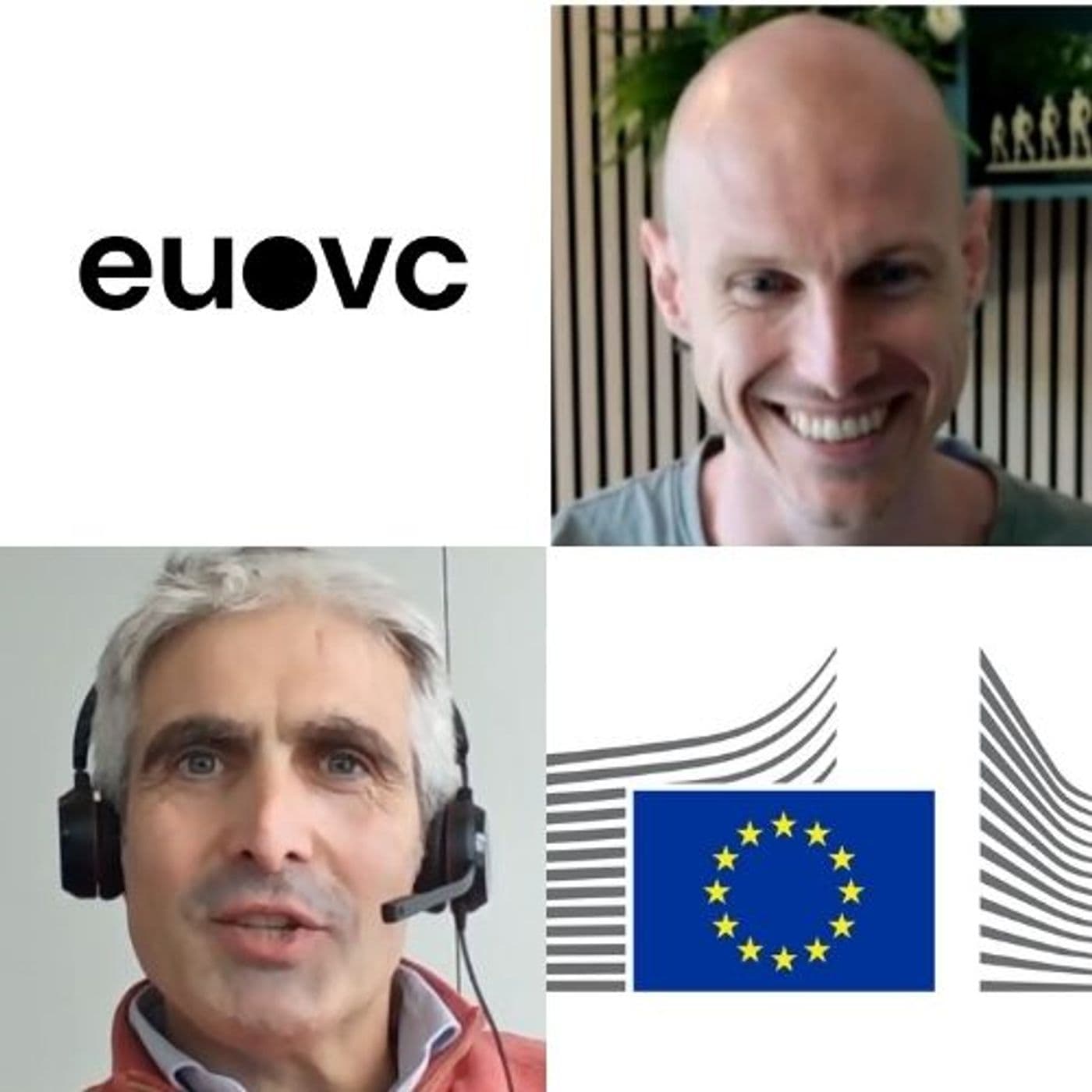
Episode Overview In this episode, co-host Andreas Munk Holm speaks with Eoghan O’Neill, Senior Policy Officer at the European Commission’s AI Office, about the EU AI Act and Europe’s strategy to lead the global AI landscape with emphasis on trust, safety, and infrastructure.
Key Topics Covered
- Introduction to Eoghan O’Neill
- Background in engineering; transitioned from the pet food industry to IT and eventually to the European Commission.
- Joined AI Office in June 2022, focusing on AI regulatory and non-regulatory matters.
- The AI Office's Mission and Structure
- The AI Office was established to unify various teams within the Commission dealing with AI, focusing on trustworthiness and advancing Europe’s AI capabilities.
- Understanding the AI Act
- Product Safety Framework: The Act is framed as a product safety regulation, similar to those in aviation and medical devices, rather than competition law.
- Designed to cultivate trust in AI-driven products and services, fostering innovation and market uptake.
- Creation Process of the AI Act
- Developed through an open, collaborative process involving over 1,000 stakeholders, including large tech firms, SMEs, academia, and NGOs.
- High-Risk AI Identification
- Discussion on what constitutes high-risk AI and the criteria for categorizing AI systems (e.g., biometrics, critical infrastructure, law enforcement).
- Emphasis on the importance of startups understanding their compliance obligations under the Act.
- Learning from GDPR
- Insights on ensuring that the AI Act does not stifle innovation like GDPR has been criticized for doing.
- Acknowledgment of the need for a balance between regulation and innovation.
- Transparency and Regulation Limits
- Importance of transparency in AI systems, similar to nutritional labeling on food products, to build consumer trust.
- The Act aims to regulate effectively without becoming overly restrictive.
- VC Obligations and Strategy
- VCs should be aware of the timelines and obligations pertaining to the AI Act, particularly regarding high-risk categories.
- Encouragement for investors to understand the opportunities arising from the AI Act's framework.
- Europe's Global AI Position
- Discussion on Europe’s strengths in AI: more AI engineers per capita than the US, a significant number of top public supercomputers, and free access to computational power for approved startups.
- Emphasis on the need for a strategic approach to leverage these strengths.
- Future of AI and Global Dynamics
- Insights into the global AI landscape, including impacts from the US and China, and emerging trends from Gulf states investing in AI.
Key Takeaways
- Proactive Framework: The EU AI Act is not merely regulatory red tape; it aims to foster innovation across all sectors.
- Engagement: The collaborative approach in drafting the AI Act directly involves a wide range of stakeholders, ensuring that the voices of startups are heard.
- Market Opportunities: The Act positions Europe favorably as a global player in the AI domain by creating a regulatory environment that encourages trust and innovation.
- Continuous Dialogue: There’s an ongoing call for greater engagement between the venture community and the European Commission to address misconceptions and promote understanding.
Conclusion The conversation highlights the intricate balance between regulation and innovation that the EU is aiming to achieve with the AI Act. While acknowledging criticisms of previous regulations like GDPR, the focus is on ensuring that the AI Act fosters an environment of growth and trust in AI technologies.
---
For more insights on European venture capital and the AI landscape, tune in to [EUVC](https://eu.vc).
Written by AI. May contain mistakes. Listen to the episode to check what was said.
Transcript
Automatic transcript. May contain errors.0:00You know the saying, the US innovates, China replicates and Europe regulates, but in AI, is that still true? To explore that, today on the EUVC podcast, we have Owen O 'Neill, Senior Policy Officer at the European Commission's AI office, to shed light on the act's nuances and its impact on European innovation. We explore the EU AI Act. Europe's bold move to shape AI responsibly? Or is it just another bureaucratic overreach? First thing to keep in mind with the AI Act is it's not competition law. It's a product safety regulation. We break down why it's closer to medical devices or escalators than a digital clampdown.
0:35If you're a startup in that space, the first question to address is, are we in the prohibited systems game? If you are, you need to make sure you're not releasing anything in the EU because it's now prohibited under the Act. How Europe's pulling startups into the process and why most won't even hit the high-risk rules. We also asked the hard questions about regulatory capture, comparisons to GDPR, and whether Europe is stifling or enabling innovation. In a simple sentence, the AI Act can deliver for wider society trust in AI-driven products and services, and that can drive market uptake. For the founders who navigate it early, this isn't just compliance.
1:13It can also be an edge. Access to that compute power, free, no charge, gratis. Europe is a player here. Tune in now for the real story on AI landscape in Europe. Explore whether Europe is regulating or leading. with Andreas and Owen on the EUVC podcast.
1:32Before we start the show, a quick note. If you're building or running a fund, you know it takes the right partners. At EUVC, we only work with sponsors we truly believe should be part of your tech stack. Please do take a moment to hear about them. And if you do, reach out, mention EUVC. It's the best way you can support what we do. Thank you so much. Starting off, HSBC Innovation Banking. If you're a founder, a scale-up or a VC, you need a bank that actually understands your world. HSBC Innovation Banking backs innovation globally from seed to IPO. And if you ask me, a strong banking partner like HSBC belongs in your stack.
2:08If your portfolio companies are scaling, they need infrastructure that won't slow them down. Google Cloud Starter Program offers$2 ,000 to$350 ,000 in credits, plus technical support to build better and faster. It's a key boost every fund should bring into their ecosystem and oh my god are we thankful to be partnering with them. Now legal is a space you cannot lag on. Legal needs to move at the speed of venture. Goodwin's team has decades of experience with startups and funds. They're trusted at every stage from formation to exit. Goodwin definitely is a legal partner every series manager should have in their stack.
2:43For Luxembourg based VC, PE and fund of fund managers, modern funds means going digital. Funcrafts gives you a full service, digital native platform built for today's European managers. It's a must have if you're scaling smart. So we all hear about the Middle East. How about you go there? From AI to deep tech to summer funds, Guy Techs in Dubai is where global future of tech gets negotiated. It's not just a conference, it's where East meets West, capital meets innovation and the bolts set the agenda. If you're playing on the global stage, join us going to Guy Techs this year. If you're gearing up for your next fundraiser and want a placement agent who truly understands emerging managers reach out to cfunds their boutique placement agency that has helped gps across here brace capital from top tier lps we've been on the other side of the table here they are actually good ones to work with so i do urge you to go to cfunds.io to go and check them out and hey before you go if you're looking to discover startups raise capital or connect with innovation leaders do check out dealflow.eu the eu-backed platform bridging founders vcs and corporates.
3:44There's no better place to find the startups that have received significant funding from the European innovation ecosystem.
4:03This show is not investment advice, and the hosts of this episode may be invested in the funds and companies featured. Welcome back, everyone, to another episode of the EUVC podcast. As you know, we try and connect and champion European venture. And today we're diving into a topic that's been stirring conversations across the continent, the EU AI Act. With Europe's ambition to lead in trustworthy AI, understanding the implications of this regulation is absolutely crucial for all the startups and investors, as well as the broader ecosystem out there. Joining us is Owen O 'Neill, Senior Policy Officer at the European Commission's AI Office, to shed light on the act's nuances and its impact on European innovation.
4:45Owen, welcome to the pod. Andreas, delighted to be here. Greetings from the austere offices of the AI office here in Brussels. No pool tables, no ping pong tables, no juice bars to distract us from the important work we have to do here. But we do actually get some very nice headphones, as you can see. And I can't see, I don't know if you can see, there's a very nice red trim hidden away there inside the matte black. So we do get some treats. to do our work. I can tell you I've done podcast episodes with people in more or steered places. Places like basements are definitely a go-to for many VCs.
5:24So, Owen, let's get into it. Let's start a bit with your background so everyone understands why you lined it up at the European Commission working on AI Act. Well, I joined the AI office of the Commission was established almost a year ago to the day, middle of June last year. And I joined it from the very, very beginning. I moved to it. I was previously on the enforcement team for the EU's Digital Markets Act, Digital Services Act. But I've been around the commission, working here for over 20 years. If we go way back, I'm an engineer. I did civil engineering in Trinity College, Dublin. Started out my career in, of all places, working in the pet food industry.
6:07I was a king in the world of designing gravy systems for pet food. on this continent many years ago. But then I ended up moving from, in a non-linear fashion, from the pet food industry to the IT industry, working for one of the big companies before joining the commission. And all of the time in the commission, I've been working on the digital side, digital research in innovation programs, innovation policy, then the regulatory side, the DMA, the DSA, and now the AI office, where we're doing, yes, regulatory stuff, but also non-regulatory stuff. But I'm sure we'll get to talk about it. Andreas?
6:44Owen, you have done what few have ever done, which is go towards the more sexy space of AI regulation. Not a lot of people go to regulation and end up in a more sexy place than they were before, but I guess designing pet food systems counts as less sexy than regulation. Don't underestimate the attractiveness of the pet food industry. That's all I'll say, okay? Yes, but there are some VCs that make real money there. Let's get into it. Let's talk about the mission and the responsibilities of the AI office, just so everyone fully understands why it's such a central body for us. The AI office was set up to bring together a number of different teams we had in the commission looking at AI, looking at the regulatory side, looking at the funding of research and innovation, looking at the infrastructure side.
7:38We had teams involved in the financing and strategies for supercomputing facilities across the EU. All of this was rolled together into the AI office starting a year ago so that we would be working together in terms of driving the AI in Europe in terms of its trustworthiness, its use, and advancing Europe's capabilities here instead of us working in different silos. but yet started one year ago. I think everyone understands the importance of AI. Just before we go into the act, let me just give a huge shout out to Thais at DealFlowEU for connecting us because he was the guy who said, Andreas, I think you should talk to Owen.
8:22So Thais, if you're out there listening, I hope you are. Thank you so much for this introduction. Now let's go to the AI Act. I'd love to ask you, could you just outline the primary goals of the EU AI Act and how it aims to balance innovation with regulation? First thing to keep in mind with the AI Act is it's not competition law. It's a product safety regulation. And product safety regulations are something that are well established in modern developed economies. They underpin some of the marvels of modern living in a modern developed economy. the aviation industry, medical devices, escalators in metro systems, high-speed rail, food production.
9:08All of these tech-driven services and products are being used en masse because of product safety regulations. There is trust in these products, in these services. So product safety regulations are a feature, not a bug, of modern developed economies. And they're non-controversial. There's no pushback in these sectors saying these product safety regulations aren't helpful. They're widely accepted. And what the EU has decided audaciously is, well, this proven approach for bringing new cutting edge tech driven products and services, we're actually going to also use that for AI driven products and services.
9:54It worked in other areas, this product safety regulation approach, and that's exactly what we're bringing now in the EU through the AI Act, a product safety regulation for the AI era. How would you though, because there's a lot of discussion in this area and of course, a big critique from many, which say that AI is just not at a place where you can yet regulate it without creating a bunch of over-regulation that's not necessary at this stage. Right now, we just got to let it run. Well, let's keep in mind of one thing. AI is now being used at scale by the masses. This is no longer a fringe technology being used on the edge of society by some early adopters.
10:45AI is in literally the pocket of almost every citizen in the developed world in some form or another. We're not at the, you know, the Orville Wright, the early days of the aviation industry back on a beach in Carolina at the beginning of the last century. We're now at a moment where probably the order of a billion or more people have access to AI and the capabilities of AI models and systems continue to grow. And I think it is broadly accepted this is not a zero risk technology, just as flying in an airplane is not a zero risk proposition or interacting with a medical device or even an escalator in a metro station.
11:33And the EU, based on its experience with product service regulations, has decided we're going to regulate in this space. But we will do so in very close cooperation with the key stakeholders in shaping the regulation, how it is enforced, how it is implemented. This is a key feature of how the AI Act is going to impact in the world. You shared a good story last time we spoke on this very involving process or open process of creating the AI Act. So maybe you can talk a bit about how you've structured that, the parties that has been involved and so on. Yeah, if you take the AI Act, you break its focus down into two populations.
12:21One population being generative AI model providers and the other population being those developing AI systems, which could be downstream making use of AI models. Let's focus for a moment on that first population, the providers of generative AI models. They will be the first community who will have compliance obligations under the AI Act. It's in August, August this year, their compliance obligations kick in. The question was, how do we go about implementing the act for those providers? What the commission did was, last year we announced, we called, we created a code of practice working group, open call for stakeholders to apply to join.
13:05We have about 1 ,000 individuals who are in this code of practice group. And what is this code of practice group doing? It is developing a code of practice to be used by providers of general purpose AI systems, gen AI systems, models, should I say. We have everybody, the full spectrum of stakeholders are there shaping this code of practice. First key thing to mention is the commission is facilitating this. We, my colleagues here, we are not authoring the code of practice. We used our convening powers to bring together the community of stakeholders. And among these 1 ,000, we have the full spectrum.
13:47Yes, we've got the antropics, the mistrials, the open AIs, the metas of the world who are delivering models at scale. We've also got downstream users of these models, SMEs, startups. We've got academia. We've got global AI safety experts. We've got lawyers. We've got the full, we've got NGOs, you've got civic society representatives and organizations. We've everybody on board. Now, it's broken down into four working groups where the chairs of those working groups are globally reputed, respected figures of consequence who are chairing those four working groups. So this is a, if I do say so with institutional immodesty, I put this forward as being an excellent example of collaborative work to support a regulator in enforcing a regulation in a way that is helpful to the wide community of stakeholders, including the technology providers.
14:51And it's going really well. The chairs of one of the working groups, the chair of the test risk mitigation working group, Joshua Bengio, who is a during prize award winner. He only about three weeks ago on the public record said that he considered this code of practice approach to be exemplary. It's bringing in voices from every corner of the community to come up with a code of practice that then can facilitate the commission in enforcing the AI Act in a way that is helpful to this wide community. And it should be concluding soon. We're expecting probably in July, the fourth and final draft of the Code of Practice.
15:34This is all in the public domain. The previous three drafts are out there, accessible to the public. I can see the direction this is taking. The chairs asked the commission if they could have more time for drafting. We were happy to say, sure, yes, take more time. Let's do our best. Let's help you, give you what you need to try and do as good a job to bring all of these voices on board with a text that can be accepted by the community of a thousand people. You always, yeah, now you mentioned maybe a magical number there, because one of the critiques or risks of running an open process, so to say, where you get input is that the places where you get most input are from the stronger organizations, which then leads to regulatory capture because the only people that have the means to influence are those that have good lobbyists and good people working on this type of thing.
16:26And someone building something in a garage will, by nature, not have their focus there, meaning that startups get squeezed out. How have you ensured that the startup community is properly listened to in this process? First of all, we facilitate. We're not in there micromanaging the discussions and the exchanges. We did make sure that the working group leads were strong figures who would be able to bring balance to all of the voices that are coming that would be able to take on board the considerations and the points being raised by the wide community we're not in there micromanaging but we have we made this open we made it very broad in order to bring in the voices of not just big players but smaller players to the chairs recognize the need for more time and we as i to repeat what i said earlier, we were happy to do that, to let them have that more time.
17:22Let's go to the impact on startups here. If I ask you the question, what practical steps startups that are developing AI-powered solutions should take to comply with the AI Act? Okay. The first thing is to try and establish if the AI Act is actually relevant to your business. The main provisions of the Act do not need to be addressed or to be obliged, complied with by all actors in this space. Let's take that second population. We discussed a few moments ago the general purpose AI developers and the court of practice. Now let's move to the second population, those developing AI systems. If you're a startup in that space, the first question to address is, are we in the prohibited systems game?
18:16That's scraped facial recognition data, social scoring, biometric categorization, crime prediction. If you are, you need to make sure you're not releasing anything in the EU because it's now prohibited under the Act. So let's assume you're not in that space. Excellent. Next question is, are you offering solutions in any of the high-risk categories for AI that are in the AI Act? These are AI systems in terms of biometrics. It's all listed in the Act, but I'll share it with you now. Biometrics, critical infrastructure, AI solutions for education, such as evaluating students, the admission of students into universities or the monitoring of students, employment, such as in the recruitment game, AI for law enforcement is a high risk, as well as AI for migration, asylum, board and control management, and finally, AI for the administration of justice.
19:12If your offering is in that space, it's still perfectly legal to launch it, acceptable in the EU, but you do have compliance obligations. Those are obligations. Let me just ask you, because you gave an education example there where you said it was monitoring students or it was the admission process. What if I offer a training or a teaching solution using AI, basically an AI tutor, would that count as an educational tool that falls under the AI? I'm going to dodge your question. I'm not going to preempt here. All right, but hang on a moment. What we do have, and I go back to our fundamental approach here with the AI, is to be open and to solicit inputs to help us with our enforcement of this.
20:03As we sit here talking to each other, we have open at the moment until I think it is next week, a public consultation on high risk systems, on how to classify them, seeking from the community of innovators out there examples of AI systems in these areas and to help us with the possible classification of high risk systems in these different categories. So we're not just sort of deciding here in our austere offices on our own on what could be classified under these. We're also engaging with the community of innovators. So I don't want to preempt that process. We have the categories. We want to understand better what will be considered as something that falls under them.
20:51That process is underway. So just because you're delivering a service in education doesn't make you in the high-risk category. It's specific items within… Indeed. And following on the consultation we're having at the moment, we are going to be issuing guidelines. Guidelines that will make it much easier for me or anybody else to answer the very question you posed. We're not there yet, Andreas. It wasn't planned that we would be there at this point in time. It's one of the things we're working on. We will be issuing guidelines. In fact, I know the timeline. February next year, which is a full six months before the compliance deadline obligations kick in, we will be issuing the guidelines so that there is clarity and understanding among innovators as to what would be considered high risk and what would not.
21:41It's coming. Hang in there. Can I ask you a question? And it's a potentially provocative one or it potentially troublesome one for you to answer because it touches on other parts than what you are working with yourself. So you end up commenting potentially on what some other people are working with. But GDPR is something that I think many in the European Union would say, we did a good job there. It really like that insured privacy. We're at a better place today than we were before. However, there's a lot of startups that say there's a lot of innovation that we're not able to do because GDPR is blocking us.
22:21Just because compliance, making sure that we are compliant, makes it abundantly difficult for us compared to if you're building outside of the EU. And I don't want you to comment on this. I'm just saying that this is a situation and an observation by many in our ecosystem. What steps are you taking to ensure and do you feel confident that you will be able to ensure that, as an example, we don't lay waste to everything inside education, inside employment, inside. Now you said law enforcement, but I imagine that that also will in some way include or encompass anything in the legal space. So I'd be very curious to hear how do you make sure and what is your confidence level that we don't end up in a similar situation where the EU considers we've done everyone a favor here.
23:13We're making sure that the AI products are safe. But in fact, the startup ecosystem is saying we're experiencing the opposite. Okay. With GDPR, it's not something I'm working on. It's not part of my responsibilities here. What I will say about GDPR is, yes, it has been a big success because it encodes values of the European Union in legislation. It gives agency to citizens of the Union in terms of their private data. It's also something that's been a big success in terms of it has been copied by very serious other global economies and societies out there. South Korea, Canada, to name a few, Norway, Iceland, have drawn direct inspiration from the GDPR despite the criticisms that come up to it from some corners.
24:03Implementation of GDPR, is it optimized? No, I don't think it is. And does that have an impact on, for example, startups, as you say? Yes, it does. But there is recognition that we should hear institutionally that we need to look at GDPR and see what we can do. I don't want to preempt where that may lead, but what I do want to reassure you and the listeners is that there is recognition that it also has an impact, not necessarily positive, on some important stakeholders and actors out there. With the AI Act, we are from day one engaging very actively with communities about what it means, consulting with them, trying to get this right.
24:47But I also think for the vast majority of startups out there, I do not think they will fall into, for example, the high risk category. And therefore, their obligations under the AI Act would be actually quite minimal. They would have obligations, for example, in terms of transparency. Which upstream AI model are we using? The transparency requirements, what they would need will be provided from what is decided in the code of practice. we're working to try and make this easier and less burdensome from day one, not as an afterthought. It's baked into our approach. You know, even just you and I talking today, this is not happening by accident.
25:31This is part of an effort to engage with the wider community and raise awareness, understanding, and provoke thoughts, reflections, and ultimately questions from this community about what we are doing. I understand that the AI Act is first and foremost intended to affect the very big systems and where there's real things at risk, so to say. As you say, it's a safety provision. That said, as an example, in the U.S. or in the debates around how do we build AI, we saw two very different approaches with Grok on the one hand, that just says, no waiting. You can say whatever you want. You can get the AI to say whatever you want, answer any questions that you want.
26:19And then you had the mess up with the founding fathers being all portrayed as being minorities in the first rollout of Gemini. And because I understand that some of the critique from those that are, I don't know if we should call it AI purists or at least very liberal AI thinkers say, well, we should be able to have AI do almost anything. And that's, of course, being championed by the team behind Grok. And you have others that say, well, we need to take a more responsible approach. How do you ensure that the AI Act does not embed what some people call biases or specific viewpoints by a group of elites today that might in the future be considered, as an example, what some people would say is we've had that with the woke mentality, which three years ago, everyone would have expected everything to be very locked down in terms of what you can do and what you can say and have the AI do and say.
27:26And today it looks like we're coming towards a very different point of agreement. Do you see the AI Act in any way forcing the model developers into taking a specific stance on this? Now, the AI Act, it comes in, and I'm proud to say this, at about 90 ,000 words. It's an absolute huge piece of legislation, which I think is necessary given the sophistication of the technology that we're trying to bring some product safety regulation to. I am not aware of anything in the AI Act that goes in the direction of UR in terms of what is right, what is wrong inside, for example, in terms of training data and biases that may emerge from a model.
28:12The code of practice, I don't want to preempt what comes. I don't know what's going to come out of that. As I say, we're not micromanaging. There are working groups there on the internal risk management and governance of general purpose AI providers. That's one of the working groups in the code of practice. Let's see what comes out of their consultative process in terms of those models and how that could be relevant to the point you're raising here. But I am not aware of any provision in the AI Act that goes in the direction of, for want of another expression, thought police. What we want is we want a product in the AI world that will not cause harm to citizens in the EU.
28:59Just like product safety regulations for escalators, we do not want people to lose their toes when they're going to get the metro. That's the fundamental philosophical core behind the AI Act. And the difficult thing is, of course, that with AI being artificial intelligence, if you police the AI, do you not, by definition, police thought, at least by the machine? I think that it's, I definitely get that it's not the intention. And I think that we all agree that at least you and I agree where we should land on this spectrum, but it is one of the big things that people are afraid of, of course. One point I will make though is, I mean, the AI Act and its implementation is not going, it's blindingly obvious what I'm about to say.
29:51It's the way of the world in terms of legislation and regulations coming out of democratic societies is a compromise to compromise from our legislative process and that's a feature not a bug that we managed to get a regulation that is acceptable to almost everybody to some degree and now we're taking it one step further through the collaborative process of the code of the code of practice to come up with a way to implement this that is going to be satisfying, sufficiently satisfying to most actors. There will always be people who will not be happy. That's the name of the game. It's impossible to get everybody fully on board, but we're doing our very best to get as many voices actively involved in the shaping of what we are doing.
Read the full transcript
30:43I think that we all agree that we have a big European experiment and not policing and not trying to put in place a good framework for AI is not an option either. So I definitely think that whether you like it or not, we have to regulate it. We have to find a path. And here's one, and it is an open process, I think, by most measures. So I do think that we are on a good path. Let me ask you, how does the AI act, And if you have any views on that, impact the venture space. Do you have any feedback from VCs, any thoughts to yourself about how it might impact investment decisions and how investors should be thinking about the act?
31:26First of all, investors, I think, need to be aware of the true nature of the AI act, that it's not competition law. It's product safety focus. They should also be aware of the timelines. If it's a startup that's not in the generative AI model space, the obligations don't start until August next year. They need to establish, does the startup they may be looking at or that may already be in their portfolio, does it fall into the high risk category? We will have guidance, as I said earlier, coming in February, but already the categories, the high level categories are outlined in the AI Act text in the public domain.
32:06No mystery there. I think another dimension here is, as if because of its product safety focus, this is the potential to be a market-making regulation. For example, the transparency obligations. I see it like buying a box of cornflakes in the supermarket. When you go to the supermarket and you pick up cornflakes off the shelf, you, as a potential consumer of that product, are empowered by, A, what goes into it, the ingredients, and B, the output, the nutritional information, the nutritional value you will extract from consuming that product. We will also, through the AI Act, in the EU be empowering consumers with a similar concept when interacting with an AI system in terms of what is feeding into this so that you can be informed just as you are when you pick up the box of Corn Flakes.
33:03Now, that transparency, that empowering of potential consumers using AI systems can build trust. If there's trust, there can be a willingness to consume and engage economically and pay, be you a company or a citizen, for a system or a service driven by AI. So in a simple sentence, the AI Act can deliver for wider society trust in AI-driven products and services, and that can drive market uptake. Is there a learning in that from what we have seen with the social media platforms? Because it sounds a lot like what you would wish we all had on our X and LinkedIn and Facebook feeds that we actually knew.
33:54What's the waiting here? Why am I seeing this? The whole question of transparency, what would be on those labels? If you already want to have an idea, your listeners have an idea, it's outlined the thinking and approach that is being proposed in the Code of Practice from the Transparency and Copyright Working Group within the Code of Practice community. So it's already out there in the third draft. So you can get a feeling for the direction of travel for what will be exposed. Final draft, probably in July. And then you can have much more clarity on what is likely to be visible on the side of the AI cornflakes box, if you wish.
34:36How far that will go? Let's see what the code of practice community agrees on in their compromise pursuit, the pursuit of compromise that's happening at the moment. Will everybody be happy with whatever's there? No, they won't. Going back to the point I made earlier. But there will be transparency obligations which will result in information being provided to consumers of these systems in the future here in the EU. And I believe that OpenAI is already working on it or maybe have even published it already, a good thorough overview, at least from their perspective, of what goes into the model and why it is weighting the way it is.
35:16So, yeah, I think that is definitely a best practice. I'd love to ask you a bit about the global context in Europe's position. Are you ready for that part of this conversation? Let's go for it. So the big one, with the US and China advancing rapidly in AI, how does the EU's regulatory approach position us globally? I'll get to the regulatory side but I think let me talk about the non-regulatory side for a moment in the press when you know talking about AI in the world there's so much focus indeed on the progress and advances being made in China and the US and often the discussion when it comes to Europe is talking about the regulatory side and sometimes the sentiment there is not too positive which I disagree with but I would do so when I have my reasons for that and I've tried to outline them here.
36:02However, if we look at Europe, as a continent we have for AI engine, in terms of density per capita of AI engineers, there are 30 % more AI engineers on the continent of Europe than the US. Three times as many per capita as China. So when it comes to the skills, the technical skills necessary for deploying AI systems, we have that to some degree in some acceptable form of abundance on this continent. What about infrastructure? 15 of the world's top 50 public supercomputer facilities are in the EU. And those 15 made the top 50 before we started the EU's AI factories investments, which have now been dispersed to many of those 15 already in that top 50.
36:58And we've still got the AI gigafactories investments of about 20 billion euros still to disperse to raise the floor of public supercomputing infrastructure. But most intriguingly for many of your listeners will be these AI factories to access the compute power of them in these public supercomputing facilities, you know, being strengthened for the AI era, access for startups will be, wait for it, free. We will be launching the information on how to apply for access to this compute power. If a startup applies and their application is approved, the access to that compute power, free, no charge, gratis.
37:39So we've got the infrastructure. Does it match what the hyperscalers are offering the US? No, but public infrastructure is strong on this continent and is now being opened up to startups. We've got legal clarity. If you're a startup in the USA, for example, there has been legislation, for example, at a state level, Utah, California, Texas, Colorado. There's talk of a moratorium being imposed from a federal level. How will that play out? Will it happen? Will it last? There's a lot of confusion I would offer for a startup trying to, in the AI space, looking at the American marketplace. Well, here in the Europe, we're in a good space.
38:29You've got one act, one single act covering 27 countries. And we're engaging very actively with the community so that things are understood and in advance of the enforcement to deadlines. And that is going well. Europe is a player here. Yes, Mistral, in terms of a generative AI model provider, have legs, are doing well. There was interesting developments announced at VivaTech just this week in terms of data infrastructure to underpin them and how it will grow. We have 7 ,000, just over 7 ,000 startups in the EU alone in the AI space. 300, just over 300 of them in the generative AI space. Europe is strong.
39:15You've got the startups, infrastructure, opening it up to them. We've got legal clarity and certainty. We've got the AI engineers to drive uptake. And the commission is, on its side, we're also launching in September the Apply AI strategy, which is where for each of the key verticals, industrial verticals on this continent, we're identifying use cases of AI, identifying what barriers are there to scale up those use cases across these verticals, and what action can we, for example, policy-wise take to remove those barriers. So also from an institutional point of view, we are doing what we can to help scale up the use of AI across the verticals.
40:01And in September this year, the Apply AI strategy will be published with a suite of actions, having identified the barriers, how we're going to address them. So geopolitically, the point I want to make to you is Europe is strong. Nobody questions the strength of China or the USA in this game. But actually, when you lift the bonnet of Europe and look in with a bit of care and a bit of patience inside what we have, we're not doing so bad for this AI era. On the contrary, we're competitive, I offer. Key thing as well, in terms of uptake, uptake of AI, I think is where the game is. Can industrial verticals across the world succeed in taking on AI in a way that unleashes the efficiency gains and the opportunities of AI?
40:52That's where the victory can be solved, can be found. That's where the opportunity is, I think. And I think we have a chance there as a continent. I think you're absolutely right. I love all the work that's happening in terms of making AI more powerful and everything. But I absolutely agree that even where we are today, even with the advances that have already been made and the models that are in the market, if everyone on one continent like you would actually use it and actually change radically how they work, oh my God, what a productivity improvement we would have. So I think anything that the EU can do, both in terms of education, awareness, so to say, but also in terms of removing obstacles, because I am sure there's going to be a ton, because as we just spoke about, and this is one of the places where I think GDPR can truly end up also struggling or keeping us tied down a bit, because it is a big issue?
42:00What do you do with the data as soon as something is truly protected? Can you just feed that into the model? Are they allowed to so on and so forth? Because this is where I see a lot of people, a lot of organizations completely over-interpreting what GDPR allows you to in their day-to-day, not being able to do completely obvious things that of course they can do, go into any private company, they do it all the time. And then if you get into a hospital or school or anything that resembles being a public institution, it's absolutely horrendous to see how I have to fill out five different things just almost for a person to be able to store that we had a meeting.
42:45And I am very afraid that that as an example will end up making it very difficult to move forward with the application of AI in Europe. And I'm not saying that GDPR necessarily is causing these problems the way that it is written, but the way that it is interpreted, unfortunately, has not been absolutely great. Just to reassure you, take the apply AI strategy alone, our goal, identify the barriers. What can we do to overcome them? And let's get moving towards overcoming those barriers. Full recognition on our side, institutionally, that there are barriers. Let's pin them down, find out what they are and how we can address them.
43:30Our head is most certainly not stuck in the sand here. I'm incredibly excited about the work that's happening around applied AI in EU as well, because I think this is where we will truly unlock a lot. Tell me, can you open up at all what is being discussed and what might come? or is it, nah, we got to wait until September? Andreas, we are so running around like crazy just to get the enforcement of this massive 90 ,000-word AI Act, not to mention the flanking non-regulatory issues. So, no, I have to disappoint you there in terms of the future. But there's already intriguing things happening out there in the wider world.
44:18I mean, as we know, literally every week, there's some major new development in the AI world. But if I indulge me a moment, if I can, there's two things that I'm very curious about as we look ahead into the medium term and how things may evolve. If you look at China in recent months after DeepSeek, one could argue that in China, AI models are now a commodity. You had, for example, 01.ai, who were developing LLMs in China after DeepSeq came out, the big news that broke in December, January. Shortly after that, they pivoted. They stopped developing large language models and are now taking DeepSeq off the shelf and customizing it for different industrial verticals and also individual companies too.
45:14which is a radical shift. From that, my takeaway is, you know, you could be looking at a scenario right now where in China, massive market that it is, that AI models are commoditized. One could debate the likelihood of that, etc. But then the question that comes to me, and I don't know how this will play out, and I will be watching very carefully, could that happen in the Western world? Yeah, well, I think there are many that would say that it has happened already, that we are seeing that doing foundational models is just a race to the bottom in terms of your ability to make money on it. It doesn't mean that it doesn't give you important geopolitical advantages to be the country or the part of the world, or the alliance, so to say, that has access to the most competitive technology.
46:08I think where we are right now, there's a pretty wide acceptance or agreement that we have commoditized the big model, so to say, whether you use chat GBT or Claude or something else, does not really matter that much. However, I think we also all see that the next frontier is, of course, then can we get to AGI or ASI? And that is, of course, then where everything potentially completely changes. So that is exactly where I think that the fight is right now. So meaning it's not about who has the strongest model today or tomorrow, but the day after tomorrow. And the other developing scenario, if you wish, that intrigues me is the growing activity of several Gulf states in AI in terms of building out infrastructure and having ambitions in this space.
47:12I'm really intrigued as to see how that plays out. Like one important dimension there is the regulatory side. Will Western companies, will there be a regulatory regime in these countries that will give enough comfort to companies in the Western world to store sensitive, for example, company data on data centers there? It's an intriguing development. I'm curious to see how it all plays out. It's a fascinating time. But to me, geopolitically, it makes a ton of sense because for the last hundreds of years, the world has run on oil. Now we'll run on computational power. It seems like that's the next era.
47:54And the Gulf states, of course, have known the power that they wielded in this world because they had the keys to the oil. The question is, can they win the race to be the ones with the strongest data centers? And if they can, or at least be very meaningful in it and be part of the core infrastructure that runs the world, they won't lose the power that they have been able to wield over the past years. So I think that's how I think about Elise, but I'm just a podcaster. So what do I know? Owen, I would love to ask you, you spoke a bit about the giga factors and the work that we have with the AI factories as well.
48:34I'd love to ask you if there's anything else in the coming years or in the works right now in the EU that will help startups and SMEs in the AI sector. Let's see what happens with the apply AI strategy. We have ambitions also within that. I'm not going to talk in detail because things are still being shaped. But what I would make clear is that your community should just look out for the Apply AI strategy when it's launched, all going to plan second half of September this year. Can I ask you on that note, particularly, because something that I'm very passionate about and the reason why I'm talking to you and the reason why I'm talking to so many people in the policy space right now is because I truly think that VCs, as the people that are backing the companies, the builders of the future, especially now with AI, that most likely will end up being one of the most powerful technologies ever developed.
49:33and that will impact society on almost every level. It's so important that we speak up both in the public so that we ensure that the public understands what's coming, but also so that those that want to can adopt and actually get on the right side of history, I was about to say, but also get to work very closely with people like yourselves at the EU and the AI office to truly change and make sure that we are building the right sets and frameworks to be able to take us forward. I'd love to get your commentary on the involvement of the venture community in this work. We're scaling up our engagement with the investor community.
50:17I mean, I've spoken in many panels at community events with investors. One of the reasons I'm here today is I want to reach the investor community. I institutionally, if you wish, want to engage and raise awareness and understanding of what we are doing and also the channels for them as an important stakeholder community to interact with us through, for example, the various consultations that we have on a regular basis. You talk to the Gigafactories, we have another consultation open as we speak on the Gigafactories. Maybe, and I think that could be for your community also. And are we being sufficiently responsive?
50:57Do you have enough VCs knocking on your door saying, I want to contribute? That's a great question. No, I would say we don't. We don't. And also something that does frustrate me occasionally is a misunderstanding of some key things that we do. For example, the Digital Markets Act, which I worked on before I moved to the AI office, the obligations it brings are only for the gatekeepers, gatekeepers as designated, which are basically the biggest companies on the planet. Gatekeepers include non-exhaustive list, Meta, Microsoft, Alphabet, Booking, etc. But I have seen, for example, in the Atomico State of the EU report, was it a year or two ago, they did a survey of VCs in terms of, do you think the DMA is a bad thing or a good thing for startups?
51:50and it was emphatically a bad thing. Not a single startup has a single obligation under the DMA. So there was even, I just share that anecdotally as an example of an unfortunate misunderstanding of a key regulatory initiative of the EU for the digital space. On the contrary, the DMA creates opportunities for startups. So back to your question. I think we can have more engagement with the VC community. I think maybe they could, for example, it could work in both directions. They could invite the commission to more of their events more systematically to share an update, be it from a panel, a keynote, chat and rules event, whatever, about what is happening.
52:36We would gladly engage as we have and we will continue to try and scale up, but let it be a two-way street. We will try and reach out. I'm happy to be here with you today and reach by extension the community listening in from the VC world and the investor world. But equally, don't hesitate to also engage with us and bring us to your events and let it be a two-way street. I completely agree, Owen. So I won't necessarily comment on the DMA and whether it's a good or a bad thing and whether European VCs understood that. But what I can say is that the European venture community is incredibly plugged into the US venture community.
53:20And in the US, very clearly, some very big misunderstandings, standings around how Europe works and the primacy or the role of European regulation and the EU absolutely exists. And on top of that, since a couple of years ago, we've had a stronger and stronger alliance between the people with the biggest mics and a person that is sitting on top of the empire, deciding that he does not like the EU and he does not like Europe. And for that reason, we have only seen a massive increase in what I would say either is propaganda or misinformation or just misunderstandings targeted at how Europe works, what Europe is, what the European narrative is.
54:09And that is something that unfortunately, too many parts of the European financial community, including founders, hear from the U.S. talking hence, instead of our own media, our own leading VCs, and also you guys, because they hear it much more often and in a much more impactful and powerful way from the talking heads on the US podcasts compared to from a well-worked out essay by you or the many podcasts that we do here on UVC. So unfortunately, we are in a state of affairs where we have too many eating directly out of someone else's terribly dressed up soup. All I can say is on our side, there is a strong desire to engage, inform, and on the basis of verified in the public domain facts.
55:06I've tried to cover some of them today, but in a simple nutshell, my key message to you, to the listeners, is when it comes to AI, Europe is not in a bad space. On the contrary, we have many things going in our favor, and they can also lead to opportunities, be it for startups and investors. And to embrace what we have, to take the AI act in terms of the transparency and the trust it can trigger, and see it as a strategic benefit. For example, when building a portfolio or building a company. Yes, it's imperfect. Yes, there are things that could be improved in it. but it's fit for purpose. It's happening.
55:53And we are thoroughly behind it here to make sure it happens in close consultation with the key actors. And that is a characteristic that will not stop once the code of practice work is finished. We will continue with that approach throughout our enforcement of the AI Act. Owen, thank you so much for joining me on the podcast today. I think you have had some very important messages for everyone to hear. And I hope that everyone who listened in will reach out to you or your colleagues or me or anyone working in this space of tech policy because it is direly needed. Thank you so much, Owen. It was my pleasure.
56:28Thank you so much to you, Andreas. All the best. Before we start the show, a quick note. If you're building or running a fund, you know it takes the right partners. At EUVC, we only work with sponsors we truly believe should be part of your tech stack. Please do take a moment to hear about them. And if you do, reach out, mention your VC. It's the best way you can support what we do. Thank you so much. Starting off, HSBC Innovation Banking. If you're a founder, a scale-up, or a VC, you need a bank that actually understands your world. HSBC Innovation Banking backs innovation globally from seed to IPO.
57:01And if you ask me, a strong banking partner like HSBC belongs in your stack. If your portfolio companies are scaling, they need infrastructure that won't slow them down. Google Cloud Startup Program offers$2 ,000 to$350 ,000 in credits, plus technical support to build better and faster. It's a key boost every fund should bring into their ecosystem, and oh my god, are we thankful to be partnering with them. Now, legal is a space you cannot lag on. Legal needs to move at the speed of venture. Goodwin's team has decades of experience with startups and funds. They're trusted at every stage from formation to exit.
57:36Goodwin definitely is a legal partner every serious manager should have in their stack. For Luxembourg-based VC, PE and funnel fund managers, modern funds means going digital. Funcrafts gives you a full service, digital native platform built for today's European managers. It's a must-have if you're scaling smart. So we all hear about the Middle East. How about you go there? From AI to deep tech to summer fund SkyTechs in Dubai is where global future of tech gets negotiated. It's not just a conference it's where east meets west capital meets innovation and the both set the agenda if you're playing on the global stage join us going to guide takes this year if you're gearing up for a next fundraise and want a placement agent who truly understands emerging managers reach out to see funds their boutique placement agency that has helped GPS across your brace camera from top tier LPs we've been on the other side of the table here they are actually good ones to work with so I do urge you to go to see funds that I to go and check them out.
58:32And hey, before you go, if you're looking to discover startups, raise capital, connect with innovation leaders, do check out dealflow.eu, the EU-backed platform bridging founders, VCs, and corporates. There's no better place to find the startups that have received significant funding from the European innovation ecosystem.
58:52Tear down this wall. It's more than just an ally. This is a union of values, Let's start acting
From the publisher
In this episode,
is joined by Eoghan O’Neill, Senior Policy Officer at the European Commission’s AI Office, to break down the EU AI Act, Europe’s strategy to lead the global AI wave with trust, safety, and world-class infrastructure.
They dive into why the EU’s approach to AI is not just regulatory red tape but a proactive framework to ensure innovation and adoption flourish across sectors—from startups to supercomputers. Eoghan unpacks how startups can navigate the Act, why Europe’s regulatory clarity is an advantage, and how investors should be thinking about this new paradigm.
Here’s what’s covered:
- 02:41 Eoghan’s Unorthodox Journey: From Gravy Systems to AI Policy
- 04:32 The Mission & Structure of the AI Office
- 05:52 Understanding the AI Act: A Product Safety Framework
- 09:40 How the AI Act Was Created: An Open, 1,000+ Stakeholder Process
- 17:42 What Counts as High-Risk AI (And What Doesn’t)
- 21:23 Learning from GDPR & Ensuring Innovation Isn’t Crushed
- 26:10 Transparency, Trust & The Limits of Regulation
- 30:15 What VCs Need to Know: Obligations, Timelines & Opportunities
- 34:42 Europe's Global AI Position: Infra, Engineers, Strategy
- 43:33 Global Dynamics: Commoditization, Gulf States & the Future of AGI
- 48:46 What’s Coming: Apply AI Strategy in September


