
In short
EUVC Podcast Episode Notes
Episode Title
E675 | Binh Tran, AVV (Ascend Vietnam Ventures): Building Boldly Across Borders
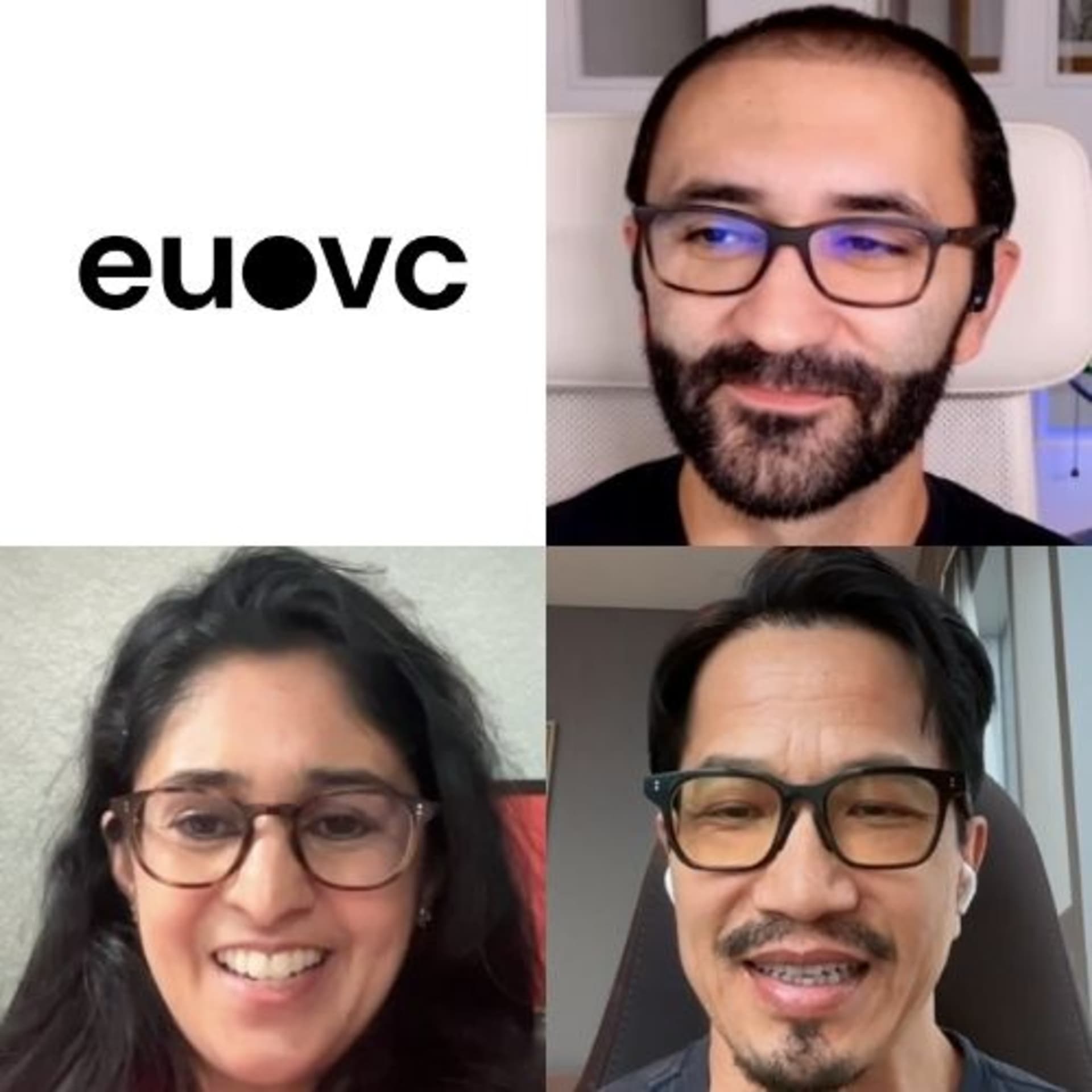
Episode Description In this special Southeast Asia edition of the EUVC podcast, co-hosts David Cruz e Silva and Ambika speak with Binh Tran, a venture capitalist from Ascend Vietnam Ventures (AVV), based in Ho Chi Minh City. Binh discusses his journey from founder to VC and shares insights on Vietnam's burgeoning tech ecosystem, investment strategies, and entrepreneurship across borders.
---
Key Takeaways
Introduction to Binh Tran and AVV
- Binh Tran: A serial founder who sold his first company, Klout, for $200 million.
- AVV: Focused on backing tech founders in Vietnam, Southeast Asia, and the U.S., having invested in around 500 startups.
---
Main Discussions
- AVV's Tagline: "Build Boldly, Scale Faster"
- Emphasizes ambition and how speed correlates with performance.
- Vietnam's Startup Ecosystem Growth
- 60% of startups founded in Vietnam are from 2015–2025, marking rapid ecosystem growth.
- Binh highlights the evolution of Vietnam's tech landscape since 2015.
- Transitioning from Founder to Investor
- Binh shares his journey from the Bay Area to establishing AVV and investing in Vietnam’s first tech startups.
- Power Law in Emerging Markets
- Binh argues that power law dynamics do apply in Southeast Asia, supported by maturation cycles observed in India and China.
- Government as a Catalyst
- Vietnam's economic growth from $300 GDP per capita post-embargo to current rates, with government support for a VC ecosystem.
- Investment Philosophy
- AVV seeks to invest in tech talent, focusing on founders with global ambitions rather than just local market opportunities.
- Hands-on Venture Capitalism
- Early-stage investing in emerging markets requires active involvement and support for portfolio companies.
- Impact and Returns
- Binh discusses the intersection of impact investing and the importance of returns, highlighting collaboration with the government.
- Advice for Global Limited Partners (LPs)
- Encourages LPs to consider emerging markets like Vietnam, comparing it to India’s growth trajectory.
- Cultural Calibration
- The importance of helping Vietnamese founders with global go-to-market strategies and effective storytelling.
- Future Outlook on Vietnamese Tech
- Anticipates growth in mobile gaming, Web3, AI tools, and agri-tech as pivotal sectors for Vietnam’s development.
- Final Reflection
- Binh emphasizes that while talent is globally available, opportunities remain uneven, making Southeast Asia ripe for investment.
---
Notable Statistics
- Investment Trends: 90% of investments in Vietnam over the last five years are VC-based.
- Unicorns: Vietnam has produced six unicorns in under five years, showcasing a strong domestic appetite for innovation.
---
Conclusion
- Culminating Thoughts: Southeast Asia, particularly Vietnam, presents unique opportunities for investors willing to engage deeply with local ecosystems. The blend of technology, talent, and a supportive governmental framework positions Vietnam as a burgeoning market in the global venture landscape.
Call to Action
- Interested listeners are encouraged to engage with Binh and explore opportunities in Vietnam's vibrant tech scene.
---
Further Listening
- Subscribe to the EUVC Podcast for more insights on European VC and global venture ecosystems.
---
*For more information and to keep up with the latest in European venture capital, visit [eu.vc](https://www.eu.vc/).*
Written by AI. May contain mistakes. Listen to the episode to check what was said.
Transcript
Automatic transcript. May contain errors.0:28Welcome back to the EUVC podcast. talk about, but we'll get there in a second. Their fund is roughly 67 million euros. And that's also their AUM HQ in Vietnam, investing in C2D companies across Southeast Asia and the US. The generalist investors and some of their notable investments include Turing, which is a unicorn, by the way, Sky Mavis, a Vietnamese unicorn, Apply Board, also unicorn, and Tech Hope.
1:08This show is not investment advice and the hosts of this episode may be invested in the funds and companies featured. And as I said, co-hosting this segment with us is Ambika from Circle Capital, who's joining us from Singapore. Ambika, how are you? Hi, hi. Thanks for having me back. hoping that we can give the viewers a little bit more insight into living room style Southeast Asia that we haven't touched on before. So excited to get going on this one as well. David, first time meeting you. Thank you for having me on the show. And Bika, it's been several years since we last chatted in Singapore, right?
1:44As time flies. Yeah, time flies. A lot has happened. Before we kick off, I actually just want to introduce you a little bit, Ben, because I think people should be familiar with your work if they're not already. You were an early adopter. You co-founded Clout, social media analytics website, which you sold for US$200 million in 2014. And I think you quite literally rode the wave from San Francisco to Vietnam where you founded 500 startups Vietnam and then went into founding AVV, which is now invested in over 100 startups. I think that in itself is quite interesting. I know your thesis covers Vietnam and the US, and there's a lot to unpack there.
2:27But I want to start with this. Your website says something called something about build boldly, scale faster. And I want to know where that came from before you start telling us a bit about what got you into the whole founder mode. Seriously, I mean, all the copy on the website, it's so canned. It's so kind of cheesy. I mean, all these VC websites, They all kind of sound the same, right? You're trying to inspire people, but at the end of the day, there is some cheesiness to it and some truth to it. I mean, you know, the VC industry is about finding those outliers and the most ambitious of founders who kind of can rethink the world.
3:05And so sometimes it resonates, but for some of us who have been in the industry for a long time, it is kind of tiresome sometimes. So that, yeah, build boldly and scale faster. I mean, it's about ambition and I think speed is a strong indicator of performance, right? So it's just a tagline. Not much more to it. I'm going to jump in with a fun fact here. Over 60 % of startups in Vietnam today were founded between 2015 and 2025. That's just the past 10 years. I think this is a really interesting nugget here. And perhaps I can throw this to you, Ben, to sort of tell us a bit more about your thought on.
3:50Yeah, that's just really an indication of Vietnam being the youngest but fastest growing ecosystem within the Southeast Asia region. We started investing in Vietnam because it wasn't very obvious. You know, in 2015, when we got started, we're actually celebrating our 10-year anniversary this year. Back in 2015, there wasn't a tech ecosystem. We saw kind of early raw ingredients of what we thought where Vietnam would be headed in the next 10 years. But the foundations for the kind of the modern tech ecosystem started way back in the late 90s. And I could talk through all the different stages. But yeah, it wasn't till 19, 2016 that we clocked as the inception of the modern day tech ecosystem here.
4:40If we rewind a little bit, what got you into being an actual founder? I mean, it was kind of an early space that you jumped into. And I mean, you were in the U.S. So maybe you can give us a little bit of an overview of kind of how that happened and how it switched from you going, OK, I've sold a company in the U.S. and now I'm going to go to Vietnam. So first, I was born here in Vietnam. I'm here in Saigon. I left as a war refugee and I never thought I would ever return to live and work in Vietnam. In the US, I started with technology pretty early on. Started coding when I was in the late 80s, 1987 with the original IBM XT and was part of the early internet boom and bust.
5:26Started several different companies, built an AI company, sold it in 2014. And that's during that exit is when I met Eddie, my co-founder. And he convinced me that Vietnam was worth a serious look. And so we teamed up and we started 500 Startups Vietnam. Started investing, like any career change, it very much is an experiment, right? For me, I was spending, I spent the last 25, 30 years in technology building teams and companies. I didn't know if I would enjoy that investor hat. And it took some time. We eventually saw that, well, I saw personally that it was really fulfilling. And we saw that the returns were getting there.
6:15And so we decided to invest, continue our investment journey. We closed our second fund, which we're still investing out of. So over those last 10 years, I think we've made a lot of mistakes. We learned a lot. And I think what hasn't really changed is our investment thesis. Our investment thesis is primarily based on Vietnam's growth and tech talent. You know, this is the EVC podcast. Most of our content is European-focused. And then this series is kind of something we're trying to do to kind of shed light in a different ecosystem and kind of try and build bridges over time, hopefully. And one of our past guests, which I will not name, the conversation went a lot around this belief that the power law didn't fully apply to Southeast Asia as a whole.
7:05But you come across to me as what I would describe as, you know, a non-US based investor with a very US mindset, which is very pure power law driven, right? And based on what I know, which is not a lot, but from like brief research and just the intro and whatnot, even your investment approach seems to be very power law driven. I might be wrong here, but I'd love you to comment on this claim that the power law doesn't apply to Southeast Asia. Do you agree, disagree? And why do you think there's that perspective, whether you agree or don't agree? I disagree. I agree. I agree. Power law does apply everywhere.
7:42And it is a function of maturation of that ecosystem. You need certain flywheels just to come into effect. If you look at certain ecosystems where maybe the first wave of investments in venture capital, a lot of these founders had to build the infrastructure, had to change the behaviors, had to get The kind of high cap expenditures to get things flowing. And those initial investments did not pan out. And it took a couple other cycles for those investors who actually truly believed to start seeing much higher efficient business models and kind of more VC scale outcomes to occur. And you started to see that in much more mature markets, maturing markets like India and obviously China.
8:38In Europe, the ecosystem development has been heavily driven by public funding. The highlight number or the headline number is like roughly half of the capital in early stage comes from public funding. How has your region tackled this, if at all? What has been the recipe to help develop the ecosystem from kind of very nascent to a bit more developed right now? Well, like Europe, Southeast Asia is quite diverse. You have so many different languages and ethnicities. There's some lockstep when it comes to GDP development and growth. And so certain markets, a lot of the consumers and businesses have similar problems across Philippines, Thailand, Indonesia, Vietnam.
9:25But obviously markets like Singapore and Malaysia are very, very different in terms of what kind of problems founders are trying to solve. So each market's different, and that brings about challenges in terms of scale, in terms of being able to go and cross border and whatnot. And if you think about initial capital, if it can be catalyzed by government spending, by tax dollars, you've seen a lot of success come out of that, you know, starting with the U.S. You look at China, you look at Israel, you look at some other markets where, yeah, like Singapore has been a great example of that. These are developing countries.
10:07When U.S. lifted sanctions in Vietnam in the mid-90s, GDP per capita is around$300 per person. This economy that I'm sitting in is probably younger than most people listening on the show. So the dollars that we talk about, you know, aren't going to be there. That said, just a few weeks ago, the Vietnamese government did announce its first VC fund that is going to start with a modest$20 million. It's a good sign. Good sign that, you know, there's appreciation and there's the trajectories there. I've read another interesting statistic about Vietnam that I think 90 % of all investments in Vietnam are venture capital based over the last five years, which is also quite interesting because Vietnam, I think, in comparison to the other parts of the region tends to be a bit more risk focused or risk based market, which is a little unusual.
11:06But we also see a lot more interesting tech. And maybe that loops back into that. I mean, you've had so many unicorns in your own portfolio. And Vietnam has had, I think, six unicorns in the last few years, which is a pretty solid number for this region, considering what, you know, the GDP that we've been talking about has come from to now. I think there's been a lot of false starts with Vietnam, right? The GDP growth has been astounding. Just last quarter, Vietnam clocked in at 8.2 GDP. Quarter before that, it was 8%, right? And the technology opportunities that people see here can be misleading.
11:56When you talk about VC capital coming in here, it's quite complex. Some people are investing in domestic only markets. For us, we're investing in the tech talent. And a lot of these founders are serving a Vietnam Plus story. Now, there has been a lot more dollars flowing into Vietnam from an FDI perspective and many other different asset classes. You're looking at leveraged buyouts. You're looking at traditional PE. the Carlyles of the world, the real estate, obviously infrastructure and energy. So I do think that, you know, that data point you have about VC dollars coming in here, it's actually quite low, right?
12:38And it's still, still very nascent. And those VC dollars coming in, they typically are bifurcated. Hey, people are wanting to checkbox Southeast Asia as part of their regional strategy of Vietnam just being a checkbox, right? And for us, we don't fit exactly in that checkbox just because for us, we're just hyper-focused around returns. And so what we know and what we've seen on the ground, we're not exactly just tied to, hey, only teams in Vietnam solving these domestic markets. We do have these winners. We have companies that are quite explosive in growth and quite healthy and profitable that are domestic only.
13:21but you're not going to see the bulk of the opportunities around just that. Ben, I'm going to do a pause in this conversation to ask one of our recurrent questions that we ask every single guest. And I love these questions because it's so cool to go back and compare. We've been doing this for five years, so it's kind of cool to go back and compare all the replies. I think it's a very self-reflective question, which I think is a skill set that every VC needs in a way or form. and it is around what have been your biggest learnings since you've been in the venture industry, in venture capital. I've learned so much.
13:57I've made so many mistakes. Honestly, you're always making mistakes, right? This whole industry is about just investing in the wrong companies all the time. So for me, I think with the perspective of being in the Valley and coming out here, or, you know, he was always in the valley. You're trying to find these thoroughbreds where as an early stage investor, you're coming on and you're not doing much work, right? And that's the goal, right? You find these networks, you get the little bit of the reputation rubbed off on you and the other founders come seek you out and that's it, right? In a developing market, I think you're much more hands-on, right?
14:44And you're essential in helping bridging these worlds. You're helping them create a maybe top-of-market recruiting brand and a candidate experience that people here have never ever seen. And so there's a lot of heavy lifting, which for me as an operator, an ex-operator, I still enjoy. It feeds that part of me that finds filming, and get my hands dirty and actually trying to understand the culture and really digging deep into the organization. I guess the learnings there is that VC is a lot harder than I ever thought it would be and a lot more time consuming than I originally had ever thought it could be, especially out here.
15:33I love how it's also kind of recognition for the role and the hard work that it is to be a VC in a developed market. Because oftentimes, like mainstream media will be a lot about, you know, the more mature markets and how that's amazing. And, you know, the others aren't there yet. And here it's, I love what you're saying because yes, it is a lot of hard work and it's a mix of business opportunity, but oftentimes it's also a bit of passion, right? In your case, you have roots in Vietnam. And of course, like it's, there's a business opportunity. There's what you're selling your LPs. You believe it's a great opportunity, but there's also something deeper.
16:06And I think that's kind of really cool and beautiful. And I think that's important also to highlight, right? Because as venture investors, or as people in the venture industry, we are the closest thing to like fortune tellers in a way, right? And the role that we have is so freaking cool. So I love that you say that, Ben. Thank you for sharing. It's super cool. I want to add to that. I think in 2014, 15, when Eddie approached me and he said, I needed to look over here. It was a nostalgia, you know, because I have no memory of Vietnam and I'm an American, so I don't have family over here. It wasn't about nationalism.
16:44For me, it was really about impact. You know, I saw this ecosystem that was just starting to take off. You know, I've watched the evolution of what's happening in the Valley, watched China in India from afar, being that first tech-focused seed fund, I felt like there was an incredible opportunity to model certain behaviors and structuring and protocols that I felt could be very long-term sustainable in the ecosystem and healthier for the ecosystem. So I almost felt like a responsibility to come and, okay, do this here because that privilege to go and impact an ecosystem at the right place, right time, was going to come along very often.
17:32I felt it was such a unique period of time in this ecosystem, especially when the ministries and the governments are like, hey, we need to get out of this middle income trap. Digital economy, knowledge economy, AI economy is the future for Vietnam. Come talk to us. Give us feedback. Give us, you know, tell us what to do or whatever. And that was just so compelling for me. yeah, going beyond obviously a new career and returns. It was really this kind of, this door opens you want to go through and not have any regrets. I think you just highlighted something really interesting. It's that, you know, talking to the ministries and the feedback that everyone's asking for.
18:13I think that's what makes Southeast Asia really unusual from other parts of the world in terms of, you know, being an investor out here, you have this opportunity to help shape things in a way that I think you don't really have as much of an opportunity elsewhere, especially if you're, you know, kind of relatively new to it. I mean, I'm saying in the last 10, 15 years, it's a new ecosystem. You've got the opportunity to help build it. And I think that's so fascinating that you've sort of really nailed that. If you had to encapsulate, you know, out of all of those thoughts that you've just offered up, if you had to encapsulate one thing that an investor sitting in a living room in Europe or somewhere else should really know about investing in the region, what would you say that is?
18:58Like any investor sitting in Europe or the US, they look at emerging markets. There's this perceived additional risk. And so, you know, you're looking for premiums on that risk. And one thing I would recommend those investors looking at other markets to compare Southeast Asia, where Southeast Asia is on that cycle. Is it the first wave of companies that have established the infrastructure and new behavior? Is it coming out of a cycle right now and perhaps coinciding with the super cycle of AI that we're on a cusp of this value creation? And if you look at markets like Vietnam, where pricing is just so great.
19:48And so you look at some of the pricing that's coming out of the latest YC batches and these companies are further ahead on product. I think it's an incredible time right now to be investing. And I think there's some mitigation on kind of the kind of track record for Southeast Asia by looking at maybe other markets like India and seeing how that markets evolved. I don't know anything about your LP base, the profile there, right? So maybe this question isn't something you face very often, but I'm going to ask it anyway, like LPs, potential LPs that are interested in Southeast Asia, right? I know there's a lot of people interested, but not, you know, at least here in Europe, not so many actually deploying capital, right?
20:36What would be kind of your conversation with a profile like this? How would you help them kind of understand, one, the opportunity set and two, how to think about kind of allocating, right? Because there's many different ways, right? We could say Vietnam is the opportunity. We could say India is the opportunity. We could say, no, no, no, I actually want to be quite diversified, so I'm going to do a bit of both. What type of conversation would you like to have with an LP that's thinking through these things? So about 45 % of our capital is U.S., 45 % is East Asia, so that's Singapore, Hong Kong, Taiwan, 10 % is Europe.
21:15And so we have a mix of those institutions, corporates, and the DFIs too. So the DFIs are pretty straightforward, right? Hey, impact along with returns. The corporates are interesting because a lot of them have businesses or are looking at a China plus one strategy. And there's some angle there when it comes to diversifying away from China, getting more knowledge and information on the ground here. For us, you know, we try to package the product up as, hey, this is all about growth. You know, Vietnam's tech talent is now globally competitive. We have companies, subsequent rounds are being led by San Francisco VCs, right?
22:03But the teams are here. All the AI and engineering teams are here. AI engineer might run you$3 ,000 a month versus$150K to$200K a year without admin or equity included in San Francisco. And then the growth. You know, when Vietnam post-COVID had a 5 % GDP growth curve, that was terrible, right? Most countries are killed for that. And so I think that growth combination with this tech talent that's deep, that's really cost-effective. I think we want to help founders obtain that edge. And then the founders here who have that edge to bridge the world to maybe U.S. capital and go global. And so, yeah, the product we're selling to those type of investors is just all about performance.
23:00And probably the assets we have likely don't overlap with any other fund managers that have. So it's a high performing diversified asset. I want to flip a bit more to you as your kind of way of working with founders, right? You're a former operator yourself. I actually read a bit before this interview about you and did some research and saw some other podcasts where you've been, where you talk a lot about your passion for computer science. You talk a bit about your kind of views on building talent, hiring, whatnot. So how do you work with your founders? How do you like to work with your founders?
23:38What do you think is like your edge as an individual working with your portfolio companies? How I'd like to work with them is, is see, I bet in a thoroughbred and I never hear from them except, you know, subsequent rounds and markups, but that's the dream. How I work with them is obviously really, really boutique, really dependent on who they are. We have this founder, Andy. He's so genuine. And his guy, he's building a memory layer for agentic coding. He's got this almost hacker house in Da Nang. All seven engineers, they live there, they work there. They're just building all the time, right?
24:20And they have YC companies trying to poach them. They have inbound public U.S. companies asking for contracts. they obviously know this problem that the customers have really inherently and they're building it but when it comes to actually storytelling when it comes to actually raising that that large downstream subsequent round from a top tier use you see u.s investor i think there's going to be a lot of work right there's going to be a lot of work and and just that storytelling that said his charm comes across he's always smiling he's he's not afraid to speak his mind so the raw ingredients are absolutely there but i do think that hey it still remains to be seen hey is he going to be able to get a really a player in biz dev and and you know sales ops in the u.s and believe in that mission and push as hard as he can right can you lead those people and so there there is a lot of raw ingredients there but it does need like i i actually just need to be his cheerleader to have him like believe in himself right and kind of continue with that natural energy and motivation he already has but don't you feel that that's more of a that's a global thing i mean maybe that's is that something that you wish you'd been told as a founder yourself you know how to storytell around your product before selling it yeah i don't think it you know when I was building cloud, you know, I think the VC is a little bit more obscure.
25:53There wasn't a lot of support and playbooks. So I do think there's a lot more out there now. It's a little bit easier. But I think there's an additional divide culturally and language from a language barrier that we have with some of the teams out here. It's not a single founder or superstar, but, you know, his ability to bring this team around him and push. But yeah, I think recruiting and culture, organizational development is one key area. The job that every VC has is, okay, what's the best possible round for the company? Not the most valuable, highest valuation, best possible downstream investor for them.
26:36And then some of it's around PR, right? Some of it's just being able to go and help them be able to tell that story to attract employees, to attract customers, to attract investors. Often there's, you know, like building anything, you're just in a bubble and, you know, you kind of just lose track of like everything outside the bubble. Ben, back to one of my recurrent questions. What is a strongly held belief that you have recently had to change your mind on? in the valley everything everyone's just so optimistic and there's a certain speed and aggression to things that were that was really magical in the days before this dessert period because the data was just free you know remember the times where facebook had their social graph it was like oh you can just instantly acquire hundreds and thousands of people just using this API like what?
27:35That was crazy. And so it felt magical to build. It's come back with AI. But this speed and optimism was so magical in the valley. And I thought, hey, I'll bring this here and people get really, really excited. But I think it is necessary. But it's not just the mindset of this founder. and you need an entire ecosystem for it to work, right? You need all the different players, you know, everyone for you and like the lawyers and the mentors and advisors and all these different things that kind of like just all interplay with each other for kind of massive scale and massive outcomes to happen. But I think what's helped Vietnam come along through the lack of that.
28:32I think just the resourcefulness and the grit. Vietnam this year just celebrated the 80th anniversary of independence and the 50th anniversary of reunification. You know, centuries of colonization and modern war, right? And here was a country that stood against all odds, against global powers and still stayed sovereign and independent. And so that kind of resourcefulness and grit, really, you can see in some of the founders here, and that helps propel through, okay, we don't have all these things around the ecosystem. That's okay. We're going to push through it. That's helped me kind of calibrate around, okay, this initial belief that I needed to helped build this ecosystem that was very similar to the Valley for great outcomes to occur.
29:33There's a lot of local calibration that needed to happen. If you had a crystal ball, what would you say the next five years looks like? Whether in terms of the thesis that you have, what kind of tech companies are going to see? I mean, Vietnam's had, I mean, your own portfolio has also had some very interesting wins, you know, and very varied. But Vietnam's also had such varied wins, you know, from fintech to gaming to, I mean, you name it, just stuff that you probably haven't seen elsewhere. What do you think we might see going forward? I think there's a few different areas that you're going to start seeing pretty decent outcomes.
30:13So one, you mentioned it before mobile gaming, right? last year, Google said that it would be not to surpass China to be number one in developing the most downloaded mobile games in the world, like 6.5 billion or something like that. What we're seeing is a lot of these studios who never raise capital. You have this company in Hanoi, it's OneShot. They have dozens of titles. One of their titles makes like 20-something million dollars a month. You can start seeing a lot of these studios start migrating towards the fastest category, which is the mid-core segment, because the previous hyper-casual segment, the payback periods for these gamers was only one or two days.
30:54So they were cash flowing all the time, right? As they can move into kind of RPG and all the other segments, it takes like three, six, nine months to get a payback on their CAC. And so you're going to start seeing a lot more of these students go and raise capital and start hitting the kind of revenues and LTVs that are much, much bigger and exciting. A similar moment to Turkey, right? Turkey with peak games in 2017. You know, after Zynga acquired Turkey in 2017, it's just ignited that entire ecosystem there. And so I think we're going to see the same in the mobile gaming segment. Vietnam is a big adopter of crypto Web3.
Read the full transcript
31:40The government's already announced a lot of policies around that. And so what we've been seeing is Vietnam developing a really strong presence around Web3 for developing markets. Very different from developed markets. Developed markets are about optimization and yield and diversification. Here it's about financial inclusion. You know, this is the first time people are just banking or borrowing or lending for the first time. Those needs are very distinct and those products are very distinct. So I think Vietnam's going to continue. We're going to see opportunities in these areas where Vietnamese companies are going to lead for the developing markets.
32:19What we're starting to see, and we've made investments in developer tools, LLMs have helped a lot of these teams kind of bridge markets. they've been able to be perceived as American companies and gain traction. So we're seeing a lot of teams with a very global customer base. These are technical founders who are just trying to build something for themselves and getting a lot of traction. And so developer tools, especially around the AI tool sets, we think that we're going to see more of these companies get to scale. and everything else I think is really just about low cost high tech talent we do have a company that's got really really incredible growth that's domestic only and this is not even tech driven it's tech enabled there's a company called Tech Co-op and in under three years went from zero revenue to 268 mil top line now raising a 75, 125 mil Series B.
33:25So great growth for a non-tech company, not tech driven, but tech enabled. And it's because they're in agri-tech and Vietnam kind of a global player in that food supply chain. I think as we've seen in the last 10 years, a couple categories where Vietnam-based company became a category leader, we're going to see more category leaders across more categories. That's what we're going to see in the next five years. it's an interesting you know way of looking at it it's the world is getting so much smaller so what you know is starting to explode onto the lines and horizons and how do people everywhere perceive it yeah i mean a lot of the times over the last 10 years you started to see deals come out of a place where you thought oh how did that happen right um and that's because talent is everywhere, opportunities aren't, right?
34:20So there's opportunities for, for, for capitalists to come in, provide the risk capital and helps a lot of these ambitious founders go global. You said something that I think, um, I think it was our fourth or third podcast guest said, uh, which is genius. Genius is global opportunities. Basically the same thing. Um, and it's actually a message we've, uh, we've carried around a lot. So thank you for kind of wrapping it up with that claim because I couldn't agree more. It's kind of cool. Ben, are you much of a reader? Do you read books often? I wish. My last book, really, you know, science, fantasy fiction.
35:02It's the Wheel of Time, Robert Jordan series. But these days, it's really just about the incredible advances in AI, the capital flows, deal politics that's happening. It's, it's, I can't keep up with, with, I can barely keep up with that. My two little girls and, and, and the VC firm. So I wish I had more time for, for some indulgent reading. Well, is there anything that, uh, even, even if not reading wise, video wise, that's perhaps inspired you watch here anything? I don't know how anyone in this industry could have time for reading a book. That's where it is incredible. I mean, it just comes at you at a velocity.
35:46I find myself just, you know, every single day, seven days a week, trying to consume this and trying to understand and how these advances could potentially change how our companies operate, how we operate. And so it's always, I'm excited. Don't get me wrong. I mean, I'm a technologist, so I'm really excited to be building again. I'm building things for the firm. It's an incredible velocity of information. but yeah there is a single dimension to it so it's all technology technology so I do need to kind of feed the rest of my mind the latest book you read was a children's book to your daughters that's my case at least that's right that's right which is very inspiring in a way I guess there's always nuggets of wisdom in those two there's always nuggets of wisdom in children's books that's for sure Vin on that note I just want to thank you for your time Thank you for sparing some of your time to share with us your views, your story, your beliefs.
36:45And anyone, if you're listening in and you're curious about Vietnam or Southeast Asia more generally, well, now you know another person you can reach out to, Bin at ABV. Of course, I'm Bika, our co-host. Any final words you'd like to share with our listeners, Bin? And yeah, I guess if you never visit, I think that's part of the first step is to come here, feel the optimism, feel the energy, feel the hustle. It's really, really unique. And I'd be happy to host you. Thank you so much, Ben. Thank you for having me. Amazing. Thanks, Ben, for that offer. Everyone, thank you for tuning in. I hope you enjoyed this episode.
37:23And remember, drop us a review, follow the pod, and subscribe at eu.vc.
37:30Tear down this wall. It's more than just an alliance. This is a union of values. Let's start acting.
From the publisher
Welcome back to another EUVC Podcast, where we explore the lessons, frameworks, and insights shaping venture ecosystems across the globe.
In this special Southeast Asia edition this week, David Cruz e Silva from EUVC and Ambika from Circle Capital sit down with Binh Tran from AVV (Ascend Vietnam Ventures) - a VC firm headquartered in Ho Chi Minh City, backing tech founders across Vietnam, Southeast Asia, and the U.S.
A serial founder turned VC, Binh sold his first company Klout for $200M in 2014 before launching 500 Startups Vietnam and later AVV, which has now backed about 500 startups, including unicorns Turing, Skymavis, and ApplyBoard.
Together, they unpack Vietnam’s ecosystem growth, power-law returns in emerging markets, government catalysts, and how to back founders with both grit and global ambition.
🎧 Here’s what’s covered
03:24 “Build Boldly, Scale Faster” — The story behind AVV’s tagline and how speed correlates with ambition and performance.
06:29 Vietnam’s ecosystem in one decade — 60% of startups founded between 2015–2025; how AVV rode the first wave.
07:47 From founder to funder — Binh’s journey from the Bay Area’s AI wave to seeding Vietnam’s first generation of tech startups.
09:42 Power law in Southeast Asia — Why it absolutely applies, and how maturing cycles in India, China, and now Vietnam prove it.
12:26 Government as catalyst — From post-embargo GDP per capita of $300 to 8% growth; early signs of state-backed VC emerging.
14:46 Vietnam’s startup data points — Six unicorns in under five years and a domestic ecosystem hungry for risk and innovation.
17:14 Investment focus: Vietnam+ — Why AVV backs tech talent, not just local markets; global mindset, local execution.
17:59 VC learnings: It’s hands-on — From operator to builder of ecosystems; why early-stage in developing markets means getting your hands dirty.
20:54 Impact meets returns — How government collaboration enables “ecosystem shaping” as part of the VC mandate.
23:37 Advice for global LPs — Think India 10 years ago: early, cheap, high-talent markets; AI as the great equalizer.
26:23 LP mix: 45% U.S., 45% East Asia, 10% Europe; corporates using AVV for China+1 exposure and tech-talent pipelines.
28:50 Working with founders — From hacker houses in Da Nang to U.S. rounds; AVV’s boutique, founder-first approach.
33:26 Cultural calibration — Helping Vietnamese founders learn storytelling, global GTM, and hiring for scale.
34:04 Changing beliefs — From Valley-style hypergrowth to Vietnam-style resourcefulness and grit; building despite constraints.
37:31 Next five years — Mobile gaming, Web3 for developing markets, AI developer tools, and agri-tech as Vietnam’s global edge.
42:09 Final reflection — “Talent is everywhere, opportunity isn’t” — why Southeast Asia’s next decade is ripe for breakout returns.


