
In short
EUVC Podcast Episode Summary: Investing in Robotics with Fady Saad
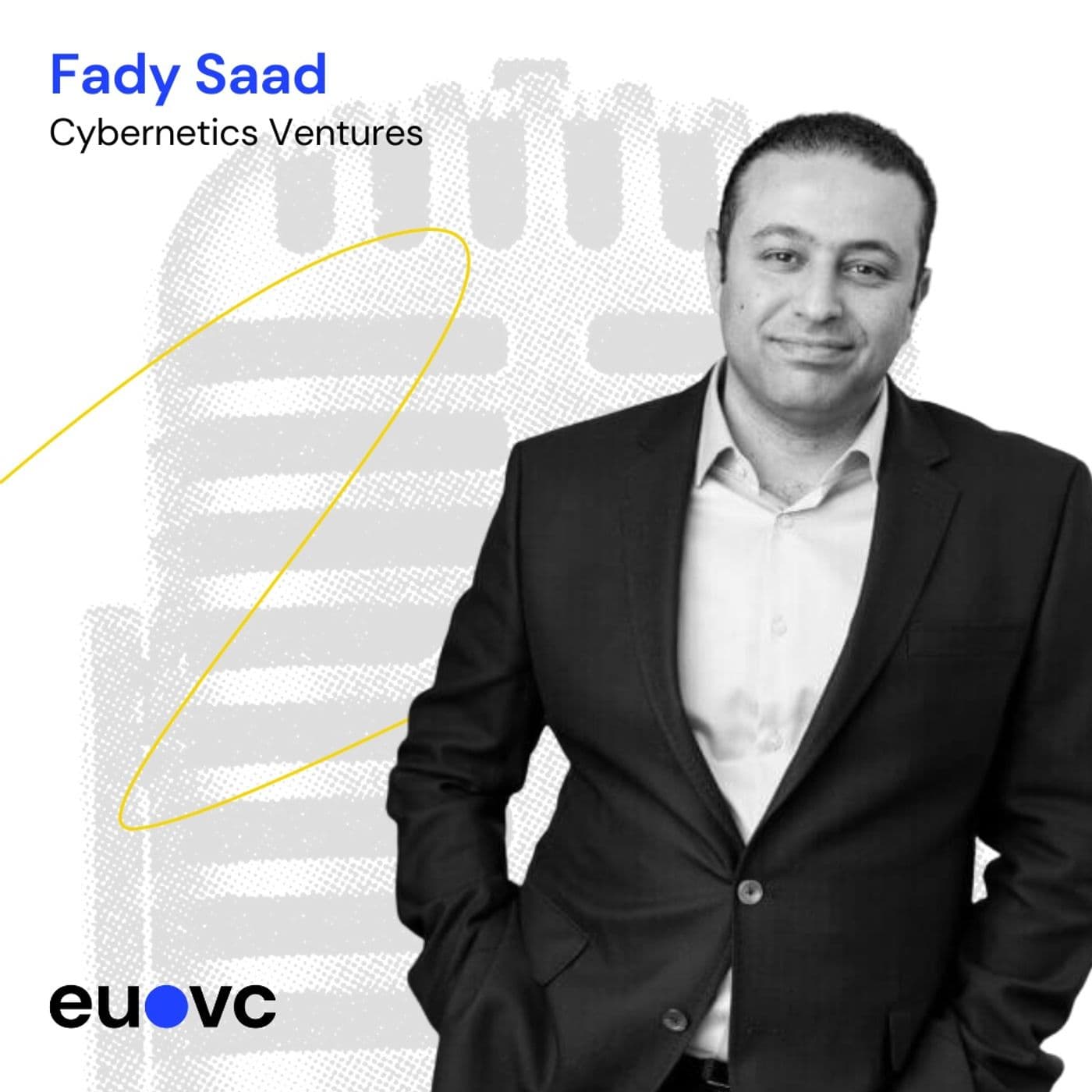
Podcast Overview Podcast Title: EUVC Episode Title: EUVC #241: Investing in Robotics with Fady Saad, Founding GP of Cybernetix Ventures Co-Hosts: Andreas Munk Holm and David Cruz e Silva Episode Description: Fady Saad discusses the state of venture capital in robotics and automation, sharing insights from his experience as Founding General Partner at Cybernetix Ventures, a fund focused on early-stage investments in robotics across various industries.
Key Takeaways
Introduction
- Fady Saad is the Founding GP at Cybernetix Ventures, managing a $50 million fund focused on pre-seed, seed, and Series A investments in robotics and automation.
- The fund has a portfolio that includes notable companies like Realtime Robotics, AirWorks, Bionomous, and Kewazo.
Fady's Journey into Venture Capital
- Fady’s background is in mechanical engineering, with corporate experience at Siemens and Nokia before transitioning to venture capital.
- Inspired by his work with robotics and interactions with various stakeholders, he recognized the potential in investing in this field, leading to the establishment of Cybernetix Ventures.
Generative AI and Industry Impact
- Discussion on generative AI and its impact on startups, noting the cycle of hype and reality in technology adoption.
- Fady believes generative AI will be pivotal but warns against unrealistic expectations regarding its immediate capabilities.
Robotics as a Technology and Investment Focus
- Robotics is defined not merely as an industry but as a technology applicable across various sectors, including:
- Manufacturing
- Logistics
- Construction
- Healthcare
- Fady emphasizes that successful robotics investments stem from understanding specific use cases rather than viewing robotics as a standalone industry.
Challenges in Robotics Investment
- The podcast discusses the challenges faced by humanoid robots in the job market, including regulatory hurdles and societal perceptions.
- Fady expresses skepticism about consumer robotics and humanoids, advising caution for investors in this space.
Success Stories and Case Studies
- Universal Robots is highlighted as a significant success story in Denmark, demonstrating the importance of a strong team and a market-ready product design.
- Characteristics of successful robotics companies include a blend of strong technical and industry expertise in founding teams.
The Role of Ecosystems in Robotics
- The importance of local ecosystems, like Odense in Denmark, is emphasized. Strong networks of talent, collaboration, and innovation are crucial for the growth of robotics hubs.
- Fady draws parallels between robotics developments in Boston and Odense, noting the collaborative spirit in Odense that has led to its rise as a robotics hub.
Investment Strategies
- Cybernetix Ventures adopts a balanced approach to investment, focusing on both specialization in robotics and diversification across sectors.
- Fady discusses the need for early-stage robotics companies to prove their technology and market understanding before significant investments.
Fundraising and VC Advice
- Fady shares practical advice for emerging VCs, emphasizing the need for resilience in the face of rejection and the importance of building strong teams and networks.
Closing Thoughts
- The podcast concludes with Fady expressing optimism about the future of robotics and its potential to address significant challenges in industries and society.
- Encouragement for listeners to remain engaged with the evolving robotics landscape and to consider the broader implications of technology on human work.
Conclusion This episode of EUVC provides valuable insights into the robotics investment landscape, highlighting the importance of understanding technology applications, market needs, and the dynamics of successful founding teams. Fady Saad’s experiences and perspectives serve as a guide for future investors interested in the potential of robotics and automation.
Written by AI. May contain mistakes. Listen to the episode to check what was said.
Transcript
Automatic transcript. May contain errors.0:09Hi, everyone, and welcome to the European VC podcast. in Boston to back North American and European companies with manufacturing, logistics, construction, and healthcare. Cybernetics are investing out of fund one with, as I said, a total of 50 million USD in AUM and an established portfolio of 13 companies and notable investments including Real-Time Robotics, Airworks, Bionymus, and Kiwazo. And just before we get started, let me just give you a bit of a preamble as I've just spent a full day with Fadi and a group of robotics investors and founders at an exclusive investor event here in my beloved homeland, Denmark.
0:44It's actually my old hood because it was in Odense. So I was super happy to be back for a day of discussing the state of venture within robotics and just talking to founders and DCs about how to navigate the current market shifts and much, much more. It's been some really honest, thoughtful conversations that I'm always very honored to be part of and very happy to be able to facilitate. So thanks a million for the invite to the team at Odense. And I cannot wait to see all of you there if you're robotics invested, because I do really think that this is one of the places to be. And you'll also hear that in the episode you're about to listen to.
1:18If you're listening in and love our show, do drop us a review, follow the power and subscribe at EU.VC.
1:26Tear down this wall. It's more than just an alliance. This is a union of values. values. United and determined we can serve as a model for other regions of the world. The nature of a problem requires a European response. Europe is a story of new beginnings. New beginnings. Let's start acting. This show is not investment advice and the hosts of this episode may be invested in the funds and companies featured. So, Fadi, let's start this thing off as we always do by asking you to share with us your story of getting into venture. Thank you for having me. My story is I never thought of being an investor in the first place.
2:17I'm a mechanical engineer by training, spent the first bulk of my career working for large corporate, Siemens, Nokia, came to MIT after eight years in the industry, did a mid-career master's around kind of complex systems and venture building, and found myself in robotics and co-founding Mass Robotics, which became the largest hub for robotics companies in the U.S., got kind of connected with hundreds of robotics companies, investors, corporates. And one day I was hosting a VC from the many VCs I was kind of interacting with and introducing companies to. And he said, wow, what a unique kind of position you have in the ecosystem.
3:02You should seriously consider becoming a VC. And this was the seed he planted in my mind. And this seed started to grow. And before I realized, I found myself kind of designing a unique fund that's focusing on robotics companies. And I said, if I'm going to do this, it needs to be unique. It needs to be kind of fulfilling a need and a gap in the space. And this was the birth of Cybernetics Ventures. And here we are. Fadi, we will obviously go deeper in terms of robotics and what that's about. So everyone listening in that's interested about that, stay tuned. For now, I love to ask this question to all our guests, which is tell us a pivotal moment in your life.
3:47And more importantly, how did it shape you as an investor today? I think a pivotal moment is when the night I received the acceptance letter for MIT. I will never forget this night. And the reason is it was not an easy ride for me. It was probably a five-year journey of kind of putting my application, setting on target scores and reference and applying, taking the GMAT, not getting a good score, taking it again. And it's such a pain in the neck to kind of go back and study these kind of standard tests. I'm originally from Egypt, so English is not my first language. The English section in the test is just horrible.
4:37So I was already at a disadvantage. The reason that this is a pivotal moment, because in a second, all those five years kind of flashed in front of me. And the lesson was it paid off. And once you go through an experience like that, it breaks a psychological barrier that you just focus on the work. You do the work. You do the hard work. You learn. You evolve. and then good things will happen. And this became a second nature to me. It happened at MIT. It happened in robotics. It happened in mass robotics. It happened for raising cybernetics, raising a fund, as you can imagine, especially a first fund.
5:22I'm not coming from the VC space. I'm an outsider. I was never a VC. I advised VCs, but I'm not a VC. I'm an outsider. And people were telling me, forget it. This is a mission impossible. You cannot raise a fund one with no kind of strike record, with no kind of busy experience, but it pays off. Amazing. We'll dive much more into why it was possible and why your thesis around robotics is something that attracted LPs. But we'll get to that. Now let's head into the Take a Stand section. Take a start.
6:05Fadi, for this I will ask you to comment on a quote by Chris Smith from Playfair Capital, and that is, Gen.ai is not going to have the impact on startups that people want and expect. My answer is yes and no. The yes is, as we have seen with lots of other technologies, with drones, with autonomous vehicles, with all sorts of technology. I mean, AV, AR, VR, like there's a well-studied kind of technology cycle. So when there's a new technology, everyone gets excited. People have high expectations, sometimes unrealistic expectations because of lack of deep understanding of what's the technology, how does it work, what are the limitations.
6:52But then this hype eventually goes down and people start to realize, oh, it's not really that. All of this kind of gold rush is not really true. And then people start to having more realistic expectation of what the technology can do. A very good example is autonomous vehicles. Everyone thought like five years ago, like now we will be all riding autonomous vehicles. And it didn't happen. Why? Because of lots of things. It's not an easy thing. There's regulation. There is the public kind of reception for the idea. There is lots of issues. So I think now we're living this whole kind of cycle with genitive AI.
7:33There is unrealistic expectations from gen AI because most people, they don't understand how it really works. And at the end of the day, it's a massive kind of word forecast kind of platform, especially the language one, the L &Ms. And not many people understand that. They think it's some sort of a magical thing that understand and reason and all that. And there is no reasoning. It just predicts what's the next word. This is what it does. So I think eventually this hype will go down and people will have more realistic understanding. Yet, I think that generative AI will disrupt and change many things.
8:16I think it's a very disruptive technology. It's a very pivotal technology. And I think we just crossed an inflection point. And I think we're looking at an impact similar to the PC kind of impacts or to the internet impact. we're looking at something that's kind of massive.
8:44So, Fadi, you know, we've heard and our listeners have heard that you're knee-deep in robotics. And, you know, I'm an engineer myself. I studied engineering. My desk colleagues at uni were your peers in terms of mechanical engineers. So whenever I walk in a room and I see, I don't know, a robot doing fine motor skills or a freaking robot jumping and doing a backflip, I'm like a kid in a candy store. But that's the geeky nerdy me speaking. I've never really dived deep into robotics from an investment standpoint. And so I'm very much looking forward to learn from this conversation. I'd love to have you kind of start off by expanding.
9:21Okay, why do you think robotics is interesting as an investment vertical? What is actually the opportunity here? What kind of engineer are you? A mechanical engineer? I'm an industrial engineer. So I'm a fake engineer, as they call it, right? because I did half of my degree was similar to yours, I would say, to some extent, and then the other half was much more like management, innovation, et cetera. Sure, sure, sure. No, I love industrial engineering. I think it's very important and it gives rise to all the manufacturing kind of advances. Yeah, exactly. And so it's important. So robotics, we like to think of robotics in terms of verticals.
9:58I think of robotics in the void is no longer kind of a good strategy. And robotics is not an industry. Robotics is a technology. So we need all to agree on that. When I say robotics, in my mind, I mean smart machines. I mean some sort of actuation that has some sort of intelligence. Sometimes when we say robotics, people imagine humanoids. which is a subset of robotics, but it's not. This does not equal robotics. And we can speak about humanoids a little bit later. But this is what we think of robotics, smart machines. Just to drive home your point, right? Because the attentive listener will have heard in the beginning that we said that cybernetics ventures invests in manufacturing, logistics, construction, and healthcare.
10:56We didn't say robotics. But if you go to your website, you'll see that it says robotics everywhere. And you're also introduced to me as a robotics investor. So I think this pinpoints exactly. And you also very much self-identify as a robotics investor. But the point is, it's in the applications. It's where the robots actually make a huge difference. Yes. Yes. So use case is everything. And we look at smart machines in those four key verticals. And you can apply robotics in any vertical, but through our experience in the space, the data we have looked at, the large kind of number of corpus that we dealt with, we formulated this thesis that those are the four key verticals that we will have the highest adoption rate of robotics and consequently the highest ROI in terms of any activities in the space.
11:52So we decided to focus on manufacturing because obviously this is traditionally speaking manufacturing logistics, highly automated spaces. But now we are moving kind of beyond just pure automation, which doesn't have much intelligence and less adaptability into more of a smart automation, which is robotics. And these are machines that can adapt, are flexible, doesn't have to do the same thing every time. You don't need to tell them exactly what they need to do. They can understand the higher level kind of task and they decide how to get there. So these are some of the activities happening. We see collaborative robots.
12:37We see autonomous mobile robots as a kind of a second generation to AGVs, the autonomous guided vehicles. So AMRs now is more of like it's autonomous. It can navigate on itself. You don't need to tell it exactly which route to take. It doesn't need to follow lines or beacons or these kind of things. It can see humans, obstacles, and identify them. Construction also we're seeing lots of activities happening because this is an industry that's suffering from labor shortage and increased pressures on productivity and higher demands. We don't have enough housing in the U.S., for example, and we don't have enough labor to do it.
13:17So how would you do that? You have to introduce and embrace smart machines. So that's why we invested in companies like Airworks, automating the surveying process and CAD drawings from aerial pictures. That's why we invested in rugged robotics, printing, layout for construction places. Coazwa out of Germany, a lift bot for scaffolding kind of movement between different floors, raised robotics in San Francisco, the facade brackets installation kind of activities. So these are some of the examples in the construction space. And in healthcare, we have a large understanding. It's pharmacy, pharma automation, biomanufacturing, surgical robots, prosthetics, lab automation.
14:06So there's lots of activities. And again, we have seen from the pandemic the need to kind of sustain our healthcare systems with minimal kind of humans around. And also how you can speed up drug development, vaccine development. So automation and AI and robotics played a big role in that. And we want to continue to invest in that. We invest in a company out of Switzerland called Bionimus. And they basically automated the sortation and inspection of biological, small biological entities. So those are the kind of verticals that we focus on. We are skeptical of consumer robotics. We are skeptical of humanoids.
14:50and I'm kind of taking the opportunity to warn my fellow investors there. I know it's cool, it's attractive, but it's very tough to make it to work. The business case is not yet there. I don't believe that we are yet there. So I hate to see people losing their money in humanoids. It's funny you say it because I was listening to this week in startups as a preparation for this, where we had Jordy Rose, the Sanctuary AI CEO on. And he said, of course, they're doing humanoid robots, so he'll have a view on that. That's probably different from yours. But he thought that in the next five years, we will have the capability in robotics to be able to actually automate any task or have robotics do any task on the manufacturing floor.
15:46Whether the business case makes sense, whether there would be a business model to actually do that, blah, blah, blah. That's, of course, a different thing, right? But the technological ability to automate or have a robot do anything that's done in a factory floor today, do you think that we will have that in five years? Is that where we are on the technological front? And when you say a robot, you mean a humanoid? Whatever, right? So it can be done by something that will be doing it without being controlled by a human, and it'll be able to deduce it probably on the bag of AI, right? And figure out how to do the task on the bag of your request.
16:27It's a very bold and ambitious statement because, for example, in the clothing industry, manufacturing, clothing, one of the toughest kind of problems in robotics now, how do you manipulate clothing? How do you move fabric? It's very tough. We don't yet have the technology for that. So this is just one example. And when you look at the trajectory curve, you don't see us being able to do that in five years. We cannot say that we can solve all the problems and we can automate anything in manufacturing within five years. I think this is pretty bold. And guess what? I don't think that we need to automate everything.
17:13The ultimate end in mind is also questionable. Do we really need to automate everything? Because there is diminishing returns. To be fair, he did not say that right. He just said that the technological capability would be there. The question is then, will we want to, will the business model be there and all that? That's, of course, a different question. I hope so. I hope so. And if he means humanoids, I don't think that humanoids will be widely adopted and used in five years. There is a psychological challenge. There is a regulation challenge. There is unions challenge. Because once you have a machine that looks like a person, it becomes the enemy.
17:57And unions will kind of fight this back. And there will be a lot of clash. At one point, Bill Gates was suggesting having robotics taxes and like, because it becomes a person, you know, I think there will be lots of issues. And there is another argument that I've heard, and I'm also a little bit kind of skeptical about it, that we need humanoids because all of our environment is built around humans. So we need humanoidists to do the work. And I think that this is a flawed argument because this is not true. We build machines to do the tasks and jobs that we cannot do or we don't want to do. No, but it is a big philosophical discussion and we could definitely dive into it.
18:45I think the only thing about that is it's very more interesting to be bringing in multiple angles. So for that conversation, we should have multiple stakeholders around the table. So let's wait with that for another time. But I'd love to sew more into how you as a robotics investor, and now I'm saying robotics instead of manufacturing, logistics, construction, and healthcare investor, how do you put together your thesis within these segments? Are there any places within manufacturing that you're seeing are stronger than others? And how do you think about it? Does a startup that builds in this space have to maneuver in the same way as others?
19:27Or are there specificities around robotics that's different? And for that reason, might warrant having a specialist robotics investor on board. There's a very fine balance between being specialized and focused and also being too narrow and not well diversified. So we tried to strike this balance in the design of cybernetics as a unique fund focusing on robotics, automation and industrial AI is how we can be focused, specialized. But at the same time, we have enough diversification in our investment portfolio. So we tried to scope it down in terms of the technologies we invest in, in terms of the verticals that we invest in.
20:11But we didn't kind of specify more than that because we wanted to see what are the innovation out there, what are the corporates kind of bringing in as challenges. And we have a pretty strong network in the corporate space. So this gives us lots of insights about what are the market signals in terms of needed technologies. So this is basically the kind of focus that we have. And we, because we are early stage, like once we pass the kind of basic things in terms of the technology and market scoping, we immediately focus on the team. So we have pretty detailed thesis around what kind of people we invest in.
20:54Over the years, we have seen all the amazing companies we were very fortunate to have here in Boston and in the U.S., starting from Kiva to Locust Robotics, Six River, Emotional, Corandus in the surgical robot space, and many others. Probably I'm forgetting some Brooks Automation and obviously Universal Robot from Denmark and others. like we looked at those companies and we studied the founding story and the founding teams on those companies. And we looked at kind of different data points. And this kind of formulated our thesis in terms of who are the most successful founding teams in robotics.
21:41And it came down to this kind of balance between very strong, very competent and innovative technical founder married with a very experienced vertical or industry profession. If you have those two mix, probably you will navigate your way through the whole kind of entrepreneurial journey and build a successful company. If you are missing one of those, it dramatically cannot lower your chances of success. You mentioned they're a company that I know rather well, I'd say, from the outside, which is Universal Robots in Denmark, of course. I'd love to ask you if you've been close enough to that company to be able to relay a bit the story, at least from your study, and use that as a key story.
22:30Because it is one of the great success stories coming out of Odense and Denmark in particular. Yeah, I wouldn't claim that I was close to the founding of the company, obviously because of kind of geographical location. I was in Boston, the folks were in Onsen. But I got a chance to interact with Espen, the founder and CTO of the company, Enrico, also the CEO of the company. So those are folks, I interact with them multiple times. And I know investors that invest in the company. I know, obviously, many people at Terodyne because it's a Massachusetts-based company. So I know the corporate development folks and the people who are behind the acquisition.
23:15Those are close contacts of mine. So I can claim that I know a big kind of part of the story. And it's the same story. A very talented, very competent technical founder married with very experienced industry person that knows how to quickly build distribution channels and integration network. And they basically kind of overtook the whole market. It's a great success story. in a very tough space to build on considering that you have incumbent dominant players like ABB, KUKA, FENO, Kawasaki, Mitsubishi, all those kind of players. So how do you come with a totally disruptive product that take all of them by surprise?
24:07And not only that, you become the market leader. Yeah. And what makes, when you think about, look at the arm of Universal Robots and the team and the technology they ended up developing, what would you say was the thing that unlocked their abilities to overtake all the massive incumbents? Because that's something that's always puzzled me a bit. I think it's the elegant design of a simple product that meet customer needs. This is the statement. And they were not alone when they started kind of working on the collaborative robot space. There were other companies. I mean, some of them were here in Boston.
24:53But not all companies were as quick as universal in terms of adapting to the market needs and the market signals. And not all of them had a simple and an elegant design. We come across robotics companies that have a very complex kind of design with multiple points of failure. Like, there is no way that you can make a usable product out of that. How many times it will fail? How much maintenance you need to do? How much support you need to do? This is key differences compared to your software, because you need to think about all these kind of things. You are dealing with hardware, things that could fail.
25:33People could send those machines back to you. You have to have a reverse logistics process. How would you support and maintain this? What kind of spare parts you need to plan? what kind of training you need to do. So all these kind of things, unless you think about these kind of things, the deployment and the support and the training and all of that, the whole life cycle of the product, you will have a tough time building a profitable and a viable business out of it. I'll now take us to the shout-out segment, Fadi.
26:10Fede, I'd like to ask you to give a shout out to a co-investor, Angel or LP for being awesome. And of course, share with us the story behind that awesomeness as much as you can. Yeah, I'd like to give a shout out to my good friend, Oliver Mitchell from FFBC out in New York. I have known Oliver for more than 10 years, and he was really one of the very early people in investment in robotics. He was an angel investor. He had his own fund. And I would even say that he was like before the market in terms of investing in robotics. And I have a huge respect and admiration for what he did in the space.
26:58And yeah, we stayed in touch over the years. We compared notes. And recently, he introduced us to one of his portfolio companies out of Germany and the UK. And he said, he told me, Ferry, this is a good company. I sit on the board and you better lead this round. And the company, it's not yet disclosed yet the investment. It will be announced pretty soon. The company wasn't like not a complete stack. It was an enabling technology. And from the outside, it's a very crowded space. So I was a little bit skeptic. And I said, like, Oliver just wants to kind of pull me into this deal. But when we look closely at the company, we found a huge differentiation in the technology.
27:48Like they built a technology that can do something that no one else out there can do. So they had a super amazing IP and differentiation that we immediately knew what are the applications out there for this technology. Yeah, one thing led to another and we kind of syndicated around with one of our close investors in Germany, a large kind of family office that owns a multi-billion dollar kind of automation company. and we ended up leading the round and I'm taking a board seat in the company. And last Friday, actually, we had the first board meeting and Oliver was there. And it was just fun to kind of doing this investment together and being on the same board together.
28:38And none of that would have happened without Oliver kind of like introducing us and really pushing me to have a closer look at the company.
Read the full transcript
28:51It's quite fun because we in no way are connected via FFVC, but we've actually had Oliver's colleague, John Frankel, from FFVC on the podcast. And I think we've had in total 10 US investors out of the 220 episodes we've done so far, 30 or however many it is. So that's a fun coincidence. But now I want to take us into how, and I, of course, have to ask you this question because I'm a Dane. I actually come from Odense originally, almost. At least I got my wings investing there and working in venture there. So it's really my old hood that you're going to when you're getting into a plane in a couple of days to fly out to Odense for the Odense Robotics Investor event.
29:42So I have to ask you, what makes someone from Boston travel? And I'm, of course, Boston to the people, and you've said this already. We've got the likes of Kiva, Locust, Robotics, Motional, and so on. The list is quite significant for robotics in Boston. So I'm super curious to hear, why is it that you choose to travel to little Odense? I think what happened in OINSA over the last probably 10 years or maybe a little bit less than 10 years is just phenomenal. I think from a totally unknown region to one of the global kind of hubs for robotics, definitely one of the key hubs in your universal robot story, mirror story, just the activities happening.
30:32And I'm a big believer that things that does not happen by itself, there are always people behind things. So we make things happen. Things don't happen just like that. So I think it speaks a lot about the people in Oinse and their dedication to the region, their commitment, their pride. and they are the ones who are making a hub for robotics in Europe. So I was in Switzerland a few weeks ago and also you look around, it's the people who are making all of these amazing activities in Switzerland around robotics and investment and they had the Swiss Robotics Day and all of that. So folks like Houston, Martina and Espen and Enrico and Soran and all those folks, I mean, phenomenal work, phenomenal work.
31:31And kind of living through the whole kind of Boston robotics ecosystem and building mouse robotics with the rest of the team and the co-founders from the ground up. I know how much effort and how much commitment and how much sacrifices it takes to build something like that. So I always wanted to come and I met and hosted many people from Orange in Boston. And I was just waiting for the right opportunity. And they were so kind to invite me and ask me to give a Farsight chat at the event. And so I'm really honored to come and meet a person, all of those kind of heroes of mine, and learn more about the ONC story.
32:20There's so many things that can go wrong in hardware. And that's the typical venture take on hardware investing. And as you said in the beginning here, what is a robot? Well, it's a smart machine. Okay, smart, that's what venture likes. Machine, less so. Could you just tell us very shortly about whether you're seeing the strength of hubs being more important in this sector than in others? And that's why we're seeing something like Odense Robotics and Delft in Holland and so on originating because of this dynamic around it really needing to be very specialized people and strong, close -knit value chain around you for it to be successful.
33:09Yeah, I get this question a lot. And in fact, we organized an event last June, first of its kind event in the U.S., probably what it was called Robotics Invest, focusing on investment in robotics and what would it take to build the next generation of robotics unicorns. And the message to the investors was, we know that you're not used to investing in machines. And we know that most investors, either they invest in pure sales, kind of software, pure software technologies, or at the far end of the spectrum, biotech. And robotics does not fit in either of those. It's somewhere in between. But here is the interesting thing about robotics and smart machines is we are stepping into an era of software only wouldn't cut it.
34:04because we simply do not have the manpower to kind of run the economy. We have aging population. Improvement in healthcare makes us live longer, but we are not very productive as we age. And we have lots of kind of seniors that we need to take care of, and we ourselves will become seniors sooner or later. So we need to have the machines to kind of help us do lots of things. So focusing on machines is not a choice. We have to do that. It's not a luxury. It's a must. It's a survival technology for all of us. so then the question is is this the right kind of place to put your money in and my answer is yes and the reason is the cost of technology the cost of hardware has been dramatically going down over the last decade or two in terms of sensors course in terms of compute power in terms of motors in terms of batteries all of these kind of things have been dramatically going down due due to advances in electric vehicles and drones and other technologies.
35:23So this is one thing. The other thing is, investing in smart machines is different than investing in consumer products. And the reason is, smart machines are sticky. Once you have a piece of hardware deployed on a customer side, the chances that they will replace it in a year or two or even five is very low. So then the piece of the hardware becomes a footprint, an enabling tool to generate more revenues out of this. I come from the, I mean, I started my career in telecommunication. As I said, I used to work for Siemens and Nokia. And this was back in the early 2000s. And the industry, obviously, very mature at that time.
36:09But in Siemens, we used to sell the hardware at cost or even at a loss. The profit was not in the hardware. The hardware was enabled to sell more software licenses, more software products, and to sell services, managed services, support, spare parts, all of these kind of things. So I think this is the perspective that the mindset we should have all as investors. You are not investing in machines. means you are investing in a solution that a complete system that will solve real problems for the coming 10, 20 years for a customer. So when your company actually deploy a piece of hardware, it's not about the hardware.
36:58It's about how much software you can upset out of that, how much services you can build around that. So this is the kind of the way to really make kind of significant returns in robotics and have really unicorns and profitable companies in this space. Fidi, I am not a robotics guy at all. So I did enjoy this little bit of learning a bit about robotics. But now it's time for a quick fire round. We'll take you through it. We will ask you three quick answer questions. And now, the quick fire round.
37:39What advice would you give your 10-year younger son? Chill out. I cannot disagree with that. What are your top tips for emerging VCs across Europe who are fundraising? It's tough. Be prepared for rejection and for skepticism. It's part of the journey. It's a marathon and not a sprint. so you need to prepare for that. Build the right team that will make it easy for folks to bet on you. In my case, I was very blessed to have an amazing fund partner, Mark Martin. Super experienced guy, 30 years at Android devices and sensors and bus automation. Multi-billion dollar kind of business unit, 700 people across the globe.
38:31acquired companies, found out companies. So having a partner, we built a world-class advisory board of who's who in the industry. We complemented the seemingly kind of weaknesses and gaps in the team in terms of like VC background and all of that. So build a team, build a support network around yourself to make people confident that you wouldn't waste the money. What's the most counterintuitive thing you've learned since you've been in venture? Being nice and kind pays off.
39:10I love that and I could not agree more and I think that's at least personally for me why I am in venture because I think that that is exactly the way I want to go through life and there's nothing better than being in a very integrity driven industry so that kind of forces us all to be as nice as we can be, even in tough circumstances. Everyone listening in, thanks so much. Thank you so much for joining us, Fadi. If you enjoyed this episode as a listener or as a guest, do make sure to tune in on the EUVC website and let us know what you think. Thank you very much, folks. All right. So now just before I let you go and we go to the usual EUVC jingle and thus signify that this episode is over.
39:56I just want to give you a real quick teaser, a four minute video or so, which also of course has audio. So those of you not watching this on YouTube or on EU.BC will also just be able to make sense of it. It's a really cool video showcasing what the ecosystem in Odense is really like. It is a bit surprising, at least to me, even as a dean, how big the ecosystem has grown and the players within robotics that are looking to Odense. So hit it up and I I hope you'll enjoy it.
40:30Robots are changing our world. They're revolutionizing the way we collaborate, the way we think, the way we work, and the way we create. Robots are helping people work smarter and businesses grow stronger. So imagine a place where robotics companies are collaborating instead of competing, where the ecosystem is capable of commercializing startups and new technologies, where you will find an international test center for drones, and where the university is so good it won the unofficial world championship in robotics. That place is the Danish city of Wurmser.
41:22It all started at a willing to steal shipyard brought to life by A.P. Muller, the founder of Maersk. Academia and highly educated people were not dominant. It was a production city. To be able to compete with low-cost shipyards, they had to rethink their manufacturing process. So the owner of the shipyard decided to donate some money to the local university to stimulate more robot research. And it was so successful that actual working robots for shipyard welding were produced. Despite their many efforts, the steel shipyard had to close. They were not competitive because of the high wages and the technology at that time was not ready yet.
42:02Shipyard was not the only one that was closing at that time. It was really a point where there was a lot of the last companies that was closing. So there was some kind of bad years. It was a major blow for the city. I'm happy to say that there were quite a number of people who were visionary. So there was a new hope. A new team of innovative people had some great ideas. Maybe you've heard of something called Universal Robots. We wanted to make a robot that's more like a tool that helps people do their work, more than this big machine behind the fence to deal with people's jobs. The team created what today is known as collaborative robots or cobots.
42:42In 2015, everything changed. Universal Robots was acquired for$285 million. It actually opened the eyes for the world at large. Everybody would start talking about the future is collaborative robots. Prior to UR, there was a lot of talk about all the things that never worked in Odense. and now people, they talk about all the things that are possible. So everybody suddenly realized there's something special going on in OpenSource. And this was only the beginning, because it wasn't just universal robots. There's a whole string of equally great companies in the making. Companies that are also growing at phenomenal rates of more than 50 % a year.
43:23Ranging from startups to large corporations, Woon's now houses dozens of robotics companies and a total of several thousand employees. I have not seen any denser cluster of robot technology anywhere else. We have the university with the world-class research. We have Technological Institute, which brings technology out to the industries. And then we have the local government, who is all for robotics and all for robots. People see each other as colleagues more than competitors. Companies are building their own business on other companies also. And they need each other. So they exchange information.
43:58They even exchange people. We have some extremely exciting jobs here that you cannot find in other cities. The limiting factor on high-tech industries is usually talent. And talent is attracted by talent. And the critical mass of talent is in Odense. There's a huge interest in investing in Odense now. And it's been a lot easier for the startups to raise funding. When you come out and say that you are part of the Odense robot cluster, you get in here with the customers. But Odense needs more. It needs you. We are already one of the leading cities in the world, but I think that Odense as a robotic city can grow even further.
44:40It's probably one of the best places in the world to start building robot businesses, and that's why Odense has become, let's say, a rising star in the robot scene in the world. If you are able to succeed in robotics, then it's here.
45:07Yeah, so hope you really enjoyed that video. At least to me, it's a huge surprise how big the ecosystem has been able to grow. And same thing as you just heard Fadi say, even in Boston, they're like, that's interesting. So head on over to investinonza.dk. You'll get a good overview of the ecosystem there and you'll be able to keep tabs on what's happening. There's also a newsletter you can sign up for so that you're in the loop. Hope you'll enjoy it, guys. Bye. This was their final hour. Tear down this wall. It's more than just an alliance. This is a union of values. United and determined we can serve as a model for other regions of the world.
45:52The nature of a problem requires a European response. Europe is a story of new beginnings. New, new beginnings. Let's start acting. Acting, acting, acting, acting.
From the publisher
Chapters
00:00:00 - Intro
00:01:42 - New Beginnings in Venture
00:03:44 - Overcoming Challenges and Achieving Success
00:05:51 - The Impact and Expectations of Gen AI
00:07:58 - The Impact of Generative AI on Industries
00:09:46 - Robotics as a Technology
00:11:50 - Manufacturing in the Age of Smart Automation
00:13:44 - Automation in Manufacturing and Healthcare
00:15:47 - Technological Capability vs. Business Model
00:17:36 - The Challenges of Humanoids in the Job Market
00:19:29 - Investing in Robotics, Automation, and Industrial AI
00:21:31 - The Success Story of Universal Robots in Denmark
00:25:31 - Considerations for Product Deployment
00:29:41 - The Rise of Robotics in Boston and Europe
00:31:47 - The Importance of Specialized People in Robotics Investment
00:33:54 - Investing in Smart Machines for the Future
00:36:11 - Investing in Robotics Solutions
00:38:27 - Building a Strong Team in Venture
00:40:21 - Robotics Revolutionizing Our World
00:42:21 - The Rise of Collaborative Robots in the Robot Cluster
00:44:04 - The Rise of Robotics in Odense


