Ask ChatGPT


 EUVC
13 Oct 2026 · 13m · 8 chapters
The episode argues that AI’s environmental “footprint” (energy and water use from data centers) is measurable and headline-grabbing, but its “handprint” (real-world benefits) is harder to quantify. It uses San Marcos, Texas rejecting a $1.5B data center over water concerns as a cautionary example, then claims Jevons paradox may offset efficiency gains as AI usage grows.
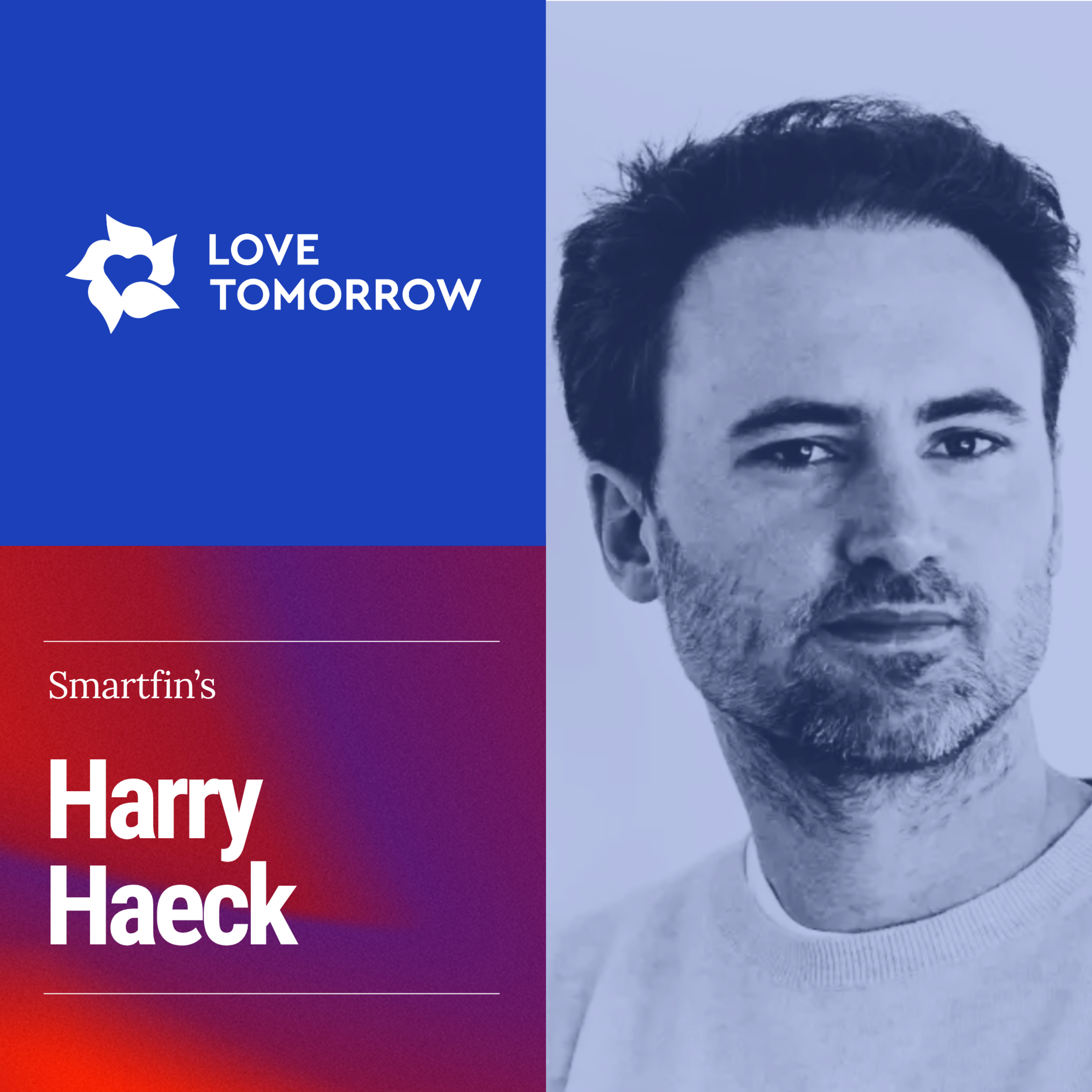
Harry Haeck, an investor and former “bedroom DJ,” speaking as a technologist/investor about AI impact.
Don’t “pull the plug” on AI; measure and reduce footprint while expanding handprint. Handprint benefits are currently underestimated and dispersed across initiatives.
AlphaFold (protein structure), Eco Robotics (95% less chemical spraying), Neospace/AI for methane plume detection, Be My Eyes (AI-assisted visual impairment), Vesuvius Challenge (AI/CT to read carbonized scrolls).
Written by AI. May contain mistakes.
Learn about the community's concerns regarding a major data center investment.
“The city had the opportunity to welcome a$1.5 billion investment into a data center in San Marcos, Texas, but the people were afraid.”
Understand how increased efficiency can lead to greater overall usage.
“and that's when a new technology gets more efficient, people tend to use it more.”
Explore the story of San Marcos and its decision on a data center proposal.
“I think it's the best place to have this kind of talk.”
Delve into the environmental concerns associated with AI usage.
“But what happened there, those people, they made something very clear.”
Discover the positive impacts of AI through various real-world examples.
“So, I mean, these concerns are absolutely real.”
Learn about five significant examples where AI has made a real difference.
“So I'm going to take you through five real-life examples that we've come across over the past few years.”
Examine reasons why the negative aspects of AI are more prominent than its benefits.
“I don't know if someone has read or heard about it, but the Vesuvius channel is an amazing feat.”
Reflect on a hopeful future by balancing AI's footprint and handprint.
“We've built technology that was not perfect, and instead of shutting them down, for example, with the old power stations or the first power stations, We did not stop using them.”

Get the gist, explore an idea or ask about something said.
 Claude
On EUVC, what are the key points of this episode?
Searching your listeningAutomatic transcript. May contain errors.
0:00The city had the opportunity to welcome a$1.5 billion investment into a data center in San Marcos, Texas, but the people were afraid. The village already was short on water, and as you may know, a data center uses a lot of water. So they had to vote, and it's very rare to see a city vote against these kinds of investments. But ultimately, San Marcos did, and the water beat eventually the money at that point in time. But there's a catch that history has learned us. and that's when a new technology gets more efficient, people tend to use it more. And that usage increase then to offset the efficiency gain we have from those developments.
0:42And that gives me hope as an investor because it means we can still steer the future, we can still control the future, and that applies to both reducing or trying to reduce the footprint of AI, but also working on the handprint and expanding the handprint and pointing AI to the right things that matter for us and for the next generation.
1:02Harry Haeck: We are live. We are live. In five. We are live. Four. We are live. Three. We are live. Two. We are live. One.
1:19Let me start with a small confession. In a previous life, I used to be a bedroom DJ, a very ambitious bedroom DJ, dreaming of one day taking one of these stages on the holy grounds of Tomorrowland. Well, I guess I made that dream happen. It's just that I'm now an investor and my set is basically a talk about the impact of AI. But I'm not complaining. I think it's the best place to have this kind of talk. I think we're all here because we care about the future, we care about how tomorrow will be shaped. And as a technologist, the role of AI in that future cannot be underestimated. So today I want to start my talk with a small story.
2:10A small story in a town across the Atlantic called San Marcos in Texas, where there was a city council meeting still going on at 2.14 a.m. 2.14 in the morning, hundreds of ordinary people were sitting in the city hall, debating, negotiating, and deciding on what to do with AI. Because the city had the opportunity to welcome a$1.5 billion investment into a data center in San Marcos, Texas. But the people were afraid. The people, I mean, the village, already was short on water. And as you may know, a data center uses a lot of water. So they had to vote, and it's very rare to see a city vote against these kinds of investments.
2:55But ultimately, San Marcos did, and the water beat eventually the money at that point in time. So keep that in mind. I will come back to it. But what happened there, those people, they made something very clear. They were worried about the footprint of AI, the impact AI has. We use AI in our everyday lives, and one query or one prompt might not have much of an impact. It might light or light one of these spots here for a few seconds. But if you look at the growth and the usage today of AI, I mean, there are billions of queries every day, and it's rising very, very fast. So if you add that up, the amount of water and amount of electricity these data centers consume is just massive.
3:40And to put that even in more perspective, if you put all the data centers together, the energy consumption already matches some of the energy consumed by some big countries across the globe. And that's expected to grow over the next few years. That consumption will probably double. So, I mean, these concerns are absolutely real. We should not try to hide that. But you could argue that things will be more efficient, AI will get more efficient, and that's actually true. Everything gets more efficient. AI is used more efficiently. Chips are becoming more efficient. The whole data center operations are becoming more efficient.
4:24But there's a catch that history has learned us, and that's when a new technology gets more efficient, people tend to use it more. And that usage increase tends to offset the efficiency gain we have from those developments. And that's what they call Jevin's paradox. Satya Nadella referred to it in the context of AI last year. So it's also a reality we have to take in mind. And by the way, if I'm talking about footprint, I mentioned energy, I mentioned water, but it's much more than that. Here's the results of a survey taken out in the US by Statista on the concerns people have around AI. And you can see that the environmental impact is only ranked sixth.
5:11So there are other things like, is AI telling the truth? Are they manipulating us? What about my job? Who's governing this whole technological development that people are concerned about? So the question is, should we pull the plug? Should we call it a day and never use AI again? Probably not. But before you answer that question, I want to give you five examples of the other side of the metal. So as Andreas said, you have the footprint, what the technology takes from the planet, but you obviously also have the other side, the handprint, what it gives back to us. And it's not theory, it's already giving back a lot over the past few years.
5:48So I'm going to take you through five real-life examples that we've come across over the past few years. First one, I don't know if you're familiar with AlphaFold, but basically if you want to develop a new drug, Almost every drug works by locking onto a protein. A protein is a tiny machine that basically runs our body, but in order to do that, you need to understand the shape of that protein. And that takes months and years for a single protein, or that took at least so many time to understand that shape properly. Google DeepMind's AlphaFault basically un-packed 200 million of those proteins by using AI.
6:33So that's the work of decades just in a few months. And it won the Nobel Prize a few years back for chemistry. And today more than 2 million researchers use it to develop new medicines. So that's real impact driven by AI. So that's for science. There's a second one more in agriculture. This is a company called Eco Robotics. It's a Swiss company, if I'm not mistaking. and they have developed a machine that uses AI to look at every single plant on a field and identify whether or not it's weeds or it's a good plant, and it only sprays those that need to be sprayed drop by drop, reducing the chemicals that need to be used by farmers by 95%.
7:22And again, this is not theory. This is already being applied in more than 30 countries. So again, a great example of what AI can enable. So less chemicals in the soil, less chemicals in the groundwater, in the rivers, and ultimately also on our plates. The third example is AI allows us to see things that we couldn't see before. This is methane. Methane is an invisible and odorless gas, but it pollutes much more than CO2. but we cannot do anything about it if you can't see it. This company here, Neospace, which is an Oxford University initiative, has made it possible, thanks to AI, to make those methane plumes visible and to locate them and to put an address on it.
8:12So if you can locate those methane plumes, we can solve them and we can close them. So the impact, I think, it's one of the ways to fight against global warming that's most effective. if we can fight methane effectively. And again, AI is helping in that. The fourth one, this is a company you might know already. It's been around for quite a while. It's called Be My Eyes. They, I think, were founded in 2015. But as of 2023, they started embracing AI. And now they allow people who are visually impaired to use their phone, to point it at anything. And the phone basically describes what they see in front of them, whether the milk has expired, if the t-shirt fits with the trousers they're wearing.
8:55They can even read handwritten notes that are written by friends. So they're not dependent on volunteers anymore to help them see. And there are over 2 billion people, by the way, who have some kind of visual impairment today. So again, impact is huge. Last but not least, AI can give us history back. This is the Vesuvius Challenge. I don't know if someone has read or heard about it, but the Vesuvius channel is an amazing feat. So what basically happened in, I think it was the year 79 when the Vesuvius erupted, it burned the whole library down and transformed all the scrolls into those charcoals that were unable to read.
9:36If you would try to unfold them as a human, they would basically break, so we couldn't touch them for the past thousands of years. Now, with AI and CT scan technology, We have been able to read these without unfolding them word by word. And this year, for the first time, they read a whole scroll using the technology. And there are many more to follow. So again, an amazing example of how AI can help us and impact society in a positive way. So you have seen all these great examples. And the question is, why does the footprint always reach the headlines if there are so many amazing things happening with AI.
10:16We continue debating about the energy usage, about the water consumption, and rightfully so. But I think one of the explanations is also because the footprint is much more measurable. It's easy to measure how many kilowatt hours a data center needs, how many liters of water there are consumed, whereas the handprints with a positive impact is much more scattered across many different initiatives around the world in labs, startups. So it's much harder to put them together and into one number. So keep that in mind when you're debating. The impact is, the positive impact at least, is probably still underestimated today, and we will have to be patient to see the positive effects.
11:00And we've been there before. We've built technology that was not perfect, and instead of shutting them down, for example, with the old power stations or the first power stations, We did not stop using them. We improved them. We put regulation in place, and we made them clean, and we kept the light on. And we can basically also use AI in that race, applying AI to counter its own footprint. It's already happening with better batteries, smart grids, more efficient chips, as I mentioned earlier. So, I mean, we remain very, very hopeful about the future. And that brings us back to our friends in Texas who decided that night not to move forward with the data center, not because they're against the future, not because they're against technology, but because they thought water was more important at that moment in time than a$1.5 billion data center investment for them.
11:58And that gives me hope as an investor because it means we can still steer the future, we can still control the future. And that applies to both reducing or trying to reduce the footprint of AI, but also working on the handprint and expanding the handprint and pointing AI to the right things that matter for us and for the next generation. So that keeps me hopeful. And on that note, I'm going to end my talk. I'm already a bit over time. but thanks a lot for your attention and let's build a handprint worth loving.
AI’s footprint is visible in the energy, water and infrastructure required to run it. Its positive impact is harder to capture in a single number, which can make the costs of AI easier to see than the value it creates.
In this talk, Harry Haeck, Partner at Smartfin, looks at both sides of that equation.
He starts with the story of San Marcos, Texas, where residents rejected a $1.5 billion data centre investment over concerns about water use, before examining why greater efficiency does not necessarily mean lower overall resource consumption.
Harry then turns to AI’s “handprint”, highlighting examples across drug discovery, agriculture, methane detection, accessibility and the recovery of ancient texts to show where the technology is already creating tangible benefits.
The session closes on the question of how investors, technologists and society can reduce AI’s footprint while directing more of its capabilities towards problems that matter.
Highlights
This session was recorded at the Love Tomorrow Summit, where EUVC curated the investor-focused programme.
Timestamps