Ask ChatGPT

 EUVC
27 Oct 2026 · 11m · 4 chapters
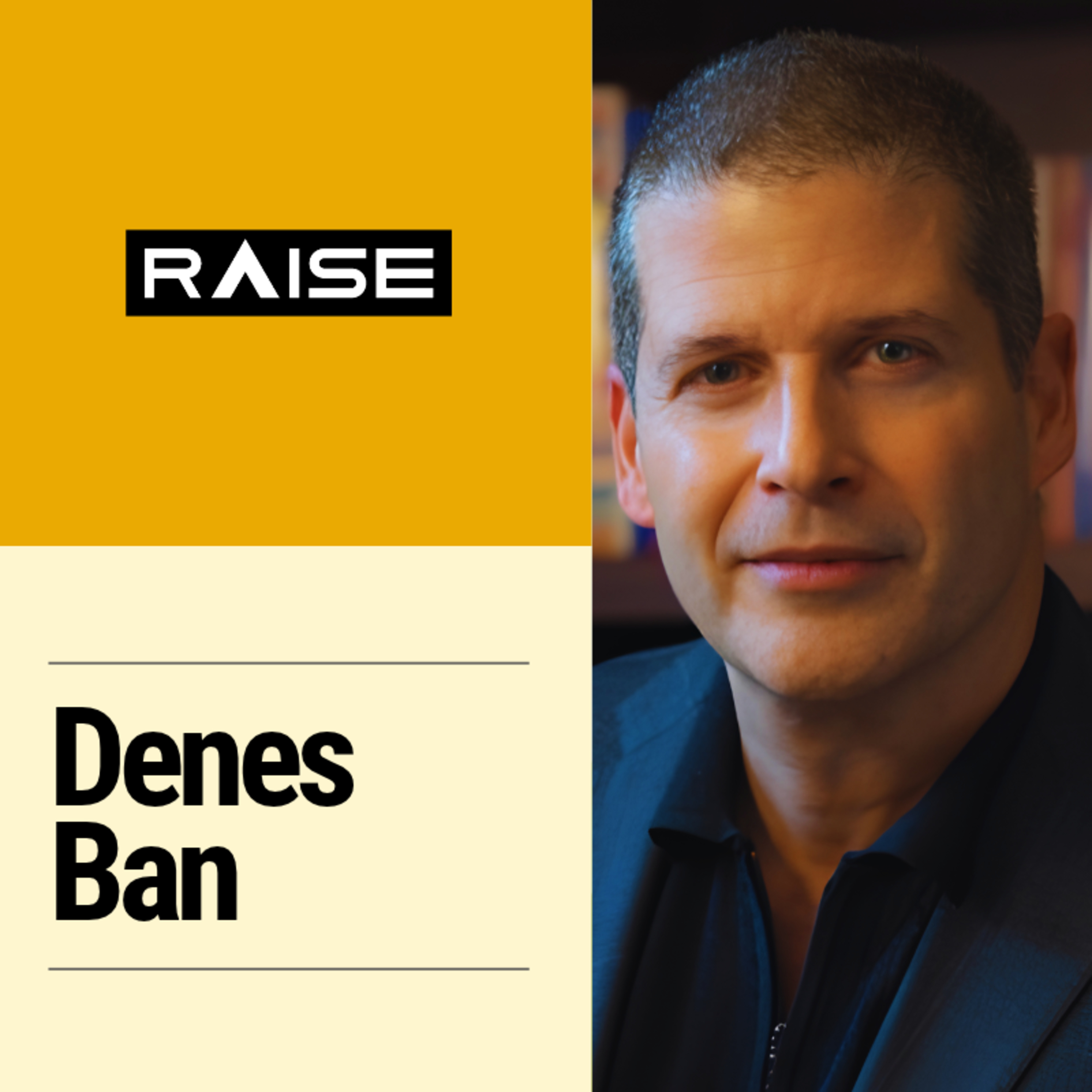
Denes Ban (RAISE) explains why “European resilience” isn’t a standalone fundraising strategy, arguing fundraising is a measurable conversion system with specific bottlenecks and messaging structure. He claims most fundraisers fail by not knowing KPIs/conversion rates and by misidentifying where the funnel breaks. He teaches three levers (numbers, story, urgency) and a “minimum viable story” (MVS) with five parts: world is changing, the problem, the solution, why you win (asymmetric advantage), and why now (strongest signal/urgency).
Joshua Bell’s subway experiment (high quality but huge conversion difference: $1,000/min vs $32.26 total).
No guests mentioned; the episode is a solo talk by Denes Ban.
Written by AI. May contain mistakes.
Discover the impact of context on perceived value through a storytelling experiment.
“and he is one of the greatest violinists in the world.”
Explore conversion rates in fundraising and how to improve them through systematic approaches.
“Now we are all in this conversion rate world, right?”
Learn about the essential components of a successful fundraising strategy: numbers, story, and urgency.
“Obviously it helps, but it's not just art, it's science.”
Understand how to create a compelling pitch using the minimum viable story framework.
“but solution only matters if I feel the pain.”

Get the gist, explore an idea or ask about something said.
 Claude
On EUVC, what are the key points of this episode?
Searching your listeningAutomatic transcript. May contain errors.
0:00Most people make two mistakes. One, they don't know their KPIs. They don't measure their fundraising conversions. But the second one is even more interesting. When I ask them, where is the bottleneck? Where does the system break? Show me. Where is it? I can fix it for you. Where is it? Most people don't know. And if they guess, they are almost always wrong. Most people rush to the solution because that's what you want to talk about. That's what you do 24-7. But it's wrong. It's wrong. If you build this right, the problem, the solution is going to be much more powerful. Authority first built in the problem, not in the solution.
0:44Create urgency, drive action. European resilience alone is not a fundraising strategy. If you don't build up the problem, it alone is not going to raise the money. It's a great idea, but it's incomplete.
0:59Denes Ban: We are live. We are live. In five. We are live. Four. We are live. Three. We are live. Two. We are live. One.
1:16His name is Joshua Bell. and he is one of the greatest violinists in the world. Now, a number of years ago, he was invited to play at the prestigious Kennedy Center in Washington, D.C. And the Washington Post ran an experiment. They placed the same Joshua Bell at a subway station during rush hour. How much money did he make in the evening and in the morning? Well, in the evening, he made$1 ,000 a minute. and that's 20 years ago. That's a lot of money. In the morning, he played for 43 minutes. He made altogether$32.26. That's 0.75 minutes. Same Joshua Bell, but 1 ,000x difference. How is it possible?
2:10Same person, same music, same violin. That violin that he plays in is worth$5 million. dollars to Stradivari because quality alone doesn't win. Quality alone doesn't win. In the morning only seven stops from 1 ,287. In our world we call this a 0.6 % conversion rate. Now we are all in this conversion rate world, right? Whether you are a GP, a VC, a founder, trying to raise money, but by the way everyone, everyone is trying to sell or raise for something. Whether it's money, trust, belief, even if you just want to try to get your daughter out of bed. We are all living in this world of conversion rates.
3:12Conversion rates is a system and if it's a system that means we can improve it. So let's reverse engineer it. What you want is money in the bank. Everybody wants money in the bank. The money in the bank only comes after a last meeting and the last meeting will only come after a number of other meetings, let's just jump to the second meeting. Second meeting comes only after the first meeting. And in order to get a first meeting, you need leads. They come from emails, networking, introductions, pitches, social media. Now obviously, which one has the highest conversion rate? Warm introductions. If Chris introduces me, I'll take the meeting.
3:55Right? And each of those have a conversion rate. What still surprises me after having worked with hundreds of funders and GPs, some of the best in the world and many of them in this room, that most people make two mistakes. One, they don't know their KPIs. They don't measure their fundraising conversions. But the second one is even more interesting. When And I ask them, where is the bottleneck? Where does the system break? Show me. Where is it? I can fix it for you. Where is it? Most people don't know. And if they guess, they are almost always wrong. They think it's much later in the process. It's much earlier.
4:46Now, the good news is that fundraising is not just charisma. It's not just magic. Obviously it helps, but it's not just art, it's science. And if it's science, it means we can maximize it. So that's the good news for you. Bad news for me, typically my workshops are one to two days, the shortest I do three hours, now I have eight minutes. So let me go straight to the heart of it. Today, if it's very simplified, there are three levers of fundraisability. Meaning, in order to do a successful fundraise, you need to have three things. Numbers, story, and urgency. If you have all three, it's a walk in the park.
5:33If you have the numbers, but you don't have story and urgency, you still will, but much slower. Now, what happens if you don't have great numbers yet? Most of us are in this world, right? We have some numbers, but they're not really great. then you have to double down on the story and the urgency. It's the story and the urgency that has to carry the weight. The job of the story is to create the belief. And the job of urgency is to drive action. Now, I want to give you a tool. I want you to go out with something tangible. It's called MVS. Not MVP, but MVS. your minimum viable story. And the minimum viable story has five components.
6:29It sounds maybe pretty obvious, but you'll see the difference. The first one is, the world is changing. Finish the sentence. The world is changing, blah, blah, blah. The second is, here is the problem. Finish the sentence. Then it is, here is the solution, why we win, and why now? These are the five components. Now let me explain what it means. The world is changing. Describe the shift. What changed that everyone can feel? But then go on and tell me, name the pain points that is created by the change. Teach me something I didn't know. Solution. Distill your solution into to one clear, differentiated sentence.
7:20And ladies and gentlemen, this is where most people go wrong. And I understand why. But most people rush to the solution. Because that's what you want to talk about. That's what you do 24-7. But it's wrong. It's wrong. You build, you get my attention here, not here. If you build this right, the problem, the solution is going to be much more powerful. Authority first built in the problem, not in the solution. It's not because solution doesn't matter, but solution only matters if I feel the pain. That's where you get my attention. And only after, if people want to talk about, have three paragraphs, three bullets, no, at the beginning, just one single sentence.
8:12All you want to hear, and you can test this in the coffee break, oh, Dennis, it's interesting. Tell me more. Once you hear the tell me more, now you've got permission to do your three bullets and your three paragraphs. But at the beginning, this is where you build authority, and then you have one-sentence solution. After that, I want you to focus on why we win. Not just general solution. But what is your asymmetric unfair advantage? What is something that I alone, I cannot access or I cannot build? I believe that you can do this much better than anyone else. And then once you build that, now is urgency.
8:58What is your strongest signal? Create urgency, drive action. European resilience alone is not a fundraising strategy. Where does European resilience fall here? maybe here. If you don't build up the problem, it alone is not going to raise money. It's a great idea but it's incomplete. So European resilience, if this is your pitch, which is obviously with all about happening in the world, is that's what you should. If you don't build these other parts, alone is not a strategy. So let's quickly recap. Quality alone doesn't win. Build your funnel. Measure it. And then find the bottleneck. Where does it break?
9:45If you find it where it breaks, your life will be so much different. How much time you need to spend on fundraising every single year? Imagine if you found the bottleneck and we could fix it. Build your minimum viable story. Sharpen the problem, not the solution. Build authority in the problem. and then build urgency, create urgency at every single of these investor touchpoints. You need to have urgency. If you have that, then your conversion rate will improve. And if you do all of these five, the odds for you to raise money will improve significantly. Thank you.
Want help sharpening your fundraising story? Request a discovery call with Denes Ban, Founder of RAISE.---
Fundraising is not just about having a strong company or a compelling idea. It is also about understanding where the process breaks, how investors respond and what actually moves them to act.
In this talk from EUVC Summit 2026, Denes Ban, Founder of RAISE, explains why fundraising should be treated as a measurable system rather than a matter of charisma or instinct.
Drawing on his work with hundreds of founders and GPs, Denes breaks down the conversion funnel behind fundraising, why most people misdiagnose their bottleneck and how numbers, story and urgency work together.
He also introduces the idea of a minimum viable story, built around five elements: how the world is changing, the problem, the solution, why you win and why now.
Along the way, he explains why founders often rush too quickly to the solution and why “European resilience” on its own is not enough to raise capital.
Highlights
Why quality alone does not win
How to identify the real fundraising bottleneck
Why fundraising is a system that can be improved
The role of numbers, story and urgency
How to build a minimum viable story
Why the problem should come before the solution
What creates urgency in an investor process
Why “European resilience” alone is not a fundraising strategy