Ask ChatGPT
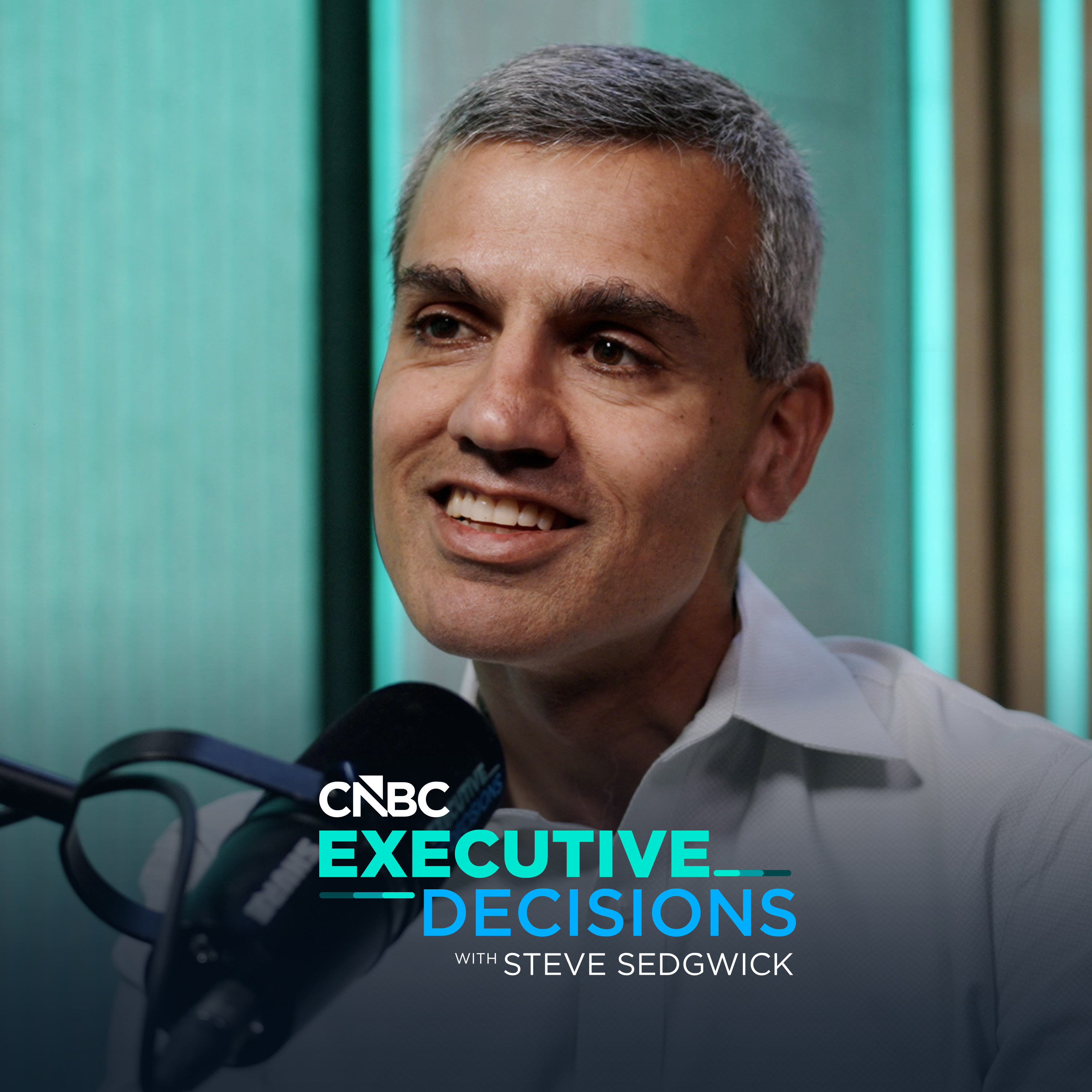
 Executive Decisions with Steve Sedgwick
24 Nov 2026 · 36m · 17 chapters
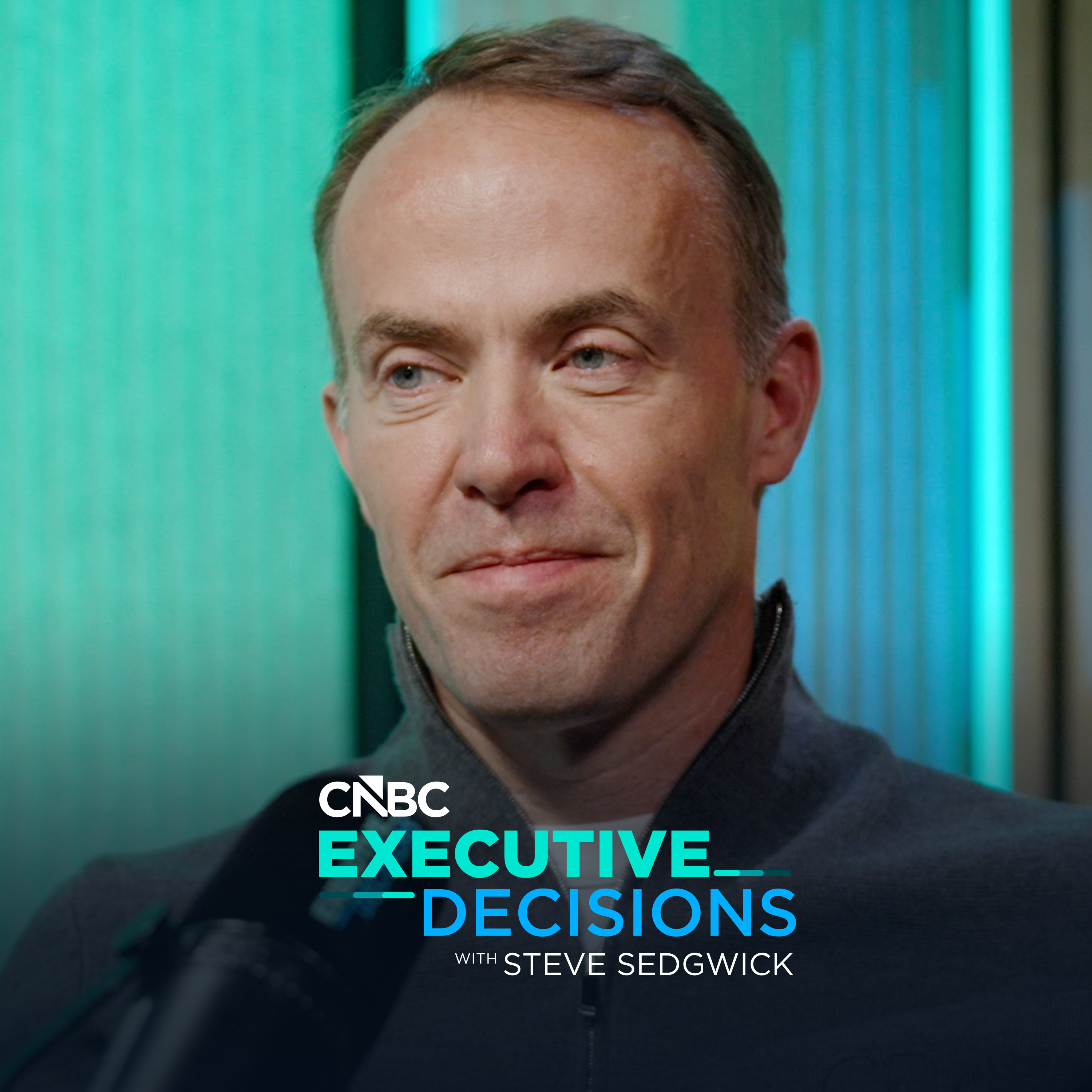
Mark Moffat, CEO of IFS (appointed Jan 2024), discusses his “put yourself in luck’s way” career philosophy, leadership/legacy views, and how IFS is modernizing for industrial AI. He recounts early life in rural Scotland, a pivot from hospitality to accounting, 24 years at PwC, a pivotal secondment in Ghana, and his move to IFS to pursue his potential.
legacy is day-to-day impact, not fame; AI is exciting and will likely create net employment growth (though he’s reconsidering); IFS must be “AI-native” via product re-architecture and an internal VC-style team; he aims to spend 50%+ of time with customers.
washing dishes at 13, running a hotel kitchen at 16; being told at PwC partnership reference time “you’ll never reach your potential”; Vodafone Ghana CFO secondment; spending 50%+ time with customers; “AI as native as possible” and hiring serial entrepreneurs inside IFS.
Mark Moffat only (IFS CEO). No other guests named.
Written by AI. May contain mistakes.
Mark Moffat reflects on his career at PwC and the advice that changed his path.
“He was being considered for partnership when he received some unexpected advice.”
Discussion about legacy, impact, and daily motivations in the workplace.
“It seems very clear to me that your entire career, and you know what I'm saying, you're around about a 50-year-old man now.”
Mark shares insights about his upbringing and early work experiences.
“For myself, I want to look back on my career and say, I did the best I could for me and for those around me.”
Mark discusses how his early jobs in the hotel industry shaped his development.
“my own money so I could buy things that my parents couldn't afford.”
Mark explains his shift from hospitality to pursuing a career in accounting.
“Not a criticism of my background, but it wasn't something in my parents.”
Mark details his experiences at PwC and the importance of hard work in achieving success.
“and that ended up with me being effectively the deputy manager of this hotel by 18, 19.”
Mark shares his pivotal experience as CFO in Ghana and its challenges.
“But they saw something in me, and they gave me a chance.”
Mark Moffat shares his experiences and challenges in his early career at PwC.
“I was just thrown in the deep end so much.”
Mark recalls a pivotal conversation about his potential and future leadership roles.
“And I knew at some stage, I had to get into industry.”
Mark discusses his transition from PwC to IFS, and the challenges it presented.
“Is it fair to say though in the latter part of your career at PwC you were just waiting for the right time and the right company to move on?”
Mark elaborates on how IFS is adapting in the face of AI and industry changes.
“So IFS and everyone associated with IFS, they're smashing it.”
Mark emphasizes the importance of spending time with customers to understand their needs.
“And there are many, many ways in which that comes about.”
Mark shares his optimistic views on the potential impacts of AI on employment and innovation.
“You are now.ai rather than enterprise software or cloud company primarily as well.”
Exploring the implications of AI on employment and societal change.
“Innovation by itself, I think, is exciting.”
Discussing IFS's growth, potential IPO, and market strategies.
“the amount of capital flowing into this.”
Mark reflects on his career goals and the importance of public company leadership.
“If David Schwimmer, Julia Hoggett, all these people are watching this podcast or listening to you, what has Great Britain got to do to get this proud Scott, this proud Britain to get to land this IPO?”
Mark shares insights on maintaining balance between work, health, and family.
“achieve, then maybe James McLaurin would be right and I haven't reached my potential.”

Get the gist, explore an idea or ask about something said.
 Claude
On Executive Decisions with Steve Sedgwick, what are the key points of this episode?
Searching your listeningAutomatic transcript. May contain errors.
0:00A CNBC original podcast. Mark Moffat had spent more than two decades building a successful career at PwC when a conversation with a senior executive made him question his future. He was being considered for partnership when he received some unexpected advice. Thing is, Mark, you'd be a great partner and you'd be hugely successful and congratulations. The thing is, you'll never reach your potential. Moffat went on to become a partner at PwC, but those words stayed with him. I had a fantastic career within PwC. I loved every minute of it, but it always stuck with me. After 24 years, he decided to leave the security of the firm for an opportunity at enterprise software company IFS, with no guarantee he would become the CEO.
0:49But I've always backed myself. Moffat became CEO of IFS in 2024, a move that reflects a philosophy he's followed throughout his career. The more situations you put yourself in, the harder the work, the more you prepare to take things on, to take a little bit of a risk. Literally, the more lucky you become, you've got to put yourself in luck's way. These are Mark Moffat's Executive Decisions.
1:16It seems very clear to me that your entire career, and you know what I'm saying, you're around about a 50-year-old man now. Yep. I think 50 exactly? I think exactly on the nose. Your career is 37 years old. You started when you were 13 as well. I think your entire career is about you deciding, can I reach my potential? Can I improve myself? Can I be better as well? Is that accurate? you know i never used to think so but in recent months and years i've reflected that's categorically the case i even think about the role i've got today and what happens if tomorrow i wake up and ifs cease to exist where am i and i've already thought about what the next chapter would look like so i'm always constantly thinking about what next and how do i stretch myself and in some small way that gives me a bit of purpose and drive and it gives me actually a zest for life beyond work too.
2:07Yeah, because you get to a certain stage in life, and I'm in my mid-50s, I'm older than you, and you think, what's my legacy? What am I doing every day? I'm still working. Am I achieving enough in order to justify being here, being here at CNBC and actually doing a really good job as well? Is that what you feel when you get up every day? Yeah, the whole concept of a legacy, I just don't believe in. I never once think about what's my legacy, I do think about the day-to-day impact I have around people I work with and what leadership and how I can develop others. So I think about it in very practical, real world, real day terms, but the concept of legacy, if no one remembers me in 50 years, I honestly don't care.
2:49I hear you. Let me rephrase that. For myself, I want to look back on my career and say, I did the best I could for me and for those around me. That's the legacy I mean. 100 % and I'd extend that obviously to family but to just people I've impacted along the way there's nothing I get greater satisfaction from than watching other people I've had an impact on flourish and succeed I love it I mentioned you started 37 years ago you were 13 years of age working in a kitchen you're a porter in rural Scotland you came from a really tough working class background Galashiels just tell me a little bit about that period in your life Yeah, I mean, tough, yes, in perhaps some standards.
3:31But when you live in a town of 13 ,000 people in rural Scotland, when you've got the fields to run through freely and forests and rivers to make trouble in, I'd had a great upbringing, a great family. Yes, in wealth terms, whether the most wealthy, no, but I'd everything I absolutely needed. but from a very early stage I was always very independent and that included wanting to earn my own money so I could buy things that my parents couldn't afford. I realized that all my friends had paper rounds. They'd get in their BMXs in the morning at 6am, pick up the papers and go deliver them for I think it was£7 a week I seem to remember at the time and I just could not get out of my bed in the mornings.
4:15I was an absolute terrible early riser so that wasn't going to work so I decided to knock on the door of a hotel kitchen that was a 12-minute walk from my house, big old country house hotel, and to see whether they needed any help. And they gave me a go that evening at the Rotary Club dinner on a Monday night to wash the dishes. And I did it that night, and I was hired on a weekly basis at£5 a night, so I won. Did school suffer? Yeah, definitely. But school suffered in many ways for me because I was in a school that wasn't necessarily an environment where successful students were celebrated. And I didn't really apply myself in school at all.
5:01Not a criticism of my background, but it wasn't something in my parents. It wasn't like they were seriously on top of me to study well. And I would say I drifted through school. learned a bunch of things, but my grades weren't particularly strong, which is actually why I didn't immediately go to university. I had to go to college to get a different certification to allow myself to go to university. So school didn't suffer, but school was never a thing for me. You're not the only person I know who worked washing pots and pans in a hotel from a very early age. The other person I know is a very dear friend of mine who did stunningly well in life.
5:39But he learned more from working in that hotel and working really hard from a similar kind of age to you than he learned at all at school. Yeah. Was that the case for you? Categorically the case. Because in that environment, I started off on a Monday night washing the dishes and that became prepping food for the Friday, Saturday night service. And in the end, that became commie chef. Then that became second chef. And I think at the age as 16, when the head chef was on holiday in quieter months in the summer, and this is a really nice big old country house hotel with three restaurants, over 100 covers, I'd run the hotel kitchen.
6:17So at 16 years old, I'm running the hotel kitchen, albeit with an assumption it would be quieter and easier to handle. But there were occasions where it was full on and I'm in control in this environment. So I learned so much in that role, but also then I went front house and that ended up with me being effectively the deputy manager of this hotel by 18, 19. And the level of customer service challenge you meet in that environment, an opportunity was just unbounded. It was such a rich learning environment. Why didn't you become an equivalent of Gordon Ramsay? Why didn't you run hotels? Why didn't you go into hospitality?
6:58You clearly had an act group. What made you switch completely from that business well amongst other you know benefits you get working in that environment you meet a lot of interesting people and i met a lot of interesting people both staff and guests who would come into the hotel wide array of careers and professions and backgrounds and i learned there was a world outside of gala shields there's a world outside of hospitality uh which i was attracted to and And in particular, there was some staff at the hotel who, amongst other things, they went to Camp America in their college years, where you take your students from the UK, sponsor them into working in American summer camps, which I did for four summers in a row.
7:45Also, the same group, actually, they went on to become chartered accountants, and they were trained by Grant Thornton. So I became interested in that whole profession, an accountant. like could I see myself as an accountant and that was alongside the same time where there was a guest that used to come into the hotel and I won't say his name but I remember him vividly he was a big shot within Cooper's and Lybrand at that time he was a neighbor and he'd come in for a drink of a Friday Saturday night and I told him about my ambition I thought well I could be a chartered accountant and he said something along the lines to me Mark you know you're amazing and I wish you the best but you haven't got the right grades you're not at the right university and with the greatest respect in the world you're just not going to get in you know it's a big four or big five or whatever it was at that time and I literally thought f you you know I'm going to show you and that became then at that point my my my kind of purpose I wanted to be an accountant and I thought long and hard about it it's not just those moments as a means to extend myself professionally to grow, to get a qualification beyond the college and university that I went to.
8:55The hotel owner, Kevin and Nikki, at the time, as I was thinking about what next, they offered me the chance to lease the hotel from them and to take it over fully. But because I had this yearning for this other world, this other set of experiences, and I'd recognized that in hospitality and leisure, when you can work 100 hours a week and the level of progression, wealth you can attain relative to how hard you work, it was pretty low. It's a tough profession. It was very tough. It's tough for even now, I imagine, to make money out of it. Yeah. But does anyone really want to be a chartered? They desperately want to be a chartered accountant.
9:39It's a quite exciting job working in the hotels business, whereas chartered accountant, it's just numbers. What was it about that decision to go into that that really attracted you? I can't say with absolute certainty. I know exactly what was the motivational factors, but some considerations were it was a chance to get a professional qualification. Yeah. And I didn't have a great high school in terms of the qualification I got. I went to a college, which allowed me to go to university, an old polytechnic, Napier University, which I think is great. And it really set me on my way. but also that wasn't the end game in terms of where they stand on top whatever universities in the UK.
10:18So how do I get myself a qualification beyond that? So if I became a chartered accountant, it's a professional qualification, it's progressing me, and it's a chance to learn business and to keep learning. And actually, you asked earlier about function of my career, what's driven me over years. One of the things that I've definitely learned about myself is I have an absolute voracious thirst for learning and put myself in new experiences. So all of those things combined, together with a chance to live somewhere else, I moved to London with some of my friends from university, just gave me a phenomenal experience.
11:00Tell me about the decision to join PwC and then stay there for such a long time. The decision to join, actually quite entertainingly, at the time it was Coopers and Lybrand and Pricewaterhouse. Pricewaterhouse rejected me. Coopers and Lybrand accepted me into their Uxbridge office. And then by the time I joined, they'd come together in the form of PricewaterhouseCoopers or now PwC. Joining PwC just gave me such a rich set of experiences over 24 years. And what I put that down to, I was always putting myself out there. You know, I worked hard. I took great pride in whatever I was working on at any point in time.
11:42I made a real intent to get to know people and to understand the breadth of what PwC did. And I just put myself in a series of positions to take on new projects, new experiences, to move within the business, to move within industries, to move within professional disciplines. And over 24 years, I just got really lucky. You know, every couple of years I'd move role. I'd work for people who sponsored me, who helped me. So let me get this right with that old quote, the harder you work, the luckier you got, yeah? 100%. I really believe that. The more situations you put yourself in, you know, the harder the work, the more you prepare to take things on, to take a little bit of a risk.
12:20Literally, the more luckier you become, you've got to put yourself in luck's way. Do you know, actually, I learned, I must have been five, six years into PwC, and I learned through chatting with the people who interviewed me through the process that I actually didn't quite make it on the very rigorous qualification standards they have on the scoring that they had. But they saw something in me, and they gave me a chance. And I never realized that at the time, and they told me subsequently. And that always stuck with me, and I've always tried to live that same set of values. I'm loathe to jump through your entire career, but you had enormous success, including becoming the Chief Technology Officer, Chief Consulting Leader UK in EMEA.
12:59But I want to point to a time, roughly 2008, 2009, where you're on secondment to, I think, Vodafone Ghana as a CFO. Yeah. Best chapter of my career by far. Oh, well, tell me about that. Why was that the best chapter of your career by far? Well, at that time, for sure. I've had so many great chapters, and now I'm stopping to think about it. But in that moment at that time, I'm parachuted into West Africa. And Vodafone had just bought, effectively, a civil service company. It was owned by the government. It was privatized. And there was all sorts of issues associated with that. There was an election running at that same time.
13:43and I inherited a West African civil service, basically a CFO, living in Accra in Ghana. Talk about being taken out of comfort zone. The boy from Galashia was in Accra. Sink or swim. And I remember at the time, amongst other things, I think I was trying to support the business case for a massive investment in network technology and I had a CTO at the time, his name is Tony, who didn't like the fact there's a new CFO challenging the assumptions in his business case And I kid you not, in the evening, I'm on Wikipedia trying to figure out what the basis of this business case was. I was just thrown in the deep end so much.
14:20And it was culturally, experientially, from a leadership standpoint, just such an incredible experience. Equally, the West African, the Ghanaian people were just so wonderful to deal with. And it was such a culturally rich experience for me. That's amazing. But at that time, there or thereabouts, you've got a gentleman, a partner at PwC who's, I think, putting you forward for partnership. Yeah. So the way partnership works is, I mean, obviously, the partnership. I've got to view candidates for partnership and you have a sponsor that helps you along the way. And this is a chap called James McLaurin, yeah?
14:58He was actually, so James McLaurin was the regional CFO in Vodafone. James had been asked by the partnership for a reference for me about my candidacy if you like to be a part of the PDBC which was an incredible moment he made to be admitted into the partnership a young man from Gala Shields that doesn't happen very often and it was a real I mean I was so proud of achieving that from a career standpoint but he was telling me that he'd been asked for a reference and this is in 2008, 2009. And I remember vividly the conversation. I remember where we stood. I remember where it was in London. I remember the whole conversation.
15:38Bear in mind, this has now gone on over 20 years. And he said, I did your reference. Thing is, Mark, you'd be a great partner and you'd be hugely successful and congratulations. The thing is, you'll never reach your potential. I'm like, what do you mean? That's a jewel-edged sword if ever I heard one. Yeah. Well done. I'm going to put you forward or I'm going to give you the reference, but you're not going to reach your potential. Yeah, because he was like, you should be an operator. You should be a leader. You should be a CEO. And I'm like, James, I'm flattered. But this is a boy from Galashiel, who's just being admitted to the, or being admitted, hopefully, to the PwC partnership.
16:14But it always stuck with me. And I had a fantastic career within PwC. I loved every minute of it, but it always stuck with me. And I bumped into James five years later in Kuala Lumpur Airport, and we chatted for a few minutes, and we partied. And he turned around, he said, oh, Mark. And I turned back around, he said, have you reached your potential yet? He remembered that bloody conversation. So it always niggled at me. And I knew at some stage, I had to get into industry. I had to be an operator. And yeah, so I remember those moments. We talk in this interview series about the key executive decisions, but for you, it's the key executive discussion.
17:00If anything has been the most important piece of advice or something that's stuck in your brain or just small seed that's grown and grown and grown, it seems to me that conversation, have you reached your potential? and although after that and you got your partnership and you did incredibly well at PwC you had another 12-13 years at the company was that just germinating within you the whole time I'm only going to reach my potential if I'm an operator rather than working for the companies I mean yes it was in the background for sure and had I concluded that I would spend the entirety of my career at PwC no uh equally if I had I'd have been enormously happy again it was a fantastic period of my life but I knew there was another gear so I always made sure that I was progressing in my career in the context of PwC2 so every couple of years I would move roles and I was lucky to be sponsored by people who really helped me on my professional journey and I guess another thing that'd be characterized by what I motivate by what I what I really enjoy is always being stretched professionally from a learning perspective and that was certainly the case for many years and I had a couple of offers to join other organizations immediately prior to obviously moving to IFS but in many ways they represented more of the same big established companies, multinationals and I felt it was it would be great it would be amazing but it wasn't enough until the IFS job offer came on.
18:38Is it fair to say though in the latter part of your career at PwC you were just waiting for the right time and the right company to move on? Yeah I think so. It wasn't a plan but if that moment I've always believed in putting yourself out there, putting yourself in luck's way, you know embracing experiences, meeting people, been enthusiastic for life and for work. And in that kind of psyche, I knew some point opportunities will arise. So 2022, you've got this opportunity to go in, but not as a CEO. Correct. You didn't become the CEO until early 2024? Jan 24. Jan 24. So when you joined, you pretty much knew that there was a path to becoming the CEO?
19:25Yeah. So - Tell me about that joining process. So Darren Roos, who was the then CEO, who's now chairman, I'd known previously, we'd worked together very briefly prior to him joining IFS, actually, and I'd always tracked the business. And I knew it was just a phenomenal asset that just had this massive trajectory ahead of it. And he and I reconnected in 2021. We chatted about the business, where it was going, and there was a need for somebody to come in to really help turn around their consulting operation together with certain aspects of their operations. I also knew at that time that Darren was very open about it, that he didn't want to be CEO forever.
20:08And there would be a time where they would be looking for their next CEO. And if I came in and delivered and performed, I could well be in contention. And that was massively attractive. So not only would it be joining this incredible business that is IFS with an incredible leadership team and shareholder base, but there's a chance for me to really progress my career if I prove myself. And you better believe that I went in intending to prove myself. But to make that leap thinking, yeah, there's a good chance for me to get to CEO, but actually I've kind of got this year, 18 month internship or kind of probation period.
20:48That's a huge leap. Yes and no, for sure. And it was clearly part of my deliberation, but I've always backed myself. On this occasion, I chat to my wife about it a lot, as you'd expect. And I just backed myself. And where I got to mentally was, just put the chance to be a CEO to one side for a second, just the nature of the role I was going to take on and the challenge that that represented within in this business that is very unique in its nature where I got to was I back myself I know I'm going to smash it and it will put me put myself into a different realm of opportunity so it would just whatever happened I would be in a different realm of opportunity two years and four months into the CEO job um are you smashing it uh the team are smashing it I'm blessed to have an incredible team as a business.
21:45We're doing incredibly well and it is such a pride for me to be leading IFS right now, particularly in this market that we're in. So IFS and everyone associated with IFS, they're smashing it.
22:04It's an incredible place at the moment and it's moving so quickly. And look, from someone who knows a bit about enterprise software, who knows a bit about AI, but it's not my forte. We're hiring. Thank you very much indeed. But moving from a cloud-based software business or a business that is known as cloud-based software to industrial AI, which is I think what your mission is to turn this company into. Tell me about that process because it is such a conversation of our time. Because if you're seen as enterprise software, you're seen potentially as a victim. If you're seen as an industrial AI, you are seen as a victor as well.
22:42This is a really unbelievable space at the moment and defining yourself and then proving yourself is pivotal to how the market perceives you, dare I say it, to future events for your company as well and for various measures of your success. Yeah, so the IFS is unique in that the The business genuinely supports mission-critical operations of some very important industries, including critical national infrastructure. So the role that IFS performs on a day-to-day basis is important. It matters, and as does that history. But it's incumbent upon us to make sure that we are always modernizing. And that's been true for the entirety of IFS's history, let alone what's happening now with the advent of AI.
23:28He was born in 1983 out of, I want to say Linköping? Correct. Yeah, in Sweden. Became publicly traded and was taken private by EQT in 2018. And they were the majority owner until very recently were HG Capital invested. And now HG Capital are also co-control. Two incredible shareholders who back us for the long term. But we've always been serving mission critical industries from an enterprise software perspective. and we've succeeded in large part because of our ability to constantly reinvent ourselves. And that's no different now to how it's been in various other changes over the last 40 years.
24:07And we are running our future. We don't wait for it to happen. We know this massive change is coming from AI. And there's a bunch of things that we're doing in the business to make sure that we are AI as native as we can possibly be, including what we provide to our end customers, because that's what will give us long-term vitality and long-term relevance in the market that we trade in. And there are many, many ways in which that comes about. First of all, you've got to look at your internal operations. How are you using AI in your internal operations to be AI native, but also from a product development standpoint?
24:44And what we've done is a couple of different things. Number one, we've re-architected the existing product set. And then the second thing that we've done, which is materially different, is we encouraged a number of individuals to join us who are serial entrepreneurs, who are serial founders, to effectively create a VC-backed style new organization within the context of IFS. And that team are disrupting us. That team are developing next generation AI products in the realm of what we do, unconstrained by our history. But has it made your company more volatile? You mentioned getting these amazing entrepreneur-like people, VC-type people within the company.
25:28One thing I know about the power law is that 8 out of 10 aren't supposed to work of these ideas. So has it created volatility in your product offering, volatility in your path? No, the only volatility it's created, honestly, is a cultural one. Right. So for the better. Yeah, for the better. Because these individuals are not constrained by customer practice that's been developed over 40 years. they're in a very different mode and they are disrupting us from within in a very constructive way so on one level you've got a legacy organization doing amazing things who are in their pattern of behavior and you've got this new group of people who are very different pattern of behavior and of course there's points of tension within those different motions which allows us collectively to be better so it's it's a it's been a real i wouldn't say it's an experiment because it was a very deliberate thing that we did.
26:19But it's symptomatic of this desire as a management team, as a company, to constantly be disrupting ourselves and think about how we'd be relevant for the future. Because it's about disrupting yourself and then disrupting the industry and disrupting for your clients, working with your clients. You spend some crazy amount of time with the clients, don't you? Isn't it something like 50 % of your time you're actually with the clients working out their industrial AI needs? I've always had this belief in any leadership role that you have be clear what the currency is and the currency in a customer serving world is to be relevant with regards to customer experience so i took a pledge pretty early on to make sure as a ceo i spend over 50 of my time with customers and that's still true today as it was in the first couple of months that i became ceo uh now that makes the weeks long sometimes very arduous in fact before this uh very uh podcast i was having my backside handed to me by a customer.
27:17Yes, so you told me. 45 minutes. And those conversations sometimes are very difficult to listen to because they're the reality sometimes of, you know, you don't always get it right. And as a business, we prided ourselves on making sure when we don't get it right, we fix it. And we will fix it. I've seen the adverts. I've seen the Chelsea shirts. I've seen the F1. It's Cadillac team, I think you're on as well. You are now.ai rather than enterprise software or cloud company primarily as well. That's not just about labeling. You've said how you've changed yourself and how you're working with the clients to change.
27:53Is AI terrifying in its potential or is it exciting? I think it's exciting. I like change. With change comes innovation. Innovation by itself, I think, is exciting. I've said quite a number of times on record that I believe there'll be net employment growth as a consequence of AI, but I'm stopping myself a little bit now and just thinking about whether I really believe that anymore. And it's a big societal issue for sure. I am an optimist. And if you look at every major change that's happened before, whether it's electrification or the dawn of the internet, there's always been net employment. There's always been economic growth.
28:38But this time feels different, doesn't it, Mark? It does. I'm also not a tech expert, but I see it. We've got six kids between us. Yeah. I see it at that level. I see it at the lower middle management, the kind of companies where you cut your teeth, PwC. I see it in senior management roles being taken out as well. It's almost crazy to say it, but I'm wondering whether this technology is very, very different from everywhere where we can talk about the steam engine, we can talk about the threshing machine. I agree. We can talk about the spinning jenny. this one feels very different. No, I agree.
29:13And I'm very open. But then Mark, you're the problem. Well, no one individual, no one company is going to stop this train. I mean, this train has left the station. I mean, the rate of change, the progress, you know, the frontier labs, the amount of capital flowing into this. So irrespective of what I think or what we do, this train ain't stopping. Now, governments, private companies, technology leadership, I've got to be figuring out a way to also play a role in being aware from a humanitarian, from a societal perspective. Are we part of the problem? No, I really don't believe that, but we owe it to ourselves, to our employees, to our shareholders, to our customers, to make sure that we are embracing rapidly this innovation.
30:04The implications of it, no one really knows, is the reality. Talking about the big decision for the future, Everyone wants to know what happens next with IFS. Now, you're not going to tell me sitting here, we're going to IPO here and in this timeframe. But I see various quotes. You're a$15 to$18 billion company. You might say it's pushing the top end of that as well. What are you going to do next in terms of the ownership? Because as you say, it was originally started off in Sweden in 83 and delisted in 2018. You've got great shareholders now, but everybody's talking about the route to market for you.
30:39Yeah. and what a flattering place for us to be. And what that tells me is we're a successful, investable company. And we are those things because we focus on the fundamentals. And if you work on the fundamentals and you're working in a world of controlling the controllables, what you do is you make sure we've got the best-performing business with the most relevant products for customers and the most happy, engaged workforce. And I think if we focus on those things, What happens with us from an overall kind of shareholder perspective, it doesn't take care of itself, but you put yourself in a world of creating optionality.
31:17So clearly one option would be for us to be on the public markets. It's also an option for us to be privately held. There's some very large privately held businesses in North America right now. Yes, they might be coming to market, but they're an order of magnitude bigger than we are from a valuation standpoint. I think for us, as long as we maintain our growth, maintain our relevance, do amazing things for customers, hire smart people and drive hard with a high performance culture, which we have and which you better believe I'm going to sustain, we just put ourselves into the best world. If David Schwimmer, Julia Hoggett, all these people are watching this podcast or listening to you, what has Great Britain got to do to get this proud Scott, this proud Britain to get to land this IPO?
31:59Because there's some great competition out there. Yeah. I mean, the government, London Stock Exchange Group, they're obviously undertaking a number of reforms. I think they would all want to see the capital markets of the UK compete on a more palatable basis with North America. and it's not for me to sit here and critique what they're doing but i think they need to recognize that isn't true today and they need to get on with the reforms uh and they need to make it a more attractive place for companies like us to want to list and i i'm confident they'll get there having just said you're a proud brett is brent becoming unfriendly to business i think britain is less friendly to business than other nations and i think one has to face up to that and um i think this is a fantastic nation with great heritage and history it's bred some incredible institutions and public companies uh but there's a lot more work to be done um how does mark moffat going forward achieve his potential you're always looking to achieve your potential is there another move in you is it you think ifs is your ultimate home what else do you want to do personally to carry on achieving your potential?
33:20It's a great question. If IFS were not to exist tomorrow, then what would I do? I have a plan and it's always about progression. It's about the next thing. It's about pushing myself to continue to learn and put myself into new experiences. So there's a whole manner of potential careers should IFS not exist tomorrow. I'm lucky to be in that position and there's not a day goes by where I don't have gratitude for it. you're a CEO of an incredible growing company that's going to come to market at some stage as well. Are you saying you quite fancy the idea of being a founder? Probably not founder, actually, I think.
33:58So what I haven't done, it's a statement of fact, as I haven't been a CEO of a public company. So that would be one thing that would be attractive to me in the fullness of time. That's not to say that the objective of IFS is to become public, because it's not. The objective of IFS is to do the fundamentals and to be a highly investable company. But if I were to retire, not having been a public company CEO, as I sit here today, reflecting on the things I want to achieve, then maybe James McLaurin would be right and I haven't reached my potential. And final, final question. When you're not the CEO of IFS, how do you achieve balance in your life?
34:36I've got to remind myself of the need for balance on a regular basis. I mean, is 168 hours in a week. And I'm constantly having to work to make sure that some of those hours are for family, for health and well-being. And those are the three dimensions I'm always balanced between. I'm very lucky that I love my job. I love working. So I have to keep that under constant calibration. One of the things that I've oscillated on is the importance of just keeping yourself in shape, keeping yourself healthy. When I have prioritized health and well-being and just been physically fit, I found that's periods where I could take on more rather than less.
35:16And sometimes that's counterintuitive. If you're spending less time working and getting yourself fit and healthy and well, I've generally found that's when I'm at my absolute peak performance from a work standpoint. Mark, it's been a real pleasure to speak today. Thank you very much for your time. Thanks for having me. Thank you for joining me on Executive Decisions. I hope you enjoyed the episode. Before you go, click on that follow or subscribe button. And I'd love to hear from you. So please leave a comment or a review. I read them all. On the next episode, I'll be speaking to the CEO of Voyager, Dylan Taylor.
35:48I told my friends ahead of the space flight, I said, I'm going to be terrified. I mean, how can you not? I'm looking forward to it. We'll see you then.
Mark Moffat was on track for a successful career at PwC when a senior executive told him something unexpected: he would make a great partner, but he'd never reach his full potential.
The remark stayed with him. Moffat went on to become a PwC partner and spent 24 years at the firm, but eventually decided to leave for a new opportunity at enterprise software company IFS — where he would have to prove himself before potentially becoming CEO.
In the latest episode of Executive Decisions, Moffat tells CNBC's Steve Sedgwick how that decision helped shape his career, why he believes in putting yourself in luck's way, and how his upbringing in Scotland influenced his approach to work and ambition.
He also discusses IFS's push into industrial AI, his changing views on the technology's impact on jobs, and the challenges of leading a business through rapid technological change.
See Privacy Policy at https://art19.com/privacy and California Privacy Notice at https://art19.com/privacy#do-not-sell-my-info.