
In short
Exit Paradox Podcast: Episode Summary
Episode Title
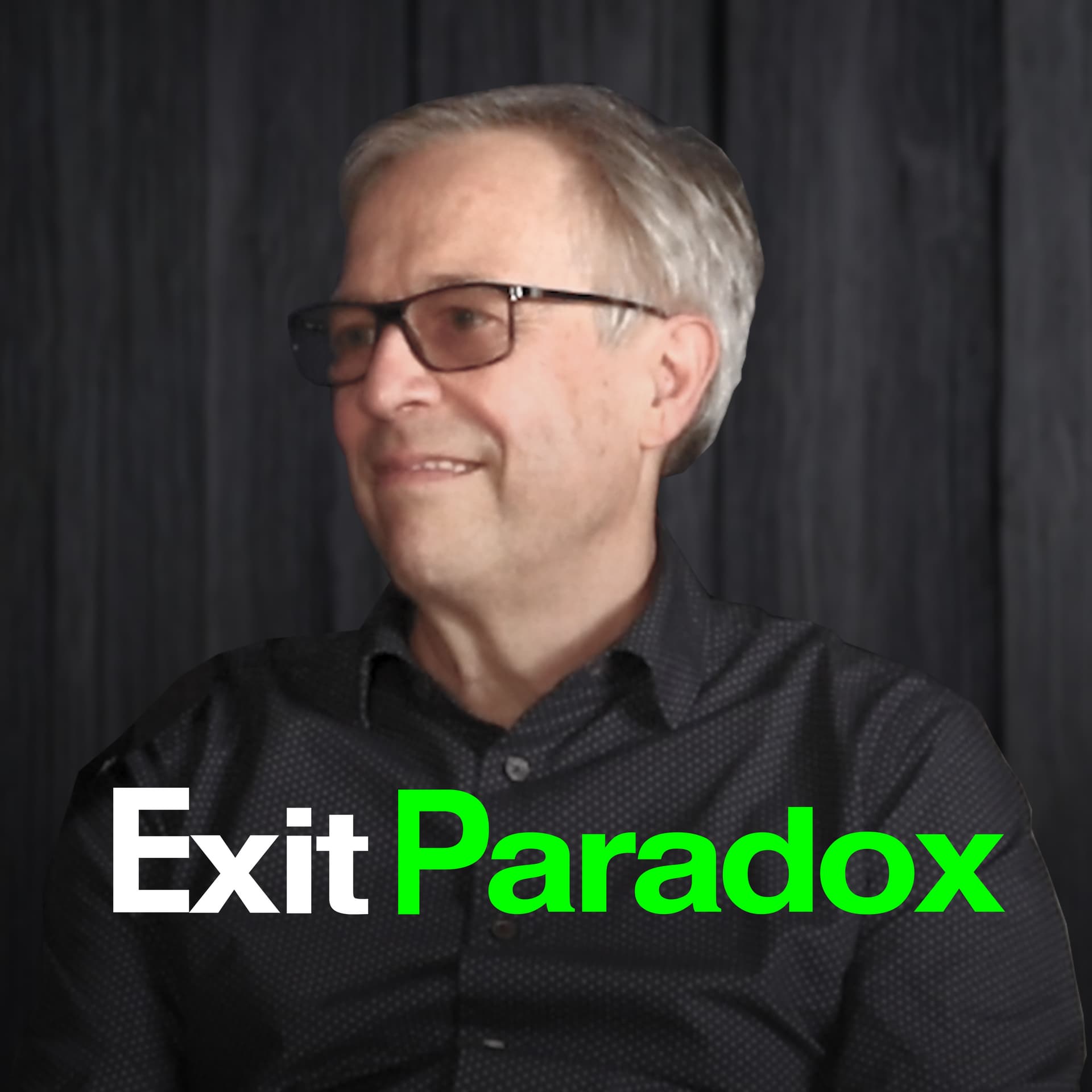
Johnathan. 'Life Forced a New Purpose on Me'
Host
Anastasia Koroleva, a seasoned entrepreneur with experience in navigating life post-business exit.
Guest
Jonathan (anonymous), a successful entrepreneur who shares his journey of exiting a bootstrapped company and finding new purpose.
---
Episode Overview
In this episode, Jonathan discusses his gradual exit from a highly successful bootstrapped business he built over the years. He reflects on the emotional and financial challenges of transitioning post-exit and how personal difficulties, particularly in mental health within his family, shaped his new sense of purpose. Jonathan's insights on bootstrapping, the exit process, and the impact of personal experiences provide valuable lessons for entrepreneurs contemplating life after selling their businesses.
---
Key Topics Discussed
- Transition After Selling the Company
- Jonathan emphasizes a gradual exit strategy that allowed him to manage emotional and financial transitions effectively.
- Unconventional Wisdom on Business
- He shares insights on the benefits of bootstrapping and the importance of taking one's time during the exit process.
- Personal Background
- Jonathan’s background includes training in medicine and transitioning to business and investment banking before becoming an entrepreneur.
- Challenges in Business Hierarchy
- Discusses difficulties faced within hierarchical business structures and how they motivated his entrepreneurial journey.
- Importance of Financial Decisions
- Explores how financial motivations shaped his business decisions and the complexity of money in entrepreneurship.
- Advantages of Bootstrapping
- Jonathan reflects on the freedom and control gained through bootstrapping, including majority ownership and the capacity to choose collaborators.
- The Impact of Minority Exit in 2016
- Details the strategic decision to sell a minority stake to a private equity firm and the subsequent emotional and financial impacts.
- Lessons on Merging and Control
- Shares experiences working with private equity and the importance of choosing partners who add value.
- Post-Exit Adjustments
- Discusses the challenges and adjustments faced after exiting, including dealing with health issues and finding new pursuits.
- Focus on Mental Health and Philanthropy
- Highlights Jonathan’s commitment to mental health advocacy driven by personal family experiences.
- Reflections on Wealth and Family Training
- Explores views on wealth management and the importance of teaching children about financial responsibility.
- Lifestyle Changes and Personal Well-being
- Jonathan discusses rediscovering physical activities and the importance of nature in his life post-exit.
---
Key Takeaways
- Gradual Exits are Beneficial: A phased exit can provide emotional and financial stability, allowing for a smoother transition.
- Bootstrapping Offers Freedom: Growing a business without external pressures leads to greater ownership and satisfaction.
- Personal Challenges Shape Purpose: Life’s difficulties can redirect focus towards meaningful pursuits, such as mental health advocacy.
- The Importance of Choosing the Right Partners: Collaborating with partners who understand the business can lead to fruitful outcomes.
- Wealth Management is Personal: How one approaches wealth, especially concerning family, significantly impacts future generations.
---
Conclusion
Jonathan’s journey is a powerful reminder of how entrepreneurship is not just about business success but also about personal growth and finding purpose after significant life changes. His reflections on mental health and philanthropy illustrate the broader impact that exited entrepreneurs can have on society. This episode provides valuable insights for anyone navigating life after a business sale, encouraging listeners to embrace new challenges and continue contributing positively to their communities.
---
For more insights and discussions, be sure to subscribe to the Exit Paradox podcast!
Written by AI. May contain mistakes. Listen to the episode to check what was said.
Transcript
Automatic transcript. May contain errors.0:00We've had some issues in our family, particularly with mental health. You know, that's become a focus for us. My wife and I, we can use our wealth perhaps to make a difference in getting some answers for mental health, particularly for young people, which I think is an enormous problem. My friend Jonathan has chosen to remain anonymous in exchange for stepping outside his comfort zone. And that he did. Eight years ago, he began a gradual exit from his incredibly successful bootstrapped company. This strategic approach had an unexpected benefit. It smoothed his post-exit transition, making it more manageable, both emotionally and financially.
0:39His search for a new purpose, a lengthy and confusing path for most of us, became clear and compelling after his family was hit by a mental health issue. In this interview, Jonathan shares raw, unconventional wisdom about the advantages of bootstrapping and exiting in stages and how painful personal challenges gave him a new purpose and source of fulfillment.
1:09Hi Jonathan, thank you so much for joining me today. Hi Anastasia, lovely to be here. So you and I have known each other for a few years now and one of the many reasons why I value our friendship so much is because you have this unique kind of wisdom which is rooted in kindness and acceptance of reality and people generally. I don't think I've ever heard you speak poorly about anyone or judging people. And that wisdom is also coming from a wealth of experience. From the professional or business standpoint, you actually lived, what, three lives now? Yes, yeah. I'm on career number three. I always hoped there might be a fourth career in me and quite possibly there might be.
1:57I'm sure about that. So tell me a bit more about your two careers before you became an entrepreneur. Yeah, I mean, my first career was I trained in medicine as a doctor. And I went through the training, graduated, spent about two and a half years working as a junior doctor in the UK. And that was a great experience because you're given a lot of responsibility at a very early age. And it's kind of sink or swim. And so I can go into why I changed careers. But I then went to business school and then became an investment banker. was involved in, always in one industry, the pharmaceutical and biotechnology industries, and had a good time for most of that.
2:56But after a while, I had enough and I wanted to do something much more entrepreneurial. So what exactly motivated you to start a new business? I think that I'm just not very good with hierarchy. I think I probably had a bit of a problem at school with authority. I went into medicine and I found that, I mean, the student life was great. I liked it. I liked the practical side. But when I got, you know, when I graduated, I had to start working in a very hierarchical system. I just found, I didn't find many role models. I really only found a role model right at the very end when I decided to go to business school.
3:41I just it was in it was a different system a different different culture in those days we're talking you know I graduated 45 years ago so we're talking we're talking you know the world has changed a lot since then and it was quite a misogynistic racist culture in the medical profession UK medical profession and I didn't like it and I just felt I wanted to get out How important money was for your decision to start a business or financial freedom? That's a really good question, actually, because, I mean, money is it's so complex the way it sort of infiltrates one's psyche. I would like to say it wasn't very important, but it probably was because, you know, I, in fact, I had one attempt at starting a business before I went into investment banking.
4:41when I was at business school, I wanted to start a biotechnology company. And I don't think money entered my head at all, actually. It was just a sort of great adventure to start a business. And I quickly realized that actually money was really important. And that's what took me into investment banking, so that I could understand what money was about and how you could use it and how it could make things happen. And I got a good grounding in that, in investment banking. And I think when I left investment banking, I mean, I suppose I wouldn't like to say I developed expensive taste because I hadn't.
5:28I was still single in those days. But I think it was probably quite important, but it wasn't the most important thing by any means. Tell me about the company you built. It was a data business. It served the, and it's still in existence, it served the pharmaceutical and biotechnology industries and the kind of ecosystem around that industry. So consultants, investment bankers, investors, they all became customers, clients. And it was, I mean, in a nutshell, I guess what we were trying to do was to become the Bloomberg of the pharmaceutical and biotech industry. So we collected and aggregated all of the information that people in those industries needed to make really important strategic decisions, whether it was decisions around allocating capital to new products, to acquisitions, to investments, or to advisors who were advising these companies.
6:34and I started it with my brother-in-law and we bootstrapped the operation. We tried to raise institutional money. This was during the dot-com boom. I think we were probably about the only business that failed to raise money in the dot-com boom. Obviously, I didn't know how to sell a concept and in fact, it was the best thing that could have happened to us because we didn't take institutional money. We bootstrapped it and gradually over a long period of time, and it was hard, it was really hard, it gathered momentum and became successful. Why do you think you failed to raise money? Perhaps I didn't articulate it quite well enough.
7:20I think that the whole climate was all about dot-com and crazy. The internet was just taking off and it wasn't crazy enough really. It was too, there wasn't an understanding about the importance of data. And at the time, people, the attitude was when we put it in front of investors, well, everybody's got all the information they need. And I would say, no, they haven't actually. It's really hard to get it. It's all over the place. It's not aggregated. It's not usable. You can't make decisions quickly. But they just didn't get it. And it was, oh, well, you'll just sell to a few of your mates in drug companies or in the investment banks.
8:08And then once you've sold to a few, you've maxed out and where's the growth? And what they didn't understand was that when you sell a service into very large companies, if you start very small, you can grow it. so you can grow contracts to be multi-million dollar contracts over a period of time. They just did not get that. They missed it. Yes. So their loss. Hmm? Their loss. Yeah, I like to think so, yes, yeah. Absolutely. And I was quite gratified, actually. One of the investment houses that turned us down, we thought we'd had a recommendation from their analysts to invest. They turned us down.
8:51It was quite gratifying to see a few years later they went bust. And in fact, the other thing, I mean, we had a series of bad luck, actually. We were about to sign a term sheet on September the 11th, 2001. Oh, wow. And of course, the whole thing blew up in New York, and the market just crashed. And so I had to remortgage my house for about the third time. My wife was seven months pregnant. but that was all that was all the fun so in the hindsight it sounds like you're happy you bootstrapped I'm very happy with it very happy it's not for everyone I wouldn't recommend it it it's um you it requires a lot of resilience so why are you happy you bootstrapped because we ended up as a family we ended up as majority shareholders we ended up majority having majority ownership of a business that became very valuable and also it gave us freedom we weren't under pressure to sell yeah and it was just fun it was just once the business got going it was just it was fantastic you know we were the business was just growing like a weed we were opening offices in the US on the east coast on the west coast we had teams in India we had we had offices in in the Far East.
10:16And it was just, it was just fantastic. You know, I loved it, actually, absolutely loved it. And of course, you know, you by because we were the my brother-in-law and my family and I, we were the majority owners, we could choose who we wanted to work with. And it was all about people, actually. I can very much relate to that because we had a similar situation in the first business. We also basically walked away from fundraising and then ended up bootstrapping through the exit. Yes. And what I heard quite a bit from other people later is that when somebody owns a company for a long period of time, say over 10 years, and it's bootstrapped, they assume it's because it took so long because it was so hard to do it without outside money.
11:03and I think your case because you owned your company for 24 years before you completely exited and also in my case it's almost the opposite it actually, you know, there was no rush to sell, right, so it's a good thing and people think that it's not right, because you're just saying you had so much fun you didn't want to sell investors push us to sell earlier because they have a different incentive system Yes, they do. I mean, they've got a much shorter time horizon. I'll come on to talk about that. But just to go back to the bootstrapping, the hard part was I wasn't making any money. Yeah, of course.
11:47And, you know, I went from, I think it was seven years from leaving investment banking. I did a year at London Business School and then started the business. I went seven years without earning a penny. at the same time I was having to fund. So I made a little nest egg from my investment banking days. And I was having to fund a company. And it was hard not having... And, of course, you don't know when the sales are going to kick in. Of course, our sales projections are always way too optimistic. They always are. so I would always pencil in that by such and such a date I'm going to be able to pay myself a salary and it never happened so it took two or three times longer than I expected and that was hard particularly with children on the way of course so when you started having money did it all come as a windfall or it was gradual?
12:50it came gradually but once we paid the first salary check after about 2002 it was I remember September 2002 you know that was a really big day I was on the payroll and it wasn't very much actually but we never looked back actually we never looked back then and also the business got to the point where I was able to get a little bit of bank debt and that helped and and everything from then on it the business just grew it just grew and grew and grew every year didn't matter what happened we had the Lehman crisis we just grew yeah we just grew through everything and so you started a great industry we are selling it to of course so you started taking money out yeah I mean I was never I never I was never the highest paid employee I always made sure that other people you know people who were who had really valuable sales skills in particular and other other skills were better paid but I think around about 2010, 2012, we started to pay a dividend.
13:56And so I started to get about every two years, I get a good, you know, good dividend check. And so we, you know, we started to be comfortable. So after years of saving and, you know, having to batten down the hatches, we had a comfortable life. The reason I'm digging into this is because on this podcast, we focus on what happens after an exit. And my observation is that it makes a huge difference whether your wealth comes suddenly and you're not prepared for it or you are eased into it over time. Well, I mean, I would say that it did come suddenly. The sequence of events in 2016, we did a minority exit.
14:45So we sold 40 % of the company to a private equity firm. And so suddenly you had a windfall and suddenly I felt, oh my God, what are we going to do with all this? But I was prepared for it because we'd been preparing for three or four years. And in fact, I'd been preparing for longer. And I, although I didn't want to exit, I had to recognize that, you know, you don't go on forever. I was in my mid-50s and I had to prepare, you know, I kind of took a judgment call that by the time I got to 60, I needed to step back and let somebody else take the responsibility. And certainly as the business got much bigger and it got into, you know, as we had several hundred, you know, we had a few hundred employees, it was a big responsibility.
15:37You know, I would kind of worry that somebody might do something terrible in America or something like that. And I'd be the responsible person and I'd get hauled off to jail in America or something. You just don't know. You don't know what's around the corner. So I would worry about the responsibility. And I've just felt I need to share this with other owners who've got big shoulders. and you know because um you know i was getting to a point where i i'd um i i didn't have the capacity to work as hard as i had let's say in my 40s when i started the business you were talking about why you exited and you mentioned a high level of stress because you were tired of the responsibility and you were thinking of potential risks which you would not want to uh face alone right and then you were talking about your own energy that it was going down completely to when you comparing to when you start started the business yes was there anything else because I would love to hear why you decided to exit even though the business was doing so well I just took this view as I said when I was in my sort of mid 50s that when I got to 60 I would have been doing the business for 20 years and I just said to everybody something's got to happen something's going to happen I'm not sure what it is and um and we'd also reached I mean I think there were several reasons we'd also reached a size where I was having to recruit people with um really quite serious kind of corporate expertise and experience and it's difficult to recruit individuals like that if if they're not actually if you can't if you can't demonstrate there's a pathway for them to be well rewarded.
17:28And the obvious way to do that is to say there's going to be an exit and give them shares or share options. And that's the way that they can participate from the value that they're creating. So that was very important, that piece. I think also I just had a desire to, although the dividend checks were very nice and we were getting good, we had a comfortable lifestyle by then.
18:01It's, you know, I spent 20 years building this business and I just thought, you know, it could just go in, you know, some disaster could happen. You had a lot to lose by then. There's a lot to lose. And I want to take, you know, for my kids, for my family, I want to take some money off the table. So the partial exit route, rather than selling to a trade buyer in one go. And, you know, the business was still growing at 20 % and I wanted to participate in that. So it seemed to me the best way to do that was, it was either to float on the stock market. And I thought, no, I'm never going to do that.
18:36Because having worked in investment banking, I see what a treadmill that is. Never going to do that. So private equity seemed to be the way to go. And I'm pleased with that decision. It's because, you know, with each transaction, I've been able to sell down a little bit more. And we're still owners, part owners of the business, but it's now a very small percentage. So it's quite complex, all the reasons. How did you handle this diminished control over the business? It all depends on how much you own. I mean, if you don't own, if you don't have a majority ownership position, you can't control it completely.
19:15but if you've got we ended up with um as a family i think after the first exit we ended up with about 40 i was chairman of the business i was with the private equity um partners and i call them partners um i would say that it was different um but it was fine i mean we did have a falling out and then we made up again and um there was a time when they were i think they were quite they were quite annoyed with me and they chucked me out of their offices and but that was fine you know it was we made up and you know we became very good friends and um they were helpful um so you know it was just a different experience and so if we just focus on that experience you're working with private equity when you still had 40 of the business what would you say the most important lessons you've learned from that you have to let go actually you can't you know if you you go from majority to a minority shareholder you're you're not in control you've got you've got to accept that that things have shifted and and um lean into it you know what are the i mean hopefully if you if you go down that route you will pick a partner who really brings something to the table i think it would have been in our case it would if if we had brought in a partner who all they brought in was just capital and you know and they had no understanding the business and they were they they wanted to do things in a particular way that didn't make sense.
20:41That would have been really difficult. So I took a long time to select a firm that I felt could really add value, and they did. They added a lot of value. We were able to do things that we wouldn't have been able to have done at pace. And they taught me some good disciplines, actually. So it was a good learning experience for you at the end. It was, it was, definitely, yeah. Okay, so you basically then continued your strategy of gradually leaving the business. Yes. Driven probably by financial reasons at that point, right? You were looking for the right moment to exit. Well, no, the thing is because we had done a partial exit, Part of the deal was that they had to have an exit within five years.
21:36So I signed up to that. Maybe I could have gone with a private equity partner that had a more kind of evergreen type fund. But I think in general, any financial institutional investor is going to want to... Predictability. Well, they want to have a pathway to exit. And so, I mean, I wasn't keen to exit at all, but, you know, I'd signed up to it. I had to do that. And so we had an exit. And at that time, it was just, it was during COVID. I think, you know, we, so I was, what, 60, was it 2020? 20. Yeah, I was 65. So, you know, you're kind of thinking, well, I'm not going to go on forever. You know, I need to take, you know, it's now's the time to take more money off the table.
22:37And I've also, I've forgotten to say that the time, going back to the first exit, the timing was absolutely right. Because within, within almost the moment I signed the deal this was in 2016 I developed a heart condition and I had to have treatment for that I had to have stents put in and the rehabilitation the recouping of that it took it I lost focus so if I continue if we hadn't done that exit in 2016 it would have been really difficult to have been the majority owner and to have lost focus because of illness. It sounds like you had intuition about it because you repeated several times that you were boring about something, right?
23:33Yes. And then you exited. Maybe the worry contributed to it. Yeah. Maybe not, I don't know. It was probably a long-standing condition that had been accumulating. But it's an age thing. As we get older, we have to accept that we lose capability. Do you ever regret exiting? No, absolutely not. No, no. What's the right decision? I mean, I started business late. I started at 40. I became an entrepreneur at 40. You know, you just have to accept that, you know, you're not going to go on forever. Yeah, some people prefer to work forever. Look at Warren Buffett. Some people are amazing. I come across people who are in their 80s who are still running big organizations.
24:24What I've noticed with them, with family businesses, is that they've been able to pass on the responsibility to family members, to their kids. Well, I wasn't able to do that because my kids were still young. And also, it wasn't the type of business really to pass on to kids. It's, it's, there's, there's too much technology, too much, you know, there's just too much going on. It's not something for young kids or even people in the kids in their 20s really to be, to be running. So what you consider exit is 2020 when you stopped being actually involved in the business, right? Because you still own a bit of the business.
25:11you started exiting financially earlier than that. Is that correct? I was involved in the business up until 2020 as chairman. Yeah. Then we did a majority exit, so we sold down to less than 25 % from memory. But I stayed on the board because we still had, as a family, we still had a significant shareholding. Then a year later, the private equity firm turned around to me and said, we want to merge with a company, a business in the US. I didn't know much about it, but they persuaded me it was a good deal. But that was also private equity owned as well. So as a result of that merger, as a family, our percentage fell to a much smaller percentage.
26:04So I came off the board. In fact, I wanted to come off the board. I didn't want to stay on the board any longer. So that's when emotionally you exited. I'm trying to find that moment when for you personally, you were like, okay, I'm out. Well, we remained invested, although I came off the board. And so I'm still emotionally a little bit in there, but not much. And I keep in touch with the individuals. So it's been a sort of, it's been a gentle runway down, running down. And for me, it's worked. it may not work for others. So if we go back to that moment when you felt you exited, how did you feel about it back then?
26:51I suppose I'd become accustomed to, I'd had six years of going from majority shareholder, chairman, to large shareholder, then to small shareholder. So I'd had a period of time to acclimatize, to adjust to that. And that really worked, actually. You're happy you did it that way. Well, I found other things to occupy me. And in some ways, things that... It was just basically life took over. One of the things I've discovered is that as you get older, as you retire, the decisions don't stop. They keep coming at you. And usually they involve family. and they're every bit as difficult as business decisions.
27:37In many ways, more difficult. Because we're also not prepared for it. We have no training for those things. And of course, it's frustrating that you perhaps don't have enough time to do things for yourself, but that's fine. it you know um so i've had plenty of time to um to change direction and adjust to it and uh and we've had some you know we we've we've had some issues in our family particularly with mental health which i won't go into if you if if you don't mind and but you know that's become a focus for us where we want to as my wife and I we hope that we can do something we can use our wealth perhaps to make a difference in getting some answers for mental health particularly for young people which I think is it's an enormous problem at the moment.
28:38Do you feel it gives you a sense of purpose? Yes that definitely does yes. So that would probably explain why you don't necessarily miss your business because one of the main reasons people miss their businesses is because it takes a while to find a sense of purpose and in your case it came to you in the in the form of a challenging situation but yes you ended up accepting it as your purpose yes yes I mean one of the things we did was after after the first exit was we made quite a big donation a sizable donation to the medical school where I trained. And I wanted to do that, actually, because I wanted to give back.
29:18And we funded some PhD students because we were supporting the next generation of... The idea was to support the next generation of researchers. You see, I mean, my business had been founded on, you know, data. and we had used the output of academic research on an industrial scale. So we had extracted data from medical academic research to create solutions for pharmaceutical companies. So although I'd never been a medical researcher myself, I felt that I kind of developed an awareness that solutions to many of the world's problems, not just in medicine but in everything, are deeply rooted in high-quality academic research.
30:10And it's a really important endeavor, I think, to support. If you don't, you know, there's only a finite amount of money going into bringing people into early-stage careers in academic research. And so it's like a tap. The more you turn it on, the more people will come in, the more research that will be done. So through that experience, we've developed, well, I've developed, I've become familiar with some of the issues in academia and how we can support it. And that's taken us into focusing a little bit more now on mental health and how we can find solutions to some of the issues in mental health.
31:02so do you plan to give it any structure in the future uh your purpose in in mental health um having your own yeah i mean we're still we're still working on that still trying to work it work out how best to do that um there are two schools of thought right uh there are there are professionals who feel very strongly about um bringing children in as early as possible and actually training them to manage money early on to get used to it yes that's that's sort of their arguments and then the other school of thought where i believe most entrepreneurs belong naturally is this focus on motivation and drive and hunger yeah and making sure kids don't get spoiled so it sounds like you belong in well i think i do and the reason i think the first the first group would you know particularly if it's inherited family wealth or if you've had wealth from um an early age or early in your career um it's been around you all the time in our case it's it's it was something that came right at the end of my career so you know we didn't grow up as they didn't grow up as um in you know um i mean they're privileged obviously in in many ways but partly because of where we lived and the countryside.
32:27But they didn't grow up with a sense of entitlement, I hope. So it's something that's happened to us recently. So if you were advising someone who has little kids and they just had the financial windfall, where would you recommend they go? which direction? Bringing children into the wealth training early or keeping them hungry? I mean, you know, my kids weren't particularly comfortable, actually, with the idea that there was family wealth, actually. It was something that I think they felt set them apart a bit. I think it depends, perhaps, on the kind of life that you're leading.
33:18you know my you know we weren't living in London we weren't living in a particularly affluent area of the country we were just trying to be normal actually so I think for us I think it's the right thing to you know to delay but that's probably not right for everyone So you're saying it depends on the family. I think so, yeah. And their circumstances, yeah. I agree, absolutely. But there are discussions about that all the time. And I can just see that most exited founders in our community, they lean towards keeping children hungry, even if they're very young when money comes. And even if parents want to enjoy their money fully, they're usually very very worried about this entitlement problem.
34:15I think they should be worried actually and I think that the environment of teenagers and young people now is so different from when I was growing up with all this being so well written about and discussed what's happening in social media and phones And, you know, I can see that whole generation have been deeply affected by it. So I know you well enough by now to know that you're not particularly interested in material possessions. And you were just also confirming that. Where do you think it comes from? and is it something you're proud of or is it something you feel is a burden you would rather get paid from?
35:07I wouldn't say I'm completely disinterested in material possessions. I mean, we have a very nice home.
Read the full transcript
35:22but I've never had a problem wherever I've lived whether it's been a very modest place and I've lived in some, I would say, more than modest some pretty appalling places in my time and I've lived in some really nice places it's not really been an issue at all for me where does that come from? I don't know, maybe going you know my own background is we we were brought up in modest circumstances we weren't poor by any means but it was modest I was sent to boarding school my parent my grandparent my grandfather funded that that was quite a it was a kind of militaristic quite spartan lifestyle I traveled a lot in my late teens and early 20s really roughed it.
36:14So I was comfortable in those situations. For me, it's always, you know, I think the joy in life comes from interaction with people, actually, other people. I had a discussion about this issue with someone last week who had a very different opinion, and that person came from a very, very poor background. and he believes that it's extremely important to train that poverty mindset out of yourself. Oh, right. Okay, that's interesting. And he was saying, what's the point getting wealth if you never allow yourself to be rich? So it was very interesting for me to hear how you would argue against that.
36:58I think ultimately because the experiences you have, you can have from wealth, being wealthy, fundamentally I think they can breed a sense of dissatisfaction. you know when you have a very pleasant experience that's costs a lot of money it's nice but how do you improve on that and if you do it frequently after a while you could become jaded and so for me experiences that I derive the most satisfaction from it's from its interactions with people. It's, yeah, obviously travel is fun to see new things, to experience new things. But ultimately I think it's, it has to be, it has to be the experiences I think you have with people that are more satisfying.
38:02And I don't think you can buy those experiences. Okay. So how do you go about choosing whom you surround yourself with? I have a family around me. I see a lot of my kids but also some of our as I've mentioned we have some issues with mental health in our family so that sometimes it's quite difficult to separate from that but I'm fortunate that because of the varied things I've done I've got a rich network of people who I've known for a long time so one of the one of the joys actually recently has been um uh reconnecting with a lot of my classmates from medical school and you know now most of us have retired we've got time on our hands before we had all such busy careers we never saw each other and now we have a very active sort of whatsapp group and we see each other a lot and that that's a joy and then i have business school um i have people i used to work with in investment banking who I see and then and then also latterly there's a kind of quite a big alumni group of people who work to evaluate and who I'm in contact with and then of course the people in the community I live in so you know it's it's I'm really lucky actually with to have so many relationships.
39:29So you mentioned basically two different sources of satisfaction or fulfillment in your life. One is the purpose of supporting academic research, particularly in mental health, because it's close to your heart. And the second one is this high-quality interactions with people that are important. And there's a third one also. I think as you get to the age that I'm at, you need to look after yourself. So you need to spend time
40:07doing something physical. So I've rediscovered squash, for example. I used to play squash in my 20s and 30s. I've taken it up again. I've really enjoyed that. Doing physical things. So it brings you joy and energy, I assume. Yeah, yeah. And you know it's going to stand you in good stead as you get older. Of course. So knowing that you are helping yourself, being healthy also helps. Okay. Is there anything else that you would say helps you feel your life is fuller? Being outdoors. Meaning with nature. Yeah. I mean, you know, I always said that, you know, all of my career, I've had three careers.
40:53They've all been indoors. I also hope that my fourth career would be outdoors. Okay. Well, I haven't really quite figured out what that career is. It doesn't have to be a career, right? It can be walking. Yeah, maybe it never has to be. But walking has been a... After I had the heart issue, I would go walking every day without fail for two or three hours. And that restored me. That was very restorative. I can't recommend walking highly enough, actually. Yeah, I'm a big fan too, so I totally understand. I think my most creative best ideas always come when I'm outdoors, walking, enjoying nature.
41:32Yes. There's some magic that happens. Absolutely. So I'm curious if you're doing anything deliberately to process your life's experience into some kind of principles or mental models. For myself or for... for other people. For any reasons, like for example if you think like what lessons I learned from this or that or what are the wisdom gems that I discovered. I accepted an honorary degree from my university last year which was I could have just gone up and shaken hands and taken the degree but they wanted me to make a little speech so I had to make a little speech to the graduates, the all undergraduates who are graduating.
42:26And obviously you have to give them some words of wisdom. And I think, I'm just trying to think back what I said.
42:36I kind of said that things that have worked for me were, you don't have to follow any particular path that's set for you by, let's say, a career. You know, do your own thing. be disruptive, start an insurgency, if you must. Because I remember early in my 20s, I'd been kind of a little bit inspired by the doctors, the naughty doctors who'd gone off-piste and had become sort of Marxist revolutionaries or opera impresarios. And there were a few famous examples of doctors who'd become writers. And so I said, look, it's OK to want to overturn the established order. Become an insurgent. But if it fails, one of the lessons that I had learned was in my first effort at entrepreneurship, it failed quickly, fail quickly, so you can move on to the next thing.
43:37And take pleasure. I talked about a secret sauce. develop all your skills, develop the unique offering that is yourself, wrap around it all the skills that you can, and then you've got something unique, and I would call that your secret sauce. And then just take delight from what happens. and I talked also about unsung heroes because in my life the people who have helped me and perhaps didn't get the limelight particularly within the company I started so many people were fantastically helpful I call them the unsung heroes who celebrate and recognize them and you'll be surprised at the results, how fantastic they might be.
44:40In what sense? In terms of how you feel or in terms of what comes back to your life? Both, both. I mean, you know, I talked about, you know, at Evaluate, I used to, it was a little bit like, it was a little bit like my first child that every, you know, at the beginning you had these sleepless nights um you um you were exhausted beyond um your ability you know you thought how am I going to cope um but but you would you would see you would make these little small steps you know like a baby these little small steps would produce a result you might get a customer would be delighted with the with the outcome and that used to create delight so all of these little small experiences of delight, they would come, they came, you know, like a child growing as the business grew.
45:37You know, it was just, you know, successive experiences of delight. And of course, there are times when people are being naughty, and you have to deal with that as well. And then, and then you would have, and then at the end, there was a big step you know like an exit or whatever big things that would be absolutely thrilling so the so so um um and also the way um you um look after after the people you work for i mean everybody in our company had share options so everybody um on exit on two exits that i was in they've received significant sums of money and that was just a sheer pleasure actually because you felt you contributed yes yeah to their you know happiness yes yes yeah and I can see how it would give you a lot of satisfaction about that decision yeah I mean you know with you know without doubt I mean the more you give the more you get back I mean I think if you want to if you want to encapsulate how do you want to be remembered I mean with the people I know and have known I hope with you know with love and affection am I going to be remembered be at once once they've all gone probably not but that doesn't bother me I you know the reality is being in business is not like you're not like an artist I mean, it is a creative process.
47:18It's very creative. You are an artist. It's creative, absolutely, starting a business and developing it. But, you know, who gets remembered? I mean, it's people who create great works of art. And who else? Not many other people do get remembered, do they, after a period of time? But the question is how you want to be remembered. How I want to be remembered. Not whether you'll be remembered or not. Well, I think I've answered that. But I think with love and affection. That's the most important thing for you. Beautiful. I love it. Wonderful answer. Thank you so much, Jonathan. Thank you for opening up and sharing all these stories and the wisdoms.
48:00I really appreciate it. Yeah, my pleasure. Yeah, thank you. Thank you. Great questions. Thank you.
From the publisher
My friend Jonathan has chosen to remain anonymous in exchange for stepping outside his comfort zone — and that he did! Eight years ago, he began a gradual exit from his incredibly successful, bootstrapped company. This strategic approach had an unexpected benefit: it smoothed his post-exit transition, making it more manageable both emotionally and financially. His search for a new purpose—a lengthy and confusing path for most—became clear and compelling after his family was hit by a mental health issue. In this interview, Jonathan shares raw, unconventional wisdom about the advantages of bootstrapping and exiting in stages, and how painful personal challenges gave him a new purpose and source of fulfillment. _____________________________________________________ TIME STAMPS: 00:00: Introduction 01:00 Transition after selling the company 01:20: Jonathan's unconventional wisdom 02:08: Jonathan's previous careers 03:06: Motivation for starting a new business 03:53: Challenges faced in hierarchical systems 04:44: Importance of money in decisions 05:47: Founding a data business 06:44: Challenges in raising money 08:24: Misconceptions about data 10:03: Advantages of bootstrapping 11:14: Financial challenges and salaries 14:53: Impact of minority exit in 2016 17:02: Reasons for full business exit 18:12: Dividend checks and responsibility 19:04: Working with private equity firms 21:04: Importance of choosing the right partner 22:10: Reflections on Exiting During COVID 23:00: Health Issues and Impact on Business 24:03: Regrets and Decisions on Exiting 25:10: Continuing Involvement Post-Exit 26:14: Merging with a US Company 27:02: Adjusting to Life After Business 28:32: Personal and Family Focus Post-Retirement 30:26: Supporting Academic Research and Mental Health 31:29: Motivation of Wealth Training for Children 35:17: Disinterest in Material Possessions 38:13: Sources of Fulfillment and Life Satisfaction 41:47: Outdoor Activities and Personal Well-being 42:00: Processing Life's Experiences into Wisdom 45:36: Small experiences of delight 46:12: Caring for employees through share options 46:50: Satisfaction from contributing to others' happiness 47:08: Reflection on being remembered 48:04: Conclusion and gratitude


