In short
Podcast Summary: The Curious Consumer - Episode 1: Frozen Food's Glow-Up Era
Episode Overview Release Date: 2026 Hosts: Nate and Jenna Description: In this episode, Nate and Jenna examine the evolving landscape of frozen foods, the rise of canned protein milk, the challenges of plant-based brands, and innovations in body care and olive oil products.
---
Key Sections
- Intro & Snacking Resolutions (00:00 - 03:25)
- Hosts Introduced: Nate and Jenna discuss their media company, Express Checkout, and celebrate their growth on Instagram.
- Personal Snacking Resolutions:
- Jenna aims to try new snacks, particularly focusing on hidden protein content.
- Nate humorously mentions the struggle of balancing healthy choices with candy.
- The Future of the Frozen Aisle (03:25 - 13:37)
- Emergence of Premium Frozen Foods:
- Introduction of *Dropout*, a CPG holding company with nostalgic frozen breakfast sandwiches.
- Discussion on the shift in consumer perception towards frozen foods being viewed as high quality and premium.
- Mention of *Trader Joe's* as a key player reshaping consumer attitudes through innovative frozen product offerings and quality.
- Trader Joe's Challenges Olipop and Poppi (13:37 - 17:38)
- Introduction of New Products:
- Trader Joe's launches its private label prebiotic soda, entering a competitive market dominated by brands like Olipop and Poppi.
- Discussion on brand loyalty in the prebiotic soda space and the potential impact of price on consumer choices.
- Canned Protein Milk's Moment (17:38 - 22:42)
- Rise of Canned Protein Milks:
- Introduction of Bear Bells' canned high-protein milk drinks, capitalizing on nostalgia and childhood flavors.
- Discussion on the evolution of milk consumption and the introduction of ultra-filtered, high-protein options.
- The Nuanced Story of Plant-Based Brand Shutdowns (22:42 - 28:38)
- Conscious Foods Case Study:
- Closure of plant-based sushi brand Conscious Foods due to market readiness and consumer acceptance.
- Discussion on the challenges facing plant-based products and the importance of food service for brand success.
- Beauty Brands Enter Body Care (28:38 - 33:10)
- Skinification Trend:
- Introduction of body care products from brands like Tower 28 and Jones Road Beauty, focusing on skincare-inspired ingredients.
- Discussion on the trend of integrating more effective skincare into body care products.
- Domestic Olive Oil for the Win? (33:10 - 38:04)
- Cobram Estates Acquisition:
- Overview of Cobram Estates acquiring California Olive Ranch, creating the largest olive oil producer in the U.S.
- Discussion on growing consumer interest in domestic olive oil due to wellness trends and quality perceptions.
---
Key Takeaways
- Frozen Food Revolution:
- The frozen food aisle is experiencing a renaissance, moving from a lesser value perception to a premium, quality-driven category.
- Brand Loyalty Dynamics:
- Consumers remain highly loyal to certain brands, which poses challenges for new entrants in established markets.
- Plant-Based Challenges:
- The plant-based category faces hurdles in consumer acceptance and needs a more gradual introduction to the market to succeed.
- Body Care Innovations:
- The trend of "skinification" is expanding into body care, leading to more effective and targeted products.
- Growth of Domestic Olive Oil:
- Increased consumer demand for high-quality, domestic olive oil reflects broader wellness trends and changing perceptions of food quality.
---
Conclusion The episode encapsulates the dynamic shifts in consumer behavior and product innovation within the food and beauty industries, underlining the importance of quality, branding, and consumer education in shaping future trends.
---
Connect with The Curious Consumer
- Website: [Express Checkout](https://expresscheckout.co)
- Instagram: [@expresscheckout](http://instagram.com/expresscheckout)
- Newsletter: Subscribe for insights on consumer trends at [Express Checkout Newsletter](https://open.substack.com/pub/expresscheckout)
Call to Action If you enjoyed this episode, consider subscribing, rating, and reviewing the podcast on your preferred platform!
Written by AI. May contain mistakes. Listen to the episode to check what was said.
Chapters
Tap a time to open that second in VONew Year Snacking Resolutions
0:45 to 2:00
Hosts discuss their personal snacking resolutions for 2026.
“So the growth has been really exciting and is starting to prove our thesis that just people are curious about consumer brands.”
The Rise of Frozen Foods
2:00 to 3:30
Introduction to the topic of frozen food and new market entrants like Dropout.
“And there's already been a lot of exciting news.”
Nostalgia in Frozen Foods
3:30 to 5:00
Discussion on the nostalgic branding of new frozen food products and their pricing.
“So Dropout, which is a new CPG holding company, they already launched with a company called Jams, which is an Uncrustables competitor.”
Quality Perception in Frozen Foods
5:00 to 6:40
Exploration of changing consumer perceptions about the quality of frozen foods.
“These, though, obviously are quote-unquote cleaner ingredients, higher protein.”
Trader Joe's Impact on Frozen Food
6:40 to 8:10
How Trader Joe's has influenced the frozen food market with better quality options.
“And it's another one of those things that COVID also played a huge role in it.”
COVID's Role in Frozen Food Sales
8:10 to 9:40
Analysis of how COVID-19 affected frozen food sales and consumer behavior.
“So, yeah, as you said, there is a slew of new entrants that have come in in the past five years.”
Chef-Driven Frozen Products
9:40 to 11:10
The emergence of frozen products created by chefs and premium brands in the market.
“Yeah, even private label has frozen has gotten really premium.”
Retailer Strategies for Frozen Foods
11:10 to 12:40
Discussion on how retailers should approach premium frozen products and consumer habits.
“So in normal person speak, that means inexpensive brands, the retailers aren't really getting that much money on each purchase.”
Trader Joe's New Product Launches
12:40 to 14:01
Discussion on Trader Joe's latest product launches, including prebiotic soda.
“conclusion that a brand like Dropout, which is introducing these frozen premium, better for you brands, they probably aren't betting that someone like a Jimmy Dean consumer is going to upgrade to this sandwich instead.”
Trader Joe's Enters the Prebiotic Soda Scene
14:01 to 17:34
Explore Trader Joe's introduction of private label prebiotic sodas and the market dynamics involved.
“We say finally because we have seen private label prebiotic sodas in virtually every other retailer.”
Show all 18 chapters
The Rise of Canned Ultra-Filtered Milk
17:35 to 22:28
Discuss the growing trend of high-protein, low-sugar canned milk products and consumer responses.
“Canned, ultra-filtered, high-protein, low-sugar milk.”
Plant-Based Sushi: A Tough Market
22:29 to 28:06
Analyze the challenges faced by plant-based sushi brands and the potential for future success.
“We're just adults walking around with our ultra-filtered Milkies.”
Resurgence of Plant-Based Products
28:06 to 28:31
Exploring the evolution of plant-based food offerings and consumer perceptions.
“It maybe needs to be a little more of a slow roll, I would say, as opposed to just thrusting it at consumers and hoping that they bite because they literally bite because they won't because it's scary to people.”
The Skinification of Beauty
28:31 to 29:56
Discussion on the rise of body care products influenced by skincare trends.
“We've been talking a lot about skincare and beauty brands lately.”
Innovations in Eczema Treatment
29:56 to 30:56
Examining new body wash products aimed at treating eczema effectively.
“But this Tower 28 one is a great example where it's treating a certain thing.”
Trends in Personal Care Products
30:56 to 32:56
Analyzing the trend of upgrading everyday personal care items.
“This is actually a more approachable version of a medical product.”
The Rise of Olive Oil in the U.S.
33:11 to 36:26
Investigation into the growth of the U.S. olive oil market and its implications.
“So, so Cobram Estates, who is Australia's largest olive oil producer, just acquired California Olive Ranch for about$180 million.”
Impact of Graza on Olive Oil Category
36:26 to 37:48
Discussing how Graza has transformed consumer perceptions of olive oil.
“olive oil production with quality right now.”
Transcript
Automatic transcript. May contain errors.0:00Welcome back to another episode of The Curious Consumer. I'm Nate. I'm Jenna. We run a media company called Express Checkout. We write a newsletter that goes out twice weekly, sharing all of the news in consumer brands and retail. And we also obviously record this podcast and put it out weekly at the Curious Consumer. And we have an Instagram where we're also sharing all of the news and the latest in consumer brands and some of our favorite things that we have the privilege of trying at Express Checkout. Yeah. We try so many things. And the Instagram just hit 26K? Crazy. Because I feel like I just wrote that we hit 20K, not 20 ,000.
0:48And now we're at 26 ,000. So the growth has been really exciting and is starting to prove our thesis that just people are curious about consumer brands. And we are too. And that's why we're here. But Jenna, it's also 2026 now. Speaking of... I know. Speaking of the number 26. It's 2026. It is. Do you have any snacking resolutions for the new year? Snacking resolutions. Hmm. I would say to... I don't know. I was going to say try new things, but I'm always trying new things. Famously. To see how much accidental protein I can get in without trying. Ooh. Yeah. I want to go through a day just having, like, snacks that I don't even process have protein in them.
1:41And then retroactively be like, how much protein was that? And I guarantee you it'll be. A lot. A lot. I'm like, I don't know. You're going to be jacked by the end of the year. Yeah, just from eating snacks because there's protein in everything. So that's my, that's not a snacking resolution. that's a bucket that's a bucket item bucket list um what's yours i probably should have less candy i won't but i should never i'm prone to cancer i so na and i don't normally work together in person um but we did a few weeks ago and i went to your apartment and you had like a bowl of cereal that you had so kindly poured out for yourself ready to eat you had like two bites you didn't eat the rest of it and then you're just like had candy at 9 a.m and i was like okay no for sure that's yeah but like the effort was there the intention was there it was a lot of effort on my part but look i'm having i'm having a banana right now i'm having an energy drink i'm being very thoughtful 2026 Nate who is he that banana isn't a starburst insane that's what I love too is like you try the coolest snacks and you try like cool new candies all the time too but like the snack that you were having was starburst yeah it was leftover from uh Halloween I love it okay good resolution I think so but I think 2026 would be a great year and we're already off to a really good start We're six days in.
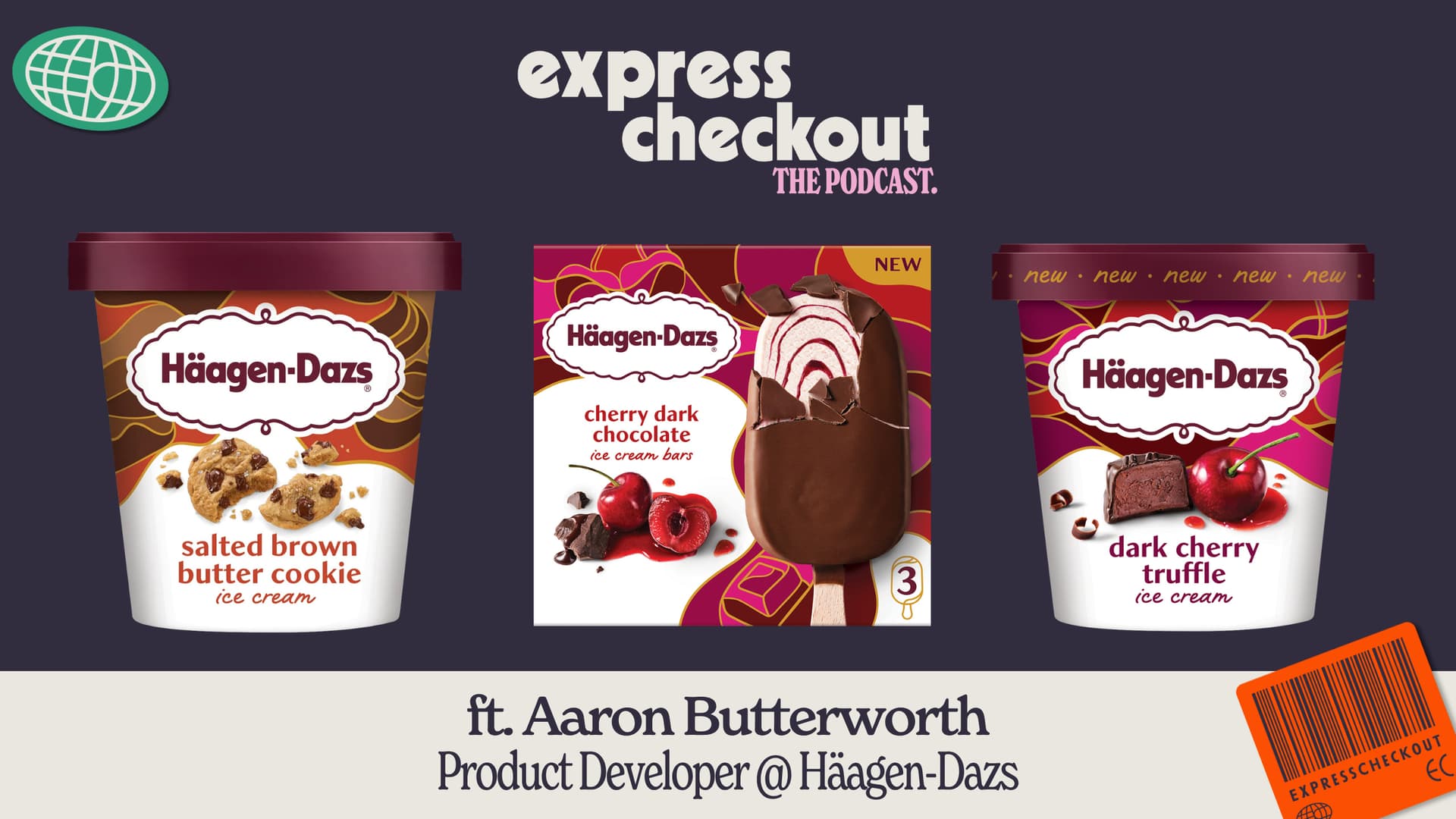
3:15We totally are. I know. And there's already been a lot of exciting news. And it'll be fun to get into it. Shall we? Let's do it. Yeah. So first one, which is something I love this space. Frozen food. I think it's so much fun. So Dropout, which is a new CPG holding company, they already launched with a company called Jams, which is an Uncrustables competitor. They launched this week Bronco in targets nationwide. Bronco is frozen breakfast sandwiches with no seed oils, of course, high protein. So it's a bagel that they've like custom formulated. There's egg and then there's turkey bacon and I think turkey sausage.
4:05Yeah. It looks really fun. It's leaning heavily on nostalgia. And that's something that Dropout is like explicitly betting on, which I think is really interesting. Yeah. Even if you go to their website, it's a very like early 2000s website vibe, like almost user unfriendly. I would say. I miss that vibe. On purpose. Yes. Yeah. It's really smart, fun branding and the different options, the turkey bacon or the turkey sausage. The turkey bacon has 15 grams of protein. The turkey sausage one has 21 grams of protein. Hell yeah. That discrepancy is actually quite large. But what I thought was kind of interesting, I mean, we've had frozen breakfast sandwiches forever.
4:47Hello, Jimmy Dean. Which also, we were writing about Jimmy Dean and I was like, I just keep picturing the ad from when we were kids of like a guy wearing a huge sun costume. Oh my God, I love that ad. Yeah, it was a good one. But these have existed for a while. These, though, obviously are quote-unquote cleaner ingredients, higher protein. And because of that, they are over$7 for a two-pack, which is a lot of money for two bagels. No, it is. I mean, the premiumization of frozen food, I think, is like that's what we really talked about in this deep dive. And I think for me, that's what's kind of most exciting about frozen food.
5:27Like it shed this perception that it's lesser value. Yes. Especially in terms of quality, but then also usually it's a little bit cheaper. But the perception of frozen food for many years is just like, eh, it's not a high quality. It's not as healthy. But like slowly over the past really five years, maybe a little bit longer, I think the perception of the quality, the perception of the health benefits that get trapped by freezing the product. But also there's been really cool brands launching with really nice branding. Yes, they're more expensive. They're less expensive than a restaurant, but they are nice.
6:09And I personally think that Trader Joe's is a big impetus for consumers' perception shifting for frozen food. Everything about Trader Joe's makes it very accessible to try everything. It makes it feel a little bit healthier. It makes it feel a little bit more premium. And Trader Joe's frozen foods, they have consistently ranked in some of the top food items that sell every year. And I think it's lent itself to consumers being interested in frozen food beyond just like some of the cheap stuff that's in the frozen section. Yeah, absolutely. And it's another one of those things that COVID also played a huge role in it.
6:51So Trader Joe's kind of set the stage of giving people a reason to even enter the frozen aisle. They did a great job with like the product quality, as you mentioned, but also just like innovation and discovery. Trader Joe's in general does a great job of always coming out with cool new products. And they replicated that in their frozen aisle in a way that other retailers or brands had not been. But COVID, I mean, people had to cook from home. They couldn't go out to restaurants. And so they entered the frozen aisle significantly more. And that behavior didn't really end up decreasing after COVID ended.
7:27So I saw a stat that in March of 2020, the frozen aisle sales went up 21%. And that kind of just never went back down. So that behavior repeated. And it is interesting because, yeah, frozen has been viewed as like the value option. Frozen berries are much cheaper than fresh berries. And so there's this interesting tradeoff because we have been taught to shop in the frozen aisle as a place to save money. And then at the same time, as these new premium products come out, that proposition is not really there anymore because it's going to be more expensive than making the food yourself. So you're paying for convenience.
8:08And now you're also paying for these artisanal products that you couldn't get elsewhere. So, yeah, as you said, there is a slew of new entrants that have come in in the past five years. A lot of chefs have introduced their products in a frozen format. I know you actually interviewed like the best frozen pizza in the world or yeah. Yeah. So Anthony Mangieri, he runs Una Napolitana in New York, which has consistently been ranked the number one pizzeria in the world by like Italian, some Italian conglomerate that ranks pizzerias globally. And it's consistently been like number one or number two or number three.
8:49and Anthony decided to launch a frozen pizza company and it's delicious and it's like there's also just like a lot of other frozen pieces that are really good that have stepped up their game from just you know uh DiGiorno um but yeah a lot of chefs and a lot of restaurants have been leaning into the frozen game which is allowed for the premium nature to continue and for people to buy it because they're like oh okay it's it's from a restaurant it's from mimi chang's it's from this pizzeria it's it's restaurant quality but in the frozen section right and people like that and chefs are getting in even with private label which is so interesting which is so cool the target um private label good and gather they did a collab with the james weir james beard award-winning chef.
9:42And it was delicious. Like, it was so cool to see that. Yeah, even private label has frozen has gotten really premium. And in 2025, private label frozen brands saw 3.8 % sales increase. So there's definitely been a response. And yeah, the freezer aisle has just been really interesting. I know you also interviewed a few months ago, the founder and CEO of Mason Dixie Foods, which Mason Dixie is a breakfast restaurant, basically. Yeah, it was like a biscuit. Biscuit and breakfast restaurant. They were really well known for their biscuits. They had a food stand in a farmer's market. And they started selling frozen just because they had to because people wanted it.
10:28And they slowly grew from that. And eventually a Whole Foods buyer stopped by just to buy biscuits and breakfast sandwiches. And it's like, we love this. would love to have this in our store. And they've innovated on the process of freezing some of their breakfast burritos so it doesn't get soggy when you reheat them. And all their products are really good. And you heat it up and you're like, oh, this tastes fresh and delicious. And there's so many examples of this as well across the frozen category. Yeah. I specifically even wanted to talk about that interview because she brought up such an interesting point, she being the founder and CEO of Mason Dixie, Aisha, which is that retailers have really relied historically on these low margin, high volume brands.
11:18So in normal person speak, that means inexpensive brands, the retailers aren't really getting that much money on each purchase. So think like a dollar breakfast burrito and high volume because they're cheap. So people are buying them frequently. And her thesis is really just that retailers really need to start breaking the cycle. And if they feature better for you products more prominently that are more expensive, they are higher margin and maybe lower volume, they will reap the benefits. And I, something that I said in the newsletter that I just think this is a really interesting point is because Frozen doesn't rely on expiration date.
11:55By that, I mean frozen products don't expire that much. So the repurchase rate generally, I would guess in a frozen aisle is lesser than somewhere where expiration date is one of the factors. So it makes sense to not rely on volume as much. It makes sense to really prioritize higher margin products from a retailer perspective because they're going to be getting more money on each purchase for purchases that then sit in someone's freezer for a while before they need to repurchase it. So I thought that was a really interesting point. And she also said, consumers don't really know what they want until they see it.
12:30And that's totally true. And so when there are more premium foods introduced to the frozen aisle, they will start buying them. And we've already seen that start to happen. So that just leads to the conclusion that a brand like Dropout, which is introducing these frozen premium, better for you brands, they probably aren't betting that someone like a Jimmy Dean consumer is going to upgrade to this sandwich instead. They're probably betting that someone who has been avoiding the frozen aisle because it didn't have better view options, it didn't have premium options, is now going to enter the frozen aisle again and buy a product like theirs.
13:06Yeah. And I think that's the smart way to go. It's like you get this consumer that we're talking about that hasn't done in the past, Or you try to convert some of the Trader Joe's shoppers as well. Yes. Yeah. Who are already willing to do it, already willing to get something that is positioned as better for you and higher quality and maybe more globally inspired or have unique flavors or unique ingredients. You can get that. Yeah. Unless Trader Joe's introduces their own version of a Bronco bagel, which who's to say they won't? because they are notorious for launching a private label version of whatever buzzy brand there is.
13:51Actually, we should just talk about that right now. They just did that. They finally launched a prebiotic soda. Wild how long it took. Yeah. We say finally because we have seen private label prebiotic sodas in virtually every other retailer. And usually Trader Joe's is pretty early on that trend. So this is their Poppy slash Olipop competitor. Pretty much looks the same. They launched in two flavors. I'm excited to try it. They're less expensive, at least. It's like$1.99. They have a cola and then a strawberry vanilla. Yes. Yeah. Which are, that is, those are Olipop flavors. However, it's almost like a perfect blend because the flavors look a lot like Olipop, but they use agave and apple cider vinegar, which are ingredients both actually used by Poppy.
14:49So it's almost like this silly, silly little blend between the two. It's almost like they couldn't, they were like, we know we got to go for one of these. Yeah. Because Olipop uses chicory root and cassava. Right. And they don't use apple cider vinegar. And then Poppy uses agave inulin and apple cider vinegar. I'm excited to try it. I think they'll do really well. They get late mover advantage, and they get the Trader Joe's bump. So true. But at the same time, I do think there's something about the... I was about to say heated rivalry. It is a heated rivalry, but I'm not... It is a heated rivalry.
15:31No, it is. It is. It is. The heated rivalry between Ollipop and Poppy. That's a very popular show right now, if people don't know. The heated rivalry between Ollipop and Poppy that makes people... They're very brand loyal. It's like I am Team Olipop or I am Team Poppy, and the people on either team are very loyal to those brands. And I would guess kind of don't really opt for the private label options that much. Similar to like a Coke and Pepsi battle, you're either Coke or you're Pepsi. You are diehard for whatever you are, and you're not getting the store brand of either. So it'll be interesting to see how people actually respond to this.
16:07I think that they are very, very brand loyal in the prebiotic soda space. Yeah, but I think Trader Joe's as a player in this space could convert a few shoppers. More than a Whole Foods launching a prebiotic soda. Yeah, I think it's more similar to what I said about dropout brands and Bronco bagels. I think it might be for maybe a more value-conscious shopper who's like, I've been hearing all this stuff about Ollipop and Poppy, but I don't want to spend almost$3 for a soda. maybe they'll try Trader Joe's version but it'll be harder to convert the Olipop and Poppy loyalists I mean they're not going to make a two billion dollar brand out of just their prebiotic sodas I'm not, no I don't think they're going to convert that many people but I think a lot of people will try it and I'm curious to see if they keep it as a consistent product on their shelves or if they like ditch it after a few months.
17:02Yeah or if they expand it to new flavors. Right. Yeah, it'll be interesting. Because they really don't have soda. Like, they don't have a soda option if you go there. Like, that is a category they are missing on shelf. I hadn't actually thought about that. That's so true. Yeah. I just thought about that. Isn't that amazing? That is amazing. And now all of our listeners just thought about it, too. You're welcome. I'm going to go to Trader Joe's today and be like, are you sure? And someone will prove us wrong, actually. Yes. Well, please don't. That's just rude. Let's move on to our next little story here.
17:38The growing aisle of canned milk. Wow, what a sentence. That's like horrifying, actually. Canned, ultra-filtered, high-protein, low-sugar milk. That sounds like dystopian almost. It sounds like the formula that I would need to drink in 2200. We're getting close to soylence territory here. yes yes so bear bells which is an incredibly popular protein bar company that i would be surprised if you don't know and if you shop at trader joe's you definitely know it because that's where they've definitely grown their business they are launching have launched uh canned milks jenna has one here i have some in my fridge i love that it's called choco milk drink milk drink milk drink this is what i mean it's like nearly dystopian or it almost sounds like it's like a foreign product that the translation got a little messed up it's it's almost infantilizing but i kind of think it is like but kind of in a good way like it it's it's similar to the drop in a good way is crazy it's similar to the dropout brands where it's it's a nostalgia play in a way Like it makes you feel a little bit juvenile.
18:57It brings you back to positive memories of your childhood. Let's phrase it like that. We were all drinking high protein, ultra filtered milk drink. Sure. But, you know, like the flavors that they launched, strawberry, chocolate, and vanilla. Those are very classic. They're Nesquik adjacent. They're high protein. They're low sugar. It's fun. Yeah. The branding's cute. milk should be but like we're we're drinking milk i mean there's a lot of brands doing this there's slate there's nuri fair life famously has their bottled high protein lactose free milks my my my wife is drinking the fair life chocolate milk she literally texted me this morning hey can you get me more of those fair life chocolate milks please this is like 5 a.m more milk please like who are we are kids we are little kids we want our chalky milk like that's so crazy no yeah i mean i get it it's good for sure fair life i feel like really kicked off the ultra filtered milk ready to drink category um because i mean they are boasting like 40 grams of protein in some of their i think it's called their core power skew but others have been around for protein, bottled protein shakes, which are also effectively like milk drinks in some way, like Premier Protein has been around for a while, but it's still, that's like a protein shake.
20:26And these are more milk forward. And the base ingredient is what we said, ultra filtered milk, which is basically milk that is filtered to get rid of more of the sugar and make it very protein and calcium concentrated, especially protein. And that's how they're getting such high protein. So we've seen a few launches in the past few years. Slate and Nuri are ones that are top of mind for me, especially because Nuri is part of Costco's ever-growing, ready-to-drink ambient protein section. Ambient means non-refrigerated, just out in the aisle. There's so many in Costco now. It's wild. Nuri is delicious also, and it's 30 grams of protein.
21:08I really have to try it. I love them. I really need to try it. They have a lot of flavors too, right? No, they have chocolate, vanilla, and strawberry, at least at Costco. They have chocolate, vanilla, and strawberry also. I said this when Bear Bells launched their protein soda. They have such good flavors in their bars, and they're known for having such innovative flavors. And then they launched chocolate, vanilla, and strawberry. I don't know. It's kind of interesting to me. This is the next era of milk is canned milk. And yeah, as I said, Bear Bells had already launched this protein soda. We spoke about this on the pod before because my gripe with it was that it's called protein soda, but it actually has 200 milligrams of caffeine in it.
21:44So it's just an energy drink with protein in it. And that was misleading. But point being clearly Bear Bells is making a bet on beverages. They have seen so much success in bars. It's interesting because beverage is a notoriously difficult category. It costs a ton to ship liquid. It's just competitive also. Like there's already so many of these. So it's interesting that this is the bet that they are taking. but the fact that it's ambient and not refrigerated is a win for them. Launching a refrigerated beverage is a whole other beast. Yeah. I mean, Bearbills, they have a beverage in the UK. It's in a bottle, not a can.
22:25Right. So they have some background in this, but we'll see how this goes. I'm excited for more Milkies. I hate it. We're just adults walking around with our ultra-filtered Milkies. I know. Oh. I know. Well, okay. Speaking of adult food, sushi. I think it's great transition. You know, that is adult food, actually. I stand by that. But unfortunately, this sushi brand that we're talking about is shut down recently. So Conscious Foods, spelled with a K, not a C, the first letter. They are a plant-based, ready-to-eat sushi company. They had onigiri. They had rolls. They unfortunately just shut down at the end of the year.
23:15We both really liked their product. I was very impressed with their product when I tried it at trade shows and eventually actually bought some. I bought some on Fresh Direct and then also saw it in retail. They were sold nationwide, but they just shut down. And there's a lot of different reasons, but I think one of them is right now there's not enough consumers like you and I. Meaning just people who are willing to try like something weird and new. Yeah. Yeah. I think, I mean, I think it's an oversimplification. I'm not saying that you made this oversimplification, but more broadly that this is just another example of plant-based failing.
23:50Because this is a very specific product line. It is frozen sushi products. which generally, I don't know many people buying frozen sushi. So asking them, one, to go to the frozen section to buy frozen sushi, and two, for them to then realize it's also plant-based, is one too many risk, I think, for the average consumer to take. So this is just a challenging – this was going to be challenging for them. I don't think that the stage was set in their favor. I think the only way that a brand like this can succeed, and I really hope they do come back at some point because as you said, like we both tried and love this product, is if plant-based sushi becomes more of a universal food item in restaurants or food service.
24:42And again, I wanted to add a little bit more color to this story and not just say it's like, oh, plant-based is failing by sharing other news that also happened this week, which is that this company called Blue Nalu, which is a a startup actually based in San Diego, which makes cultivated blue tuna Toro, which is like the very fatty, expensive part of tuna. They just raised$11 million. So that brought their total funding to$129 million. And they have a lot of more like consumer brand focused VCs that are investing in them right now. For example, Citi Capital, who is an investor in midday squares.
25:18And the reason that people are taking a bet on this brand is because they've really focused on food service being their entry point as a company. And so I just think as brands like hopefully Blue Nalu enter into food service where people are a little bit more willing to try. It's more beneficial for a restaurant to try this new product because it's very hard for them on a supply chain level to get Bluefin to Notoro. And they've also achieved price parity, so it's cheaper for them. and typically just chefs are probably a little bit more open to experimenting with new ingredients. They enter that way.
25:59Consumers try it on a menu and then they're open to trying it at home or in retailer. And that is how this progression needs to happen for plant-based foods to win. It's so funny because that's how Impossible and Beyond Burger were launching. That's where they got all this press and this support. They were launching in really high-end restaurants because it didn't have price parity at that point when it was launching. You have the consumer base that's willing to kind of try this. You have the people who know how to make food and can play around with it. And I think they all went to market too fast, partially because they also raised, like, tech companies when they, like, were but weren't.
26:47That's a whole other thing. But I think you are spot on and I think the way plant-based food makes its big triumphant comeback is it lives in food service for a longer amount of time and really validates itself as alternatives and as good tasting alternatives and good textural alternatives that consumers want and need. because the consumer is barely ready for globally inspired flavors right now. Like, we're still not quite there as an American consumer base, at least. Right. People are unfortunately not super ready for something wildly different yet. Granted, I will say I did like Impossible Meat, still do.
27:36I think it's one of the best plant-based meats out there. Yeah, it's great. Yeah, you're totally right. You're totally right because you agreed with everything I just said. Yeah, exactly. I love when that happens. Yeah. And I think also just people are more open to trying new things in a restaurant setting and then are excited to try at home. So, yeah, point being the conscious foods headline of like another plant-based food item failed is just not nuanced enough to capture the whole story. And I predict there will actually be a resurgence of plant-based. It'll just look a little bit different.
28:11A hundred percent. It maybe needs to be a little more of a slow roll, I would say, as opposed to just thrusting it at consumers and hoping that they bite because they literally bite because they won't because it's scary to people. Correct. Anyway, that's on that story. But the next story actually, nothing to do with sushi or food. Not edible at all. Please don't consume these products. Do not eat. We've been talking a lot about skincare and beauty brands lately. There's just been more news than usual. I feel like especially in skincare and a category that has been around for a while is really starting to evolve and see a lot of new entrants, especially from skincare and beauty brands, which is body care.
28:52So we had two news stories this week, first being Tower 28, which is a viral skincare and makeup brand launching its rescue and relief body wash. It's specifically formulated for eczema, actually. And Jones Road Beauty, which is Bobby Brown's second company, more geared towards like mature skin, is also launching a body collection. We're seeing a lot of body care entrants. What do you think about it? I think, and this is something as I was doing some more research on this, it's this whole idea of the skinification of personal care and beauty has been booming for the past few years. But basically this means skincare-inspired ingredients and claims are going beyond the face into other categories.
29:41So body care also into beauty. So like a hyaluronic acid or glycerin or niacinamide. The whole concept is upgrades of what you're already using to be a little bit more effective. But this Tower 28 one is a great example where it's treating a certain thing. It's for your body. It's not just cleaning, but it's doing something else. And we've seen this across a lot of different body care products and beauty products as well. The Tower 28 product, a lot of their advertising was around this being a better alternative to what is typically recommended by, I guess, dermatologists or at least the internet for getting rid of eczema, which is taking a bleach bath.
30:30Yeah. It's on the, like, the eczema organization's website. They have a whole PDF about this. A bleach bath sounds crazy. It sounds crazy. I mean, we should drink bleach to get rid of COVID, so. Yes. Do not do that. Bleach bath sounds crazy. So I loved, actually, that they played into that. This isn't just a better version of a body wash. This is actually a more approachable version of a medical product. I think it's interesting. It's a claim for sure. And I do think that they had some, I don't know about like clinical studies, but they had some studies about this actually being an effective product to treat eczema.
Read the full transcript
31:14But I do, I like that approach. Bobby Brown's Jones Road Beauty approach is a little bit different. It's not claiming to be like a medical skincare replacement. No. It's just better versions of your body lotion or body wash, just all of these products that you would use anyway. And better meaning, like, as you said, more effective ingredients other than just washing your skin, also like improving the texture or quality of your skin. I think Tire 28 is a great brand. It is. We have a lot of their products in our medicine cabinet. Yeah, it's a lot of fun. Great brand, great store. Yeah, their hypochlorous acid is the product that like, yeah, it's a spray that it's supposed to be helpful for treating acne.
31:57And they made hypochlorous acid a thing. And this is partly them saying now you can essentially like bathe in the product that you all became obsessed with in your face. So it is interesting. I think there's like a cynical part of me that's a little, wow, first they occupied our face and now they're like making their way down our whole body. Like they being capitalism. I'm like, wow, I had to care about cleaning and now I also have to care that my elbows are smooth. What else do I need to care about? But at the same time, it's just an improved version of something, again, that we're already using.
32:29I think it'd feel really different if it was like, you need to add a serum to your elbows, whatever. That would feel different. This is just an upgraded version of things you're using anyway. But I don't doubt that a clavicle serum or something is going to come out soon. A clavicle serum? You know, I'm just thinking of life stuff. Oh my God. Like they're going to find a way to stake claim on our bodies with something that we don't need. And we're all going to be suckers. Don't give them any ideas. Don't give these capitalists any more ideas, Jenna. Come on. I'll try. Come on. I'm full of them.
33:08Let's go back to something that's a little bit more edible. Olive oil. So, so Cobram Estates, who is Australia's largest olive oil producer, just acquired California Olive Ranch for about$180 million. And they, by this acquisition, they have just created the U.S.'s largest olive oil producer. Because Cobram also had maybe 1 ,000 hectares in California already. and now combined with California olive ranches, they have a little over 3 ,000 hectares of olive oil producing land. Wow. It's crazy. And apparently this merger has been in discussions for about 11 years. Wow. Yeah. So they initially started conversations back in 2014.
33:55And based on the articles that I was reading and some of the quotes, it seems like now was a better time. And it's something we're seeing across olive oil being seen as a healthier alternative, the seed oil debate. I mean, we're even seeing olive oil come into the shot category. And just olive oil is just riding this global wave of wellness and anti-seed oils. And over the past 30 years, olive oil has also been increasing in demand in the U.S. Yes. The rest of the world has had crazy demands for olive oil. But in the U.S., if you go to the – there's a U.S. olive oil consumption chart. It starts to spike in the 90s, and it's just been going up ever since.
34:38And it's going to continue to go up, I think. Absolutely. What's interesting is I think seed oil debate is a huge piece in olive oil's rise. But the other one is it's just – it was a commodity brand that has become – or not brand. a commodity category that has become really buzzy thanks to companies like Graza. And now people are looking for a cooler alternative. It's not just like, oh, I'll just buy the store brand of olive oil anymore. They're more interested in different alternatives. But this piece on U.S. olive oil, I actually think that's kind of like the next wave because a company like Graza, a lot of its quality claims come from the fact that it is harvested in Spain.
35:20A lot of its quality claims are associated with the fact that it's like this Spanish olive oil. But at the same time, one, I mean, if tariffs taught us anything in the last year, the supply chain is very fragile and it can quickly become extremely costly to be importing your products. So domestic brands have an advantage in that respect. And also just like Made in America claims, I believe, have become like a little bit more popular over the past few years. So I think it'll be interesting to watch specifically like the U.S. domestic olive oil category increase over the next few years. Yeah, the other thing too is I know from talking to Soria from Brightland that California has some of the best olives and olive oil in the world.
36:11Like we produce really good quality olive oil. I don't think Australia's largest producer of olive oil would be doing this if it wasn't good quality. And I just don't think U.S. consumers associate U.S. olive oil production with quality right now. But interestingly, there was this whole, I don't want to say scandal, but like kind of scandal over a year ago where the olive oil fraud and mislabeling cases hit this record high in the EU. And so there was a lot of fraud around people claiming where their olives were actually sourced in the EU specifically. And as we start to see, consumers in the U.S.
36:51are just looking for transparency more and more. I think they might be more trusting of something that is domestic and ensuring that where it says it's from on the bottle is where it's from. Yeah. So it could go either way. Right. And apparently, California laws around olive oil and olive oil production are very strict and very regulated. So apparently it'll make it easier to prevent fraud, but I think we're going to see olive oil continue to blossom over the next years. Absolutely. Absolutely. And it'll be interesting to see if some of these Graza loyalists are open to trying different kinds of olive oil, are open to trying domestic olive oil, or if they're going to keep buying their refillable cans of Graza.
37:39I think it could really go either way, but we do have to attribute a lot of credit to Graza for really changing the category. I think so. Opening up opportunities for something like this to happen. I literally don't think this merger would have happened if Graza didn't exist, which is such a crazy sentence. Insane, but accurate. Amazing what one company can do for an entire category. Kind of crazy. Beautiful. Well, we've come to the end, Jenna. Wow. it's been a minute since we just had one of these um i know right yeah a normal podcast recording and we were like oh no are we like are we still capable of speaking turns out we are okay yeah we can still yap for 50 plus a long time hell yeah well thank you everybody for listening make sure you leave a review if you can subscribe share the podcast if you want to email us about anything, you can email us at hello at expresscheckout.co.
38:40Make sure you subscribe to our newsletter that goes out every Monday and Friday. You can find that at expresscheckout.co. Follow us on Instagram at expresscheckout. And we'll see you next week. See you next week.
From the publisher
Welcome to our first episode of The Curious Consumer in 2026!! We're excited to be back and sharing some of the latest stories in consumer brands, from how the frozen aisle is changing to the next big format in protein (hint: it's weirdly.... juvenile).
The breakdown:
00:00 Intro + snacking resolutions03:25 The future of the frozen aisle13:37 Trader Joe's challenges Olipop and Poppi17:38 Canned protein milk's moment22:42 The nuanced story of plant-based brand shutdowns28:38 Beauty brands enter body care33:10 Domestic olive oil for the win?38:04 Conclusion
🎧 Love the show? Subscribe to The Curious Consumer wherever you get your podcasts! New episodes drop weekly.
📧 Get the inside scoop Subscribe to Express Checkout, our newsletter packed with consumer insights, trends, and exclusive content straight to your inbox at expresscheckout.co.
Let’s connect! Follow us for behind-the-scenes content, quick tips, and more: @expresscheckout
💬 Join the conversation Have a product you’re curious about? DM us your questions or drop them in the comments—your topic could be featured in our next episode! If you have any thoughts/questions/suggestions, feel free to email us at hello@expresscheckout.co :)
⭐ Help us grow If you enjoyed this episode, please rate and review us on Apple Podcasts or Spotify. It helps other curious consumers find us!
Get full access to Express Checkout at expresscheckout.co/subscribe