In short
The Curious Consumer Podcast Episode Summary
Episode Title
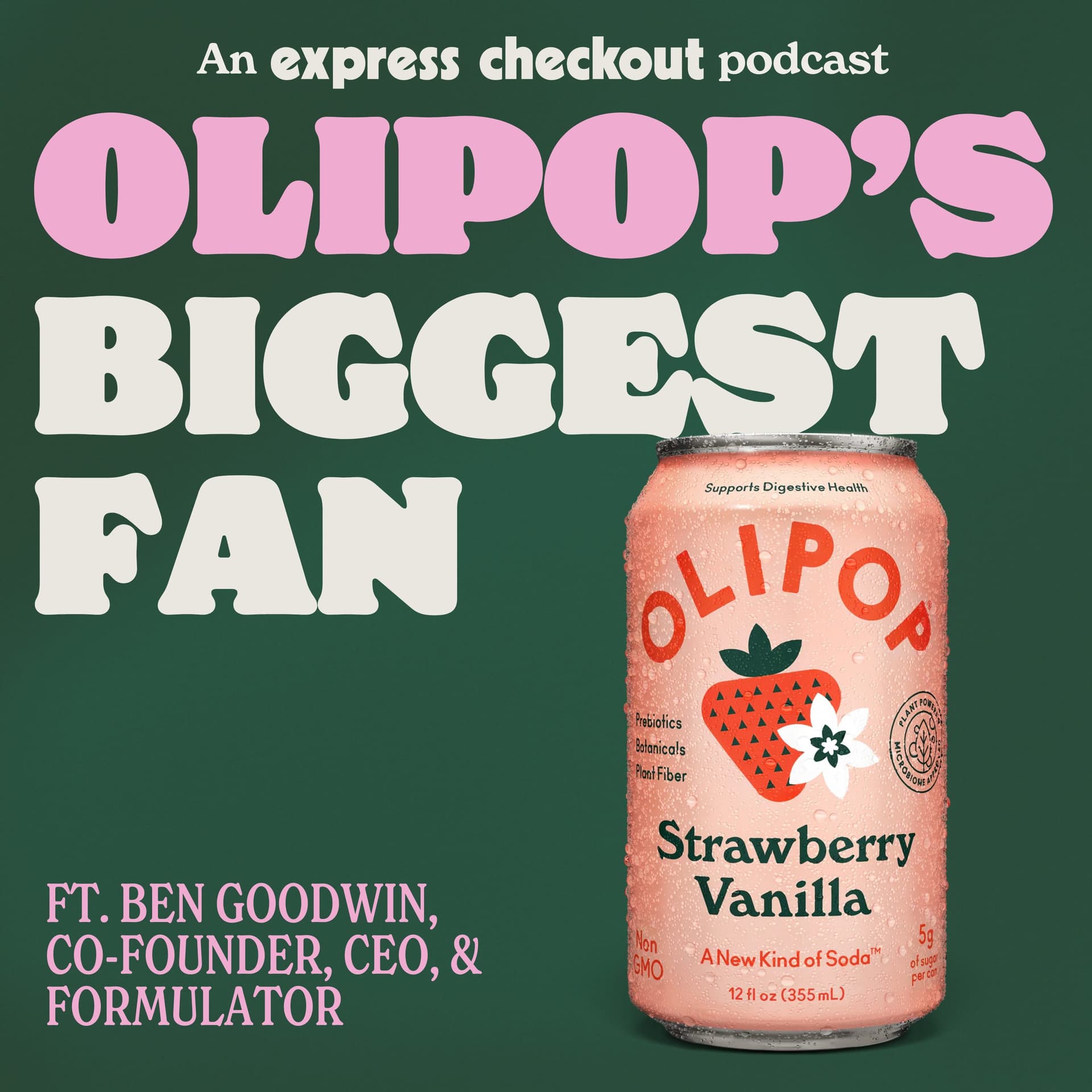
OLIPOP's Biggest Fan
Podcast Description
The Curious Consumer explores the context, connections, and cultural shifts behind consumer products. Hosted by Nate and Jenna, the show features analysis and conversations with influential figures in the consumer packaged goods (CPG) industry.
Episode Overview
In this debut episode of the "Brand's Biggest Fan" series, hosts Nate and Jenna interview Amy Stokes, a self-proclaimed "biggest fan" of OLIPOP, and Ben Goodwin, the CEO and co-founder of the brand. The episode delves into Amy's personal connection to OLIPOP and its growth through the lens of its founder.
---
Key Highlights
Introduction
- Hosts: Nate Rosen and Jenna Moffsvitz introduce the series "Brand’s Biggest Fan."
- Focus: The series aims to explore the deep connections consumers have with their favorite brands through the eyes of both fans and founders.
OLIPOP Overview
- Ben Goodwin's Introduction: Describes OLIPOP as a functional soda that offers a healthier alternative to traditional sodas.
- Key Features:
- Low sugar content (2-5 grams per can)
- High in soluble fiber, beneficial for digestive and microbiome health.
Consumer Perspective
- Amy Stokes: Shares her experience as OLIPOP's biggest fan:
- A mother and health-conscious shopper from the Chicago suburbs.
- Discovered OLIPOP at a local health store while looking for healthier soda options for her children.
- The Crisp Apple flavor resonates with her as it evokes nostalgic memories of her grandmother's orchard.
- Uses OLIPOP for comfort during challenging times, particularly while caring for her mother-in-law in hospice.
Founder Insights
- Ben Goodwin's Reaction: Reflects on Amy's story and how it aligns with the brand's mission.
- Emotional Connection: Discusses how flavor can create powerful emotional ties that foster brand loyalty.
Product Formulation and Marketing
- The Art and Science of Product Development: Ben shares insights into the formulation process and the importance of maintaining flavor integrity.
- Appeal to Mass Market: Discusses strategies for reaching broader audiences while maintaining core customer loyalty.
- Competing with Big Soda: Describes the competitive landscape, addressing how OLIPOP is differentiating itself from traditional sodas and emerging competitors.
Historical Context
- Soda's Evolution: Ben provides a brief history of soda as a perceived health product.
- Nostalgia in Branding: The brand incorporates nostalgia into its marketing, resonating with consumers' past experiences with soda.
Business Philosophy
- Long-term Vision: Ben emphasizes the importance of maintaining a customer-focused approach as OLIPOP scales.
- Commitment to Health: Acknowledges the need for credible research and effective communication in the natural product space.
---
Key Takeaways
- Consumer Loyalty: Personal experiences and emotional connections play a significant role in consumer loyalty.
- Market Positioning: OLIPOP has positioned itself as a healthier alternative in the soda category, appealing to health-conscious consumers while maintaining nostalgic flavors.
- Product Development: The balance of creativity and scientific formulation is essential in developing successful consumer products.
- Cultural Shifts: The growing awareness of health and wellness trends is significantly impacting consumer choices in the beverage market.
Closing Thoughts
- The episode concludes with a reflection on the importance of storytelling in branding and how OLIPOP has managed to create meaningful connections with its customers through its products.
---
Additional Information
- Subscribe: For more insights and discussions, listeners are encouraged to subscribe to *The Curious Consumer* podcast.
- Engagement: The hosts invite audience interaction, encouraging listeners to submit questions or topics for future episodes.
Links
- [Express Checkout](https://expresscheckout.co?utm_medium=podcast) for more consumer insights and content.
Written by AI. May contain mistakes. Listen to the episode to check what was said.
Chapters
Tap a time to open that second in VOIntroduction to Olipop
0:48 to 2:07
Ben Goodwin explains what Olipop is and its health benefits.
“Here with us, we have Ben Goodwin, who is the co-founder and CEO and formulator of Olipop.”
Meet Amy: The Biggest Fan
2:07 to 3:28
Amy shares her background and shopping habits, highlighting how she finds brands.
“We would assume, though, that most of our audience knows what Olipop is because you can get it pretty much anywhere now at any major retailer.”
Nutritional Preferences and Discoveries
3:28 to 4:52
Amy discusses her focus on low sugar and high fiber products for her family.
“Siete brand just because they're gluten-free so I try to at least have snacks that are gluten-free So that's our go-to brand that we always get.”
Amy's First Encounter with Olipop
4:52 to 6:08
Amy recounts her first experience trying Olipop with her children at a health store.
“That's the first thing is trying to have low sugar.”
Emotional Connection to Olipop
6:08 to 7:41
Amy shares the emotional significance of Olipop during a challenging time in her life.
“So you're not just someone who occasionally buys Olipop.”
Loyalty and Future for Olipop
7:41 to 9:09
Amy expresses her loyalty to Olipop and what she hopes for the brand's future.
“for my crisp apple and just kind of filling in, trying different flavors when I go out to stores.”
Ben's Insights on Brand Discovery
9:09 to 11:40
Ben discusses how Olipop is positioned in the market and its appeal to families.
“This overall discovery story, I'm curious what that, what does that sound like to you.”
Research on Sugar and Fiber
11:40 to 13:20
Ben shares research findings on Olipop's effects on blood sugar levels.
“Obviously, the traditional soda took them up to an average of 144 and then brought them crashing back down to below baseline, which I personally call like the metabolic dysfunction curve.”
The Power of Word of Mouth
13:20 to 14:47
The hosts discuss the impact of customer stories and word of mouth on brand loyalty.
“But yeah, we've always tried to pull from a slightly deeper.”
From Discovery to Brand Loyalty
14:47 to 15:30
Learn how nostalgia plays a role in customer attachment to products.
“So she fell in love with crisp apple in particular because of the nostalgic nature of it for her.”
Show all 28 chapters
Meaningful Consumer Stories
15:31 to 17:41
Hear emotional stories about how Olipop resonates with customers' lives.
“and I feel like I got this emphatic yes.”
The Art and Science of Flavor Formulation
17:42 to 19:24
Understand the balance between art and science in creating flavors.
“And it had become this really important like cornerstone of this bonding experience or this meaningful experience that she was passing through to the end of her life.”
Nostalgia and Brand Identity
19:25 to 20:37
Discover how nostalgia influences brand design and consumer connection.
“Part of it is, I think, the power, the underlying power of some of the flavor profiles.”
The Importance of Authenticity
20:38 to 22:25
Learn how authenticity plays a key role in brand perception.
“I'm blown away and it's super meaningful.”
The Journey of Formulation and Production
22:26 to 23:48
Get insights into the practical aspects of beverage formulation.
“One of the things I like about it is that it's not very perfect at all.”
Strategic Market Positioning
23:49 to 28:00
Explore the strategic decisions made to appeal to a broader audience.
“Amy obviously only represents this one archetype.”
The Historical Perspective of Soda
28:00 to 29:19
Explore soda's historical perception as a health product and its evolution.
Coca-Cola's Origins and Health Claims
29:20 to 31:04
Learn about Coca-Cola's creation and its original medicinal purposes.
“The fermentation made, should have, in theory, increased the bioavailability of some of the nutritional componentry.”
OLIPOP's Mission and Market Reception
31:04 to 33:14
Understand OLIPOP's approach to health and its reception in the market.
“Irrespective of that, the top selling flavor was still root beer.”
The Role of CSDs in the Beverage Market
33:14 to 34:18
Discuss the importance of carbonated soft drinks and their market dynamics.
“And typically I'm like mission-based and I'm like, sometimes the P &L is like a necessary evil.”
Harmonizing Beverage Categories
34:18 to 35:54
Examine the coexistence of traditional and functional soda categories.
“But you also want to create a bunch of wins around the ecosystem in general.”
Industry Reactions to OLIPOP's Growth
35:54 to 37:54
Explore how traditional brands respond to the rise of functional sodas.
“but they've had some reactionary moves to the growth of this category.”
Navigating Preventative Health in Beverages
37:54 to 40:15
Discuss the importance of research in the preventative health beverage space.
“Good on you, dude Let's see where this goes It's cool Why do you think it's wild?”
Customer Loyalty and Brand Advocacy
40:15 to 42:00
Learn how OLIPOP builds customer loyalty through unique experiences.
“So you can actually do the right thing all over the place and be more successful.”
Soda Lineage and Unique Formulations
42:00 to 42:36
Discover how personal experiences influence product development and uniqueness.
“And I think like exactly what you said of just like the way that you formulate and the way that you formulate with even some of your childhood memories in mind is maybe what makes you different.”
The Importance of Customer Loyalty
42:36 to 43:15
Learn about the significance of customer loyalty and brand advocacy for business success.
“Like at the end of the day, what matters here, right?”
Navigating Business Growth as a Founder
43:15 to 44:27
Understand the challenges founders face as their companies scale and how to stay focused.
“But I think if I like really zoomed out and thought about what is one of the most important things that is like my real job.”
Brand Favorites and Formulation Trends
44:27 to 45:53
Explore the host's favorite brands and their innovative approaches to formulations.
“Rip Van's doing interesting formulations.”
Transcript
Automatic transcript. May contain errors.0:28Every great brand has them. success. I'm Nate Rosen. And I'm Jenna Moffsvitz. And we're Express Checkout, the startup media company covering the newest stories and trends behind the food, drinks, and wellness products that we buy. This is Brand's Biggest Fan, where we view brands through two lenses, from the people who built them and the consumers who love them. Let's get into it. Here with us, we have Ben Goodwin, who is the co-founder and CEO and formulator of Olipop. Welcome, Ben. Hey, guys. Excited to be here for this milestone. This is our first episode of a new series we're doing called The Brand's Biggest Fans.
1:05And we're really excited to be starting with Olipop and with you. For the audience, in case you're living under a rock and don't know what Olipop is, Ben, in just a few words, what is Olipop? Yeah, so we are a healthy, functional soda. We taste very similar to what we all grew up loving, drinking, but instead of the kind of super sugar load or the phosphoric acid or the whole kind of kit and caboodle that comes with traditional soda, we're low in sugar, so two to five grams per can. And then we're high in soluble fiber, which does all sorts of amazing things for you. And we've also been doing a decent amount of research to substantiate our claims and explore what the product does.
1:47But fiber is useful for digestive and microbiome health. But it also has a lot of positive implications for blood sugar stability. And people, 90 % of Americans don't get enough of it. 90 % of Americans don't get the USDA's recommended 28 grams per day. We would assume, though, that most of our audience knows what Olipop is because you can get it pretty much anywhere now at any major retailer. So actually finding the biggest fan of Olipop is certainly a challenge because there are so many big fans now, but we were connected with a very special fan. My name's Amy from the Chicago suburbs. I am a wife and mom of three very rambunctious fun boys.
2:36I'm shopping normally for five humans and two dogs. I homeschool one of my kids at home so try to be home during the day as much as I can. So I'll do a lot of shopping from big box stores online like Walmart, Meijer, sometimes from Target. But then I'll generally go to Juul, Juul Osco. I go there once or twice a week to kind of fill in here and there as well. And then I also like to shop. We have a local health and wellness store called Nature's Cornucopia. and so I like to shop there as well for I'm supposed to eat gluten-free I have some food allergies and other friends do as well so that's like a safe place for me to go and shop where they're pretty knowledgeable and can help me find things there as well I order a lot of like Siete brand just because they're gluten-free so I try to at least have snacks that are gluten-free So that's our go-to brand that we always get.
3:45I'm getting the Oko Zero yogurt because it's got, I can't remember if it's Stevia that they use. I like Stevia a lot. It doesn't have aftertaste like some other sweeteners for me. So I'll get that. And then I tend to lean towards like the Amy's Organic brand for either frozen meals for myself or soups. How are you finding new brands? Are you someone who reads nutrition labels? Are you motivated by a sale or promotion? Well, brands like Siete, that's when I actually discovered a health and wellness store. And I think I had also, I might have picked up something from them at like TJ Maxx or something like that because they always have a wide variety of different brands there and spices and snacks.
4:34Besides gluten-free, are there certain nutritional call-outs or things on a nutrition label? that you're typically looking for? For myself and for my kids, I try to find things that are lower sugar or sweet in the stevia. I have diabetes and I noticed that stevia does not really affect my glucose spikes. That's the first thing is trying to have low sugar. But another thing that I try to find is things that have more fiber in them. Kids tend to not get as much fiber as they should and myself included. So I always try to check the fiber content as well. Let's get into the olipop of it all. How did you discover the brand at first and what made you want to pick it up?
5:17Back to that nature store here in town. I went in with my kids. I told them all, because I knew there were like more healthier options. I told them all that they could find something sweet there and they all wanted soda. And I'm like, okay, well, pick out something and let me look at it. And one of the ladies there overheard me and said, Oh, we have a new soda in and introduced us to Olipop. So the boys had picked up root beer. And then I tried the crisp apple because it just sounded appealing. It was, I'd never heard of a prebiotic soda before. I saw that the sugar was a lot less. So I'm like, okay, let's give it a try.
6:04The brand found you because you are a big fan. So you're not just someone who occasionally buys Olipop. Can you tell us what makes you what we're calling the biggest fan? So I grew up on a farm. My grandma had an orchard there. And so when I like first had the crisp apple, it just really, it was just like stepping back into my grandma's orchard and taking that first bite of the apple. And this drink in a weird way has provided so much comfort for me just in this past year alone. Last year, my mother-in-law passed away and went into hospice beforehand. And I had actually contacted Olipop because I brought my crisp apple with me every single day that we went to see her.
6:56So it felt like Olipop was providing me comfort while we were trying to provide comfort for my mother-in-law. So that hooked me on it. And after I had first tried it at that major store, I couldn't find it anywhere. I was looking everywhere for it. The crisp apple at the time was just like a holiday one. And I found it on Olipop's website. So I actually started having it shipped to me directly. And so that was my staple. I always knew I had my crisp apple at home. And then I would go to like Target or Jewel or hop in to the nature store and try different flavors. I'm still getting the monthly subscription from them for my crisp apple and just kind of filling in, trying different flavors when I go out to stores.
7:48It's so cool how products can have some kind of emotional tie to them. I'm interested too, because there are a lot of other Olipop competitors now. There are even some store brands are going to start doing their, have already started doing their own version of a low sugar prebiotic soda. Will you always stay loyal to Olipop? And if so, why? You know, I did get hooked with that emotion. And I think that really plays a big part in it. But they've been very consistent with coming out with new flavors, coming out with different things to try. and so I will buy it as long as they have it. If you could tell when the Olipop founders one thing what would it be?
8:30I would say thank you of course for just making making something that just kind of brings me home and I know it's probably maybe not something that you considered when you were coming up with the ideas for different flavors but just knowing how much your product can really impact somebody. Just want to encourage you when you come up with new flavors, things like that, that you think back maybe to your own childhood and, you know, what can bring you back to those memories. But thank you for making a great product and thank you for keeping it out there and just keep doing what you're doing. I look forward to trying new products as they come available as well.
9:12This overall discovery story, I'm curious what that, what does that sound like to you. Does it sound like how you envisioned people would be discovering Olipop? First of all, awesome, awesome story. And also shout out to the anonymous natural foods in Chicago. Keep doing the good work. But I do think that there's a couple layers of story that's interesting, right? Because first of all, of all of the functional sodas out in the market now, obviously, like we created the category in we incorporated in 2017. I, this is an even longer story. Like I really came up with this in 2010 and then had a first iteration and then perfect, air quotes, perfected with Ollipop.
9:54But of all the functional set of players, we over-index the most with families, like households with kids. And I think it's from this, like if you are trying to make a slightly more discerning decision around what you feel good about giving your children, you might be scanning the label a little more deeply. And then you can see that there's a differential in terms of what Olipop delivers for the same amount of money. And obviously, the obvious disclaimer has to go up. I am not a doctor and Olipop does not pretend to cure or address any medical issues. But certainly, as I said in the intro, one of the amazing things about fiber, especially when you have a reduction and sugar attached to it is it should help you with blood sugar stabilization.
10:43And we actually have some human data. We have human pilot data around that. We took a cohort of folks and we gave them vintage cola. And we did two trials. We did one trial in a fastened state. We did one trial with a high carb meal. We also did the same trials with more of a traditional full sugar soda. And so I can't make the claim across the entire Olipop range, but at least for vintage cola, I don't know if you guys have read a lot of glycemic blood glucose charts, but basically people's baselines are typically around 95. And after drinking a vintage cola, we saw the average increase go from 95 to 104, which is very modest.
11:28And then gently brought them back down to baseline. And then I think this is just as cool as the no big spike. It actually kept their blood sugar stable for the full duration of the test, which is about three hours, which I thought that was very cool. Obviously, the traditional soda took them up to an average of 144 and then brought them crashing back down to below baseline, which I personally call like the metabolic dysfunction curve. But, you know, so the point here being that you have a person who is probably trying to make some serious decisions for their kids, wants to invest in their health and wellness, also wants to give them something that they're going to enjoy.
12:07And then in this particular case, obviously because of what she was experiencing, trying to make some really discerning choices for herself, might have already had a disproportionate awareness that, hey, I need to get some fiber. It has a benefit for me. I want to reduce my sugar. and so you have some that works for the whole family. And then, yeah, natural foods is a great entry point. It was the entry point for our business, and you have typically a little more of an early adopter. You've got a shopper that's willing to spend a little bit more. They're more experimental, and they tend to be more accustomed to label reading and also probably understanding what they're seeing on the back of the pack.
12:45So it's a great entry point for people as they come to the category. What a great summary. I'm very excited to see that data come out. First of all, I think, although you are not a doctor, we know some doctors who do say natural sugar is better for you from a fruit because there's also fiber. And like some of these things are so baseline to us that we know, but we haven't seen translated in a package good yet. And Olipop is a great example of that. The results are unsurprising to me, but I'm excited to see them come out. But yeah, I think what's cool is like, you've had this vision for, as you said, it started in like a long time yeah and now we're talking about this isn't just that theoretical customer that you drew up um we need to reach this customer through eight marketing touch points and like oh for sure it's a real my favorite one is the two most common things you hear when you get people who come from more of the like nba background they're like we discovered white space and when you get people who come from more of the stereotypical like organic they're like i wanted a snacking bar that blah, blah, blah, but I couldn't find it.
13:48It's all like the same. Oh, yeah. It's a lot of the same stuff. And some of that's legit. Fair enough. But yeah, we've always tried to pull from a slightly deeper. Yeah. And I think what's cool here is it's a data point of someone who found you just because someone at the store was talking about like, it's not because she saw word of mouth is still huge, a huge part of what has contributed to our system. It's something I've thought a lot about, How do we do a better job amplifying those customer stories and customer voices? Because that word of mouth is powerful and people seem to have disproportionately powerful experiences with our product, which I'm very grateful for.
14:25And I think that just makes this, it sounds like maybe a one-off data point when you compare it to all of these conceptual archetypes of who might be drinking it, but she probably actually has a pretty standard story. We just don't plan for word of mouth because you can't put marketing budgets towards word of mouth. Yeah, absolutely. I want to pass it off to Nate because the next most interesting part is how she went from just discovering it to actually becoming brand loyal. So Nate, you want to talk about that? So she fell in love with crisp apple in particular because of the nostalgic nature of it for her.
14:57And I'm curious, how does that make you feel? God, I have so much to say about this. I'll try to keep it as consolidated as I can because like, this is also a part of the organic journey that it was. So like we already made the reference to, hey, working on this, had an early iteration, this business called Obi, which was effectively like a probiotic soda. And at the time it seemed insane, but then we started to get some early traction and the root beer was like our top selling flavor. And so that company didn't play out how I wanted it to, but I had all this really good consumer data and this like resonance that, hey, actually, I was testing this concept with Obi and I feel like I got this emphatic yes.
15:47And I really cemented in myself that, okay, this is an idea whose time has come and I'm going to come back and I'm going to hit even harder with Ollipop. And these basic things when you I knew these basic things when I started Ollipop, which is OK, like soda industry, soda category is enormous, 50 plus billion dollars now in just North America, 98 percent household penetration. Obviously, sugar sweetened beverages are problem and they're the number one cause of added sugar. And so there's this enormous opportunity to do something positive. Right. You'd like all those stats. But one of the things that has really evolved for me throughout the experience with Olipop, because when you start getting to a larger and larger scale, you start impacting more people, start getting some of these stories back.
16:36And the, I would almost call it, like, not to get too esoteric, but I almost call it, like, the identity infrastructure of these flavor profiles for so many people. is actually pretty, it's quite meaningful to be the way to describe it. So a similar story to that story was a woman wrote into us probably like four-ish years ago. And similar in that her, actually her grandmother was in hospice with stomach cancer. And she really couldn't keep much down. Everything was too painful to consume. and they brought her Ollipop root beer, A, because it was one of the few things she could keep down, which that's awesome by itself.
17:23I'll just leave that there. But B, because the flavor profile of the root beer reminded her of the root beers that she had growing up. And she would have the root beer, it would trigger a memory, it would trigger a story, and then she'd share these stories, and there were stories that the family hadn't really heard. And it had become this really important like cornerstone of this bonding experience or this meaningful experience that she was passing through to the end of her life. And then she wrote in, we're all drink root beer now to remember your root beer to remember my grandmother. So you get an email like that.
17:59And once you're done crying, you step back and you reflect on just, wow. And, and it's that same, it's this exactly, It's if, as the formulator, like I'm this weirdo, neurodivergency, self-taught kind of, and so obviously I have to have a solid grasp on the science, whether it's the nutritional science, stability science, acid sweeteners, mouthfeels, blah and blah, the chemistry. but now because I've now been a formulator for 20 years the science kind of sits in the background as a fairly I'm always learning new stuff but it's like kind of sits in the background and so what that allows me to do is I actually really focus on the expression in the flavor it's like it's a as much of an art for me at this point as it is a science there's actually a lot of emotion in the flavor for me now it has to go from my bench to the like trial pilot and then has to go into the co-packers so there's all these like opportunities for fidelity reduction as it goes as it scales from benchtop through to commercial production but if you've done a good enough job enough of it is still there so that it transmits the message that you were interested in so part Part of it is, I think, the power, the underlying power of some of the flavor profiles.
19:31But another part of it, hopefully, is the approach to the formulation. So those things can meet. And then for a lot of people just create this, create these experiences. But the other part of it is, look, this is also why Soda is this very powerful vehicle. A can of Coke was there at somebody's fifth birthday. Olipop wasn't anywhere. This is why this elitism around health food has always just driven me crazy. Look, these flavor profiles came into a lot of people's lives while they were still forming their identities. And oftentimes during these moments, they had friends and families and all these attachment componentry to them.
20:15And so they're ever imbued as part of their identity. Yeah, look, it's like a great, at the end of the day, it's like a great honor to be able to facilitate that experience for people. And what I love about it as well is it's not, I'm hopefully not just delivering on flavor, but then it's also uses the vehicle for what's hopefully like quite transformative health. And that whole combination, I think it's foundational to our success, but also has made the work I do more meaningful. I'm blown away and it's super meaningful. And given that the story, some iteration of the story happens enough that I'm like, I got to go figure out what's going on.
20:55And that's where I landed. Do you, because obviously there's something here also about just like nostalgia, whether it's from the flavor, whether it's from a certain type of product. Was any of that intentional when you were building the brand? Yeah. Yeah. A hundred percent. But yeah, even our design language, I think of as modern nostalgia. The thing I like about nostalgia that's really cool, and I still don't know, we still have work to do, I think, in translating the brand, and we're working on it. But like, in theory, what's cool about nostalgia is nostalgia, then is it 30s nostalgia, 50s nostalgia, 70s nostalgia, early 90s nostalgia, which also offers you up to some very cool flavor worlds.
21:36nostalgia is a very powerful vehicle and because of the modern way that we're trying to approach it it also allows it to be quite flexible yeah why do you think it it's worked so well with this brand and not another because i feel like olipop stands out as one of one that feels really nostalgic and like homey in a way yeah so i'm curious like why do you think it works so well that's an interesting observation of the hominess because i agree i think there are some natural translation dynamics that have flown through to the visual and brand identity that are like a byproduct of the actual intent behind the company.
22:22So there's stuff I can't talk about this coming up. When I step back and I look at the design architecture on the cans, One of the things I like about it is that it's not very perfect at all. It's unassuming, but it's because I think if it's going to be so pretentious, but I think if you are legitimately trying to like go out and help people, it should be like fairly humble work. like i i live in a house now where this is the first time i have a dedicated room for my formulation lab and it's in the garage it's like i got this house and it was and i was like i was in the garage and there's this tiny little room and it had a hot and cold water coming out of the wall and i was like oh i can put my lab in here and i was asking like what did you guys what is this room supposed to be and she was like oh it's gonna be our dog washing room that's how small the room is oh boy whatever it's got water i can put a sink and some counters in and then i just brought like a one of those like a leftover big one like lab metal lab table i had from the other house and i just extended the wall so i had some space like before that i had my lab in my laundry room which is a big upgrade from where i had it before which is just like in my kitchen and i still formulate that way like we have a we have a proper adult lab in the bay area with gas chromatography and every measuring instrument you could imagine but what i'm formulating i just i put on some tunes and i just i have two scales that go to different resolutions a vitamin splender pipettes all sorts of different pipettes i carbonate in a soda stream like i still and then i just have like several thousand flavors and a and like a fridge packed to the gills with juice concentrates that i rotate out every once in a while so they don't spoil but it's like but you know what i mean like it's not so i think that some of the way that hominess has just come through is that's just like the vibe man it's the vibe everywhere inside and out and that it's an authentic expression i think of who we are but i think that authenticity also lends itself to the nostalgia because inauthentic nostalgia feels just like the most the cheesiest thing remember the good old days no it's a feeling it's like a it's like a it's a legitimate feeling that means like somebody so So yeah, hopefully that lineage of authenticity is part of what's coming through.
25:10So we talked about Amy a little bit. Amy obviously only represents this one archetype. A customer who actually really does care about the functionality, might be shopping with these health concerns in mind, who replaced soda she was already drinking with Olipop. But you've since appealed to customers who haven't really been drinking soda maybe for years, and they might not be looking at the specific fiber claims. It's just a better for you option. and the traditional soda. So can you tell us, was that like strategic pivot to try and reach some of that broader audience? And if so, or even if not, how have you been able to maintain customers like Amy without isolating them while appealing to the broader audience?
25:52Yeah, super valid point. So a couple of things. I have enough experience thus far as an entrepreneur, right? I haven't had a job since I was 20. So I've now been an entrepreneur for a long time, And for better or for worse, my adrenal glands are shot, but I've lived an interesting life. You balance it out. So there's a little bit of a begin with the end in mind mentality that I have had since I started Ollipop. And that's great because it means that you can do a couple things more purposefully than you would otherwise. It was always the goal or the strategy to start a natural for the reasons I described earlier.
26:26You've got more adventurous consumers who are more oriented to label read. They tend to have a little more disposable income because they're shopping in a higher end set. And so it's a great place when you're a fledgling brand to start because you're going to you need to test and learn. You need to find out if you got what you think you did. Now, we were lucky because the second Olipop hit the shelf from like literal day one, especially before we had any competitors. we would just i remember like cases would land at whole foods at the beginning and like they were gone so far from the shelf that the buyer thought they hadn't even arrived they were like yeah we never got these and then he talked to his staff he's like oh they sold out in 24 hours crazy so that was awesome that was very lucky that we had that we got that traction early on The goal was always to just occupy soda territory.
27:25Like we are a soda, right? And the thing that's also funny, and I have this whole thing, it's like, it's designed to be a bit of a Trojan horse. It comes in with something you recognize and you have nostalgia around and tastes really good. And then it's finding a way to deliver like high impact nutrition, but the nutrition doesn't get in the way of the consumption experience. But yeah, the goal was always to create something that appeal to as many folks as possible. And so that's why we've never had goji berry lemongrass flavor. And I think the other piece of it is, this is where the fairy dusting that happens in a lot of the health products drives me crazy, because if you've really got a product and you can really build a well of data around it, and also the fundamentals and nutritionals and the formulas like are efficacious, then you should have something that customers can feel whether or not you've hammered it into their brains that it does a certain thing.
28:34And the final point of this, I think is like really interesting is if you actually zoom out and look at soda's legacy, soda actually has spent more time in human history being a legitimate or at least perceived health product than it's spent being a quote unhealthy product because soda goes it's so true back to the american colonies like early soda was different medicinal herbs berries barks whatever sugar was put in both for taste but also to facilitate fermentation that's what created some of the CO2, but then the fermentation was stopped early so that it wouldn't become alcoholic. And so then it was sweet.
29:19It was carbonated. The fermentation made, should have, in theory, increased the bioavailability of some of the nutritional componentry. And in fact, forced carbonation was created because there's this big rage in the 1800s of people going to these geothermal hot springs. And there's like bubbles, right? Gas coming up from the earth. And so they ascribed the perceived health benefits they were experiencing, hot springs to the carbonation. So that's why they were even trying to figure out how to force carbonate. And so it wasn't, and again, you might as well know this, but it wasn't until 1943 that the federal government stepped in and said, you guys can't keep calling soda a health product.
30:00Like, even Coca-Cola, you guys might know this, but like, I find all this fascinating. fascinating. Coca-Cola was created by Pemberton, who was a Confederate soldier who took a bayonet to the chest. He had chronic pain and was addicted to opiates and invented Coca-Cola because he was a chemist and he was experimenting with ways to get off of opiates that he was addicted to. And everyone's like, oh, it had cocaine in it. It's just a little more of a nuance and had coca-leaf extract, which is not the same thing as cocaine, but yeah but it's still obviously it's a stimulant and it does some interesting stuff and it increases the amount of oxygen your hemoglobin can carry and that's why it's consumed to the andes when people yeah hike up at thinner oxygen anyway but the point basically being like olipop is returning soda to those that root system but it's doing it in a way that also acknowledges its more recent history and i'm excited about that i don't know if as a species we have like subconscious memory of soda and it's his it's healthy days but i don't yeah i don't think it's anyway we are way off topic from your original question but yeah like i don't think it's that big of a i don't think it's it's started to build traction i wasn't i was hopeful that it would do well but i wasn't surprised especially in the midwest yeah like i always thought that the midwest had less heartburn around the concept of a healthy soda that turned out to be true i was thinking that you alluded to this earlier you did essentially create the modern soda category and at some point in the brand's evolution you shifted to using the term soda at all that wasn't in the og ob okay so it was so the first half a year or year whatever it's like the first for a while i just put probiotic soda on ob but we were just on the coast and just in the natural channel and back then this concept hadn't arrived and people were having issues with the term soda.
32:07Okay. So we took it off. Irrespective of that, the top selling flavor was still root beer. People didn't want to call it soda, but they wanted to drink soda. Right. I feel like a lot of the, some of the coastal people come with baggage when it comes to these products. They can. And they're much more used to innovation getting thrown at them. I always liked this idea of, look, 80 % of the country is not getting as much innovation for them. I had this whole philosophy around pro-social innovation. And I was like, this should be innovation for everybody, innovation for the entire country. And Soda gives you the platform to do that.
32:50At what point then did you become comfortable with using the Soda nomenclature for the bi-coastal elites, if you will? Yeah, I think it's when the thing started to just gain more momentum and it seemed like an adequate mass of folks were like, oh, okay, it's a separate category. But that does also go back to a question I think you referenced in, there was an indirect reference before, which is the people who've lapsed out of soda. Yeah. And and one of the things this category does a really good job of and all I pop does a good job of is pulling folks back in because but giving them and giving them a way to experience it that addresses the reason why a lot of them left in the first place.
33:37And typically I'm like mission-based and I'm like, sometimes the P &L is like a necessary evil. But I will tell you that it is actually really good for the whole ecosystem because it's good for the retailer also. Because if they CSD over to sparkling water, the margin differential is not terribly large. But CSD over to traditional CSD over to functional soda, it's a real win for them. And just for those who don't know, CSD is carbonated soft drinks. For the non-food and beverage analysts amongst us. Exactly. And that's the whole thing. Like, you want to create a bunch of wins for your customers, a bunch of entry points for them.
34:21But you also want to create a bunch of wins around the ecosystem in general. So it's something that everybody can get behind because there's the benefit that goes around. Now, for me, it's always just been like, if I have a premium product, I have to damn well know that I'm providing premium value, which is oftentimes where the gap exists in the health and wellness industry. Yeah. So clearly you're not shy about Alipop trying to replace traditional soda. I'm not, like, coming for soda. What I'm more I'm trying to get at is, like, there's a place for everything. Like, diet soda drinkers, some of them interact with the functional soda category.
Read the full transcript
34:56But a lot of them are really satisfied. Like, they basically were like, okay, I've acclimated myself to the new taste. The big problem for me was sugar. That's addressed. I feel good about diet soda. Like, in full sugar soda, there's a place for that. So I think I really want to see the categories all operating in harmony. And just for me, I view it more as the natural evolution, the category. But I think it also just mirrors, like, the larger play, which is humanity's relationship with food. So you can only go so long before all the food having no nutritional value starts to get some kickback.
35:36And then you've got the health food movement that starts in the 90s and is proliferated. I think it's a very normal evolution. And I think it's a large enough evolution that, of course, it's also going to affect the soda category. And this is a great solution for that. Yeah. Clearly, it's making some of the bigger players shake in their boots a little bit. but they've had some reactionary moves to the growth of this category. I've noticed that. Yes, I'm sure you have. No, it's really interesting. Also, just personally, how does it feel to make some of these big, century-spanning brands think about you?
36:13To be honest with you, it's so cool. Yeah. Because, look, at the end of the day, I obviously care a lot about Ollipop and we now have 263 employees and those people are feeding their families and obviously I'm trying to hold a very high standard and be the pinnacle brand in the category we created it we should be defining it I gotta go out there the trenches and throw punches to make sure that we continue to define it and simultaneously the philosophy behind it is we got to improve people's health at scale because we've got real big problems, right? And like, I care about Ollipop, I care about the category, and I care about the consumer.
37:03And at the end of the day, if the most powerful systems on the planet are helping to expand the availability of products like these, even if I don't think the majority of them are in the ballpark in terms of the research or the whatever, it's still progress and it's still good consumer choice. And so I'm a big fan of that. Yeah. It's overall a net positive. Yeah. It must feel so cool to be like, oh, wait, they're thinking about me. Oh yeah, for sure. They have to. They got to keep, they have to keep closing the gap on innovation. 100 % Pepsi, putting out a branded prebiotic soda On brand Pepsi is wild That is wild But again, I'm almost I tried it You know what?
37:54Good on you, dude Let's see where this goes It's cool Why do you think it's wild? I'm curious Because Pepsi is That should be You would think that was sacrosanct IP To move in that direction Obviously, without getting into the detail like that you know the weeds on it pepsi's has some challenges and so i think that they are being more creative in terms of how they think about innovation definitely um but i don't like the price point and i'm not a massive fan of the formula but i hope it's i hope it's successful yeah if this category is successful there's a lot there should be a lot of ecological niches and like you need a bunch of players to end up creating something with a lot of longevity to it so yeah i know what our niche is and i know that it's our right and responsibility to be at the forefront of defining the category and ensuring that there's long-term value like i don't want to see this category go the way of vitamin water where people were paying a premium for vitamin water and at some point somebody called out actually these vitamins aren't doing anything because the type of vitamin the quantity of vitamin and also 70 grams of crystalline fructose it turns out is not good for you what and then it was hard to validate the premium so i i i have a whole long diatribe i could get into about allopathic versus naturopathic medicine and where research has been distributed and why it's a problem where we sit right now and how it affects the regulatory dynamics.
39:31But the base point, and it's one of the reasons I decided to do research with Olipop, is just things that sit on the preventative medicine or naturopathic medicine side of the fence need to get their act together and do research so that it's not, so that there starts to become great standardized structures. And it helps hopefully consumers and regulators manage this, navigate that side of the fence better. Because I really like allopathic medicine, interventional medicine is great. It's important. It saved a bunch of different lives. But like the preventative side, what we eat and do every day is also really important.
40:12And it's way more of a wild west. And so if Ollipop being really successful and at the same time doing a lot of really credible research, I'm just like, let's put a solid point on the board for, hey, you can be successful and you can do great research and you can take care of your customers. I try to also have a good culture. We want best places to work this year. So you can actually do the right thing all over the place and be more successful. And then you can go take that and raise money off of that with your investors if you're a new company coming up. That's a great outlook. and we're hopeful right alongside you.
40:55I think it would be cool to bring it back to Amy to wrap this up. One of the things that we talked to Amy about is just like her grocery habits generally. And as she mentioned, she sometimes buys private label of certain products, but she'll never buy private label no matter how good the product is of another modern soda. Amy is killing it. Amy is killing it. Oh, we love it. By the way, sorry. the other cool the other cool thing that crisp apple's amy's because oh yeah we have this like soda stories thing right and it's like what's your childhood soda moment it turns out my soda is crisp apple in terms of the lineage as well because so i grew up in monterey california which was just like 45 minutes south of watsonville which is where the martinelli's I love Martinelli's Main Martinelli's factory is And so I grew up Going to the bagel bakery And getting like a sparkling Martinelli's in glass Hell yeah That actually was effectively I had, I drank other types of sodas too But in terms of like where Most of my emotion was, it was like this sparkly And that's what I was Shout out to Martinelli's, but that was obviously An inspiration for the Chris Babble So Amy and I are linked in our soda lineage.
42:16Totally linked. And I think like exactly what you said of just like the way that you formulate and the way that you formulate with even some of your childhood memories in mind is maybe what makes you different. And what's the word I'm looking for? Like you can't be copied, but exactly copied maybe by a private label. I really appreciate you guys having me on. Thank you for letting me ramble so much. Like at the end of the day, what matters here, right? It's your customer, their experience, their health matters. And I feel like it's always been a strength of ours. And we can see it in the data.
42:51We can see it in the velocities. We can see it in repeat purchase. Like there's all these ways to empirically measure it. But we do see that we have these customers that are quite loyal and are brand advocates. And obviously, Olipop had a meaningful impact on their life. And it was the little guy that had a dream that like eventually it's not a little thing anymore. But I think if I like really zoomed out and thought about what is one of the most important things that is like my real job. as both the founder inside the company, but also just how I approach things, you have to really not get distracted by the noise.
43:39You have to not get distracted by the scale. It always has to come back down to the couple of core things that matter. And one of the reasons it's even worth keeping a founder around as the company gets over half a billion and billion or whatever is if they're strong enough and their founding mission was strong enough and it can be communicated correctly, you should be able to keep, it's like the Sherpa for the company a little bit. It's guys like, we're making this decision because it does this, because this is what matters. And it's like, basically you should be, you should have a company where there's craftsmanship in your business, just like there's craftsmanship in your product, right?
44:21So you are profitable. You are, you do have redundancy in your supply chain you are like you're doing all the stuff correct to make a real business but you're still making your the core of your decisions is still around really like how to best serve your customer because that's yeah literally the only thing that really matters at the end of the day right and there's still stuff we could go do and do better it's never good enough i want to sneak in one last question ben is there a brand that you're the biggest fan of dude i am so weird with brands i'm so weird with it i it's so weird like for beverages for example like i really just drink sparkling water i drink a lot of spindriffs and i drink hollipop i don't know about this whole soda line they did but their base product i think is great their whole strategy is very cool there's there's companies doing stuff in ways where i like that I like their approach, right?
45:23Rip Van's doing interesting formulations. Siete's doing interesting formulation. I like what Hugh's doing. Their chocolate bars are ridiculous. So I think I like nutrient density and I like nutrient novelty. So there's both nutrient density and nutrient novelty, for example, in Olipop. So I'm a big fan of folks who are taking these formats and finding ways to introduce those things, but still making them really accessible. In terms of like brand brands. Yeah, I don't really, ironically, I don't really think about brands that much. Like it's my inner formulator. I'm more like, I'm fans of formulas more than I end up being fans of brands typically.
46:05That makes sense given your role. It's how I think. Thank you, Ben, for being our first founder and first guest on The Curious consumer i think yeah my pleasure my pleasure hopefully we set a good watermark here probably too good folks know they need to come correct it's probably too good don't don't bring your b game curious consumer thank you so much for having me guys of course bye everyone
From the publisher
Welcome to our very first full interview series for The Curious Consumer podcast: Brand’s Biggest Fan. This has been a labor of love, and we cannot wait to hear what you think.
The premise is simple, we sit down with a self-proclaimed “biggest fan” of some of our favorite buzzy CPG brands. Not influencers or famous ambassadors, just regular people who happen to be a little obsessed with a brand. Then, we go back to the founders of these brands to learn how this fandom aligns with, or departs from, the story they’ve told themselves about their own brand’s success.
For our debut episode, we’re starting with OLIPOP! First, we hear from Amy Stokes, our very first Brand’s Biggest Fan, on what makes OLIPOP a true staple and the moments that turned curiosity into real loyalty for her. Then, we’re so fortunate to be joined by Ben Goodwin, CEO, co-founder, and formulator of OLIPOP, to react to that fan perspective and share the founder lens on what’s driven the brand’s growth.
The Breakdown
00:00 Welcome00:49 Meet Ben Goodwin, CEO of OLIPOP02:25 OLIPOP's "biggest fan" story09:12 What Ben thinks about Amy's story14:00 The art and science of product formulation25:10 How OLIPOP appeals to a mass market28:34 The history of soda (and why that matters to OLIPOP)31:32 Competing with Big Soda40:56 How OLIPOP stays consumer-focused44:45 Closing thoughts
🎧 Love the show? Subscribe to The Curious Consumer wherever you get your podcasts! New episodes drop weekly.
📧 Get the inside scoop Subscribe to Express Checkout, our newsletter packed with consumer insights, trends, and exclusive content straight to your inbox at expresscheckout.co.
🗣️ Let’s connect! Follow us for behind-the-scenes content, quick tips, and more: @expresscheckout
💬 Join the conversation Have a product you’re curious about? DM us your questions or drop them in the comments—your topic could be featured in our next episode! If you have any thoughts/questions/suggestions, feel free to email us at hello@expresscheckout.co :)
⭐ Help us grow If you enjoyed this episode, please rate and review us on Apple Podcasts or Spotify. It helps other curious consumers find us!
Get full access to Express Checkout at www.expresscheckout.co/subscribe