In short
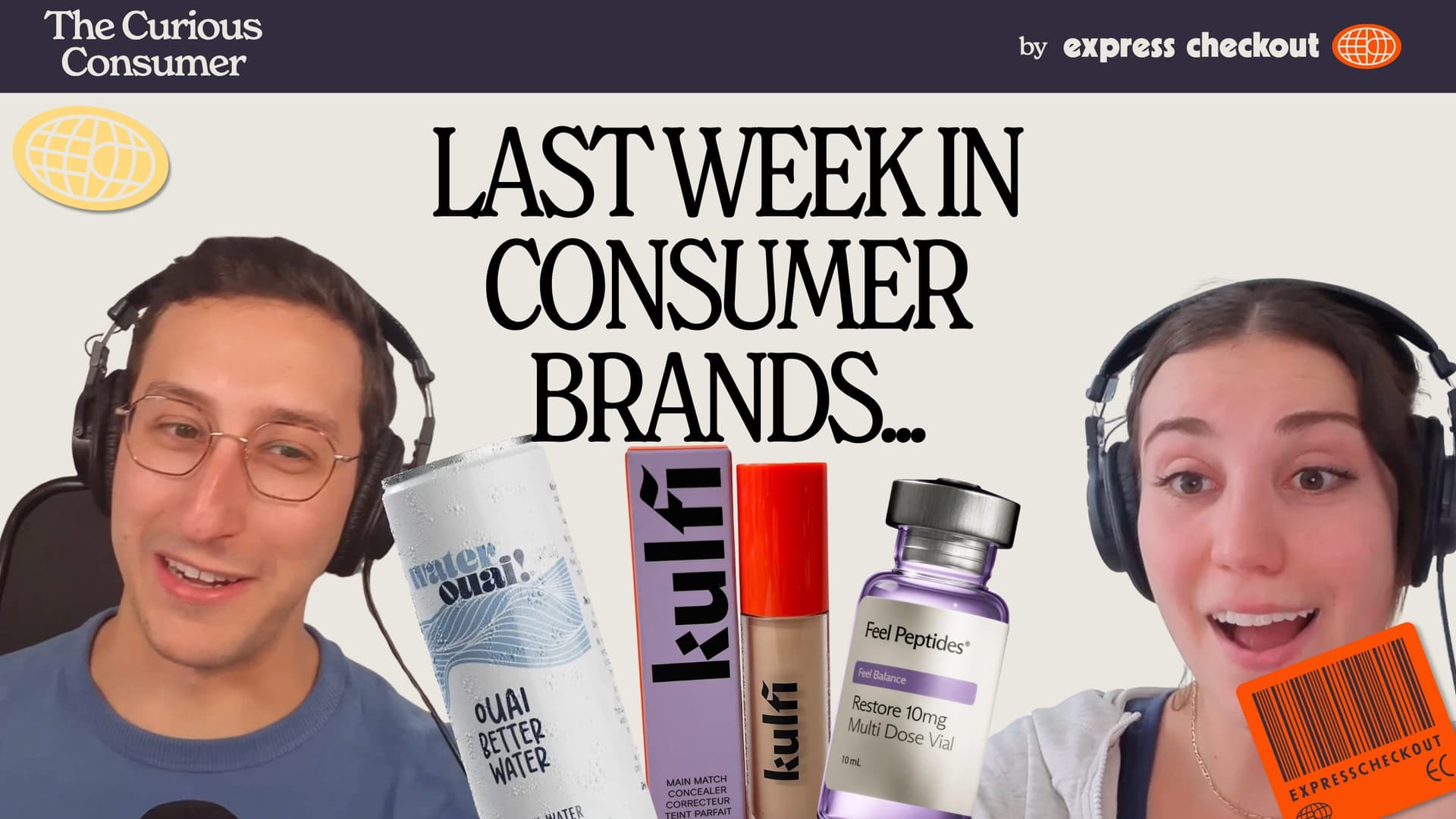
Episode topic: Interview with Priyanka (co-founder of Ko-fi Beauty) about South Asian representation in beauty and how indie brands scale emotionally and structurally; then a consumer-leaning segment on “performative” wellness grocery stores, new canned water brands marketing microplastic fears, Kellogg’s “SPOONS” front-of-pack nutrition framework, Target’s Roy Choi snack collab, and concerns about unregulated peptide products.
Guests
Priyanka Gundry, co-founder of Ko-fi Beauty; previously worked ~6 years at Estée Lauder (strategy) and Ipsy (merchandising/personalization). No other named guests.
Key claims
Inclusive beauty progress has shifted due to pulled-back retailer incubators and inconsistent investor access to capital. Ko-fi’s South Asian storytelling resonated broadly without diluting messaging. Elite grocery stores remain useful for first-to-market “wellness” trends. Microplastics fear is driving water can/glass positioning. “SPOONS” is a brand-made, not federally regulated, nutrition framework. Feel Peptides’ “research-backed” claims lack proof and use vague, paid “doctor” screening.
Notable examples
Ko-fi products like lip oil stains/lip liner stains and tubing mascara; stores mentioned (Erewhon, Air One-style boutiques like Laurel Supply, Nude Miami, Meadow Lane); water brands (Lunan glass bottle with QR-tested contaminants, Waterway by Supergoop founder Holly Thaggard); Kellogg’s Raisin Bran testing “SPOONS”; Target snacks with Roy Choi (ramen yucca chips, pork umami, wasabi ranch popcorn); Feel Peptides “Feel Love” $259 injectable with no clinical studies shown.
Written by AI. May contain mistakes. Listen to the episode to check what was said.
Chapters
Tap a time to open that second in VOPriyanka's Beauty Journey
0:45 to 2:32
Priyanka shares her background and the inspiration behind Kolfi Beauty.
“and the merchandising side was that even though I had access to all of these products, I still really struggled to find products that complemented my skin tone and my undertone.”
The State of Inclusive Beauty
2:32 to 4:17
Discussion on the progress and challenges of inclusive beauty brands.
“or maybe it was a few thousand dollars, but then we were on the front page of Vogue and Allure.”
Consumer Connection and Adoption
4:17 to 6:12
Exploration of Kolfi's broad consumer appeal and its cultural significance.
“We have a really incredible mascara that is volumizing and tubing which is also very different from an innovation perspective.”
Emotional Connection in Beauty
6:12 to 8:02
Priyanka discusses the importance of emotional connection in beauty products.
“So ultimately you have to resonate with a broader audience.”
Cultural Influences on Beauty
8:02 to 9:25
Insights into how cultural backgrounds influence beauty and product development.
“I think of ingredients and rituals sort of achieving a functional aspect and about the emotional connection.”
Kofi's Future and Expansion
9:25 to 11:28
Discussion on Kolfi's future plans and potential expansion beyond makeup.
“In the end, I think it's the reality that we're living in.”
Interview Conclusion with Priyanka Gundry
14:01 to 14:44
The hosts thank Priyanka and discuss where to find her beauty brand, Kolfi.
“So definitely if you're in the UK, check us out.”
Introduction to Grocery Store Trends
14:49 to 15:09
The hosts transition to discussing the rise of boutique grocery stores.
“And now Jenna and I are going to get into it.”
The Rise of Bougie Grocery Stores
15:10 to 18:08
The latest openings of high-end grocery stores and their common characteristics are explored.
“And that's because everything is Air One Now.”
The Utility of Elite Grocery Stores
18:09 to 21:15
The hosts discuss the utility of high-end grocery stores amidst competition from mass market retailers.
“There is some utility, as I said, which is in curation.”
Show all 19 chapters
Transition to Water Brands
21:16 to 21:52
The hosts introduce a new brand, Waterway, and its innovative approach to canned water.
“especially as consumers get more fixated on wellness.”
The Waterway Brand and Its Market Strategy
21:53 to 26:07
The discussion focuses on Waterway's business model and how it addresses consumer fears about microplastics.
“that will probably show up on these shelves.”
Changing Consumer Preferences in Beverage Choices
26:08 to 28:00
The hosts speculate on future trends in water consumption and how brands will adapt to consumer concerns.
“It's a little more like fun, I would say.”
The Shift from Sustainability to Health
28:00 to 29:17
Learn how consumer health concerns are reshaping product marketing strategies.
“You're going to win on, Hey, this won't kill you or make you.”
Kellogg's New Nutrition Framework
29:18 to 32:49
Discover Kellogg's latest initiative to revive cereal consumption through marketing.
“because the issue with a lot of the sustainable products in years past, they were just not that good, unfortunately.”
Unregulated Nutritional Claims
32:50 to 34:28
Explore the implications of unregulated front-of-pack nutrition labels on consumer choices.
“Conveniently, though, it leaves out a lot of the things that maybe a regulated front of pack nutrition label would have to say.”
Target's Innovative Snack Line
34:29 to 38:21
Understand how Target is enhancing its grocery offerings with chef collaborations.
“Our next story is a fun one, also about food.”
The Rise of Peptides in Wellness
38:22 to 42:07
Dive into the rising trend of peptides in the wellness industry and the concerns surrounding them.
“They want to own your home and food is a great way to get somebody into the door on a more consistent basis.”
The Risks of Unregulated Peptides
42:07 to 48:07
Explore the unregulated market for peptides and the potential dangers involved.
“wellness clinics that make all sorts of claims.”
Transcript
Automatic transcript. May contain errors.0:00Welcome back to another episode of The Curious Consumer. Today with us, we have a very exciting guest, Priyanka, the co-founder of Kolfi Beauty. Priyanka, welcome to the show. Hi Nate, so excited to be here and talk all about beauty. I'm excited. I love getting into the beauty space. We cover a lot of food and beverage on this podcast, in our newsletter, in all of our content, but a space that has been very interesting to me has been the beauty world. I would love to hear a little bit about your background briefly and about Kofi Beauty. Yeah, so I launched Kofi in 2021 after having worked in the beauty industry for about six years.
0:41What I experienced in my time working at Estee Lauder and on the strategy side and then at Ipsy, which is a beauty subscription service, and the merchandising side was that even though I had access to all of these products, I still really struggled to find products that complemented my skin tone and my undertone. We had a lot of indie niche brands that were coming up in that 2016 to 2019 era. But despite that, I didn't see any brand that really spoke to me in terms of really amplifying and centering South Asian culture. and my experiences, McLealth was just such a huge gap, not just here in the U.S., but really globally, because I grew up in India and I lived and studied in Singapore and before moving to the U.S.
1:23And through all of my different experiences, I felt globally that we, despite being South Asian people, being such a big global consumer are really underrepresented in the beauty space. And that's kind of what was the seed of the idea that started Kofi. So you launched Kofi in 2021. And I feel like around that time, there's also just this sort of wave of inclusive beauty brands launching from hair care to skin care to actual makeup. Sitting here in 2026, how do you feel about the way that that conversation has progressed? What has gotten better? What has gone backwards? Do you feel like retailers are still trying to emphasize more inclusive beauty?
2:03Yeah, I mean, I think it's been an interesting time for sure. I would say 2021 was definitely when we launched, you know, we were one of the first brands to speak about South Asian beauty and kind of have at that point, which was a really fresh perspective. And because of what was happening with retailers wanting to invest in more founders of color, press wanting to highlight our stories more, I got this outsized exposure because our marketing budget was, I don't know,$100. or maybe it was a few thousand dollars, but then we were on the front page of Vogue and Allure. And, you know, it was obviously, I do think that the fact that we had a very different story and beautiful product helped, but it was also the fact that people were, the system was looking for those stories and looking for these like, you know, moments that they could emphasize to show that we are making progress in inclusivity.
2:57And I don't necessarily think that the sentiment on the ground has gone away, But I do think that the conversation culturally, like at sort of a macro scale has shifted. Retailers were doing incubator programs at that time. Now they've kind of pulled back from those. Investors were looking to fund more black founded brands, more brands founded by people of color. And those have now pulled back. Essentially that like access to capital that is not consistent, that's not actual true sponsorship. has been very detrimental because you got a little bit, so you kind of got started and then that support was pulled away from you.
3:39And that's really what's happened in the recent years. And we've seen brands like Amikole, Good Life, really beautiful brands that were really speaking to underrepresented communities have to shut down because of many reasons, but part of it was just not that sustained sponsorship that is needed to get your brand to succeed in retail in today's environment. I think there are some challenges that are intrinsic for any indie beauty brand, right? But then there's obviously challenges that are specific to being a founder of color. And one of those is that you get vision holes. We make really great product.
4:10Our brand is really about joyful, easy to use makeup and really innovative products. We were the first to introduce like lip oil stains in Sephora environment, lip liner stains, which we just launched a couple of months ago we're the first to do that. We have a really incredible mascara that is volumizing and tubing which is also very different from an innovation perspective. Those are products that really everyone can participate in and we definitely see that again happening from the consumer lens but sometimes structurally people think that just because you know we started a specific way means that that's like the only consumer we're speaking to which is not really true.
4:46So there's some challenges and some sort of, I would say, boxes we tend to be put in. And it's not a new conversation. Even in CPG, you know, there's this ethnic aisle conversation that people have. Like, why should like ghee or something turmeric from a brand that maybe a South Asian founder be put in the ethnic aisle when like now everyone's adding that to their lattes, right? So I think there's that same conversation that has happened in beauty as well. But what's amazing about the beauty consumer and that's why i love beauty is that the consumer is going to just discover the best product and buy it and love it not everyone might know what our story is why we started but if they love our product they love what we are bringing to them they will become like coffee girlies right and so i think yeah and the magic of of being in this space i'm curious about once you hit sephora shelves and you got some of that mass exposure was there anybody who was buying the product and talking about the product that you were surprised to see?
5:45So I think kind of having worked in the beauty industry, one of the things I knew was that, again, that we would have a diverse audience. But what I was surprised by was how quickly that happened. So when we first launched, the story and the models, you know, the community we'd built was very much about like having this consumer who had not seen themselves in beauty be seen. But from day one, that story resonated really broadly, right? It resonated across ethnicities, across age groups because people just loved our message loved our packaging loved our fun colors and i think i was surprised by how quickly that broader adoption happened and i think that was really necessary it is necessary essentially to be successful at a retailer like sephora because if you think about like 100 people walking in and only two percent american households are south identify as south asian if only two of the hundred walking in are going to buy your product you're never going to have like productivity metrics, right?
6:39So ultimately you have to resonate with a broader audience. We were really, really fortunate that we never had to dilute our messaging or pivot away from our messaging because we had this broader adoption. When I was in beauty merchandising, it was kind of like the first early kind of first to second wave, I say, of K-beauty because I feel like now we're in sort of this third wave of K-beauty right now. And I had seen sort of that adoption happen from like, what is a snail serum like you to like, oh my God, we love this stuff, right? And so I knew that that shift could happen. It's really just about kind of discovering the product, discovering the efficacy and loving it.
7:20And I knew that shift would happen. I'm curious to actually go back a little bit more, more of this like K-beauty stuff. So you grew up in Delhi, spent time in Singapore, you now live in the US. you've been through a lot of different beauty cultures. And like you're saying, we're seeing, I guess we're on the third wave of gay beauty in the US, but there's now dedicated retailers coming over and whole sections at Target that have gay beauty. Are there any ingredients, formats, or even specific products popular across South Asia or where you grew up that haven't made it over yet? And is there anything you'd like to see be brought over to the US or build yourself?
7:57I think that's a really good question. I think when I think of Kofi specifically, I think of how in the mass loss hierarchy, we're not really in that functional space. I think of ingredients and rituals sort of achieving a functional aspect and about the emotional connection. So a lot of my South Asian, our connection to South Asian culture is about storytelling. Like Kofi is a South Asian dessert. It's very similar to ice cream and the name the reason I named the brand Kofi was because I was thinking about when I was happiest growing up and it was eating Kofi on a hot summer day A lot of nods to the culture one of our eyeshadows is called Zutty eyes and it's a sparkly eyeshadow And it's a nod to Zutty which are like threads of silver and gold in South Asian clothing So for me like how I'm thinking about Kofi is really that nostalgia that storytelling and aesthetic the lifestyle cues of lived experiences and translating that into the brand.
8:54And that's more of an emotional gap that I think we fill versus kind of bringing an ingredient or a ritual, which to me is sort of a functional gap. Having said that, I think there are brands that are doing that. Like one of the brands that I love from a friend is Fable in Maine. They have a hair oil. Hair oiling is a ritual that is just super ingrained in the culture. And so I think like that's a really great way to bring something that we've always done into a format they sell at sephora uh that is very easy to use for everyone and accessible to everyone so i do think that there are brands that are now doing that ayurvedic skin cares and others oh yeah movement on um but we're sort of like taking a different direction for for coffee yeah i guess i didn't even really think about the the emotional side of this as well but i would argue that's also like a function beauty in particular is so much about like how you feel when you put on a lipstick or you put on like a blush like it's really kind of giving you confidence or feeling like you know i it is my two minutes to myself and how i want to feel that day and i feel like that's kind of where filling that emotional gap is so so important ultimately like also there's so much dupe culture and beauty like someone could replicate your product, right?
10:15In the end, I think it's the reality that we're living in. Yeah. And, you know, there's so much like, you know, that happens even in CPG, I'm sure that happens. Right. And so, but remote is really how we make our consumers feel day to day. And that's really why Colfi exists. It's because I want you to feel invited and be able to play with color and makeup. I think it makes it a lot more meaningful and brings a lot of longevity to the brand too i i have to imagine that it it builds these deeper connections with your consumers that you might not see even in some legacy brands because it's just about like this thing's been around for a while that's really it there's not a lot of connection to it is this something you saw when you were at uh estee lauder and and even at ipsy yeah i mean i think what's fascinating about estee lauder is that it is a house of brands and i think what was really interesting was seeing some of the brands that they had bought and cultivated like Joe Malone was one of their brands.
11:14Bobby Brown was one of their brands. And you kind of look at their journey, especially pre-acquisition when they were so founder led. And obviously Estee Lauder tried to keep that sentiment, but the reality is that over time that's hard when the founder connection is no longer there. I do think that what I learned at my time at Estee Lauder is how important that brand and like emotional connection is and how that can get lost if we're not kind of constantly keeping it front and center, which is hard to do in a corporate setting. And that's why indie brands exist, right? Yeah, exactly. We're always seeing innovation because it's hard to do that in a corporate environment.
11:54And Ipsy, on the other hand, was very data driven. So it was very much like we had a ton of consumer data and we ran merchandising through a personalization engine, et cetera, et cetera. So I do think that that was kind of a nice like balance to, you know, yes, you can have that emotional connection, but then kind of counterbalancing that. But like, what is the data telling you? What are people buying or saying that they would like to receive in their subscription box? It was a subscription service. And then how does their happiness or like with their subscription, how does the LTV correlate with how well we were able to serve them?
12:29And so I think it was a good, like, it was kind of learning two different pieces of the puzzle, which are both important when you're trying to build a brand yourself. I think the coolest thing about the brand environment we're living in right now is that there's so many people like yourself building brands that resonate so much with consumers. It's such a powerful thing, like building that kind of community and building that kind of audience, especially now that there's also so many brands. Where do you see Kofi going? Because you're now a global brand, right? You're in the UK? We are in the UK.
13:05Oh, that's fun. And we were always in Canada, but I guess it depends on it. Ah, Canada. North America. Yeah, North America. But yes, we launched in the UK last year, so that was our global expansion, and that's been really exciting. We have a lot of interest around the world. I think we're not ready yet because there's just so much work to be done. but yes speaking to kind of coming back to that brand element I think we've because of how we've positioned our brand I feel like we have permission to you know beyond makeup obviously makeup is going to be our focus for the next couple of years because we've we've barely kind of scratched the surface of what you can do in makeup but I do think the brand has legs to expand into fragrance or body or hair care you know I think we it's really about kind of that easy approachable fun playful way of incorporating beauty into your life that's what the brand is about and so i think we have permission to have a broader impact than just in makeup well priyanka thank you so much this was so much fun i feel like i learned a lot where can people find you where can people find kolfi yeah kolfi you can find us at kolfibeauty.com and at sephora we're in all Sephoras in the US and Canada and at SpaceNK in the UK.
14:25So definitely if you're in the UK, check us out. And we're also on Instagram and TikTok, of course, at ko-fi.beauty. And personally for me, if you can find me at Priyanka Gundry on Instagram, I have a nano creator profile. Amazing. Well, thank you so much. Thanks so much. Go check out her brand. It's sold in Sephora and online. And now Jenna and I are going to get into it. There's a lot of fun, fun stories this week. Yes, there are. And we are going to start out with a little exploration on the new boutique grocery stores that we are seeing everywhere. So we had titled this newsletter, Everything is Air One Now.
15:14And that's because everything is Air One Now. Literally everything. I mean, within a week of each other, two bougie grocery stores on opposite sides of the country opened up. One was Laurel Supply, which opened up in West Hollywood, literally across the street from an Erewhon in West Hollywood. And then within a week, Nude Miami opened up in Brickell, and they are confidently calling themselves the healthiest grocery store in America. They had a literal bouncer at the door. Alex Earl showed up. And it's just the latest, as you were saying, in this suite of bougie grocery stores that have been opening up.
15:59Thanks to Erwan, there's Meadow Lane here in New York, which is blown up as a gourmet grocery store. There's Happier Grocery. There's even Butterfield Market. There's just a ton of these. And they're all really copy and paste. They all kind of look the same. The produce sections look the same. They got fancy smoothies. They got celebrity collabs. They have every kind of healthy snack you can imagine that you've either heard of or have not heard of yet. And that's the thing. These places are discovery destinations where people want to take everything they're hearing from these influencers about how to be healthy and how to optimize their wellness stack.
16:40These are the destinations for these people to find it. But that's starting to change. A lot of these mass market retailers like Target and Walmart are starting to get into this world of discovery and of these Better For You products. Yeah, exactly. So what we were interested in exploring is, you know, the utility for Air One was pretty clear for many years. It's this place that people can go where everything is pre-curated for them. So if you're someone who follows certain diets, if you're seed oil free, if you only want to eat organic, you know without thinking that anything you pick up, you don't even have to look at the label in one of these stores, was preselected to meet whatever performative diet you are on or want to be on.
17:28And they're also aspirational. The point of these stores is not to do your full grocery shop. You physically can't. One, you would have to be a millionaire. The products are so overpriced. The margins are insane. Two, it's physically not set up for you to be able to do a full grocery shop. The aisles of all of these stores are so narrow. I also think that that is like something that has to do with like skinny culture. But that aside, you can't even push a cart through them. It is not an experience that's meant to be for a full grocery shop. It's meant to be a place where you can discover something new, pick something up and post about it on social to show to other people that you live a life of wellness.
18:11It is largely a performative store. There is some utility, as I said, which is in curation. So what's interesting, yes, some of these other mass market stores like Target, like Walmart, we've been talking about this for a while now, are starting to curate a little bit more. They are starting to get into this game of we're going to ban synthetic dyes. We're only going to create a modern soda set just like Air One does. So a lot of the trends, a lot of the categories, a lot of the restrictions that we've seen in these elite grocery stores are now also in mass market. So something that we were interested in is if that's true, do these stores still have utility?
18:53and we're coming to the conclusion that if anything, we actually need them more than ever. And the reason for that is because as mass market consumers are exposed to better for you emerging products sooner, the elite consumers, the air one shoppers of the world will still want to be first. They will still want to find the CMOS trend before anybody else does. And so they're going to have to go to places where they can find trends even sooner, which means that the way that these stores will last is if they can be even earlier in finding first-to-market products. They're going to need to discover the next hell trend way before it happens.
19:34They're going to need to have products that Target and Walmart physically can't get their hands on for whatever reason. They'll have to launch more exclusive SKUs. So we're going to probably see more of these kinds of specialty retailers pop up as consumers get more and more eager to find the first to market products. But the people behind these retailers are going to have to be expert curators. And also just experts at positioning things as new and unique and as a necessity. I think something that these places do really well is provide you with newness that maybe you don't actually need, but they position it in a way that you definitely need it to be healthy and to be in the know and to be in the scene and part of the scene.
20:26And that's why like these stores can do so well and pique so many people's interest because it seems like they know something that you don't. It makes you feel smarter shopping there. It makes you feel more educated shopping there because, Because, oh, they say this has added X and doesn't have this and X, Y, and Z. And it makes you feel like, okay, so these are the things I should be having. They have them all here. Great. And to your point, if they can maintain that, that level of authority and level of in the know before anybody else is, yes, it'll flow upstream to the targets in the Walmart to the world.
21:07but it will allow them to stay and maintain their prevalence. So this retailer category is only going to expand, I think, especially as consumers get more fixated on wellness. There will be more and more of a need of this. And the downstream effects will mean, yeah, maybe there are more emerging brands in the Targets and Walmarts of the world, but they're still not going to be. Because the Targets and Walmarts of the world are associated with a mass market consumer, they will never be the C &E Airwamp. They can't. No, and even when these Better For You brands make it to a Target or a Walmart, they start to lose a little bit of that nicheness and...
21:50It's like, oh, everyone knows now. Yeah. Well, the next story is about a brand that will probably show up on these shelves. And that is the new brand Waterway, spelled water, O-U-A-I. whey is it's like yeah in french so water away with an exclamation point critically because it was founded by the founder of super goop exclamation point which is a very trendy sunscreen brand might be actually get it going a little out of fashion by now but super goop really i was about to say had its time in the sun. It did. And it escalated its way out of it. So Supergoop, Holly Thaggard is the founder of Supergoop.
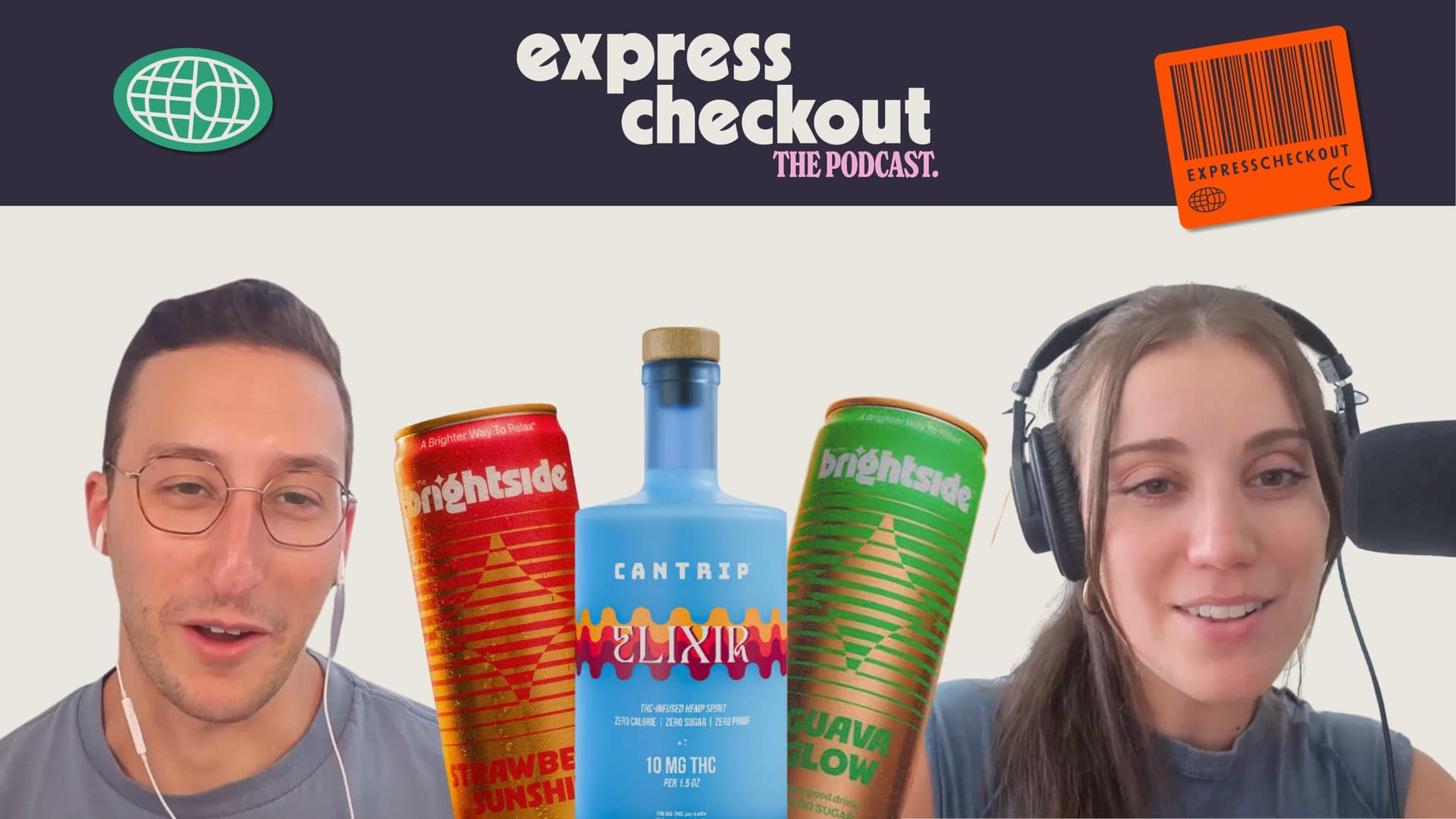
22:39She built this incredibly successful skincare brand called Supergoop. And now she's launching with her son, Will, who is a freshman in college, just started in college. They're starting a canned water company. So Waterway sources artesian water and then packages it. And this is what's proprietary and exciting for them, which is super can, an aluminum can that specifically was designed to avoid BPA, PFA's, all of the icky microplastic stuff from transferring into your water. So what they're saying, which is true, is that a lot of cans, even though they're metal cans are actually lined with plastic.
23:21And so when you're drinking water from a metal can, you're not avoiding microplastics. So they are very eager to tap into the very real microplastic fear that's going on right now with a new water brand. Obviously, water in a can has been a thing. Liquid death is the prime example of that. But liquid death wasn't framing itself as we're trying to help you avoid microplastics. That wasn't the goal of launching in a can. It was more about that beer story of like this is going to replace what looks like a beer at music festivals. That was the story of liquid death. It was about identity and cultural capital.
24:00It wasn't about we're putting this in a can so that you can avoid plastic. Now that is the conversation and it's at the right time. I mean, concern about PFAS and drinking water has grown four times since 2020 and states are also starting to specifically target microplastics in drinking water. So in just this year alone so far, five states have introduced seven bills targeting microplastics in drinking water. And all of this regulatory movement is just hyping up consumer fear. It's giving consumers like the data points to say, I have reason to be afraid. And that might be true. And so people are starting to look for ways that they can drink their water without fear of microplastics.
24:45Lunan has been a really interesting example Lunan was launched late last year December 2025 and it's already become like this it girl It is everywhere So it's this fancy looking water in a glass bottle and it's on shelves at Erwan it has made itself its way into a Michelin starred restaurant and it has been seen being held by all of these cool influencers so people are like okay I need to get my hands on this glass water bottle, whatever it might be. And it's spring-sourced water filtered specifically to remove any contaminants and then remineralize because a lot of people are worried about like not having enough minerals in their water as well.
25:27And then third-party tested again for over 300 contaminants, including microplastics. And all of the results of those tests are accessible via a QR code on the bottle. So they really, really are tapping into that fear. They're like, okay, hey, consumer, you're worried about microplastics. All of the proof is on the bottle. You don't have to go anywhere else. And also, the glass bottle is pretty. It has this nice aesthetic. And so this is like, Lunen has introduced this new era of water. And Waterway is coming in at the same time. From my understanding, it's going after a different target consumer.
26:07Waterway, if you look at the packaging, obviously it's a can. It's a little more like fun, I would say. It doesn't take itself as seriously. It has an exclamation point on the end of it. Where Lunen looks a little bit more luxe. And Waterway is also being launched through a distribution at schools and offices and hotels. So not as much like the Fitness Girlie. It's an institution for a strategy that Supergoop actually really used to scale. So the same way that Thaggert was able to scale this sunscreen brand, she's now testing with her son with this water brand. So it'll be interesting to see this next era of waters.
26:51I think we're going to – I mean, we might be in a place where, like, I don't – is the plastic water bottle going to die soon? It might. It might. Right, but Kirkland also came out with a branding-free case of their plastic water bottles, and I saw so many people so excited for that online. So I don't know, but over the past few years, there's been the It water bottle. Every year, there's always something new. people are now finally concerned with microplastics, even though microplastics have been a concern that scientists have been trying to say for years, but it's finally a real concern that consumers have because of wellness optimization culture.
27:30This could be the changing tide happening right now that people will start to care a little bit more. There will be more brands coming on the market. maybe the Poland Springs and the, the, the brand, the Fijis, the world will start to change over. Cause I feel like it was less, there was like a stint where it was about sustainability, but now I think it's going to be winning on water quality and the microplastics. There was more than anything, like you're not going to win on the sustainability argument. That'll be secondary to all of this. You're going to win on, Hey, this won't kill you or make you.
28:06Exactly. Sustainability will never be enough of a reason. It'll be a nice to have, but not the reason to purchase. If me, theoretical consumer thinks that microplastics will imminently impact my health, I will convert much faster than I will if I think that this plastic water bottle is harming the environment. That's just how we act, especially Americans. Right. And I think this is trickling across more categories than just drinks, too. It's going to change, I think. Think of a brand like Biome, which is a wipe company, and they have refillable wipe tubes. I think like that part of that is also about microplastics and removing, obviously removing some of the single use stuff, but they're positioning it as it's healthy and better for you more than, hey, this is actually a more sustainable option than what's currently on the market.
29:03So I think by virtue of trying to make things a little bit healthier and removing plastics and removing some of this stuff, we're going to Trojan horse our way into more sustainable products. Yeah, I hope so. I hope so. And hopefully they'll be better too, because the issue with a lot of the sustainable products in years past, they were just not that good, unfortunately. But it is very interesting to see this pivot within the water where it was like about sustainability, but now it's more about your health. Our next story is actually, well, it's really also about this health halo. Companies that are changing their packaging or messaging to have consumers think that something is better for them than it is.
29:46In this case, it's W.K. Kellogg, which is Kellogg's. It's the cereal business of Kellogg's, which is now owned by Ferrero. They just rolled out something called SPOONS, which is a new on-pack nutrition framework, meaning a nutrition framework copy that will be on the front of the package saying SPOONS, which is an acronym for simple ingredients, protein, outstanding fiber, other nutritious foods. Sure. Nutrients you need and single digit sugar. Some of those are really funny. Like other nutritious foods and nutrients you need are hilarious to me because cereal used to be like the health food. It was one of the first fortified foods.
Read the full transcript
30:36And still, if you look on like a cereal package of like OG cereal brands, They were like multivitamins before gummy vitamins were a thing. Every vitamin is in cereals. They have been trying to make this extremely accessible, shelf-stable food, quote-unquote healthy for the longest time. And this is just another attempt at that, especially as things like simple ingredients, protein, and fiber come into the conversation more and more. Kellogg's is using this proprietary label. They designed it themselves to highlight the things that they want to highlight that they think consumers will be responsive to.
31:15It is not a third-party standard. And it's so interesting to me that brands can even do this. They can be like, oh, well, this meets the nutrition framework of our nutrition framework. Like, of course it does. You made the framework. But cereal has not been doing well. I mean, one of the reasons W.K. Kellogg got sold to Ferrero is because the cereal business is not a great business to be in currently. A lot of people have been shying away from the product. And I think now with all of these healthier options out there with granola on the rise, they're trying to keep some of that market share and trying to play in the healthy snack and food market that people want to be in.
32:05Will it work? Sure, maybe. I don't think cereal is going anywhere. It's still a relatively big business, especially W.K. Kellogg's. but there are far fewer people consuming cereals because it had, it, it lost its halo. It's interesting because this is all part of like one larger narrative. We talked a lot during the Superbowl about the Raisin Bran ad, which is the same company. It is Kellogg's. Raisin Bran is owned by Kellogg's. And actually Raisin Bran is one of the three first cereals that they're testing this spoons framework on. And the Superbowl ad, we talked about it because the messaging was we've been here all along.
32:41We haven't really changed anything. We've always been high fiber. And that's what this is trying to do. They're not changing their formulas. They are using a new packaging tactic to try and get you to realize what they think has always been there. Conveniently, though, it leaves out a lot of the things that maybe a regulated front of pack nutrition label would have to say. Something like saturated fat, sodium, added sugars. those aren't going to be included because they can pick and choose when they're the ones who are making the framework. So this is really all part of like a larger problem around the FDA not having a front of pack nutrition label on packaged foods.
33:29There's no regulation around it. And it just leaves brands with the ability to make their own. There are a lot of manufacturers that have their own versions of this now. There are also retailers that have their own versions of this. For example, the Food Health Score is at Kroger. Great For You is a label at Walmart. And they all rely on their own criteria. And they are going to want to highlight their private label products for being especially great. And they're not benchmarked against any kind of government standards. Next time you are shopping, look out for some of these front of pack claims.
34:06Because the nutrition label, like nutrition facts, are regulated. Yes. But some of these claims that you can make on the front or these frameworks with silly acronyms like spoons, those are not federally regulated. They are created by the brands and used by the brands for marketing. It's all marketing at the end of the day. It's all it is. They want you to buy more cereal. Our next story is a fun one, also about food. So Target, their in-house brand, Good and Gather, they launched another limited edition snack line with the James Beard award-winning chef, Roy Choi. They're launching a new sweet and savory snack line.
34:49It's going to include spicy ramen yucca chips, pork umami, fried pork rinds, wasabi ranch popcorn. They have a spicy chili mango candy, pineapple chili beef stick. They're all going to be across their 1800 stores, all under$6. But this isn't the first time that Target has actually worked with chefs on its in-house brands. They collaborated with Ann Kim, another James Beard award-winning chef on frozen pizza and frozen appetizers. And they also worked with pit master Rodney Scott on barbecue seasoning as well. And now Roy Choi and snacks. And I think this is such a good move for Target. They've been doing a lot to increase the authority and the credibility of their in-house brands, make them basically brands in their own right.
35:42And this is a great way to borrow these chefs' credibility. Roy Choi is a very well-known chef. And him bringing his stamp of approval and his unique palate to these snacks make them a lot more of a viable product. And this is also Target doubling down on discovery and taste to differentiate their grocery arm. Food and beverage has become Target's number one traffic driver. They're becoming a grocery first destination. Because of that, they need things that are unique items to discover that can only be found at Target. And that's why Target, more than pretty much any other retailer I've seen, is really leaning into exclusive SKUs from a lot of the emerging brands that they're working with.
36:26So they love to launch an exclusive SKU, meaning a flavor of whatever product that can only be sold at Target. And this is another example of that. When you think of private label, I think you often don't think of innovation. You usually think of a copy-paste of another product that already exists but a little bit cheaper. the exception to that being Trader Joe's which we do associate it's private label we do associate it with innovation this is Target taking a chance on having more innovative private label products that are there for discovery and and when they capture that consumer who's coming for food and cool food and beverage products maybe they'll be interested in being like well I haven't seen this anywhere before and these are really interesting flavors like while I'm here maybe I'll pick this up and suddenly their private label starts doing really well when it's sitting next to other emerging brands and capturing a consumer within the discovery mindset.
37:21And you pair this with them reorganizing the store to be more of a grocery first destination. This is a powerful combination. I could see somebody saying in the near future, is Target becoming the next Trader Joe's? Because it might be with their private label, which is a real compliment. I mean, Walmart's trying to do it with better goods. Like some of those private label products that I've seen have very Trader Joe's vibes to them in terms of flavor and the types of products that they're offering. They're not just generic. Like here's a pizza. It's like, no, here's a pizza with pickles on it and potato chips.
38:01That's not something you see at a lot of mass market stores. You see that at Trader Joe's. So for Target to be doing that is more than just novelty. It's a very deliberate strategy to bring in more of these people and control more of the basket beyond just skincare and apparel and houseware. They want to own your home and food is a great way to get somebody into the door on a more consistent basis. And I saw a stat that their food forward strategy has grown its sales 50 % over the prior assortment that they have. So they are really putting a lot of effort into making all of this differentiated and unique and really trying to pull in that foot traffic and get people to come in frequently to do their grocery shopping.
38:55And I did grocery shopping at Target recently because I was curious. It's pretty good. It's pretty good. It's pretty good. But they have some good – their private label is really excellent. They have a great ice cream selection. I have some private label ice cream in the freezer right now, and it's great. I'm very impressed with them. The other cool thing about this collaboration, when you're working with a specific chef who's known for a specific cuisine, you can tap into international flavors more. If Target on their own tried to launch spicy ramen yuca chips, people would be like, that is so inauthentic.
39:29And when they get someone who is known for cooking in that style, it makes a lot more sense. And it gives them a level of validity that they wouldn't otherwise have on their own. I want to try it. The one thing I don't want to try, chili lime cake pops. What's that? Why are we doing that? I want to try them. My one concern is they'd be very dry. I feel like every time I've had a cake pops, they've always been more dry. That's not my concern. That's not your concern. The taste sounds great. Like a margarita flavored cake pop just doesn't sit right with me. Sounds wonderful to me. All right. Well, they found their target audience.
40:07Oh, I am 100 % their target audience. Our next story, I would say is a spooky one. This is a scary one to me. Peptides are... Peptides are everywhere. And a brand called Feel Peptides, they closed a$3 million seed round led by Sugar Capital. And Sugar Capital is an investor in Carraway, Starface, Groons. And part of this raise and even part of the press release was about bringing trust and credibility to the peptide market. Which I still don't even know if a cute branded peptide brand brings that much credibility either. Yeah. It's scary. So to back up a little bit, peptides are short chains of amino acids, which are the building blocks of proteins.
40:59They naturally occur in your body. They're all over. They are the messengers that regulate cell functions, inflammation, hormones, all these things. They are naturally in your body. But synthetic versions are starting to be used more and more in the wellness community for very targeted treatments, I would say. And like wide lifestyle claims. Yes. And I think the reason this is – we're going to have to do an entire episode on this because I genuinely have too much to say. So I'll try to keep it short. But you might recognize the word peptides from two places, one being collagen peptides, which are now very widely available, or GLP-1s, which are glucagen-like peptide 1 agonists.
41:45So peptides also. So peptides have started to become popularized in a genuine medical, well-studied sense through these kinds of medications or supplements. but there are a lot of unapproved peptides by the FDA that are just sold online or in like sketchy wellness clinics that make all sorts of claims. And people have been buying them like on the black market, basically internationally. And it's, it's the, it's like people who are listening to Joe Rogan and our biohackers and also probably hate vaccines, which is really funny because I'm like you don't trust an FDA approved vaccine, but you want to, you inject these into your body.
42:35Sure. Interesting. I know you also feel that way. Oh my God. The first time I saw this, as this has started to bubble up, I'm like, yeah, these are mostly people who are probably anti-vaccine in some way, form or another. And you're just taking random shots of random liquids into your bloodstream? Sure, Jan. Okay. Yeah, let's do this. We don't need all of this optimization in our lives. Yeah. People are getting their hands on peptides in a variety of ways. And one of the largest criticisms, as we are doing right now, is that they are entirely unregulated and none of the sourcing is transparent.
43:17None of the research is transparent. And so feel peptides is like, well, we're actually the research backed ones. And in theory, that sounds great. But then you go on their website and I have spent a lot of time on their website now. First of all, their social presence is bizarre. They have like the weirdest copy, some of which is youth is a feeling, not a filter. Passion is the language the body never forgets. I'm like, what are you selling? I don't know what you're selling. And that's because they're selling a vibe. And then you go to the science tab on their website and it says, promising research is inspiring, but impact is what matters.
44:01Followed by, we develop our formulations in partnerships with leading physicians who incorporate fuel peptides into their clinical practices. It's become a trusted standard recommended by over 25 ,000 healthcare providers. Absolutely no proof of that. There is no proof of that. There is not even a single quote from a single doctor on their website. There is no third-party verification of any of the statements that they are saying. And then you actually start to go shopping for one of their products, such as their Feel Love line, which is supposed to help you feel love. And you're like, okay, I'll check out.
44:40I'll get this$259 vial that I'm going to have to inject myself with. and before you go to check out it says a valid health screening is required prior to order fulfillment you're like oh okay that's that seems kind of legit it says after checkout so first you have to pay uh you will receive instructions to complete the required intake process orders will be processed once the screening has been completed and approved so then i'm like oh how do you actually do that there's a chat with us feature with like the picture a picture of like a doctor and you go to click on that and to chat with them, you have to pay$50 for a consultation with a specialist.
45:19It doesn't say who, it doesn't say if they're what kind of doctor, are they a medical doctor? Who is this specialist? It doesn't matter. You have to pay$50. Then you can check out. Then you can buy their feel love line. And if you start to use their feel love line, emotional shifts can be more gradual and individual than physical ones. Some users notice a softening of emotional guardedness and a warmer mood baseline within one to two weeks. To feel the full effect of feel love, you need a month of consistent use. Hell yeah. And if anybody listened to our episode with the incredible senior VP of science and innovation over at Ritual, which is an actually science-backed supplement company, you would know that time-bound claims like these pretty much always tell you that there's some fraud to sniff out.
46:08Because the only way that they can tell you if there will actually be results after a month of consistent use is if they have done clinical studies on this exact product with a statistically significant group of users. There is not a single clinical study on this website. Any product you click into, it says this is still being researched for XYZ results. And you're saying you're a research-backed company and you just got$3 million from – like, who decided to invest in this company? If anything, actually, it might be smart because consumers will continue to be suckers and will probably buy these products because they give the impression of transparency but are strategically not transparent.
46:58I just think it's crazy that we went from like, oh, I'm taking my gummy to let me inject myself with an unknown serum. I think it's crazy that people are like, I'm so scared of microplastics in my water, but I will inject myself with syntha. I'm so scared of seed oils. At least there's no seed oils and peptides. Oh, thank God. I do have to actually do like a deep investigation. Yes, anyone can say anything right now. and apparently get money to back it it's so crazy it's so again like like i started the story with this is this is scary this is like a really i think frightening place to be in where there's relatively lax regulations around this and the thing is even if there was regulations It always takes the government time to actually do anything about it.
47:57The amount of just illegal stuff that's being sold online that nobody is dealing with is crazy. Because it just hasn't reached that threshold yet to make it make sense for somebody to step in. It's truly frightening. It's frightening. Peptides are fine. On that, thank you for listening. My rant's over. Thank you, everybody, for listening. Make sure that you're subscribed. Make sure you're subscribed to our newsletter. You can go to expresscheckout.co. Follow us on Instagram at expresscheckout. We're also on TikTok, which is crazy. You can find us on LinkedIn, too, our favorite social media account.
48:42And you'll catch us next week. Have a good one. Bye.
48:56Bye.
From the publisher
Welcome back to another episode of The Curious Consumer! Today, we’re joined by Priyanka Ganjoo, the founder of South Asian beauty brand Kulfi Beauty—the first South Asian female-owned makeup line to be carried at Sephora. Priyanka shares her journey building an inclusive beauty brand, and the power of a strong emotional and cultural moat.
Plus, we’re chatting about the boom of Erewhon lookalikes (and how they’ll survive when mass-market becomes a discovery channel), the water brands capitalizing on fear of microplastics, one brand’s attempt to legitimize peptides, and more. Let’s get into it!
The breakdown:
0:00 Kulfi Beauty + the wave of inclusive beauty
5:36 Kulfi’s Sephora growth and changing audience
9:49 The power of the emotional moat in beauty
14:49 Everything is Erewhon now (the new age of bougie grocers)
21:52 Water brands vs. microplastics
29:34 Kellogg’s cereal front-of-pack framework
34:31 Target’s private-label chef collabs
40:10 Peptides are the wild west of wellness
🎧 Love the show? Subscribe to The Curious Consumer wherever you get your podcasts! New episodes drop weekly.
📧 Get the inside scoop Subscribe to Express Checkout, our newsletter packed with consumer insights, trends, and exclusive content straight to your inbox at expresscheckout.co.
🗣️ Let’s connect! Follow us for behind-the-scenes content, quick tips, and more: @expresscheckout
💬 Join the conversation Have a product you’re curious about? DM us your questions or drop them in the comments—your topic could be featured in our next episode! If you have any thoughts/questions/suggestions, feel free to email us at hello@expresscheckout.co :)
⭐ Help us grow If you enjoyed this episode, please rate and review us on Apple Podcasts or Spotify. It helps other curious consumers find us!
Get full access to Express Checkout at www.expresscheckout.co/subscribe