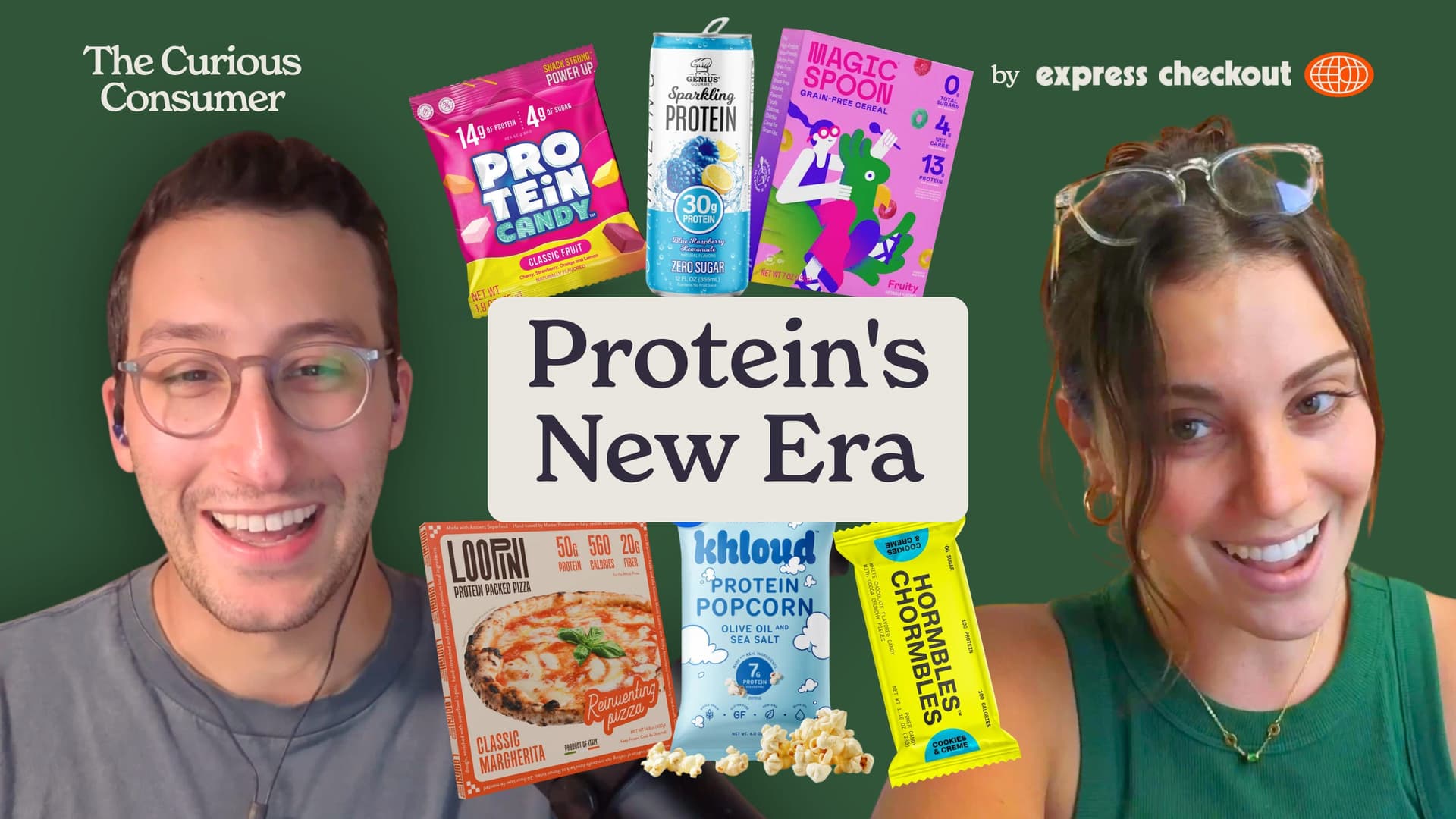
In short
Podcast Summary: The Curious Consumer - Episode: Protein's New Era
Overview In this episode of *The Curious Consumer*, hosts Nate and Jenna continue their exploration of protein, focusing on its widespread integration into various consumer products. They delve into the phenomenon of "protein-ification," discussing its history, current trends, and potential future in American culture and dietary habits.
---
Key Concepts and Discussions
Introduction to Protein's Popularity
- Cultural Shift: Protein has transitioned from a niche market (mainly targeting bodybuilders) to a mainstream ingredient found in everyday products like cereals, snacks, ice creams, and sauces.
- Historical Context: The concept of protein began in the mid-19th century, with significant growth in the 20th century as fitness culture expanded.
- Influencer Impact: The rise of social media and influencer culture has significantly influenced consumer behavior regarding protein products.
Product Categories Explored
- Cereals
- Brands like Magic Spoon and Catalina Crunch are pioneering high-protein cereals, capitalizing on nostalgia and dietary trends.
- Pasta and Alternative Grains
- Banza: A chickpea-based pasta that promoted itself as gluten-free and high in protein, helping to popularize protein in traditional grain categories.
- Frozen Products
- The growth of high-protein ice creams, with brands like Halo Top leading the charge, while new entrants continue to emerge.
- Beverages
- New protein sodas and drinks, such as Clean Simple Eats and various ready-to-drink protein coffees, indicate the evolving landscape of protein consumption.
- Condiments
- The emergence of protein-infused sauces and dips presents a new frontier for protein products, with brands introducing protein tomato sauces and more.
Consumer Perspectives
- Listener Hot Takes: The hosts shared opinions from listeners on the protein trend, with some highlighting the absurdity of protein in every food category.
- Consumer Education: The need for transparency regarding protein sources and marketing claims is emphasized, particularly concerning what constitutes a quality protein source.
Future Trends
- Sustainability Concerns: As the demand for protein continues, there are questions about the sustainability of certain protein sources like whey.
- Whole Foods vs. Supplements: There is a growing interest in whole food sources of protein versus processed supplements, hinting at a potential shift in consumer preferences.
---
Key Takeaways
- Protein as the New Normal: The episode argues that protein is not just a trend but has become an integral part of the American diet, impacting various food categories.
- Market Predictions: Expect an ongoing influx of protein products across different aisles, suggesting a permanent place for protein in consumer shopping habits.
- Taste and Quality Matter: The hosts underscore that for these products to succeed, they must not only provide a protein boost but also maintain good taste and quality.
---
Conclusion The hosts wrap up the episode by reiterating that the protein trend seems here to stay, potentially evolving as consumer awareness grows. They express anticipation for the next developments in the protein space and encourage listeners to engage with them on this topic.
---
For more insights, listeners are encouraged to subscribe to *The Curious Consumer* and follow their social media channels for updates on future episodes and consumer trends.
Written by AI. May contain mistakes. Listen to the episode to check what was said.
Transcript
Automatic transcript. May contain errors.0:00Welcome back to another episode of The Curious Consumer. Welcome back. Welcome back. I'm Nate. I'm Jenna. And this is our part two of our deep dive into the wonderful world of protein that has captivated America. Just captivated America is so real, actually. No, I mean, like when we were doing research for this, the amount of articles and YouTube videos and TikToks that were like, peak protein? Why is protein everywhere? people are curious about this they're curious about it and that's why it deserves two full episodes because we would be entering huberman length episodes if we tried to do this all in one so here we are again and if you're watching this instead of just listening you might notice something a little bit different which is that we are doing this remotely for the very first time crazy i kind of like it it's fun it is fun and i have a fancy mic now nate's always had a fancy Mike.
1:01I'm finally like using it for my own podcast. This is the first time I've used it for my own podcast, which is very funny. The reason we are remote is because Nate is still in his lovely home in New York, which we recorded our second episode in actually. I am now in Austin, Texas for a few months and we are no longer in the same state. So we are doing this remotely, but as my father said, if New Heights can do it, we can do it. I think so. But we're here to talk about protein again. And in this episode, we're going to cover what is happening right now. All the different products, the proteinification.
1:40It's a mouthful of a word. The proteinification of all of these products, it's in every aisle, it's in every category. And we're here to dive deep into how we got here and what this looks like. I'm envisioning like, it's like an audio tour through the aisles of the grocery store. Which we should do at some point. I think we will do that at some point. So stay tuned for that. A podcast in a grocery store. Which actually, okay, that actually exists at Jungle Gyms in Ohio. So my friend Mark, he runs marketing and their podcast. They have a podcast studio in their Fairfield, Ohio store, which we should go visit.
2:16I would love nothing more than to visit a grocery store podcast studio. So that's an amazing idea. One day we will film in a grocery store, but for now, we're just going to verbally walk you through one and it's going to be a great time. So Nate, can you help set the scene? Where did we finish the last episode? So definitely go check out the last episode, but I will break down the history of how we got here because protein is not new. This whole concept of protein started really in earnest in the middle of the 19th century when we named protein for the first time. Didn't show up before 1838. This is also when we started to identify how much protein we should be consuming and protein just started to become a thing.
2:59Moving along into the middle of the 20th century is when we started to see very explicit protein CPG products. The first protein bars, the first protein treats. Over the years, running started to become a thing in the 60s. And just like fitness in general has become a bigger thing from the 60s. to the 70s, to the 80s, to the 90s, and definitely today. We started to see different diet trends, which led to a lot more different protein products. And then as we get into the 2000s, we start seeing social media and influencer culture. And then the boom of wellness, especially post-COVID, is where we see this like real, real explosion of protein products in the world.
3:40Yeah, I mean, well, there's so much to say. And I guess like a quick summary too of like everything you just said It is basically just protein was just for like the fitness community for a long time. Now it's finally beyond bodybuilders is like the easiest way to put it. And there are obviously a few things that contribute to that. One of them being, and again, I feel like we'll end up talking about COVID on almost every episode because it really is like the origin of optimization culture and this like incessant focus on wellness. So that's a piece of it. Other pieces arise in GLP-1 medication usage.
4:14And then the last is, as Nate just said, like social media and influencer culture. I found this Canadian study that actually linked social media usage to an increase in buying wellness products. So greater time on social media was significantly associated with use of energy drinks, which is a topic we covered before. And a significant increase in the use of creatine protein bars and whey protein powders and shakes. So clearly the content that we're consuming has a lot to do with what we're purchasing, especially in this like wellness realm. And it makes sense because protein powder is something that people also use every day.
4:56I know we talked about this in the energy drink episode too, but like ritualistic products do better in influencer marketing because they can like put it in their vlogs. They can put in their like lifestyle content and people pick up on that and want to include it in their like optimized routines too. So. Right. Lots of trends converging. A lot of trends converging. There's even products now like VOOM, which is a protein sparkling water plus energy drink, which is all of the trends in one. Yeah. This is the culmination of everything. It's amazing. If there is a peak protein, it's the beverage that you are holding.
5:33It's VOOM nutrition. Totally. And with all of these trends coinciding, brands are taking notice and they start to adapt their products to different formats and different flavors. I feel like it used to just be like really basic flavors. And now like any sweet treat that you can imagine, there is like a protein powder or protein drink form, like flavor. Yeah. Both flavor and format, honestly, of it. Yeah. Oh, yeah. Yeah. I mean, look, protein products have been around for a long time in what you'd expect, the shakes, the powders, the bars. Honestly, like I think we can really thank the bar category in particular for the explosion of other CPG products as we know it today.
6:19um my friend vasa who runs a company called purfi um and a growth marketing agency he did a whole rundown on the bar space it is insane how many one how many protein bars there are how big some of these bars are like like the quests of the world and how i think impactful it has been especially to the flavoring side to your point like i don't think clean simple meats would have all these different flavors including like a pink starburst flavor yeah if it wasn't for a lot of these bars. And now I think thanks to a lot of those early products that even, you know, from brands like Quest, Lenny and Larry's, even Halo Top, Enlightened Foods, we're now starting to see these protein products across category.
7:04And like we said before, it's no longer for bodybuilders and it's not just bars. It's infiltrated everywhere. Everywhere. Yeah. I found this other study from Mintel that showed that excluding like sports nutrition, like the true OG bars and powders, um, this year, 8.3 % of food product launches have made claims about being a source of protein, which again, that is excluding the actual like sports nutrition facing products. I want to walk through some of the brands that have done such a good job of expanding into different aisles with high protein messaging. I think I'm going to, I'm going to provide right now just an overview of all the categories, high level cereals, ice cream, pasta, frozen pizzas, all the breakfast stuff, waffles, pancakes, et cetera.
7:58Uh, even, even here I have traces overnight oats and that category, that category is huge. I mean, oats overnight is, is a very big company snacks pretzels popcorn there's candy from the sweets to the chocolates water soda and even drum roll please condiments condiments there's protein tomato sauce there's protein ranch dressing but we're gonna jam you're right i i i do advise a protein jam company but Let's start with the big one. Let's start with cereal. I feel like it introduced a lot of consumers to the idea that protein can be found in other categories other than bars, powders, and other supplements.
8:48Magic spoon. Let's talk about magic spoon. Totally. Magic spoon is a fun one because it really is another convergence of trends, which is obviously protein. And honestly, keto, I feel like it really preyed on keto. It probably had a keto colon at some point in its life. I don't know if it still does. But also nostalgia. Yes. Oh my God. Huge nostalgia. Which I, again, it's like for, especially for like a, like a millennial or Gen Z consumer, it just gets them into the fold even more. But Magic Spoon, I think is one that at least the industry talks about a lot. Started in 2019, two founders, Gabby Lewis and Greg Seawitz.
9:26I might've pronounced that wrong. But Gabby also comes from the protein space. He started a protein cricket bar company called Exo, which I believe he sold and moved to Magic Spoon. And when you're saying protein cricket, you literally mean the protein is from a cricket, the bug. Yeah, just like ground up cricket flour. I don't think there are whole crickets in there. Yeah. Which I've eaten a cricket. They're okay. Insect protein is like the most sustainable protein. but I think the education required, yeah, it sounds gross. It's not appealing, unfortunately, which is sad because could save the planet, but the egg factor is far stronger than the desire to save the earth.
10:12Unfortunately. Fair. But yeah, magic spoon is a very impressive brand. They've raised over a hundred million dollars. They're in everywhere. And like, despite the relatively high price tag of that cereal, they're in a lot of pantries. They're in a lot of pantries. I think they were kind of the first of its kind in this, like specifically trying to copy like old nostalgic, familiar cereals in a high protein format, but they weren't the first protein cereal. Catalina Crunch came before them and Catalina Crunch, it was only two years before then, but that was more of this like keto messaging for sure.
10:49And they still have keto messaging. Um, so they are a cereal company that like, I think kicked off protein in the cereal aisle. And then magic spoon came off of that success and just did it in a way that was more approachable to the average consumer and not just like keto paleo. They did a really good job of making it more accessible to the average person. And now it's available in Costco, which is a good indicator of a hundred percent. Yeah. Oh, a hundred, a hundred percent. Our friend Fred Hart, he made a whole LinkedIn post about how Costco is the new protein dealer. And it is. It is. It is.
11:26I went to Costco the other day and there are aisles and aisles of just protein products, which is, and across categories as well. So they're really investing in this, again, we won't say trend, but phase era as well. Phase. I like the word phase. That sounds good yeah yeah um but magic spoon for sure kind of started that and i think their costco expansion is a good indicator that they have reached the masses and hopefully it will become more affordable now as well because yeah that was the first time i had ever seen a ten dollar cereal was when magic spoon launched it's crazy i mean i'm pretty sure three wishes and cat leader crunch are a little bit less but still sort of within that like seven to ten dollar range which which Which is, it could be seen as a little difficult for some consumers.
12:13But if you're getting more protein, you feel more full. But those three cereal brands, I think, really were such big players. And I think even getting other founders and other categories to add and or emphasize the protein that is in those products. Yeah. It's crazy. I think another category that sort of, I don't know if led the charge is the right phrase, but also was a player to introduce a traditional product, but with more protein, was in the pasta space, banza. Banza. I say banza. I say banza. It comes from garbanzo, banza. I call those chickpeas. But you know they're garbanzo beans. I know they're garbanzo beans.
12:57Banza. Garbanzo. I do say garbanzo. Banza. so i say what do i say i forgot what i said yeah right i don't know it's one of those two but yes they launched a while ago 2014 yeah but they they've built a over 100 million dollar business on what was originally really positioned as a gluten-free and grain-free products which they did launch during the gluten-free era of products becoming gluten-free-ified and actually being good. And two years after they started, they raised about a million dollars. They had around a million in revenue and they were in 3 ,300 doors. They were selling quarter million boxes a month.
13:43And then a couple of years later, they launched rice. After that, they launched frozen pizza, waffles, and their later products, eventually they started to switch from like, yeah it's gluten-free oh it's also high in protein because it's chickpea yes and i think that's really what took them i think to that next level the masses to the masses was like hey yeah it's gluten-free but it's got a lot of protein and isn't that cool so i feel like that's something that we really are seeing across the board and i mentioned this in the last episode that protein has this advantage of being seen it's additive it's not restricted or it's not seen as restrictive so gluten-free is we're taking something out of this and people really don't like when something's like no this no that well some people do but it doesn't a lot of consumers don't gluten-free feels more exclusionary whereas adding protein feels like oh i get this but better and i think that's where they're able to like really catch the attention of the masses and it always said their protein content like on front of pack but it is a little bit more prominent now it's in a more prominent spots and just like their messaging on social, their messaging on their site, like is more centered around being a high protein pasta alternative as opposed to being a gluten-free pasta alternative.
15:00So they are like a protein brand for all intents and purposes. Yeah. And look, I think there's more people who want protein than want gluten-free. There's plenty of people with celiac disease. There's plenty of people with gluten intolerances and people who just don't want gluten, but the protein call out is such a attractive thing to a wider audience, especially if the product just tastes decent or good. Yeah. Then you get such a wider audience of people. Absolutely. And some other brands followed suit. 2019, Banza was the fastest growing pasta brand. Brahmi, which is made with lupini beans, another high protein ingredient that's also used in our favorite frozen pizza brand.
15:39Oh my God. Lupini, high protein, 50 grams of protein in a pie. Which is crazy. That is insane. And it doesn't taste like you're getting a diet food or anything. It tastes like an Italian pizza. It's great. Pizza, yeah. Now, Brahmi, similar point of view, protein, all that kind of stuff. They are now the fastest growing pasta brand in the US. But again, it's still this idea of you get this normal thing, but with protein. A little bit better, yeah. I saw Brahmi and Costco as well, actually. So they're now there. And this is another thing too, where all these cool, fun, trendy brands start to introduce protein to the space, to that aisle.
16:21And then the big name brands follow suit. So like Barilla has a high protein pasta. One of your favorite, like really old Italian brands. Yeah. Pasta Romeo. This year in 2025, they were, I mean, they started, it's an Italian pasta brand starting in the 1800s. They just launched a high protein pasta. So interesting. I mean, also a little known fact, I feel like people think of pasta as just like a full carb, but like plain pasta also has some protein in it. Yeah, it's got plenty. Again, this is like one of those things we just like as consumers are always looking for something with like a big call out, but we fail to inspect just like our average food and know that there's some protein in normal pasta.
17:02There's some protein in normal bread too. So if you're like, oh my God, all I eat is carbs. You actually are probably accidentally eating protein too. But yeah, so that's the pasta. aisle and the frozen aisle as well really really really changed i know we talked about halo top as kind of leading the charge they kind of introduced diet ice cream in some regard to the frozen aisle and as you say halo top walked so so many other ice cream brands could run so many ice cream brands yes so many right now we're seeing it like across the board truly i'm just going to name the ones that I know off the top of my head.
17:40Sweet Gains, Smear Case, Natty, Protein Pints, and then there's Cotto, which is a cottage cheese one. There's Ader, which we tried at Newtopia Now. There's, I mean, my friend Kyle Peters had one back in 2018 called Six Pack Creamery, which obviously that one is probably a little bit more geared towards the fitness industry, but it was 2018. It was before the protein craze, you know? Yeah, there are so many. I mean, the cottage cheese one, also we can literally do an episode on cottage cheese. I think we should. I love cottage cheese. I love cottage cheese. It blew up because of protein. And also cottage cheese has always been associated with diet products.
18:18But now cotto, which you mentioned, and smear case are both cottage cheese blended into and then frozen into ice cream. Something that also truly could not have existed, I don't think, without influencer culture. because that started as a thing as like a trend on TikTok where people at home were blending cottage cheese and freezing it and being like high protein ice cream and then some brilliant folks decided to package that because we're lazy and don't want to do that ourselves and now these are brands that from our perspective seem to be doing pretty well so yeah I really think the protein ice cream category is interesting because you kind of a lot of them you kind of have to eat the pint to like really get the value that they're promoting on the pack, which is 30 to 40 grams of protein per pint.
19:10I totally agree with that. And I think it's not the perfect format for this trend of a protein to calorie ratio. Right. Because the calories are high. But if you think about it more in like, if I was just going to have regular ice cream, this is more protein than that. Then And sure, maybe that is a fit for you. I also, I find that I don't want every indulgent category to have a better for you option. I want indulgence. And my issue with the ice cream space is like, I really want, I want, I want trash. I want really good ice cream. I want, I want Breyers, but I want Cafe Panda. Like I want kind of both.
19:49I don't really want a healthy ice cream to be honest. I want Banda Jerry's, honestly. And look, at least these products are good. Like, my tone would change if these products were not good. I'm talking about my personal taste, not really what I think a lot of consumers might want. But I'm very curious because the high-protein ice cream space is a relatively new category with a lot of different people doing it. So I'm very curious to see sort of the consumer uptake in that. I'm sure social media is going to be a big driver for some of these products. because there's going to be some convincing, I think, for some people to choose a protein ice cream over Van Leeuwen, a Breyer's.
20:32We're going to, actually. I don't, I think they are totally separate use cases. I mean, what I do like, actually, about a brand like Natty is it so clearly is marketing to someone who is, like, trying to get more protein in. It's not, like, cute packaging or, like, crazy flavors. I got Dutch chocolate and vanilla, and the packaging is, like, fairly masculine. It's not trying to be Ben & Jerry's. Yeah, and I guess that's a really good thing. I agree. That's a good thing. Because these brands that kind of try to be both, I think that is – those are the brands that might not do well. Because they won't hit the same, and that might be a bubble, is these brands that are just adding protein to something that's, like, not inherently better for you.
21:23Right. I also think the other side of that is taste. Like, I don't think a lot of consumers expect a high protein product to necessarily taste good. And when Horrible's Chorumbles was announced, which I love saying that name, for those who don't know, it is a high protein, low sugar chocolate bar. And when that was announced, I was like, this has to be good or this product will not do well. Thank God it tastes good. Like I was there, You tried this too. I was very impressed with it. But if that doesn't taste good, that doesn't do well because it's neither a fitness product or just like an upgraded everyday product.
22:00You need to – It sits in the middle. Because it's 10 grams of protein. It's not sufficient enough to be a supplement. Right. That's the difference. Like some of these things, they sit between supplements and better for you version of a product. in like this, well, I guess they consider themselves a better for you version, but they're not quite a supplement. So like that is the bubble that might burst. I agree. If taste can't keep up and it's not a supplement, I don't think people are going to stay that excited necessarily about adding eight grams of protein to their ice cream unless the taste is there and unless they are a very specific subset of consumers.
22:40Right. This is why I think, um, Chloe Kardashian's new protein popcorn brand cloud. I am very curious to see where that goes. So, so for those who don't know, Khloe Kardashian, if you don't know who Khloe Kardashian is, I'm sorry. Go on the internet. Go on the internet. She launched a line of protein popcorn called Cloud Popcorn. The protein is a whey blend that is coated the popcorn. They have three different flavors, a white cheddar, sea salt, and a kettle. They recently just got a new CEO, Jeff Rubenstein. They raised some money and they announced a lot of retail distribution. Jeff Rubensine was like the chief growth officer at Poppy, which just sold for$2 billion to PepsiCo.
23:24They're really making a bet at this. And a lot of the reviews, even our reviews, it's not great. Not a lot of people like the taste. I personally like the white cheddar one because they're using a whey for the protein. It's very dairy forward and it doesn't really work with the sea salt or the kettle that well. It works with the white cheddar. It's so weird with the, I tried the kettle. It's like, it's like dust. It like leaves a film kind of, which like you, exactly. You expect from like a smart food kind of popcorn. Exactly. But you don't expect from Kettle. I was really curious about Cloud because I was like, oh, you know, this comes from a very, what is the word I'm looking for?
24:07She's a celebrity. This comes from a celebrity. She's very well known. She's got to have like a clear stance on why she's launching this product. And I went on their website and there's like, it's like a message from Chloe. And the message was literally just like, we made popcorn with good stuff and zero fluff. And I'm like, first of all, ChatGPT wrote that. Zero fluff is - They use my least favorite marketing lingo, stuff you can pronounce. It's like, yes. Don't use that. But it was like, first of all, obviously Chloe didn't write that. So there was nothing about like, oh, I have this gap in my diet and I decided to fill with it.
24:45No. It was just like, ooh, here's a product that people haven't put protein in yet. Let's do it. And I would argue there's a reason people haven't put protein in popcorn yet. And we're discovering that. And the other thing is we didn't need a zero fluff version of popcorn because popcorn is zero fluff. There are so many – Lesser Evil, Skinny Pop, all of these have been this zero fluff popcorn, if you want to call it that, where you can just literally make popcorn at home, but you're adding seven grams of protein per serving and saying that that's like a health food or like a superior health food to the existing popcorn options.
25:25Yeah. It's such a little upgrade that it won't last. I don't think it's going to last. Yeah, I don't know. It's also something that like, I want to challenge producers of some of these products to think about use case because popcorn is a very social food. And I don't think that's when people are like trying to get their macros in. Like I'm not at a movie night with friends. And if anything, I would be like embarrassed, question mark, to be like, eat my high protein. Outside of the novelty of the first time you bring it to someone's house, be like, this is protein popcorn. Isn't that cool? And then you're like, I just, can I just get my lesser evil?
26:04Right. Right. So. It's very interesting. I think you're so right about these brands that are not quite fitness, not quite like a full meal-esque thing. Where do they sit? And they kind of either have to be excellent or geared towards the fitness crowd. There's very few in between. You really can't do it, which is I think why like Kodiak Cakes has lasted so long since they pivoted. Great product. Right. It's a great product. And it's so interesting because one of the founders of Kodiak Cakes launched a protein pretzel brand called Kindling, which does taste good. And Lenny and Larry's also has a protein pretzel.
26:41Obviously, again, Lenny and Larry's is more for the fitness crowd. Kindling is definitely for an everyday person. But I am almost a little bit more bullish on Kindling simply because of the Kodiak connection. I think that it definitely has a chance of making it, but it does sit in this awkward gray area where it could totally make it or it could be a bust because it's neither game-changing innovation nor supplements. Right. Or a meal or part of a meal. Yeah. Like as much as you might say a protein condiment is silly, at least it's part of a meal. And usually you get your protein from meals. Yeah.
27:23Which is like, I think that space is more interesting than probably some of the snacking things. But one space I actually do think is great, and this space has been around for a long time, I think it's just the products have gotten better, is the soda and waters. There's protein shots, which is crazy. I have not had one. It sounds like it could be kind of gross. I have not had one. But I would like to try some. I have had a few of the protein sodas. Yeah. There's one I tried at a food and beverage trade show that I did not like. But I really like Clean Simple Eats protein sodas. Really? And their clear proteins are also excellent.
28:04I really want to try the Genius Sparkling protein soda. It's like blueberry lemonade or blue raspberry lemonade. It's got 30 grams of protein. It's sparkling, which I love a sparkling drink. And I'm pretty sure it's like exclusively at Costco. When that launched, my entire feed was like, did you guys see this thing? 30 grams of protein? It's a soda. It's kind of crazy. And even this brand called Don't Quit, they just got a big investment and made some announcements as well. Another protein soda. Yeah. It's another interesting category of protein products. It is relatively newer because, as you mentioned, a lot of them are made with clear protein, which just took a long time to develop.
Read the full transcript
28:45Like, it's hard to mask the flavor. And whey is, as we mentioned in the previous episode, a byproduct of, like, cheese production. It's a milk byproduct. Right. So it's milky. And it was pretty hard to make protein. The first time I had clear protein was from this brand called MyProtein, which is out of the UK. I had like a Mike and Ike's flavor. I think it was, this was in college. I got a sample cause I was buying their whey protein isolate and they, they sent a sample. It was milky. But like now, now, like when I buy like clean, simple eats, clear protein, I'm it's, it's amazing. It's crazy actually.
29:25Yeah. It's amazing how far it's come on, on the drink side. We're just seeing a lot more ready to drinks in general. So like obviously we've covered the drink side of protein powder. It was a thing to bodybuilders forever. But ready-to-drink protein is relatively newer, and we're seeing a lot in the coffee space. So Throne Sport Coffee is one that we love. It's a canned coffee that's high protein. Super Coffee launched also a long time ago. Out of their college dorm like a decade ago. Super Coffee has been around forever. Even Starbucks has a protein coffee skew. I mean, look, I think to what we were talking about earlier, the ritual and the habitual side of this, it like aligns itself so well with coffee.
30:14One, because coffee and dairy always go together. So like a latte, whatever. Starbucks obviously has protein cold foam now, which I've heard mixed reviews on, but still, it exists. Yeah. And like having even coffee flavors like Owen, Koya, Slate, they all have these coffee skews of their high protein shake. So it matches up really nicely. So basically we're seeing it in every hour. Everything. Oh my God. And there's news every week on a brand launching a high protein version of whatever it already had. Oh my God. And we're covering it in the newsletter. So subscribe. Let's check out. But yeah, the past two weeks alone, we got a ton of things.
30:52We got Uncrustables launching a higher protein sandwich, 12 grams of protein. So almost doubling what they had. Wandering Bear, they have a high protein cold brew latte. Lifeway Foods. to something we talked about earlier, added creatine to this protein shake. Not caffeine, just creatine. Lifeway is a kefir brand. So it was like a yogurt drink, which had a higher focus on probiotics than it did protein. It had protein because it's a yogurt drink. Yeah. I mean, yeah, yogurt. We didn't even talk about the yogurt aisle because that was like inherently something that has had protein in it, but there are way more high protein yogurts now.
31:30But Lifeway got the memo and shifted its messaging from being all about probiotics to being more about protein. And even Kroger launched a protein private label line. Yes. Simple truth protein. Simple truth protein. I still love how they're like, peanut butter, high protein. It's like, yeah, it's peanut butter. Everybody knows that it's protein. But they increased it by three grams per serving, and that makes them able to say high protein. High protein, right. And their protein-focused line extension that they just launched has over 80 high protein meals and snacks, which is – like, that's a lot.
32:14That's really significant. That's significant. So they're going all in on it. And I would bet that a lot of these products existed already, and they just changed the packaging to say high protein. But the fact that they put forth the effort to repackage a lot of these products so that they can make the call out that it's high protein is a huge market indicator. Huge. Yeah. It's huge. Also, Kroger reaches a lot of consumers. So, like, it makes sense that they decided to make this private label line because Kroger reaches so many different consumers. It's insane. It's a huge... The convergence of private label, which is something, like, consumers are going for private label more than ever before.
32:52A lot of reasons for that. That's another episode. But the convergence of private label and high protein, I think we're going to continue to see more of. We have seen expansions of private label into wellness more broadly by companies like Target and Costco. This week we saw Amazon launch their own private label grocery line. So I think Amazon Grocery, Target, and Costco are all going to follow Kroger's lead and launch protein line extensions. Yeah. So we'll see. We have some hot takes. Yeah. So we did a really fun thing where we asked our followers, Nate's followers for the most part, to answer what their protein hot takes are anonymously.
33:37So we got a lot of really fun answers. We got some good ones. A lot of interesting answers. And we're going to read some of them and not get into them. And others we're going to read and share some of the research that we did in response. So, Nate, I want to let you take it away because you have a favorite. I have a favorite one. I think this one just puts it so beautifully and so eloquently. It paints such a good picture of what's going on that I would be remiss not to start with this one. So, let's go. This hot take says, because of big protein, baddies are now eating like Rottweilers. Beautiful.
34:19I just adore that picture. it's so true it it honestly maybe this is the title of this episode baddies are now eating like rottweilers it's so funny i feel like there's some like gen z slang that we should translate here so go for it baddies is referencing
34:43um that's what i would say and eating like rottweilers i mean there's nothing that's actually it's really it's all the fitness girlies you see online going to go in all the classes and walking around new york and are eating like raw yoga instead active you know we didn't even get into meat sticks actually but meat sticks have like taken off that's probably what this person was thinking about they were just thinking about just like all these ladies eating chomps walking around that's what i'm envisioning i'm like like really like cute attractive young woman walking down the street with a scent like essentially eating like a rawhide bone like that that's that's the vision that's the image that's insane i love that jobs and it's accurate um yeah i mean people were literally like in the fitness community people literally eat dog food that's something i have learned recently um like bodybuilders do because the macros are incredible
35:40but baddies are eating like rottweilers that's my favorite thank you to our anonymous listener whoever said that those words keep them coming all right you do the next one jenna uh oh my god there may be a more serious one you know maybe a more serious one so okay someone said why are there no protein gummies or if there are why haven't they taken off it seems like a no Fair question. There are protein gummies. There's a few. There's a brand called Protein Candy. Yeah. So there's a brand called Protein Candy. There's another one called Crave Gummy I found, which has 20 grams of protein per bag.
36:16The reason they haven't like super taken off is one, if you're referencing like gummies as in like gummy supplements, because that is a huge trend right now. You just couldn't get enough protein in each piece. So like these protein gummies can only have like one gram of protein per piece. You have to have like a whole bag of them, which then obviously kind of messes with the protein calorie ratio again. So that's one piece of it. And taste masking is just kind of harder in gummies because there aren't that many ingredients. That's probably why it hasn't seriously taken off. but there are protein like candy brands more than protein supplement brands.
36:58The only exception to that I would say is there are like collagen gummies that technically have protein in them. But collagen is not a complete protein. Right. Which again we talked about on our last episode. And I do think is, you know, a little bit worth mentioning. Collagen does not have all nine essential amino acids. So when brands say that their product has a certain number of grams of protein, if the first ingredient is collagen protein, you actually should subtract a few of those grams. And we've seen some brands get in trouble online for making those claims. So that's another, I think that ties in pretty well as to this protein gummy question too, is like, yes, collagen gummies exist.
37:53Those don't really count, but there is protein candy. So good question. Yeah. Yeah. And what's the next hot take, you want to? Oh my God, what's the next one? It doesn't need to be in everything. As a lifelong athlete who's managed my macros throughout most of my adult life, it's a scientific fact. that you don't need protein in everything to put on and maintain muscle. Most athletes think this craze is an absolute joke. Bold one. Yeah. So I think that's kind of a weird thing to say. It's a scientific fact that, what was it? A scientific fact that you don't need protein in everything. Okay. It might be a personal taste that you don't need protein in everything.
38:34It's kind of fun that there's protein in a lot of different things. It is. But I think this also aligns with a lot of the other hot takes where it's like the average American lives such a sedentary lifestyle. You don't need that much protein. And like, we've talked about this where it's, you need to be active for the protein to do its thing. That's probably why a lot of athletes think it's, or they think a lot of athletes think it's crazy. It's because most people consuming it are not athletes and are not actually doing anything physical for the protein to do what you think it's going to do. Right.
39:01Exactly. Yes. So protein muscle synthesis, it can happen if you're sedentary up to a point. So like if you're just not getting enough calories or you're not getting enough protein, which like you don't need that much, but if you're not getting enough period, there is like a threshold of how much protein, how much protein you intake that can actually translate to muscle protein synthesis. So you will like maintain and build some muscle up into a point and then you hit that point. And once you go above it, nothing's going to happen. You're not going to gain more muscle unless you work out and have protein on top of that.
39:38So that's where things definitely get a little foggy. And I, I agree with a lot of these takes that are saying like the average American does not need to be adding that much more protein to their diet. They should be getting most of it probably from their meals, probably not from a pretzel. If they're not working out, they just don't eat it. I enjoy it from a pretzel. I enjoy it from a Or a tortilla chip as I have here. 19 grams of protein per serve. Yeah. It's an interesting world. It's an interesting world. Another take that I thought was interesting was someone said it only got popular, meaning protein, only got popular because the dairy industry didn't know what to do with so much whey liquid.
40:15Marketing has a huge call on the way customers view protein now. I don't think that's why it took off. Maybe it is true that the dairy industry was like, we want to do something with this extra whey liquid. For that to be the only reason would, I mean, you'd have to be ignoring so many other factors, like cultural factors. All of the factors that we've talked about in this and the last episode. Like there's so much other, there's so many other things going on that it cannot be just that one thing. Right. But on that note, I do think it is interesting that whey is obviously a byproduct of like milk and cheese production.
40:52And I was reading about it because right now it's actually like a fairly, it's fairly sustainable. It's upcycling kind of. We're using something that wouldn't have otherwise been used. But we might get to a point where the demand for whey isolate is higher than the demand for cheese and dairy. And in that case, it will not be a sustainable upcycled use case for extra whey. It'll be like something else we have to produce, which is really interesting. I think that's really sad because do you know what the best protein bar is? Just a block of Parmesan cheese. That's actually, the macros, impeccable.
41:32Macros are impeccable. I'm surprised we didn't get more hot takes on like macros and stuff like that, especially with like the discussion around David Barr right now. Yeah. So tell me about that. David Barr is a fascinating thing. thing. So Peter Rahal, who started RX bar, one of the like clean protein bars, you know, that started a long time ago, sold to Kellogg's for a couple hundred million. Peter then started a protein bar called David, which I'm sure most of our listeners know what David is, but David is a kind of an incredible protein bar because it has under 150 calories. It has no sugar and it has 28 grams of protein.
42:14The protein to calorie ratio is insane. Almost sounds fake. And they literally market it as a very one-to-one, you know, protein calorie ratio to cod. Like the fish. Like a filet of cod has a very similar protein to calorie ratio. And this is partially thanks to a special ingredient called EPG, which is a fat replacement that enables them to have lower calories and supposedly less fat as well. They recently acquired the supplier of this product EPG, which has screwed over a few other brands. Some people are mad about it. Some people are not. That could be a whole nother discussion. But the point is like the David, David bar is so interesting because its macros are crazy.
42:59It originally was targeting a lot of the fitness community and people very, very focused on their macros, but it's sort of like, I don't know how they did this but it became a little bit more of this mass market play that people who either for the glp1 uh crowd who want lower calorie and higher protein but also just like i i see like random people around the upper east side consuming the david bar yeah and we talked to peter we did talk to peter that was fun that was a really fun conversation it was also really enlightening because I feel like it's a very interesting brand in that they are not trying to hide that they are a weight loss company.
43:41It's not one of these, like, we're discreetly messaging to you that this is a diet product. It is very explicitly messaging that. We said this in the last episode, too, but on their website, it says, like, you know, David Protein, increase muscle, decrease fat. Yeah. That is their. Which is kind of nice that they're open about it. A lot of the other brands that arguably are in that space, I don't think were, didn't feel, it felt more like permissible indulgence rather than like what it was actually doing. Yeah. Yeah. Yeah. And David is explicit in being for the weight loss community and very shamelessly being for the weight loss community.
44:22They're very, yeah, they're very transparent about it. And so I think that's something that makes them a very interesting product. We had a few questions for him. We were curious what he thought was the next trend. If we are hitting everyone is including protein in everything, like what comes next? We talked a little bit about how fiber might be the next big trend. And this is another, we got a lot of responses from our anonymous survey where people said that fiber is the new protein. So a lot of people think that is going to be a thing because people who are hyper focusing on protein intake might not be eating enough fruits and vegetables or whole foods and lacking in the fiber department.
45:00And protein can be kind of hard to digest sometimes. So people will need to be looking to fiber to help them with their gut health. So he agreed that he thought maybe fiber would be like the next big thing. But all that being said, doesn't think protein is a trend in any way. He had this really interesting comparison that there's something called the Lindy effect, which is basically when the longer something takes to become like, or the longer something's been around, the harder it is to kill. So protein has been climbing slowly for like the better part of a decade. The modern protein category for like more than 10 years, the longer it's been around, the harder it is to die.
45:38I think that is totally true to call it like a diet trend is also something that Peter argued. He was like, it's more like vegetarianism than like keto or paleo where it's like explosive and then crashes. It's more of a slow, steady growth. But it's really interesting to hear someone say that this is something that is, you know, more like vegetarianism, less like keto or paleo, which are diet trends. And also say this is a weight loss product. Because keto and paleo and diet trends are, they surround weight loss. So it's like betting both on the fact that protein will continue to be around for various reasons, but also that Americans will continue to want to lose weight.
46:20Yeah. Almost every sort of food trend has been almost always around diet culture in some capacity and not just like, let's get something fun in our bodies. Yeah. I think it's just better veiled now. And we've talked about this almost every episode, but it's, yeah, it all stems from that. Yeah, it was definitely very interesting to hear him say all of this and sort of understand where his positioning comes from. I'm very curious to see how David expands because they're only eight or nine months old. They're a very new brand, but they'll end this year at around$100 million in sales. There are some brands that have been around for over a decade that haven't done$100 million in sales.
47:02And this is partially because Peter built RX Bar and has money and has raised a lot and has done some good marketing. And there's also all this headwind from the past 30 years of protein products and consumers knowing what they want. Right. Which didn't really exist when like Quest and Legendary Foods and all these other products came to market. They established what David is winning in right now. Yeah, they came in at a good time. Yeah. I mean, the only thing that I think could be a big threat to David is something that also came up in our hot takes a lot, which is people saying that like not all protein sources are created equal and that we're going to be moving from protein as an additive to people focusing on whole foods protein sources.
47:51And we asked Peter about that too. And that was a really interesting conversation. Peter was saying that like the whole food protein movement is just someone speaking like a different language because it's not actually like a better protein source in his opinion. The protein sources they use to create David, they say are the highest quality possible. They are using PDCAAS, which is the scores that are used to measure like the amino acid profiles of the protein source. And he's like, this is the highest quality scoring method possible. We're using the best quality protein. So if there, if anyone ever finds a better source, we would be the first movers.
48:30But right now that's not a thing, which is an interesting response that does ignore that the David bars are still not a whole food source, meaning it's not a filet of cod. It's not a piece of chicken. And supplements can be extremely high quality. What David is using is extremely high quality. But they're supplements, as in it doesn't make them worse quality protein. it makes them worse, worse foods. Like you're not getting fiber. You're not getting the micronutrients. Like you're not getting the other benefits that come with a whole food source. Yeah. And we're not saying like a David Barr supplements are bad.
49:10It's just, it is different. Like we're not putting a value on this, but I, and I, I think something we were, we were at a trade show a few months ago, food and beverage trade show. And we were talking to some founders like who were kind of betting on more whole protein ingredients in their products, like lupini, like, like Banza. And I'm not a nutritionist. I hope a nutritionist who is hopefully listening could, could tell us like, is that better for your digestion? Is that sort of better overall if you're consuming a lot of it? But I do think like there will be a peripherlation of, of more of this whole food and supplement.
49:54I think eventually we're sort of going to see that split again. Um, cause it, it was a lot of supplement stuff and now it's sort of like, Oh, it's an everything. It's cute. It's for, it's for the mom, it's for the kid, it's for the dad, for whoever. But truthfully, there's only so many people who really want the supplement stuff. Like it benefits, arguably it benefits a smaller consumer base, like really benefits, It's not what the consumers think benefits them, but like the fitness, the fitness crowded. That's why a lot of these fitness, like that's why quest and all these ones are still around because yeah, there's a lot of fitness people, but like, I don't know, like me just sort of, I work out.
50:37Sure. I run, but I don't need all of these supplements because I'm not doing enough to warrant it. I'm eating properly. I'm having full meals and that's usually good, but yeah, it's such a, it's such a interesting category. Right. Because it's supplements, but now it's not really seen as supplements. And there is a market that will always need to have protein supplements. And so it's just basically what we're saying is that it might not be the average person. The aging population often needs protein supplements just to maintain muscle mass as they're aging. Vegetarians or vegans often need protein supplements, even though there are plenty of great plant-based sources of protein, like they just, it's just a little harder to get a lot of it per calorie.
51:27There are a lot of, yeah, like people with certain medical conditions, people with certain dietary restrictions, obviously bodybuilders, as we said, but for the most part, it's just like bridging a gap. It's a little bit extra. That's what the word supplement means. We are supplementing our existing diets. And when people start to see these as meal replacements instead of supplements, then I do agree. Um, that is when it, it becomes a bubble. I think that is the bubble that will burst is thinking that I can have a bar instead of a meal soon. We'll learn that is like not a comprehensive nutritional meal.
52:06Like, yeah, I, I think that, I think that's, that's spot on. Um, But yeah, we're going to see a ton more brands come to market with protein callouts, whether it's additive or whether it was always there and they're just calling it out. I don't, this is not going away anytime soon. I do think we'll see more brands like Lupini and Smearcase and Kato where the protein source is a little bit less manufactured and a little bit more from a whole ingredient. Yeah. Yeah. Yeah, I like pause for a second because I'm like, the people who are like really anti-ultra-processed foods, like technically this is still like a – It's still a process.
52:48Whatever is still processed food. Right, right, right. But it's not like whey protein isolate, which, yeah, is – Is also – It is more processed. You literally have to use heat to get whey protein on its own without fats and without – Yeah. Yeah. And I'm going to say this, and you can agree with me. I think you do. Processed or not, I don't know. For me, I don't put a negative connotation on processed foods. No. I think it's important to have a whole thing. But, like, eat your Quest protein chips. This is fine. Right. Like, don't eat a ton of them. But you can't make up your whole diet with them.
53:22Or you shouldn't make up your whole diet with them because you'll miss out on really important ingredients. Also taste. And taste. Yeah. Yeah. I went to a deep dive too, because another element of like protein sources is like, like where the supplement is actually coming from. So like plant-based protein versus like a whey protein isolate versus people have been now talking a lot about like grass fed whey protein isolate and saying that that's better. And I did like a lot of research on this and it's actually really not better. It's kind of just a marketing ploy because while grass fed, Yeah, of course.
54:00I know. Of course it is. Most of the time your body really does not know the difference between half this stuff. No, but the, I mean, the reason is grass fed, grass fed meat in theory is better for you because, or people say it's better for you because it has more omega threes and vitamins, but those are all the vitamins and omega threes are fat soluble. So when you get whey isolate, you literally are stripping out the fat. So it's, it is the same. It is the same. There is absolutely no difference in like muscle building properties, no nutritional superiority. Grass-fed whey and whey are pretty much the same if they are isolate because you're literally not getting the benefit.
54:42So if you want to eat grass-fed meat, eat grass-fed meat, but don't pay a ton of extra money to get grass-fed whey isolates. Like what a great marketing line. Yeah. Look, a big issue in this space is just like one villainization of things that don't need to be villainized. Yeah. And villainizing people's choices, but also just like gross over-marketing of products and ingredients that are not necessarily better or worse. Right. And a lot of this is just marketing. Some of this, as we've been saying, is like potentially just a fad. And we'll see a culling of some of these products, a culling of some of the discourse around this.
55:24Some will stay. There'll be winners. There'll be losers. But my biggest issue, especially around this protein discourse, is there's this villainization of certain ingredients and certain attitudes towards the products and what people should and shouldn't be eating. And it's rarely coming from the people who should actually tell you what you should and shouldn't be eating. There's some great content creators out there who talk about what's in our food. It's just such a shame that a lot of consumers' information about what they're consuming and using comes from absolutely the wrong people. Just blatantly, people who do not care about peer-reviewed studies, who do not care about what actually is okay.
56:12Or at the very baseline, just people who benefit, who profit off of your confusion. Yeah. Yeah. So when you see all these big brands start to include protein in their products, buy them, enjoy them. But know that they're jumping on this trend for a reason. Decide what you want to do with that. there's no harm in including more protein in your diet no that we know it's fun it's so fun it makes us feel big and strong i like it and look i think i think i want to feel bigger and stronger in fact i want to be more intimidating looking protein ice cream and whatever and i do think it's one of of the like nutrition trends it is one that does feel more positive because it's not restrictive in messaging at least.
57:12Not mostly, yeah. But, yeah. So I think our conclusion really is it's not a trend. It's not a bubble. We said that. What might be a trend, what might be a bubble, is these products that aren't quite supplements and don't taste that much better are just kind of like adding protein for the sake of adding protein Yeah. So we'll see how those products do. But I think a lot of the brands we named today across aisles will continue to do pretty well. Yeah. I'm really curious to see how the condiment dips and sauce category picks up because that is new. Like She's the Sauce just launched. Bam Jam, the protein jam company that I'm advising, is just starting to launch Buffy, which is a – It's like a chicken dip.
58:07It's a chicken dip. So that's a bit different. I actually – I like that that's just a chicken dip. Like there's no – there's nothing. It's just chicken dip, which is great. But it is called Buffy for a reason. But it's called Buffy for a reason. So I'm really curious to see how the sauce category sort of picks up. Because there's protein tomato sauce out there, which I do personally think you can make yourself. You add some bone broth. You add some blended cottage cheese. Like, I've made protein tomato sauce. It's pretty easy to make. But I am very curious to see how that category grows. Yeah, me too.
58:42Because it is a supplement in the sense that it's a supplement to your meal. So it's like adding some, yeah, that's what I really, which I, I really like if it's adopted by consumers. Yeah. Like I, that's how I think of, um, I, this will sound really gross to people who aren't vegetarian or vegan, but I add nutritional yeast to like a lot of things. Yeah. Nutritional yeast is, it's yeast. That's what it is. So it sounds kind of weird, but it tastes like Parmesan and the protein to calorie ratio of nutritional yeast is incredible. So I sprinkle some on most of my meals. It's like a, it's a supplement, it's a condiment, it's a seasoning, whatever you want to call it.
59:25And it adds protein to my meals. It doesn't take away from the fact that I still want to eat a normal meal with whole foods in it. And I'm just adding some protein to it. So I think we'll see a lot more of like things that add flavor and protein to your existing whole foods meals. Yes. And I'm excited to see where that goes. I think you're totally right that the condiment area has some legs. We'll see. Yeah. Look, the snack side does too because it's convenience. Like people demand convenience. And if you're on the go, it's kind of nice to have a lot of these products where it's like, oh, I could just have like a couple, get a hit of pretzels.
1:00:02I get a hit. Get a hit of pretzels. I think it's a good way to put it. Yeah, and I do – I kind of hope that a reverse trend happens where now that we have protein available in so many ways, the consumers will have like latent education on muscle protein synthesis and will learn like, oh, shoot, I actually should probably be working out for how much protein I'm now eating. and then we'll see people start working out more because they're like oh I can work out and then I can eat this fun pretzel or whatever I actually do think that that might happen that it might be kind of an opposite order of like it wasn't like people were lifting more and then there were more snacks that had protein in them but it might be the opposite of like people are eating more snacks with protein in them and they're like maybe while I'm at it let me try lifting some weights and I I think that could be kind of cool.
1:00:55So I'm optimistic in that way too. Yeah. And the fact that like a lot of these products are just getting better, which is like, yeah, yeah. Which is bare minimum. A lot of these brands, if they're not marketed towards fitness people, that is the only way they're going to last. They have to be good. If they're not good, they're not going to last for, for, for a mass consumer, not going to last. They have to be good. This is true for like any product. Yeah. The long-term winners. We'll hit on taste and quality and nutrition. We see that across every category. We'll see that as we talk about things that are non-protein.
1:01:35I'm literally like, is this podcast about anything but protein? We've just been talking about protein for two episodes for three hours in total. I think it's great. I think it's wonderful. No, it's wonderful, but I'm like, what else do we talk about? One last comment that just popped in my head, specifically about protein bars. I always get asked, like, oh, what's your favorite protein bar? And I always say, I have bars that I hate. And then there are bars that are decent. I've, like, rarely – I don't think I've ever really – I don't really ever think I've had, like, a really good protein bar.
1:02:10Mezcla I really like. Mezcla's great. Mezcla's great. It's 15 grams. It's not actually that high protein, though. Right, exactly. I'm talking about something that's, like, 20 plus. I really like Bear Bells. Bear Bells are good. Builder's Bar are good. But again, like there's nothing that's like amazing, but there are ones that are shit. Like I don't, I don't think there's anything that's like excellent. I really like that. No, Bear Bills are good. They're very decent. They're good. But again, I am saying there's nothing out there that I would like to rule over. They're either bad or they're totally fine.
1:02:46There's no in between and there's nothing better. Someone proved Nate wrong. I would love someone to prove Nate wrong. But I think that's also because we shouldn't be drooling over the viewers. We should be drooling over dessert. I agree. To have a candy bar in moderation. There are plenty of protein bars I'd recommend. Gun to my head, if somebody was like, are there any amazing protein bars? My answer would be no. I think there's bad protein bars, and I think there's totally decent protein bars. There's no range there. Yeah. That's my hot take. That's my hot take. on protein that's a good hot take that is a good hot take i think i've adapted my taste buds to enjoy diet foods unfortunately yeah no that's what i'm commenting this with like if you like really wanted me to give like honest gun to head answer that that that is it if you wanted to if no gun to my head whatever yeah barebell's great i love those is there what about what if someone said is there a protein product period that like is amazing oh that's good um the the fair life shakes are just amazing whether you're trying to get protein or not yeah is what you're saying they're chocolate milk they all taste like chocolate milk they taste better than average chocolate milk better they taste on par which like okay okay that's that's good that's a good that's good is there's a protein product out there that is better than it's contemporary it's contemporary now i'm trying to think like just better on taste taste alone because that could be a loaded question of what i don't know we'll come up with something um we'll come up with something well this is really fun um If anybody has more protein takes or disagrees with something we say, we'd love to hear from you.
1:04:46So please email us, Nate at ExpressCheckout.co, Jen at ExpressCheckout.co. If you have an idea for a next topic, hit us up. We've got some brewing. We've got some brewing. Please follow us on Instagram at ExpressCheckout. Subscribe to our newsletter, ExpressCheckout.co. You can find us in Substack. I'm pretty sure if you Google us, we show up first. and follow this podcast and leave a review. It would be great if you can leave a review on Apple Podcasts and on Spotify. It has reviews now, I think. Awesome. Well, Jenna, catch you on the next one. Toodles. Catch you on the next. Bye.
From the publisher
Welcome back to another episode of The Curious Consumer!
This is our part 2 episode of our dive into protein. If you haven’t watched our first one, you can check that out here!
Protein isn’t just for bodybuilders anymore. It’s everywhere. It’s in your cereal, your ice cream, even your condiments. I know. 🥣🍦🥨
This week on The Curious Consumer, we’re diving deep into the “protein-ification” of America. From wild grocery store finds to hot takes from real listeners, we’re breaking down why everyone’s obsessed, what’s actually healthy, and which trends might be here to stay.
💬 Is protein a trend, a bubble, or the new normal?
👀 Are you team “protein in everything” or “just give me the real thing”?
In this episode you’ll learn about:
🥣 How protein-packed products are taking over every aisle, from cereal to ice cream
🧬 Some science (and myths) behind protein claims and labeling
🍦 The rise of high-protein snacks, drinks, and even condiments
💪 Why “baddies are eating like rottweilers” and what that says about wellness culture
🤔 Hot takes from real listeners on whether protein is a trend, a bubble, or here to stay
TIMESTAMPS
00:00 Intro and Welcome
02:35 Brief Background and History of Protein
07:35 Exploring Protein Product Categories
08:49 Cereal Category Deep Dive
12:37 Pasta and Alternative Grains
17:18 Ice Cream and Frozen Products
19:06 Beverages and RTD Products
33:22 Hot Takes from Listeners
33:23 Consumer Hot Takes and Opinions
47:33 Future Trends and Market Predictions
56:12 Marketing Claims and Consumer Education
01:01:20 Product Quality and Taste Considerations
01:04:37 Wrap Up and Contact Information
🎧 Love the show? Subscribe to The Curious Consumer wherever you get your podcasts! New episodes drop every week
📧 Get the inside scoop Subscribe to Express Checkout, our newsletter packed with consumer insights, trends, and exclusive content straight to your inbox. Sign up at expresscheckout.co
📱 Let’s connect! Follow us for behind-the-scenes content, quick tips, and more:
* Instagram: @expresscheckout
💬 Join the conversation Have a product you’re curious about? DM us your questions or drop them in the comments—your topic could be featured in our next episode!
⭐ Help us grow If you enjoyed this episode, please rate and review us on Apple Podcasts or Spotify. It helps other curious consumers find us!
🎯 Got a minute? Share this episode with a friend who’s always reaching for that energy drink. They might learn something that surprises them!
Checkout some of the articles and resources we used!
* Research paper on social media usage leading to increased protein intake
* Vasa’s article on Protein bars:
* Fred Hart’s post on Costco being THE protein dealer.
Get full access to Express Checkout at expresscheckout.co/subscribe