
In short
The episode covers wellness/CPG trends at Newtopia Now, focusing on (1) AG1’s new daily greens gummies and how decaf coffee is growing via taste-first premium brands, (2) why influencer Alex Cooper’s hydration drink Unwell is shutting down, and (3) a rapid-fire news roundup (Liquid Death stunts, gluten-free Goldfish, Hall Pass low-calorie zero-sugar candy, and Ferrero acquiring Purely Elizabeth).
Guests
Jock Spitzer, CEO and Chief Creative Officer of Raindrop (creative/marketing agency).
Guest backgrounds
Raindrop works with 80+ brands; started 15 years ago; helped incubate Grooms and was first investor; also did strategy/campaign work for Grooms early on; has done major work including Super Bowls and a P&G launch with Spruce.
Key claims
Decaf growth is driven by expanding usage occasions (late-day drinks) and removing stigma with Swiss water decaffeination; decaf sales are still only ~12% of US coffee. Unwell’s failure reflects brutal CPG beverage margins and “celebrity face” without sustained involvement.
Notable examples
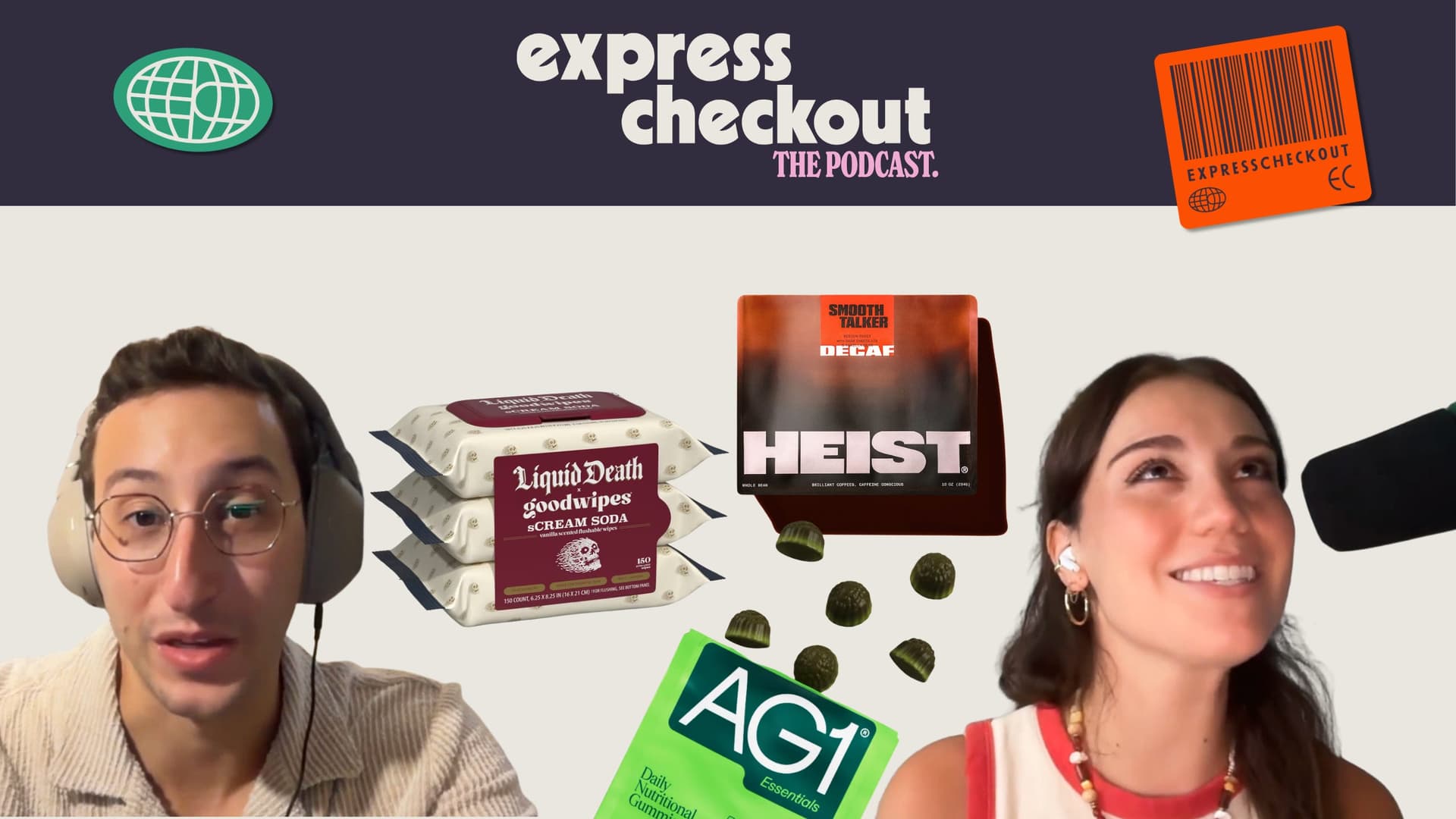
Manicora honey sticks (methylglyoxal), Superb Bakehouse gluten/dairy-free waffles, Heist/DECCA/Explore Cold Brew decaf brands, Liquid Death collabs (MrBeast Feastables soda flavor, soda-scented butt wipes, “pee for AI cooling” cup campaign), Goldfish certified gluten-free crackers, Hall Pass peanut butter cups at Walmart, Ferrero acquiring Purely Elizabeth.
Written by AI. May contain mistakes. Listen to the episode to check what was said.
Chapters
Tap a time to open that second in VOExploring Newtopia Now and Honey
0:46 to 2:29
Discussion on Newtopia Now trade show and the benefits of Manuka honey.
“So they have an immunity and defense one, and I have another one, a body recovery and gut.”
Jenna's Waffle Discovery
2:29 to 3:42
Jenna shares her recent discovery of gluten-free waffles that taste amazing.
“But I do want to shout out something I've been eating this week because everybody in my family has not been eating this week, which is the waffles I wrote about last week in our newsletter for weekly pickups.”
Podcast Preview
3:42 to 4:19
The hosts preview the topics they will cover in the episode.
“I'm very excited to try these because I love the frozen waffle.”
AG1's New Gummies and Market Strategy
4:19 to 5:28
Hosts discuss AG1's new gummies and the market changes in wellness products.
“We're going to cover decaf coffee, how that's having a moment, why Alex Cooper's hydration brand couldn't make it anymore.”
Decaf Coffee: A New Trend
5:28 to 10:12
Discussion on the rise of decaf coffee and its changing perceptions in the market.
“It was the reason that greens powder really took off.”
Emerging Brands in Decaf Coffee
10:12 to 14:00
Exploration of new brands in the decaf coffee space and their innovations.
“This is not about health anymore for Grims.”
Decaf Coffee: Expanding Usage and Changing Perceptions
14:00 to 20:24
Explore how brands are redefining decaf coffee and its market potential.
“But Kaysen actually, even though he's been doing this for six years, he thinks that these brands are still early and that makes for a really interesting story.”
The Challenges of Celebrity Beverage Brands
20:24 to 27:04
Discuss the difficulties faced by celebrity-endorsed beverage brands and their market performance.
“point that beverage is very hard and that beverage is not for the faint of heart.”
Liquid Death's Marketing Stunts
27:04 to 28:00
Unpack the recent bizarre marketing strategies employed by Liquid Death.
“It looks like she's a consumer of Sipmargs, but consumers have this understanding of she's being paid to do that as opposed to she's putting her own money into a business that she uses and thinks is great.”
Weird Product Collaborations
28:00 to 29:00
Explore bizarre product launches like cream soda butt wipes and their implications.
“flavored like Feastables peanut butter cups.”
Show all 22 chapters
Liquid Death's Controversial Campaign
29:00 to 30:20
Discuss the wild marketing strategy of Liquid Death involving AI data centers.
“peaches and cream soda scented tushy wipe those also smelled really weird using them was a bit jarring.”
Thoughts on Liquid Death's Campaign
30:20 to 31:30
Share perspectives on the effectiveness and reception of Liquid Death's unusual campaign.
“But then things got weirder because yesterday, Liquid Death launched a marketing campaign that is truly so freaking weird.”
Goldfish Launches Gluten-Free Crackers
31:30 to 34:10
Goldfish introduces gluten-free cheese crackers after years of consumer demand.
“So maybe they'll see some sales on that.”
The Rise of Low-Calorie Candy
34:10 to 36:10
Discuss the new candy brand Hall Pass and its low-calorie offerings.
“they could have formulated this in their sleep.”
Market Potential for Zero Sugar Options
36:10 to 40:10
Examine the market demand for zero sugar, low-calorie candy options and their implications.
“Hall Pass is a low calorie, zero sugar candy brand that was made possible by EPG.”
Ferrero Group Acquires Purely Elizabeth
40:10 to 42:00
Explore Ferrero Group's acquisition of Purely Elizabeth and its implications for breakfast foods.
“And clearly Ferrero Group thinks that breakfast is the most important meal of the day because this comes less than a year after them buying W.K.”
Kellogg's Acquisition of Purely Elizabeth
42:00 to 45:18
Discussion on the implications of Kellogg's acquisition of Purely Elizabeth.
“So they're buying this fast-growing brand, this breakfast platform.”
Insights from Raindrop Agency
45:28 to 50:55
Jock Spitzer discusses the journey and strategies of Raindrop Agency and their work with brands.
“We have a very fun and special guest, Jock Spitzer.”
The Joy of Consumer Products
50:55 to 56:00
Exploration of how brands create joy and identity to enhance consumer experience.
“were creating that showed people a new way to experience health and wellness through a daily dose of joy.”
Selling Joy Through Unique Marketing
56:00 to 1:00:08
Learn how brands like Dr. Squatch and Grooms communicate joy in their marketing.
“That is very, very, very valuable because there is no brand or product out there that delivers more daily joy to people trying to get healthier than Grooms.”
The Role of AI in Creative Agencies
1:00:08 to 1:02:12
Explore how AI is being utilized in creative processes and the associated risks.
“I love that idea of like, just catch someone at the point of trying really interesting stuff.”
The Essence of Human Joy in Marketing
1:02:12 to 1:03:11
Discuss the importance of human experience and emotion in marketing compared to AI.
“has it embedded within it certain ones and zeros that allows them to flag it as content that's being generated.”
Transcript
Automatic transcript. May contain errors.0:00Welcome back to another episode of the Express Checkout Podcast. I'm Nate Rosen.
0:05Jacques Spitzer:I'm Jenna Mopsovitz. And I am in Denver, Colorado for Newtopia Now. What is Newtopia Now, Nate? What is Newtopia Now? Thank you for asking. It is another food and beverage and beauty and skincare trade show. It is part of New Hope, which also puts on Expo West, which is the biggest trade show of the year for food and beverage nerds. This one kind of replaced Expo East, but this one focuses a lot on earlier stage brands, much more leaning into the natural products. Like I have some, I already got some samples. The show didn't even start yet. I have some Nannikora honey sticks. These just launched at Whole Foods.
0:52These are their infused sticks. So they have an immunity and defense one, and I have another one, a body recovery and gut. So it's got their Manuka honey, elderberry, echinacea. Love.
1:08Jacques Spitzer:Pretty good. If anyone wants flavored functional honey. Yeah, Manuka honey. I feel like Manuka honey had a moment a few years ago, but the Manicora brand is keeping it alive. And yeah, Manuka honey is this special honey that has a lot more health benefits. What's the number that they have on it? It's like - M-G-O. I have not done any research, but I know higher is better. Okay, I found the answer. It's methylglyoxal, which is a natural compound found in Manuka honey that gives the honey its unique antibacterial and healing powers. I love how if I just said methylglyoxal, people would be like, chemical, don't want it, don't want it.
1:50Jacques Spitzer:But it's actually a natural compound that's found in the honey, and the higher the better. So yeah, that's the antibacterial and quote-unquote healing powers, thank you, Gemini, is what people add manuka honey to their diets for. I'll let you know how I feel. I mean, trade shows are where people get sick. There are so many people in one spot, and you're actually, like, you're all sampling food, so the germs are rampant. So if you don't get sick, we can... We're all just masticating in front of each other. It's a mess. Love that. But yeah, if you come out healthy, we'll say that's a testament to Manuka Honey and absolutely nothing else.
2:26And then Manakura can sponsor this podcast.
2:28Jacques Spitzer:Thank you so much, Manakura. I'm not there. I'm on a little family trip. The pod doesn't stop for a family trip. But I do want to shout out something I've been eating this week because everybody in my family has not been eating this week, which is the waffles I wrote about last week in our newsletter for weekly pickups. I found the best gluten-free waffles on the market. I am not gluten-free. I love gluten. Gluten me up. However, these waffles are called Superb Bakehouse and they're in the freezer aisle. I have not had frozen waffles pretty much since Eggo, where I was gravely disappointed as a child by soggy waffles repeatedly on a daily basis.
3:08Jacques Spitzer:And I came back to Frozen Waffles exclusively to try these and they are so good. They're like Belgian style waffles. So they're like thicker, a little smaller, really crispy on the outside, fluffy as heck on the inside. Superb bakehouse. I am obsessed. I have not put everyone on my family on them. And again, I am not gluten-free, but they are gluten and dairy-free and no added sugar. Super simple ingredients. And they taste like an indulgent waffle. And I can't believe they came out of my freezer. So I feel the need to talk. I've been telling everyone about these freaking waffles and I have, I don't even care about waffles.
3:43Jacques Spitzer:So that's pretty crazy. Wow. I'm very excited to try these because I love the frozen waffle. I grew up on Eggos. I love the mini French toast ones. Those were amazing. I'm one, I'm probably going to buy some Eggos when I get home, but also I will be buying these too. I think you have to, and you'll have to give us all of your favorite bites from the show. after. Oh yeah. Don't you worry. Can't wait to hear. Don't you worry. But today we have some stuff to cover. So as always, we're going to cover the news and consumer brands, CPG, wellness. We're going to cover decaf coffee, how that's having a moment, why Alex Cooper's hydration brand couldn't make it anymore.
4:35And stick around to the end for a great interview with Jock Spritzer, CEO and Chief Creative Officer of Raindrop, an early partner in two of the brands that we're actually talking about today, Groons and Heist. But first, let's dive in to the news of the week, shall we let's do it so as we've been saying in our newsletter in our social posts at family dinners everything is a gummy now and so is ag1 so ag1 this week launched their own take on daily greens gummies. So think Grooms, which is really funny to compare AG1 to Grooms when we were comparing Grooms to AG1 for so long. Yeah.
5:32Jacques Spitzer:AG1 was the original greens powder. It was the reason that greens powder really took off. And then when Grooms arrived in the market, we were like, oh, this is the brand that's taking greens powder and making it into a gummy. And now how the turntables. How the turntables. And when I first saw this launch, I know we were messaging about it. I definitely made a gut reaction post, but our initial reaction was that it felt a bit desperate from AG1. It felt like AG1 was trying to regain this market share that it had lost to brands like Groons and Bloom Nutrition, and maybe at least like share of mind.
6:10I don't know if it It was really explicitly market share, but it lost a lot of momentum or it felt like it lost a lot of momentum to Grooms, to Bloom Nutrition, and even to some other brands that launched products that made this new wellness scene that has been blowing up a lot more portable, a lot more snackable, a lot more fun for all these new consumers. And many of these consumers who are buying Grooms and Bloom Nutrition, they want to participate in the wellness world, but probably felt that AG1, formerly Athletic Greens, had this barrier to entry that was hard to get past. It was overly clinical.
6:53It was literally one note. It was one product for a long time. It was just this greens powder. And look, plenty of people tried it. They did not like it. They did not like the taste. They did not like the format. They didn't feel like it was, and I agree with this too. I didn't like the taste. I didn't think it was even like a habit that I could really maintain that much. I did for a minute and then I like it just stayed in my pantry. And I think, I actually think this is a pretty good move for them.
7:23Jacques Spitzer:Yeah, I think it's really interesting. As you pointed out, AG1 or yeah, formerly Athletic Greens had exactly one product for, I want to say 10 to 15 years. And then this was the first year that they introduced a new product and now they've introduced three new products. So there's a lot going on there and clearly they feel some pressure from the wellness industry at large to innovate on format. One of the interesting things is that, yeah, this is like now a portfolio brand in that respect. So earlier this year, as we mentioned, they launched something called AG1 Next Gen and AG1 Pro. So AG1 Next Gen was like their flavored versions of Athletic Greens powders.
8:03Jacques Spitzer:And then AG1 Pro includes five grams of creatine, which launched in June and was positioned really for these wellness maximizers. So now they have everything from gummy supplements, which really we associate with just the average consumer who might be like a little bit interested in improving their wellness, all the way to something that they're marketing towards a pro or the biohackers of the world. the people who found out about about ag one through andrew huberman's podcast so this has been really interesting to think about it more as not as just like this is this isolated gummy launch that's copying grooms which i know grooms loves that narrative they put out a fake ad with lisa renna about that it was amazing it was my favorite ad ever multiple people texted it to me it was like did you see this i was like of course i see saw this it's lisa renna and a CPG brand that I like.
8:53This is so much fun.
8:55Jacques Spitzer:It's so fun. But the accusation that this is just like a straight up copy of Grooms is like, they should do that from a marketing perspective. But I don't think they really believe that. They didn't invent gummies. They took from AG1 for greens. So I don't think they really believe that. But they were accusing AG1 of copying them. But I think when you look at it more from this POV of the portfolio brands, as their CEO Kat Cole explained, it is about making AG1 accessible to the new wellness consumer and accessible to the biohacker health person. I'm really interested to see where AG1 takes their gummies because they could stick to their MO of there being a single skew of this, or they could actually copy Grooms and take the Grooms approach, which Grooms really started as the reputable gummy choice.
9:47They were really talking about how they were focusing on ingredients.
9:52Jacques Spitzer:They were focusing on being the greens, like the best all-in-one gummy supplement on the market from a nutrition panel perspective. And now they've really leaned away from that and focused more on flavor, collabs, and cultural relevance more broadly as their differentiator. Just look at it. They just collaborated with the Minions. They made a Popsicle flavor for America's 250. This is not about health anymore for Grims. Yeah. So I hope AG1 sticks to what it knows by staying with the science first POV instead of going into this like fun, silly, gummy thing that Grims is now doing. And that's how they'll stick apart from each other on the shelf.
10:32Yeah, I think they'll stick to their white lab coat and scientific nature. And I also actually think it makes a lot of branding sense that they went with a very standard mold for their product to keep it very serious feeling, but still fun because it's a gummy. So just as wellness has entered the world of gummies, it is also appearing in the world of coffee in an interesting way. And Jenna, you did a deep dive this week that I loved and hated because this deep dive was about decaf coffee, which I am not a fan of because I want all of the caffeine possible. But ignoring my personal opinions on decaf, Jenna, let's talk about it.
11:30Jacques Spitzer:Let's talk about it. Yeah, it's interesting because we've been talking so much about coffee brands bringing added function to the coffee set or protein brands bringing coffee to their sets. Whether that's adding protein to coffee, ready to drink coffee, adding L-theanine to coffee we've been talking a lot about, which is supposed to help with removing jitters associated with coffee. So we've talked a lot about coffee from an additive perspective, and now we're talking about it from actually removing function entirely. It's almost like this anti-function movement. of decaf. So the catalyst for writing this deep dive was that there was a brand that launched this week, Stephen Brunner, who was the former co-founder of Corksicle, that water bottle tumbler brand.
12:13Jacques Spitzer:They were founded in 2011. So they've been around for a long time, super successful. He just launched his first CPG brand. So he is getting into the world of food and beverage with Heist. And Heist is a premium decaf coffee brand. Premium being the keyword here because decaf has a pretty bad reputation and his goal is to reframe decaf as a taste first, high quality category, not just an afterthought to the rest of the coffee category. And he is one person innovating in this space. Heist is a really cool brand and their branding is stunning. But he's not alone in this. There have been a few launches that we've been tracking on specifically in the decaf coffee space.
12:59Jacques Spitzer:One of them was a brand called Tranquila, which now is rebranding to DECCA, D-E-C-C-A. They are making canned, ready-to-drink decaf lattes, both regular milk and oat milk. All Day Coffee Company also has decaf cold brew options. those are recent entrants but I was really excited to write about this because we have known someone who's been in decaf coffee for six years and that's Case and Crane who founded Explore Cold Brew six years ago which was the first successful brand to our knowledge that was positioned around leveled caffeine so he had this really high quality decaf ready to drink cold brew can slash also concentrate.
13:43Jacques Spitzer:They make both, but then they all, they made everything from fully decaf to half-caf to full-caf. They even had an extra caffeine at one point, which they have since cut. And interestingly, I've learned from Kacen that's because it was competing too much in the energy drink space, which is a beast of a space that most coffee brands do not want to compete in. Coffee is competitive enough, but it's really interesting to see someone be such an early entrant like Kaysen with Explorer Cold Brew literally more than half a decade ago and then watch their impact finally trickle in with some other brands joining them.
14:20Jacques Spitzer:But Kaysen actually, even though he's been doing this for six years, he thinks that these brands are still early and that makes for a really interesting story. So it's like, okay, then what are they selling? What are they selling if they're all so early to the game? So after speaking to Stephen from Heist and Eric from Decca and Kacen, I learned that these brands are not really trying like other categories to tell you to replace something in your routine or pitching a function. They're actually really trying to expand the usage occasions for coffee as a category and remove negative perceptions around decaf because, as I said, decaf has a really bad rap.
14:59Jacques Spitzer:People who have tried it usually think it tastes worse than normal coffee, and they might associate it with the chemical solvents that are used to decaffeinate the products. So these brands are all using what's called a Swiss water process to decaffeinate. So it doesn't involve a chemical process. It's just water. And it's also the only certifiably organic process. So that's a really key reason that these brands are using them. but that's a big goal to expand the usage occasions and remove all of these negative perceptions around decaf and create a market in doing so. I think the best way to understand this is to look to heist's tagline, which is coffee without a curfew, betting that the most compelling case for decaf is the second half of the day.
15:45Jacques Spitzer:So when I say expand usage occasions, I mean something like an espresso martini, a affogato after dinner, a late night cappuccino, not telling you replace your morning coffee, but instead saying here are other ways that you could be taking this beverage that you love. The second most consumed beverage in the United States after water, by the way, and incorporate it into your lifestyle at a different time of day. Yeah. And we're seeing that sentiment across other brands too. Eric Gonzalez, the founder of DECA, said his goal for DECA decaf, his RTD lattes, is not to replace your morning cup of coffee.
16:26But like we were saying with Heist, owning the moment later in the day, afternoon occasion, and even position it against soda and seltzer. And I think in general, too, we've been seeing a lot of people just want lower caffeine. They want lower caffeine or no caffeine.
16:46Jacques Spitzer:So people are looking for lower caffeine or no caffeine in theory, but the numbers haven't really matched that yet. Only 12 % of US coffee is made up of decaf sales. That's really small. It is up from 9 % of last year. So it's growing. But this demand that we see in our wellness-focused bubbles around people trying to have less caffeine in their lives is not really reflected in the mass market consumer. So what needs to happen, and this is something that Kason and I talked a lot about, is that this category needs to be pulled into the mainstream by something. There's usually some kind of trend catalyst that causes something.
17:29Jacques Spitzer:Like some people were aware of seed oils, but we really needed Maha and RFK to scare the living shit out of everybody and make them think seed oils are bad for no seed oil products to take over the shelves. This is an interesting opposite pattern because there isn't enough out there that's like a trend catalyst for decaf. Yes, people are hearing that maybe they're like wearing their aura ring or they're wearing their whoop, which was actually Stephen's founding story for Heist was his whoop was telling him that when he drank coffee, he was sleeping worse. These founders, they're having these personal experiences that are telling them I should change my coffee consumption habits, but there hasn't been like a trend catalyst on a macro scale yet that's told consumers that it's all been these like individual anecdotal experiences so far the product is arriving before the demand and so the product's going to have to create the demand which is why taste is so important in this category because they need a reason to want to reach for these products like it's all good and well to say we want our ready to drink decaf lattes to replace a soda okay it needs to taste just as good or better than the soda that I'm having.
18:38Like I want, I need to enjoy this product if it's not
18:42Jacques Spitzer:providing a function. So it's a big barrier that they have to get over. They have to show consumers a want that they don't know they have yet. And they have to kill the stigma that decaf tastes bad generally by pouring something that just tastes good. And that's a big barrier. It's a huge bear. And I think what Heist is doing is really smart by leaning into a fun premium brand built around decaf, not built around coffee, built around decaf coffee. And hopefully with the experience of building up Quirksicle, which was very good at marketing itself, it was the It Water Bottle, at least in the suburbs for a while, I think Heist will be able to get there and help get decaf coffee to where it needs to be.
19:30And our Instagram post from the other day where we included heist the comments were like thank god i like coffee but i don't want
19:38Jacques Spitzer:the caffeine and it's like of the people who are already conscious and are swapping like maybe they're having a matcha instead or a tea instead whatever it is they're doing so because they're like why would i drink bad tasting coffee the association with decaf is so strongly that it doesn't taste good that it's like i'd rather have a different drink entirely than try to have this without caffeine. And so there does need to be this big push from brands that are demonstrating quality first. And I think Heist will definitely be a big one. I'm excited to see what Heist can do to pull up the rest of the category because I've loved Explorer for a long time.
20:13Jacques Spitzer:I think they're doing something really awesome and their product tastes phenomenal, but they needed competitors to show that the category is legitimate. Exactly. This is another proof point that beverage is very hard and that beverage is not for the faint of heart. And we have another beverage story this week. Just one year after launching Unwell Beverage in partnership with Nestle, influencer Alex Cooper is reportedly shutting down her beverage business, according to reporters at Bloomberg. Yeah, the timing is interesting because it came right after the Unwell media company, Media Empire, if you will, got some fresh funding at a$500 million valuation.
21:02Jacques Spitzer:So it's not like the actual media company is doing poorly. My theory is that this valuation came with some theoretical or existing investors who are like, what you're doing is great, but what you're doing is great in media and you probably should not be playing with the brutal margins of CPG. Beverage is not your friend. You got to get out. And they probably wanted Cooper to stick to what she does best, which is media. So I know Nate, you have a lot of thoughts around the celeb side of this. Oh God, do I? So look, yeah, there's probably many reasons why this brand is shutting down. Perhaps it's the taste.
21:46Perhaps it's the beverage market is very tough, as we've been saying. But one thing I think it does, ironically, surprisingly well, is showing that celebrity hype and massive audience do not always translate into a business's success. More often than not, the biggest unlock for a growing consumer brand, especially a CPG brand is not that a celebrity starts themselves or that they're the owner. It's often that they're bringing capital. They bring cultural relevance. They bring a massive awareness engine. They can help open doors, create all these press moments, get in front of buyers, which is a very big thing.
22:28I know a lot of brands who bring their talent that is involved with the brand to the buyer meetings is like, ooh, a celebrity. And most importantly, they can help get in front of your consumers over and over again. And something I was thinking about is that a celebrity investor can almost give it more credibility than if they started it themselves. Because it shows that that celebrity who people trust, who people value their opinion of, that's why they're an influencer, that's why they're a celebrity. Oh, if they're putting money into it, it's the same as them freely promoting it in a similar vein.
23:11And right now, we're in such a world of celebrity brand fatigue. I think there's a lot of commentary, especially online, where people are like, oh god another celebrity brand great but just because you add somebody doesn't mean that it makes them care it could make the brand feel less credible too but i think when these celebrities are used as an amplifier as somebody that brings attention it adds trust to the product especially when there's some product market fit in there it all just feels more effective and yeah i think in this case too yes it's unwell is attached to her overall brand yes the drink was like on set with her but she launched it and disappeared this is this i think fits into that bucket of celebrity brands that they make a product they big splashy announcement their chief creative officer and then they're gone how often have you seen zach efron with kodiak gags He's their chief creative officer or whatever his freaking title is.
24:23They need to be actively involved with the company. Otherwise, just put your money in and be involved when you can.
Read the full transcript
24:30Jacques Spitzer:Yeah, I think there was a concerted effort to incorporate Unwell into her life and make it seem like this is a product that she's using. But it still came across as like it was like inserted in those occasions. It didn't feel like a natural occasion. And I think that's the difference. And I made a video about this and one of the, a lot of the comments were like, the name was bad. I don't want to drink something called Unwell. It's great for a media company. I think it's an excellent name for a media company. It's a Reverend. It's punchy. It really works for her podcast and for the media business.
25:08For a brand, I don't want to, I don't want to consume something that says Unwell. Also the products, not great. Yeah.
25:16Jacques Spitzer:Yeah. And I think that's a big piece of it. And the other piece of it is just celeb hydration brand. There are too many celeb hydration brands. I think it needed to be a different product that she could have promoted in the same way and would have felt a lot more authentic. I don't know exactly what that product would be, but just look at the context of all the other celeb hydration brands in the last year. And they all saw some pretty bad numbers or failed entirely like Logan Paul's prime hydration, which is still exists, but it has seen massive sales collapse, it dropped 17 to 90 % from its 2023 peak.
25:48Jacques Spitzer:That's insane. And then Moss Plus, which was Messi's sports drink, bet you never heard of it because it launched and was discontinued after less than two years of being on the market because Messi didn't really promote it that much. It was one of those just like failed brands in probably the most crowded space right now in beverage is hydration. And so with, again, like within the context of all of these hydration brands launching, all of them having a celebrity face, also just the history of hydration brands being associated with a celebrity, it doesn't feel as authentic as another kind of brand being associated with a celebrity.
26:25Jacques Spitzer:And I know one of the things that you spoke a lot about is investing, celebs investing feels more credible. I completely agree. And an example of that is that Alex Earl invested in Symbiotica, which is a supplement company this week. And she's also historically invested in Poppy. And when you look at that compared to how Sipmargs is kind of her brand, we don't care about Sipmargs. People don't really think, oh, this feels authentic to Alex Earl. It's a little bit, I think you're totally right that seeing a celeb put their money into something shows that they believe in the brand as opposed to we think that the brand is just paying them to be the face of it, which consumers are skeptical.
27:07Jacques Spitzer:That doesn't land as well. She is the face of Sipmargs. She does use it a lot in her videos. It looks like she's a consumer of Sipmargs, but consumers have this understanding of she's being paid to do that as opposed to she's putting her own money into a business that she uses and thinks is great. And that's a pretty distinct difference. There's a lot more we want to cover in depth, but we're going to just do a little bit more of a headline roundup. starting with liquid death because speaking of beverage liquid death is always relevant and it's always so weird and it's actually getting a lot weirder and in the last three weeks we've seen three different really strange stunts come out of liquid death i think the marketing team must be so busy i pity them but it started out three weeks ago with liquid death collaborating with mr beast Feastables, which is his Mr.
27:57Jacques Spitzer:Beast candy brand, on a limited edition soda-style sparkling water flavored like Feastables peanut butter cups. It doesn't actually contain peanuts, so one of their things in the pitch was that it's allergen-friendly and people can experience the taste of a peanut butter cup without experiencing peanut for the first time. I want to try it, but I'm good. This is giving the same vibe as mac and cheese ice cream it's a shtick it's a shtick totally i did try it and i can tell you it just tastes like artificial chocolate it doesn't taste like peanut at all it's not good it doesn't need to exist did i finish it yeah because i was like oh this tastes like chocolate i want to keep having it but it was bad also anyway weird collab but then it continued to get so much weirder actually because last week they launched a limited edition pack of cream soda scented butt wipes with your favorite nate good wipes they smell wild they yeah you got them right my god they smell like cream soda good wipes also partnered with olipop to do a peaches and cream soda scented tushy wipe those also smelled really weird using them was a bit jarring.
29:16They're no, the products the same. They have scented products, but they're like lavender and like Suntal. They're like normal scents, but using a cream scented tissue wipe is a very odd feeling. Yeah.
29:29Jacques Spitzer:And they send it to you with the cream soda. You can drink the cream soda. Oh yeah. And then, but I didn't get the butler. So this is the weirdest part of the sweep of the, this is the weirdest part of the campaign. Honestly, I'm unfazed because I'm like, I've seen soda butt wipes before, which was crazy. That's a sentence. 2026, the year that there are multiple soda scented butt wipes. But the collab includes something called the Butler sweepstakes. And you best bet that is Butler spelled with two T's where one winner of this sweepstakes will get a live-in butler to personally wipe them. Criminally insane.
30:06Jacques Spitzer:That's insane. That's crazy. I actually need to understand the logistics of this. Is it a one-time wipe situation? Do you get multiple wipes? Does the butler do anything other than wipe you? I have so many questions about this really bizarre sweepstakes. But then things got weirder because yesterday, Liquid Death launched a marketing campaign that is truly so freaking weird. They partnered with Jason Kelsey's Garage Beer on a campaign asking fans to pee in a cup, then donate that pee to AI data centers to use instead of water for cooling. There's been a lot of uproar around how AI data centers use a lot of water to cool down data centers.
30:54Jacques Spitzer:And so this is a weird social impact activism campaign coming from a beer brand founded by a football player and liquid death. I'm like, why are these the spokespeople for water usage and AI? So random. Second of all, please don't actually pee in the cup and send it to an AI data center. Really strange, but also so smart in the strangest possible way. I don't know if it will help the brands, although they are selling a cup that is on their website that's specifically for the use case of peeing in. So maybe they'll see some sales on that. Otherwise, I don't necessarily think this gets direct sales for liquid death or garage beer, but it shows them taking a stance on something that half the country is up in arms over data centers.
31:44Jacques Spitzer:So they're taking some kind of stance against them in the funny, weird way that they do. Yeah. What are your thoughts on it, Nate?
31:56it's just wild that we said all of those things i i watched the ad and it just opens with jason kelsey jason kelsey yeah jason kelsey uh just pissing his brains out and it's very jarring i think it's great that they're making a stance they're making a statement I don't know if their audience cares necessarily, but I will say I've been loving what Garage Beer's been doing. They're one of the fastest growing beer companies in the nation. They're the largest brewery in Ohio. So, look, I think it's weird. I think it's fun. I like to see Liquid Death sort of doing more of this than a Pop-Tart collab.
32:44I'd much rather them do the Cards Against Humanity type of activist marketing rather than a silly little cute collab. Like, do a little bit. You have a lot of money and clout and eyeballs on you. Anyways, we have another headline to cover. And this one is great for our gluten-free or gluten-intolerant or celiac friends out there. And we know there are so many of you. We know. So after years of consumers begging, Goldfish, owned by Campbell's, is launching their first ever certified gluten -free cheese crackers. They are hitting stores nationwide in November of this year. And this is not the first major brand to be launching a gluten-free version of their iconic cracker.
33:42Because earlier this year, Cheez-Its launched a gluten-free version. Also, after consumers for years were begging for them to make one. I saw it on shelf recently and I was like, oh, this makes me happy. Our celiac friends can eat. And sure, these companies can say they wanted to take their time and make the taste exactly right. Yada, yada, yada. But come on. Let's be honest here. They're massive businesses making billions of dollars a year with massive R &D teams. they could have formulated this in their sleep. This could have and should have come out the second the gluten-free wave of products were happening, which Jenna, I think when we were in high school, I remember all of a sudden there were like all of these gluten-free brands and I was like, where are the big guys?
34:31It's all these not great tasting ones.
34:33Jacques Spitzer:No, it's crazy. And it's like, even if the reason was it took a long time to formulate and make it exactly the way that they wanted to, that reflected the original product, whatever they say their reasoning is, there have been so many great gluten-free brands that have launched in the recent years that maybe if the issue was they needed gluten-free processing facilities that they don't have. Okay, buy, literally buy a brand. You're Campbell's. Buy a brand, buy their manufacturing facility, and make goldfish on it. I don't think it needed to be that deep. So it is really crazy that it took so long.
35:06Jacques Spitzer:But also, I'm really excited because there's something about, I know this isn't what they intended and I don't want to give them too much credit, but the fact that it was delayed makes the opportunity for nostalgia a little bit stronger because a lot of celiac folks or people who were diagnosed later in life that grew up on goldfish probably haven't had goldfish in years and years. And so it'll make it all the more enjoyable and nostalgic and impactful when they can finally try them again. And hopefully they do taste exactly the same. I'll try them. We'll see. I can try them side by side because I'm not gluten intolerant.
35:38Jacques Spitzer:Flex. Yeah, we're better than you. But it is really crazy how long this took. And in other snacky news, the David Protein founder is at it again. Peter Rahal, who is the former founder of RxBar, current founder of the ever-controversial David Protein, just announced his latest venture, which is under the same parent company of David Protein called Medici and he's working on this with the Stuffed Puffs founder, Michael Tierney. It's going to be a brand called Hall Pass. Great name, by the way. Hall Pass is a low calorie, zero sugar candy brand that was made possible by EPG. EPG, the ingredient that also makes David Protein Bars possible, which is the plant-based modified fat that tastes like fat, but doesn't get digested by your body like fat and can make a product extremely low calorie, high in the David protein example, high protein to calorie ratio.
36:41Jacques Spitzer:In this example, just low calories, zero sugar candy. Yeah. Without adding any extra fat calories. So hall pass is they're really promoting their peanut butter cups, which will launch nationwide at Walmart. And I think this is really interesting. It's going to be available later in August, they are priced just a little bit above Reese's. So that's two peanut butter cups in a package priced at$2.69. And that looks pretty different than David's strategy, which was a really premium priced bar to launch these products at a similar price point in Walmart shows that this is going to be a little bit more of a mass market approach for the Medici brands.
37:23Jacques Spitzer:Nate, what are you thinking about Hall Pass? This is going to crush it. This is going to do so well. I don't think there's enough of a cohort who care enough about EPG or the EPG acquisition situation that will sway consumer demand for this. I think the pricing strategy and the launch strategy in Walmart is incredibly smart. These look pretty good. This is very appealing. And if it tastes as good as the brand says it does, this will absolutely crush. And honestly, if I were some of the better few, especially the chocolate brands on the market, I would be a little concerned. Because candy at the end of the day is a mass market product.
38:18There's very few opportunities to make it premium. there's there's very few premium candy brands to be honest yeah you want it to be mass market and that's their positioning in such a smart way to do just that and launching with a peanut butter cup is the right move totally who doesn't love a peanut butter cup i think what you said around
38:40Jacques Spitzer:there not being like a big enough cohort that cares about epg being this scary ingredient or them acquiring epigee and there was a whole scandal around that we've spoken about a lot before Or to the same point, I think there's a really big cohort of people who just want lower calorie or lower sugar or no sugar versions of things that they like. We talk all the time about the better for you candy brands that are using dates to sweeten their products or are slightly lower calorie or slightly lower sugar. But as much as that cohort is large, I think there's a much larger tam of people who want the lowest calorie possible, zero sugar option.
39:17Jacques Spitzer:It's also for some people, it's more than just a preference. It's a necessity. If you have diabetes, this is a product that you would absolutely be reaching for. That's why the sugar-free candy section has existed for a while, but those products kind of suck. And this is a really good alternative to some of those that is evidently at the same price point. So as much as in our bubble, we're like, what about better-free ingredients and no fake ingredients and whatever? I think mass market, much bigger opportunity for zero sugar, lowest possible calorie candy. Yeah. And one last thing on this story, no protein.
39:56No protein. This is not like a horrible, strong bull situation. This is just low sugar candy. And respect. I respect that. they could have gone they could have gone the protein route and they didn't which is nice to see
40:14Jacques Spitzer:yeah i don't think candy necessarily needs protein as much as i love horrible's torables and i do this is really it's really good i really like it it's really fun and really satisfying for our last story of the week this is a big one and loosely related to candy funny enough Ferrero Group, the global giant behind brands like Nutella and Kinder, is acquiring Purely Elizabeth, the 17-year-old Boulder-based Better For You granola and oatmeal brand. And clearly Ferrero Group thinks that breakfast is the most important meal of the day because this comes less than a year after them buying W.K. Kellogg for$3.1 billion, which was Kellogg's entire cereal business.
41:07And we were wondering, why Purely Elizabeth? Why would they acquire this right now? Now, it checks a lot of consumer boxes currently. Clean, simple, better for you, and without all being overly processed. It's very simple ingredients. And also, since they've launched their higher protein and high fiber lines, they have seen a lot of success. And a lot of people are looking for protein and fiber. And now more than ever, fiber. And purely Elizabeth has been a leader in the modern breakfast set for a long time. They are the definition of the granola aisle, in my opinion. And they were reportedly doing$200 million in total brand sales last year and doubling their revenue in the past two years and expected to do a lot more in 2026.
42:02So they're buying this fast-growing brand, this breakfast platform. And it seems like they're building a breakfast platform for themselves, which is fascinating, especially to see as breakfast, really as cereal has been on the decline recently. And maybe they can do something to make it come back up. Yeah.
42:28Jacques Spitzer:And it's interesting to see that they have all of these cereals under their Kellogg's acquisition, under their portfolio. But they're like, we still need this. And it shows that they know there's a distinct customer that they can be reaching that reaches for Purely Elizabeth and would never reach for Kellogg's cereal. And so that's very telling in itself. You cannot bucket these things as just like all the cereal aisle because they're too different from each other. Yeah, I think it makes a lot of sense. I think it's really exciting for Purely Elizabeth because they have, again, as you said, been killing it for years and years.
43:02Jacques Spitzer:And this is an awesome acquisition. Of course, everyone on the internet is upset about it because they're saying that now that Purely Elizabeth is owned by a strategic, they will make all the ingredients bad and ruin all the things that made it special. And potentially that might happen, but also it might not. And maybe Ferrero will maintain what made Purely Elizabeth so appealing to consumers in the first place. If they're smart, they will. I don't think we always have to assume that just because a strategic swooped in and purchased a brand means they're going to ruin it. And I think that's a really interesting new rhetoric.
43:38Jacques Spitzer:Consumers were never talking about that or aware of that. And now they are. And there's a lot of influencers that give people that fear, but it doesn't mean that's going to happen necessarily. So it's a performative, I think a lot of that fear is performative. It's like part of this broader like wellness discourse that people are having trying to sound smart about what they're putting in their body and also trying to sound smart about the CPG space. They know nothing about how oftentimes an acquisition, it just means they have greater economies of scale. They have greater distribution. They still might be fully operated separately and still have different mandates from the rest of the company.
44:20It does not mean a business is changing. It can change. It happens, but there would be little incentive for them to acquire it and make it shittier. It happens. We're not saying it doesn't, but like that shouldn't be your initial thought. When you hear about an acquisition, it should be like, congratulations, Elizabeth, you made your bank.
44:40Jacques Spitzer:That and also I think to your point too, economies of scale, like we don't necessarily know that they will change the ingredients and make it worse. But what we do know is the chances are extremely high that the price point will get more accessible. So you should get really excited that people who couldn't access this brand before now can, instead of being like, I only buy brands that are independently. Good for you. You can afford it. What about people who can't? Now they potentially will have an option that is more accessible to them and better for you. So. Snaps. That's how we feel about that rhetoric.
45:15Jacques Spitzer:That's all for today. That's all the news we got for you today. Stick around because in less than 30 seconds, you will be hearing from Raindrop who helped build Grooms and Heist. They were actually the first investor into Grooms. So we get into all of that. Enjoy this conversation. We have a very fun and special guest, Jock Spitzer. Raindrop Agency, a very fun and special marketing agency. Marketing agency is a good way to describe it. Creative agency. Creative agency is a better way to describe it. But first, tell us some of the brands you work with. We work with like over 80 brands. I can name some brands.
45:59You do it. You do it. Let's do it for you. Dr. Squatch, Dude Wipes, Laundry Sauce. My favorite named brand, Poopery. runes, runes, native, runes. So I like to think we work with brands who are looking to punch above their weight and be challengers and be beloved brands, which I think we'll probably talk a lot about today.
46:24Jacques Spitzer:So if you're not a marketing agency and you are a creative agency, can you tell us what that means? What are you doing for some of the brands that we just spoke about? Yeah, it's a great question. I would say in general, every brand's at a different place in their journey. And we're pretty unique because I mentioned earlier, the humble beginnings, I literally started this agency 15 years ago, making flyers and organic social posts for not even gyms, but like personal trainers, like they didn't even own the gym and real estate agents and everything else. And now we've done multiple Super Bowls.
46:58And we did the largest brand launch in Procter & Gamble history with Spruce, which we're super proud of, we helped incubate and start Grooms. And we were the first investors and did all of the brand strategy work and all the campaign work, especially the first year and a half or so. And then now they're one of our largest partners as well, as we're creating so many campaigns for them. I think the best way to describe what we do is we try to figure out for brands, why do people buy? Why do they buy this? I know it sounds simple, but I think most people are more concerned about this is what I want people to know or maybe I can convince them to buy things.
47:36I always say that like if Dr. Squatch, if we took the approach of buy this soap because it's great, no one would ever buy it. What we told men is like, hey, you're worth better soap and this is an option that is worth it. And so if we're saying the soap's worth it, it'll never be. If we say you're worth it, you'll always be. As cheesy as that sounds, it's just true. We create creative literally for every channel from television to, I mean, you get it. You got to be everywhere. We create creative for every channel that breaks through with that lens.
48:07Jacques Spitzer:One of the things I'm really stuck on is you're saying you're helping these brands discover what the reason is that people are buying them and then communicate that message. What does that discovery process look like? And it might be helpful to actually use an example. Gruen's is a fun one because they were acquired by Unilever for$1.2 billion dollars. So when Grooms came to you really early, what were they trying to do? And what was like a reframe that maybe you helped them with? When we were approached by Grooms, we were the first to believe in them, right? Like truly. And it was actually maddening that we believed in them.
48:44And then I remember texting with Chad and so many people passing on. We couldn't convince people to invest with us. It was just like, no, no, no. And I'm like, guys, you don't get, you don't get how big this idea is. Like, this is, this is a massive idea. You know, what we believed in it and in Chad and what he was doing from the beginning, what we didn't know was that he was going to be the best operator we've ever worked with. That didn't hurt. Here's the simplicity of why we were like, oh, this could be really big. One of the biggest drivers for habit is that it spikes dopamine, Right. Right.
49:19And so I'm like, okay, what is the biggest problem with gummy vitamins? Everyone else has been talking about how AG1 is impossible to stick to. That's not why we invested in this, at least from my standpoint. I'm like, the biggest problem with gummy vitamins is that you only get one. I freaking love them. They're delicious. Of course, it's candy. They're delicious. Who doesn't love some candy? Right. What I started realizing was, I'm like, early on, we're like, whoa, this is going to be snackable nutrition. This is going to be something that people are going to look forward to every single day.
49:53People keep saying, I'm like, no, it's snackable nutrition. Happens to be gummies, right? Ultimately, what they're solving is people wanting their greens every single day. Yeah. That's an insane problem to solve. Truly. We wouldn't need the product if people were just like, give me more of that salad every single day all the time. And so the first version of the packaging and everything else was pretty clinical. and when we mapped out everything we really wanted to lean into joy and we wanted to lean into a brand that felt light and fun fit with who you want to be and become because there's already someone that's owning like hey you can choke down something and be hardcore but like for 90 percent of us like we actually just want to be one percent better every day and i think grooms is a perfect brand that executes on that really well.
50:45Interact Brands did the brand redesign on it. They nailed it. From zero to a hundred million, it was just pumping behind these assets that we were creating that showed people a new way to experience health and wellness through a daily dose of joy. And they've since expanded it quite a bit. When we tap into people's why, it broadens so much like who sees themselves as the end person for this. And we're no longer selling taste. We're selling identity that you are the kind of person that listens to the, that subscribes to express checkout that listens to this show. And I'm not going to lie. If you're still listening right now, I think I know a lot about you, even though I've never met you.
51:30Jacques Spitzer:Something I want to dig into this idea of building something aspirational. I think a lot of brands have heard that soundbite and they're like, I know I want to build something for what people want to become, but they don't necessarily know how to translate that into assets. So like, for example, I feel like oftentimes I see a brand that I'm like, oh, they're trying so hard to be a lifestyle brand. They're a supplement brand, but all of their pictures are like a fit woman on the beach and it doesn't translate. There's like this awkward disconnect. how do what does translate what is how do you build something aspirational that's not shoving this idea in your face and actually feels like relatable and can translate to the potential consumer what we consider to be aspirational is a moving target i think that's actually one of the trickiest parts of anything and i'll give you a great example i'm seeing this happen right now with nike and new balance as well as with lululemon and viore and aloe right where Nike built itself on being the top, the premier.
52:33And it was like, we're going to own everything that's aspirational about being an athlete. We're going to, we're going to own effort and greatness and we're going to do it over and over again. And then along comes New Balance. And this is why, this is why I always crack up because most people, they're always worried about their, like this competitor that's like you know the adidas or the other big players and i'm like no you gotta be worried about new balance because new balance comes in and they're like we got nothing to lose and the day to me the day that everything changed was when they signed kawaii leonard god that was weird it was so weird he's like self-admittedly weird and then over time though they they were a first mover behind otani and they were first mover behind you know now Cooper Flagg and they keep making these bets almost you could call them kind of like moonshot kind of bets on different athletes and different pieces of culture that are rapidly becoming the new aspiration and I think that's the the give and take of things it's like well aspiration used to be how great can you be and how hard can you try and then I feel like new balance is coming along and they're like aspiration is looking good without looking like you're trying too hard which is the give and take in the pool of everything and i think lululemon's going through a similar thing with the viories and the aloes of the world different reasons but i bring it up to say that aspiration is this very much moving target just as much as fashion is i think i think you could say fashion and aspiration are linked in the sense of what's considered aspirational any given moment is constantly shifting what you're probably feeling is that when someone's trying to be aspirational in a way that feels 10 years ago, it doesn't work.
54:23Jacques Spitzer:That's such a good point. Something that I'm interested in that I assume it wasn't surprising from your end, but from our end, it's wild to see that Dr. Squatch acquired 1.5 billion by Unilever, then Grunz acquired 1.2 billion by Unilever. I know you mentioned one of the reasons that Grunz wanted to work with you is because they saw what you did with Dr. Squatch. Can you, I mean, I don't want to ask you to like compare the brands, but I am interested. They ended up seeing a really similar trajectory in a lot of ways. What do you think that was? And was that something that you saw internally? Were you speaking to the same customer when you started working with Grunz or what did some of those similarities or differences look like?
55:02It's a great question, Jenna. Here's what I'll say. I believe that the ROI of joy is infinite. I believe that we work with a lot of premium products. We work with a lot of things. I mean, I constantly think about, wow, like we sold$9 bars of soap to men through the internet when you could buy a 30 pack of soap for$12.99 at Costco. And people were happy to do that. We love when we have the opportunity to turn what is a mundane daily occurrence into something that sparks joy. Right? And I think we did the same thing with Native. I mean, we grew them by like a billion dollars, right? If you take something that people have to do anyway and you infuse it with joy, both through the product, but also through their experience with it and the context that you tell them in advance that you're going to have.
55:56And then when they find themselves experiencing it, it's like you're paying off on the promise. That is very, very, very valuable because there is no brand or product out there that delivers more daily joy to people trying to get healthier than Grooms. So it's like, how do you, that's how you win. I'm like, they're delivering the most joy. Obviously a ton of benefit too. Name a soap company delivering more joy to men in this country than Dr. Squatch.
56:25Jacques Spitzer:But that's on a product level. And then I'm like, just so fascinated in how you communicate, because that's a really hard thing to communicate. This will bring you joy is like, okay, sure. What does that actually, I know Grunz, a lot of kind of what got them on the map is really great UGC. I'm curious, what were some of the, like more, from a more tactical standpoint, what were some of the tactics that you were able to use that communicated this joy that you're describing in either Dr. Squatch or Grooms. Yeah, we would never say this is going to make you happier. Because then it doesn't work because it doesn't make you feel happier.
56:59It doesn't make anyone feel happier to hear that, right? What Dr. Squatch did with this advertising was it said, hey, like, so one of the one of the biggest opening moments was, you're not a dish with like sad soap on it. Smash, you're a man, right? And it's like, oh, like, that's interesting. You're right. I'm using, and the next line is like, you're using like the same type of detergent we put on dishes to wash your body. That's crazy. And then lines like, are you still using the same bar of soap that your mommy bought for her little man? It's funny because so many people are like, oh, I've never thought about my soap.
57:38I just buy whatever I've always used. And so that disrupts that thing. And so when you talk about, when I talk about we were selling joy, it's like, because the advertising itself was funny and clever and made people feel like they were discovering something they felt something that they did not feel with a standard bar of soap you create a context for which people are going to enjoy it with grooms like if you go back and look at like some of the very very early long form ads that they ran super heavily on on especially on YouTube, the, it was, it's a completely, I think that's one of the interesting things.
58:14People see a Dr. Squatch work and it's like crazy and bombastic, but it doesn't have to be that. It has to connect with people on who they believe they are trying to become. So when the Groon's ad, the one that really connected with people was this woman, she's doing like sit-ups and she's like trying to eat salad at the same time. And it's like, look, like you're trying to be healthier, but let's be honest, there's gotta be a better way. This is hard, right? So it's more, it's funny, but it's empathetic and it connects. And it's like, okay, we solved that. This is all of those things and something that you'll actually enjoy, that you'll actually take with you.
58:48We're building this case for like, oh, this product will work for me in my life and deliver on joy. And so it's like, that's what I'm trying to say is like, we don't tell, no one ever, kind of like being aspirational, like you don't tell people anything. that you have to like, you have to show them that, oh, I've discovered this and it fits into my life so well, because I'm not that 5 % that is like going to choke down something no matter how it tastes or because like everyone, everyone keeps comparing it to AG1. And I'm like, AG1 definitely created the awareness of the market. So not going to lie about that.
59:24But the buyer for grooms isn't just like converting from AG1. It is all the people who are like, I would never, I would never sign up for AG1 because I know I wouldn't get more than three weeks into that. I already know I'm going to fail. And so Grunz is like, you might not fail this, this habit. It's working because people are sticking to it and they are seeing the benefits of it. So that's a very, man, you're asking great questions, but they're all connected. It's like, how do you sell joy?
59:51Jacques Spitzer:Exactly what you hit on is so interesting. It's not, it wasn't showing the person who already had their life together. It's like catching the consumer at the point of trying, not at the point of like, they already are there or not at the point of make you feel bad about yourself. No shaming. We never shame. It's more like, oh, we see you. Cause here's an example of someone trying and you're trying. I love that idea of like, just catch someone at the point of trying really interesting stuff. I wanted to ask one more thing before we close out. I'm sure people are asking you a lot about AI now. Are there good use cases for AI in a creative agency or are you steering away?
1:00:32Jacques Spitzer:What are the watchouts and what's useful? Yeah. Oh, I mean, we're using it. Of course we're using it. There's so many places we're using it, whether it's to accelerate early ideation, whether it's to like, one of my favorite things to do is I'll just close my mind and I'll beautiful mind this shit and I'll just talk about whatever's on my mind and then I'll just I'll talk you know using um oh what's the name of this thing it's worth the shout out whisper flow whisper flow yes yeah whisper flow changed my life so I use whisper flow I just talk talk and then I'm like organize these thoughts into something presentable and it like and I'm like perfect that's a great jumping off point we're starting to use it more and more as we get into augmenting and creating worlds we'll shoot something on a certain backdrop and then we We can extend the world out and like almost like picking things that would have been way outside of a budget from like a CGI standpoint and just being able to bring that into lower budget things where I'm very leery of it.
1:01:31And I think brands should be is we've made a commitment. We use human talent. And I get that. There are a lot of brands that will not use human talent and they will use it for a bunch of things. For instance, imagine, let me put it, Grooms, for example, why in the world would you risk risk your authenticity with people when you're an ingestible product that people have to trust in. The amount of risk involved in creating AI content and having a certain part of the demographic just be like, oh, hell no, is not worth it for a lot of people. And so we're really big on like, let's utilize the tools.
1:02:06That being said, I also think that there'll be legislation that comes out that already is coming out. And then YouTube confirmed that basically AI content has it embedded within it certain ones and zeros that allows them to flag it as content that's being generated. And so I'm just like, we're going to get to a world, we're already in it where it's soupy and there's a little bit of everything. But I think people don't want to feel tricked and they don't want to feel like they're not in on the fact that it's AI. And I think that part of the industry will shift. But ultimately, if you go back and read a book, which I have over here, you probably can't see, from 1905, we're still dealing with the same principles before television, before radio, before the internet on human psychology and how to move them.
1:02:49And the tools just keep changing.
1:02:50Jacques Spitzer:Absolutely. No, I completely agree. I mean, it's, it's tricky because it feels like you can get away with more because even though AI detection is there, like it's getting a little bit harder. Oh, it's scary. Yeah. A hundred percent. It's more just this element of joy is like the root of everything that you guys do. And I, I think that's just like something that AI has not experienced joy. So how, how is it going to know how to translate it? And what, and it's just, it's just like aspiration. What gives us joy evolves. I mean, that's the thing. It's not a static thing. So being with you today is what gives me joy.
1:03:25Thank you for having me. This is, this is so much fun. I hope you enjoyed our conversation with Jax of Raindrop. Make sure you're subscribed to Express Checkout wherever you find podcasts. Also subscribe to our newsletter at expresscheckout.co. Find us on Instagram at Express Checkout. And we'll catch you on the next one. Bye. Bye.
From the publisher
Welcome back to another episode of The Express Checkout Podcast!
This week, we’re talking about AG1’s entrance in the greens gummy space, the decaf coffee movement, and why Alex Cooper’s beverage brand couldn’t make it. Plus, we’re getting into the headlines on Liquid Death’s weirdest new collabs, Goldfish going gluten-free, Purely Elizabeth’s acquisition and so much more.
Stick around to the end for a fascinating interview with Jacques Spitzer, founder and CEO of Raindrop Agency—the creative agency behind brands like Grüns, Native, Poopourri, Magic Spoon, and so many more. We get into what it means to be an “aspirational” brand, and how the best brands are thinking about creative content.
Let's get into it!
The Breakdown
0:00 - What we’re been obsessing over
5:27 - AG1 enters the gummy game
11:32 - The decaf coffee movement is here
20:49 - Alex Cooper’s Unwell Beverage shuts down
28:00 - Liquid Death’s wildest stunts yet?
33:40 - Goldfish finally goes gluten-free
36:10 - Zero-sugar candy from David Protein’s founder
41:00 - Ferrero acquires Purely Elizabeth
46:04 - Interview with Jacques Spitzer of Raindrop Agency
🎧 Love the show? Subscribe to Express Checkout wherever you get your podcasts! New episodes drop weekly.
📧 Get the inside scoop Subscribe to Express Checkout, our newsletter packed with consumer insights, trends, and exclusive content straight to your inbox at expresscheckout.co.
🗣️ Let’s connect! Follow us for behind-the-scenes content, quick tips, and more: @expresscheckout
💬 Join the conversation Have a product you’re curious about? DM us your questions or drop them in the comments—your topic could be featured in our next episode! If you have any thoughts/questions/suggestions, feel free to email us at hello@expresscheckout.co :)
⭐ Help us grow If you enjoyed this episode, please rate and review us on Apple Podcasts or Spotify. It helps other curious consumers find us!
Get full access to Express Checkout at www.expresscheckout.co/subscribe