In short
The Curious Consumer - Episode Summary: What Super Bowl Ads Told Us About Consumer Trends
Episode Overview In this episode, hosts Nate and Jenna delve into the implications of Super Bowl advertisements on consumer goods trends. They explore the significance of Once Upon a Farm's IPO, the challenges faced by established brands from private labels, and other key industry shifts.
Key Topics Covered
- Super Bowl Ads as Trend Indicators (00:00)
- Once Upon a Farm’s IPO (12:45)
- PepsiCo's Price Cuts (23:19)
- Discontinuation of Minute Maid’s Frozen Juice (26:45)
- Creatine Product Controversy (29:58)
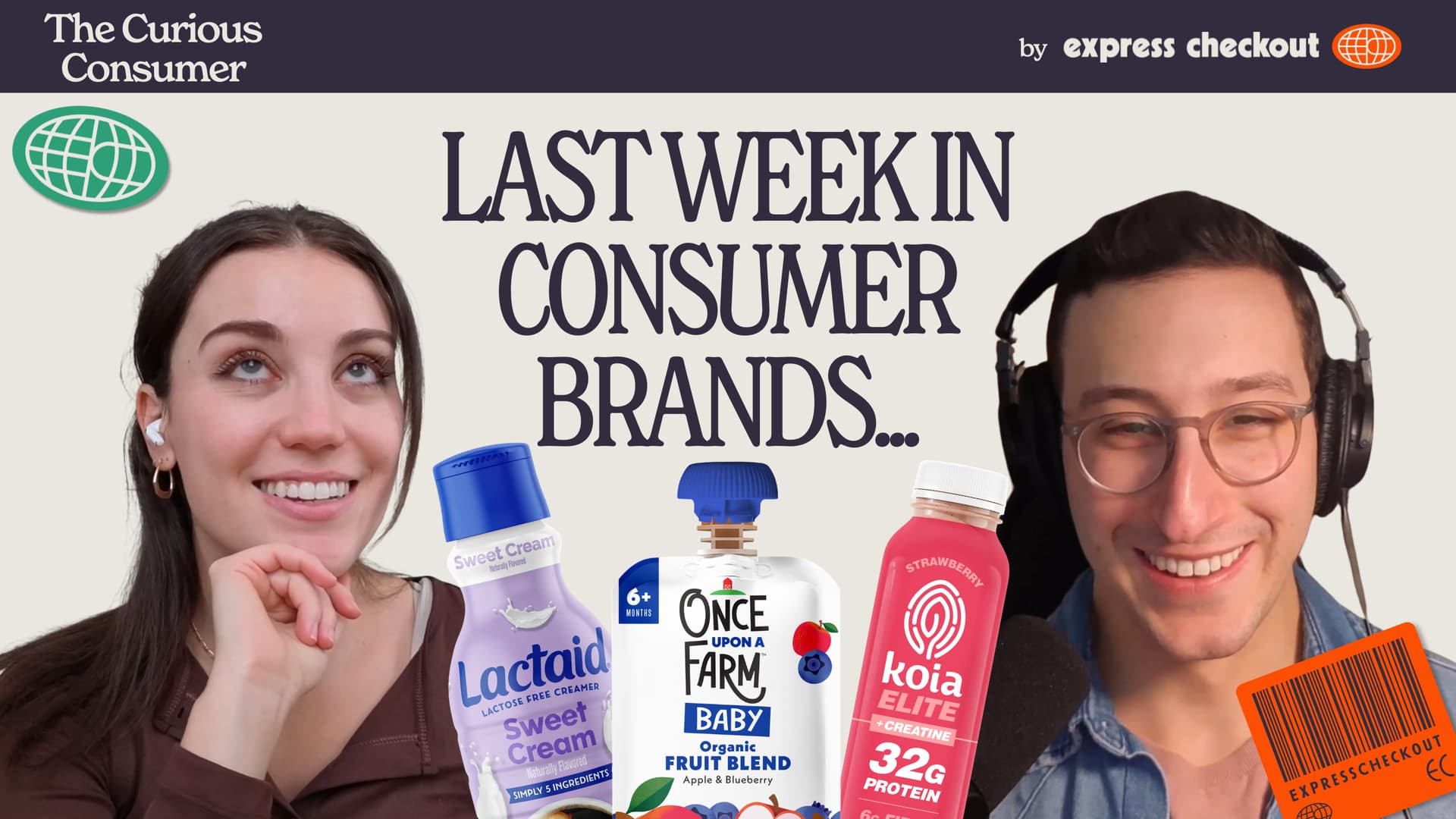
- Lactaid's Entry into the Creamer Market (32:18)
- Bachan's Acquisition (36:34)
---
Insights from Super Bowl Ads
- Super Bowl Ads as Market Indicators
- Investment in Advertising: Brands spend average of $8 million for a 30-second ad, indicating their confidence in consumer interest.
- Consumer Focus: Advertisements reflect trends that consumers are paying attention to and what excites them.
- Notable Advertisements
- Kellogg's Raisin Bran:
- Focused on fiber, leveraging wellness culture.
- Used William Shatner to highlight the product's longstanding association with fiber.
- Oikos Yogurt:
- Shifted focus from just athletes to everyday consumers, particularly women, showcasing protein's everyday relevance.
- Liquid Death:
- Promoted a lower caffeine energy drink, positioning it as a wellness product.
- EOS Fragrance Line:
- Introduced a cake-scented product with a playful, modern marketing approach linked to sensory experiences.
- Poppy:
- Shifted focus from health benefits to lifestyle association, appealing to younger audiences.
- Health Optimization and Wellness Culture
- Brands are increasingly focused on health benefits, with advertisements emphasizing accessibility and education about wellness products.
---
Once Upon a Farm's IPO
Highlights
- IPO Valuation: Launched at a $724 million valuation, raising nearly $198 million.
- Market Position: Represents a rare case of a healthy food brand successfully going public without being acquired first.
- Innovative Approach: Introduced high-pressure processing (HPP) to extend shelf life without preservatives, disrupting traditional kids' food categories.
Impact on Industry
- Increased attention on better-for-you options for children aligns with changing consumer behaviors and parent expectations.
---
Industry Trends
- PepsiCo's Price Cuts
- Market Dynamics: Due to rising private label brands and changing consumer preferences, PepsiCo is cutting prices on Doritos, Lay's, and Tostitos.
- Private Label Competition: The growth of private label products is forcing big brands to reconsider pricing strategies.
- Discontinuation of Minute Maid Frozen Juice
- Changing Preferences: Consumers are moving away from high-sugar products for healthier options.
- Agricultural Challenges: Citrus greening disease affecting orange crops has contributed to the product's decline.
- Creatine Product Controversy
- Koya’s Marketing Strategy: Raised questions about transparency and the effectiveness of their creatine dosage, highlighting potential consumer confusion.
---
New Product Launches
- Lactaid’s Creamer
- Enters the coffee creamer market with a lactose-free option.
- Capitalizes on the growing trend of consumers returning to dairy products while seeking lactose-free alternatives.
- Bachan's Acquisition
- Acquired by Marzetti for $400 million, showcasing the demand for culturally significant food products.
- Marks a trend of traditional brands seeking to diversify their offerings with unique flavors that resonate with a broader audience.
---
Conclusion This episode of *The Curious Consumer* provides valuable insights into how Super Bowl advertisements reflect broader consumer trends in the CPG (consumer packaged goods) landscape. The discussion illustrates the dynamic nature of consumer preferences and the strategies brands are employing to adapt and thrive in an increasingly competitive market.
Call to Action
- Subscribe to *The Curious Consumer* for ongoing insights into the CPG sector.
- Check out the newsletter for deeper dives into consumer trends and brand strategies.
---
For more information, visit [expresscheckout.co](https://expresscheckout.co).
Written by AI. May contain mistakes. Listen to the episode to check what was said.
Chapters
Tap a time to open that second in VOAnalyzing Super Bowl Ads
0:45 to 4:26
Discussion on the significance of Super Bowl ads and what brands are betting on.
“dollars on production and then airing an ad, you probably want to put it on as many channels as you can possibly get eyes.”
Case Study: Raisin Bran's Fiber Bet
4:26 to 7:11
Exploration of Raisin Bran's Super Bowl ad featuring William Shatner and its focus on fiber.
“This time, instead of trying to promote their water or sparkling water, they're trying to promote their new energy drinks, which have lower caffeine.”
Protein and Wellness Trends
7:11 to 11:40
Discussion on Oikos' ad focusing on protein for everyday consumers and Liquid Death's energy drink.
“This one is a pistachio scent and it was a play on the show, the Netflix show, Is It Cake?”
Beauty and Skincare Ads Analysis
11:40 to 14:01
Review of EOS's fragrance line ad and the trends in sensory marketing.
“And that consumer goods are such an enormous industry when you look at something like the Super Bowl and how like what percentage of ad space was commanded by CPG brands.”
The Rise of Once Upon a Farm
14:01 to 14:58
Discover how Once Upon a Farm, co-founded by Jennifer Garner, disrupted the kids' food market.
“People kind of associate Once Upon a Farm with like, that is Jennifer Garner's brand.”
Innovative Marketing and Distribution
14:59 to 18:12
Learn about Once Upon a Farm's innovative marketing strategy that reshaped grocery store layouts.
“And now Ari Raz, for people who know, he is the CEO of Coconut Cult, another iconic CPG brand.”
Consumer Trends in Kids' Products
18:13 to 19:39
Explore how consumer trends and safety concerns are shaping the kids' food market.
“And probably a lot of it thanks to Once Upon a Farm being very innovative in that category.”
Wellness Trends for Kids
19:40 to 21:04
Examine how wellness products are being marketed to children in today's market.
“So they are looking for Better For You Kids products that they can purchase.”
Language of Wellness and Children
21:05 to 22:37
Discuss the semantics of wellness language used in products aimed at children.
“teach kids that gut health is a daily ritual and not a chore.”
Transitioning to New Stories
22:38 to 23:16
Learn about the impending changes in the kids' food space and market anticipation.
“It feels like influencer culture has trickled down to children, and it can be seen as concerning.”
Show all 16 chapters
PepsiCo's Price Cuts: A Reaction to Market Trends
23:25 to 26:17
Discover why PepsiCo is cutting prices on its snack products amid changing consumer preferences.
“So they're cutting prices on all these products, and they're doing it for a couple reasons.”
Coca-Cola's Product Adjustments
26:18 to 28:02
Analyze Coca-Cola's decision to discontinue its Minute Maid frozen juice line due to market shifts.
“From, I was going to say Siete, but that's a Pepsi brand.”
The Evolution of Juice Products
28:02 to 29:50
Learn about the decline of frozen juice concentrates and consumer trends.
“just a main plot point of that movie highly recommend that movie it's a comedy from the 80s but it's also very good at describing commodities futures, which is so interesting.”
Koya's Creatine Controversy
29:51 to 32:26
Explore the marketing tactics surrounding Koya's new protein drinks.
“consumed that product in probably 20 years.”
Lactate's Entry into Coffee Creamers
32:27 to 35:26
Discover Lactate's new lactose-free coffee creamers and market strategy.
“Eventually I think we had lactate ice cream in our, in our freezer.”
Bachans Acquisition by Marzetti
35:27 to 39:15
Understand the significance of Bachans' acquisition in the food industry.
“Simple ingredients and no lactose and name recognition does sound like a formula to do pretty well.”
Transcript
Automatic transcript. May contain errors.0:00Welcome back to another episode of The Curious Consumer. I'm Nate. I'm Jenna. And today we're going to start with a discussion about the Super Bowl ads because the Super Bowl just happened. The Seahawks won. Bad Bunny also won the Super Bowl, in my opinion. In everyone's opinion. I mean, Bad Bunny was the Super Bowl for me. I actually watched no part of the Super Bowl other than a few ads and the Bad Bunny halftime show. Absolutely nothing else. Yeah. Well, also all the ads were airing like weeks before the Super Bowl actually aired. It's just kind of how it goes. I get it. I talk to my marketing friends.
0:36They put a lot of money into this, whatever. Well, that's the other piece of it is a lot of Super Bowl ads only run regionally. So if you're going to be spending millions and millions and millions of dollars on production and then airing an ad, you probably want to put it on as many channels as you can possibly get eyes. True. And we talked about a few of the ads. We did. And our perspective is we're not going to be able to tell you if an ad was good or bad. Like that's just not what we're here for. We do see the Superbowl as a really clear indication of what brands are betting on. So they're spending millions of dollars, as we've mentioned,$8 million was the average ad spent for 30 second ad during this year's Superbowl.
1:19That's a bet. And they're betting on what consumers are paying attention to and what is exciting to them. So when we were looking at the consumer brands that advertised or the super bowl we were like what are they betting on i personally loved the william shatner raisin brand ad so obviously raisin brand legacy brand been around for a while the focus of that brand is fiber and kellogg's is really trying to reframe the conversation especially around raisin brand which is a a like not a sexy brand and a brand that like Like your dad probably talked about and you're like, I'm good. I'll have my honey bunches of oats or something a little bit more fun.
2:02Maybe something with a marshmallow. But they were trying to say like, hey, look, fiber's big. We're one of the OG fiber brands like us and Metamucil. Those are the OGs. They recruited Captain Kirk, William Shatner or William Shat as the joke. The running joke in that ad was that he has very efficient bowel movements. was the underlying theme of that ad. There's nothing new about Raisin Brand. They didn't change the branding. They didn't change the product. It is exactly as is. They ran an ad betting on the fact that consumers are talking about fiber, which they are. And they're like, hey, just a reminder.
2:42We've had this thing that has always had fiber in it. And you should know about it because now you care about it. Exactly. What's cool about that is they used to probably have to do so much work to get people to think like this old school boring brand is sexy. Now, wellness culture has put in the work to tell us that fiber is sexy. So they don't actually have to do that much. I actually think that was so smart on their part. So that was a good one. But we love to talk about how people are always saying fiber is the new protein. We disagree. We think fiber and protein are hand in hand as just the two biggest things that people are looking for on a nutrition label these days.
3:21and some proof in that is that there was also a protein commercial of course there was i like this one because i love katherine han but this this one was interesting usually the oikos ads in the past have been really focused on like athletes or their partnership with the nfl or really just belaboring on the fact that like this is protein this is for athletes this one had an athlete in it i have no idea who the athlete was but i know there's an athlete in it but it was it was just them in the streets of San Francisco and Catherine Hahn had her 30 gram protein Oiko shake and was pushing a trolley that was stuck.
3:59Like it was, I mean, it was larger than life, but it was focused on just like, Hey, like a normal person. Yeah. Catherine Hahn in this case, just being like a commuter and she had the ability to save the day because she's drinking this protein beverage. What's interesting about this is that it's showing this rhetoric around protein being for the everyday person and wanting to achieve strength especially I love that it was a woman it's not just an everyday person but it's an everyday woman who is commuting she's not an athlete and she wants to be strong and I think that that messaging was spot on for the moment that we're living in so that was cool from Oikos and then we had liquid death which always has a crazy marketing budget.
4:45They do something weird. They do something crazy. This time, instead of trying to promote their water or sparkling water, they're trying to promote their new energy drinks, which have lower caffeine. And the whole thing was a surgeon recommending this lower caffeine option so that your head won't explode, so that your head won't explode with too much caffeine. So it's promoting a lower caffeine beverage from this lens of health. Right. I mean, they're making very similar claims other than the caffeine lens to what Celsius has made for many years, that this is a better few, this has vitamins, this is healthier.
5:19But we've seen some other brands launch lower caffeine, energy drinks, and even coffee skews. Huxley is one that comes to mind that we mentioned. They have 90 milligrams of caffeine. And that's their whole thing. There's a lot of people who want lower caffeine who don't want the 150 milligrams plus. They want to reduce the feeling of anxiety that they might feel when they consume a Celsius or an Alani Nu or a Ghost or a Monster or any of those. As the energy drink market continues to rise, I think there will be dedicated brands for lower caffeine, but also brands coming out with their own lower caffeinated versions of already existing energy drinks.
6:04because I think people want them. I think people don't feel like they need the 200 milligram plus of caffeine. Absolutely. And I think what's interesting here too is just the departure from typical energy drink advertising culture. Like usually Red Bull gives you wings. It's all about how you can attack your day. This was more around it being kind of the opposite. It's like, it's not going to give you too much energy. You're not going to be running around with your head cut off. It's more positioned as a wellness product, recommended by a doctor in this case is a very interesting angle to take.
6:39Yeah, the wellness positioning is different. And I remember when this launched, that stood out when they announced that they were releasing the energy drink. The press release and the way they talked about it just felt so much different than the other energy drinks. And obviously it starts with the caffeine amount, but beyond that, just the way they position it and market it is kind of the anti-energy drink energy drink yes exactly exactly so that was an interesting one unhinged per usual coming from liquid death but in a really different way than yeah they typically are unhinged and then we saw some beauty skincare ads as well one that was exciting and interesting to us was eos debuting their new fragrance line hair and body mist hair and body mist it's all hair and body mist these days.
7:31It's all hair and body mist. This one is a pistachio scent and it was a play on the show, the Netflix show, Is It Cake? So basically they're like, should we cut this woman open who's wearing this hair and body mist because she smells like cake and she might be cake. And what this tells us is just like betting on fragrance generally, like Eos is new to fragrance. Fragrance is one of the fastest growing categories or the fastest growing category and beauty and skincare right now. It makes sense that that's where they would put their dollars. The other thing that makes sense to me here is sensory marketing is just really big right now.
8:06And this idea of wanting to smell or taste like an indulgent food. I know Road Beauty does a really great job of this. A lot, they have like a cinnamon bun lip gloss and all of their marketing was this really indulgent, larger than life food imagery. So I think EOS is kind of capitalizing on that. people love this. I still think it has to do with people eating less sugar and restricting generally. They are looking for it in like cheat ways, as in I can smell like cake. I can have my lip gloss taste like cake. I really do think it's all related. And that was a bet that we saw Eos take. Yeah, that was a good ad.
8:45It was effective. The last one we talked about was Poppy. Of course, You can't not talk about poppy. So this ad they had, this was less about them being a prebiotic or even a functional beverage and just being a new soda brand that lives off vibes. That was the whole campaign. It was about vibes. And they had, they recruited Rachel Sennett and the wonderful Charlie XCX. And they had a party with a class because somebody in the classroom was drinking the poppy. And it was all about vibes. And it was very fun. And something we said was the ubiquity of this brand now. It's like not just this health and wellness product that has apple cider vinegar and helps your tummy.
9:31It's bigger than that. Oh, I think that doesn't matter anymore. I don't think that matters at all. They didn't need to make any health claims at this point. People are drinking this beverage regardless. They just wanted to be associated with the cool kids at this point. Like that's it. It's almost reaching the level of like a Coke or Pepsi where like they don't need to sell us on taste anymore because it's ubiquitous. They already know. Yeah. And they're owned by Pepsi. So. Well, exactly. And then the last interesting piece to touch on, I would add that we just did see a lot of things around health optimization and wellness culture generally.
10:09Obviously, hydration from liquid IV, GLP-1 ads. Oh, my God. Up the wazoo. Up the wazoo. Yep. Mm-hmm. Hims and Hers was a big ad. And this one was a little more interesting, I'd say, because their whole positioning was around how they make, I mean, honestly, things like GLP-1s, but other medications accessible to anyone. So their whole thing was like not just for the 1%. So seeing that within the context of all of these other ads was, I was actually really smart of them because it's like, oh, you've probably just seen ads from all of these companies that feel aspirational health optimization wellness culture to you but you don't think you can actually achieve it well you can achieve it with us so i think that was really smart thinking around not it's they like contextualize themselves within the other ads that would be playing there were there's so many like wagovi and glp once it's wild and maha and maha that maha ad was not that was not okay with Mike Tyson oh my god no the messaging was just so horrendous and offensive a wild time so that was a quick summary of the Super Bowl ads again like people are speaking about this in a much more like from a marketing lens in a way that we cannot and that's okay we just were interested in the consumer trends piece of it we're not marketing bros the other final The final thing I'll say on this is Nate and I were talking about the Super Bowl ads and I was like, it's so wild that people still don't know what CPG stands for.
11:48And that consumer goods are such an enormous industry when you look at something like the Super Bowl and how like what percentage of ad space was commanded by CPG brands. Like this is this is a huge piece of our economy. You should know what's going on. it's wild that like people don't know what cpg is and don't understand like why we love it so much at the same time it's everywhere there's so much money and effort and human endeavor that goes into this space like it's crazy and it's constantly surrounds us and it's most of the conversation even that like a lot of the more health focused ads are also like intertwined with the cpg stuff It's just everywhere.
12:35And I want more people to think about it, which is our goal. Which is our goal. Curious consumer. Love it. Love it. Let's go to our first story from the week. I would say a big one and an impactful one. Once upon a farm, IPO'd the New York Stock Exchange. This is a big deal for a lot of reasons. They IPO'd at a$724 million valuation. They raised nearly$198 million in its IPO. They surged 17 % on opening day, which sometimes opening day is a bust. So this is really promising. The reason this is such a big deal is because healthy kids' foods brands, and honestly, just food brands, rarely IPO. It is very rare that we see this.
13:26Most successful startups in this space are acquired by a massive conglomerate before they reach a public market. Like Nestle, Danone, Kraft Heinz. They're going to scoop up these brands, General Mills, before they get a chance to IPO and operate on their own. And this is a case where they did. An interesting added piece of context to this is Once Upon a Farm was co-founded by two people, Cassandra Curtis and Ari Raz. But two years into them founding this brand, they brought on two more co-founders who have a little bit more name recognition. One of them is the actress, Jennifer Garner. So that's a big one.
14:0313 going on 30, Elektra. The Jennifer. People kind of associate Once Upon a Farm with like, that is Jennifer Garner's brand. The other main co-founder that they brought on was the former CEO of Annie's. Annie's like the mac and cheese. One of the first organic kids products to really make it big. Interesting context there is they actually IPO'd, but that kind of gets pushed to the side because really shortly after they IPO'd, General Mills scooped them up. So they are not a public company actually. And after General Mills scooped them, a lot of parents have complained that the quality has gone down.
14:40The focus on organic has gone down. So it must matter a lot to this former CEO of this company to make sure that this doesn't happen to his new company, Once Upon a Farm. So his name is John Foraker, and he is kind of the other main figurehead alongside Jennifer Garner of this brand. It's a beast of a team. And now Ari Raz, for people who know, he is the CEO of Coconut Cult, another iconic CPG brand. This is really just a huge indicator of this growing space around CPG and wellness products for kids. There's a lot of really amazing brands out there alongside Once Upon a Farm that are leaning into this space of really high quality stuff for kids that honestly echoes a lot of the trajectory of adult CPG products as well that has been happening over the past few years that things have just been getting better.
15:29So like Little Spoon's another one that has just been crushing it. I wouldn't be surprised if they IPO at some point. I mean, they have so many SKUs, they have massive distribution. It's a really exciting space. They were just so ripe for disrupting this category from a timing perspective, also from an innovation perspective, they being once upon a farm, they were so innovative in how they actually envisioned the category as a whole and not just where their product fit within an existing category. And by that, I mean, they created a product that was incredibly innovative in itself. It featured HPP, which is high pressure processing, which naturally preserves refrigerated products, extends their refrigerated shelf life, and allows them to not use any added preservatives.
16:14So that was a really big deal. But they knew they had to be refrigerated to include all these clean ingredients that they want to include. And so they completely physically disrupted the kids' aisle by putting coolers into the kids' aisle of some major retailers. They were only two years old when the brand started testing coolers within Target and Kroger and they foot the bill themselves. So they paid to put coolers in Target and Kroger to sell their products, which is betting that a consumer would think to disrupt their normal behavior of reaching for a shelf stable product and go into a cooler at all.
16:53Also that the retailers would be open to changing their floor plan. it's completely changed how things are merchandised and so they started doing this themselves and they were able to prove with the most insane numbers how effective these coolers were and by that I mean they didn't just bring people who were already shopping for baby and kids food into the cooler section of that aisle they brought people new parents into the aisle completely who were never shopping in stores for their kids food they were only making it at home so they saw 10 percentage points of total category dollar growth 61 of that was incremental which means they got more shoppers to enter the category instead of other brands i don't know if i've ever seen numbers like that for any other category and so retailers love these results and then they started paying for the coolers themselves and now the brand has 2800 coolers nationwide why.
17:54That's such a cool brand story because this isn't just a cool product. It literally changed the physical setup of a grocery store. The planogram has shifted because of Once Upon a Farm. I mean, and now there's also just the refrigerated space has taken a whole new life of its own over the past few years. And probably a lot of it thanks to Once Upon a Farm being very innovative in that category. Once Upon a Farm, and I would argue the pet space, also very similar trajectory with farmer's fridge and fresh pet. I feel like really kicked off the same thing, a cooler in the pet aisle and following a very similar trajectory generally.
18:33But that was what's so cool to me about Once Upon a Farm. And there were a few other factors at play that helped them take off, help kids products take off generally. And like the kids category boom at this time. One of them is that there were some food safety crises in 2019 to around like 2024. Reports that were revealing heavy metals in baby foods concerning ingredients. So the clean label project and having a clean label certification, which Once Upon a Farm does, became really important to parents and something that they were actively seeking out. They wanted transparent brands and once upon a farm was ready to be there and prove the safety of their products on the spot i think the other big piece of it is just the timing for millennials becoming parents now gen z becoming parents though both growing up with a different understanding of organic and better for you the other interesting piece is that there are more working parents they're more highly educated.
19:32They are older for the most part now. More values-driven purchasing behavior has been reported. And a lot of them, because they're more working parents, have more time constraints and can't make the products at home. So they are looking for Better For You Kids products that they can purchase. And that probably has a lot to do with this incremental category growth that we saw as well. And now with all these other brands coming onto the market, it's just there's more education being done across the different brands to a wider um a wider selection of of consumers and now there's more money coming in here and there's more innovation so i this this whole like baby and kids product as we put in the newsletter gold rush is i think it's fascinating to me and Obviously, we're also seeing it in people's other kids' pet as well.
20:27And we're also seeing it like beyond food. We're seeing it into wellness. First day, it's got gummy vitamins, Haya. They just launched a kid's daily fiber powdered supplement. And they have a ton of other powdered supplements as well. Grooms, more gummies. this wellness world has blossomed beyond the adults and into their children as well. The Haya new daily fiber powder I thought was especially interesting because they positioned it as they put it in. It's a very cute container, actually. It is very cute. Their branding is really sweet. I love their branding. But the container is specifically designed to, they said, teach kids that gut health is a daily ritual and not a chore.
21:11And that is such adult wellness culture language that I almost feel like they just like slightly tweaked it to use the word chore, which feels a little bit more kid like. It's so interesting to see this encouragement of ritualization. I almost feel like even that word I just wouldn't have come across as a kid. And I don't think my parents were considering my daily rituals either of like maybe habits like brush your teeth, but not like the ritual of taking fiber every day. It's very health optimization, wellness culture coded for kids. Yeah. I mean, I think it was always there. Like we have Flintstone vitamins and random calcium chocolate chews and whatever, but it wasn't the same.
22:01It was, it felt like a, like a second thought, like an afterthought. It felt like an afterthought. It didn't feel like something that was deliberately inserted into our, our being us as a child's routine. Yeah. Well, getting fiber in was like my mom making sure I had an apple, which probably is the same amount of fiber as whatever is in this. Yeah. I think of course routines have always existed. Yeah. It's not that. It's the language. I'm very hung up on the semantics of daily ritual just doesn't feel like kid-focused language that I grew up in. It's for the parents. It's for the parents. It feels like influencer culture has trickled down to children, and it can be seen as concerning.
22:52It definitely can. Not that I think having added fiber is inherently a bad thing by any means, but again, kids could probably just eat some apples. The language broadly can be seen as concerning, especially with the wellness products. Well, yeah, the Once Upon a Pharma IPO, I think we're going to see a lot more in the kids space. We're really excited to see where that goes. But shall we move on to our next story? Let's do it. PepsiCo is cutting prices on some of their snack products. So Lay's, Doritos, Cheetos, and Tostito. Oh my God, they all rhyme. This is new to you. This is new to me. I never connected that.
23:33That's so funny. Yeah, they all end in tow. Insane. So they're cutting prices on all these products, and they're doing it for a couple reasons. One, the private label boom. Private label sales in the U.S. are up$9 billion year over year. They're at about$300 billion in 2025. $300 billion private label sales, with store brand sales going, jumping 30 % from 2021 to 2025, And national brands like a Pepsi are seeing slightly less growth than the private labels saw over the past year. The other side of this is Pepsi had a activist investment from Elliott Investment Management Group, a$4 billion investment from them.
24:16And they also pushed some changes as well. Pepsi raised prices around tariffs and other economic factors, but they were feeling the pressure. The, as we've said, the middle is getting squeezed. The middle is getting squeezed. Yeah. I think Pepsi thought, and this isn't just Pepsi. I think any of these like big co-brands that aren't private label and aren't premium better for you have thought that they could kind of get away with being, they still are the name brand, which is still better than private label. That's just not really pulling weight anymore. consumers understand that private label quality can be just as high as these strategic products.
24:58It's probably from that strategic brand. Exactly. And they're cheaper. So they can't compete against private label on name alone. And they aren't premium positioned or better for you. If anything, their name might be hurting them when they do try to enter the premium end of things because people have historically associated them with worse for you products. So they have been playing in a middle that just isn't existing anymore. And they have to cut prices so that they can compete against private label because it doesn't look like they're going to do a great job competing against premium. No, I mean, look, the whole discourse about the death of the middle class, this is kind of a little representative of that.
25:44And also just people are price conscious. I also think the other side of it too, is that now that startups and emerging brands are starting to take market share in aggregate, not necessarily one individual brand, but in aggregate, to your point, people also like are aware of the type of product they're buying of the quality of the brand based off of what the brand is. So like they know what Doritos is a Doritos, but they're used to a certain price around that. And they associate it with like, it's Doritos. It's a couple of bucks. It's not that expensive. And it shouldn't be. Cause like, if I'm going to spend more on a tortilla chip, I might as well upgrade to a better for you product.
26:21Exactly. From, I was going to say Siete, but that's a Pepsi brand. I was also going to say Siete. No, but that's also kind of interesting. They're eating their own market. Exactly. Exactly. Pepsi owns Siete and they know that they can't compete with Siete. Probably one of the big reasons they bought them. It's definitely an interesting time for these bigger strategics. Another example, actually is our next story, which is Coca-Cola. Wherever there's Pepsi, there's Coke news. Coca-Cola just discontinued its Minute Maid frozen juice line. I remember growing up with this. I also think about the lemonade version of it being like - The best.
27:02The best. And also like how many lemonade stands were just fueled by the Minute Maid frozen juice line? Like it's kind of sad, but there are a few different reasons this isn't playing out well. One of them is just shifting consumer preferences. Consumers don't really want high sugar content juice products. They're swapping for beverages that have benefits. And the other actually is the citrus greening disease that has been affecting Florida orange crops. This is a really widespread agricultural disaster that people are not talking about enough. Citrus could actually just go extinct in a few years if we don't start addressing this.
27:35And evidently that is one of the reasons that Minute Maid is discontinuing its frozen juice line but i know you had some nostalgic associations with minute made uh i i do um so frozen orange juice concentrate which is minute made they were a major plot point in one of my favorite movies trading places where eddie murphy and dan akroyd's character were investing in futures of frozen orange juice concentrate and also pork belly futures i was just a main plot point of that movie highly recommend that movie it's a comedy from the 80s but it's also very good at describing commodities futures, which is so interesting.
28:11The other point to this of like why they're discontinuing it, and I'm surprised it's lasted this long, actually. Frozen juice concentrate was a massive innovation in and of itself. When it came out, it was kind of revolutionary. It made fresh juice available in places where you traditionally couldn't get fresh juice or couldn't find oranges. Then we got bottling and pasteurization methods that you could put fresh squeezed juice in a plastic bottle and sell it to people. I'm surprised when that happened, that frozen concentrates still stuck around. Cause that's a major thing too, is like we have technology to not have to have frozen juice concentrate anymore.
28:49We can just bottle it, pasteurize it and we're good, which is another aspect of this that I think is really interesting of like why it's even lasted this long. That's a great point. Just access to fresh juice has completely shifted and people don't need this anymore. But I also think people aren't really seeking out juice products as much because added sugar has been demonized. And even just the natural sugar in juice products because juice lacks fiber a lot of the time because it's stripped of the nutrients when you juice it. People are more educated on that now and aren't seeking those products.
Read the full transcript
29:22Like you don't just like have a glass of orange juice with breakfast in the way that, I mean, I even grew up like that. And you don't need your vitamin C from your juice because you have it from your gummy supplement. So I do think like we used to look to fortified juice products a lot more for nutrient reasons and now we don't need to. And we don't need to look to it for fresh juice either. But yeah, pour one out. That's what we said in the newsletter, pour one out for a breakfast staple. We're sad, but also I have not consumed that product in probably 20 years. Let's move on to our next story.
29:57This one about creatine, another beverage. So Koya, plant-based protein drink company, they just launched two strawberry skews, one in their elite high protein vertical, and then just in their regular protein shake. But their high protein on the elite one has creatine in it, but it's a little deceptive of how much creatine they have in it. Jenna, you want to talk about your theories here? Would love to. I will preface with the fact that I love Koya products, actually. I think they're delicious and I love a plant-based protein option. That being said, the press release, and I don't know if this is just in the press release, I don't know if this is what will be on the packaging because I haven't actually seen it in person yet, but the press release for this Elite Plus product says that it has 32 grams of protein and a thousand milligrams of creatine.
30:47And I saw that and I was like, that's weird. I've never seen that many digits next to creatine. And then I did a little double take and I was like, oh, that's because it's milligrams and not grams. And if you know anything about the metric system, a thousand milligrams is just one gram. And there's no need to say a thousand milligrams unless you're trying to deceive people into making a number look bigger than it is, because that is just one gram. That is what a thousand milligrams means. And so one gram of creatine, while it is something, and that's cool that they added one gram of creatine, it's only a third to a fifth of the recommended daily serving of creatine, which is three to five grams.
31:27So I do feel like they kind of were strategically deceptive in being like, oh, we added one gram of creatine, but we're going to make it sound bigger by saying a thousand milligrams. And if you only have one gram of creatine a day, from my understanding of the science, you will not really be able to reap the benefits of creatine. And I, in the newsletter, dubbed this function washing. I'm curious if anyone has said this before. I'm not going to take any credit until I find out for sure that someone else hasn't said it. but basically like claiming all of these different functions or benefits that a product has but it actually contains too low of a dose of whatever that functional ingredient is to have the consumer reap the benefits of it and Koya is not at all the first brand to do this I just noticed it in this product it's interesting it's I want to be in that marketing meeting well that's on the dairy-free world, but I know there's a dairy full, but lactose free world that you are trying to dive into.
32:26I'm so, I love this story because I grew up with lactate. I grew up with lactate pills. I grew up with lactate milk. Eventually I think we had lactate ice cream in our, in our freezer. I don't think we ever had the lactate cottage cheese, but that's a thing. So lactate, the lactose free dairy brand, they are entering the coffee creamer market, which is crazy because this is their first entrance into the coffee creamer market. And these creamers are made from real milk and cream. And of course, no lactose. For those wondering how lactose free milk is even a thing. It's not that it is made with no lactose.
33:00There is lactose in dairy naturally, but lactate adds the enzyme lactase, which breaks down lactose. So then it's not there. I think this is like, this is a very interesting launch and I think a very strategic launch. And I think it's going to do well for a couple of reasons. One, Lactate has clearly been watching what Chobani has been doing. Chobani has a very popular coffee creamer on the market that they launched about six years ago. And that coffee creamer, the Chobani coffee creamer, it commands about 12 % of the US coffee creamer market right now. 12%. That's insane because like, remember brands like Coffee Me?
33:38International Delight, which are just it's the one product that is just like loaded with chemicals and i'm like this can't be good normally i'm like not chem phobic the coffee creamers i will say i'm like this is shelf stable there's no dairy in this what am i consuming what is it and that is why chobani has done so well they've they've nailed the flavors but it's also so simple it's literally like it's It's cream, milk, little sweetener and natural flavors. Like there's very, very few ingredients and lactate is doing the same thing. But Chobani, if they've carved out so much of that market in such a short period of time, lactate, a true legacy dairy brand, which started, I believe in the 80s, can do the same, I think.
34:27And my theory is that because there was such a huge non-dairy boom over the past, I would decade, a lot of people, I think myself included, have kind of made themselves lactose intolerant because we've just been drinking dairy alternatives, oat milk, whatever your dairy-free alternative of choices. Whatever nut has been milked that week. Exactly. And now it's harder for your body to process lactose. That is something I have experienced. I think probably a lot of people have. And so as they transition back to dairy, because now it's trendy to go back to dairy, they might be experiencing some of the digestive issues that come with normal dairy and will be reaching for a lactose-free product.
35:14So I actually think we're going to start to see a lot more dairy brands come out with lactose-free versions of them. And yeah, Lactate already has all of the name recognition. So I'm sure these creamers will do really well. I actually saw Faye, which is my favorite yogurt just came out with another they have one skew of lactose free yogurt and they just came out with a zero percent greek yogurt that is also lactose free so i do think this is going to be a trend yeah to pay attention to yeah alongside the dairy as well it's just coffee is is up and inclusions in coffee and flavoring your coffee yes is also just up especially at home like making a fun starbucks inspired drink from a recipe you saw on tiktok at home and saving money that way it's money because people care about price so i'm excited for the lactate stuff i'm i want to try it i want i want to also compare it against chobani because they both have a sweet cream one which i love the chobani sweet cream one it's so good it's like just sweet enough Perfect.
36:17Yeah. Yeah. We'll see. Simple ingredients and no lactose and name recognition does sound like a formula to do pretty well. Exactly. And it won't hurt my tummy. And it won't hurt your tummy. My tummy always hurts. Let's move on to our last story, which I'm also very excited about. Bachans got acquired for$400 million. So if you don't know what Bachans is, it is a Japanese barbecue sauce and condiment company. They have a bunch of different SKUs. It's very, very delicious. They've been on the market for a while now. They've grown a lot. They're like, you've definitely seen it. And they were acquired by the Marzetti Company.
36:54So they are a major food manufacturer. They make, they have their own line, own branded line of sauces, but they also make frozen food products as well. But they're most well-known, or maybe you don't actually know about it, but they manufacture and license products for major chains. like the Chick-fil-A sauce you see in a grocery store, Buffalo Wild Wings, Olive Garden, Arby's, Subway, Texas Roadhouse, Frozen Rolls. They make all of those products that you see in the grocery store. And I really think that this is a very smart and strategic acquisition from Marzetti. They get access to a brand that they can, I think, do a lot with.
37:36They can get into more places. They They can probably get into food service. They can even get interesting licensing deals and leverage the Bachans flavor and product for licensed products. I think this is a really strategic and smart move for Marzetti and a really big win for Bachans, which is like, again, it's a relatively new emerging brand that started in 2019. No, it's a big win. It's a great product. It's a delicious product. And I think the other element of this that's really cool is it's yet another acquisition that validates that consumers are looking for cultural products. It offers this new, interesting cultural flavor actually rooted in a family recipe.
38:22And there have been a few examples of this over the past few years. Brands that have taken their family recipes or just cultural recipes to mass market and they've won. I mean, Siete is a fantastic example of that, which was acquired by Pepsi. We mentioned that earlier. A Dozen Cousins is another fantastic example. They were acquired recently. Tia Lupita Foods, which is another family recipe of hot sauce and salsas and chips, was acquired recently. And then there are brands like Fly by Jing and Diaspora Co. and Brooklyn Deli that are all just doing really well with these awesome cultural food products for the mass market.
38:57And not just, I think people think that like cultural flavors are only interesting to a very specific population. These have proven that that is not true. that just the average American is interested in trying maybe a familiar product like a barbecue sauce with a slightly cultural spin. So very exciting and very cool to see this brand win. Yeah. Well, Jenna, we've finally come to the end. Finally. Granted, we could yap for hours more about all of this stuff forever and ever. But thank you everyone for listening again every week. If you haven't yet, please review us wherever you review podcasts, so on Spotify or Apple Podcasts.
39:36You can find our newsletter at expresscheckout.co. You can find us on Instagram at expresscheckout. And you can also find Jen and I on LinkedIn, where we're talking professional stuff, right? Yeah, exactly. So we'll catch you on the next one. And bye.
From the publisher
This week, we're diving into the Super Bowl ads (CPG trend version), what Once Upon a Farm’s IPO tells us, how BigCo brands are getting squeezed by private label, and more. Check out our most recent newsletter:
The Breakdown:
00:00 What Super Bowl ads tell us about CPG trends 12:45 Once Upon a Farm’s IPO and the better-for-you kids space23:19 PepsiCo's price cuts and squeezing the middle26:45 Discontinuing Minute Maid’s frozen juice29:58 Creatine controversy32:18 Lactaid enters the creamer market36:34 Bachan's acquisition
🎧 Love the show? Subscribe to The Curious Consumer wherever you get your podcasts! New episodes drop weekly.
📧 Get the inside scoop Subscribe to Express Checkout, our newsletter packed with consumer insights, trends, and exclusive content straight to your inbox at expresscheckout.co.
🗣️ Let’s connect! Follow us for behind-the-scenes content, quick tips, and more: @expresscheckout
💬 Join the conversation Have a product you’re curious about? DM us your questions or drop them in the comments—your topic could be featured in our next episode! If you have any thoughts/questions/suggestions, feel free to email us at hello@expresscheckout.co :)
⭐ Help us grow If you enjoyed this episode, please rate and review us on Apple Podcasts or Spotify. It helps other curious consumers find us!
Get full access to Express Checkout at www.expresscheckout.co/subscribe