In short
Podcast Episode Notes: The Curious Consumer - Why Plant-Based Cheese Can't Work (Right Now)
Episode Overview In this episode of *The Curious Consumer*, hosts Nate and Jenna delve into various topics within the consumer goods landscape, focusing on the current state of plant-based alternatives, consumer brand news, and societal issues related to food insecurity.
Key Topics Discussed
- Pet Food Trends
- Discussion on the boom in premium dog food.
- Notable brands: Mave, Farmer’s Dog, Ollie Pets.
- Consumer trends highlight pet owners spending significantly on dog food, with Gen Z pet owners averaging $6,100 annually.
- Plant-Based Cheese Failures
- Examination of Stock L Dreamery, a fermented plant-based cheese brand, which shut down despite raising $20 million.
- Analysis of the broader plant-based market challenges:
- Investor misalignment with consumer demand.
- Growing too quickly without proper infrastructure.
- Cultural Collaborations in Consumer Brands
- Culture Pop’s collaboration with Noah Kahan to attract a different demographic.
- The importance of leveraging authentic talent over typical celebrity endorsements.
- Teen Personal Care Initiatives
- Launch of Bird Beauty, a hair care brand addressing teen issues such as dating violence.
- Emphasis on mission-driven marketing that resonates with younger consumers.
- Celebrity Brand Incubation
- Jesse Bon Jovi’s launch of Lily Pond Group for nurturing new beverage brands.
- Discussion on the benefits of celebrity involvement without becoming the face of the brand.
- Reinventing Everyday Products
- Introduction of a premium car freshener brand aimed at elevating the traditional pine cone freshener.
- Commentary on the shift towards luxury positioning in mundane products.
- Food Insecurity Crisis
- Highlighted the impact of government shutdowns on SNAP/WIC benefits affecting over 40 million Americans.
- Retailers stepping in to provide assistance, such as DoorDash’s meal deliveries and HEB’s $6 million donation.
Key Concepts and Arguments
- Human-Grade Pet Food: The trend of marketing dog food as "human-grade" signals a shift toward premiumization in pet products, reflecting consumer desire for quality and transparency.
- Plant-Based Industry Challenges: The plant-based cheese market is struggling due to high competition and consumer reluctance, particularly around taste and price compared to traditional options.
- Effective Marketing Strategies: Collaborating with artists known for their craft rather than influencer culture can yield more authentic connections with target demographics.
- Importance of Social Causes: Brands targeting teen markets can resonate more strongly when they align with relevant social issues, creating deeper connections with their audience.
- Corporate Responsibility During Crises: The role of retailers in addressing food insecurity during government disruptions highlights the need for corporate social responsibility in challenging times.
Pivotal Moments
- The episode emphasizes that the plant-based market isn't dead but requires better infrastructure and understanding of consumer needs.
- Acknowledgement of the unique challenges facing retailers and brands in the current economic climate and how they can respond.
Conclusion The episode provides insightful commentary on the evolving landscape of consumer products, particularly highlighting the challenges and opportunities within the plant-based sector, the significance of social responsibility, and innovative marketing strategies. Hosts Nate and Jenna encourage listeners to stay engaged and informed about these trends and their implications for the consumer marketplace.
---
Additional Resources
- Feeding America Donation: [Support Food Insecurity Initiatives](https://give.feedingamerica.org/kTIc6StdKUebxV-HOloYVQ2)
- Express Checkout Newsletter: [Subscribe for Insights](https://open.substack.com/pub/expresscheckout)
Connect with Us
- Instagram: [@expresscheckout](http://instagram.com/expresscheckout)
- Support the podcast by rating and reviewing on Apple Podcasts or Spotify.
Written by AI. May contain mistakes. Listen to the episode to check what was said.
Transcript
Automatic transcript. May contain errors.0:00Welcome back to another episode of The Curious Consumer. I'm Nate. I'm Jenna. And today we're gonna go into the latest news in consumer brands. I'm very excited. Love it. Can't wait. We have another episode this week because we are now doing this weekly. Crazy of us. Insane. Are you drinking a bev today? I have a little bit left of this cold brew latte from Wandering Bear. It's pretty good. I'm actually pleasantly surprised with this. I also kind of like how it's a smaller can. It's kind of fun. It's kind of cute. Yeah. It was what? It's like a latte, but it has 10 grams of protein, I think. 11.
0:4111. Crazy. 22 % of your daily value. Depends who you ask. Do we go down this route again? Not this. People should listen to a protein episode and you can get a full rundown of protein. I'm drinking a banana cream olipop honestly my favorite olipop why is it so good and so slept on my mom put me on banana cream actually that is surprising i know i'm really proud of her for trying it before me yeah i would be too like i i've brought home funky stuff for my parents and they're oftentimes they're like no thank you now they're a little bit more open to it that they're like very aware of what i do you're working them up yeah what what have they liked recently that surprised you.
1:26Ooh, midday squares. It's kind of a chocolate bar. It's kind of a protein bar. What more could you want? What more could you want? Yeah. My dad is so obsessed that I actually, I reached out a few years ago to Jake, one of the co-founders of midday squares. And I told him that my dad was obsessed and my dad is a doctor and Jake sent cases for my dad to fill the hospital fridge with and all of the nurses. Cause my dad's thing is he's like, you can just put it in your scrub pocket through in and have like a little snack um as a midday snack so doctors check out midday squares when i hear about the the treats that are in my wife's lounge rooms in the in the or and and in the hospital it's very concerning and i i always send her to work with a bunch of samples that come my way and i remember she it's funny She actually came back with Bloom Nutrition.
2:19She's like, we should buy this. I've never had this. I'm like, one, you've tried it. This has been in our apartment before. And two, that's great that these newer brands are getting into this world. It's a great distribution channel. It's a great distribution channel because it's like you're in a hospital, which is a place you're supposed to get better. And a lot of the food is like so bad for you. So glad to hear that some of these better for you brands are making their way in there. But on that note, let's get into some of the news of the week. And we're actually going to start out not talking about human food.
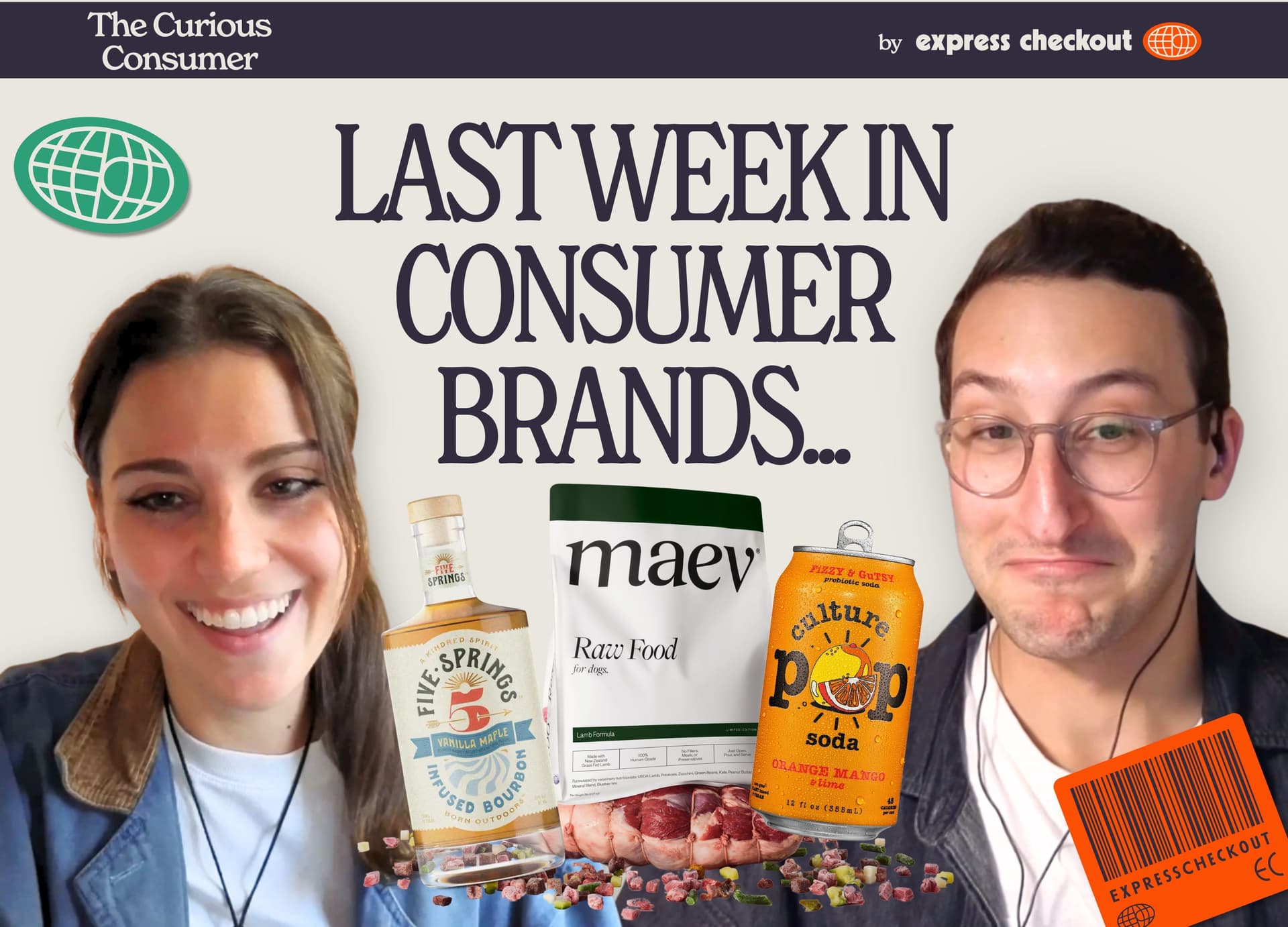
2:54Well, maybe it could be considered human food. We're going to start talking about human grade food, which literally might be better for humans than hospital food. But it's made for dogs. So this week we're talking about dog food. Dog food. it's a surprising category that's really been in uh as we said in our newsletter it's glow up era so the reason that we wrote about this this week is because a very buzzy fresh frozen dog food brand called mave just launched the first 100 human grade as they all love to say new zealand lamb recipe for dogs i know it sounds delicious honestly it it sounds like i'm at like a michelin star restaurant.
3:40And it says like New Zealand lamb. And I'm like, what's special about New Zealand lamb? And then they say all these things I don't understand. And I nod. Exactly. It's just like when somebody describes wine to me, I'm like, yeah, legs. Yes. Oh, absolutely. I'm like, this wine tastes very woody. Thank you for noticing. Yeah. But it's fancy fresh frozen dog food. They just launched this new SKU, but they have been doing fresh frozen for a while. And And they've been doing really well in this. And they're not alone. No, they're not. There are so many other brands in this world. I think the one that probably everybody knows is the Farmer's Dog, which has been around since 2014.
4:21It's right now valued at close to$3 billion. And it's fresh dog food shipped to your house. There's also Ollie Pets. There's Jinx, which is actually the pet food that I feed my dog. But yeah, people are feeding their dogs better than themselves sometimes. Fancy stuff. Better than themselves a lot of the time. So yeah, I was curious in particular about this term human grade because it's just such a weird term to use. Like why do we need our dogs to be eating human grade food? Are we eating it? So I looked into it. It turns out that the first brand to, I don't want to say coin it, but use it mass market, was called the Honest Kitchen, which is still around.
5:00a premium pet food brand that really kind of kicked off after 2007, which is when there was a melamine recall, which was a contaminated ingredient in pet food that led to thousands of pet deaths, which is awful. I know. And because that ingredient was sourced from China, this is when like everyone started to get obsessed with made in USA and human grade as a trend and just ingredient transparency generally as a trend in dog food and that's how brands like the farmer's dog ollie pets jinx so many more rode that wave and they also rode it into covid which is when we saw another uptick in premium dog food oh yeah and also just in pet ownership i mean so many people all of a sudden were just getting especially dogs that was such a huge thing and like i think that Again, we've talked about this so many times, how the pandemic has led to so many trends that we're currently experiencing.
6:01But even before the pandemic, I think there were waves of these newer brands, the Warby Parkers, the Caspers of the world, all of these like sexy direct-to-consumer brands that are now either massive or have built their own categories for humans. But I think from that is where we started to get all of these sexier and more importantly, better for you brands now for their dogs and now for the cats and now for most pets, but mostly dogs and cats, if we're being honest. And spending is up on pets. It's projected that this year, almost 160 billion will be spent on pets. And that's across all the categories.
6:42But for food and treats alone, it's almost 70 billion. 70 billion like actually mind-boggling yeah it's insane gen z pet owners are spending an average of six thousand a hundred dollars a year in pet food alone which is so that's not including vet bills that's just right pet food that's not including the cute little accessories and the bags that they're getting to carry their dogs are just pet food it's crazy but i i mean i think it's also it fits into that world where gen z and millennials are buying things for themselves that are a little bit of a luxury upgrade to make themselves feel a little bit better i think they're doing the same obviously they do the same for their pets their pets are their babies and oftentimes as we talked about in this issue they are their babies because they're all dinks i feel the need to like dink as in dual income no kid in audio only i'm like what did that sound like it's i meant it in in in all earnest in all earnest yes so dink wads are dual income no kid with a dog and there are more and more more and more of those in millennials and gen z and they just have extra spending power because they're dual income no kid right and they're spending it on their pets and they are buying fancier things as like a lifestyle virtue signaler.
8:12And yeah, we're seeing it across the board. We're seeing it in a lot of these brands we just mentioned, but even in private label, Target launched a few different private label brands. They also have pet attire and pet home decor. Sure. They have a pet food brand called Kindful. The aesthetic of it is so premium. I mean, even just having a refrigerator in retailers for dog food is a relatively new thing that the farmer's dog, I think, really started. And I mean, there's like the human equivalent for dogs in literally every category in the meal plans and frozen meal delivery kits, farmer's dog.
8:54There's Native Pet has supplements. Finn has like gut health supplements as well. There's whole brands just for carriers and clothing and just the like really nice pet accessories like wild one and modern beasts there's even like a whoop for your dog uh the five collar what does it do so it tracks your dog you can also like geo fence it it tracks its steps it it tracks everything about the dog i think it does yeah it's crazy and it's and i see five sponsor a bunch of youtubers i actually see a lot of these brands sponsor a ton of youtubers that i watch which i think is really interesting because it's just like it's clearly just reaching such a mass that like a generic youtuber who talks about whatever who might not even own a dog is is getting sponsored by sundays for dogs or farmer's dog or ollie or fi it's such a growing space and the premiazation of it is really interesting to watch i also love it as a pet owner i have a little dog i have ginger who's somewhere in my apartment i'll show a picture up on the screen um and i love getting stuff for her i don't go too crazy but i do have i do have a little velour juicy onesie for her yes you do and as you should as i should i agree i think it is really interesting what you said too that a lot of these pet brands are sponsoring youtubers who might be reaching audiences that don't that aren't dog owner or pet owners right And I think this is a really unique category in that way because a lot of the other things we interact with, food and Bev supplements, even beauty and skincare, in theory, anyone could buy them and use them.
10:42This is one category that you do need to own a pet to logically buy dog food. But I don't think it matters because part of their advertising is just going into this, like, it's almost more of a brand awareness play in that if everybody thinks that this is, like, a premium lifestyle signaler, even if they're not a pet owner, it makes the brand do better generally because it's not about the dog. It's about what having this pet food on your shelf signals to other people about your lifestyle generally. Right. And like the branding of all this stuff is pretty. Like I don't mind keeping some of this stuff out because I'm like, this looks like all of the other stuff in my pantry.
11:24This doesn't look like some pharmaceutical Purina ProPlan, Nestle Unilever thing that's just utility. It has the aesthetic function as well on top of potentially being a better product than like a normal brand you would just get from wherever. Right. Yeah. Yeah. And I'm sure it's easier to get this food delivered to your door than it is. I remember growing up, I had dogs growing up and we would go to the pet food store and we would come home. You'd have to pick up like a 50 pound bag of dry food and like haul it from the driveway into the house. And like all this, I'm sure it's much nicer to get it delivered to your door.
12:04So it just goes along with all of these themes of convenience, aesthetics, premium positioning. Obviously, there's like the health spin just because people see pets as like a family member. And if they are getting their steps in and spending money on fancy ingredients, they want their family member to do the same. So it's really all of these things converging. And what I think is next is probably some more like Michelin star-esque weird proteins. I'm like, is Wagyu beef on the way for dogs? Like probably. That probably already exists. A hundred percent. I don't think I've seen Wagyu, but I've seen like mixes of meat and everything.
12:42I mean, we're talking about lamb, like really quality seeming lamb. New Zealand lamb. New Zealand lamb. I think we'll be seeing that more. I think we'll be seeing more retail expansion. So probably more refrigerators in the pet section of more standard grocery stores and price normalization. So like as scale of these kinds of brands increases, premium is just going to become the baseline. wonderful love it yeah so that's that's dog finn check out our deep dive on expresscheckout.co and now we're let's let's talk a little bit about um speaking of you know probiotic prebiotic sodas culture pop just did a little collab with noah khan it's a social collab but i i think now all of these other brands in this post poppy acquisition era and with olipop probably getting acquired by the end of the year everyone else is fighting for eyeballs and market share and culture pop has been one of those brands that has really been growing in the ranks it started by uh the nantucket nectar founder who started nantucket nectars in the 80s yeah so he started culture pop which i think is one of the reasons why it's doing so well is because they have this cpg legend who knows quality, who knows flavor, and who hopefully and probably has the distribution chops and relationships to make it grow the way that it's growing.
14:09So I just thought it was a really cool partnership. And something that you mentioned that I thought was really smart is that they're clearly also trying to target a different audience with the Noah Khan collaboration. yeah i i am personally a fan of no kahan actually crazy not it's not that crazy he's like really popular now um you never know people have hot takes on musicians these days crazy hot take um i love him but i don't love him in like i have a poster of him in my bedroom way because he's not like a pop star with brand recognition i would say in the same way that like an influence like he's known because he makes really good music yeah not as much for his actual like face and vibe which is a big departure from how poppy has positioned themselves which is with the alex earls of the world the influencer girlies it girls of the world and yeah that's something i mentioned in the newsletters we've celebrity storytelling in some way is absolutely nothing new but seeing it with someone who's not known for his aesthetic as much as his craft is pretty out of the box and And I think a pretty big statement about what culture pop stands for and who they're trying to attract.
15:19And it's really smart. I 100 % agree. It's very strategic. Speaking of categories that are doing well, well, actually categories that are not doing well, the plant-based category. Because we saw some news that a creamery, well, a fermented cheese brand is shutting down. Fermented cheese, yeah. Plant-based fermented cheese. It's just Mad Libs up in here. It's shutting down. That's so true. Jenna, you want to tell us a little bit about this? Yeah. So the company is called Stock L Dreamery. Fermented cheese brand, fermented plant-based cheese brand. So that was like, the word fermented was supposed to be a pretty big differentiator and call out because a lot of plant-based cheese brands don't taste like cheese.
16:10and using the fermentation process was supposed to be a way to make it taste more like cheese. I honestly haven't tried this product. I can't actually speak to if it did or did not. But investors seem to think that it was a great product. They raised$20 million. They debuted in Whole Foods. And even with all of that traction, they are closing down. And there's a lot of reasons that this probably happened. One of them is just a plant-based landscape in general, which I know that you had some thoughts on me. Oh, yeah. It's not dying and it's not dead. It just was a bit over exaggerated. I think one of the biggest issues was that tech funders came in and treated it as tech.
16:54They didn't really identify a consumer demand. They didn't really identify that this is CPG and it takes a bit of time. Just throwing all the money in the world in it is only one piece of the puzzle. There's so much else that goes into getting a CPG brand and getting a CPG category up and running and into the minds of the consumers. People are very fickle when it comes to their products and their brands, especially I think when it comes to dairy and meats and anything that's sort of plant-based is trying to get after. A lot of other companies have struggled with this. We saw Meaty, which raised close to$400 million, including$100 million Series C one round in 2024, they sold for$4 million after basically running out of cash.
17:37The plant-based bacon brand Hooray Food shut down in 2023 after raising around$4 million. Nowadays, which is a vegan chicken nugget brand, they sold and closed their doors. Even Nugs or Simulate, that was touted as this next big thing. That kind of fizzled away as well. And obviously, I think perhaps the biggest one is Beyond Meat, which basically cratered 100 % in its stock. And like, it's still kicking and still going and same with Impossible Foods, which sort of rebranded and starting to reposition themselves a little bit. But the plant-based alternative market, I think it grew too big, too fast.
18:16I don't think we ever really determined who was consuming it. I think I enjoyed some of it because of the novelty. I didn't necessarily enjoy it because I needed it or wanted it. um no and i i i think it yeah grew too fast like i think a brand that's doing really well right now is malk which is the the almond milk uh brand because they're focusing on a very clear and core audience they've they partnered with erwan to do that smoothie kit that's being sold all over the country they're doing really well on whole foods like they're putting themselves in front of the right consumers and growing slow but at a fast pace yeah and i think we've seen alternative milks in general are having an easier time.
18:57Part of that is because the issue here with these alternatives to cheese and actual meat is that, as you said, there's not a compelling enough case. They're usually more expensive. They are not on par with taste. And that's where alt milks, for the most part, at this point, are priced well. And well, except if they still charge you a dollar extra when you go to cafes. So stupid. But I think at Starbucks, they made it the same, like free, basically. They're like, yeah, you can have almond or oat or skim or 2%. Whatever. Yeah. So plant milk has been normalized. And it's on par with taste slash also just people don't really, never really liked the taste of milk in the first place.
19:38So there actually was like a gap in taste. There hasn't been as much a gap in taste for everyone loves cheese. There's no issues with cheese. No one's trying to throw out cheese. There hasn't been an issue with people not liking the taste of meat. So either your audience is only people who have like vegetarian lifestyles or try not to eat meat or cheese or are lactose intolerant. And that's still a small percentage of the population. Or it has to be a better product or a cheaper product. And I try not to eat much meat or any meat myself and dairy. And so like this is something that like hits home for me.
20:15So what was interesting about what you said is that investors were treating these companies as tech. It can't move forward in any way unless the tech infrastructure of making great alternatives to these products catches up, and it hasn't yet. And so I almost wish that these investors didn't invest in the brands but invested in the infrastructure to make the food science behind it, make products that taste better or taste at least close to on par to the beloved meat and dairy products that we already have. The tech is improving, and I think there is a future where the tech will improve enough, and the cost of animal agriculture on the environment will come to light a little bit more, I hope.
21:00But in the meantime, what we have to wait on is for these alt-meat and alt-dairy products to just make better tasting and cheaper products. And there's almost no messaging that they can offer that will beat that value. Like that is what they need to do at this point. I mean, I think the promises just weren't really met. The promises of sustainability, the promises of cost, the promises of health, like a lot of those things weren't really properly addressed. And I also think a lot of consumers originally were interested, consumers beyond the ones who just aren't eating meat, who still wanted to eat meat, but didn't want to for whatever reason.
21:41I think a lot of people thought it was going to be healthier. They heard plant-based and they thought healthy. These brands indirectly marketed themselves as healthy when they were really just animal-friendly and maybe more sustainable, but not necessarily healthier. I mean, an impossible burger is basically the same as a regular burger, which is technically the point, but I don't think it was explicitly positioned as such, which kind of duped some customers indirectly. You are totally right. I think people felt like plant-based equals healthier. And then when they started to learn that that might not be the case, the entire value proposition disappeared because they're not educated on the environmental effects of it yet, or they don't care, which is what it is.
22:27They don't. Or they don't want to spend more, which is also fair. So it's just an interesting space to watch out for. I really am rooting for its success. Yeah. I think this is true. I think one brand that's doing it really well and positioning themselves the right way and for the right audience is Actual Veggies. I think there's a whole group of people who don't want to eat meat, but they want something. And I think actual veggies is a really good brand that fits that consumer. And I think there's a good amount of those consumers out there. I think my mom's one of those consumers. She's like, I don't really like the taste of meat.
23:04And I don't really want to eat meat. So like what else is out there in a convenient format? And I kind of think like the impossibles of the world should be relegated to like what they were doing when they first launched, which was high-end restaurants. And they needed more of that validation, which they never really – they moved too fast to market. got too much money. I agree. I think impossible and beyond do best in food service, like as in in restaurant or at a stadium or something where someone's like expecting to like kind of eat a not great for you burger or whatever. I agree. I love actual veggies.
23:38I don't even think we said they're frozen veggie burgers, but they're just made out of vegetables. They're not made out of any kind of like meat replacement. And I think that's also why they are going to do well, because not just out of like what you mentioned, they just taste really good and they literally are loaded with vegetables, but also there's a lot of fear-mongering around Glab made meat and they don't have that and they are just delicious products and we should all be eating more vegetables. That was a great point. We're going to be moving a hard pivot. Hard pivot. Into shampoo. Something you should not be eating.
24:17Something you should not be eating. Okay, good. The pause there is concerning. I don't eat it. Heart pivot into shampoo, which we'll just briefly mention because I think this is a cool story. One of the, or the CEO of Lifeway Foods, which is a kefir brand, just launched a hair care brand with her daughters called Bird Beauty, which is a teen focused hair care brand. For every bottle sold, they are funding training for stylists to spot signs of teen dating violence and abuse. So I love that they're doing this. I mentioned in the newsletter that what I think is so cool about this is that we've seen so many recent launches in teen skincare.
25:01So many. And that makes sense to me because teen skin is unique in that it's typically oily or whatever while you're going through puberty. Hair care, I don't think teen hair is notably different. So the actual like positioning for use case for teens is not as obvious, but they're positioning the cause for teens. And I love that. And I think that there is so much more that brands could be doing with trying to reach teens through mission oriented companies. A lot of times causes that companies team up with, like don't feel resonant, I think, for a teen consumer. But this does. and it's teaching teens like at a younger age that their money is power and they can vote with their dollar.
25:45And I think that's really cool. Yeah. No, and I think a lot of younger people too are trying to skew older with how they dress, how they present themselves and even the brands that they use. So I do think it's also good to just have like a brand that, you know, this brand looks a little bit more mature, but I like that it's very clear in its positioning for this type of audience that doesn't necessarily need to get a quote-unquote adult product. Not that it's really different, but I do think it's kind of nice for these different age groups to have their products and also maintain their youth a little bit.
26:21For sure. I totally agree. I love that. No, I think it's really cool. And I think Julie being involved is great. And I hope to see this one succeed i love seeing people category jump from yeah fear to hair care you can do anything you can same difference right and even musicians can do anything or sons of musicians i'm so excited to talk about this one one because i didn't know john bon jovi's real last name is Bon Jovi, one word. But Jon Bon Jovi's son, Jesse Bon Jovi, launched a new brand incubator this week called Lily Pond Group. And they're partnering with Five Spirits Infused Bourbon, Mezcal Mizzou.
27:09And they'll also oversee their other brand that Jon Bon Jovi started with Jesse called Hampton Water Rosé, which has apparently been a very successful wine brand that they co-founded together. so i love that like this is kind of a fun way to do a celebrity brand where you're involved and you're promoting these things but it's not necessarily their brand their personality behind it i i think more celebrities should do that if they want to get involved with brands but they don't always want to be the face of it at every event and every social media post they just kind I want to like be associated with it and help it succeed.
27:49Fund it. Fund it. Yeah. Launch a brand incubator. I totally agree. I think that is such an interesting way to do it. And it brings up fewer question marks around a lot of times when celebs get involved in a brand, people are like, do they know anything about prebiotic soda or whatever it is? And they don't need to, They just have money and they like things. And that's fine. That is so fine. And it hands the rest off to the experts in their categories. Exactly. Not every celebrity brand, in my opinion, needs to have somebody who is so gung-ho about this. Like, it's great when it is. And I don't think celebrities shouldn't be involved in brands either.
28:29Like, I think both sides are true. And I think for most celebrities, more of this direction is probably best. or just be on the face of a Wheaties box and you're good. That's always an option. It's always an option. I think somebody should, I think they should put us on a Wheaties box. No one will know who we are. But man, will we sell those Wheaties. Another story we saw this week is that somebody is trying to reinvent the pine cone car freshener and make it bougie. so the inkbox co-founders inkbox was the the temporary tattoo company right oh yeah yeah so they're launching olautu i probably pronounced that wrong it is a premium uh car freshener brand which each one is priced at 33 it's supposed to be elevated and invoke real environments and last over three months.
29:28They do look really cool. They look really cool. $33 feels insane. I would love to test it out. Do you have a vehicle? I do have a vehicle. I have a 2018 Subaru Crosstrek. I can't think of a more perfect car for this use case. I just had an idea. They and any cool car brand should find a way to get into Waymos. Oh, that's good. Right. I'm saying this as an Austin based girl right now. The reason I'm thinking that is, I mean, that's just like one channel with so much distribution and you get in the car. It doesn't really smell like anything right now, which is kind of lovely. Actually. I'm like, wow, this is the first time I'm getting in a, like an Uber adjacent vehicle.
30:18And I, it doesn't smell like cigarettes or something but i think that would be such it first of all premium positioning for sure like very premium your waymos are jaguars and you see that dangling and you're like in your little way mo and you're like i want that in my car when i get a car yeah and it's an iconic it's like it's a unique shape i wouldn't say iconic it's a unique shape the pine cone that's an iconic shape That's an iconic shape. If I never see one of those again, I would be so happy. I remember I bought one once and I had it in the car and I was like, this is not great. They're kind of nauseating.
30:56Have you ever been in a car where they have like five of them strung together and it's like suffocating? Yeah. I'm really glad someone is tackling this issue. And as I said in the newsletter, honestly, I'm not surprised because if men, as we covered last week, are starting to care about their sense, it was only a matter of time that cars also got the same treatment because cars are just an extension of men. Yeah. Except I barely drive my car. My wife drives it mostly. You're a New York City man. It's different. I hate driving in New York City. I would avoid that all I can. no car freshener for you no i'm i'm good it's scary to drive in new york we'll get you one of these and we'll hang it i'm like where else would you hang one of these that's not a car a bathroom on my mic oh in my bathroom that's a smart idea i don't know maybe it smells bad makes a little like a smidge more sue me i'm excited to see where this brand goes because truly like this has not been disrupted i don't know there's there's a brand called drift okay it was acquired actually um i think within the past year so it like you put it on your on your visor and it's like wooden and you put in like a like a wax thing what do i know well did it evoke what what is what does this say did it evoke the sense of nature real environments real environments I think it was supposed to.
Read the full transcript
32:31It had sense like. Real environments. It's so funny because you know what, how many real environments there are that smell bad? Cars. Does it evoke frat basement? Like. Oh, gosh. It evokes the smell of two day old Natty Light caking the floor. Mmm. Tasty. I hope someone launches that as like a bit. Okay. progresso soup did launch a like deodorant can of soup combo recently for why marketing i guess oh yeah here it is deodorant soup scented uh pit master it's barbecue smoke scented okay but i do love a pun yeah and i i kind of love an exclusive little gimmicky drop i don't want to smell like barbecue and i don't want my loved ones to smell like barbecue either do i want my enemies to smell like barbecue maybe but then they'll but then you get hungry
33:49shoot i know you're not thinking about this fully does it come with the soup it comes with a can of the soup yes wait why is progresso doing barbecue there's it's their launch it's a new soup it's called their pitmaster barbecue style uh chicken smoked chicken soup something like that and for this launch they're they're launching a deodorant look i wouldn't have been my first choice i would have partnered with like a sexy barbecue brand well right that would be logical did they partner with the deodorant brand or are they just like in the progresso soup factory also making deodorant they're also making deodorant 15 bucks not bad soup and a deodorant for 15 bucks that's pretty good so when you get the soup sweats covered oh god i i can't believe that that wasn't actually in our newsletter that's from september we're just never gonna talk about that crazy yeah i guess not um now i'm gonna have to really hard pivot because i'm giggling but i want to talk about something actually serious what's actually serious is that this is a scary week in america right now there has been a government shutdown for those who don't know and approaching the longest shutdown in history one of the things that this shutdown is actively impacting is snap and wick benefits uh which could be cut for 40 million, over 40 million Americans, leaving a lot of families at risk of going hungry.
35:19And obviously there is a broader conversation about SNAP in the administration, but even ignoring that, this is a very active and real issue. But luckily there are some retailers who are stepping up to try to help. DoorDash, they launched an emergency food response. They're delivering around a million free meals to food banks and waiving fees for 300 ,000 SNAP recipient and grocery and orders, which is wonderful. HEB, a wonderful retailer down in Texas, they've committed to donating$6 million to food and security relief programs around Central Texas. So there is some help across the CPG and retail community.
36:00One, it's great to see, and I hope more retailers and more providers help. And two, I hope the government starts up again so people can actually start receiving the benefits that they need. Yes. Yeah. It is one of those things that we do need to look to some of these larger corporations for assistance right now. It's not their responsibility to fill in the gaps that the government has created, but it is an opportunity for them to do so. It is also worth noting that the retailers themselves will be affected by this. Obviously, that's like not as big of a concern as the 40 plus million Americans that are going hungry.
36:38But it's an operational challenge for the retailers. Sales will probably take a hit as people who typically receive these benefits can't shop there. So it just trickles down in all sorts of different ways. And then that can impact the employees of some of these retailers, too. So just something that like if you're in CPG, it's worth talking about and thinking about how your brand can donate. if you have some extra stock somewhere. Or yeah, I just want to see how the CPG community kind of comes together here during this time. Yeah. Well, if you want to see all of the stories that we talked about in this episode and a hell of a lot more stories that we also cover, definitely check out our recent issue of Express Checkout at expresscheckout.co.
37:20And please subscribe if you haven't. It really helps us out. You can find us on Instagram at expresscheckout. And subscribe, follow, and like and review this podcast wherever you find podcast. The Curious Consumer. It's a great name. We're really glad we came up with it. And we'll see y 'all on the next one. We'll see you on the next one. Bye.
From the publisher
Welcome back to The Curious Consumer! In our (now) weekly episode, we break down the latest news in consumer brands and retail. Today, we get into:
* Why your dog is probably eating better than you
* Culture Pop x Noah Kahan
* Why plant-based alternatives aren’t working right now
* The new brand in teen personal care
* Bon Jovi’s son’s new brand incubator
* The brand reinventing car freshener
* The food insecurity crisis facing America (and how retailers are responding)
Please consider donating to Feeding America to help those impacted by the pause in SNAP and WIC benefits: https://give.feedingamerica.org/kTIc6StdKUebxV-HOloYVQ2
And as always, thank you for listening!!! Your support means so much to us as we grow this pod :)
🎧 Love the show? Subscribe to The Curious Consumer wherever you get your podcasts! New episodes drop every week
📧 Get the inside scoop Subscribe to Express Checkout, our newsletter packed with consumer insights, trends, and exclusive content straight to your inbox. Sign up at expresscheckout.co
📱 Let’s connect! Follow us for behind-the-scenes content, quick tips, and more:
* Instagram: @expresscheckout
💬 Join the conversation Have a product you’re curious about? DM us your questions or drop them in the comments—your topic could be featured in our next episode!
⭐ Help us grow If you enjoyed this episode, please rate and review us on Apple Podcasts or Spotify. It helps other curious consumers find us!
🎯 Got a minute? Share this episode with a friend who’s always reaching for that energy drink. They might learn something that surprises them!
Get full access to Express Checkout at expresscheckout.co/subscribe