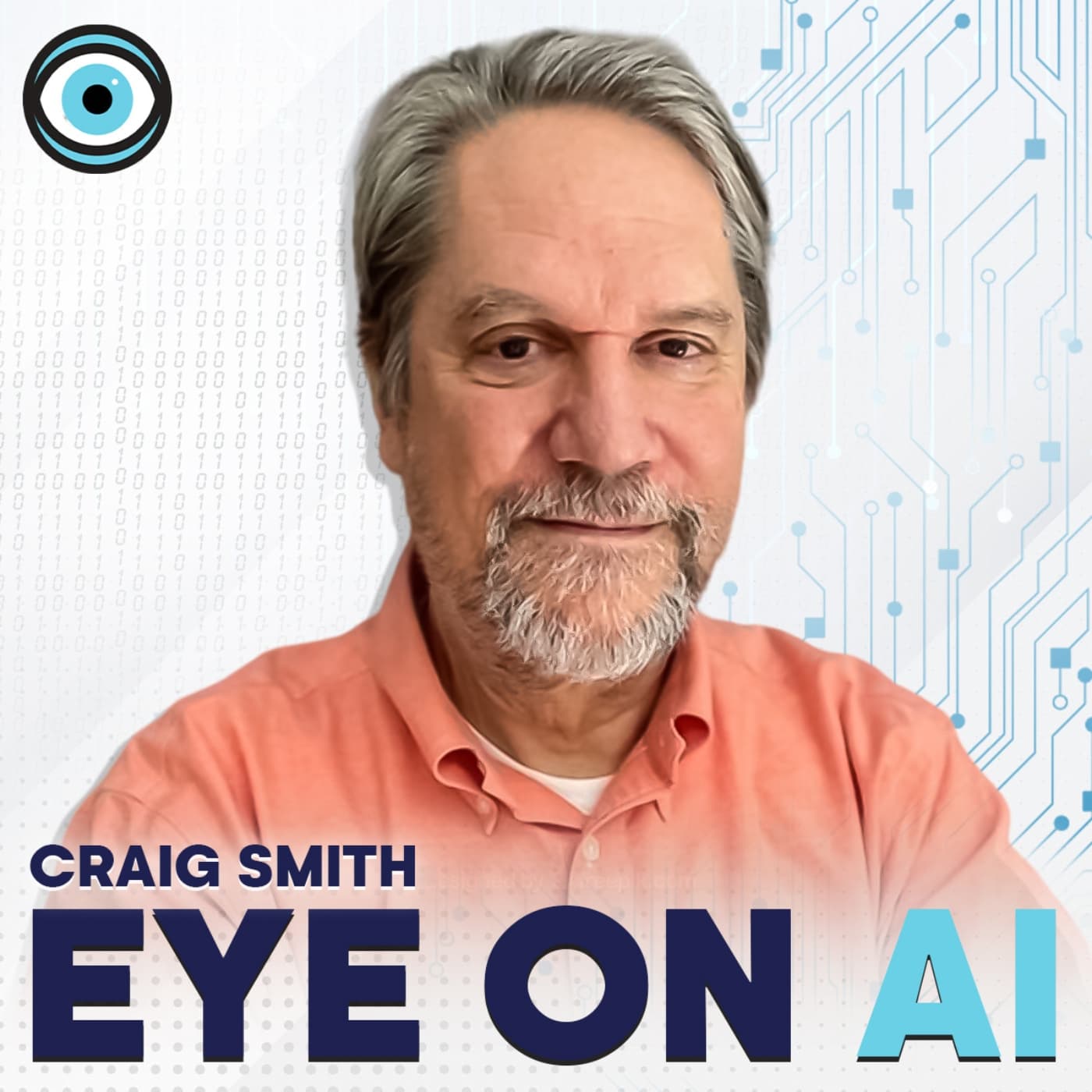
In short
Doppel’s AI-native social engineering defense platform against deepfakes, impersonation, phishing, fraud, and disinformation, framed as an existential “trust erosion” problem.
Guests
Kevin Tian, co-founder and CEO of Doppel (background in software engineering at Uber and Lyft; met co-founder Rahul there; started Doppel in 2022 after Rahul saw a ChatGPT preview).
Key claims
AI can manipulate digital reality and undermine trust; deepfakes are one vector in a broader “attack chain” aimed at money or data; defense must be AI to fight AI and must be multi-channel. Doppel’s platform capabilities: scans for impersonators across new domains, social media, threat-intel feeds, YouTube ad/search results, and more; issues takedowns (e.g., YouTube, registrars/hosts, phone numbers); simulates attacks for red teaming/security awareness including deepfake phone calls and “vibe phishing.”
Notable examples
fake StreamYard malware site found via scanning; fabricated “Epstein files” report discussed as misinformation; LinkedIn impersonation campaign shut down within hours (accounts, emails, phone numbers removed). Doppel says it covers “upper 90%” of business communication channels and works with platforms via “trusted reporter” relationships.
Written by AI. May contain mistakes. Listen to the episode to check what was said.
Chapters
Tap a time to open that second in VOThe Existential Threat of AI
0:00 to 0:39
Explore the implications of AI manipulation on trust and reality.
“But it's really that broader thesis of this is the existential threat with AI, right?”
Doppel's Mission Against Social Engineering
1:30 to 2:26
Learn about Doppel's innovative approach to combat social engineering threats.
“And we operate in multiple key areas around social engineering.”
Defining Social Engineering Defense
2:26 to 3:38
Understand the unique term 'social engineering defense' and its significance.
“But in the age of AI, we're talking about something that goes much broader.”
Understanding Customer Protection at Doppel
3:38 to 5:00
Discover how Doppel protects enterprises and individuals against impersonation.
“And so very much that's part of our executive and VIP protection.”
The Challenge of Deep Fakes and Misinformation
5:00 to 6:05
Examine the challenges posed by deep fakes and misinformation in the digital age.
“And you know that it's got to be a deep fake.”
Doppel's Approach to Mitigating Attacks
6:05 to 8:10
Learn about Doppel's strategies to address and mitigate various attack vectors.
“So we actually think a lot about what we call the social engineering attack chain, right?”
Emerging Threat Vectors in Social Engineering
8:10 to 9:18
Identify the key trends and threat vectors in social engineering today.
“proactively telling you about it, but we are proactively shutting down that tack before it can happen.”
The Role of Marketing in Social Engineering
9:18 to 14:00
Explore how marketing strategies can be exploited in social engineering attacks.
“Everyone saw that it was going to be a problem and it's now becoming a problem.”
The Cost of Breaches and Advertising
14:00 to 14:31
Explores the financial motivations behind cyber breaches and ad promotions.
“So if I make so much money off breaching, you know, the biggest companies in the world, maybe I'll just pay 20 bucks for that ad click.”
The Origin of Doppel
14:31 to 15:12
Discusses the background and motivation behind creating Doppel.
“And in 2022, he was actually roommates with one of the heads of research at OpenAI.”
Show all 29 chapters
Existential Threats of AI and Misinformation
15:12 to 16:04
Analyzes how AI and social media contribute to misinformation and threats.
“It can manipulate as a result, anyone consuming that digital reality.”
The Impact of AI on Trust and Reality
16:04 to 18:09
Discusses the erosion of trust due to AI-generated content.
“is, you know, on YouTube, they run shorts now.”
Doppel's Coverage and Capabilities
18:09 to 19:14
Explains the extent of coverage and features of the Doppel platform.
“Like, you know, literally just this past weekend, fake news about layoffs, fake news about, you know, I don't like even something a little more innocent.”
Agentic AI Features in Doppel
19:14 to 20:54
Describes the AI capabilities for threat analysis and simulations.
“But we're covering everything from, for example, there's the traditional domains and email attacks to, you know, we see stuff on WhatsApp and Telegram.”
Safety Measures for Doppel's Usage
20:54 to 23:24
Discusses how Doppel prevents malicious use of its platform.
“So you could tell our Apple agent, hey, let's go attack Craig, right?”
Ensuring Authenticity in a Digital World
23:24 to 26:06
Outlines methods to verify authenticity against deepfake technology.
“Like if someone, you know, let's say they weren't even going to use Doppel.”
The Erosion of Trust and Digital Media
26:06 to 28:00
Explores the consequences of misinformation on societal trust.
“if you pull that off, that's what makes the attack so scary.”
Understanding Human Risk Management in AI
28:00 to 29:45
Learn about the concept of human risk management and its application in AI-driven environments.
“And that's what is really scary is that AI keeps getting better at that.”
The Power of AI-Native Defense Platforms
29:45 to 30:26
Discover how AI-native defense platforms operate in real-time to mitigate threats.
“And in your company, that must be a never ending process.”
Simulating Real-World Attacks with AI
30:26 to 31:57
Explore how AI is used to simulate and analyze potential attacks for better preparedness.
“I mean, what does an AI native defense actually look like in practice?”
The Future of AI and Election Security
31:57 to 33:51
Understand the implications of AI on future elections and how organizations are adapting.
“very, very, you know, real world scenario as a result, because we actually are the ones also protecting against these attacks.”
Adapting to Evolving Cybersecurity Threats
33:51 to 35:09
Learn how enterprises are adjusting to new AI-driven threats and the importance of security.
“And do you think enterprises are waking up to this threat?”
Real-World Case Studies in Deepfake Mitigation
35:09 to 37:09
Examine specific cases of deepfake attacks and how they were successfully mitigated.
“You don't have to name the person or the company that was being targeted.”
The Challenge of Scaling AI Defense Solutions
37:09 to 39:25
Delve into the scalability issues in combating AI threats and the role of AI in defense.
“And are the platforms like LinkedIn, YouTube, X, are they cooperative when you want to take something down?”
The Dynamics Between Platforms and Security Solutions
39:25 to 42:00
Discuss the relationship between social media platforms and security technology providers.
“Or do you think that we'll never get ahead of it?”
Direct Sales vs. Platform Partnerships
42:00 to 44:12
Explore the advantages of selling directly to organizations versus platforms.
“One is like, there is actually a real technology and business model advantage when you're selling directly to the individual organizations, it's, it's, it scales up the ground truth better.”
Customer Engagement and Subscription Model
44:12 to 45:30
Learn how Doppel works with clients and offers subscription services.
“um and our job though is to make it really really hard for them make it really expensive for them and discourage them from ever doing it again.”
Insurance and Brand Protection
45:30 to 47:21
Discuss the role of insurance companies in brand protection against deep fakes.
“You know, big companies like, you know, any big, big, particularly consumer brands, having insurance against reputational damage.”
Trust and Collaboration with Platforms
47:21 to 48:16
Understand how Doppel collaborates with platforms like YouTube to combat deep fakes.
“Do they you were saying that a lot of the business from your point of view is building relationships so they trust you.”
Transcript
Automatic transcript. May contain errors.0:00But it's really that broader thesis of this is the existential threat with AI, right? It can manipulate digital reality.
0:06Kevin Tian:Now, I don't believe anything that I see. Ultimately, what's eroding here, it's not the individual attack. It's trust in general. This deepfakes is actually just one part of the problem, right? It's just one vector in how you may execute a social engineering campaign, a fraud campaign, a phishing campaign. And so in order to have the capacity to combat them, you also need to be using AI, right? AI to fight AI. But again, it's just not scalable. So how do you actually deploy AI effectively to build up your own capacity? That's a business critical mission critical problem to solve. Hi, everyone.
0:40Kevin, co-founder and CEO of Doppel. We are the AI native social engineering defense platform backed by Andreessen Horowitz and Bessemer Venture Partners. Before all this, my background was actually in software engineering at Uber and Lyft. I worked on everything from dispatch systems to flying cars. Not quite the traditional cyber founder background, but I met my co-founder Rahul there and we started this company in 2022 as an AI company in response to him getting a sneak preview of ChatGPT. And since then, it's been an absolute ride. Our mission has been to tackle what we've seen as the existential threat with AI.
1:15And that's all things social engineering, deep fakes, impersonation, phishing, fraud, you name it. And today we're now blessed to be working with hundreds of enterprise customers, scaling quickly to support some of the largest organizations in the world. We've got dozens of Fortune 500 logos. And we operate in multiple key areas around social engineering. So we're the first social engineering defense platform that enables you to detect impersonation attacks, whether they're impersonating your brand or your executive, take them down. And so that's traditionally been called the brand protection, executive protection products.
1:48And now even enable you to simulate and train against them. So we've launched red teaming and security awareness training products as part of our human risk management portfolio.
1:56Kevin Tian:Okay. And yeah, I mean, this is certainly a problem. I'll tell you, I enjoy YouTube. I watch a lot of YouTube, but it's just filling up with AI generated content. It's very frustrating. And actually, I'm surprised YouTube isn't doing anything about it. So when you, this term social engineering defense, was that coined by you or is that a Gartner category? That's a great question. So we coined the term originally, actually, because, you know, I think traditionally in the space has thought a lot about phishing and, you know, for example, you know, point solutions like email security, things like that.
2:36right? But in the age of AI, we're talking about something that goes much broader. And so that's why we came up with the term social engineering, the fact that, hey, you're not just going to be worried about email phishing attacks, but folks are flooding YouTube, right? With AI content, content, folks are setting up personas on LinkedIn, shooting SMS messages, doing deep fake phone calls. And that's really the world that we live in today.
2:59Kevin Tian:Yeah. And are your customers enterprises enterprises or individuals that are being, whose likenesses or IP is being used? Or are they, are you working with the platforms like YouTube to identify deepfakes on their platform? It's a great question. So today we service enterprises and within those enterprises, we may protect individuals. So for example, Craig, if, you know, if we were to protect your organization, right? Then, you know, obviously you as an individual has incredible IP, incredible name image likeness rights, things like that. And so very much that's part of our executive and VIP protection.
3:43But yeah, as of today, we protect everyone from C-level executives to athletes, to actors and actresses on our exec protection and VIP protection products. But we also, of course, are protecting the brands themselves and the company. So, you know, think about your favorite Fortune 500 brands, right? How do we make sure that they aren't of getting impersonated to either target customers or target internal employees as well.
4:05Kevin Tian:Yeah. And are you looking at deep fakes in particular, or are you looking at, I mean, I saw when there's a channel that popped up recently, I don't know how long it'll last, but they have, they've been doing Epstein stuff and they had a really shocking report that's showing emails purportedly from the Epstein files that talks about 20 million pounds that had been sent by Epstein to former Prince Andrew's daughters. And, you know, when I first saw it, I was like, holy mackerel, you know, that is a story. But I can't believe that hasn't been covered. And indeed, it was completely fabricated. So it's not fabricating the likenesses, it's fabricating elements of the story.
4:56Kevin Tian:That's one. And then I've also seen, you know, personalities like Obama or others now who are promoting products. And you know that it's got to be a deep fake. They're very well done. So which of those, I mean, obviously the latter you would take care of. Do you do any of the misinformation stuff? Yeah, misinformation, disinformation is certainly part of the problem. How we think about it is deep fakes is actually just one part of the problem, right? It's just one vector in how you may execute a social engineering campaign, a fraud campaign, a phishing campaign. So you've got your, you know, you've got traditional impersonation techniques, you've got deep fakes, you've got disinformation, and it can happen across all these different channels, right?
5:43And so for us at the end of the day, when you think about it, it's, you know, it's really two objectives usually from these bad guys. It's go acquire money or go acquire data, right? And they're going to use every single possible channel and every single possible technique to execute that, whether it's, you know, with deep fakes or whether it's through disinformation or whether it's through, you know, traditional impersonation attacks.
6:05Kevin Tian:Yeah. And then how do you address it? I mean, yeah. What do you do? That's a great question. Yeah. So we actually think a lot about what we call the social engineering attack chain, right? Like if I'm going to go try to defraud you, Craig, right? Or if I'm going to go try to steal your data, there's a whole sequence of steps that I need to do in order to successfully attack you, right? I need to prepare my attack. I need to then go get you fully ingrained in the attack and then go actually execute the seizure of either monetary assets or data assets, right? And so Doppel, we're actually building out a platform to stop every single piece of that attack kill chain.
6:52And today, we're actually already a multi-product platform as we sold. So today, right now, what we do is three key capabilities. least one we're scanning for impersonators uh of these attacks right so we we will actually you know there's the traditional hey maybe someone spun up a fake uh you know let's take a look at the platform we're using right now right someone spun up a fake stream yard website right and it's actually you know you send that fake stream yard website actually makes me download um some malware instead of the actual stream yard website right so that's one piece of what we do is we're constantly scanning all the new domain registrations we're scanning everything on social media we're consuming a whole bunch of threat intel feeds around you know fake sms messages and phone calls and uh and we're scanning even for example youtube ad platforms uh search results right and that's how we find a lot of the malicious activity that's happening from there we use our threat graph connect all the dots and showcase that entire campaign uh in real time and then the beauty of this is we're not just showcasing that all, but we will then go take it down.
7:56So we are then issuing a takedown request to YouTube. We're issuing a takedown request to the fake StreamYard website's host and registrar, right? Or the telephone numbers. And so that's key capability number two is that we're not just responsible for showing you all this stuff and proactively telling you about it, but we are proactively shutting down that tack before it can happen. So it may even be a fake ad, for example, right? Like, Hey, if I go Google StreamYard and the number one result is, um, a malicious StreamYard malware site, but because they're paying for Google ads, it's the top result.
8:31We shut that down. So that's, those are the first two capabilities. The most recent capabilities we can now simulate those attacks. Um, so if you've, you know, if you've seen the traditional security awareness training model, right, where you get a phishing email and you click on it and it says you failed the training tests right we can do that but again the whole story is that things are multi-channel now so we're not just doing phishing emails but we will actually do deep fake phone calls um so we'll you know for example we'll send you a a message craig or we'll we'll call you and it'll be a deep fake of me um and that that deep fake voice will then uh you know try to fish you and compromise you.
9:12So I can even showcase some of that today if that's of interest.
9:15Kevin Tian:Yeah, sure. But before we get to that, a couple of broader questions. This obviously is becoming a problem. Everyone saw that it was going to be a problem and it's now becoming a problem. Which of those threat vectors, I mean, whether it's deep fake phone calls or deep fake videos impersonating someone to sell something or where do you see the most activity? It's a good question. So I'd say, for example, in the large enterprise space today and really, you know, even our smaller clients, really almost every one of our clients. the biggest, I'd say there's two key recent trends. One is definitely the phone call attacks, right?
10:05Like if you actually take a look at how a lot of the top companies have been compromised recently, you know, there's been some very public disclosures about breaches of, you know, tech companies recently. And basically these bad guys called Shiny Hunters, Scattered Spider, Labs Group, right? They're doing phone calls. They're doing phone calls to customer support lines, IT service lines, HR lines. And those phone calls are then how they get into compromising a casino, a tech company, a bank, an insurance company, an airline. So that's just been proven to be like one of the best ways to go attack an organization if you're a bad guy.
10:44Second, I wanted to call out, I mean, there's been a lot of attacks around social media. Like Craig, Like you mentioned YouTube. I think a lot about LinkedIn as well. Like that's actually one, another great way to do social engineering taxes. I'll spin up a LinkedIn account, pretending that I'm part of the StreamYard organization. LinkedIn, you know, doesn't require that you verify that corporate email address, right? And so that's another great way to go, you know, socially engineer someone. And then lastly, I talk about search engines. Like ultimately people are using Google, Google, ChatGPT, Gemini, Cloud, et cetera, right, to go browse through the internet.
11:27And so naturally you trust a lot of what gets returned there. But we call it SEO poisoning. We call it AI engine poisoning as well. But people can easily insert malicious results into those queries. And that's another way in how a lot of these companies are getting attacked. Yeah.
11:47Kevin Tian:And how are they doing that? because that's one thing I can see is, and I'm sure there's a lot of money being spent on this. If you ask one of the big foundation models, you know, ChatGPT or Claude or Gemini or somebody, who are the top AI podcasters, for example? If I get enough data into the enough, you know you're basically you want to fill the training data up with your eye on ai and because it's looking at probabilities and and it'll surface i on ai if it's one of the most prominent uh ai podcasts in the training data so is there are people doing that just pumping stuff onto the internet to get captured by training data to skew foundation model results absolutely i mean And when you think about it, sales and marketing is just really another form of social engineering.
12:49Right. And if you think about how you want to increase your digital marketing reach and things like that, right, you're going to you're going to post a lot of content right from on AI. You're going to you're going to make sure that it's on trusted third party sites, things like that to help really boost your search engine results and your credibility on the Internet. And so, you know, just as you can, you know, execute those sorts of campaigns to increase your digital presence. So can the bad guys, right? They will, like, for example, a couple of techniques we've seen is they will actually make sure a lot of their content gets posted on trusted third party sites.
13:23So think about like review forums or, you know, like, you know, third party social networks, things like that. You know, maybe they won't trust the fake StreamYard site, but maybe they'll trust a legitimate, you know, software vendor review site, maybe a little trust, a legitimate, you know, subreddit around video streaming platforms. And so that content will get upranked. And then that's how they can distribute the bad stuff. And then of course, you know, just as you can on the sales marketing side, it's not just the organic, you know, content marketing you could do, but you can go pay for ads, right?
14:00So if I make so much money off breaching, you know, the biggest companies in the world, maybe I'll just pay 20 bucks for that ad click. And then that's how I make sure my stuff gets promoted at the top. And I know the AI GPT engines, some of them are starting to experiment with ads or maybe turn off their experiments with ads. But the reality is they're also looking at other people's ads as a way of validation for, hey, this is legitimate content. Yeah.
14:28Kevin Tian:So you built this. What was the origin story? Again, you were at Uber. Yeah. Why did this catch your attention? That's a great question. So I was at Uber. I met my co-founder Rahul. And in 2022, he was actually roommates with one of the heads of research at OpenAI. And so he got a sneak preview of this little thing called ChatGPT before the rest of the world. And it became very evidently clear, right, that, hey, if AI were to go destroy the world, right, it's the fact that it's, it can manipulate any digital surface. And so that's where our mission around protecting the world from social engineering attacks every day comes from.
15:07But it's really that broader thesis of this is the existential threat with AI, right? It can manipulate digital reality. It can manipulate as a result, anyone consuming that digital reality. And that's how AI will destroy the world if not not stopped yeah and i agree with you i mean as i was saying uh you know
15:28Kevin Tian:there's been a lot of talk about this for a long time 10 years ago people were talking about uh or even 15 years ago people were starting to realize that social media itself this is before uh generative ai but social media itself is is going to be a threat uh by spreading misinformation and now you have the generative AI capabilities and the agentic capabilities to distribute. And, you know, again, this is something that everyone's talking about, but you're just now starting to see, as I said, with AI-generated content on YouTube, I mean, in an example, it's trivial, but it's informative, is, you know, on YouTube, they run shorts now.
16:15Kevin Tian:And the shorts that get offered up to me, a lot of them are, you know, like you've probably seen the one where a wolf, it's a doorbell camera video, a wolf comes to the door and the pet cat is on the back or there's, you know, lions who are taking down elephants and things like that. And you have to click open the description to see the disclaimer. Right. If there is one that this has been produced with AI, but that erodes. It's to the point now where I don't believe anything that I see regarding animals interacting or, you know, and that's, so what, right? That's silly content. But when that gets to the level, as I said with this report on Epstein-related report, when that gets to the level of real serious news and people can no longer, I mean, we've already got a problem with a president who lies constantly.
17:21Kevin Tian:But when that gets to the point where you just cannot figure out what's true and what's not true, that's, you know, destroy the world is a big statement, but it's certainly going to erode public discourse and the ability for democracies to function. Right. Yeah. I mean, erode public discourse, you know, and then when it's targeted, right, you can even just start manipulating individuals. Right. So that's, that's why I do speak to like the gravity of, you know, potentially world destroying capabilities, right? Like, hey, if you can manipulate someone to get you nuclear codes or get you access to, you know, whatever sensitive system, right, that that's, that's, you know, world changing stuff.
18:07So, but yeah, I mean, I've seen it as well. I think everyone has, right? Like, you know, literally just this past weekend, fake news about layoffs, fake news about, you know, I don't like even something a little more innocent. Right. Like sports news with NFL free agency starting. You know, you could see it very quickly happening and, you know, see it coming from a whole bunch of different perspectives.
18:30Kevin Tian:So you built your your product. and is it a platform? You say you scan all these different channels. How, what percentage of channels? I mean, there's a huge number of places where this stuff can appear. Do you have any metrics to talk about coverage? Yeah, yeah. I mean, I think, you know, we're at the point now where we're covering upper 90 % of business communication channels, right? And when I talk about business, I'm not just talking about internal, intra-business communications by external as well to customers or third parties, et cetera. You know, the reality is actually there's much, you know, that number is, you know, impressive sounding, but there's actually much more that we want to build to get even tighter into those channels and be integrated to stop these attacks in real time as well.
19:27But we're covering everything from, for example, there's the traditional domains and email attacks to, you know, we see stuff on WhatsApp and Telegram. We see, of course, the YouTube attacks, the paid ad attacks, the LinkedIn attacks. And that's really a lot of the power that our platform has is oftentimes folks would have to buy multiple solutions here, right? Hey, we've got a social media monitoring solution. We've got a dark web monitoring solution. We've got a domain monitoring solution. And Doppel enables you to do that all in one. Shut it down. and then also now even simulate them as well.
19:59So it's not just phishing email simulations, but it's really multi-channel AI native simulations.
20:04Kevin Tian:Yeah. And under the hood, are you using a bunch of different models maybe tuned to different things for scanning? And how much do you have an agentic player? Yes. So there's a couple of things that we do on the AI agent side. One is definitely around the scanning, the threat analysis, threat hunting, and the takedown. So that's one piece of the platform. And that's agents, you know, there's a public case study around this that we've done with one of our model providers, OpenAI, where we've shown how, you know, we built one of the very first security agents with them to go auto-analyze these attacks and take them down.
20:48The second agentic capability that we rolled out with our most recent products is, we call it vibe phishing. So if you're familiar with the term vibe coding, our product basically has this chat GPT-like interface where you can go prompt it to go attack anyone, right? So you could tell our Apple agent, hey, let's go attack Craig, right? And it will then spin up, you know, the phishing email. It'll spin up the SMS message. It can even spin up a telegram message. And then, of course, do a deep fake phone call. So that's the capability where right now, on average, people are talking to our AI agents for six minutes when they get a phone call from it.
21:26And so that's how good the AI agent is today. It's like, you know, a lot of times people think that deep fakes, people could figure it out. But the reality is if you're calling people on customer support lines, you're calling people on help desk lines. Like those people are trained to pick up the phone, satisfy the request. Right. And those are the people that are getting targeted by the bad guys. Yeah.
21:44Kevin Tian:And is this all in one platform that a user logs onto and has all of these? Same login. And then you see the different products on the left. And then within each product, you've got different modules. So for example, with our VIP protection, right? Say we're protecting you, Craig. Like you've got your exec protection product on the left. And then when you click into it, you see our ability to impact PII data broker removals for Craig, our ability to shut down Craig impersonators on YouTube. Maybe there's some mumblings on the dark web around Craig and how folks are trying to target ION, et cetera.
22:22And so all of that can happen via one platform instead of, again, you having to go buy a dark web solution, a PII data broker removal solution, a social media monitoring solution. and a security awareness training solution.
22:35Kevin Tian:Yeah. And on the red teaming, how do you prevent Doppel from being used by attackers? If it can, you know, spin up a deep fake voice attack, why wouldn't a bad guy subscribe to Doppel and Doppel and use it? Yeah, it's a great question and something certainly that keeps me up at night. So thankfully, we've got a tremendous head of security. I want to give a shout out to Kendra Cooley. And her job is to protect our platform integrity, right? And ensure that, you know, we don't leak anything we're not supposed to leak to ensure that, you know, people who are using the platform are using the platform in the correct ways.
Read the full transcript
23:17And so that's something that, you know, is a key program that we invest a lot in. But it is scary, right? Like if someone, you know, let's say they weren't even going to use Doppel. Like the reality is like people can use AI agents in general, right? Try to go, especially if I'm a bad guy, hey, I just need an AI agent to focus on my specific use case. They could easily do a lot, a lot of malicious stuff with these AI agents, right? Spend up a thousand AI agents to phone call a, you know, a customer support center and, you know, DDoS it essentially, right? And it's very scary stuff. And again, it's, that's why the mission is so important.
23:54And it's the realization that, yeah, AI could really destroy a lot of things right now if you are a really motivated bad guy.
24:01Kevin Tian:Yeah. So we're entering a world where digital identity can no longer be assumed authentic. Right. From the, you know, Doppler then protects someone, protects their real identity from deepfakes. But is there something that individuals can do to ensure the authenticity of what they're looking at? Right. I mean, there's there's a lot of like tactical things that I think individuals can do that don't require, you know, technology, things like that. Like, for example, Craig, how would you verify that I'm a deep fake writer not right now on this podcast? Or how would I help verify that you're real or not?
24:41Right. And so a couple of the like tactics that I've learned from, you know, just chatting with security customers, like you could ask, like I could ask you, Craig, to put up your phone and then with your phone, you know, show the selfie view. Right. So like if you're deep faking through this software, you're not necessarily going to deep fake on, you know, the camera view. You know, I could ask you, you know, about some random topics. Right. And see if you've got pre-Can AI answers. Like, you know, we could chat about the Cowboys in Texas and, you know, see if you pick up on the Dallas Cowboys or if you just start talking generically about Cowboys in Texas.
25:15Right. And or even ask you about fictional places that AI models may have been trained upon. You know, see if your kids are enjoying a Hogwarts or not after college. And and so that's, you know, those are just some of the, you know, individual tactics that I've heard from security practitioners. I think the other reality is like, it's important because the attacks are multi-channel, right? They may be hitting you the fake email. They may be hitting you the fake phone call. The key is then the defense has to be multi-channel as well. And obviously that's reflected in our product architecture. But even again, technology aside, what that means is, hey, let me call Craig's known number to verify that this is Craig, right?
25:51And let me, you know, maybe also message Craig on LinkedIn, right? And so it's one thing for me to go impersonate across LinkedIn or a phone channel or a video channel, but it's really, it's harder to do it across all the different channels. And of course, if you pull that off, that's what makes the attack so scary. And that's what we combat, but it is important to have out of band verification channels so that, you know, if, if credit got compromised in one area, uh, you, you could, uh, you know, suss it out from another channel.
26:20Kevin Tian:Yeah. I mean, ultimately what's eroding here, it's not the individual attack, It's trust in general. Right. And trust in digital digital media. Right. How? Yeah. Talk about that. I mean, you know, most organizations are relying on security awareness training. But from the consumer's point of view, where do you think how damaged do you think societal trust will become? Right. Well, we can we can already start quantifying it right in the sense that we're seeing consumers lose tens of billions, if not hundreds of billions of dollars today to things around fraud and phishing and social engineering.
27:06So that's one way to look at the problem and put a number to it. Second is, yeah, I mean, I think like, again, just even numbers aside, just anecdotally, right, hearing the stories like yours, Craig, around, you know, your YouTube experience, right, or mine about just some of the disinformation campaigns that are happening about layoffs, for example, in the tech industry. It's a very real threat. And the reality is that it's also just getting started as well. Like over the past three or six months, we've seen it ourselves, how much better the AI models have gotten at deepfake phone calls, right?
27:41Like I think everyone's probably seen deepfakes for a couple years now. But in the past six months, it's not just scripted deepfakes. It's interactive deepfakes now that are very good. So I don't have to, you know, hop on a call and get a deepfake mask put on. But I'm still the one who's the brains behind it speaking and thinking. I can now, like we actually have team simulation capabilities where, you know, a team's call can get generated and it's not a person behind it at all, but it's an AI agent who's thinking, responding, has natural pauses and ums and, you know, acts like a human. And that's what is really scary is that AI keeps getting better at that.
28:18Kevin Tian:Yeah. What is human risk management? So human risk management is a category recognized by security analysts. Um, but we think about it as a very broad, uh, platform capability from the double side. So it's, you know, traditionally there's been security awareness training and that's a huge part of human risk management, right? Like, Hey, if I'm going to reduce human risk, I really need to train my workforce against, but we go beyond that in the sense, like there's other capabilities such as like real time interventions to prevent folks from, you know, maybe sharing that, uh, sharing that, uh, Google doc or that office 365 document, right.
28:54With the, with the whole world. Um, and then also we think a lot about the red teaming side as well, where it's like, if you're going to manage human risk and really reduce it, your job isn't just to train your job isn't just to do these real time interventions, but your job is to really, uh, pen test your whole human program. Right. And understand where the gaps are. Like maybe, maybe we've got some significant gaps with our workforce and, um, offshore locations, right. Uh, maybe we've got some significant insider risk where, you know, there are folks that, that can be bribed, right? like if I want to get access to your YouTube account, Craig, my best bet is probably to go bribe someone on the YouTube customer support side.
29:30And so that's what we mean by human risk management is how do you holistically evaluate all the different risks that are opposed to the humans on your side of the organization, train against that risk, test against that risk with red teaming, and then put in proactive interventions.
29:45Kevin Tian:Yeah. And in your company, that must be a never ending process. Yeah. And it's a never ending process. And you'll actually see us launch some more products this year as well to add more real time intervention capabilities. And that's really the power of the social engineering defense platform, right? It's like we're the first platform that enables you to, you know, there are products out there that enable you to do the individual pieces, but there's no product out there that enables you to do, hey, we can find these attacks. We can take them down. We could do real-time interventions now. You're going to see more and more of those products this year.
30:22And then we can really train and test against these attacks as well.
30:26Kevin Tian:Yeah. And how do you initiate an attack? I mean, what does an AI native defense actually look like in practice? Yeah, the AI native defense in practice is, I mean, we chatted about our two agenta capabilities, right? The agent that enables you to analyze all these attacks and shut them down in real time. time um that's critical because if you're just throwing the bodies at the problem right you're not going to keep up with the AI threat uh second is the AI agent that enables you to simulate and test against these attacks as well um so you know essentially the defensive agent and the offensive agent right and that offensive agent um it has the ability you know if you've seen like the whole craze around open claw and uh how AI agents now can interact with the rest of the world through any digital means like that's what the offensive agent can do it can do texts it could do phone calls.
31:16It can go, you know, do phishing emails, create fake websites. And that's a real, real scary capability of AI.
31:24Kevin Tian:Yeah. But for you guys, when you are simulating an attack, how do you make it as close to a real world attack as possible? That's a great question. And that's a big reason why this platform has developed. It's like our first product started off on the threat intelligence side, right? And the executive VIP protection side and the brand protection side of the digital risk protection side. So we're seeing these attacks happen in real time for all of our customers. We're shutting them down in real time for all our customers. But because we know how the bad guys are pretending to be you, Craig, that means we can then make our simulation very, very, you know, real world scenario as a result, because we actually are the ones also protecting against these attacks.
32:09Kevin Tian:Yeah. And where is this going? I mean, as I say, it's, it's, people have been seeing it coming for a long time. It's now hitting, it hasn't yet hit in a way that is causing mass confusion, but we've got elections coming up. Yeah. And there's a lot of concern about that. Where do you think this is going in the next three to five years? Yeah. So So we actually got to work with the elections on both sides of the aisle, of course, in 2024. So we work with this nonprofit, nonpartisan organization called Defending Digital Campaigns. And, you know, just from that one time experience, we already kind of got a sneak preview of a lot of different things that were going on.
32:50Everything from, you know, what we suspect was AI generated campaigns and ways to like pull people into certain content and certain social media groups. and then it suddenly pivots right in the messaging. We've seen fake organizations get spun up and those get linked to certain individuals. So you're talking about the next three to five years and at least within the US, a major, major election cycle in 2028. Yeah, I mean, it's definitely something that we're apprehensive about and thinking a lot about in terms of how to help protect. I think the biggest thing is from, at least from what we could control on the doppel side And this is what informs our product roadmap is, hey, we got to have integrations with as many channels as possible, give you as much visibility as possible, real-time defense as possible, inline solutions, and then also proactive threat hunting solutions.
33:43So it's really about, hey, how do we enable you to get the full view of the problem and then also the full capability to stop it?
33:51Kevin Tian:And do you think enterprises are waking up to this threat? Or what would you advise enterprise leaders, CEOs and CTOs to think about in the next five years? I would say yes. And it's certainly a big part of our growth here at Doppel and why we are one of the fast growing cybersecurity companies in the world now is that at the board level, at the C level, we're talking about AI transformation. We're talking about deep fakes. We're talking about these bad guys like Shiny Hunters and Scattered Spider and social engineering. We're chatting a lot about executive and VIP protection, especially after a lot of public incidents over the past 12 to 18 months.
34:35Kevin Tian:So that's certainly happening. And my message to large enterprise C-levels and really any business out there is that this is the problem to solve for on the AI side and the security side. Again, when we started this company, we didn't even necessarily start this as a security company. We started this as an AI company. And it's with the vision that, hey, this is really the problem solved with AI. And when it gets to the point now where you can deep fake anything, anyone, and do it at scale and in real time, things get really scary. And our commitment, of course, to these folks is that we're going to continue to build more and more to give them more and more capabilities to stop that.
35:16Yeah.
35:17Kevin Tian:And do you have a use case? You don't have to name the person or the company that was being targeted. And, you know, you were able to, are you able in these cases to completely solve the deep fake misinformation problem? Or do you get like 97 % but there's still going to be stuff that you can't stop? Right. I mean, I think in the game of risk, right? Well, I shouldn't actually call it the game, but in the framework of risk, right? And that's really what a lot of us think about on the security side. There are attacks that we totally shut down and totally mitigate, right? At the same time, will we ever say that risk is 100 % prevented all the time, every time, right?
36:05I don't think anybody can claim that any vendor, any company, the reality is it's an adversarial it's an adversarial industry, right? Where as you build more defense capabilities, the bad guy is building more offensive capabilities. And so it's a rat race. So I'll give you a specific case study around, you know, an attack we really shut down. We saw a case where people had spun up a fake LinkedIn account pretending to be part of an organization. And we actually saw a phishing email come through from that person. But we took that email address. We found the LinkedIn account in this tattoo. we found all the adjacent LinkedIn accounts that are connected to that LinkedIn account, their email addresses, their telephone numbers, right?
36:46And so we saw this whole attack happening in real time with that threat graph. And then we shut it all down, right? Like you actually would see the LinkedIn accounts disappear just within hours. The telephone numbers and emails also getting shut down quickly. And so that's an example of a case where, hey, we were able to shut down an attack that was targeting their offshore operations and do it before any real damage was done.
37:09Kevin Tian:Yeah. And are the platforms like LinkedIn, YouTube, X, are they cooperative when you want to take something down? That's a great question. So a lot of our work on the doppel side is to build relationships. These platforms, right, become trusted reporters, get access to APIs, hotlines. And so the quick answer there is yes, in the sense that like, because we've been able to develop that reputation and earn that trust as a trust reporter. That's how we're able to effectively coordinate and partner with a lot of these organizations. I do think that without those relationships, right, it is harder.
37:48It's slower, it's less successful. And again, that's the reality of a lot of the work that we do day to day is to build those relationships and earn the trust reporter status.
37:58Kevin Tian:Yeah. Is scale a problem? I mean, if these attacks are being done at scale, I mean, not just a few discrete deep fakes on YouTube or Twitter, but if they're flooding the zone, do you have the capacity to head that off? Right. It's a huge problem. And we talk about like there's, you know, there's just increased volume when it comes to AI. Right. A lot of folks debate, hey, does AI really bring new attacks or it's just more of the same stuff? And I think at a certain point it becomes semantics. Like there's no question it just increases volume. There's no question it increases the velocity of these attacks and how quickly they could be spun up.
38:40There's no question that, you know, the kind of the bride and the fidelity of these attacks are also really, really high. You know, that's why we give it a three Vs framework. And so in order to have the capacity to combat them, you also need to be using AI, right? AI to fight AI. And that's why the AI agents we've built are so critical. Like you could, for example, test your team by manually calling into every employee and every customer support line and every help desk line, but it's just not scalable. And you can manually have security analysts look at every single impersonation alert and try to take it down.
39:14But again, it's just not scalable. So how do you actually deploy AI effectively to build up your own capacity? That's a business critical mission critical problem to solve.
39:24Kevin Tian:And do you think that you'll grow or your industry segment will grow to the point that it'll keep ahead of the misinformation and deepfake and prevent it from eroding societal trust? Or do you think that we'll never get ahead of it? It'll be kind of like cybersecurity has been all along, whack-a-mole, cat-and-mouse game. well our job is to make it not whack-a-mole but to be how do we be strategic and proactive um you know that is our mission right is to solve this problem i think uh the mission is never ending in a sense like yeah it's not again because it is an adversarial cat and mouse game you know even if we get to level x right then the bad guy just will focus in on getting to level y um but i so i'll say this is absolutely our mission to solve this problem um i i strongly believe that we're already doing things and we are already building things that give our our clients a significant leg up um and then it's our continuous investment in that platform that enables us to stay ahead yeah why don't the various platforms i mean why don't you sell to them directly or why don't they develop uh this kind of technology so that the stuff never appears or if it appears it's only up for a couple of minutes so i do think the platforms do invest a lot in this space already um you know to varying degrees of success of course like the reality is like there's certainly a lot getting through but i do believe that a lot of these platforms are investing in trust safety teams, integrity solutions, things like that.
41:12We have an advantage where our business model is different. We don't make money off ads. We don't make money off views, things like that. And then also because of our business model, we get to learn what ground truth is from every company in the world. And so that's always a challenge. If you're one of these big social media platforms, you operate with billions of users. How do you know what's real, what's not? Well, our business model is based off working with each individual organization, which means then we know the ground truth for every individual organization. And that scales up the more customers we sign up, the more ground truth data we have, the more revenue we have.
41:50So I think that's it as we have. And then to answer kind of the last question there is like, well, why don't we sell directly to the platforms? It's for those reasons aforementioned, right? One is like, there is actually a real technology and business model advantage when you're selling directly to the individual organizations, it's, it's, it scales up the ground truth better. Um, second, we have tried, uh, exploring selling to the platforms and what ends up happening is that they all have very unique and customized, uh, requirements just because like, yeah, if you're working with YouTube, right.
42:24That looks different than LinkedIn. That looks different than Facebook in terms of the data models. And, you know, the, even, even, you know, even the, even the people organization structures, right? Things like that. And so we found it's not a very repeatable product for ourselves. So we think this is the most efficient way for us to partner with them is to be that trusted reporter, work directly with the organizations getting infected. So we collect that ground truth and basically augment what they're already investing in. Yeah.
42:54Kevin Tian:Do you think that eventually this problem will go away because the detection and intervention strategies will improve to the point that you just can't get a deep fake onto a social media platform? Right. It's a great question. You know, I'd love to get to that point, right, of not having to, you know, need to monitor those specific platforms. but the reality is like even if that were the case right let's say even if they were impossible to manipulate a particular platform what we do see the bad guys do is they then go pivot to a different platform and and so we've we've seen that for example with our own defense capabilities like we've we so successfully shut down an attack that we saw the bad guys complaining about it on telegram like hey you know this this technique is not effective at all double keep shutting it down um but then you know what they did is like all right we're gonna do a totally different platform we're gonna just focus on a totally different platform totally different organization that doesn't have doppel um and so that's you know I think that's just the reality of it it's like again the bad guys are always evolving as well um it is an adversarial uh back and forth and um and our job though is to make it really really hard for them make it really expensive for them and discourage them from ever doing it again.
44:20Kevin Tian:Yeah. And how do you guys work with customers or enterprises? Is it a subscription and, you know, you turn it on and then Apple takes care of sort of monitoring all the various channels and the enterprise doesn't have to worry about it? Yeah, it is a subscription. And really this offers out for any listener, right? We could turn it on in the span of 24, 48 hours for anyone really like, Hey, you know, if StreamYard needed, was curious, right. We could immediately turn on that protection, show them what's out there and show them what's already being taken down. And then, yeah, that's, you know, a lot of the value that we add, right.
45:02It's like that peace of mind that you've got this capability across all these areas, you know, we're a full white glove partner as well. For example, we will work closely with, you know, our customer security teams to tune policies, to tune, you know, automatic capabilities to their specific business environment. And that's a lot of, you know, ultimately what we sell, right? Is that peace of mind, that white glove service and that partnership, right? So that when the bad guys do evolve and we have to go build something new, we're making it happen.
45:34Kevin Tian:Yeah. Is it affordable for individuals or is this really an enterprise grade product we're working on um in an individual products well like it's it's today still through enterprises how we protect individuals so for example um you know if ion were to protect correct right then like ions help and cover that um so we're gonna work on um some individual solutions that will come out um but as of today you know we we work with a lot of different organizations of different sizes of different scale and it's it's really that holistic solution right and we work with athletes, we work with politicians, we work with, you know, folks in the entertainment industry, right?
46:14And it's all part of the same platform.
46:17Kevin Tian:Yeah. You know, big companies like, you know, any big, big, particularly consumer brands, having insurance against reputational damage. Do you work with insurance companies? It seems to me that insurance companies might require yeah yeah so definitely from a go-to-market perspective always happy to partner right so insurance companies or credit card companies or you know a lot of different ways that um you know folks consume our products so uh that's definitely always um a creative option yeah but do you think as this deep fake uh ecosystem expands do you think it'll get to the point where any responsible ceo will ensure that they have somebody like Doppel protecting their brand or their personnel out on social media channels?
47:15I'd say yes. Yeah, yeah.
47:17Kevin Tian:I mean, I'm surprised. As I say, I'm starting to see public figures selling stuff, and it's obviously deep fakes. And what is, like, YouTube's policy? Do they you were saying that a lot of the business from your point of view is building relationships so they trust you. And when you guys contact them to take something down, it gets done. But are they generally eager to take this stuff down? I mean, I certainly can't speak directly to YouTube specific policies, but I would say in general, though, like, you know, the partners we work with are very willing partners. The reason why they built these programs is because they want to consume this intelligence.
48:05They want to shut down these campaigns. And I think a lot of the efforts by these trust and safety and integrity and security teams is to help protect the world from these attacks.
From the publisher
AI is changing more than just productivity.
It's changing what we can trust.
In this episode, Kevin Tian, Co-founder and CEO of Doppel, breaks down how AI is enabling a new wave of social engineering attacks—from deepfake phone calls to impersonation across LinkedIn, YouTube, and search engines.
The reality is this:
Deepfakes are just one part of a much bigger problem.
Attackers are now operating across multiple channels at once, using AI to manipulate people, not just systems. And as these attacks scale, the real risk isn't just fraud or data loss—it's the erosion of trust in everything we see online.
Kevin explains how Doppel is building an AI-native defense platform to detect, map, and shut down these attacks in real time, and why the future of cybersecurity will be defined by AI vs AI.
If you're thinking about AI, security, or the future of trust online—this conversation is essential.
Stay Updated:
Craig Smith on X: https://x.com/craigss
Eye on A.I. on X: https://x.com/EyeOn_AI
(00:00) AI Deepfakes & The Collapse of Trust
(01:56) Why "Social Engineering" Is Bigger Than Phishing
(05:20) Deepfakes, Misinformation & Multi-Channel Attacks
(09:16) The Rise of Deepfake Phone Calls
(12:43) How Attackers Manipulate AI & Search Results
(14:39) The Origin Story Behind Doppel
(18:55) How Doppel Detects & Stops Attacks in Real Time
(22:55) Can Attackers Misuse AI Defense Tools?
(24:26) How to Tell What's Real vs Fake Online
(28:20) What Is Human Risk Management?
(30:36) AI vs AI: The Future of Cyber Defense
(34:04) What CEOs Must Do About AI Threats
(37:18) Working with Platforms Like YouTube & LinkedIn
(39:52) Can We Ever Fully Stop Deepfakes?
(44:40) How Doppel Works for Enterprises


