
In short
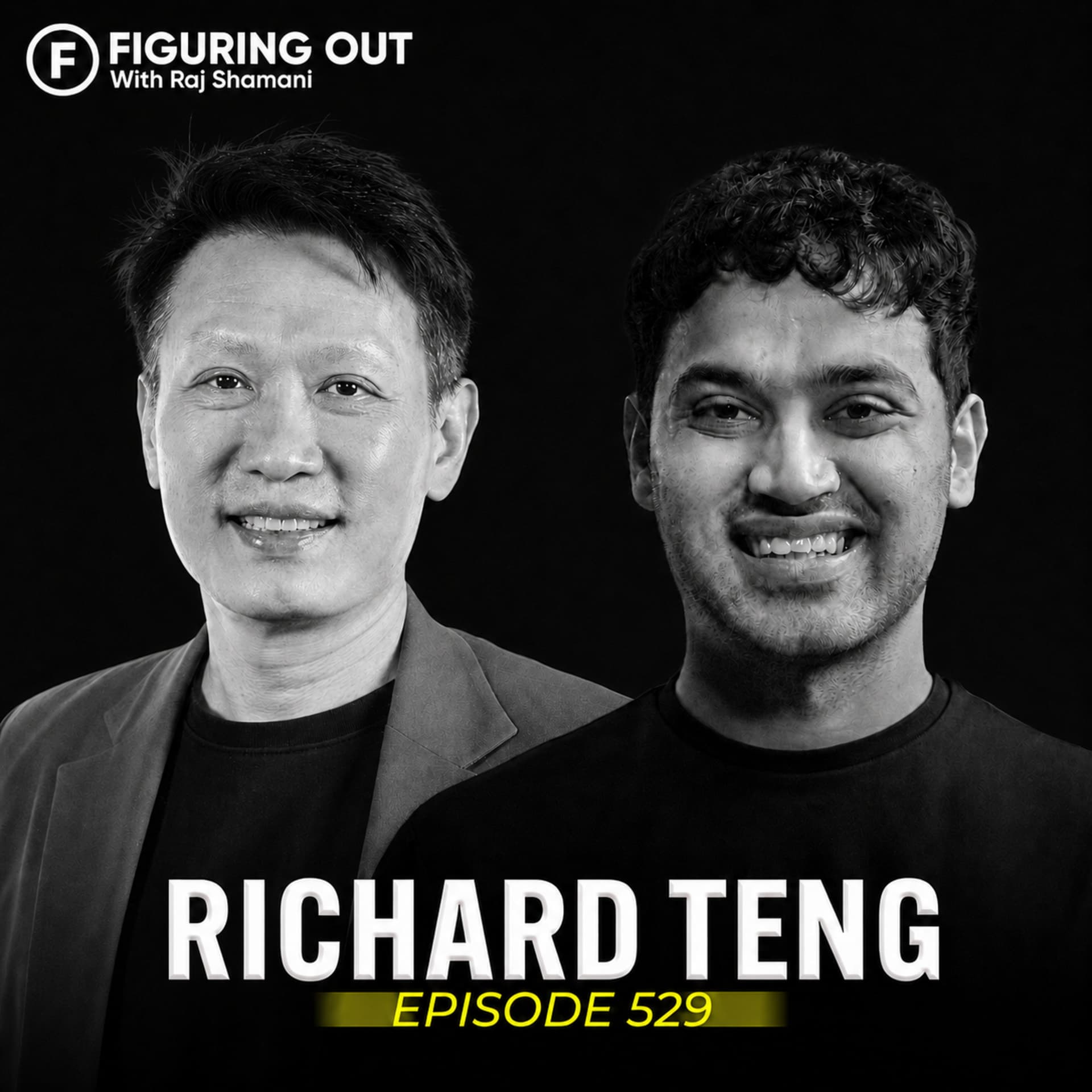
Richard Teng (Binance co-CEO) argues crypto/blockchain will rebuild financial infrastructure: faster cross-border payments (e.g., stablecoins), 24/7 trading, atomic settlement, and tokenization. He disputes “crypto as a dollar alternative,” saying crypto is an asset class and future payment/settlement layer, while stablecoins are still USD-denominated. He claims banks are structurally risky because they lend out most deposits (over 90%) and operate with fractional reserves, while Binance says it holds customer assets 100% with proof-of-reserve and a “home regulator” oversight model. He also addresses AI/agentic trading, saying users must set risk parameters and test agents; scams exist in all finance, but Binance uses AI anti-fraud guardrails.
Guests
Richard Teng, co-CEO of Binance; 31+ years in traditional finance/regulation (Singapore Central Bank; CEO of Abu Dhabi Global Market regulator).
Written by AI. May contain mistakes. Listen to the episode to check what was said.
Chapters
Tap a time to open that second in VOThe Debate on Crypto's Legitimacy
0:00 to 1:56
Exploration of concerns surrounding crypto and its acceptance by traditional finance figures.
“What if some people come together and decide they want to ban crypto?”
Richard Teng's Journey in Finance
3:16 to 4:48
Richard shares his extensive background in finance and his transition to crypto.
“Before we start, I want to ask you if someone's watching you for the first time and they have no clue who you are, and they're like this 1 % audience who has never even Googled you, how would you explain them?”
Future of Financial Services and Blockchain
4:48 to 7:44
Discussion on how blockchain technology is set to transform financial services.
“So if, let's say, you've spent like about two and a half decades, which is 25, 26 years in finance.”
Challenges and Changes in Money Transfer
7:44 to 12:30
Examining the inefficiencies of traditional money transfer and the advantages of crypto.
“So if you rethink the future of financial services, and you rebuild the future of financial services, it's going to look very, very different, even from what we see today, right?”
Understanding the Resistance to Change
12:30 to 14:00
Analyzing why many still cling to traditional financial systems despite new technologies.
“So if you talk to a person 20 to 30 years old, digitally savvy, right?”
The Importance of Technology in Crypto
14:00 to 17:06
Learn how technology drives the evolution of crypto and financial institutions.
“I would say that in the first instance, it's always about the technology, right?”
Evolving Perspectives on Crypto
17:06 to 20:33
Discover how perceptions about cryptocurrency are changing among financial leaders.
“it's about understanding, it's about deep dive and knowing the technology and what it can bring and how it can shape the future world.”
The Role of Crypto in a Changing Financial Landscape
20:33 to 24:30
Understand crypto's role amid discussions of dollar devaluation and global finance.
“And the use case are being developed as you speak.”
Navigating Risks and Scams in the Crypto World
24:30 to 28:00
Learn about the risks associated with cryptocurrency and how to safeguard against scams.
“Who are you trying to so those are things that as a responsible entity we do.”
Understanding Crypto Asset Management
28:00 to 29:18
Learn about how Binance manages customer assets and establishes trust.
“they keep 5%, 8 % in terms of regulatory reserve.”
Show all 20 chapters
The Future of Banking for the Tech-Savvy Generation
29:18 to 31:48
Explore the changing landscape of banking and payments for younger generations.
“traditional financial institutions are not able to do that for customers, so it's a totally different concept.”
The Impact of Crypto on Global Economies
31:48 to 35:32
Discover how cryptocurrencies could reshape economies and financial systems.
“because through a mobile, through a wallet, you can do everything, literally.”
Embracing Innovation vs. Banning Crypto
35:32 to 36:48
Understand the consequences of banning vs. embracing cryptocurrency technology.
“are the two most important technologies that will underpin every economic sector.”
AI and the Future of Trading
36:48 to 39:28
Learn how Binance utilizes AI for trading efficiency and user engagement.
“And they fall behind very, very quickly.”
Regulatory Challenges and Compliance at Binance
39:28 to 42:00
Understand the regulatory landscape and Binance's commitment to compliance.
“Do things that you understand and put in place proper guardrails.”
Regulating the Crypto Ecosystem
42:00 to 43:38
Learn about the need for smart regulations in the crypto sector.
“We have a very strong and robust team now.”
Advice for Aspiring Builders
43:38 to 44:50
Discover essential advice for young entrepreneurs in a changing world.
“in terms of all their financial services needs.”
Sectors Ripe for Transformation
44:50 to 45:53
Explore sectors likely to be transformed by AI and crypto innovations.
“Where there's not a lot of work has done, so somebody can maybe look at.”
Important Investment Advice
45:53 to 46:39
Understand the crucial importance of conducting your own research in investing.
“here's one last thing I've started asking my guests these days I'd really like to ask is what is one advice that nobody should follow?”
Casual Football Discussion
46:39 to 46:51
A light-hearted exchange about football fandom.
“Very important that you are the master of your own money and your own knowledge.”
Transcript
Automatic transcript. May contain errors.0:00What if some people come together and decide they want to ban crypto? It's not something that you will be able to bet. It has now gone into mass adoption. It's a mode in which future financial infrastructure is being built. Warren Buffett, he's been very vocal about not favouring crypto. When you meet people like him, what worries them the most about crypto? I don't think it's something that they worry about. I think it's something that they have not spent enough time and energy to understand. If you look at BlackRock, Mr Larry Finn, CEO. For the longest time, he was a shop critic. And the more he understood it, now he just turned into a keen supporter.
0:36Isn't crypto essentially an alternative for the dollar? I don't think it's going to be an alternative. Crypto is an asset class. In many instances, extremely useful and the best form of transfer of value globally. You had$100 and you can only put in banks, governments or technology companies. Which one do you think will give you maximum return? I would say that in the first instance, it's always about the technology. Then the government and the institutions will come into play. If some builder is watching you right now who is probably in early 20s, what one specific thing they should look at to create wealth in the next 10, 20, 30 years?
1:19I think it's important for them first to understand the different landscape, do deep dives, Focus on building things that will create value, that's sustainable, that has utility about it. There are strong use cases because these are things that people will continue to use to create value for the world, for yourself. So those are the areas that you should focus on. Is there any specific sector that you believe is going to see the disruption in the next 5-10 years? I really believe that. If somebody is just waking up from a coma of 31 years and has no clue what's going on in the world, what would shock them the most about money today?
1:56Before we start today's podcast, if you have found anything valuable from this channel, please subscribe. It's free, it takes less than a minute, but it means a lot to us. And to listen to the audio experience of this episode, please follow us on Spotify. Our today's guest is Richard Teng, co-CEO of Binance, the world's largest crypto exchange with 220 million users globally. He spent 31 years in traditional finance, starting at Singapore's Central Bank, then running Abu Dhabi's financial regulator before moving into crypto. And today, the biggest names on Wall Street, JP Morgan, BlackRock, Standard Chartered, are embracing the same crypto world he leads.
2:39In this episode, we'll discuss, can a digital wallet replace your bank account in the future? Will the future generations ever have a bank account? Is the US dollar really dying or is that just a rumor? Banks lend out over 90 % of your deposits. So is your money really safe in a bank? And if an AI trading agent loses your money, who is responsible for that? Watch this episode till the end and to know more about Binance, check the link in the description below.
3:16Before we start, I want to ask you if someone's watching you for the first time and they have no clue who you are, and they're like this 1 % audience who has never even Googled you, how would you explain them? Who are you? What do you do? Well, currently I'm the co-CEO of Binance. Binance is the largest crypto ecosystem in the world. We are a financial support app. So beyond crypto, we offer our investors exposure, ability to take positions across a suite of products, right? It's not only crypto, it's commodities, it's petrochemicals, it's precious metals, it's US stocks, it's pre-IPO counters as well.
4:01And the products we keep expanding. So we have more than 20 million customers globally and expanding very quickly. So we are part of the global financial infrastructure. But who is Richard? Well, Richard is, I'm trained. I've spent many, many, spent more than two and a half decades in financial. By now, I've been in financial services for more than 30 years. I started my career with the Central Bank of Singapore. Then I was in Singapore Change. and became CEO of Abu Dhabi Global Market, which is a financial services regulator. So my background historically has been in traditional finance, has been in regulations.
4:38I got to discover crypto right about 2017. And the more I deep dive into it, I realized that this is going to be the future of financial services, future of money. Nice. So if, let's say, you've spent like about two and a half decades, which is 25, 26 years in finance. Yes. By now, I spent more than 31 years in finance. Perfect. So it's 31 years now. So if somebody is just waking up from a coma of 31 years, and has no clue what's going on in the world, what would shock them the most about money today? Well, the concept of financial institutions and the concept of money are rapidly changing. I grew up in an era where it's a brick and mortar wall so if you want to set up a bank account you have to go to a bank you need your thumbprint on the passbook there's no widespread ATM there you need to do a withdrawal you queue up in the branch so the innovation has happened a bit slower throughout the past two decades but it has happened to quite a fair extent.
5:58But blockchain technology, crypto, has the ability to transform all that. So if you rethink from now on the future of financial services and given today's tools, architecture, infrastructure, and I say build a new bank, build a new securities firm, build a new asset manager, you'll not be the model that you see in the past. It will be something that's totally different because with the usage of blockchain and AI, the future of how a bank provider, a payment provider, exchange looks like will be totally different. So many things can be fundamentally changed. We are living in a very legacy system that has plenty of challenges.
6:45if you do a bank transfer today cross border it takes two to three days it takes huge costs right so if you look at for example india has more than 100 billion of remittance right in any given year and if you look at the fees that the bank charge six to seven percent so you're thinking of six to seven billion dollars that you know that can be substantially safe and give to given to your loved ones, to your families, to the vendors that you need to pay. But if you do that via stablecoin and crypto, right, those money can go to your loved ones, your vendors. The money can reach the end recipient in an instantaneous basis.
7:28Payments can be done. There's certainty of how much capital a corporate needs, right? Instead of holding a large amount of capital, if you have certainty of when the money is going to reach the end recipient, you don't have to hold so much capital, right? So there's a much more efficient way of doing. But this chain is replicated in every aspect of financial services. So if you rethink the future of financial services, and you rebuild the future of financial services, it's going to look very, very different, even from what we see today, right? So stablecoin is just starting to take off with clarity provided by the Genius Act.
8:03And many other countries around the world are now embracing stablecoin I'm coming out with clear legislation. I mean, if you think about it, one of the biggest problems with trading today is you can only trade within a certain amount of hours a day, right? Whether it's 9 to 5, whether it's 10 to 4, depending on the countries you are in, it's helped by, you know, it's constrained. And people don't realize the amount of liquidity risk that institutions, the corporates, the retail have to bear. Once the market closes, so to say, if there's anything that's happening in the world in terms of news flow, you can't take on new positions.
8:44You can't hedge your risk. You can't offset your position. So you're bearing a lot of risk until tomorrow the market opens and the price point opens at a totally different level. So if you think about it, isn't it better if you are allowed to do 24-7, manage your risk effectively, whether it's through human, whether it's through AI intervention, etc. So that is what crypto has already offered, 24-7 trading from the start. So the future will, in terms of how all these things are being managed, will be very different. Many securities companies in the world, exchanges, still operate on T plus two, right?
9:27So during that two days of clearing and settlement, there's a lot of risk that's being bought. In crypto, we have already moved to atomic settlement. It's instantaneous because the technology provides for them. So if you think about it, there are so many facets within financial services that will be transformed very drastically. Once you have more and more institutions, and once you have more new fintechs, more new providers coming to the market, providing much better alternative of how financial infrastructure will look like, the transformation will take place very quickly. See, all of this, to you, it sounds very obvious, right?
10:06And because you're in this world, you understand this and probably for 5-6 % people in the world also this sounds obvious and that's why they're betting towards this future, right? But for a lot of people, majority of people, they still believe in the old way of money. That money is still powerful. That money is still the most important source for them, right? So what do you think? Why people still hold on to it? Or rather, I would say, what is that one lie about money that people still believe today? You're brought up in the world, right? That the only sensible way or the only way that you can transfer money is you go up to a remittance house or you go to the bank and say that this is how I send money to the...
10:48Firstly, it's habit. And secondly, you are not open up to new areas of growth and new areas that you can do that much quicker. And thirdly, it's structural, right? There are a lot of structural impediments. Even today, the way financial institutions are engineered, they're structured in a certain fashion, right? In the front office, there's middle office, there's back office. Middle and back office do certain functions. they have to go through reconciliation, they have to go through accounting settlement. But if another competing bank come through or another big bank to say that, look, I'm going to do middle and back office very different.
11:31I'm not going to do reconciliation because I don't have to. Once we blockchain technology, everything is immutable. So reconciliation become irrelevant. right so once all those structural changes come through both in terms of the financial institutions itself but in terms of financial landscape right so with stablecoin coming through and growing so rapidly with real assets tokenization coming through so even the swift of the world are forced to look at it and say hey look we're going to support blockchain right so it's also habit and it's also literacy and awareness. But once a lot of all these things come through, then people realize through media, through education, through your friends to say, instead of paying 6 to 7%, you can pay 0.1%.
12:27Isn't this much more superior? But that change, especially depending on demographics, may come through differently. So if you talk to a person 20 to 30 years old, digitally savvy, right? Using mobile most of the time, they know how it works. They will be the first embracer of this, definitely. And then if you go up the age group in the value chain, those chains will take a slightly more time, right? For them to embrace it. But it will come through because technology will come through. It's just like initially when the internet came through, did the embracement take place overnight? No, right? It'll take period of time.
13:09It'll take for mobile penetration, internet penetration to take place. So that penetration will take place. So it's a matter of speed. Let's say if you had$100. Yes. And you had to, you can only put in banks, governments, or technology companies for the future who can either bring change and actually end up giving you a lot of power, compounding or whatever you want to put it. And you're saying that$100 is from a private investor or? From a private investor, just you. You cannot afford to put$100 in the government. Government has its own funding and has its own mechanism. There's no way that you can put it.
13:54Let's say all three have had one stock and equally priced$100. Which one do you think will give you maximum return on the scale of power? northern scale of actually money? I would say that in the first instance, it's always about the technology, right? Without the technology, without showing the world the capabilities, right? The rest may not follow, right? So like it or not, regulations is always half a step, one step, one half steps behind, because the regulations can never keep up with changes and the new technological advances. So it's very important that we place the emphasis on technology, on the use case, on the utility.
14:39How do we transform the world? Same that you're seeing in AI. I mean, the regulations don't come in first, right? Same that you're seeing in quantum computing, etc. Because you have to prove that this has the ability to take root. This has the ability to transform. and present a much better use case than what is the current state, right? Without that, the government doesn't know what it's looking at, right? The financial institutions are not understanding what it's going to look at. So I would say in the first instance, it's always the technology. The technology is the most important part. You have to show what is the future state, what is the use case, what's the utility, right?
15:22How do you bring about the development? How is it a technology that can bring about betterment for the people right so those are extremely important then the government and the institutions were coming to play warren buffett right and he's been very vocal about not favoring crypto yes yes charlie munger and him they both have said it multiple times in multiple locations yes so when you meet people like him or people who believe in that kind of philosophy, what worries them the most about crypto and this new asset class? I don't think it's something that they worry about. I think it's something that for the skeptics is something that they have not spent enough time energy to invest, to investigate and to understand, right?
16:12So for the longest time, some of the largest money manager in the world, some of the largest financial institutions are skeptics and critics, right? So if you look at BlackRock, Mr. Larry Finn, CEO. For the longest time, he was a sharp critic of crypto. And then the more he understand it, now he has turned into a keen supporter. Jamie Dimon, one of the sharpest critics for the longest time, for seven years, has been coming out to say negative things about crypto. He has changed his stance, right? The more he understands it and what this technology represents and how you can transform financial landscape.
16:51Now JP Morgan is trying to work with, for example, DBS on tokenized deposits, which is an important use case for cryptography, for blockchain as well, right? So they are starting to embrace it in a very, very quick way. So it's about that awareness, it's about understanding, it's about deep dive and knowing the technology and what it can bring and how it can shape the future world. Do you think one of the reasons for a lot of these people to change their stance is about dollar devalue? Well. Like everybody keeps saying that dollar is dying. There are many people that may subscribe to that view.
17:33I actually don't. You don't? I don't. And I can explain to you why. I think there are countries that want to move away from dollar denominants. I think that's a fact. And that fact has been in existence for a long period of time. But for that to come true, you need several elements to come into play. So today, if you look at globally, which is not only a reserve currency, but a safe haven currency, essentially that's just US dollars, right? So why are we in this current state? Because the US dollars is used as a denomination for majority of all the trade flows, right? So global trade flows is denominated.
18:25You have a world infrastructure under the existing system, pretty much controlled by the US financial system, right? If you look at just US equities alone, it accounts for close to 60, 70 % of equity value of the world, right? If you want to do a fundraising, right, at high valuation for a tech company, where do you go to? The US market, right? So again, because of all that different parts of the ecosystem, them. Are you able to move quickly? No. Would all the different countries want to come out with their own solutions? Definitely. So CBDC, for example, is what the countries wanted to do to also try to de-risk from US currency.
19:20But that will take some time, right? And whether those experiments are going to be used, is going to be transformational. It really depends on what is being embarked in those experimentation. True, but then isn't crypto essentially an alternative for the dollar? Well, I don't think it's going to be an alternative. I mean, if you look at most of the stable coins today, it's still denominated in New Year's dollars. So, So crypto is an asset class, right? It is, in many instances, extremely useful and the best form of transfer of value globally. But the transfer of value has to be denominated in something.
20:13So I don't see crypto as that. And the crypto usage goes way more beyond just a mode of transfer of that. It's a store of value used in most instances. It's a mode of payment. It's a mode in which future financial infrastructure is being built. It's a mode that really facilitates 24-7 settlement pure asset tokenization. And the use case are being developed as you speak. In the DeFi space, there are so many new different projects. So in the payment space, again, in the RW space that has grown by 25 times in the last year alone. The script is just being rewritten at this point in time. There are so many strong use cases coming through.
21:00So it's just not one dimension. Crypto is giving a lot of freedom to people, right? Yes. There's not going to be a bank in the middle or no government in the middle or no charge, which is 6-7%, essentially comes down to 0.1%, right? So it's like a lot of freedom for people to not put their trust into one institution, right? But that's also a gateway and freedom for, let's say, a scammer or a dictator or a trafficker to just attack an individual. So maybe this technology, which is empowering a lot of freedom, is at the same time empowering a lot of bad actors. So do you think about that sometimes that both sides are just getting empowered at the same time with the technology?
21:48same with any technology so just let me elaborate a lot more the scammers, the fraudsters has existed for the longest time within financial services I don't know whether you do this, you receive this in India but in Singapore we receive a lot of scam calls people and even people masquerading as our prime minister asking for transfer from banks and one unfortunate individual has been scammed to transfer$4.9 million if you look at the press article. So scams, fraudsters exist in any situation, especially the advent of technology such as AI. People have to be very, very cautious. So there are areas that we need to continue to invest in, both in the traditional financial institutions to provide enough guardrails.
22:45but for our users for the global users whether they are users of financial institutions or crypto they have to do a lot of understanding research don't trust all these things coming through have an independent mind don't just trust I mean normally the scammers play up to emotions to say that if you don't do this there's either a risk right you have to give me access otherwise your account will be you know accessed by other people etc so i'm trying to secure your all opportunity it's too good to to miss right i'm going to offer you how many percent return etc so whatever it is you have to be prudent and be cautious in whatever format that's coming through so it's not limited right unlike what you say in crypto.
23:41It happens all the time in financial institutions. So I think that's one. But as a responsible entity, we have built in so many guardrails, right? And we are utilizing this technology in many sense that financial institutions are not utilizing. So for example, on the cybersecurity side, we have invested very heavily. We have invested, you know, today we have more than 100 AI models just doing anti-fraud scanning. And last year alone, we helped our users avoid close to 7 billion in terms of pretentious scams, right? More than 5.4 million users, close to 7 billion in pretentious scams. Because using all this new technology, we have the ability to detect that.
24:27And when our users want to transfer funds, we warn them, are you sure about this? Who are you trying to so those are things that as a responsible entity we do. You know on this point I have a rather philosophical question to follow up. If you look at money in the entire human time in the last 5000 years of our history we always needed someone who we trusted. Some kind of king some kind of temple or a bank or a government or something in the middle where we trust it right crypto for the first time is where we all are coming together and we are like we don't trust someone we trust math we trust some code or some math formula right so are we moving away from trusting an individual and outsourcing our what do you say outsourcing betrayal to a form of math or a form of code?
25:28No. So, what you say is not true. So, in the very early days with butter trade, the transfer of value is different. And if you remember, if I bring you back 16 years, how Bitcoin manifesto came about was really loss of faith, faith not of the central authority but of the centralized platforms the Lehman Brothers collapse etc etc financial institutions not being to manage the risks you know you can see those collapse coming through and people feel disenfranchised when something collapse they can't do what they need to do via proper transactions, the system froze. You have a central party in that.
26:22So that's how Bitcoin was then said, look, this is a better alternative way of payment, where you disintermediate from a centimeter man. There's a lot of vagueness and it's opaque. we do not know what's in there, we do not know how they're regulated. The central bank say they're properly regulated, then how can they fail? So it's slightly different, and that then takes root among a group of early adopters, early believers to say, this is way superior. Instead of letting a middleman take 6%, 7%, 10 % of my transfer, why shouldn't I do this using technology which is far superior? And today it has transformed, right?
27:13So if you look at stablecoin, it's one of the most important use cases of that technology. But even the banks are embracing it now. So if you look at global banks like Standard Chartered HSBC, they say that, you know, we're going to issue stablecoins that have gotten licenses in jurisdiction, including in Hong Kong to do that. So this technology is proving itself to be important and relevant and changing how future remittance, how future payment, how the future of financial services will look like. Aren't you as Binance as becoming the middleman? So we are a centralized firm. Like the concept you were against, you guys are becoming the same concept.
27:54No, so that's different. So the banks operate on a fractionalized reserve basis, right? So for every$100 that they get, they keep 5%, 8 % in terms of regulatory reserve. They then lend out the rest of their money, right? So it's about risk management. For us, it's different. Customer's money, 100%. And because we have this technology, we introduce proof of reserve so that customers can at any point in time check on the chain, check the address that the money, the assets are there, right? So at any point in time, we hold north of 140 billion of customer assets. But those assets are properly safeguarded.
28:37And we became the first global exchange to have a home regulator. So other than 20 over countries that we are regulated in, we are the only one with a home regulator that regulate us on an end-to-end basis. So not just about AML, transaction monitoring, how we do our know your customer, know your business, how we do enforcement, these things. our global equity is regulated but also areas of how we custodise, how we safeguard money when we do our proof of reserve, which gives transparency to our customers that your money is held safe where you can verify all this the financial institutions traditional financial institutions are not able to do that for customers, so it's a totally different concept.
29:24If you were 18 today, would you open a bank account? Well, it really depends. It depends on whether I'm technologically savvy, right? So if I'm I-18 and not technologically savvy, and depending on whether there are banks in my country, if you look at, I mean, I've been in financial services for more than 30 years. Since day one, central bankers, financial institutions around the world say that we have to bring about greater financial inclusion. But as of today, you have 1.4 billion people around the world with no access to proper payment system, with no access to proper banking system because financial institutions are making it too expensive.
30:02They don't want to serve this group of people. So what's the alternative? What's the option? It is crypto. It is blockchain technology. It is Bitcoin. So I go around the world to many parts of the frontier market, global south, emerging markets, where people come out and thank me and thank Binance because their life has improved tremendously once they got to know, firstly, crypto, secondly, Binance, using it as a platform for store of wealth, for transfer of value, etc. Because they get access to things that they couldn't get access before. So those are extremely important. So I would say that if I'm 18, definitely, I believe I'll be savvy enough, hopefully.
Read the full transcript
30:51And I would definitely, embrace this. Because I will give you a situation. The future will, if you think about it, you don't need, you don't necessarily need a bank account, but you definitely need a wallet. So the wallet infrastructure is very, very important. So through your wallet, you get payments from your employers. It could be in a form of stable coins coming in on a monthly basis. From there, using a combination of AI and blockchain, you can pay your normal bills, whatever bills that you need to pay you can then do using that diversification you can have a balanced portfolio having to invest in equities commodities, credit part of it will go to earned product and savings everything can be managed out from that wallet so the concept of a banking institution to the future generation might I believe look very different as we continue to evolve because through a mobile, through a wallet, you can do everything, literally.
31:55So do you still need to go to a bank to set up a bank? No, what you need to is a wallet, which is why it's very important to think forward and rethink the future of the world and what's coming. So if you look at, we continue to invest very heavily into our Web3 wallet on that front. Today, our market share stands at north of 80%. So we believe that all this technology and infrastructure, these are infrastructurally extremely important for the future. So you believe that the wallet infrastructure will become more important than the bank infrastructure? Absolutely. At some point? Absolutely. Do you think our kids will talk about bank accounts the way we talk about fax machines?
32:40I don't know, but my kids doesn't quite talk about bank account anymore. Yours should not. So, but, you know, different economy have different set up, right? And different economy evolve and innovate at different pace. So it really depends. But I would say that the more the evolution goes, the more prevalent and important all this new technology, all this new way of working. Because today, once I give you a much better alternative, you will not go back to the past alternative. You will demand the future alternative. why am I paying 6 % to 7 % if I can do 0.1 %? Why am I not allowed to take positions when there's 24-7 trading, right?
33:31Why do I have to wait for 2 to 3 days if I can do transfer on an instantaneous basis? It's not only the retail is asking that, the corporates are doing that. So you look at all the very big corporate treasuries, they are moving to say, look, on a daily basis, I need to transfer hundreds of millions of funds from Australia to Europe to US to different parts of Asia. I need to allocate that. Isn't it better to make use of stablecoin or crypto technology to do that transfer so that I have to hold less capital? My capital is put to better use. It's much greater efficiency. I save a lot of costs for the organization.
34:08And I have certainty for myself, all my subsidiaries, all my vendors, when are they going to receive the payment? That brings about greater capital velocity, there's a better alternative. And once they do that, they will not go back to the existing state of the place. True. You said it depends on different economies how the manifestation will take place, right? And it's an important question that different economies will function in different ways. They will have different thought process. What if some people come together and decide they want to ban crypto? What happens then? Well, you have countries that ban crypto, right?
34:50But as with technology, you can try to curtail it, you can try to ban it, but the technology will continue to advance very, very quickly, right? Like it or not. And there are many countries around the world that are embracing it. Crypto is becoming mainstream. You can't turn back the clock now, right? So the longer you actually ban this technology, the further behind the value chain the country will be. and over time actually impacts a country's competitiveness. But those are country level consideration. Those are policy consideration. Countries will have their own consideration to take into play why they do certain things.
35:26But from a competitive angle, as I mentioned, AI and blockchain, crypto technology are the two most important technologies that will underpin every economic sector. If you think about every sector, economic sector in the world going forward, whether it's trade, whether it's financial services, whether it's media entertainment, every sector can be rebuilt using these two fundamental technology. They will look extremely different five, ten years from now compared to the current state that we see today. So it won't be completely banned? It's not something that you will be able to ban. It has now gone into mass adoption, right?
36:06So my view, but mine may be wrong. A lot of times it's much better to embrace the technology, to embrace it and to regulate it. Then you have proper oversight of the technology, what is that, and then you can put in place guardrails. So a lot of countries, I mean, if you look at the history of the world, countries that close themselves off to the outside world tends to fall behind very quickly because they are not in touch with the latest innovation, the latest technology in the past world, history. They don't get access to military technology like gunpowders, etc. And they fall behind very, very quickly.
36:50So every time the country shut its borders, etc. and don't continue to embrace innovation and all these new changes coming through, there's a risk to the country. Another technology I was reading some comments that you guys are using AI agents a lot in Binance right? Are you using AI agents for better trading as well? Absolutely so we use AI across the organization so for example this year every business unit leaders the mandate is to make every function within Binance much more effective and much more efficient with the usage of AI. And then from our user level, it's also giving them the right tools through AI to facilitate that.
37:38So we introduced Binance AI Pro, where you can do proper analytics, you can do assessment of analytics, you can do trading on it. And the future will, again, of all the other things I mentioned, is one that agentic trading is going to be prevalent, right? So agentic trading, agentic payment is going to be prevalent. So if you think about it, all these are important usage of blockchain and important usage of payment going forward will be stablecoins and crypto because once you use agentic, you know tokens burn. I mean, if you talk about cents, you can't afford to make payments using your traditional card payment or traditional banking payment because it's too costly.
38:29So crypto instantaneous transfer, low cost becomes the natural default currency for AI. That's why we always say that crypto stablecoin are the natural currency for the AI generation because of all these changes that you're seeing, right? And agentic trading coming through, agentic payment coming through. it's only natural that the evolution will continue to evolve very very quickly explain me agentic trading it's like on my behalf an agent will trade yes so you give the so what if an ai agent loses my money at 3 a.m who do i who do i blame the ai the ai model you have to make sure that your proper risk parameters right you have proper cut loss measures etc i mean you for for experienced trader you know what to do you can build in all these gut reels for yourself But who do I blame?
39:22Let's say some bug feature happened and then my agent ended up losing my entire life savings on your platform. Safeguard all those, right? Do things that you understand and put in place proper guardrails. Don't have fat finger. In the traditional world, you have fat finger as well, right? So have proper safeguards and it's very important that you test the agent to make sure he's doing all the right things. Even after putting proper safeguards, would you trust AI agent with all your money? It's about risk diversification, right? But would you trust yourself? I would make sure that I test it properly first.
40:00I make sure that there's a proper track record of how it's operating before I continue to invest. As I always say, start small. Make sure that you understand it. make sure you understand the potential and the pitfalls of anything, anything that you put your money into, because it's your money that you're dealing with before you continue to expand that portfolio. But here's the scary part about it, right? What if in my first few trades, I end up making money with my little amount, and then I put my own amount, and then with my AI agent... Then you're not being prudent. Then my AI agent messes up the entire thing.
40:36No, that is not. It's all about risk management. It's very important to make sure that the AI agent is tested for different market conditions,
40:49different situations and circumstances. So it's very important for you to test the parameters and you know what we're getting into. And what was the toughest thing for you personally as a CEO when you took over? Well, I do think that is stating the ship and working through with all the regulators. around the world to show that we have pivoted very, very strongly. We have invested greatly into compliance. I mean, financial institutions make mistakes. It's not only us, but you look at all the global financial institutions, they bridge law, they bridge AML provisions at some point in time. The rules and standards are ever evolving, so we need to keep pace with those rules and standards.
41:34But what is important as we've responsible entities like ourselves is to acknowledge those mistakes, make the right investments, and then come out of it much stronger, which we have done. So we have demonstrated that, okay, we make mistakes. We have underinvested in compliance. Now we have made huge commitment to compliance and invested greatly. We work with global regulators to embrace regulations, to embrace compliance. We have a very strong and robust team now. And we continue to work very closely with policymakers. regulators around the world so that good regulations, smart regulations are being promulgated to regulate this sector for the benefit of everybody.
42:18We want proper regulations. Our interests are aligned with users and aligned with regulators. We want a responsible ecosystem in place that's properly regulated for the benefit of everybody. So our interests are all aligned, is how do we get there and to make sure that smart regulations come true. Instead of one-dimensional regulation that just focus on risk, we should then make a rare purpose of legislation because for any legislation that just focus on risk without also supporting innovation and growth, then it's going to be very challenging. As an ex-regulator, I can tell you that the easiest form of regulation is to regulate everything to the ground, is to have zero risk.
43:01But when you have zero risk, you have zero activity. How is it going to benefit the economy and the people, right? So you need to come up with a balanced, smart regulations to support both sides. In Binance, I hope I continue to do the same as an enabler, as a builder, working with a fantastic team, right? So I have the founders, co-CEO, E, working alongside. We have many brilliant people. And we continue to believe that we need to continue that mission of Binance, which is the freedom of money, build the best platform out there into a financial support to serve our users in terms of all their financial services needs.
43:40And that's where we are heading towards. See, so if one, some builder is watching you right now who is probably in early 20s want to build his career or her career, right? The money is changing. World is changing. AI and technology is changing. Geopolitics is changing. so many changes happening in the world. What should they focus on or which industry perhaps or what one specific thing they should look at to create wealth in next 10, 20, 30 years? I would say that the technology will always come through, right? So there will always be new technology coming through. The sectors will always evolve.
44:21The opportunities will always evolve. So I think it's important for them first to understand, spend as much time possible, understand the different landscape do deep dives but it's also understanding if they are a builder focus on building things that will create value it's very important right so if you focus on building things that will create value that's sustainable that has utility about it that's strong use cases you won't go too far wrong right because these are things that people will continue to use to create value for the world for yourself so those are the areas that they should focus on continue to look at ways to create new value or enhance existing value Is there any specific sector that you believe is going to see the disruption in the next 5-10 years?
45:06I would say that. Where there's not a lot of work has done, so somebody can maybe look at. I really believe that every economic sector in the world will be transformed using AI and crypto. Entertainment, right? Payments in entertainment, for example, you'll be totally transformed. supply chain financing will be totally transformed using AI and crypto. Financial services, I think we have touched on. But if you look at even different type of sectors, there are so many sectors with so many opportunities. There's ripe for transformation. So if you inject the right lens, if you have the right expertise and you use the right technology, you can create a lot of new value in each of these economic sector.
45:53Got it. Well, thank you so much. here's one last thing I've started asking my guests these days I'd really like to ask is what is one advice that nobody should follow?
46:09Hey I have this great investment that can generate huge returns for you so don't trust those do your own research it's extremely important just don't trust I mean just don't trust what other people tell you without understanding, without researching, without analyzing. It's going to be challenging. So importantly, do your own research. Very important that you are the master of your own money and your own knowledge. So invest time in all those things. Alright, thank you so much. That's a great one. Thank you so much. Thank you. So I was in Budapest So I saw the match Between Are you a PSG fan Or Arsenal Actually I'm A fan of football I'm not a fan of both clubs But I think You know They are Very very good clubs And play But it's very tight football That they play on the finals Very very cautious Very tight football Which is your favourite club?
47:16Liverpool poo. Thank you so much for watching this episode till the end. Now you have to do three things. Number one, subscribe to this channel right now. The more you subscribe, the better the guests we will be able to get for you. Number two, please comment and let us know what did we do wrong and what did we do right. Because the more you give us feedback, the better we will be able to make episodes for you. And number three, please share this episode with at least one person because one conversation can change someone's entire life. I'll see you next time. Until then, keep figuring out.
From the publisher
Checkout Binance here: https://binance.onelink.me/mL1z/lwxwlhlo
Get your hand-picked playbook here: https://www.figuringout.co/pdf/fo-529
Guest Suggestion Form:
Disclaimer: This video is intended solely for educational purposes and opinions shared by the guest are his personal views. We do not intent to defame or harm any person/ brand/ product/ country/ profession mentioned in the video.
Our goal is to provide information to help audience make informed choices. The media used in this video are solely for informational purposes and belongs to their respective owners.
(00:00) - Intro
(03:17) - Who Is Richard Teng?
(04:50) - What Would Shock People Most About Finance Today?
(10:01) - One Money Myth People Still Believe
(13:19) - If He Had $100, Where Would He Invest?
(15:35) - Why Don't Some People Favor Crypto?
(17:15) - Are People Embracing Crypto Because the Dollar Is Devaluing?
(21:02) - Is Crypto Empowering Fraud Along With Independence?
(24:36) - Are We Moving Away From Trusting Individuals?
(29:25) - Would He Open a Bank Account if He Were 18 Today?
(34:23) - What Happens if Countries Ban Crypto?
(37:05) - Are They Using AI Agents for Better Trading?
(40:56) - His Toughest Challenge as CEO
(43:43) - Sectors Youngsters Should Focus on to Build Wealth
(45:54) - One Piece of Advice No One Should Follow
(46:51) - BTS
(47:20) - Outro
In today's episode, we sit down with Richard Teng - Co-CEO of Binance, the world's largest crypto ecosystem with 220 million customers a former central banker with 31 years in finance who went deep on crypto in 2017 and never looked back.
Subscribe for more such conversations.
Follow Richard Teng here:
Instagram: https://www.instagram.com/tengrich/
LinkedIn: linkedin.com/in/richardtengofficial
X: https://x.com/_RichardTeng
Follow Binance here:
Instagram: https://www.instagram.com/binanceforin/, https://www.instagram.com/binancesouthasia/, https://www.instagram.com/binance/
Linkedin: https://www.linkedin.com/company/binance/
X: https: https://x.com/BinanceForIN, https://x.com/BinanceDesi, https://x.com/binance
About Raj Shamani
Raj Shamani is an Entrepreneur at heart that explains his expertise in Business Content Creation & Public Speaking. He has delivered 200+ speeches in 26+ countries. Besides that, Raj is also an Angel Investor interested in crazy minds who are creating a sensation in the Fintech, FMCG, & passion economy space.
To Know More,Follow Raj Shamani On ⤵︎
Instagram @RajShamani https://www.instagram.com/rajshamani/
Twitter @RajShamani https://twitter.com/rajshamani
Facebook @ShamaniRaj https://www.facebook.com/shamaniraj
LinkedIn - Raj Shamani https://www.linkedin.com/in/rajshamani/
About Figuring Out
Figuring Out Podcast is a Candid Conversations University where Raj Shamani brings raw conversations with the Top 1% in India.


