
In short
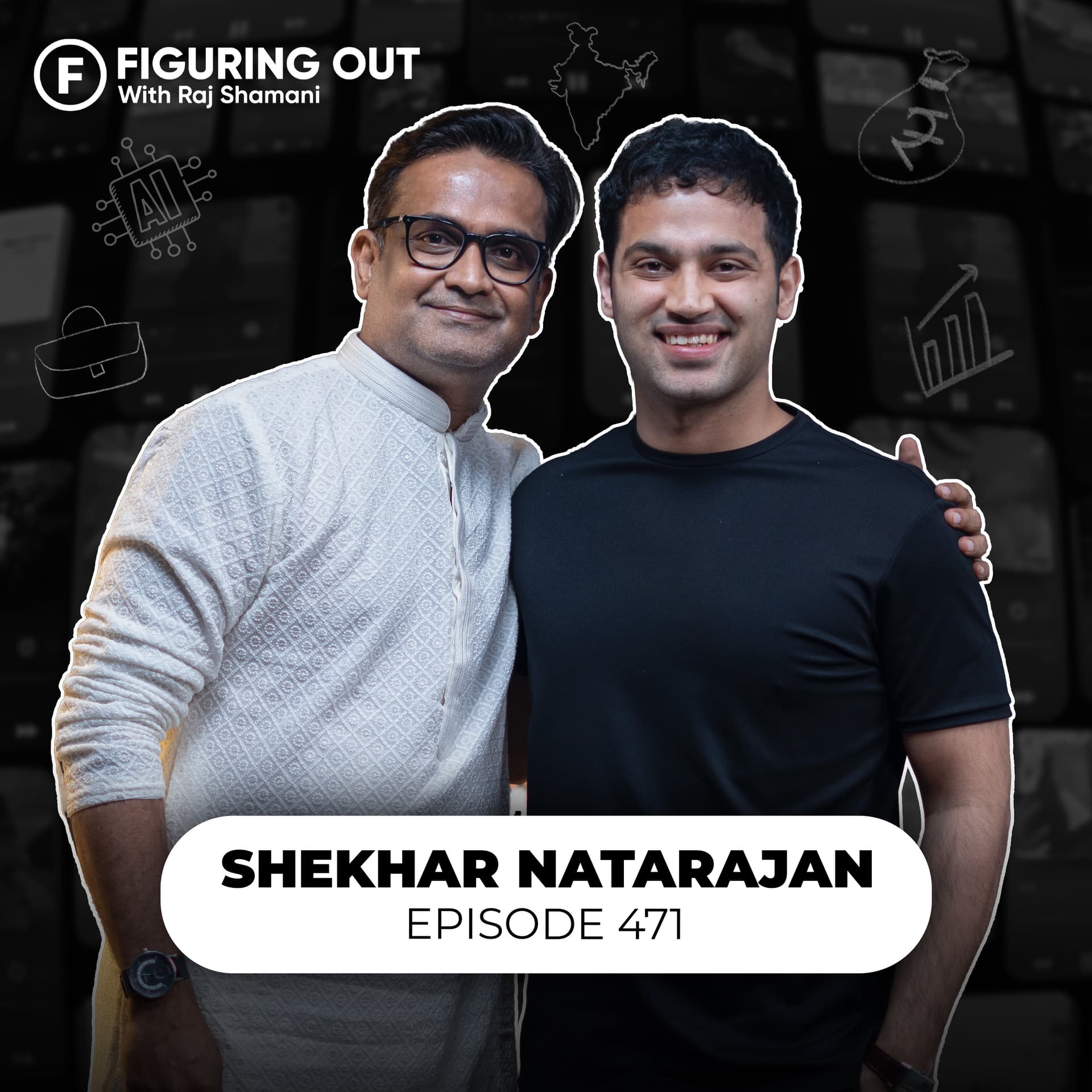
Podcast Summary: Figuring Out with Raj Shamani - Episode with Shekhar Natarajan
Overview In this episode of "Figuring Out," Raj Shamani interviews Shekhar Natarajan, Founder & CEO of Orchestro AI. The discussion spans Shekhar's journey from poverty in the slums of India to leading roles in major corporations like Coca-Cola and PepsiCo, and his insights on AI, business, and life.
---
Key Themes
- Childhood and Overcoming Adversity
- Background: Shekhar shares his humble beginnings growing up in slums with limited resources and how his family prioritized education and survival.
- Family Sacrifices: His mother sold her jewelry for his education, highlighting the theme of sacrifice and determination.
- Life Lessons from Poverty: Shekhar emphasizes the invaluable lessons learned from his struggles, such as resilience and empathy.
- Career Journey
- Coca-Cola Experience: Shekhar discusses how he landed a job at Coca-Cola despite significant obstacles, such as visa challenges and competition for jobs.
- Innovations in Business:
- At Coca-Cola, he proposed a radical shift in inventory management, resulting in reduced operational costs.
- Transition to PepsiCo, where he learned about the importance of understanding corporate culture.
- Disney Collaboration: He recounts his role in helping Disney enhance customer experiences through technology.
- Insights on AI and Digital Transformation
- AI and Creativity: Shekhar debates the potential of AI in creative industries and argues that technology should enhance human creativity rather than replace it.
- Angelic Intelligence: Introduced by Shekhar, this concept refers to technology that mimics the positive attributes of humanity and aims to solve real-world problems.
- Digital Colonialism: He warns of a future dominated by a few tech giants, discussing the implications of digital colonialism on culture and values.
- Opportunities for the Future
- Call to Action for Youth: Shekhar encourages young individuals to harness digital tools effectively and to cultivate their cognitive abilities.
- Health Prediction Technologies: He identifies health prediction and education as critical areas ripe for innovation, drawing from his personal experiences with family health issues.
---
Important Discussions
Challenges in AI
- Circular Economy Risks: Shekhar discusses the potential dangers of an inflationary bubble in tech companies like Nvidia, where money circulates without creating real value.
- The Importance of Intent: Emphasizes that the right intentions can guide individuals toward success and fulfillment.
Reflections on Major Companies
- Disney's Future: Shekhar expresses confidence in Disney's ability to grow despite current challenges due to its strong brand and emotional connection with consumers.
- Nvidia's Market Position: He predicts challenges ahead for companies overly reliant on GPU sales without clear market need.
---
Conclusion The episode encapsulates the essence of resilience, innovation, and the transformative power of technology. Shekhar Natarajan's journey serves as a motivational narrative that encourages listeners to overcome their challenges, embrace change, and seize opportunities in the evolving digital landscape.
Action Items for Listeners
- Engage with digital tools and technology to optimize personal and professional growth.
- Explore opportunities in health tech and education.
- Cultivate a mindset focused on empathy and problem-solving.
---
For further engagement, listeners are encouraged to subscribe to the podcast, share their thoughts in the comments, and continue the conversation around the insights shared in the episode.
Written by AI. May contain mistakes. Listen to the episode to check what was said.
Chapters
Tap a time to open that second in VOThe State of AI and Business
0:45 to 3:00
Discussion on Nvidia, business challenges, and the future of major companies.
“Look at all the deals that Nvidia is making.”
Shekhar's Humble Beginnings
3:00 to 6:00
Shekhar shares his story of growing up in slums and the struggles faced.
“and for his education, he had to buy his mother's jewelry.”
Family Dynamics and Support
6:00 to 10:00
Exploration of Shekhar's family dynamics, education struggles, and parental sacrifices.
Education and Overcoming Adversity
10:00 to 13:00
Shekhar discusses the importance of education and overcoming life challenges.
Mental Health and Family Support
13:00 to 14:00
Insights on mental health challenges within Shekhar's family and societal perceptions.
Reflections on Family and Struggles
14:00 to 15:00
Explore the challenging dynamics of Shekhar's family life and his father's journey.
“Vithal Rao so he told me once again my dad to the other day that I will help your son.”
Educational Aspirations and Setbacks
15:00 to 16:20
Learn about Shekhar's educational journey, including his father's efforts to send him to study in Germany.
“And he was like, Where did Germany join all the money?”
Overcoming Adversity
16:20 to 17:40
Discover how Shekhar faced significant challenges while pursuing education in a new country.
The Reality of Poverty
17:40 to 19:00
Understand the deeper implications of poverty beyond mere financial struggles.
Lessons from the Slums
19:00 to 21:00
Gain insights into the valuable life lessons Shekhar learned from living in poverty.
“Some admissions, basically everything that I applied, they ended up like without any kind of assistantship.”
Show all 55 chapters
The Journey to Higher Education
21:00 to 23:00
Explore Shekhar's quest for higher education and the pressure to succeed.
“I was reading a story where you joined Coca-Cola.”
Navigating the Job Market
23:00 to 26:00
Learn about Shekhar's experiences and challenges in the job market after graduation.
Innovative Approaches to Job Applications
26:00 to 28:00
Discover Shekhar's creative strategies for securing employment in a competitive field.
Understanding Supply Chain Dynamics
28:00 to 29:19
Learn about the challenges and intricacies of supply chain management.
First Job and Early Challenges
29:20 to 31:38
Explore Shekhar's journey into his first job and the difficulties he faced.
“I was stuck and I didn't think that I had to get on the first stop.”
Persistence in Job Applications
31:39 to 34:23
Discover Shekhar's relentless pursuit of a job at Coca-Cola.
“So I'm going to get you Where do you get me?”
Innovations at Coca-Cola
34:24 to 36:55
Delve into the innovative changes Shekhar introduced at Coca-Cola.
Adapting to Market Changes
36:56 to 41:14
Understand how Coca-Cola adapted its distribution to changing consumer preferences.
“If you are from the factory, it is a very long distance.”
Personal Struggles and Resilience
41:15 to 42:00
Listen to Shekhar's emotional journey and the impact of his father's death.
Struggles with Visa and Housing in the US
42:00 to 43:24
Learn about the challenges faced when trying to secure a visa and housing in the US after a family tragedy.
The Transformation of Pepsi vs. Coke
43:24 to 45:54
Discover the competitive dynamics between Pepsi and Coke and how different strategies shape their success.
“So, Pepsi has a different way of attacking the problem for a similar context of the problem.”
Learning from Pepsi's Culture and Operations
45:54 to 46:46
Understand the importance of adapting to a company's unique culture and operations when transitioning between firms.
Disaster Recovery and the Disney Experience
46:46 to 48:32
Explore the role of PepsiCo in disaster recovery and an anecdote about a visit to Disney theme parks.
“So, I called Jay Razulo who basically he was a CFO.”
Innovating Wallet Solutions at Disney
48:32 to 51:18
Learn about the development of a wearable device to solve wallet-related problems at Disney theme parks.
“Because we were all part of the same council.”
Becoming CTO and Supply Chain Management at Disney
51:18 to 55:21
Hear about the journey to becoming CTO and the challenges of supply chain management at Disney.
The Resilience and Future of Disney
55:21 to 56:00
Discuss the future outlook for Disney and how it plans to remain a dominant player in entertainment.
Emotional Experiences at Disney
56:00 to 56:40
Learn how Disney crafts emotional experiences that resonate with families.
Coca-Cola's Economic Model
56:40 to 57:50
Explore the economics behind Coca-Cola's pricing strategy.
Disney's Business Strategy
57:50 to 58:56
Understand Disney's approach to integrating its entertainment offerings.
“and take the kids every month same thing every time It's different.”
Challenges Faced by Major Companies
58:56 to 1:00:04
Discuss the challenges faced by big companies like Disney and their future.
Nvidia's Role in AI and Circular Economy
1:00:04 to 1:02:08
Examine Nvidia's influence on AI and its implications for the economy.
“because it's very inflated it's a circular money loop what do you mean?”
Limitations of AI in Decision-Making
1:02:08 to 1:04:34
Learn about the limitations of AI in making critical decisions.
“The world was running without all of that.”
AI's Impact on Medicine and Research
1:04:34 to 1:06:02
Discover how AI is revolutionizing fields like medicine and research.
“where optionality is this, tell me, it's not the optionality.”
Addressing Inequality with Technology
1:06:02 to 1:09:59
Explore how technology can help address social and economic inequality.
“and open sourcing all of this data and having the computational speed to do it.”
Understanding Angelic Intelligence
1:10:00 to 1:11:40
Learn how technology can mimic human goodness to solve problems.
“So we converted all of the Walmart back rooms into micro fulfillment centers.”
Transforming Grocery Delivery Models
1:11:40 to 1:13:20
Discover innovative approaches to optimize grocery delivery systems.
“basically like of moving the product within the four walls is like we had to bring you know forecast accuracy into the into the store footprint and solving the logistics problem.”
Margaret's Story: A Case Study in Empathy
1:13:20 to 1:16:40
Explore a poignant story that highlights the importance of understanding customer needs.
“So, I said that if I want to change the operation, I have to learn the operations.”
The Impact of Algorithms on Human Lives
1:16:40 to 1:18:20
Examine how algorithms can overlook the nuances of human experiences.
Digital Colonialism and Corporate Influence
1:18:20 to 1:20:00
Understand the implications of corporate dominance in the digital age.
The Future of AI and Corporate Power
1:20:00 to 1:21:40
Learn about the potential future of AI and which companies may lead.
Ethical Considerations in AI Development
1:21:40 to 1:24:00
Delve into the ethical challenges faced in the rapid development of AI technologies.
“So imagine, when OpenAI came, it was solving a little bit of a problem.”
Ethics and Speed of AI Development
1:24:00 to 1:25:16
Discusses the ethical implications of rapidly advancing AI technologies and the potential dangers.
“because the model keeps coming at a faster rate then the ethics are able to keep up with so there's a lag so what happens in the lag?”
India's Unique Opportunity in Technology
1:25:16 to 1:26:36
Explores India's historical context and its potential to make impactful decisions in technology.
Navigating Wealth and Altruism in Young Adults
1:26:36 to 1:27:48
Examines the mindset of young adults regarding wealth creation and their responsibilities towards society.
The Importance of Digital Skills
1:27:48 to 1:28:46
Emphasizes the necessity for modern individuals to develop strong digital skills in the current era.
Setting Intentions for Success
1:28:46 to 1:29:54
Discusses the significance of setting positive intentions to achieve success and manifest desired outcomes.
The Business of AI: Opportunities and Risks
1:29:54 to 1:31:40
Explores potential business opportunities within the AI sector and the impact of automation on traditional roles.
“So all of these processes, you could like, you know, accelerate some of these things, and start like making shovels which people can shovel.”
Evolving Marketing Strategies in the AI Era
1:31:40 to 1:33:05
Discusses how marketing strategies must adapt in response to the growing influence of AI technologies.
“But maybe both of you need to be a company.”
The Future of Generalists vs. Specialists
1:33:05 to 1:34:55
Examines the shifting roles of generalists and specialists in the AI-driven economy.
“And for the agency, I'm only offering 20, 30, 50 ???”
Imagination and Innovation in the AI Age
1:34:55 to 1:36:06
Highlights the importance of imagination and creativity in an era increasingly dominated by AI technologies.
“what will generalist do now it will come to niche right Right.”
The Impact of AI on Value Creation
1:36:06 to 1:37:18
Discusses how AI technology is reshaping value creation and economic opportunities.
“When the internet came, someone thought that Google will come, Uber will come, Airbnb will come.”
Emerging Opportunities in AI and Beyond
1:37:18 to 1:38:00
Explores specific future opportunities arising from advancements in AI and technology.
“So, transfer economy is going to be a value creation economy coming from the transfer economy.”
Emerging Opportunities in Technology
1:38:00 to 1:38:36
Explore new opportunities arising from advancements in technology and AI.
“But do you think any opportunity emerging in this?”
The Cost of Misdiagnosis
1:38:36 to 1:40:56
Understand the implications of misdiagnosis in healthcare and its personal impact.
Health Predictions and Education
1:40:56 to 1:42:19
Learn about the importance of health prediction and education in improving lives.
Transcript
Automatic transcript. May contain errors.0:00You worked with Coca-Cola, Walmart, American Eagle, American Eagle this is my education. When you go to school, you get a degree. When you get intelligence when you basically struggle. Nvidia is like,
0:43I feel like they may go through a stronger downturn. Why? Because it's very inflated. It's a circular money loop. Look at all the deals that Nvidia is making. Nvidia is buying companies and asking those companies to buy the GPU. Nvidia is buying like shares into open ai and open ai is pumping back and using those chips and everything is rotating around like a gpu unit but the world has never asked why do you need gpus in the first case so they're pumping money into the wrong infrastructure probably and this is all circular i think this is what is very dangerous but do you think the state that we are in do you think digital colonies 100 who do you think are the companies which will rule the world right now i think it is going to be open ai nvidia google so whoever is in the infrastructure game will win And these are the guys who are in the infrastructure game.
1:31Do you think Disney will save you? No, it will survive as a big company and it will grow. It will grow. Why? See, entertainment business is one business which is at risk. Theme parks will be generationally growing. In fact, very few people know this. Disney puts like every 30 meter on a dustbin. Because they don't even want the friction of like dirt in the experience. So they think about minute details so precisely. They are selling emotions. There are 28 lines of businesses in Disney. Tell me. What do you think of theme park, entertainment and consumer products? What is the consumer products?
2:02If you have any mug that will be put in Disney's character, you can take 10 pieces of it. Just to bite. If somebody who is in their 20s and is watching this, and he has to have opportunity to see where he or she could learn and where can they build. You have to be digitally very very sound. How to not only acquire but how to use it properly. How to harness it. The other thing is, don't outsource your cognitive capability. It's very important. Put yourself in mind. Third, check your intentions correctly. If your intentions are great, the path will come from itself. Which problem is currently in your life which you will solve for solving?
2:49Today's guest is a global titan titan who has reached Walmart's growth of$30 million to$5 billion. He was born in the slums and for his education, he had to buy his mother's jewelry. And today, he is recognized as one of the pioneers who helped develop modern package delivery systems. Today, our guest is Shekhar Natarajan, founder and CEO of Orchestro AI. And in this episode, we will know why Nvidia can see Downton like a giant company coming in a time. Angelic Intelligence, what is this? And what will this change the world of AI? And how can your personal life actually become billion-dollar business ideas?
3:38Watch this episode to the end. And to know more about Orchestro AI, click on the link in the description below.
3:51You know, I was reading about you and I was excited about you. I was excited about you. Like so many exciting things. But before we go there, you worked with Coca-Cola, you worked with Walmart, you worked with American Eagle, you worked with a lot of companies and now you're pioneering in AI. so you have you have done a lot of work employee wise then innovator wise and now as an entrepreneur wise right but what exciting is that when you started you started with poverty you didn't have anything so tell me about that story where did you start where did you start what was the house where did you get started how many money how many people had how many money like what I'm trying to understand is what you are doing today what do you know about me and my audience what do you know about what incident or what background you have shaped to do what you are doing today it's a good question so I was born in slums in sekandrabad literal slums my dad was delivered telegrams deliver okay okay so logistics is my in the in the in the in the everywhere so and so he he's a he's a he's a great guy and he was basically monthly 175 rupees and my mother is not as educated she's not at all educated in fact so and I have three brothers three siblings the three of us my eldest brother has bipolarity and my second brother like you know he's a Jugadu guy and I was the youngest in the family okay and besides that like we had two aunts like my mother's cousins who were uneducated and they lost their parents and my father married my mother because he wanted to take care of my aunts okay because they were very young at the time okay my mother was 18 and these kids were like basically like 5, 9 and 13 right like and so like so he wanted to matter at that time society it was not allowed to actually like adopt kids and other things like you know particularly female kids and my grandmother used to live with us so this is our family, 8 people, 1 room right and so like now if you if you think about like all the challenges like that you have to go through at that time you are trying to prioritize between rent and electricity education or food so basically your mentality that is not like you are not trying to optimize for growth you are only optimizing for survival right so that is where my father all of the decisioning he used to like you know like he used to put money and he used to like you know like this is so much what do we do right and so over time basically like you know like it used to be such a celebration for us that we got clothes in Diwali and all people basically like the way over time it was like retail retail so you go get like a cloth a piece of cloth from like you know some and then you go stitch like the same shirt and same parent for everyone the three kids
7:40and we used to be so happy that we used to get like one pair for Diwali right so that used to be the family even though my father only made 175 rupees he was the nicest man in the neighborhood so if someone's like oh time peh toh like if you're delivering telegrams you're delivering telegrams only for two reasons like bad news or money money order you need general information then you send letter based and letter reaches 5-6 days right so and most of his co-workers they used to be reckless PK died, accident died and some of these people like their families were also illiterate so he would go you know file for cases so that their kids are eligible for pension, PF, job, government support, this is all.
8:39So, we thought, what is this man? We don't work on ourselves. We are optimizing right now. And this is the way that we are doing and my father and my brother always used to fight about this topic. He would think that charity begins from home. My father would think that karma is very important right so this was always a fight for both and my mother is like she is like the you know symbol of persistence okay right there is no study but she has a lot of intelligence when you go to school then you get a degree when you get a degree when you get intelligence when you basically struggle right so she all her life she struggled growing up so she is like a like maha jugadu person so my two brothers like you know they went to St.
9:42Patrick's that time like you know she she used to help in the newspaper company Tech and Chronicle so the reporter like reporters uncle used to be the head minister of like or the principal of St. Patrick's okay so that's how my both brothers got in so my brother so before I failed ho gaya people have asked what color is so I said blue it's grey grey and blue I didn't know about it and one year I left because they didn't want me in the house okay so like my parents always wanted to you know give us the escape velocity to get out they didn't want us to be always stuck in poverty right for them like you know in the context it's origin story it is not your identity identity all of them was different but they were there right so if we will work then we can change identity so we always say that wherever the opportunity is there is no choice to go and you become bigger and you believe in the family that you become bigger like believe this is because basically like you know they felt like if we will teach children good and they will give good sanskar deenge to kudh kudh akhe man jayenge jahe jitna bhi ganda context ho around okay to wo time pe to slums me like aapko paisa mil gaya to aap ja ke nashay kar le to wo to kisih ne kiya nae humare family me right to so we we were always like protected in a shell but also the way they behaved like you know formed us it forged us the way we are right so that was very important so my mother went and stood in front of the head minister's office for a year and she would not protest she wouldn't do anything but they basically went there she used to drop the two brothers and she used to go stand in front of the head minister principal's office and she stood there for a year till i got the admission right that persistence that was second to none and when we did not have like you know even the money to pay for my tuition like my education so she simply took out her touring so it's a symbol of marriage and she sold it 30 rupees 30 rupees okay so i could get education so she was able to sacrifice her identity and her dignity for my education so so when you when you grow up in that context raj what tends to happen is you never want to let the sacrifices down so that's a responsibility that's a responsibility that my mom did this for me my dad did this for me so how can I let them down in any context in any circumstance I have been in many papers I slept in a car for two weeks because I didn't have money and I didn't have a place to stay and this is in America how did America get it?
12:48so basically basically like see like when we were growing up my brother who was bipolar clinically diagnosed he was not so what happened in that time if you think about the society at that time like late 80s and 90s like it's a taboo to even talk about like mental illness so in that we had so much problem in our family everyone used to think my brother is like lunatic okay so my mother and father always were concerned about him because he eldest and parents ka ye ho ta hai ki they always don't support the eldest by the way they support the weakest unnloge ke dimaag me rehta hai ki baqi ke doh kuch na kuch jugada karke nikal jayenge but jo bhi weak hai usko support karna hai lifelong to humayasha wo indian parents ka mentality ho ta hai so most most kids like misunderstand their kids or vice versa kids misunderstand their parents too for the same reason kids always think why do they support me they keep working but why do they support me like they are so partial we both think but if you step back and think about it and if I reflect on my life the reason why my parents behaved the way they did is because he was the weakest right so they had to do something and they will reach the good place to the place if you get him to a good place his problems will get settled okay so they kept like trying trying trying and like my dad who is a friend he became a doctor he was a self-made guy and he went to Germany and his name was Dr.
14:37Vithal Rao so he told me once again my dad to the other day that I will help your son. My dad got very excited about it. And so he asked how do I do this. So he said that you know, let him study German, send him to Germany. So we had Max Müller-Bauwan, where they teach German. And so he went and joined there. And he was like, Where did Germany join all the money? It was all money. All money is in our house. We don't have anything to do with our house. My mom had 5.30 My dad used to wear such clothes You can find my father always in a pajama Same thing So we were very privileged that we used to have at least one new clothes like this thing that we can wear Got it Then he went to Germany He didn't go He didn't go So he learned language but the guy who invited passed away Okay And then so his depression got worse and it became like very very like almost like you know overbearing overwhelming so the house was always overwhelmed with grief so my mom like you know she used to work for Deccan Chronicle and she got hold of people over time like you know there used to be all these consultants like Vissu consultant they used to get like F1 visas for kids okay right and someone said that basically we will give him admission in Fairleigh Dickinson University in New Jersey you will give him a thousand rupiah so go and send everything whatever he is in the house we give him a thousand rupiah and we have to give him a F1 so he went in 2000 and he went in and basically he went in and then he broke his left arm he like you know he slid on the slit of ice and he was not prepared for snow or anything like that so he went there he fell down he broke his left arm 21 22 stitches and he started in new jersey like his friends all scared him he said that you have come from this time basically you have done this all whatever like you know resources like we had at that time which was also a lot of money for the fees we took around 2.5 lakhs which we know people always used to come knock our door saying where are they?
17:19right? and not for the ticket so someone gave it scholarship so he had this like you know he was scared in his heart that the whole family is going to be destroyed and before that he is a depression so that he called me in October and in the middle of the week when I was a kid like at age 11 I used to play around in slums and I used to watch
17:53so I used to be very fascinated and I used to hate going to people and ask money so I said I would have to cut all the mechanical parts .
18:30100 kuch rang aya ta o time pe marine engineering kuch to milne wala ta mucche mire gar mein bula ki mati kar karna hai toh mechanical engineering aisa kuch karo kyunki aapka mechanical engineering aapke liye suit hooga to and I was not into computer science or anything so like you know I did not even aspire so first time I wrote it second time I also got a similar rank and so like my father said ki at least local engineering exam lik de bhai okay agar aya nahin aya dekhte ha to a gaya tukka lag gaya I was doing mechanical engineering. So then I started writing an exam. GRE, TOEFL, that was the last moment.
19:08Some admissions, basically everything that I applied, they ended up like without any kind of assistantship. Because I've already passed the deadline for all the scholarships. So my admission was in Georgia Tech. And I also had admission from MIT. Because during those four years, I was trying to also lose my identity as a choker. Choker means? Meaning that it keeps me scared. Always. Like when you're in poverty, right? People think poverty, you're trying to, it's about like stomach and growing stomach. But poverty is not that. Poverty is being invisible to people. someone sees you but you don't even see it that's poverty he's like literally scanning through you as though you don't exist you're a ghost in your own life that's how you feel when you're actually in a slum and when you're in poverty right and poverty also teaches you a lot of things it teaches you hopelessness it also gives you hunger Fear Fire Fire Fire Unbreakable And You have Empathy You have Bitterness You have One time You are Bitter Because You are Seeing Someone You can Empathize Because You are Living In That Context Right So This Curriculum You Can You Know You Can You Have Have Have Empathy these three things which I like is empathy let me leave fear and let me fire and let me stay in my heart so I learned those three things and I said that this is my education this is poverty I will learn this I will not learn anything the rest of it you will learn so I have to go from here so I basically wanted to get out of that context and I wanted to help him out and I started taking all the exams and they said something to do I will do something so then our admission so after admission during that 4 years what I was doing is because every time there was a weight of I have to prove myself to people and people used to ridicule me and when I went and applied I got into Georgia Tech so I reached US so we wanted to reach 1 ,000 ,000 so my brother was working at the gas station he basically he said I want you to pay 1 lakh so you can use that as a collateral because we had to show a check for 10 ,000 dollars so no check will give you a check they will not simply write a check so we had to put like 1 lakh rupees and then we had to basically get someone to put some money into the bank right so that that money looks like as though it's in our bank and we can create like a a check that I can take but there is no money yeah I get it right so this is not our money it's our money so it's just showing that we have a bank balance right so for that we wanted 1 ,000 ,000 so I reached US so that has been like truly the change in your life.
22:47I was reading a story where you joined Coca-Cola. How did you join Coca-Cola? What was that? Coca-Cola actually got a job. How did you apply? Yes, that's the story. So, all coincidences right? So, I graduated in 2003 in May. right so after 2001 the vetting process for getting a job became very very complicated and irrespective of whether you are in industrial engineering or any subject like there were only a few companies which would hire you like capital one who do business analytics for credit cuts how extra-baged you so your debt will increase in that such jobs so those jobs those are the types of companies which would come and if you are born and if you are a citizen of US you can get into Raytheon and you can get into basically Boeing and other things because you are coming from top schools so if you are not a citizen of US then Boeing didn't have a job in Boeing because you need clearance say ye na defense ka hai machha right to yeh bhoot mushkil wa jata like joh passenger flight does me bhi us division me bhi nai ho because like it's like after the incident where they crashed all the planes into the into the buildings it became very difficult for people without any clearance to get into all these like secured jobs right so and the jobs were very far and few in between like because see dot com burst just like it is coming out so many people basically the lay off are going back in the economy so it's problematic for new students these restrictions are coming up so I basically like I started I didn't want to move out of the domain I said I did industrial engineering and I could have been okay with taking a job in probably something like AMD right but you should also make hardcore electronics or you should not make industrial engineering process engineering so whatever was going on I said what I'm going to do my friends they were all taking the shortest cut possible they were going and applying for capital one jobs and they all figured out a way to crack that interview also so I didn't get a job so I said office of information technology Georgia Tech what is in the office of information technology what is in the office of information technology so they said that there are two work one is to wire you new computers to wire cable another job is to do multimedia so in multimedia basically you tell the kids how to use the illustrator how to use the after effects how to use the after effects what do you come to do I said yes I said so I said I'll go and learn and learn how to go and how to go so that's right so when I work in multimedia lab so the multimedia manager he said that you why not make a multimedia resume because the multimedia people basically they all show off their creativity through some sort of like you know after effects movie or whatever it is so she said you're sitting and doing something here and you're getting proficient in it you're teaching people how to use it so why don't you actually create a multimedia movie I said who will listen to my accent so strong and I've never walked away from keeping my identity like a lot of people try to change me you say why do you wear a pajama when you're in a seminar or conference or why do I go to Nangaypear I go to Nangaypear and give conferences right so and I thought that is not interesting so what if I created an animated movie of all the credentials I have and then I can showcase what I can do for the company so I made the movie and I put it to a small business card size in a disc in those days you used to get like disc this size literally like size of a business card so I made everything and while I was doing that I went to also the university like the Georgia Tech School of Industrial Engineering and went to the professional series course director Harvey Donaldson and I told him I can do anything for you and provided you let me sit on the professional series courses you said that there is a state of Georgia to plan a water system in and around Georgia like Atlanta how to draw water and where to draw water from as a supply chain this is a supply chain problem logistics distributing water into Atlanta so I said it's a very interesting problem I'll work in poker but I'll put it in poker so that is like$40 ,000 if you have to go get a professional certificate from there because they like they put you through 12 courses before you start so they have sent me so I started engaging with all the professionals who come and supply chain was very new in early 2000 because what happened the global economy split between production economy and consumption economy production in China consumption in United States so the pipeline inventory what happens to be right manage so
29:03all of supply chain was all about this only procurement and managing the planning right and it was becoming very hot because the world was getting globalized right so I got the car okay and the car I was stuck and I didn't think that I had to get on the first stop. Because my friends had a mistake. They thought that the car is going on. But the car is not going on. I don't know if I'm going on. So they all went into Capital One. I was sitting in the car. So they thought that the car is going on. That is also God gifted. I cannot take credit for that. how did he get into the mind? I don't know he came right so then I ended up getting the first job which is not coke a company was Alliance rubber so the band was there logistics that was there he was in the course so he said you come here you give a job you give a corporate development specialist you will teach a whole business because you will be working directly with the managing director of the company it's a very small company they make like rubber bands and packaging products right so you can come help us out on all special projects so I said let's go so I went to Hot Springs Arkansas there and this is a family company and that's the man who is manic depresent so let me ask what's the bipolarity I'm still getting excited so so the entire management toppled in 3 months and that guy Richard Spencer he used to be very erratic so he would give everyone and next day he would give everyone so he was very erratic so I was crazy I was crazy in my house now I would have been crazy so I wouldn't have been crazy so then I said like you know H1 went to BHAD studies went to BHAD I was going to India So I was mentally prepared So I said I'll go out here So I'll go out here So I left the job I said I'm going to quit the alliance rubber job And let me start Planning to go back So I'm going to my brother's couch So I'm going to my brother's couch So I'm going to my brother's job Why do you apply to another one So I'm going to get you Where do you get me?
31:43no, I don't have a chance. July has been gone. August and September has been a H1 sponsor. So, you have to leave. So, I said, no one will not give me. Like, you are like, you know, thinking about a miracle that is never gonna happen. This is December, 25th is Santa Claus in your bag. That's not. So, I'm sleeping. So, she said, no, no. I think you should keep trying. You should never give up. So, I said, let me i know i did this movie resume let me go send it and i sit because i worked in the library i used to have and library and multimedia lab is the same in georgia tech like we lab there's a corner for multimedia right so i had access to lexis nexus so lexis lexis I put Coke so all the executives were named Ron Hammond and I typed C-O-K-E and Coca-Cola North America Coca-Cola the brand company is K-A that is how they are traded and Coke is the bottling side of the house so I put Coke I thought Coke is Coke so I put Coke so Coke came so it's Ron Hammond wrote his name so I said that 4100 Coca-Cola Plaza Charlotte at North Carolina send those
33:07like you know a letter like you know a letter we sent them Ron is actually my chief operating officer in my new company so before 25 so before 22 so they saw that resume and like think about like miracles again right so usually no executive he was a SVP of the company like he ran all operations of all bottling for North America right the most powerful guy meaning that if you have in North America coke comes right he's responsible for that and coke worldwide serves 1.9 billion servings there are 8 billion people meaning that 25 % of the world consumes a coke everyday everyday day and this guy is like responsible for the biggest market right and to unko cd mila hai security risk hai na cd dal ke you will see that someone's virus can remain in it usually his admin filters everything before you get it admin not even came that day they took that letter opened it and put it and she started playing the resume there is a song behind Matrix Revolutions the song behind Navras and there is a 6 minute video they have seen this so it seems like a creative and I am trying to transform coke and I don't need similar thinkers because similar thinkers will produce similar results so his thinking was he wanted someone very unorthodox so unorthodox I saw them so they said that you contact these people so I gave HR I told them I have two months I need H1 and I that's the only way I can come join so then Ron actually sent a guy called Rich Clark who was the HR director he used to run all the operations he put him on that thing saying go figure out how to get H1 done right and then he flies me in and then i meet him and you know he was fascinated i don't know why he took a he took a very like amazing liking for me like and even today he's like my father figure kuch bhi ho jaya na mein unko hi call karta hon oh oh bais saal I am doing it now I am doing it now I am a company but I am running it and then what was the problem with coke that you solved cool lift system yes so so context always comes to the business so basically when coke started in 60s and 70s like you know coke obviously started long time ago but the product portfolio of coke was very limited meaning that you were staying in a can or basically after some time it became bottles and even in the bottle and like Ron is actually the inventor of like the fridge pack like the bottling system like you know how do you keep the pressure how do you actually like put the liquid and get the get the filling right what is his pressure what is his speed what is his like he's one of the he's like he's the foremost leader in that so before like I joined Coke he's already like spent 30 years in Pepsi and Coke okay like 50 years of experience so far right now right engineering he's a brilliant mind and so the coke what like in 2000s there was a big shift happening the shift was people started moving in US from carbonated beverages to what is healthy for you and different flavors and choices so what happened in that basically if you had 50 products then now it became 3000 so 30000 doesn't look like a big number but now 3000 times 550 distribution centers times like 200 ,000 stores of Walmart like and like and Kroger's and everyone and all the small bodega stores and like you know like pizza shops and all the number of what they call demand forecast unions which is like the discrete unit where you have to plant a unit just skyrocketed right and so the small warehouse which was carrying like which is 5000 square feet is now carrying 2000 products when it was designed for 100 products so you can't put 10 pound 5 pound in the bank so you have to rethink something so what can you rethink so all they were all carrying 16 days of inventory every distribution center we said if you carry 16 days of inventory then you will never have a other answer because you are expecting different results so the business context has changed but the operating reality is old reality so now you have to change the operating reality of the flow of the product we said what is fundamentally flawed here what if we carry one day of supply in all the smaller facilities so the price comes from there cross dock but we have to send it so all of the work we did in manufacturing has to get replicated in the fulfillment operation so everything comes in and gets out immediately and the reason why you want those 5 ,000 500 distribution points is because that's where people live so the cost of last mile will be less how will it happen?
39:03If you are from the factory, it is a very long distance. The long time is the long time, the last mile cost is the last mile cost. Right? And you don't want to pay the driver for the last mile cost. You much rather get inventory closer. So that's the theory. And all of the work which was happening on the road also needed like rethinking. That a person is now buying 200 products. They are a little old, a little small. same truck same truck same truck same truck same truck same truck same truck same truck same truck same truck same truck So now instead of going around the truck which is like a warehouse we had to build whatever goes directly into the store So now the entire design has changed 17 days inventory and the work in the warehouse basically truck that has to be also ready for the store delivery so we have to completely rethink the entire infrastructure the topology its network design its automation facilities its truck design what's the design of the pallet that pallet basically if you think this is a door basically you cannot put like a 4 feet pallet in it has to be a smaller footprint now the footprint changed now there is a capital cost for the footprint if you are building which is ready for the store because you don't want to hire so many people working who are very obese like you know you need a guy who is running who is like 250 pounds to go pull the product down and assemble it on the road if we think of that work then even a even a we make it gender agnostic even a girl can run it like who is only like you know if someone who is like 140 pounds 60-70 kgs even she should be able to run the route and we should not have to hire someone who is 120 kgs right because it's not manual anymore so that was the thinking so we said let's redivine the entire damn thing and make it future proof so this is what we have nice and then then you worked with PepsiCo I became a dog
41:25so this happened that basically the idea of yeah what was it that my father went through in 2005 and it's a very painful story what happened so I came like I went to United States before like you know I spent $34 $50 then I came back to$50 because when I had to unplug my father and and basically when I went back after two months I had to take a family leave of absence from coke and to that time was difficult to get a visa because my mother had no passport and she had to take me to go with me we tried a lot and so I had to stay back for two months so when I went back I didn't have a house to live in US because I didn't pay for two months so why will he keep me so he took the whole and took me out so I went with my hand and took me back and I didn't have to live so I completely broke down like the grief of me losing the father didn't hit me as hard when I was cremating him but the fact that I did not have a place to live broke me right so that didn't mean anything right and I was like I was so bitter with God why are you punishing me so much time after again right so that was my breakdown so that was that was one time in my mind that was one thing that I don't want to get into this situation ever in my life what is it 50 dollar then again 50 dollar 5 years then 50 dollar will be when will it go so I need to get out of this so I started thinking about like how do I become much more like valuable and which I work so that is valuable so Pepsi looks at the outside that this transformation is happening and they are written that basically transformation is helping them so Pepsi basically said their teeth are broken they said basically they have this strong bias Pepsi always thinks the guys from Coke are morons they think Coke is a very good marketing company and Pepsi wins despite not having the marketing prowess that coke has coke, everyone knows 96 % of the world recognizes coke right so their market is unfair advantage but what is Pepsi?
44:08hunger they have number 2 is always they have to become number 1 so people think that they don't even get to play this person they do something so then Ron said why don't you try because Ron went off to start a brewery himself so I said Ron I don't have fun if you don't have a cold you don't have a cold so this is like I'm getting very nervous I also want money I'm giving 60-70 thousand dollars here I'm giving a lot of money in that time I said I want more money I need to take care of my family he said why don't you apply for Pepsi it's a good culture you'll go learn ropes of leadership there and operations really well.
44:54So, go there. So, Pepsi has a different way of attacking the problem for a similar context of the problem. It's a different solution altogether. Because Pepsi had more variety including Frito-Lay chips. So, instead of selling Frito-Lay products and Pepsi products Frito-Lay's Lays Lays and also water and these are all three different divisions. So, Quaker, Tropicana, Gatorade, Egg division Frito-Lay a division and Pepsi a division so we said why would you want to go to a Walmart and sell three different portfolios Walmart should have one Pepsi unified experience of all products and we should be able to create a soccer mom pack we should be able to like Pepsi also water also Gatorade also chips so make a pack and send and upsell karo right so how do we do that across multiple companies little division to rethink it again so how do we make it like almost six years I spent doing that in Pepsi and so all of the learnings I got working for coke I simply did not translate it into Pepsi the first mistake that people do when everyone goes and goes into a similar industry they think ki culture same hai operation same rahe ga uske metrics same rahe ga uska behavior same rahe ga woh mentality se jau gay to ab barbad ho jau gay kyunki haray company alag hota hai every company is as unique as your finger printers because what makes a company a company is the cultural values of that company and the cultural values of that company and the people that make that culture are uniquely different so you have to take the time to understand the culture and what makes that company what it is and the context before you understand the context if you start assuming that you will make this place and you will give it to this that is going to be a problem then you you held Disney yes with magic band yes what's the story so that's a long story in short I'll tell you so I like I used to be with Obama you know disaster recovery council so Katrina had happened and so they assembled public and private parties companies together and because PepsiCo like can be a dominant water supplier along with Nisle when disasters water is important so they said we'll collect all the big companies and we'll create a public private entity and we'll form something so that's what happened so I went and basically me and my wife went to Walt Disney Company we were on the theme park in 2009 so I was in PepsiCo at that time so what happened that on the 31st December I lost my wallet in Walt Disney company.
48:16So, I called Jay Razulo who basically he was a CFO. Prior to that, he was a theme parks owner. So, they just switched and he was in the running for the CEO job. Of Disney? Of Disney. Along with Tom Stacks. Both of them. So, how do you know? Because we were all part of the same council. So, after Katrina, this council was created where all the top all these guys were there. Along with like another guy called Phil Palin and he was the coordinator. So they were using my methodology to simulate disasters. Got it. And I got trained by a guy called Richard Muthar. So he was the founding father of industrial engineering.
48:55So I used that methodology and that is the methodology even FEMA uses today. Okay. So he rescued me out of the Disney theme park. And then we met again. And he asked how was your Disney experience? It's the world's supposed to be the world's happiest place. I had a shitty experience in the world's happiest place it was a bad idea it was a bad idea my wallet went to the house what do I do you can't go out there once you lose your wallet you don't even know where your car is let alone how big it is so they said how do you solve losing the wallet problem smartass tell this so I said I didn't see anything but I used to work in this PRC lab and we used to think about wearables a lot and I was where I was putting a chair I could see RF terminals everywhere and I was a costume that was going to wear a costume I asked him how do you keep track of all of this he said we have like you know like we are monitored he said somehow you are monitoring what costumes people are wearing and like there are RF terminals all over why don't you create like some sort of wearable device that you can give to every guest who's coming in and you never have to pull out your wallet.
50:16Brilliant idea. Let's patent it. I said I'm going to patent it before. I have patent filed on it. My patent is like the triangulation technique for a wearable device using phone as a gateway. Right? So you can take an RF terminal. You can have a wearable device. Your phone is approximately committee you will do in one eighth of an inch you will do where is it right so that is what you need and you can solve that problem for child safety you can plan your themes you can get into a room because it is magnetic NFC card right so this whole problem will solve how many people how many people how many people how many people how many people how many people you have to go to this team or go to another team or go to another team this ride wait time management can be able to go to many things many things they can unlock when you try you don't think you had to solve how to solve the wallet that was the only thing we were trying to solve and then many things came out of it like child safety you can have paired bands so I gave people so they went and they brought in Accenture Accenture made 300 million dollar nothing happened so one day I call this person he says what are you doing I said I am like living life king size in Pepsi
51:48so I am running I am running my car and I was already a VP in PepsiCo so he said I will give you a job of CTO supply chain management and I am creating like a centralized function because like you know Disney is largely a divisional structure and what happens in Disney that every division has autonomy that they go and take their decision just like if you have a phone a procurement like you know if you're trying to buy Cisco phone the theme parks will buy it differently and then like like you know consumer products will be different procurement so different people do this so what happens in that that the vendor knows these guys are all buying like you know independently so they jack up the rates depending on the negotiating capability hotels ka business is different all the same 28 lines of businesses there are 28 lines of businesses in Disney from you know food and beverage to fireworks or like print and publishing top 3 with them theme park entertainment and consumer products consumer products is a huge consumer products is a huge is that basically if you have any mug that has a Disney character you take 10 boxes just for the chaping
53:16basically you have this logo or Mickey's character to get that intellectual property and apply it they will charge you 10-15 % just to apply the intellectual property forget making this making is your problem so that consumer product business is like a 65 billion dollar retail business and disney makes like 6 billion dollars sitting and just collecting cash on intellectual property so you have made micky and mini 1960 now that is a model so there is also risk in that the risk in all of that is the intellectual property is assumed to be made only in 25 ,000 factories but they could be made in 175 ,000 factories.
54:09There is no way to regulate it. So that is a problem. So Disney's intellectual property if it was in the wrong hands which is what happened during Tazareen fires they found Disney intellectual property and Disney lost its value by 10 % because they could not go and tell that this person was not even supposed to be having my intellectual property and he had it and that was child labor in the factory that factory fell and the kids died Disney was in the headline so they wanted to get around the fact that how did intellectual property save the property they made it so if they made it $6 billion so they lost it but see that's where great companies think very differently they said we need to get ahead of this game and we need to protect our intellectual property and also make profits so let's build technology to figure out how to actually source the factories and how to manage the factories without having to put labor so we started building technology for that through supply chain so and you became a CTO yes I became a head of technology so there are like supply chain and finance then there is a corporate CTO and then like every division has a CTO okay right so I became the CTO for all of the supply chain management across all the divisions nice 28 lines of businesses so I left Walmart do you think Disney will now that the downfall started Disney will survive as a big company and it will be bigger it will be bigger it will be bigger why it will be bigger data data it is intellectual property it is good see entertainment business is one business which is at risk right theme parks so generationally you will study like the way disney works is you grow up with a disney character so the mom who takes the daughter to disney relives the daughter feeling all over again when she goes to disney they feel like they teleport you literally so when you were 8 years old and you went to disney ride you did your mother-in-law so they try to not change a lot of these experiences that you feel in fact a lot of very few people know this Disney puts like every 30 meter peh ek dustbin rahega kyunki they don't even want the friction of like dirt in the experience so they think about minute details so precisely but when you think about like kya bej rahe ho log they are selling emotions ko kya bej rahe hai emotion bej rahe hai feature not bade rye right coke joh hai here's the math aapko coke a can baneana hai aapko sara joh cost hai 30 cents hai lekiin coke bittah hai 3 dollars yarni ki 270 rupay mein badez tate hai lekiin baneane ke liye aapko sif 10 rupayah lagtata hai
57:23so ye hai economics ye loka Disney's ride is total cost $32 but if you sell $200 and then when you sign up for annual passes then that is like $1000 now how much are you going to go? but why do people do annual passes? because like you know if you're living in California if you're living in like Florida you want to keep going back and back and back and take the kids every month same thing every time It's different. There's a theme park. There's Epcot, Magic Kingdom, Disney. So, you can make it different. There's Disneyland. Right? It's like a... See, you assume and the beauty of the model is, character can come from anywhere.
58:11But they are in all places. You made Disney products and sold in retail. You made consumer products and sold in consumer products. If you have a character, you put it in theme park. in the theme park it will grow that's one side entertainment be like you know marvel is like amazing run like imagine like the marvel movies and the avenger movies or whatever that's blockbuster success but do you think that will grow because in recent times it's not been very successful consumption is still like great in all of this and I think like you know they are a company which has like yet to figure out like the balance between centralized structure and decentralized structure and once they get the hang of like centralization and decentralization I think they will make like a lot of money data toh sab jagah mein padha hai but data se kya matlab stock market stock price is not done really well right it's struggling since so see the there are like obviously Netflix ka like you know is eating their like you know entertainment business a big business a big part of their business it was like it was 18 billion dollars for crying out loud right toh theme park was actually second biggest after that right so once you start eroding into that like you know what do you get into like they also got into streaming they got into Disney plus but they were all running they were all subscriptions like you know over a period of time the subscriptions have gone up but they they exited out of India for sure so see I think like fundamentally these big companies have a way to acquire and grow and or continue to figure out the right business model this business model it is all fragmented across all the different divisions so this is the Iger problem when Iger is gone someone will come so when that person will come that person will say look here there are synergies in the area and we are not harnessing it from a data perspective and data is the king because data basically begins to connect like that mom who was feeling very emotional to what content it needs to be showing her so that is where some of this magic will come do you think that they become too big to fail well obviously that they don't fail they don't fail they don't fail yes it was very big in a time so now it is not as vibrant as it used to be so companies will go through those cycles and redefine themselves and emerge out but some companies like now Nvidia I feel like like you know they may go through a stronger downturn why?
1:01:02because it's very inflated it's a circular money loop what do you mean? like look at all the deals that Nvidia is making Nvidia is buying companies and asking those companies to buy the GPU right Nvidia is buying like shares into open AI and open AI is pumping back into like using those chips and telling everyone use like GPU chip this is better right Microsoft you know has 20 % ownership in open AI and open AI basically is like now like 500 billion Microsoft made 125 billion right so they have a commercial agreement with open AI so this is all and everything is rotating around like a GPU unit but like the world has never asked why do you need GPUs in the first place because not all decisions are so probabilistic in nature neither they are real time in nature so they are pumping money into the wrong infrastructure problem and this is all circular use case never came to like there is not a real use case which has said right
1:02:13so I have not seen that I don't understand that but i'm just putting taking that on the surface value because like imagine no microsoft you know invested in open ai open ai like is getting invested back like through nvidia nvidia is like i'm trying to understand job but you don't know gpus at first place i'm not a tech geek maybe maybe i have no idea see hardware like you know is i'll give you a very small example right
1:02:51now if you say the ETF for this cup is tomorrow you will fly the cup right but if you said like I can get the cup like in 4 days then what will you do you will put it in the ground the ground is cheaper than sending it in air right so in today's rate whenever they are sending the data they are assuming that every data packet needs to go in the air structure right so not all decisions are like that interesting so you need to have everything as a speed of light because some decisions are not meant that way real time execution decisions are what I call symbolic problems or rule based problems binary 0-1 and all these LLM models reasoning models are all probabilistic they hallucinate it's a Bayesian model so you cannot run a reasoning structure on an execution decision majority of the business decision is execution decisions right you have to take a truck or not to take a truck or not to give a truck or not to take a truck or not to take a truck or not is not to give up.
1:04:12Medical care is not to give up. Insurance is not to give up. This is binary. The probability is not to give up. The world was running without all of that. Here is the intelligence layer which we reason are like. This is not the reason for decision reasoning.
1:04:34where optionality is this, tell me, it's not the optionality. So this is where a lot of the hype is. See, there are some problems that this will definitely solve. AI will solve. Like alpha fold has been. So alpha fold is a great example. So it is able to predict the proteins. Okay. So protein biology, which is all things will change. Microbiology will change. Like, you evolutionary biology change crystallography change physics change and today so far 214 million protein predictions have been created because this model like the protein model the alpha fold protein model it is revolutionary because what used to take 50 years to predict now takes minutes to predict so now if you open source all of this there were 43 ,000 citations academic citations if you have to write an academic citation it takes like a PhD to write a citation children without any knowledge can write a research paper and publish it so children did it in Turkey 15 papers published research they have studied they have learned and they have created something revolutionary 15 citations there are 43 ,000 citations so imagine the world of medicine and open sourcing all of this data and having the computational speed to do it.
1:06:09Very interesting. But now you say that I have to make a movie. How interesting is that? So the plot and twist gives a good human. Do you think AI will not reach a point where the creativity of movie is so engaging. What plot twist will not be able to do it. That will not be able to do it. Whatever we do, humans will be needed. And that is the whole premise of what I'm trying to build. See, we shouldn't build technology that will forget humans. We should build technology that remembers humans and amplifies humans. What is amplifying human dignity? Money, knowledge, health. Not any movie. Right?
1:07:03so there are places where I think you can apply fundamentally this technology in a way which is very profound which is to solve cancer many people died my father basically he died because he fell down he hit his head on the pavement he never told us and he kept getting ear infection so we all thought that they have a ear infection so basically go to ENT so they have to go to ENT so then he started getting brain strokes and he had like a non malignant tumor not a malignant tumor so he could have survived had it been predicted properly and he could have you know we kind of got like what medication needs to be given to him but it was too late right so I had a similar problem recently like like I like my I have a heart condition called bicuspid and like every time I go to the doctors because I get this palpitations and my heart rate is not up to 40.
1:08:07How much is it? How much do you give me pressure? It goes to 40 but it won't go out to 40. How much do I get excited? I get excited. My heart doesn't get excited. Right? So if I take that I kept going to the hospital and they kept saying that you have bradycardia, bradycardia, bradycardia. but finally I know that I have bicuspid I mean that I have only two valves in one valve I don't have the third valve even when I was born right and people thought maybe I am athletic that's why I don't have it maybe this maybe that but prediction is wrong so this is where you lose human lives because though you you can solve that human problem we are not solving it and that makes a difference that makes a difference right but don't use it for solving nonsensical problems why are you trying to solve that problem right like solve the invisibility of poverty problem poverty how much is it now look Ambani who makes it in one hour average Indian feels like a guy who was making 25 ,000 rupees and less a month that guy takes 422 years for what Ambani makes in one hour right now this is a wrong thing inequality is a lot I don't say that Ambani has a lot of money and he doesn't have it I don't say that but can we not solve like the 25 ,000 rupees problem why we are not doing it how do we solve it change, literacy okay two three questions explain how you solve it you are saying angelic angelic intelligence artificial intelligence angelic intelligence what is it angelic intelligence simply is technology that mimics what good humans do who's a good human my mom my father who gave me money Ron who came to my life who did extraordinary things because that is what good humans do and if I'm able to capture all of the goodness of that and basically say let me apply it into a technological framework whatever I experienced in my lifetime I can unlock it for billions of people and that is what the role of the technology should be how do I make an invisible person visible so let me give you an example of how this will work so when I was in you know Walmart and I did the grocery home shopping business so that business was like 30 million dollars which we made 5 billion dollars in 18 months wow 5 billion dollars in 18 months in the market.
Read the full transcript
1:11:25How do we? Like complete like blow up. Right? So we converted all of the Walmart back rooms into micro fulfillment centers. So pickup becomes very easy. And the cost is basically like of moving the product within the four walls is like we had to bring you know forecast accuracy into the into the store footprint and solving the logistics problem. That last 10 feet problem is
1:11:58So that is the first thing we did. And then we said that if you have to deliver, because it's a$30 million business, there's no point in putting like, you know, tri-temp trucks,$120 ,000 ,000 truck, right? And basically, you can tell people to go and deliver. that's all nonsensical way of doing it banda uber chala raha hai trunk mein capacity hai passenger jara hai usko packages de do ki ki ohi ohi ilaqe mein jara raha hai ho wo package bhi de dega or basically passenger k bhi drop karega so it's like like a ride sharing but in this case you're not sharing the ride with another passenger you're sharing commodities like one is human the other is like package right toh wo model hum logo ne chipka diya so when we did that So the delivery business which used to cost us$32 on a$106 basket and groceries is a 3-5 % business.
1:13:01That means you have 5 rupees if you have 100 rupees and you are spending $32 on delivery. So this is a loss making business. It won't be scaling. But when we actually ended up switching it to crowdsource model then our delivery cost was$8.50. And we started charging customer$10. So we started to make$1.50 because convenience charge so we have said your everyday low price but we will actually for delivery convenience we will give you a$10 fee if you want it you buy it if you don't want it don't buy it if you don't want it come like you know we have it ready in the store so both the models started scaling fast and all we had to do was put it like in every store right so So, when we now coming back to that, so, when this experiment started, this experiment, so we were sending Tritemp trucks around.
1:13:59So, I said that if I want to change the operation, I have to learn the operations. That's the fundamental principle. You cannot change anything that you don't know and never experienced. Right? And that is also a problem with the algorithms, the way it is built. If you think about the algorithms and the way the algorithms are built for AI, the people who are building it, they have not experienced is a full color of human. They don't know what is the poverty. They don't know what is the pain. Compassion. Empathy. Love. Humility. They are called. What are you called? You haven't done experience.
1:14:34How do you know what you feel. Right? So, when I used to deliver, there used to be a lady called Margaret. 78 years old. 78 years old, Margaret used to order every Monday groceries from Walmart. and every and she was living on the fourth floor no elevator so she used to request us to come upstairs so I used to go upstairs and Walmart policy is that you cannot cross the doorstep threshold problem if you go inside something happened then basically Walmart will not come so they have very very liability protection so we ended up so I used to break the rule the person is a big is the need for help so we went to groceries in the fridge every Monday she used to say I am going to the hospital tomorrow clockwork always same and I used to think why why does this always go Tuesday so then 4 weeks I did that 5th week we didn't get the order and I never thought about it 6th week I get the order but a smaller size order every week she used to order $50 the sixth week I went and I knocked the door the daughter opens and she says mother passed away okay I said how she said she started explaining this person she used to make 1415 dollars that is 1415 dollars in that 875 dollars she used to spend on her rent right the rest of her 200 dollars she used to spend on groceries okay electricity for 80 dollar the rest of her she spent on medicine and she had a heart condition she could not afford the medication so every Tuesday she used to every day she used to ration like the medicine she was only taking half the pill of the full pill she was supposed to take so every Tuesday she used to get into an attack panic attack because her medication medication right so she used to take the bus go to the hospital get herself admitted so she can get more medicine because hospital what will you say this is a frequent flyer this is not a person we don't take it because the person always comes to the hospital so the hospital system is coming to the alert intervention protocol this don't entertain insurance company the person always comes to the hospital hospital so the person always comes to the hospital up कर दो rate यह बंदी को मिला नहीं medication और यह मर गई तो यह सारे में like हर एक जो बंदे ने उनके हिसाब से data देखा और सब लोग ने number देखा किसी ने margaret नहीं देखा अगर ओस margaret के तरह सोचते और if they observed all of this behavior then they would have said i will double the medication because doubling the medication not only helps margaret but also the insurance system and also the health care system because she will not visit that frequently and the medical cost will be lower because i'm not getting all of the chargebacks from the hospital
1:17:58right so that is angelic intelligence at play not being like solving the problem in the silos but observing it from the top our that is the Dharma but do you think the state that we are in like the way we are growing do you think digital colonialism will be 100 % top 3-4 companies 100 % will colonize the world absolutely because India should know this best if you think about it the western models what is their culture how many years it is America how many years have they been around for like you know 10 centuries 50 centuries 100 centuries right and so they're building models so why will i accept their values and cultures we have our own strong culture no we think differently like you know there's a beautiful coke ad okay and like i love to tell stories like again and these are all relatable so coke which is in middle east add in middle east basically the person tired drank so there are three segments of the picture the person is tired the image is in the middle and the third picture basically he was standing and running so that is the imagery so the guy is flat he drank coke so he got up and now he's walking and Middle East he had an ad no ad it was a disaster tell me because Middle East we see left and right we read so look so the person was standing and drank and fell
1:19:52okay that was a paper ad
1:20:23soldier right so this context and the differences we are not capturing it but today we are not doing it so now the world is going to be do you think 4-5 top companies I don't know 3 or 4 or 5 they are doing the future of the world and they will colonize based on their values their culture we don't know and the algorithm it's not like a geographic occupation it's an algorithmic occupation explain so algorithms are the you know we are taking our mental faculty and we are replacing it with machines and we are giving it intelligence right those intelligence systems are called like they are driven by what we call algorithms it's basically like the ability to take the machine data input output in the middle how do you decipher and what to do is a model right this is all being developed either in China or in US so Chinese people are behind power they like the surveillance culture and this is the capitalistic culture make money so where are humans here who do you think are the companies which will rule the world right now I think it is going to be open AI Nvidia sort of Google Google's ad business but like deep mind will be like a force to reckon with meta is not is not getting it because it's a it's a rent extraction model so whichever company is in the business of extracting rent those are at risk because it's an exploitive behavior right so whoever is in the infrastructure game will win and these are the guys who are in the infrastructure game what about publicity and rapper he will go he will go where he will go he will go I think like rapper businesses are not good rapper businesses don't have like like long term fidelity like you can like make up numbers you can basically create the hype out of it you can make this all you can make it will be it will be it will be it will be it will be it will be it will be it will be it will be See, imagine, see, it is like the intelligence grows outwards.
1:22:55Right? So imagine, when OpenAI came, it was solving a little bit of a problem. It was solving the reasoning problem. Now, like, you know, they're getting into, like, extracting data from different drives. They're coming up with different protocols to be able to connect to different tools. They're automating. So, automation, it's like a whole Pac-Man game in your life. So, it's going to eat everything. So, the intelligence will be absorbed in infrastructure. But there is no complexity of the foundation model? No. Who is it? He is a rapper. He is sitting on everyone and basically saying, who is the best answer, I will give him the answer.
1:23:36He has no foundation. No. And Anthropic? Anthropic is an anthropic. Anthropic is a cloud. But like, see, there is always an Uber and there is also a Lyft or an ULA. right so you're gonna have infrastructure is secured then it's gonna be clod and it's gonna be clod and it's gonna be a model they're moving into more like a constitutional AI model which is ethical AI and ethical AI in my mind is also not good enough because the model keeps coming at a faster rate then the ethics are able to keep up with so there's a lag so what happens in the lag? that many bad things so someone has survived or someone has done this.
1:24:17Like you know some malicious things. And as the models are coming out at a faster rate you don't know how to protect and where is the Murphy's law. When is it going to hit you? Needle in the haystack problem. This will come. So all the CEOs they should be very careful because as every function gets automated there is a needle in the haystack in every place you've replicated. So Murphy's law exponentially has increased.
1:24:54Right? Compounding effect. Now you won't know where the problem came from. They deciphered and your hair will be dry. And then what do you feel about Microsoft? Microsoft has already made its money by investing in OpenAI. Right?
1:25:17this is the circular economy problem right so i think this is what is very dangerous this is very dangerous so the reason why i think india has an opportunity is our like we have saw we have seen two things we have seen colonization where we got colonized and we got raped and pillared and we also have seen dharma sewa culture right we know what destruction could mean right and so we should be able to say that this is 1.4 billion people's problem so like 20 % of or more than 20 % of world's population is reliant on good or bad decisions and when you make bad decisions it replicates like viral exponential impacts we can actually say how do we make it?
1:26:21I think that is where a third front will be created and I think that third front we have probably 5 years interesting you sit down in the world of technology with lot of people you solve lot of problems for very very large companies and you have a better eye tell me if if somebody who's in their 20s and is watching this and who's looking at the opportunity that what is the opportunity in the world where could he or she could learn and where can they build where do you think there's an opportunity where can you become money who's making money first question see the first is that for survival first is now everyone in that zone in the 20s they've not made wealth of their life where they are gonna have altruistic thoughts or they're gonna have thoughts like कि चलो मैं दुनिया की help करता हूँ पहले उनका सबसे पहला thought होता है कि मैं खुद पैसे कमा लेता हूँ ताकि मेरे परिवार की जो मैं condition है वो better कर पाँ हाँ ताकि मेरे परिवार की एक बर जब उस जोर्नी पे nikal jatei hai, khud ki condition ati ho jatei, paribar ki condition ati ho jatei society ko aas paas bhai, cha cha, kaka, mama dhosto ki help kar djeti hai, phir aatei thoughts ki okay now what do I do with this money do I help humankind do I help just myself do I become capitalistic whatever that's the first thought is ki start karna hai kuch bada karna hai kuch kama karna hai taakki hum kuch ek level peh pauch paain, taakki mahi aaj jo 25 ,000 ki job hai usse bhaar nikal ke kuch mein shayat 2.5 ,5 ,5 karo, 2.5 koro bana pahun so I think the world is a very big thing and there are a lot of opportunities in the world now let's get into any social media right so if you can crack the content business and see you you are like a fabulous guy like you know like showed up like 3 years ago where did you get to it so I think spotting the opportunities and I feel like because you are entering this digital era you have to be digitally very very sound you need to know digital technology and how to be like how to not only acquire but how to use it properly right how to harness it for us another thing when you harness it don't do your cognitive capability outsource it's very important what's your mind God has given it Buื่onna use möchte It isn't proper Why für chat gpt Despuce put 5 Senni such a App Pens usisches same question go she probably probably he will be a good answer, probability he will be thinking, what you think you think you think you will be thinking so you will be good to yourself, you will be good right, the third thing which I have said, you have to set the intention right what is that, I have to say that you have to say, you have to say that the world is going to be right, your intention could be just as simple as what I have done, my brother کو بچانا ہے family کے لئے family کے لئے کرنا ہے right if your intentions are great راستہ خود بھا خود آئے گا like there is hundred percent guarantee کی راستہ کھل جاتا ہے کیونکہ آپ نے وہ positive thought ڈالا ہے اس دنیا میں اور جب positive thought positive intent کے ساتھ کچھ ڈال دیتے ہو تو basically universe will manifest but i want to understand more nuanced of this philosophy let's say let me ask you if AI is like a gold rush what could be the shovel's business today?
1:30:24The shovel's business could be like all of the products that you could be building using AI like let's say like you know you are trying to do digital marketing right you know how do you aid so sare companies they are all stuck in their own way of making money before they figure out how to make money you can upstage them so there is like there is money now to be made with the rush so use it exploit it use it example like you know how do you think about digital marketing right there are old school ways of doing it there is basically modern technological way like you have to add you have to change your thumbnail what do you do Basically, you will be making a thumbnail, you will be doing a beta testing, and you will say, this is good, this is good, this is good, this is good, use a chat, use a or a Sora, use a thumbnail, you will get the thumbnail quickly.
1:31:22So all of these processes, you could like, you know, accelerate some of these things, and start like making shovels which people can shovel. But do you think the agentic world, the agent AI, all the services, business will die? Services, not applications will die but even let's say think about digital marketing if I'm just thinking out loud today there is a skill to do performance marketing right everyone is not just probably 1 % marketers are very dangerous 99 % are made it's that it's a great skill but tomorrow probably agents will be so expert they will tell me which art how to do it what to do I don't need to do performance marketing agency maybe not today but let's say 5 years from now that is exactly the shovel I am talking about how do you basically build something that can scale like that because now this is still like a value migration problem so one business model which traditionally works is the one that is making money now you are coming up with a better mouse trap with better economics so the value is also giving you but you have to transfer yourself.
1:32:39But maybe both of you need to be a company. I will hire a company. Why do I do a new marketing agency? Because I can tell my agent to my agent, man, this will figure out a way to do this and do it. I'll give you an example. Before, I talk to a brand deck. So, I think I need to launch a cup. So, I thought I needed a cup. I thought I needed a cup. I thought I needed a cup. I thought I needed a cup. And for the agency, I'm only offering 20, 30, 50 ??? agreed Then I'd need a human element butiety. I don't havearlo to refine The two parts I gave 1 ,000 ,000 ,000 first ideation to give 1 ,000 ,000 ,000 refinement to give now I'll give only 1 ,000 ,000 ,000 that just refine it because it's my AI so that's the way to do it my interior designing like my new office so now I'll show how to show what it will look like when I first I need drawing first visual output so that's the services business which was which were there in my life slowly slowly there their value is getting reduced as the AI grows it's just gonna be done like today completely I don't have a business but it will get to a place where it will you know efficiently do most of these tasks but I think there will still be human judgment in all of this so the later part I need human for refinement of my brand identity that craft like if I'm a young guy watching this you become like a craft expert right because I'm not asking you to become a carpenter or I'm not I'm telling become a plumber but basically generalist like it was always at risk because we thought what will generalist do now it will come to niche
1:35:01right Right. So generalists basically will be able to do generalized tasks more efficiently. And they will now be able to also bring some niche elements. But like the niche guy. Who knows where the knob is going to be. He will know. I also believe in the same line. Everyone is writing work and thinking. And AI is giving it. And I believe in the world of AI. where probabilistic thinking is becoming a big thing. Imagination will thrive. It's like the person who will be able to imagine new things and create newer ideas or create something which is wild and new and will be able to imagine a world which doesn't exist probably in the world of interior, in the world of writing, in the world of branding, in the world of technology, whatever.
1:35:54in whatever field will win over these probabilistic models. Absolutely. Absolutely. And I think the second thing that is going to happen in this world is exactly what happened to internet. When the internet came, someone thought that Google will come, Uber will come, Airbnb will come. So what happens is that it reshuffle the whole deck. Right? So you end up connecting things that like the coordination which used to be between two parties and two things now seamlessly gets like intertwined and in that intertwining you have to emerge right and so that is where like the future opportunity and the value creation lies now there is value transfer in all areas so what is now AI agency is and PR agency was so it has been and it has been so value creation economy not started because infrastructure is not going to be so when it will be going to be limitless opportunities will be because the coordination work is the coordination intersection will be the money will be going to be blind spots will be going to be new opportunities will be who thought that will be internet will be internet before we like we were like rickshaw come here give me 5 rupees that was technology before technology grocery also milkman came to your house basically grocery this was all the food was all now technology is coming and it is creating convenience in ways that we never thought it is the intersection on the whole value.
1:37:49So, transfer economy is going to be a value creation economy coming from the transfer economy. If you have to fully exploit that value creation economy, then you have to go to technology. But do you think any opportunity emerging in this? Any specific? Or not, it's a very specific nuance that you can get to know? There will be many many people. As I said, the way we can connect like alpha fold is a good example where basically protein creation is creating an industry of itself right so that is a great one so now the way you can take performance marketing and intertwine it into basket shopping no one has thought about it so in the future if you recommend Amazon think about Amazon like you know what will happen to Amazon if chat GPT becomes what it is you asked and chat GPT said this is all the product that is getting out of place I will give you out of place and finish it so the transaction economy that Amazon owned was that was gone in the world right because like now search has redefined itself interesting I'll ask you a question on this okay which is probably a last question but pulling out on this opportunity thing only I have recently, this is not my original question, I have seen someone's clip on Instagram, Indian podcaster, I don't know his name I'm so sorry but I saw that it's real and I love this question I really love this question that currently what is your life in your life which you will give to solve if you will solve that problem as an entrepreneur health health prediction absolutely I think like that for me like the cost of cost of misdiagnosis I have lived many children say I started starting a startup and my startup because no one like I pitched and I pitched and I pitched and no one like you know even recognized me and like you know I couldn't get the money I'm saying this is not failure failure is not that you have a father in the hospital and you have no money and you have to decide that you will be alive or not because you have no money that is failure right all the other like like we have in our head is not a failure by the way right because the cost of life is irreplaceable you will have 10 ideas because your life is a lot of you have today you have not done right now you will do it tomorrow you will not do it this is your identity where you go you will become your identity this is your origin story or your transitional story or your destination story is not your destination story right so I think like for me in my family my brother was misdiagnosed my father was misdiagnosed I was misdiagnosed right my mother actually was incapacitated for a long period of time I don't even know what she had my grandmother sacrificed her life because we didn't know my mom and her brother she said my mom said that my mom said that my brother she was 2 years old she had dhudh pia and died I had to say how could she die dhudh pienes I had to say she had to say dhudh pia she had to say so this is not an uncommon story dhudh pike marnana کوئy like ajeeb joh bimari is usse die we like solve we should solve that I will health prediction I will education because that gives escape velocity you will separate those people are there so these are the two things I would pay anything for interesting well thank you so much thank you spending time with me thank you for telling your journey story everything it was pleasure hosting you man absolutely thank you absolutely thank you hi nice to meet you please have a seat how is how are you doing very good sir what do you read a lot do you read a lot i read a lot i read everything well all business books i have read but what is my thing that i just like skim through the books because I get the summary and the gist of Saranj mil jata hai, I get the summary.
1:43:03Then after that, I put my thoughts on it. And because like your circumstances and what you're trying to solve is very unique. True. So you cannot apply a very generalized theory. Thank you so much for watching this episode until the end. Now you have to do three things. First of all, subscribe to this channel. Because as much as you subscribe, we will get the better and valuable guests for you. Number two, in the comments in this episode what you like and what bad so that we can't repeat mistakes and which guest you want to see on our podcast so that we can take them and give you more value and number 3 this episode must have to share this episode because one conversation can change someone's life I'll see you next time until then keep figuring out
1:43:58Thank you.
From the publisher
Checkout Orchestro.AI: https://orchestro.ai/
Guest Suggestion Form:
https://forms.gle/bnaeY3FpoFU9ZjA47
Disclaimer: This video is intended solely for educational purposes and opinions shared by the guest are his personal views. We do not intent to defame or harm any person/ brand/ product/ country/ profession mentioned in the video.
Our goal is to provide information to help audience make informed choices. The media used in this video are solely for informational purposes and belongs to their respective owners.
Order 'Build, Don't Talk' (in English) here: https://amzn.eu/d/eCfijRu
Order 'Build Don't Talk' (in Hindi) here: https://amzn.eu/d/4wZISO0
Follow Our Whatsapp Channel: https://www.whatsapp.com/channel/0029VaokF5x0bIdi3Qn9ef2J
Subscribe To Our Other YouTube Channels:-
https://www.youtube.com/@rajshamaniclips
https://www.youtube.com/@RajShamani.Shorts
(00:00) Intro
(03:51) Childhood & Poverty
(22:48) Landing a Job at Coca-Cola & His Career
(47:15) Helping Disney with MagicBand
(1:00:25) Nvidia May Face a Strong Downturn
(1:06:25) Will AI Reach a Certain Level of Creativity to Make Things Engaging?
(1:10:08) What Is Angelic Intelligence?
(1:18:12) Do You Think Digital Colonialism Will Take Place?
(1:26:31) Where Can Youngsters Make Money Today?
(1:31:32) Will Service Businesses Lose Their Value?
(1:39:08) Problem He’s Facing That He Would Pay Someone to Solve
(1:42:41) BTS
(1:43:16) Outro
In today’s episode, we have Shekhar Natarajan, Founder & CEO of Orchestro AI, sharing lessons from poverty to boardrooms.
He talks about what poverty really teaches, how he solved a major challenge at Coca-Cola, why he moved to PepsiCo, and Pepsi’s turnaround playbook. We discuss Disney and its most profitable engine, whether it can survive the next decade, and if NVIDIA is heading toward a correction. He explains the breakthrough behind AlphaFold, who may rule the next decade, and why Perplexity AI could struggle.
We also explore angelic intelligence, replacing our minds with machines, the biggest opportunity right now, investing in health prediction, and why intent shapes outcomes.
Subscribe for more such conversations
Follow Shekhar Natarajan here: https://linktr.ee/shekharnatarajanofficial
About Raj Shamani
Raj Shamani is an Entrepreneur at heart that explains his expertise in Business Content Creation & Public Speaking. He has delivered 200+ speeches in 26+ countries. Besides that, Raj is also an Angel Investor interested in crazy minds who are creating a sensation in the Fintech, FMCG, & passion economy space.
To Know More,Follow Raj Shamani On ⤵︎
Instagram @RajShamani https://www.instagram.com/rajshamani/
Twitter @RajShamani https://twitter.com/rajshamani
Facebook @ShamaniRaj https://www.facebook.com/shamaniraj
LinkedIn - Raj Shamani https://www.linkedin.com/in/rajshamani/
About Figuring Out
Figuring Out Podcast is a Candid Conversations University where Raj Shamani brings raw conversations with the Top 1% in India.


