
In short
Podcast Summary: Raj Shamani's Figuring Out - Episode with Riyaaz Amlani
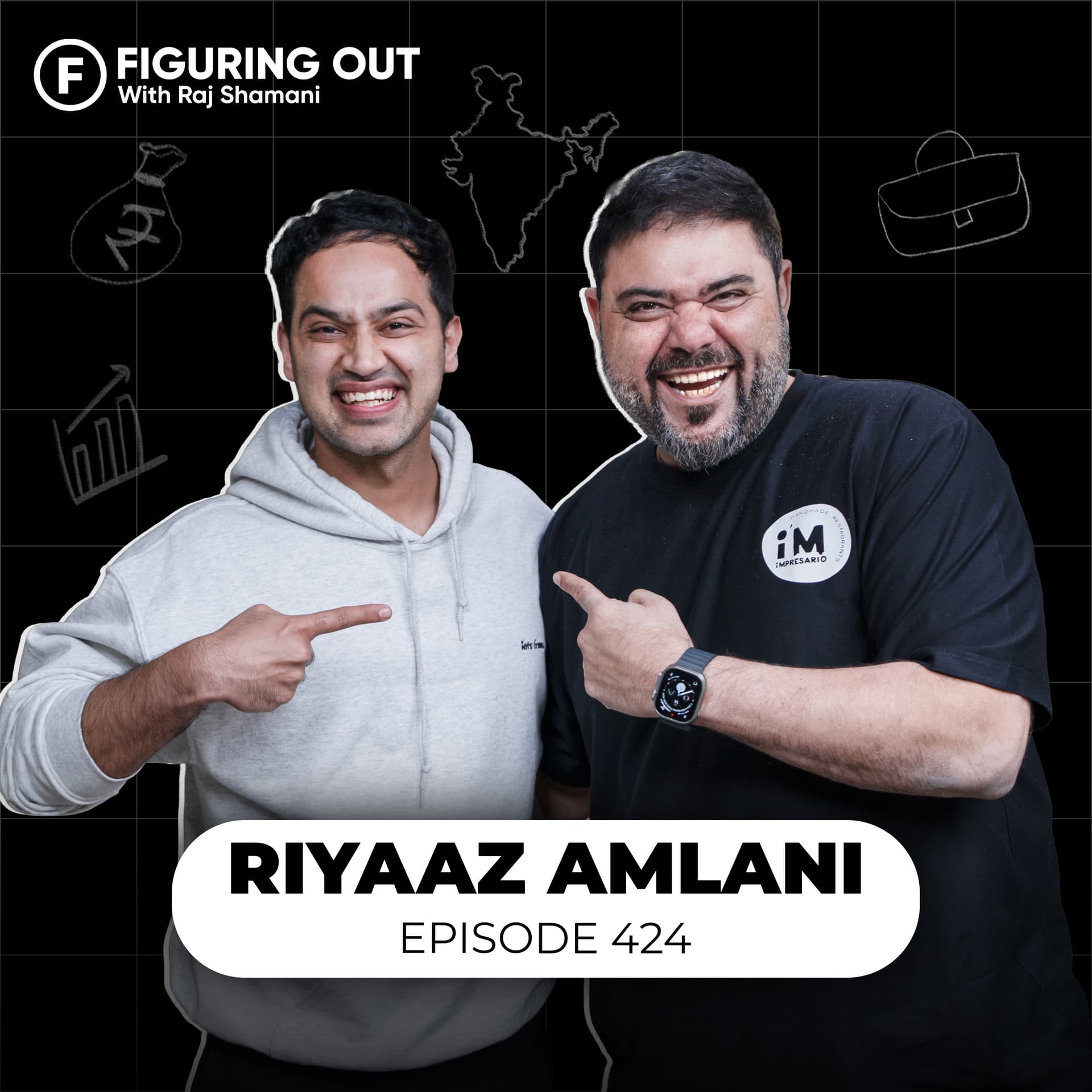
Episode Overview In this episode of *Figuring Out*, Raj Shamani hosts Riyaaz Amlani, the Founder & MD of Impresario Entertainment & Hospitality Pvt Ltd. Amlani is renowned for creating iconic restaurant brands in India, such as Mocha and Social. The discussion revolves around Amlani's journey, the restaurant business landscape in India, and insights into food and beverage industry opportunities.
---
Key Takeaways
The Current Landscape of the Restaurant Business in India
- Golden Age of Opportunities: India is poised for a significant transformation in the restaurant sector, driven by increasing disposable incomes and changing dining habits.
- Eating Out Trends: Indians are increasingly dining out; urban residents are now averaging 10 meals outside home per month.
- Competition: The food and beverage industry is highly competitive, with many options leading to a fluctuating customer loyalty.
Riyaaz Amlani’s Journey
- Origins of Mocha: Amlani’s venture into the restaurant business began due to a lack of social spaces for youth to gather, leading to the creation of Mocha, which offered a unique coffeehouse experience versus American chain models.
- Transition to Social: Recognizing the need for a more versatile social space, Amlani launched Social, a café that adapts its ambiance and offerings throughout the day.
Key Insights on Starting a Restaurant
- Location: The choice of location is critical; the right demographic should align with the restaurant's concept.
- Undercapitalization: New restaurant owners often fail by not securing enough funds for operational sustainability beyond just opening expenses.
- Panic and Flexibility: Many owners panic and pivot too quickly based on initial customer feedback instead of allowing their concept to develop.
Menu Design and Customer Experience
- Art of Menu Design: Successful menus reflect customer preferences, balancing between variety and simplicity. The complexity of menu items can vary based on the type of dining experience (QSR, casual, fine dining).
- Community Engagement: Building a sense of community is essential for customer retention and satisfaction, with staff trained to recognize and engage repeat customers.
Financial Insights
- Expense Breakdown: Typical costs for a restaurant operation include:
- 30-35% for food costs
- 15% for rent
- 15% for labor
- Other operational costs consume the remaining budget.
- Revenue Streams: Alcohol sales can significantly impact overall revenue, with some establishments achieving a 50-50 split between food and drink sales.
Emerging Trends
- Cuisine Opportunities: There’s a significant and untapped potential in Indian cuisines, particularly in regional and traditional offerings that can be modernized for urban audiences.
- Service Industry Challenges: Issues such as the commission rates of food aggregators (which can reach up to 40%) pose significant hurdles for restaurant profitability.
---
Concluding Thoughts The episode highlights not only Amlani's entrepreneurial journey but also the evolving dynamics of the restaurant industry in India. With careful planning, understanding customer preferences, and a flexible approach, entrepreneurs can capitalize on the emerging opportunities in this vibrant market.
Call to Action Listeners are encouraged to subscribe for more insights, share the episode, and explore their own potential in the restaurant business.
Written by AI. May contain mistakes. Listen to the episode to check what was said.
Transcript
Automatic transcript. May contain errors.0:00If anyone wants to earn a crore in the year, what kind of cafe, restaurant, club should open? Even if you have a small, you know, 12-seater restaurant, and as long as you are doing something heartfelt that resonates with the current audience, you have a chance to become a big success. And we have a chance to become a big success. Exact from a cuisine point of view. This opportunity in samosa. This opportunity in chhole. You have a chance to take it to South Indian food.
0:27Infinite scale possibilities. Today's guest is Riaz Amlani, the man behind social, and the owner of the 80's of India's 80's. Today, he is running an 800-crow-d-crow restaurant empire. In this episode, we will know how to start restaurant business, how much investment it feels, and how to make a long-lasting legacy restaurant brand. Korean food restaurants are running now. Of course, people are loving everything.
0:58Which person in India is in which opportunity is very strong? The entire food services business in the country is 5000 crores. The food business is going to go. If you had 1 crore rupees, which city will you open a restaurant? My top three cities would be Bombay, Delhi or Bangalore. Break 100 rupees for me in terms of expense. About 30 rupees for food costs. 15 % will be rental. 10 % is going to be overheads. 20 % for miscellaneous and 20 % is what you hope to take home. Which city drinks the most? Telangana, Kerala. They like the drinks. Which alcohol sells the most? After that, whiskey. Tequila is really taking over now.
1:35Why do you feel that hook has so much viral? First of all, it allows you to hang for a longer period. And it relaxes you. Most common three mistakes which new restaurant owners do. Bad choice of location. Number two, sometimes you undercapitalize your business. And third is panic. You panic too quickly. If you want to sell a normal thing, if you want to sell a normal thing, what all do you do?
2:02Before starting, subscribe to this channel so that we will make more insightful and better podcasts. And this whole show is available on Spotify, which you can follow us. Enjoy the show.
2:21So how did you become a restaurateur? How did you start? I heard somewhere story that you didn't have to go with your girlfriend. What was that? What was that? Yes, I noticed that you were just in the car. There was no place to go. There was no place to hang out. And I think at that point of time that's when we first started MOCA. Where we wanted the insight was that. And before that we were doing, I was in the entertainment business. but inside ready was that if the man goes and chill to go and chill and Starbucks had become very popular in the west it was this coffee shop thing and as usual then our excitement was that the west was an obsession that was the starbucks opened here yes starbucks opened here and I think it was the place that was the place that was the starbucks type concept the brand was the Delhi brand and there was another concept that was Cafe Coffee Day which was from you know a coffee producer in the south and uh that came from it first one was in Bangalore but it was in Delhi and um I wanted to do a coffee shop but I didn't want to do a Indian version of American chain American Italian inspired chain I didn't want to do that so we we we came up with this concept which was called mocha which is more on the lines of an Arabic coffee house.
3:51Our approach was Mocha which was very different from chill and chill but why do you think cafe coffee day or barista work not? At that point of time we gave 5 rupees Nescafe 4 rupees short short 4 rupees that time cappuccino 35 rupees was a It was a big job. And the price was 30, 35, 40 rupees. And the cafe coffee day was 35, 40 rupees. But our real estate rentals are highest in the world. It's cheaper to get real estate in New York and London than it is in India. Really? Yes, it is. You need an average spend of 500 rupees, 600 rupees per person to be able to afford rent. And we're not getting that at that point of time.
4:52But then, did you think that there will be a problem in Mokka? In Mokka, we were more than about coffee. We were about, we had coffee, we also had lovely desserts. We had shisha. Because it was a Moroccan coffee house. And again, we were not just an espresso bar. We were serving 32 different types of coffee beans. not just 32 variations of the same coffee. You opened Mokka and Indore also no? We opened Mokka and Indore. So I remember that. And I remember today I was very much Mokka with my friends because my friends liked Shisha. So they used to sit there. That was my first time in life I had a Kit Kat shake.
5:36So I remember. And I remember Thursday nights there was live music. So we used live music for live music. that the guitarist and singer that was the first time in some place in some place in some life consistently music we used to go for that and then my friends used to do shisha and then then it was famous for that shisha and live music and if you go in a day people play something you know always you may give you one thing you have to do you have to make product and restaurant and your offering made your work. But what your restaurant is making, it can depend on what the customers want you to be.
6:22So there's a little bit of a change and a little pivot, slight pivot that happens. Customers, you have to at the end of the day forget what you want. You have to listen to your customers and they're going to make you what they want you to be. And you have to be able to be flexible enough to make that shift. coffee was another problem when people hang so they hang minimum 1 ,5-2 hours coffee means you're done in 30 minutes what's the rest of the rest you're doing you're keeping the place you're uncomfortable actually that's one of the reasons why we also pivoted from mocha into social but what we realized is that people want to hang out at mocha they had a shisha like in 2008 when Shisha banned we decided we didn't want to be in the Shisha business because it was becoming too much the people who only were coming for Shisha and underage were coming up stopping them was becoming a little bit of a challenge why do you feel that hook was so much catch on why did it happen like this is everyone should hook well first of all it allows you to hang for a long period that you said it anchors you to the table right and there's something there's a sense of there's a certain it relaxes you because you're taking deep breaths it puts you in that you know relaxed frame of mind people you start seeing them lounging you know relaxing and when you are in that relaxed frame of mind it's very different like the furniture dictates the kind of conversation you want to have right if you have a stiff chair your conversations will largely be stiff but if I let you lounge around and stand and you know lean back it automatically puts you in a much more informal kind of way it changes the nature of your hang you know it's weird but it does happen you tend to have more real conversation more relaxed more fun you know so I think there was a little bit of that you became a little bit more relaxed you were you could hang out now for two hours you were unhurried you didn't feel that I have to leave now.
8:36It's in a mind. Am I taking up somebody else's place? Okay, someone is standing there waiting. Manager is watching. But as long as you had the hookah, you had all the right to be there. So you were still in a relaxed way. I think the ritual of passing the shisha around, you know, puff puff pass.
8:58So then, you started social. Why did you start social? we see when we made a coffee shop Mocha was for a different set of audience it was a Gen X audience who needed places to lounge and relax and chill we had a very good run Mocha, Mocha is still there it's still alive we got 22 stores but then in non-metros where the rentals don't make sense in metros for Mocha but we needed to pivot because we had too much of an overhang association with Shisha Hukka ke saath mein bhoat zahada association or naam ho gaya ta to hum soch te thai ke usko kaysay reinvent karein because jis din Hukka ban hua, loog moka ana ban kar bhe us they stopped even coming for the shakes and the desserts because everything I think haa, loog brand association asa ho gaya ta idea kaise hai And we kind of realized that we need to reinvent what is a cafe.
10:05And we cannot let the West dictate India's cafe what should happen. What is India's cafe? What should happen? That's what we've seen. And we've seen many of our cafes. What are our social spaces? Which naturally are our social spaces. Like Chai Kee Tappadi is our social space. College canteen is our social space. Calcutta coffee house our social space Kerala toddy shop our social space Punjab daaba our social space you know the food in the night 12 o 'clock in the car that is our social space how do we integrate all of this and create a product built for the indigenous population because our coffee or biscotti we don't eat tea and food we eat biscuits we want to eat we want to eat we want to eat we don't want to eat we want to eat okay okay we'll eat but what do we want social was a kind of re-look where we instead of looking westward for our inspiration we looked very inward and I think that that was at that point of time a little bit revolutionary again you know because everybody was still at that point of time still looking a little westward for but social really came from what does the cafe of India look like and again our design inspiration came from Janta Bar it came from dim lights social is like little dim because in the night because social changes from day to night.
11:58It shapeshifts. And there are two ways of shapeshifting. One is with the music and the second is with the lighting. In the day, you want it to be bright, you know, lighter, fresher. We use scents again, which are again very different. And it shapeshifts and it changes. We change our lighting and music three or four times in the day. In the day, it's super bright. Then, you know, afternoons are also bright. Evenings at dusk, become a little bit brighter because the light is out and the light is out but now the sun is not so we want that thing to go brighter then 7 o 'clock when we start taking the lights lower and 9.30 we take the lights really low and the music changes the vibe changes the span of audience changes in the day people are coming for working and we have a thing no working during drinking hours so it shape shifts or it changes its relevance from the menu to the offering to the lighting people like when they are going out up drink smoking or drinking but I like social people like a slightly more relaxed atmosphere when they are unminded so I have too many questions on social because I think it's very fascinating and the most fascinating thing about social which I find out I'm watching social very early and it's relevant to today like it's I have no cafe no brand that has been relevant starting in a year 2 years it's very good 6 minutes it's very cool everything everything goes to that area whatever new things opens and then all of a sudden it's like dead restaurant bar cafe dead until traditional like shivsagr right cool cafe which people attract I've not seen time tested like it's been there pre-pandemic was cool post-pandemic was cool today is cool like how is that how did you build this we try and be relevant and we do what we say on the box you know you know you don't know no fancy place you want to chill relax you know hang you know that social is going to be that reliable place where it's going to do what it says on the box.
14:23You're going to get a food of a certain quality. You're going to get value for money. And I think the biggest thing I think is the people. I think the staff that we work with are trained to build connections because at the end of the day, you're always going to find trend seekers and you're going to find discount seekers. But people are also looking for, they're looking to be recognized, seen heard known you know and in social i think they get that they get a sense of community they get they get a place where people are you know they know everybody knows their name they know the people's name they everybody knows what their favorite drink is what their favorite food is what time they're going to come so there's a certain sense of community which we try and build and that's why it was called social because we wanted that place to become a tabam we take the name of the location which we serve from the beginning and we want that place to become that social Colaba social Colaba social Colaba social and even those who live in the house who work in the house and we make it a point to try and meet make people meet other interesting people in that space so hopefully you go not only will you know the staff you will also know quite a few other regulars who are there so it builds a kind of a very homely kind of environment which I think is important but you kept doing lot of things which is shareable and is viral in some sense and what I mean by that is I'll tell you few things when I thought about it I would notice beginning a lot of the things that we were doing because we were giving tiffin like tiffin or tissue cut up or toilet paper it was more it was more for it was more from a nostalgia perspective and because it was unexpected at that point nobody didn't think that you would have to give food in jail or you know you will put melamine placement or you will put on the toilet paper or put on the table or put on the old canvas it was more from a sense of evoking nostalgia but Instagram didn't happen so deep so it was never designed for Instagram after 4-5 years this word came to be which is instagrammable and and a lot of restaurants suddenly started saying oh this is the most instagrammable restaurant yeah so it was never from our idea was never to become instagrammable because instagram was not that but see social also came from social so three things one is the act of being social the fact that we were saying social offline so at that point of time we were saying that even now our Instagram handle is social offline.
17:15What we're saying is that social experiences need to be offline. They cannot only be, you can't think of social spaces as online spaces. So you thought that social offline word would be? Exactly. And then we used the hashtag to kind of say that to remind people that you're sure being social, you can also be social offline. It doesn't always have to be online. So first was this is like a Tiffin like in jail like in Tiffin and toilet paper then one I remember Long Island tea that was the tower that was it is it still there it's still there still a number one bestseller Long Island tea used to be college in one Long Island tea many people were selling Long Island iced tea yes then after all of this happened then the other thing which I loved it which was I think post pandemic I saw I was looking at the app.
18:08There was a feature that you are eating. Yes, people around you are eating. Yes, but I loved it. I always looked at my order to the other people. And sometimes you are saying that you ask yourself to ask yourself what are you eating from the staff? Because you don't know. It looks nice. It looks good. I was looking at the app. I was learning in 2000. I learned that at a time we had a chocolate diavalanche on the table. So people didn't order but when someone went to a table, they would order them. So, it's sometimes you want a grassless greener. Yeah. So you put that, you were the first ones to do it?
18:54On the app? On the app? I think so, yeah. I think it was a feature that we had brought about, yeah. I found it really cool. I think as it was, I made my bill more in social media. Normal. I didn't say anything about it. But until I came, I felt like the other one you should. It happens, right? Sometimes someone looks interesting. You should know where it's coming. Then, I put social logo on social media, which was my where I started making people. One dish launched and I forgot to put momos or something. Yes, I forgot. which is the spiciest you like to eat the food I like it very much and he can't finish one person at least my challenge was man vs food, Raj vs food come and eat it I was first tried it in Bangalore I can't tell you did he give you a free lemonade with it because that was a thing nothing, I didn't give anything I didn't eat full first.
19:57Yes, that didn't. It was the challenge that if you finish it, you get a free lemonade. Okay. And lemonade was used in fire extinguisher. Oh. So, which alcohol sells the most? In India? India is very fond of beer. We love beer. Which is the number one selling alcoholic beverage. After that, whiskey. Whiskey is the number two selling beverage in the country. But tequila is really taking over now. People are loving tequila and they're moving towards tequila more and more. All the cocktails are moving from old fashions to palomas and picantes. And it's really taking a market share away from gin, vodka and whiskey.
20:45So gin, vodka and whiskey are now... So a tequila drinker, gin drinker has become a tequila drinker. So, vodka drinker, tequila drinker, whiskey drinker has become a tequila drinker. And a beer drinker has gone straight from beer into tequila. Interesting. So, tequila is really picking up. Tequila is really picking up. Indian brands? There are a few Indian brands. There's Pistola, which is by Rakshay, who does a very good. And you can't call it tequila, by the way, if it doesn't come from Mexico. Okay. So, the style, you have to call it Agave Spirit. and there's Desmond G which is also kind of quite potent but yeah tequila is only tequila if it comes from Mexico interesting and then which one's the highest selling cocktail for you guys for us in social LLITs the longest Long Island ice trees are very very popular but the joke right now is that the picante is like the nimbu pani of cocktails Everybody is drinking a picante.
21:53Everybody is. Everybody is drinking a picante and pallammas. Okay, is it a thing that on a weekend when there's like club filled with a lot of people, cafes and restaurants, they dilute their alcohol. Like the bars dilute alcohol so that people drink more. If a bar is very, very busy, I would not order a cocktail. Because A is going to take the bartender way too much time to make the drink. and B is not going to be as good as when the bar is not busy. So if the bar is busy, my recommendation is order a bottle and sit on your table and finish it or get a straight drink at least. But in a busy bar, it becomes very difficult to craft a complex cocktail.
22:38So it's not like they're purposely diluting, it's just they're busy. Perhaps, perhaps, yeah. Perhaps they couldn't do it as well as they would be able to because you've got like, you know, 20 people waiting for a drink and then you're just like you know you can't do the proper measurements and get it exactly right the way you blend it or mix it the same amount of time that is needed because then you're in a hurry so you kind of shake it a little bit and serve it and straight drinks is there mixing or not? some bars unfortunately do that quite a lot so yeah on a busy day because a lot of people say that if you come to this bar you don't drink on the weekend that's why
23:16I don't think it's not that you're giving this it's possible that you give black dog that's possible some bars unfortunately do something like that but you know it all depends some are scrupulous some are not like like most people so now and every social is different in every city? If you're Every social has its own unique personality for sure. There's one which is inspired by like which became hit after a movie Tamasha The Hoss The Hoss Social There was a brand integration was it done in the movie or it was automatic? No, no it was actually just automatic and organic fully organic I think You didn't pay them to get the brand integration?
24:05Not at all actually I feel really bad but they paid us we should have paid them but yeah Imtiaz Ali He came and he liked the place. And even now, it's so weird. That movie, it became so iconic. And that scene, we have a place where every day, somebody comes and reenacts that exact same scene in that exact same table. It becomes so iconic. You have never paid any movie to get the social in there? No, but I have to say that product placement or integration is very useful when you're trying to build a brand. It really sticks with people. But yeah, that song and that shot became so iconic that, yeah.
24:49So, Horska's social was became... People like this, they're like this. Yeah, they're like this. Really? Yeah, they're like this. They make a song. They're real. They're real. Now, look at Instagram. So, it worked in your favor? It did. It did. It did. Okay, now let's take conversation in that what do you think in India which cuisine is in India which opportunity is very strong? Is it restaurants open and then demand will people buy it? Every cuisine. But there is so competition, right? There is competition. What is white space? India as a food space, as a market is growing. I will give you some aakde if you like.
25:30I like the numbers. Aakde you like. The entire food services business in the country is now you have to translate it in Hindi 5 ,000 crores like 5 ,000 crores that's the size of the food services industry in this country and
25:54like I remember when we did this survey 10 years ago Indians on average were eating out 3 times a month okay okay and in urban places we're eating about five times a month okay 10 years later indians are now eating out on an average six times a month and in urban spaces they're eating out 10 times a month so double it has doubled like it's phenomenal but Singapore there are 65 meals that happen a month 65 meals that happen outside a month China 47 USA 36 we are still at 9 and that too in urban areas headroom phenomenal now AOVs average spend per person that also is increasing where double income families
27:00because it is now you know convenience means originating out of home so swigies amato aggregator delivery including outside 10 12 is happening in major urban centers so growth is very much the restaurant that we have per capita is also very low compared to anywhere else. And the speed of it will get stuck. So the food business is going to grow. And it is going to grow in every direction. Because people look at the food business by nature is anti-loyalty. This means that you need variety in the food. If you like iPhone, you won't buy iPhone. You won't do that. If you have a shampoo we'll go out and use it.
27:55You have a 2-3 clothing brand that you like, you'll get more. But there's no other industry in which there's so much competition like food. But like there are some restaurants that have been years that have been habit-based. Like in Mumbai, Sri Lila, Ojnala, Bhagat Tarachan, Shiv Sagar. In these restaurants, there's a Guru Krapa, Shri Maya. These are the restaurants different stratas that's been a long time. Johnny hot dog. So, it means that a small food joint where a hot dog is 20-20 from there is a Shreemaya restaurant. How do you create new legacy brands? Legacy brand is the legacy because it's the brand.
28:43But how do you make loyalty to them? Why can't like a new one? Yes, they do something which restaurant you go to the mood and you go to the mood and your mood means that child changes but if you own that mood how much you own that mood if I have a chart then I will go to this restaurant or if I have a then I will go to this restaurant which which space you own because people need variety if you I have eaten rice milk in the day, so I don't eat rice milk in the night. It is the nature. I mean, my rice milk is so tasty, so much of the quality, so much of the pocket-rally, so much of the service is first class.
29:37You will still look for variety. You will still have another meal. So, there is no one formula. not to say that. There are many different ways in a restaurant. You can go to a restaurant, you can go to a vibe, you can go to a nostalgia, you can go to a legacy, there is an Instagrammable restaurant, there is a trendy restaurant, there is a music venue, there is fast food, there is a meal where you have to sit, you have to do two or three hours. There are all different types of experiences. It would be wrong to tell you that this experience is better than that. but how well you do it is on you. How good your service is on you.
30:22So there's lots of opportunity in lots of different spaces and we are just beginning. Indian customers just learning how to go off. Because if you had to give an application in the first time, why would you have to give an application today? Why would you have to tell me that it's a birthday party for me? Because I have made food for you. you waste you know you waste you waste that is changing now people are beginning to go out a lot even right now 9 times eating out is the lowest in the world and we are a fast growing economy so people are going to eat a lot more often they are going to spend a lot more and every year there are going to be new people entering the eating out market so this business is going to grow exponentially and this order in concept is not growing order in is growing phenomenally is the fastest growing business.
31:15Is it a set it to your business? No. If people don't make a house, then they order in. Go outside, get tired of the work. Then go outside, find a place, do reservation, sit down. 1 hour time. 20 minutes, now I don't know. Zepto Cafe, 10 minutes. I'm saying that you don't go outside because you're hungry.
32:10you can go out something. Dining out will always be dining out. Ordering in is competing with your home kitchen. Hey, man, today it's a 10 day. Let's eat the leaves. Let's eat some sweet or let's eat this dish. Just to make your daily life a little bit more special. You will order it. And also for people who are you know migrants from one city from the other city now this is a lot if you're saying people are coming into Bombay people are coming into Delhi Bangalore Hyderabad there it is a necessity yes you will find some house a cottage industry who will send you a tiffin for 3000 4000 5000 you know and it will change but you will still crave variety because you can't eat that same flavor yeah all the time do you know Peter Thiel Peter Thiel who has been the PayPal mafia Elon Musk's right so he has a speech competition is for losers in that he tells that restaurant business is the worst business to start extremely competitive small place in one place you are fighting the whole world no market whatever he just talks about it's a horrible worst business to be in right you are king of that business here in India why how do people think that 95 % will die and so many big world people say that don't do it don't do it definitely like I said competition there's no other I can't think of any other business which offers more competition for that need but the good thing is you have that need 3 times a day or 4 times a day so So then the market size suddenly is very, very different.
34:10As opposed to you needing a phone once every two years perhaps. Or needing to fly once a month perhaps. I don't know. Competition is a lot of 100%. And you're competing with your own home. You're competing with your own brother. Netflix. You're competing with Vada Paa. You're competing with Samosa. You're competing with Samosa. it is it is a difficult business it is not easy it is a lot of work and everything that can go wrong will go wrong 100 % and it is hyper over regulated you know it's very very complex and there's there's so many moving parts to this business that you know it can you have to be disproportionate we say that we don't have rice in restaurant not happen.
35:05Return on time invested not happen. You know.
35:11Nice. So, it's a difficult business but it's a more rewarding business I don't know. I don't know. I think I'm a lot of old and I can't do this business. I'm tired of doing this. What a benefit is that. But you go to the night and go to the restaurant restaurant full and people are enjoying they are smiling they are enjoying themselves that is not high how many restaurants do you have today? we are over 80 restaurants in the system in the country in the country in India but thing is that when you are sitting in the trenches you are watching customers daily you kind of have a sense that what are trends coming because you are listening to your customers like you have a sense of what your audience wants to hear and you've also shapeshifted from what you started off with and you know the interest to now to giving different variety of interest perhaps to the same audience or giving difference to a larger audience it's the same thing even with restaurants it's a it's very it's a life it's evolving it's changing it's like a human and it'll continue to change and you have to be ready for that you know you'll be stuck and you'll be stuck or not it'll be like that because it's like this.
36:34Or you say, I want to become very trendy, I want to catch a future trend. There are very different reasons. I told you that the restaurant is a mood based purchase. Today, Indian food is a mood. Today, Chinese food is a mood. Today, it's a good mood. Today, I'm going to go to a good place. The mood is a good place. The restaurant that you can fully capture will stay in your mind,
37:04that is how you make your purchase decision you have to own the mood social mood yeah bastion mood this doesn't mean that you don't go to social then you don't go to bastion but what is your mood when you're doing that time I'm thinking of eating a food. Okay, no, this mood or your mind, you have to own this mood space. It can be everything for everybody. So, today, the mood-based business is so dynamic. Where are opportunities? You said that every time you have to do something. Purely from the point of view of money. I want to buy money and open a restaurant. What should I do? Ball-baring.
38:02I'm not I mean there are many opportunities and thankfully now things have become a little democratic also you needed to make a big name and a big splash now with social media the playing field has become level even if you have a chotu you know 12 seater restaurant and as long you have something heartfelt that resonates with the current audience you have a chance to become a big success you look at what Rameshwaram cafe has become now they've reinvented a centuries old thing and they've kind of completely turned it around and brought it into the modern era there's phenomenal opportunities available in reinventing reorganizing refreshing things that have happened for a very long time these are the incumbents of today's today and these are the dinosaurs I guarantee you you don't realize but in a span of time 20 years ago something which was very exciting for us today on the world of extinction and this is going to be dynamic change will be happening I can guarantee you social spaces which we are in third places like coffee shops they have also evolved Starbucks is the 80s and 90s product.
Read the full transcript
39:20It's been finished. Now there are new age coffee shops coming. But what was it before? It was before there were social spaces. There were in and out. There were skater parks. All these social spaces will keep evolving. You have to figure out what your space in the future is going to be. Because this is going to be a challenge. But cuisine-based isn't it? Sometimes a specific cuisine is going to be a trend? Like if the tent is finished, what will it do? But then you build a culture, right? Like pick up this way. Now the tent is going to be a Korean food. Yes, Korean food. Korean food is a lot of interest.
40:00So Korean food restaurants are going to be a lot of? Of course, there's an opportunity in Korean food. People are watching Korean drama, they're watching Korean films, they're putting Korean makeup, you know, they're loving everything Korean. And what do you feel about Quick service Coffee Culture Or like matcha All of these things In India Is there a Space to do Matcha is huge I love matcha People love matcha In India There's no matcha Now there's a lot of matcha Like no brand New age cafes No brand No brand But The new age cafes Is where it is happening Somebody is going to come along And And brand it And I think What's happening no brand is also becoming a thing.
40:47People want to have their own favorite non-commercial mom and pop shop food spaces which is also becoming a thing. So people are reverting to that it's only here and that it's my hangout. I think people are discarding brands and going to mom and pop shops especially in the coffee space. People want to go they don't want to go to branded products they want to go to their neighborhood cafe oh yeah so you feel if someone doesn't open a coffee shop for example and has to scale so it's different names from different areas like luck in the way they picked up the wave luck in basically became a substitute to Starbucks because they were more culturally cognizant to China right now you can see brands are becoming cafe brands are becoming cults and those cults can then scale when Starbucks was Zenith then came along Blue Tokay and then Blue Tokay became a delicious alternative to you know the corporatized soulless Starbucks and now there's Subco which is coming and now there's Subco and then there's Bhuji Cafe for example now which is now Bhuji has many cults and you can't have cult and be omnipresent and the moment by definition it becomes easily available everywhere scarcity builds the cult also so you can't be a cult film and be a hit film either you're a hit or you're a cult and I think that and cult will have its presence I don't think Sapko can scale as much as Starbucks can but it'll still have enough scale it doesn't necessarily have to become Starbucks it doesn't necessarily have to see not all brands need to become a thousand crore brand you can become a 200 crore brand also you can become a 50 crore brand also 100 crore brand also it depends on where how much you want to milk your equity before you dilute it this is a good question because of what you said just build it on this okay that if, okay, three categories, someone gets a crore in a year, what kind of cafe, restaurant, club he should open, she should open, someone gets a 100 crore and then someone gets a 1000 crore.
43:14Three opportunities if in today's world, you have to do it, then how do you do it? And how much investment in three? And how much investment in three? Typically, I tell you a thumb rule. بتatatau आपको अगर restaurant में invest करना है तो आपको जो आपका return on capital deployed है should be less than 30 months 30 months 30 months ठीक है आपको शुद get your money back in 30 months that that is one thumb rule that we apply okay the EBITDA the store level EBITDA should be 20 % at least in your business at 15 to 20 % it's becoming harder and harder to make 20 % but if you let's say do sales of 100 rupees you want to take 20 rupees back home 15 to 20 rupees so pat 20 % 20 % pat should be pat pat no abidda pat
44:12pat is a manufactured construct but store level abidda has to be 15 to 20 % because if you then if you're going to build a corporate structure around it you have to be aware that corporate expenses will take another 6-8 % of your store level so at the store level whatever your ROI has to be less than 30 months if you ask me we are right now at about 800 crores of business crazy no we've been doing this for 22 years so is there anyone bigger in restaurant space than you in the country the quick service restaurants the quick services like the McDonald's and no like the Indian version Domino's in terms of pure play non quick service restaurants barbecue nation I think is slightly bigger than us but they are listed we are the largest non-listed food services business which is pure retail space no I am not talking about travel food retail I am talking about retail businesses and food services we are the largest largest non-listed entity I suppose yeah but if I would what I would do I would rather have 50, 200 crore brands than have one, 2 ,000 crore brand.
45:38Because I feel that change is going to be imminent. There are, right now, 50 % of all food services is in 10 cities in India. Those 10 cities are growing faster than tier two cities. I know there's a lot of sound around tier 2 cities. But consumption right now is at its all-time high in these top 10 cities. And growing at a faster rate than in tier 2. Tier 2 is growing, no doubt about it. It's growing on a lower base. Tier 1 is growing faster. Tier 1 is growing faster on a larger base. Okay. Right. So, I would rather have 20 brands in these 20 cities or 10 cities. rather than have 1000 outlets in 1000 different locations.
46:25Interesting. So I'd rather get a bigger share of wallet in a bigger market than a smaller share of wallet in a smaller market. So instead of making let's say a a a a McDonald's or a Domino's type or a Starbucks you'd be like a a a a a Bardo ha na chai, ik mera bank hon na chai, all of these. So not like I said, not all brands need to get to a different scale. For example, Slink and Bardo, maybe I can do four stores. Bank, maybe I can do six. Differenzivity. Yeah, Smokehouse Delhi, I can do 20. Social, I can do 150. It doesn't matter. And as we go forward, what we want to do is we want to help brands scale.
47:15You know, we want to support the small restaurant because it's very very hard to manage building an organization managing scale and focusing on the product and the soul that a restaurant needs and the moment you start scaling sometimes the soul starts disappearing because you get distracted and you know the business environment is not easy in this country license is very challenging for a restaurant and the whole city is different and the whole city is different Bombay and you Mumbai and New Mumbai rules completely different now Bumbay Pune completely different rules different laws different applications NOIDA different all license gets one window now
48:04not yet Gujarat has one window policy no 1 window 10 desk and 40 windows now
48:15it's not we're not getting there yet. Hopefully. What over-regulated business is that you have to send a sandwich and you have to send a police permission to send a sandwich. But you have to send a police permission to send a sandwich. You have to send a coffee to send a police permission. You have to send a municipal permission to FSSI permission. Police permission? FSSI? Okay, let's go. But you have to send a food safety to send a local municipal body and you have to send a national body. I don't know why. Why do you have the permission of the police? I don't know why. But nobody, this bureaucracy is beneficial.
48:59So there's no incentive for the bureaucracy to disappear overnight. No, but the question is, if you need 40 licenses, it's listed in one place. We're not going to incentivize people to come to the industry or disincentivize?
49:20So I think Challenges Is it right? People are confused I was thinking of making money I was thinking of 40 people Tell me top 3 opportunities What is the exact From a cuisine point of view QSR What is the thing that you see A trend You've seen how You brought India's QSR has been hidden. Pizza, burger is just hit. We are not the gifar. We don't eat pizza and burger natively. We eat the aspirations. America's cousins are eating pizza and burger. We didn't get here but we didn't get here. I was talking about Rameshwaram. They had to reinvent South Indian food. like Benet has reinvented there are many opportunities in samosa in the chole there is always a good way of taking food which is closer to our palace closer to our hearts and bringing them into a modern there is no reason why in India fast casual like chipotle in the brand Indian food 100 % This is a very big opportunity Our tips frankly But why it just rolls Rolls is one expression You know If I have to eat today I need to eat There is no reason why I cannot make a chipotle version Or if I want to eat healthy food There is no reason why I cannot have a subway For healthy food For example With desi ingredients also It doesn't have to be international.
51:09So there's everything here, everything that is there in the industry is available now to question. You know, I guarantee that the QSR in its current form will fade away. And it will make way for completely different QSR heroes. All your McDonald's and Domino's you feel? I feel that if India wakes up, I start putting products out there which are infinitely superior in flavor, infinitely more complex, infinitely more pleasant for the palate the incumbents will have a very tough time and this has already been done you have seen when this playing field has been done in delivery yeah the dominoes which was the market was over it was over now you have a lot of food and you have before you have delivery only dominoes 30 minutes 30 minutes 30 minutes 30 minutes 30 minutes 30 minutes 30 minutes 30 minutes 30 minutes but this 10 years it's a lot different it's a lot it's a lot it's a lot it's a lot if you have 20 years forward to see it will be very very different landscape I promise you so a specific product tell you where you said Indian form Indian taste what product do you see which you feel I think you have South Indian food in finite scale possibilities infinite you're the third person it is you can eat it for breakfast yes you can eat it for lunch you can eat it for dinner you can have it as a late night snack yeah okay you can have one on every corner or every street in India you have your daily wage eaters also eating it you get people in fancy cars also loving their idli dosa it's eminently scalable yeah it is I find that it'll overtake any other brand that you can any other QSR brand if it is done right there's a brand called Jumbo King which is doing it is Vada Pau they've reached across there's a guy called Burger Singh who's doing Indianized burgers but the Tib Sanky Roll is a huge franchise it's huge it's bigger than Subway in terms of his outlets like that there are so many different cuisines that can be captured and reinvented and I don't see why poha jalebi can't become a thing nationally yeah I would love it yeah yeah absolutely exactly oh here's a question if South Indian brand is a paratha brand you have an option where will you start first in South India South Indian brand or you will start somewhere else where South Indian is not good I would start somewhere else 100 % Where you don't get good.
54:01So that you are not competing with. Yeah, because then there will always be because authentic word is not that authentic. Meaning, you take a lot of leaves so the leaves are different in every house. So the authentic leaves, who knows? But it will be very difficult for me too. For example,
54:29to go into a South Indian heartland and come up with a brand for example Benet would find it very difficult to win in Benet in ODP for example but if Benet became a very famous brand and then it came to Bangalore there would be a lot of excitement for somebody who is taking my cuisine on a national phase and now is coming home to me I feel so I don't know if that answer but again it's just my perspective do you think India's international brand will become because now they don't even make anything like McDonald's is there any 100 % I think 100 % will become India's will become international brands and they will become international brands there's no doubt in my head which one or two you feel are the closest to become an international chain or brand which has potential to go out already you look at brands like Sarwana Bhavad they are in 40-50 cities internationally and there are so many brands which have transcended and are doing really really well Delhi Darbar is international and they are in many different cities it'll take a while but I'm talking about if you're looking at like kind of a QSR chain we still have to get national dominance and then take it international but I'm thinking that national dominance will happen and international I think internationally I feel sattvic food can be really skilled because it's kind of working with you know principles of ayurveda people are looking for healing and that can become a thing very very quickly international so if you had one crore rupees today i'd take it and run away i would be in the restaurant which city will you open a restaurant what cuisine one crore and what type of why if i had a certain amount of money my top two cities three cities would be bombay delhi or banglaan in one crore rupiah in three places yeah in one crore rupiah it's going to cost you exactly the same amount of money whether you open in whichever city even if you open up in bhopal or in kochin or rizak that what changes is the rental so the capex and the opex are two different things if i have capex i can open up the same because the stool is what is going to cost you this tool is going to cost you the same.
56:56Your range is going to be the same. Your serving plates are going to cost you the same. Rentals are different. Rentals are very very different. Break 100 rupees for me in terms of expense. If I have 100 rupees, I have a sale. I have a sale. So about 30-35 food cost. Food packaging, variable cost. 15 % of your rental. if you have revenue share or this fixed cost 15-16 % your rental rental labor is 15-15 food cost 30-35 % then the rest 10 % is going to be your overheads your rent your electricity your administrative costs then you have another 5-10 % which will be your marketing consumables licensing all of that so it's 30 15 15 and then another 20 percent for miscellaneous and 20 percent is what you hope to take home and if you're doing 20 percent you're doing quite well in terms of your uh restaurant business yeah your EBITDA store level EBITDA and revenue split in 100 rupees how much you'd get from alcohol sales versus restaurant to restaurant on a social social is about 50-50 50 food 50 alcohol in some socials is 60 food 40 alcohol and in some it is the reverse which city drinks the most you're gonna get me to trouble
58:39well I think Telangana drinks the most the largest consumption of beer and whiskey in India. That's it. Telangana, Kerala, they like the drinks. Karnataka, people have beer for breakfast, which I love. Breakfast beer is amazing.
59:05Nice. Yeah. Tell me most, most common three mistakes which new restaurant owners do. Where do do they? Let's see. bad choice of location uh for a product right if you are a qsr product you want to be in a high street you want to be where there's a lot of footfall um but if you are a slightly higher end product you want to be slightly away from the traffic so getting the product and and the location absolutely right is very very important um that's one number two sometimes you under undercapitalize your business which means that you might you might you don't spend all your money only on your decor and and and then have no money to kind of sustain the business because it may take you a year it may take you two years to sustain so that sustain is part of the money because a lot of time you shut down because you can't sustain it you have a good product but you're not able to sustain it so you undercapitalize your business capitalize it make sure that you have enough money for maybe two years runway if you don't do well.
1:00:20And third is panic. You panic too quickly sometimes. You open up a certain concept and then you find that some customers will come and tell you, you know, like if you're, let's say, let's say you open up a Chinese restaurant. Okay. People will come, 10 people will come, there's not sushi. And then they're suddenly like sushi but this is a Chinese restaurant not Japanese restaurant. Ah but it's not Asian you have to have you have to have Thai curry also and you have to have sushi also. And then you start panicking and then you start losing your focus and they start doing too many different things.
1:00:59I think sometimes you just need to stick to it right. For it to become a thing and so you are able to continue delivering the product. One of the biggest feedback that restaurants get is increased menu variety. and even if you have like a hundred things on the menu I think India is one of the most complicated places to keep a menu because you have a vegetarian, a jain, you have Muslims, Hindus, Christians different flavors, different proteins you need to be different so if you go to the West you have a 12 item menu in India you have a 12 item menu you don't have enough you have 5 appetizers options you have 5 non-vegetarian options you have to give it to the main cost you have to give it to the dessert you have to have enough variety explain me the art of menu designing this is very interesting how do you decide what is too little and too much again depending on the concept Like you are doing South Indian, you can get away with just having five things on the menu.
1:02:12Middle-eadosa, and then have different fillings and different chutneys. What do you do with social? Social is an all-day space. And it shapeshifts from morning to afternoon to evening to night. What do you like eating in the morning? You do a snack. You will do eggs.
1:02:43we have got six breakfast trays we've got uh
1:03:00then you've got the south indian breakfast breakfast where you've got the dosa you've got some upma you've got one idli you've got some rasam you've got some sambar you've got a filter right then you have the posh english breakfast you have two fried eggs and you have uh you know little sausage and you have a you know asam green tea or then you have the bambaya breakfast which has got you know kheema gotala and halim and and curry biscuit and you know cutting chai so that's one that's what that's what's going to work in the morning right but i'm skating for all types of the day right so i'm going to have that breakfast what do you want to eat for lunch right you would want a salad you'll want something like a pasta maybe a little pizza something quick fast you don't want too much time jump because you've got to go back to work and what are you going to have between break between lunch and dinner and dinner this is very different from morning snacks you know in the evening snacks there's a little chak pata a little you know chaat maybe a little thing some patties kachodi kachodi all this will go then you have to eat a little so you have to eat appetizers with the drinks you have to eat appetizers you have to eat biryani and Chinese noodles you know you want something satiating something that you feel like fully ready to go and pass out so you've got to think about what people want at what time of day and if you are focused as a lunch place or a dinner place or you're focusing on health you have to have inner value.
1:04:38But how do you decide if I do more or less? You can go on if you have to give snacks then you can give 50 snacks but you can give 30 snacks so what's the sweet spot? QSR, casual dining or fine dining QSR, you have to give food for a food, so you have to give food I can't have too much variety because I don't want to do kitchen is not set up to cater to too much variety casual dining you're going to appeal to a very wide audience of people who will come and they will look for a lot of variety casual dining you'll have to give a lot of options because you want people to come back again and again and again not get bored they're going to come at different times of the day you'll have to have something for them in that day then again vegetarian Kanda Allah you know multiple combinations chicken chicken mutton you know pork fish allergy shellfish allergy so you have to keep all those things in mind so you have to have a very big menu when it comes to casual dining fine dining you can get away with a smaller menu because now fine dining is all about the chef and what the chef wants you to have and the chef has prepared these 14 dishes that he will like to present and no more.
1:05:58Then you put yourself or then you have the omakas where you're putting yourself in the hands of the chef like whatever chef I'll give I'll tell my allergies I won't eat this, there are dietary restrictions and the rest will eat my chef I'll give them the food. I'll submit I'll give you surrender I'll give you 590 is 14 590 you'd keep about you don't want to have more than 6, 7 or eight appetizers six appetizers and you'll have options of about eight main courses and three four desserts and that'll be it so under 20 in casual dining you can go to over 100 items on the menu and QSRs you want to kind of restrict yourselves to four or five yeah things which you can have in variation single digit in QSR yeah correct and wow yeah there's no one single thing in a restaurant you know too many entry points Koi Bulega it's about the experience Koi Bulega it's about the food Koi Bulega it's about the service Koi Bulega it's about the location Do you enjoy Dhabha food?
1:07:03I love Dhabha food Right Yeah of course My drives from Chandigarh to Delhi are always punctuated by many Dhabhas Which one is the best Dhabha you have been to? I don't remember the Dhabha Some names But I know that this restaurant which is the Kake Dhabha I think it's called Murthal which is between Mumbai and Chandigarh which does some phenomenal amount of sales that's quite legendary yeah there's some 30-40 lakhs a day or something like that that's wild it's nuts it's nuts one of the top grossers Sukhdev Sukhdev yeah this one that's the one I was talking about Sukhdev Dalhav yeah crazy amount of numbers yeah yeah but I think that you know that signs of sitting on a charpai and having the muthi wala apyaas and you know smashing your onions and eating it there's a drastic charm to it yes with that desi butter just safid butter you know one thing with troubles sa soda saag makedi roti one thing I remember from the time and then that gets me to a larger restaurant industry as well we have a little trouble in terms of tipping culture in India I think we don't tip do you think there are more tips or do you not yeah our mindset is 10 rupees yes I think that's why I believe service charge is a very good mechanism for to get the whole restaurant alone human nature is not democratic for a great restaurant experience everybody has to work in concert from the person at the door to the kitchen to the server all have to work together tipping is very individualistic so I believe very strongly in service charge as a concert because when there's service being provided you know that service is being provided we charge you a little bit extra for that if you order service charge will not be in order so the prices will be different plus you need you know that you don't need to pay the staff any more money.
1:09:20You don't feel need to be compelled. So I believe service charge is the best way to keep it. As Indians we're very poor tippers. Very poor. We are more into Bakshish than what you know our tipping culture. Like typically in New York 30 % is the norm when it comes to tipping. We are not even asking for that or in most western cultures 15 to 20%. But we were noticing the stop gap between service charge and when people are left to give a tip it's almost one tenth between what we believe in tipping and what service charge brings in one tenth one tenth and then but now service charge you've been able to collect good money service charge we're able to collect good money we're able to distribute it fairly and honestly and make sure that everybody is aligned in the best interest and who all are involved in that distribution of the service every member of the restaurant from the valet to the runner to the toilet attendant to the security guy everywhere he makes the money to the chef to the chef to the cooking and manager also or no?
1:10:33Manager doesn't get service charge manager gets incentives service charge is for below the manager below the manager and the chef and is it evenly distributed or there is a there is a point system there is a point system the seniors get a little bit more the juniors get a little bit less. We take into consideration seniority by years. Okay. There's nothing with the position you are in. The position also matters but seniority by all things being equal seniority position by years also matters. So and a stand up It's a very democratic system. 10-20 % 10 % Do you see Gen Z or millennial let's say two generations we talk about then Gen Z be the same miser tippers?
1:11:14I think things are changing. People are I think Gen Z's and millennials are much better prone to tip than let's say Gen X or even my father I think so what are the key differences like Gen Z and millennial what do you see differences because you are relevant to everyone tell us what is the difference what is the change or what are the similarities
1:11:46I think work-life balance is much more is Gen Z is a little lesser but I think purpose is much higher than Gen Z's and in a certain sense I also find that having you know having a purpose or a cause or having meaning or purposefulness in something that you're doing becomes way more important in a gen z than a millennial i think meaning and purpose meaning and purpose of a place of anything of anything it needs to feel without meaning they won't do anything i feel so i feel so and um yeah i feel and i think from for millennial if it's not worth sharing on instagram it's not worth doing if you can't make a post out of it why bother no of course I'm generalizing and you know I think it's a different work ethic different work culture who works more
1:12:46I think if you give purpose to a gen z they would work as hard as a millennial would I get your answer thanks for being diplomatic me but do you feel are they getting more like people's tolerance level are getting lower there tolerance for for anything they wanna quit they wanna move to the next thing in anything whether it's relationships whether it's work whether it's some place but yeah but I don't know if that's a bad thing I don't know I cannot I cannot I cannot glamorize hardship beyond a certain point why are you taking this crap there's after a point it's worse it's bad but till a point like there has to be some point some stick to it yeah I mean you need to stick like anything worth which for example let's say pick up this business only if I have to make something legendary or legacy I have to go through certain hardships and I have to stick it through I don't have to quickly I will be 20 years or 25 years in order to build an 800 crore 1000 crore business right in one year 4 business people change because the tolerance level is so oh, leave something to get out of it.
1:14:02Leave something hard. Leave it on the 4th license. Leave it on the 2nd person. Leave it on the car. Leave it on the 2nd person. Like you, it's, I'm a Gen Z by the way. But I feel this, I'm seeing this, that people are very quickly, like their response to hardship is just quitting and moving to another thing. Because there are so many options, so many things. Or at least there's an illusion that there are so many options. Yeah, yeah. I think there's constantly finding the path of least resistance in many ways may not be a bad thing maybe it could be a smart thing you know that they found out that this there'll be some resistance slime which can find the closest relations between point A and point B and they were much more efficient in planning the subway system of Japan than the Japanese scientists were and just mold and slime was able to do that I think maybe maybe where the world is going to finding the path of least resistance would be a virtue.
1:15:02And doing hard work and toil may not be the virtue. When did you start? I remember reading somewhere, what was the shoe salesman? What was the shoe salesman? 13 years. Where did you sell the shoe salesman? I was in a shoe salesman in a shoe salesman. Why does someone do a job? I was a problem. I was interested in something. I wanted to do something different. I wanted experience. So I used to go after school, get some experience, come back. It was fun. It was fun. Because I got money. I got more money from pocket money. It's been fun. In retail, a man who is a salesman who is learning. He doesn't have money.
1:16:07What do you learn from this? or as food, it is a necessity but people don't go to the restaurant because they don't go to the food because they don't go to the experience similarly, shoes sometimes it's purely functional, sometimes it's a statement sometimes it is an assertion of your status so I think salesmanship is a very important way you get to learn different types of personalities, you get to see कि कितने अलग -अलग टाइब के इंडिया और भारत है you know, you get to learn that So, जब आप शूब बेशते थे tell me क्या सबसे evident या सबसे insightful चीज देखिया अपने human behavior के बारे, what did you learn?
1:17:11People are different their motivations are different, personalities अलग -अलग होती है, उनके जो purchase decisions होते हैं, वो you know, they are vanity based and they are practical. So, how do you know that it's practical and vanity? What kind of what is different? As a shoe salesman, our first look was a shoe. And it was a little thought that what customers want. If someone's shoe is very worn out and someone's shoe is very good, they know that they are taking it. So, the shoe has been is falling. So, in the first shoes, how many times this mochi has gone? That's also seen. How many shoes are falling, how many imbalanced are, the side wear is how many wear off.
1:17:59It was known that this man or this man needs a practical shoes. He doesn't need a vanity for a vanity, he doesn't need a functional use. And he wants something that's going to be well wearing. Then, if a man is more stylish, If a lady comes in, she's got, you know, she's simply dressed. She will know that she comes from a conservative background. So she will want shoes which are not very flashy. And then if I get somebody coming off a fancy car, wearing fancy clothes, you want. You know that they're going to want something which is going to make a fashion statement. Okay, here's my last question.
1:18:38Which is just a personal curiosity. menu on the menu complicated ingredients name prices are expensive what
1:18:53absolutely besides that locally sourced freshly or you know good one if you want to sell a normal thing what else do you do foraged artisanal organic when organic it would be cheaper forage but all these words are there artisanal locally sourced locally sourced locally sourced it would be cheap local and if you have a name it will be just no you can fool some of the people all of the time but not all of the people all of the time but but yeah but yeah of course there are ways of making I don't know if it's about raising the price as much as about raising the perceived value of what you're going to consume I think that that can help what is the perceived value what are you willing to pay what is the difference in the coffee perceived value some degree of marketing is always there give me an example of some normal dish it's about how i own a name.
1:20:12People say they name a name. Like what and they are using
1:20:32Nominogen in place with vibe I guess. I guess if it helps you increase your enjoyment of it. How do you get a Michelin star? Well, Michelin star has to first be in your region. It has to be profitable for them to be in that region. And then they have a very stringent selection process where they appoint you as a Michelin star rater. And then they come back to you several times anonymously. and they review your place and give you a Michelin star. Can we apply any of it? No. No. But Michelin star is not here. So, one Michelin star means that this is worth taking is worth, you know, going to or worth taking a detour for.
1:21:24Two Michelin star means that it's worth traveling out of your way for. And three is like it's worth planning a special trip for. And basically, it was done to sell tires at the end of the day. This was encouraging. Somebody realized that the more people drive, the more they will buy tires. So they tried to convince people to drive for a meal. But that has become, having said that, Michelin star are the most coveted, universal between the restaurants and chefs. It's the most coveted recognition that a chef can get. It's a universal recognition of a chef's skill. If you're a Michelin star, then you have this skill set.
1:22:04tell you where you go in the world you have two Michelin star chefs so you go in any restaurant you will get so much and universal application so Michelin stars are the most expensive ones or no? it's the most sought after ones I don't think you'd pay for it it's the most sought after it's the most coveted it's like winning Olympic race not common and multiple reviewers they will come to their own and they will see same experience so you will never know that you are going to get it no it is and this is also to hold your Michelin star is a big thing because they will come back to you and they will see if your standards have dropped or got better if they have got better when much better you get one more star if your standards have dropped your star is taken away from you and yeah so So, no amount of influence money can actually get anyone to get a Michelin star?
1:23:10Yes and no. Yes and no. Okay. Fair. I got an answer. I mean, you know, I mean, compared to most awards, I think it's one of the most credible ones. We had to talk about aggregators. Yes. What is the math aggregators?
1:23:33aggregators are people who started off with getting getting the main business was making sure that they can get you food on time and when they started off they started off with a 12 % commission now we have slowly slowly been raising up the temperature because they are duopolies and restauranteurs have kind of put their entire businesses into their hands and have not developed their own delivery streams. They're charging up to 40 % for delivery. And if you look at the advertising money that they charge you and the amount of money they charge you and make you get into discounting, they can take away almost up to 65 % of your top line.
1:24:20Between delivery, discovery and discounting. And that becomes very, very rough for a person who's fully dependent on the aggregators. because without the people are fully dependent on them cloud kitchens unfortunately are fully dependent on aggregators and new people entering the business will you start off with a starting commission a flat commission of 30 but that's not it doesn't end at 30 but then you got to spend money to advertise so you want to be visible on the on the first two pages you have to spend money for that and of course you have to give offers and deals so if you give 30 discount you show up first if you give 20 discount you show up on the next page you give 10 discount you show up So, they're kind of constantly kind of driving deals and bargains while raising the commissions.
1:25:06So, of course, it's a business. It's a listed business. They have to show growth in top line as bottom line. And it is up to the restauranters to come together and unite and pose a united front to. So, they have built a segment of the business and, you know, kudos to them for that. it is the job of NRAI and the restaurant association to keep them real and honest and make sure that they don't get they don't misuse or become tyrannical in their approach towards restaurants so it's a fine balance we have conversations as a restaurant association as a group and we make them understand what the plight of the restauranteur is and single restauranteur especially the small people who have just started off and you know a lot of the small dark kitchen people because the capital cost is so low have taken their life savings of 10 lakhs 15 lakhs left their jobs you know and and always had a dream of getting into the restaurant business which you know i think after after or even before becoming an actor or you know is a very well-cherished dream for a lot of people so they get in with their starry eyes but because of the way the numbers are stacked they're set up for failure.
1:26:23So we try and make sure that we keep them as real as possible and make sure that you know there's somebody to say something every time they raise their commissions or change a few policies. But what's the healthy mix? What do you think is a healthy commission for them today? 16 % tops. 16? 1.6 Straight. 16 % commission and spend another 4 % on marketing like you know 3-4 % on marketing which is a very healthy amount of money that you spend on marketing. So from a 60 % to 20%. And another maybe 10 % if you want to give offers and deals and trials. So that still comes to 30%. But 60 % is just not possible.
1:27:04Perfect. Well, thank you so much sir. I've never smoked in my life. Oh good. So never drank, never smoked. Good friend circle also. No, all my friends do it. That's the worst part. Wow, you survived. I survived. You are the good influence. I don't know. If anyone wants to go to your friends, then he'll say, I'm going with Raj. He didn't mean to me. Yes. Raj was famous with this. All my male friends and female friends, all of them, the girls were saying, they were saying, Raj is, so the people know that they will be safe to get rid of it because they will not be able to study it. The girls were saying, Raj is.
1:27:44Everybody was like, Let's see, our children have a little drink. You know that. So I was that friend. Thank you so much for watching this episode. Now I have to do three things. First of all, subscribe to this channel. Because as much as you subscribe, we will get better and valuable guests for you. Number two, tell me in the comments what you liked in this episode and what you liked to do so that we can repeat mistakes. And which guests you want to see in our podcast. so that we can take them and give you more value. And number three, you must have to share this episode with anyone. Because one conversation can change someone's life.
1:28:23I'll see you next time. Until then, keep figuring out.
From the publisher
Guest Suggestion Form:
https://forms.gle/bnaeY3FpoFU9ZjA47
Disclaimer: This video is intended solely for educational purposes and opinions shared by the guest are his personal views. We do not intent to defame or harm any person/ brand/ product/ country/ profession mentioned in the video.
Our goal is to provide information to help audience make informed choices. The media used in this video are solely for informational purposes and belongs to their respective owners.
Order 'Build, Don't Talk' (in English) here: https://amzn.eu/d/eCfijRu
Order 'Build Don't Talk' (in Hindi) here: https://amzn.eu/d/4wZISO0
Follow Our Whatsapp Channel: https://www.whatsapp.com/channel/0029VaokF5x0bIdi3Qn9ef2J
Subscribe To Our Other YouTube Channels:-
https://www.youtube.com/@rajshamaniclips
https://www.youtube.com/@RajShamani.Shorts
📺 Watch Figuring Out episodes on YouTube: https://youtube.com/playlist?list=PLE0Jo6NF_JYO5-phess8GKafKMtPv3tfZ
(00:00) – Intro
(02:22) – How Mocha really started
(03:59) – Why CCD and Barista couldn’t crack it
(05:17) – The story of Mocha Indore
(07:23) – Why hookah became such a craze
(08:59) – How ‘Social’ was born
(13:12) – The rise and success of Social
(20:11) – India’s most-selling alcohol
(23:41) – Tamasha’s iconic scene shot at Social
(25:02) – The big opportunity in Indian cuisines
(33:09) – Competition in the food game
(37:40) – How to actually build a successful food business
(39:56) – Korean food and coffee shop culture
(42:54) – The thumb rule before investing in restaurants
(49:33) – Untapped opportunities in new cuisines
(57:05) – Breaking down expenses and revenue in F&B
(58:33) – Which city drinks the most?
(59:07) – Common mistakes restaurant owners still make
(1:01:56) – The art behind menu design
(1:08:07) – Tipping culture in India
(1:11:33) – Gen Z vs Millennials in restaurants
(1:15:07) – Selling shoes at 13
(1:18:35) – Why menus have such complicated names
(1:20:45) – What Michelin stars really mean
(1:23:25) – Food aggregators and their heavy commissions
(1:27:07) – BTS moments
(1:27:51) – Outro
In today’s episode, we have Riyaaz Amlani, Founder & MD of Impresario Entertainment & Hospitality Pvt Ltd, the man behind some of India’s most iconic restaurant brands Mocha and Social.
In the last segment, Riyaaz reveals the biggest mistakes new restaurateurs make, how to decide on the perfect menu, and the untapped opportunities in India’s food business that could create the next big restaurant chain.
Subscribe for more such conversations!
Follow Riyaaz Amlani here:
Instagram: https://www.instagram.com/riyaazamlani
LinkedIn: https://www.linkedin.com/in/riyaaz-amlani-52193b1/
About Raj Shamani
Raj Shamani is an Entrepreneur at heart that explains his expertise in Business Content Creation & Public Speaking. He has delivered 200+ speeches in 26+ countries. Besides that, Raj is also an Angel Investor interested in crazy minds who are creating a sensation in the Fintech, FMCG, & passion economy space.
To Know More,Follow Raj Shamani On ⤵︎
Instagram @RajShamani https://www.instagram.com/rajshamani/
Twitter @RajShamani https://twitter.com/rajshamani
Facebook @ShamaniRaj https://www.facebook.com/shamaniraj
LinkedIn - Raj Shamani https://www.linkedin.com/in/rajshamani/
About Figuring Out
Figuring Out Podcast is a Candid Conversations University where Raj Shamani brings raw conversations with the Top 1% in India.


