
In short
Raj Shamani's Figuring Out - Episode Summary
Episode Title
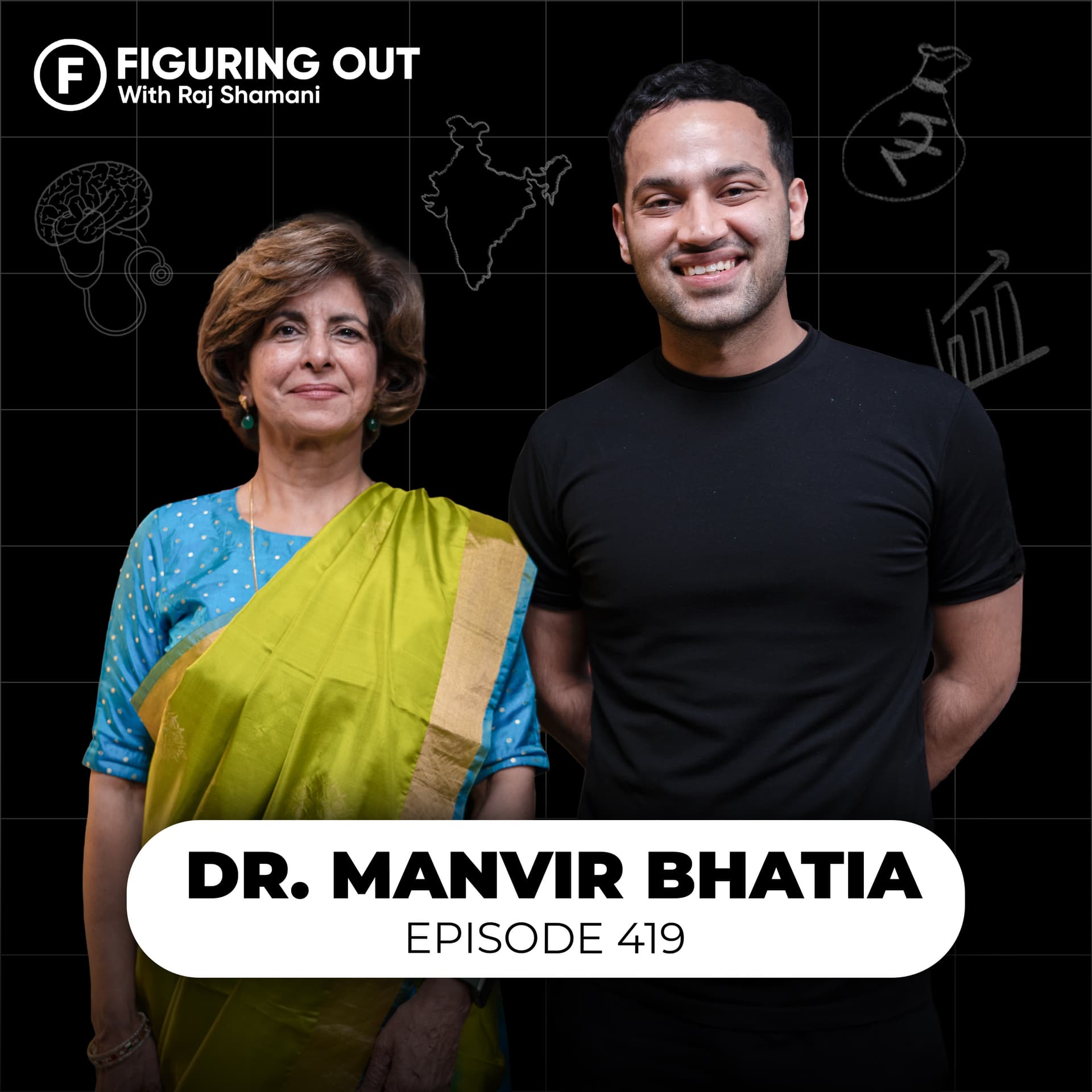
Heart Attack Starts in Bed: Snoring, Brain Damage & Bedroom Hacks
Guest
Dr. Manvir Bhatia, Neurologist and Sleep Specialist
---
Episode Overview
In this episode, Raj Shamani hosts Dr. Manvir Bhatia, one of India's leading neurologists and sleep specialists. They discuss the critical importance of sleep, the relationship between snoring and heart health, and various strategies to improve sleep quality.
Key Themes
- The Importance of Sleep: Understanding how sleep affects overall health.
- Consequences of Poor Sleep: Linking sleep issues like snoring and sleep apnea to serious health risks such as heart attacks and strokes.
- Practical Sleep Hacks: Tips for enhancing sleep quality through lifestyle adjustments.
---
Detailed Breakdown
Introduction (01:04)
- Raj introduces Dr. Manvir Bhatia and outlines the episode's focus on sleep and its crucial role in health.
Why Snoring Occurs (02:51)
- Snoring is identified as a symptom indicating a problem in breathing, often linked to sleep apnea.
How to Stop Snoring (07:01)
- Discusses potential solutions and medical advice for addressing snoring and sleep apnea.
Heart Attacks in the Early Morning (12:49)
- Links between sleep disturbances and increased risk of heart attacks, especially occurring in the early morning.
Sleep Essentials (15:05)
- Importance of choosing the right mattresses and pillows for better sleep quality.
Sleep Divorce (17:15)
- Explores the concept of “sleep divorce” where partners sleep separately due to snoring or sleep disturbances.
Sleep Duration Recommendations (19:12)
- Recommended sleep duration varies by age, with adults needing approximately 7-8 hours.
Types of Sleep (26:49)
- Overview of light, REM, and deep sleep and their significance to health.
Sleep Debt & Sleeping Pills (30:56)
- Discussion on sleep debt and the impact of sleeping pills on sleep quality.
Alcohol's Impact on Sleep (35:20)
- Alcohol is noted to help with sleep onset, but it disrupts sleep quality over time.
Top Hacks to Improve Sleep (36:59)
- Practical tips such as maintaining a consistent sleep schedule, reducing stimulant intake, and optimizing bedroom conditions.
Improving Sleep Quality (46:13)
- Suggestions for better sleep hygiene, including limiting screen time before bed and creating a calming bedtime routine.
Forensics in Sleep Medicine (50:50)
- Insights into how sleep issues can be evaluated in a medical context.
Parasomnia (56:03) & Sleep Paralysis (58:26)
- Explanation of parasomnia disorders, including sleep paralysis and sleep talking.
Family Sleep Improvement (1:02:41)
- Strategies for improving sleep quality within family systems.
The Concept of Naps (1:06:09)
- Discusses the benefits and potential downsides of napping.
Showering Before Sleep (1:09:41)
- The effects of warm showers on sleep onset and relaxation.
Sleep and Skin Quality (1:11:37)
- Highlights the correlation between adequate sleep and better skin health.
Emotional Satisfaction of Sleep (1:16:34)
- Discusses emotional aspects of sleep satisfaction and its importance.
Conclusion & Outro (1:20:44)
- Raj wraps up the episode, emphasizing the value of sleep for physical and mental well-being.
---
Key Takeaways
- Sleep Quality is Vital: Lack of quality sleep is linked to increased risks of several health conditions.
- Snoring as an Indicator: Snoring may indicate underlying health issues such as sleep apnea, which can lead to severe consequences.
- Practical Sleep Hacks: Simple lifestyle changes can significantly enhance sleep quality and overall health.
- Family Dynamics Impact Sleep: Family habits and environments play a crucial role in individual sleep quality.
- Sleep is Multifaceted: The benefits of sleep extend beyond rest, affecting emotional well-being, appearance, and cognitive function.
---
Recommended Actions for Listeners
- Assess Sleep Habits: Evaluate your current sleep practices and identify areas for improvement.
- Consider Professional Help: If sleep issues persist, seek advice from a healthcare provider.
- Share Knowledge: Discuss the importance of sleep with family and friends to promote better sleep hygiene.
---
For further insights on business, relationships, and self-growth, subscribe to Raj Shamani's channel, and stay tuned for more enlightening conversations!
Written by AI. May contain mistakes. Listen to the episode to check what was said.
Transcript
Automatic transcript. May contain errors.0:00О mec. So alcohol helps sleep onset. It will come fast and then the sleep will break. So what will the long term do you have to break? If alcohol is going to increase, sleep apnea will get it much worse. And in the morning you will start feeling very fatigued. You are telling me that those who are suffering, there are chances that they have to get stroke. Snoring with sleep apnea. So this is called obstructive. Sleep means apnea means in the breath. One is broken, the other is increase blood pressure. This will increase sugar. The brain's cleaning will increase. The chances of dementia will increase.
0:32Top 5 hacks to improve my sleep. Consistency and routine. The second is activity in my day. Then the general consumption of tea, coffee, any stimulants, alcohol. And then the last is your bedroom. If you sleep less than 6 hours, then the chances of diabetes are 28-58%. The chances of obesity are 55%. The chances of heart attack are 48%. and erectile dysfunction is 60 % All of this is true So I think
1:08Every year 1.4 million people diagnosed with cancer in India And according to research 30-50 % cases are preventable through early awareness and lifestyle changes But what if I told you that you can know your future health risks before you with just one DNA test. I'm talking about Circle DNA. They have advanced DNA test which gives you 500 plus health reports in 20 plus categories. Cancer risk, heart health, mental health, fitness, sleep, skin, digestion, everything. This test is based on NGS technology with 99.9 % accuracy. If you want to test this test, then the link is in the description. Click it.
1:54And CircleDNA.com पे राज कोड यूस करने से आपको 40 % discount भी मिलेगा और जब हम health की बात करते हैं तो एक topic हम सब ignore करते हैं sleep जो आपके hormone से लेके immunity तक सब कुछ affect करता है हमारी आज की guest है Dr. Manveer Bhatia एक senior neurologist and India की top sleep specialist इस episode में हम उनसे जानेंगे कि good sleep का मतलब क्या है and how do you achieve it? Is sleeping pills or melatonin safe? Is it what happens? What happens to snore? Is it insufficient sleep? Which can be done with diseases? Is it pillow and mattresses sleep quality? And how can we improve our sleep quality?
2:41This episode is the end to watch. And tell me about comments. What do you think about this episode? Karate is a big problem for people. And people are going to visit their partners and take karate. So why do they take karate? Is it a fault? Is it a disease? First of all, snoring is a symptom. It's a problem. There's a problem in breathing. Okay. When you take your breath, I take your breath, I take your breath. Our breath doesn't come. So karate is a sound. or sound is when we are taking the breath, the sound is coming. Why is the sound coming? When the air or the wind goes a narrow passage from a narrow passage.
3:30The sound will come. If we are talking about the passage, let's show it here. So, this nose is. This mouth is. This tongue is. This is our head. This is a breathing pipe. This is here. up here. Now, when the pipe is open and the sound is open, there is no sound. Okay. Now, the pipe is narrowed, the air is a little bit. The air is a little bit. It's like a bottle or a hole is narrow. You push the air to the air. Okay. The sound is a little bit. Now, if someone has infected with the nose, or a virus, then there's a lot of noise, but when you have a virus, then it will go. So, we say intermittent snoring, or if it happens, then we agree that we don't have to do that.
4:28At the time, you have to put a nose drops on the side, and then you can do steam beam, then it will go. But now, it's still happening. Permanent day. It's happening at night, and the intensity is very loud. is the next step. The next step is that it's completely closed. So the pipe is broken. So the breath is broken for some time. We call it apnea. So the next step is the next step. Then we call it apnea. Basically, how many times the breath is broken? How many times the breath is broken? We know from the test. But if your bed partner who said
5:21he doesn't know he says Spencer Neen toot gai So, Untuk ke minh baita Mujh luk kari dapar Unko khud mehsous hota iqa kari kaitai Khold dao Moi kholdki ke pats gya Lambe lambe sas liya Phr pani pia Phr wuh Phr wuh Bilkul Kaipi lago kaitai Mung bilkul suk gya The tongue becomes like As if chipak gai jake To, Yeh hai Patient ko pata chalta hai Waife ko pata chalta hai Ya bad partner Waife ke husband ko pata chalta hai To, Yeh kya kata hai Do, Do, Do, چیزیں کرتا ہے. एक تو یہ रात की नींद की जो हम बात कर रहे थे quality की वो continuity को disturb कर देगा. तो सुबह 9 घंटे सो जाएं 10 घंटे सो जाएं थके उठेंगे फिर चाय वाई प्याएंगे वो फिर गाएंगे मैं एगंटा फिर सो जाऊंगे Then you have breakfast, then you have nap, then you have to go to office.
6:07You have to go to office. Then you have to go to lunch, then you have to dip. You have to go to home, you have to go to bed. You have to go to bed. It's a fatigue. So this is called obstructive, meaning obstruction. Sleep means knee, apnea means that it's a breath. So this is another issue that we have discussed before. That is what we have done. One is the knee to the other. The other is the blood pressure. because every one of the breathing of the body is a lot of hormones like a stress for the body. So, the blood pressure will increase, the sugar will increase. If the brain doesn't have quality of sleep, the brain will increase.
6:50So, the brain will increase. So, the brain will increase the memory problems. The chances of dementia will increase. So, there will be a lot of sequence. So, it starts snoring. Can you do something So So So So So So So So So So So continuous - continuum. continuous - Stack Élite could have been here, then we can be able to take performance by
7:30chair , onechau , anotherchau , a effect by birth keep it and your teeth just think.. and the back of the body is gone. So, the chest's the skin or the body is genetically like this. So, we have a lot of people in the North East, Singapore belt, all the facial structures are very different. So, the body is high. One thing is that weight, if the body is as-a-a-ga, the weight is here. Weight is in the fat. So, the body is less than the body. which is the alcohol and smoking which is the muscles of the muscle So basically, we have to see the cause that obstruction static is that there is a bone abnormality that is fat related lifestyle measures So, we can go to the depth of that basis But there is no basic one level rule If someone takes a lot of money then what can we do?
8:37To make le Angels Unlevel rule It is the right This is positional which means means if I am This is the right I am Then do
8:50be seen It is it Yeah, it is Look at the current I am Ficces You Yesege Sleep apnea Yes Tick How It is Control You Had You Had so medicine in medicine two things are control and cure so diabetes control and blood pressure control so medicine chronic problems are all control and infectious problems cure like today I sleep and I don't snore what I can do in the same way I can do whenever I can snore I can do yeah Yeah, then keep your body weight. It's simple. If the fat content will have the abdomen, the neck size will grow, the chances are that the airway will close. Okay. I think, if it's not done, it doesn't have a problem with facial structure.
9:53I think that's the biggest contributor. Second, additional would be that if the weight of alcohol is increasing, smoking is very big. People who are well, you are right. I think the weight is a very big contributing factor. We have now an Iceland study. There are buckets in people. Cluster analysis. Some people say that there is no problem. Why do we do this? Why do we do this? If you have risk factors, suppose diabetes, blood pressure, heart problems, obesity, and sleep apnea. we are going to treat the whole thing. If the blood is running in the body, the cholesterol is running in the body, why do we do it?
10:39Because the major concern is the cardiovascular outcome. The heart and brain have no problem with blood vessels. So sleep apnea is a risk factor. We know that people with sleep apnea are at two to three times higher risk of getting a stroke, two to three times higher risk of having a heart attack now we know 20-30 % chances of having a memory problem and our lifespan is very growing so we do anything to protect our brain so there is a big concept of brain health like heart health so when our lifespan is growing the brain will undergo changes with age done so we will do something to save it so you are telling me that those who are going to be a chance that they will stroke they will stroke they will stroke more chances just because they are snoring that's the first time snoring and maybe with sleep apnea so if we divide sleep apnea so just like people know that the sugar is more than 100 so there is a number we talk about we measure how many times sands ruka.
11:57So less than five is normal. Okay? If someone study 3-4 then they go to the hospital. So no matter what they do. Five to less is okay. One hour. Not the whole line. Five to 15 is mild. 15 to 30 is moderate. 30 to more is severe. So I have seen 100, 120. Every 30 seconds sands ruka. So now the research has been told. Thousands of patients data is not 100 or 10 people. In the thousands of people, the previous sleep, heart, health study, you know, premium study, the data is taken out of the way that those people are moderate and severe, the chances of stroke, heart attack, dementia, sudden death are all higher.
12:48Since we are talking about stroke, heart attack, death, so that maximum sleep in people who are attacks are 3-4 in the morning EC-C link a very few years ago a famous journal NEGM came to that that link that what happens in the evening that people 3-4 in the morning so if you see if we see in the normal way if we keep the timing then we are REM sleep in the morning so that sleep is a very dynamic sleep like us like active sleep we say brain is very active body is very active breathing is very irregular so chances of things going wrong are very high if there are already some issues but is it like our body is weak weakest at that time yeah I wouldn't use the word weakest I just think there is a lot of dynamism going on fluctuation is very high so there are many things and then you are predisposed because we have some terminology that we have to say but if we have to say I have seen a lot of people average of people so suppose 25 in one hour but in rem it is 60 so this is the issue so in people sometimes people don't complain that my sleep is broken so I can't sleep so I can't so there's no problem so other subtle signs are sugar not getting controlled BP کی ایک دوائی پھر دو دوائی پھر تیسری دوائی لگ گئی so there's something is going wrong in the body کہ کیوں اگر آپ نے باقی اپنے variables control کرے ہیں میں اپنا کھانا پینا کر رہا ہوں میں exercise کر رہا ہوں but یہ چیزیں بڑھتی چلی جا رہی ہیں وزن میند کر رہا ہوں but وزن is every year jumping by 5-5-6 kg so کچھ دیکھو کہ کچھ اور کیا غلط چل رہا ہے and is there any other reasons sleep apnea کے علاوہ جس کی ویسے جو لوگ رات کو آدھی رات میں So they can be getting up to go to the washroom.
14:53There are many people who are sleeping in two liters of water at night. I haven't drank any day, but I've eaten some of them. Some people have this thing that I don't drink water. So you have to fill the bladder and it's out. There are a few things that people use. I have a question. How does the mattress temperature have to be? This is all Gen Z kind of talk. okay there are different mattresses like soft hard mid so it's different because some people can sleep in one type this is all unique body need there is no blanket rule I think your body feels very good firm too hard but generally you should be comfortable but yes if you have severe back issues or whatever like older people or younger people also then we need a little firmer mattress that's all is it better to sleep on same same thing for the pillow pillow can be a lot of weight how much height pillow pillow no then pillow shapes pillow this pillow that so it supports your neck and your head should be at that kind of level pillow that's fine i sleep without pillow a lot of people sleep without pillow that's also fine no no i think what your body if you are okay or your shape or your memory form and ergonomic and all of that i have no scientific proof on all this so i think i better not get into this some issues which we don't know we don't know i think what works for you bottom line is what works for you.
16:38But yes, other way around I do know that if you are raising your pillows, 1, 2, 3 then you think that why are you doing this? Then you will get a neck pain or a backache or a shoulder pain. Okay, tell me cuddling a pillow is better or cuddling a person is better for better sleep. Person? I don't think. It was most googled question. That's why I asked you. One of the most googled questions. Oh really? So why also I think the release of this oxytocin which is a very good chemical the touch chemical or the sensation chemical so it makes you feel works on many many aspects of your body but actually people because they don't sleep well with their partner xyz reason because my partner snore AC temperature up and down responsibility up and down people are sleeping in different rooms and it's called sleep divorce is it healthy?
17:33I don't like it I don't think it's healthy as a doctor you should tell me Like as an individual, I think I don't like it. I don't like the concept. Yeah, I don't think as an individual or as a doctor. Because you have to think about the emotional implications, etc. So, you do need that connection, the compatibility. So, adjustment. I think some things can all be worked on. And also the other reason for the sleep divorce is also timing. There are some people coming back like from work. There's 10-11. then that me time business you have dinner then you want to watch something till 2am the child's school is at 6am so it is possible but I think there is a way to work around it you don't like this trend implications in the long run but people say it is practical that someone wants to watch a movie TV to watch a moment to wake up early to sleep to read to listen
18:38yeah bunch of things see i would say what all can be fixed the snoring you can fix temperature yes you can fix to certain degree like i said we come down two degree go up do a covering okay if i'm coming late i want this that i mean one can compromise you use the tv for another room and come back and sleep here after one hour so i think there are possibilities of doing things which if one wants to it's all again the will the bottom line is do you really want it or you are happy like this tell me ki bhot log sote nia bhot logko lagta hi problem bhi nia they just adjust kar lete chalo tiye kum sote hai beach moot tay whatever that reason is thik hai jaysay zindagi chalani यह चल लेते हैं, ठक जाते हैं, ठक के चला लेते हैं, कुछ -कुछ लोग तो, जैसे हम लोग guilty as charged, जान पूश के कम सोते हैं, दिन में लेका हम तो ऐसे ही हैं, you know that hustle culture, all of that.
19:40So, क्यों सोना चाहिए? क्यों अगर मैं नहीं सोंगा, तो मेरी brain और body के साथ क्या होगा?
19:57deep sleep, REM sleep, dream sleep so first of all we can understand that we are going to go to stages and every stage has a different purpose and every stage we need to make sure we have upset this so this is why why we need to go to the brain when we go to a deep sleep or REM sleep we have a way to go to the brain there is a way to go to the brain Imagine that a very cluttered room is very cluttered. So, a vacuum cleaner will be able to fix it. So, if we don't fix it, then all junk, gun, clumps, material will be made. So, now it's seen that it's in the nind. So, if you don't sleep, then your brain will not fix it.
20:49So, if it's going to fix it. If it's going to fix it, So if it will damage, it will damage somewhere. So those parts are related to our memory. So then the relationship is that memory has a effect if our need is not good. Second, we call data storage. So we have accumulated a lot of things that we need to store. If it doesn't store, then it will not be recalled. not going to fall, but how will it go? So short term and long term memory storage is in the night of the night. So this example we give, like you are putting pen drive or flash drive in hard disk, so if you don't put it in the flash drive, flash drive is gone, then the brain is gone.
21:39So in the brain, these are two-three things. One is that when we learn something or absorb something, then we become very connected. So when we learn which is synapses. This work is still working on the whole day. So, some filtration should be necessary, what is necessary, what is necessary. They are pruning. Synaptive pruning. So, pruning is also pruning in the brain. Then, this will not happen in the brain. So, important files are deleted. Delete. So, if there are so important things, in the brain, it will not happen. As you can come down to the heart. heart. So our heart is a muscle that beats all the time.
22:25So we should always get a rest of the night. If you sleep in deep sleep, your heart gets a rest of the night. The heart rate slows down. Blood pressure is slightly lower. This is called dipping phenomena. So dip to your heart. Why? So you should have to get a rest of the night. Rest is recovery. If we don't do that, then we will talk about the people who are late sleeping, what will happen to rest and recovery. So, there are many things back-to-back. We will go on each, one by one, who is, who is, who is late, what is the sleep that is happening. But I was interested in this. Tell me, is it true or no?
23:07I have been released on many studies on what is happening. So, it was that if you sleep at night at 6 hours, as an individual diabetes chances 28-58 % you can increase depression chances 3x more obesity chances 55 % Alzheimer's chances 68 % heart attack chances 48 % memory loss 40 % more than comparatively to others and overall productivity which you do that can 50 % drop and one of the biggest is that the less sleep will increase 60 % so all of this is true so all of this is true so all of this is true so all of this is true so we call short sleepers so we usually need 8-8 hours what is the average time like best time to sleep duration duration time so duration if we have to do this age wise we are leaving children teenagers need about 9 hours they don't get them then adults need 7 to anywhere between 8 and a half we call it a unique need so if you can be 7 I suppose 8 I suppose 8 then that is the need then 65 over 7 hours and 80-85 % in the age of 85 % will be more than a long sleep.
24:43So, this is an ageing pattern of a pattern. Okay. So, this is clear. We call less than 6 % short sleepers. 9 % long sleepers. So, we will be healthy. The people who are in this end and this end are in this end. We discussed that the health problems of the 100 % more than a person. Okay tell me about that So So Long sleepers Is there Obesity Emotional issues That is also enough Because What our capability Is there That many hours is enough That is more Harmful So it's the right time Right duration is important So this is the right timing Which I have seen The youth in the last few years In my practice There was a concept That we need 7-8 hours So it's 4 or 5 It's 8 hours And it's their parents Or their teachers That we're sleeping So because They've read that mantra is it good or bad so we talked about duration or sleep there are several dimensions duration is one dimension the other is timing so timing why I don't say 8 weeks but why should I sleep 11 or 10 because our body and the hormones which we talked about
26:39ukurote ,ojCO Interestinglysen ik以上
26:57dan or less time will be reduced, if we have removed that time, then growth hormone will not be peak. And why do we have a few people who sleep 4 hours and the next day have a very energetic feel. And some people who sleep 10 hours after this all, they also have all these things. 10 hours of sleep after this all, they have to sleep and feel the next morning. So this is the third dimension which we call quality sleep. So we have told that non-REM should be, REM should be, non-REM light sleep deep sleep REM 20 % deep sleep 15-20 % okay before we go there basic low can you explain one time REM non-REM deep sleep so the need is some parts of two parts of this actually started that scientists saw that some kids were asleep but his eyes were very moving.
27:45So he described what he saw, rapid eye movement. Okay. And he said, this is not the whole night. So he said, he said, non-rapid eye movement. Okay. So he said, rapid eye movement is non-rapid eye movement. Then our time was that we had to study more brain so he saw that non-rapid eye movement in a few stages. He said, light and deep. So deep in the deep I've seen that the brain has very big waves and the brain is moving and in lighter stages we can see some other markers So now when we talk about 7 or 8 hours almost 80 % is non-REM 15-20 % is REM Okay In non-REM there is the stage 2 which almost is 50 % but But stage 3 or deep sleep is about 15-20%.
28:42So every stage in the brain and body is different. So every stage is necessary. If we have 10 hours sleep, then our REM didn't come. And our deep sleep came about 10%. The rest of the day was gone. Lightly. Lightly. 80-90 % So when we get up We will also feel that I am not fresh So there is duration How many hours you sleep There is timing And then there is quality And the fourth is How are you satisfied Satisfaction is how? Okay, satisfaction is how we reach later So now it's 4 hours So in 4 hours So our non-REM It's going in a cycle Every one, one hour in a cycle, we have a cycle of 4 or 5. So, if our cycle is good and we have a deep sleep, a good ramp, sometimes some people say that I am very fresh.
29:51But some people, like I have told me, for 10 hours, we can discuss what the quality Okay. Have you heard? Many people like suburbate, they feel like they are like sleep. So now people, they had coffee and they were awake. Then coffee slowly and slowly, you have to have a requirement. You have to have a requirement. So you are immune. You don't feel like coffee is immune. So people now have to get into alpha GP. Have you heard of it? No. It's kind of a focused drug. Okay. It's like people in their coffee. I don't know this. I don't listen to anyone. who knows, the ones who tell us alpha GPCA drug it's just focused drug neuroscientists take a lot of people around the world at least maybe they give their clients over the counter supplement use L-thianine L-thianine is L-thianine, alpha GPC, caffeine mix and shot what time we will do first I will take my sleep quality from night, then I won't need all this.
30:56But tell me how do I solve it? As a young person who is very social, my lifestyle is like where I have to constantly work across time zones. Sometimes you're working with US clients, sometimes you're working with India. Right? Multiple things. Then you have a social life too. You have to go to Saturday, Sunday, weekends. So in this life, I don't have a routine consistently. I'm at home. I'm not a country in my country. I'm not a country in my time zone. At this age, I'm not a routine. Exactly. We leave everything and leave everything. You stop it. You still manage your life. Monday to Wednesday, you follow me.
31:41Then you follow me on the US clients. Then you start working on the US clients. Then you start working on Saturday party. How do you manage your life? If you look at the shift work problem, But shift work can be a change. It's consistently night. But some shift works shift are like that there's a afternoon shift, a night shift, a morning shift. So, there's a different system and a different training. So, I think number one is this that I need to feel how I feel. And to combat this, do I need all these X, Y, Z? Or my routine teens have, I don't close I agree that no one doesn't say that you should close it all, but you should have to do some timing constraint.
32:26See, body, 1.5 hours or 2 hours will compensate. So, suppose, let's say I'm 12 o 'clock, I'll do 2 o 'clock, so then I might be able to manage. But if I have 4 o 'clock, then 2-3 days will go into that ziffy. Or another way is that I late to so my wake up time I don't do 4 hours late so I do consistently 1-8 hours so suppose say my normal wake up time is 8 o 'clock but I don't get up at 2 o 'clock so I go up to 10-10 so but isn't it bad then bad what the hell if I do Monday to Friday I do a normal person I will go to the office and go home in the night. Monday to Friday the same. Then they will go to Saturday party.
33:22Saturday party will go to 4 or 5. Then if Monday to Friday will go to 9.00am. Then they will go to the morning. So if you did that, when you come on Monday, you won't sleep at 11. Then you won't sleep at 2-3. Because you've got your body trained on Saturday. Then you'll sleep at 2-3. Then you'll sleep at 8. But if you don't sleep at night and you'll sleep at the tablet, then you'll die. You'll die your grave. You'll die your grave. You'll die. You'll die.
34:16So, we are laying the path or the ground to become a habitual for a sleeping pill. And sleeping pills, I'm seeing that people are eating five or six years. And what will happen? Then after one or two months, maybe after three months, the pill will go away. Because I need something that I will do. My work is very important. My family is dependent on me. My boss is going to be not creative. So I need sleep. And then this cycle becomes that I need sleep in any situation. So I'll eat a ball. I'll stay fine. After a while, he doesn't work a ball. Then you'll eat two. Then what happens if you open up at 3 o 'clock at night?
35:01You ate 11 o 'clock at night. You've been asleep at 12 o 'clock at night. At 3 o 'clock at night. then you have to go to your sleep so be prepared that this is how it will take over and some people are taking that I had a drink and I did something so the sleep is good with alcohol so I will drink it again these people say that alcohol is good to sleep so alcohol and sleep have two effects so alcohol if we divide the sleep then sleep onset the sleep is good to get out then I can sleep maintenance that I was in sleep and then I can get up in the morning so we have three phases so alcohol helps sleep onset it will come quickly then alcohol after some time the levels will drop then the sleep will break so people are still struggling so what is the long term wrong?
35:54long term is that the quantity of alcohol will increase if you have sleep apnea then sleep apnea will get it much worse and morning you will start feeling very fatigued so headaches will be deep sleep will not come deep sleep will not come break sleep lot of people say that they smoke a joint they smoke weed or hash I don't know what but good nighter they say that every night they take good nighter and they get a lot of sleep again probably just these are all things which are inducing a sleep but maintenance is a big issue and habit reforming is a big issue so you will increase so all these things this alcohol the sleeping pills they have another effect called as habituation habituation and losing the efficacy jitni minne aaj li usne jo aaj asar kiya thode time ke baat woh same chiz asar nai karte toh min dose badaata hon toh woh tolerance develop ho raha hi or dhere dhere then you reach a level then you are gone yeah Okay let's talk about 1-1 sleep type And 1-1 specific thing That we can better do Like we spoke about RA, REM, deep sleep How can we better do that That we can talk individually So first is Basic level Top 5 hacks Which I can improve my sleep Number 1 Consistency And routine
Read the full transcript
37:34that's one
37:50see it's me like of course it's me like that in the age of 30-40 minutes should be able to do something. The second thing is, but now what happens is that 30-40 minutes in the morning and in the morning, but the whole day we are sitting, that is also not good. So, now you can see that as much activity as you can, take your water, put your plate, do something. So, movement is good. The movement is better, but then that is that increased activity. there is the general consumption of tea, coffee any stimulants, alcohol smoking, all of them are cutthroat, these are stimulants so stimulants means that you will be able to burn so if you take a lot of bedtime to take a lot of time, then you will be able to cut off.
38:42So coffee is 12 or 1 hour to be here so many people are shocked because coffee half life is 6-8 hours It means that someone will stay 7-8 hours, 9 hours. But see, this is quite complex because many people will meet you and in your experience that I will sleep in coffee at night. But I told you that something will do something in maintenance, but let's go, sleep comes. I think it all depends upon your receptors, who are acting. But those who are tired of the time, they will tell them to avoid. Alcohol is the same. We know that sleep onset is on maintenance. in the less quantity of alcohol 2 hours I'm not going into the definition less is like we can spend a whole hour 2 hours talking about what is the recommended dose for people when I tell them the dose you don't have to drink what you are saying then the same thing is smoking so I think and then the last is I think it's your bedroom so there are 2-3 things in the bedroom of course which we scientifically specifically we know that it should be dark, it should be a sound, and a light, and temperature.
39:55So if we keep this 4-5 things, average human being should be able to maintain a good sleep. How much temperature should be? So this temperature again, which the US or European studies say, they say 18-19, but I think the basic bias is fine. But see, having said that, we are a country, temperatures are very high in most parts of the country and air conditioning is not a big thing so already there's quite a big hassle about this so we have to keep that in mind sleep is an issue with a lot of people the TV in the bedroom is a big problem so some people are keeping the TV on and sleeping and watching so that people have asked and research is there that what does this do?
40:44So any form of light, flickering light or a constant light of a certain lux will interfere with your melatonin. Release not to be able to release. A little bit of light. No, the night lamp types on a little zero types is fine. But TV light will be more. Phone light, TV light and normal light. So this will come to you. But we are talking about the hormone which we need and melatonin is not only a sleep hormone. It is supposed to be a youth hormone, anti-aging hormone, lots of other things. So, it will not come to the peak. Then, the quality of sleep will grow. Instant sleep, if we need to do it, what should we do?
41:26No. What technique is it? Yes. If you want to see a normal phenomenon, then we know that 10-15 minutes in fact, should be in the same time. Those who are getting instant sleep, what they say, a lot of my patients say, that's still keeping the body. I'm still talking and the person's gone to sleep. So there are two reasons that you are actually in a very severe sleep deprivation state. The body is just trying to catch up. Or secondly is that disorder that I told you that the wake hormone is very low they keep the body as they keep the body. Within a few seconds they are sleeping. I can sleep within a few seconds.
42:05It's a problem. Sleep deprivation. So that tells you that is one of the clues that I am sleep deprived the other clue is that if you are allowed to sleep in will you sleep in in the day time like on a weekend time can you sleep long so that's another thing sometimes I can say now I can think from the focus state so that's what I'm saying this is not a disorder normally we would say that before a few years ago but now we know that the lifestyle has been like the body is just kind of so if you want to increase the day the people are cutting the night if we have 24 hours then we have 8 hours 7 hours to sleep but now I have to say that I have not done work my social life, so what will I cut?
42:52sleep cut that's worse tell me what happens to those entrepreneurs and CEOs who? who are 4 hours what do they do in your research in your case study in your experience so I have seen so I have seen that many youngsters say that the heart rate is growing so a lot of people are coming with this high heart rate hustlers heavy I think they are just too stimulated so see heart rate 90-100 time is not a very good thing and they are coming themselves they are coming with their watches and saying that my heart rate is going to be more so I tell them heart is a muscle it's like it's a whole day long you keep lifting weights the muscle will give way so the muscle tells you that I'm getting tired so it will not let you pick it up or whatever you want to the heart when it gets tired what will it do people are all very intelligent these days nice I like it no no so this is a concept in medicine now which we have evolved into a different kind of medicine.
44:11So, before it was like which actually parenting was the same. Instructional. You can do this. You tell me, do it. You go to bed and eat. But now that doesn't work. Now what? Now it's shared decision making. So, in my practice, this is what I have evolved and learned that I give them the facts because now, like parenting, think people want the facts. If I do this, X, Y, Z why should I do? What will happen if I don't do? So I have models that I show them that if you don't sleep, why don't you? Let's discuss it. I have a whiteboard, a marker, draw. Because people are very bright. They come so I ask them that you have knowledge that you have here.
44:58They already know this much. So there's no point. They come and tell you that I have 10 tips for sleep hygiene that I did. I don't know. So obviously then I'm not going to tell them but we go over them briefly about their intake and activity etc. Now people are going to the gym at 10 o 'clock at night. What do they do? I agree it's their work. They come. Then they say the same thing like you are asking if I don't sleep then I socialize. Now they say I don't do exercise. Don't do exercise is bad for the health. But what can we do? So it will stimulate you. then you be so we have this now that again that is my life but accept
45:44except i will relax and deep breathing god okay let's talk about quality of sleep now we have said that first was sleep duration before we talked about little hacks if it wasn't then take acceptance that I have little sleep whatever don't get addicted to AIDS that I really like that the association was not going to do how do you improve quality then quality I have metric track 3 1 REM 1 Deep Sleep and 1 Deep Sleep Slow Wave Sleep Deep Sleep and Slow Wave same Okay, slow-wave sleep and deep sleep is the same. Same, same. Okay. So, there are two main things. So, we saw that for quality, a slow-wave sleep or a deep sleep and a REM sleep.
46:40It is the importance of both of these because of memory, emotional processing. Actually, Matthew Walker talks about this REM sleep being like an emotional bandit. That our daily things are linked to the brain. we have to soften it and smooth it. There are almost similar things that we have seen. If we can see that the sleep will come. If we can do that, the sleep will be good. The activity has seen that it is a good way to help deep sleep. If it is so much activity, it will be better deep sleep. I had a patient who is 75, I don't know, 80. he's doing 15 ,000 steps 17 ,000 steps and he's not sleeping so I think when we take this we have to just go within whatever general I'm talking about adults so yes, as we are active the quota of deep sleep in fact, one thing is that those people are saying whether it's women or men, who are just sitting and not being able to sleep, it's a little activity and other thing is all those stimulants unka thoda dihan rakhengye na to deep sleep improve ho jayegi and REM bhi improve ho jayegi but these sleep sounds joe hath hai does it work?
48:03it will probably work because they so basically what happens is the sleep is generated by the brain and there are some centers all around which are a cutthar work, shut down it's like an orchestra kind of going on so the sound of that particular frequency will start making all those centers vibrate to the same level or activate to the same level and enhance slow waves. Wow. So, what you're saying is that some people are saying that if we have enhanced it, then we can reduce the duration. But if I sleep sound use کر so so it be is it addictive see it is no today I'm just talking about today sleep music use so before they here to going sleep music specific big playlist people use and if my brain waves attach same level frequency attach can be possibly to it noise.
49:14They get used to it. But there is a certain time those children I know, I've seen also in my grandkids that they've kind of grown over it. It's not like a big addiction. Adults also will go over it. But I think would I use the word addiction? So we may not. It's just like a gadget or a tool which is enhancing your deep sleep. So addiction, the word usually has a negative connotation. and why is it because it has other issues with it that your dopamine is getting secreted you want more of it it's producing some side effects in your body so with something like this if it doesn't work and I would rather that it doesn't work rather than trying to get something else to do then it would work for people you would call it ritual then addiction it's my sleep ritual yeah you've got those rituals what people are doing protocols Protocols.
50:11Protocol is a word which women made it famous. Okay. Is there something harm with sleep sounds? Do you think that now we haven't done any research on this, but over the long years? So I think mode of delivery will happen. So I'm not sure that wearing headphones, like this is clear that if you're keeping headphones in your ears for too long and those earbuds, etc. They can damage your internal canals. So, you know, because you can't kind of sleep with it something in your ears. So that's not right. constantly what is the frequency, intensity all that will come into play but if it is like in the environment in a very soft then I don't foresee anything going wrong.
50:50Do you think dreams is something important? So dreams obviously is something important. So we can talk on the scientific knowledge about dreams that I can. Tell me. We have made such a way that when nature has made it, if our dream will come our muscles are like as if they are paralyzed, that we can't move in the REM. Okay. So it is the concept of active brain in a paralyzed body. So there's some information that comes from our brain, from our muscles' centers, that we don't move in the way. Or sometimes it can be a twitch, went to panic. But like, a part of this, we have to show protective and then we'll get down to a plan— imagine that you're kind of my problems aren't wanna include a명이
52:02punch in that usko hospital jana pada ek insan whether they like store which are really true stories woopne bed se khud gherke he got a subdural hematoma ek to aysay karke usne wife ka itni jor se gala pakda he thought it's a tiger to she almost choked her to ye case to is ko bolte hai ke dream enactment bolte hai but simple shabdo mein acting out the dream Why was that this? The protective mechanism in the REM was gone. Youlogue, asked for the experience. In their experience, you advised ourselves. So what has happened in my brain? Yes.. You will have all the things specially caused. You will появgelعل some people to solve this problem..
52:53Many people come for whom I thought... So algo that me is standing right away and someoneenesoro emotionally, So, those are all things which must we do.. You can eventually be baptized aside. but imagine that you have an action so you have to run I get it but why is it because that the control of our body was that we will not move it was gone and this is condition this is this is RBD what do you say R because REM sleep behavior B behavior and D disorder disorder so now this is quite a bit before people so what we have so
53:40this is why
53:47this is an acute
53:56intoxication drone ka bat. To aarga taur ya older age mein hota hai. Okay. To us mein karen alag hai kuch younger wale age mein kal hai but kisi bhi age mein ho jata hai. To ab yeh dekha gya hai ke agar yeh ho raha hai to ek tarah ka yeh marker hai ke shayid aagilye 10-15-20 saal mein koi brain mein ki neuro regenerative condition haeigi. It's become like a marker. Alzheimer or dementia as a Parkinson's disease. Parkinson's but now you know this is a little extreme version but people have already told me that 60 % but 80 % true people have followed up we have more time if I had 10 years before so we have already done research but having said that there are some people who are like this I have recently seen a patient he has been having a 7 year but now But they have to be dangerous in their partner.
55:00So, they have to be un-intentionally. So, in this case, it is forensic in sleep medicine. It is forensic. It is like a law. I don't know what I have done. So, you can treat it? So, first of all, we have to prove diagnosis. We have to do something in the night. We have to see what is happening in the night. There are some milder forms. I have to tell you some major forms. بتائے. Milder میں صرف اٹھ کے بیٹھ گئے. جور سے چلا دیا. جور سے ہاتھ مارا. You know, kick کیا. So, those can be milder forms. Subtle forms. Can it be fixed? Yeah, it can be fixed. We have some medicines to suppress it. Okay. And then also we tell people just like you said, protect yourself and protect the partner.
55:48So, then they can frequency depend on it. If you have a six months
56:03is it better to sleep on the floor or on the bed for these people not for these people generally better neen ke liye better generally bed is okay but these people it's a little risky and the other thing we focus on these people is this concept of overall brain health that we have to work more on our work. We have to work more on our work. But we have to focus more on our work. If it's 6 months ago, it's dangerous. You don't know your partner when you come to your life. You feel like 6 months ago, nothing has happened. Look, you have to study in Mecca. It's a problem. So, like I said, there are some other reasons.
56:44There are acute alcoholic intoxication, heavy substance use and things like that so this is a thing that is broad heading under this is parasomnia this is another link but now I have some patients have told you that entities called sexsomnia so somnia again means a disorder to sleep. So they are performing certain acts which they have no recollection. While they are sleeping. And why is it? So this is, the sexomnia is a part or a type of non-REM parasomnia. That the brain is partly awake and partly asleep. But why? So you do certain so you can do any act or a task which you would do like an awake person but you are also sleeping and he under see go reason ho ta ki is it because of is it because of maybe I don't know unfulfilled desires to do certain things so us ko we have had to send me to psychologist but I think it's more the issue of sleep deprivation to kya ho raha ki when we go through these cycles I was telling you our transition bolte hai hum ki ek cycle se ya non rem se hum rem jate hai phir hum kabhi wake mein jate hai phir non rem raat par ye chalta So this shift is very smooth.
58:21I think this shift is very hard to get out of the way. You are partly awake, partly sleeping. Okay. Parasomenal sleep paralysis is what is? So sleep paralysis is like this. Sleep is a need. Paralysis is body is paralyzed.
58:41This sensation is that I want to do something. I want to say, I can't do anything. But it remains a little time for seconds to a minute. And then it will go. So how does this end happen? Sometimes you have to ask yourself. And sometimes you have to ask someone. The other thing is that sometimes it seems like people describe me
59:16My body is paralyzed. Some people say, but the description is that my body is paralyzed. So, it also comes, when we sleep, state shifts, it can come to the beginning, when we go to sleep. It can come to the beginning, when the state shifts, and it can come to early morning. But is it a problem? So, So, one thing is isolated sleep paralysis. This will come to young age. Just a lot of again, sleep state issues. The timings are very shifts, the durations are very low. So, this is the anxiety that has been very big. So, this will come to that time, like 19, 21, 22, and then it goes. With that, we call it isolated sleep paralysis.
1:00:04If someone has experienced it, nothing to worry. So, no problem is not. No problem is. this with if it starts to start that I have sleep attacks are going to be sleep attacks? this is what we have talked about that I have been talking about bed bed bed I have been talking about I have been talking about very many dreams and I have been talking about vivid dreams or basically increase sleep then it starts becoming suggestive of a condition which we have been talking about Do you think the last night is the last night that we are falling
1:00:48is that a condition
1:00:53it's just some other like i said you go through a state change dreams
1:01:06dreams yeah so i think somebody had told me what this means because i also get this it's called something in yeah but it's a dream ko analyze in a psychologist they will try to understand you as of personality, you can tell them what you do. Then you can tell them what you do. But generally, disorder is not a disorder. Sleep talk is a disorder which people who do not speak to them. So sleep, when we talk about the parasomnias, sleep talking is a good thing. So children are very normal. Children are small, 4-5-6-7 years old. They are looking for cricket, they are looking for ball, they are catching, they are looking for ball, then they are going to sleep.
1:01:52So that's the same thing. But one, two, five percent are in adulthood. So when we have a adult, we ask first if we are going to go to childhood or not. Then what happens is that someone else is going to family. It's possible that someone else has sleep talking, or someone else has been talking to childhood. So this is genetic. So we have to see that there is no threat, no injury, no chance. and current what is genetic we do not have to do it but it is clear that we have seen it that we have seen it that these people's sleep schedule sleep timing right if there is disruption then it will be more than it will be the way it will be the way it will be consistency then it will be but you use the word genetic parents can sleep affect the kids do not do not do not do not do not do not I was able to sleepwalking there and where I was able to sleepwalking.
1:02:54Now your question is a different question. But it can be similar and different at the same time. Okay. Parents like sleep keep them from the children. Genetically, this is the difference. Overall behavior and psychology, this is the difference. Yes, it is. What difference is the difference? Parents' sleep how does the children affect? No, parents' sleep will not affect. that is what is the norm of general household. So what are people doing last? See, children consider, they say you are told as you do or you follow as you do which one is better. So they will usually follow what you are doing. So if you have a general sleep hygiene principles like consistency, atmosphere at home, alcohol, smoking, they will also try and maintain that into their adulthood.
1:03:47coming that is one part second is co-sleeping if everybody's in the same room i have seen
1:04:09so that can start impacting the child's sleep then I have had teenagers who are still sleeping with their parents so that can affect the parents privacy that can affect the teenager and then I have had a girl and a boy both actually who because they slept for so long in the same room but they were not able to go and settle in their college or in their life later on because they continuously were scared she was very scared because the whole time and in fact there was this girl I think she got married then the husband was traveling so she just couldn't sleep she would set up the whole night so she would sleep in the morning when the staff came for work so she needed treatment it's going to affect her life she can't have a normal life so we should think first of all how to keep their sleeping habits so that we should focus very important it's a very important thing to think about so I always when parents talk to me I ask that my child is asleep because they say I'm not asleep because the child is 10-11 I say you know the child is asleep then you will sleep then you get your two hours one hour then you sleep but it's bad for them their growth hormone is not going to spurt so it's a big thing I think focus is up the whole family has to take a decision on how to improve how to improve family's sleep because that will improve family's health yes and personal lives and emotional status but a lot of people are now exhausted so you think naps are good so you think naps are good so this is again this free.
1:06:13So, nap is good. That's one part. So, why did the concept of nap come up or there are certain communities like India the nap has been forever. Some Spanish communities, Italian, there's nap has been. I think it was to do something with the warmer climates because our ability to function at one level of productivity was not. And one is that naturally if we look at physiology, we see a dip. That our alertness is a little bit. Why is it afternoon? It's a body. It's a circadian cycle. Then the dip will go and then we will go. Now, the dip in fact, people are very productive. They say that your main work is the morning, or the morning, or the morning, so you don't overwhelm yourself, or you don't have to be bright.
1:07:08but if you have to allow circumstances, then you can have to allow for how many hours? It's about 1.5-2.30. So, 15 minutes, 10-15 minutes for 10 minutes, you can just do it and rest. So, you will think that the second part is a new part. Okay. But, people have learned that they are taking a nap at 3.30-3.30, 5.30. Then they say that every day I see this. I go to bed and I'm not asleep. Then I see the phone. Then I sleep at 2 o 'clock. So that's what you have disturbed your rhythm. So that's what it is. The other thing is multiple naps. So multiple naps, I mean, you mostly take elderly. I don't think youngsters are doing so much.
1:08:01So what do you think after retirement, 75 types or whatever? and we go up in the morning very quickly and then we will take a nap and we will do a little ready-ready, yoga, yoga, and then we will sleep. Then we will take lunch and then we will sleep. Then we will take a little walk-walk. Then we will take a day and two or three naps. Then we go to sleep in the night. So multiple naps are a problem. So what is the time of nap? What is the duration of nap? We should keep that. How long is the duration of that? 10-15 minutes Why do you say 10-15 minutes Why do you say 10-15 minutes Or upper limit 20 minutes You will be in light stage So in light stage You will be in the end When you go up You feel fresh If you go deep sleep Which we call high wave And then you will be up You will feel very groggy and your mood is very low so sleep drunkenness so it is equivalent to having that much alcohol content in your body because brain process then you feel very odd so we have a benefit to keep a little crisp and get back to normal life don't go deep I face this problem in short flights I usually sleep and then I wake up and it's so groggy it's actually sleep drunkenness should you shower before sleeping?
1:09:44so shower slightly like a warm shower concept and what is science we said if the body is a little cool then sleep on set better roti to warm shower say when you have a warm shower the arteries and blood vessels kind of dilate so they give out the heat so internally the body will cool so that is one part second it's also like a ritual for some people because you know you've had a tiring day whether exercise or not so muscles through as it relax kar jate hain bas yeah so but the cooling effect is very Paka there I said If you don't sleep Then you're sitting Better But a lot of sleep scientists Around the world Now are saying Don't shower Because then it affects Your deep sleep Because it wakes Your body No I don't think I think mostly Temperature Research Paka We don't want Anything Which is very Very alerting Like the gym thing At night Is not a good idea And washing your feet Is that a good idea I don't know Where Where But people do it.
1:10:53No, no. Again the same thing. That you wash it and you know, it's like a massage and you feel it's good. Any kind of this relaxation activities at night. Anything that you have to wind down. This is a wind down. Which you have to do routines. But you don't have 10 hacks to do it. 10 step routine. Both people are 2 hours. People who are in the morning lights. When a time news came, people 6am
1:11:25We don't want people to be so obsessed about sleep TVs But
1:11:35Don't go mad about it Okay, here's my last question Because we've done so many things We've done so much Beauty sleep is A thing and it works 100 % right so what does sleep do you think your skin next day glowing
1:11:56so it provides good circulation good oxygenation to the body parts and skin is one of the biggest covering areas and especially your face. So, now the sleep disruptors are, let's examine an example of insomnia. So, people say that I didn't see my sleep, I can see my eyes under my eyes, my eyes fell down, my eyes fell down, my eyes fell down, my eyes fell down, my eyes fell down. So, that is basically like a pigmentation coming up. So, that when your sleep got cut short, it didn't get the adequate rest, skin didn't get rejuvenated. So, if you get the good sleep, your sleep face will grow. and also the expressions so humne baat kari thi ki the face pe jo expression emotional well-being is also part of the look if you are just looking very tired very grumpy, very irritable always, to then you were sleep deprived sleep apnea ke to mene mere pas, insomnia wale be same, I have seen people jenki eyes and all are brighter ho jatni hai see the expression, in fact a quiz tha recently that you show two pictures and people can figure out is it a sleep deprived face or is it eyes so the brightness of the eyes is changing just if you are a tired basically eyes and a bright eyes after sleep deprivation what do you think sleep deprived eyes I don't know what I'm saying I think it can be better let's put it like this I'm sure they can be brighter tell me what's the most fascinating thing which you have done a sleep fix but there's something that's the result that's something that's the skin I would have never guessed it and I've seen because this guy himself told me that I have skin creams and when they came and I said I think it's different we see so many but I could make out and the wife said yeah his skin is much better tell me two three more things which you have done a sleep fix and something else fixed memory memory has got better so there is yeah there are people like same sleep apnea 100 % almost 80-90 % loss of every child misplaced and third is depression so there was this one patient who had sleep apnea and he had depression so depression and sleep apnea symptoms are very similar and so I know that they can run parallel together but one can confuse worsen the other or one can only be sleep apnea and no depression.
1:14:42So, this was an accountant actually almost 10-12 years ago. I think I remember him. So, he was referred to by another colleague and I think he has diabetes, depression and then he said, but I'm just very tired and and he was on depression medicine. Then there's, yes, there's a lot of snoring. So, we did a sleep test was sleep apnea positive. Then I said, you know, so two things are which you feel like you are tired and because your soul has so much energy is not so much energy that you have to do what you do. You have to do it. You have to do it. So depression comes from. It is when we treat it, it is when we treat it.
1:15:27It is when we treat it, then we treat it and we treat it. And now it is when we treat it. Wow. Depression. and we go to something else and have a doctor doing multiple pills. we are living with a sleep apnea and a machine and diagnosis treatment and treatment same thing with blood pressure we have told that sleep apnea and blood pressure will be a strong relationship but there are different
1:16:24So, 80 % of people with uncontrolled hypertension, resistant hypertension could have coexisting sleep happening so you said overall in all this is all fix duration of sleep timing consistency of sleep and quality of sleep and you have said the fourth thing that you don't do is satisfaction satisfaction how do you know that I am satisfied or not because every day I am satisfied before I am satisfied and And the day there's no good work and I'm not looking forward to it that day, I'm unsatisfied. Regardless of how much I've slept. So that's my lose marker. No, that's a general marker. But usually it's like when I wake up in the morning, how do I feel?
1:17:17Give yourself a 0 to 10. I'm bright, ready to go. How do I feel? But it always depends on the day, what I'm looking forward to. Yes, it will be linked. but energy device so if you think that no no I will never think this is some link with sleep need some people ask this question I don't know how much need my sleep need is what I know
1:17:52how do I know that I need 7 8 8 I know know how How do you know how you feel? You can know how you feel. What do you feel like? What do you feel like with alarm or without alarm? You can't get alarm. This is the sleep need. Can you train yourself without alarm? Yeah. Same time, Rose, how? Body clock.
1:18:48so so my message also came from brain so like that food's need which everybody has a unique need so this is also a need so need fulfill so but nightly business sleep debt so it's a little time I think certain things let's put it like this that some things everything in 25, 26, 27, 28, 29 this year, I will not be able to do it. But if you do it, you keep keep consistency that I feel like I'm feeling the day. The other thing, I'm helping myself to sleep or to be alert for it. Those are two things. I think that I have a time for you, I think that I have to say that I have to say that I have to say three-four cup coffee in the morning.
1:19:40If you need to say that, why do you need that? So I think that if there are some issues that are then I will solve it. And do the issues recognize quickly. Don't wait for a long time. Okay, every person tries to hack something on their level or to resolve it. But if it's not, then seek help. Got it. Perfect. Thank you so much for coming here and spending time. Born and brought up in Delhi. I'm from Punjab actually. So I studied in Nainital. Then I studied in Rudhyana. then came back to Delhi. North Visitor. North. Familiar territories. Some other territories. Did you leave for a few days? For a few years or a couple of months?
1:20:28Yes, so I've spent some time in US especially for the sleep training because when I started the sleep training there was not much sleep happening in the country. Yeah, actually. And it's still not happening for that matter. So not that it's happening now. I'm just going to take some lozenge or something. Thank you so much for watching this episode. Until the end of the episode. Now you have to do three things. First of all, subscribe to this channel. Because as much as you subscribe, we will get better and valuable guests for you. Number two, tell us what you like and what bad are you like. So that we repeat mistakes.
1:21:02And which guests you want to see in our podcast. So that we take them and give them more value. And number three, this episode you must share with someone. because one conversation can change someone's life. I'll see you next time. Until then, keep figuring out.
From the publisher
Use My code “RAJ” for 40% discount on https://circledna.com
Guest Suggestion Form:
https://forms.gle/bnaeY3FpoFU9ZjA47
Disclaimer: This video is intended solely for educational purposes and opinions shared by the guest are his personal views. We do not intent to defame or harm any person/ brand/ product/ country/ profession mentioned in the video.
Our goal is to provide information to help audience make informed choices. The media used in this video are solely for informational purposes and belongs to their respective owners.
Order 'Build, Don't Talk' (in English) here: https://amzn.eu/d/eCfijRu
Order 'Build Don't Talk' (in Hindi) here: https://amzn.eu/d/4wZISO0
Follow Our Whatsapp Channel: https://www.whatsapp.com/channel/0029VaokF5x0bIdi3Qn9ef2J
Subscribe To Our Other YouTube Channels:-
https://www.youtube.com/@rajshamaniclips
https://www.youtube.com/@RajShamani.Shorts
📺 Watch Figuring Out episodes on YouTube: https://youtube.com/playlist?list=PLE0Jo6NF_JYO5-phess8GKafKMtPv3tfZ
(01:04) - Introduction
(02:51) - Why Snoring Occurs
(07:01) - How to Stop Snoring
(12:49) - Heart Attacks in the Early Morning
(15:05) - Mattresses & Pillows for Better Sleep
(17:15) - Sleep Divorce
(19:12) - Why We Need Sleep
(23:04) - Recommended Sleep Duration by Age
(26:49) - Light, REM & Deep Sleep
(30:56) - Sleep Debt & Sleeping Pills
(35:20) - Alcohol and Sleep
(36:59) - Top Hacks to Improve Sleep
(46:13) - How to Improve Sleep Quality
(50:50) - Forensics in Sleep Medicine
(56:03) - Parasomnia
(58:26) - Sleep Paralysis
(1:01:28) - Sleep Talking
(1:02:41) - Improving the Family’s Sleep
(1:06:09) - The Concept of Naps
(1:09:41) - Showering Before Sleep
(1:11:37) - Sleep and Skin Quality
(1:16:34) - The Satisfaction of Sleep
(1:20:10) - BTS
(1:20:44) - Outro
In today’s episode, we have Dr. Manvir Bhatia, one of India’s leading neurologists and sleep specialists and the Director of the Neurology and Sleep Centre. With over two decades of experience, she has helped thousands of people understand the science of sleep and its impact on the brain, heart, and overall health.
We talk about how snoring can lead to heart attacks, why most heart failures happen early in the morning, and how alcohol silently destroys your sleep quality.
In the last segment, Dr. Manvir explains the truth behind sleep paralysis, dreams, and parasomnia, why some people act out their dreams, and how your body and mind respond when you’re “partly awake, partly asleep.”
Subscribe for more such conversations!
Follow Dr. Manvir Bhatia Here:
Instagram: https://www.instagram.com/neurology_sleepcentre/
Facebook: https://www.facebook.com/neurologyandsleepcentre
YouTube: https://www.youtube.com/@UCi-Ryiwiw5md-mkTVTXoJiw
About Raj Shamani
Raj Shamani is an Entrepreneur at heart that explains his expertise in Business Content Creation & Public Speaking. He has delivered 200+ speeches in 26+ countries. Besides that, Raj is also an Angel Investor interested in crazy minds who are creating a sensation in the Fintech, FMCG, & passion economy space.
To Know More,Follow Raj Shamani On ⤵︎
Instagram @RajShamani https://www.instagram.com/rajshamani/
Twitter @RajShamani https://twitter.com/rajshamani
Facebook @ShamaniRaj https://www.facebook.com/shamaniraj
LinkedIn - Raj Shamani https://www.linkedin.com/in/rajshamani/
About Figuring Out
Figuring Out Podcast is a Candid Conversations University where Raj Shamani brings raw conversations with the Top 1% in India.


