
In short
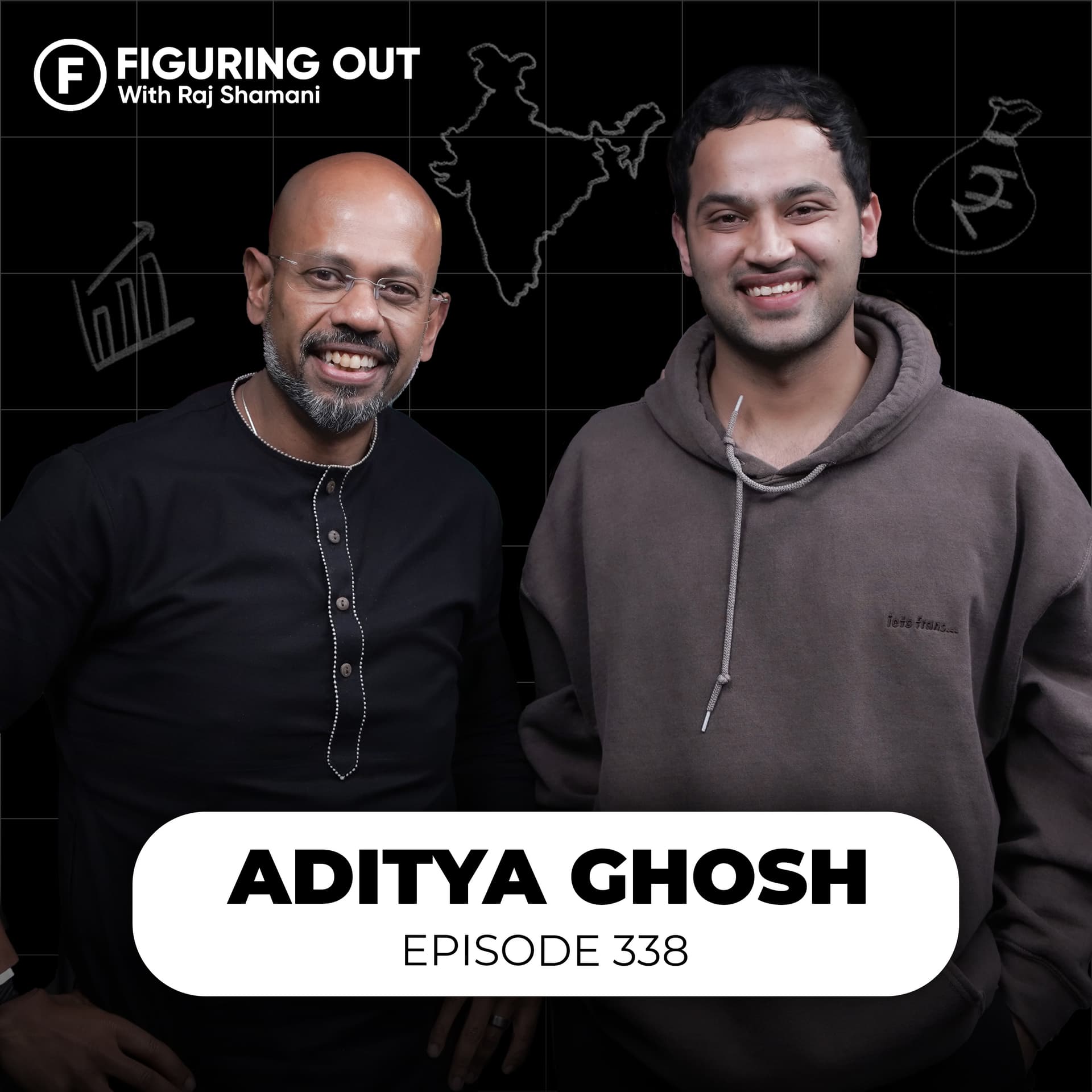
Podcast Notes: Figuring Out with Raj Shamani - Episode with Aditya Ghosh
Episode Overview Title: How Indigo Became A Successful Airline Business In India?
Guest
Aditya Ghosh, Former President of Indigo, Co-founder of Akasa Air Description: Aditya Ghosh shares insights on the rise of Indigo Airlines, his professional journey, and the aviation industry landscape in India. He discusses what made Indigo successful compared to its competitors and provides advice for entrepreneurs.
---
Key Highlights
- Aditya Ghosh's Professional Journey
- Background: Started in law, worked under a prominent corporate lawyer, and transitioned to the aviation industry when he joined Interglobe, the parent company of Indigo.
- Initial Role: Worked as a legal counsel for Interglobe before being appointed at Indigo when the airline was still in its inception phase.
- Success Factors for Indigo Airlines
- Market Position: Indigo emerged as the only profitable airline in India, focusing on democratizing air travel.
- Business Model:
- Low-cost carrier with a focus on efficiency and reliability.
- Offered competitive pricing (e.g., fares as low as ₹6,000).
- Prioritized a sharp cost structure to maintain profitability.
- Decision-Making: Aditya emphasizes the importance of strategic partnerships and having a clear vision, as demonstrated by Indigo's founders.
- Challenges in the Aviation Sector
- Cost Structure: 40% of costs attributed to fuel, 20% to aircraft ownership, and 10-15% to maintenance.
- Competition: Discussed the impact of high costs leading to failures of other airlines like Kingfisher and Jet Airways.
- Government Policies: Reflected on the challenges posed by regulatory aspects and the need for a supportive government framework.
- Comparative Analysis
- American Airlines: Discussed the differences in operational models and profitability between low-cost carriers in India versus those in the U.S.
- Singapore Airlines: Highlighted as a successful example of a premium airline with a strong focus on long-term strategy and service quality.
- Air India: Analyzed its failures due to a lack of focus on cost structure and market understanding.
- Advice for Entrepreneurs
- Cost Management: Prioritize keeping costs low while ensuring quality service.
- Customer Focus: Emphasize understanding customer needs and preferences.
- Adaptability: Be prepared to pivot and adapt to changes in the market.
- Cultural Insights
- Ghosh discussed the toxic work culture prevalent in some airlines and stressed the importance of creating a supportive work environment.
- Employee Engagement: Advocated for fostering a positive culture in the workplace to drive performance and satisfaction.
- Future of Aviation in India
- Ghosh emphasized the vast potential in the Indian market due to increasing demand for air travel.
- Discussed the importance of scheduling and route management in maximizing operational efficiency.
- Personal Insights and Experiences
- Aditya reflected on his transition from Indigo to Akasa Air and his involvement in multiple ventures.
- Shared anecdotes about influential figures in his career, including Ritesh Agarwal and Rakesh Jhunjhunwala.
---
Conclusion This episode provides a thorough exploration of the dynamics shaping the Indian aviation industry, highlighting both the successes and challenges faced by airlines. Aditya Ghosh’s insights offer valuable lessons for aspiring entrepreneurs, particularly in managing cost structures, understanding market demands, and fostering a positive corporate culture.
Call to Action
- Subscribe to Raj Shamani's channel for more insightful content.
- Suggest future guests and topics for consideration in upcoming episodes.
---
Timestamped Breakdown
- (00:00) – Intro
- (01:48) – Aditya's Professional Journey
- (14:58) – Why Indigo is Profitable
- (28:01) – Discussion on American Airlines
- (31:03) – Case Study: Singapore Airlines
- (33:11) – Why Air India Failed
- (44:12) – Advice for Entrepreneurs
- (51:20) – Airlines Cost Structure
- (58:57) – Why He Left Indigo
- (01:06:22) – How to Win in Airline Competition
- (01:11:50) – Toxic Work Culture
- (01:15:40) – Delayed Flight Losses
- (01:17:01) – Best & Worst Airlines
- (01:18:32) – Most Searched Questions
- (01:26:12) – Working with Ritesh Agarwal & Rakesh Jhunjhunwala
- (01:33:51) – Outro
---
This structured summary captures the essence of the podcast while allowing readers to navigate through key themes and discussions easily.
Written by AI. May contain mistakes. Listen to the episode to check what was said.
Transcript
Automatic transcript. May contain errors.0:28Why did Indigo win? of prioritization. You moved from India. Yes. But yeah, it was, you became president. Akasa Air co-founder Aditya Ghosh first time India's history made any airline profitable in India. And now they have co-founded their own airline with the house of Rakish Jhunjhunwala, Akasa Air. Akasa Airlines' journey, their experiences and the aviation industry we talked about today. How much does a plane cost? somewhere in the 100, 110 million dollar range. Which is 800 crore, politicians and like which have connections. They are sitting outside in the car and sitting straight into the flight.
1:09There are only a few people. Tell me the worst airline you've flown in. I hate dirty seats. I hate rude, you know, people. In airlines, they usually say that it's a toxic work culture. Is that true? If a flight is delayed, then how much you lose? So, Before starting, subscribe to this channel so that we will make more insightful and better podcasts. And this whole show is available on Spotify, where you can follow us. Enjoy the show.
1:48genuine pleasure that you're here thank you so much and I'll tell you I know you're saying you're saying I know how to get it let's go I've studied in GQ I think GQ inspiring Indians or young achievers or something men of the year men of the year right so you were there right in that and that GQ edition I had online and you were there and I was wondering that you are a lawyer you don't have a billionaire family not at all my father was a government servant so he went to the airline I wanted to know like very fascinating and I didn't study this story law was the easiest course to get into I mean I joined a law firm under Mr.
2:43Sagar. Under Mr. Jyoti Sagar. Mr. Jyoti Sagar was really one of the best corporate lawyers in the country. Now he's retired. Tremendous influence in my life. I started off as an intern earning 900 rupees a month. Then after a few, after a year that 900 rupees a month became 4 ,600 rupees a month. then after a year it became 5 ,400 rupees a month right but it was a podcast every day of my life all the time right you think as a 21-22 year old so first I started off as an intern that next year I was his executive assistant nice right like a glorified secretary right golden job but That power of observation, how does this human being work?
3:44How does this human being react? How does this human being manage, deal with people, deal with clients, deal with what kind of way? That time it was a 15 lawyer firm. Now it is maybe more than a thousand lawyers. 15 lawyer firm جو دنیا میں جتنے بھی global corporate law firms ہیں ان کے ساتھ آپ compete کر رہے ہیں جو 2000 3000 lawyer کے firms ہیں on the basis of just your knowledge and your relationship with the client چھوٹی چھوٹی چیزیں کی time پہ پہ پہنچنا time پہ meeting شروع کرنا کسی چیز کو prepare meeting میں کبھی آپ unprepared نہیں آئیں گے right yeah you know you know you know client what wants objective is not how much you can do it objective is that client what wants that helped me because interglobe which is the parent company of indigo was a client of the firm and I worked very legal work again remember I was 25 years old.
4:59So Indigo was a lawyer for Indigo? Lawyer from abroad. Indigo was not for Interglobe, which was a parent company. So parent company was working more than anything? Yes, hotels, travel services. Then there was no airline. Okay. Then Mr. Rahul Bhatia, who is Interglobe's managing director and chairman, and Mr. Rakesh Gangwal, who is a business partner in Indigo, 2002 December 2002 They started thinking That in this country A airline should start Because that day There was Air India, there was Sahara, there was Jet Airways This was even before Air Deccan started Or Kingfisher Had not started at all So that day To see That in this country There are some planes all very high cost this country is changing this country is changing here there should be an airline airline budget airline so the product which was only for the elitist to democratize Karna Jis se ki Bhoat loog But To do it With World class Standards 2002 December I was 27 Years old So happened A year later I joined Interglobe In house Okay As their lawyer As their lawyer Abhi tok Airline nahi thi And the first You joined Kia How did that That is Very interesting I went I was having a meeting with Rahul Mr.
6:54Bhatia and I was two people and then I told Rahul I need a one and a half hour break and I'll come back again and we can restart he said yeah sure sure so I saw that there was some job opening of a legal manager law manager in GE and GE's office was in that complex so I went I did an interview G-electrics G-haan General Electric And then They were doing a lot of finance And they gave me an interrogation That okay You'll get the job I came back So Rahul asked Where were you? He said You're not Mr. Sagar He said What happened? I said I didn't interview with SCS So he said I didn't know you're looking out I said No looking out This is the thing I want to test myself I am not really looking out but I really feel I need to test myself I wanted to go to the comfort zone so he said then come and join us I said I didn't know you are looking for someone he said looking for someone you know us we know you so Rahul had a post-it post-it took out he put a pen he says you write down what you want I said no no Rahul he said look out what do you want so what was my 3 ,000 ,000 salary that was my 6 ,000 ,000 salary I'm talking about annual salary and then I bought a Scorpio car so I bought a Scorpio so Rahul saw and he did his initial he said okay it's done 6 ,000 ,000 plus Scorpio Scorpio signing bonus and then he looks at me and says who will tell Jyothi?
8:50I said, you tell me. He said, I am not. Dad, you have to know. I was sweating how do I say Mr. Sagar? It's like a son saying, I'll leave my house. I went up to him and said, I need to speak to you. This is what I'm thinking. I want to. He said, are you mad? You're going to become a partner here. You're doing well. What is wrong? I said, no, nothing is wrong. This is what it is. So, this back and forth, back and forth happened. Again, very interesting. Mr. Sagar's secretary, his name was Rama. Rama one day says to me, your current boss and your future boss are meeting. Meeting? Meaning what? Meeting about what?
9:36Because I thought that there was no meeting today. I'm the lawyer on the deal. On the transaction. They're talking about you. I said, oh shit. So, but you know, these two people, they had no reason to spend time. The discussion was Mr. Sagat saying, they both met together and sat for two hours to see what is right for this youngster to do. Amazing, right? Who does this? Then both like big shots. Both big shots. Why are they spending two hours of their life on this 27-year-old or 28-year-old? Just a lawyer right now. I'm an associate in the firm. And that's why I'm so grateful. Mr. Sagar came back from that meeting.
10:24He called me into his room. He said, look, I met Rahul. I said, I know, sir. He says that, if this is really what you want to do, do it. Do it for a while. If you don't, I still think it's a mistake. But if you, if you don't like it you can come back right nice and I literally left one he took all the 20 files of Interglo got it put it in my car and said take this along because you will need this to you know in your new role new job right so one of the first things that that this I joined on the first finished here on the 28th of February joined Interglobe on the 1st of March and in the first one week Rahul said you know that airline idea we've been talking about so at least Aditya you put in the application for the license DCJ right for a airline so to start an airline you have a initial NOC from the ministry Then from there, business plan, then the first 100 aircraft ordered assisting Rahul and Rakesh still as general counsel.
11:55We ordered the first 100 aircraft, came back to India and sitting in the back of the Imperial Hotel in Delhi, Janpatwe. then there is no employee. We have only an aircraft order. And we have a license. We don't have a single employee. Okay. We have an airline. We have a license. License. And we have 100 aircraft. We have 100 aircraft order. Okay. We have LOI signed. There is no CEO. We were looking for a CEO.
12:32Which American will come here to India? 2005 start a low cost career so after lunch Akesh looks at me and he says
12:51you will be our EIS coordinator I said sure so he says you have no idea what I just said I said I have absolutely no idea what I just said yes to He said, you said, yes, you said. I said, you said something. I don't know what you want me to do. I don't know. What is EIS? He said, you will be the entry into service coordinator to take this thing to that first flight. To put this whole thing together. And I got CEO, one month later, two months later, whatever it is. So I said, okay, I'll do it. Then Rahul looks at me and says, Let's see, it's okay. Your first job. We have to hire our first pilot.
13:43He gave a call to somebody. He gave me an address. It was 5 o 'clock. It was 4 o 'clock. It was 5 o 'clock. You have to reach there, Vasandviar. And you have to hire this person. So I sat in my car. I went to Vasandviar. And I reached there at 5 o 'clock. where I reached. 8.30, he sends me SMS, no WhatsApp was not going on. He sends me SMS, what is going on? I said, don't worry, I'm working on it. At 10.30, finally, that person said, okay, I'll join. So, we hired our first employee. Okay. At 10.20, he found another person and we hired our second employee. Pilot only. Yeah. Now, calls up somebody else.
14:32and then you know gradually gradually gradually gradually and of course nothing in life is done by one person but you have you get sometimes you get lucky to be the sutradhar of the of this thing so then you so then the airline started I want to go into more details yeah of course now you have given us an overview so I'll actually talk more about Akasa after this point sure of course but first tell me why Indigo won't win? what Indigo has a right that one of the only airlines which was profitable in India and it was been a long time and today also they are profitable yes so what did you guys do right and day one on day one how did you get 100 airplanes order to order?
15:23because you are starting was there any experience both of you? Rakesh So Rakesh was the, had been the chairman CEO of US Airways. Okay. And career aviation person. I think he's just the brightest airline aviation mind in the world. Okay. And Rahul ran the Interglow franchise, which was all around travel, travel distribution, technology, travel technology type of thing. But no one has run the airline. And especially low cost airline. And how is this idea? how is India? Like so because usually you look good models and that model you want to see that in US and Europe and I have been in India and I have made it because that's how it starts airline is not a very innovative India first business that's right so you have to look at other models in the world that's right because in India as far as I know all flopped right like in fact it's considered if you want to become a millionaire it's the fastest way to become a millionaire in an airline because you start with a billionaire you end up becoming a millionaire so actually whether it's about Indu or Akasa there are actually a lot of parallels okay and it's important to understand let's unravel and unpack this okay look in any business में कोई भी entrepreneur चाता है कि आप ऐसे किसी business में जाएं जहां पर बहुत demand हो और बहुत कम supply हो क्योंकि जैसे ही demand supply का gap बने गा और आप वहा पर किसी product को लाएं गे तो that is the ideal state to be in.
17:14To airline business and affordable airlines, right? Chayaho 2004-2005 ki baat ho, jab Indigo ki baat ho rie thi, ya 2021 baat ho, jab Akasa ki baat ho rie thi, they're actually identical. Mein abko dikhata ho, dekhi. 2004-2005 me, ya 2005 me, humare desh ki abadi thi the average we went to 110 Source. in times we were probably 110 Big enough, you can trade 105 or 112 If there were 100 small small MOS - Rita And most of our white body aircraft all the Only note Okay. Un dinon mein Soh jahaz hattethi. Okay. Or un dinon mein hi Southwest Airlines joh which was not even the largest airline in the US.
18:15Right. Un dinon mein Southwest Airlines had 650 airplanes of its own. The largest airlines in the world United vagare unke khudi ke 2000-3000 jahaz hattethi. Humareh desh mein soh jahaz thethi. Hmm.
18:35And in those days, in the US, only commercial jets, meaning not counting private jets. Commercial jets were approximately 45 ,000 to 5 ,000. And our 100 were.
18:51Our 303 crore was over our 110 crore was over. So you can see that the equation is completely wonky, right? Yeah. Okay. But they didn't have the buying capacity. Buying capacity. We didn't have the buying capacity. Correct. Okay. Having said that, all the airlines were charging 18, 20, 30 ,000 rupees for return fares. In a country, 2005, where our buying capacity didn't have the fares were these exorbitantly high fares. Return to how much? 18 ,000 was a very normal return fare. Today, it's not. Today, it's not. Right. Okay. 2021, this is business or normal economy class? Normal economy class. Okay.
19:43Okay. In those days, in the year, there were some tariffs on railway. way के tariffs बढ़ते थे announce होता था second class का फैर 400 रुपे से 4.5 रुपे हो गया या जो भी हो गया उन दूनों ऐसे साल में एक बार airfare भी बढ़ता था कोई logic नहीं है airfare भी बढ़ता जा रहा है right 2021 22 की अगर बात करें जब Akasa की की बात हो रही थे fast forward 110 crore की abadi 140 crore की abadi हो गई है
20:29100 जहाज अब 600 जहाज हो गई है India में सिर्फ 600 जहाज है हाँ जी पूरे India में मतलब on the register there'll be a few more मगर जो fly नहीं कर रहे है मोटा मोटी which has flying is 600 plus minus ओके आज Southwest Airlines के पाज 1200 or 1300 jahaz Delta 900 7000 se zhaadha jahaz aaj commercial jahaz chalte hain private jahaz commercial airplanes run in United States 35 crore ki abadi so this is that ideal demand supply gap but joa haap ne ka Raj that is very very important in any business that your price point is what is. That's why when people ask me why do business class doesn't work? Why do full service model doesn't work?
21:29That's why that your product is right because there is a demand supply gap but your price point is the point that the masses are not being able to use it. Yeah. Okay. And the masses are not where you have two hours
21:49If you were following 2 eclipse in your mind, let your graph say, if you could give 5-6 thousand, 7-8 thousand, 9 thousand, paying$1 a half a year, if someone comes in that cost of getting$8 ,000, someone said that would be a great finish but you would like to eat the TV, I will see TV. But in 8000, I will see you with 150000. You will see that I will see a phone. Correct. Correct. When people ask me, In-flight entertainment, you will tell me that as an airline, you will see all the time, you will put the screen, you will put the wiring, you will hire, can buy content, everything, which is my passenger, will be able to download and get up on your phone.
22:49He will say, I don't have to pay you. When it's easy, you can see the phone too. Correct. The one I'm watching, I don't want to watch. Exactly. And how can you compete? Tell me, at the fraction of a second, actually, fraction of a minute, I can download a YouTube video, I can download from Netflix, Amazon Prime, Z5 I can see all I can see OTT platforms I can rent I can see it on free I can see it on free why will I give money right so this demand supply gap if you now we will come back to 2021 in just a minute 2005 it was very clear that the country is changing is a reduction, time which is hagaute, time is a scarce commodity.
23:44solar is a commodity that is from Bombay to what are you going to or go to hospital presque jana jahatei ya to you are constrained ya to train me ja sakti hai kyunki ya to train me koye seats nai hua kerti thi right do do mahinye pehle aapko train ki booking karna pardhi thi yeah right tab roadways bhi madda wo nahi tha kuch reliable roadways nahi tha aachha jahaz me aagar aapko jana hai to aapko 18 ,000 aap nahi afford kerti so can you when you're thinking about an idea can you think of an idea that you will bring a product that is affordable and reliable that you don't say that I will chocolate mousse, rasculla and gullab jamun I will bring it in 2 hours I will bring it in 2 hours I will bring it in a reliable service clean service new and new jahaz dunga right मैं आपको garma garam khanah नहीं dunga मैं आपको lounge की subidha नहीं dunga मैं आपके लिए कोई अलग से check-in counter या लाल और नीले और हरे रंग का carpet नहीं लगाऊंगा मगर reliable service होगी on time service होगी right sudden and 18 ,000 के जगे मैं आपको ये 6 ,000 में दे रहा हूँ it's a game changer کوئی اگر 18 ,000 पे आपको कुछ offer कर रहा है और मैं उसको 6 ,000 रुपे में offer करना चाता हूँ या 7 ,000-8 ,000 पे offer करना चाता हूँ without making a loss the only thing that is possible is कि आपका जो खर्चा है the cost जो आप लगाते हैं to generate that product भई मैं आपको ये coffee if I pay 10 rupees for you, then I pay 9 rupees for 9 rupees, I can't pay a tax.
26:07If I do that, I'm making a loss. So how can I think of innovative ways? What can I do? Where my cost is less than revenue.
26:22So why these low cost carriers, the ones which have been successful why they became successful is they have seen they concentrate on cost because the revenue side is commoditized it's like Pepsi and Coke both are selling at the same price cost is what's making the difference low fare airline I often joke but it's a tragic joke there are lots of low fare airlines in India there are only one or two low cost airlines. Yeah. The worst situation is you're a high cost airline and a low fare airline. And that is the simplest answer to why did many airlines fail? Because they were not focusing on their cost.
27:14Look in the world. Consistently profitable airlines. United States Southwest Airlines. JetBlue. Europe, Ryanair, EasyJet Southeast Asia, AirAsia Australia, Jetstar Middle East, Fly Dubai, AirArabia So something will happen in this model India, Indigo, ACASA This model is like aisa hai where that is the most successful consistently successful model only exception is ki bhai government is not pumping money behind you so jaysay delta ji is what I know is the most profitable airline in the world or like the highest revenue airline in the world right correct wo toh dono offer kata hai let's do premium bhi kata hai us ke liye na joh american joh airline industry hai usko 30-40 years for it.
28:19That's why there were many, many, many years where Southwest Airlines was far more profitable and the full service airlines United, Delta, American, they all had to repeatedly file for bankruptcy. Repeatedly file for bankruptcy. Only Southwest was profitable. Correct. Consistently profitable for 50 years. now American bankruptcy laws in the United States there is a very interesting advantage that when you declare bankruptcy you will not be closed in chapter 11 you can go to your costs restructure what does it mean? you have to your unions that you will be that you will be wages just like you have chapter 11 filed it wash out and you have the chance to redo the cost structure.
29:16Okay. So, this has been repeatedly after 9-11, after 2008, it has been always happened. In today's history, those few airlines are making a ton of money because over 12, 20, 30 years, there are only 4, 5 large carriers which are left of any real size. there are many carriers but really of any significant size billions of revenue so what happened that there is again a high demand less supply it's like an oligopoly at the top US in the US not that I am any expert on the US market but US in the US structurally a thing that the gates slots unlike in India they are owned by airlines and US you can see that there is no new airport not made or no new gates making so that is a constraining factor already license already you can't come in very strong gate keeping very strong the toll gates are so high the disruption chances are so high but therefore in a place like India my my my my my that whether it's an airline or hotels or chocolate company or bus company, the affordable segment of the market is that large emerging India.
30:56Today too. But what about, let's say, airlines like Singapore Airlines? Are they profitable? They are, of course, government-held. Okay. So therefore, but having said that, I have a huge amount of respect for Singapore Airlines. Because they do something incredible. And I'll tell you. So Emirates, Aethiad, Singapore. Yeah, let's talk about Emirates and Singapore Airlines as great examples.
31:23We have to remember this to understand them. Emirates started with two airplanes in 1988. If maybe 87, 88. Pakistan Airlines was actually was instrumental in helping them start interesting yes Singapore Airlines in the late 70s and the early 80s were guided by Air India okay but they have taken 50 years to get there Emirates has taken close to 40 years to to get there right That is one aspect But the second most important aspect is कि उन्होंने भी एक चीज पर concentrate किया वो ये था कि मैं दुबाई को या सिंगपोर को एक gateway रखूंगा कि Australia से किसी को US jana hai toh mahi Australia se traffic ko Singapore pe le aunga Singapore se mahi traffic ko US le ke jau ga kisi ko London se India aana hai ya Sydney aana hai mahi wahan se unko Dubai le ke aunga phir Dubai me mahi aircraft change karke ya hain pe le ke jau ga toh they have consistently built a network right and that power of that network over 20 30 40 years with hundreds of airplanes, right?
33:05Without distraction, with tremendous amount of focus is what they have done well. Air India ne bhi ye karnei kush kari. Salo tak government sa hi thi, chali rehi thi. Woh kyun fail ho gai? Unho ne probably, let's say agar Singapore Airlines goem ne help perhi and then Singapore became such a massive thing, right? From their airport to experience to every little thing. I know Singapore airport I can go on and on and everybody can go. It's massive. So, you don't have to get more than 8 minutes from the time of getting off the aircraft to clearing immigration. To time? You want to spend time that's one of the rare airports in the world that if you have a flight deal then you don't have any tension because that airport will have something to think about that you will take care of.
33:58And if Air India has helped Singapore Airlines in starting one time, then why can't Air India become something? Which is four reasons. The first reason is that in this business, there is only one path to success, which is that the cost structure has to be lower than your competition. Okay. Okay. If you remove the attention from that, and slowly, slowly, slowly, your cost structure is increasing, whether it's engine maintenance, whether it's number of employees, whether it's money on food, or it's old, or it's fuel burned. Whatever, no size can beat that. So first is the loss of lack of focus on keeping a very sharp cost structure.
34:59Because that is the first principle basis. If your cost is here, then you have revenue here. If you have increased the fare more than you don't have the money to spend on a good product, who will you fly? So that's first. Second thing is scale. right which I have said that if the country 100 ships are then they have 30-40 ships and the Emirates and Singapore have 100-100 ships but starting not in the beginning so that leads to the third third reason lack of prioritization look until 2004-2010 we have this wrong that this is an elite luxury product where we as a country cannot focus right as a strategic power as a country we have not seen it we have not understood it how an airline can build an entire country and an economy around it.
36:18Dubai got built around Everett's. Singapore Airlines is a very key strategic power of Singapore Inc. Yes. Qatar Airways is not just an airline but it's a brand builder for the state of Qatar. So this was third reason. And the fourth reason, Raj,
36:58I have to be the world's best. dunya mein aisa koi nahi hona chahiye joh meri tarhe coffee bana seke joh meri tarhe table bana seke joh meri tarhe airline chalha seke ya meri tarhe steel bana seke ab ap dekhain in contrast kishi bhi ap business ko puklde lheen jis ko hum aaj kar respect kertae chahe wo obroy hotels ho chahe wo bajaj auto ho these are companies jahaan pe government has decided this is a priority sector entrepreneurs have said I will create a world class product they have really worked on their business model so that they can compete with the world's best and lastly they have created something of scale right my friends are Rajiv Bajaj friends are I always say that I am actually a fan of this so one day I was sitting in the Taj hotel in Delhi whenever Raji would come I would end up meeting him and he said to me Aditya in business just as in life it's often more important to know what not to do business when you have in life you have to know things that you will never do you will not say you will not say you will not say you will not say you will not say
38:40business what happens is that we are distracted we have to do this we have to do this Emirates is an example where it has said that I am just wide body I am just on long haul concentrate if I am short haul bhi kar raha ho maan lijeh dillie se dubai bhi jara ho magar woh geared towards that long haul operation so I think that is very important you know so you feel ki agar air india un dinon mein focus kerta or joh joh serkaren thien woh agar kehti hain ki bhai ye elitist nahi hai aur aap contradiction dekhain You can see contradiction that one side we say that the industry is an elite industry.
39:31The other side there was a time where the government had a year of 6-6 ,000-5 ,000 crore a airline in the past. So, this is a contradiction. Or you can say that the priority sector is not. I have to pay for a money, I will make a hospital. Or if you put a money in the past, then you can pay for it. that this can stand up in the world. Do you think Air India, if it was growing up in local competition and it was a low-cost carrier competition and Air India had business, a normal full-service airlines, do you think if Air India says that international routes are only on me, then I will only focus on international focus, let the small market be or the domestic market be of the domestic players.
Read the full transcript
40:15Do you think it would have made a difference? Or they would have done better? Of course, hindsight is 20-20, but I feel that would have been a great advantage because I was met 2014 you don't get distracted, you say I'm 10 % market share what would I do 10 % market share let me do what they have to do low cost carriers or domestic airlines let me go after the big boys I'll give you another analogy I often talk to any person to any manager को किसी भी बिजनेस को ये बहुत important है कि वो समझें कि what is their core strength भई आपका क्या fortress है तब आप किस चीज में 30 mark है और जिस दिन आपने समझ लिया कि ये मेरा fortress है आप उसको किसी भी तरीके से you must protect that fortress and play to that strength आपको एक analogy देता हूँ Sachin Tendulkar probably 1987 he played the first international cricket and very soon he understood that the world he understood that this batting is his fortress okay he played for India for 25 or 26 years and when he retired He retired as the world's greatest batsman.
41:49He did not retire as the world's greatest captain, as an all-rounder, fielder, bowler. Did he attempt? Of course, saw wicket bhi liye, saw catches bhi liye, ye sab kariya. Magar there was no doubt in his mind, ki bhai, this is my fortress and I will not let anybody breach this fortress. Chai uske liye. you have to do a trade-off trade-off was that 100 crore people are watching you live on the television you are playing international cricket and someone who was in primary school when you were playing international cricket you are calling him captain and you have no ego you say if that is what is required to win the game and it does not it allows me to protect my fortress I don't mind calling somebody else captain.
42:47So, in this way, where is confidence? It comes when you think that this is my core. You should understand any business.
43:02Domino's in 1961, Michigan State started. There were three stores. in the first year. And in the first year, they had 300 pizza in the first year. True story. 1961. In today's history, have 50 crore pizza in the year. Until recently, we have 40 crore to go. I'm assuming that 40 crore pizza every year. 1 ,000-40 crore. 100. sauce sauce ھیک मगर وہ magarita pizza का जो taste है वो 1961 में था आज भी जाई दूसी वही है that is consistency मगर इसका ये मतलब नही है कि वो stagnate कर गये 100 या 1000 से 50 करोड pizza को बेचने के लिए कितनी innovation without losing focus here's my follow up question yeah how can an entrepreneur understand his core strength I think there are I feel there are 5 or 6 elements which make great businesses okay
44:31and I'll name those 5 or 6 things but if you see that in these 6 things which one or two normally is not much more you are the world's best or you have the interest to be the world's best you are cricket playing cricket in batting, bowling, wicket keeping fielding coaching coaching bhi hai magar in 4-5 chizoh mein aisa kya hai jis mein I am the best aur meri mei ye shamtah hai meri mei ye curiosity hai passion hai ki mein usi chiz ke pichche laga raha raha raha raha raha this is lesson number one lesson number two is that kishi bhi entrepreneur ko chai this is like you have interviewed Ritesh or I talk about Rajiv or whatever Vinay Dubey who is my partner in Akasa Anjan Chatterjee who is my partner in Chauranghi restaurant which is great entrepreneurs in which they have a very amazing quality that they have always a big list that in these things I am not the world's best in their drawbacks they have a longer list of things which they are not good at Piyush Bansal Amit Chaudhary Lenskart my friends they will always ask these are the 10 things I am not great at amazing but the second most important thing is is that they have a deep sense of respect they have a deep sense of respect that there is a thing that I can't do so not only am I going to surround myself with people but I actually come from a genuine sense of respect that this is what I am doing that is what I am doing what are those six things very first is are you truly customer oriented you really enjoy being around customers مطلب you really enjoy it چاہے وہ complain کر رہا ہو چاہے وہ آپ کو گالی نکال رہا ہو آپ کو بچی کر رہا ہو call center میں ہو مگر آپ اپنے customer کو اتنا پہچانتے ہیں اس کی life اتنا پہچانتے ہیں وہ کہاں پہ سو رہا ہے where he lives, where he lives, where he eats, where he eats, where he wears, what is his spending pattern, this, that, you're obsessed with customers.
47:34Number two, you're equally obsessed with employees. That is my obsession for example. I enjoy it. I really enjoy it. Koi complain, crib, krip, this, that, I really enjoy it. That's number two. that can you really be employee centric number three is where you have a natural knack of building a financially sustainable business I don't say profitable because when you're building a 10-20 year business 10-20 years in a year sometimes you'll be profitable sometimes you'll be not but financially sustainable or not the revenue revenue should be reduced that do you have a natural knack to really see that I can optimize financial engineering that is number three number four is that do you have a knack for innovation agility one word which is nowadays people like in the church people like but I hate it is the word hustle I'm a big fan of the word agility Hustle and agility There is a difference So I'm a big fan of word agility Agility leads to long term innovation Hustle leads to short term band-aids This is number four number five is are you comfortable with scale that's that's yes that's another thing you know maybe because I'm trained as a lawyer I don't think anyone from scale I don't think I don't think like if there's 100 people's audience versus 10 ,000 people's audience there's 2 vehicles or you know 1 ,000 vehicles or 100 hotels or I work My brain works in processes And systems To scale up And the last is A deep sense of purpose Ratan Tata Deep sense of purpose Not all the Tata business Are successful, profitable You know sometimes they do But there is someone who holds That deep sense of purpose Which is very important So I think great entrepreneurs, they are able to figure out which one of these six things drives the most amount of passion.
50:29It comes to me naturally. I get excited about it. And then which are the other things which are not good at? So you need to choose one. Yeah. I mean, I think you choose one or two and say, look, I really have the chance to be the world's best at it. What's your one? I think I really enjoy people so both the customer side as well as the internal side I really enjoy being around people I feel like I'm doing something jahan pe logon pe kuch impact hor raha hai right it may sound very it may sound very egotistical it may sound very vanity centric but my biggest very important it's a grunt work but I love it right and I really really like it And the other thing is like just kind of being able to do it at scale.
51:18I think that is that comes to me. You said that almost all businesses fail in airlines specifically and in India specifically, the biggest cost is the cost. So, Kingfisher, Jet Airways, all of them same issues? Absolutely. All of them, financial crisis, Airdick and… Around the world, same issue. Okay. and so talking about indigo you were saying you didn't tell me that how they managed cost because this model didn't exist in India where someone has proved they were the mavericks to prove this actually the cost structure of airline is very simple 40 % is fuel and how much fuel you are burning and therefore how much you are spending on fuel okay around give or take 20 20 % aircraft ownership cost okay lease debt aircraft related lease rental हो यह सब चीज़ है 10-15 % जो है उसके उपर आप maintenance के लिए लगा लेजे 10-15 % 15 % लगा लेजे is maintenance anywhere between 12-15 % आप लगा लेजे people cost ठीक है अब आप इसको जोड़ेंगे 90 % Baki joh 10 percent hai.
53:05Oh yeah ground handling yeh sab. Thick hai. Okay. So now if you. Operating fees vagirah wosab ka hai hai wosab wosab last 10 percent hai. Achha. Khi airport ki fees or landing and all other. Okay. Ab agar ap in 5 buckets mein se agar ap 4 buckets ko choose kar hai.
53:29Let's first think of aircraft ownership cost. Jog loog airline business is very capital intensive but by the way if you today want to create data centers for powering artificial intelligence you know GPUs and things like that that also is massive capital intensive the steel factory be capital intensive so I don't think just because it is capital intensive people can't do this business right Okay Malija, you are market and you have 5 kilos and you have 1 kilos 1 kilo 1 kilo 2 kilo so you will have a certain rate but if you market and you have 5 kilos or 10 kilos you will wholesale market price obviously right Right.
54:28If you have done something more, I will tell you that I have a year of aloo. I will tell you that I will give you money. 60 kilos. Okay, 60 kilos. Storage, I will keep it or you will keep it. But whatever it is, you figure out that committing to that, because you know I'm going to eat aloo. Okay, you have committed a longer term and you have now got aloo at a lower price. 60 kilos versus 10 kilos is very different. most difference now you are in that you are making almond in that you are making with your almond I am making with your I am making half a kilo half a kilo half a kilo every rose so my cost of that almond is higher your cost of the almond is lower airplanes are exactly like that so so if you 10 planes or 50 planes or 100 planes or 300 planes it fundamentally brings down your cost of acquisition.
55:32Obviously, massively. Right. But 100 jahaz kharidnye ka paisa bhi toh nai hota hai. Acha. Aakdam sahab, kya 100 jahaz kharidnye ka paisa? And 100 jahaz kharidnye ka paisa nai hota, dousara, aapke paas conviction bhi nai hota hai. I mean, 100 jahaz chalad dhua, kya hooga? And aapko eek chiz, dhonoh indigo rakaasa mein aapko eek chiz dhyan rakhna hai, ki indigo ne jub 2005 mein jahaz order kiyo thay, 9-11 was only before 3-4 years. It was like the turmoil. When Akasa ordered the aircraft, COVID was going on. So, it's also timing of the issue. But then what gives you the conviction? So, we will be closed many aircrafts already.
56:16And what gives you the conviction? Back to item number one. 110 10 crore people, 100 aircraft, demand supply gap. So you have to think, you have to know that this is worth it. The newer the vehicle, the newer the plane, the newer the technology on it, the less fuel you burn. The lighter the airplane, the less fuel you burn. So when people ask them, but you know, one plane is another plane. No, it's not. No, it's not. the technology on that airplane the engine on that airplane the weight of that airplane the maintenance cost of that airplane you've already covered three of the buckets then you look at everything else efficiency of the number of people so first large bulk order of planes and all new planes all new planes bulk order of airplanes brand new engines engines that burnt less fuel lighter the airplane people efficiency, productivity let's say King Fisher or Jet Airways didn't do so none of this never ordered not done the other this was also this is very interesting this goes back to what I said in the beginning means and wants needs and wants here customer can understand if you think if you think that customer can eat seat newspaper bag carry customer who customer can't say cannot say customer is the things that customer should zu in many is bus can
58:29do So, in many places, you talk about hotels or buses or something like that. You talk about phone. It's very important to understand what are the needs. And to chase it. What Rajiv Bajaj said, focus. Yeah. To chase it. It's very important. You moved from Indigo. Yes. Why? you became president you became the hot talk of the town GQ so many young people like me weren't getting inspired I think the simple reason was that when I had of course done this for a while now I was also again back to that same 28 year old you know
59:25what else can I do there are so many things that I'm interested in secondly that kind of a role is a very exhausting you know you're just running on the treadmill every day right even if you're enjoying it still it's a very tiring role the third is also that you know there were other circumstances which were outside my control the I mean the two shareholders had their own issues you know it naturally has an effect on you as well and fortunately I was 42 years old I said okay this is if this is the time to take that step right I had no idea what I'm going to do next and but at that time you know it is difficult and especially with something where you are so emotionally involved Dave and the churi you have said first EIS so but if I saw you in the past 6 years that Aditya goes 2.0 or 3.0 or whatever you want to call it it doesn't happen if I had not done that I mean today I'm involved in green cell mobility bus business in Manam chocolates chocolates in restaurant electric plane me involved or you know nutrition me involved or Akasa me involved a different role expanded role expanded this thing it doesn't happen but if you said you run it's like running on the treadmill yes it doesn't happen it's like that role so that role in Akasa I'm very lucky in Akasa I don't have to play without me
1:01:26I'm in a very fortunate position where I'm busier than I was at Indigo I'm way busier I'm busier than I was at my OYO role as a CEO but I'm blessed that I'm working with partners and teams who are really very good at that and it has allowed me to now kind of pursue multiple things at the same time look Raj no guarantee is not which one is going to be financially successful or not true time will tell, hard work will tell, circumstances will tell but it's a lot of fun that you're doing 10-15 different things with the ability to deep dive into something. Right. It's a lot of fun. Okay. And I hope more and more people do this.
1:02:27I have questions on Akasa. Because you're enjoying, you're doing a bunch of things. Right. But same airline then started. And why did it? Because the question is that That demand supply gap. Today is low cost. It wasn't before that time. पर नहीं थी, तो there was a competitive edge in the market की सब लग वो premium market की तरफ जा रहे है 18 ,000, 20 ,000 वाले हैं, मैं 5 ,000 में ticket लेकिए होगा, मैं करूँगा काम, that was the idea अब क्या हुआ 2020-21 में अगर आप circumstances को देखे हैं 2, 3 airline bankrupt होई, pandemic ने किसी और की हवा निकाल दी, fare started again rising
1:03:43pre-covid better planes. Their fleet simplification is very strong because we are talking about that they buy one type of planes like Emirates and Indigo and they have all things they have aceed. In fact, it would have been easier for them to block routes, schedules, gates, everything in their hands. But that is the thing that like in many things in this country, whether you talk about cars, washing machine, refrigerators, hospitals, schools, airlines, buses, right? Demand is so much that there is huge opportunity. But what's your edge? Edge is again cost structure that very soon, we have now started 20 years later, 15 years later, very soon, in a few years time, we will get to a cost structure that is lower or comparable.
1:04:44we are sticking to one type of aircraft and in this big market we are only getting two three hundred aircraft right and in a market where you think the two three airlines which have been bankrupt or massively shrinked they have been gaib ho gaya hai. Agar ham unhi ko replace kare hai. Forget about market growth or demand supply yeh wo there is but wo bankrupt isli ho na kyunki waha demand nahi ho ki loog nahi kharii dh raha waha is bankrupt isli ho kyunki unka cost structure hai ta. Bagi loog kharii dh raha tickets bhar raha flight bhar raha jari and and yeh actually may kuch data dh raha tha yeh to airlines hai agar washing machine or refrigerator penetration in India it is some less than 10 % less than 20 % now the same argument that who can afford that somewhere someone will come up with a washing machine which will be more affordable when I was in school Eureka Forbes was the only one creating Aquaguard water purifiers and that is a status symbol that goes down and now it has become a much more prevalent thing in the time of COVID air purifier and today's air purifier it's a lot of difference and that demand and that cost pressure creates innovation and a large part which we didn't speak about is schedule timing, route planning and where you have a prime spot or slot which is fundamental which is the secret sauce exactly because if you are saying that this business is commoditized price will be so much if flight for example indoor to Mumbai flight price is$5000 if someone else does a airline then it will not be booked before I will be booked so it is commoditized now low cost पर आ गए है तो low cost में भी अगर सब ने अपनी low cost कर ली Akasa और Indigo for example तो दूनों के पास सस्ते भी वो चीज़ है तो अब कौन जीतेगा विए तब कितना भी market कर लो कुछ भी कर लो it's about यह मेरे को कौन से मेरे time पर मिल सकता है absolutely right that's the winning absolutely 100 % How would you get that?
1:07:27100%. That's where it takes time. It takes time and tenacity that you have to... In the airline business, once you have that you have concentrated on cost structure, after that, everything is scheduled, scheduled, scheduled, scheduled, scheduled. There are two big advantages in India. One is that that no airline owns a slot. Okay. If you don't use it, those slots, parking base, come back into a common pool and gets redistributed. So, if two airlines, three airlines bankrupt or two airlines bankrupt or one shrink has been the slots or parking base, they come back into a common pool and gets redistributed.
1:08:21Item number one. so all airlines what do they do they do in the sense they say the regulator DGCA they see that you have a aircraft or in the near future where you can operate and there is a slot committee meeting that happens and this is a very well crafted well practiced this thing it happens twice in a year So, just to explain some examples. So, just to say... Indoor to Mumbai is now. Indoor to Mumbai is now. Go Air is now. Example. Go Air is closed. So, that is the slot. That is in common pool. In common pool. Now, that is in India. India is in India. Kasa is in India. So, who will give it?
1:09:11Okay. What is happening now? Three of the capacity is in the three of the planes. Three of the operations are in the three of the operations. Actually, there are changes. There are changes.
1:09:23so somebody might have a large fleet but does not have new aircraft coming somebody may have a small fleet but is getting five new airplanes and they say you give me a slot I will start this in 30 days and this is the example of Bombay Indoor it is actually in 100 places because the permutation combination in Chennai something has opened up something has opened up maybe one of these three airlines doesn't fly to Indore and they are saying I don't want to open up a new city I might as well get a new slot in a city that I am already operating in so this is one so this is one the second thing is that then there is a trade off I will give you this slot you will leave me that right but can you then influence the guy who's doing it no no because it's a very open like this thing secondly also you see there is another there's an operational complication that comes in which is talking about the plane is not just Bombay Indoor Bombay Indoor Bombay Indoor Bombay Indoor Indoor Calcutta Calcutta Hyderabad Hyderabad Bangalore now that slot if it's 10-15 minutes up and down and it delays everything else you say leave it I will take it right so that's one thing so that is one advantage but in this we are assuming here we are doing a major assumption that this is a limited asset which cannot expand.
1:11:13India has gone from 75 airports to 147 airports in the last 10 years. Bangalore has got two runways. Goa has got two airports. Mumbai will have two airports. Delhi will have, NCR will have two airports. Right. so capacity and the infrastructure is actually suddenly expanded where it won't be necessary and airlines usually because toxic work culture is a lot of work is that true cabin crews always dissatisfied and pilots cheat too because if they take extra flight then maybe they make more money per flight It just depends from organization to organization. I have spent 20 years in this business.
1:12:13You know, operating people, whether it is ground staff, pilots, flight attendants, cargo teams, engineering, security. They work very, very hard. Right. And not just hard in terms of hours, but they have to be on very high alert. It is not an easy job. Yeah. because irrespective of whether you are working for 1 hour or 16 hours
1:12:43you have to be constantly in very high alert
1:12:55thousands of my colleagues would have heard me say this you know Raj I am deeply grateful to the tens of thousands of people who makes me look good. Because this is an interesting business where one person cannot do anything. When I go to the airport and I watch a plane then my mind comes to me that this is a 100 million plane. There are passengers filled. Doors are closed. Engines are spooled up. ATC has given you clearance. Expedience pilots. flight attendants but if they are marshallers and you don't signal so as a CEO founder owner whatever you may be you can't move that plane so it's a deep reminder that we are all equals here we have different roles to play we are all like one but your work and my work is different but both are equally and is it very very strict because extremely I was speaking to it's a it's a in engineering terms or mathematical terms it's a 0-1 it's a binary system there is no 99.9 it is 0 or 1 I was speaking to one billionaire who owns like multiple private jets right and I expected that the world is the best way to do it and he was like that I have a slot let's say 9.30 I can't move that around I don't have a slot and I'm like you will have 15 flights and you will just move around and do it but he was like he was telling me US you can still do it because there are very private runways here you can't not just slots maintenance that this warning signal came as an experience that this will go no one can go no one can go no one can go your license will go so slot is that important you can't miss it 10 minutes also up and down slots, regulatory aspects, duty time limitations private jet I will take it it doesn't matter by chance if something happens and it gets caught that pilot will lose his license so that engineer will lose his license so that will not happen remember Canadian Prime Minister former Prime Minister he was coming and was coming Justin Trudeau came to meet the president and he had to go
1:15:33I don't know. After the official visit was over. I know. And if one flight is delayed, then how many losses are you? No, actually, it's not that there are penalties for late or not. No, it's not. It's actually this loss. Loss is different. I mean, I mean, that flight is delayed, but that was the last flight of the day or there was enough of a buffer before the next flight so it doesn't happen but naturally when you are if you see any network if you see any inefficiency in it it will lead to some higher cost so but generally speaking it's not like one delay will sink similarly in a good airline you employees ko kubh bhi fiscally incentivize nhi kertay ki on time badao kyunki kya hooga phir log kuch na kahin na kahin kuch corners cut kanna shuru karen ghe so motivation yes fiscal incentive never to kubh kisi pressure nhi ho ta ki is ko ڑhan nai padega to a p a p a p a p a p a p a
1:16:53p it would be a very dangerous thing to do. It would be a safety risk. Okay, tell me best airline and the worst airline you've flown in. Don't take Akasa and Indigo's name. You're not allowed. Worst, I will not say. Why not? Around the world, do it. What's going on? I think even some of the better airlines can deliver a very poor experience once in a while. best I think I'm a big fan of consistency I'm a really big fan of consistency so when I think about you know a great experience I don't I'm not a I'm not a fan of band-aid and pockets of excellence I'm a fan of consistency so I feel Singapore Airlines Qatar Airways
1:17:46Emirates also I think these are just and I'm purposely picking up those because they've been consistent over 20, 30, 40 years. And it's one thing to do it for two years, five years. The really, the big game is be able to do it over a long, long year. So that's the best time. Best airlines. I think so. Okay. And the worst? Come on. I think, I think, let me put it this way, then people can guess. I hate dirty seats. I hate, I hate, I hate, rude you know people you know i just i just i just think that we all know where this is going okay how much uh does a plane cost oh uh the it's typically what we call sticker price right the sticker price of of uh of these narrow body jets are somewhere in the 100 110 million dollar range maybe maybe plus mile which is 800 crores 90 crores but but that is not the price that the man is paying.
1:18:53And that is of course a secret number. Of course. Because it's a negotiated price. Correct. Exactly. But that's a price you pay. And then there's negotiation power. That's right. That's right. And a large A380 type double-decker type. $300 million, $400 million. But it's not just a double-decker. Like it's some of the more efficient airplanes. You know. Now it's not But it's when you, when you go to wide body aircraft, there's a lot of things on mission capability. That exactly I have to go in so many nautical miles, which is the most efficient airplane, how much engine burn, how much maintenance costs, how many passengers I can carry, how many speeds I can carry.
1:19:42So there's a lot of factors. Do you fly private now? No, no. I've only flown I've only flown a private jet once. Only once and that too because we were in those days associated with a you know, business, aviation business and I had flown a small leg. I've never flown. But do you wish to have a private jet? No, not at all. Why? I don't know what I'm doing. No, I don't know. I mean you know I'm not first of all I'm not that important every minute counts I can easily you know wait for the commercial schedule and the slot and once you get onto these white body airplanes and you are flying business class or you are in a flat bed and people are giving you food what is the need of it?
1:20:39it's private gear what's the best seat money can buy? which is the best experience flight one charlie or one delta on akasa
1:20:56i either take one foxtrot or twelve foxtrot this is my permanent seat yeah for me it's that one foxtrot or twelve foxtrot like it's you're a window seat person oh yes because i have to sleep one side ah okay so that's that's the but apart from that tell me which uh i think you know um is it a is it a q suite or is it like a singapore airline first yeah you know i have i have not flown that you won bhk yeah i i don't i haven't flown that but from whatever i see on instagram that one looks fantastic even that qatar suite where it becomes a double bed or something like that looks looks pretty interesting.
1:21:37So I tried to, I was flying from India to Paris and I thought that I would try to book because it was a very high Instagram. Correct. Let me try this. Okay. Let me see this. It's been nine months in advance booked. Yeah. I'll tell you, nine months in advance the whole flight is booked. Somebody was telling me recently that in this transatlantic meaning Germany is going from the US are going to the UK are going to France are going to the UK A lot of these times people who used to otherwise fly private are beginning to fly these and that's why they are booked out like you know months and months and months and months and it's crazy because a lot of people who fly private are and can afford timings and they have a fixed schedule because of managing office at different times they are now opting out of that and then choosing these flights private general aviation private aviation definitely has a use case study because in india may be ho ga dekhi jaysay log factories banayenge in remote areas ab wahan pe man lije aapka kahi jagah hai jahan pe sirf din mein ek flight ja rahe hai you can't wait for 24 hours to come back and this thing so So, you know, there will be helicopters will happen.
1:23:01Of course, my big bet right now is on these vertical takeoff electric airplanes that we are trying to develop. But of course, those are for urban mobility, right? You know, 40 kilometers. Navi Mumbai to Mumbai. Navi Mumbai to Mumbai. Nariman point to airport. Dubai is investing very heavy on these flying taxis. There'll be lots of places in the world where there are highly congested cities or mountainous areas, you know, remote areas. There'll be a lot of, yeah. That's why this e-plane company is, I mean, we're very excited about that. This is future. Which one is the most profitable route? It's very simple and very hard to answer because there is not one.
1:23:46the simple way to do it is any route where there is very little capacity that becomes profitable. So it could be Delhi Dehradun someday because only two planes are two flights are there lots of people want to fly, fares go up or it could be something where you know so it's really driven by that capacity capacity demand mismatch Okay but tell me I've seen a lot of politicians and like which have connections
1:24:20there are only a few people who are allowed and that is a separate security protocol altogether okay that's a separate security so it's allowed yeah so you don't get that no why no no I'm not that important I see you are a no no I'm not that important I have no even illusion that I'm not important but you have an airline that's your baby I have no such illusion there but only like if anything you know back to the what we had originally started off with you have to actually lead by example to say that you know so that's the last thing you would be doing give me a cost breakdown Delhi to Bombay if a flight is going to be how many rupees will be again it depends on basically give me a rough idea again it depends on like you know it changes month on month you know give me one any good month no it because the fuel price will change the you know the duration will change so it's very a two-hour flight it'll be under 20 lakhs but it could be there could be a lot of variation if if fuel is at 60 dollars a barrel versus fuel is at$85 a barrel.
1:25:37But 20 lakhs will be less. So it makes and if somebody has to book like a full airline Again, that is a complex that's a complex thing because whether you're booking that entire aircraft on the normal schedule and the normal slot or are you actually booking it where slots other flights have to be cancelled then all that will get priced in and then there are a bunch of other permutation companies last two questions you've worked with two stellar people apart from airlines right and I want to know about both of them individually one is Hitesh Agrawal one is Rakej and Nunwalas yes tell me Hitesh Agrawal is what is special in Ritesh Agrawal Hitesh is actually truly special see Hitesh became my boss when he was 24 years old yeah right how did that feel I think it was just you see that's what I was going to come to Ritesh is far wiser and I mean there is a maturity which is far above his age
1:26:55secondly there are many qualities first let me say Ritesh for example has no bad habits he doesn't drink, he doesn't smoke, he doesn't gamble he doesn't like you know he's very detail oriented he's never prepared I know he's never prepared but the most quality and which I hope I don't want to that every 6 months in the future, you will see an evolution that you will see that you will change for the better. This means not to be as a person change.
1:27:44Whether you are understanding of a business, you will see which way you are which way you are which way you are which way you are which way you are which way you are constantly evolving. Every 6 months you will see a different way of it. You can see the evolution of it. Rakesh Jhunjhunwala was an incredible human being over and above. Being a great market man. Okay. But the thing I remember most of the time, is that I remember that I remember about 9 years ago. that the simplicity of the man where his money making was a professional passion but the simple pursuits are that connect with people when he goes down the king, I believe not going to happen.
1:28:52There are thousands of people who had some kind of story that I talked to them and asked them and I helped them. I asked them and I helped them. I asked them and I helped them. That ability to just help people was amazing in them. Market, India believer, big bull I don't have a conversation with you because those people know when the start of the day when I was going to explain I went to explain I never told them that they never told me that I told them how is it going always we were asking very sharp so two-three questions and repeatedly every meeting please focus on the mental health of your employees please make sure you are creating a place where people can I thought this is just the right thing to say consistently every meeting that was the only thing he was interested in other than have you made sure you have budgeted enough don't take an aggressive plan conservative plan that's a different thing that's a good investor but this is a lot and that's simplicity we are talking about something the financial model is so big an excel sheet is presented suddenly he's like Vinay present looking at me he's like will you eat so I'm like yeah he starts talking Vinay is like you finish your thing I'll wait you're talking about I'm serious presentation presentation so just that generosity of heart incredible human being how did he convince how did he do this business I think what did you guys say I think the credit goes to Vinay because Vinay is a big he's a mathematician right so deep planning okay my first interaction with RJ was in Indigo when we were listening to Indigo and I think he had a good experience with me there but it took very little time because simply that this is so big market capacity is not coming this is a good team backed by good investors and the which DNA is the which was DNA is that today is Vishal or Ahmed or Ashma who are now Rare Enterprise is the DNA is the DNA in the It was a joke that he worked for 20 years.
1:32:15They were more than family. We really lucked out. We really lucked out. It's not just a question of money. We really lucked out. And this luck has been 3 times. In Indigo, Rakesh and Rahul have 4 times. Jhoti Sagar was my trust. Rakesh and Rahul were my trust. trust is such a huge element of business. Do you see a pattern? You lucked out with everyone whose name starts with R. Clearly. Clearly. Now there's a new relationship starting with Raj. So you never know. Clearly. Only in this case, like I have more to learn. you learning so definitely but thank you so much for spending such a good time i will still say i've been a fan of your whatever little things i've read about you oh thank you i'm even more fan now even a bigger fan now because i enjoyed it i really enjoyed it many of the first podcasts we have done.
1:33:36We'll keep doing this every year. I'll call you and every time new things will happen. Next time we'll talk only on leadership and culture. Of course. So it'll be interesting to do. And then when your EV planes are ready, we'll talk about that. Of course. Thank you so much. My pleasure. Thank you so much for watching this podcast till the end. Now you have to do three things. First of all subscribe to this channel. Number two, tell us in the comments which guests are. And and which topics you want to make a podcast and you will be better at that and you will be better at that and you will be more value.
1:34:10And number three, this episode must be shared with someone and to share a positive change in life and to listen to this podcast conversation after life will help. Because one conversation is enough to change someone's life. I'll see you next time. Until then, keep figuring out.
1:34:33Thank you.
From the publisher
Guest Suggestion Form: https://forms.gle/bnaeY3FpoFU9ZjA47Disclaimer: This video is intended solely for educational purposes and opinions shared by the guest are his personal views. We do not intent to defame or harm any person/ brand/ product/ country/ profession mentioned in the video. Our goal is to provide information to help audience make informed choices. The media used in this video are solely for informational purposes and belongs to their respective owners.Order 'Build, Don't Talk' (in English) here: https://amzn.eu/d/eCfijRuOrder 'Build Don't Talk' (in Hindi) here: https://amzn.eu/d/4wZISO0Follow Our Whatsapp Channel: https://www.whatsapp.com/channel/0029VaokF5x0bIdi3Qn9ef2JSubscribe To Our Other YouTube Channels:-https://www.youtube.com/@rajshamaniclips
https://www.youtube.com/@RajShamani.Shorts📺 Watch Figuring Out episodes on YouTube:https://youtube.com/playlist?list=PLE0Jo6NF_JYO5-phess8GKafKMtPv3tfZ Timestamps:(00:00) – Intro(01:48) – Professional Journey(14:58) – Why Indigo is Profitable(28:01) – American Airlines(31:03) – Case Study: Singapore Airlines(33:11) – Why Air India Failed(44:12) – Advice for Entrepreneurs(51:20) – Airlines Cost Structure(58:57) – Why He Left Indigo(01:06:22) – How to Win in Airline Competition(01:11:50) – Toxic Work Culture(01:15:40) – Delayed Flight Losses(01:17:01) – Best & Worst Airline(01:18:32) – Most Searched Questions(01:26:12) – Working with Ritesh Agarwal & Rakesh Jhunjhunwala(01:33:51) – Outro
In this episode, we sit down with Aditya Ghosh, the business powerhouse behind Indigo’s meteoric rise and a key player in the Indian aviation industry. From his unlikely start in law to building one of the most profitable airlines in Asia, Aditya shares raw insights on leadership, decision-making, and what it really takes to scale in a cutthroat market.Why did Indigo succeed while others failed? What’s broken in India’s aviation model? And how do you build a winning culture in an industry where margins are razor-thin? Aditya doesn’t hold back as we unpack the real stories behind Indigo, American Airlines, and even the fall of Air India.We also dive into what most entrepreneurs get wrong about cost, competition, and culture. How do you know when it’s time to walk away? And what does it actually mean to "deserve to win"? From toxic work environments to delayed flight losses, this conversation is filled with practical wisdom and hard-earned truths.Towards the end, Aditya opens up about working with Ritesh Agarwal and Rakesh Jhunjhunwala, and the life lessons he’s picked up along the way. If you're building something big or thinking of starting, this episode is packed with insights you won't find in business school.Subscribe for more such episodes!Follow Aditya Ghosh Here:Instagram: https://www.instagram.com/iamadityaghosh/LinkedIn: https://in.linkedin.com/in/aditya-ghosh-145569170About Raj ShamaniRaj Shamani is an Entrepreneur at heart that explains his expertise in Business Content Creation & Public Speaking. He has delivered 200+ speeches in 26+ countries. Besides that, Raj is also an Angel Investor interested in crazy minds who are creating a sensation in the Fintech, FMCG, & passion economy space.To Know More,Follow Raj Shamani On ⤵︎Instagram @RajShamanihttps://www.instagram.com/rajshamani/Twitter @RajShamanihttps://twitter.com/rajshamaniFacebook @ShamaniRajhttps://www.facebook.com/shamanirajLinkedIn - Raj Shamanihttps://www.linkedin.com/in/rajshamani/#Podcast #FiguringOut #RajShamani #airlines #plane #indigo #akasaair #adityaghosh


