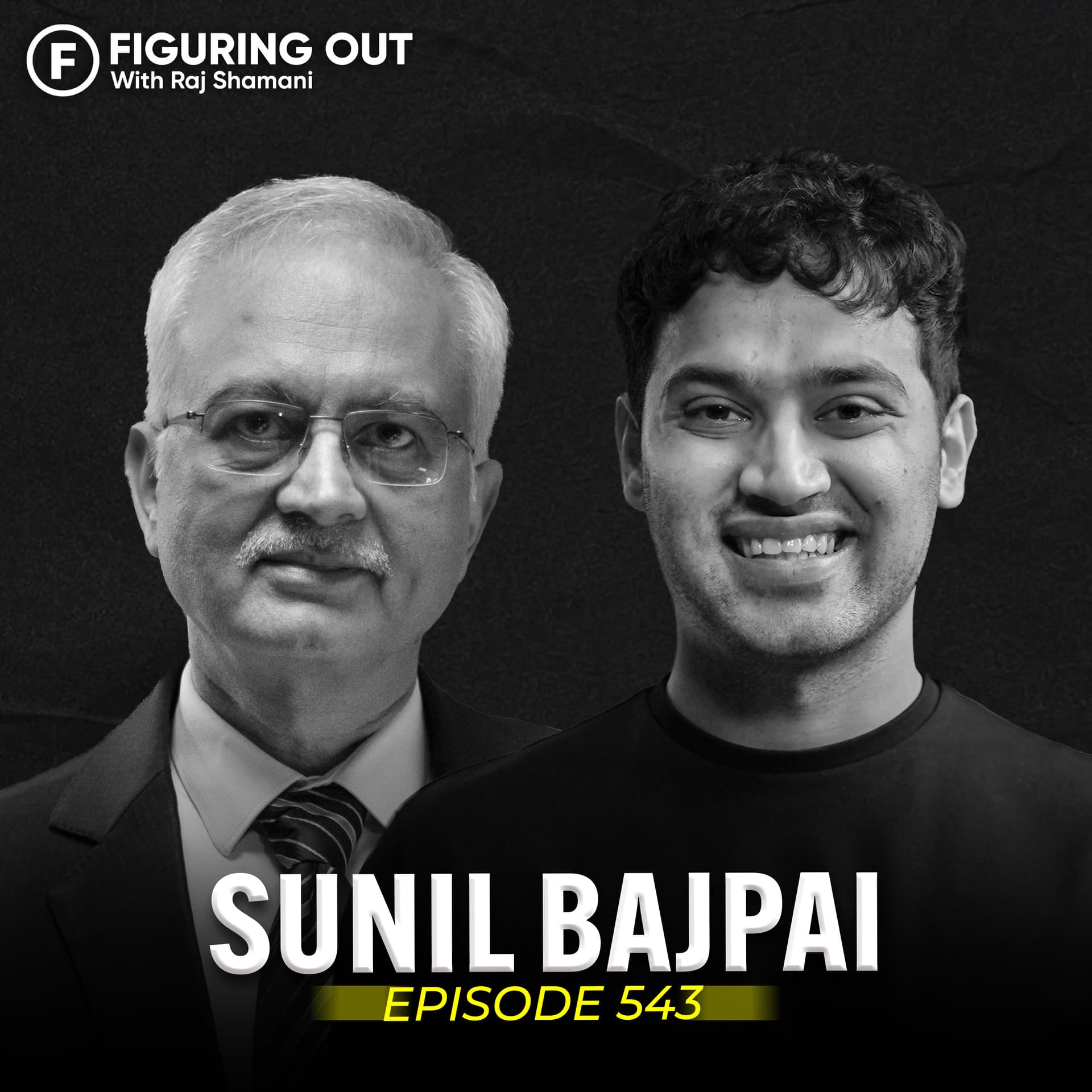

In short
How organized telecom/online scam “industry” works—procurement of personal data, AI-enabled voice cloning and scam toolkits, distribution via calls/SMS/social media, and payment/“digital arrest” coercion—plus practical red flags and why incentives to stop scams are misaligned.
Guests
Sunil Bajpai, Chief Trust Officer at Tanla Platforms. Background: 30 years in Government of India, much of it at TRAI, where he helped write rules that became global standards for stopping spam calls and messages.
Key claims
India loses about 54,000 crore annually to scams; reporting is low (roughly 7–10%), so actual losses are far higher. Scams are “wicked problems” with no clear stopping rule. Scammers exploit fear/greed/emergency, keep victims on the call, and push irreversible actions (transfers, bribes, surrendering information). A key defense is “RUKO/stop”: if you pause in the first ~90 seconds, the amygdala-driven panic can be interrupted; otherwise victims escalate payments. Tanla uses AI to detect scams within seconds.
Notable examples
The S.P. Oswal Aadhaar-misuse case (fake CBI/narcotics arrest warrant, court steps, escalating transfers). A “digital arrest” style sex-trafficking emergency where the victim’s trauma led to death without money being paid. A case where parents were drained and the victim was told to care for them after the fact.
Written by AI. May contain mistakes. Listen to the episode to check what was said.
Chapters
Tap a time to open that second in VOIntroduction to Scams
0:00 to 0:45
Learn about the nature of scams and their impact on society.
“In all of these cases, the same elements would play out.”
Understanding the Scam Industry
0:45 to 2:43
Explore the mechanics of the scam industry and its financial implications.
“There are toolkits available, websites available.”
Introducing Sunil Bajpai
2:43 to 3:40
Meet Sunil Bajpai and learn about his expertise in combating scams.
“Our today's guest is Sunil Bajpai, Chief Trust Officer of Tanla Platforms.”
The Importance of Trust
3:40 to 4:52
Discover why trust is crucial in society and its evolution through history.
“And first let's start with the question, why trust?”
Scams and Their Victims
4:52 to 7:21
Examine case studies of scams targeting educated and intelligent individuals.
“You see all the banks impressive buildings.”
The Mechanics of a Scam Call
7:21 to 11:39
Understand how scammers manipulate victims through fear and authority.
“which made it to the news which are the big frauds.”
Breaking the Scam Cycle
11:39 to 14:00
Learn strategies to avoid falling victim to scams and regain control.
“They'll read out sections of the law to you which are true.”
Understanding Emotional Manipulation in Scams
14:00 to 15:00
Learn how scammers emotionally manipulate victims to keep them engaged.
The Steps of a Typical Scam Call
15:00 to 18:20
Explore the sequence of tactics used by scammers to extract money.
“They have kept him emotionally charged and engaged.”
The Cycle of Bribery in Scams
18:20 to 21:40
Understand how scammers use bribery to further entrap victims.
Show all 33 chapters
The Impact of Fake Emergencies
21:40 to 24:10
Discover the devastating effects of fake emergencies on victims and their families.
“the only way in which human beings are designed to act and we can explore this okay and why evolutionarily that was important so they have a mental image now to protect.”
Scammers as Victims: A Complex Reality
24:10 to 27:00
Examine the paradox where some scammers are victims of a larger scheme themselves.
“It's a fake emergency case where the daughter is supposedly involved in sex trafficking.”
The Scale of Scam Operations in India
27:00 to 28:00
Get insights into the staggering scale of scams affecting India each year.
Understanding the Scam Economy's Scale
28:00 to 30:50
Explore the staggering financial losses due to scams and the global scale of the scam industry.
“So probably India is losing, let's say probably 1 lakh, 2 lakh crore in scams.”
Breaking Down the Scam Industry Operations
30:50 to 36:20
Learn how the scam industry operates like a business with procurement, manufacturing, and distribution.
“These will be the normal things you will divide a business into.”
Information Sourcing and Scamming Tactics
36:20 to 42:00
Discover how scammers source personal information and engage in fraudulent activities.
“They were expected to register on a TRAI portal and declare who they are.”
The Ease of Aadhaar Information Theft
42:00 to 43:20
Learn how easily Aadhaar card information can be purchased and misused.
“The easiest way I can do it is to write the Aadhaar card in my form.”
The Structure of the Scam Industry
43:20 to 46:00
Understand the decentralized nature of the Aadhaar scam industry and its operations.
“So, you can procure it for 100 bucks and you can sell it 20 times, 200 times.”
Wicked Problems in Scam Prevention
46:00 to 47:00
Explore the complexities of addressing scam problems, defined as wicked problems.
“The government goes after them and that ring is smashed, which is not a good thing.”
The Scale of Scam Operations
47:00 to 48:20
Discover the scale of scams and the psychological tactics used by scammers.
“The manufacturing machinery has perfected it.”
Identifying Scam Indicators
48:20 to 50:00
Learn five key indicators to help identify potential scams during interactions.
“So fear and greed is what they usually work on.”
Psychology of Scammers: Creating Trust
50:00 to 53:20
Understand how scammers manipulate emotions to gain trust and elicit action.
“Something, somebody initiated, you did not.”
Challenges in Combating Scams
53:20 to 56:00
Examine the systemic challenges that prevent effective fraud detection and prevention.
“I heard the transcript of one of these scams playing out where the wife is telling the husband that the husband tells the wife that this guy is a scammer.”
The Diffused Problem of Scams
56:00 to 1:01:06
Explore the complexities of addressing scams due to diffuse responsibility and costs.
“Let me explain to you that there is no incentive anywhere to solve the problem despite it being a trillion dollar problem.”
Telecom's Role in Tackling Scams
1:01:06 to 1:06:51
Discuss the telecom industry's disincentives and potential solutions for scam prevention.
“So that's why telecom guys have no incentive to reduce this?”
Global Approaches to Scam Compensation
1:06:51 to 1:10:00
Learn about international frameworks for compensating scam victims and accountability.
“Let me point out a few things that have happened in other jurisdictions because you said that it's a global problem.”
Understanding Liability in Scam Cases
1:10:00 to 1:11:28
Learn about the shared responsibility framework for banks and telcos in scam cases.
“Now it becomes the telco's problem then to prove that all the things that they were supposed to do they did.”
Regional Approaches to Scam Prevention
1:11:28 to 1:15:00
Explore how different countries handle scam prevention and responsibility.
“If I was living under Singapore's laws, I would say, all the calls are called scam market.”
India's Regulatory Response to Scams
1:15:00 to 1:17:20
Discover India's approach and regulatory measures to combat scams.
“government was concerned that the problem of this thing is going up.”
Technological Innovations in Scam Detection
1:17:20 to 1:19:48
Learn about advanced AI solutions implemented for scam detection.
“So it can detect it and it can be caught over there.”
Case Studies of Successful Scam Prevention
1:19:48 to 1:22:18
Examine real-world examples of networks successfully reducing scam messages.
“And this led to an estimated saving of 500 million dollars for its subscribers who didn't get those messages.”
The Personal Cost of Trust in the Industry
1:22:18 to 1:24:00
Reflect on the personal sacrifices required to build trust in a scam-prone industry.
“All networks for it to become effective.”
The Cost of Trustworthiness
1:24:00 to 1:28:44
Explore the burdens and sacrifices associated with maintaining trust and integrity in life and career choices.
“It's a lot of cost and time and effort that you invest in.”
Transcript
Automatic transcript. May contain errors.0:00So we've prepared this big board. So explain me how the scam happened. In all of these cases, the same elements would play out. What? That there is somebody with authority who tells you that there is a problem. And the best part is the scammer is a friendly person. Otherwise, you would not fall for it, no? So every year, we lose 54 ,000 crore to scams. We will have many more. Cause about 10 % people only ever report. And this online scam industry is about$1.03 trillion per annum. So this is about 0.9 % of the world GDP. Explain me this industry first. Who starts this? What are the steps involved?
0:42First is procurement. They source information about you, your phone number. So there are on the dark web available. So that's a sourcing cost. Then manufacturing. There are toolkits available, websites available. Voice cloning tools available. whatever you want to do. But manufacturing means what? It has to reach the population. Also distribution. Distribution is SMS calls, social media, websites. These are the distribution channels through which you reach the victim. How much can you buy an information for or like a number call? A rupee, two rupees per number. What weakness do they identify? So fear and greed is what they usually work on.
1:23So, you know, at one stage, you asked what could be done. First is the alarm. Something somebody initiated, you did not. Second is they'll keep on saying it's urgent. Because it is when you are acting hastily, you will make a mistake. Third is if you are acting out of fear, there is a problem. Then is it irreversible? That's what you should ask yourself. And that's what can help you maybe stop yourself. And the action is required is very simple. Cut the call. On an average, more than 77 % people in India get more than three scam calls a day. Yes. So how do you know? Your pizza seller sell that information?
2:02Did that food delivery app sell your information? Did that credit card guy sell your information? You have no idea. So how do you hold anyone accountable?
2:21It takes less than a minute, but it means a lot to us. And to listen to the audio experience of this episode, please follow us on Spotify. Last year, Indians lost more than 22 ,000 crore rupees to scammers. And the people falling for these scams are smart, successful doctors, engineers, retired officers, even lawyers and judges. Because in just 90 seconds, a scammer can put your brain in so much panic that you stop thinking straight. Our today's guest is Sunil Bajpai, Chief Trust Officer of Tanla Platforms. He spent 30 years in Government of India, most of it at Tri, where he wrote the rules that became a global standard for stopping spam calls and messages.
3:05In this episode, we'll discuss why do victims keep paying more money even after the first payment feels like a mistake? What is digital arrest? And how does a fake officer, a fake warrant and a fake court hearing feel completely real? How is Tanla using AI to catch scams within seconds? And can India's new data protection law fix this at the root? Watch this episode till the end. And to know more about Tanla platforms, check the link in the description.
3:40Tell me, you are Chief Trust Officer. Yes. A very simple question on this. How to build trust?
3:50How to build trust? What are the components of trust? There are many.
4:01And first let's start with the question, why trust? Why is trust required at all? Then how we can build trust? Trust is required for people to work together. If we did not want to work together, no trust was necessary. Fair enough? Yeah. All colonies, even of animals, they require, they trust each other. Human beings in primitive villages also, when the villages started to form, they trusted each other. Why did they trust each other? they trusted each other because
4:41if you broke the trust there were consequences for you to bear that was as simple as that yeah right if we are 20 of us living in a community and one person tries to misbehave breaks the trust the 19 others will beat him up and throw him out and he gets eaten up by the lions right so trust was automatic in such communities when the communities became larger trust became a problem so city scale what do you do you don't know them and people can create problems so hundreds of years ago you started writing letters of introduction Raj is well known, he writes a letter of introduction, this guy is good, you can treat him yeah he's a friend of mine and i take that yeah somebody who knows you will trust so the trust started transferring right then came institutions they built trust banks started issuing currency notes rather than the promissory notes that were issued by gold merchants right it became institutional i proved my age by showing a school living certificate which was issued by an institution that people could trust.
6:07So, institutions became trust markers. Right? Banks were trusted. Why? Because banks built huge buildings. You see all the banks impressive buildings. They made the investment in the costliest parts of the business district. You look at your BKC. Everywhere. Everywhere. London. Two miles, so many banks. You operated out of that. You had large infrastructure, you know, this bank's building, that bank's building because infrastructure doesn't walk away. Yeah. Right? So you are operating in a way that an other fly-by-night operator cannot. Right? So if I promise and I can't take my building away, then I must keep my promise.
6:56Otherwise, people will come and beat me up or take over the building. Right? So one way to build trust is to is to make an offer which somebody who is faking it cannot do. We'll start with the board. And so we've prepared this big board and we will ask you to explain us these large frauds or scams which has happened in our country. These are the scams which made it to the news which are the big frauds. So explain me how the scam happened. Like why such A. Intelligent people B. Educated people C. People who were not very vulnerable still got scammed and with such insane big numbers So which one do you want to start with first?
7:50We could start with any. We could start with this case. Mr. S.P. Oswald's case. So what happened in this case? So in this case he was duped seven crores as this says right and in this he was told that his adhaar has been misused for some fraudulent activities i don't recall maybe some some drug or some money something and that's the problem that other card is being used for some for something else For some nefarious activity. Some drug activity. Yeah. Okay. And then there was a court hearing and all kinds of things happened. The Chief Justice also appeared. Where? On camera. And he faced him. No, explain me from scratch.
8:44Okay. So it's like there was this person, S.P. Oswal, who is a big textile business owner. Yes. And a Padma Bhushan winner. He's a Padma Bhushan winner. Yes. okay yes he's a respectable man intelligent man and a man who has seen life because he's 80 plus right so he's not a kid who was caught not at all okay so he gets a call from some random person appearing to be a police person yeah some CBI officers and all that okay and and I want to point out that in all of these cases the same elements would play out what that there is somebody with authority who tells you that there is a problem. And the best part is, you see, in the compressed news stories that we get, we hear about coercion.
9:37We hear about the arrest and the trauma. That's all real. But the scammer really is a friendly person. He tells you that there is a problem, but he knows that you are not at fault okay he will help you out that's where the story begins otherwise you would not fall for it no then he keeps building the story and he keeps giving you more and more details and like a movie that becomes complicated and the hero finds another obstacle then another solution and another bigger one and another solution and it goes up and down till it finally resolves. In these cases, it all resolved in a bad way with the victim losing money.
10:30So somebody pretending to be a CBI officer calls you and then asks you to do what? So he will tell you that Raj, there is a packet sent from your name. It bears your Adhaar number. Is this your Adhaar number? Yeah, yes. Is this your address? Yes. so they will have all kinds they have all this information they have all this information and then they will tell you that a parcel was booked yesterday and in routine check it's been found, it contains drugs now you are the criminal, suspect and you will be in the jail obviously because exporting narcotics out of the country, neither it is legal here and if you are exporting it to a country where it is like Singapore it's death that is the penalty there.
11:25No questions asked. If you try to sell drugs in Singapore So they call you and tell you that it's coming from Singapore or you were selling it. Or you were sending it to Singapore. I'm just saying that it could be anything. Okay. They will make it even bigger. Yeah. It could be anything. It could be small. It could be big or whatever it is. They'll read out sections of the law to you which are true. Okay. If you committed that. but you didn't and they will tell you that the act has happened right and this the prime suspect is you so what will you do what will be your reaction it's like I have not done it and correct yeah yeah and that but it's your adha isn't it it's your address isn't it which is true and and sent to so and so your known person maybe yeah the other person in detail also they would.
12:18They might have. Why not? Then what happens? Now, if this is true, now think about that small probability that it's true. Right? Like a heart attack coming on. Right? What should you do? Should you treat it as a false positive or should you treat it as a false negative? No, I would get paranoid. That's the only rational response. Right? that there is a one in ten thousand possibility one in a million possibility but if this is real I do not want this trouble yeah and especially for this man it will be too much because he the Padma Bhushan is like my years of reputation stake and everything will be correct correct so what will you do do you have options really no because I you know we discussed that the false negative missing something serious and calling it nothing is because it is it is the disaster yeah right you have to avoid that so you accept now he will also tell you very sweetly that we know you are not involved there have been other such cases and we have helped them out sir and we will help you you will have to appear in court there is an arrest warrant already issued unfortunately by now so they have an arrest warrant as well yeah and it's fake like fake arrest warrant on my name yeah they will tell you read it out to you it will be correctly worded and they will read out all the laws to you and that's how you will get invested in but can't I like just at this point cut this and like call my lawyer yeah you can but people don't do that people don't do that this case happened in 2024 and soon after that in October the Prime Minister came on on one episode of Man Ki Baath and he said you know Ruko Socho Fair Action Law actually that works better than anything else the Ruko part is important if you stop you know the entire emotional machinery gets engaged in about 90 seconds and stays engaged in the beginning very strongly if you don't act if you don't believe if you stop for 2 minutes the effect begins to wave right but in first 90 seconds only the amygdala will get hijacked yes precisely it gets hijacked and then you are not thinking you are under the control yes you are under the control of a very very primitive portion of your brain not your frontal cortex but the amygdala and I'm involved but then okay what do they say to keep me on phone and like give me because let's say somebody calls pretends to be a CBI officer and asks you for and tells you that XYZ parcel was going on your name and there was drugs involved and now you're the prime suspect till now let's say that person's believing also okay and rational reaction lot of people who have lot to lose will react to it right now the next obvious thing for a large businessman like him should be let me call either local police or call like my lawyer or someone right or no is it not that obvious no no it should be what he should do right What do they do that he is not called his lawyer?
16:15They have kept him emotionally charged and engaged. And therefore, the ups and downs happen very fast in this sequence. They'll tell you there's nothing wrong. Then next moment they'll say, no, something has gone wrong. The case has got escalated. It has reached here. It has become more problematic. You will have to talk to the Narcotics Bureau now. We will put you in touch with them. The arrest warrant has now been issued. The arrest warrant will, news will not be given to you when you just contacted. That's when only the parcel has been detected. But things move fast in this world, no? Okay, so step one is your Aadhaar card was Misused.
16:56Misused. And it was on a parcel which had drugs or something else. So you are the prime suspect. That's step one. so far step two is harmless okay step one is harmless then step two is all of a sudden we have gotten a call from narcotics department they are also tracking you in the drugs confirmed and this is is it happening while I am still on the call yes yes and they will tell you don't move stay there the team is gone dispatch to arrest you we will hold it we will try to we must act fast now we don't want the damage to become worse right so let's act fast so they will keep urging you to act fast and act fast on what on whatever they are suggesting right what should you do if this happens talk to the narcotics tell them the circumstances of what happened or did not happen and and stop the warrant from being issued or file a case in the court or this or that whatever they will give you all kinds of options and but they'll say that the team has gotten out of the police station to come arrest me maybe they will use that ploy they will decide what ploy to use based on how you are acting at that moment ok people buy that yes I mean it's unbelievable that they lost so much money but they did ok so then step 2 is narcotics then then they will
18:33then they will tell you that you know there is an officer you know if we bribe him at this stage maybe it will work so are you open for bribing sir my thought advice is that you give a decision it will be in a million for someone who has crores a million a million
19:01that is the first stage right so it doesn't stop there no no no it will not stop it has to reach these crores no people have been under digital as for 6 months 6 months 137 transfers all adding up to crores of rupees that's also happened so first you make the money transfer and then they will they will say whatever because you bribed the wrong guy he said you have bribed you think you can bribe me now you are a criminal you really are a criminal because you bribed a government officer even if the narcotics case was fake the bribery case is real but you transferred the money to a police officer's account now you will be arrested for bribing a government officer doing his job even if he was mistaken even if you are able to prove that I did not send that parcel Raj sent it on and Raj is caught but I did bribe someone and that they have it on the recording you have transferred money from your account but that account was become fake guy to someone you believe he is the police officer and he is the one who has got incensed now bribe more bribe his boss get out of here get out of this get out of that they will keep you engaged and the human mind works in strange ways if you and I are sitting in a railway station or an airport we may not talk to each other if we start talking we will continue talking right if you offer me a cup of tea and I order biscuits later I will share the biscuits with you right we are invested same thing plays out here you paid one and a half lakhs you want to believe that this guy tried to help you it's only a temporary setback because that belief preserves your mental image of yourself as a sane person right you are invested in that a Padma Bhushan I mean I have great regards for a person like him and for others right I'm not saying that that they were foolish they acted in the only way human beings are known to act the only way in which human beings are designed to act and we can explore this okay and why evolutionarily that was important so they have a mental image now to protect.
21:56So what? Another 5 lakhs? Okay. The more you keep transferring, the more and more you keep getting into the narrative, the more and more you defend the narrative. But what do they say the next time? Once you have 1.5 lakh and let's say 10 lakhs more. So sometimes the chain will break and the guy will go away. Right? Those are the cases you don't hear about. They are the ones that add up to 54 ,000 crores that the Supreme Court mentioned. Right? Some few will continue as all the, you know, long tail. But what do they say next is what I'm trying to understand. Now, now bribe who? Now this thing has reached court.
22:40Now this thing has reached court. So you have to bribe the judge as well. Maybe or face the judge at least. Right? And your cases, Your crime will be read out in front of the judge. The judge will pass an order. Right? I ask you to give a personal bond. Of a large amount. Then you don't have a friend you want to talk to. To post that bond amount. This scammer will say I will give you. You have a bail bond. You have a bail. Now you have a bail. So this will continue. Until it will continue. And the amount of money you have, if you have it, you will do it. And this is how it works. That is why that RUKO part is important.
23:34If you didn't transfer the first one and a half lakhs, the rest will not happen. So this is one type of case. Yeah. This is digital arrest. This is one type of... there are many other ways in which this industry works. So look at this. This is the heart case. What happened in this one? In this case, the daughter was supposedly involved in sex trafficking. Right? No money was paid in this case. But the trauma was so high. Now this is important. The trauma was so high that she lost her life. On digital arrest? No, no, there was no digital arrest. It's a fake emergency case where the daughter is supposedly involved in sex trafficking.
24:22The mother is told to pay up and she's told to go home and all that. She reaches home and dies. Money is not actually paid. There is no money mentioned in this case. She paid. she got a heart attack because she couldn't believe that the daughter was involved in this the stress reached such high proportion the daughter was fine nothing ever happened to her she never did anything she was nowhere caught the entire thing was fake do you have kids? I have so if your son or daughter you get a call from some random person that your son's involved in money laundering daughter's involved in XYZ cases would you not call your son and daughter first?
25:07Not always reachable. That's an assumption. No, that I can reach the people I want to reach. But first you'd be like, okay, make me speak to my kid. Yes, if you stop to think and decided what is happening here and how to take action maybe you will not fall in trap. She also was not she didn't actually transfer any money right. She maybe headed home to speak to her daughter or to figure out where the daughter is or what is happening. She simply lost her life. She simply lost her life. There was one case in which in which after they cleaned out all the money from the parents they told the victim to go and look after their parents.
26:03Get out now. The son is is unaware that he has been arrested or that he is in any trouble. The parents have been under stress. The parents have been cleaned out. Now that they are cleaned out he says go and look after your parents. Because they will have because they will have they will be in stress and this guy reaches home and finds that look look what has happened. But by then all the money the money was already transferred then he alerted the son that's an act of kindness that you go and look after your parents we just did this horrible thing to them so now go and so now they are showing their moral compass so the interesting thing is that some of these people are victims themselves the scammers they are not they are not the perpetrators their bosses are the perpetrators of the problem they are acting on instructions and they themselves could be victims 6700 such people have been rescued by the Indian government from Cambodia and Myanmar Myanmar, Thailand, that area right and how somebody took out 58 crores because 50, taking like 50 ,000, 10 ,000, 1 lakh, 5 lakh rupees is one case 58 crores out of somebody so this is the largest one that happened right 72 year old business man same playbook same things repeated with variations right and this stands out as 58 crores it's nothing startling it's the same thing for 54 ,000 crores or maybe 5 lakh crores this is just the outlier 58 crore from 1 % not just in our 58 crores yes amazing in a country where 0.01 % people probably don't have that money yes but everybody is equally affected and the one who has self-selects to become the headline that's just it so every year we lose 54 ,000 crore to scams that we are aware of.
28:25Probably we will have many more. Much, much more. So probably India is losing, let's say probably 1 lakh, 2 lakh crore in scams. Yes, correct. Your estimate is right. But maybe 2.5 lakh crores because how this estimate has arrived at is about 10 % people only ever report. 7 % to 10 % people. And 24 ,000 crores was reported figure for one of the years. multiply by 10 or 14 and you can you can you can you know kind of triangulate this number also
29:08the world economy is large and this scam industry online scam industry right not the cyber crime industry which is even larger or scam industry which is even larger than that this online digital telecom enabled communication enabled kind of scam industry is about 1.03 trillion trillion dollars per annum this is an estimate put out in a report by gasa 1 trillion. Yes, 1.03 trillion dollars. People are losing in scams every year. Every year, yes. So this is about 0.9 % of the world GDP. Right? To arrive at a country's figures, like India, multiply the GDP by that number, 0.9. and you will get 2.5 lakh, 3 lakh crores and of which 7 to 10 % would be reported so you will get to 24 to 36 thousand crore estimate actual numbers which are reported so that's how you can see the scale of the problem and that's why it's an industry and we will we can perhaps discuss that so explain me this industry first you said so who are the who starts this who are the people behind it what are the steps involved how do they because if something is happening on a trillion dollar scale it has to be organized it can't be like five guys sitting out of probably jamtara is just making random calls and you know taking on money so it's definitely not that so explain me this mechanism yes so let's let's try to understand it like a normal industry you would understand okay right what are the few things that happen a business an industry or a business will have procurement will have manufacturing okay will have distribution will have fulfillment and we'll have treasury operations.
31:48These will be the normal things you will divide a business into. Now for this scam industry, the TAM, worldwide TAM, is$1 trillion. So this kind of analysis should apply to them as much as it does to anybody else. Okay. Right?
32:11So, first is procurement. If you want to sell burgers, you need potato. So you need to buy potato. You need to buy good quality potato. And that's where it starts. And you need to buy spices. Breads and whatever. That's sourcing. That's procurement. Then they will be manufacturing. There will be a process of converting. You don't sell potatoes. You procure it to make burgers or meat to build burger patties. in so you will have a manufacturing then you will have distribution you will have to put it uh open many stores advertise uh collect orders online whatever you know yeah and then you need and then you then you'll have fulfillment somebody places an order the burger has to reach that person and money has to be collected and all that and then all the money is to be collected and used and whatever.
33:13So that's the treasury operations. Like they have this banking operation. Somebody has to be responsible for the trillion dollars which will ultimately be collected. Right? So this is how you would think of a business. So let's think of the scam industry in the same way. They source information. Okay, procure information. Yeah, about you. Right? Your phone number information you you know we mentioned that they have your adha number or some your address so so there are on the dark web and otherwise uh available a lot of information which you pay for and you can collect it right so that's a sourcing cost if you did a analysis if you wrote the books of account for for a business like that there will be the sourcing cost okay right then manufacturing.
34:10Now manufacturing is highly automated here. There are there are toolkits available right websites available scripts available to run certain operations voice cloning tools available whatever you want to do. so the manufacturing the machinery that you can use this to construct a scam is the manufacturing part that's also available meaning I didn't get it what is the manufacturing in this? how do you convert the potato to the burger? yeah so how do you convert information into a scam okay right so I need to reach out to you how do I do that? and I need to have a believable story i need to have some assets which i can uh can use utilize right if i want to put malware on your phone uh i don't know how to make malware i don't have the tech skills yeah right so there are people who have created those tech solutions okay which will so i can source the malware from somewhere and put it i can create a like shopify can create a shop for you there are tools available to create scam websites for you okay right so that's manufacturing okay but I would need people also I would need people also who would scam it on my behalf yeah yeah of course so the machinery a lot of it works on its own so it doesn't require people because these are sophisticated tools which are available but then people are also required you are right somebody has to dress up like a policeman and show up and all that so those operations somebody has to call also somebody has to call if a call is involved and that's part or distribution though reaching out to people right okay right now only the script is getting prepared yeah yeah yeah so you are getting ready to the manufacturing is there but manufacturing means what it has to reach the the population also distribution distribution is SMS as a channel calls calls social media links random links websites social media platforms this is these are the distribution channels through which you reach the victim or your target okay right like any normal business does they do exactly the same I have so many doubts on this okay one by one we'll cover so first is you said procurement information so these scammers would need a lot of information about people like you and me okay then so where do they get this information from where do they buy your adhar card details your credit card details your email account your phone number your health data etc yes so it's partly a manufacturing problem partly a sourcing problem and let me explain that sometimes you would tell the adhar number yourself when they call up they can trick you into telling your Adhaar number right so they only need to start engaging with a phone number perhaps right but very often they will have other information but they would need phone number also no they will need phone number phone numbers are available Raj how do you think people send so much spam right so where are they available is what I'm asking like who buys them who sells them or were there no laws around it so people can just download data from where no no no there have been laws there are protections and and at one time some of these lists got built by registering to access it officially right like like telemarketers were expected back in early 2015-16.
38:28They were expected to register on a TRAI portal and declare who they are. Then they could get the preferences of people, right? That they don't want to hear from you. So when you get the preferences, you are supposed to scrub it. you are not supposed to call them but some unscrupulous people registered not for calling you but for just getting access to their telephone number and your preference then sold multiple copies of that to into the market right how much can you buy an information for or like a number call
39:12so I don't know what the going price is yeah but it will be a rupee two rupees per number number adhar card whatever adhar card adhar number is more difficult to obtain but not impossible because everybody keeps a copy of your adhar which is against the law right you're not supposed to keep copies of other people's adhars but everybody asks where can I see your adhar and then photocopies it and keeps it and the hotel will keep it my point is on an average it's more than 77 % people in India get more than three scam calls a day. Yes. And that's data. That's publicly out there. Almost every day, we are getting more than three calls and some people get way more.
40:03And it starts the day you buy a SIM card. Okay. Depending, okay, probably SIM card you get less, but the day you buy credit card or a car or something like a phone or something expensive then you're gone then you're doomed so how do you know like did your pizza seller sell that information did that food delivery app sell your information did that phone guy sell your information did that car guy sell your information did that credit card guy sell your information you have no idea how do you hold anyone accountable you know i was i was speaking to and this happened this happened when you forget speaking okay this i'll give you an incident i've said this multiple times this is pre-pandemic one of the guys who was selling me sim cards okay one from these top three large companies he came to me and he said ran he just came to me and be like you know this is the number which is an exciting number which has come last has five zeros and stuff like that so you should buy it and i said okay fine i will buy it but at that time because I was running a company on my name there were already three cards issued right for one for my company one which is old one is now the new number so he said on one name you can't have more than five so you should not buy this extra number on your name because three has already been exhausted I was like what do I do he said I'll get you new Aadhaar card and I was like meaning he said I'll get you someone else's Aadhaar card in 50 rupees and buy this number on that person's name and then later whenever you want to transfer it on your name you do it or if you don't want to do it you do it buy as many sim card as you want for 50 rupees in adhar card and like i cut that guy off i blocked him immediately because i i sent some sort of scam and i didn't want to be part of it so but my my point is some random guy selling me an Aadhaar card of some another person for 50 rupees openly it's that easy so imagine these guys were sourcing information for living for them it'll be scoring Aadhaar card information would be like for 1 rupees 50 rupees I'm getting I'm getting a card so there will be many people who would give an Aadhaar card willingly for 500 bucks of their own 1000 rupees 5 ,000 rupees we are a poor country and many people may not even know what has happened right I can go to a person if I offer an honest person 5 ,000 rupees to misuse his adharkar deal he will say go jump in a lake even if he is poor right but if I tell him that you won 500 rupees lottery or 100 rupees lottery right just give me your adharkar deal all I need to do is keep a record who I gave this 100 rupees to.
43:09The easiest way I can do it is to write the Aadhaar card in my form. Here is my form. Give me a copy and let me write your name and Aadhaar and take 500 bucks. You won 500 bucks. It's fine. I can't give it to you unless I can authenticate you. Even 100 rupees is more than enough. Right? So, you can procure it for 100 bucks and you can sell it 20 times, 200 times. The scale is important. So, So you source how many Aadhaar cards you can source, anywhere from anywhere. Where people are scanning your Aadhaar. All those touch points, lacks of them in the country. Potential places from where an Aadhaar card can be taken out.
43:51Right? Name, address also is given on Aadhaar. Everything happens. Something happens. Right? And there you are. Now somebody will collect it, clean it, verify everything is alright. telephone number matched to your Aadhaar then sell it that is the sourcing the first part we talked about procurement sourcing is that also a racket so it is a racket it's not a racket it's an industry within the industry right it's a simple thing all you have to do is find whichever way some Aadhaar numbers and names and all that people will give it because they don't I mean they don't hesitate in giving the adha.
44:38But Jesse you said this is an industry right? So there's procurement, manufacturing, distribution, fulfillment, treasury, five steps. Somebody must be running this. There'll be a top boss. No. And the top boss would have No, no, no. This is a decentralized organization where these are procured as services. But the treasury You don't grow you don't grow potatoes. You buy them. Who grows you don't care there is a mandi where it is available that mandi in this case might happen to be on the dark web or might even be available on a CD from somewhere right okay so but that some guy like some top individual must be the top gun for procuring all of these no because if it's a no because it is not if there are five steps to a trillion dollar industry probably a billion dollar industry or like small part one percent or five percent five billion dollar industry would be just sourcing information.
Read the full transcript
45:32Yeah. So, yes, that's true. So, there are many people sourcing information, many people buying it, many vendors of this. It's an industry. It's not an organization. It's an industry. Right? There are a lot of traders. So, there are a lot of people. Sometimes, accumulation happens. That is also true. Somebody becomes big. They have many parts of this integrated and, you know, becomes a vertically integrated company. Then they are caught. The government goes after them and that ring is smashed, which is not a good thing. Because when you smash it, you create space for a thousand other innovators to come in.
46:15So then what do you do if you don't catch these guys? So I never said that this is an easy problem to solve. And it is one of those problems which are called wicked problems. Wicked problem is defined by churchmen. in a way. The wicked problem is one which if you try to solve, you don't know what is the rule at which you know that you have solved the problem. There is no stopping rule. You don't know when the problem is solved. There is no definition of a solution to the problem. Okay? And when you try to solve the problem, you understand the problem better, but the problem shifts. and this goes on and on and on scammer will try to scam let's say 10 ,000 people yes five will get scammed rest won't yes okay what's the probability by the way what do you think out of 100 how many yeah that's lovely that's lovely you are talking about trillion dollar industry with low distribution costs right what is the cost of sending out 10 ,000 sms's or whatsapp messages or creating clicks on this thing.
47:30Nothing. So the costs are very small. The manufacturing machinery has perfected it. The click rates on SMS have gone up because AI is able to write better copy to engage you into clicking than human beings could. So the scammers' click rate is actually exceeded what used to be the marketer's click rate a few years ago. You know the amount for the highest crypto scam. Job scam. Job offer which was fake which led to a crypto scam. How much amount was involved? Half a billion dollars. Half a billion dollars. Somebody scammed out of people somebody scammed the crypto exchange itself by offering a job to one of their senior software engineers as a PDF file which had a malware from there they went into their servers from those servers it it managed to get enough servers in control to be able to write whatever transaction they wanted and it got endorsed by the rest.
48:57What weakness do they identify? Fear, greed, emergency? What is it? What is best for scam? Fear and greed are good. Emergency is a type of fear. Right? So fear and greed is what they usually work on. and therefore you need to figure out where there is greed and where there is fear. Right? And that they are very good, very reliable markers to know that this camera is active. So, you know, at one stage you asked what could be done? How could these people act? Or how do you identify on this? So, I give you five tests, right? I'm not offering any single solution anywhere. Because I want to prove to you that all of them will fail.
49:55Okay. So there have to be ways. But what those ways are, we'll arrive then. First is the alarm. Something, somebody initiated, you did not. So first thing to realize in a situation is that did you initiate this conversation or somebody else initiated? If somebody else initiated and you seem to be getting sucked into it, Whether out of excitement or fear. Fear. That should be the first alarm bell. Okay. Right? That somebody else initiated it. Second is, they'll keep on saying it's urgent. They will create urgency. Something has to be done at this moment, right now. Because it is when you are acting hastily.
50:41You don't stop. Or don't think. You will make a mistake. this lady T that I talked about, she saw that it is rupees and still filled in the code, coupon code that was given to them, given to her. And it was actually an amount because she had got tired by then, right, of doing that. I mean, she didn't say I had got tired by then, but I have personal experience that, you know, tiredness does this to you. So somebody trying to make it faster is likely a scammer. Third is fear or excitement or whatever it is. If you are acting out of fear, be aware of your motives for acting. Is it out of fear? Is it out of greed?
51:26Is it out of excitement? There is a problem. Right? That you have to... You have to be aware of how you are behaving. Yeah. Right? Then...
51:44Then what else?
51:49is it irreversible? That's what you should ask yourself. Whatever action you are taking. But payment is always irreversible. You can't take back. If I pay you something, so that's a huge thing. Somebody asking you to take an irreversible step. It's a huge red flag. That's a huge red flag. And that's it. I mean, basically. So, three, four things. An irreversible step. excitement and all of these things mean that you are in a scam situation and that's what can help you maybe stop yourself and the action is required is very simple cut the call as you did right the moment you realize this walk away there's no other action don't call your lawyer right you suggested that call the lawyer why not get you should not be in this situation but then in the digital arrest thing I can understand that somebody who has a lot to lose will panic there is no way that person will cut the call and just sleep peacefully so he knows that somebody else started the call that somebody is trying to hurry me into doing things, he's seen signs of this thing, I am afraid right now to act in this kind of a situation, these are things they can see and he's asking me to make a make a payment which cannot be reversed right or asking me to part with information which I cannot take back because it is true and I have given it away then no you have to say no and cut the call nothing will happen in the world nothing will happen I know but I am saying someone must be in their vulnerable gullible state and they will fall for it vulnerable yes gullible no the respected people respectable people intelligent people not gullible ones get scammed right vulnerable yes that is why the first two minutes are important slow down stop right don't let the amygdala dictate your response understand the way human beings are constructed once you understand that you will not act like that but I agree with you it's difficult how does a scammer what's the psychology scammer uses because they try to be friendly they will try to be friendly so why are they trying to be friendly can't they just like scare you a lot and get money out of you so they scare you but they need you to act and you are more persuaded to act by a friendly voice who is trying to help you.
54:43I heard the transcript of one of these scams playing out where the wife is telling the husband that the husband tells the wife that this guy is a scammer. And the wife tells the husband why can't you cooperate with him? He is trying to be helpful. We are in trouble. He is trying to be helpful. She said that on call and it's recorded. And I heard that recorded. then why can't you just let him the gentleman is trying to help us we've got into trouble he's helping us so just do it
55:23do somebody train them? are there training schools? there are of course it's an industry so it's got training manuals it's got 16 hour shifts so what is about them that you guys are not able to catch them? you have all the resources in the world or the technology in the world, that's the whole organization which is there to detect frauds, to make sure that the trust keeps there. You are chief trust officer. So even after all of this, what is it that scammers are able to do that you guys are not able to catch? The even bigger problem is that it's an empty market. Let me explain to you that there is no incentive anywhere to solve the problem despite it being a trillion dollar problem.
56:11Now that's a big statement to make. Why there's no incentive? Let me explain why. Right?
56:22The first is that the problem is very diffused. Lots of people lose money. Some few of course become the big headlines. but the actual losses are much larger and very diffused. Right? But the people who would need to spend money to act against a very large diffused problem will have to bear that expense. It's not my problem. Why should I spend the money? Right? But there will be a lot of money required to spend to stop them. Right? And it's worth spending. It's not a lot of money of the order of trillions of dollars. But even if it's millions of dollars, somebody has to write a check for a million dollar.
57:11No. That million dollar check is not easily written. Because the person who is trying to write it will ask what is my ROI for this million dollar. Right? Okay, everybody else is losing. Fine. If I had to pay a million dollar to give every Indian 10 minutes more of life, will I write that check? No. It's not my problem. But the million dollar is my problem. I'll keep it. Let everybody die 10 minutes earlier in their lives. It's not going to affect their lives very much. So good. It's a fair outcome. I will justify it to myself and to my conscience and the Lord that they were going to die anyway after 5 minutes.
57:49No, they died 5 minutes earlier, 10 minutes earlier. It's murder. If you kill somebody 10 minutes earlier in his life, right? You will be tried for murder. Yeah. But I would commit that very easily by simply not, no, no, don't ask me. So it's a diffused problem with the costs concentrated in a few hands. And we can discuss that. The second thing is what you don't see you are not incentivized to to do anything about. The bullets that miss you are the bullets you care about or it never reached you. If we can prevent scam from reaching you you won't even know that there was an attempt made against you you don't see the value so if you are my customer and I spend money to prevent scam for you and you don't even see the value why am I spending money so that's one problem right?
58:54third is the problem of the person who you are asking to act
59:02if he acts he may have a consequence inaction has no consequence I didn't do it okay suppose a fight breaks out here in your office in your you know operations here I do nothing about it I'm safe if I intervene and beat up one person because I think he's wrong I could be arrested. What would I do? Where is my incentive? My problem is not. Why can't it be there? I am going. Even if I see the problem, I would not want to intervene. Because action has a consequence. Inaction has no consequence. Right? Then, the conscientious tend to get caught. the ones who will try to organize and this thing they are the ones who will be questioned right as to what they did and why they did that and how did this so that's a problem so the conscientious will draw their hands right then there are other interesting reasons the toll booth problem the toll booth problem is that the guy who stands to gain is the toll booth operator right so why would he discourage traffic and you should ask me this question as well I am going to make less money on traffic if I prevent if I reduce that spam and scam traffic.
1:01:02So there is a toll booth problem also over here. The toll operator has no incentive to reduce the traffic. So that's why telecom guys have no incentive to reduce this? I wouldn't say that entirely. But this is an element of the problem that must be understood. It's not an accusation. It's the nature of the problem that needs to be understood. no but in your way the way you are saying it probably the telecom guys are not incentivized to stop this because they are also losing like a lot of revenue because it's like not their problem if people are buying sim cards and using it to scam how do they care so because if they cut off let's say 20 lakh people in india who are trying to possibly scam or you know get on a call which is related to all the scams they're cutting the user base by 20 lakh and they're minutes by probably millions of minutes right?
1:02:00So a telecom guy is not a guy these are thousands of people yeah telecom company what I'm saying is no no not the company there are divisions in that there is a division that sells the sim cards right? There is a division that does something else. They have their own incentive structures, their own KPI metrics. That's how we organize businesses. This is an impact that you will have. But what other way of organizing do you have? You need to organize it in some structure. That's why, let me point out, Airtel announced a massive, this thing, you know, Mr. Gopal Vittal himself came on on television and he wrote to his subscribers and everyone about this fight against scam only he can because he's the top guy he can recognize the problem and act on it somebody below him will not act why?
1:03:12because one guy wants to act and there are three other guys whose incentives are not aligned with that action. If I want to act, I have a colleague who wants to sell more SIMs. Right? I have another colleague who wants to run his network in a certain way, doesn't want to deploy any such solutions inside the network, which will cause expenses in the network. So he will not do that. Right? They're all, it'll affect the whole of the organization. That is why the buying in of right at the top is necessary. The telco has to stand up and say, yes, we want to do this and we will do it. And they have to own the responsibility.
1:03:55But I told you, owning the responsibility is a problem. Liability issues, legal issues, possibility of getting sued for this and that. Too much trouble. So don't even acknowledge the problem. And who loses? People lose. The telco doesn't lose the money. Right? So you are asking them to spend money, time, effort and take on all the responsibilities. And they are not even the ones. And they are the ones who are saving their own money. So ROI questions will be asked by the CFO. So CFO is not there to do that. Only the CEO of the organization will, who sees the entire picture. Yeah, who probably wants it because then the trust index will go up for them.
1:04:39Yes. So that is... can't like telecom people be like pay us a premium let's say 50-100 rupees a month and we make sure that no scam call reaches you because they will have data no they will have data they will have data alone is not enough see how true caller true caller actually tells you a lot that these are scam calls majority of scam calls get detected by Truecaller in a jiffy. So, can't like... So, let me put the question back. Can't large telecom companies do the same thing? Let me put the question back to you. Truecaller is widely used. And if people... And it's free to use for a certain tier.
1:05:29Right? So, why has Truecaller not wiped out scam? They have not wiped off scam. But they inform you that this might be a scam call. They do. But the action is again with you. Right? It's like what contaminated water is sent to your home but you have an RO to filter it. So do it. That's the wrong model. The water that flows into your home should be clean water. Should be portable water. But then there is we are not able to clean this whole system. why not it's a trillion dollar problem so you are trying to solve and it's not solvable no I am pointing out the reasons for why it is not solvable and if people will work together to solve this it is possible to solve what is not possible to do is solve the problem at the device end entirely I love true color people I know them they are friends that's good they are doing what they can do and they should be encouraged because everybody should be encouraged to find solutions but why should the scammer reach you the network should be able to catch it i even before it rings on your on your device because leaving the decision with you with a warning that this may be scam is the problem because one misjudgment from you and you are a victim i absolutely agree but because authorities are not able to figure out how to control these scammers and keeps growing on and it keeps increasing and it's not just India it's globally all around the world so so it's a problem that we have been incapable of building certain kind of frameworks of or authorities or I don't know policy which is preventing this these camps to happen right so why don't we enable telco company to be like you block directly the moment you actually figure out that this is a scam call and probably calling like 50 ,000 100 people at the same time from the same number keep blocking them yes that is done already that is done already but why are they going to tell you the scale of the problem when DOT started blocking the international calls in one day after this system went live they blocked 1.35 crore calls
1:08:05right and then huge it made a difference that that thing got stopped but all scams vanished no right there are ways and means by which somebody will invent something else and will will come here the point I'm making is it's a battle that needs to be fought in a certain way right and it's for me to describe i'm not saying that my company or or my regulations or or whatever is solving this problem entirely but it's for you to judge i leave that i will give you the description and then you see how we are approaching the problem if you ask me right you can also ask me about how i did when when i was working with trai for example where today's regulations came in and i'm happy to answer that question also.
1:08:58Let me point out a few things that have happened in other jurisdictions because you said that it's a global problem. In UK, they have decided that even if you have made the payment, but you got scammed, you are entitled to compensation.
1:09:16Two years ago, right? So if you get scammed in the UK, you're getting your money back. You're getting within certain limits and you should not have colluded you can voluntarily lose money also no solutions are that obvious straight forward but then who's paying that compensation the telcos or the banks yes second it is penalizing a lot actually yes but it is effective in the sense from a citizen point of view I love it from an entrepreneur point of view I hate it so one solution Singapore has another solution they have the shared responsibility framework it came in about two years ago what they do is they say that if a scam happens your bank must pay unless they can show that they did everything that was conceivable according to the rules they are fully compliant and therefore they are off in that case the liability shifts to the telco.
1:10:28Why did this happen? Right? Now it becomes the telco's problem then to prove that all the things that they were supposed to do they did. Okay. Right? Once all of that is also done the residual risk is that of the subscriber. So as a citizen if the bank is able to get away the telco is able to get away then you can then you have to bear the loss not otherwise hold on doesn't solve the problem that easy Singapore has not mandated use of AIML to detect these scams on its telecom networks whether the telcos do it or not is a different issue it's not mandated them to do it now all those problems come back Why should I act?
1:11:22Why I should spend the money when I'm not the beneficiary and all those four, five things I told you? Will they do it? No. So, now, another thing. If I'm a telco, what would I do? If I was living under Singapore's laws, I would say, all the calls are called scam market. So, when a scam call actually arrives, And you say that I have been a scam, I will say, but I want you. That was a scam call. Because I do on the side of false positives. Right? I treat everything as a scam call and I alert everything as a scam call. The signal disappears. But the liability from the telco side is now reduced. But usefulness to the person is gone.
1:12:16So you look at the incentive structure and you will discover why. this is not likely to work in Thailand they have a shared responsibility framework of a different kind they don't say in a waterfall that you know if not this not this has happened what is the contributory liability you will pay you are 20 % liable you are 15 % liable whatever liable you pay have such penalties actually been imposed not yet it's still coming up but you'll have a problem doing this allocation and who will do the allocation and the numbers are numbers are so large and when I mentioned Cambodia and Myanmar you also mentioned Thailand there the Thailand problem is that the Thai citizens are getting scammed and the people scamming them are Thai who work out of neighboring country so they travel in the morning they do a work commute they go into the neighboring country where they have a job the job is to scam these people back and they are able to speak the local language and understand everything and then they come back so they earn the money outside the country but well they need jobs these are the jobs that are available how is India solving it?
1:13:45what are you doing? so that's two questions and let me answer and then you can judge how the efforts come together. India looked at the problem of fraud and scam quite early. In 2018, Dry brought out a regulation for controlling spam and scam. and Tanla Platforms was one of the first companies to come forward to build that infrastructure for its enforcement.
1:14:24This laid the foundation for what will be necessary to have a bigger fight against scam in the next few years.
1:14:36And as soon as it came on, the problem of spam started decreasing But spam, while it was not the main problem that we are discussing today, it is what hides scam. So it's important to get rid of spam also if you want to get rid of scam. And that got cut down to half. But it was not enough. And in 2021, regulators were already thinking, government was concerned that the problem of this thing is going up. So, actually I remember in 2022 at the India Mobile Congress, the chairman TRAI, Dr. Vagela, he articulated this requirement to fight scam in the IMC. And other agencies were also engaged at that time.
1:15:31DOT soon after launched its portal Sanchar Sathi and MHA had already launched earlier the 1930 and cyber crime reporting portal. So these efforts were on. Later on RBI also brought in its mule hunter. It's catching 20 ,000 mule accounts every month. DOT's efforts to cut down the foreign-based scammers from targeting India with spoof numbers cut out 1.35 crore connections in 24 hours. That was the scale of the operation. But all of this was not going to make a difference. This still left a large part of the scam moving through the networks because every institution was looking at its own area and dealing with it.
1:16:40So TRII brought actually all the regulators together and they started coordinating and they started articulating what is required. And Tanla's response was to build a system that will stay inside the network and look at spam, detect it and disable it. While everybody else looked at the periphery. And we built a system which can detect spam in less than 50 milliseconds in the network. 50 milliseconds is shorter than the blink of an eye. The blink of an eye usually takes 250 to 300 milliseconds. So one-fifth of that. So it can detect it and it can be caught over there. But it's not as simple. We worked with the regulators.
1:17:34We saw what the world was talking about. We looked at what Ireland was doing, Singapore was doing, others were doing. We learned from what their concerns were. We talked to the regulators here. We talked to the customers here. And then built the product. We launched it in 2023. The chairman himself expressed at the launch that he has seen very impressive results by what it can do. and this was you know this was done with full regulatory discipline. The product was proven in a regulatory sandbox. It addressed the concerns that the regulators had expressed so it preserves privacy. It looks at metadata as much as possible.
1:18:31It picks up faint signals from the content itself but fleetingly in milliseconds and then makes a determination nothing else is retained so it's completely privacy preserving and these kind of precautions these regulatory precautions were very important and have proved to be even more important now now you have deep fakes you have voice that can be cloned you have faces which can be put even in video your face can be replaced inside a video stream, right? Not even a recording. So it becomes even more important that you should be able to do what you need to do in a privacy preserving manner, right?
1:19:20So and fast and so performance has to be tested and all of this had to be tested and it's paid off the dividends because we are able to do this. You would ask, does it work? don't take my word for it take Indonesia's word for it this country was losing 5 billion estimated 5 billion US dollars every year still losing and
1:19:52one CEO there of the second largest network Indosat he decided to tackle the problem we talked earlier about nobody writing a check for a problem which doesn't concern them but always concerns somebody else he decided to do otherwise and and wrote that check we installed the wisely AI platform in the Indonesian network at Indosat 2 billion messages it got and 400 million are the scam messages out of those 2 billion. And this led to an estimated saving of 500 million dollars for its subscribers who didn't get those messages.
1:20:48This was reported by the CEO to the investors in the yearly call, in the year-end results. And it showed that the customers rewarded the network with higher ARPU and low-churn. They did not leave the network that easily. They felt safer. 75 % in surveys said that they felt safer to be on that network. So it turned out to be good business. That ROI is very high for investment in this. That case study, two case studies actually, have been written by the London Business School on this implementation and is being taught today on how a network can clean its pipes. The other question is inherent in what you asked is that can India do it?
1:21:54India can do it, of course. It's a technology developed here, proven here in a regulator sandbox. It's live in some networks and the banks have seen results, some of the banks and the networks have seen results. So the question is, such a thing has to be switched on everywhere, right? All networks for it to become effective. So yes, the answer is that we can do it. We are at the forefront and we have the tech in this country. Detection and disabling is a very important part within the network of all the peripheral things that are already being done by other agencies and regulators, other participants also in the ecosystem.
1:22:49but all of this is still not the full problem what you should not go through the system this is taking care of but what should go into the system also is an important question and that is a question of permission of consent of the subscriber the end user so that's where we stand today here's the last question that I ask everybody it's what is the cost that you have paid personally to become who you are today? Because the question is, let me reframe this. What is the cost that you have paid to become a trustable person in an industry which is full of just scams and frauds?
1:23:39So the cost that I have paid is...
1:23:50You see, I've lived with a kind of burden, right? Of constantly thinking about the issues of struggling with trade-offs, of trying to study where this leads. It's a lot of cost and time and effort that you invest in. It's been good for me because I've been curious kind of in this respect and in other ways about life. Much like you are a curious person. And that's the investment that I've had to make. you know and to safeguard the trust you have to hold yourself up to a standard of behavior and not breach that trust have I always acted in a trustworthy manner no to be honest and I think anyone who claims otherwise is lying and when you don't always act in a trustworthy manner it's an even bigger burden to carry right because you're aware of what you did but you might make a mistake and and that remains a problem to deal with so so it's a burden in that sense to carry isn't it so the cost you have paid is a constant burden yes it is it is living with constant burden on your head 24-7 in a sense yes and there are other material costs also of course of choices in career I've had a fair amount of choices in life people have do you think you've paid an opportunity cost yes yes that's what I was coming to that I have foregone opportunities which could have got me money or power, fame, wealth.
1:26:13Whatever. Mostly money. Which I didn't accept. I didn't. And why didn't you choose the path of money? Wealth didn't excite you? It is exciting. But you have to you have to make choices. You choose you choose to stand somewhere and you look at the world from there. Would you choose any different? if you can go back? I think I would try to be more trustworthy than I have been. So I won't roll back. I would say it's important to... You see Raj, the company is run on profits of course. But what I admire about this company and why I joined this was that they found Arubay. he communicates a passion and vision which is larger than almost anyone articulating it in this space and that kind of attracts you I am doing a kind of regulatory work and thinking that I was doing with the government also we talked about the fact that you have invested in something early on then you don't give it up For 40 years, I've been a government servant.
1:27:39I've been thinking like that. You know, I'm not the beneficiary of actions that I take or would take. It's for someone else. Right? You think it was much easier for me to join the company here because I was told you are not answerable for P &L. Okay? Because if I have a P &L responsibility, then it becomes difficult to... the same toll gate problem will come back and haunt me right so I said alright if it's not a P &L problem then I can join you and if the opportunity is to develop and work in a certain way and if the company has that vision and there's everybody working in that so it's been a very satisfying way to live but I like your answer the second part of the answer where you said cost of becoming trustworthy is a lot of money.
1:28:42Which makes sense. Thank you so much. Thanks a lot. Thank you for coming here and spending time with us. Thank you so much for watching this episode till the end. Now you have to do three things. Number one, subscribe to this channel right now. The more you subscribe, the better the guests we will be able to get for you. Number two, please comment and let us know what did we do wrong and what did we do right. Because the more you give us feedback, the better we will be able to make episodes for you. And number three, please share this episode with at least one person because one conversation can change someone's entire life.
1:29:20I'll see you next time. Until then, keep figuring out.
From the publisher
Checkout Tanla here: https://www.tanla.com/
Get your hand-picked playbook here:
https://www.figuringout.co/pdf/fo-543
Guest Suggestion Form:
Disclaimer: This video is intended solely for educational purposes and opinions shared by the guest are his personal views. We do not intent to defame or harm any person/ brand/ product/ country/ profession mentioned in the video.
Our goal is to provide information to help audience make informed choices. The media used in this video are solely for informational purposes and belongs to their respective owners.
(00:00) - Intro
(03:41) - How to Build Trust: The Chief Trust Officer Explains
(07:09) - Inside the SP Oswal Digital Arrest Scam: How It Happened Step by Step
(14:42) - Why Your Brain Gets Hijacked in the First 90 Seconds of a Scam
(18:26) - Why Victims Keep Paying Even After Bribing "Officers"
(23:50) - The Heartbreaking Case of a Mother Who Died After a Fake Call
(26:44) - Are Scammers Victims Too?
(27:16) - India Loses ₹54,000 Crore to Scams Every Year: The Real Numbers
(30:48) - Inside the Scam Industry
(36:52) - How Scammers Buy Your Aadhaar Number and Phone Number for Just ₹100
(49:35) - 5 Warning Signs You're Being Scammed Right Now
(55:34) - Why Nobody Has an Incentive to Stop Scams
About Call Detection
(1:13:44) - How India Is Fighting Back: TRAI, AI Detection & the Indonesia Case Study
(1:23:10) - The Personal Cost of Becoming a Trustworthy Person
(1:28:50) - Outro
In today's episode, we sit down with Sunil Bajpai, Chief Trust Officer at Tanla Platforms, a man who has spent decades inside government and industry trying to understand how trust actually breaks down, and how scams have quietly become a trillion dollar global industry.
Follow Sunil Bajpai here:X: https://x.com/sunilbajpaiLinkedIn: https://www.linkedin.com/in/sunilbajpai1/Follow Tanla Here:LinkedIn: https://www.linkedin.com/company/tanla-platforms/?originalSubdomain=inX: https://x.com/Tanla_India Instagram: https://www.instagram.com/tanlaplatforms/Youtube: https://m.youtube.com/c/tanlaplatformslimited
About Raj Shamani
Raj Shamani is an Entrepreneur at heart that explains his expertise in Business Content Creation & Public Speaking. He has delivered 200+ speeches in 26+ countries. Besides that, Raj is also an Angel Investor interested in crazy minds who are creating a sensation in the Fintech, FMCG, & passion economy space.
To Know More,Follow Raj Shamani On ⤵︎
Instagram @RajShamani https://www.instagram.com/rajshamani/
Twitter @RajShamani https://twitter.com/rajshamani
Facebook @ShamaniRaj https://www.facebook.com/shamaniraj
LinkedIn - Raj Shamani https://www.linkedin.com/in/rajshamani/
About Figuring Out
Figuring Out Podcast is a Candid Conversations University where Raj Shamani brings raw conversations with the Top 1% in India.


