
In short
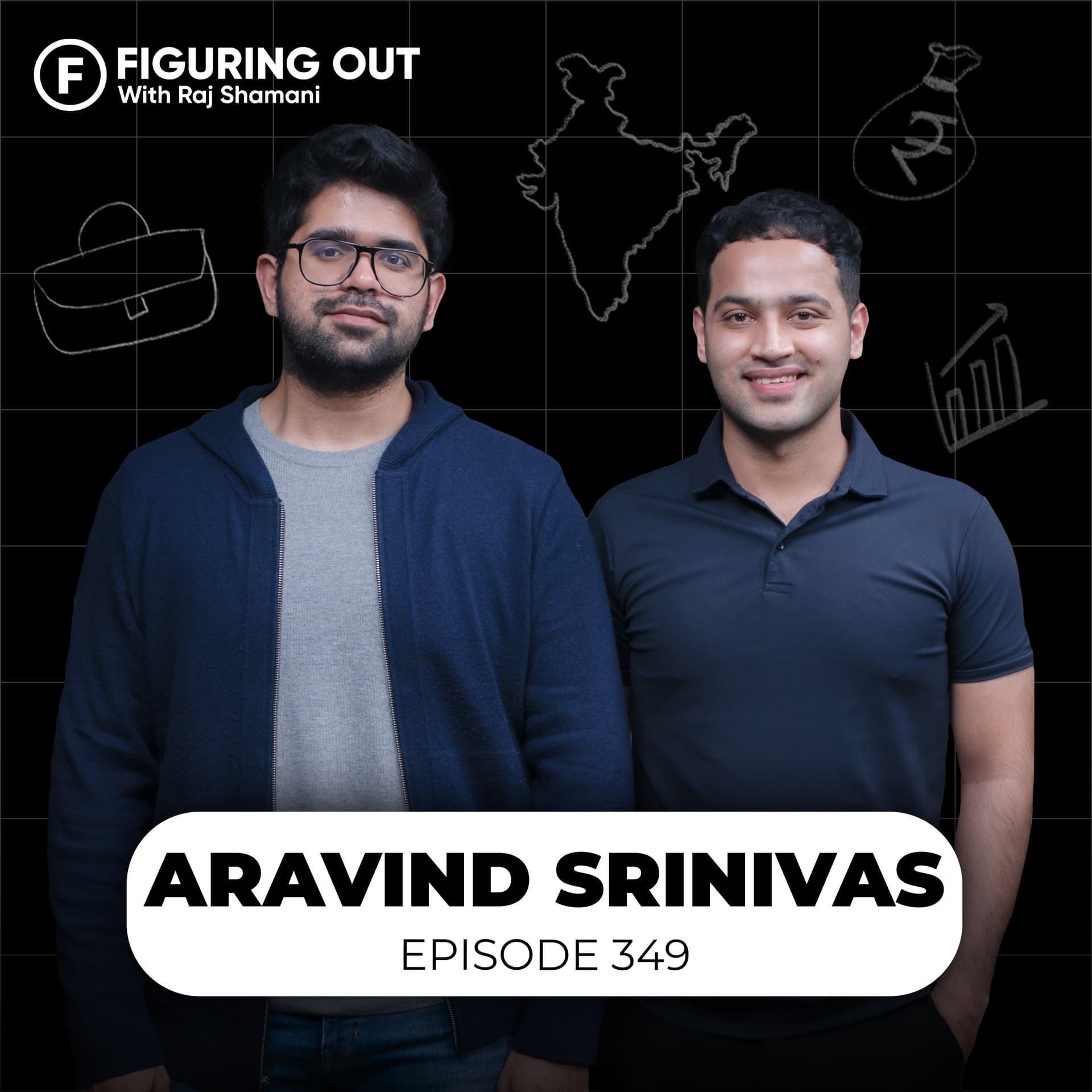
Podcast Summary: Figuring Out with Raj Shamani - Episode 349
Episode Title How To Build Billion Dollar AI Business? - Elon Musk, Google & Future | Perplexity
Podcast Description Raj Shamani's podcast aims to prepare individuals for the upcoming opportunities in India, focusing on growth across various domains such as business, relationships, and politics. The goal is to help listeners achieve their 'Indian Dream'.
Guest Aravind Srinivas - Co-founder & CEO of Perplexity, an AI startup that aims to change the way we search online.
Key Themes and Discussions
Introduction to Perplexity
- Origin of the Name:
- The name "Perplexity" was chosen from a domain availability perspective and is rooted in AI as a metric for understanding information.
- Aravind acknowledges the name might be challenging for users but is open to possible rebranding in the future.
Funding and Growth
- Investor Insights:
- Notable investors include Jeff Bezos, who, after reviewing a memo and a demo, agreed to invest without meeting Aravind initially.
- Bezos emphasized the importance of user experience and retention over sheer user numbers.
AI vs. Google
- Competitive Landscape:
- Perplexity is positioned as a unique alternative to Google, catering to more complex queries rather than simple searches.
- Google’s business model (short queries and ad revenue) poses a potential weakness as users seek deeper answers.
User Experience
- Differentiation:
- Users of Perplexity tend to ask longer, more complex queries, resulting in more nuanced answers.
- The podcast emphasizes how Perplexity can synthesize information and provide concise answers, aligning with user needs.
AI's Impact on Industries
- Beneficial Sectors:
- Healthcare: AI can streamline patient diagnostics and enhance telehealth services.
- Software Development: AI tools can boost productivity for developers.
- Financial Consulting: AI can analyze market data and provide investment advice efficiently.
Risks of AI Adoption
- Job Displacement:
- Certain sectors, like customer support and software consulting, may face significant disruption due to AI capabilities.
- Digital Amnesia:
- Concerns about reliance on technology leading to decreased memory and cognitive abilities in younger generations.
Political and Ethical Considerations
- Political Neutrality:
- Aravind discusses the potential political pressures on tech companies and how Perplexity aims to remain apolitical while adhering to legal standards across different countries.
- Bias in AI:
- The importance of avoiding biases in search results and maintaining a neutral stance in politically sensitive contexts.
The Future of AI
- Opportunities and Challenges:
- The conversation explores the potential for a new generation of search tools and the need for continuous innovation.
- Aravind expresses optimism that AI can facilitate new business models, provided companies focus on customer experience and ethical practices.
Timestamps
- 00:00 - Intro
- 01:30 - Why the name Perplexity?
- 03:32 - Jeff Bezos as an investor
- 15:30 - How Perplexity gives answers
- 19:30 - Perplexity vs Google
- 31:30 - Where Perplexity stands today
- 35:17 - Elon Musk’s xAI
- 40:24 - Political powers and AI
- 46:41 - Challenges in India
- 52:25 - Bizarre search query
- 53:28 - Conspiracy theories about AI
- 57:05 - Digital amnesia
- 01:02:59 - BTS
- 01:03:19 - Outro
Conclusion The episode provides an in-depth look at how AI and companies like Perplexity are reshaping online search and the broader implications for industries and individual users. With insights from Aravind Srinivas, listeners gain a better understanding of the potential of AI, the competitive landscape against giants like Google, and the ethical considerations that come with rapid technological advancement.
For more unfiltered conversations, find the complete episode on YouTube and relevant platforms.
Written by AI. May contain mistakes. Listen to the episode to check what was said.
Transcript
Automatic transcript. May contain errors.0:00Give me three examples of businesses which are going to benefit from the rapid adoption of AI. So software development, healthcare, financial consulting. What is the most ridiculous search query you have read? Either this person is trying to rob a bank, ended up asking, I want my face protected, I still want to be able to breathe, but it should cover my nose, holes for my eyes, and I want to like bike. Explain me how does the answer comes in? A lot of it just has to do with like filtering out like really low quality domains. And then like there are subtle things you can do based on the region, based on the user's past queries, based on the current query itself, you can re-rank the final set of links.
0:36You're in a sort of competition and race with all these large companies. Who loses the most if you win? The one with the most to lose is Google. What would beating Google be like? Google employees and their kids, they all use Perplexity because it's a better product. Our today's guest is Aravind Sreenivas, who's the founder of Perplexity. He has raised millions of dollars, which has gotten funded by NVIDIA's founder and Jeff Bezos as well. We learn how AI actually works and what's the future of AI. And what's the craziest conspiracy you've heard about AI? AI god-like thing that you can use to control the whole universe.
1:13But do you think that's possible? Do you see any potential political threats coming on perplexity? I think Elon raised$6 billion for XAI. yeah are you scared of Elon
1:31Before starting, subscribe to this channel so that we will make more insightful and better podcasts. And this whole show is available on Spotify where you can follow us. Enjoy the show.
1:49when you think about india or just like let's say world and you want to compete and you want to be the best you want to be number one yeah why keep name as perplexity yeah it's so difficult to say i know i was talking to so many people in the organization because i use perplexity yeah and there are two three people who use perplexity and then when we spoke to everyone that hey you know what we're gonna get the founder we'll do this and they're like it's such a difficult name we're never gonna be able to even download it and use it sure and it's it's an important question yeah so uh this goes back to the origins of the company like you know when i started i didn't really have a clear sense of like you know whether we'll build a search app or consumer application none of that like we were we knew we wanted to do something in search we knew like we wanted to build like unique experiences that were not possible before but we're not dreaming big like oh we're gonna build a billion user product potentially um so um when you pick a name for the company you pick something pretty cool like and easy to get a domain for you know i i didn't have much money at the beginning of funding so perplexity.ai was available for like 120 dollars for two years so i just got it and perplexity is a metric in ai that measures how well you understand something okay so very geeky you know i i get it but once you get even more users and more funding like we can just buy the rights to some crazy name and like just do something like four or five letters that would be amazing interesting okay so there is plan to actually change it this is a problem you're aware about yeah yeah i mean look i'm it's one of the worst names you can pick for a consumer company 100 aware of it and i'm not going to defend uh maybe we can do something like the company will still be called perplexity but the product can be called something else yeah i was looking at the list of your investors jeff bezos happens to be one of them yeah he came much later he's not the earliest investor okay but did you meet jeff yeah yeah i did meet jeff how did that happen uh how did you go from being this guy who doesn't know much about this business genius and how this model will make sense yeah to getting a jeff bezos the jeff bezos investing in you so we reached out uh through like a common contact like uh and then um um you know they responded saying okay like why don't you uh send like a you know like a document like a memo he likes to read memos and so i sent that and i also made like a nice demo where uh it's an imaginary demo of like jeff talking to our our voice-to-voice system where his voice is talking to it and that system is responding back and and the questions are about like star track and blue origin and things like that and i i recorded it myself and then um sent it over both the memo and this and um he for the first investment he didn't even meet me they just said okay i'll just have seen the memo and looked at the demo and um he's approved the investment so okay fine that's awesome and then we asked for permission to use his name in the public release of the funding round they said yeah go for it and that became the headline essentially so that that really helped us like so thanks to him um subsequent after that like when we kept making more progress he reached that was the first inbound request like hey uh jeff wants to meet and like you know get a update on the company and like your strategy and again they asked me to write a six pager i wrote it but that's a really good exercise uh writing these memos and six pages uh it takes a lot out of you to write one but it's totally worth it for your clarity and he explains why too right he's gonna so i've written it and then had the one-on-one meeting it was for an hour um i thought he's not gonna he he certainly wouldn't have had time to read it yeah so he's just gonna use the first 30 minutes to uh read it together but no like he just directly got to the points he referenced specific sections what he liked and what he was not sure about uh asked me for us things like what i think about like the chip space and stuff um and no time was wasted so it was like basically getting to the second meeting you know uh and at the end like he just said something of your your success doesn't rely on google's failure which is why like you know i'm pretty optimistic about your chances and uh you just got to keep moving fast and of course the only thing that matters is customer experience like just retain the users don't be a leaky bucket make sure retention is high don't everyone's gonna like just push you for getting as many users as you can but maintain your growth rates don't try to aim for like something crazy uh but absolutely make sure that as you grow your retention is like only increasing not even staying flat so he had all the right messages i mean we knew it but it was always great to you know have it reinforced by someone like him and then i met him in person in another event later so he the three i met him like totally like two or three times this is pretty awesome a lot of people think he's like not very plugged in anymore but um i would say it's like literally was up to date with everything when i met him what do you think is the reason why did he invest in you i mean look i i really don't know he probably thought i know that you don't know i mean he knows it better but what do you think why did he i'm guessing he probably tried out the product and like you know it worked as expected and i thought like it you know but he must be getting thousand products which are living up to the expectation and working as described or explained why you Well, we had a lot of visibility already by then.
7:54A lot of people using it.
7:59And there were very few products on the market at the time also. Like ChatGPT was there, but it wasn't even doing browsing reliably. And, you know, Google Bar, it was called Bard back then. It wasn't even called Gemini and it wasn't really good. Microsoft Co-Pilot wasn't good. Bing Chat wasn't good. So we actually had a pretty good time to attract a lot of users where our service is basically not possible anywhere else. So that differentiator was clear there. It was not like one among another product. And the other thing he probably, my guess, is the existing set of investors were already pretty incredible.
8:39The team was shipping really fast. I think these are good attributes for a startup. and we were very efficient and the way we got to where we were like before we raised that round we had raised very little money uh and we did not spend it on like you know like training our own models but just continually investing in a good product we had a core thesis that like your model is not my concern like for the user uh and i think that appealed to him because there's literally a play on his uh your profitability is not my concern yeah you get the package in a day i don't care what it costs you to do that so i think like it was a customer focused AI company maybe he wanted to be part of the journey yeah and he probably liked the way you were thinking about it way more than probably the other thing i really don't know i'm also making a guess who knows maybe that demo was pretty cool like the i'm trying to prompt so that you give me an answer which is beyond just your product it's very i've never asked maybe next time i meet i'm just gonna ask him like hey like why do you invest because honestly it's um like you could argue like it's it's going to create conflict at some point like you know amazon alexa is also going to be in in the operating in the space and uh so maybe there's some deeper reason or maybe it's not that deep i don't know yeah because it's usually when someone of that stature actually takes a personal time to invest and then meet the founders it has to be something deeper because i hope so a couple of millions of dollars for him is gonna like it's peanuts it's not gonna mean yeah yeah it's not he doesn't like financially it doesn't mean anything to him and i'm again look like if we become really big uh you know even then i think the the valuation which he came in and the amount he put in like it'll move the needle for him a bit financially but it's not it's not for that reason that's like a lot of other ways for him to do that exactly exactly and what what do you think makes him special why is he the number one why is he one of the biggest founders in the world because you met him did you notice or observe anything different that makes him a star founder i think he has incredible clarity of thought uh like the thing i said like you know there are there are some of the wisdom that he gave is timeless the your margin is my opportunity thing is timeless.
11:07It keeps on coming. It is the core truth to most disruption stories where someone else has to protect their margin in an innovative dilemma situation and someone else eats the lunch with a better technology. And he has all these frameworks, repeatable frameworks, like one-way door, two-way door decisions. Where should you spend your mind, mental compute on um and a shareholder there is like a master class in good writing so my uh the reason i really respect him is when you try to scale a company uh you have to kind of have um some version of you or your thought process in every meeting otherwise because it's physically and like impossible for you to be in every meeting and like driving decisions everywhere so you have to be able to write down how you think and how you make decisions which is very going a step further it's not just about making good decisions it's about writing down your decision making framework so that others can think in a way as clear as you yeah that requires even higher order clarity and he did it at amazon and um and i scaled the company a lot and built like many businesses simultaneously uh and i think that i'm definitely not at that level i cannot do that right now and i don't think many ceos are like that good either true uh so uh that that that is a very unique bezos thing like he he totally nailed the like shareholder letters and like decision making frameworks and like how to understand the market even recently uh in an interview with sarkin he said this thing that was like very profound it's just like you know uh we are uh we usually overestimate risk and underestimate opportunity almost all of us and a corollary of that is like we don't take enough risk like we are all like uh we don't we don't like there's a reason why most humans are not risk-seeking animals and another thing he said in the lex friedman interview was very cool like you know we all talk about truth seeking but there's a reason that it's not easy is because by by nature human beings are not truth seeking animals we are social animals we like validation we like like other people saying we're good or like what we're saying is correct we don't care if like what we're saying is actually correct by by nature you actually have to rewire yourself for that and that any rewiring process is painful so i i think like that clarity of thought is what is making makes him pretty singular i am a big jeff bezos fan like it's in my list of entrepreneurs in the world he comes at the top like he's the number one because obviously all of these frameworks and the things that he has done yeah i think it makes ton of sense and i can go on and on on him yeah because i've read so many things and i've like used so many of his frameworks to make decisions in my day to life all the dumb decisions that i've made in my life which i've actually turned out to be good was because of this one regret minimization oh yeah it's so good yeah i regret minimization framework oh my god yeah and that has made me do dumb things in my life but in most cases it has been a pretty lovely one yeah i mean i that's one of the main reasons i i was so um um i was having a lot of urgency to start the company because I knew that, well, I had some of my own reasoning too, which is I knew that my cognitive abilities are on a decline.
14:57You have to accept that. Yeah. How old are you? I'm 30, but I know that I'm on a decline. I can try to fight it, but I can clearly see the kind of insane things I could do when I studied for JE or when I was at IIT, you know cramming last minute before the exam i could download like 10 lectures in my head in the last three hours i can't do all those things anymore um so i wanted to do it as soon as i can and the regret minimization framework was also clearly there which is look it's only going to get harder to start a company because of both the abilities and other constraints in your life that come so your the regret's gonna go up and your abilities are gonna go down so you better like do it start now yeah but okay explain me how does the answer comes in so the moment i talk i type something in yeah and i type the question yeah does it show answer based on my interest and what i would be interested in or does it show based on some level of merit like what is the way that you show me because as far as i understand about google it depends a lot on the location i'm in my past history what kind of things i'm interested in then google shows me some set of those things and maybe like keywords and stuff like that but a lot depends on two individual people we have tried this multiple times yeah two people from the same location searching the same thing probably shows like three four top right things So I think in the case of Google, the reason you see different results might not even be personalization.
16:41Google runs A-B tests a lot, ranking algorithm A-B tests, UI A-B tests, a number of ads on the query. There's a lot of other things that end up making the result pretty different per user. The biggest level of personalization you can make is location, actually. That gives you most of the heavy lifting in terms of personalization. So what we do when you ask a query is we pull up relevant results from an index we have. We look at ranking signals that we can get from many different search engines. We pull them all together with a proprietary algorithm. And then we let the model read all those retrieved links, pull relevant paragraphs, use that to synthesize an answer, and pull the final citations.
17:28and allow you to keep conversing by keeping things in context, keeping the past sources, past answer, past query in context. As it grows, it gets more challenging. And we do all this pretty minimal latency that makes the product feel fast, yet pretty useful. So the hard part is actually the orchestration. You can do a lot in what links you retrieve in the first stage that can make the answer quality really, really good without even improving the model. a lot of it just has to do with like filtering out like really low quality domains that gives you a lot of heavy lifting to like quality improvements um and then like there are subtle things you can do based on the region um based on the user's past queries based on the current query itself you can re-rank the final set of like links um and we do all that uh but we've generally seen that like location, genre, like our big predictors of what final set of links that you need to retrieve.
18:29And any more personalization can improve the quality a bit, but most users or most queries are not going to see the differences. So if you and me type the same problem here together, are there chances that we'll see the same answer? Most likely you will, unless by the way, as products and companies get bigger, a lot of A-B tests are run pretty much every day because that's the only way to improve the product. So if you see different answers, it either means like different models were used for that or like the query reformulators, the ones that are taking your original query and changing it a bit.
19:09Those models were different or like the ranking algorithms were different. You know, literally verbatim query, if you get different answers, the only reason has to be like a b test and you cannot do anything about it like every product has to do this because the only way to iterate improve is run a b tests on holdout sets and and see if like the retention was higher or like number of queries so that user ended up going up or there were more follow-ups to that question that were like relevant but not like reclarifying the original query so that means the original answer was correct we collect a lot of signals like this um and so um my hope is that even if you see a different answer like it ends up conveying the same thing rather than uh one answer is like completely contradictory to the other all right so now do you get in investor meetings now that you have some such star investors you have a bunch of capital now capital is never enough though but you have capital and you have good investors yeah right you're soft bank as well yeah we're soft bank stanley drucken miller a bunch of really great people like bunch of great people right now do you go into your board meetings or investor meetings and be like hey you know what i'm gonna beat google no we don't talk about how to beat google um i think we just talk about how to grow perplexity just very being very honest with you like um i think the google positioning is very interesting mainly because like there's a reason they cannot ship the same product to a billion users yet because of the invader dial-a-man situation.
20:46So it's very interesting. But they're also very clear about that and they're building Gemini and they're trying to make it as at least like, oh, if there is an app that truly kills Google, we also own one of it. My hope is that in the next generational search where we're all going to converse and ask questions on voice and get tasks done i hope there are multiple players there and google will certainly be one of them there's no question about it and open ai will be one of them we hope to be one of them met up is likely to be one of them xai so i'm hoping like there are a lot of players here and uh it's a much more um i still think there'll be a winner with a dominant market share.
21:34But I hope it's not like a 90 % winner and 10 % rest. And that can be avoided if you're having enough capital to compete and innovative on features you're shipping and figure out new business models outside, subscriptions, new ways for commerce to happen here. You have to do all that work. There's a lot of non-AI work to be done here. And so we talk a lot about those kind of things in board meetings rather than like oh how can i get everyone's like uh you know single word searches that are happening on google and perplexity that's impossible i'm not gonna get it unless like i literally displace your browser your operating system everything right like that that's not worth thinking about rather it's worth thinking about like okay there are some kind of searches that clearly people are coming to perplexity for not going to google what how to grow that those kind of searches which is actually new right we were not earlier at least me uh we were i was on google to like type in like a full quest than ever yeah so that's a new ability that people some people are not even aware they can do and that that'll grow and um i think that market how to monetize that how to grow that how to like bring it to more verticals how to get in front of more users that's where it's really worth focusing the energy on okay compare for a layman like me and for all the viewers who are watching compare google with perplexity for me what are the weaknesses which google has yeah and those are the weaknesses or the gaps that you guys have seen and you're solving it for it yeah so the median number of words on a google search is like two to three words and i think two points three words maybe the median number of words on a perplexity search is like 10 words so um people on google like if you actually go to trends.google.com and and look at the top one not the rising ones the top ones are always like single word searches amazon instagram reddit tiktok weather score cricket you know it's like single word searches um and that tells you what people are mostly doing they're just navigating the web you know sometimes they ask like very quick fast facts like such an tandooker age or something you know you just quickly get it right there but you're not asking questions like oh like what how many times has tandooker uh scored a um hundred and india has lost the match you're probably not going to get it quickly on google it'll give you a bunch of links you'll have to open them you have to read and parse and figure out you can ask those kind of questions on perplexity.
24:14You can ask Sachin Tanulkar H also on perplexity, but there's going to be some overlap in the searches that we can share, but there are just going to be some searches that are clearly better done on Google, which is a quick, fast navigation. And there are going to be some searches that are better done on perplexity, which is actual answers to questions. You can ask me how many people are really asking these kinds of complicated questions. Today, not so much. We get 20 million queries a day and you know maybe like 80 of them are like pretty deep questions but over time it's going to grow you're not just going to ask those kind of weird esoteric questions you're going to ask things like oh like how do i fix my how do i renew my other card i'm actually outside the u.s or like my passport tour and like i'm struck stuck in this country what what do i do like these are the kind of questions that are going to like grow yeah and i think uh you're not going to go to google to that for two reasons one is google uh was never like meant for that it's ingrained in you is not that user habit yet so that muscle memory is not something that we're competing with so we can actually like be the product go to product for that number two is even if they ship things like air overview or like answers right there it they don't actually know when to like um do that when when not to and it becomes a uh you know like a kitchen sink of so many different uis in one search page which really frustrates the user and it actually competes with their ad business uh and like revenue traffic right so um that's where i think we have a clear opportunity and this category of searches is going to grow uh exponentially in the next five to ten years and we won't be the only person to capture that market i think chat gpt will also compete even though chat gpt started off as a writing tool they're also like going more towards these kind of prompts and gemini will also be a player in this but it's going to be a pretty interesting uh new market that's emerging yeah so without even knowing about this you're right i use perplexity for this only like and it's so subconscious that i use it for xyz reason because probably the first time i asked question it showed me the kind of answers which made me ask more deeper questions yeah so i would really go on google and be like hey such and dendulkar's age or how much this person's spending or whatever like some random very easy one word kind of answer yeah and then i would go on perplexity and be like okay what's a specific core message of this person in this speech in this year right and then this is the specificity i go to yeah and then i get an answer yeah by the way um i i would say just you know like for the correctness of it both sides will do what the other side is doing like we'll be we'll try to get even faster at like quick fast facts like such a tenderlooper's age or um how much did that India spend on transportation, those kind of like things and make the experience better for you so that you don't have to go somewhere else for those questions.
27:25Like why even the user burden of deciding when to use what tool? Yeah. And at the same time, Google will also try to get better at like, you know, like pull-ups that require multiple hops of reasoning. So both things are going to happen. And that's why it's interesting moment for the user, like uh of like who's gonna deliver the best orchestrated product is it the one that's starting from answers is it the one that already has links in these one box answers nobody knows right because you can argue in both favor like the more general system can build the final solution faster versus the legacy system that's trying to like you know layer and things together what would beating google be like it would feel amazing like that and i was definitely inspired by larry and sergey a lot and the founding story of google the academic roots that deeply i mean i've worked as an intern there both deep mind and brain and a lot of the google culture engineering focus i'm a big fan of that so it would feel great to have a product that uh look i think the true test is if even people within google like google employees and their kids they all use perplexity instead of google because it's a better product not because they want to like they they stop liking google and they move for it but like they truly there's no other choice you have to use it because it's a better product i think that is the true true uh benchmark and that's going to take a while but what would it look like like okay so you said it'll be feel amazing but what would it look at like at what point will you know that okay we have done better job give me two three markers is yeah like so today we do like 20 million daily queries right uh it has to get to like uh two hours of magnitude more like two billion now you can say it's even that's lower than what google does like i think google does like around six to eight something like that but uh because of the query length here uh i would say that we've done the job um and um you can see it right like look the younger generation has less loyalty to Google as we do.
29:35So actually the older generation allows these voice-to-voice systems. The younger generation also allows using these conversational systems. So I think it's going to be very interesting to see how the behavior of the new generation changes. So one way to mark a marker is like what product do they use when they grow up? uh and my prediction is it won't be all google let's play the long game here like it's not necessary to win every single user yeah um and i think that mentality of like oh i'm the next google means i need to have 90 market share should go away i think no one's going to be that next google so when i say we are competing with google i'm only saying about the core search experience not the alphabet unit or the google stock so a lot of people like use this you know criticism for us saying like oh like look at this competitor but then google stock keeps going up okay listen like they have like so many other businesses and i'm not saying the stock's going to go down ever like it's a safe investment to make they have way more they have like so many new businesses that are coming up deep mine uh alpha fold like quantum chips so it's a great company but the core search product for the first time ever in like two decades uh is clearly under threat if it was not on the thread they wouldn't be doing like gemini ai overview right yeah interesting okay so is it fair to say that the success would look like when an entire generation would use your product as a default the way one generation uses google as a default that would like that would beating google mean like yeah or or having a higher market share there like like that's what like entire generation like a majority of the generation using one thing yeah exactly let's say like it's split like you know 40 30 20 uh 10 with among four tools i don't know what they are maybe us like microsoft google metal like something like that right i think that would be a pretty big win and um i hope like unanimously that the global aggregate is that that would be an even massive win yeah but um even like one generation would be a great man where do you stand today give me give me some comparison i'm interested in this let's say right now the ai ai usage is like i think chat gbd has 80 market share right now okay as far as i'm aware and you uh it's all depends depends on the web and the mobile i believe on the web we are uh third and gemini second on mobile i think gemini has more installs but extremely poor retention so in terms of actual usage on mobile i wouldn't be surprised if we're number two um and i think like copilot has a lot of installs too but lower retention than us uh but clear winner right now both web and mobile is chat gbd and but that doesn't need to remain the case yeah and that's why it's really interesting and in terms of funding if you want to compare yourself with let's say chat gpt google and you where do you stand oh come on like Google has like$100 billion in cash.
32:48Yeah, at chat. And chat GPT has raised, I mean, that's an open AI. Yeah. They've raised, the last round was probably like$10 billion. And I think they're going to raise more. And they've already raised like$13 billion. So in total, they've raised$20 billion or$25 billion. Right. And they can definitely have, they have the brand to raise more. Yeah. So we have not even raised a billion so far in total. How much have you raised total? I mean, in total, we've raised around like 800, 900 million, right? And the last round was around? Yeah, we raised 500 in the last round. So clearly, like from one end, if you look at our funding rounds, it looks massive.
33:31But on the other hand, these are like three, like one has 100, another has 20, like, you know, raised 20, but burning five, like losing 5 billion a year. So it's not exactly the same. and us just like we raised not even a billion so clearly there's a three different uh like orders of magnitude on the spectrum um but the nice thing is like just because you have the money doesn't mean you win um like like i said if that was true then we would never have been even being in the conversation yeah uh so the one who can ship the best product has like a good chance lower bureaucracy faster movement lower distractions clear right focus on just the product definitely has like a lot of advantages here so what we need to ensure is like keep growing our usage keep growing our brand and mind share uh figure out ways to like monetize well too so that we don't just end up with like a big pile of cash and a lot of users but don't know how to turn that into real business we don't want to be in that sort of spot either so but don't like uh overemphasize revenue overgrowth so that we if we can ensure we get these basics right over the next two years and keep shipping cool things and staying ahead of the rest and core user experience then we have a good shot at like playing this game but if we don't like there's nothing we ship that others don't ship in like a matter of weeks or months and if we are not growing our user base and if we don't know how to monetize the existing user base well we're definitely going to be in a difficult spot and your current focus is revenue or growth growth so you're not going to focus on revenue for a while we'll make good revenue to the extent that like at least on the paying users we have good margins and the free users the cost of running the service keeps going down because these models get cheaper and we'll figure ways to make it cheaper algorithmically too but we're not going to obsess about like making revenue and turning the company profitable next year yeah okay and then what about xai you read the news yesterday they just circulated i think elon raised six billion dollar for xai yeah are you scared of elon i mean come on like what it's not scary i'm a fan like he's a you know inspirational entrepreneur for me um and i think it's cool that he's also building something here in the space and i would never underestimate him it's the code is like never bet against elon musk my hope is like there's a lot of people who you know um there's not like one product everybody uses here you know there's a lot of people use different apps and he's also going to work in search space clearly croc's doing some web sources too uh my sense is like there are a lot of verticals to build here um there is finance shopping travel local weather news um sports like so even within each of these are so many sub verticals uh and like entertainment is their shows so there's a lot of things to do here that like um some products will be amazing at some things some products will be worse at other things and i feel um elon's entry just makes the whole market even bigger that if he takes if some if something is worth his time then just means like the market's huge and then but does it bother you does it scare you in some say no because they're already like a lot of star players and the big players with big deep pockets and then there's elon as well now he's entering into this this space where you are operating and you are three you're number third right now you want to escalate to number two and then eventually number one but then there's this guy and you said the world says that don't bet against the loan right yeah i mean by that i mean like he's not gonna lose yeah he's definitely gonna have a good market share and he's gonna win in in some manner no but what does it mean like if someone like him raises the money does it mean raising money for you gets difficult uh so it's it's it's complicated like obviously you know um money is not infinite sum right um similarly gpus are not infinite sum like there there are some zero-sum games there because just constraints in the world how much capital there is and how many gpus you can make yeah so yeah yeah definitely like there are some advantages is having a lot of capital, but at the same time, it's also how you spend it.
38:16So XAI, for example, has raised$6 billion, out of which they intend to spend$5 billion on just building a data center with a million GPUs. At least that's what I read. Maybe it's wrong. Maybe it's an overestimate. But let's just assume that they spend 60 % to 70 % of the cash on just building data centers. So that's not how we are spending our money. So the amount they're actually spending on the core product and making it better will be probably comparable on a yearly basis. And I think that gives you a pretty good shot if you're not training your own models. And now you can ask like, oh, what if they train an insanely better model than the rest?
38:56Yeah. That this makes their product way better. That no matter if you use other people's models, you're not going to be as good as them. again like it's possible but i wouldn't give it a very high probability because um so far the trends are that models are like they're like too many players and they're all like playing ping pong and like it's very evenly contested like anthropics there google is there meta is there open ai is there so um i think there's good um thesis for a company like us which can use all them and just focus on the user so now that he's a part of the government as well does it give him any edge i mean my sense is like he's never really taken any advantage of that and like for example not yet okay like i would just go by past actions or a good predictor of future and he um owns x yeah right but it's not like he um de-amplified any of his rivals tweets or company rivals his tweets he could have done that like just gone to the algorithm like tweak the knobs to like lower the engagement score for those tweets he could have done that and like hurt the marketing efforts of everybody except he himself he hasn't he's never done as far as i know OpenAI always dominates the Twitter discussions and he owns the platform.
40:21He lets them thrive on it despite his rivalry. So I think that already shows like he doesn't combine like his power or ownership of something that's very powerful with like his business interests. So I think like whatever work he's going to do in the government, I would just assume that he truly cares about the country and he's not like combining his business interests with that. You also said in Lex Friedman's podcast that perplexity is not succumb to political power the way Google is. What do you mean by that? Like, you know, Google in the past has been like accused of like at least like ranking bias where if you tried Trump news, you would get both.
41:05It would kind of reformulate your query to like Harris Trump and give you like both articles. Whereas for if you just type Harris news, you will just get her news. Yeah. or uh autocomplete like when you type in google that your queries are auto suggested right if you type donald like the the next suggestion is duck and not trump and trump doesn't even show up in the other list of suggestions at least three or four instances like these like um where google clearly had some ranking bias um i think like for example the joe rogan trump podcast when people went to search for on youtube that you couldn't even find it so we we don't have these issues as far i mean we've as far as i'm aware like we've tried to be pretty politically neutral um and again it's easy to build from a clean slate than having something and trying to correct it um but at the same time uh i'm also reading news of sundar meeting trump a lot and like sergey event and met trump and sundar clearly sent out an email saying gone are the days where we had like political opinions and the only thing we care about is our mission delivering correct information so clearly like they're changing and so maybe what i said you know in the lex podcast one year ago may not be relevant now do you see any potential political threats coming on perplexity at some point.
42:35I see. Look, you don't know. There are always unknown unknowns. If there is some article that said something negative about somebody and that's surfaced in an answer and someone's upset about it, and even though the answer gives all perspectives, there are chances that some group of people could get upset about it. So anytime when a group of people are involved and their sentiments are heard there's like room for politics to become part of it and and it may not even happen in america it might happen in some other country and censorship and free speech have like different levels of relevance in each country so um we're open to like you know working with each government look like individual government like what they think is reasonable for their country we have to abide by their rules right uh i've been very clear about this i'm like google in the beginning i think they had all these opinions of like them being about governments and like you know what they really care about is like um true freedom like that sort of like you know you can read their culture don't be evil like just be free and they refuse to operate in china and china wanted to censor them so uh reality is like everyone's a capitalistic business at the end of the day yeah you know they're all competing to win government contracts at one point google cloud employees um protested that google's working with the pentagon and now like they just fired those people who did it again and they're competing with amazon microsoft to win those contracts because clearly that moves their revenue up and moves the stock up and that's what the shareholders want right so um i think like we're not going to repeat those mistakes of like what they went through where they forgot that they were actually a company and like trying to like have political opinions and things like that like we're going to be like a proper well-run business at the end great product like we want to be a great product but we have clear responsibility to like our shareholders and we're not going to like confuse that with like my agenda or like someone's agenda that all that stays outside the company but would you lose out on these opportunities even if it means sacrificing revenues for your company what do you mean by lose out on option lose out on opportunities of trying to maybe partner with some person some government somebody who wants little bend in your rules and in your platform so that it shows searches in their favor but that means you winning a lot of government contracts you winning a lot of revenues and eventually that maximizing your company's value complicated question right like what i don't want to say something that'll be held to like obviously uh we'll try to do what's like right as to the best of our abilities as possible um but if a certain government has rules that you have to obey so if you want to like just think about it leave us even you as an individual if a certain government has rules of what you can do and not do and you want to continue there and like run your business there you will follow it right or you have to move out yeah the same thing applies to a business like us but sometimes it's not rules it's just few influences calling you that's it it's not about the rules like rules are pretty much black and white and you can be freedom of speech you can show whatever you want to show but maybe the ruling party wants something else so because these are the political pressures which probably a google faces or like a meta faces or maybe twitter says it like x now yeah jack dorsey has been very vocal about it that specifically about indian government a lot of other governments in the world that there are some pressures that they have to actually listen to i mean like i i just look at the fact that even uh someone like elon way more influential than me and way more opinionated than me um like like how he's handled like conflict with countries in different ways like with i think there was conflict with india at some point there was conflict with brazil at some point and i think the way he went about it was different so um so long answer shot it's very complicated because you're in india i want to talk about challenges of india okay what do you see like where is india today in terms of in the world of ai how far are we from becoming even a contender in the ai world yeah like i mean i'm sorry if i'm repeating what i said earlier but i think we are very well positioned in terms of adoption like we've already adopted a lot like 92 percent of knowledge workers have adopted ai here compared to 65 percent is the global average elsewhere um so the amount of people who already know how to use these tools and like um can keep themselves updated with it it's pretty awesome you don't need to like train them or something like when i went to japan i i saw like uh there were like actual courses on how to learn chat gpt or like all these different tools that people writing books on how to use perplexity i don't think you even need these things here people are already like pretty uh acclimatized these things um what are the challenges that you see here i think the challenges are how can people using these tools earn more they should they should ideally because they should be able to do more work now uh faster throughput so i hope like the usage goes beyond just like identifying hacks and cheat codes to get work done faster to like okay this thing is actually making my life so much easier so i'm gonna like figure out side gigs that i can do and earn more and and if like a bunch of people start doing that um the average income goes up and gdp goes up so that needs to happen i hope it's already happening to at least at a small scale but that really needs to happen.
48:48The second thing, a challenge I would say is, okay, now that you guys really know how to use these tools and you get a sense of it, can you start building apps and businesses that can let other people use things in a way that are not possible with the existing tools? Whether you build it for the Indian market or the international market, it doesn't matter. Build something that doesn't exist yet and get it in the hands of like 100 million people here and create new market caps from nothing, right? Employ new people here and give them opportunities. So that's, again, creation of value that needs to happen.
49:32So the bright side is we know how to use these tools. The flip side is like we have to figure out how to increase the GDP of our country. Per capita GDP is more important of our country through these things. And I really hope like one advantage that we have healthcare is looked upon more seriously as an opportunity space. So you said people should start earning more. Yeah. Give me three examples of businesses which are going to benefit from the rapid adoption of AI. I would say healthcare. Okay. I would say like a lot of software development easily like you know a lot of other companies i think like there are a lot of independent consultants here who like do coding gigs for others i think they can do a lot more now per unit time um so software development health care i think just financial consulting how a financial consultant can use ai to give better yeah so take like have the ai look at portfolio and have the AI go and research the web on like latest news related to each of these stocks, read analysis reports, private reports prepared by all these banks like Goldman Sachs or Barclays, sell side reports, and then come back with the investment advice of like what you should be like changing to adjust it or new stocks that you should be looking into, new changes, equivalent of like several hours of actual research that an analyst doesn't charge us for if you can have an ai do it arbitrage that and give it to more people who usually don't get access to these kind of consultants and allow everybody wants to make money and you take some cut off that and like create mark value from nothing right so ai based financial advisors ai based healthcare advisors or maybe agents who are connecting you to multiple doctors or just allowing you to get quick checks on like what's happening to you uploading your reports having it be audited by an ai and then using that going to a doctor all these things are like clear opportunities okay and what are the businesses that are going to feel the maximum tension because of ai they're going to fail because of adoption of air software consulting right like if you can get work done with the help of an ai copilot coding copilot like you're no longer like gonna rely on like like a huge form of dev shops uh customer support like you know call centers i think voice agents are going to be able to do a lot of these things pretty well we should try to disrupt it ourselves like whoever's going to these call centers and doing these calls like we should try to like do it with a you know ai's as much as we can uh so obviously some people who are going there are going to lose their jobs but whoever is like running these businesses can potentially have higher margins too and those margins can be used to give those people that are potentially going to lay off like different kind of jobs right i think we got to do some restructuring there okay these are the two places where you see the most i have two three like fun questions one is what is the most ridiculous listen to bizarre search query you have read i think someone like ended up asking something very particular for like oh like i want my um face protected i still want to be able to breathe but it should cover my nose and like it should just have the um holes for my eyes and i want to like bike in the winter for thanksgiving like help me figure out like which city i can go to and like what i should buy like and we ended up giving him like a really nice like product recommendation okay and when when we actually saw like we saw that product getting purchased either this person is trying to um rob a bank or or they're really like in a cold place so we went and actually like checked the query and the query was so long and again like this is the kind of thing that people are very creative and like using these products that you know interesting and what's the craziest conspiracy you've heard about ai well there's always this conspiracy theory of like uh ai that is agi is this god-like thing that you can use to control the whole universe by um building super intelligent entity and whoever has access to that will be the mastermind and uh you know some people think sam altman ultimately wants that but i i don't think it's it's that level of a power craze by the way there is true power in in being the uh ceo or the chief decision maker of a company that's building the most intelligent model but i don't think it's being built with a intention of controlling the universe but do you think that's possible i think it's uh going to be like you know it's not going to like fool people in doing things it's possible by the way that like a very intelligent ai can manipulate people yeah but i think the power games are not going to come from those things like it's not like a politician wants to have access to win the next election or something.
55:01They can do it. But the real danger is going to be more from if you can throw the equivalent of 100 most intelligent scientists but working 24-7 on a very hard pharma problem, figure out a new drug and the next Zempic or something. and sell it for a crazy premium. And you completely own the solution. The only way you even got the solution is you had the ability to spend that much inference compute. So those kinds of situations are, we are like one country getting the end output of a very super intelligent AI that they can use to their advantage in the market. And then because of that, the next outer effects are another country trying to steal it in some manner and that leading to like defense problems and warfare you know those kind of situations are possible those are the big and real worries that's what i think will happen if we have like super intelligence i'm not talking about general intelligence super intelligence is a weird thing it's it's it's not a thing we understand today because we're not used to super intelligence it doesn't really exist there are people that are being extraordinarily intelligent like einstein but you wouldn't call even einstein super intelligent he cracked like three or four very important problems yeah but it's not like he there was an equivalent of a computer einstein that just oh i could throw any domain any problem at that computer and they would come up with the equivalent of theory of relativity for that problem that has massive like economic impact too that doesn't exist but once it exists whichever country has it the next country that's trying to compete for being the world's superpower will also want it yeah if you happen to be that person when you get and you are at the top of the pedestal you become the most powerful person in the world of supercomputers and ai what would you do i'm happy i'm not even in that i think it's a very weird um position to be i've been wanting to ask this from the point we started right you're in a sort of competition in the race with all these large companies and incredibly successful founders right who loses the most if you win i think like i mean i've never thought about it in a zero-sum way there are clearly some zero-sum games with some other companies yeah undoubtedly um i think it's not about whether we win uh whoever is gonna crack this ai native answer engine assistant let's say you cracked it okay whoever cracks it the one with the most to lose is google and and that's simply because of the current business model now by the time someone cracks it if their other bets youtube cloud and all that they increase the margins there and they figure out a way to like make way more even more successful meanwhile and get some new cash flow there and explain to the shareholders that like look this is clearly an inflection moment but like we have other things and we'll be fine and we'll go for the new thing too it's not like they're going to get destroyed but they definitely are going to have a difficult turbulent period so yeah they they have the big most to lose in this game and they're aware of it and i think they're working on it got it you know my one worry is with the rapid adoption of ai this happened with all the technologies which are coming is increase of digital amnesia so it's like a phenomena where people forget information on day-to-day basis a lot because they rely on technology oh right right that's right that's right it's like so compared to like our parents generations the way we calculate things is our ability to calculate simple math problems is gone because we use calculators yeah similarly when i see my younger cousins yeah they do their ability to just remember information yeah is so low because they are like google first chat gpd perplexity kind of people who are just constantly using these yeah so increase of technology is going to just increase the digital amnesia but people are forgetful left right center yeah okay let me put it this way uh i are you good at like driving with a physical map versus using google maps great man of course but i think the previous generation like our our previous generation wouldn't have needed google maps they would have taken a physical printout and like figure out yeah yeah like like they would have mapped what they see in front of them to the 2d layout and figure it out they wouldn't need like accurate it's very dynamic right but so little things like how do your brain functions because if you if you remember a little thing then it gives you confidence to remember like the bigger things as well so today it could be as small as something like let's say remembering a phone number we don't nobody even cares about it exactly but that habit of telling or signaling of our brain that hey you need to remember this little thing is getting down down down so that's why that's which I think is totally okay which is okay I'm saying like a lot of things a lot of times what is happening because I was reading some survey which is going on it's not proven yet I think some university in Australia is doing it where they're testing that more and more young people are forgetting to take medicines on time they don't remember like this is a small thing you could argue that like uh that's a job with the ai like the ai should just tell them and take the medicine and they should take it and uh you know like like by the way forgetful people exist already like even i'm pretty forgetful myself i'm not like um on top of everything same it's because your your ram is limited right now i guess what you're trying to say is like what the next generation is going to load their ram with is going to look very different from us um and it's going to be interesting to see like how they spend their mental compute if they if they don't spend it at all and it's all just like uh unutilized that's sad yeah that's what i'm telling i hope that's not going to happen if they have all that free capacity and they can spend it on like more creative things that would be amazing and it's still like jury's still out of what's going to happen but i'm hoping like it's going to be the second yeah if it happens like that like all with all the free mental capacity that they have if they increase their ability to work on more complex problems yeah it's going to be great yeah but if it happens the other way around which is which a lot of people are worried about yeah that's something i feel is i don't know what's going to happen then yeah i mean it'll be bad yeah because because our um if you if you like roll out multiple generations after that like it's only going to get worse so we really need to make sure like they are being thrown thrown at like hard problems and like you know given all these tools and hey go figure it out got it well perfect thank you so much for coming here this is awesome i heard you're the Joe Rogan of India that's what someone told me is that true?
1:02:38no I am the Rajshamani of India let's just put it this way perfect thank you so much for coming here I really enjoyed our chat I have a bunch of questions for you but maybe we'll at the time do it again and try to figure out all the best for your India trip thank you so much I read your one I think it was some interview some podcast or some like an outcome of this and the thumbnail was like I'm going to beat Google oh yeah people people make these thumbnails that's why I asked you this question do you go to these meetings and be like hey I'm gonna beat them I mean you're a YouTuber you understand yeah I do yeah thank you so much for watching this podcast till the end now you have to do three things first of all subscribe to this channel number two tell us in the comments which guest are the other And which topics you want to make a podcast and you will get better help from that.
1:03:36And you will get more value. Number three, this episode must be shared with someone with someone, who will get a positive change in life, who will listen to this podcast and conversation after listening to life. Because one conversation is enough to change someone's life. I'll see you next time. Until then, keep figuring out.
1:04:00Thank you.
From the publisher
Guest Suggestion Form: https://forms.gle/bnaeY3FpoFU9ZjA47
Disclaimer: This video is intended solely for educational purposes and opinions shared by the guest are his personal views. We do not intent to defame or harm any person/ brand/ product/ country/ profession mentioned in the video.
Our goal is to provide information to help audience make informed choices. The media used in this video are solely for informational purposes and belongs to their respective owners.
Order 'Build, Don't Talk' (in English) here: https://amzn.eu/d/eCfijRu
Order 'Build Don't Talk' (in Hindi) here: https://amzn.eu/d/4wZISO0
Follow Our Whatsapp Channel: https://www.whatsapp.com/channel/0029VaokF5x0bIdi3Qn9ef2J
Subscribe To Our Other YouTube Channels:-
https: //www.youtube.com/@rajshamaniclips
https://www.youtube.com/@RajShamani.Shorts
📺 Watch Figuring Out episodes on YouTube: https://youtube.com/playlist?list=PLE0Jo6NF_JYO5-phess8GKafKMtPv3tfZ
Timestamps -
(00:00) - Intro
(01:30) – Why the name Perplexity?
(03:32) – Jeff Bezos as an investor
(15:30) – How Perplexity gives answers
(19:30) – Perplexity vs Google
(31:30) – Where Perplexity stands today
(35:17) – Elon Musk’s xAI
(40:24) – Political powers and AI
(42:09) – Political threats to AI
(46:41) – Challenges in India
(52:25) – Bizarre search query I read
(53:28) – Conspiracy theories about AI
(57:05) – Digital amnesia
(01:02:59) - BTS
(01:03:19) - Outro
In today’s episode, we have Aravind Srinivas, the Co-founder & CEO of Perplexity, who is on a mission to change the way we search online. Backed by Jeff Bezos and having raised nearly $900 million, Aravind shares the journey of building one of the most talked-about AI startups in the world right now. From choosing the name Perplexity to why they might change it soon he reveals it all.
We dive into how Perplexity actually works, why two people asking the same question get different answers, and how it’s different from Google. Aravind explains why Google’s business model could be their biggest weakness, how AI is shaping entire industries, and which businesses are at risk of disappearing. He also gets into conspiracy theories, digital amnesia, and whether AI is more of a threat or an opportunity.
In the last part, we talk about political pressure, Perplexity’s stance on bias, what the real benchmark of success looks like for them, and why replacing Google is not as crazy as it sounds.
Subscribe for more unfiltered conversations!
Follow Aravind Srinivas Here:
Instagram: https://www.instagram.com/aravindsrinivas/
LinkedIn: https://www.linkedin.com/in/aravind-srinivas-16051987/
About Raj Shamani
Raj Shamani is an Entrepreneur at heart that explains his expertise in Business Content Creation & Public Speaking. He has delivered 200+ speeches in 26+ countries. Besides that, Raj is also an Angel Investor interested in crazy minds who are creating a sensation in the Fintech, FMCG, & passion economy space.
To Know More, Follow Raj Shamani On ⤵︎
Instagram @RajShamani: https://www.instagram.com/rajshamani/
X @RajShamani: https://x.com/rajshamani
Facebook @ShamaniRaj: https://www.facebook.com/shamaniraj
LinkedIn - Raj Shamani: https://www.linkedin.com/in/rajshamani/
About Figuring Out
Figuring Out Podcast is a Candid Conversations University where Raj Shamani brings raw conversations with the Top 1% in India.


