
In short
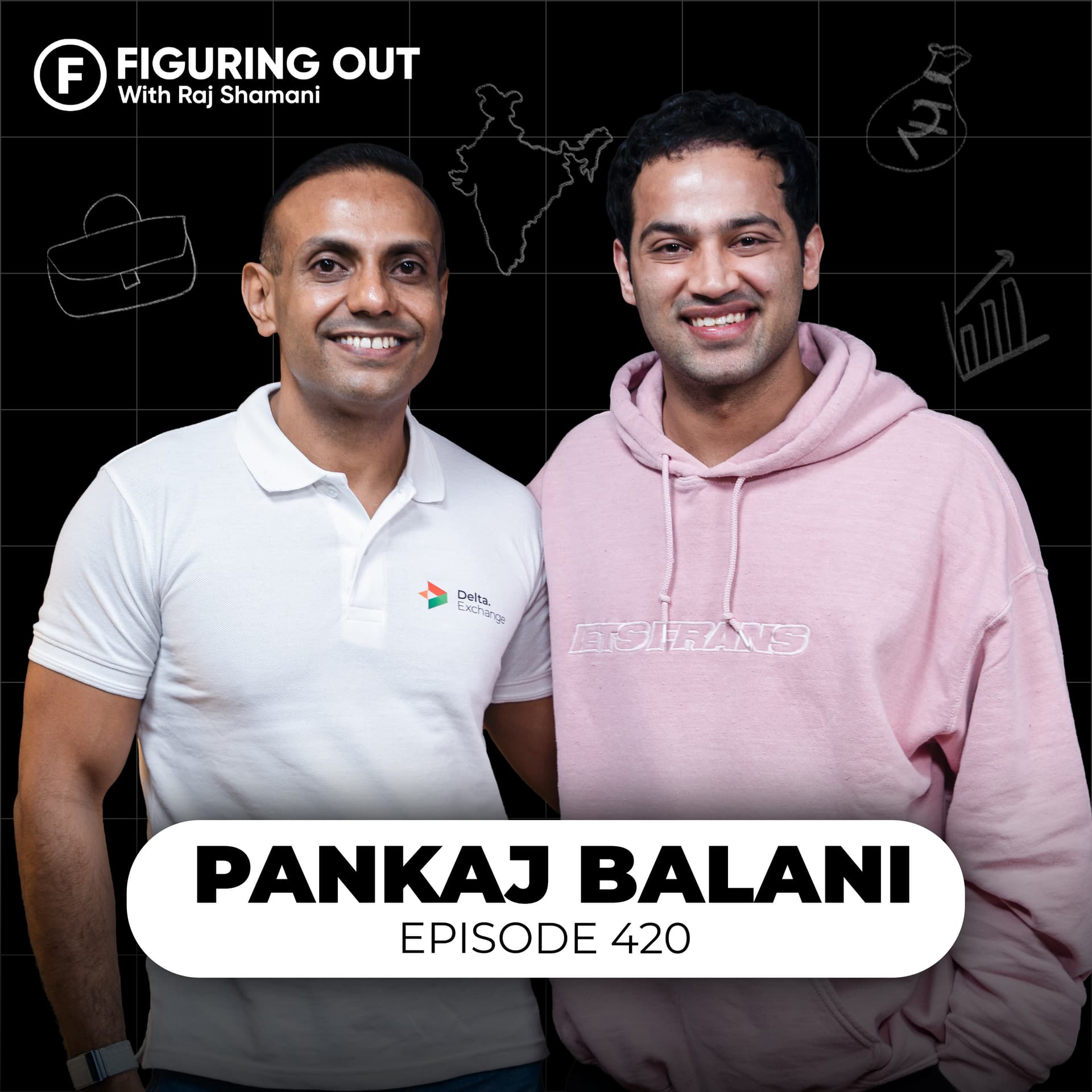
Notes on Podcast Episode: Raj Shamani's Figuring Out with Pankaj Balani
Episode Overview In this episode, Raj Shamani interviews Pankaj Balani, CEO & Co-founder of Delta Exchange, a leading crypto trading platform in India. The discussion revolves around the future of crypto, AI's impact on trading, and the dynamics between India, the US, and China concerning economic opportunities in the crypto space.
---
Key Takeaways
Introduction (00:00)
- Raj Shamani introduces the podcast's focus on self-growth and career opportunities, particularly within the context of India's economic potential.
30-Day Money Plan for Young Adults (03:11)
- Emphasizes the importance of financial literacy and planning for a 20-year-old with a basic capital of ₹50,000.
- Suggests a step-by-step approach to trading in the crypto market, including market research and understanding price fluctuations.
Understanding Crypto Scams (09:10)
- Pankaj addresses the prevalence of scams in crypto trading, emphasizing the need for proper research and caution while trading.
Global Economic Dynamics (13:03)
- Discussion on how Trump's policies may influence global crypto dynamics and the Indian market.
- The podcast explores economic interactions among India, the US, and China, illustrating a multifaceted relationship.
Oil, Weapons & Global Trade (21:15)
- Insight into how geopolitical factors like oil supply, military trade, and economic alignments impact crypto adoption and market stability.
India & China
Friends or Foes? (26:53)
- Exploration of the political and economic relationship between India and China, assessing how it impacts crypto and tech development.
Indian Stance on Crypto (37:55)
- Pankaj explains the cautious approach of the Reserve Bank of India (RBI) towards crypto, highlighting concerns over volatility and lack of regulation.
Potential Crypto Bans (40:24)
- Pankaj discusses the implications if the Indian government were to ban crypto trading, including financial implications for investors.
Crypto
Asset or Currency? (44:10)
- The debate on whether cryptocurrencies serve better as digital currencies or investment assets.
Reasons Behind China's Aversion to Crypto (57:10)
- Analyzes China's regulatory stance on crypto and its implications for the global market.
The AI War
Who Wins? (1:06:10)
- Pankaj discusses the competition in AI technology and its potential to revolutionize trading.
Trading Realities
Why 90% Lose (1:11:37)
- Analyzes the high failure rate among traders, discussing common pitfalls and the emotional aspect of trading.
The Role of AI in Trading (1:15:27)
- Explains how AI can be utilized for trading and the benefits it brings to traders.
Market Slowdown & Next Opportunities (1:20:10)
- Discusses recent trends in the crypto market and identifies the next big opportunities for investors.
Comparing Indian vs. Global Traders (1:29:22)
- Highlights the differences in trading behaviors and market knowledge between Indian and global traders.
Final Thoughts (1:34:26)
- Pankaj encourages viewers to explore crypto trading with caution, emphasizing the potential for wealth generation.
---
Key Concepts and Discussions
Crypto Trading Insights
- 30-Day Plan: Suggested actionable steps for young traders to understand and enter the crypto market.
- Scams: Awareness of scams and the importance of credible information sources.
- Market Dynamics: Understanding the influence of global events on crypto prices.
Economic Relationships
- The complexities of India's relationship with the US and China.
- How global politics and trade agreements impact local markets.
AI & Trading
- The potential of AI to transform trading methods, making it more data-driven and efficient.
- The ethical and practical implications of using AI in trading decisions.
Future of Crypto
- Predictions about the evolution of the crypto market and its eventual integration into mainstream finance.
- The ongoing struggle for regulatory clarity and its impact on investor confidence.
---
Concluding Remarks The episode provides a comprehensive analysis of the current landscape of crypto trading, the geopolitical implications for India, and the transformative potential of AI in the trading space. Pankaj Balani's insights serve as a cautionary guide for aspiring traders, urging them to remain informed and strategic in their approach.
For anyone interested in the future of finance, technology, and the evolving dynamics of global economies, this podcast offers valuable perspectives and actionable advice.
Written by AI. May contain mistakes. Listen to the episode to check what was said.
Transcript
Automatic transcript. May contain errors.0:2890 % traders don't make money. What will impact the country? This is business. And nobody wishes ill on you, neither they wish well on you. Why are they doing this? They are trying to get access to the Indian market. Why do you think India is not so proactive to take this crypto? Our population here is full of information here. There is no way to take information. Tomorrow, RBI decides to ban it. Then what will happen? You will not stop in your country. will be closed. Who will think of any crypto business? Who will win AI war? What do you think? They are winning the war on robotics. China. I won't even discount India as a fit.
1:0812 % of all blockchain and Web3 development are from Indians. So by 2028, India will be the largest supplier of technical manpower to the crypto space. Now what are the benefits of it? One is the work we will do in the world. The other is the job creation of such a lot. Do people start trading with AI and make money? The world of trading will be highly impacted by AI. This is a guarantee. Where is next big opportunity? AI and trading is definitely a big opportunity. In India, something like that, what should we buy? In the crypto space. To make more money.
1:49Today, crypto, bitcoin, blockchain, all these things are about it. And many people want to invest money in crypto. But they don't understand where to start. What is the right? What is the scam? What is the risky? Where is the opportunity? These questions will be our guest today, Pankaj Balani, co-founder of Delta Exchange, India's biggest crypto derivatives platform which has been graduated from IIT and ISB after the investment banking and now is the top crypto entrepreneurs today we know what are the crypto derivatives and what are the crypto trading and what are the crypto trading if RBI is crypto banning what will investors do with the money India does not support fully crypto in what should people buy which make money.
2:41Is crypto a new stock market or a casino like a gamble? Is crypto trading possible by AI? And entrepreneurs, what opportunities are for this industry to make money? This episode is the end. If you want to explore the crypto F &O space, check out Delta Exchange platform where you can get 10 % fee discount. Link is in the description.
3:09I am a 20-year-old something. I have 50 ,000 rupees. 20-year-olds in India are really curious these days. I have 50 ,000 rupees. And I have 50 ,000 rupees. And after 50 ,000 rupees, every month I have 10 ,000 rupees. Which I can trade. I can do anything. Now, step by step, 30-day plan, what I should do if I am in this industry, make money start how much money are secondary first is start what should I do 30 days step by step basic let's say I don't know what I do I'm watching the podcast first time I'm like I'm learning crypto make money you have to understand what to trade and what to trade so before you have to spend time to learn what to learn how to learn what to do So, just like if you like crypto market, then you find a market first, which market you like?
4:13Naturally, you will have a affinity. Which market? If you want to trade, then you follow it. Which market? If you follow the equity market, then what news are the news? Or if you follow the crypto market, then you follow the crypto market, then what news are the news. Because why price will change? If you trade, then your money will become price. Why will price will change? Because there will be some event, will be changed in the price. So first of all, you follow the news. Now, the news of crypto, like what we do, is our YouTube channel. We cover daily market updates on daily daily market updates.
4:49Or our Twitter or social media handles. We publish there on the day what important events are in crypto. What important news items are. So, like in crypto, the price is the most varied depending on US macro economic events. okay so if the US is more inflation in the US then what will happen that Fed's expectation will be rates increase inflation will be cool now because Fed if the rates increase then all assets will be lower and this is Bitcoin true so Bitcoin US will be a major asset class established this is a sizable asset class now the price descends the price of this much change back from US retro economic news events above with 87000 difference where the XYZ company gets Bitcoin the people пам struggles so you can buy it so you first start to follow news but this news is publicly so you have all money so if you follow news when you break it one thing is the reaction and one thing is now people know which direction is going to react but how much will react this is not the fact so you can see that this is going to happen or not which way is going to happen so there are many indicators available in market which will help you that the momentum is strong and weak.
6:22You are absolutely right. That all information is all about. So again, there is a sort of demand supply game. It's like the momentum of the people are looking at it. So then you have to study charts, you have to study patterns, you have to see volumes. So if the volume is increasing and price is increasing, I am showing strength. So if I am showing strength, I am going to buy it. but if the price is increasing and the volume is closed then I know that price is not increasing probably it's moving on running on fumes so this is any time taper off so there are a lot of opportunities with traders so you said I'm young and I have money and I want to trade I want to first of all you start to follow that's why our companies who collect all news because we have other traders.
7:15They watch this. We have to collect them. On our YouTube channel, on our notifications. On that, you can see more resources. On our channel, we call guests and do live analysis. What is the price of what is going on. Other YouTubers who are doing live analysis, they will see you. You will feel the idea of a good price. After that, you can learn about the product. What product? so products 2-3 types if you think the price is going there is an instrument that gives you some sort of a leverage right that you can take 10 ,000 from back to back a little bigger you know 20 ,000 from back to back 40 ,000 of course everything is a trade-off so you don't have loss as much as you have but you can increase position sizing so you can use futures contract to use leverage from leverage to magnify your position what is there leverage is a two-way source So, if you are getting leverage and you are getting 1 to 5, that means 20 % of your capital is your capital and 80 % of it is your leverage.
8:22If you have a capital or a leverage, you will lose all your money. So, it's a two-way sword. It can help you. But if the price is 20 % up, then you have made 100 % return. So, to use it, you will learn more. it's like a good car and a great car but you need to if you went in racing car and you have to run like this you will hit the wall and you will crush but
8:56you said research do it right probably look at indicators and all of these things after all you do it there are many scams so the most common scam in crypto match? In crypto, when you buy an underlying asset, you buy an underlying asset, as in, when you buy a new token. Okay, when you're doing futures and options, you're never exposed to actual token. You're just exposed to its price moment. So, if you're buying futures on Bitcoin, you're not taking a title or ownership. Okay. You are just getting the upside in Bitcoin. Like that, if you're trading a future of Bitcoin, you're playing for downside in Bitcoin.
9:37You're not basically, what we said selling without owning. So when you are trading in futures and options you are not actually ownership you don't have the ownership of the underlying. I mean you don't have actual title you don't have actual title you only have price change but if you need actual title or you need ownership then you can go and do some platforms on which you can go and do. And I saw here I saw that people are getting angry with. Like meme tokens, all of them. Their definition was that there was no logic behind it. There is no logic. This is just fun. At that time, I saw a lot of people saying that they invested in meme token.
10:27So that statement is oxymoron. Right? Invested not done. I have made a position in meme token. And chances are that that the money is made, then it's not made. Then you realize that you are not invested. This is why you are ready to lose. So what happens there is that people's expectations mismatches sometimes. And there is no communication. So when you invest in a token, you will have to see what is and what is. And there are other cases in crypto where people have made some promises. After that, they have collected money. And after that, they disappear. Right? this is the reality if you go back in history of time you will find this in stocks as well there is a reason IPO when it happens, there is a whole wetting which is a great process it is a very good thing but what was it before?
11:20it was very easy listings and the work would be like that so there were stocks people will collect money and then they will disappear so these things are in crypto it is called in different names like rug pull or things like that rug pull what was it rug pull from the way you think about it rug pulls you don't want to you fall down you were standing on a hollow surface and I just pulled the rug under your feet tell me one thing explain me this basic and this is this is my personal forget podcast this is my personal think of me as your somebody who is a young chap coming to you in office and trying to understand this okay that Trump Trump
12:19people look back at these times and they will be marked in history this history will be marked this is something that's happening this is India-US who had a lot of friends now all of a sudden when did the tariffs come out India-Russia and others good friends but Russia like India China they said we are not enemies we should look at together something something okay what happens what will impact the country India like all they were saying that now we are golden period so what will happen tell me what will happen if we are friends then what will happen if we are not then what will happen this situation what will happen explain me this First of all, this is not something like friend or friend.
13:06This is business. And nobody wishes ill on you, neither do you wish well on you. It's just business. So if you see this in normal business situations, in life, you will have many situations in yourself. People who you are working with, they are also negotiating with them. right once you're on a negotiating table you look for the best deal for yourself and once you're out of the room you don't hold it against them that why did they look for the best deal for themselves this is their job right so best relationships foster when both the parties you know have something to gain out of each other so we will have to see how this evolves but what's happening now why is Trump doing this because he's trying to get a better negotiating deal for himself what deal they are trying to get access to the Indian markets and not just India, we are not a special case there.
13:59They are trying to get access to, okay, so what happens is that governments also have been imposed on the government, right? And they have to pay back. So, US has been imposed on the US. And what happens is that Trump and the Republican Party, their feeling is that if everyone will come here, then what happens is that they will be And for that, our currency is strong. People keep their currency weak so that their money is competitive. In a way. In a way. Some things, 100 yen came to US in one dollar. But when Japan got the money, it became 100 yen. So there was more use case. Or 1 ,000 ,000 yen became.
14:46And here only in US in 1000 dollars. So if you get the yen to make the yen, and then go there. So, the US is saying that first, we should also sell other markets. It doesn't happen that only people in foreign markets come to sell in our markets, we also sell in foreign markets. Why are we importing everything? We should also be exporters. And why are we importing everything? We should also be making it here. So, everyone wants to be self-reliant. They are also looking at self-reliant. But they do export too much. They do. Look, where they are, if you are a top economy then you have to rely on innovation because you have to do this always like you do in your life you want to spend your time in your work which is the maximum value you can clean your own house but you will think you will work in this time you will work so what will you think either you will find someone to clean your house or you will buy a robot that can clean your house.
15:54So you'll find something of that solution. So you will find either a human resource or a technology. And that goes for everything. So it becomes a compulsion for you to innovate. So once you are an economy that's so big, innovation is a compulsion. But now it's like that we are spending a lot on just getting too much from other countries. So we should try and be more self-reliant or yes of passes related because again you know when you are making a lot of money you don't think like this when you are not making a lot of money you want to think like this so you can make a lot more money because then what do they want to make what do they want to make the other countries are saying that China has a problem with India has a problem with Russia has a permanent problem with each country has a problem with all now to innovate and make money it's a difficult work increasingly more and it's not back that that you will get 10 % more innovate.
16:51This is a very difficult time. Innovation will be like that you will have 5-6 years of money and then it will be a good job. So if you have a solution to it, your debt is very much, your interest payment is very much, so the amount of tax collected is that you have to make interest payment. So you will have to get more money. So you will have to get more money. Second, when you are giving interest, what currency is giving you? US dollar is giving you? So you will have to make US dollar weak. US dollar weak will be 2-3 more. will be able to get your product because if you were taking one dollar which you were taking from US then you would say 100 rupees or 85 rupees if it was 70 then you would have less money then you would import in other countries more imports so this is what they are trying to do what they are trying to do is change the world order little bit in terms of trading relationships or their trading relationships with them that which business is If you have to send in our markets, then we will send in your markets.
17:51Because we cannot rely on innovation. So what do you want to send? What do you think is with India? Like in India, they have a bunch of things that they want to go to. Goods or services are different sectors. In the US and India, they do a lot with business. We don't do much with them. They don't do much with them. So now in the US, agriculture is largely, you know, this thing highly automated their yield is a lot of so they can make a lot more and they can sell a lot more they are looking for markets where they can enter and they can sell more they are looking to increase their businesses agricultural market agriculture is one of the space where there is discussion with India agriculture I didn't know what is the discussion that they can produce their agriculture here what is it it's been okay Okay.
18:45Basic things. Basic things. And that is cheap or not? If you make it in industrial way, it will be cheap. And why not in India? We go to local farmers. We go to local farmers. Because our population depends on farmers. So if we have a price, our rules are here. Agriculture price. MSP and other things. So we want to say, that whoever comes will follow our rules. So, as a country, this is the right stance that if you want to sell in our market, you'll have to follow the pricing that we have here. The US, in simple words, one of the things is I've also studied in my primary research. It's been heard from others.
19:35So, I might not be, I'll be largely correct, but I might be in nuances. I simply, Simply, you have to say that US-India wants to pay more taxes and tariffs. Because it's like saying that you're selling a lot in the US market. We don't sell in India. So, let's allow us to allow all of our things. We'll pay taxes and tariffs. No, we'll pay you. Level playing, equaling. No, we'll pay you. And one of the things, like you want to sell a lot of things, one of the things is agriculture. So, he's saying that we're going to sell a lot of money. So, we're going to sell India. we can buy our own and which price we can buy our own because it's good for us we sell our own loss and profit we sell our own these tactics are all there we can buy our own and we can make rules that price will not go down but that price is cost product price it will be very low and in India we have rules that our minimum selling price we have to do a different schemes that our local farmer will support us so that we can buy a big industry list which has thousands of crores work is not just farmers.
20:39It's not just farmers. It's not just farmers. It's not just us. You and me. Because if your reliance is out of food like food, then if you change the market dynamics and they have very expensive food and you don't have homegrown capacity because it's over a period of time. So then you will be very dependent. Right? So it's not just about farmers. It's about everyone. So food like things, the basics, self-reliance is very important. and that. So we want to be self-reliant to be. Isn't it more about like what I was reading? This is more oil and weapons because we buy the majority oil from Russia.
21:19We buy the oil and here the oil buyers and companies take oil and sell the whole world in Russia. Because the other countries don't buy the most. So they were price caps. they were not buying it now we have strong and US also wants to sell oil US's alliances they want to sell oil we don't want to sell oil in their world so it's that also here oil is one of the big commodities so that is one second is defense and weapons US has its expensive weapons, expensive aircraft and all of the defense we don't have all of this we all have to take this so they have the problem is that you are taking this without us.
22:04These are all things in this. But overall, all this also forms a part of trade. It's not to trade. But it's majority about defense, oil or agriculture that everything combined is just saying that now we are going to go. Yes, because we are just looking at India-US problem. If you think about it from US point of view, they are in such kind of a discussion with every country. All of a sudden, a precedent. because every country is a good tie. Exactly, that's why I said before. That the US are trying to re-organize trade and they are trying to re-organize their finances. They are trying to earn more money because they need money.
22:45So if you look at their relationship with India, how much money will they earn? There is a lot of discussion with EU, Japan, China, India, Korea. So they are trying to do this with everyone. It's not just us. we are a big economy so our relationship with them is important and our relationship with them from our point of view is probably very important but from their point of view they are looking at 10 other relationships and they are trying to do this because what they are trying to do is how do we you know basically US is in a bit of a financial you should say financial health of the country is not the best so they are trying to get that financial discipline right debt is more interest payments are increasing interest rates are increasing and now you know that the currency was very strong US dollar so that's why their markets are not competitive their exports are not competitive so what they are trying to do is reorganize their life in such a fashion that business will flow back that I agree but from an outsider's perspective I don't have any idea I mean there are much more experts in the world who are working on this and I am reading a US economist strategist expert comment or opinion and they say that they are wrong that India is a very big long standing ally we have strengthened so many years we have strengthened we have not been able to if we are taking from China then we are taking from one country to sort it properly and then we should move to another which is in a little favor that also talks about this at one time why they are dying to do it and usually have they seen success they have struck deals with EU they have struck deals with Japan and Korea EU, Japan, Korea is anyway they are with them and it's slowing down economies right fast growing economies major economies growing economies no one doesn't listen to Brazil like Brazil they don't listen to them right Brazil also we will live with India we will live with China we don't listen to them so like I said negotiation it's a little bit that you ask and it will be like okay so it is they thought it was like they thought it was like when they enter into maybe you think or not at least this is what they projected but it doesn't matter what they thought reality is negotiations are lengthy negotiations are long and extensive and take time and will have will not be one way this thing the main criticism that I have heard of US government is that they are trying to do this very quickly and then people get a little unsettled that it is so fast how can you put a timeline to this let's do it but you know give me chance to reorganize myself this is fair because he is running so he is like let's do it now Yes, that's a little strategic versus tactical difference.
25:56Because in business world, timelines are shorter. You're used to quarterly updates to your investors, right? And things change every quarter. And in larger strategic world, things take time. But these things will impact on world order. I think when everything is settled, people will again start to become friends. That's what I believe. there are no permanent enemies no permanent so there is nothing here that we don't look at or they don't you know they spoil all our relationships with us so plus people to people there is no difference so news in the short term makes it look like life will completely change when you meet an American your interaction will not change with them at all why will it change and now India and China are in the same way it's again the same thing do you think that this is a show because East doesn't show its strength towards the West or do you think actually this new start has opened a new bridge for us I think coming from a business world this is again business from a business point of view but do you think this is long standing is it a start of new relationship supply demand relationships is changing let's say you get these mics and you know from some vendor now he starts to change the game that look you know you have to give me X number of orders and I will do minimum 2 AMC minimum 1 AMC contract and 2 repair to you have to do and you were saying why don't repair to you have to do right so then what will you do you will start to look at other vendors in your book now it can be that someone has to do a relationship wrong with you he said and you know fitting but now you will relocate but it's not like you will let your guard down.
27:50Of course. So this, in my opinion, from a business point of view, is similar. People will start to look at reorganizing their trade. When their trade with one partner is changing, they will look to change their trade with other partners so that they have the best hand in negotiations. Which is fair. And this is happening. And this is more than I think, there are a lot of analysis that are speculative. So there's a lot of speculation Because this has become the central topic In the world now And every facet of life it's touching Look you and I are talking In a podcast about this Because These type of moments You don't know that it will die down But if it's not die down This golden opportunity Is there a lot of money In times Because all of the things will happen and down if it was strict business reshuffle somewhere something was strict someone was weak someone was weak tariff relationship up and down somewhere import export or there was a new scheme golden opportunity for entrepreneurs can make money yes I was just reading about China that they had a lot of things in India that they had sanctions that you can't send all these they had all sanctions they had all sanctions in India Chinese entrepreneurs can send a lot of things Yes.
29:15That is. So for China, this is big. From India, similarly, there will be something in India. There will be such opportunities for India. And before, like Vietnam, there were a lot of opportunities that people saw that before, when they put tariffs on China, they were doing trans-shipping to Vietnam. And those entrepreneurs were there. Big on, big ship, big money, right? I know a friend who has gained money on that that he was brought to India directly but for that, a trader, a simple trader from Delhi, Indore, Because in Bombay market, he sold it from China. He didn't do anything in electronics.
29:47And I think electronics or bathroom fatigue, something. He traded a lot of big business. Trading business, triple digit crores. And China and India, he lost a lot of taxes, duties, different. So, he sold it from Vietnam to China. And he called it from Vietnam. from Vietnam, then India would call it because in Vietnam there are no taxes and duties. So he saved that money just to reroute. And he was able to get money for a long time. Those local competitors didn't figure out. And he made money. Because he was updated in the news, he was able to figure out the contract loophole. China was coming today.
30:28But why are Vietnam because one factory was open and open the door and bring the door. China was able to get a warehouse. Even for US. Like not just India that I didn't have any idea. This became a hub and this was a big thing for them. In China, Vietnam will go and then in the short days, US will go and then India will. So, opportunities come here. And yes, what we talked about in the beginning, this is my line of work. We follow this kind of news very closely. And we basically, it seems interesting, it seems exciting. And then we are able to relate things as well. Like agriculture we talked about that it's not that you read your news only farmer impacted everyone in the society is impacted right so self-reliance is so important which our government also talks about self-reliance it is important and then we also see it in our sector like we are talking crypto as a sector now look at this sector this is a new sector right this is a very big sector it's a very big sector 2023 In October, Bitcoin was approved in the US.
31:41And BlackRock said that we will bring this ETF which basically said that individuals can easily, and corporates can easily participate in Bitcoin by just buying an instrument that gives them the upside of Bitcoin. So you are doing synthetic participation. You are not doing Bitcoin. You are doing an instrument that tracks the price of Bitcoin. track. His name is a fund. So you buy a fund. At that time, the price was$30 ,000. After that, the price started rallying. Then the second catalyst was $60 ,000 before Trump's election. And Trump election was very favorable for Bitcoin because he had said, look, I want to make U.S.
32:23a crypto capital of the world. So this is again thinking, this is one good thing about him, right? He's thinking, if this industry is big, So we want to make sure that we and our companies dominate in this space. US Badan. So now you're already creating the basis in the industry. Where the industry is not so big. So the first question you asked was that is crypto early or late? Crypto as an industry is very early. It's almost starting. But that does not mean that the price of Bitcoin will increase. I don't know what it's going to happen. But crypto as an industry is very early. now there is a lot of innovation now.
33:03So, the US has done this early move and you have committed to that. What is that? What is that you local entrepreneurs and those people have there is an ecosystem built on. So, the US has now a very strong crypto ecosystem built on. It was before it was before. Because generally as a society, they were a little more open to this. And not that the other closed time. But generally, tech entrepreneurship will be more openness. but there was a price of 60 ,000 after election it went to 100 ,000 right so this moves in Bitcoin in the last 2 years this price rally and all these things has been driven by institutional and retail participation through an ETF which is a sophisticated BlackRock just involved there and then a favorable Trump administration for crypto but here you see that now the thing comes to that we said that self-reliance.
33:59That if you are going to go in another industry and you are going to capture the industry and you are going to capture the industry, then it is important to you that if this industry becomes bigger and where it feels like it is so big, it is so big, it is so big investment, it is so big, it is so big commitment, it is so big government. So it is important for you as well to start creating bases in this industry. That you also start your work in this industry. Like in AI, we have started a job. If you want to do it, it is good. in semiconductors if we had started early it would have been very useful right so today all the fabs and this is not like only in India globally all the fabrication is in Taiwan everyone is reliant so there is a there is a merit to self-reliance there is a serious merit to self-reliance particularly if the industry becomes very big if that industry or sector becomes very big and you have all the touch point foreign or imported then you will not dominate there.
35:01And there are many benefits of domination. Like I will tell you, 12 % of all blockchain and Web3 development, which are developers, programmers, are Indians. 12 %? 12 % is second largest in the world. Who is it? The US. Okay. The new ad was added last year. In India, it is 17%. So by 2028, India will be the largest supplier of technical manpower to the web 3.0 and crypto space. That is the projection. So, now we have not promoted much more in our country. Formerly, we have not promoted anything. Yes. So, if you create a positive ecosystem around here, then you see here that you have so many, now what are the benefits of it?
35:45One is, we will do the work in the world. So, we have done it in IT and gained a lot of money as a country. Second is that there will be so much job creation Right Third is that when it will be job creation and what is in the new industry usually salaries are more You remember the prompt engineers because the skills are difficult to find so you get premium So there is a lot of benefit to getting there early and building and then you also build it on your own terms as I tell you, the US has regulated stable coins that there is a cryptocurrency which tracks the price of US dollar so it's saying how does it track the price of US dollar a stable coin is backed back from US dollar fully so you gave me US dollar, a company that does it so you gave US dollar to that company and gave you a stable coin now what did the US dollar company do?
36:46what did he do? He went and got the bonds of this company. He put the money in the US Treasury. Because he will not have interest in that money. So he put the money in the US Treasury. That money has now been totaled by 200-200 billion. And one of the largest buyers of corporate treasuries, he has become a big player. Now these are stable coins. India is 10th largest lender to US in terms of governments. the largest is Japan 1 trillion dollar bonds we have made 200-200 billion like China and UK so the big economy is matching the crypto industry in terms of lending to US right so the economy has already been used to be which we talked about that US economy will be more important now we have a new source to take debt right so the ecosystem is the benefit to be a benefit of making this.
37:45Right? One of the benefits that they have thought that it can be. But because there is openness, then there are such add-on benefits you will be. So why do we not do it? We will do it. As a country, we will do it too. But today, why do you not do it? Why do you think that India actually is not so much proactive taking crypto? Look, I think as an economy, as a country, we should see this as an opportunity. We should see it. We should establish that. We established that. what do you think that what reason we are not seeing is it because we don't have to learn is it because that our very gullible and small industry is it because that our stock penetration is very low is it because that our fiat should not be more importance is it because that we don't have advanced for technology in the top level what is the reason or something else 5th, 6th, 7th, 8th reason that you think okay the second point probably is the most but but I will qualify that.
Read the full transcript
38:44Our problems are different from others. Our population base here is a very big. And in that very big population base, there are a lot of population base that is poor. There is no way to information. I have told you before, research, research. How will research happen when you don't know how to do it? That's why the internet is a great thing. Because you can research. But you need to research.
39:12But you have a very big population that you have to protect. So the government is not really wrong in being cautious. But then there is a fine balance between how you have to manage your people's caution. That it doesn't happen that the actors are wrong in this space and people will lose their money. So that will not be the same. Because that will also be careful. So you will grow the industry in this way. That there is also innovation in industry, but protections built in the industry. And when you grow locally, then you will have a control. So if you promote local players, then you have control.
39:54I don't say that you discourage foreign players. But I say that if someone from your own industry locally grows, So that's your problem solve. So now I'm as a common man Negative angle You can ask questions First is If I'm a common man I'm trying to understand crypto I'm working on trading For xyz reason I'm doing so many things Tomorrow RBI decides That ban will be banned Crypto is done Ban India Then what will happen? So if RBI Have decided to decide Then what will happen? So Your profits you can buy them and then you won't do it tomorrow. So opportunity loss will be financial. But nothing else will happen.
40:38If you have banned it, then the amount of money will not go away. That's not. It doesn't happen. You repent. No, the RPA basically they had stopped banks from servicing crypto companies. You can't give crypto companies banking services. But crypto companies can do their business. can do it.
41:03Because how will they do it? What is this? So basically, you have one crypto and another crypto. These people are doing it. So, industry took a big hit. And for 2-3 years, industry didn't happen. Because for people, it was difficult to do it. How do you pay your employees now? Exactly. So, this became a challenge. So, if this happens sometimes, for the worst case, 0.1 % sometimes, what happens? what do you think what will happen global economy Indian economy these things always keep attention that those people are able to withdraw their money right so if you have crypto as an asset and it will change in its price how much will it be because it is a global asset so if price is less than it it can be less than it locally globally it will not be less than it so it will support the price I don't know how much will it be depends on how much economy is.
41:57But if you have money in R &R denominated or R &R related platform then you will have opportunity loss that you will not do. And whatever you have money in R &R and you will not do it. But the other problem is that again, your country has been in innovation. Because no crypto business start to do business. But why do you have to do more innovation? Here's a question. Here's a thought experiment. Yes. Money, every government to control itself. Because that's why they're making control on their country. For the good, for the bad, for the ugly. Money up and down regulations they do. That's why the country is a game.
42:50If you have this power which you have, he left it. And he gave it to the crypto platform. If he gave it to the currency and gave it to the fiat money, then technically, there will not be much power. No, this is a outlandish scenario. But tell me, why would any government leave that our currency, with our currency, you do globally trade another thing. Every country has its currency. No, I don't know. when you are trading stock then it is an asset which is a price below and government has nothing to do with it but then the money that is printed the money that is paid, the money that is paid, the tax that is all government control yes but now you don't use the currency yes not now, I thought if in a great scenario everything becomes currency which initially was the idea no it was not, it was a marketing I'll tell you, okay two things break down Okay explain Okay explain Okay explain Okay explain Okay explain Okay explain Pahla sawaal yeh tha ki Why is it important to innovate in crypto Hmm Isko mein dho tarikay ze explain kerta ho Eek to ye ki Dousari economies mein kya hor raha Crypto as an asset Has established a position In the mainstream asset classes Crypto asset kaise hai Asset kya hota hai Asset to kuch bhi eek chiz hoti hai Jiska ki price market mein determine hota hai and a perception of market.
44:18So, asset is just that. So, Bitcoin and other cryptocurrencies are different price trade. Now, we'll call crypto assets just for distinction. No tangible value. Like it's just 4 people said that this is 10 lakh rupees, we'll all know 10 lakh rupees. But there's no time. There's no time. That's a good question. Now real value is how much determines how to determine real value. Real value is how to determine economic value. If you determine economic value, you will get dividend. Or if you have real estate, then you will get rent income. But intrinsic value is how to get? Intrinsic value is how to get?
45:05This is intrinsic value. If you want to get a stock, to get out of the shop, so basically, he will get out of the shop, how many dividends are going to come in the future. He will sum it up. And then he will get out that this is intrinsic value. What is the intrinsic value of a home? If I will get out of rent, then how much I will get out of here? Now, there are some subjective questions that come in. I think I will drive the value versus the renter who is doing rent. Your first office would have a very different position in your heart. Right? Yeah. versus another person who is renting that place yeah right so intrinsic value can be different for different people but it's a philosophical discussion so let's come back to value any asset who is used to trade how does it determine how much of it in the network it is used like how much of it the US dollar is determined how many people are trading how many international trade how many how many they are trading how many strong currencies it is determined but it is determined to other currencies determined होती है.
46:07Yeah. Right? So, हमेशा ही किसी network की value asset determined होती है कि इसको कितने लोग use कर रहे हैं. इसको कितने लोग value ascribe कर रहे हैं. So, जब आप ये कहते हो कि crypto में अभी बहुत सारा वो आने लग गया है. Participation आने लग गया है. So, then your value will determine from demand and supply will determine and it will be that the value largely will be wrong and then it will be right so it will be more and it will be less and it will be less and it will be changed from the market from the news from the market from the market from the market but this idea that if it is just a theoretical construct that I will boost a little bit because every asset has the value that is the demand and supply determine then we had discussed that that is money and the control or these things.
47:00So, look, in crypto, we were talking about why is it important to innovate in this industry? It is important to innovate in this industry because if this industry becomes bigger and if you, as a large economy, you don't have a foot in the door, then you will be left behind. So, even if you don't have ambitions of becoming very big in this space or dominating this space, You want to do minimum table stakes. Yes. We also have participation in this. Because if this industry is bigger, then we will participate in this. And in this industry, there will be many things that will impact the other industries.
47:39I'll tell you one example. 24 x 7 trading is in crypto. Day 1. In other assets, there is no trading. Equities and other markets. Because the infrastructure developed there, it is not developed like this. that it can be 24x7 trading. What's it done in the US? Apple has tokenized stock. It means that one token is backed by one stock of Apple. Now that it's a token, it can be traded 24x7 because its infrastructure is already 24x7 trading. So over the next 5-7 years, it is quite possible that all your real world assets will be tokenized and a very big theme is running in this space. which is about that we tokenize bonds and now 24x7 can discover and trading is not only this because price will go up so the money will not be opportunity.
48:39No, I'll give you an example that what is 24x7 need to be. Think of yourself, you have given a loan. One asset against, some shares against. Today is Friday evening, news is that you have given the loan, that is 1 ,000 ,000 ,000. And the shares of the value, is 1 ,500 ,000 ,000. Friday news has come. And from this news, you think this stock price is correct, 30%. So the value of 1 ,500 ,000 ,000, it will have more than 3 ,500 ,000 ,000. Or it will have 50 % correct, then it will have 75 ,000 ,000. So the loan is bigger, and your collateral is small. So either you get more collateral, or you know the chances that you will come back is very low so I will take it and take it and take it but if this market is still 3 days then you will not get it and the value is less than ever so 24 x 7 trading is very important for this right collateral management real time pricing available things are very valuable for the economy so crypto as an industry one thing I think in the next 4-5 years in broader economy and that will be 24 x 7 trading infrastructure that is all tokenize and not do anything so do things most of the things real world backed assets will go like in the US some exchanges Chicago and all these exchanges they have attempts to go for 24 x 7 trading so they will already start to see this technology that they can go through because what will happen there will be whole stack they need to change the whole stack.
50:20So, the people get money, deposit banks, the money is Saturday, Sunday, then there is no settlement. Because there are real problems. How will the money move when the bank is the money? So, we will see all these things. So, this is why we are looking at innovate. Plus, there are other opportunities. So, like RBI, CBDC and all you know, central banks, central bank digital currency is a very powerful tool. I'll tell you how You have a bank who gives a bank account that he wants to keep a minimum money because he has a tax on the bank account for branch banking so banks usually don't want to open branches in very small places because there's no demand so then you want to that if people in remote areas have a instrument that they can open a bank account from mobile to their own bank account open.
51:17And as in we can work with the whole digital banking. So that is very powerful. Second, like CBDC which is thinking about RBI and they say let's think of this as digital cash a substitute for cash. Yani a 10-Rupiah note is digital. A 100-Rupiah note is digital. And a 500-Rupiah note is digital. This means if I gave you a 500-Rupiah note, then there is no bank involved. I gave you a 500-Rupiah and a UPI transaction through. So there is a whole banking infrastructure involved. So there is a cost to that. But if I can do a digital transfer and you can do a 500-Rupiah note, peer-to-peer, in which you are not involved, that is basically a peer-to-peer settlement mechanism without involving a third party.
52:10If you go and read Bitcoin's white paper, the first concept paper of Bitcoin. This paper is about peer-to-peer transactions. This paper is about peer-to-peer settlement of money. And it is not so much about control and how the economy will go. All people have thought about it. This is more about how to do peer-to-peer transfers. Now I'm interested in it. We have as a society in a lot of things. We innovated on our communication. We sent an email in physical mail. Okay. We innovated on social media. So, the gossip we changed. Right? As a society, we innovated on transfer of money. Look, money instead of storing it physically, we can store it in a bank account, which is basically some numbers.
53:04There's no physical cash. Just numbers. It's a ledger. But we don't have to innovate on cash. is that we can transfer cash to use digital technology and use it. How do you do that? What is the challenge? It's the challenge. If I take a photo, I take a photo of this cup and send you email. Now I have a copy of the photo and you have a copy of it. If a cup is 10 rupees of note, I have a photo and send you. Now I have a copy of 10 rupees of note. Same serial number of copy. if we have to pay both so we have to create money what can we do when I send this note you don't have it and you have it then you can spend it and when you can spend it and you know that you have it and you have to send it then it is very powerful so now connect all this that if we have cash like this transfer to another just the way we send emails and then you are able to spend that cash now you can send an email to someone in the US overnet but then involvement of banks is not there yes involvement of government is not there no why not if this money has issued if this money has issued this money this is the RBI try it with CBDC.
54:39Don't send photos. I make a wallet. You send directly to another wallet. Now, like in my wallet, you will have 3 notes. 10 rupees to 3 notes. How will the transparency be? Yes, for every transaction. So, today, when you spend cash today, that is also the government issue. So, if you give digital cash to the government issue, and you can transfer someone to, then imagine the power of that. After that, the power of cryptocurrency comes. So this is how Bitcoin was refined. So what did they do? Bitcoin's architecture and said that we put it in a dollar. Very powerful. Ethereum had a new thing. Ethereum said that if you can do this, you can also put some other line of program here.
55:25You can set some rules here that how to spend money. So now, if we put it here, we will be able to use the right use case for the right use case or the right use case for the right use case then we will be able to use the right use case if I give you a piece of money but only food purchase and that is the same piece of money that the food can be used right somehow it can be validated enerated. Because it's digital, it's giving somebody to a merchant. If it's no food, it won't be here. If someone utilizes a merchant there and sees a lot of stuff... Doesn't it make , it'll be run easy for them. Look, everything.
56:17This marketing has given me as a merchant. But tomorrow they'lliksi see loop-hole e. But when they find loop-holes, so do they also plug them. but itni sarhi possibilities to gulhi na to jaha pe hum te ki control or power chala jayega naya economic system man jayega wo sab ek bhoot alak view hai aasa har chiz me ho saktah hai aasa telecommunication me ho saktah hai you can build your own satellite and you can you know build your own telecommunication network and but you put your own telecommunication network it will get spotted and you'll be shut down right or you can put your own social media or there are a lot of other things that you can do.
56:56So what we have to think about is what are the positive use cases of this and how we can absorb that. And there will be side effects of it. We will cover those. We have to be confident that we will be able to do it. But tell me, these all use cases, these all things, almost all country will tell you. All country will tell you. They will be very economic experts, very crypto experts. They will all debate. And after that, some countries world power like what technologically very advanced they promote it or accept it in their country let's say US as a country Germany as a country they have accepted that we are in crypto in favor if we don't promote then we don't do we want to come you're welcome and do it right so that's one side of country but then at the same time another country is India China India said we will see we don't have a clear stance China straight up said shut up China is technologically advanced in fact there are speculation that in new world order China will rise to the top right China is the second largest economy it is already and there is a speculation that maybe it will go up to US which might or might not be true what do you think is that some countries are banned and not.
58:23And this is not a thing for technology or you have told that you have told that. The US and China are talking about it. The US says for it and the China says it is not. Why do you think China is saying no? China for a very China What problem is it? For a very long period of time was very one of the largest markets. For crypto? For crypto. Okay. Only lately in 2019 It was like that before. they were also one of the first countries to experiment with CBDC they the way they make their decision making they can be very quick when they decide for example Hong Kong is one of the one of the biggest destinations for crypto today too Hong Kong has a very clear regulation if you have to start a business in Hong Kong you have a full suit of regulation this is how it is done, this is how it is not done and there is complete clarity and it was a second country to come out with an ETF after US and the aim in Hong Kong is to become the hub for crypto trading in Asia so they want to make sure that they take the market the way China would play is also through its different verticals and then you choose which sector you go after they have their own constraints what do you think, what are the constraints of China?
59:56yeah, China in the economy capital controls is a big challenge capital controls as in how much money you can take out of China in which form you can take and how much money like in China, many things are very constrained how to buy land. Like you can buy land so it's lease. X number of years. You can do certain kind of businesses. You cannot do certain kind of businesses. You are allowed to take certain money out of the country. You are not allowed. India in India too. India in India too. And in our countries it's necessary to do. So China too. But I think they will have to consider these rules.
1:00:39But they will monitor them too. So India has taken the step was comparatively quite progressive. We track all the crypto transactions and then we'll know if it's not going to be rule break. China was a little I think regressive in the sense that we will ban it. Now they have a lot of Chinese people participating in crypto on offshore Chinese exchanges. They have people in Hong Kong and they can travel freely between Hong Kong and they can do it. So, what are they thinking about it? it is a little difficult. Hong Kong, anyway, Chinese play money destination. For a lot of reasons. Yeah. So, like India's step was that we track it.
1:01:25Which is fine. You are saying, I was saying, don't compromise your rules. You keep that stencil that you will comfort. Because that you will make it somewhere. But when you think about the industry, when you think about it, you will figure out that these rules are, these are our other objectives. and this is the demand of this industry let's try and find a common ground and what will come from there what is what is your view now I think why is China why is China I think China might also come out with a positive listing on crypto any day so whatever answer I might give might be very short sighted what's your sense My sense is they will be, they will want to make very strong moves in the crypto market very soon.
1:02:21Fair. Why do you think today is that why you ban it? My reading is they did it in 2019 and they did it to curb the flight of money. Why don't you go out? They are going out. Do you think China's stance is promoting businesses? Is it good? I'll tell you, right? China one of the entrepreneurs I was talking to and he explained me very nicely on the podcast that they think that China has a very big reason to grow very quickly is that they have not made a level playing field for global companies they have kept their economy closed that anyone can come out and not make money very big like Amazon can come out and make a business here, Google can't do it whatever, XYZ which are all global companies we will not do it.
1:03:11We will not do it. We will have the internal system and guardrail so strong to do it. We will make more of this. Right? And because we all blocked it, Chinese entrepreneurs had more opportunities. They had more momentum. They had a big market empty. And they didn't have to fight. They have to fight. Like if Amazon has a flip card. Now flip card is Walmart. But before flip card, Amazon has to fight. we wanted to change it
1:04:08you totally depend on the market players or the foreign players or the foreign players so you won't grow your local industry but you see like we are here e-commerce as an industry there are a lot of guardrails multi brand retail you should be 51 % Indian but not more foreign that's a very simple basic that's why we made a new story that's why we Flipkart story That's why we have Many retail Indigenous Indian brands Like Snitch All thrive And then For that For them The quick commerce Kill It's just Amazing It's amazing And Okay Let's talk about DeepSync I'll give a comment You said China has grown Now DeepSync China has done A lot of work In AI They focus Specifically on AI and from 2017-2018 they put dedicated focus that this industry is going to grow and we work on it so in 2017-2018 newspaper articles you will see they were doing a lot of they had a lot of focus on AI and that is where you see that you know you have now start to see the fruits of that you know effort so AI was a lot of work in 2017-2018 chatbots was first introduced in Facebook in 2018 chatbots will be a big thing and at that time natural language processing and AI started a lot of work and China actually got a lot of researchers made attractive grounds for a lot of Chinese students who were in US to repatriate back to China and start doing AI research so they have done you know they have given serious thought to this and they have decided that look this is one area where we want to be ahead.
1:06:06Who will win AI war? What do you think? Too early. I won't even discount India as of it. Because we have a lot of data. So ultimately it is quite possible that who has the data wins. But still, what do you think? Now I think China is doing very well on AI which is related to robotics. India, China, US. India is a lot of at this point. But now the number of people who AI engineers every year we have a lot versus users if you hear charge you know consumption economy production economy production economy AI engineers every year we globally AI engineers supply so maybe that's a plus sign for us that is a plus sign for us AI engineers we are making AI consumers here and here you get openness here and who do you think China and US who is winning AI war US they are winning the war on robotics who China China is winning in robotics because it's their need factories in robotics population this thing is changing population demographic dynamics is changing the aging population so if you whatever robot can do the same thing plus population is getting richer so once you start to get rich you don't want to go into the factory and sweat it out, right?
1:07:35Robotics is a need. Robotics is India's need. Their need is. Reality is the best innovation needs. What's India's need? India's need, of course, you know, we have a lot of poor people. We need to lift people out of poverty. We need to grow fast. Now, there are too many,
1:08:03as a country we are not that rich as of yet we need dollars we need dollars we need dollars foreign capital country we have infused our demographics like their needs we have talked about US need innovation is a need if you don't do it on top then you will get redundant very fast China we have talked about demographics effects change they have a need robotics innovate we have a large population young population we need to find jobs for them we need to find you know opportunities for them because you want to be in a place where they are able to maximize their output and talent and youth right if you have 27 year old 29 year old then their time which is 10 years you can use all of them you have so much productive 10 years So you give them opportunities And look at these sectors Where these opportunities can be If we are the most Ingeniors generate This is a good thing But because we can create So many people Are going to go They are spending a lot of money And in fact Those who are less than trading Versus High paying income high income group this is data by not me this is government data publicly out probably because of the idea you know jladi payse bana do jlose karreya who bhi mid income and low income wale hi hai versus large income wale hi isme eek chiz isko qualify karna chahi mehne bhi ye sada data dekha hai aur isme mujhe lagtah eek qualifier ki zhort hai this is important ki aap jab bhi markets mein enter kar raha hai to aise meh such ke that I will make money here.
1:09:59It seems to be a lot of work. So that's important. But if you have taken one trade in the year, when we see these data, how many people win versus how many people lose, we have to qualify for this. Because many people will try one thing. We will start a little money, only 5 ,000 rupees, 10 ,000 rupees, we will try one time. Imagine that you think that you have to be a event. And you think that I can make a lot of money here. I bought a call option. And that was not. And that option was worthless. So, that was a disproportionate bet. If you took a trade in a year, then if you see how many people lost, you are counted as one.
1:10:39But the amount you lost, it's very low. And it was a chance, this thing. You just wanted to try it out once. If you see data, you will see the number of investors versus traders. Not just in India. Everywhere in the world. traders only 5%. So, 20 to 20 number of people who are actually trading are about 5 % of the total number of people who are investing or who have DMAT accounts, let's say. So, if I look in US, as per CME, when talking about Robinhood data, again, of all the people who have accounts with them, only 1 to 2 of 20 million people who have accounts with them 1 to 2 million trade options and futures India also has been like this and after that this is also true right 90 % traders can't make money so in that 90 % we have to put this qualifier that how many traders in it who look I won't defend this point because there is a merit to the gravitas of this point right that what are you trying to say so the first thing is that if this data is published then you should see it seriously for someone who is trading.
1:12:00But you have to see this that how many people were just trying to get the chance in a year, in a life and never did it again. Or they wanted to just try it out. Or how many people were repeating. For example, there is a restaurant. He says that I have the people that come from that. with a lot of people repeat. But then they realize that they are on a highway and most people come and have a cup of coffee and leave. So, the repeat ratio has to adjust it in terms of it. Because a lot of people came and they just wanted to experience it and never came back. So, we have to adjust the data for this.
1:12:43So, who were like this? Who were like this? Who were like this? Who were like this? And who were like this? Just casual traders. And who were like this? Who were like this? Who were like this? Who were like this? serious traders on this data analyze so you define it that minimum X dollars or minimum X rupiah or minimum so much trade or minimum so much money trade so then you will see that the most people are casual traders and the loss amount is not so much the other way the other way serious traders won't happen that losses but this number which is 90 or 10 in the way, he will start going 50-50 and where he should be.
1:13:25Because 50-50 should be sealing. If it's 80-20 then you're dead. That's no one wins. If everybody is winning, nobody is. If you remove casual traders then you'll see the data that will be more normalized. Another thing, when you talk serious trader, you naturally say that the one use case toh hota hai hedging karna yai ni protection kharihna aise events ke against joh aapke portfolio ko necheh la sakta hai right toh agar aap insurance kharihder toh us min toh nixaan ho na natural hai or buri baad vhi nahi right maini kaerhau ki sab log yeh kar raha par technically for example every time you buy insurance more often than not you will not end up realizing the value of insurance you cannot look at that as money wasted yeah That is the cost of protection.
1:14:22You should ideally be happy that it's not used. Not everyone is looking at put options and others as insurance and there are people who are using it for speculation. In that case, my logic is not right. But that is also a segment which you have to have to see. So, you should qualify this data and then you should have to see what kind of number comes. In the world, there is data analyzed in all the markets. there are no numbers that will be far from 90 to 10 if you include casual traders. Whether they are in US markets, crypto markets, equity markets, but when you adjust these things, when you see casual traders, you will see the regular traders.
1:15:10I don't say serious, I say regular. You will see this number in normal. Okay. This has to be taken with a pinch of salt. Tell me, AI can start trading and make money. Yes. We have come up full circle. How to make it? Because it's a lot. I've seen Twitter on Twitter. I've seen screenshots of random. He asked a chat from GBD. Or asked another AI model. Or asked another person. And asked him. he said to the price track, he said to call after a week and then he posts his screenshots and they're like, oh they're making money right, is it is it the future that AI will make money for you or can it become today because everyone is not doing this okay this is the future that AI and bots or AI powered bots will be trading, bot trading bot trading is happening today manually people write bot is nothing but a set of rules yes you create algorithm right and as we come to our platform you can deploy and deploy and with chat GPT many things that are doing programming is quite easy because it can write the entire code for you so in fact we have made this you can use AI to write a code for you to write a bot for you this ис chuẩn PO-PILOT If you do it, it reminds me it.
1:16:47you write ZR
1:16:52before you show that you fact come to come to show i will not cheese many things can do, many factors can analyze which manually becomes very difficult. So, the models will improve very much. Is this the answer that today can become money? There is a model that has made or used to make money. But there will not be run of the mill available that it will not get everyone. Then it will be proprietary information that will be heavily guarded. So, today there are prop firms which are heavily guarded and which are algorithms today there are star traders in every industry who are highly sought after or investors who are highly sought after and they give their money to invest and today it can happen I know that people are trying to write bots let me give this as a problem to AI what does AI do actually it analyzes a lot of data and it can do a lot of computations very fast.
1:18:13Yeah. Right? It just, it's rather, at the core of it, it's rather brute force. So logically, brute force can help you with some sort of information leverage. Yes. And that information edge that you have, you can deploy it alone. Which you were not able to get earlier because that brute force was very time consuming. Exactly. It's now a lot faster. So then technically, if you know how to use it well, you can make some money. So, yes. So the question is not about telling AI, tell me how to make money. It's about giving that AI, okay, analyze this for me. And how can somebody learn this? That first they learn trading, then they learn information.
1:18:52What I have seen, people do this, they do this. That first they were doing manually, they were doing signals, they were doing manually, they were doing patterns. Now they're saying, man, this pattern, let me identify and tell you, it's been done, so I alerted. If this pattern is coming Then take it for me It was also that if this pattern Is made manually Then generate this signal But now it's happening That you can identify In this asset's trading history You can identify a pattern This was a tough problem Can you identify a pattern In this asset's trading history But now that's happening These are the kind of things That people will be able to do with AI.
1:19:34And then the competition will be amongst AI trader 1 versus AI trader 2. So bots will compete against one another who has more alpha. So the world of trading will be highly impacted by AI. This is guaranteed. World of everything will be highly impacted. It's already getting highly impacted by this. Okay. Because you said that the history events and all these things are historical data that AI can track tell me top 3 historical events where crypto prices up and down so that if something in the future may be people can look forward to it so let's say US election that was a big one that was a big one that Trump won Trump won because Trump said I will make crypto capital now it's a good thing it's a move it's a move a lot of uptake and people did it so that was one okay who else positive side negative side both sides tell us anyone tell us Bitcoin ETF approval was a landmark event from that a very big validation in this space like that when Elon Musk had started to buy Bitcoin back in 2020 in his Tesla treasury in that time because all these are signals of validation yeah so in this way news items at least crypto has moved BlackRock has added Elon Musk adopted it BlackRock has added ETF so it was that access will be easy to people with it so let's do it Trump election was a signal that he had gone out in the Bitcoin conference prior to election and said that look I will make US the crypto capital and now they are coming out with the regulation which is very pro crypto and negative events negative events moves are very sharp and they are also remembered because in positive events moves are a little long so when this there was a FTX exchange where there were issues Right.
1:21:56When that event happened, market crashed. That was one of the most recent crashes. The crash of the last cycle. It was very big. Yeah. Before that, there was another crash, just two, three months ago, which was about, there was a coin called Luna, which was an algorithmic stable coin. Now, there was something that they were trying to do everything with algorithms. and this was a stable coin which will be backed by you know not by fiat currency but other things and this is where you know issues happened and there was a big crash in fact that was the bigger crash which crashed Bitcoin from 40 ,000 to 20 ,000 and 25, 26 when it recovered then FTX news happened and in fact they were correlated because I think FTX was largely exposed to Luna.
1:22:51So when that event happened, then a lot of people were short. And then their collateral started to come short on a lot of things. So the May of 2022 to November of 2022 was a very tricky time for crypto. Similar events have happened in the past. There was a major hack in crypto that happened in one of the exchanges. Again, Bitcoin price crashed in there. So, there have been events in crypto, which has crashed the price. how it crashed. In 2017, there was a crash that the price of 20 ,000 was down in one day at 20-30 % but that's the reason that the futures market was not very liquid. So, because of the futures market being not liquid, the price was going up very quickly and no one was able to do it because no one was able to do it.
1:23:58So, when the price stopped, it was already, it had gone from 13 ,000 to 20 ,000 within a matter of month. And because there was no instrument too short, you know, it just was going parabolic. And after that, when it stopped, it was correct. 10-20 % overnight. And now that you look at all of this market, right? You see crypto, you see global news, you see finance, you see geopolitics. All of these things are happening around the world. Where is the next big opportunity? Purely from the point of business and money. across the globe or crypto markets both one-one opportunity so AI is definitely a big opportunity which I think everyone knows yeah I think it will touch a lot of areas of our life so AI and trading is definitely a big opportunity and the new set of algo traders that are coming they should definitely you know look to see that what opportunity this is one very big area that will come about crypto in crypto markets I think penetration and CBDCs will be a very big opportunity if rightly done that's a very good opportunity for the society not maybe for entrepreneurs because it's more of a government play what's for entrepreneurs crypto driven use cases is a very big opportunity Remittance's use case is a very big opportunity for example.
1:25:32So what can I do? I'll tell you about this. Crypto market, what should I do? What should I buy? What should I invest? What should I build? Building a company that facilitates real world remittances using the crypto technology can be a very big opportunity. Right? There are companies who do that, but nobody has really cracked it and made it mainstream. Because nobody is trying to do it in a... My understanding is that people have not really solved that problem with you know you will have to go and identify a market a pocket and then solve that problem for that pocket so that is one very big opportunity which can be done okay and in India apart from this something like that what should we buy for in the crypto space to make more money yeah how will we get money I think having some exposure to a new asset class, which has a possibility of, which has, you know, a lot of possibilities is a good idea.
1:26:41Like, what? This is a very vague answer. Yes, it is a vague answer. So, give a clear answer. So, buying a certain coin that will increase in value, I don't know. I will, I'm not the, my world is more what is going to change the price today. What is going to change? My world is more about, and change can be up, change can be down, change can be sideways. No change is also a change, right? Because no change means volatility coming cooling off, right? So it's a very big change for an options trader. And what changes prices on cryptocurrencies is a lot to do these days with the global news. So how the geopolitics in Russia, Ukraine settles, that's going to have a big impact on all the markets.
1:27:37That's a global epicenter. Yeah. And this is the impact. Because the sanctions are closed in Russia, it's a global event for everyone. Many things will open. The sanctions are closed in any way. The oil and natural gas will be a big moment for them. A big moment. Okay, now what? What's next? and after their situations we don't know so then there will be a lot of speculation and it will be a lot of move for traders also for investors also and for opportunities also and plus the more the migration will start real estate will impact especially economies like Dubai will impact because the more the war ridden country will go back and that will be an interesting change to see that will be an interesting change to see oil prices supply a new pocket in the market so oil prices should go down and in that case as interconnected business there will be like a lot of changes so people are waiting for that because oil prices suddenly go down yes there will be a certain pocket where some arbitrage will be lost but overall as an economy we are exposed to the price yeah okay here's our question which is my last question for you okay which is India traders and global traders what is the difference in India what their behavior pattern how does it change it's the same everyone is technically people who use as a skill as a gambling as a gambling as a addiction people who say that they just get money from where they are is it the same or is it there is some kind of behavior because awareness or education level is all different I don't okay I think largely same is largely same but there are certain products that are popular in certain markets and what is because people naturally train that for give me an example like India is one of the largest markets when it comes to derivatives India is the world's largest markets in derivatives so the audience is quite savvy in terms of derivatives in some I am in any of these things.
1:29:53In this way, ETFs and all, which I have talked a lot about in this podcast, are very popular in the US. So, not only in Bitcoin, but other things are also very popular. So, the market was already an appetite for that. In China, for example, derivatives are not that big for some reason. Right? But general stock investing is very big. It's a one of, you know, of course, big economy is a big stock market. So, in every market, in some products which are idiosyncratic and they have reasons that their history is popular and you know these differences will you see India, US, Korea are top three markets when it comes to leading derivative players in the world part of the reason is here the exchanges are in these economies they have done a lot of work in the design in the products in the products to make user friendly when you see innovations that are in these three countries, exchanges, these products are popular.
1:30:56They are a lot. And in 10 years they have innovated. This is the only major difference. So these three markets stand out when Europe doesn't stand out so much. Europe now as a global economic discussions we don't talk about it too much. But it's a big economic center. Collectively Europe put together each of these countries are decent sized economies. Couple of trillion dollars to be able to reach 5-6 countries. So, in those countries, there are not many products in that country. Because there are not many innovations there. So, yes, it's different from these things. So, largely, traders are the same, but trader psychology is the same.
1:31:36But there are some markets that have more of the trading mindset where people have more, there are not many markets. Yeah. And, follow up to the last question is, then, because derivatives and products you know Chinese market India market US market you said there's a different psychology and people have different history in all if you have to put it do you think then crypto and the world of crypto is a new stock market or it's just a casino with better marketing no no it can evolve as a new shape of stock market it is not a casino with better marketing because it will happen that you are saying that before the other one was a casino with poor marketing no, that's not like that and we should stop we should not just look at crypto as a trading asset ultimately crypto as an industry will thrive when there are use cases built because otherwise Bitcoin's primary use case is store of value Ethereum's primary use case is smart contracts which is basically how you use the Ethereum network, how you build like I have talked about programmable money stable coins, they are also programmable so that's one of those use cases in that way you can make another use case because there are going to be a lot of use cases you can make a use case in social media you can discern good quality or real news from fake news by some sort of a reward token mechanism right
1:33:20but you can do this kind of discerning of how to separate real from you know rumor by having a reward built in so use cases will be and people will go and build them smart entrepreneurs will come out and build applications and top and underlying this will become more like a technology and this will happen with AI as well so that's why I said we are very early. This is infrastructure. This is laying out the groundwork. Yeah, the roads and the factories. You know, when you have cars plowing on them, that is where the real flowers will blossom. So, this is to think that just trading in assets is the only use case is a bit short-sighted.
1:34:08Trading is being built, markets are being built. That's why, because these are assets that price discovery and their use case is with payments. So you want to use their price discovery. Then you will use for payments. The price that is not available will be used in payments. Perfect. Thank you so much sir. Thank you for coming here and talking about world economy and crypto and a lot of stuff. Good sir. Thank you so much. How are you? I am good. Where do you live? Where are you? I live in Bangalore. But I keep shuttling between Bangalore and Dubai. so I have basis because there is a lot of industry so there is a lot of industry interaction for industry thank you so much for watching this episode end to the end now I have to do three things first of all, subscribe to this channel because as much as you subscribe we will get better and valuable guests for you number two, tell me in comments what did you feel good and bad so that we can repeat those mistakes and which guests that you want to see again in our podcast so that we can take them and give you more value.
1:35:19And number three, you have to share this episode with someone else. Because one conversation can change someone's life. I'll see you next time. Until then, keep figuring out.
1:35:42you
From the publisher
Trade Crypto F&O on Delta Exchange with 10% Fees Discount: https://www.delta.exchange/?code=CNDSJRx
Guest Suggestion Form:
https://forms.gle/bnaeY3FpoFU9ZjA47
Disclaimer: This video is intended solely for educational purposes and opinions shared by the guest are his personal views. We do not intent to defame or harm any person/ brand/ product/ country/ profession mentioned in the video.
Our goal is to provide information to help audience make informed choices. The media used in this video are solely for informational purposes and belongs to their respective owners.
Order 'Build, Don't Talk' (in English) here: https://amzn.eu/d/eCfijRu
Order 'Build Don't Talk' (in Hindi) here: https://amzn.eu/d/4wZISO0
Follow Our Whatsapp Channel: https://www.whatsapp.com/channel/0029VaokF5x0bIdi3Qn9ef2J
Subscribe To Our Other YouTube Channels:-
https://www.youtube.com/@rajshamaniclips
https://www.youtube.com/@RajShamani.Shorts
📺 Watch Figuring Out episodes on YouTube: https://youtube.com/playlist?list=PLE0Jo6NF_JYO5-phess8GKafKMtPv3tfZ
(00:00) - Intro
(03:11) - 30-Day Money Plan for 20 Years old
(09:10) - Crypto Scams Explained
(13:03) - Trump x Crypto x India
(21:15) - Oil, Weapons & Global Trade
(26:53) - India & China: Friends or Foes?
(37:55) - Why India’s Still Slow on Crypto
(40:24) - What If Crypto Gets Banned?
(44:10) - Crypto: Asset or Currency?
(57:10) - Why China Avoids Crypto
(1:06:10) - Who Wins the AI War?
(1:11:37) - Why 90% Traders Lose
(1:15:27) - Using AI to Trade & Profit
(1:20:10) - When Crypto Slowed Down
(1:24:29) - The Next Big Opportunity
(1:29:22) - Indian vs Global Traders
(1:34:26) - Final Thoughts
(1:34:37) - BTS
(1:34:54) - Outro
In today’s episode, we have Pankaj Balani, CEO & Co-founder of Delta Exchange, one of India’s leading crypto trading platforms. From decoding how AI will change trading forever to breaking down what’s really happening between India, the US, China, and Trump, this conversation is a masterclass on money, power, and opportunity.We talk about India’s silent crypto revolution, why the RBI fears crypto, and how AI, Bitcoin, and trading could make this the biggest wealth shift of our generation.
Pankaj shares real stories, raw insights, and step-by-step plans, including how a 20-year-old with ₹50,000 can start today.In the last segment, we discuss the global war for tech dominance, the future of AI trading bots, and how India could become the world’s largest talent hub in blockchain and Web3.
Subscribe for more such conversations!
Follow Pankaj Balani here:
LinkedIn: https://www.linkedin.com/in/pankaj-balani-4842988/
X: https://x.com/pankaj_delta_ex
Follow Delta Exchange here:
X: https://x.com/Delta_Exchange
Instagram: https://www.instagram.com/deltaexchangein/
LinkedIn: https://www.linkedin.com/company/delta-exchange/
About Raj Shamani
Raj Shamani is an Entrepreneur at heart that explains his expertise in Business Content Creation & Public Speaking. He has delivered 200+ speeches in 26+ countries. Besides that, Raj is also an Angel Investor interested in crazy minds who are creating a sensation in the Fintech, FMCG, & passion economy space.
To Know More,Follow Raj Shamani On ⤵︎
Instagram @RajShamani https://www.instagram.com/rajshamani/
Twitter @RajShamani https://twitter.com/rajshamani
Facebook @ShamaniRaj https://www.facebook.com/shamaniraj
LinkedIn - Raj Shamani https://www.linkedin.com/in/rajshamani/
About Figuring Out
Figuring Out Podcast is a Candid Conversations University where Raj Shamani brings raw conversations with the Top 1% in India.


