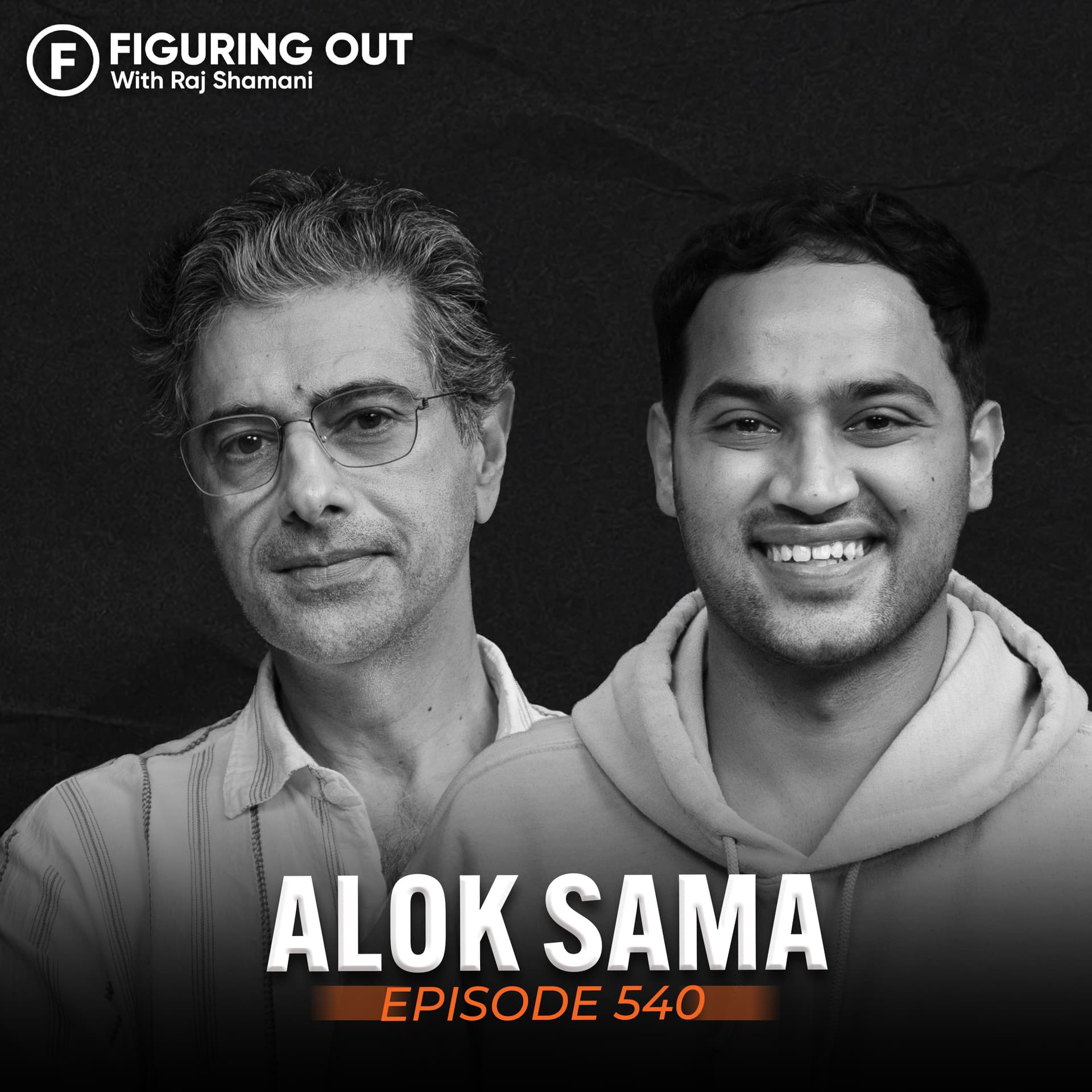

In short
How VCs decide which startups get funded, and how SoftBank-style “billion-dollar bets” worked (and failed) across SoftBank, WeWork, and other major investments; also compares Indian vs Silicon Valley vs Chinese startup environments, emphasizing market size, product-market fit, and entrepreneur resilience.
Guests
Alok Sama, former President and CFO of SoftBank Group International; author of The Money Track; worked closely with Masayoshi Son and SoftBank investments. Raj Shamani (FO540), co-host/interviewer.
Key claims
- VC funding hinges on addressable market size, product-market fit, and entrepreneur quality (resilience, flexibility, willingness to listen).
- In tech, investors sometimes must “suspend analysis” because future economics are hard to model.
- Resilience is the core entrepreneurial trait; failure is expected.
- Overfunding can cause suboptimal decisions and business-model drift; WeWork failed due to valuation/real-estate mismatch plus long-term lease liabilities exposed by COVID.
- China’s regulatory environment is more discontinuous (can “disappear” founders); the US advantage is its education/VC ecosystem.
Notable examples
Masayoshi Son’s near-total crashes (2000 bubble; 2021 SoftBank losses), ARM’s smartphone-chip dominance, Vision Fund’s $100B scale, WeWork’s $40–48B valuation target and unraveling, Ola’s early “no revenue” valuation logic, Jack Ma’s disappearance, Didi’s post-scrutiny collapse, and Elon Musk/Steve Jobs as archetypes of future vision and design conviction.
Written by AI. May contain mistakes. Listen to the episode to check what was said.
Chapters
Tap a time to open that second in VOInvestor Darlings: What Makes Startups Attractive?
0:35 to 2:06
Discover the key factors that make certain startups appealing to investors.
“Some founders and some startups are becoming investor darlings.”
Resilience in Entrepreneurship
2:06 to 3:40
Understand the critical role of resilience and adaptability in entrepreneurial success.
“And to listen to the audio experience of this episode, please follow us on Spotify.”
Masayoshi Son's Entrepreneurial Journey
3:40 to 4:52
Explore the story of Masayoshi Son and his rise and fall in the tech industry.
“Then he foresaw the internet revolution.”
The Vision Fund and Its Ambitions
4:52 to 7:00
Learn about the Vision Fund's ambitious goals and the challenges it faced.
“I mean, you know, that's an essential quality.”
The Rise and Fall of WeWork
7:00 to 14:00
Investigate what went wrong with WeWork and the lessons learned from its downfall.
“You say it, you know, this term visionary loosely.”
The Valuation of Technology vs. Real Estate
14:00 to 15:00
Understand the differences in valuation methods between tech and real estate companies.
“that it's a real estate company it's a technology company in technology company like Microsoft, Microsoft Office.”
WeWork's Growth and Challenges
15:00 to 16:00
Explore the rapid growth of WeWork and the critical issues that led to its challenges.
“Your tenants, your business, you know, new business, you don't want to take risk.”
Adam Neumann: The Charismatic Leader
16:00 to 17:00
Discuss the characteristics and vision of Adam Neumann, the founder of WeWork.
“You start off trying to sell something, eventually start to believe it because everyone reinforces what you're saying.”
Investment Dynamics in Startups
17:00 to 19:00
Analyze how certain startups attract investment despite lacking revenue.
The Future of Technology and Investment
19:00 to 22:20
Learn about the speculative nature of tech investments and the need to envision future scenarios.
“which is a investor darling versus a startup that is not?”
Show all 28 chapters
Building Startups: India vs. Silicon Valley
22:20 to 25:00
Examine the differences and similarities between building startups in India and Silicon Valley.
“They attract more investment money versus people who say, okay, I will change the world and the world will change all the time.”
Challenges for Indian Startups in Global Context
25:00 to 28:00
Understand the unique challenges faced by Indian startups compared to those in China and the U.S.
“US is also not as welcoming to immigration, particularly with Trump now.”
Geopolitical Insights on China and India
28:00 to 30:20
Learn about the contrasting regulatory environments of China and India, especially regarding tech entrepreneurship.
“You have the absolutely right to correct me.”
The Ecosystem of Silicon Valley
30:20 to 32:08
Discover the unique advantages of the Silicon Valley ecosystem for entrepreneurs and startups.
“The US is the infrastructure there, is the one big edge that the US has, which will not go away in my lifetime.”
The Risks of Overfunding Startups
32:08 to 34:45
Understand the pitfalls of overfunding startups and how it can lead to poor decision-making.
“he's telling people, and Rishi Horowitz, please, what can we do for you up in London now?”
Lessons from Ola and WeWork
34:45 to 37:27
Analyze how companies like Ola and WeWork faced challenges due to funding and strategic decisions.
“You're going from platform, capital light to capital intensive, right?”
The Importance of Vision and Conviction in Entrepreneurship
37:27 to 40:15
Explore the significance of having a strong vision and conviction in the entrepreneurial journey.
“Like he is treating like, I'll make this, I'll make this, I'll make this, and something that doesn't make a big deal after that, I'll keep changing and still attracting capital.”
Inspiration from Ritesh Agrawal
40:15 to 42:00
Learn about Ritesh Agrawal's journey and how his conviction and vision inspire others.
“not just being bright, not just identifying an opportunity, but thinking big at a very young age.”
The Conviction of Entrepreneurs
42:00 to 47:53
Learn about the inspiring conviction entrepreneurs display during uncertain times.
“Some will even be successful, maybe go public.”
Qualities Investors Look For
47:53 to 50:42
Discover the key qualities VCs look for in entrepreneurs and their ventures.
“He had to completely reimagine the automotive industry, right?”
Stubbornness vs Flexibility in Founders
50:42 to 55:55
Explore the impact of stubbornness and flexibility in entrepreneurial success.
“So you think he's more of an opportunist?”
The Dangers of Following Passion
56:00 to 57:26
Exploring the risks of pursuing passion without financial security.
“That's the first thing you should think about.”
Understanding the Money Trap
57:26 to 59:21
Discussing how to recognize and navigate the 'money trap' in entrepreneurship.
The Challenge of Maintaining Health
59:21 to 1:01:23
Analyzing the difficulties people face in prioritizing health over work.
“money, even though I'm compromising, my health might be suffering, my family life might be suffering, my relationships might be suffering, my mind is not developing, I'm not doing the things I enjoy.”
Tech's Impact on Health Monitoring
1:01:23 to 1:04:13
Discussing how technology can help improve health monitoring and lifestyle.
“It's because we are lazy and we procrastinate.”
Identifying Opportunities in AI
1:04:13 to 1:05:58
Insight into where entrepreneurs can find opportunities in AI technology.
The Motivation Behind Writing
1:05:58 to 1:10:02
A dive into the reasons and experiences that inspired the guest to write his book.
“You have to build on top of that to come up with business models that address problems that people have.”
The Impact of Writing and Knowledge Sharing
1:10:02 to 1:13:56
Explore how writing can touch lives and inspire self-improvement.
“But what I am overwhelmed by is I describe to you what message I get from people who tell me the way you wrote about your parents or the way you write about your relationship with your father or your son.”
Transcript
Automatic transcript. May contain errors.0:00Tell me the difference between Indians building startups in India versus Indians building startups in Silicon Valley. Someone put out some research looking at the unicorn creators in Silicon Valley and the number one category was Indians. So Indians have done brilliantly in the Valley. The qualities, what it takes to succeed there here is the same set of qualities, which is they have to be smart, they have to be visionaries, they have to be resilient. Alok Sama, former president and CFO of SoftBank Group International and author of the bestseller, The Money Track. If you want to understand how the world's smartest investors and founders think, this episode is for you.
0:41Some founders and some startups are becoming investor darlings. They are very easy to attract money. What's the difference between a startup that becomes investor darling versus startup that doesn't? For a VC, there's three or four things that you have to look for. So the first thing you look at is that how big the market is. Then there's this idea of product-market fit. Whatever you're making, you should be fit to address some problem or some need that the consumer has. And the third thing is entrepreneur quality, resilience, flexibility. Will he listen to me? Will he not listen to me? You know, a young person is looking to start up a business.
1:12You have to keep that in mind. Masayoshi Isan. This is what he said about Steve Jobs. He's a Leonardo da Vinci of the technology world. Yes. What does he mean by that? Jobs' talent was as much design as anything else. He would not compromise on the design integrity of a consumer product, which is why the world's faith in Apple devices is almost childish. Whatever Apple does, I just know, will be the easiest way for me to interact with this technology. That's a rare talent. How much money is enough money? The answer is you don't. And even if you have a number in mind, I guarantee you when you get there, the number will change Because you will evolve in your tastes.
1:53You will be surrounded by people who are more. Billion dollar opportunities in the startup world. Where do you see next? If someone is watching a young entrepreneur, which field is in the field? Indian startups versus US startups versus Chinese startups. What is the difference? So, with China...
2:20And to listen to the audio experience of this episode, please follow us on Spotify.
2:30You know, most entrepreneurs are intellectually curious. Yeah. They end up doing things against the wind. And you have met so many entrepreneurs. You have written a book about them. You have done a lot of things. What do you think is the biggest cage that they're suffering from? why do they not become bigger why do they face what challenges what do you think is the biggest if you have to put one challenge why do they have to make it in a brain the most important characteristics I will tell you maybe it's the same thing or not is resilience resilience if you're going to be an entrepreneur you have to assume failure it's extreme but you have to be prepared for that at a minimum, you will have extreme challenges.
3:21Let me tell you the headline story of my boss, Masayoshi Son. So, you know, his first business was distributing software, Microsoft software in Japan. Okay, good business. Before the PC revolution, weird business. Then he foresaw, you know, a lot of visionary people. Then he foresaw the internet revolution. And he became for a while richest man in the world. Richer than Bill Gates for one week. This is at the height of the bubble in the year 2000. Didn't cash in. Crashed. Burnt. He was in the Guinness Book of World Records for having lost the most money ever. Completely crashed. Burnt. Right? That means zero.
4:13Zero, not. I mean, this is a little bit of a joke. He was still a billionaire. But he went from richest to, I mean, you know, when you were richest, your net worth was, you know, I don't know what the number was. 60-70 billion. 60-70 billion. So if you lose 95%, you know. Yeah. You almost crash and burn. You crash and burn. So this is all relative, right? So he had that happen to him. No, you would think you would learn a very powerful lesson. he had almost the same thing happened to him again 2021 2021 be coffee market bubble particularly in the u.s massive inflation and value same thing one quarter soft bank losses with 23 billion 23 billion lost monument so this now he's back bigger better than ever So this ability, you know, you're going to pick yourself up, then you're flying, right?
5:13I mean, you know, that's an essential quality. Most great entrepreneurs, NVIDIA, Jensen Wang, they gave a speech in Stanford. Most important message people ask them, what do you wish for the students? Stanford University, everyone is graduating, they want to send an inspirational message. What do you wish for them? He says, I wish you failure. Because that's the greatest gift to you if you want to be an entrepreneur. So that resilience, that bouncing back from failure, it's the most powerful lesson. You have to be prepared. You have to assume it will happen to you. You have to assume you will suffer a lot as an entrepreneur.
5:52It is not an easy task. Not at all. Going back to Kahneman, there is a very strong selection bias. You only hear stories about big success stories. people who crashed and burnt this is not so exciting but those stories are vastly greater than the big success stories because I mean those stories are not that interesting because people what sells books what sells movies success success huge success coming from nothing so success you know tell me more about Masayoshi-san he is one of the rare people in the world who have made money in every country. Almost her growing economy in a big startup. US, China, Japan, India.
6:49He's just there. And you said he keeps coming back again. What makes him special? You've worked with him very closely. No, no, no. This is a very good question. One thing and one thing only. You say it, you know, this term visionary loosely. You know, look at Hindustan history, look at the country's history. You tell us how many people in business matches. Let's just take the world of business. How many people you can think of who you would describe as truly visionary? What do you think? Mukesh Ambani? Mukesh Ambani, not Dhirubhai Ambani. I would say, you know, I would say, I would pick Dhirubhai Ambani.
7:29Also, Mukesh Ambani also, like, he... Reinvented completely. Yes. He's a visionary. I would agree with you. I agree with you. What he's doing with the world now, reinventing from energy to now technology is a reinvention. It takes a visionary. But the interesting thing is, I would have said Dhirubha, you said Mukesh. Let's talk about first gen. You're talking about the first gen start. So this visionary aspect, it's very rare. It's very, very rare. such a man once in 10 years one in a million Steve Jobs are really not must absolutely this is a very rare and what they do is their ability that in the future future is true living in the future he describes himself exact words that I'm the crazy guy who lives in the future and he has this is what anyone can say but he's proved it time and again from an investing perspective right so in a future before the iphone was invented in a business in japan in a business he was making a lot of money i mean it was so bad business that the seller actually lent him money to buy the business right and he bought that business only on the promise from Steve Jobs that when you have such things, like iPhone, when you release it, you will make it that I will give it to Japan.
9:03So, it's not a phone or it's not a product or Mr. Son's company is just a loose handshake and there's no legal agreement. Based only on that handshake, he bought this company five times the size of SoftBank. and Steve gave him that exclusive and on the strength of that he made 40 billion dollars right I worked with them for 5-6 years the deal I'm most closely associated with a company Arm Holdings UK UK company UK company UK is headquarter UK but global business semiconductor semiconductor design so this company doesn't make a consumer product not to make it, it will not be made. But you have, like this iPhone, I bought it now, this is 16.0.
9:57There will be 10 chips designed by ARM. So it is, if not a monopoly, it's a near monopoly situation. Completely dominate design for chips that go into phones. And chips are energy efficient. It's a great company. I won't spend too much time on the technology. In a company, I saw analytical, mathematical, banker type mindset. I saw price earnings ratio. All bankers, which are the things for valuation. I thought it was very expensive. But their thinking is higher order. Everyone's talking about AI now. It's the biggest hype in the world of technology. But after 10 years, Alabad, Sunsan was fixated on AI, way ahead of the hype cycle.
10:52So, in the future world, when AI is in smartphones, then the value of ARM, it will transform completely. And again, he was right. His market-to-market gain right now is 100 billion US dollars. I think that may well be, in dollar terms, the most successful venture investment ever. It's not venture investment, I shouldn't say that, but the most successful investment ever in absolute terms. He made, like SoftBank made$100 billion. Mark-to-market. He doesn't even sell, but the mark-to-market gain is$100 billion. Alibaba, you know,$20 billion invested. Alibaba is like Amazon of China. $20 million invested.
11:35His total gain, everything he did is$72 billion. Yeah. then what happened in Vision Fund? Vision Fund was? So Vision Fund was largest technology fund ever. 100 billion. And the issue with that amount of money, Vision Fund raised in 2017. So in 2016, total size of venture investment in the US was 67 billion. 67 billion. billion right okay so this is your background on top of that with that as background you raise 100 billion it's an obvious point huge yeah his vision was ai but this is the issue with being a futurist sometimes you can be ahead of your time if you create vision fund 100 billion then things maybe would be a little bit different but at the time so much money to put it to work productively is very very difficult and that's when as he himself admits he made investments we work it's quite a story that's when things went wrong a little bit what happened in we work?
12:58because if it's simple and I've been to we work when I was first time I was shocked I was like I was like I was like I was like I was like I was like I was like I was amazed by it and I was like that if my company will be good then I will get more money but this is my point idea is good because he is you are the perfect target market you know like your generation and like your business you know you don't need manufacturing plant nothing you know you need a place where and I don't need 200-300 people so it's like a small yeah and you need an environment where I mean I've only spent like 15 minutes in your office we all are happy you know it's an environment where you can play you can play ping pong play some kind of putt putt golf whatever you want that's a good environment that's what people want and that was a lot of Adam's insight create that and this is what people want what went wrong it's straightforward one about valuation that it's a real estate company it's a technology company in technology company like Microsoft, Microsoft Office.
14:06You can create a piece of software and you can send it in the whole world. If you have a platform like Google, Facebook, you have created your platform once again, then it scales. So you can use revenue multiples, your valuation, you can value. That's why technology companies are so highly valued. You have no need to spend a lot more money. It's not like manufacturing. capital expenditure is these are very capital efficient models platform models we work in a real estate business and it has to be valued like a real estate business technology business this was a problem and the other problem was that so much money they got very quickly they grew too fast then of course the killer blow was COVID came along and that exposed the other weakness that your office leases is very long term.
15:03Your tenants, your business, you know, new business, you don't want to take risk. So, your leases will be short term. That leases, WeWork's leases, will be very long term. It's mismatch. So, when it's downturn, the ultimate downturn was COVID. When people just, business just stopped. That becomes really problematic too. So, that's the other problem there. So, that this gap actually killed them? Asset liability mismatch and then that combined with too much money, too much growth, way ahead of demand. Would you talk about Adam Neumann? Do you think that he was right? Everything? Or did he get too greedy?
15:41Because that's the book that you're writing. Well, not really. I mean, I describe the most important point. Like I said, this problem is not a technology company. The whole world, I mean, it's the J.P. Morgan, Goldman Sachs, all the biggest investors, You start believing what you're saying. You start off trying to sell something, eventually start to believe it because everyone reinforces what you're saying. That 50 billion companies at its height, we work. They all tell us that 40-48 billion companies are going to take public. And then when they try to go public, it all unraveled. What was special about him?
16:21You met him? Salesman. Best hive ever. Yes, I met him. I met him. I met a lot. First time I met him was in Delhi, actually. I tell the story in the book. First time I met him was Vigyan Bhawan in Delhi. And I described how we met him. Tell us how he is. So he was Vigyan Bhawan. He was, I described this in my book. My exact words were, you know, he was talking about his vision, real estate. He's wearing a Modi vest. He's a Korta and a Modi vest. He's American. I don't think he'd ever been to India before. He's a very handsome man. Very tall. His hair down to his shoulders. Looks like a movie star, like Jesus Christ.
16:56Right. Very charismatic. and the story was making me business we work it will solve India's housing problems so I wrote in the book that my bullshit meter is completely red line what are you saying housing problem middle class we work doesn't solve that that doesn't make it a bad idea but he made a he was such a big salesman he's thinking so big he made a big impression on San San so that was my first meeting then we met him he came the next day I tell the story in a book he came to you've heard everyone's heard of Sunil Mithal one of India's most respected entrepreneurs so he invited him to dinner he said I'll have another commitment after dinner but he told the address he forgot so Amrita Shergil Mark Delhi this is the most expensive street I think in India okay which 40 houses so he went one by one
18:06eventually he landed up so that was the second time we met him and then we met him again and Masa met with him met with him privately and then eventually when the vision fund was raised Masa invested Jiro you talked about like people like Adam Neumann who are big salesmen big vision some founders and some startups who are invested darlings they are very easy to attract money regardless of revenue revenue multiple technology business not technology business we have seen this case like VeeWork was a classic example all technology investors invested and invested just on his word no revenue doesn't sense no value was making sense so logically some startups who don't sense but they also attract a lot of money.
18:57What's the difference between a startup which is a investor darling versus a startup that is not? So I'm going to say something that you might think a little contradictory. When in technology businesses, at times you have to suspend the analysis. I mean, I'll tell you a story. So I think it might have been maybe the first deal I had done with SoftBank was Indian deal with Ola Caps, Bhavish Agarwal. So I sat with Bhavish in Tokyo, negotiated deal with Bhavish. So I was thinking, Bhavish is very dynamic. I mean, just a great, great entrepreneur to back. Masala saw it. I saw it. Very, very impressive.
19:42But when I started looking at numbers, at the time, you were actually being Indians. you're actually being paid to write. Not only were you not making money, you weren't even making revenue. Right? I mean, think about that. It's a crazy idea. You're not even making revenue. You're not even making money to come and write. Not only free writing, you're being paid to write. This is a very strange thing. So I thought, how can I value this business? You know, when you do analysis the way I've been taught, you look at free cash flow. Put a cash flow, project, discount, and then you decide how much is the business worth.
20:20But there is no revenue revenue, there's no cash flow. It's only cash. It's only cash. So, when I talked with Masa, I talked with Nikesh. Nikesh, a very close friend of mine, kind of brilliant man, brilliant man, Indian from Delhi also, now chairman and CEO of Palo Alto Networks, I talked with him, so he said, imagine a world where all cars are autonomous. So, in this world, when cars are autonomous, there's no drivers. And in that world, right now, if you go on Ola, or Uber, whatever you do, ride sharing, your fare might be 100 rupees. So, you will go to 70 rupees for the driver. That's just a leakage.
21:04That's like, the revenue is, you know, 30 rupees will be your revenue. Now, when cars are autonomous, you're 70 % gone. Right? So, then everything comes to you. Now, who will own these cars? You know, who will own capital expenditure? I don't know. because they don't exist. So it really, some of these models become, you just know evolution. And these models will be worth a lot, these business models in a world which is completely different from today. Future ki baat. So you have to suspend the analytics a little bit. So which is why, why are people investing in certain entrepreneurs or in certain business models where they're not making any money right now.
21:51That's the reason. In the world of technology, if you're looking at the future, you can't always predict the economics. Even if you have a broad idea that the world will be like this, to be specific and to come up with cash flow projects is very, very difficult. It's like AI. So you feel that the entrepreneurs have a vague idea is that in the future of 10 years, the world will be like this and I will play this part. play I will make it in the world. Yeah, absolutely. They attract more investment money versus people who say, okay, I will change the world and the world will change all the time. Betting on the future or I will lead people to the future.
22:38It's very rare to find those because if you make bets, I mean, you will do like this or like this, So investment will be done. In this case, maybe one will go. Very, very high risk. Because he will actually make one one and his version of future will be right. Probability. So many things need to go right. You know he will fail. That's why we talked about resilience. He may have to change his business model. Maybe he will fail but at a minimum he will have to change his business model. Jack Ma, very big investment from Son San. When he first came to Son San, Son San had this vision China, e-commerce you know Amazon you know huge success story China maybe but at the time what Alibaba business was B2B it wasn't his idea wasn't so he had to evolve so at times it's like okay macro vision how the e-commerce will evolve great entrepreneur let's start with this and then we'll evolve the business model then we'll see how it works tell me difference between Indians building startups in India versus Indians building startups in Silicon Valley?
23:50What difference is there in both? Because we were talking that we should go to America and the blanket answer for you was no. So I want to put more nuance to it. No, it's not a blanket answer. My point is more subtle which is go into it with eyes and ears open because the issue of identity which we talked about is also issue of family and community which you will leave behind yeah right i mean i left at a time in the 80s up to coffee asana you know you can do whatsapp calls you can do video calls when i went even to make one phone call cost five dollars a minute right so communicating relationship with family my parents very very difficult and i paid a price They paid a price, right?
24:41So just that's the only point I'm making, that if you do it, then just be aware that things that you don't value so much right now, you will come back and you will reflect and maybe even regret. That's my only point. I don't discourage people from doing it. Lots happening in the US. US is also not as welcoming to immigration, particularly with Trump now. Also something to keep in mind, because there's this America first attitude, which is going to be quite difficult. Indians are coming back to your question. Someone did a, put out some research. I actually saw it on LinkedIn. I think it's a Stanford professor.
25:20I forget his name. Looking at the unicorn creators in Silicon Valley. And the number one category was Indians, which is quite interesting. so indians now not all of them are immigrants some of them actually are the next generation i mean my son is 32 now so that's literally the next generation wow and um so it's that generation also so indians have done brilliantly in the valley and it's all the things you talked about which is while they're smart there are a lot of us and some of the smartest went to the u.s and they're hungry i mean if they go there it's the immigrant ethic they're determined they're resilient they're determined that okay if i've come to this country or my parents came to this country okay you know i would succeed so that it that those are standout qualities so differences if you have to highlight one or two differences or three differences indians who are building you've met like Bavish and Ritesh and like Maki founders in the country you guys have invested in.
26:29They are born here from the heartland roots and they are making these big things. You know honestly the characteristics the reason that they're successful will be the same which is they have to be smart, they have to be visionaries, they have to be resilient. So it's the same set of qualities so it's not a difference because the qualities what it takes to succeed there here is the same set of qualities maybe maybe you have to be to use your word you have to be a little more jugaru you have to work around the system but you have to do that everywhere i think maybe it's more the case in india you have to like you have to navigate things a little bit more there are more gray lines there are more gray lines so i think that is probably true and you have to be willing maybe to bend the rules a little bit to be a little more flexible maybe that's the only thing okay let me make it more even like a bigger question okay indian startups versus u.s startups versus chinese startups what do you need to succeed so with china it's become a case of how you deal with a completely unpredictable regulatory environment right 10 years ago 20 years ago this famous deng Jalping line to be rich is glorious.
27:48Right? Now, you don't want to be on that list of the richest people in China. You become a target. Right? So China has... Target meaning what? Target meaning Jack Ma is a great example. Kya ho? Vanished for a few months. Think about that. Think about that happening in India. One of the richest men in China. In the world. Chinese entrepreneur in the world. Sorry to... You have the absolutely right to correct me. Disappeared. Kuch pa ta ni kaan ga. Think about that, right? That happened to Jack Ma because he said a few things that were very critical of the government. That he basically said governments messing around with FinTech, they basically called them stupid.
28:39So many words, right? I mean, very harsh. Just crazy thing to do. You wouldn't do that in India, asking for trouble. And you shouldn't do that anyway. Bad judgment. So China, India is a beneficiary of that. A lot of VCs have turned their back on China. This is great for India. Collateral beneficiary. Geopolitically, if you think about the consequence of this election, the confrontation with Trump as president with China is going to increase. Again, India is a collateral beneficiary. This is a good thing. So China, that's the big difference. The regulatory environment, government attitudes are so volatile.
29:21They can make you, break you. In India, it's a big deal too, but in China, it's binary. You could just disappear. Didi, for example, the equivalent of a great case study, equivalent of Ola, more like Ola, the Uber merged with Didi. Near monopoly situation, great company. But again, the Chinese government decided all these tech entrepreneurs, they think they're very big. They want to learn something. Teach them a lesson. So they started scrutinizing their app. They weren't able to get any customers at all for a period of nine months. Stock went from public company, US-listed public company, stock went from, I think, all the way from$12 to$2 or$3.
30:06So that's the big difference that unpredictable. In India, you have changes in attitude, but there's no discontinuity like that. So that's China. That's China. The US is the infrastructure there, is the one big edge that the US has, which will not go away in my lifetime. Maybe it will last through your lifetime, is the edge they have in education, right? So the Stanford University ecosystem, Caltech, MIT, they're great in India, but that whole ecosystem, for example, nobody in the world can compete with that. That's been created in Silicon Valley. It's an ecosystem with Stanford as its son and with venture capitalists, that community that's been created and how it fosters startups and entrepreneurs is that's that's just really something to behold how help how help does it help if i am a student who just in stanford versus i am studying in the whole world how do you help me to become entrepreneur or become bigger because you're surrounded by them you know you go to stanford university Mayup, University Avenue, John, the cafe.
31:30Everyone's thinking about startups, startups. There's so many stories around you, whether it's Jerry Yang, who started Yahoo, or the Google founders, Larry and Sergey, all students working out of someone's garage. You're surrounded by stories like that. You're surrounded by VCs, by investors who funded those companies, professors who've taught those people. That's what creates what you call an ecosystem. And that is, people have tried to replicate that. The UK, for example, in London, they're trying to replicate it. Rishi Sunak, when he was prime minister, he's telling people, and Rishi Horowitz, please, what can we do for you up in London now?
32:15People are trying to do that. SoftBank, my experience was the same, dealing with the government. Please, why don't you set up, set up the vision fund here, which was incorporated, you know, regulated in the UK. So governments can try and do a lot of things, but it's very, very difficult to create that infrastructure where you're just part of that mindset. Now you're just like everyone around you is consumed by this whole startup culture. Is it something like that in India?
32:43Bangalore, Hawaii, Gurgaon. You know, people tell me it's either Delhi, broadly Delhi Gurgaon, NCR or Bangalore and or okay tell me which startups are those okay forget this tell me about this that underfunded startups or overfunded startups what would you choose what's better oh underfunded any day why you have too much money my experience you have too much money you tend to spend it usually not wisely this is not a business but in life this is also true you have too much money you lose sense of the value of money, you make bad decisions, sub-albumal decisions. Absolutely. But as a human psychologist, you're just more likely to make mistakes.
Read the full transcript
33:28But in startups, usually it is key. One of your biggest moats is capital. Yes. Can be. Can be. So you bring up a very interesting point, which I talk about in my book, that with Masa Song, being seen as a crazy guy can actually be a very, very smart thing. This sounds very contradictory. I'll give you an example. What do you mean by that? I'll tell you exactly what I mean. I'll give you the examples. When we invested in Ola, at the time, there was one competitor to Ola, it was Taxi for sure. So when the crazy guy, Masasan, invested in Ola, you know the size of his checkbook. You know this guy's crazy.
34:12If you're Taxi for sure, what do you do? Nobody's going to back them, right? who's going to go up against a crazy guy like myself with a huge bankroll so they come to you and they said sorry boss we're folding and they fold so your competition is gone so being seen as crazy earn that to be very very smart exactly and that's what i mean it's just a smart competitive strategy and that's what the crazy guy is the smart guy basically that's what i was telling like if you're crazy and you're you have shit tons of money yeah it's usually better so overfunded with like shit tons of money is usually like much much much better it can work being an underfunded startup it can work until you have like a product mode yeah yeah well when you we work's a great example to some extent oyo is a good example too right or your rooms when you had too much capital you started to make suboptimal decisions you know you start thinking okay being a platform, great business model, you start to own real estate, start to lease real estate.
35:19You're going from platform, capital light to capital intensive, right? You lose sight of what you, why you started. Yeah, exactly, exactly. The product market fit, which was brilliant, no longer is, you're doing a different kind of business. You start to expand internationally. India, you had a great product market fit because there's no organized hotel sector at the lower end of the market, right? You go to the US, you've got, or Europe, you've got in Europe, you've got Accor. In the US, you've got Holiday Inn. There's so many chains that serve that end of the market. You've got AB &B growing at breakneck speed.
35:59It's just a different ballgame. And you're trying to do too much too soon and you're changing your business model. So that's when having too much money can go against you. which startup give me two three startups apart from Weaver who have used capital and got lost those are probably the most prominent ones I can think of in my soft bank experience those are the two that come to mind to be quite honest there are others who should again never be in Zoom pizza for example it's a great example we have robots making pizza this is just a pizza delivery company but that's more a case of you know kind of i'm not sure it's a company that should ever do you think baiju had the same problem i mean you know accounting problems i mean you know this is that you mean by that explain i'm just you know more about i do but my my kind of it's it's the the the exposure is with respect to cook books financial statements that's a different problem so it's like they cook books to yeah that's misleading people i mean that's a you know you don't you guys invested in you don't come back from now now when you say you guys may i mean i'm not like five years out of soft bank no soft bank was not an investor no okay so coming back let's say ola for example ola bavish has been an entrepreneur who was attracted capital like right i don't know ki nitty-gritties kia the details kia the kaise milan a mila what was it but from the outside it looks like he attracted capital he did yeah right a lot of times and at every time of his journey he said for caps if the company didn't make money then he went and went and went and then he took more money for electric then he was going or not going what happened to him problems are coming from customers something else then he took more money for a new startup like so which is very contradictory to the VC world that you focus on one place if go all in and all in.
38:00Serial entrepreneur. Like he is treating like, I'll make this, I'll make this, I'll make this, and something that doesn't make a big deal after that, I'll keep changing and still attracting capital. Don't you think like, First two businesses are related, you know, kind of going from, How come like, Ola Electric is related to Ola Cam? No way. Okay, fair enough. Fair enough. Fair enough. At least mobility and transportation. Come on. Come on. I agree with you. I agree with you. I agree with you. I mean Uber for example they got out of this autonomous cars business they're not making it like that it is a different business point well taken so if we have two different businesses if we don't have money we don't have overfunded and we don't have enough capital so fair short of overfunded because he's smart or it's just like becoming a darling to attract capital yeah let's just put it this way if you become as successful as he has and he's identified the right sectors then yeah you can do that that's no bad thing that's not a bad thing I'm saying then funding like funds become crucial funds are always crucial for any startup I mean there is no argument there is no argument Ola Caps may be flopped and Ola Electric doesn't make a story my debate is much more in the context of you have an entrepreneur who asked me 20-50 million to execute my business plan and you give it you give it a billion you know you have 100 I want you to give you 500.
39:27That's one mistake. And that's the point I'm making. That's what you're talking about. Okay. Yeah, I give both those examples. You know, because... Little extra money is okay. But having excess amount of money is bad. Yeah. That's when you make suboptimal decisions. Easy money. Yeah. But sometimes, as you said, it gets to the edge. The moment you hear that soft bank is getting$1 billion. Yeah. But then you show up. Now everything is done in the market. Then you show up. But not to be fair. The... Ritesh did not know that. he did not come saying okay you know so much money let me see if i can get a billion out of him he didn't do that masa himself said you know i like you yeah i love you i mean you know why why did he love he reminds me of me exact words he's the one entrepreneur i met who reminds me of me when i was his age exact words that's a real compliment what like with him this this this not just being bright, not just identifying an opportunity, but thinking big at a very young age.
40:30He would tell, by the way, he would tell. This is in public, by the way. I don't know if I mentioned this in my book. He would tell Adam Newman, you look at your little brother, Ritesh. He's thinking bigger than you. His exact words were, he's crazier than you. You're not being crazy enough. You're not thinking big enough. Look at Ritesh. really he was pushing ritesh to go head to head against does that describe in the book to go head to head against a b and b be global be big and and he was he was real affection he came for ritesh's marriage how many you know kind of vcs coming coming to like india for like a founder's marriage you don't see vcs doing that he's really fond of him yeah even today i'm I'm sure he is.
41:15So I really, really, really love Ritesh Agrawal. And he was one of those first entrepreneurs from India who inspired me because I read his story in Forbes for the first time. And I was like, if he can do it, I want to do it. I want to become an entrepreneur, right? So he's one of those entrepreneurs who I really look up to purely from a point of inspiration. And when I met him and we recorded a podcast and we spoke about so many things, he was telling me at that time this is couple of years ago okay and us time we have recorded a clip that I'm going to do IPO and this clip after IPO okay right so when the news was around that he's firing from the pandemic just out you don't even know whether the company will survive or no he said with such believer conviction he said that hey i'm doing ipo but this clip is not after ipo so to me that level of conviction even in the times when everything is uncertain is very was very inspiring it's rare and inspiring to see and in that closed room they shouldn't have done it I am who I am what I am what I will say the clip is not out the public is not right but still that and he said it like he believes in his second nature like it was not even like he's trying to make up yeah the thing about those characters those people is you can't really teach people you can't teach people how to think big well you can teach people yes and no I mean you can think big but to have that level of conviction is very unusual it's an unusual quote I admire it I don't have it that's why I admire it in others so how do you get entrepreneurs like entrepreneurs how do you back them what do you think in them just someone can say something doesn't mean you'll back them yeah you have to have so for a VC there's three or four things that you have to look for first is as a VC you as a substantial VC I mean if you've got a billion dollars to deploy You have to assume that you invest in 100 businesses,
43:41so 100 businesses, so 100 businesses invest, 10 are total dead failures, right? They'll go to zero. The majority will be okay. They'll muddle along. Some will even be successful, maybe go public. Your upside is going to come from one, maybe two, that'll be huge. That'll make up for the duds and make up for all the middling. For 99 others, one will make up. Yeah. So which means if you're counting on one to make up for all the others, that one has to be, has to turn into something really, really big. So the first thing you look at is how many markets are big. Addressable market, size of the addressable market.
44:24So you start with that. But usually, all the big startups that are made, those 100 billion dollar type startups, when it was created then the addressable market is impossible to calculate it depends on how you define the addressable market if you're Google it wasn't clear but the addressable market was all the money that's spent on advertising and then Google would gradually deflice them so there has to be some sense of how you're going to make money initially you have to if you don't have any sense then you shouldn't be investing but there has to be some addressable market then there's this idea of product market fit not enough to have a big market but whatever you're making a product, you should be fit to address some problem or some need that the consumer has.
45:05So product market fit is going to be done. And the third thing is the entrepreneur quality. I mean, as a VC, you have, again, same qualities, resilience, flexibility. Will he listen to me? Will he not listen to me? That mass sound quality that like, I'm going to back you, whatever you want. That's not how most VCs think. You know, most VCs do think about rightly or wrongly about things go wrong, that I will listen to my story. Flexibility. Important quality. So for any young person who's looking to start up a business, you have to keep that in mind. You have to show, you have to convince a VC that you're not stubborn.
45:42If you're listening to a story, you'll work with them as partners. Partnership should be. Do you think stubborn founders usually end up winning more than that? I agree. I agree. I agree. I'll give you an example. Bhavish. My good friend Nikesh is a force of nature. Brilliant man. very strong personality i remember telling him telling bavish and telling kunal that you should pivot towards profitability bavish stubborn many many head to head against uber kunal listened to him probably more than he should have and i think he got left behind a little bit so that that self-belief is a very very important characteristic too yeah because i've i've seen this often just by reading and talking to entrepreneurs that people who are stubborn in times when they were expected to be flexible usually they win like Steve Jobs or like let's say you read about Elon and Steve Jobs and you even read about India so many entrepreneurs have made it big they were stubborn in the times when they were expected to be again this goes back to what I said these are some of our stories that we hear Then I thought I missed a selection bar.
46:52Because you're not hearing the stories of entrepreneurs who weren't flexible, didn't listen, and who didn't make it. Who's the most inspiring entrepreneur you've met?
47:08I'm going to say something strange because I'm no longer a fan, but I'd have to say Elon Musk. I haven't met Elon Musk. I haven't met him in person. But I think the answer is still valid. And I tell you why, because if you agree that climate change, a couple of reasons. One is if you agree climate change is the biggest change we face, and I think it is, right? You only have to spend a few hours in Delhi to realize that with that pollution, and for a whole variety of reasons, which I won't get into. He's done more to address that problem than any government out there. Al Gore has got a Nobel Prize.
47:42What have governments done, right? And what he did, the degree of difficulty, people don't appreciate that. You know, electric cars is not as simple as, that he had a battery in the car. There's nothing like that. He had to completely reimagine the automotive industry, right? He had to know dealerships, right? So that intermediary, which added, created so much inefficiency. You have to buy Tesla's direct. And then you start up with the mentality that this is a computer and I'm going to put a motor and wheels around it. To have that degree of conviction, everyone telling him you're a crazy guy, you can't do it.
48:28I find that quite amazing. And I really, really admire him for that. Now, I'm a little bit saddened that he's now kind of become a politician. politician and like, come on, man. You're such a, I mean, you know, such a great, brilliant mind, brilliant execution as an entrepreneur. Stick to that. There's so many problems you can solve. Just, he's a one of a, once in a lifetime kind of talent. And you really want him to do, to solve the biggest problems we have. He started the same thing with SpaceX. You saw a video, which is a rocket, just, you know, which comes back. Amazing to watch. Yeah, I'm not a physicist, but I can appreciate, I can marvel at what he's done.
49:09And he saved NASA billions and billions of dollars. But who have you met and you've found inspiring?
49:21I've actually found Ritesh very inspiring. Ironic, half my age, but I was so struck by his maturity. the fact that, as you said, didn't go to IIT, didn't go to IIM, I found that very inspiring. I found Brian Chesky very inspiring for a different set of reasons, because he is humility. You know, you could sit and spend two or three hours with this guy and you can talk about everything and enjoy it. Just such a nice down-to-earth human being. And the fact that he's been able to retain that. I found that characteristic very inspiring. I find Masat really inspiring because this ability to just not be, no matter what happens, to bounce back, to fly again, to the audacity of hope, it's a beautiful thing to believe in the future so much and to believe that this AI, for example, will change the course of humanity.
50:22These are like that's very very inspiring who are the other people who would say you would say that Masa, Elon you established both visionary futuristic give me three four more names you feel give me two names from the world and like around the world and two from India who you feel genuinely something in there and this can be folded in life or is already folded or is already well Mukesh Ambani we talked about it takes a lot of vision to break away from what he's doing he stands alone Sunil Mittal is also he's stuck to his business I respect him in a very different way you've done one thing and you've done one thing exceptionally well to create this business come at it out of new entrepreneurs like not these generational people I actually rank Bhavish at the top I do because a little bit of what you a little bit of what you said you find unusual because he's now a serial entrepreneur and he's kind of in some ways become you know kind of the godfather of the startup community by doing things one two three and he's again got that ability to solve really really big problems transportation now see what he does with ai is it do you think i like that ambition i admire that ambition see there's a there's a difference between being a visionary and being an opportunist.
51:49Yeah. What do you feel? So you think he's more of an opportunist? I'm asking you, what do you feel? What do you think he is? I am not even at a level to even comment or question him. I think he is both. And that is no bad thing. I think you have to be both. You have to be pragmatic because you're not a scientist. Right? You're not a priest. Right? So it doesn't happen that you're sitting in a cave and you're a Buddhist. you know meditate you know ideas you have to be to yours your word again which I really like you have to be an opportunist your system how can I get the government to cooperate how can I raise capital how can I put all of these things together to solve problems and God bless him to make money for myself you have to be opportunist okay you know in Masayoshi's son said about this is what he said about Steve Jobs.
52:45He's the Leonardo da Vinci. Left brain, right brain. Yeah. He's a Leonardo da Vinci of the technology world. Yes. What does he mean by that? So what he means by that, that he is not just a technologist, but he's also creative. Because if you go back to the origins of Apple, this idea of two people starting having complementary skills. Steve Wozniak was the technologist. He was the coder with Apple computer, the original Apple computer. Jobs' talent was as much design as anything else. He would not compromise on the design integrity of a consumer product, which is why my faith, the world's faith in Apple devices is almost childish.
53:31Whatever Apple does, I just know will be the easiest way for me to interact with this technology. even when they're not the first I know they will come up with what looks really neat simple, sleek easy to interact design that's a rare talent it's almost and this is what he means by Leonardo da Vinci you're not only a scientist but you're an artist talking about artist when I was reading the notes that you really want to talk about there was a line mentioned about passion he said that passion why did you say that because I believe in something similar and I'll come to that well this is very interesting to talk about when you people like to older people like me tell youngsters follow your passion this is very advice I think that's terrible advice for two reasons one is if someone had told me follow your passion most people don't have a passion let's be real right normal people not everyone has I'm passionate about writing or making art or whatever or podcasting or whatever right I mean you know it's so you have to assume that the lot of the time when you tell someone a young man a woman follow your passion you leave them feeling a little bit inadequate I'm like everyone else that's one do it let's say you do have a passion right let's say your passion is to be i want to be the next raj shamani now how do you go about it is there a playbook you can follow kya karo ga ap you know you graduate from college can i apply somewhere to be raj shamani i mean you know it is you could you know you could go shoot yourself yeah you know so i i think it is simple yes so much on life is luck what you call serendipity if you want to use a more complicated word, fancy word, that you have to let things happen, put yourself out there in the world, make a living.
55:43You have to make a living. Your friend Ankur has a wonderful way of saying it, which is money buys you things, but the most valuable thing money can buy you is your freedom. And if you find the way I did late in life that I did have this passion to right at some stage in life you can indulge that passion yeah right but if you go and pursue it you know your likelihood of getting hurt is high and that's why I think that advice is even if you do have a passion it's dangerous yeah that's I also have a take on this I feel first if you're in India you should have a conversation after the conversation you should have a conversation first conversation you should have a conversation how do I earn a 2 ,000 ,000 a month absolutely Absolutely.
56:27Could not agree more. That's the first thing you should think about. Could not agree more. If you don't have a year or two months, then you should take a deep idea that you should run after passion. Because you don't have money. You should do it. And in India, it's a unique country. Where you don't have any security. Government should not support you. And you have the responsibility of your mother and family. Because it's not like the US. just like we will see ourselves. There is a social security net, government will take care of them. Nothing. You have that border. Nothing. So you have to take care of yourself, your family and live up to the pressure.
57:06Now, you have to run away from the passion. Absolutely. That is the first side. And second side is, as you rightly said, I think majority of people glamorized by something. Not passion. I have seen another example of something like a car racer. Oh, wow, I'm glamour. like I'm awed by it glitz doesn't mean my passion when I actually do something then I'll know how much passion and how much like for example podcasting or let's say becoming an entrepreneur because it's cool now so my passion is entrepreneurship no passion you just feel it's cool to be entrepreneur you want to be there's no harm in it there's no harm but you can do yourself harm you can do your family harm you can do yourself like at least sort that out and once you have become that then you keep trying multiple things 15 things you try and then do it and make call that but before you sort that out just because of glamour don't get into something talking about the money trap you said that many people first go into money trap and you are mentoring these relationships I have a question how much money is enough money how do you know that it's a very individual thing you don't the answer is you don't and even if you even if you have a number in mind I guarantee you when you get there the number will change it has happened already because you will you will you will evolve in your tastes right and you will be surrounded by people who have more so I'm not saying it's easy then how do I do like I am because sometimes I question myself that am i getting in the money trap which 99 percent of the times i like to believe that i'm not yeah because i don't chase money now yeah but one percent of the times i question myself and be like hey am i in the money trap well the question you have to ask yourself is what you just said okay would you be happier staying in bed and not doing what you're doing now when it starts to be compromised and when you have conflict that's what creates stress that's when you start compromising your health.
59:20When you realize that I am doing this because I can't break away from this much money, even though I'm compromising, my health might be suffering, my family life might be suffering, my relationships might be suffering, my mind is not developing, I'm not doing the things I enjoy. That's when you start, you should be worried. And that's when you at least have to ask yourself the question. It will still take a lot of courage. Maybe you have a very supportive wife, your family, someone around you who tells you, whatever you're doing, you're okay. We're all with you. You need that. That's why family, wives, husbands, I don't want to genderize this.
1:00:03This is two guys talking, but this applies to everyone. If you have support from your spouse, that is usually helpful. If you want to break away, I'm with you. those relationships are really important friends are really important i want all my relationships to support me okay you're being obsessed and you want to work work well you know that's not healthy i mean we're telling you if obsessed you know if that's the word you use that's not healthy that's actually the case with me but you're enjoying it also it's a healthy obsession that's a healthy obsession artists musicians can be obsessed that's a healthy you're enjoying it so much that's fine let it ride that's fine yeah you know there's this one just like on a fun side i want to ask you a question everyone says that it's saying that it's saying that it's saying to take care of your health right and take care of your health why you're letting work or relationship or drugs or substance abuse or alcohol taking over your body and why are you doing that I usually have a question being healthy is god damn difficult yeah it is it's not that you are trying to you are choosing work over health it's not like that it's just health is so difficult that usually people end up avoiding it and for that it is extra sleep, extra alcohol extra friends with time pass extra party, extra work people choose that because as much as it sounds great that I'm compromising on my health, it's not because of the choices.
1:01:39It's because we are lazy and we procrastinate. Like for a large majority of the people, this is the case. No, this is true. This is true. You know, the beauty of it, I notice you've got, I won't, I won't, we won't promote individual brands, but I'm going to see what I'm wearing. I'm wearing it. You know, these days, we're very technology and data driven. So you actually get real-time feedback that whatever you're doing, is it working for your body or not? This is life-changing. Yeah, it is. I used to sleep for like 4 hours 5 hours max I couldn't sleep now you're getting daily data whatever you do exactly and then it's pushing me it has not gotten like optimal but it has gotten better from 4 hours to 6 hours and now from 6 to 8 and 9 and I'm like this is great this is now it can become an obsession also now like first time in the morning like in first thing in the morning so much I calculated Good for you.
1:02:33Good for you. There's a word for it. I forgot. Osmo. Osmophor. Some word for it. People are obsessed with their health. They will test their health. They count every step. How much sleep is going. Food. They count everything. They don't need to ask you. If you ask someone. How did you sleep? Let me check my.
1:02:58This usually happens. Usually happens. I do it literally. How would I know? Like now you don't want to answer out of your gut. Yeah, exactly. You want to answer out of, oh, let me see. And you know, worst thing which happened the first time. Usually when there are, as an entrepreneur, there are days in your life. You have to power through it. So one day I was only two hours. And I went to work, I gave up speech and I was back. This is a very normal day in my life. Then every three months, I will come to work for 2 hours. Every six months, you will be 100 % In one or two hours, I will be functioning and next day I get by it.
1:03:41And then I crash and then I will be 10 hours next day. I will do that. Very normal, I didn't know that much. And I wore this. And next day I saw this, 9 % recovery. Automatically I started feeling lazy. And I was like, shit, shit, shit, it's bad. This is my point. You can't let this dictate your life either. like it just so in the beginning it started happening and i'm like this raj like this can't happen so and that was a day i shifted from weekly kasa hora versus daily good good smart that's how it happened okay i have a last question for you yeah and the last question is where do you actually second last question second last question is billion dollar opportunities in the startup world where do you see next if someone sees a young entrepreneur and wants to make something big then which field should we go give me 2-3 fields so it's all about AI these days right and VCs are funding that only yeah so that's where the buzz is maybe it's a little bit overdone but let me simplify this every business today is an AI business let me tell you what I mean when the internet came along this is what people used to say every company is an internet company you have to find a way to integrate the the internet integrate ai into your business because it is a monumental productivity tool right i guarantee you you will be integrating ai into your business right already already doing that right but you'll get better and better yeah i'm not talking about hindi this will be an impediment to you by the way you have to think about that the models that are powered or trained on hindi language will be more effective for you this is something you have to keep in mind actually so you know simplifying distilling producing this is all you have to integrate that because if you don't somebody will be doing it more efficiently and as good as you are you will have to you will be at a disadvantage right so the as an entrepreneur you want to look to create businesses that are able to leverage this technology, that's what you have to watch out for.
1:05:57So AI doesn't mean you have to come up with the next open AI because open AI is the next open AI. There's two or three models like that. You don't have to reinvent things. You have to build on top of that to come up with business models that address problems that people have. Give me an example. So, yeah, there's this company that I just heard about this week, which Jensen Wang talked about called Giani, Giani.ai. What they're doing is it's a voice-based AI platform and they are leveraging that technology to help financial institutions originate and correct loans. Voice-based, but very sophisticated.
1:06:40And now you might say, if you have a financial institution or a bank, then you should build this within the company. but people are typically slow to do that so technology solutions that help address make a business more productive that's where the action is okay here's the last question yeah I have this was my first question but my last question okay why did the book make a money trap what did you see like that is it bad to be in money trap why no no no this is not the same this is your you're making it much deeper than it is. So I'll tell you the answer. Why did you write it? Because that's the broader question.
1:07:26So maybe how I can say it, it was a little passion that I wanted to be a writer. You could call it a closet ambition, if not a passion. So you finally came out of the closet. So finally came out of the closet. When I had the luxury, as we discussed, when I had enough money in the bank to indulge that passion. So actually at age 58, I got a master's degree, my second master's degree. And it was probably the happiest period of my life since school because I didn't have any worries, any cares. I was learning, satisfying my desire to read, to learn all the time. And I did that with the intention of writing, not this book, but just writing.
1:08:18I thought I would write, maybe I would write fiction. And then I decided, look, as I experimented in school, I did some experiment, written stories, fiction. I wrote a story in the voice of a dog, if you can believe, just for fun. Experiment with different things. And then I realized that there's this six-year period of my life where I saw so much professionally, meeting interesting people, dinner with Mark Zuckerberg, I meet with Narendra Modi, people like Adam Neumann, visionary entrepreneurs, crazy guys, Basa Son, one of the greatest technology investors of all time. crazy things happen. The book starts with me meeting with two secret agents, Mossad agents.
1:09:11Someone's trying to, there's even a honey trap, sexual blackmail, if you can believe. So this is going to happen. Then I had a lot happen in my personal life within a period of 100 days, three month, three and a half month period. Lost both my parents, lost my dog also. Both my kids graduated from college. So this was five years of my life. It's so that I thought that there's so much happening that this can be turned into a story. And the fact that this is a real story, that is non-fiction, makes it in some respects even more powerful. So that's why I wrote the story. It's more to kind of satisfy my writing ambition than anything else.
1:10:02And this is what I want to do. So I want to write more books. Are you happy about it? I am. I tell you what I'm happiest about. Lots of great reviews, sales. But what I am overwhelmed by is I describe to you what message I get from people who tell me the way you wrote about your parents or the way you write about your relationship with your father or your son. Or I found what you wrote very inspirational. You know, a young man came up to me in Gurgaon and said, sir, I just want to, he came to a book signing, he couldn't make it, but he came to an evening event. Sir, I had to tell you that you are now my role model.
1:10:45I found that very, you know, kind of, it's very sweet, very touching that the book has been, has touched people in ways that I didn't think it, you know, that's what you aspire to as a writer. And that is really, really rewarding. And I admire what people like you do because, you know, with a very fresh, having been through this experience, I now see how rewarding it is, which is why this is so great to be interacting and why I wanted to reach out to people more broadly is things that you say or people that you have discussions with. And they affect people's lives. And that's very rich and that's very rewarding.
1:11:27Way more than making money. I would say true yeah I wouldn't I wouldn't disagree I think touching people's life in any way possible either through money without money through words through actions through just by just being an example whatever it may be yeah it's the single greatest thing which people can feel it themselves it's beautiful you could it's just amazing it can you can touch five people at your house yeah or you can touch the world yeah but touching even one soul and one life yeah is it you can't compare that feeling with anyone no it's beautiful no amount of money is going to give you that it's beautiful it's beautiful and that is uh i i really respect what you do because this technology this world has given you the ability to reach out and impact people's lives and you're fortunate enough to be in this country at this time where people the desire to learn the thirst that's the other thing i want to say the thirst for knowledge yeah i have to tell you this story i have a message came from chandigarh which is my grandparents from chandigarh i won't tell you the name to protect his privacy but he's a sikh obviously i can tell from his name he sent me a message he saw some very nice things about the book but he also sent me a photograph and he said in his message he said sir i read your book and i've learned so many new words and i just sent a photo he scribbled down very neatly i counted about 150 words that he had learned wow and this is i don't see that happening anywhere in the world this desire for self-improvement to constantly learn when he sends me a follow-up message that you mentioned one book, I didn't read it.
1:13:32I'm reading Tolstoy. I said, wow, this is amazing. I don't see that anywhere in the world. And I kind of, this is, this is like, if you want to be a reason to be optimistic about India, forget governments, forget these GDP demographics. That's the reason. I mean, that kind of hunger for upward mobility, knowledge, self-improvement is phenomenal. Yes. Agreed. 101%. Well, thank you so much. Thank you. Thank you. It was a pleasure talking to you. Yeah, it was fun. Thank you. Thank you so much for watching this episode till the end. Now you have to do three things. Number one, subscribe to this channel right now.
1:14:12The more you subscribe, the better the guests we will be able to get for you. Number two, please comment and let us know what did we do wrong and what did we do right? because the more you give us feedback, the better we will be able to make episodes for you. And number three, please share this episode with at least one person because one conversation can change someone's entire life. I'll see you next time. Until then, keep figuring out.
1:14:52you
From the publisher
Get your hand-picked playbook here: https://www.figuringout.co/pdf/fo-540
Check out The Money Trap:
Guest Suggestion Form:
Disclaimer: This video is intended solely for educational purposes and opinions shared by the guest are his personal views. We do not intent to defame or harm any person/ brand/ product/ country/ profession mentioned in the video.
Our goal is to provide information to help audience make informed choices. The media used in this video are solely for informational purposes and belongs to their respective owners.
(00:00) - Intro
(02:31) - Masayoshi Son's Two Epic Crashes & Comebacks
(06:28) - What Makes Masayoshi Son a True Visionary
(09:26) - Steve Jobs, the ARM Holdings Deal & Betting on the Future
(11:41) - Inside the $100 Billion Vision Fund & What Killed WeWork
(15:36) - Adam Neumann: Salesman, Visionary, or Both?
(18:20) - When to Suspend Analysis: Betting on Future Business Models
(23:42) - Indians Building Startups in India vs. Silicon Valley
(27:21) - India vs. the US vs. China: What It Takes to Build There
(32:56) - Underfunded vs. Overfunded Startups
(37:14) - Bhavish Aggarwal & the Art of Attracting Capital
(39:42) - Masayoshi Son & Ritesh Agarwal's Special Bond
(43:08) - What VCs Actually Look for in Founders
(45:45) - Why Stubborn Founders Often Win
(47:00) - The Most Inspiring Entrepreneur: Elon Musk
(50:26) - Other Entrepreneurs Who Inspire Him
(52:38) - Steve Jobs: The Leonardo da Vinci of Tech
(53:57) - Why "Follow Your Passion" Is Terrible Advice
(58:16) - The Money Trap: How Much Is Enough?
(1:00:46) - Sleep, Health & Data-Driven Obsession
(1:04:14) - The Next Billion-Dollar Opportunity: AI in Every Business
(1:06:59) - Why He Finally Wrote His Book
(1:14:05) - Outro
In today’s episode, we sit down with T. V. Mohandas Pai, Co-founder and Chairman of Aarin Capital and Chairman of 3one4 Capital to discuss India's future, entrepreneurship, AI, governance, and what it really takes to build a successful career.
Follow Alok Sama Here:LinkedIn: https://www.linkedin.com/in/aloksama/
About Raj Shamani
Raj Shamani is an Entrepreneur at heart that explains his expertise in Business Content Creation & Public Speaking. He has delivered 200+ speeches in 26+ countries. Besides that, Raj is also an Angel Investor interested in crazy minds who are creating a sensation in the Fintech, FMCG, & passion economy space.
To Know More,Follow Raj Shamani On ⤵︎
Instagram @RajShamani https://www.instagram.com/rajshamani/
Twitter @RajShamani https://twitter.com/rajshamani
Facebook @ShamaniRaj https://www.facebook.com/shamaniraj
LinkedIn - Raj Shamani https://www.linkedin.com/in/rajshamani/
About Figuring Out
Figuring Out Podcast is a Candid Conversations University where Raj Shamani brings raw conversations with the Top 1% in India.


