
In short
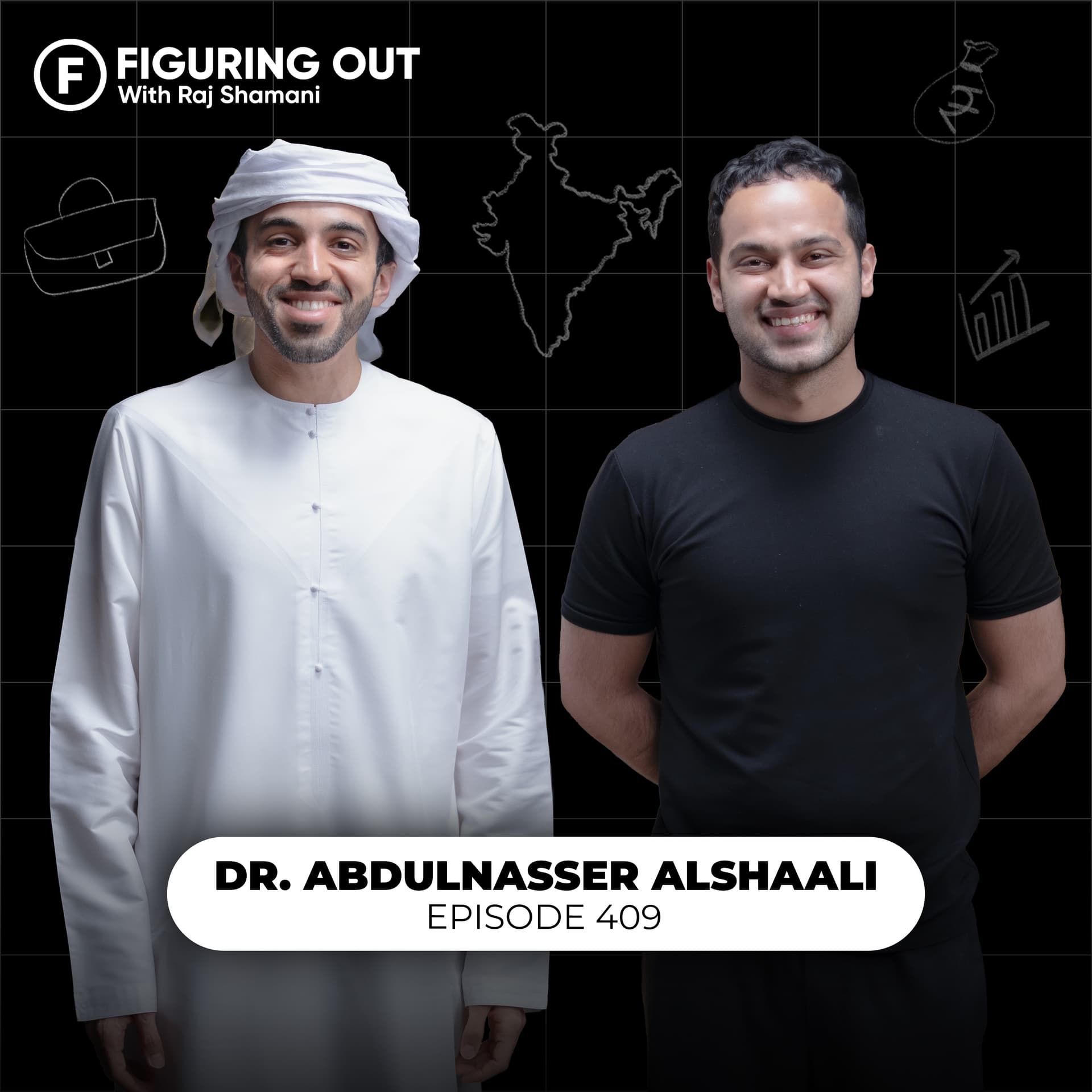
Podcast Summary: Figuring Out with Raj Shamani - Episode with Dr. Abdulnasser Alshaali
Episode Overview In this episode, Raj Shamani interviews Dr. Abdulnasser Alshaali, the UAE Ambassador to India. They discuss the remarkable transformation of the UAE, its relationship with India, the real estate market, and the cultural dynamics within Emirati society. Dr. Alshaali shares insights into the UAE's strategic growth, opportunities for young people, and the balance between modernization and tradition.
Key Themes
- Transformation of the UAE
- Discusses the shift from a desert to a global hub.
- The strategic vision for infrastructure, trade, and tourism.
- The role of Emirates Airlines in boosting connectivity and tourism.
- Real Estate Dynamics
- Evaluation of the current state of the real estate market and its future.
- Discussion on whether the market is in a bubble or if it’s sustainable.
- Personal anecdotes about the real estate investment experiences.
- Cultural Insights
- Exploration of Emirati life, including the benefits of being an Emirati citizen.
- Gifting culture in UAE and its societal implications.
- The balance of modernization with Islamic traditions.
- Opportunities for Young People
- Top three opportunities for young people in the UAE:
- Real Estate Investment: Fractional ownership through platforms like Stake.
- Stock Market: Exploring dividend-paying stocks.
- Entrepreneurship: Starting businesses that cater to emerging trends in UAE society, such as sports facilities and apps for booking recreational spaces.
- Future Prospects
- Discussion about innovative projects like cloud seeding, hyperloop transport, and AI initiatives.
- Insights into potential societal changes and the future of Emirati society.
Detailed Notes
Intro (00:00 - 02:31)
- Raj introduces the episode and guest, Dr. Abdulnasser Alshaali, highlighting the importance of growth in life and opportunities.
Dubai & India Connection (02:31 - 04:00)
- Highlights the historical connection and mutual interests between Dubai and India.
Dubai
Then vs Now (04:00 - 13:27)
- Comparison of Dubai's past as a desert to its current status as a technological and cultural hub.
- Discussion on the vision and planning that led to Dubai's rapid growth.
Emirates Airline Vision (13:27 - 18:35)
- The establishment of Emirates Airlines in 1985 as a catalyst for international connectivity and tourism.
- The vision was to enhance UAE's global presence by making travel accessible.
Dubai Real Estate Truth (18:35 - 30:38)
- Examines whether the current real estate market is sustainable or a bubble.
- Personal anecdotes about investment returns and experiences in Dubai’s real estate sector.
Resources in Dubai (30:38 - 35:49)
- Discussion on whether Dubai has sufficient resources to support its growth.
Reasons for Indian Migration to Dubai (35:49 - 42:32)
- Cultural ties, business opportunities, and lifestyle choices that attract Indians to Dubai.
Concerns about Future Rulers (42:32 - 51:29)
- Speculation on leadership succession and the potential challenges of future rulers.
Competition Among Arab Nations (51:29 - 54:08)
- Healthy competition between GCC countries, each with unique selling points to attract investment.
Islam & Modernization (54:08 - 1:01:52)
- Balancing traditional Islamic values with modern global ideas and practices.
Tax Benefits in Dubai (1:01:52 - 1:03:43)
- Discussion of Dubai’s zero-tax policy and its benefits to residents and businesses.
Opportunities for Young People (1:03:43 - 1:08:48)
- Highlights three main avenues for wealth generation:
- Fractional real estate investing through platforms like Stake.
- Stock market investments with good dividend yields.
- Starting a business, particularly in the growing sports sector.
Future of Dubai (1:08:48 - 1:12:04)
- Speculation on the future direction of Dubai and ongoing innovative projects.
Gifting Culture & Vaasta (1:12:04 - 1:15:22)
- Discussion on cultural practices regarding gifting and their significance in Emirati society.
Exotic Pets & Ministry of Possibilities (1:15:22 - 1:17:06)
- Insights into how UAE manages regulations around exotic pets and the concept of the Ministry of Possibilities aimed at solving complex problems.
Benefits of Being Emirati (1:17:06 - 1:18:11)
- Discussion on the advantages Emiratis have in terms of social and financial supports.
Misconceptions about Emiratis' Wealth (1:18:11 - 1:24:22)
- Dr. Alshaali shares personal experiences, dispelling myths about wealth among Emiratis.
Closing Thoughts (1:24:22 - 1:25:14)
- Dr. Alshaali shares final reflections on the UAE's growth and future prospects, emphasizing the importance of leadership and preparation for upcoming generations.
---
Conclusion This episode provides valuable insights into the evolution and future potential of UAE, as well as practical advice for young individuals looking to make the most of opportunities in both the UAE and India. Dr. Alshaali’s perspective as an ambassador adds depth to the understanding of cultural and economic ties between the two nations.
Written by AI. May contain mistakes. Listen to the episode to check what was said.
Transcript
Automatic transcript. May contain errors.0:00Dubai. There was nothing.
0:06What did Dubai do right? Plots were given at very low cost compared to today's prices. And today, even that is not enough. What are the benefits of being in Emirati? We do get certain allowances when it comes to your wedding expenses. You also get certain support when it comes to getting the plot of land. Those perks are there. 30 years ago, the UAE was a desert. Today, it's one of the richest, safest and most futuristic countries in the world. How did this transformation happen? In today's episode, we have Dr. Abdul Nasser Al-Shali, the ambassador of the UAE to India. We talked about whether the UAE real estate boom is real or just hype waiting to crash.
0:45And what are the top three opportunities to build wealth in the UAE today for people in their 20s? By core, you are a Islamic nation, but you have modernized it in such a way which looks global. Now the casino is coming, alcohol has been there, party culture, everything is like very globalized. Do you face any problem? We are a Muslim country because of a sizable Muslim population. That does not mean that we cannot adopt global ideas. Like you're not allowed to take your gunman's around, right? In Dubai? No, no, no. There's also a culture of gifting in UAE. Do you think that happened when Trump said, oh nice plane?
1:18The culture allows for it, you never know. How does UAE allow people to have lions and tigers as pets? People have ways to be able to bring those animals. Are they taking care of them or are they making a joke out of those animals? This is not supposed to happen. Can somebody at a powerful position misuse power? There are always individuals who will abuse their power. This is part of human nature. Emirates airline, 1985. Best airlines in the world. What was the vision for that airline? The vision was to bring as many people to the UAE as possible. You do the best in your field and you build that credibility.
1:53You have something called Ministry of Possibilities. What is that? This is where you figure out very difficult problems. Is real estate market in Dubai gonna crash? Do other Muslim countries look down on you?
2:10Before you continue, subscribe to this channel so that we will make a more insightful and better podcast. and it's the audio experience on Spotify where you can follow us. Enjoy the show.
2:28I wanted to start by saying there's a joke in our circle. Yeah. Which is the most expensive place in India is Dubai. I've heard this joke in different iterations. Yeah, I've heard this. how much of it do you agree with
2:49Dubai is familiar I think very yeah and there are quite a few cities in India that are also familiar for Emiratis so like I wish I had the problem in Delhi of too many Emiratis coming in you know it's always I get you know messages WhatsApp messages or whatever from family like family members I may not have heard from for like years oh we're going to Mumbai and you know we want to book in this hotel and we want someone to you know show us around if possible etc and well because there's an assumption that if you're an ambassador in the country then yeah you get to do those kind of things I do it from my own out of my own pocket but the point is there's there's just this interest to go to Mumbai because it's also very familiar for them like they go there and they shop and they like the place uh i mean i woke up today and uh it's to me yes it was warmer than usual but the weather's nice okay so we were talking about dubai yeah and uae this was a desert yeah a while ago yeah right there was nothing what what did dubai do right when did this even start that hey you know what UAE we're gonna make it one of the best countries in the world we're gonna attract the best of the best people from the world we make it truly global we're gonna go away from this whole concept of wherever we come from just we want to make sure that we build this so Cosmo that we will do everything right how when did this start what did you guys do right I don't know everything like this is fascinating okay because you look a photo of 1990 versus today doesn't look like the same place all across the Emirates Yeah, they're all different, right?
4:40But let me tell you, since you asked specifically about this, you go to Dubai regularly, right? Are you familiar with the All Trade Center building? No. There is this building, you know Sheikh Zayed Road? World Trade Center you're talking about? World Trade Center. Yeah, I know. Right, okay. When this was constructed, there was nothing around it. It looks like it's constructed from very old times, yeah. And that's it. So like this whole place, no one was interested in that place. Those plots of land that are now among the most expensive because they're in such a prime location, no one wanted them, believe it or not.
5:19So the inspiration was that you build this there, people would see it. So you see that the government is committed or the ruler is committed to developing this area. and those plots were given at a certain rate, very minimal on lease or ownership kind of arrangement back in the day, whatever that arrangement was, but very low cost, like almost nothing compared to today's prices. And this gave everyone the encouragement to basically start developing those towers that you see or the different buildings that you see on Sheikh Zayed Road. and Sheikh Zayed Road is, you know, the main highway connecting all of the Emirates.
6:01When they wanted to develop a new port in Dubai. And this was during Sheikh Rashid's time. So the father of Sheikh Hanbar Rashid. And what they wanted, I'm not entirely sure that the number is accurate. I think they want to do six and he wants to do more than four times that number back in the day. And no one could think or imagine why would he want to, No one's coming here. Okay, there's some trade that's taking place, but not big enough that you want to spend all of that money to have that infrastructure. So why are we doing this? Why are you wasting the money? And today, even that is not enough.
6:38So I think it's something that you can easily apply to all of the Emirates, each in their unique kind of examples and cases, where you need to show what you're trying to get to. or to put something out there for people to see and to be able to widen their imagination and their scope of thinking when it comes to what are not just the ambitions of the country, but what can be achieved even after X number of years. So now, even if you look at Abu Dhabi, for instance, you've been to Abu Dhabi. Yes. Abu Dhabi has now developed a very unique model where you have a cultural district and you have the main Abu Dhabi city with its own urban planning and so on.
7:36You have Suriyas Island, for example, is where everyone goes for entertainment. And then you have Saadiat where you go to see art or you go to visit a museum and so on. So it became very specific and very specialized with each area having its own unique selling point. So many things that happened, those ambitions that were put forward and so on started a little bit before that. And there was a lot of focus on trade. Everyone understood the importance of trade and each and every model was developed differently. Now, the one thing that I think is quite important here is how agile and how flexible are you?
8:21So yes, maybe a few things started before and around the union. But then let's talk about Emirates Airlines. Emirates Airlines only came to being in 1985. So yes, we started with diving for pearls and then the model evolved because oil was not the main source of income back in the day. And people, by the way, from the UAE would go and work elsewhere in the Gulf. Because in those other places, oil was already discovered and was already generating certain revenues or certain amount of income. Other countries had more employment. Exactly. And then that model in the UAE started to develop as a trade hub, as a country that exports hydrocarbons.
9:13And then slowly you started developing those other sectors. So what's important today? What is the future looking like? I mean, 1985, is aviation important? Do we need to have a world-leading airline? Not today, but we need it for 30 years down the line. So that's why I was telling you, like the port example or the World Trade Center example and so on, they are more of, they're symbolic more than anything else of, okay, the future is going that way and we want to start today. Which is, for example, if we fast forward to today, you talk about AI now, right? And we just announced a Stargate between G42 and OpenAI up to five gigabytes capacity closer to countries and regions that would need that capacity.
10:09aren't people thinking about AI? They are. Aren't they talking about AI and using it in their daily kind of activities? They are. But we want to be one step ahead because we know how this is going to be in the future. We did something also a few years back in the UAE, which is the genome sequencing of the UAE population. How many countries do you know that is actively doing this?
10:37None comes to mind, right? I have no idea. It's all private right now. Nobody's doing it. Okay. So I remember when I was going to Cleveland Clinic Abu Dhabi and doing some blood works. No, they have a counter right next to the reception in front of the lab. And they're like, do you want to do it? So now every time they ask, I'm like, I've done it like a few years back, right? So the idea is they wanted to see how can we map out the diseases of the future so that we can basically be better prepared insurance-wise, healthcare services-wise. And this is why, for example, now we have this new regulation that came out recently where for two individuals to get married, they have to go and do genetic testing.
11:26Really? Yes. In whole of UAE or just Dubai? Whole of the UAE. And why? We were having this conversation of is this important or not and i know that genetic testing is important to to basically find out if there are any mutations so like if you want to have a baby if you want to have a child you want to make sure that the child is healthy can grow up normally it's it's it's better for the parents and it's also better for the country right and obviously you can't control for everything but that you can control as much as possible and hope for the best. And then if something goes wrong, you can obviously deal with it.
12:11But the idea was that in the past, they used to do it only for a very specific blood illness. And then they'd be like, okay, so you're carrying it, and that other person's carrying it, there is this risk, you understand the risk, and so on. But like no prohibition or, like you know the risk and now you can decide. So genetic testing was important in the country and in the culture and the society where it's very common to marry within the family. and once that is like when you look at the trends and the kind of illnesses or diseases that have come out in the ua or became very prominent in the ua it's because of part of the reason is because of that it doesn't mean you don't need to or you don't like you're not supposed to but at least we need to understand what are the risks and potential complications and potential complications that that you also need to understand if you actually go ahead with uh with this marriage very interesting i'm intrigued to talk more about future but i want to go back so you said emirates airline 1985 yeah why would somebody think like i need one of the most luxurious best airlines in the world in 1985 where UAE itself has not become anything big.
13:39Correct. What was going on and what was the vision for that airline? The vision was, we need to bring as many people to the UAE as possible. Okay. And initially, the aircrafts that were used were leased. And they had like, I think fewer than five destinations or maybe five initial destinations that they started with just to basically move people from those countries to the UAE and back. And then the model also evolved, as I told you. We're not fixated on certain things. We're happy to evolve and to basically adapt. And the model evolved into, okay, no, but people also want to travel elsewhere and we can help them travel elsewhere at ease.
14:31and they can spend that in the UAE going back and forth. The idea was, especially for a city like Dubai, no hydrocarbon resources, focus from the very beginning was on other kinds of sectors. As we want to develop those non-oil sectors to become the drivers of economic growth and the engines for future prosperity. And so you have, like when we talk ports or ports development, we have logistics. And then you have one of the leading companies worldwide. And then we talk tourism and aviation, and you have one of the leading companies worldwide. And then you go to Abu Dhabi, and yes, hydrocarbon resources are there, but you also now have a world-leading airline.
15:17You also have a world-leading logistics or port company. And you have also other kinds of sovereign-world funds and companies that invest in infrastructure and other kinds of projects. And part of that investment is also creating that value chain for the UAE. So again, they all develop differently. I don't think the intention was that we want the best airline or the best sports company, but then you do the best in your field, in your country, and then you provide the same kind of service elsewhere and you build that credibility and trustworthiness that now other countries and other people are trusting you.
15:54So it's not the obsession of becoming the best, the biggest, the tallest, the grandest and the first and all of these things which you usually associate with UAE, right? It doesn't start like that. Or does it? They're subordial. So when we want to do something, we want to be the best at it. Doesn't mean it has to be the tallest or the largest or the fastest or whatever. We want to be the best at it. But the intention is to have those unique selling points. So Fariworth came in and they have the fastest roller coaster, great for them. But they are doing that, you know. We're not doing that. And so that's the thing that you can apply to every single thing that we have done.
16:40But then is that the philosophy of UAE and Dubai and Abu Dhabi and all of these places there? Whatever is out there in the world, why don't we get it here? like all the best things all the nice things or something which is needed or maybe just desiring let's get it here we are in middle of desert we'll build a mall with skiing in it with snow in it like what do you guys do well it's a good way to train if you want to train for skiing before going somewhere and try to be professional and so my kids used to go there so it's good you know like I'm really bad at skiing I've tried it ages ago and it was a complete failure thank god no one got hurt because I was crashing into everything but like that was one way for my kids to pick it up but then that's not the only like this is just I know I get it you're like hey you know what my kids need to train so we'll build a ski house inside a mall right I get it I get it that's if that's the reason I'll be really happy to know that Unique selling points, something special, something different.
17:51Again, anyone can build more, right? But is it like we'll build, they'll come? Yes. And now, so the initial model, yes, part of the model, the development model was, we will build it, we'll create it, we will have it, and people will come. And now, in certain aspects, suppliers don't even catch up with the bat. So it now became the other way around. There are too many people coming, too many people who want to live in the UAE and the real estate projects for instance are barely kind of which is why prices are going up the rent is going up etc. You're telling me now there's more demand than supply?
18:38In terms of people are very In real estate projects there's insanity in real estate projects everywhere I go whether it's Dubai or Russell Kaima or Abu Dhabi I visited these three places everything is getting developed by the biggest of the biggest names in the world and new people everything is just getting made who's going to live in these houses there's so many of them isn't it oversupply let me give you an example also a specific example when I first came to India obviously we nominate individuals for the golden visa. And one of the individuals that we nominated, like solid profile businesses and so on.
19:26And the first thing he did when he got the golden visa was go to the UAE and buy two properties. Now, are you going to live in two properties simultaneously? No, but maybe one to live in, one for investment or to lease out. And that's the idea. if you look at like what's happening in the UAE you would probably find that maybe someone's living in a house in their home and their home and they have another maybe beach house in some other emirate or an apartment or a condo or whatever and that is for the weekend or for example they would have multiple properties and people who are not buying the property will be leasing those properties.
20:17So the market has developed significantly and in a very sophisticated manner post the 2008 global financial crisis and has become like the laws and regulations have been changed and updated to make sure that even if something happens in the future, it's not something as big of a reaction as it was to the global financial crisis. So are there too many projects? Absolutely. Are people buying into all of those projects equally? I highly doubt it because there are certain developers you might be very familiar with, or developers you're not familiar with. So you'll probably go with the developers that you're familiar with.
20:57And then it's for all those other reasons that I mentioned. But do you think the real estate market is going to crash? Is it just hype? No. Is it going to correct? I read two statements recently. One of the big developers in UAE said that next year the market's going to correct and the prices will come down normally because it's highly inflated right now. Then I think someone from the royal family said, no, we are seeing a surge. There's a report that there are more people coming in. So it's like there's going to be more demand. It's a question mark. You're right. But correct is the right word, not crash.
21:34And every single market, real estate, stocks, you name it, it's always good to have a correction because you can go in buy more, reduce your cost etc. and then your dividends become higher in terms of percentage your yield becomes higher in terms of the rent and so is it going to happen next year? I think that's someone just trying to be you can't forecast it this way this is not how it works and you know what has made sure that there is more interest in providing a higher number of units larger supply is those cycles of people coming in so it will all have to do with okay are there more people coming in next year or not so far people are still coming in and there are more people coming in and more people interested in moving uh to the ue and there are all kinds of stories of not, I mean, what you see are thousands of millionaires have shifted to the UAE.
22:40But no, there are also other people who are, you know, they decide to want to come to the UAE because they can get the same kind of education, maybe even better kind of education, better healthcare. And they like the infrastructure, they like the safety of the place, and they enjoy it. So would a market correct? Markets always go through correction phases, but they are different from one place to another. Is it a correction based on something wrong with the fundamentals? No. But if there was a slowdown and the numbers of people coming in and obviously the supply is going up in the near future, then that's only normal for it to happen.
23:22And then it corrects. And then the whole thing gets balanced out. You would obviously say that. Okay. Why do you think so? Of course, because you'll have to, you won't give me a clear picture of maybe something is just hyped up you would because you are at a position and you would want to only talk nice things about it i'll give you my own example yeah uh since you said that you know i'll have to i i you know it's only normal that i'll be saying positive things i bought a property in 2019 and uh in dubai and that property is uh Like back in 2019, there was some sort of a correction. Things were slowing down, people were not buying.
24:08And I remember back in the day, I think if the developer knew that the market was going to go all up in three to four years time, they wouldn't have sold it at the price that they sold it at. Today, it's 2.5x. but guess what my yield is or my return is on this I don't know tell me 12 % plus year on year 12 % at the current rent which is lower than the average market rent by 18 % do you think I should sell? of course not there you go because by the end of the day you measure your rent based on your cost price but it's more for the rental yield you're not talking about flipping so in india most people die and flip they don't actually give it to someone for renting even in the ua by the way the only thing that have changed when i told you that things have changed since 2008 is that now you cannot flip until you have paid 25 of the unit you know this yeah but my advice would have been to you not to buy today i would have advised you to wait because if a correction is going to happen.
25:29By when it's at a good price. By when the developer really wants to sell to you at a more reasonable price. I mean, the only reason why I'm making more than 12 % is because the unit was sold at a price lower than what the market would have been at if there was no correction back in the day. And this was pre-COVID-19. So COVID-19 happened and then, you know, things slowed down even further. But what came out of 2019, 2020, and COVID is that people now are no longer interested in apartments, they're interested in houses. And you know, like, you get my point. And then that took the demand into a whole different level regardless of whether people were coming in or not.
26:13So like the dynamics in the market are very different. Each kind of unit, each kind of property is different. The location has a whole different like kind of metric or aspect. and again are you in it long term are you in it short term is there going to be a correction absolutely there is not a single market worldwide that does not go through some sort of a correction so Airbnb the markets keep going up you think the more visitors are coming or people are have people gotten bored of UAE and Dubai tourism or do they want to keep coming again no they want to keep coming again if you keep seeing the numbers the numbers are going up and we need to maybe segregate the two there are people who are moving into the UAE to live and there are people who are visiting and they want to continue to visit.
27:01And among those, there's a group that keep visiting every single year. So if they are planning a vacation, they're going to the UAE. If they're going to, if they have a weekend to spend somewhere, they'll go to the UAE. If they want to, I don't know, they want to go and do some checkup, they'll go to the UAE, if that's the intention. so when it comes to airbnb or uh leasing i mean i would be worried concerned if there's a correction happening within the next two years if you are renting that apartment and if there's a correction then you will have fewer people to run that apartment or run that uh unit from you but in terms of airbnb people will visit and people do look for options that are different than your traditional classic hotel, especially if they want to stay for longer periods in the UAE.
27:53Airbnb makes more sense. And Airbnb as a model is more sophisticated and more rewarding than your typical lease. 2X in the UAE is not high enough. So bottom line with this is, is real estate market in Dubai going to crash? No, but it might correct. Like all markets. And then you have - Like all markets. And then... Proper diplomat. By the way, I'm probably the least diplomatic person you will meet. But no, I'm saying this and I genuinely believe in it. All markets correct. Yeah. And that's the beauty of it. When markets correct and you have the cash... You buy it. Go and shop. That's the best time to do it.
28:45Timing, that is very difficult. That's exactly the point. I don't think people can time it. Yeah, that's exactly the point. Maybe somebody somewhere who's close to some people, but I don't think normal people can actually time it. It's, I mean, there are always indicators and there are always certain signals that show you when something is happening. Someone told me this percentage a while ago. I don't know how accurate it is, but that 60 % of the capacity in the market, of the supply in the market has not been delivered, or maybe it's the other way around. I can't, I'm not sure, but let's say roughly it's around 50%.
29:22So that's the question. When all of this supply gets delivered, what will happen to the market? But then those projects, that's why I was telling you, it cannot just simply be next year because those projects go all the way to 2028, 2029, maybe some of them to 2030. So this also extends the lifetime of any correction to happen, that it happens more slowly, more gradually. until the market also uh adapts to it there was one real estate developer who is from india and he was on the podcast i asked him specifically that a lot of people around the world now are investing in uae and it has become a very hot market for people to buy real estate especially indians they are really really putting in money and earlier only the top one percent rich class would try to put money in UAE now a lot of people with their decent salaries and EMIs are trying to now look at opportunities in UAE to buy real estate so I asked him a question that why don't you invest in UAE don't you think that's a good market and he said two things first he said he's worried that you don't own anything in UAE it's like managed by the royal family rulers okay anything goes down they'll put out some statements and the things will go up again like they have they control certain market because their word you have to buy it on the face value we don't nationalize anything uh and the reason why the way is the way is because we have very specific areas where you have freehold or or very specific ownership structure, okay?
31:08When you buy a property, and that property gets handed over to you, there you can get from the app or whatever an initial contract of sale, which allows you to lease the property, to mortgage the property, if you want to mortgage the property and so on. It's yours. And so I find this very inaccurate and very misleading because you own it, You buy it, you own it. There's not a single thing or a single experience or example where someone, whatever that position is, just would come in and be like, no, now this is my land or this is my property and you can go and - Can somebody do it? No, no. Laws apply to everyone.
Read the full transcript
31:54Some local person with a UAE passport or someone close to the royal family or the royal family itself, just be like this land now from us because we want to build something here and then she's away bye you mean if someone already owns it yeah no they would be offered a very reasonable price if that was really the case and they still have the decision to sell or not to sell so if you are doing a project and you want to do it isn't it because it's run by the rulers then they can do there's no like proper government or democracy you can't challenge it anywhere in the international court I'll give you a very specific example.
32:35One of my biggest struggles, not struggles, but one of the things that I get requested but I can't do much about, is can the ruler intervene with a court ruling to, for example, reduce the sentence or allow this person to go back to their countries or whatever, and I cannot do it. You cannot do it. The only thing that happens is during Ramadan or during one of the two Eids, that the ruler would have a list of prisoners to be released from the UAE prisons. The question is, can somebody at a powerful position misuse power? Because the country is not democratic. You can't vote out the person using or misusing the power.
33:19See, there are always, I think in every system, there are always individuals who will abuse their power or abuse their position. This is part of human nature, not part of a country's DNA. But the question is, do you have the checks and balances to be able to bring those individuals to be accountable for what they have done? And in the UAE, it's the highest you can possibly find anywhere in the world. And the second point the developer said was, what you see right now, the whole hype in Dubai, specifically he was talking about, it's war hype. It's? War hype. Okay. and what he meant by that because there's so much chaos everybody's just parking their money and shifting here till the time everything goes back to normal the moment it goes back to normal people would want to go back to their countries so the richly rich of the russia and the ukraines a lot of russians have started investing in uae in the last couple of years after the war so like that's the hype after brexit a lot of britishers started investing in uae and you see in fact i think the biggest brokers are the biggest people buying are britishers out there right now even more than indians today so british after brexit because people started thinking that maybe the uk economy is not going to do well so they're coming here so everywhere whenever there's going to be a war hype uae is going to gain because it's very friendly for people to come stay be safe be at a nice place park your money for a while and then go back partially correct uh whether they're going to to do it for a while or for the long term, that's completely up to the individual.
34:59But yes, whenever there's something happening in the region or in some other region, the first thing that people think of is, we want to go to the UAE and we want to shift to the UAE. But there are also other examples. So Brexit happened a few years back. Why are people from the United Kingdom still moving to the UAE, right? I mean, there's no active war or anything. Yeah, but there's an army of British brokers who are selling stuff, left, right, center. No, but workers sell you dreams everywhere. Yeah. Right? Why are Indians moving to the UAE? Why are the Chinese moving to the UAE? There are no active wars.
35:36I mean, there was a recent conflict between India and Pakistan, but other than that, but Indians are not leaving because of that. Yeah, but they were moving even before that happens and they will be moving for quite some time. Why are people moving to UAE? Why do you think Indians are moving? So usually when I fly Delhi, Dubai, I go for the afternoon flight. That one time I had something in the afternoon, so I went for the evening flight, which arrives around midnight. And I was in the bus. So that slot is, for me, is really bad because you don't even get to the gate. They park the aircraft somewhere else and the bus takes you around until you get delivered to the terminal.
36:15And there were a few individuals and a couple of them were Indians and they were talking and I was listening and they don't know who I am. They don't know what my position is. I was the ambassador back then And One of them was saying Pre-COVID I was actually going to go back I don't like it here I don't want to live here And I thought you know that's it But then COVID happened And I saw how this place reacted to COVID How they dealt with COVID There was no discrimination Between Emiratis and non-Emiratis Everyone had a fair shot at getting First access to vaccine And top notch healthcare and now we're living here, me and my wife and my kids.
36:56And now within what he was saying, he also criticized because someone asked him, he's like, where are we? Why is it taking this long to get to the terminal? He's like, yeah, yeah, we got dropped off in Sharjah because Sharjah is very close to Dubai. Dubai airport is very close to Sharjah. So he was making a joke that the aircraft parked in Sharjah and now the bus has to take us back to Dubai. But like, okay, despite that, what he really said and like was part of, like the main point of what he was saying is he found reasons to live in the UAE because of COVID. Now, is it true that people move to the UAE when some conflict breaks out elsewhere?
37:41Yes. We've seen it with 2011, we've seen it with the Russian-Ukrainian conflict and you can have so many examples as such. But COVID was also a turning point and people don't realize how much of a turning point it has been. The way we have dealt with it, the way we have provided certain services, the way people felt that you don't have to go and fight over groceries or like there wasn't a single instance where you would go to a grocery shop or a hypermarket and not find the essentials or what you need for it. Not only the essentials, even the other things. I mean, the brands changed and you were getting them now from different other sources, but they were always there.
38:30And that, people don't forget such things. Like when something happens and it's as traumatizing as COVID is and you find this safe zone or haven that the UAE is, you wouldn't want to go elsewhere. And now after that, obviously it became probably a word of mouth. By the way, we're living here. We like it. We're enjoying it. It's great. I would go pick up my kids from school whenever I'm in the UAE and I would talk to the parents there. And one of them is originally from an Asian country, but has been living in the UK so has the citizenship and so on. And they moved to the UAE. And he's like, you know, it's a British school and it's a British teaching system, which we like and we're comfortable with.
39:18And he was telling me, like he was comparing the British schools in the UAE and that why this one is the appropriate one for their kids. And why now they can, you know, why now they're living here because they like it. He even talked about the healthcare system specifically and that while there is quite a long time, and this is public information when it comes to NHS in the United Kingdom. No such wait time exists in the UAE. You can go to any hospital and get medical treatment right away. Even if you want to go for a checkup, you will still get it right away. So UAE has multiple emirates, Abu Dhabi, Dubai.
39:58Everybody has their own rulers. How all of them come together? Because they might have their own tradition, own way of thinking, own way of vision, own way of money. We formed the Union of Seven Emirates. with a ruling family in each of the Emirates. I don't know if you know this or not, but there is what we call the Supreme Council. And the Supreme Council is a council of all the seven rulers. And those seven rulers have to agree on who the next president of the U.S. is going to be. It's like a board meeting. Very high level meeting. So when the late Sheikh Khalifa, peace be upon his soul, passed away, they met and they chose Sheikh Mohammed bin Zayed to be the next UAE president and so this is how the system works so the president was his father right?
40:50his brother his brother his older brother older brother yeah but isn't it the next president would be because the monarchy is there so he will be the next president so he was the count prince and because he's the count prince of Abu Dhabi he becomes the ruler of Abu Dhabi not the councillor yeah so the supreme council has to convene and choose the next president of the UAE. Now, by default, it has been Abu Dhabi because Abu Dhabi is the capital. Abu Dhabi is the largest emirate of the UAE and so on. But the Supreme Council does convene. The Supreme Council does choose the next president of the UAE.
41:30And Abu Dhabi is the richest, right? Amongst all of them. Yes.
41:36and so let's talk about individuals then okay so abu dhabi because he'll become the crown prince dubai the crown prince right all sharjah everybody will become have their own things right what happens if the next generation is not as good as as smart as as intelligent or visionary as the current ones I've only read about Dubai so I would I know like the the founding fathers were great and then the next and the next like everybody till now has been really strategic really visionary and you keep the more story you get to know you feel like the next generation keeps getting better right I mean with at least all things that we see at least in the modern lens we see a father we just look at him as like an ideal man who recently visited us as well right so who every man should be like him oh my god like this is he's really an ideal person he's right at every every place but what if someone who's next is not as well read as good or maybe power hungry or maybe just have you seen movie dictator yes someone becomes like that got you um Okay, so a couple of things here.
43:01Every generation is responsible for preparing for the next generation. Yeah. And for preparing the next generation of leadership. And I have interacted with Sheikh Khaled, the campus of Abu Dhabi, and I have interacted with Sheikh Hamdan, the campus of Dubai. My interaction with Sheikh Khaled was, VO2 Max, what's your VO2 Max? Biohacking stuff. What do you do? what kind of workouts, and he obviously teased me also about, it took me some time to get the joke, because that was like the first time we were, you know, like having conversation. And he's like, so when is your 18th birthday? I'm like, and I was paused for a while, and then he's like, no, seriously, like you look like you're way, way too young.
43:49So anyway, it was a joke, which took me some time to pick up, but that was the kind of conversation that I had with him. He's very well read. He's one step ahead of everyone when it comes to asking questions, getting to the nitty gritty details of things. Because when he came, for example, for a visit, we all sat down to basically do that briefing for him to ask questions. and I remember and this is a funny story he his ex-Nashtar Jabber was there and Sultan Jabber is a federal minister but he's also in charge of ADNOK and he saw in his briefing you know like the number of oil barrels in the strategic oil reserve here in India and like the one that is managed or the one that is that was part of the cooperation between us and India and he's like is it this number?
44:50like it was clear that the number is rounded up he's like yeah that's the number and then his actions told him the exact number it was this point and two digits after that and we all cracked up laughing because you know like okay he wanted the specifics and obviously it was he was given the specific but my point is he doesn't he wouldn't take what he has in front of him in terms of briefing for granted and he would want to fully understand the context and fully understand the details when it comes to such things. So you would see, for example, under his leadership now, there's a lot of focus on institutional framework and basically making sure that integration between the different entities in Abu Dhabi is solid, that we are thinking of the next things that we need to do, this focus on AI, this focus on data centers, on the next big thing in the emerging tech sector and whatnot is being already worked on when it comes to the UAE.
45:57So even the officials that have been appointed after he became Congress, you would see that there are different group of individuals with different backgrounds, different focus areas, There's different fields of study that they have done. I also saw, I also observed an incident. I was, maybe you'd want to know this, to also tell you the personal side of Sheikh Khaled. We were in a place, it's basically a very private kind of gathering with the president. There were quite a few individuals there. I was there and if I understood this correctly there was someone there with his senior and they were supposed that person not the senior person the person who works for him had prepared something to my understanding to present to the president and before that happens Sheikh Khaled walks over to him and says are you ready?
47:10and you don't like there are no cameras there no journalists no one's documenting this it's something very natural and it's part of his upbringing and I'm not surprised because I've also interacted with His Highness Sheikh Ahmed bin Zayed and I don't think anyone in the world has as much emotional intelligence as he does and so when I see Sheikh Khaled doing this I'm not surprised at all now Sheikh Hamdan has this focus on fitness and he did this 30 by 30 challenge in Dubai and you know he's always doing some experience somewhere jumping from some place so like he's into all of those activities and you know when we were flying between Delhi and Mumbai.
48:11So I was on that flight with him. And we were all sitting in the same place. And, you know, he was just chatting and joking and talking to everyone and having those conversations and telling stories from his childhood. Even the story like how, so Sheikh Hamdan's mother, her name is Hind. I never knew that, you know, is it, you know, like just a name or was it, you know, after, because India and Arabic is Hint. And it was in a meeting with,
48:52it was in the meeting with the foreign minister, his ex-execency, Dr. Jay Shankar, when he mentioned that story to him, he told him, he narrated that story to him and he told him, yeah, because back in the day, we didn't have the infrastructure, the hospitals, the healthcare that we have now. And she was, his mother was flown to India, or well, back in the day they couldn't, taken to India.
49:19Sorry, I'm telling the story in a very wrong way. Let's go back. If I go for instance to, so I'm from Ajman. My hometown is Ajman. And if I go to see the ruler of Ajman, He knows my family, obviously, because we are from that city. So he would ask about the family. My grandfather used to work for him, used to work with him, and so he was telling his ex-husband, Dr. J. Shanker, the story that back in the day, when his grandmother was going to give birth to his mother, they didn't have the hospitals or the clinics or whatever to do so, or the healthcare that is available now in the UAE. And so they had to take her to India, and she delivered her in India and they called her Hind.
50:08Now, why would anyone share such a personal story with a foreign official? Well, there's obviously the familiarity with India that we have, but it's also that upbringing, how he became the person that he is today as Minister of Defense, as the Compromise of Dubai. as Deputy Prime Minister as well, that there's always the professional side where you need to be on point with so many things, but there's also that personal side. And this is what's quite unique about the UAE leadership across all Emirates. You know, he'd ask me about India and he would ask me, so how is it living there? Are you okay?
50:53Is everything going well with you? So there's always this father-son relationship when it comes to the leadership in the UAE. And they have definitely passed this on to their sons, to their conferences. And you can feel it and you can sense it in so many different ways. Do all Arab nations compete with each other? Is there a healthy competition between UAE and Saudi Arabia and all of these? All competition is healthy competition. Whether it's among GCC countries or if it's with... Is there a neck-to-neck competition between Saudi, Qatar, and UAE? Each country provides different unique selling points.
51:36They're all trying to attract the world towards that. And we all want to attract the world to it. And there is enough appetite for everyone in the Gulf. If you look at Qatar and Saudi, for example, they were very keen on hosting the World Cup. Qatar did it, Saudi is going to do it. We haven't bid for the World Cup. So we haven't pursued that, for instance. We have done expo a couple of years back. And you've done cricket. We do cricket. So sports diplomacy is something that we focus on. Cultural diplomacy is something we focus on. And if you look at the Gulf today, we have different things to offer.
52:15The landscape is different. Even if it comes to tourism and wanting to bring visitors and tourists and increase the number of international arrivals in each country, have you been to those countries? yeah all of them? no just Qatar okay so Saudi has a very different landscape and terrain from the north all the way to the south and they grow coffee in abundant quantities when it comes to the south if you go to Qatar Qatar doesn't grow coffee but Qatar has developed infrastructure stadiums because of the World Cup and they have also certain Western FNP outlets that are not necessarily in the UAE as well as universities.
52:57We have certain universities that are not in Saudi and not in Qatar, and we also have Cleveland Clinic. So we also offer different kind of unique selling points. We also have Guggenheim Museum, the Louvre, and so on. Oman, for example, has a very different terrain, very different landscape going from north to south. For instance, you would see visitors from the UAE, Qatar, Saudi, even Bahrain and perhaps Kuwait to the south of Oman because the season is different there. The weather is different. The temperature is different than all of the GCC countries. Maybe in Saudi, there are areas that are still cooler in the summer.
53:43But the point is, they're quite different when it comes to their selling points. we agree on the big themes we agree on the direction that we're taking of this world the general outlook global outlook that we have but when you look into what each and every country is doing they're quite different and their economic development model is also different by core you are a Islamic nation but you have modernized it in such a way which looks global there are certain things let's say now the casino is coming which is a big deal for any nation in the GCC, I believe. In Russell Khamah, there's a casino coming?
54:24Correct. Win, right? Yeah. So that's coming. Alcohol has been there. Party, culture, everything is like very globalized. Do you face any problem in retaining your roots and getting the modern world together and building this bridge? We are a Muslim country because of a sizable Muslim population. Let's put it this way. And our rules, the rules that we have are based on obviously Islamic rules and Islamic traditions and our Islamic heritage. Now, that does not mean that we cannot adopt global ideas. But what we do is we adopt them and we localize them. so that the model that you get is not a model that we got from some other country in the far east or some country in the far west no it's a uae idea from a global thought or global idea that has been localized to the uae because of the traditions that we have and not necessarily only islamic traditions but even the societal cultural traditions that we have as an emirati population is there a struggle there's always going to be a struggle because now if you i mean you've been to the ua you go go into the malls and uh you would see people dressed in all kinds of ways and and even when i go to the mall and i see how certain individuals dress it makes me uncomfortable because you're in the country and when you are in the country you should respect the traditions of this country not because someone is going to penalize you or sentence you or uh i don't know Paws are fine because you're not wearing proper clothes to walk in a shopping mall.
56:15But because those are the norms of the country, of the population. I live in India today. Even as an ambassador, I need to do things right. I cannot walk around pretending not to understand certain cultural aspects, respect them, abide by the norms of the country and how people are living in this country. so it's always going to be a struggle it's always going to be a challenge but we have done everything possible to retain those cultural norms again my struggle with my kids is to teach them also certain things that I don't want them to not know as they grow up the older generations they would have a medias I want to be specific here like let's say the grandfather for instance or even the father and guests will be coming in and you will have Arabic coffee and you will have what we call foala.
57:15Foala is, you know, just like an Indian home we need to feed anyone who walks into the house and feed them really well. But if it's not lunchtime or if it's not dinnertime we have what we have during those meals we call it foala and it can be certain dishes and so on. so like there is a certain way to pour someone arabic coffee like you should be holding the i'm sure you saw it the small cup it's quite finjan and formal arabic and it has to be in the right so that when you hand it over to the guest you hand it over with your right hand you're not allowed to hand it over with your left hand that's against cultural norms my kids wouldn't be able to observe this because I don't hold the majlis in the UAE on a regular basis where I get guests where they can observe those behaviors and pick them up and be able to.
58:11But I try. But do other Muslim countries look down on you because you've been losing certain things which probably doesn't sit well with their ideas? It comes down to something. we are very clear on when it comes to what we are doing without jeopardizing our faith people who believe otherwise and I'm being very general here or even countries who believe otherwise then they should go back and question their own faith we know our faith we know our religion, we know our traditions we know our cultural norms and we uphold them to the highest standard the best way possible or the best way you can think of.
59:03And we are very clear when it comes to our moral compass. Nice.
59:11You question all of that or you don't believe it in one way or the other. When your foundation is not strong enough, you're not that confident in what you believe in. I don't think I can be more elaborate than this, but I think you get my point. I get your point. Yeah, and this goes into everything, religion-wise, culture-wise. I mean, even you doing the podcast here, if you are not well-read, if you don't have enough knowledge, if you're not exposed enough, you can do a podcast and you can't have a conversation and you can't ask questions and if that all was not there you can still hold your podcast but guess what happens when I challenge anything you say you'll be shattered you'll start running around trying to patch things up and trying to find whatever nuances that you can put together true I like the answer by the way great generally I like the answer I told you I do think I'm the least diplomatic person in public.
1:00:23This is not diplomatic. It's the truth. In Dubai, you're not allowed to hang, like you're not allowed to take your gunmans around, right? The public in Dubai. You're not supposed to know. No, right? No matter who you are, how important you are. No, no, no. Guns are not allowed. No. Even if you have by, for some reason or the other, like the license to own a weapon, You're not supposed to have it in your pocket or in your car just walking out. Unless you are of a security nature, security related. Until there's a very high level clearance for you, you can't. You can't be a normal businessman with 20 bodyguards.
1:01:03No, no. It's not allowed. But if you work for the security apparatus of the country, then those are certain conditions. You have best top of the top infrastructure. You provide safety, security, which is way better than top countries in the world. Like in London, you can't be on the street wearing XYZ things or something. Or you can't go in a car and people will just, people, locked car, people just steal. Right? In London, this has been the case. So you provide security. You provide infrastructure. There's everything free for a lot of people. Then you have incredible largest of the largest things.
1:01:46Right. And then there's zero tax. like where is the money coming from? So the model is different and unique. Some of the money obviously is coming from oil and gas and there's a federal budget and there are local budgets. And then those federal entities, for example, they generate their own revenues. So if you look at Ministry of Foreign Affairs, we get so much revenue from attestations of documents, commercial documents and other personal documents. And that revenue goes to the Ministry of Finance, Ministry of Finance based on that, obviously, because they decide what the cabinet on the allocation for each ministry when it comes to their budgets.
1:02:31So there are those sources of revenues that are being generated at the local government level. they differ from one place to the other. But you have people, you have to pay, for example, for setting up a trading license. You have to pay certain fees to get certain services connected or certain services provided. And all of this goes also into the local budget and from the local budget to the local expenditure. Now, remember I told you about this property example and that I was able to get an evaluation done specifically the property, but I had to pay for that evaluation. So that also goes into that kind of budget versus expenditure kind of thing.
1:03:16So yes, there are so many things that you can, there are so many things that you experience and the infrastructure is great. Safety is top notch and correct that all of this is at a cost. but this kind of money is also being generated from other kind of sources and they pay for that we're talking about income generating activities correct talking about revenue sources yes if someone like me or someone in their 20s is watching this podcast right now what would be the top three opportunities for them to make money in uae today real estate that goes without saying isn't it saturated like too many big players enter now somebody who's in 20s doesn't have enough capital we can't enter there and build like a real estate empire can we I'll be specific yeah give me specific three opportunities which act as a playbook for me to just go and implement so there is now there is now an application called stake MVA what?
1:04:20stake stake okay where it's specifically designed for individuals who cannot buy whole properties. And you can go in with, it will sound like I'm advertising with them, but anyways, because that's how the, one of the founders was talking about it. You can go in with as little as 500 dirhams and choose the property that you want to invest in. And then you actually get a - Fractional ownership. Fractional ownership certificate that you're owning this one, 2 % or whatever of this property. and then you get rent being paid into your account and that gets accumulated, which you can reinvest or you can take out.
1:04:59So that you can do at whatever level of income, no problem whatsoever. Second, the stock market. It has grown fantastically over the past few years and there are quite a few stocks that you can buy at very reasonable prices that pay you very good dividends. Why am I able to tell you this? It's because I get asked the same question from my cousins and family members to tell them if this is a good investment or a bad investment. So I've done some practice indirectly. And you have a finance economics background. I'm also a finance economics background. 20-year-old could also start a business in the UAE.
1:05:46we do need more Indian brands in theory it's good for someone to think about it and it's good for someone to do it and the beauty of this is this can be done at scale with an amazing or like very cost efficient baseline that you can easily scale up and sell everywhere there's one more opportunity I don't know if it's there in Dubai already or no what I saw this time when I went there's a huge sports culture like I was amazed by how every locality has hundreds of turfs for pickle, for paddle for football, for like every little thing and the culture is there's not even enough by then like everything is all time booked, there's volleyball, there's basketball, there is batman and it's fascinating to see that the country has so many sports and so many is open out there for public correct and everything is getting used by people right there are groups for every everything and because i believe there is all the people who are coming and playing there they're from different nationalities from different places they don't know each other so they need groups and they need to start playing there's a there's an app here in india which yeah so you play sport that's where i was going to tell you that another thing that they could do is develop an app to book all of these all of those places so we have that app here i didn't find anything there because i want to know all the listed places how far they are and who's playing and if there's a spotter knows i want to go book it is there something like that uh there's one that i i used a couple of times called platomic i think okay if i remember correctly i haven't played paddle in a while but that was the app that if i'm not mistaken we were using when we want to book a paddle tennis court to be able to go and play like in india we have huddle yeah so something like that there are other apps but i believe this is the most popular popular one so i like huddle because of obviously they have access of a lot of places so i found it interesting if there's something people can build maybe they should when i first came to india i was someone who never played cards.
1:07:59Hmm. And now I have a, you know, I have a daily medius and I have people coming in, game of cards, we watch games if there's any game online, like taking place on like live on TV. Like we watch the World Cup for instance, when the World Cup, because when I first came, it was World Cup time. And obviously dinner and so on. so it also changed certain things in me because of being here and that's where i understand the importance of it being in the ue because it's it's very easy to to have that dream of wanting to go to the ue and coming to the ue but when you you can find uh common groups not necessarily of the same nationality it can be really what's the future what what are the craziest things that you guys are doing next tell me top three three craziest projects that you're doing next maybe in 2030 2040 2050 we'll get to know because we get to hear all sorts of stuff right there's there's a mars simulation that that's getting built there's a temperature control city that you guys are building there's a cloud seeding which is happening that's artificial rain which will come i don't know what a what all is true and what is not cloud seeding is happening which is why you would see suddenly there is a lot of rain coming to the UAE.
1:09:22And this will always be the case. So that's one. Two, there is this, and that I probably also need to verify, but the hyperloop conversation has been started again. Now, whether it's going to happen or not, that's also another question, but then this means you have much shorter travel time between different Emirates and the UAE. Flying taxis, are they coming? They're happening, yes.
1:10:00The other thing is, and this I couldn't verify either, but I saw an announcement that residents of the UAE would be given premium access to TradGPT. Yeah, free of charge I was trying to verify this on my way here And I couldn't verify it But it's one of those things circulating around as well What's the difference between a business conference in Delhi versus Bombay? The people are different The backgrounds that you get are very different It seems like there are more entrepreneurs here Compared to Delhi So it's There's nothing wrong with that but it's just that when you're here, you can feel the startup ecosystem.
1:10:48You know, you can see it. It's very clear. It's very evident. I've been to other places. Like I've been to Hyderabad. They had this tech startup cluster. I've been to Chennai. I've been to other places. Nothing beats Mumbai when it comes to this and the ideas, the thoughts, the kind of businesses that you have. It seems to me that the only problem is scaling it up. Like you have a great idea, you have established your base here in India. How can you take it now to the next step? I think this is what they find the challenge with because you can sell in India, but there's also a very specific limit on the pricing that you can charge, right?
1:11:32It's just normal because of the market. And then they know that the natural step is going into the UAE, but then a few of them wouldn't know what's the best way to do it. and if you if they do it like yesterday one of the questions that i had was how do we make sure that the brand is there like okay we are here we have the store or we have the shop or we have the bars but how can we make sure that the clientele the residents of the way are aware of it and so the marketing that you need to do is very different than what you would do in india there's also a culture of gifting in ua a lot of people it's i think it's very cultural that you keep giving a lot of gifts to a lot of people and india too and india as well like it's very rare for anyone yeah like asian culture usually decided but i've seen in uae it's way more i think people find it i don't know is it is it in the culture is it because people don't know each other so they want to greet and be extra nice to each i have no idea but there's a lot of people gifting a lot It's part of the culture.
1:12:38There is a thing, which I'm pretty sure very applicable for certain individuals, maybe not for everyone, but let's assume like you see me, like you like my coffee mug. All right. And you say, oh, nice mug. And we say something in Arabic that means, you know, it's yours, you can have it. Yeah.
1:13:04what I would do as Abdel Nasser and you're someone that I care about, we're friends or like there is some sort of friendship there. I would get you one without you even asking for it. And that could go to a certain extent also to more expensive things than a coffee mug. Yeah, that's what I was coming to. But it depends also on the individuals and obviously their capacity. And obviously there are others who would like, if you like the car that I drive, I'm like, oh, nice car. I said, that's yours. You wouldn't take it, right? And then I wouldn't send you a car next day. Not how it works. But you get my point.
1:13:49But I've seen that happen. I've seen that happening with a bunch of people with the watches. Okay. They're really expensive watches. somebody's wearing it someone said it in front of me oh it's a nice watch and the other guy just like it's yours and the other was like no no no I didn't need no it's yours I genuinely I would love it if you have it if you like it you keep it yeah and I was like I should have complimented yeah so I was like I'm late yes yes very possible that's why I was saying you know it really depends but very possible do you think that happened when Trump said a nice plane yeah I mean the culture allows for it and they were like yeah you go have it the culture allows for it you never know but the culture does that out like you could compliment something yeah it's yours there's often word I've heard in UAE vasta yeah yeah nepotism basically nepotism in one way or the other does it work?
1:14:50like in India we call it in India we call it jack approach okay right like you have a jack you have an approach somewhere in uae i've heard that if you have strong vasta then things get really easy for you does it work like if i know somebody at some place and i have a connection with them and they are at the hierarchy of nepotism somewhere it works for me if the system allows for it so nobles will be broken to accommodate such a request how does uae allow people to have lions and tigers as pets? Allow is a big word and the misrepresentation of what's happening. People have ways to be able to bring those animals.
1:15:38Are they taking care of them? Are they looking after them? Or are they making a joke out of those animals? Or like we have all seen videos where they would see the tiger or the lion walking around between individuals and so on. This is not supposed to happen. One of the most fascinating things which I read during my research, you have something called Ministry of Possibilities. Yeah. What is that? It's an office in Emirates Towers. Have you seen, do you know Emirates Towers? They're also at the... Jumeirah? Yeah, so it's the start of Sheikh Zayed Road. Museum of Future. It's there, yeah. Yeah, there's an office there.
1:16:19And the idea was that officials can come from different entities and be able to solve issues that they think are impossible to solve or that they think they can't find solutions for. And believe it or not, a lot of work can be done when you bring all of those officials in one place from the federal level or from the local level, which is why in the same place, we also see there's government accelerators, for example. So that speeds up the process. Ministry of Possibilities is where you figure out very difficult problems. What are the benefits of being an Emirati? And what are the differences between an Emirati and a non-Emirati living in UAE?
1:17:03What perks do Emiratis get? We do get certain allowances. There is now this huge drive to get people married. and have more kids.
1:17:20It's quite fascinating because this was also a discussion that we had a few years back when we were discussing genetic testing. And the idea is to have, you know, like when you have, each emirate has its own now policy when it comes to this, but like you get certain support when it comes to your wedding expenses. You also get certain support when it comes to getting the plot of land and building that plot of land so that the financing that goes with it, those perks are there for Emiratis. And usually the, well, the plot of land is free and you also get interest-free loan to build that land. And if you need additional financing, you can get it also at good rates.
1:18:09But is every Emirati rich? No. why is this misconception that everybody with uae passport would be ultra rich like you guys everybody's from a royal family everybody's a sheikh um see i i can use also a personal story here i grew up uh with different circumstances uh and i when I got my first job and started making money or that was my salary and so on, there was always something that I needed to take care of. Not a want, a need. And I was also looking after my mother and then my mother retired. So in my case, I first helped in getting her house done so that she can have a house that she owns
1:19:11and she doesn't have to worry about like moving from one place to another. And then I had, for example, to build my own house. I have kids to look after. So like, it always seemed like there's always something that I needed to take care of. Doesn't mean I'm not better and more comfortable now. But that didn't just happen because I was born in the U.A. It happened because I worked really hard. I wanted to always develop personally and professionally, make more money by investing whatever that I'm getting, the bonuses I get because of my work. Like if you get a certain valuation, you get a bonus every year.
1:20:04And lately I was recognized and awarded because of my work in the UA India relationship. And like this started last year. So the top 10 ambassadors this year, I was one of them. And I got a medal and I got a monetary award. And so the next thing - Congratulations, by the way. Thank you so much. And like the medal, you get it once in a lifetime as a civilian. And you got it. And I got it. And believe it or not, the first thing that came to my mind is my mother was still paying for the housing financing that she got because that's the long-term one. Like you pay it over 20, 25 years. and it wasn't much but it was taking out of her pension on a monthly basis and I know that this could still be a thorn like it's a thorny thing when you have to think that there's something and I'm not saying this to position myself like I'm the good son, I'm far from that but the first thing that came to my mind is to go and settle that for her.
1:21:21Her birthday was a couple of weeks back and I sent her flowers. I was, I can't remember where I was and a message that says, you know, nice stuff, kind of stuff that you should say to your mother. And she said something that basically meant, I really hope your kids do for you, but you have done for me. And I don't think I would have wished for a better prayer. Especially when you live through life, believing that every single good thing that is happening to you is because of her prayers and because of my grandmother's prayers, because she has raised me as well. and because my father also has done so much to invest in my education and to make me the person that I am by getting me into his business and prepping me for life's challenges and allowing me to resolve for his issues.
1:22:38So I think that's everything that I wanted to achieve because if I manage to get that, to make her feel that, it's more important than anything else. How sweet. Yeah. You must be a proud son and your parents are also proud. I hope so. I really hope so. Express that. Again, I don't want to take it for granted because I have it. and don't get me wrong I mean I was also fortunate through my career and having all kinds of opportunities presented to me you know the deputy prime minister foreign minister he's not just my boss but we are also friends and if it wasn't for him I wouldn't have developed career wise to where I am today I mean the first Couple of years I was in his office, traveling the world, barely being seen by anyone.
1:23:48And when I walked in, I was the finance economics guy. And he made sure that I become someone that understands national relations and politics. And he was the one who proposed that I go to India when I did not think about being posted as a career because this was not my path. my path and even when I joined the ministry this was not the idea that I had in mind and today being in India is the best thing that ever happened to me career wise well perfect thank you so much for sharing your story and all my questions answering them so calmly and gracefully thank you so much thank you so much thank you it's been great it's a pleasure having you likewise looking forward to more conversation the next time in Bombay I'll take you to the cooler side which probably your protocol you know no please do and when you're in dubai we go for a hitch workout yes we'll do that i'm looking forward to it hi hello nice to meet you pleasure meeting you please have a seat i can have this to you or yes yes you can how are you doing very good you carry your water and coffee everywhere yes so uh not because well because one time i had someone come into my office in Delhi and they saw the water and they're like, ah, so you don't think Indian water, you get your own water.
1:25:10I'm like, no, no, no. It's just water with electrolytes. It's Indian water, but with electrolytes. Thank you so much for watching this episode until the end. Now, you have to do three things. First of all, subscribe to this channel because as much as you subscribe, we will get better and valuable guests for you. Number two, tell me in the comments what you liked in this episode so that you didn't repeat mistakes. and which guests you want to see in our podcast so that we can take them and give you more value and number 3 you have to share this episode because one conversation can change someone's life I'll see you next time until then keep figuring out
1:26:02you
From the publisher
Guest Suggestion Form:
https://forms.gle/bnaeY3FpoFU9ZjA47
Disclaimer: This video is intended solely for educational purposes and opinions shared by the guest are his personal views. We do not intent to defame or harm any person/ brand/ product/ country/ profession mentioned in the video.
Our goal is to provide information to help audience make informed choices. The media used in this video are solely for informational purposes and belongs to their respective owners.
Order 'Build, Don't Talk' (in English) here: https://amzn.eu/d/eCfijRu
Order 'Build Don't Talk' (in Hindi) here: https://amzn.eu/d/4wZISO0
Follow Our Whatsapp Channel: https://www.whatsapp.com/channel/0029VaokF5x0bIdi3Qn9ef2J
Subscribe To Our Other YouTube Channels:-
https://www.youtube.com/@rajshamaniclips
https://www.youtube.com/@RajShamani.Shorts
📺 Watch Figuring Out episodes on YouTube: https://youtube.com/playlist?list=PLE0Jo6NF_JYO5-phess8GKafKMtPv3tfZ
(00:00) – Intro
(02:31) – Dubai & India Connection
(04:00) – Dubai: Then vs Now
(13:27) – Emirates Airline Vision
(18:35) – Dubai Real Estate Truth
(30:38) – Does Dubai Have Resources?
(35:49) – Why Indians Move to Dubai
(42:32) – Future Rulers: What If They Fail?
(51:29) – Do Arab Nations Compete?
(54:08) – Islam & Modernisation
(1:01:52) – How Dubai Thrives with Zero Tax
(1:03:43) – Top Opportunities in Your 20s
(1:08:48) – The Future of Dubai
(1:12:04) – Gifting Culture & Vaasta
(1:15:22) – Exotic Pets & Ministry of Possibilities
(1:17:06) – Real Benefits of Being Emirati
(1:18:11) – Are All Emiratis Rich? + Emotional Bond with Mother
(1:24:22) – Closing Thoughts
(1:24:46) – BTS
(1:25:14) – Outro
In today’s episode, we have Dr. Abdulnasser Alshaali, the UAE’s Ambassador to India, who has played a key role in strengthening ties between the two nations. In this conversation, he takes us behind the story of how the UAE transformed from deserts into one of the most futuristic hubs in the world, and what philosophies shaped that growth. We also explore the deep cultural, political, and economic links between India and the UAE.
We discuss Dubai’s rise in aviation with Emirates Airlines, the healthcare policies that are reshaping society, the real estate boom, and whether the hype around the UAE’s growth is sustainable.
In the final segment, we talk about money-making opportunities in the UAE today, the Ministry of Possibilities, futuristic projects like cloud seeding, and the realities of life as an Emirati vs a non-Emirati. Dr. Alshaali even shares his thoughts on why people perceive every Emirati as rich, and what his own personal life looks like beyond the title of Ambassador.
Subscribe for more such conversations!
Follow Dr. Abdulnasser Alshaali Here:
Instagram: https://www.instagram.com/aj_alshaali
About Raj Shamani
Raj Shamani is an Entrepreneur at heart that explains his expertise in Business Content Creation & Public Speaking. He has delivered 200+ speeches in 26+ countries. Besides that, Raj is also an Angel Investor interested in crazy minds who are creating a sensation in the Fintech, FMCG, & passion economy space.
To Know More,Follow Raj Shamani On ⤵︎
Instagram @RajShamani https://www.instagram.com/rajshamani/
Twitter @RajShamani https://twitter.com/rajshamani
Facebook @ShamaniRaj https://www.facebook.com/shamaniraj
LinkedIn - Raj Shamani https://www.linkedin.com/in/rajshamani/
About Figuring Out
Figuring Out Podcast is a Candid Conversations University where Raj Shamani brings raw conversations with the Top 1% in India.


