
In short
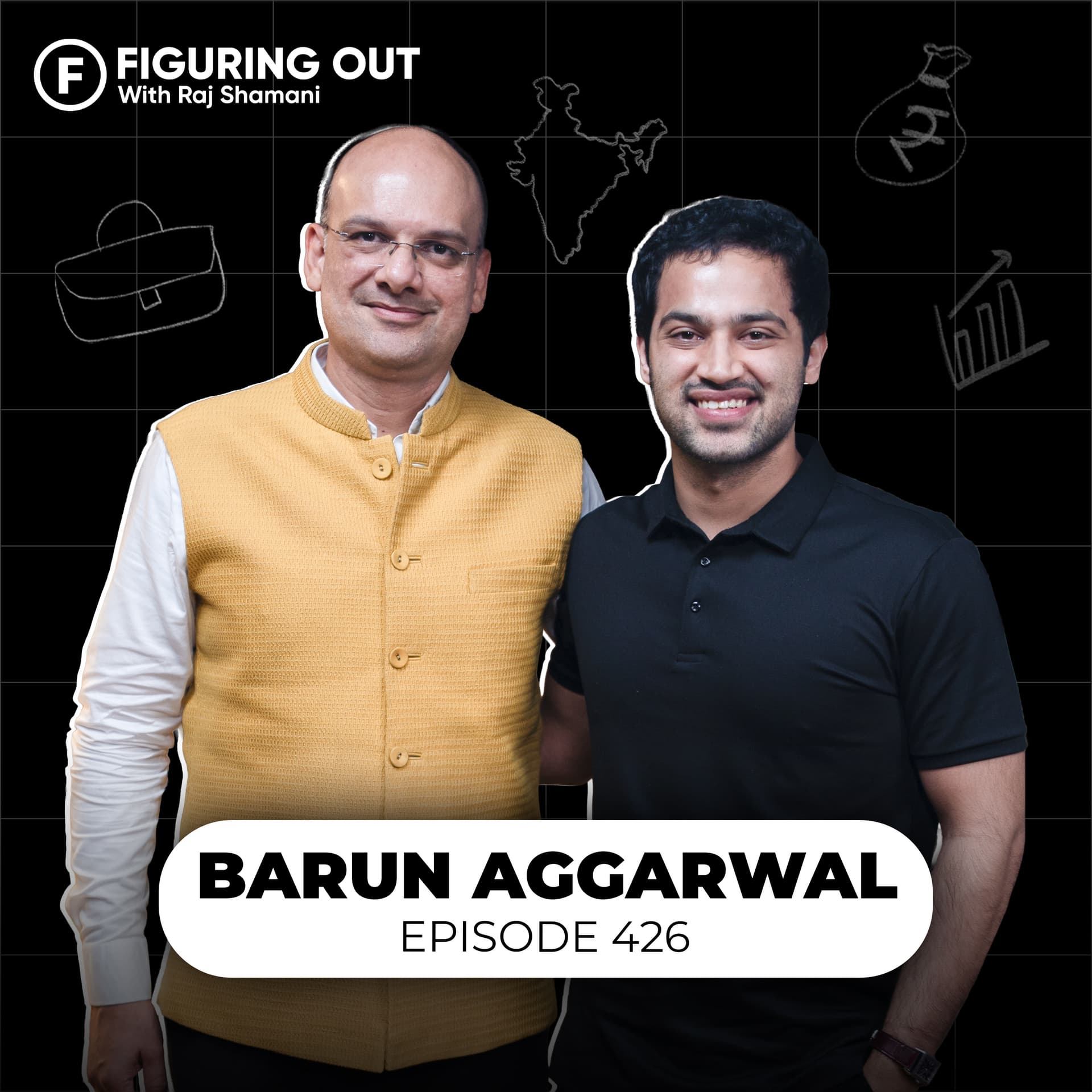
Podcast Summary: Figuring Out with Raj Shamani - Episode 426
Episode Title
You’re Breathing Poison: Fertility Issues, Heart & Lung Diseases | BreatheEasy
Episode Overview In this episode, host Raj Shamani interviews Barun Aggarwal, CEO and founder of BreatheEasy. The discussion focuses on the severe health consequences of air pollution in India, particularly in major cities like Delhi. They delve into how air quality impacts fertility, heart health, and overall well-being, emphasizing the urgency of addressing these environmental challenges.
---
Key Topics Discussed
Introduction (00:00)
- Raj introduces the episode and the importance of discussing air quality and health.
- Emphasizes that the air quality in cities like Delhi is equivalent to smoking multiple cigarettes daily.
Impact of Air Pollution on Health (03:02)
- Air Quality Statistics: Delhi's air quality has deteriorated, leading to health issues.
- Health Effects: Air pollution leads to reduced brain function, productivity, and increased health risks.
Pollution and Fertility (06:03)
- Discusses the link between air pollution and fertility issues, emphasizing its impact on reproductive health.
- Mentioned how pollution affects fetal development, leading to lower birth weights.
The Science of Air Quality (10:48)
- Particulate Matter (PM2.5): Defined what PM2.5 is and its sources (combustion activities).
- The adverse health effects of PM2.5 exposure, including various diseases.
Pollution Sources (25:21)
- Stubble Burning: Discusses how agricultural practices like stubble burning contribute to pollution.
- Indoor vs. Outdoor Pollution: Highlights the often higher pollution levels found indoors.
Effects of Indoor Air Quality (39:55)
- Discusses "sick building syndrome" caused by inadequate ventilation.
- Importance of ventilation in kitchens to reduce harmful odors and pollutants.
Solutions for Improving Air Quality (48:38)
- Indoor Air Solutions: Barun shares practical solutions for improving indoor air quality, such as air purifiers and plants.
- Highlights the differences between air purifiers and natural plants in dealing with air pollutants.
Economic Impact of Air Pollution (1:13:16)
- Discusses the significant economic costs associated with air pollution, estimating losses in health and productivity.
- The long-term implications of poor air quality on India's economy.
Barun's Entrepreneurial Journey (1:21:37)
- Barun shares his journey in establishing BreatheEasy and the challenges faced.
- The importance of raising awareness about air quality and health.
Closing Thoughts (1:34:31)
- Emphasizes the importance of clean air as a public health issue and a necessity for improving quality of life.
- Encourages listeners to take actionable steps towards improving their air quality at home.
---
Key Takeaways
- Urgent Health Crisis: Air pollution poses severe risks to public health, impacting fertility, cognitive function, and overall well-being.
- Awareness and Action: Raising awareness about air quality is critical for encouraging individuals and communities to take action.
- Practical Solutions Exist: Simple changes like improving ventilation and using air purifiers can make significant differences in indoor air quality.
- Economic Considerations: The economic impact of poor air quality is enormous, affecting both individual health and national productivity.
Recommended Actions
- Monitor Air Quality: Utilize air quality monitors in homes to assess pollution levels.
- Invest in Air Purifiers: Consider high-quality air purifiers to improve indoor air quality.
- Advocate for Change: Encourage community awareness and government action on air quality issues.
---
Conclusion This episode is a comprehensive exploration of the urgent need to address air pollution's impact on health in India. By discussing the science behind air quality, its effects on health, and practical solutions, Raj Shamani and Barun Aggarwal provide valuable insights for listeners seeking to understand and combat this pressing issue.
Written by AI. May contain mistakes. Listen to the episode to check what was said.
Transcript
Automatic transcript. May contain errors.0:00The birth of every child in Delhi is now smoking 20 cigarettes the first day they breathe in the city of Delhi.
0:10The air in Delhi has turned from very poor to even severe in several areas.
0:18Once it goes into the bloodstream, your brain, your heart, your liver, your kidney, your reproductive system, then the story is finished. Thinking ability, productivity ability. We have to take all of these things from the pollution. So when you sleep in a bedroom without fresh clean air slows your brain down. Sleeping in a closed bedroom which has very bad ventilation actually as bad as drinking two beers a night. 100 % In the old days, our house was very open. The windows of today's today are tightly sealed. You're stopping the exchange of any air. So all the indoor pollutants stay trapped inside.
1:02Tell me three things which can go wrong when you don't have ventilation in the kitchen. One is odors going into the whole house. Second is the person in the kitchen is impacted a lot more. And third, over a period of time, the odor reacts with other gases and other things in the air and becomes more harmful. Worst air quality city in India? Agra, Gwalior, Kaziabad in three of them is the number one. You said We who are breathing From the babies born They have a problem How do we do?
1:41Every day We consume 11 ,000 liters And a average Indian Every year He has 15 kg Dust and pollutants Inhale Studies say Indians' lungs Western lungs are small and air pollution is not only in-fertility, diabetes and heart issues even if we filter out food and drink then why not filter out because the air you breathe decides how well you live Today's guest is Barun Agarwal CEO and founder of Breathe Easy who works in water quality and health connections in this episode in this episode we will understand How can the pollution and emissions affect our health and future generations? And how can the practical solutions and technologies create a cleaner and healthier environment?
2:35Please watch the episode end if you have improved your home. This will be practical solutions, technology insights and awareness which will help you and your family to create a healthier environment. create and help and breathe easy products check and click the link in the description
3:01you said we who breathe in the house inside or outside over this country with the babies born not they problem How is the problem? the skin barrier in our nostril and goes into the bloodstream. Once it goes into the bloodstream, it finds its way to all the organs of the human body. Your brain, your heart, your liver, your kidney, your reproductive system. IVF has become a rage in India. Why?
4:13Yes, there are many other factors, health, lifestyle, etc. etc but i say one of the major factors is air pollution it is impacting directly reproductive health of people in india and around the world if we first bloodstream bloodstream say every organ every organ and that's how the baby which has not been born when it is in the uterus that it is impacting the fetus in the uterus and the baby that is being born is being born of a lower birth weight than they would have it's a direct correlation studies have been done that says that lower birth weight because of particulate matter found in the placenta is that also the reason i study studying where indian babies are small from switzerland babies yes there is a study on that absolutely indian so my hypothesis is is if you have medals in olympics medals air pollution our lungs will get better we'll be able to better perform in sports we are unable to perform at the level of europeans and other countries because the air pollution in our country is so high.
5:33Our lungs are weaker. And that's why they're shrinking and that's why smaller. Our lungs are 10 to 15 % smaller and weaker than other western lungs. So you want gold medals in an Olympic? Clean your air. We are born only with a disadvantage. With a disadvantage. Yes. So this PM 2.5 goes into every organ of the human body and causes problems in the long run then you said fertility infertility pollution or infertility because it's impacting every organ including the reproductive organs of women but how, if I take a breath then it's pollution that is that is my blood now that physical matter a physical thing is obstructing the normal functioning of my organ
6:33is it is it proven yes there's clear science which talks about and there's i'll share and then you said fatigue fatigue comes later in the second bucket in the gases okay and then you said mental health alzheimer's and alzheimer's and alzheimer's diabetes dementia all linked to there is a linkage that has come out in a study i don't know the direct what happens if you live in a polluted environment and you have pollution in your home then what will the diabetes patient happen to the patient or what will the diabetes of diabetes goes up when you're breathing more polluted air the probability of getting diabetes is higher when you're breathing polluted air and mental health be you can get a stroke because of air pollution that air pollution the particle when it cholesterol blocks your artery and because of that you get a heart attack same thing the particulate matter is so small that once it's in the blood and it goes into the brain it can potentially cause stroke
7:57it is a fact world health organization why did the world health organization say class 1 carcinogen and why did it say that it should be 5 to 5 your average annual exposure you are taking 50 micrograms in Bombay you don't know you are so particular about everything thing health in gym we go to gym to make body organic food we eat healthy we eat water filter water water barrier we all see but how much we eat every day 2 liter 3 liter 4 liter we eat how much we eat 400 gram 500 gram how much you eat every day one one
9:12nugust topic book So, no, 7, 8, 10, 30 days We live without eating But without 3 minutes It's difficult to be So, is that the reason? We are so oblivious We don't know what problem is I can't even know what problem is So, don't forget I don't know what is the reason People don't think Accumulative effect How much water will go inside How much pollution is a cumulative effect of your body. God has given us the lungs, the magical lungs. He has given us lungs which have 80 % more capacity than what we need to live a sedentary lifestyle. Not to win Olympic sports. To live a sedentary lifestyle. We have 80 % more lung capacity.
10:06A lot of people don't even feel the impact of air pollution on their lungs. Because until 80 % damage will not be damaged, will not be dark, is. Tıp tuk logeo ko pata bhi nii chalata ki mayre lunges mein kuch hua hai. But jis din woh 80 % pahunc gaya phir kahani khatam. Phir kuch koji purifier, koji help nii ar saka. Phir to woh wala filter to nikal ke jaysse meinne aap ko dikhaa kala wala nikala naya laga diya khar saka tein asanhi se. But ye wala filter kohon nikalega?
10:38Hota ya áaj kal. Lung transplant hota ya. But us mein waiting list bhi hai. but what success rate is very low success rate lung transplant is a very major surgery science, basic air normal air what is the science of air what is the science of air fresh air in the world in the whole world air goes on oxygen carbon dioxide 15 % of other gases everything is going on it's out there what is happening in any country
11:22So what is going on? Explain. What is the definition of clean air? We'll start with that. Clean air is essentially air minus pollution. Simple. Very simple. Hawa is All pollution Harmful is We call it It's called Saaf Hawa If the composition If it's 20.9 % Oxygen 0.04 % Carbon dioxide Close to 78-79 % Nitrogen And the rest are inert gases 0.7 % so that's simple but because of human activity which are our activities just by the fact that we are breathing by the fact that we have industry all industries pollution by the fact that we make food depending on which fuel we have used to make food how the fuel is out of it all human activity creates some level of pollution so when pollution comes in the air it gets mixed in it and we get what we call polluted air air pollution air pollution I divide in three buckets to simplify it three buckets of air pollution the first bucket is particulate matter PM 10, PM 2.5 PM 1 this denotes the size of the particle PM 10 10 micrometer in diameter and smaller particles PM 10 PM 2.5 is 2.5 micrometers in diameter and smaller particles 1 ball is less than 70 micrometer diameter 2.5 70 is 1 ball 2.5 and it can go to 1.3 that particle if it is in the air it will not see and PM1 1 micrometer and smaller so that is the definition these are in the air they can travel thousands of kilometers without falling to the ground and they are typically harmful class 1 carcinogen as given by the world health organization breathing this it goes into your lungs and makes your lungs black we had put out an ad a lot of years ago in that ad there was a cake on the cake a cigarette on the candle and said the birth of every child in Delhi is celebrated like this by virtue of being born in Delhi that child is now smoking 20 cigarettes It's the first day they breathe in the city of Delhi.
14:32They don't have a choice. That's Delhi. Bombay is not that much better. The child who is born in Bombay, has not drank 20 cigarettes. He drinks 4 or 5 cigarettes. He drinks here too. So that's PM 2.5. That's PM 2.5. And how does it come? All combustion activity typically. whether it is industry whether it is automobile i've created a presentation called 13 reasons why which is meant for a very high level governmental interaction to help them understand the 13 reasons jiski wajah se pollution hota hai and 13 solutions to that ek ka to humnne already kar diya hai 12 rahe gai hai ap to agar ham 12 ke 12 problems ko solve kar diete hai so air pollution PM 2.5 problem PM 2.5 which is the fire any combustion any combustion so the gas is coming from what is PM 2.5 plane plane if the fire in Delhi in the winter it is very hot all security guards in the car all the security guards are out there and they are who are out there which are in the hand like rubber cut tire the contour, fundamentally.
15:50which eclipse the climate change to bring the warm water and keep odourism. special Aye-dea - aye - Styles when gradually it comes from some other factors add sugar Что really trapped rehta hai neiche. Why? Because of the temperature inversion, it traps the air inside the warm air that settles at a certain height above the ground level. So it's called temperature inversion. So that warm layer stays there and this cold air and the smoke inside this cold air gets trapped inside. Okay. So when you wake up, you wake up to a lot of smoke. Sara jo truck ka traffic because Delhi is a corridor for all the traffic going from north to south and south to north so all the truck traffic all the smoke at night because the trucks of the traffic will open up the traffic in Delhi it's not just Delhi I'm talking about Delhi but it is across the country I have a map a briefing that was done by one of the leading scientists of air quality in the world for the US ambassador.
17:11A briefing was done many years ago. And after that, they made India as a hardship posting for the US embassy because of the air pollution in India. And it shows two maps, one of the United States and one of India. And it shows the mortality because of PM 2.5 in both the countries. Mortality from PM 2.5 in the United States, blue is good, red is bad. Yeah, India. blue is good red is bad this is red and dark red yes this is dark red and darker red there's not even yes there's no blue there's no white there's it's all pink red and dark red you say that this is the problem of Delhi, no it's not in India, I said that this is the problem of the first time I went to the pollution world when I came to the village, I went to Rajasthan in a village.
18:08It was a small fort, not a fort, it was a small haveli type. It was a reservation lately. And it was horrible over there because the whole village was made of its food. So the food was made of the food. When it was 5-6, it was made of the food. It was 7-8, it was all the food. you could smell the smoke all night long in that room of the Haveli which is next door to the village temperature inversion in the summer it goes up in the summer it goes up in the winter it goes up in the winter it goes up so it's so bad that we will go back to Delhi's home because I have a little technology to save you so this is a big problem that people are not aware of this awareness which is PM 2.5 World Health Organization, that is 5 micrograms.
19:04It should be less than 5 micrograms. Our exposure is in Delhi, in Delhi, 120 micrograms. It is average of the year. In Bombay, it is 60-70 micrograms. It is around that much. Let me show you a photo.
19:20This is a safe filter. This is a bad filter. correct. This filter three months is the last year. This is a brand new filter. Three months this ink is the that is the that is the ink. That
19:42much dirt in the air is what would go into the lungs.
19:50And when you showed that map that map northern belt Delhi, UP Indogangetic belt that is dark red why is it north problem why is it south or other regions there are two reasons the population density in that belt is higher more population means more activity combustion activity more food will be more and it is more than north so north is more than north so more people live It's more light is burning, more pollution. And hence mortality because of that is higher. Mortality means directly linked deaths because of PM 2.5.
20:35So that is one reason. Pollution. Pollution is three parts. Three buckets. Three buckets. PM 2.5. Which is due to burning fire. Any combustion activity. Any combustion activity. There are 13 reasons for this. Automobile sector Construction activity You are cutting marble from the machine The marble is coming out That is PM 2.5 Cement is PM 2.5 So construction linked activity Brick kilns Kilns are Where bricks eat Kilns are huge polluters Big Big Then in Delhi Where there are
21:23in Delhi their raw material for their kiln is sawdust so huge amounts of pollution I have a video on that also you can see a blanket of smoke of 100 meters from the building height 100 meters up it's like a blanket of black smoke covering half of Delhi. There's a video from the distance. In Delhi, blanket of smoke you can see from far.
21:55Firecrackers, Diwali time. That's why they ban firecrackers. No ban. Green firecrackers. No ban. No ban. I've seen those videos where people go out and be like, ban, yellow. and I don't know why people do that but that's their thing waste burning we burn our waste in the open we burn the oil in the open in that oil it becomes very plastic when we burn the oil in the open then the dioxins release which are directly cancer producing the direct cause of half the cancers in the city. They are linked to the dioxins that are being burnt from the plastics in our waste. Why do we burn plastic? We don't want to burn plastic but we have no option.
22:49Because plastic has become part of our life. The cow is also put in a bag of plastic. When we don't segregate the cow, dry or wet waste, and all the stuff that comes in, it comes in the cow. When it comes in the cow, and it comes in the truck, it comes in the dump. In Delhi, in one city, We have 7000 ton waste Today we have to use There is no alternative That we can use That we can use It has not been Cost feasible option It has not been Other countries Why do they do it? They do it We do it Our waste management system Is very full Before we have The most critical Is Segregation at source Of course, all wet waste you should treat at home.
23:42Or you should go to the ground and make it a good food. Sometimes systems are good, daily dumps are good, and you can put three pots in the day. You can put your wet waste in the day and put it in the day. And you can put it in 7 days. Every 7 days. So it's a cycle. And you can get very good systems like that. which is dry waste, it is also a waste of segregating. Plastic waste is also a waste, cans is also a waste and paper is also a waste of plastic waste. If you have a plastic bottle of plastic, there is a ring on top of it. If the ring is another colour, it is also a ring that is also a waste of segregating.
24:28so that when you reach waste facility, plastic will go from one direction and the ring will go from different direction which will be recycled from different ways because the coloured plastic composition is different and the bottle composition is different so recycling processes are different so people who are working on it and send it to the house so it becomes a possibility to do the proper recycling here no system here in indoor have you heard of it indoor you have to put wet waste and dry waste separately no the car doesn't go to the car it doesn't go to the indoor successful model but now the whole country will go and then what else parali burning is one of the big ones what problem is parali burning which we keep hearing every year and then a state blame on another state what is that this is a phenomena that started approximately between 20-25 years ago where we changed the kind of rice that we use in terms of the seed and that rice requires more water and the time at which it gets sown and harvested got changed.
25:58So because that timing got changed, it got shifted because of the water issues, what happens now is that they have to harvest the crop right before the winter cold comes in. If it comes to the cold, the crop will be bad. When the crop cuts, there are two things. is the one that is stubble remains in the ground 4-5 inch 6 inch stubble they put diesel and put it on the ground they think that is good for the soil but it is not most farmers think that it is good for the soil but it is not good for the soil but actually not good for the soil the other problem which is why they do it they have not time time not for the hands of the table.
26:52The machines are also time. The other is labor. The whole labor is in the city for the work. Labor availability is not for the work. The next sowing season is only one or two weeks. If they don't land, they lose that window and they are unable to do three crops in the year. 3 so that's why the time crunch labor crunch forces them to burn that stubble or the timing of that is such that the cold air has just started to come in the temperature inversion happens and the wind direction changes first that wind direction south east to northwest now and you remember last year Pakistan in Pakistan that it's burning from Punjab and pollution there's a huge hue and cry that the entire India pollution came from Pakistan and suddenly overnight it changed all the Delhi because the wind direction changes at that time of the year the north easterly becomes it becomes the westerlies which come in from the north west into the south east so Punjab and Haryana the burning is in Delhi and when it comes in Delhi it feels like it's been like it's been visibility a bit less than it is.
28:18But it's not khora. It's actually smoke that you're breathing. It's not fog at all. People say smog. I said smog. Smog is a combination of smoke and fog. But actually, what is in Delhi, it's not smoke. It's smoke. Pure smoke. Pure smoke. And all these things are going on. Yes. Now, one thing is going on. there's a current study that we are doing IIT Delhi is doing the study we found that there is chlorine in the air in Delhi chlorine? how did it? after a big research we realized that this chlorine which is our crops India is an agricultural economy all the crops require potassium what is the form in which we give potassium to all our crops?
29:17Potassium is imported in huge volumes in India. And it comes in a liquid form called KCL, potassium chloride. That potassium chloride is sprayed on all our crops. So the potassium chloride gets absorbed. The potassium is used for growing of the plant. And the chlorine gets absorbed in every molecule of that plant. so when the oil is cut, the chlorine will release in the air and when the oil is cut, the grain will be released and the straw is cut, the bales will be sent which is then burnt throughout the year as the cheapest form of fuel so throughout the year when it is burnt, again the chlorine in that is released in the air and the levels of chlorine are off the charts
30:11chlorine is in that second bucket of gases which will i get to now so the second bucket first bucket is particulate matter burning all the particles smoke cigarette smoking is a is a source of it all of this is fires it's a source of particulate matter then you have the second bucket of gases there are multiple kinds of gases the first kind of gas i told you inside volatile organic compounds that's the whole chapter on that deodorant spray volatile organic compound cancer producing room freshener volatile organic compound most carpets most wooden flooring most furniture will give out formaldehyde cancer producing volatile organic compounds and all new things there is also off gassing that is that off gassing is VOCs volatile organic compounds there are 1200 different VOCs and we have equipment to measure each one of those so not only can I measure it then I can target it to remove it from the air so new room paint new mattress he brings ma Anime has installed a new kayak new seat when ever whatever that are used to be dia all the gases its name material movie my adhesive if you can put it whenclMin trapper you want glue in glue comprehend
31:51glue you see. Volatile organic compound. So, this is a very normal thing. Every time we go through it, daily we go through it. What is this? It's cancer producing. Little by little, it's accumulating in your body and creating cancer in the long run. It's a cumulative effect. It's not that I have taken it today, so I won't do it. But it accumulates in the whole body. PM 2.5 also accumulates. I skipped one part. PM 2.5, it's not just affecting my lungs it is so small some of these particles 0.003 microns we have found pm 2.5 in the placenta of a pregnant woman pm 2.5 causes ischemic heart disease birth weight of children in india is lower not only because of malnutrition but also because directly related to PM 2.5 found in the placenta of pregnant women.
32:51PM 2.5 is linked to Alzheimer's. It's linked to diabetes. It's linked to heart disease, liver disease, kidney disease, stroke. A bunch of different diseases are linked to particulate matter exposure. And that is why I say clean air is the ultimate biohack. Okay, we will stop here. Go back again. I came to the second bucket too quick. Now we talk about PM 2.5. Let's go back to the core. PM 2.5 was the first reason. Second, we talked about VOC. Second was VOC. The whole new things come in the house. The VOC is in the house. And in the deodorants, room freshness, spray. In the aerosols. There are other things.
33:43Musquito repellent. We put plug in the plug. It's a mosquito kill. But in the human body, nothing is happening. Nothing is happening. We are still dying. We are still dying. But replace it is difficult. If you have a region where you have a mosquito problem, you don't have to use a mosquito coil. You don't use a fast track, fast card, or you don't use a jet which you don't use, then what do you do? There is no option. It's not. You can't use a mosquito.
34:42Many things in life are difficult. tell me if I have cancer is chemo easy after that no na I feel that is much more difficult than trying to deal with and creating a system which allows me to stop simple deodorant you spray deodorant as well karon ki tajad mein bikte hai carcinogenic the solution is a very simple solution. Alum stone is fit curry. Use it as a deodorant. 10 rupiah fit curry, you will have 2-3-4 years and it is the best deodorant that you can ever use. You can use gas free. Roll on but it also has plastic. When it is finished, what do we do? We throw it, it goes, it goes, they come into our dioxins fit curry is natural stone it's the best deodorant ever I've used it for the last 8 years or solid perfumes same thing solutions are there we have to find them it's possible to be sustainable to be healthy it's possible to stay away from the challenges yes some of them are more difficult How much do you do it?
36:06How much do you do it? Do you have a mattress or a deodorant or a deodorant or a machine or a machine or a machine or a machine or a machine or a machine No, we will do it We will do it But we will do it We will do it I buy my carpet I make sure it is certified low VOC carpet The paint on the wall I buy low VOC or zero Excuse me Zero VOC paint Because you can afford it not many people can afford it. The cost differential now has come down dramatically. 4-5, 3-4-5 % in the cost.
36:44My air purifier removes the VOCs. It's got a 2.5, I've got the filter over there. 1.5 kg activated carbon filter. I import these machines from Switzerland. We'll talk about that. I want to know about the solutions. By Switzerland. Yeah, like I want to know a lot of things about it. But VOC. and then third part so within in that second bucket we've got vocs also we've got other harmful gases like nitrogen dioxide sulfur dioxide and hydrogen sulfide sulfur dioxide and nitrogen dioxide are typically industrial byproducts even from a car the gasoline that is used diesel and petrol in india it has sulfur content so when the combustion in the vehicle happens sulfur dioxide is released in the air sulfur dioxide creates a lot of challenges with breathing and eye watering eyes etc but also when it is released in the air it combines with other vocs in the air and creates secondary particulate matter which is even more harmful the latest study is saying that the life of particulate matter is also very important because the toxicity of the PM2.5 increases over a time and then decreases after some time.
Read the full transcript
37:58So once the particulate matter is created, it may be safer at that point in time versus two hours later or two days later. So they're still studying that. So the timeline, the toxicity of that depends. And that's also the secondary is caused because of sulfur dioxide. One other one important one is hydrogen sulfide. very bad smell hydrogen sulfide chemistry in school when we study H2S is a very bad smelling odor we have a lot of open nalas in India yeah where the smell of nalas is you can see AC is in the area quickly and then people complain that AC is not a guarantee because here are AC 6-6 months why hydrogen sulfide area ke nalye se nikalti hai gas woh corrosive hoti hai joh AC ka copper pipe hotai na jis se bahar ke unit aur under ke unit ke biect se woh refrigerant flow hota hai, woh copper pipe me jab woh hydrogen sulfide gas touch hoti hai, to woh corrosion ho jata hai aur chheda bun jata hai us copper ke pipe me so is lihe woh thinda grana bant kar dhe haa woh leak ho gai sari gas gas leak ho gai, jih gas bharani hai gas bhar dihi, fhr dhu dhin me leak ho gai kyun?
39:13kyunki pipe me chheda ho gaya imagine if H2S copper pipe what is doing insane so this second reason and the last part is the gases is the CO2 carbon dioxide what we are breathing in right now and breathing out as of now CO2 level is 1140 it's in the orange zone it should be in green if it's below 800 then it will be in green how do I do that it should be fresher where do I put it from outside outside outside outside I categorize it from two ways outside is bad but fresh clean and dirty is one and fresh and stale is another. So outdoor air is dirty but fresh. We have to bring fresh air and clean it before we bring it inside.
40:25And that's what we do. How did it happen? Your AC is here. This AC is here. There is AC. This system is recirculating your system. It's cold and back.
40:48So we are breathing CO2 This is going to increase in the camera
40:56The CO2 is always close to 400 Outdoor average as of last recording Global average is 407 parts per million So if you introduce 407 hydrogen ki hawa introduce karo ge hi haa per to joh yeh coda so hai woh dilute ho jayega aur ahistah ahistah niche ajae ga woh gate khul le rakhye gate khul le rakhye agar proper system nahi hai hai nii kuchh or edher tuh dan pooch ke asa bana hai ki close awaz na hai kuchh yeh na hai all the electronics that you use life will go up because of lower particulate matter joh pm 2.5 hai or joh gases hai When the PCB board has the electronics When it has been sitting, it has corrosion Like you have a corrosion on AC and electronics And corrosion, like a connector It has been broken by corrosion The electronics can go up with clean air People spend big money on data centers for clean air because servers go down very bad what does it matter
42:12logically it makes sense to me that our house has more pollution 100 % indoors have more pollution than outdoors have you heard of something called sick building syndrome yeah huge industry big problem and why is that happening more and more today in the past our house was very open open
42:39You could see through them also. You could see through them also. We want to place the best quality windows. And they are tight. A tight. Why? Soundproof your house from the noise pollution of the city. Yeah. But by air-tightening your house, you're also stopping the exchange of any air. So all the indoor pollutants stay trapped inside. And that is the reason of sick building syndrome. It started in the West because the good quality windows were a big phenomena in the West many years ago. Why? Because of energy savings. Explain in simple words, sick building syndrome. Like what I know is
43:54that is sick building syndrome 200 % You have said it very good You walk into a room With a bad smell You will feel That a bad smell is coming But if you have to sit there Forcibly sit there After 15 minutes You will not have that smell Why? That smell is not gone Body used to The olfactory has got used to the smell But the Pollution which is the smell it's still going into you and it's still impacting you it's just that you got used to it the brain has got used to it that's all, the body has not the brain has I was reading another study when I was doing research for this podcast that sleeping in a closed bedroom which has very bad ventilation is actually as bad as drinking two beers a night I don't know how to compare that I have the whoop band And it tells me my recovery I have one drink And my recovery is below 50 % One drink And my recovery is below 50 % Now I did the same thing In my home, in my bedroom I have the IQ Air machine But it's a very special installation Where I bring outdoor air Through that machine and push it into my room So my CO2 is fresh I said I keep it off one day I keep it off and I checked the recovery next day no alcohol both nights, one off one on and my recovery was lower much lower statistically and significantly lower when I slept in the room without any fresh air versus when I slept in the room with fresh air So we all are tired next morning because we all are big room in the room, which we don't know.
45:542 ,000%. Simple. What you're taking out of the room, it is 40 ,000 parts per million of carbon dioxide. The air that I'm breathing out right now is 40 ,000 parts per million of carbon dioxide. Outside is 400 parts per million. So in a room, if two people are sleeping, the accumulated effect, I've done the tests in my bedroom, it depends on the size of the room also. my bedroom the CO2 goes up to 2800 parts per million so I've started we have a building in Delhi called Paharpur Business Center we have 700 plants inside the building natural plants which absorb carbon dioxide and give out oxygen so I said oxygen in the kitchen plants so in the kitchen my wife was like what the hell is wrong with you you've got mad I said no no it's just a test I put like I think some 20-22 plants in the entire floor of the bedroom.
46:55The CO2 level went from 2800 to 2750. 700 plants? No, in my house there were 14 plants. Okay. The building is different. It's different. So, it was 50 parts per million. I wanted to be 800 down. And I struggled. once you know that it should be below 800 and you're in a second or second, it will also be psychologically the effect of it. I'm still sleeping. So I struggled. Then I was in Switzerland and we'll get to that at the next stage I guess but I saw this machine with the hole in the wall and a duct. I said, what is this? The owner of IQ Air I said, what is this? He said, these are for special applications for hospitals when you need to pressurize a room then I used my brain and I said can I do this for myself let's try it out I was very scared I said if I brought this in the air in Delhi there is so much pollution this filter will be done in two days Swiss machine is Swiss filter
48:01it's not viable economically viable I said okay I'll try two days one week one month I was shocked This machine Filters 1 year The first filter The first filter The change Back to 2 months The change The change But the other filters 1 ,5-2 years Compare the plant And machine Air purifier And plant If I have a plant I have a plant Oxygen There are a bunch of plants Like that and so that air better feel which is true plant better feel and it's good how much difference in an air purifier unfortunately the earth the earth the work air purifier can't do it the plant and I'll tell you why there are two very different things that both of them are doing the plant it's CO2 absorbing and giving oxygen Dere Raha Hai.
49:11Jho Air Purifier Hai, Woh CO2 Kuch Bhi Nahi Karra Woh Khali PM 2.5 Or VOCs Pe Fokus Karra Hai. Bhas. Woh CO2 Ko Chhou Bhi Nhi Sakta Hai But Plants Are Only Doing CO2 and Maybe Some VOCs. Jho PM 2.5 Hai, Woh Plants Bohut Kam Kertai Hai. And Even Plants Do Work On PM 2.5 And I'll Explain To You How. Simple Hai As You Said Like A 5 Year Old A plant every leaf has pores on it called stomata Which we have studied in biology class When the plant takes breath in Carbon dioxide goes into it Which is the plant which is bigger And it gives the tomato from outside But the water is PM 2.5 When the water goes into it PM 2.5 will be attacked
50:36the pores are blocked and choked. After the rain, do you feel that freshness? When you give plants, you don't forget the rain. You give plants and suddenly you feel that freshness. Why? Because suddenly the plants are saying, oh, thank you, I can breathe now. I couldn't get my breath until now, because my stomata and nostrils were in my nostrils. So they are able to function. all plants go dormant in the winters in Delhi because the dust levels and the smoke levels are so high that all the pores blockers so plants work but you have to keep wiping their leaves regularly every leaf will have to wipe regularly for them to actually give you some effect then they will do work on CO2 and some VOCs but still not much on PM 2.5 so air purifier PM 2.5 focus and VOC focus plant CO2 but you need a jungle to bring the CO2 down in a bedroom I have told you now that 14 plants in your room came to 2750 million I need 800 so until I didn't put 400 in my room until that 800 so you are telling me that machines have beaten nature No, I'm not saying that.
52:04I don't want to say that. What I'm saying is we have messed up our environment so badly that nature is unable to keep up with that. And hence we need technology. Talk about kitchen ventilation. See now because it's expensive and this is more city problem. Right. all so expensive that people only get a big deal then what ventilation is in the house that's a very second luxury and especially kitchen if you live in Mumbai then you get one opportunity where something is coming in the living room and there are windows and the rest are closed and the kitchen is in the back of the kitchen and in the deep place so there is no major ventilation what happens so many challenges can come up because kitchen should always be negatively pressurized kitchen smell unless and until the smell will come but all the houses are built in the kitchen that is because the system is not designed correctly It's such a common thing It's a very common thing for the system But in every room It is a very common thing for the system To not be designed properly None of our projects Will you find the kitchen orders In the rest of the house Ever A good quality exhaust system The hoods The exhausts are not adequate For our kind of cooking in India our cooking is very heavy cooking we fry we do a lot of things it's not a simple boil and stir fry we do a lot of cooking in India we overcook our food that's a different topic but because of that the kind of frying we do you need heavy duty exhaust systems in every kitchen the hood on top of your stove is just not adequate and today most architects and designers.
54:22I love them, but they hate me because I don't like those in-line exhaust fans. Because they say, no, it should be in-line or it should be hidden. It should not be in-line. It should be in-line exhaust fans. Today, no designer wants to be in-line. It doesn't look good. But the work is that. In-line fans don't work. They are 10 % capacity and function of the proper wall ones. Then, the bathroom smell people complain in the kitchen smell people complain in the kitchen smell people complain why because you should look good pick form or function tell me three things which can go wrong when you don't have ventilation in the kitchen what can happen one is orders going into the whole house and people nobody likes that the the second is the person in the kitchen is impacted a lot more without the right kind of ventilation.
55:21And third, over a period of time, those odors inside the kitchen can have an impact on everything that is inside the kitchen. You have bad odor or lingering odor over a period of time. The odor reacts with other gases and other things in the air and becomes more harmful. It will create more issues with your bread is kept out of your aloo-piaz. It will have an impact on all of those things also. we were talking about kitchen and home and sleeping right if you connect all of these things first is that the people who are up in the morning are groggy and who are they are crying and they feel like the sleep is not good and they are not good and they are not good no matter how much they sleep 8 hours, 9 hours, 10 hours they are tired and large part is that their home in the kitchen the pollution is over the WOC is over the pollution is over the pollution is not proper because the pollution is over because of the pollution is over so they are not able to function properly right right does this have a direct impact on thinking ability productivity ability
56:38maybe how somebody memorizes thing brain fog learning these all things so there's a study which has come out which says that high co2 and voc and pm 2.5 levels leads to lower test scores in students so when you sleep in a bedroom without fresh clean air and the co2 goes to 2800 most people complain that tomorrow morning
57:17why the reason you want to sleep 10 minutes more is because the co2 levels are so high in your room this is assuming you didn't have too much alcohol you didn't have a very late night still you want to press that snooze button because the CO2 level is so high high CO2 slows your brain down it is literally slows your brain down so in your bedroom it is kept at a high level if it is at a high level you wake up feeling lethargic and tired the first time you wake up and mind that you open the door fresh air why? because outside air is fresh and inside your room is completely stale air.
57:56So for the last eight years, Raj, I have not needed an alarm clock to wake up. The CO2 in my room stays under 800 all night, every night. And I have not needed an alarm clock whether I wake up at five o 'clock for my golf or whether I wake up at 6.30 to drop my kids to school. I have not needed an alarm clock. Has it helped you become sharper and better? I don't know about the sharper bit I'm not going to say that about myself but I'll definitely say it's made me more energetic I feel lively, I feel energetic I wake up feeling energetic and ready for the day I don't have lethargy in the early mornings at all anymore because fresh air can actually make that difference in your life Do you think this is on a larger country conversation This is also making us less effective as a country.
58:51Is it making employees more tired and less productive? And people not able to function at the top level which they should be? 200%. And the reason I say that is every time I travel out of the country, and I used to travel a lot. Even now I travel a little bit. I go out and I can feel the energy levels change. I can feel that I want, I can work longer hours. I can walk for 20 ,000 steps if I'm in New York City and not feel that tired at the end of the day. And my productivity levels are at a whole different level. Even though I have clean air at home in Delhi and clean air in my office, even then I feel the difference.
59:36Imagine if you don't have clean air, what difference you will feel. So which is the cleanest city or cleanest air quality city in India? and worst air quality in India? Which city would have? I think one of the worst, as a city, small city, I think one of the worst is Ghaziabad. Okay. A lot of industry over there, and a lot of population there, and a lot of activity there. So that's, I think, one of the worst. Even Gwalior was at one point ranked. Agra, Gwalior, Ghaziabad, in three of those three, number one is going to be a big town. in the north east byrni hart why do you pronounce it b-y-r-i-n-h-a-t okay this is north east see that's the one byrni hart birni hart birni hart north east there is this town there is only industrialization that's a lot of cement coal marble and it's one of the it's the most populated city in the world and there was a very viral post living in the world's most polluted city within india and there someone tried to grow some fruits vegetables normal vegetables this is cabbage wow the economic impact of air pollution is tremendous not only on the health of people but air pollution causes lower yields on our entire crop in India now imagine if you start calculating the economic impact of that it comes in close over a hundred billion dollars is the is the economic impact on one of those issues on health it's 88 87 billion dollars on uh tax you know if in delhi there's a statistic which says that people live nine years less on average in the city of delhi because of air pollution nine years of life is lost so nine years of life from a consumption perspective and from a direct and indirect tax perspective what is that cost to the exchequer so I was reading a Lancet report which said India every year just because of air pollution there you go 150 billion dollars every year so this is the problem tell me that was my tagline my first client that we got so the way I got into it is also an interesting story but for the first eight months after I started Breathe Easy I had zero clients my own family said first eight months yeah eight months zero clients zero business everybody said he's gone mad I had taken a one year sabbatical before that before I started Breathe Easy and my own family said that after the sabbatical he doesn't want to do anything for the rest of his life and that's why he's selling clean
1:03:04but somewhere in my head i said and i'll tell you how i got into it so i'd taken sabbatical from my previous life i was working with a business that i started in the u.s and i was traveling every 20 days 20 days in india 20 days in the u.s 20 days in india 20 days in the US. I did this for six years. Completely burnt out. And when I was in the US for 20 days, I used to be in at least a minimum of six cities in those 20 days. So burnout. After five, six years of doing that, I said, I'm done. Can't do this anymore. Need a break for one year. So I took off. I went up to the mountains. I went to the Appalachian Trail.
1:03:50I went to the Alps and then I came back to India and I went up to Yamnotri. I took special permission to stay with the pandas in Yamnotri. And I'm staying over there and one night it was a big storm. Like bad thunder and huge rainfall. Scary. But I woke up in the morning and I saw the brightest blue skies that I had seen for a long time. And in my head I was just contrasting the grey skies of Delhi. In Delhi, the skies are always gray. Even Bombay, mostly it's gray. Light blue, we feel good. But the bright, crisp blue skies, I saw that in Yamnotri that morning. And both my children had suffered after we moved back from the US to India in 2010.
1:04:37Both my kids, small kids at the time, they suffered with wheezing or like close to asthma, all those issues. My wife also suffered. She had chronic cough. Like to the point her ribcage got damaged because of a chronic cough. And then we found air purifiers and put it, they got a little bit better. When I saw that gray and blue sky contrast in my head in Yamnotri, I immediately said, I said, my father-in-law has got a building in Delhi called the Paharpur Business Center. And he's fixed the air quality in that building. I knew so. And I knew he had done a TED Talk. He had been invited to go to California to do the original TED Talk, which he did a three minute talk on air quality i didn't know much i said i immediately came back to delhi i went to him and i said you know i think there's a huge problem in delhi you've fixed your building you've fixed your health why aren't you helping others and he looks at me and he says i've got enough on my plate i've got too much on my plate i don't have time to do all this you want to do it you're looking for your next venture you start this i said i don't know anything about air quality i'm not even an engineer said how will i do this he says don't worry it's not that difficult you'll figure it out i said okay so i started reading and for three months i only read read read about air pollution and air quality and indoor air quality and what is the science behind it and how to fix it and whatever i could get my hands on i read and i started january 1 2013 yeah i said i'm going to start a company called breathe easy and see how it goes so it created a division under Pahaar Port let's see how it goes 8 months, 0 sales 0 customers and my own family said he's lost it he doesn't want to do anything for the rest of his life that's why but somewhere in my heart I knew something is bad something is needed awareness
1:06:39we started calling editors of every newspaper we could find indian express times of india hindustan times sare hindi newspapers english newspapers all of them came to office they were given lunch they were given a presentation and they were told what was the pollution i sat with dr pranay roy at that time at ndtv and i said he was very knowledgeable and he quizzed me and asked me everything and i explained everything to him i said yes yes yes yes I said, create more awareness, start talking about air pollution. So newspapers, they started doing editorials on air pollution. The second thing that happened at that time, this is I think 2014 or 15, President Obama had come to India as the chief guest for the 26th January Republic Day.
1:07:25Oh, yes. Pollution is high in January. and there was an article the day he left saying his three day, his five day, I can't remember the exact number. I think it was a three day, four day visit in India has cost him four hours of his life because of air pollution. I think everybody woke up with that. He came for three days and he's lost four hours of his life. we live here what is happening to us what is going on over here so those were two critical triggers that happened when suddenly people then started talking and asking and we were the only ones us time air purifier dhundne bhi jao na you have to take care of the air purifier where is it where is it you go to any retail shop and you say air purifier so it was we were the only ones talking about it and we created that awareness at that time and slowly and initially we were only doing large projects because that's all i knew big building with plants with technology and i said i can do big buildings so the budget was also more people are crazy i don't see it i'm going to buy 25 lakh rupees in a building I can't even see the problem but this is real but this was real at that time we didn't have a sensor like this this is a consumer grade sensor, it costs 35 ,000 rupees, IQ Air in Switzerland makes this, so 35 ,000 rupees that time the cheapest sensor was 10 lakh rupees I took a 10 lakh rupees sensor one shoulder and air purifier one shoulder went to the people's house I did that myself for the first hundred houses I walked with an air purifier in one hand and there are big machines that machine and such a big sensor was so much so much I went to the shoulder and I went to the people's house and I would go to people who I knew friends family extended I would like to come and show you something interesting something new I said come brother I went to the house I said I will drink I said I will drink because I needed time so immediately I would take the sensor and show them the reading I said look now in this camera this PM 2.5 this is now in your camera 325 microgram per cubic meter which you take the water this is 325 I said okay I don't see I'm saying it's possible Pair, Mahan Liette Ab my machine Start a machine, I have Machine, I have plugged in, I have plugged in And started, I have just Chai lured, we will be drinking And 10 minutes later, we will be Chai pij, 10 minutes later, Then test we will be That machine, that was 325 So, now 10 minutes later, And that was 70-75 And last I said, that was 5-7 minutes you have time you have time you have time you have time and chatting chatting chatting last this reading is 10 below that sensor directly machine is 0 and the camera is 10 below all the door is closed so this doesn't but this your health is wrong so some people have said maybe you have done your research maybe I trust you now let's put one machine so that's how the first sale of the first air purifier happened the big unit didn't buy anyone for 8 months then I thought they would try it the first sale happened after 8 months what was the price?
1:11:33at that time it was 30 ,000 rupees for a machine today? that was a machine that we got and over time I realized that there are much better products in the market and I went to a customer's house he had this machine, the Swiss IQ Air installed in his house. I tested it and I was blown away. It was way better than the other machine that I had put. So, I called the company. One and a half years later, I called the company in Switzerland. They said, not interested. I said, how can I be interested? I refused to take no for an answer. So, I had a friend who was working with me, half Swiss, half Indian.
1:12:15And I mentioned it to him. He said, I'll help you. So he went, he got me an appointment. So I showed up in Switzerland. I went and had a meeting with the founders. And they were not only amazed with what we had achieved in Paharpur Business Center, they were very happy with what we had achieved till then, the kind of awareness that we had created. And they said that that's the kind of partner that we like to work with. And for the first time, they gave me the rights to sell their entire product line for India. Normally, they gave only select product lines. But they gave me even some of their larger commercial products because you have to understand air quality in a holistic manner.
1:13:02By then, we had done one very large project for the American Embassy School. So, the entire American Embassy School project in Delhi was done by us and that was a large commercial project so we understood air quality by that so what difference is in swiss jiland product versus all the other products and air purifiers that we get again different is the earth and earth purifier purifier so there are two three things first and the filters here i can show them physically So the difference between a Swiss IQ Air and any other air purifier. I say Zameen Asman, heaven and earth difference. You see, first look at this filter.
1:13:46This is an advanced gas and odor control filter. It comes in a specific model called the HealthPro 250. This is two and a half kilograms of activated carbon impregnated with potassium permanganate. KMNO4. This can absorb a large spectrum of harmful gases. And if you look at this filter against the light, you will not see any light come through. What does that mean? That any air that comes through this filter has to go through some part of the carbon. It cannot bypass the carbon because there's no air coming through. You can take out any filter from any other machine in India, take out the carbon filter and put it against the light, 50 % of the light through that filter will come through.
1:14:40Air goes through the path of least resistance. So, when there are gaps in the carbon filter, there will be gaps in the carbon filter, air will come through that gap and not through the carbon. So, as good as not having a carbon filter as compared to this. So, 0 versus 10 on 10. So the easiest way to check That your air purifier Is so effective That filter is light against For the carbon filter That is light cross So it's a filter As good as not having it If it happens or not And if it's not cross Then you can see How much carbon is And what is carbon quality okay okay okay okay okay okay okay okay
1:15:34that's one the smaller machine has one kilo the most machines in India have 50 to 100 grams
1:15:44that's one now come to the PM 2.5 so this is for gases now come to the PM 2.5 particles there are two filters for particles in every IQM machine This is the main filter. We call it the HyperHEPA H12-13 filter. The HyperHEPA filter is tested in a Swiss laboratory to remove particles down to 0.003 microns with an efficiency of 99.97%. Okay. So I am guaranteed you have CNG, a lot of CNG in many cities in India. CNG gives out what we call nanoparticles. PM 2.5 is a particulate matter, but nanoparticles are smaller than 0.3 microns, down to 0.002003004 microns. Even more invisible and even more harmful to health in the long run cng cng but we are putting cng everywhere as a safe fuel as a better fuel cng better new petrol say petrol say better hey but it's still not good it's giving out nanoparticles most of the filters on air purifiers in india they will remove your pm 2.5 particle but they will not remove your ultrafine and nanoparticles This one.
1:17:11This filter is certified to remove your ultrafine and nanoparticles. Unfortunately, that sensor over there cannot measure ultrafine nanoparticles. Today, just like this sensor was 10 lakhs 15 years ago, the sensor that measures ultrafine and nanoparticles today is about$100 ,000. So even I don't have one in my lab. It's too expensive for me. I can't take it and show people that this machine is getting out of your nanoparticles, but this is not getting out of it. So that is the reality. And nearly as thick as this, there is a pre-filter, which is also a very high-grade pre-filter. The other machines are found in India.
1:17:59There is a polyester layer on every air conditioner for filtering the large particles. They call that a pre-filter. the pre-filter on the IQ Air is such a thick filter. This grade is H12-13. That is an F8 grade filter. That itself does most filters in India are equal to that F8-F9 filter. That's it. More than that, they go to H10-11. No one goes to H13. So, the AC filters are... You forget the AC filters. Those are grade 1.
1:18:4190 % of the ACs That advertise as air purifiers Are complete 100 % Marketing gimmicks Scam Complete 100 % Scam slash marketing gimmick They produce some ionizer Something something Fine print may lickha ho ga kuch Unka disclaimer Ab test karne chale jau They will not do even 2 % of filtration let alone 95 % that they sometimes claim in their ads and then what are the other companies reputed companies big companies they will do something they will do a lot like I said they will remove your PM 2.5 which is the slightly larger particles but they won't do anything to the nanoparticles they won't do anything to the gases even the top ones won't do it even the top ones don't I've met with the CEO of one of the largest consumer brand companies in the world European company, Indian CEO.
1:19:43And I met the CEO and I said, you know, this particular machine of yours is a very, very small machine. And you claim it is for a room of 200 square feet. I have a customer who's put it for a child who's suffering with asthma in that 180 square foot room. And the reading outside is 300 and the reading inside the room is 290. And the machine has been on continuously for the last 10 days. And his answer to me is, I know it doesn't do what it is supposed to do, but we have to have a product at a certain price point for the Indian market. I was horrified at that answer, Raj. I was shocked and horrified that that is the state of what we do in India.
1:20:30We are selling products because a certain price point has to be achieved in order to get money from the customer, whether it delivers the result that we are promising or not doesn't matter.
1:20:45I cried that day because the parents were crying, the child was suffering and I cried. I changed that machine, a lot more expensive machine went into that room. a week later I got a call saying thank you my child's asthma attacks have gone down the use of nebulizers for children goes down after they put our machines I do this more as a social cause people tell me you're running a social business I said I know that I wish I got into this business thinking that it will be one of the largest potential businesses in the country with the pollution levels as it is but it's not
1:21:38awareness awareness is the same as people know pollution
1:21:45cost
1:21:51it's not a direct immediate impact So the science and you see one more thing in India, there's no certification body.
1:22:11Big problem. And in India there's a lot of things. If I bought something, I'll tell my friends, if I've researched it or not, I've bought it. It's the best. I'm telling you, it's the best. You can buy it.
1:22:38and that's where the example that you gave earlier comes into play their marketing is phenomenal but their product is substandard so the science is very clear i'll share a paper with you which says that the impact of air pollution on your lungs from 0 to 10 is a zero impact. Very, very low impact. 0 to 8 exposure. 8 to 25, the curve goes like this from a health impact perspective. So from 8 to 25 micrograms, the health impact is very high. After 25, it flattens out. So whether you're breathing 25 or whether you're breathing 4000 as a smoker the health impact is marginal unless and until you get it down to under 10.
1:23:37Peer-reviewed scientific international journal I will share the study with you. You can see the charts in there for upper lung disease for ischemic heart disease that's the curve it's like this like this like this so what's the solution tell me now the solution is to get also one more thing these air purifiers all the air purifiers that you get in india they are only recirculating the air inside the room so there's no positive pressure that is created in the room. What we do when a customer agrees and that's what I've done in my own bedroom I've got a small 5 inch hole in my wall. Below the floor has a 5 inch square on the floor.
1:24:31The outside looks like a tree so there's no creepy crawlies lizard, chip cleave, cockroach and there's a cowl so there's no water in there. or that hole is connected to this IQ Air machine. So the suction is at the bottom and we've created a system for that suction to go into the machine directly without coming into the room, without being filtered. And then that outside air goes through the machine, through the four layers of filters and pushes that air into the room. Now think about it. Take a balloon as an example. if I blow air into a balloon and I hold the mouth of the balloon and I open it a little bit will air go inside or come out?
1:25:17It will come out. Why? Because the pressure inside the balloon is higher than the pressure outside the balloon. Same thing when I bring air from outside into this room and I push it into this room the pressure inside this room will be higher than the pressure outside the room. So now clean air will leak out of the room but dirty air cannot enter the room because of the positive pressure. The air coming out of this machine is zero pollution. So within a period of time, 30 minutes, 40 minutes, depending on the size of the room, the air in this room will become zero pollution. Because no dirty air can come in.
1:25:55My windows may be leaky, my door ke neiche hamesha ek, do, teen mm ka gap rahe ga. But clean air will leak out from there, dirty air will not be able to come in. That is the concept of positive pressure, which only my machine can do and none of the other air purifiers can do. So that's the solution. That is a solution. I'm not selling a machine. I'm selling a solution. And how expensive is the solution? It's a Swiss product. It's made in Switzerland. It's not just a Swiss company making in China. They are very proud and an amazing company that manufactures in Switzerland. The Swiss franc has gone like crazy from 60 rupees a franc when I started working with them eight years ago to 110 rupees a franc now.
1:26:43So yes, it's an expensive solution today. What is the price? For one room, it comes to approximately 1.5 to 2 lakhs of rupees. that's a lot of that's a lot of money for yes an average indian it is but somebody who can afford it they should be the first ones to do it exactly you're right a large percentage of india cannot afford a machine like this few can a few can but the few who can shouldn't be thinking of anything else and because it's Swiss in parts in filter change in all of those issues in the last eight years we haven't had a single problem for two reasons a the failure rate on their machines is extremely low in eight years i may have had not more than a hundred hundred and twenty cases of failures and we've got more than 10 ,000 machines in the field now and filter how much time do you change in the filter?
1:27:53we keep complete stock of all filters and they need to be changed the filter changes in 1 to 1 and a half years changes in 2 years to 2 and a half years changes in the first pre-filter changes every year and how many filters are there? the pre-filter is about 10 ,000 rupees this is about 13 ,000-14 ,000 rupees and this is about 20-24 thousand rupees. So technically On average your annual filter change cost on the Swiss machine comes to about 25-30 thousand rupees annually. So 1 to 1.5 lakh 1.5 lakh 2 lakh. So 2 lakh 2 lakh rupees. How many years went? 18 years ago we are service today, filter change in the field.
1:28:42So 2 lakh rupees fixed cost and then every month 2500 rupees. And that's an important point. The other machines are sold in 2-3-4 years and you don't take them. This is nothing for 18-18 years. So from a sustainability perspective, throwing away machines, plastic waste perspective, it is a way more sustainable and better solution. In the 200 ,000 ,000, this is included. The sensor is different. This is Swiss company. Sensor is 35 ,000 rupees. So this is 2500 rupees. one set up one set up but sensor you can take it around it's a mobile sensor one set up so here right now you can see your reading is 6 micrograms per cubic meter 33 AQI translates to 6 micrograms per cubic meter what the World Health Organization says it should be under 5 the US EPA Environmental Protection Agency has said it should be under 9 or 9 and under 9 and the Indian standard says it should be under 15.
1:29:46So we are at 6 right now in this room. You take the sensor outside, chances are it will be… You're seeing outside, right? This is 17. Correct. One particular monitor outside is currently 17. But right in this area, you'll have to physically take it out to see what is outside the area.
1:30:07Right now, outside is not bad at all. Yeah. 17 is not bad at all but when it is 100-200 outside and it happens and they are also slowly absorbing more particulate matter so outside rains wash down the particulates and the plants are working better so it's 2 ,000 ,000 rupees system and then 2 ,500 rupees that's the cost to purify 11 ,000 liters of air that you consume every day out of which 80 90 percent you can clean it and make it better for your life correct so the question of the day which is the last question which I started you didn't say so I want to bring it up again because because it's more perspective.
1:31:04If you think that someone has money and that's how he has put it in the system, okay? Now, he has spent so much money and he has convinced me that I need better care, my children need better care, my mother-in-law should better care. This is the problem with him. Because asthma is growing, lungs are growing, breathing is better, sleeping is better, it's not a problem. Children have cancer. There are many things. you can fix this so if you put it in your house 80-90 % of this pure fresh air breathe in you will not be weak because when you go out which I have started because when you go out there is pollution so there is a little pollution in the car in the traffic someone has driving a bike and you will stay don't you think you will get weaker because your body will not be able to take it in a stronger way.
1:31:59So the answer to that is actually very simple. It's the analogy of cigarettes. How many cigarettes is better for you? One or 10? One. Technically is none. Technically zero. That's the right answer. But if I didn't have a choice, I would pick one versus 10. It's the same thing. The more it's cumulative, the more pollution that goes into my lungs, the more damage it is going to do to me. But even if for eight hours at night, if I can protect my lungs, clean lungs are function better. Right? So cleaner lungs are actually stronger to deal with the pollution when they're outside. But the more pollution that goes into them, the weaker they will get.
1:32:50It's a cumulative effect. It's not something that I get used to effect. cumulatively I have a picture Dr. Arvind Kumar one of the leading lung surgeons of the country he's a head of robotic surgery for lungs at Medanta in Delhi he had shared a picture of lungs and he said here's a non-smoker's lungs in Delhi and a non-smoker's lungs from the mountains and he compared those two lungs he showed it to me non-smoker in the mountains in a remote area, pink lungs, the way a lung should be. Non-smoker living in Delhi, black lungs. Black charcoal in your lungs is black. I will share those pictures with you.
1:33:45Do you want black lungs? You think black lungs will be able to deal with pollution better? or you think healthy lungs will be able to deal with the pollution for a short time better. I want healthy lungs. That's like saying liver damage so that I can drink more water. No. You can drink less alcohol if your liver is damaged. Right. If you have a healthy liver you can drink more alcohol but with a damaged liver you can't drink. Your doctor will say stop drinking alcohol. True. With damaged lungs you can't breathe in the pollution anymore then. But with healthy lungs, if I'm exposed to some, it's strong enough to deal with it.
1:34:27Fair. Well, thank you so much for answering all things. I wanted to add. Go ahead, go ahead, tell me. So, you know, IQ Air has been a phenomenal product. I have it in every room in my house. And then we've been working on this thing. How do we reach a larger audience also? So we've been also doing projects. And we've done some of the largest projects of air quality in the country, like American Embassy School, British School, German School, Select City Walk Mall. We've done homes of a lot of people now. In Delhi, especially, they're large homes, not an apartment. Bungalows in Delhi. Full bungalows we've done.
1:35:12So now we've been working on our projects where we've created a product under our projects division, which is a smaller footprint product at a lower price point made in India. So now we've got, we can take care of the PM 2.5, we can take care of the CO2, we can take care of the VOCs with a product value. And that product is at a much lower price point. we are now doing projects like real estate projects of apartment buildings that are coming up in NCR they are saying we want to include it when we are selling the apartment to somebody
1:35:55so one unit of that is now costing about a lakh of rupees for the whole apartment a lakh one lakh for the whole apartment it will not take care of my ultrafine and nanoparticles not take care of all the gases like IQ air but it'll take care of PM 2.5 it'll take care of CO2 better than having nothing this is one and a half two lakhs per room that is a lack for the whole apartment why you why you so it's made in India it's part of my projects what we do larger projects nice we've created that as a project with ducting this that and all of that can be done very easily retrofit or in a new construction and even we've created an AMC program 20 ,000 rupees a year all included.
1:36:48Anything goes wrong with the machine, all filter changes because the filter gets changed on that 3-4 times a year. We send somebody, they change the filter, they do everything under that program. And at least the larger point is that it doesn't anything
1:37:11and if they can afford it if they are earning decent they can they should invest in air yeah and we are working on models right now where we are seeing how to change it in a way where put together some sort of a monthly VEMI type program. Don't have to pay anything upfront. No commitment. You just pay a small fee every month, like a subscription model. Subscription for fresh air. Clean air as a service. And you just pay on a monthly basis and you get clean air. You say, I don't want it. After six months, we'll remove it. Clean air as a service will be a revolution. So we're just launching that.
1:37:56We're working on it and we should launch it very, very shortly. We are going to trial it in Delhi. And if that is successful, we'll take it across the country. Well, all the best for that. And thank you so much for sharing everything that you shared and explaining us and scaring us at the same time. Where were you in the US? I went to Duke University. Duke? Interesting. So you're one of those highly studious. No, no, not at all. Not at all. What did you study? I went for my master's. masters in business. Actually, I had gone to Australia. I did a year and a half in Australia. Okay. And then I did my exchange for six months in the US at Duke.
1:38:35Okay. So I was an exchange student at Duke. And Australia, where were you? It's a school called the Australian Graduate School of Management. AGSM. University of New South Wales. It was, at the time, ranked number one in Asia. How sweet. Which city was it? Sydney. Sydney. Nice. Thank you so much for watching this episode. Now, you have to do three things. First of all, subscribe to this channel, because as much as you subscribe, we will get better and valuable guests for you. Number 2, tell me comments about how good you feel and bad you feel so that you can repeat mistakes. And which guests you want to see in our podcast, so that we can bring them and give you more value.
1:39:18And number 3, you have to share this episode with someone. Because one conversation can change someone's life. I'll see you next time, until then keep figuring out.
From the publisher
Guest Suggestion Form:
https://forms.gle/bnaeY3FpoFU9ZjA47
Disclaimer: This video is intended solely for educational purposes and opinions shared by the guest are his personal views. We do not intent to defame or harm any person/ brand/ product/ country/ profession mentioned in the video.
Our goal is to provide information to help audience make informed choices. The media used in this video are solely for informational purposes and belongs to their respective owners.
Order 'Build, Don't Talk' (in English) here: https://amzn.eu/d/eCfijRu
Order 'Build Don't Talk' (in Hindi) here: https://amzn.eu/d/4wZISO0
Follow Our Whatsapp Channel: https://www.whatsapp.com/channel/0029VaokF5x0bIdi3Qn9ef2J
Subscribe To Our Other YouTube Channels:-
https://www.youtube.com/@rajshamaniclips
https://www.youtube.com/@RajShamani.Shorts
📺 Watch Figuring Out episodes on YouTube: https://youtube.com/playlist?list=PLE0Jo6NF_JYO5-phess8GKafKMtPv3tfZ
(00:00) – Introduction
(03:02) – Impact of Air Pollution on the Human Body
(06:03) – The Link Between Pollution and Fertility
(06:42) – Pollution and Diabetes
(10:48) – The Science of Air
(20:36) – PM2.5 from Combustion Activity
(25:21) – Pollution from Stubble (Parali) Burning
(28:45) – Chlorine in the Air
(32:42) – Diseases Linked to PM2.5 Exposure
(33:24) – What Are VOCs?
(37:06) – Effects of Sulphur Dioxide and Hydrogen Sulphide
(39:55) – How to Clean the Air in Your Room
(42:23) – Sick Building Syndrome Explained
(48:38) – Plants vs. Air Purifiers
(52:21) – Kitchen Ventilation and Indoor Air Quality
(56:44) – How Pollution Makes Us Tired
(59:45) – Cleanest vs. Most Polluted Cities | BreatheEasy
(1:13:16) – Product Differences Across Countries
(1:21:37) – Why Most People Don’t Use Purifiers | Lung Impact
(1:23:58) – Solutions and Pricing
(1:32:00) – Does Pollution Make You Weak?
(1:34:31) – Closing Thoughts
(1:38:14) – BTS
(1:38:53) – Outro
In today’s episode, we have Barun Aggarwal, CEO and founder of BreatheEasy. We discuss the hidden dangers of the air we breathe every day.
We discuss how outdoor pollution, kitchen emissions, waste management, and energy usage impact our health.
In the last segment, he explains simple lifestyle changes that can drastically improve indoor air quality. This episode will change the way you think about the air you breathe and how it affects your health.
Subscribe for more such conversations!
Follow Barun Aggarwal Here:LinkedIn: https://www.linkedin.com/in/barunaggarwal/
Follow BreatheEasy Labs Here:
Instagram: https://www.instagram.com/breatheeasylabsFacebook: https://www.facebook.com/BreatheEasyLabsLinkedIn: https://www.linkedin.com/company/breathe-easy-labs
About Raj Shamani
Raj Shamani is an Entrepreneur at heart that explains his expertise in Business Content Creation & Public Speaking. He has delivered 200+ speeches in 26+ countries. Besides that, Raj is also an Angel Investor interested in crazy minds who are creating a sensation in the Fintech, FMCG, & passion economy space.
To Know More,Follow Raj Shamani On ⤵︎
Instagram @RajShamani https://www.instagram.com/rajshamani/
Twitter @RajShamani https://twitter.com/rajshamani
Facebook @ShamaniRaj https://www.facebook.com/shamaniraj
LinkedIn - Raj Shamani https://www.linkedin.com/in/rajshamani/
About Figuring Out
Figuring Out Podcast is a Candid Conversations University where Raj Shamani brings raw conversations with the Top 1% in India.


