
In short
Luc Robitaille discusses being overlooked in the NHL draft, his mindset for getting better every day, managing emotions and “zone” performance, and how he transitioned from Hall of Fame player to LA Kings president.
Guest backgrounds
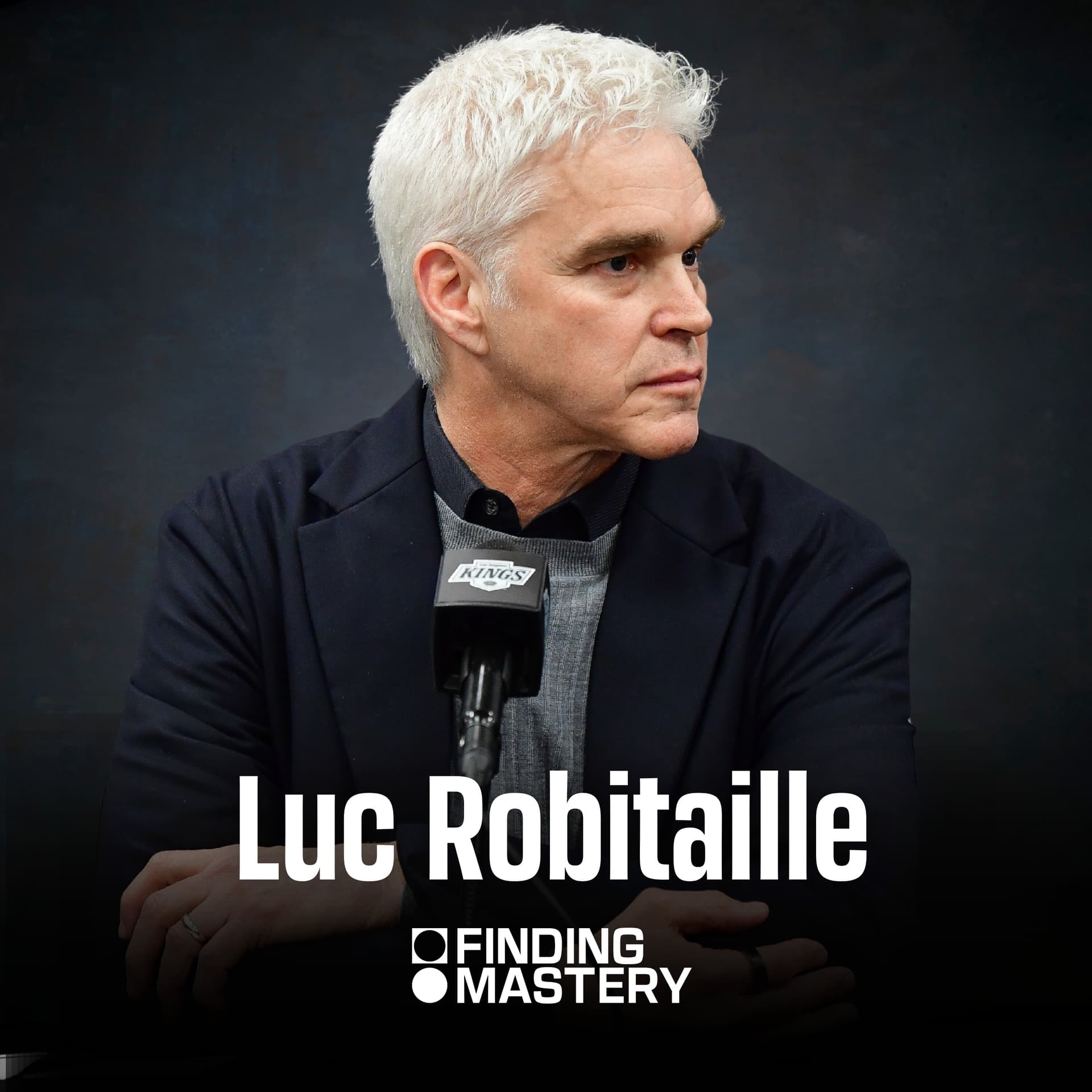
Luc (Luke) Robitaille is an NHL Hall of Famer and Stanley Cup champion, known as the all-time leading scorer among left-wingers. He later became President of the LA Kings. Host is Dr. Michael Gervais, a high-performance psychologist.
Key claims
Robitaille says his core thread was “my name’s on the list, it’s up to me,” with no bitterness. He emphasizes commitment over motivation: daily work to improve. He describes internal doubt as his “greatest enemy,” and says service and hard work help him return to a positive mental state. He also argues parents should let kids be kids and follow what they genuinely love.
Notable examples
Draft in Montreal—he wasn’t ranked early (late picks) and heard his name in the ninth round at about 7 p.m., with only one LA GM (John Wolf) present. As a teen, he chose “soft wheel” rollerblades to work harder. He studied Wayne Gretzky at age 13 as a model. He credits his parents’ support and a single line from his father: he never wanted to drive to see him not work hard.
Written by AI. May contain mistakes. Listen to the episode to check what was said.
Chapters
Tap a time to open that second in VOLuc's Draft Day Experience
0:04 to 1:05
Luc Robitaille shares his emotional journey during the NHL draft.
“Nearly 95 % of us are not getting enough fiber.”
Luc's Draft Day Experience
3:40 to 7:50
Luc Robitaille shares his emotional journey during the NHL draft.
“Thank you for being here to celebrate Luke and to really understand your psychology.”
Overcoming Underestimation
7:50 to 10:30
Luc discusses how he dealt with being underestimated throughout his career.
“Robert and he looks at his guy and he's he's a really nice man and he he shook my hand he goes and he and he he looks under the table there was a box that was empty he goes I don't have anything I don't have any hat.”
The Importance of Hard Work
10:30 to 14:00
Luc reflects on the significance of hard work and continuous improvement.
“So that's probably a golden thread throughout your whole life.”
Reflections on Early Influences
14:00 to 18:44
Luc Robitaille discusses how his upbringing and family dynamics shaped his work ethic and approach to hockey.
“But I didn't, for me to be at my best, I remember thinking that in the locker room.”
Reflections on Early Influences
18:48 to 19:57
Luc Robitaille discusses how his upbringing and family dynamics shaped his work ethic and approach to hockey.
“It's the time that you lose when the fit is off, the momentum that stalls when that fit doesn't work.”
Navigating Emotions in Leadership
21:13 to 28:01
Luc and Dr. Gervais discuss the role of emotions in leadership and personal growth.
“But you and I both recognize that it happened.”
The Unseen Joy of Hockey
28:01 to 28:40
Luc shares how the joy of hockey is often hidden from outsiders.
“I think a couple days they showed me in the locker room.”
Commitment Over Motivation
28:40 to 29:59
Luc discusses the importance of internal commitment over fleeting motivation.
“So she got all that the whole time we were together.”
Guidance for Parents
29:59 to 31:06
Luc offers insights on how parents can support their children's passions.
“You know, passion for something that you do.”
Show all 26 chapters
Navigating Modern Parenting Challenges
31:06 to 34:08
Luc reflects on the challenges today's parents face with their kids' interests.
“And I remember a parent asked me, what do you think of my son?”
The Impact of Technology on Youth
34:08 to 35:20
Luc and Michael discuss how technology has changed youth sports and engagement.
“The World Junior Championship in Canada is one of the biggest things.”
The Impact of Technology on Youth
35:24 to 36:25
Luc and Michael discuss how technology has changed youth sports and engagement.
“And sometimes travel makes it tricky to eat well.”
The Journey of Self-Improvement
37:50 to 42:00
Luc shares his experiences of self-improvement and the motivation behind it.
“And I'm curious, what is it that you were calibrating against?”
The Dark Side of Pursuit
42:00 to 43:57
Exploration of the internal struggles athletes face in their pursuit of excellence.
“But it doesn't sound like there's a loneliness for you.”
Tom Brady's Return and Transition
43:58 to 45:56
Discussion on Tom Brady's career choices and the challenges of athlete retirement.
“But I was a big fan of everything he's done.”
Preparing for Life After Sports
45:57 to 48:55
Luc Robitaille shares his transition from player to executive and the learning process involved.
“Anchutes and Dan Beckerman, who was CEO at AEG, and Tim LaWiki that was there.”
Emotional Intelligence in Leadership
48:56 to 50:56
The importance of emotional intelligence in personal and professional growth.
“That's really what emotional intelligence is.”
Emotional Intelligence in Leadership
52:41 to 53:29
The importance of emotional intelligence in personal and professional growth.
“What that means is it helps to slow biological aging by strengthening your cells, basically protecting them from damage.”
The Characteristics of a Great Teammate
53:30 to 56:00
Insights on what it means to be a great teammate and Luc's unique training methods.
“A great teammate is someone that's obviously, first of all, they've got to try to get better every day at what they do, and then they've got to help their peers get better themselves.”
Luc Robitaille's Practice Mindset
56:00 to 1:04:38
Explore Luc Robitaille's unique practice habits and mentality that drove his success.
“I did drive the goalies crazy, and I'll tell you why.”
Luc Robitaille's Practice Mindset
1:04:47 to 1:05:50
Explore Luc Robitaille's unique practice habits and mentality that drove his success.
“Days are longer, pace picks up, and there's this sense of momentum that comes with the season.”
Reflections on Age and Change
1:06:43 to 1:10:00
Luc shares insights on aging, physical changes, and the importance of relationships.
“Again, head to finding mastery.com slash morning to get your morning mindset routine.”
The Journey to Winning: Inputs vs. Outputs
1:10:00 to 1:14:40
Luc Robitaille shares insights on what it takes to win and the importance of focusing on inputs rather than just the outcome.
“And then we decided to chip in, and every month a player that was making a certain salad would buy the shakes for all the guys that were doing it.”
Commitment to the Process and Team Dynamics
1:14:40 to 1:18:10
A discussion on the commitment to process over accolades, emphasizing team dynamics and contributions of all players.
“And if, if a win happened, great, you know, so we're over indexed on winning.”
Reflecting on Personal Growth and Contributions
1:18:10 to 1:18:44
Dr. Gervais expresses gratitude towards Luc for sharing his insights on personal growth and team contributions.
“It's been really fun to get to know you this way and really fun to watch what you've created, you know, across the NHL for a number of years.”
Transcript
Automatic transcript. May contain errors.0:00Dr. Michael Gervais:The Bounty Master is brought to you by Momentus Fiber Plus. Here's a stat that surprised me when I first came across it. Nearly 95 % of us are not getting enough fiber. And the thing is, most people think that they are. That used to be me. I eat well, I'm intentional about whole foods, and I still wasn't hitting it consistently. And fiber matters. It's one of those quiet, unglamorous fundamentals that shapes how the rest of your system runs. Your gut, your energy, how well you absorb everything else you're putting in. So when Jeff Byers and the team at Momentus reached out about Fiber Plus, I paid attention.
0:32Dr. Michael Gervais:I've been using their products for years. And the reason I keep coming back to them, it's pretty simple. They don't chase trends. They go deep on the fundamentals and they build it to a high standard. And the same holds true for Fiber Plus. It's clean, no artificial flavors, no unnecessary additives. The cinnamon flavor uses real cinnamon bark powder and it tastes great. And I don't usually say that about fiber supplements. I mean, they built this thing right. Like everything they make, Fiber Plus is NSF certified for sport, which is why it's trusted by over 200 professional teams and athletes.
1:02Dr. Michael Gervais:That's the Momentus standard. And that's why it's been part of my routine. If you want to upgrade one of the most overlooked foundations of your health, head to livemomentus.com slash finding mastery and use the code finding mastery for up to 35 % off your first order. Again, that's livemomentus.com slash finding mastery. The code is finding mastery for up to 35 % off. In those days, the draft was one day. So it was a Saturday, and I think it started at 11. And I went there for the first pick. So I sat there, and then second round came, and the third round came, and the fourth round came. I never heard my name.
1:38Dr. Michael Gervais:What if being overlooked, dismissed as too slow, too average, was actually the foundation for becoming one of the greatest of all time? And it was 7 p.m., if I recall. And at the time, it was in the ninth round. I heard my name, and I get drafted. and there were no bitterness or anything. I was not like, I'm going to show them that they were wrong. It was never that. It was, my name's on the list. It's up to me. Welcome back. Welcome to the Finding Mastery podcast, where we dive into the minds of the world's greatest thinkers and doers. I'm your host, Dr. Michael Gervais, by trade and training, a high-performance psychologist.
2:13Dr. Michael Gervais:And the idea behind these conversations is simple. It's to sit with the extraordinaries, to really learn how they work from the inside out. I know my dad had to wake me up to go to school, but he would get mad because I would wake him up to go to hockey practice. I was committed to get better every day. And today's conversation is something special. For the first time, we're recording live in front of an audience at the California Surf Club in Redondo Beach, California. And our guest, it's none other than the one and the only Luke Robitaille. Luke's story is the stuff of legend. You might know him as the NHL's all-time leading scorer among left-wingers.
2:50Dr. Michael Gervais:a Stanley Cup champion, a Hall of Famer, and today, President of the LA Kings. His journey is a masterclass in resilience and leading with an attitude that refuses to quit no matter the challenge. A great teammate is someone that's obviously, first of all, they got to try to get better every day at what they do. And then they got to help their peers get better themselves. And then what are you willing to do when no one's looking? As you listen, I'd invite you to reflect. Where in your own life have you been underestimated? And what would change if you define success not by proving others wrong, but by getting better every single day?
3:29Dr. Michael Gervais:So with that, let's dive into this special live conversation with Hockey Hall of Famer and LA Kings President, Luke Robitaille. This is great. How fun to be here with you guys. Thank you for being here to celebrate Luke and to really understand your psychology. I've spent my whole life at the beach and you spent your whole life on the ice. Yeah. So welcome to the beach here. Thank you. Yeah, for sure. Okay. So I'll tell you what I want to understand is the moment that you were almost forgotten about. So you have this historic career that we can look back at. Can you first open up as we get going what it was like your draft pick?
4:15Dr. Michael Gervais:Oh, yeah. Yeah, and then so to go from, just to set the scene for everybody, there's a moment that's pretty intense for you, and then you move from that moment to best rookie of the year. And then you transition to Hall of Fame. In between, you win a couple championships. And then you go on as an executive that has been, Harold is one of the great executives. So we want to understand the transition and how you've navigated that so brilliantly. But let's start at the beginning with your draft moment. I won't make it too long, but basically because it was a long day, my draft story was I wasn't really ranked in the draft.
4:54I think I was ranked really late, maybe in the 200, 300 pick. And I went to the draft in those days. I'm from Montreal, the accent, if you could tell. And the draft was being held in Montreal. But in those days, the draft was one day. So it was a Saturday, and I think if I'm not mistaken, and it started at 11. And I went there for the first pick, and, you know, you're kind of attending the show. And at the time, I was playing junior in Canada, so a lot of my friends were being drafted and so forth. And in those days, the number one pick overall was Mario Lemieux for anybody that's followed hockey.
5:35And people forget in those days he had said, if I don't sign a contract, I'm not going to go on the stage when they name my name. and I think they called this bluff. Pittsburgh named him first of all. He got up and he got a standing ovation because it was in Montreal and then sat back down. So the draft was held for, it seemed like it was an hour, but it was probably only 15, 20 minutes, but it was a long time because they didn't know what to do. It was the first time ever the first overall pick didn't show the stage. So it made the whole day go longer. So I sat there and then the second round came and the third round came and the fourth round came.
6:09I never heard my name. and I there was only one team that talked to me was Los Angeles throughout my first year and I heard my name I think it was like they had a couple breaks throughout the day one hour break for lunch and so forth and it was 7 p.m. If I recall and at the time it was in the ninth round So in the old Montreal forum for anybody that's ever seen a hockey game back in those days They used to be the red section that was maybe 25 30 section then the white section and the blue was all the way on the top so all the reds were filled for the draft and I was sitting in the whites because I didn't know if I was gonna come out and so anyway I got I heard my name there was no one in a stance I just kind of ran down there was no one there so I just and so when I the draft is held on the floor and there's all these tables from each team and I went to go on the I but you had to go to the where they open the door on a bench for a hockey and there was a policeman there and he stopped me he goes what are you doing young men because there was no one there?
7:09And I go, well, I heard my name. And he stopped me, and there was an agent that was, ended up being a general manager for Colorado. He recognized me. He goes, no, no. He goes, this kid just got drafted by Los Angeles. So he shook my hand, and he let me on the floor. But I'm going through every table, because at the time there were 21 tables. And I get to the Los Angeles table, and they had another break, and there was no one there except one GM. His name was John Wolf and he looks at me and at the time I didn't know who he was he didn't know who I was and he says may I help you I go yeah I go my accent was way worse then and I didn't speak much anything I go you just drafted me and he goes really what's your name and I said Luke Robert and he looks at his guy and he's he's a really nice man and he he shook my hand he goes and he and he he looks under the table there was a box that was empty he goes I don't have anything I don't have any hat.
8:05He goes, I'm sorry. But he goes, here. And he had a pin on his jacket. So he gave me the pin. And it was kind of neat. A few years ago, my dad passed away. And I found that it was actually in a cup in his thing. So I kept it. It's a pretty cool souvenir. But so real quickly, he says to me, he says, do you have an agent? And I said, well, no. And I was in my ninth round. So he says, well, right. He gives me a piece of paper and a pencil. I know it wasn't a pen. It was a pencil. He goes, write down your name and your address. we'll send you the information camp starts this day in September he's speaking fast, I'm not really understanding, I write everything I go back up, my dad was with me and kind of happy I got at least my theory was my name's on the list, now it's up to me so we took the subway back because that's how we all did that in Montreal and I remember I'm in the subway and I go, I'm not sure I wrote the right address I was really nervous that I wrote the wrong address, there was no way to know where they would reach me and then the whole month of July went by, I never got anything.
9:05Finally, I got a letter, and beginning of August, I'm like, thank God I wrote the right address. But real quick, the funny thing about the draft is I always joke that Tom Glavine, the baseball player, at the time he said before the draft, he says, he was a good hockey player and a great pitcher. He said, I'll never play hockey. And I joke that people will say, well, the Kings made a good pick in the ninth round. I go, not so good because I think it was the third or fourth round. even though Tom Glavine said I'll never play hockey they still thought they had a better chance with him than me they drafted him ahead of me by five picks even though he said I'll never play they're like they thought that the odds were better in his favor than mine because you had the
9:46Dr. Michael Gervais:rep of being a slow skater yeah is that why okay we'll come to that in a minute so this idea of not accepting your station in life that they pinned you as ninth rounds the the the stadium left You're kind of like the afterthought, if you will. And somehow you didn't accept that. And I can imagine me in that scenario feeling really uncomfortable. It's certainly at a young age, like very unsettled. I don't know exactly what to do because like you're the star where you came from and now you're entered to the big arena and you're forgotten about. So how did you, can you take us into your mind? I think you gave us a hint, which was my name is on the list and now it's up to me.
10:31Dr. Michael Gervais:So that's probably a golden thread throughout your whole life. Yeah. I'm a believer that a lot of it has to do the way we grew up, the way things are taught to us and we don't know. And my dad and mom never put any pressure on hockey for me and I played every other sport. But personally, I just tried to be the best at whatever I was doing without knowing. it wasn't work it was just maybe just my the way my mind set and i wasn't aware of it but i do recall being good at hockey as a kid and hearing other people talking about my skating and then probably the only time my dad i've ever asked him or he said something as i said am i really slow that because i like you know he kept hearing like you know i was having some success playing those double a teams and so forth and he said well i don't know somebody said all i know when there's a loose puck somewhere you seem to get there first that's all he said and i'm like i took a lot of pride into that so then you take that and then i get drafted and there were no bitterness or anything it was just hope my name is on the list it's up to me now they have to look at me i was not like i'm gonna show them that they were wrong it was never that it was my name is on the list it's up to me it's not up to anyone it's the the work i'm going to put in not knowing what i was going to do though okay so there's two things one is your dad gently nudged to what you were good at and didn't say yeah son you got slow feet you know we'll work on it he just said he gave you the gift of pointing to what you're good at so you took that and okay so there's probably something in that and then the other thing is that you didn't play with the chip on your shoulder i'm going to show them you you're saying that you played with hope but is there any can you open that up a little bit more because hope you hear the idea hope is not a strategy hope is not a plan being hopeful is a powerful way to go through life yeah i mean i think it's the first time i've used the word hope talking about my career but okay i think i was more like every day i was trying to do better at what i was doing unfortunately it wasn't school but it was everything else I was doing.
12:48So, example, like I saw, gosh, I'm talking 1982. If everybody remember those rollerblades, you know, it was before it was here, some guy that my dad had found was a dealer in Canada. They were from Minnesota, actually, and there was two chores. You could buy a pair of rollerblades, and I thought, everybody says I'm slow. I'm going to be able to skate in the summer when there were no ice. In Canada, there were no ice in the summer. No rinks were open. So I thought I'm going to get a pair of rollerblades. And I was working for my dad at the time. I saved the money. And then you had a choice. You could take the hard wheel or the soft wheel.
13:26So I asked the guy, what's the difference? He said, well, the hard wheel, you're going to go faster. He says, the soft wheel, you're going to work harder. So I don't know why, but as a 13-year-old, I took the softer wheel. So I knew that's what I needed to do. and then I clearly remember wearing those skates like when you know September October you start playing hockey those skates were heavier than my skates on the ice so I would go skate for a half hour before the game thinking those skates are going to be heavy before by the time I play it'll feel light and I'll be fast like I literally was thinking about all this all these thoughts
14:04Dr. Michael Gervais:all the time about getting better what I was doing and this is 13 13 yeah you're using the language to be your best versus being the best and has that been a consistent thread that you're working to be just a little bit better today for your best yes yeah that was my train of thought like I actually was telling that to a kid that was playing hockey the other day I said I remember looking in the locker room and said I have to work harder than all my teammates and I knew I I want to work harder than the team on the other side, obviously, to help win. But I didn't, for me to be at my best, I remember thinking that in the locker room.
14:44As I got a little bit older, I'd see some guys that didn't seem to care as much. So that was important to me.
14:50Dr. Michael Gervais:Okay, so 13, the primary movers for your psychology are whatever experiences you had and your parents. They tend to be the primary movers for us at that age. you're starting to get into the influence from friends but i don't know if that's been important to you yet can you open up what the dinner table was like uh yeah my parents didn't communicate that much you know they they didn't it was more like we we felt love that they they always were there for i didn't know then that we had no money i found later i'm like oh yeah we had no money but it never felt that way. How did they do that? I think they were just there for us.
15:33So example, I had heard, like people, I would hear about my skating and I had heard there was a power skating school. This is brand new. It's like 1979 or 1980. I'm like, Dad, there's a power skating school and it was maybe$120 a week and I didn't know then that he didn't have the money but he found a way for me to go. but it was me that wanted to go it was never him saying look you hear a lot of parents oh my son should be in this class and this it was always me that was asking they just never said no about those things
16:10Dr. Michael Gervais:when you think about that part of your life and what that must have been like for your dad what are the feelings right now as an adult that come with that I think hockey is like soccer in Brazil in Canada As you're climbing, your parents are like, everybody thinks they got screwed from not making the NHL. They got hurt or they had a bad coach. Every parent's tried. I think they were proud of when you get to that level. Junior major was the big level for me. As a kid, I would go see every junior major game with my dad. It was maybe 10 miles from our house. I never thought of the pro. I thought if I can get to junior major, that would be a big thing.
16:53It would be like playing college. But I think they were proud. I saw more my dad became my coach when I made pro. He became a real pain in the butt. Like it would be, this is the days of the facts. Like I'd wake up in the morning and he'd have a little rink drawn. And he'd wake up at 8 and send it to me at 5 a.m. and then I'd see a rink and he'd have an ex, why were you there on a power play? And I'd be calling him, you don't know, you weren't there. We're getting into his argument. But he never said a thing growing up about my hockey, the way I played. Actually, he said one thing one time, that's when I was 17.
17:40It was hard because I had left home and I was living in another place and we had older players, there were no discipline, we had a bad team. And then he would drive, it was a two-and-a-half-hour drive to see the game and then drive back every night to go to work. And one night we got killed seven to two, and I know I didn't play well, and that's the only time my mom says, he's in the car, he wants to talk to you. I'm like, what? So I go in the car, and it was hard, I think, for him to talk, and he just said, he said, I drive here every day to see you. I never want to drive and see you not work hard.
18:16That's it. That's all he said. And that was hard for me. I just remember now.
18:24Dr. Michael Gervais:Can you teach us what's happening right now for you? I lost my dad in 2019, my mom in 2013. So just to remember that, you know, you go through things sometimes in life. And I forgot he had said that because of you and I remember. Thanks.
18:44Dr. Michael Gervais:Body Master is brought to you by LinkedIn Jobs. If you've ever hired for a small business, you know, the real cost isn't just the salary. It's the time that you lose when the fit is off, the momentum that stalls when that fit doesn't work. And that's the pressure of having to get it right while you're still running everything else. That's why I'm paying attention to LinkedIn Hiring Pro. It's built for the reality of hiring when you're operating lean. You describe the role in playing language, and then Hiring Pro helps you draft the job post, surface the right candidates, and then narrow to a short list without turning hiring into another full-time job.
19:16Dr. Michael Gervais:And when applications start coming in, it doesn't leave you buried in resumes. It streamlines screening. including AI-powered interviews for initial conversations. How about that? So that you can spend less time searching and then more time connecting with the people who match what you need. With Hiring Pro, you can hire with confidence knowing you're getting the best talent for your business. In fact, those hiring with LinkedIn are 24 % less likely to need to reopen a role within 12 months when compared to their leading competitor. Join the 2.7 million small businesses using LinkedIn to hire.
19:47Dr. Michael Gervais:Get started by posting your job for free at linkedin.com slash mastery. Again, that's linkedin.com slash mastery. Terms and conditions apply. Finding Mastery is brought to you by Sunlighten. I'm really excited about a new partner of ours. Something that I've come back to again and again is when I invest in recovery with the same intention that I bring to my work, everything gets better. My energy, my focus, my ability to show up fully for the people that I'm with and the work that I care about. That's why I am so bought in on the Sunlighten M-Pulse Intelligent Sauna. I was first introduced to their team a few months ago and was so impressed by what they've created.
20:25Dr. Michael Gervais:This is one of the most advanced infrared saunas that they've built in over 25 years of pioneering this technology. That's right. They've been at this game for 25 years. I had one installed in my home a few months ago, and it's made a real difference. I feel more refreshed, more grounded, more relaxed, and it's become a consistent part of how I recover, how I reset every day. I'm using it to support muscle recovery, for improved oxygen delivery, and for nervous system recovery. And what I love most, I don't have to leave my home. They're offering the Fonny Mastery community up to$2 ,100 off. Simply head to sunlighten.com and use the code mastery for this great discount.
21:03Dr. Michael Gervais:Again, that's sunlighten.com and use the code mastery for up to$2 ,100 off.
21:12Dr. Michael Gervais:how did you so modern leadership you're a modern leader um and you're for me if you want to do anything remarkable in life and extraordinary comes with big emotions and so you're feeling your emotions in this moment in front of you know folks that you haven't had the chance to know yet how are you managing your your emotions in this moment uh probably just threw a joke after you You're not even thinking, and you throw a joke, get away from it. But you and I both recognize that it happened. Yep. And then when it happens, so the way emotions work is it's a signal, and they usually come up into your stomach, into your chest, into your throat, and if you open the aperture, it'll go kind of into your jaw.
21:58Dr. Michael Gervais:It'll move up into your face and then behind your eyes. If you keep opening the aperture, you just kind of let it go, and tears usually come. so at what point did you decide to open it and allow me and us to be part of it and what decision did you decide to close it down well i was caught in the middle of it so because of you i had to keep finishing my story so i did it and i looked over oh yeah so so it's really yeah i i i'm thankful that you're bringing this part of yourself forward because um my generation and probably we're in the same generation that we were told you know to the best of our ability from our parents generation like hey suck it up be tough uh none of that none of that you know sissy stuff or whatever like be tough and so i never learned how to use my emotions the way i want to now And so watching you be flooded with it, allow it to be present, is the mark of modern leadership.
23:02You're right. I was the same way. I think life for me after hockey and COVID and different things, my wife is into mindfulness. So she's been working a lot. She's trying to work with me. So I listen sometimes. But I'm learning. I'm learning. So that's really been helpful, though.
23:23Dr. Michael Gervais:Yeah, very cool. Thank you for that. But has emotions been a big part of the reason you've been successful, how you've worked with emotions?
23:36Yes and no. I think the emotion of talking to myself was probably my greatest enemy. What does that mean? Well, you always doubt yourself inside. Like in hockey, you get on the ice for a minute and you get back on and the coach decides who's next and the coach decides who's next. and if a coach sometimes there's four lines of forwards as an example he might forget your line for a shift and then i would be my greatest enemy oh did i do something did i did i make a mistake and i start thinking so you always hear the word in sports the zone so the minute you start thinking you're out of it so and to me that was my greatest enemy but for some reason i was able to fight it off sometimes it might take two games three games sometimes it might just be the situation of a game i'm always not a cherry picking player i was at the same place every goddamn game then sometime the puck didn't come for eight next thing you know it came for 10 games in a row and everybody says he's so lucky they forget before eight game they said i was in a slump but i was always at the same place you know so um but he uh i i just think i would talk myself and then at some point something would happen in the game that the emotion in the game took over and then you get back in the zone you start thinking you stop thinking so you're i was with an nfl team
24:57Dr. Michael Gervais:yesterday talking exactly about this the the there's two minds if you will there's a positive mind and negative mind to oversimplify this beautiful machinery of our mind and then there's this thing called no mind flow state the zone whatever it might be and the work is is to go from negative mind to positive mind that's the work and then if you can hang out in positive mind long enough and you accidentally will slip up into no mind the zone so can you teach us how you would this is a two-part question teach us how you would go from negative mind to positive mind and then the second part of the question is how aware were you of that interior internal dialogue that you're having with yourself it's a it's a two-part they're they're related but different So the internal dialogue that I had myself, I was unaware of it because I would have fixed it if I was I would have been aware of it.
25:51Like I remember like playing on some team or some coaches where there were things that were happening all the time and some other teams, the coach made you earn it. As long as you knew where you stood, it was easier for me. But if I wasn't sure, then I would start putting the pressure on myself. And it wasn't about scoring goals. It was like, I got to do what this best defensive guy do because the coach will trust a defensive player ahead of a score all the time. They'll need the goal score when they're down 3-2. But a lot of times the game is tied or you're up. So it's just the way. So I had to teach myself to come back.
26:30And to get to the positive side, I don't think I ever thought that I'm going to try to get to the positive side. Like example, like we always heard, I don't hear this as much, but we used to hear a lot visualizing. You got to visualize like a shot. I was scared to visualize because I thought I was going to be thinking. Because if I'm visualizing, that means I'm thinking about a goal. I didn't want to think about a goal. I want to think about helping a team win. And that made me a player that was not thinking. And my instinct took over and I was better. So I was in that middle.
Read the full transcript
27:04Dr. Michael Gervais:Yeah, there you go. So it sounds like part of the mechanism was if you were in a critical, negative, doubtful space, that the way that you were working your route to get to know mind was to help others, was to be in service, to work hard. Some sort of dialogue there, right? So if you were in service and you were working hard, then that would get you into a better state of mind than any of the critical worry stuff. That's right. Okay, there you go. And then just for us, what percentage of the time? You're a Hall of Fame player. What percentage of the time were you in that flow state, no mind, where it was like musicians call it being in the pocket when time slows down or it speeds up and it feels like it's completely fluid?
27:49Dr. Michael Gervais:What percentage of the time as one of the greatest to ever play the game? Not enough. I can tell you that. Here's a story that I know that's true. It's like when I was going to retire, Mike Altair was here. They followed me for a day playing. I think a couple days they showed me in the locker room. They showed me in the warm-up. And there's all kinds of jokes. When players retire where they miss, they call it the room because there's no HR. You just say a bunch of jokes. And it's kind of goofy, but it's fun. It's a special world that very few people get to live. And she saw the video, and she was like, I don't get it.
28:26I go, what don't you get? She goes, you really love what you do. I go, yeah. She goes, I thought you were miserable all this time. I go, no, no. I love it. She goes, oh, so I got all your misery. I go, yeah, you did. Because she would see me after games, and she was the only person I would tell her. I got to get this better. I got to improve this. I didn't do this. And I was very critical of myself. So she got all that the whole time we were together. So she really believed that's how I felt like that every day. Okay.
29:00Dr. Michael Gervais:What was driving you? So there's commitment mode and motivation. I'm far less interested in motivation, right? I'm much more interested in commitment because the, the internal commitment is the thing that keeps you going when it's hard. A motivation is like, I'm going to do it. I'm just going to do it. But the commit, like I'm committed to be a good father. And so when it's inconvenient or difficult, like I'm fully committed to it. So I don't need to feel a certain way to do it i'm fundamentally committed yeah so can you teach about what you are fundamentally committed to um i was i was committed to get better every day that's it's that that that commitment to try to get better every day and i got we got some people here that we work together and i think there's sometimes they're tired of me because i'm always we're always talking about let's get better Let's get a little bit better today.
29:55And I'm a big believer that there's one thing that's very hard to teach is passion. You know, passion for something that you do. It's been even hard for me once I retired to get the middle of life. You know, like you work for a team. It's a little bit different in playing. But I still believe that I'm not here. But I still, I think that's what I tell kids. it doesn't matter what you want to do. If you want to be a doctor, if you want to be a pro sports player or anything, just make sure you love what you do. You don't have to look at a clock, you know, and some of believe in that. I don't know.
30:36Does that make sense? Yeah, for sure.
30:39Dr. Michael Gervais:Maybe speak to the parents in us. It sounds like your parents did a great job. I'm not sure. Oh, yeah. Yeah. No, no, no, no, no. They did. I always say my parents, like I felt love. Yeah. what what bit of guidance would you give the parents in the community about some real gifts you can give to your kids to help them be their very best well let your kids be a kid they will choose what they love i mean sometimes you need to nudge them there might be every every person is different but like i'll give you an example where the rink our office at the rink and i haven't seen that many anymore, but I used to sometimes go to rink early and see parents and their kids are playing, you know, Triple A, Pee Wee, or Adam, and they're eight, nine years old, and you see one is better.
31:32And I remember a parent asked me, what do you think of my son? Do you think he's got a chance? I'm like, I don't know, he's eight, you know. So, but I did ask him, I go, do you guys have a lot of 6 a.m. practice? He goes, oh yeah, he goes, those are tough. I go, well, how is he? Is it hard to get him out of bed? He goes, oh, it's so hard. He goes, that one is tough. I go, well, just let him have fun. Because I know my dad had to wake me up to go to school. But he would get mad because I would wake him up to go to hockey practice. So he was mad about that. He would say, I can't believe you didn't get up all week to go to school.
32:09But that was the difference. So if a kid wakes you up, let's go to lacrosse practice. Because right now, he or she loves lacrosse. That's what they want to do. If they're in the middle of the night, they're studying books to become a doctor, they obviously love that. Make sure that you guide them to help them become a doctor or whatever they want to be.
32:29Dr. Michael Gervais:What about for the parents that they watch their kids? They love riding e-bikes or they love gaming or they love, you know. That part is really hard. I wouldn't know how to figure that out. sometimes some kids seem to come out of it and figure out something that's really good for them but that part is totally different because us old people like not you but me but we think we want our kids to be like we were and it's never going to happen again like we used to go out in the neighborhood no one cared until 9 p.m. in the summer and my mom would be in the balcony I get home and you know and today you can't let your kids come out of the house whether they're a cell phone you got to know someone's got to pick them up to go three hours down because we're the world's different we're getting different information too and and kids in third grade are studying things that we probably studied in 12th grade at 10th grade or ninth grade you know that i remember it's so far back i got a few a few guys when it was illegal to bring a calculator at school and then we had the little one we're trying to sneak him in you know because we were in fourth grade and you're still doing just like basic math now today kids are doing math on a computer there's no way they're learning anything we were we we are the last of the generation to remember you know the it's the the analog world yeah and so there's a there's a rite of passage that we're going to have to um hold up for the next generations to remind them to to remember what it was like to live in an analog world um yeah i'm concerned about that transition yeah you know so but what we are the adults in the room that are the only ones by default that have had that experience so there's going to be a calling on us to to do that well well we're seeing it with our team we see a lot it's a lot harder on those players are 20 21 22 year old their their life is a lot harder than we were and the first thing you do after the game they go on their phone.
34:32They look to their friends. Good game. Their mom, their agents. That's the first thing they do. There's a great picture years ago. The World Junior Championship in Canada is one of the biggest things. It's during the holiday. It's like the country shuts down. Everybody watched Canadian team play the World Junior Championship. I think it was like six, seven years ago, they won. It was a great picture because they won and the whole country went crazy and then they They had, within five minutes of the game, they had a photographer came in the locker room and every kid was sitting in their stall with their phone.
35:08It was fascinating because you put that 20 years ago, they would have been, you know, just screaming in the room, but they were all sitting down, looking at their phone, all 20 of them.
35:20Dr. Michael Gervais:Finding Mastery is brought to you by David Protein. Travel a lot at Finding Mastery. And sometimes travel makes it tricky to eat well. Best intentions, and then you're at the airport. And then suddenly the only options around you are the ones that you'd rarely choose at home. Something I come back to often is that discipline isn't really about willpower in the moment. It's often about choice architecture, setting up your environment ahead of time so that the easy choice and the good choice are the same one. That's the role David plays for me on the road. The gold bar, it's their flagship high protein density, great texture, flavors that make it easy to stick with.
35:53Dr. Michael Gervais:So when I throw a few in the bag before my trip, I've already made the decision. The hard moment later takes care of itself. And the team here at Finding Mastery, they love the bars as well. They are ripping through them in the Finding Mastery lab. Salted peanut butter and fudge brownie seem to be the fan favorites right now. They have built something with real rigor in a crowded, sometimes ambiguous space like nutrition. That matters when it's something that you reach for again and again. David bars are now available in major retailers like Walmart and Target. And if you'd like to buy them directly and get a special offer for being a Finding Mastery listener, head to davidprotein.com slash finding mastery, where right now, if you buy four packs, you'll get the fifth one for free.
36:31Dr. Michael Gervais:Again, that's davidprotein.com slash finding mastery. Finding Mastery is brought to you by Lisa. We are serious about recovery. Sleep sits right at the center of that practice. I have been fortunate to work with some of the most extraordinary performers for the last two decades. And sleep and recovery are foundational, full stop. It's where the body and the brain repairs. And that's why finding a mattress that supports your recovery matters so much. A great mattress, it's not something that you stumble into. It is a choice. You find it on purpose, the same way that you'd approach anything that really matters in your life.
37:06Dr. Michael Gervais:We've worked with Lisa for a long time now because they get it. They build beautifully crafted mattresses tailored to how you actually sleep. Your position, your feel, your preferences, all of it. You can take their sleep quiz and find your match in about two minutes. Premium material, serious comfort, full body support, no matter how you rest. One of our teammates here at Finding Mastery picked one up recently. Can't stop talking about it. Says that they're waking up more rested than they have in years. Right now, they're having a July 4th sale. Go to lisa.com for 30 % off. Select mattresses.
37:38Dr. Michael Gervais:Plus, you get an extra$50 off with the promo code mastery. Exclusive for our listeners. That's lisa, L-E-E-S-A.com. And use the promo code mastery for 30 % off. select mattresses plus an extra$50 off when you use the code mastery.
37:57Dr. Michael Gervais:What was your calibration? So you were, your psychology was designed to be just a little bit better today at a thing that you found that you really enjoyed, which sounds like this magical thing that took place for you, meaning that you had this big motor, this big engine to get better. And I'm curious, what is it that you were calibrating against? Oftentimes the kids will calibrate against what's being said about them. So they're looking externally to know how they're doing internally, which is a very, very, very, very dangerous proposition. How are you calibrating if you got better and how your, let's say your day went?
38:36Well, it's like I have different memories. When I was a kid, I just did so many things and whatever I would do, for some reason, I would try to be better at that. Gosh, I remember being seven years old, and my dad's friend taught me how to do a pitching motion like they do in baseball. And he said, you got to practice this every day to be better. And I would drive my mom crazy because I would walk in the house doing a pitching motion. You go back, sideways, step forward. That was a step. I would do all my steps like this. I looked crazy in the street. You know, people thought I had issues. but in my mind he told me if I did that I would get better so I just did it so then later I think I took that and I had this mindset that I believed that would help me be better I wasn't competing with myself or competing with anyone the one guy that I saw when I was 13 years old that kind of changed my life that I was like wow was Gretzky because Gretzky, seeing him at 18 years old in the NHL he was this little skinny guy because he was he didn't fit the nhl model they say he wasn't a good skater he was skinny you know and he changed the game and he saw things so differently so that's the one guy
39:52Dr. Michael Gervais:i did study everything he did and how old were you when he was i was 13 okay yeah so you had a model to learn from yeah yeah and where did you get tripped up where did it go sideways if ever for you because so far it sounds like i mean you're you're like the emblem for resilience the emblem for deep commitment the emblem for internal motivation if you will so where did it go sideways for you because when you look back again go in reverse order uh world-class executive hall of fame athlete multiple championships rookie of the year and you know Well, it kind of went sideways every day. You're always looking to do something a little bit.
40:41I'm talking about my professional life now. My wife's happy because I'm working more of my personal life. You know, the last five, six, seven years, I finally got it. But my professional life, it went sideways every day. There was something every day. It was very rare that you had a day you're like, everything is great. you know because I was trying to be like I live my my life it's a I find like my life was very selfish and the reason I say that is like when I played hockey the day before the game we had a practice you know if I ate a meal at noon I ate at noon if we I asked my movie one time we went to a movie at four o 'clock we went to the movie at four o 'clock and because that was my way to get out of my mind then we had a certain dinner then a game day the next day it was all about me and we had kids you know but but it was yeah i didn't know that then i didn't do it maliciously but it was like my entire family tried to help me be the best i could be next game i wasn't good every day every game but i did everything i could to be the best i could be i'm glad you bring up the
41:49Dr. Michael Gervais:selfishness um my experience working with world's best is that um there is a dark side to the path that you're talking about and it looks from the outside quite glamorous quite nice but the the dark side is that there's a internal unsettledness that never seems to get quiet there's a scratchiness about how you eat breakfast how you get into your car the way there's just an internal unsettledness I don't know if that was the case for you or not but has there been or is there a dark side to the pursuit of being your very best for me I wouldn't call it a dark side I'm sure some people because sometimes things happen it could go really bad I was lucky that I was able to fight through different things injuries and so forth but your whole life is about that it's kind of crazy the way you drive, what you do even my staff will laugh at me I'm superstitious I'm only superstitious when it works or sometimes we drink a glass of wine before the game, when we win the game we keep drinking, but that's an easy one because it's good wine but you're only superstitious when it works and when it doesn't work, you change what you're doing you could change it totally but your whole life is around that It's a little bit crazy.
43:15There's a dark side to that. Yeah, that's right.
43:19Dr. Michael Gervais:But it doesn't sound like there's a loneliness for you. You didn't seem like it was a lonely pursuit. No, it wasn't a lonely pursuit. But when we're talking about that, something comes to mind right away that I found very, I'll say it, but I have all the respect for that person in the world. But I thought it was so sad when Tom Brady came back. because I understood him. I'm like, oh, he can't get out of it. He couldn't get out of it. I mean, it cost him dearly. He's very successful. It's not about money. I feel when I watch him, it cost him. I don't know. I don't know the guy. I never met him.
43:58But I was a big fan of everything he's done. Then he gets all the way, wins. Then he retires, and he says, I'm done. He's got kids and everything. Then he had to come back. That's how much, he's probably crazier than me as far as getting ready, because we all heard the story of Tom Brady, how hard he worked. So this guy is like another level. That's how it feels. I'm sure as a fan I was happy he came back, but kind of read between the lines how hard it must have been for his life.
44:31Dr. Michael Gervais:Yeah, I want to keep going there because there's this thing that happens, we'll stay on the transition for a moment, from all the attention in the world in your world to very little attention is this very tricky thing. And mechanically, too, when athletes retire, they go from being told what to do and to doing it to their very best ability. What were you going through during your transition that you saw something in him that was less than aspirational in what you saw in him? What were you going through during your transition? You know, the thing about Tom Brady for me is I just looked at everything he did and kind of studied, and sometimes you try to use it.
45:18It's like when we all heard the stories when Tiger was at his prime, you know, and I've always kind of looked up to Tom Brady. So when he retired and then came back, the thought was like, oh, you know, I felt like there's that feeling of like, oh, my God. Like, it's so hard to come out of it. I was, I feel I was fortunate that my timing was right. I was able to stay in the game in something that I thought I could do something, build something. And, but it's hard. You got to be lucky. You got to be at the right time or the right place. And for me, like, you know, I was fortunate at the time Mr.
45:58Anchutes and Dan Beckerman, who was CEO at AEG, and Tim LaWiki that was there. There was a miss, AG was growing. There was a miss on the Kings organization where I felt we needed more attention to the organization, so kind of took advantage of that. But it's, you know, it's one of hundreds of thousands of athletes that this happens, you know, where it was there, and I made sure I was ready. I took advantage of it all.
46:28Dr. Michael Gervais:When I watched, you know, your transition from basically Hall of Fame, status to be an executive. I wondered if you were taking graduate classes in business or did they trust something else about you that you were going to be able to figure it out? Throughout my career, I learned to speak English. I didn't study much. I was watching TV and so forth. But reading, I was always trying to read. and then throughout my career near the end of my career we had a lockout an entire year and I was on some of the committee with our union so I was able to be in those meetings and I got to learn a lot and you know we had a whole year off I was expecting to come back but I knew I was near the end so I remember throughout my career I was known as one of those athletes that I didn't really say know when people would ask me for favors or things to help their foundation or so forth.
47:29And so that year that we didn't play, I called a lot of people that I knew to learn from them, their vision, how they were doing their businesses, how they treated the people they work with. I wasn't very specific about knowing numbers or something. I was more intrigued by the way their leadership were with their people. Some people I asked, some people I just had lunch. So I did take that year that way. And then when I retired a year later, and I was, you know, like AEG was at a place that was fast growth. So I kind of saw and I heard from the fans of the LA Kings, even the year I was missing, that you needed someone to make them believe into what the Kings were going to do.
48:18Because unfortunately, like for you guys that are Kings fans, if you remember, AEG was going really fast. They built Staples Center, LA Line, the O2 in London and everything. And if you're a Kings fan, and that's what I learned at the time, and you're buying season seed for the Kings, you care about the Kings. Now, if AEG signs David Beckham, you're like, where's my David Beckham? That's what a Kings fan, because they're spending their hard-earned money. so that I kind of took advantage of that and say okay I'll pay attention to Kings we'll focus on trying to be the best franchise they can be that's how it
48:55Dr. Michael Gervais:started how do you finish this thought stem I'm a student of
49:08I'm a student of
49:16you know it's a tough one because you know my first time was like getting better every day but i think it's you got to be a student of people you got to be student of of the way we feel about things you know and i think that's probably the most important thing would you put yourself in the upper quartile for emotional intelligence i don't put myself on anything i knew you were I knew you were going to say that, Luke.
49:44Dr. Michael Gervais:No. Does the emotional, like, does the emotional, social intelligence and emotional intelligence, does it confuse you or do you feel at home with how somebody else's emotions are working, how your emotions are working, and how the interplay between the two are? That's really what emotional intelligence is. um i think sometimes i'm uh i'm a little bit too much focused on to where i want it to be i don't think i'm there yet on learning people's emotion and bringing back towards me so it's something i'm working on presently every day yeah i think i think it's one of the greatest investments we know from research that um it's an outsized impact for whatever you're doing in life when you invest in emotional intelligence.
50:32Dr. Michael Gervais:And it's something that can be learned. It's not fixed. So I don't know, even the stat that people that score high on emotional intelligence make more money. People high on emotional intelligence report better relationships at home. And, and, and, and. If my wife were here, she would start laughing, by the way. Bring the house down. Yeah, good. She needs to work on that every day at home. Finding Mastery is brought to you by our flagship mindset training course, Finding Your Best. Anytime you feel the pull to reset, to zoom out, to refocus and ask, am I moving toward the person I want to become?
51:07Dr. Michael Gervais:It helps to remember this. Lasting change comes from training. Not resolutions, not short-term sprints, but deliberate practice of the skills that shape how we show up. Work, in relationships, and in the moments of great intensity as well. That's what Finding Your Best is all about. It's a science-backed framework for training your mind. And it's the same set of tools that we've taught to Olympic athletes, top executives, elite military teams, and artists at the peak of their craft. In this course, you'll learn the foundational psychological skills to be your very best. Full stop. And the best part is you can start anytime.
51:38Dr. Michael Gervais:Right now, we're running a limited time offer on finding your best. Simply head to findingmastery.com slash course and use the code RENEW100 to get$100 off your registration. If you've been waiting for the right moment, this is a good one now to lean into. Spring and summer, they are powerful seasons of momentum. It's a great natural time to step into growth, to refocus, to recommit to who you want to become. And this discount will not be around for long. So go to findingmastery.com slash course code renew100 for$100 off today because your future is not shaped by what you intend. It's shaped by what you train.
52:16Dr. Michael Gervais:body mastery is brought to you by fatty 15 okay let's talk about longevity longevity is much more than simply adding years it's about maintaining health and a zest and a vitality and enhanced performance as you age and that's why i'm excited about fatty 15 it's an award-winning supplement it's powered by c15 which is the first essential fatty acid discovered in over 90 years okay so c15 it's a geroprotector. What that means is it helps to slow biological aging by strengthening your cells, basically protecting them from damage. You can think of it like kind of like a 401k for your health where you're investing in cellular quote unquote resilience.
52:57Dr. Michael Gervais:And I dug into the research on the relationship between C15 and heart health. I love what I saw. Fatty 15 is on a mission to optimize your C-15 levels to help you live healthier, longer. Get 15 % off your 90-day subscription starter kit by heading to fatty15.com slash findingmastery and use the code findingmastery at checkout. That's fatty, F-A-T-T-Y, 15.com slash findingmastery. Start investing in your long-term health today. So before we transition to leadership, what does it mean to be a great teammate? A great teammate is someone that's obviously, first of all, they've got to try to get better every day at what they do, and then they've got to help their peers get better themselves.
53:51That's what a great teammate is. And then what are you willing to do when no one's looking? That's always, to me, that's probably one of the most important things.
54:02Dr. Michael Gervais:Yeah, there you go. In preparation for this conversation, I called Rob Blake. Okay. Long-time friend, you know, teammate. And so I asked Rob just kind of some stuff about you that maybe others don't know. And so he said, ask him about his camper.
54:26He always laughed because, you know, my wife and I, we rented RVs over the years, and we finally bought one, so we're always in a parking at work, and he's just fascinated by it, but I just go, and I like to do everything around it. I think it's a peaceful moment, but I've had so many stories over the years, whether it was working out where I think when we started learning about working out and treating ourselves and nutrition, and it was about halfway through my career, and I finally got a personal trainer. Now every athlete does it. In those days, we didn't know. So finally when I learned it, and I already had, we'd rented an RV for a month and I was going on a trip.
55:13So the guy, I was learning to do squats and different things. I bought a squat rack and I put it under the RV and I had to distribute the weights. And imagine getting on a campground and you're building a squat rack every time and then putting it down. And those campers are looking at me. they thought i was building like some kind of jack to fix my tires because it's all they'd never seen it so he he just got a kick out of my lifestyle of getting in an rv and and every mistakes ever been done in an rv i've done him like i'm chevy chase times 10 you know so i've learned through every mistake stories you told me yeah there's always something kind of always
55:54Dr. Michael Gervais:something yeah that's fun but i didn't know you're going to go to the squat rack i mean that sounds like that's a great example of how maniacally focused and obsessed you were about getting better so there's another story he asked me to talk about which is the way you would end practice that you would kind of drive the goalies crazy and so I think this is worth talking about because people hear the stories about the greats you know first to leave first to arrive last to leave but you would do something on the ice that was pretty predictable of your success. I did drive the goalies crazy, and I'll tell you why.
56:31Because, you know, there's, whatever, two, 300 pucks in practice on the ice everywhere. Whenever we do a drill, whenever it was in between drill, if a loose puck was around me, without looking, I would throw it at the net. And I always try to hit the net. If I miss, I'd take the next one until I would go, then I'd go to the next drill. So if you guys have been around the Kings for a long time, Kelly Rudy, our goalie, I would drive him nuts because Kelly would be looking at this guy shooting, and I didn't always hit the net. I would miss the net and hit his skates. So a couple times he shot pucks back at me and a couple F-bombs and everything.
57:11But today we laugh about it, but I'm like, that's where they belong. So I would joke at him. I'd say, that's where they belong, in the net. And then the one thing that Blakey is talking about is my entire career, probably starting when I was about 14, 15, I never got off the ice without putting a puck in the net. My entire, like it drives me nuts when I see these kids today that they don't get, they miss the net in games and everything, and they just leave the ice. When they miss, they miss it, they miss it, and then they leave the ice. And I'm like, I could have never done that. I had to put a puck in the net, then get off the ice.
57:49Practice or games? Oh, no, not in games, because there's only one puck at the end, but every warm-up and every practice.
57:56Dr. Michael Gervais:And then this might be hard to answer, but where did that come from? It was a little bit of OCD, like an obsessiveness, or did it just feel like that's my job? It was my job. I wasn't going to come out there. I wouldn't, it just wouldn't, it was, it became normal. You know, it would never happen. So you, I know you're not directly responsible for the lineup on the Kings, but you have a heavy hand, I'm sure, in it. for folks that are thinking about teammates and talent, wherever they are in their life's efforts, what are you looking for, for a great teammate and for a great talent? Because I'm sure everybody in the league needs talent, but I think right underneath of it is the attributes that allow that talent to come forward.
58:40Dr. Michael Gervais:So what are you looking for for teammates and or talent? We study everything. There's a ton of data in sports, as you know. but you can't study the heart what you're willing to to do to help your team win and that's that's what fans don't see like literally when you're on the bench when you're in the locker room even a football player like they know that's why they celebrate championship differently because you know when you're on a team one guy might have played one time on the line in football and done one thing for the team that made that play go it's the same in hockey like it's a real great team game so that's that one part now you got to have the talent the speed and everything that goes with it but if you can start sprinkling in these guys are willing to do other people are not willing to do and what i mean by that is obviously in our sport the easy one is blocking shots it's kind of crazy guys are blocking 100 miles an hour shot when you have a goalie with big pad but they're They're throwing themselves in front of the puck to block him.
59:44But there's other things inside the game that sometimes you see a guy and you could pass it to him, but it's not quite perfect. Or if you wait a tenth of a second, but you're going to take a bigger hit to make the play, that's how you win. So then you take the big hit. And everybody cheers that that guy got hit, but we see the guy that made the pass that knew he was going to get hit that made that play. That's how we win. So we look for that inside players. And as we're getting better, because we've been on a rebuild, we're starting to get more and more of those guys. And slowly but surely, our team's getting better with the skills.
1:00:25You've got to have the skills, but everybody's kind of closer.
1:00:30Dr. Michael Gervais:I spent some time in hockey, and not anywhere, of course, near what you're doing. And I was in the locker room. a player got hit by a puck and his his eye cheek blew up and so a couple folks ran back and there was a doc that was back there and he says um he says okay so i'm going to give you some i guess novocaine or whatever it might have been to numb him and he says and the doc goes what do you mean he says yeah no no no shots he says but i have to cut i have to cut it open to you know he goes cut it at that moment i knew i was in a different league like that's not a psychology i'm familiar with and so so what are some of the things that separate hockey players from others that or maybe just a wild story that you've experienced that um the rest of us would would not be able to ever be part of well it's crazy you're right i could see hockey like we had a theory especially i think it's changed a little bit but it was like if it's not in your heart you got to get up and go to bench so like we always laugh we own the galaxy team so i always laugh with our president because you know in soccer there's that thing they stay down but there's a purpose to it they're trying to get a yellow card but i always joke i go there's something in that i think it's not gatorade it's probably power that whatever the trainer comes in with it with like six bottles and the player goes like this and he sprays on his knees and they get up and start running i'm like It's magic.
1:01:59I said, can we get that for hockey? So he always jokes with me because we were at a game. I could tell you a story. This is how we think. And I was retired maybe 10 years. And Anze Kopitar got hit in the face. And he was bleeding on the ice in the corner. And I suddenly, my mind turned player. And the game was going. And I'm talking to myself. And the guy's right next to me. He's the president of the galaxy. I said, get up. And I'm talking about it. I said, get up. and then I'm like get the F up because I knew the game was going and he's like look at me what do you mean get up I go it's his face it's not his legs he can get up and go to bench and he was like my god you guys are crazy and I go but that's all we thought I played in Detroit when we won a championship we had a rule unless you're dead or you're having a heart attack or your leg is broken no one was allowed to stay on the ice on that team so that whole year I was there two years No one ever stayed on there.
1:02:58It didn't matter what the injury or you had to. No one was coming out to help you either. So we were almost trained like it was part of team. So the theory was let's hurry to bench so another guy could come in and make it. It's kind of crazy, you know. But, you know, but that's all we thought. Hockey is a little bit different. I used to think like football is really, really tough. The only difference in hockey is you kind of you don't get quite the same injury, but you got to play every two days. That's the biggest difference.
1:03:30Dr. Michael Gervais:You're really unguarded. You are open in the way that you share yourself here and other ways. And so what have you done in your life to be this open, to be this unguarded?
1:03:47I think I just know where I come from. And there's nothing special except that I was fortunate. I got to do something. I love and I try to do, I was scared to lose it every day, so I try to get better every day. And I still think I'm lucky. I think every one of us has a special gift and we just got to work at it. So I don't think any one of us is any more special than another because it doesn't matter. It's like we just saw someone fell. It could be gone just like that. Anything we do, so might as well enjoy it every day and that's it. what is your special gift uh my my wife would differ but i think what's important is enjoying today you know because she thinks i always live in the future and i'm trying to but enjoying today this moment today like you know what we have now finding master is brought to you by ag1
1:04:46Dr. Michael Gervais:summer is here at least for those of us in the northern hemisphere you can just feel it though Days are longer, pace picks up, and there's this sense of momentum that comes with the season. For me, that also means more travel. It's more early mornings, more late nights, and it's just really a schedule that isn't consistent as I'd like it to be. That's exactly when having a simple, reliable, daily foundation, it matters. AG1 has been that foundation for me for over a decade now. One scoop and a glass of cold water in the morning, and I know I'm supporting my gut health, full stop. filling the nutrient gaps that are hard to cover through food alone.
1:05:23Dr. Michael Gervais:And what ends up happening is I'm giving my body what it needs to keep showing up. And that really matters to me. What I love about AG1 is that it doesn't ask a lot of me. It's one habit, one scoop, and it travels easily. The AG1 travel packs are something I genuinely rely on this time of the year. I throw a few in my bag before a trip and the routine stays intact wherever I am. If you haven't tried AG1 yet, or you've been planning to think about getting back into it, now's a great time to start. Visit drinkag1.com slash finding mastery to get an AG1 flavor sampler and a bottle of vitamin D3 plus K2 free in your welcome kit with your first AG1 subscription.
1:06:01Dr. Michael Gervais:It's a$72 value. Again, that's drinkag1.com slash finding mastery. I want to take a second here to tell you about a morning routine that I've been using for years. For me, it's a great way to switch on my mind to ready myself to take on the day. So before I check my phone, my emails, market updates, or text threads, I choose how to start my morning. That's always in my control. That's always in your control too. This is the same morning mindset routine that some of the world's top performers across sport, business, and the arts are using. The best part, it only takes about 90 seconds to do. So just head over to findingmastery.com slash morning to download the audio guide for free.
1:06:44Dr. Michael Gervais:Again, head to finding mastery.com slash morning to get your morning mindset routine. What are you working on that you're trying to get better at now? Something that might be difficult or confusing or that, you know, you're kind of it's not quite clear yet. Like, what are you working on? I'm 59 now. And sometimes I look at people that are 84, 85, 83, and I'm like, oh, my God. I remember when I met that person, they were 52. They seemed so wise, and they knew something I didn't know. And I was like, and I'm like, wait a minute. They had the same thought of me, the same insecurities probably. So now I realize that it doesn't matter what age we have.
1:07:28It's just about what we're doing while we're here and then helping people. and, you know, but then when you go away, you can have made all the different scores, as many goals, win Super Bowl or win Stanley Cups. It really comes down to a few friends and your family, and that's what I'm working on even more today than ever in my life.
1:07:55Dr. Michael Gervais:How are, you're one of the best athletes, you know, to ever play the game. Again, Hall of Fame athlete. How do you deal with your physicality changing?
1:08:08watch what I eat try to work out but it's totally different we used to joke you couldn't watch a movie or read a book while riding a bike and now I watch two Netflix shows whatever, doesn't matter but just try to do something every day and I don't question it, I think I'm understanding our life is, there's some aches and pains here and there that I have to live through. But I know I was very fortunate to do something and I know I could never do it today. So I don't fuss about it.
1:08:46Dr. Michael Gervais:You don't. Yeah. Okay. Let's quickly transition to some leadership stuff. When you're thinking about the leading a team and you're leading a very public team that has observable critique from others. What would you say are the most important mindsets that you're interested in for your executives to have? We're on a big transition as an organization. We've had to make some changes on our business side and on the hockey ops side. And I think what's very important is to keep things simple. It's sports. It's different. You've got to win the game. you know you that's we're paid to help a team win so you you got to have goals that are achievable and sometimes you got to push a little bit the envelope just because you become better believers into it but be realistic and it's got to be as simple as could be funny enough because when it's too complicated it's easy to have excuses because suddenly you know you could go here you could go there so get try to get rid in our organization as many excuses as possible i would say that's probably really important so inputs and outputs output is winning and then all of the inputs that go into maximizing the possibility of the output you're winning do you focus more on the inputs or the outputs and in if it is the inputs how often do you speak to the output like how often do you say the word we got to win uh phrase well it was kind of the only way i could describe it i was very fortunate i played in detroit and i that that's what that's why i learned it like i look you never know what it takes to win a championship until you win a championship because you don't really under you know but you don't know when you're an athlete you're like i want to win i want to win i gotta do and you believe in it when you win like oh it's everyone it doesn't matter that so i was for many years in los angeles we were a good franchise never great we'd never won then i went to detroit and there there's the example that i've given and i know i got some staff that they've heard a million times but when i was in la and we started knowing about nutrition I told you guys I was training and everything.
1:11:15We started as a group. We bought a shake, like protein shake. It's very silly. And then we decided to chip in, and every month a player that was making a certain salad would buy the shakes for all the guys that were doing it. So it made it easy. At one point, I went to the general manager because I was only the leader. I said, hey, the guys are all chipping in, but maybe it would be good if you guys did that for the team. And I was told we don't have a budget. Well, it was okay. I just went downstairs and kept playing. And so the next year I signed with Detroit. And I go to Detroit. Now, in those days, keep in mind, we had probably one of the best teams ever put together.
1:11:55But I had heard they had a different culture. They really didn't have a plan the way they played. They just were really good and had a culture, expectations. So I get there. And the first meeting I have, a couple of days before camp, their trainer comes to me with a pad. and he said, hey, I just want to know, what's your training routine? I said, well, I'd like to do after practice, I do X, Y, and Z. I go, okay, I can help you with this. And then he said, do you take any vitamins? I go, I take vitamin C. And he goes, well, get that for you. I go, will you do? He goes, yeah. He goes, and then he asked me about the shakes.
1:12:29He goes, what brand do you care? I'm like, what brand? I go, I never heard. And I'm like, well, this one, I think it was called Myoplex in those days. He goes, what flavor? I'm like, what flavor? I go, wow, I couldn't believe it. I go, vanilla or strawberry? And he goes, okay. I go, wow, you guys do all that? He goes, yeah. He goes, listen, we just want you to help us win another cup. He goes, we'll take care of the rest. And that was like the second trainer. He says that to me. So then I go outside, and there was a girl that worked for the foundation, and they used to make us sign pucks, and they would sell them, and they had a store.
1:13:05So she said, when do you like to sign? So I said, well, never on game day. and they did before the game sometime I might be hard I like to leave but I said any other days I don't care she goes okay I said oh I thank you she goes no problem we're just going to make your life easy to help us win and that was like that that was a good I think I'm not sure if she was an intern or something she said that so everybody was saying the same thing and then I remember we started training camp and coach was Scotty Bowman and he he came and he was kind of funny he was a little bit like Rain Man sometimes. He didn't talk to us much, but he came near the board and he got mad at our assistant coach.
1:13:43He goes, I don't want anybody to get hurt today in practice. And he says, whatever you're doing on the skating, don't make him stop because if you stop the first few days of training camp, you might pull your groin and so on. Make him turn. He goes, I don't need anybody to get hurt here today because we're going to play until June. And that means in hockey, if you play until June, you're playing the finals. And I was like,
1:14:04Dr. Michael Gervais:so I was fascinated everybody spoke the same way one of the things I was fortunate to spend nine seasons with the Seattle Seahawks and one of the things that we did is the way we're thinking about pre-season or off-season pre-season and then even the beginning of the season is setting up all of the right thinking for playoffs so we're starting that early just like that like listen we're going to be playing until the end of the year. So make sure that that that, and that's why I was asking about winning. We never talked about winning. We only talked about the inputs and we're really crisp about the inputs.
1:14:40Dr. Michael Gervais:And if, if a win happened, great, you know, so we're over indexed on winning. And I'm going to ask you if you can tell a story, your favorite story from winning, and I'll set it up this way. One of the things that I was most fascinated about with coach Carroll and the Seahawks was the true commitment to the process. It was an honest commitment to the process of becoming who we're capable of becoming. And so we won the Super Bowl. We're in the locker room. There's a hundred and so of us. All the champagne is flowing. And he pulls everyone into the middle of the room. And he says, all right, everybody.
1:15:20Dr. Michael Gervais:And all the hands are up. He says, we now have what everybody wants. And I thought, oh, no, he's going to say a trophy. Like, that's not why I'm in this. Oh, no. It's been like cloaked in this in this narrative that we're really doing it for the trophy. And this has been a ruse. And so this is all in an instant, like I'm hitting the panic button. And he says and he pauses and he looks around the room and he says, the knowing of what it takes to be our very best. and so it that that commitment to the knowing of what it takes collectively collectively to be our very best is something that was an honest commitment there so do you have a story anything like that maybe it's the win maybe it's not that that brings to life the honest commitment or a story that's i don't know irreverent if you want to go that way as well when i was in maybe a couple, when I was in Detroit, we had 11 future Hall of Famers, 11 guys out of 20.
1:16:21There's never been put a team together in the history of sports. Maybe AC Madrid have put maybe out of 11 players, seven, eight guys that could be in some type of Hall of Fame. But if you look at any sports, it's like taking an NBA team, you'd have eight players that make the Hall of Fame. But the guys who revered the most were the guys that came in for one game and did something on the ice that we all knew helped us win that game. And to this day, I'll see them, and we treat them the same as Steve Eisenman or Sergey Fedorov, those superstars that were on our team, or Brett Hall. And that's what made that special.
1:17:04And then it kind of made you understand that the fourth line that played a few minutes became super important to winning because that's what they did when the fans, sometimes they go take a snack because Eisenman's not on the ice. But we knew that's what made us win. And you get that. And then I go back to 2012 when the Kings won. And I saw that team in 2012, we were in eighth seed, which is the last seed. when they ended up winning. They were up 3-0 every series, which is fascinating. Never happened in the history of the NHL. But there's not one game. They won in the least amount of game at the time that anybody, I think one of the team had won the Stanley Cup.
1:17:48There's not one game as management we could say, that one guy was off tonight. For two months straight, everybody was on, which I always find it fascinating. Then you put that two years later, we were down every series we were down three nothing down three two down three two and they found a way to get back enough to win again it's fast the same group it's amazing
1:18:15Dr. Michael Gervais:luke what a treat to um for you to allow us to to peek inside your psychology and how you frame things and how you um use your own internal model to be able to not only help yourself be your very best, but also the commitment that you've made to others. It's been really fun to get to know you this way and really fun to watch what you've created, you know, across the NHL for a number of years. So thank you for today and thank you for all the gifts you've given us. Thank you. It's great to be here. Beautiful.
1:18:48Dr. Michael Gervais:Next time on Finding Mastery, we're joined by the incredible Jesse Cole, the bright yellow suit wearing showman behind the Savannah Bananas and the creator of Banana Ball. Jessie shares the incredible story of going from sleeping on an air mattress while trying to save a failing team to reinventing baseball as a one of a kind, joy filled spectacle that's selling out stadiums across the country. It's a conversation about vision, risk taking and building a culture where fun fuels performance. Join us on Wednesday, October 15th at 9am only on Finding Mastery.
1:19:24All right.
1:19:25Dr. Michael Gervais:Thank you so much for diving into another episode of Finding Mastery with us. Our team loves creating this podcast and sharing these conversations with you. We really appreciate you being part of this community. And if you're enjoying the show, the easiest no cost way to support is to hit the subscribe or follow button wherever you're listening. Also, if you haven't already, please consider dropping us a review on Apple or Spotify. We are incredibly grateful for the support and feedback. If you're looking for even more insights, we have a newsletter we send out every Wednesday. Punch over to findingmastery.com slash newsletter to sign up.
1:20:00Dr. Michael Gervais:The show wouldn't be possible without our sponsors and we take our recommendations seriously. And the team is very thoughtful about making sure we love and endorse every product you hear on the show. If you want to check out any of our sponsor offers you heard about in this episode, you can find those deals at findingmastery.com slash sponsors. And remember, no one does it alone. The door here at Finding Mastery is always open to those looking to explore the edges and the reaches of their potential so that they can help others do the same. So join our community, share your favorite episode with a friend, and let us know how we can continue to show up for you.
1:20:37Dr. Michael Gervais:Lastly, as a quick reminder, information in this podcast and from any material on the Finding Mastery website and social channels is for information purposes only. If you're looking for meaningful support, which we all need, one of the best things you can do is to talk to a licensed professional. So seek assistance from your health care providers. Again, a sincere thank you for listening. Until next episode, be well, think well, keep exploring.
From the publisher
What if being overlooked; dismissed as too slow or too average, was actually the foundation for becoming one of the greatest of all time?
On today’s episode, we sit down with Luc Robitaille; Hockey Hall of Famer, NHL’s all-time leading left-wing scorer, Stanley Cup champion, and President of the LA Kings. Recorded live at the California Surf Club, Luc pulls back the curtain on the mindset that carried him from ninth-round afterthought to hockey immortality: the daily commitment to get a little better, the discipline to quiet corrosive self-talk, and the belief that being underestimated can be a gift.
Luc’s story is the stuff of legend. In this candid, emotionally intelligent conversation, we dig into self-talk, flow, and the small daily behaviors that compound into greatness—plus how to transition from athlete to executive without losing your edge (or your humanity).
You’ll learn:
- How to move from negative mind → positive mind → no mind (flow)
- The simple rituals Luc used to build consistency and confidence
- Why service to the team is the quickest path out of doubt
- How elite organizations align inputs (not just talk about “winning”)
- What modern leadership looks like when you prioritize people
If you’ve ever been underestimated—or are leading people who are—this conversation will give you a grounded blueprint for turning doubt into durable confidence.
Links & Resources
Subscribe to our Youtube Channel for more conversations at the intersection of high performance, leadership, and wellbeing: https://www.youtube.com/c/FindingMastery
Get exclusive discounts and support our amazing sponsors!
Go to: https://findingmastery.com/sponsors/
Subscribe to the Finding Mastery newsletter for weekly high performance insights: https://www.findingmastery.com/newsletter
Download Dr. Mike's Morning Mindset Routine: findingmastery.com/morningmindset!
Follow on YouTube, Instagram, LinkedIn, and X
See Privacy Policy at https://art19.com/privacy and California Privacy Notice at https://art19.com/privacy#do-not-sell-my-info.