
In short
Podcast Summary: Finding Peak w/ Ryan Hanley featuring Dustin Stout
Episode Title
Dominate Content Game Using Multiple AI Models Release Date: [Insert Release Date] Hosts: Ryan Hanley and Dustin Stout
---
Episode Overview
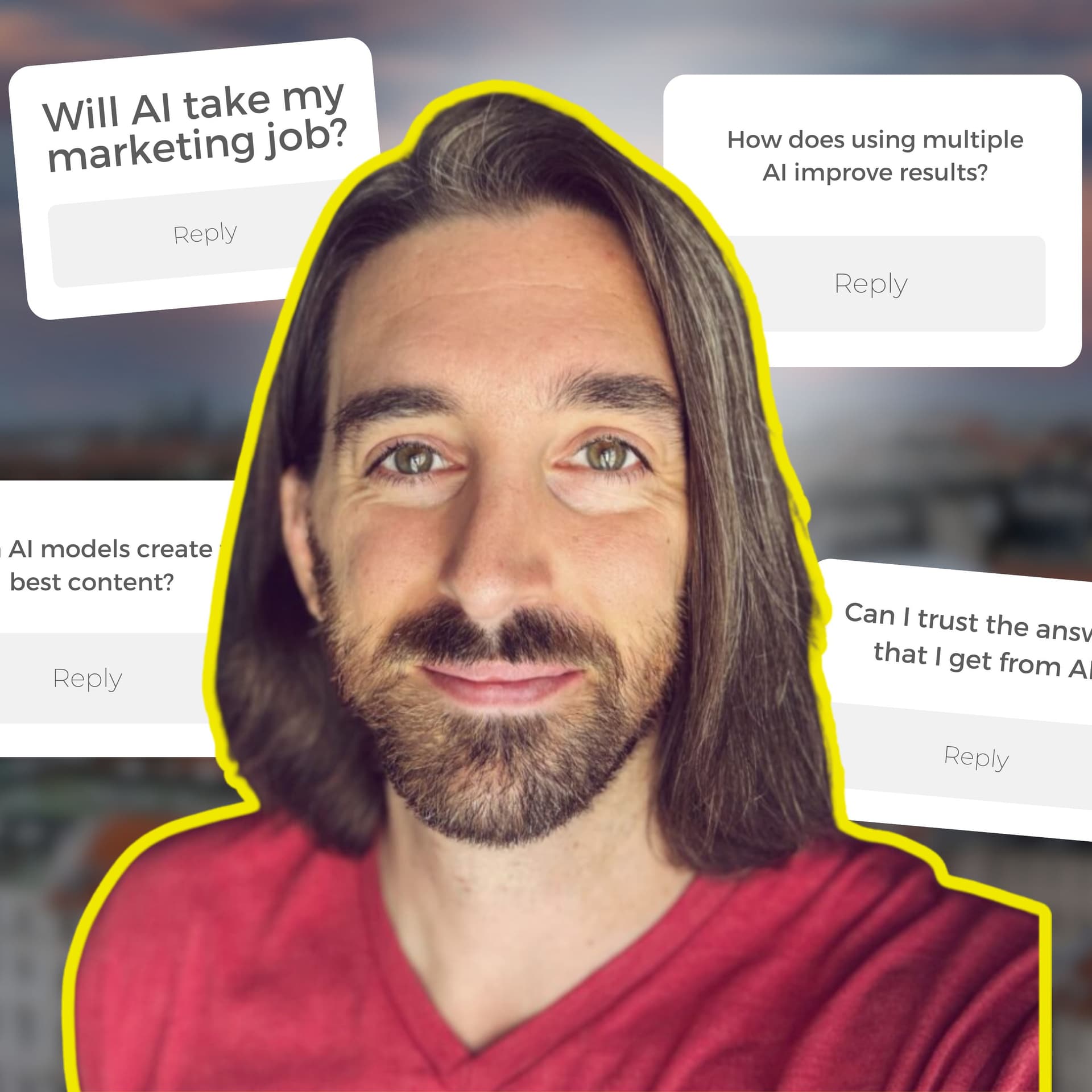
In this episode of *Finding Peak*, Ryan Hanley and Dustin Stout delve into the intersection of AI technology and entrepreneurship, discussing the transition from social media expertise to AI innovation. They explore the fears surrounding AI, the necessity for continuous personal growth, and the irreplaceable role of human creativity in an AI-dominated landscape.
Key Topics Discussed
- Fear and Misunderstanding of AI
- Many individuals express fear that AI will replace their jobs.
- Stout emphasizes that while AI may change job dynamics, it requires human oversight and creativity.
- The Importance of Continuous Growth
- Stout quotes, "If you're not growing, you're dying," emphasizing the need for continual personal and professional development.
- The dangers of being pigeonholed in professional roles are discussed.
- AI Collaboration and Synthetic Data
- The discussion touches on the implications of synthetic data and its use in training AI models.
- The importance of critical thinking when using AI tools is emphasized.
- Navigating the AI Landscape
- Stout offers insights into how business professionals can leverage multiple AI models together for enhanced productivity and creativity.
- The transition to AI tools comes with the necessity of adapting personal skills and knowledge.
---
Key Takeaways
- Embrace Change and Adaptability
- Successful individuals must be willing to adapt and expand their skill sets to stay relevant in an AI-driven economy.
- Collaboration with AI
- Leveraging multiple AI models can lead to enhanced outcomes. For example, using GPT models for creative tasks and Claude for copywriting can maximize effectiveness.
- Critical Thinking is Crucial
- Users need to maintain a critical mindset when working with AI tools to avoid falling prey to misinformation or inaccurate outputs.
- The Role of Synthetic Data
- While synthetic data could enhance AI training, caution is advised regarding its implications and potential inaccuracies.
---
Dustin Stout's Journey
- Stout shares his personal journey from struggling as a social media expert to becoming an AI entrepreneur with the launch of his tool, Magai.
- He recounts a challenging period of financial and mental struggles, which led to a breakthrough moment with the introduction of ChatGPT.
- The discussion highlights the importance of identifying personal strengths and leveraging unique experiences in innovation.
---
Recommended Tools
- Magi: All-in-one AI for professionals - [Magi Website](https://link.ryanhanley.com/magai)
- OpusClip: AI video clipping and editing tool - [OpusClip Website](https://link.ryanhanley.com/opus)
- Riverside: HD podcast and video software - [Riverside Website](https://link.ryanhanley.com/riverside)
- WhisperFlow: Voice-to-text tool - [WhisperFlow Website](https://link.ryanhanley.com/whisperflow)
---
Closing Remarks
This episode invites listeners to examine their perceptions of AI, embrace continuous learning, and adapt their skill sets for future challenges. The conversation is a blend of personal narrative, practical advice, and insightful analysis of the AI landscape, making it a valuable listen for anyone interested in entrepreneurship and technology.
For further insights and to connect with Dustin Stout, check out his website at [DustinStout.com](https://dustinstout.com) and explore Magai at [Magi.co](https://magi.co).
---
Additional Resources
- Other Episodes to Explore:
- From $2 Million Loss to World-Class Entrepreneur
- From One Man Shop to $200M in Revenue
- Is Psilocybin the Gateway to Self-Mastery?
---
Thank you for tuning in to this insightful episode of *Finding Peak*. If you found this summary helpful, consider subscribing, rating, and reviewing the podcast to support the show!
Written by AI. May contain mistakes. Listen to the episode to check what was said.
Transcript
Automatic transcript. May contain errors.0:00You've finally broken loose from work. Three friends, one tea time, and then the text. Honey, there's water in the basement. Not exactly how you pictured your Saturday. That's when you call us, Cincinnati Insurance. We always answer the call because real protection means showing up, even when things are in the rough. Cincinnati Insurance. Let us make your bad day better. Find an agent at CINFIN.com. It's a land grab right now, and they want to build their brand as the best of the best AI model. They're going to build their little cages around their products and try and pull people into that ecosystem, which is fine.
0:43It incentivizes them to make the better model because there's heavy competition. OpenAI needs people like me to create these multifaceted, complex, comprehensive systems that utilize their technology because that's where their real profit is.
1:11I was saying it's similar to you know in the in the acting world you kind of get pigeonholed into you do this one kind of role right and I've always fought back against that I mean there are some actors who break out of that right they do such a wide range of roles but like even in the professional world like you get pigeonholed into one thing and I've never been, I've been multi interested, interest diverse. And so I never kind of wanted to be pigeonholed. I wanted to have multiple businesses. And so like when I tried to make that pivot, yeah, it was, it was astonishing how many people were just like, no, stay in your lane.
1:49Dude, I get this all the time, because most of my career has been in insurance. And while While I have developed an arcane set of skills, knowledge, and experience that kind of is very and highly relevant to the insurance industry, like you said, I've always had bigger – bigger is probably the wrong word – a broader set of interests and things that I wanted to explore. and a lot of my success in the insurance industry has been exploring other industries, other ideas, and then bringing those ideas back. So one of the things that I find so interesting about that type of take that people will give you, right?
2:33And I completely understand where you're coming from and agree. It's like if you only sit in your little insular world and this is all you ever do and it's all you ever talk about and it's all you ever think about, you're actually diminishing yourself Because while, yeah, you may develop a tighter and tighter skill set, I feel like you're also creating a level of brittleness in your business or in your methodology because you're not exposed to new ideas. There's no cross-pollination. Yeah, it becomes rigid. That's why people get so locked into like this is the way we've always done things and we're not going to change.
3:08We're not going to advance. and why so many businesses are still struggling with AI because they do this this way. And they've put themselves in this box. They're not going to branch out. I remember sitting in a church where a pastor was like, you know, I don't read other pastors' books. And I'm like, so you're just narrow. Like you don't hear anybody else's perspective but your own. That was a red flag to me. so I think it was probably like gosh probably like 10 plus years ago I wrote an article about how if you're not growing you're dying and everything in life is that way every every living thing is the same way you look at vegetables in the garden the minute that vegetable stops growing it starts decaying and so I I've always felt that way like I need to grow the the minute that I jumped out on my own to be an entrepreneur.
4:03I had a little side hustle going on, but I had a full time job at a t-shirt printing shop. It was designing t-shirts. The minute I realized, oh, I'm not going to grow here. There's no, like my salary might increase a little bit, but like I have no growth opportunities. There's no role above me. It's like me and the owner. I'm not going to grow here. I need to go. I need to leave right away. And so like, if I'm ever, if I ever feel like I'm not growing, I like go into panic mode. Like I got to get, how can I start growing again? Because I feel like I'm dying at that point. So humans were not made to be static.
4:38I think your point on the pastor and on others who, I've heard others flex that idea, right? I don't, I've heard comedians say it. I've heard authors say it. I've heard other speakers say it, right? I mean, I know you speak a little bit and I have for 15 years and like, you know, I'd bump into speakers on the road and they'd be, they, you'd You'd hear him say like, oh, I don't watch other speakers or, you know, I don't. And I'm like, I don't understand. Like, how do you find new things? How do you come up with new ideas? How do you expand your game? Can you imagine a basketball player being like, I don't watch other basketball players.
5:16I don't study a football player. Like, you know, I don't study the other team's plays. Like, what? It makes no sense. It just seems ridiculous to me. Yeah, I mean, I know for me, I always felt uncomfortable up on stage. Here I am speaking professionally getting paid, but standing on a stage always made me feel uncomfortable. And then I saw a good buddy of mine, Marcus Sheridan speak for the first time, and he works the crowd. And it was like, Oh, wait, you mean there's no rule that I have to be up on that stage? I can get down with the people? and then unless it's like in my contract I have to stay on stage for some reason you know sometimes that's the way that event's set up I'm down in the crowd and even then I'm usually you know lobbying to figure out how to get it because you know that just works for my style and whatever but if I hadn't been open to looking at other speakers in particular this case Marcus I would have never seen that and implemented in my own work and that to me is like one of the things that I see with with AI and, and, you know, why I was so excited to chat with you today, especially, you know, having lived such a, uh, uh, you lived in the social media world, you've lived in the design world, obviously you have this actor training, um, and now you're developing this highly successful, uh, AI app and doing incredible things like, you know, when you're running into people who are hesitant to engage in AI, right.
6:44Who are still maybe like, maybe they're interested, maybe they followed you for a while, but they're still, they still have that hesitancy. What are the, what are the obstacles? What are the questions? What are the fears that they're presenting you with that, that you're seeing most commonly? Well, the number one fear is people think, Oh, AI is going to take my job. I mean, it's, to me, it sounds ridiculous at this point, maybe because I've just explained it so many times, but that fear is real for a lot of people. So back in, oh gosh, what was it? May? I think it was May. I was speaking in Branson, Missouri at a conference to journalists.
7:22So this was a, well, journalists, media entities, magazines, newspapers, online news blogs. So these are people who've been in the media industry for decades. And many of them were embracing AI already, but there were still quite a few of them who either never sent their first prompt to an AI model or were completely opposed to, well, there was maybe just a small fraction who were completely opposed to it. I would say AI hostile. And boy, I'll tell you, that was an interesting conversation. But the number one thing was just, you know, like, AI is going to take my job. I'm going to be out of work, going to be out of a job, I'm going to, you know, not have anything to do anymore.
8:05I'm going to be fired because an AI is going to replace me. And I think it's such a, it's such a natural thing to think, especially with all All the influencers, the AI influencers out there who are talking about automation so much, who are talking about AI agents and talking about how you can revolutionize your business with AI and really just talking a bunch of theory instead of pragmatics. But if you sit and think about it, the AI has to be prompted by someone or something. and ai is still not at the point where it can be completely unmonitored you still have to check its work pretty thoroughly because it can it still hallucinates it still makes stuff up it still gets things wrong even if you feed it a source of truth where it can reference the information it can still get stuff wrong it can make the wrong conclusions that you're not looking for So you have to have, number one, a human who is telling it what to do.
9:13It's prompting it in some way or even setting up the automation. Even if it's a human setting up the automation, there has to be quality checks along the way to make sure that the end product isn't completely off the rails. So you have to have a human in the loop to a very good degree. And I don't think that will ever completely change. Sure, maybe one human will do more monitoring of more AI systems, and there will be more AI systems doing more things. But still, there's going to be a human at the end of the day having to check the work and make sure it's still doing its job the way it's supposed to do.
9:50Or refining that job. Maybe they find some inefficiencies in the job as the human put it together, and now they've got to make some changes. So I think it's still pretty irrational. having looked at the whole history of technology, right? We've gone through, our generation in particular has gone through so many paradigm shifts. You think all the way back to the age of when the internet came online, right? And this is something I talked about with Brad because it like hits my heart so much to know that there was a business paradigm that hit the world. Nobody saw it coming. And the businesses who fought against it, who resisted it, who said, no we've always done business this way our brick and mortar is the way that business is this internet thing's a fad and those businesses are gone today because they they refused to adapt they didn't have the access to knowledge or learning or teaching they didn't have anyone giving them a helping hand walking through that i don't want to see that happen again so i think this this fear may be based in a lot of the fiction that we've been fed about ai but also maybe some of these paradigm shifts that we've seen over the years where people have gone out of business because the age of the internet took over.
11:08All that to say, I think there is truth in the fear, but if you dig through the rationale, at the end of the day, humans are still needed, critically needed, to make sure that these AI processes are working. And so the only way to truly get past that is to just dive in and start learning AI, exploring AI. The, you know, the cliche that I used, I've used probably a hundred times now, is that AI is not going to replace you. Somebody using AI is going to replace you. So unless you equip yourself to be that person using AI. And this is why we fight so hard and work so hard at Magi to make our tools easy, accessible, and every single week we're doing a live training, teaching something about AI, giving people pragmatic use cases of how to, not just how to work with these AI, but understand how they work so that they can then innovate and iterate from there and apply it to their daily work and lives.
12:09So yeah, there's a long way of answering your question. What's the number one thing? People are still scared it's going to take their jobs. Yeah, so I have a slightly different take that I would love for you to get your thoughts on. I actually wrote a post a couple of weeks ago that went fairly viral on LinkedIn. It was directed at insurance agents, but basically I just said like, some of you are losing your jobs. Like AI is going to take some of your jobs. Like I get the AI won't replace you, humans who use it will replace you, because I think that's mostly going to be true. But I also think in pivotal transitional moments with technology, which we are absolutely in, I think what ends up happening is the businesses that weren't really run well.
12:58The holidays are here, and that means it's the most wonderful time of the year to save with Rakuten. Use Rakuten to stack cash back from your favorite stores on top of holiday sales. That's savings on savings. With Rakuten, you can get cash back on gifts for everyone on your list. From toys for the kids to kitchen gear for the person who loves to cook to electronics for everyone. You can even save on something for yourself. Just shop the stores you love and cash back is automatically added to your account. and you can get paid with gift cards, PayPal, or check. Or eligible American Express card members can even choose to earn membership rewards instead of cash back.
13:41It's truly a no-brainer. Join for free today and get a new member bonus after minimum qualifying purchases. Just go to Rakuten.com, download the app, or install the browser extension. That's R-A-K-U-T-E-N. Terms and conditions apply. To begin with, they get exposed. And absolutely, you know, that happened with the internet. It happened again with, um, like APIs, VoIP, you know, kind of that digital era, that 2010 to 2020 era. And it's happening again now where companies that were able to like, you know, leverage, you know, just maybe there's their brand or their legacy or their relationships, et cetera, but aren't run particularly well when they hit these transitional technology moments, they get exposed and most of them.
14:31it's not that they couldn't adapt it, you know, or, or start using a tool like, like yours, but they don't have the decision-making process. They don't have the systems. They don't have the people. They don't have the infrastructure in place to even consider these things. And they just get mowed down. And what was funny was I expected when I wrote that post to get a lot of people being like, Oh, you know, this is just another, you know, BS technology, you know, you know, whatever. And I was shocked at how many people were like, yeah, I think we're, I think there's a lot of people missing the point here.
15:03Like you, you, if, if nothing else, no one's going to be growing headcount, like head, you know what I mean? There might be more smaller businesses leveraging this tech to do more, but, but companies aren't going to be putting on headcount. Why would you put on headcount when, you know, we were talking about it before we went live. Well, you know, we are actually at this point, we're putting on headcount, but we're going through an extreme growth phase yeah but i'll clarify and i'll validate exactly what you said so i wrote a blog post i don't know how long ago but it was around um the time there was a bunch of companies big companies laying off massive amounts of people and they were they were blaming it on ai they were saying hey we were laying off all these people but why ai i don't know um i think the the real truth behind that is not that they're replacing it with ai but they Those businesses were failing already before AI.
15:55There were inefficiencies. There were, you know, overhiring. We saw this, yeah, far be it from me to bring up a touchy subject, but Elon Musk, he went into Twitter, fired 70 % of employees. Everybody was like, no, it's going to die. How is Twitter going to stay online with only 30 % of staff? Well, guess what, folks? It stayed online. and it's running well it's running i don't say how well it's running but it's running and i love being there so i i think that the truth is to to your point is they're realizing they don't need as many staff as they've already had they've made they've maybe overshot their staff or maybe numbers are down because the economy's been doing kind of this thing for a little while as we stabilize into this new you know this this this new uh um administration uh but yeah they're using ai as an excuse uh and and but at the same time you're 100 right like they they're not hiring now because they realize oh i can the these two employees who were doing you know five hours of work can do that same fire five hours of work in 30 minutes now so we could increase the workload without having hire more staff.
17:14And so, yeah, you're 100 % right with that. So I also want to clarify my statement. I do believe AI is going to eliminate jobs. But my point in saying, you know, someone using AI is going to replace you, whether it's your manager going to replace you because they learned AI and you didn't, that is going to happen. So there's going to be less jobs that are AI-able, that are accomplishable through AI. But the point that I really try to emphasize is that if you learn, if you grow, you can be the master of your own destiny. You don't have to be a victim in this AI paradigm shift. You can learn those skills, become a valuable member, a valuable asset in this new AI economy.
18:04Equip yourself with the knowledge so that when somebody is hiring for a new prompt engineer role or a new AI administrative role, you have those skills and you can accomplish that job. And so, you know, one more little history lesson here. So back when sewing machines became a thing, back when, you know, seamstresses were the only way that garments got made, and then sewing machines were invented. There was a whole panic in the industrial industry because all these seamstresses were like, we're going to lose our jobs and these machines are going to take our jobs. And they absolutely did, but not in the way that the seamstresses never worked again.
18:50Their jobs just changed. They became more efficient. The quality became easier and And it just shifted. I think it's a much different thing now. I'm not saying it's exactly the same parallel, but we've seen this through multiple, multiple industries. And, you know, whether that's the seamstresses or the printing press, scribes and people, transcribers, you know, their jobs changed. And many of those jobs went away forever. So it's just a matter of human beings are adaptable. If you let yourself be. And, you know, going back to that thing we started talking about, like if you're not growing, if you're not advancing with the technology, if you're not advancing with the culture, then you're going to get left behind.
19:38So as long as you're growing, equipping yourself, you can become a valuable part of the next phase of our economy. I think you brought up a really interesting point about the victim mentality. So I think, again, when we hit these transitional technology moments, it seems like people become very polarized. And I don't mean that necessarily in the political sense, although obviously we're there as well right now. But more in this idea of like you get people who are Machiavellian and you get people that are Marxist, right? So it's either I'm a victim, I need to be taken care of, you know, this new technology is going to push me aside and they tend to go towards the Marxist ideas.
20:23And then you get the people who are driven, who are like, you know what, I'm going to start my, I'm going to create my own company. I'm going to, you know, learn how to take my expertise, dump it into a GPT so I can pump out content, you know, whatever. I'm going to get after it. And they become very, and you get this very polarized nature between, you know, hardcore Machiavellian capitalists going out and creating things and building and taking market share. And then, you know, those who've kind of, who are willing to kind of coast along or maybe were able to coast along because of some simple skillset or a position that they had tend to get replaced and get pushed towards this more Marxist side.
21:01and you know I think one of those you know one of those yields positive results for us and one of them clearly doesn't and you know how do we you know I guess what are the things that so if I'm sitting in a company from where you're at right this is kind of where I want to go with this question and I and I don't want to be replaced I want to I'm looking at this going this is a huge opportunity. You know, I'm 44 years old. I got another 20, 30 years of career left. You know, I want to make sure I'm capitalizing on this. You know, what are the things that I'm looking at that I have, right? Is it my knowledge?
21:40Is it my network? Is it my, you know, my, my system process discipline? Is it, you know, what, how, what should I, what parts of my skillset should I be cultivating that fit with AI that allow me to launch faster, if that makes sense? It's a great question. And I think the most valuable thing that we have as humans is, is the thing that AI will never have. And that is our unique combination of predispositions, experiences, and the way that we see the world. So we have, you know, from the day that we're born. We're being influenced by our parents. We're being influenced by our relatives, whoever's growing, you know, whoever we're growing up around the TV shows that we watch, the books that we read, the teachers that we have, all of it is shaping us and molding the molding us in a way that's so unique that there will literally be a never, never, there will never be another human being.
22:44It's early in the morning for me here in California. I'm only halfway through my first cup of coffee. There will never be another human being that is as uniquely put together as you. And it's for that reason that AI can never match you in terms of how you see the world. Now, AI's greatest strength is that it has absorbed and been trained on billions of parameters. It sees so many different perspectives. It's been trained on all these different perspectives. But in that great strength is its greatest weakness Because it doesn't have an opinion You can make it sound like it has an opinion It will fake an opinion But really all it's doing It's filtering and sifting all its data To give you an answer that kind of matches What you're looking for So the way that you view the world If you're using your critical thinking Right?
23:37You're using your wits and your wisdom And everything that you've been grown into as a human being, that will be your greatest strength in the AI economy. When you bring your expertise and your perspective to your work and augment it with the infinite knowledge of AI, that's when you have real synergy and when you have real results that can't be replicated by some predetermined process. Right. That's where your unique ability lies. Yeah, I love this idea. I was listening to Dan Martell the other day. And if you guys don't listen to the Martell Method is his podcast. And he was talking about this process that I've seen other people go through, but he was kind of breaking down how he did it of taking all the content he's ever created and putting it into.
24:33He didn't exactly say what model he was putting it into, but we'll just say a custom GPT and allowing. and basically then he put some documentation together around his personality and how he viewed the world and all these different things to basically give, like, you could, he could now ask this thing questions about things that he had forgotten. He's like, I might've said something three years ago that would really work for what I'm trying to, this argument I'm trying to make today, but how am I, you know, am I gonna remember that I said that three years ago on, you know, podcast 172 or whatever he's like and now the ai can start to prompt out these similar things that we just we just don't our brains aren't set up to catalog and reference all these individual highly specific data points we all know you know almost with every moment our our memories become a little fuzzier and fuzzier which is why like when you imagine yourself as a child athlete you hit 27 home runs and we're the captain of every team even though you you know didn't even make your modified baseball team or whatever.
25:40You know, it's like we started to get a little fuzzy. And what AI can do is, and this was his point, and I thought it was a wonderful one, was it can take your work experience, your work thoughts, your beliefs, your content, and now you can remember it in its crispest and clearest form and now reference it into your future work. And he said, you know, I wish it was my original thought. It's his. that's why I'm giving him so much credit, but I really thought it was good was like, I'm, he said, he's building on, he's able to build on his work faster today. Cause he can accurately reference what he did in the past.
26:19If that makes sense. And I was like, holy shit. I was like, I got to start. So this is a project I'm actually working on behind the scenes now. I mean, I've done over my career, thousands of podcasts, thousands of blog posts. I mean, you've created so much content too. You know, I'm, I'm struggling with how to get like some of the social media content in there and you know what working through it I don't want to say struggling but like this idea of if I could reference ideas that I was things I was talking about on x topic five years ago how much faster can I move in building on those ideas today because I'm not guessing at what I thought five years ago it's right at my fingertips and man I was like as a leader as someone who likes to create, if you need to do SOPs, best practices systems, I mean, all these things inside your business to have all that at your fingertips, you're basically the collective knowledge of your professional life at your fingertips is a competitive advantage that I don't even know that you could throw a value on yet today.
27:23Yeah, that, you know, that makes me think of, uh, so are you a big Netflix watcher? unfortunately i i have a i i can be sucked in and and death what it's not what's what is it called on netflix uh death stream you know uh instagram death scroll i can death stream uh episodes of shows the only way to turn off my business mind is to like just go ahead first and lose myself in a tv show or a movie that's that's like my de-stressor um recently you know one of the hardest things about Netflix and yeah I equate this to why we created Magi um but like you go and you don't know like what to watch because there's just too many options right and so one of the things I love doing is finding a show that has like a lot of episodes and then I don't have to think next time I log into Netflix I just know oh I'm just gonna grab the next episode no thinking just turn it on I found the show recently called Rust Valley Restorers have you heard of this one okay so the premise is there's this guy named mike hall he's he's from bc canada and he owns just huge plot of land and he's got dozens of dozens of these old junk cars and so he started a car restoration business and so he's going to restore all these cars but the plot of land is just massive and he has all of these he calls them treasures but it's just junk everywhere There are dozens of these old cars, frames, pieces, parts.
28:52He's got containers filled with new and old parts. He doesn't know where anything is at any given time. Half the show has spent him rummaging around with his partner trying to find these parts. What you said is really funny. That kind of feels like how our brains are. We've got all this treasure in here that we've accumulated over the years. Wisdom, knowledge, and accessing it becomes so difficult because you're like rummaging around and they're like where did i what did i say about this thing when did i do that other thing but how how great would it be if mike could suddenly have an ai just catalog all the stuff all the junk and he could say where is where did i put that fender for the 67 chevelle and it would go oh in this place over here brilliant wouldn't have to rummage around there would be no show anymore because half of it is just hilarious them like stumbling around this junkyard.
29:47But, you know, imagine that for, for our brains, for our, our, our body of work that, and many of it, you know, there's how many times have there been where somebody is like, Hey, Ryan, you said this thing in this podcast that one time that really blew my mind. You're like, I said that I can't even remember that. I said, no, seriously, it does happen. It, especially when, um, it's funny. Cause you know, and I do this sometimes with certain shows that maybe I picked up a hundred episodes into their, you know, podcast or whatever, you'll go deep cuts, you know, I'd be like, Hey, let me just scroll into the archives and find an old episode, you know, that with maybe a guest that, you know, whatever it could be three, four or five years ago.
30:27And people do this. This is something a lot of podcast listeners do is they find a show, they like a couple episodes and then they'll go deep cuts. And when people email or DM or something about it, I sometimes like, I am, I don't even remember what planet I was on three years ago when I was talking, you know what I mean? Like you just, you don't remember it. Um, but one thing I think is really interesting because I see, uh, I see the potential for a really interesting counter movement as well. So AI, you know, take this idea of kind of, uh, creating a second brain that we can easily reference, right?
30:59Okay. We'll put that over here as AI. And then, um, I think there's a really interesting counter movement around, around, uh, consciousness and clarity and, and really like expanding our, our own minds and what they're able to do. Right. And you know, I, I, uh, for a while I was, uh, micro dosing psilocybin like once or twice a week. And people would ask me like, why are you doing that? And one, I like to test everything that I don't think is going to kill me. And I was pretty sure it wasn't. And you know, it's not addictive. So, uh, I wanted to give it a try. And what I found was As long as you didn't over, there was a zone, a zone of genius where too much and your screen got a little funky and not enough and you didn't even know you were taking it, where you felt like an unlock in your brain.
31:48Now, granted, I'm using a chemical to get there and all this different stuff, but I do think there's as much as there is absolutely, you know, in the real world, you know, from an industrious standpoint, a clear value to creating this second brain idea, using these tools to reference them, to create interesting things. one thing I worry about in in in that effort is the loss of serendipitous ideas because you know you you're a believer as much as I am right in in in Christ and in Jesus God and um and there's divine I believe in divine inspiration and if everything is mechanical right in the in an AI if you live solely in that world, then I wonder if you lose that serendipitous, you know, the muse, divine, you know, however you want to define it.
32:43Do you lose that? Or does it amplify that? I mean, because some of the ideas that sculpt the world, when you listen to the inventors or the individuals who crafted these ideas, oftentimes they don't have a clear answer as to where it came from. Right, right. And I think we have to be careful of over-indexing on the computers and over-leveraging them. And we've actually seen some studies already that show individuals who rely too heavily for all of their creation on AI are actually losing the ability to create when they're not using it. Where do you see that transition? Or how do you marry that idea in your own life?
Read the full transcript
33:27How do you make sure you're not losing some of your natural skills by over-indexing on the AI so that you can still keep that human spark? Yeah, I think it first starts with an awareness, a desire to grow. I think anybody who does want to grow will be highly sensitive to that. I know I am. But, you know, think about it like almost like our physical world. I could sit here all day and be great. I've worked from home since 2014. I could stay in my house all the time, but there's a part of me that starts to get antsy and a part of me that's like, I got to get out of here. I got to stretch my limbs.
34:11I got to go to the gym. And in fact, I'm missing my gym, uh, workout time today, uh, to be here with you. Uh, not that I can do some pushups together on camera. If you want, no, I'll go after this. But like, I start itching, right? I start to get that feeling because I want to be growing. I want to keep my physical, my strength, I want to stay physically fit. And I can tell when I'm not. Same thing is cognitive. So like when I'm being lazy, mentally lazy, I can feel it, I can start to feel my brain getting, you know squishy so i i can feel i have a sensitivity to it some people may not and one of the things that i think is is very true that lazy people are going to be lazy they're going to find more ways to be lazy whereas people who want to do their best work will find ways to do their best work and so i think there's there's definitely a an awareness that needs to happen yeah it can be a crutch so back in the day when we had to memorize everybody's phone number right how many phone numbers you have memorized today probably not that many not many not many I can actually you know what I realized the other day dude this is so interesting is I know the last four digits of a decent number of phone numbers because sometimes they come up right but I don't I could never tell you the full phone number anymore so like I recognize the last four digits because that's what the iPhone will show like next to someone's name but but I couldn't tell you what their phone number is.
35:42I'll just, you know, like my ex-wife is 3631. My dad is, you know, 9-1-1-3, you know, but I, I honestly couldn't even tell you what the first three numbers of their phone numbers are today. And I was like, that's a, wow, that's a really weird thing that developed with the technology. Yeah. Uh, well, you know, so back to what I was saying is just that, like, I think that if, as long as we keep our wits about us, we keep our critical thinking hats on. That's, I think that's the most important part of it is critical thinking. again going back to this idea that ai makes mistakes ai hallucinates ai isn't perfect we have to keep our critical thinking hat on and as long as we're doing that and and we're realizing that our most valuable asset is our unique combination of experiences that leads to those serendipitous moments that that god has only built us for i'm also a firm believer that god created us for a purpose on purpose and that there's nobody else in this world that could fulfill that purpose the way that he built us to.
36:44So knowing that, I think as long as we keep that at the forefront of our minds, like we're here to be uniquely us and AI can never be uniquely us, we can fight that urge to be lazy and fight that urge to kind of just use AI as a crutch rather than using it as a stepping stool. So I want to talk about your transition. You wrote this incredible article actually like two days ago or a day ago. And I was pulling up your website because I was learning about Magi and I want to get there because there's a bunch of really interesting things that you've done that I'm like really intrigued about and I want to talk about for the audience as well.
37:30But one of the things I thought was really interesting in this article, I'm going to link it up in the show notes, everybody. So whether you're watching or listening, just scroll down on whatever platform you're on, and I'll have the link there. But one of the things you talk about, dude, is this capture, right? You had always been a social media guy, a design guy. This is what you'd always talked about. It's what your audience knew you for. It's what your social media followers, you know, why they followed you, why they were connected to you, or for those insights. And now you see this opportunity, you're called to it, you fight it, but you can't get away from it.
38:02And you decide to make this move into, hey, I'm going to become an entrepreneur in the AI space and create this tool. And you said there was, you talk about it in the article, and I think you do a wonderful job. And that's why I'm referencing it and pushing everyone there, is the friction of people had always seen you as X. And you're being called to become Y. And there's a lot of friction in there, right? And it creates doubt and it creates probably some frustration and it creates some fear. How did you, I think that's really natural. Again, we talked a little bit before we went live. I've experienced a little bit of that in my own life.
38:44One of the places is taking this podcast from being an insurance only podcast three years ago to the last three years, expanding it out into broader topics, bigger topics. And I've had a lot of people email me and go, dude, I loved your podcast more when it was just insurance stuff. And it's like, yeah, except over a decade, I basically had said everything I could and wanted to say on that topic and I needed to expand. Right. Okay. So I think your jump is probably even more powerful because here you are really, you're becoming an entrepreneur. like your career, your income, your ability to provide for your family is now in this company and you have to make this transition.
39:25How did you, one, what were you really dealing with? And two, how did you fight through that fear and just maybe confusion, frustration, et cetera, to actually make the transition to where you are today? How long we got? Do we have time for the Lifetime movie of my life? I'll try to keep it short. So here's the harsh truth about being a social media expert. Many of the social media experts you know are broke because there's not a ton of money in being a social media expert. There are a fair few who become super influential and have really figured out how to monetize their social media expertise.
40:07but the vast majority of social media managers, social media consultants, they are not valued as much as they should be. People don't want to pay them what they're actually worth. And it's a real struggle to make a living, a comfortable living in the world of social media marketing and consulting. There are many who've done it, but many, many, many have not done well. And so I found myself, I was always an entrepreneur. So back in 2014, you remember I started the social warfare plugin with a couple partners. That did fairly well. That was my first successful SaaS business. Around 2020, my partners and I had grown apart.
40:49We weren't agreeing on pretty much anything. And so I decided to exit. And I had a couple ideas of two products that I really wanted to build. Both of them in the realm of social media still. One of them was an app that would produce social media graphics quickly and easily in every size you need. Think of it like Canva Lite. It's supposed to be like you fill out a few words and then boom without having to tinker and resize. The other one was a way to create articles or turn articles or long form content or web pages and shop it up into a bunch of social media posts instantly. Now, this is all before the onset of AI.
41:28In my mind, I wanted these apps to be AI oriented. And again, this was 2020. It wasn't until November 2022 that ChatGPT hit the scene. So I knew in my mind, AI is starting to become a thing. We had some copywriters out there, some, you know, the Jaspers of the world, which back then were called conversion AI, if you're that old to remember, and then copy AI, a bunch of clones. and I thought to myself, I want to create an AI app that will generate images for people and one that will generate copy for people at scale for these social media jobs. Long story short, I had to raise money to build these apps because it was expensive.
42:10I didn't get anywhere close to the AI features because it just wasn't accessible then. I would have needed$100 million to make these products the way that I wanted to. I didn't have$100 million. I had about$30 ,000. so the mvps came out we built them took us about nine months and 65 000 later i'm broke nobody wants these products i'm i'm probably in the worst mental spiritual and financial state i've ever been in my life i've got a wife and three kids to take care of a mortgage that i don't know how i'm gonna pay and i realized like my career up to this point has been great until it wasn't and everything i was doing seemed to be failing around me.
42:55And then ChatGPT came around and it was almost like, it was one of those moments where I used it for the first time and I thought to myself, this is going to change everything. Like it was, I hate to be overly charismatic, but it was almost like God brought me to my lowest point. I mean, I was suicidal many times, thought I had nothing to give to the world. I was praying that God would take me home. And it was in that moment that I used Chachi Petit that God almost gave me a vision of like, this is going to change the world. And here's what it's going to look like in about five years. You need to pay attention to this.
43:40And I had such clarity in that moment. I had taken a couple clients. I was doing some web design and some social media for them at that point. So I started using ChatGPT. And as I used it more, the more I realized like, oh, this is great, but why doesn't it do this? And why doesn't it do that? And I wish it did this better. And why do I have to have five other subscriptions to have these image things and the video things and the audio thing? Like, why can't they build? And it was almost like God said to me, this is how I built you to find all the gaps, to find everything that's wrong and to build something better.
44:14And so I in eight weeks, when I finally decided I had this idea for Magi, I start to finish, built it by myself. No capital, no team, no resources, just me sitting at my desk going. I got to figure out a way to pay my mortgage next month and make sure my kids don't go hungry. and by the grace of God, I'm not a developer. I know enough code to be dangerous, but it was like when the student's ready, the teacher appears. God put all the teachers in front of me and I learned what I needed to learn and built the first version of Magi in about eight weeks, launched it March 31st, 2023, just four months after, or five months, I guess, after ChatGPT hit the world.
45:00Dude, it's incredible. And I believe, It's funny. You're in very good company, dude. I had something very similar happen to me with my last startup, found an insurance agency, grew it, sold it, unfortunately sold it to the wrong people. watched my baby kind of get torn up and shredded. And, you know, and I made good on the numbers that I needed to make good on. But like the first moment that I could hit an exit, I exited. And it was this moment where now, you know, I was used to having this company and I had 25 employees and all this stuff and was making money. And now all of a sudden, you know, like, yeah, I had a little bit of money in the bank, but I had no job, like no, it was the first time in my life that I ever woke up and didn't know what I was supposed to do, right?
45:48Similar, I knew and have felt the same thing with marketing, even as a CMO, and I've been a CMO a couple of times, you know, you're always put a peg below, right? Because you're the marketing guy. And I was like, that's, I got into marketing because, you know, charismatic, willing to create, and it felt like an easy path to move up the rungs. The problem is, and you talked a little bit about this, like you get pigeonholed as a marketing guy. and it's like, I'm not even a good marketer. Yeah. You know, like honestly, like if you were to put me head to head with like a good marketing person, I would get slaughtered.
46:24I just, you know. I really can't worry about myself. Yeah, like I'm like, I'm not just, and you know what I took it as and it's so, it's just, I love that story and I want to get into some of the technical aspects of what you're doing because I do, I want the audience to take some technical stuff away from this and I think your approach is really unique and really interesting but I just want to sit here for one second because I think too often, whether we're intrapreneurs, whether we're sales professionals in an organization and kind of living that salespreneur life or we are true entrepreneurs, et cetera, wherever we are, I think we look at these moments and we feel like we're being punished.
47:03And that's the way I felt at that moment. I was like, I had these enormous plans for this company and it just didn't happen. Yep. And I was like, why would you do that? Like, I gave up two years of my life. I got divorced during this time, not necessarily because of the startup, but, you know, like all these things were happening. And I just was like, what the fuck? Like, man, I try to be a good guy. You know, I'm a believer. I pray. I try to live a life that, you know, I believe Jesus would be proud of. And I think if I have to stand in front of St. Peter, I can justify. And fuck, why is this happening?
47:38And you go down this spiral. And and if I think and this is why I advocate for for for having a relationship with God, because in that time, like you said, you open your if you're willing to open yourself up and you allow yourself even moments. you start to you start to hear things and maybe it's god maybe it's just you're providing praying creates space in your brain for you to actually have some some original thoughts or or really get to the core of who you are but i what i heard was you you you're not a marketer you're a leader and and you need to get better at the business of leadership so that you can do this again for another company, which is what I'm doing now.
48:23I'm the CEO of a, of a AI startup in the insurance industry and like, uh, different from what you're doing, but, but, you know, just interesting. And like, I just hope guys, like if you're listening, you listen to Dustin's story, you know, you listen to mine, whatever we all have our own, like even God loves you, whether you're, you believe in him or not. So even if you're an atheist or whatever, or creating that space and act as if. Jordan Peterson, I think, said it best, act as if. And there's a lot of opportunity for us to hear and find what we really want to do. So you find this idea of God telling you, hey, you're here because you see the gaps, you see the spaces, and you create Magi.
49:09And so one of the things that I was immediately captured by is this concept of in context, the ability to use different models. One, I'm very interested in where that idea came from. And then maybe you can expand upon the power of being able to do that. Like what is the actual power of being able to start in open AI and then touch Gemini 2.5 and then move to Claude or whatever process makes sense. Where did that come from and why does that matter and how does it add value? yeah so it's funny transitioning from the pigeonhole conversation um i'm getting ready to pigeonhole some of these ai models uh but but to speak to that a little more like i i think anybody who's listening who feels like they have this pressure from the people around them to kind of stay in their lane um just know that sometimes you have to make the decision to remove those people from your life and stop listening to the people who want you to stay in your lane that's what I had to do.
50:10People wanted me to stay in my lane, were keeping me broke, miserable, and not fulfilling my purpose. And so you really have to have that bravery to just jump out of that pigeonhole and say, who do I want to be? In our case, who's God want me to be? And listen to that voice rather than cave into the peer pressure of, this is who people expect me to be. now to answer your question with ai models they they do have very explicit strengths and weaknesses the more that you test them the more that you explore them and this is also another reason i created magi because i wanted people to be able to explore it's so difficult to have to switch to this tab and try this one and then switch this other tab and try try that one and then switch the you know between the tabs and compare back and forth while at the same time the underlying technology is not giving you a fair shot at actually exploring their capabilities because they're all doing backend engineering and prompts that you can't see.
51:08So you don't get to explore. But when you do get to explore, you get to have a baseline for all these models. You'll find very quickly that you like how one model does this type of prompt versus how this model does another type of prompt. And you find very quickly you have favorites and you have preferences. For me in particular, I love GPT's creativity. I think it has the most out-of-the-box ideas. And whenever I'm looking for a perspective that I can't get to on my own or maybe an analogy that I just need a better analogy because the one I'm coming up with is just not hitting, GPT comes up with some really great creative thinking.
51:45Whereas when I'm writing marketing copy or sales copy, GPT falls kind of short. I just never really buy into it. But I hand that same task over to Claude and Claude writes copy better than I ever could. So there are definite strengths and weaknesses of every single model. You know, go to Google Gemini structure. I mean, think about Google in particular. It's all about structuring the Internet, right? So it makes sense that they've engineered it in such a way that it's really, really good at structural stuff. stuff and so when you find these different strengths and weaknesses of these different models and you you realize well i can let's say a blog post for example you know i need to write a blog post about this keyword let's brainstorm the the titles with gpt because it's super creative and then let's brainstorm that outline with gpt but once i have that outline and i want to do some actual writing i don't want gpt to do the writing i want to switch over to claude now how would you do that without magi you would have to copy that outline head over to claude log in start a new chat paste that in say hey we're gonna build it and then give it all the background right but with with magi because we've put them all in one place you can essentially say all right thanks chat gpt now i'm gonna bring claude into the room and claude's gonna take over from there as if it was in the room the whole time so think of it i think of it like having a room full of experts who are just sitting there waiting to help you out whenever you need them and then you can just say all right, you're in, you know, almost like a, like a, like a sports team.
53:17You know, like, hey, hey, chat, JBT, you're on the bench. Claude, come on in, you're up next. So that not only gives you a more seamless experience, an unbroken experience, so you're not breaking up your flow. But what's really fascinating is you find that these models, without going into like super technical how it works basically when when you start with one model and you bring in another one the new model sees the entire conversation from you and the other model and it it's almost like it it learns from it so claude can actually learn from the creative choices of gpt earlier in the conversation and actually becomes more creative and the more you pull in those abilities the longer that conversation goes, the better these models get to where you can even use a dumb model near the end, one that's not very sophisticated, maybe an older model, and it creates the same level of output almost because it's learned from the earlier parts of the conversation.
54:19So it's really fascinating to see how all these models can not just be leveraged in ways that brings out all their strengths and none of their weaknesses, but they actually enhance one another as the conversation progresses. Yeah, this to me is the future of creation because I completely agree. I at one point, and I started deprecating them only because before I knew what you were up to, and this is gonna be my go-to tool now. I mean, 100%, I've been playing around with it already. Like it's, I was going ChatGPT, then I would do research in Gemini. Then this is before deep research with ChatGPT, then I'd pull the research in.
54:59And then like you said, the titles and like, like some of the hooks that GPT creates are phenomenal. Yeah. But I agree. You get into the body and unless I feel like GPT has a really good feel for narrative design. But like you said, marketing copy, sales copy, email copy. Like you said, it's kind of like blah. It doesn't, it doesn't hit. And then, you know, you're, you know, I played around with Grok for a little while, but Grok pre the latest release of, you know, Grok 4 was iffy. 4 seems a little over tuned, I think, for personality. Yeah, 4 is wild. You know, I think they may have, the pendulum may have swung a little too far the other way.
55:42We'll see. I agree. But I do think what you're describing, this workflow of using, it's like anybody else. Like if you have a plumber, come over to your house. It's not like they have one wrench and that one wrench does every function they need, right? They got a screw gun and a wrench and a socket wrench and, you know, a pair of needle nose pliers. And it's like for what they need to do, they're pulling out of their tool belt the best tool. And to have one place where you can pull them all together, to me, is an absolute no-brainer. Like this is where we have to go. Like do you see a time when, like to me, it feels like we're in an expansion phase, obviously, of AI.
56:24Well, I shouldn't say obviously. But to me, it's obvious that right now we're in pure expansion, right? We're just new models popping up all over. You have entire countries creating new models and all this different stuff. And it's really wonderful and wild. It's really like a true FAFO moment for the world. Do you see where we start to come back in and these models actually natively start to work together? Or do you think the business of AI will keep that from happening? I think the business of it will keep it from happening. Because these companies are all trying to, it's a land grab. right now and they they want to build their brand as the best of the best ai model and so they're going to build their little cages around their products and try and pull people into that ecosystem which is fine i think it's great it incentivizes them to to really make the better model because there's heavy competition right now well when i say heavy there's really like four competitors there's four top ones you know deep china out of nowhere comes up with a new deep seek model that is more efficient more costly and can do just as well as the gpt models but at a lower price and so we have real competition in the market so i think that's great now the thing is these companies are losing money hand over fist on subscribers so your chat gpt subscription your 20 a month you're paying chat gpt opening eyes losing so much money on these subscribers that they have to find other ways to monetize their models and that's where apps like magi come in because magi in relation to open ai is pure profit for them every time one of our users uses a chat gpt model we have to pay for it we are paying for every single transaction that happens.
58:15And so OpenAI needs people like me to create these multi-faceted, complex, comprehensive systems that utilize their technology in a way that's 100 % pure profit for them. And so I think it's a really interesting ecosystem, right? They have to build their own little castle on their own little hill, but at the same time, they have to make it friendly with working with other apps because that's where their real profit is. Now, in terms of capabilities, I think it is rapidly expanding, but the sort of truth behind the scenes, if you talk to any of the AI engineers, is the AI model growth trajectory is actually slowing down.
59:00Because if you think about it, once you've trained on all of the world's data, how do you get smarter how do you make a smarter model on the same data so now you know they're talking about creating synthetic data you know data that's fake created by ai so even with this you know you're watching these um capability uh charts and it's like you know shot up real quick and then it's starting to kind of plateau out and so i think we're seeing a slowdown of like model releases and model capabilities there's all these rumors of gpt5 coming out before the end of summer and that might happen. Um, but I don't think it's going to be the mind blowing hype of, you know, the, the first version of it, right.
59:40It's going to be an increase in capabilities, but it's going to be slowed down. And I think what that means is now this, uh, wild West is starting to get a little more tame. It's starting to stabilize a little bit more. And I think that's a good thing for everyone. Yeah. I think just like raw hype cycle all the time. We just all be burnt out. I agree because that stabilization allows entrepreneurs like yourself to start to create the towns, the meeting places, right? I mean, if we're using the Wild West analogy, right? Like you're able to actually put down some roots and build something because now the models aren't shooting off in every direction.
1:00:18You know, the iterations have less deviation in them, which I think is a good thing. Actually, the last, I don't know if you listened to the All In podcast, but the last episode in the most recent week here, which would be the week of July, I guess it's the 7th, it would be that week's episode, the week before we're recording this. And I'll try to link that up in the show notes too. They talk about this idea of synthetic data. And I know we're getting up against a number, but I just want to put this in front of you and get your thoughts on it because you're so deep in this world. So guys, the idea of creating synthetic data is exactly what Dustin just said, right?
1:00:55Essentially, ChatGPT and OpenAI have indexed almost all of the knowledge that they can get their hands on today. There are pockets that are still hidden, but for the most part, they have their hands on everything that's available digitally they've consumed at this point. And they're consuming as new as created as well. And And just read your private API contracts if you don't think that's happening. Unless you're a Magi user, then it's all private. Yeah, that's good. Some of these tools, you've got to be really careful because some of them, there are different versions of the API. And I think some people don't realize what they're putting in.
1:01:32That being said, the idea of synthetic data is that they take and start creating data that has no physical or any basis in the real world in order to train these models on increasingly difficult problems, on increasingly diverse problems to give them things to train on. And I guess my question for you is like, is that a good thing? Like, how should we feel about synthetic data? Because I caught ChatGPT in a lie the other day. I asked it a question about where it gathered a specific type of data that was relevant to our tool. And it gave me an answer, which I knew at face value was false. So then I pressed it and it gave me this like whitewashed version of the answer.
1:02:21So I pressed it again, and then I got the real answer, and the real answer was a little scary. It doesn't matter. But if we're training on synthetic data that is, we'll call it false to begin with or just not based in reality to begin with, how do we as business professionals, like, should we consider that? Should we consider models that are using massive amounts of synthetic data when, you know, and where do you see that part going? Because I do think that's a real question, especially for regulated industries. Like, this is a big problem in our space, right? Like, insurance is highly regulated, both at the federal level and individually at every state level.
1:02:58And right now, insurance carriers cannot use AI algorithms to do any kind of underwriting. They can train models today, but they can't deploy them in actual underwriting. So a lot of carriers are starting to play with models as test data, but they can't actually use them. and the reason is hallucinations and all this kind of stuff. But the only way, and this is kind of where this question comes from a little selfishly, is there's been a lot of talk specifically in the insurance industry around the use of synthetic data because everyone's policy information is proprietary and is in these private vaults.
1:03:38It's their competitive advantages. Who bought what for how much and how much did they buy, et cetera, et cetera. So if everyone has their little private pool and there's not one singular place for it all to come together, the thought process has been the only way to really get more sophisticated, more accurate and deliver faster results is to start to create synthetic data. But if you do that, are you corrupting the underwriting models? So like, where are you on synthetic data? How do you see this being used? And maybe if I'm a business owner who's all in with everything you've said so far, how do I navigate models that are using this synthetic data?
1:04:17I think it's really hard. And one thing you'll never see me do is pretend to be smarter than I actually am. At least I try not to. I do that all the time. So if you did, you'd be fine. so i i really try not to jump to conclusions because you know experts have been wrong before i've been wrong before and i i really can't make a decision on the whether or not the synthetic data is bad or good because we i just haven't tested it yet i mean so far there have been some new models that come out the new clod models have come out the um uh opening gpt 4.1 models have come out and they've been trained on some synthetic data and so far so good uh so i i am optimistic about it but i'm optimistic because i have this emphasis on critical thinking going back to this idea like we need to use our brains and we need to not just take what the ai gives us at face value like you immediately saw when it was wrong right because you were looking at it critically.
1:05:19And I think as long as we keep that critical thinking about us and we analyze everything that it gives us with a critical eye, I think we should be fine. And in my optimistic outlook, I think the synthetic data will be mostly fine. But I don't know. Could be terrible. We can only see because it's completely new territory. We just don't know. And I don't know enough about what kinds of synthetic data they're creating, what it looks like, what it reads like, how it works. So I'm going to remain optimistic and I'm going to remain, you know, the advocate for think critically, don't take anything at face value.
1:06:00Assume it's going to lie to you if you're not careful. Yeah. Trust, but verify, right? Trust, but verify, trust, but verify. Dude, It's been so great to reconnect. I'm so excited for what you have going on. Fan of the tool, user. Where can people dive deeper into, and we'll have links to anything that you mention here, especially Magi, just where they can go and sign up, et cetera. But if they're just interested in your takes and kind of staying with your ideas and getting deeper into your world, where should they go? Well, you can visit my personal blog, DustinStout.com. I'm pretty inconsistent on there.
1:06:36I've been trying to be more consistent writing recently now that I have a little bit more margin. Things have gotten a little bit crazy with my last podcast interview. But yeah, I'm trying to write more. But you can find everything about me there. Links to Magi as well. You can go to magi.co, M-A-G-A-I dot C-O to learn more about Magi. Dude, appreciate the hell out of you. I love what you're doing. I really love your story. So good to see you again. You too, bud. Be good, man. It was great. Good.
1:07:11Let's go. Yeah, make it look, make it look, make it look easy. Thank you for listening to The Ryan Hanley Show. Be sure to subscribe and leave us a comment or review wherever you listen to podcasts. Ain't anything for me. I never switched to no change in me. The only thing changing is... Happy holidays. Want to give your host a gift? Consider subscribing, rating, and reviewing the show this holiday season. It really helps the show grow. From all of us at Believe, have a Merry Christmas, everyone, and a happy holiday.
1:07:47If you like the show, please take a moment to rate, review, and subscribe. It really does help the show to grow. Thank you for listening.
From the publisher
Join our community of fearless leaders in search of unreasonable outcomes...
- Want to become a FEARLESS entrepreneur and leader? Go here: https://www.findingpeak.com
- Watch on YouTube: https://link.ryanhanley.com/youtube
They delve into the implications of synthetic data, the necessity of critical thinking, and the future of AI collaboration, emphasizing the need for individuals to adapt and leverage their unique experiences in the evolving landscape of technology.
Dustin Stout
- Website: https://link.ryanhanley.com/magai
- Instagram: https://www.instagram.com/dustinwstout/
- Article: https://dustinstout.com/from-social-media-expert-to-ai-pioneer/
Episodes You Might Enjoy
- From $2 Million Loss to World-Class Entrepreneur: https://lnk.to/delk
- From One Man Shop to $200M in Revenue: https://lnk.to/tommymello
- Is Psilocybin the Gateway to Self-Mastery? https://lnk.to/80upZ9
Recommended Tools for Growth
- OpusClip: #1 AI video clipping and editing tool: https://link.ryanhanley.com/opus
- Riverside: HD Podcast & Video Software | Free Recording & Editing: https://link.ryanhanley.com/riverside
- Magai: All-in-One AI for Professionals: https://link.ryanhanley.com/magai
- Taplio • Grow Your Personal Brand On LinkedIn: https://link.ryanhanley.com/taplio
- Kit: Email-First Operating System for Creators (formerly ConvertKit): https://link.ryanhanley.com/kit
--
Recommended Tools for Growth
- OpusClip: #1 AI video clipping and editing tool: https://link.ryanhanley.com/opus
- Riverside: HD Podcast & Video Software | Free Recording & Editing: https://link.ryanhanley.com/riverside
- WhisperFlow: Never waste time typing on your keyboard again: https://link.ryanhanley.com/whisperflow
- CaptionsApp: One app for all your social media video creation: https://link.ryanhanley.com/captionsapp
- GoHighLevel: It's time to take your business workflow to the Next Level: https://link.ryanhanley.com/gohighlevel
- Perspective.co: The #1 funnel builder for lead generation: https://link.ryanhanley.com/perspective
--
Episodes You Might Enjoy:
- From $2 Million Loss to World-Class Entrepreneur: https://lnk.to/delk
- From One Man Shop to $200M in Revenue: https://lnk.to/tommymello
- Is Psilocybin the Gateway to Self-Mastery? https://lnk.to/80upZ9
Hosted by Simplecast, an AdsWizz company. See pcm.adswizz.com for information about our collection and use of personal data for advertising.
This show is part of the Unplugged Studios Network — the infrastructure layer for serious creators. 👉 Learn more at https://unpluggedstudios.fm.
Advertising Inquiries: https://redcircle.com/brands
Privacy & Opt-Out: https://redcircle.com/privacy


