
In short
Podcast Episode Notes: How to Be a Positive Autocratic Leader | Rejeev Peshawaria
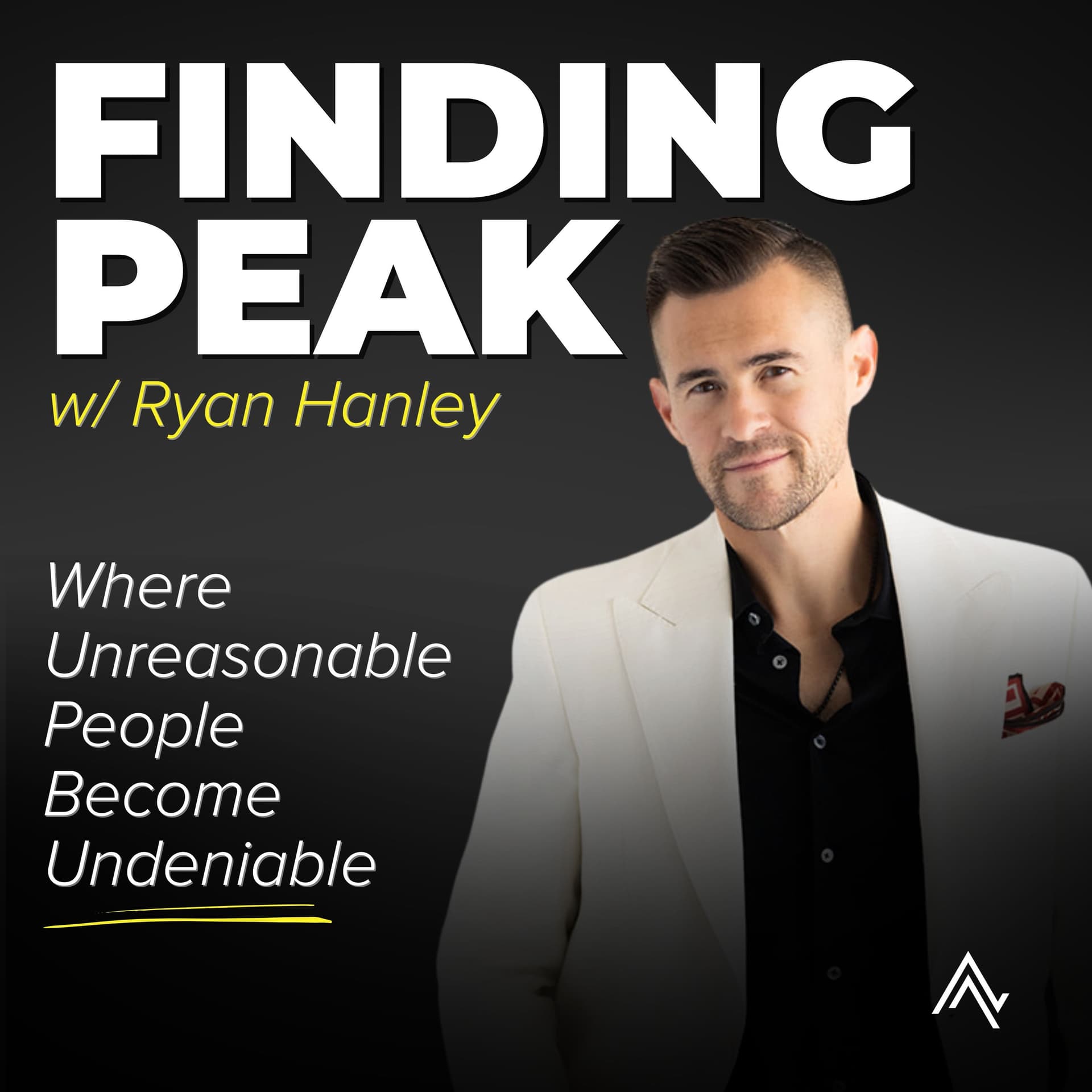
Podcast Overview Title: Finding Peak w/ Ryan Hanley Description: Where high agency people discuss power, leverage, and influence.
Episode Summary In this episode, Ryan Hanley interviews Rejeev Peshawaria, CEO of Stewardship Asia Center and author of "Sustainable Sustainability." The discussion revolves around the concept of positive autocratic leadership, its necessity in today's fast-paced business environment, and how it contrasts traditional democratic leadership styles.
---
Key Concepts
- Positive Autocratic Leadership
- Definition: A leadership style that balances autocratic decision-making with the need to earn trust and maintain a clear purpose.
- Research Findings: A survey of 16,000 people across 28 countries indicated a surprising preference for autocratic behaviors in leaders, even among revered figures like Mandela and Gandhi.
- Core Principles:
- Earn the Right to Lead: Leaders must demonstrate trustworthiness and a compelling vision for the future to be accepted as autocratic.
- Values and Purpose: Clear articulation and consistent practice of values are crucial for gaining acceptance of autocratic decisions.
- Challenges of Leadership Today
- Shift in Expectations: Modern leaders face pressures to embrace diversity and inclusion while maintaining effective decision-making.
- Long-term vs. Short-term Strategies:
- Leaders must navigate the tension between achieving quick results and fostering sustainable growth.
- Examples discussed include Paul Polman’s sustainability-focused strategy at Unilever, which initially faced resistance but ultimately yielded substantial returns, and Jeff Bezos's long-term vision for Amazon.
---
Practical Insights
- Effective Communication
- Leaders must communicate their vision frequently and clearly to align their teams and motivate change.
- Transparency about goals and the rationale behind decisions fosters a culture of trust.
- Innovation and Creativity
- Encourage a culture of innovation by embracing failures as part of the learning process.
- Leaders should practice reflection and allow time for silent pauses, which can lead to bursts of creativity.
- Emotional Integrity vs. Emotional Intelligence
- Emotional Integrity: Acknowledging one's true desires and motivations is essential for genuine leadership.
- Emotional Intelligence: The ability to understand and manage one's emotions as well as those of others, becomes more effective when grounded in emotional integrity.
---
Steward Leadership
- Definition: A form of leadership that focuses on creating a better future for all stakeholders, including society and the environment.
- Key Values:
- Interdependence: The understanding that giving leads to receiving.
- Long-term View: Prioritizing sustainability and social responsibility.
- Ownership Mentality: Taking responsibility for challenges facing the business and society.
- Creative Resilience: Commitment to continuous innovation.
---
Reflections for Leaders
- Navigating Conflict: Embrace differing opinions and use them to refine your vision rather than dismiss them outright.
- Decision-Making: Weigh inputs carefully; distinguish between feedback that strengthens a vision and that which could mislead.
- Personal Growth: Regular self-reflection and acknowledgment of one's values lead to more authentic and effective leadership.
---
Recommended Actions
- Incorporate silent pauses into daily routines for reflection.
- Engage with diverse viewpoints to foster understanding and innovative thinking.
- Clearly define and communicate your leadership values and purpose to your team.
---
Conclusion This episode provides a rich exploration of positive autocracy, offering actionable insights for leaders seeking to balance authority with trust and transparency. By embracing the principles of steward leadership and maintaining emotional integrity, leaders can drive meaningful change in their organizations and beyond.
---
Connect with Rejeev Peshawaria
- LinkedIn: [Rejeev Peshawaria](https://www.linkedin.com/in/rajeevpeshawaria/)
- Sustainable Sustainability Book: [Link](https://amzn.to/3Xsz8Ne)
For more insights and strategies on leadership, tune in to the full episode of *Finding Peak*.
Written by AI. May contain mistakes. Listen to the episode to check what was said.
Transcript
Automatic transcript. May contain errors.0:00Did you know that driving under the influence of marijuana is illegal? Driving high will get you a DUI. And if you're wondering if law enforcement can tell you're driving high, well, everyone else can. Friends? I can tell you drove high. Parents? I can tell when you drive high. Relatives? I can tell. You drove here high, didn't you? So what makes you think law enforcement can't? I can tell. If you feel different, you drive different. Drive high, get a DUI. Paid for by NHTSA. Happy holidays! Want to give your host a gift? Consider subscribing, rating, and reviewing the show this holiday season.
0:38It really helps the show grow. From all of us at Believe, have a Merry Christmas, everyone, and a happy holiday.
0:48How do you actually drive breakthrough results? And clearly, if you ask anybody, you know, what kind of boss do you want? Everybody would say, I want a democratic, inclusive kind of boss. But we asked people in 28 countries, 16 ,000 people. In every country, the majority chose the autocratic behaviors. Let's go. Yeah, make it look, make it look, make it look. The Ryan Hanley Show shares the original ideas, habits, and mindsets of world-class original thinkers you can use to produce extraordinary results in your life and business. This is The Way. Hello, everyone, and welcome back to the show. we have a tremendous episode for you today a conversation with rajiv peshavriya he is a two decade long executive in the fortune 100 he is now the ceo of stewardship asia center and he is the best-selling author of four books the most recent being sustainable sustainability and what we talk about today is leadership so if you are interested in leadership if leadership is a topic that you like to listen to, if you are developing as a leader, if you are trying to continually improve yourself and put yourself in the best position as a leader in order to grow a successful business in today's marketplace, this is an episode you wanna pull out your notebook.
2:14If you're listening while you're on the treadmill or you're driving, guys, you're gonna go back and hit stop and rewind some of these sections because this idea of positive autocratic leadership that Rajiv talks about. In my opinion, I may not phrase it this way, but 100 % agree with where he aligns on this positive autocratic leadership. This is the way to get your business to where it needs to be while integrating into the current marketplace, the current societal pressures, et cetera. And you are going to learn a lot. This is a highly tactical, highly strategic, in-depth episode on leadership.
2:52I know you're gonna enjoy it. if that's a topic that gets you lit up. If you are watching this show for the first time, subscribe, we would love for you to leave a comment on the show. If you're watching on YouTube, let us know what you think about this idea of positive autocratic leadership. What does it mean to be a steward leader? Where are we making mistakes? What are you seeing in the marketplace from a leadership perspective that drives you crazy? And how do we start to solve these issues? How do we start to get more great leaders into the marketplace? because there are plenty of people who have the ability and desire to be good leaders, yet so few actually hit their true potential.
3:33And I think the ideas outlined here can get them there. Would love your thoughts. If you're listening on iTunes or Spotify, leave your comment in a rating and review. Let us know what you're thinking. It's a great place to do that. I appreciate you and love you for listening to the show. Let's get on to Rajiv Peshavriya. Rajiv, incredibly excited to have you on the show. I have a ton of questions. Where I'd like to start, and I went all over the place when I was researching what I wanted to talk to you about, but there was one idea that you've talked a lot about recently, particularly on your X account, around autocratic leadership and the need for this.
4:12I think today just that word autocratic I think would at least throw people's antennas up. So I'm very interested in this concept, and I'd love to start here. Okay. So this takes me back several years. Back in 2017, I wrote a book called Open Source Leadership. But I was trying to understand that in the high-speed world, which is highly interconnected, and in the world of business, how do you actually drive breakthrough results? One of the questions we wanted to ask was, was it going to be through democratic, inclusive leadership or through autocratic leadership? And clearly, if you ask anybody, you know, what kind of boss do you want?
4:51Everybody would say, I want a democratic, inclusive kind of boss, not an autocratic boss. But we asked people in 28 countries, 16 ,000 people. We showed them pictures of leaders, of famous leaders like Mandela and Gandhi and Lee Kuan Yew and people like that, Steve Jobs, you know, and asked them, so what did they do that made them great leaders? And we gave them 11 attributes to choose from. Half of them were democratic, inclusive type of attributes. The other half were autocratic type, my way or the highway kind of attributes. 28 countries, 16 or 18 ,000 people in every country, the majority chose the autocratic behaviors in terms of what made them great leaders.
5:34So we tested this several ways. We said, is autocratic leadership needed to drive breakthrough results? and 75 % of our database said, yes, agreed, strongly agreed. So shocking results because, you know, on the one hand, people are very empowered today because everybody's got a supercomputer in their pockets. With connectivity, you can destroy anybody within seconds. Why would anybody want you to be or let you be autocratic, even if you wanted to be? But it was interesting data that came out. And with that, we came up with a way to resolve that dilemma. I'm happy to go there if you want me to.
6:09Yeah, I would love that. Yes, please. So the data said you need to be autocratic in today's high-speed interconnected world. But nobody's going to let you be autocratic because everybody is today holding a supercomputer in their pocket. So how do you resolve? What does this data mean anyway? And the answer was that you have to practice something called positive autocracy. And there are certain keys to positive autocracy. The first one is you've got to earn the right to be autocratic. How do you earn the right to be autocratic? by winning people's trust, by getting people to understand and believe that you will indeed create a better future, that you are a better future creator.
6:46Once they trust you that you're going to take them to a better place, they will let you be a tad bit autocratic. Second, you've got to be super clear about your values that you believe in and your purpose in life and consistently live those values every day. When people see you living those values every day consistently and and they feel that your purpose is a worthy purpose, they're going to let you be autocratic. Because it turns out from the data that people, while they say, I want inclusive type of people around me, I want democratic kind of people, people want somebody to show them the way.
7:18So those are some of the findings. Also, by the way, positive autocrats forgive more often. So it sounds a little bit contradictory, but there are five keys in the book of positive autocracy. I've just mentioned some of them. So would this be synonymous with like a benevolent dictator to a certain extent? A lot of people say that, yes. I choose the words positive autocracy. Similar, similar idea. I like your terminology better, but I do. Yeah, but the difference is that a dictator has absolute power. A positive autocrat, in my view, does not have absolute power. You are earning that right every day.
7:57And really what you're autocratic about is values and purpose. Everything else, you provide freedom within that framework. Yeah. So this, okay. I love this concept because it's exactly my value structure as a leader aligns with this 100%. And I've always struggled with this idea because I don't love, or I shouldn't say I don't love, that's the wrong way to position this. I struggle with DEI as a leader and embracing it because, one, I 100 % agree with diversity and inclusion and we need the right people in the right positions. And there should never be something that has to do with the way we look or where we're from, et cetera, that keeps us from a position that we've earned and kind of merit-based.
8:50But at the same time, there's so much pressure today on leaders to look – their company has to look like what people want them to look like and sound like what people want to sound like. And I think you've addressed this in some of your work, and I'd love for you to dig in here. Um, how do leaders today manage that, manage that, that, that desire for, to have the right person in the right spot who want to do the right things, who don't have a, a, a, a discriminatory or racist bone in their body, but maybe their company today doesn't look from the outside the way that it should. How do they start to address these things and just kind of, how do you marry those two concepts in your head?
9:33Well, so you're getting into the realm of ESG now, environment and social. And DEI is big on the S side of ESG, right? And so we see five kind of players. This is the subject of my latest book called Sustainable Sustainability, why ESG is not enough. So we see five kinds of corporate players in that space. Okay. Those who are greenwashing. They are willfully deceiving the market to say what's not true and actually profiting from today's existential challenges like climate change, socioeconomic inequality, etc.
10:31to close deals in just one call. No more, let me think about it. No more, I'll get back to you. Using the one call close system, we took new reps from 25 % close ratio to over 80 % in just three months. To grow fast, you must close deals faster at zero extra marketing cost. The one call close system allows you and your reps to build trust, address pain points, all while watching your revenue skyrocket. Ready to stop chasing leads and start closing? visit masteroftheclothes.com today. Close twice as many deals this time next week. Visit masteroftheclothes.com to learn how.
11:14You have the window dressers. Oh, let me look good, the point that you're making, right? Let me do a little bit to dress up the window. I don't really believe in this stuff, but since everybody's talking about sustainability, let's do something about it. Let's look good. Then you have the in denial, what climate change, what socioeconomic inequality, and even if these things exist, they're not my problem. I don't break the law. I pay my taxes. I'm okay. Right? Then you have the box checkers, because now there's a lot of laws in many countries on these things. I'll do exactly what the law says and no more because I don't want to get into trouble with the law.
11:49And then there are the steward leaders. These people take it upon themselves to drive profitable shareholder returns by addressing the very challenges that are threatening humanity today, which are, again, climate change, socioeconomic inequality and cyber vulnerability as the biggest ones. So they create profitable solutions to today's challenges and they do so proactively. They see themselves as stewards of planet Earth and humanity. Hence, we call them steward leaders. And there's only about one or two out of 10 that actually are steward leaders. Maybe you could break down that topic a little further and describe exactly what a steward leader is.
12:28So steward leadership aims to create a collective better future for stakeholders, society, future generations, and the environment. A typical business leader is only concerned about himself and his company and his shareholder. A steward leader tries to create a collective better future for a much broader variety, including society at large and the environment, right? How do you practice steward leadership? We looked at 100 companies that have been doing well by doing good, meaning they've been making superior shareholder returns by addressing environmental or social concerns. We asked them two questions.
13:07Why do you do it? How do they do it? Turns out they do it because they want to, because they believe they are steward leaders. How do they do it? Three simple steps. One, you incorporate four specific values in your organization's value system. The first is interdependence, the belief that the more I give, the more I will get. Second is long-term view. If I do the right thing by environment and society, my business is going to live longer. I'm going to be more successful. Third is ownership mentality. I take ownership for today's existential challenges and will get my business to solve them. And I will make money doing that rather than making money with other ways.
13:45And the fourth most important is creative resilience, that we will not give up on innovation. Doing business this way is harder. We will continue to look for innovation, not give up. So step one, incorporate those four values within your value system. Step two, give yourself a stewardship purpose, that collective better future that you want to create. And third step, now apply those values and that purpose to every decision you make. That's steward leadership for you in a nutshell. I love it. I think so here in the States, one of the things that I've seen that makes me sad is a lack of your third bullet ownership.
14:24It feels to me like so many ascend to leadership positions and whatever that looks like, and then they play on one of the – they're either checking a box or they're passing the buck. And while they want to make the decisions, they don't want to take the responsibility. If we're inside an organization and say we see a leader below us or in our organization who is operating that way, how do we start to address that? If, say, we're the CEO or in the C-suite and we see maybe a vice president or a director kind of not taking ownership for their part of the business. Maybe they want to make the decisions, they want the title, but they don't want to have to deal with the blowback or the responsibility to actually own each decision that they make.
15:17Yeah, look, I mean, leadership cannot be – there's no pill, as you know very well. You can't hold it. There's no bullet. There's no pill. So for steward leadership, which is a higher form of leadership, which is making money in business by addressing challenges like climate change, socioeconomic inequality, etc., is a much higher form of leadership. And that can only come from within. Now, what can the board do if the CEO is not a steward leader? Very simple. If you believe that your company should address environmental and social sustainability and your CEO is not doing it, well, after talking to him multiple times or her, if he's still not doing it, then you've got to change the CEO.
15:55Now, if the CEO believes it and the people below him are not believing it, again, he has to be ready to make tough decisions because, you know, one or two bad eggs will spoil the whole culture. So I'll give you an example. You know, Paul Polman, the former CEO of Unilever, okay, in his 10 years tenure as CEO, provided 290 % return to shareholders as CEO. And he did that by creating a sustainability-based business plan. got out of business units and products that were harmful to the environment, replaced them with environmentally friendly stuff, so on and so forth. For the first two years, share price tanked, market share tanked, profitability tanked, 75 % of his top leadership team quit.
16:37This guy is going to take this company to the ground. But the board supported his strategy because he told them, he showed them a long-term strategy. This is going to make more money if we listen to the pain points of our people. Sure enough, after the second year, it started turning around. And by the end of 10 years, shareholder got a 290 % gain. The board supported him. The same playbook the CEO of Denon tried around the same time, and the board fired him after two years. So the board has a role to play. The CEO has a role to play. It has to be top-down. And you've got to create a culture where then the rank and file starts believing in it.
17:13And so the key that I've heard you say multiple times now is taking that long-term view. When we are judged so much by a quarterly report and whatever is being said on CNBC and our board members are watching that and they're getting pressure from whoever their influences are or other large investors in the company, how do we manage both the short-term nature of needing to produce results for realistic reasons versus taking a long-term view? How was Paul Pomerantz, how is he able to navigate that? Like, what is that just the skill of leadership? That's just the skill he has that he's developed over his career?
17:53Or is there a methodology to managing both to the short term and to the long term? So let me give you another example, and then I'll answer your question. Do you know there is a company, if you were a shareholder, you would be a very rich person by now for the last 20 years. But for 20 years, for the first 20 years, they did not provide a cent of dividend. And it's one of the largest companies in the world today. they did not provide a cent of dividend to the first 20, but no shareholder, no investor deserted them. And today, if you still own them, you are sitting pretty. Do you know who I'm talking about?
18:28No. Amazon. Amazon. Yeah. Okay. Now, Jeff Bezos, how did he not pay dividend for 20 years and still held on to the shareholders and said, investors stay with me because he showed them a strategy that would make them 60x returns if they stuck with him. I'm not going to pay you anything for now because we're going to keep putting money back. But then once we get to a certain size, nobody will be able to touch us. And investors bought into that strategy. Now, an investor buying Amazon was as short term as anybody who wants, you know, quick returns on their money. They stuck by it because they saw the strategy.
19:05Similarly, Paul Polman showed them a sustainability-based long-term strategy. And I can give you examples of hundreds of companies. In fact, companies like the Tata Group in India, Patagonia in the United States, Faber-Castell in Germany, these are companies that have lived for hundreds of years, not decades, and providing profitable returns because they've always thought environment first and society first. So point is, steward leadership is not just about a good heart. It's also about a good head, meaning good strategy. Show investors a strategy that, look, if you don't take, you can take one marshmallow now and you can have two if you take it tomorrow, you know, rational people, at least many of them will buy into that strategy.
19:47That's how you balance it. It doesn't mean that you don't take advantages of short-term opportunities, but you don't pursue short-term opportunities that actually hinder long-term growth. Yeah, I read a story the other day breaking down Amazon that I thought was really interesting. Their stock price rose to over$100 during the dot-com bubble, and Post dropped to$5. And they only they lost less than 10 percent of their investors when it dropped to five dollars. And so I guess when I think about that and we think about Jeff Bezos and, you know, today he's held up on a pedestal. Is that his force of will, the power of his character?
20:31Is that his storytelling ability? I mean, he obviously had a long term vision, so that that was there. where the actual leadership skills that I see lacking most often, and a lot of times I deal with early-stage startups and stuff tends to be more the place that I play in, is they know the mission, they know the vision, but they do not share it often enough, or at least in my opinion they don't share it often enough, and often they don't share it broadly enough either. It stays in the C-suite or it stays with the founding team. What are the mix of skills that allow you to navigate this type of, you know, I think I call this the gray space, right?
21:11And when I'm coaching someone, especially early stage leader, I talk about we have to live in that gray. We're given stories. We're given stats that put us either in black or white. But there's all this gray in the middle, and that's where success comes out of being able to navigate that space that's kind of cloudy and gray and sometimes skews one way or the other. When you're in that space, which is what I'm hearing you describe is this ability to manage multiple directives at once. What are the core tenets of that leader that they may need to develop? So someone's listening to this and they're going, geez, I'm right with what Rajiv's saying.
21:50What are some of the core tenets they need to look into themselves for in order to be able to navigate situations of this nature? I lost you a little bit in between, but anyway, I think I got the gist of your question. Look, I mean, when it comes to the kind of leaders that we are talking about, these are people that are constantly challenging conventional wisdom. You know, the old Steve Jobs thing about think different. They are the personification of that. These are people who are looking to create a different future, the collective better future. And they are innovators. They are always asking the question, so what's conventional wisdom?
22:22Why is that not correct? And what can I turn upside down and give people a better situation and also make money with it? Now, they have seen a picture of a better future that most people haven't seen in their minds yet. So communication is hugely important. You have to continuously keep people on the same page in terms of, okay, this is the future we are building. Guys, this is the belief. This is the strategy. This is going to get us there. the thing with communication is you tell people once and you think you've told them after one week or two weeks they lose it again and you got to keep telling them again and again so number one be an innovator strategy strategy strategy number two uh you sorry actually number one is the intentionality that i want to be a steward leader number two i am an out of the box thinker number three communicate communicate communicate again and again because people get confused when and and to create a better future the way i'm talking about is very difficult innovation fails eight out of 10 times.
23:21So when people below you fail, they feel that the strategy is wrong and you've got to be there for them. You've got to be there and keep telling them as to why it's still working and, you know, take them along. There's no easy way there, I think. Yeah. Well, I think that's the crux of leadership in general that I think most people who fail in the position have is this idea that somehow they're going to move from maybe a day-to-day tactical or, you know, stamping TPS reports to go very, very lowbrow. And then all of a sudden, they're going to ascend to this position and life becomes easier, right?
23:57They get their cup of coffee and they meander to their desk and they make a couple of decisions and that's the day. And, you know, when they get hit in the face with that sack, they're usually, you know, it's usually an eye-opening experience. So I'm interested in managing. So having founded my own company and exited from that, like, right, like you, you start with this vision, as you described, right? You have this clear vision for a new way of doing business and you bring it to market and you start adding team members. And if you're, I believe hiring in the right way, you're hiring for both your weaknesses and people that are smarter than you in areas.
24:30And, and now you have your vision and it starts to get poked at by new ideas. How do we manage this, this vision that we have with what could be very positive, very growth-focused iterations or customer satisfaction iterations, whatever, product improvements that maybe take us a little away from that original vision? How do we navigate those waters of sticking to what we believe the change that we need to make and new pieces of information, new ideas from, say, team members or just experience over time? That is the biggest dilemma of innovative leaders. Because when you say, I want to do this, most people tell you why it cannot be done.
25:17And they tell you feedback is a gift. Listen to feedback and things like that. But if you listen to every piece of feedback, you'll never be able to innovate anything. Many of the things that we take for granted today, the innovators were told this will never work, right? So on the one hand, you've got to stick to your vision and say, I believe in this. And the reason I am the kind of leader is because others haven't seen that future. On the other hand, if compelling information says that your vision is wrong and could be wrong, you've got to be open to it. So that balance, that sweet spot of staying firm with your idea versus listening is really a matter of judgment.
25:56So you've got to keep your eyes and your ears open. You've got to be able to analyze every situation, every new piece of information that's coming out, which is where people are challenging your vision and your strategy. Don't react immediately. Go home. Think about it carefully. Then come back and react. Because what a lot of visionary leaders end up doing is they're saying, oh, no, you're wrong. Let me tell you why I'm right. I've done this before. Blah, blah, blah. No, no, no. So my advice to them is just take it in, go home, come back and talk tomorrow. Maybe they might be right and they might be strengthening your idea, if anything.
26:30So that's a problem that visionary leaders have and they're not very good at it. Yeah, the number of companies that I've seen either fail or have large downturns for a period of time is often related to this is the way it's always been done. right yeah i've done i had three startups in the past and here's how we got there blah blah blah which is great but if your first startup was in the early 90s and now it's 2024 the marketplace is a little different and what you did then there may be core tenants of what you did then that apply today but to think that you're going to run that same game plan to me feels like ego taking over and not being this type of student or student leader that you uh that you talk about um Um, you know, one of the things, and I know we're just getting to know each other, but one of the things from my own career that, that I had was, uh, my, my vision for the company that I was actually in the insurance industry.
Read the full transcript
27:26And, uh, we were going to be a fully remote, fully digital, no physical location. You know, my core tenant was insurance consumers do not have a need to share the same air as you. They don't have to look across a table in order to do business with you that you can deliver the same amount of service. And in order to do that, we had to have a very flexible work environment. And what I found was the standard industry professional could not adequately address the veritable needs of a fully digital business. And what ended up happening was I pivoted and started hiring single moms and moms with young kids because they needed a dynamic schedule and were able to say, hey, I can give you two hours in the morning.
28:12Then I need an hour to go pick my kid up. Then I can give you three hours in the afternoon. Then I got to, or, you know, drop my kid off, pick my kid up in the afternoon. And then I can give you two more hours at night, which then once adequately, you know, properly scheduled ended up giving us the coverage that we needed over a course of a few different people. And what's wild is that idea didn't come from me, right? I was banging my head against the wall going, you know, we need pros, we need pros, you know, and a lot of these women had never sold before. They were simply, I shouldn't say simply, They were account managers.
28:44They had always been on the service side of the business. And we taught them how to sell and brought them in. And that actually came from one of the women that I had hired very early on. And she basically said, here's my situation. And I hadn't hired her for that reason. And then we went out and found those people and ended up being highly, highly successful with this model. And that idea was not my own. And that was a huge awakening to me as a leader to say, I don't have all the answers in this situation. And that feels like a struggle for many of our driven – I'm not good with all the personality charts, but those up and to the right, the Ds on the classic model.
29:25It's very difficult to say – we feel like we need to have all the answers. So if I'm sitting here and I'm listening to you and I'm saying, man, I've made a bunch of mistakes and there's friction in my business, X or Y, this steward leadership sounds like a good path. Obviously, you have books on it. We're going to have links, guys, in the show notes to Rajiv's work and everything he's done because I think a lot – this is really good stuff. I'm still, I'd still love for you to maybe marry because I think I understand it and feel very comfortable with it, but I want to make sure the audience is, because this is a really powerful concept, marrying this idea of the autocratic leader with the steward leader together, just, just so they're clear.
30:10Cause I, I see what you're saying and I believe it, but I want the audience to really grab this idea. So again, what is a steward leader? A steward leader is going against convention and saying, I want to create a collective better future much beyond shareholders. I want to make money by addressing climate change, by socioeconomic inequality or cyber vulnerability or any other existential challenge today. That itself is very, very unconventional, right? And then the steward leader comes up with a strategy with which they are going to adjust these challenges and make money. The market doesn't believe him or her.
30:43So, A, he has to be autocratic, but a positive autocrat, as I said, builds a culture. Builds first communication and gets the strategy clarified, then builds a culture where everybody acts according to those values that I mentioned. But there is one more key of autocratic leadership that I didn't mention, which is listen, learn and reflect continuously. And forgive more often, which I mentioned earlier. So you combine that and there is really no conflict between steward leadership and positive autocracy. In fact, if anything, steward leaders need to be positive autocrats because if you don't stick to your vision, nothing's going to happen.
31:20Yeah, the CFO is going to come in and yell at you a bunch because they don't feel like the widgets are being sold at the right profit margin, et cetera. Exactly. But you have to show them like Jeff Bezos did that, look, if you stay with me, you're going to get not 10x, but 60x. And again, to your point earlier, when people challenge you, the tendency of a steward leader, innovative, visionary leader is, no, I am right. Just don't react for 24 hours, please. Use that trick and it will work more often than not. I like that you address the idea of reflection because on this show, not only do you talk business topics, entrepreneurial topics, we also will talk about personal development.
31:58And I think in all aspects of our life, both our business life and our personal life, reflection in some way and having a process for that is very important. Do you recommend, advocate, or just have your own best practice for reflecting on what we've done either daily, weekly, monthly, whatever your recommendation is so that leaders can start to build that into their process and make sure that they're making that part of their leadership style? For me, what works is silent pauses. So I'm one of those people – I'm one of the only people in the gym that does not have headphones when I'm on the treadmill.
32:32or you just go for a walk or you just close your eyes and just hear yourself breathing for 15 minutes every day any which way you want to go for a run you want to do that don't do it with headphones just give those silent pauses and what happens is that is the time when the best ideas come to you not when you're actively seeking the innovative solution it comes to you when you're not thinking about it and so regular meditation if that's what's for you or do something that you like doing, like walking, running, whatever, but do one thing. And that really helps for me. I couldn't agree. I couldn't agree more.
33:05I actually, about six months ago, and I shared this on the podcast a few episodes ago, I started doing exactly what you said. I'd always been, you know, AirPods in, I'd always, you know, on a walk, I got a podcast going, or even if you're listening to music, I find that your brain doesn't truly open up. And then one day, I literally just walked out of the house without my AirPods by accident before I went on my walk. Uh, cause I do a ruck walks where you wear the weight, the weighted vest and you know, and I did my standard. It takes me about 45 minutes. I do this loop, whatever. And I came back and it was like, my mind was on fire and in the most positive way, right?
33:43It was, you know, this idea here and I need to get back. I mean, I forgot I need to get back to this person and mint this article that I'm working on. Here's, here's kind of the, the, the hook I want to put on the front that I'd been struggling with. And we're so inundated with inputs, removing them for a period. Like, you know, I was having this discussion with my kids the other day, because I have a 10 and an eight year old and I tend to talk to them like they're adults because I want, I think that's the proper way to raise children, not like they're morons. So I talk like fairly heady topics.
34:15Like when I'm listening to a podcast, I have it on and they listen to it and they ask me questions. But we were talking about, I said, I said, guys, think about the fact that when we look up at the stars at our house, cause we live near, uh, Albany, New York and, and, and upstate, uh, we see, you know, maybe a couple dozen stars, right? Cause there's a lot of light pollution. And then remember that vacation we took up in Lake George, which is about two hours North of us, uh, hour and a half North of us. And I said, remember when we saw 10, it was, it was more stars than we could count, right? There were everywhere.
34:48We literally had to download an app and hold it to the sky just to understand what we were looking at because here I can show them you know if Venus if we can see Venus or we can see Mars there I it was so many stars we couldn't tell what was what right and you could barely even uh delineate the the constellations I said you know I said you know you guys when you come home you immediately want to jump on the TV or you want to jump on the the video game or you know chat with your friends or whatever I was like my opinion is so much of the innovation and the ability to survive and get things done and make choices and be so direct in the way that we had to live, we were forced to live there, was because we weren't constantly, I mean, it might take a month to get the news.
35:33And I can have every news story that's ever existed in two button clicks today. So I guess, what is your recommendation for leaders on inputs? How much, where, How do we take in the right inputs? And by right, I don't mean necessarily politically or whatever. I mean, how do we manage all the information at our fingertips versus the time and isolation necessary for the creativity to come up with these convention-challenging ideas and decisions? Very simple. I do what I always recommend is two things. One, try to get 15 minutes in your day, preferably in the morning of closing your eyes and just following your breath.
36:20Now, that doesn't mean that your mind should be thoughtless. You will see your mind wandering within the first 30 seconds. No problem. As you see yourself wandering, bring your attention back to the breath. You'll wander again, keep doing it and put an alarm on the phone for 15 minutes. Do that 15 minutes of silent pause and it doesn't matter how many times you wander, But you will find, so the analogy is that, you know, if all the apps on your phone are always open, your phone's going to slow down. 15 minutes of meditation, the way I just talked about, focusing on your breath with your eyes closed, actually is better than a whole night's sleep in many ways in terms of it closes more apps.
36:57So that's one thing. Okay. The other is to find ways where you are not, or rather train yourself that you don't have to respond to everything instantaneously. Emails can wait. You don't have to have your phone buzzing all the time. There are times when the phone can be away. So again, these silent pauses and everything falls into place. We have become slaves of technology. We feel the urgent need to receive and send messages constantly. If I don't get 10 likes in the next 10 minutes, my God, I must be so unpopular. These things we have to rewire our brain on. Yeah. The other one that I advocate people on, and I'm very interested in your take on this, is making sure that you're taking inputs from the contradictory idea.
37:48So if it's politics in your right or left, it's also taking inputs from the other side. If it's a business philosophy, it's understanding – if you're super pro, 100 % everything about ESG or DEI are right, it's who are the critics of these philosophies and what are they saying or vice versa. And I was reading another piece of research that came out of – I think it's Stanford. It may have been – actually, it was Berkeley, that when they did a study on politically motivated students came in, and they showed them graphics, charts, articles, images from the opposite party. and what they found, they were wearing one of those Neuralink-ish mesh things on their head, and what they found is that when they were shown opposite images, their amygdala fired, and for those of you listening at home that don't know what that part of the brain is, that's like when a tiger jumps out of the woods and we run for our life or we turn and fight it, that's the part of your brain that fires.
38:56It's like the base, base, base of our brain, right? This is like the first piece that was created, the live or die, fight or flight. I mean, I guess I have a feeling on where you stand on this, but I mean, do you have any advice around how we are able to take in conflicting ideas in a way that doesn't polarize us more? Because as you've mentioned and I kind of verbalized, this gray area is where we're successful. And sometimes your best ideas can come from or come out of understanding what a critic may say about what you believe. Yeah, you know, you made me remember what my wife and I do all the time.
39:38We watch both a little bit of CNN and Fox News every night just to keep the balance, you know. But yeah, I mean, you know, here's what I have found. people who have difficulty in accepting a view that is other than their own. These are people who I found have no clarity about their own values and their own purpose in life. Once you are clear about your own values and your own purpose, who am I and why I am in this world for, then you are secure in your skin because you get happiness not by success is never guaranteed, but the fact that you're walking down a path that is worth walking on, that gives you happiness already.
40:18you feel good about yourself. And now you are in a much better position to accept challenging ideas and thoughts. And if you disagree with somebody or somebody disagrees, you say, okay, hey, it's all right. It's not personal. It's okay to disagree. Or if they're giving you input, you actually go back and think about it for 24 hours and say, yeah, actually, you know what? He's right. And I'm going to make my thinking better. But for that, you have to be comfortable in your skin. People who are insecure, and insecurity comes from not knowing your values and your purpose, right, find it harder to deal with challenging information.
40:53My experience. Yeah, and I completely and utterly agree. I'm reading a book on the first four presidents. It's called First Principles. It's actually a wonderful book. I always forget the author's first name. His last name is Ricks. And I think if you haven't delved into the revolution, for those listening at home, if you haven't, that time period in the quote unquote founding fathers of the country, it's easy to believe that they all were perfectly aligned in their vision for what this country was going to be. And when you actually dig into what was going on in the Continental Congress and the discussions they were having, even though they were, for the most part, cordial with each other, the The range of ideas in that time period and the arguments and the conflict that happened between some of the people that we that we now all see their names on the same document was incredible.
41:49And to think that we could have come up with, you know, the Constitution and the Declaration of Independence without that conflict. Right. I mean, and that's the part that I try to advise people on is like that conflict is good if done in the way that you expressed it, in which we're not looking at that person as evil. because they disagree with us, they just have a different vantage point on the world. That conflict is actually where some of the absolute best and most innovative ideas comes out of. Couldn't agree more. And coming back to positive autocracy, like I said, you have to be autocratic about the values and the purpose.
42:27And within that freedom, within the framework, within where the debate comes, within where the challenges come, as long as the values and the purpose we stand for is not violated, it. If you want innovation, you're going to have to allow that freedom. You're going to allow that challenge. Yeah, there's, this is incredible guys, this, in my opinion, and I've never verbalized it in this way. And it's why I, it's why I love doing what I do. I love this podcast because I get to, I just get to hear people frame things in ways. And sometimes I'm like, God, that's, I love this idea of a positive autocratic leader because, you know, I think we joke, Oh, you know, the best leaders are benevolent dictator or whatever, but that terminology and words matter, right?
43:06I think that terminology has a highly negative connotation where what you're describing and the fact that after every mention that I've ever seen you, when you're leading an article or in any of your videos, you talk about positive autocratic leadership. You also talk about earning the right, which to me is exactly what it has to be. You earn the right to be a leader. You don't just get, you don't get crowned that. So I want to finish with an idea that I found highly intriguing, but I just couldn't wrap my head around, at least not yet, was you did a video again on X, choices versus sacrifice.
43:44And in there, you say, emotional integrity must come before emotional intelligence. I would love for you to break that concept down. Great. So, you know, we all know what emotional intelligence is. You take those tests, you take those training courses and all that. So emotional intelligence is basically two things, right? I understand my emotions and I regulate them intelligently. I understand your emotions and I respond intelligently. That in a nutshell, self-awareness, social awareness is emotional intelligence. Emotional integrity must come before emotional intelligence. What I mean by that is emotional integrity is looking in the mirror and at least admitting to yourself what you truly want for yourself without putting on the societal lens.
44:26Even if what you want for yourself truly, truly is totally self-centered and selfish, first admit it to yourself. If I didn't care a word about what society might think and what other people might think or my family might think, this is what I want for myself. First, get down and dirty and admit it to yourself. Then calibrate from there. Do I really want to do this? What will be the repercussions? But first admit it that if I could, that's what I would have wanted for myself. And then calibrate as to where do you want to go with it. Without that deep personal honesty, self-integrity, emotional integrity, what use is emotional intelligence?
45:02Because emotional intelligence is a on-the-surface skill, whereas emotional integrity is really getting honest with you. And by the way, the person that we are usually the most dishonest with is ourselves. would you say that emotional intelligence without emotional integrity essentially just becomes a power game because that's exactly right yeah yeah yeah yeah i'll give you my personal i'll give you a personal example okay yeah please when i when i did the exercises on what is really important to me in terms of my values and purpose i used to be a currency trader on wall street night a long time ago, I gave that up because I wanted to study human behavior, redefine leadership, et cetera, et cetera.
45:43When I realized that my work is the most important thing to me, even about family and everything else, initially I hated myself. What kind of person does that make me very selfish? But guess what? That honest admitting to myself that my work comes first over everything else made me a better father and a better spouse and a better person and a better leader. I agree, but how so? I agree, but how so? Because with that admission that that's what is most important to me, I will make decisions to prioritize work over everything else, made me feel like, oh, so that means that I really don't. It's not that I don't care about other people.
46:23I do. They're very, very important to me. So I started making a more conscious effort. And when I'm with them, my quality of time was much, much better. I was much more empathetic. I was much more patient. I wanted to give more, do more. knowing full well that my work is my priority. So the quality of my relationships became better. What I did and what I for them became better. Earlier, I used to say family is the most important thing, but did I actually follow that up with my actions? I'm not so sure. So guys, this is one of those moments in the podcast. I want you to pause and rewind and listen to Rajiv again and think through this concept because this is, I do not believe that we can be successful in business if we don't have this concept dialed in, or I shouldn't say we can't be successful.
47:17We will find massive friction in our pursuit of success if we do not have this concept dialed in. And in my own life, I'll tell you about four or five years ago, I made being present in the moment a high priority for my life for the exact same reason that you just described, that I'm left to my own devices. I'm a workaholic, right? And about three years ago, I got divorced. And now, you know, I only have my kids 50 % of the time. So I had 50 % of my days, you know, I wasn't seeing anybody. I'm alone. What was I doing? Eight o 'clock, nine o 'clock, 10. I'm working. I'm literally working the entire day, making breaks to just shove some food in my face and go to the gym.
48:02And then I'm right back to work again and I'm working work. And, and I realized I'm a, I let, I love working. I love what I do. I love, I love producing results and the, and the things that are important to me in that space. And when I, when I focused on being, and that forced me to say to myself, okay, well, in the moments when I do have my kids, I will now be fully present because I know in these other moments, work is going to be the, I'm not thinking about what my kids are doing at camp. I'm thinking about work, right? That's what I care about. I essentially, at certain times I feel guilty because I forget to even exist as I'm working, right?
48:39Until it's time to go pick them up and go pick them up and then whack, I'm present again. But if I hadn't, you know, it's just funny that we share this experience 100%. If I had never said to myself, looked in the mirror and said, you are, you know, I use the term workaholic, but I think that is a negative connotation. Again, I prioritize work. I love it. I don't, I would rather work than go golfing and I love golfing, but I choose to work. And my buddies are like, Hey, we, what are you doing on Friday afternoon? I'm like, I got work to do. Like I got things I want to do. Like you guys go play golf.
49:11I love it. I'll try to catch you sometime in the future, but like, this is what's most important to me. And, and I think to that point as well, it's, it's establishing expectations with the people's whose opinions you actually care about. Right. Once I was able to say to my kids, Hey, work is really important to me. right so up until the time that I'm done I need you to take care of your own stuff I need you to understand that I really don't want to be interrupted etc but once I'm done I will be there 100 % with you they recalibrated everything they stopped bothering me uh you know if they were home and I was working from home like because now they understood the expectations of our relationship and everything got better and if you like you said if you don't have that emotional integrity, then you can't set expectations for people.
49:58And really that's all they want. They just want to know what can I expect from you? And that misalignment causes so many problems in our business life and in our personal life. You got it. You got it. Absolutely. Yeah. Rajiv, this has been phenomenal, my friend. This idea of positive autocratic leadership, I'm going to dig into even more. I feel so blessed that we're able to share it with the audience. You know, I like to end every conversation with a question that you can take whatever direction that you want. Right. I believe everyone is extraordinary. You certainly are. How do you defy ordinary in your own life?
50:34How do I defy ordinary in my own life? I so I again go back to my work. I saw hundreds and thousands of books and literature on leadership, you know, so much advice around it everywhere. $80 billion spent on leadership training every year around the world, and yet hardly any good leaders around. So I started questioning what is missing in the literature. And that's for me, that became for me an obsession. And I continue to do that till today. And today, I believe that, you know, leaders need to step up to be stewards of planet Earth and humanity, because if not, we will not save the planet because the challenges are very real and they are right here, right?
51:17and now. And again, we are challenging conventional wisdom because most people think that, you know, we're going to solve the sustainability and climate change problem with regulations, with incentives and with capital, green finance. And I'm saying, no, you're going to solve it with leadership and innovation. So we'll keep fighting this fight. We will keep waking as many people as we can to this idea that, you know, you can. I love it. I'm so glad that we had a chance to meet and have this conversation and share your ideas with the audience. If they want to dive deeper into these topics besides your books, which we'll have linked up in the show notes and everything, where else can they learn more about you and follow along with your work?
51:57I guess LinkedIn, X, Instagram. I'm always available if anybody wants to engage. Email. I appreciate you, my friend. You have a great day. Thank you very much. Excellent. Let's go. Yeah, make it look, make it look, make it look easy. Thank you for listening to The Ryan Hanley Show. Be sure to subscribe and leave us a comment or review wherever you listen to podcasts. Game ain't a game for me. I never switched to no change in me. The only thing changing is...
52:42close twice as many deals by this time next week sound impossible it's not with the one call close system you'll stop chasing leads and start closing deals in one call this is the exact method we use to close 1 ,200 clients in under three years during the pandemic. No fluff, no endless follow-ups, just results fast. Based in behavioral psychology and battle-tested, the one-call closed system eliminates excuses and gets the prospect saying yes, more than you ever thought possible. If you're ready to stop losing opportunities and start winning, visit masteroftheclosed.com. That's masteroftheclosed.com.
53:19Do it today.
53:24If you like the show, please take a moment to rate, review, and subscribe. It really does help the show to grow. Thank you for listening.
53:51Have a Merry Christmas, everyone, and a Happy Holiday.
From the publisher
Became a Master of the Close: https://masteroftheclose.com
Positive autocratic leadership might be the game-changer you need for breakthrough results.
Join 11,000+ leaders getting growth systems weekly: https://linktr.ee/ryan_hanley
Connect with Rejeev Peshawaria
- LinkedIn: https://www.linkedin.com/in/rajeevpeshawaria/
- Sustainable Sustainability book: https://amzn.to/3Xsz8Ne
Discover how Rajeev's concept of "positive autocracy" challenges the norm by balancing the critical elements of trust, consistent values, and a clear purpose to earn the right to lead autocratically.
We then navigate the fine line between short-term gains and long-term vision, using the contrasting approaches of Paul Polman at Unilever and Jeff Bezos at Amazon.
Learn how Polman's sustainability-driven strategy faced initial resistance yet ultimately triumphed, and why Amazon's long-term planning reaped extraordinary rewards.
Gain insight into effectively communicating a compelling strategy to stakeholders, a crucial skill for any leader looking to inspire and sustain organizational growth.
Finally, we dive into innovative leadership's essence and mental clarity's power.
From embracing disconnect to foster creativity to managing technological inputs mindfully, we cover it all. Hear personal anecdotes about boosting creativity by reducing distractions and the importance of emotional integrity in leadership.
Plus, get practical tips on leveraging social media for audience connection and continuous learning.
Tune in for a riveting conversation packed with strategies to unlock your full leadership potential.
--
Recommended Tools for Growth
- OpusClip: #1 AI video clipping and editing tool: https://link.ryanhanley.com/opus
- Riverside: HD Podcast & Video Software | Free Recording & Editing: https://link.ryanhanley.com/riverside
- WhisperFlow: Never waste time typing on your keyboard again: https://link.ryanhanley.com/whisperflow
- CaptionsApp: One app for all your social media video creation: https://link.ryanhanley.com/captionsapp
- GoHighLevel: It's time to take your business workflow to the Next Level: https://link.ryanhanley.com/gohighlevel
- Perspective.co: The #1 funnel builder for lead generation: https://link.ryanhanley.com/perspective
--
Episodes You Might Enjoy:
- From $2 Million Loss to World-Class Entrepreneur: https://lnk.to/delk
- From One Man Shop to $200M in Revenue: https://lnk.to/tommymello
- Is Psilocybin the Gateway to Self-Mastery? https://lnk.to/80upZ9
Hosted by Simplecast, an AdsWizz company. See pcm.adswizz.com for information about our collection and use of personal data for advertising.
This show is part of the Unplugged Studios Network — the infrastructure layer for serious creators. 👉 Learn more at https://unpluggedstudios.fm.
Advertising Inquiries: https://redcircle.com/brands
Privacy & Opt-Out: https://redcircle.com/privacy


