
In short
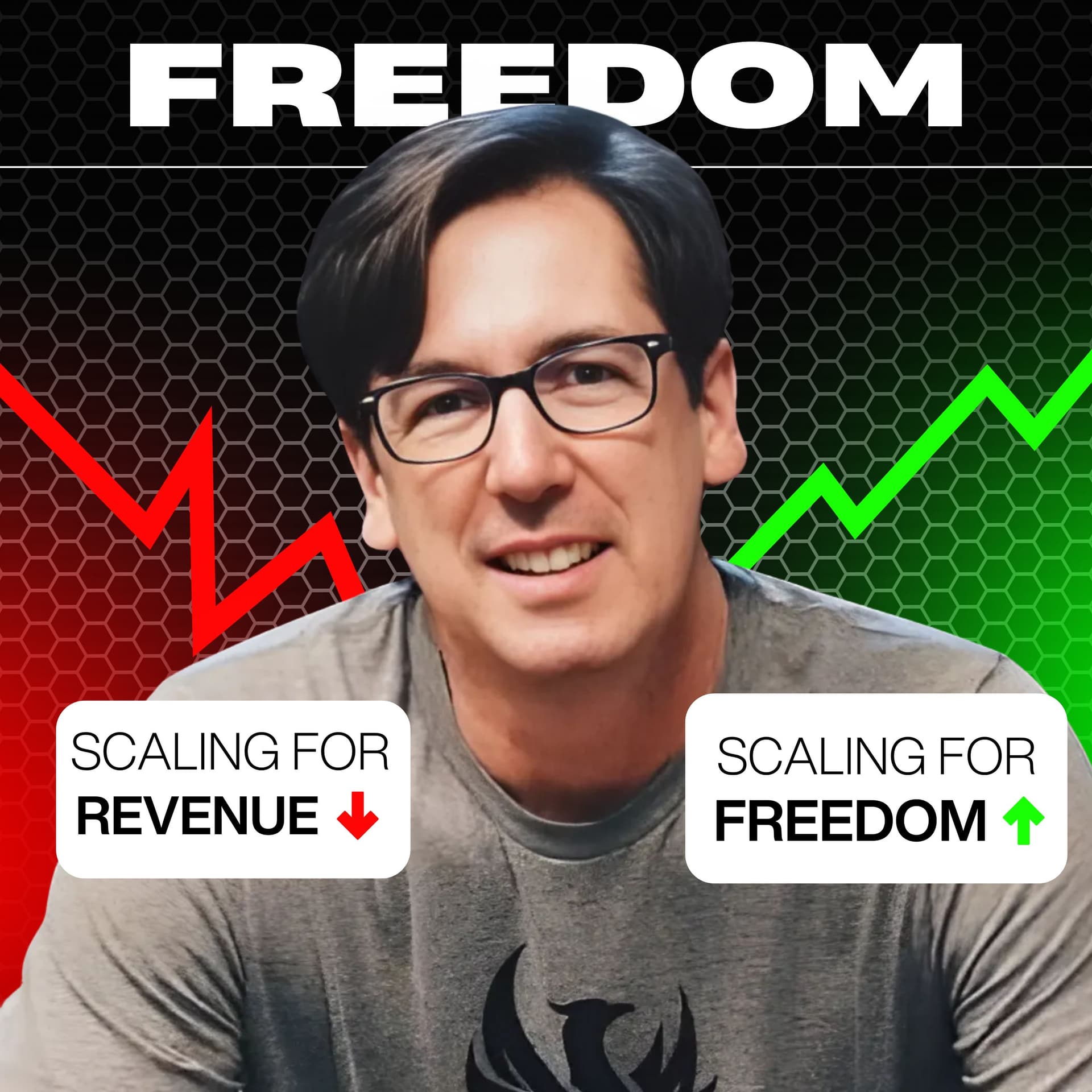
Podcast Episode Notes: Scaling for Freedom: The New Entrepreneurial Mindset | Mac Lackey
Podcast Title
Finding Peak w/ Ryan Hanley
Episode Overview In this episode, Ryan Hanley interviews Mac Lackey to discuss the evolving landscape of entrepreneurship, emphasizing a shift from traditional hustle culture towards the idea of "scaling for freedom." Mac shares insights from his entrepreneurial journey, family life, and his experiences owning a soccer team.
---
Key Themes and Discussions
- Hustle Culture vs. Freedom
- Traditional hustle culture creates a "badge of honor" mentality for entrepreneurs, often leading to burnout.
- Mac emphasizes that entrepreneurs don't have to sacrifice personal freedom, health, and family for business success.
- Personal Journey
- Mac began his entrepreneurial journey in 1995, starting internet companies and building a life of balance between work and family.
- His pivotal moment came before the birth of his first daughter, where he decided to prioritize being present in family life while continuing his entrepreneurial ventures.
- Creating a Performance-Driven Culture
- Mac discusses how his commitment to leaving work by 4:45 PM forced his team to adapt and operate independently, ultimately improving the business.
- Transitioning to a performance-based culture requires leaders to prioritize efficiency and results over time spent in the office.
- Mindset Changes for Leaders
- Leaders must accept that they can't be the best at everything and should delegate tasks to allow their team to thrive.
- Emphasizing performance over presence fosters accountability and empowerment within teams.
- Managing Time Effectively
- Mac shares his strategies for effective time management, including:
- Prioritizing tasks using a "dad" acronym: Delegate, Automate, Delete.
- Daily stand-ups with assistants to determine the most critical tasks.
- A focus on inbox management to maintain clarity and reduce noise.
- Health as a Competitive Advantage
- Mac highlights the importance of health and energy management in entrepreneurship, stating that physical fitness can enhance negotiation and decision-making capabilities.
- He integrates physical activities like soccer into his routine to manage stress and maintain his health.
- Experience in Soccer Franchise Ownership
- Mac discusses the unique challenges of owning a soccer team, emphasizing the passion of fans and the complexities of sports management.
- He stresses the importance of treating the franchise as a business, focusing on sustainable growth rather than ego-driven decisions.
- Promotional and Financial Goals
- The goal for Mac's soccer team is to ascend divisions within the Spanish soccer league, which has significant financial implications and impacts the long-term strategy of the club.
- He highlights the importance of sound financial management over short-term trophy chasing.
---
Key Takeaways
- Balance: Entrepreneurs can achieve success without sacrificing personal life; scaling should lead to more freedom, not less.
- Culture Shift: Moving to a performance-based culture requires intentional leadership and trust in team members.
- Efficiency: Effective time management and prioritizing health can lead to better business outcomes.
- Community Engagement: Managing a sports franchise involves understanding passion-driven fan dynamics, which is different from conventional customer relationships.
Recommended Resources
- Follow Mac Lackey on his personal website [maclackey.com](https://maclackey.com) and social media for more insights on entrepreneurship and time management.
---
Conclusion Mac Lackey's perspective challenges the traditional hustle mindset of entrepreneurship, advocating for a balance that prioritizes personal freedom and effective team dynamics. His experiences provide valuable lessons for leaders looking to foster performance-driven cultures while maintaining their health and personal lives.
---
Thank you for listening to this episode! If you found these insights valuable, consider subscribing, rating, and reviewing the show to support the continued growth of Finding Peak.
Written by AI. May contain mistakes. Listen to the episode to check what was said.
Transcript
Automatic transcript. May contain errors.0:00Happy Holidays! Want to give your host a gift? Consider subscribing, rating, and reviewing the show this holiday season. it really helps the show grow. From all of us at Believe, have a Merry Christmas, everyone, and a happy holiday.
0:18There's three things I end up spending a lot of time with entrepreneurs on because there's the mindset and strategic and all the stuff that feels great, and there's the practical reality of your day-to-day life as an entrepreneur. And for most every entrepreneur, there's three things on there that are the things that truly destroy us tactically.
0:49Mac, it's a pleasure to have you on the show today, man. Thanks for taking the time with us. Yeah, Ryan, it's great to be here. I appreciate it. Yeah, long time coming, but very glad we got here because I think your tact, The position that you take around this idea of scaling for freedom is something that, you know, I get a ton of questions about. And I'm not an entrepreneur coach. You know, I am an entrepreneur, currently CEO of an AI company. But, you know, I don't do any coaching, whatever. But you get these side messages, right? And they seem to be around this. there seems to be like a really messy moment, at least that I'm seeing, where some of the traditional stuff either isn't working as well as it did or people are worried because they see AI.
1:36At the same time, I think burnout over the last 20 years of tech kind of grind hustle culture is starting to get to people. It seems like the generation in their early 20s is maybe looking at their life a little differently than I want to be locked in a garage for 20 hours a day. Like, maybe we just start there. Like, where did this come about for you? Like, when you started building all these businesses and growing them and exiting from them, like, how did the idea of doing that to have freedom start to come into your own life? Yeah, it's such a good question. And I think it's incredibly relevant.
2:14I mean, even the way you sort of position it, I think the last decade or two. Hustle culture has just become this like badge of honor. And I think it's sad. Entrepreneurs kind of feel like that's what they have to do. They have to accept these incredible trade-offs, whether it's personal freedom or health or time with friends and family, to go build a business so that at some point in the future, hopefully they can live the life they want. And I just sort of fundamentally disagree with that. And so for me, my journey, I started my first company. This ages me for sure, but first quarter of 1995, Netscape launched the commercial web browser.
2:53I started an internet company almost immediately thereafter. So I was really early in web one and I built and sold two companies in my twenties. Those companies were definitely defined as kind of garage startups, under-resourced. I came from kind of no resources. is so incredible success in terms of I felt very fortunate and blessed to have built and sold companies. It was amazing. But I was probably a classic workaholic. And then in that second business was sold in July of 2000. My second or my first daughter was about to be born in August of 2000. And that moment is where everything changed for me because I imagined this life as a father, something I was incredibly excited about.
3:44And I wanted to be there for kind of every moment. You know, I wanted to be home for dinner. I wanted to coach the soccer teams and go to the school plays. And in that moment, every one of my friends and peers and even mentors said, Mac, you're a workaholic. Like, how are you going to be home at five o 'clock? Like, all you do is work. And I made a decision literally a week before my daughter was born. I kind of leaned down to my wife's belly and said, I don't know how, but I'm going to be there for everything. And I wasn't really willing to accept that I was at the end of the entrepreneur journey.
4:20I was going to have to be a lifestyle guy to be a present father. So incredibly long story short, I just made the decision. I am committed to being there for my kid. And ultimately I had two girls, but initially it was the one. And the way I always sort of position this, which I think is super relevant is my daughter was born August 21st of 2000. I dropped her off for her freshman year at NYU, August 23rd of 2019. So literally 19 years, almost to the day, I dropped her off for her freshman year of university. And I looked at her and I said, you know, I wasn't the perfect dad. I made plenty of mistakes, but I was there for everything.
5:00Like I carved the pumpkins. I was home almost every night for dinner at five. But I also built and sold four more companies. And so over those 19 years, I sort of lived the case study that I didn't know how it was going to work. I didn't know if it was even possible, but I was just not going to accept the trade-offs that everybody was telling me I had to accept. And so at this point, I sort of look back over that. I feel really fortunate, but that moment in 2000 where I just decided I'm not going to follow this traditional path and accept these trade-offs because that's not going to be my life.
5:33I didn't know if it'd work or not, but that's kind of when it all changed for me and led to a very different life. How did you make it work? So I think, yeah, I mean, with the benefit of hindsight, things were much easier to see when it sort of started. One of my favorite, you know, very brief stories I'll tell you is right after she, you know, was home from the hospital, of course she wouldn't know if I was there or not right she's a baby but I had already decided I'm going to be home for dinner and so in order to be home for dinner I set an alarm at 4 45 so I could leave the office and get home in about 15-20 minutes and the very first day it happened I was up on the whiteboard in front of my company I was running a tech business at the time talking strategy the alarm goes off at 4 45 I literally dropped the dry erase pen and turned around and walked out of the office.
6:24And I'm positive that people in the room thought like, oh, clearly Mac's going to like pop back in and say, ha ha. But I got in my car and drove home. And the next day, almost, you know, the same scenario, I was with my leadership team in the conference room talking about something. Lauren goes off 445, literally walk out of the office. And what happened was such an unbelievable positive. I was committed to leaving. So I was prepared to deal with the consequences of stuff just kind of gets dropped. Things don't go well. But after just a few days, the dialogue in my office very quickly shifted to not, I wonder if Mac's going to leave at 445, but Mac is going to leave at 445.
7:09Who's going to prepare the PowerPoint? Who's going to take a call from a customer at 530 because Mac's not going to be here? Who's going to, you know, so all of a sudden people started adjusting schedules and planning and proactively imagining Mac's not here, so who's going to do it? And then within a week or two, it was not who's going to do it. Who's the best person to run the meeting? Who's the best person to take the call? And so I really, truly watched these employees, teammates of mine, that I didn't realize I was actually holding them down because if Mac is in the office, Mac's going to run the meeting.
7:44Mac's going to hold the dry erase pen. Mac's going to take the call. So I literally kind of threw everyone in the deep end with this just, you know, I had an absolute forcing function of I'm physically walking out at 445 no matter what. And the company adjusted, employees stepped up, people rose to the occasion. So I literally realized that the constraints and forcing functions I was creating for my own life by optimizing what mattered to me, I was actually building a better business. you know fast forward several companies later my very last company which I sold back in 2018 I had I was the largest shareholder I was you know CEO or chairman maybe by title I had no role in the company I had a desk but people didn't know if I was in the office or not or if I was even in the country or not like everything ran with or without me the same way people processes technology So I just kind of learned to use these forcing functions to build better businesses that extracted me from the day to day.
8:45If we can stay in that early days company when you started to set these boundaries, what were some of the initial either mindset changes as the CEO or even tactical operational changes that you made? Not necessarily as your team adjusted, but that you personally as the leader made in order to allow them to flourish more and to continue to support this new culture that you had created? Yeah, what a great question. A couple of things come to mind. Number one, it was a personal decision, but it had kind of a tactical implementation, which is, number one, I'm not willing to accept the trade-offs. And so that's a personal decision.
9:26But I also have an obligation. I'm a fiduciary to shareholders and partners and I can't perform at a lower level. So I basically had to say, if I'm going to not accept the tradeoffs and optimize for what matters to me, which is time with my family, my business performance has to be the same or maybe even better. so I have to be more efficient and more hyper-focused on time and efficiency. I might be in the office three hours less, but I got to get as much or more done. And so that mindset was a big shift for me that I was looking in the mirror and saying, Mac, you have to perform at or better than when you were sitting in the office three hours more, two days more, whatever the case was.
10:14Now that performance orientation became a great shift for the entire organization because I was able to look at anybody else and say, I don't care when you're in the office or not. This is a performance culture. You get your job done. You perform at or above and we'll be great if you don't perform. I don't care how long you sit in the office. It's a performance culture. So a lot of those things started with me looking in the mirror, trying to hold myself accountable, and then shifted to the way we built companies, the way we thought about things. Yeah, I had a very similar experience in my last company.
10:49My home industry is the insurance industry, property casualty insurance. And I started a national commercial insurance agency, digital commercial insurance agency. So our value proposition was essentially you can deliver the same amount of value digitally as you could in person. And I don't know how familiar you are with property casualty insurance, but at that time, so this is 2020, I started seven days before COVID hit. Oh, wow. Not the best time to start a business, but we made it work. At that time, there was still the belief that I had to be in the same room with you. The holidays are here, and that means it's the most wonderful time of the year to save with Rakuten.
11:31Use Rakuten to stack cash back from your favorite stores on top of holiday sales. That's savings on savings. With Rakuten, you can get cash back on gifts for everyone on your list. From toys for the kids to kitchen gear for the person who loves to cook to electronics for everyone. You can even save on something for yourself. Just shop the stores you love and cash back is automatically added to your account. and you can get paid with gift cards, PayPal, or check. Or eligible American Express card members can even choose to earn membership rewards instead of cash back. It's truly a no-brainer. Join for free today and get a new member bonus after minimum qualifying purchases.
12:14Just go to Rakuten.com, download the app, or install the browser extension. That's R-A-K-U-T-E-N. Terms and conditions apply. Thank you for you to appreciate what I was doing with you. And I wanted to bust that on its head. And I found that traditional insurance salesmen and women producers, they could not vibe with that. They couldn't get through their head that they that they didn't have to be in the room. Right. And what I found was there was an immense amount of talent sitting in single moms and moms with young kids that had been tossed aside because they couldn't. I simply could not work a traditional nine to five.
12:54They just, they're, they had responsibilities to their children and they just, they had to take time or their kid pukes in the middle of the day. They got to run out or whatever. Right. Um, and so I started scooping up all this talent and it was like a, it was really a, uh, uh, I got a lot of flack because we had the same exact methodology and it was a forcing function. Like, like it wasn't like I had this brilliant idea. It was more like, I need to be able to find people who can do the job, right? And basically, we said the same thing. We were like, I literally don't care. You have X amount of work that you have to get done.
13:29Here's your numbers that you're agreeing to in your contract coming to work with us. I don't care if you get them done at 9 p.m., 1.30 in the morning or whenever. You just have to hit your numbers, and that's it. And it's like, there's an explaining that to people, though. And it worked incredibly well for us. We exited for four years from the time that we started and very, very good. But in explaining that and sharing it on here, I've shared on the show before, and this is where I'm going with this question, is like I get a lot of people will lip service me. Oh, that sounds cool. And they go right back to top end heavy, be here, activity based, you know, performance reviews.
14:10And I struggle with why is that? Why is moving to a performance culture particularly hard for most leaders, most founders? Right. I think you go through it enough times or maybe I think tech is a little more vibes with this. But outside of tech, really, a lot of businesses struggle with moving to this kind of performance based culture. Why do you think that is? Yeah, it's a great point. I think it's heavily ingrained in business culture and entrepreneurial culture. I even, you know, mentor and coach entrepreneurs now that will say, you know, my leadership style is I lead by example. And how can I lead by example if I'm not in the office working more than my employees?
14:56I want to show them the way that you work hard and you do these things. And I normally smile and say, you know, I understand. But what you're showing people is a broken paradigm. It is, yeah, let me punch the clock and show you how many hours I can work, not how I can perform, how efficient I am. And I sort of took the other approach. One of the things that I still say all the time is, and this was very difficult for some of my early companies and my, you know, the constituencies around me, but I always used to say, you know, I work seven days a week and I play seven days a week, like Tuesday and Sunday are no different to me.
15:32Like, but people have this really funny, you know, mindset around nine to five, Monday to Friday. And I said, well, I have, you know, daughters that I want to drive to school. And so I am not going to be in the office at nine because that's when they need to be at school. And I have, you know, daughters that I want to coach their soccer team post school, and maybe that's at four o 'clock. And so I kind of adjusted my schedule and people have often under misunderstood that didn't mean I've never said I didn't work hard. You know, I feel like working hard is a core attribute of my whole philosophy, but I got to choose when, where, and how.
16:12And so a lot of mornings I would wake up really early four in the morning, four 30 in the morning, and I might do two hours of incredibly deep, uninterrupted work before my kids got up. And then I would literally turn off the computer, go make pancakes, drive my kids to school, and then I would go to work again. And sometimes I would put them to bed at night and I would go back to work or I would decide to work on a Sunday because they had a school play on a Tuesday. So these are self-imposed constraints that people have. And it's pervasive. I'm not naive about it. A lot of people, when I say stuff like that, they're like, yeah, that would never work in my culture.
16:51I'm like, well, that's because you haven't set it up so that it's based on performance. And then people are very happy that I might be working on Sunday because then they show up Monday to a lot of great work that otherwise would have waited till Monday night or Tuesday. And so it's really a cultural decision. But what's wonderful about it for entrepreneurs is there is a direct correlation. So, you know, I've built and sold six companies. I spend a lot of my life talking to entrepreneurs now about the exit process. And one of the things that I discovered is there is a direct correlation between three things that matter.
17:32One is the exit exit ability or exit value of a company, the ability for a company to scale and for a founder or key executive's personal freedom. People really think those things are diametrically opposed. Like, hey, if I'm not grinding in the business, the exit value is going down or it'll be harder to sell. It's actually the opposite. Nobody wants to buy a company where the founder is in the critical path. If you're in all the meetings and making all the decisions and all the SOPs have your name on them, that is not a good business. It doesn't scale scale very well and it's really hard to exit and if you do exit you're going to be in an earn out for years and so for me when I discovered that it was sort of like okay if I design a business that's really designed so I could sell it at any point high high exit value high exit optionality then I'm basically ensuring that I have a more scalable efficient business and one where my personal freedom goes up like sign me up for that all day long but I think entrepreneurs just for whatever reason of just believe this hustle thing that you just have to sacrifice and grind until one day you can sell it and then you finally can travel with your kids or do whatever you care about.
18:48And it's just not the facts. Yeah. You know, I'm, I'm a case study for that. Uh, the business that I was in prior to the last one that I started and exited from, I, I was that I'm going to show you the way, right? Like I'm going to do the things and you follow me along. I literally started, I had been telling, I had an individual on my team, she was incredibly talented, you know, gregarious, you know, she's a very, very good looking woman, just like, she like drew you in, right? And she's on my marketing team. And I said, I need you, or I would like you to start telling some stories yourself about the business, like create a kind of sub YouTube channel.
19:26She was very good with video, that was like her specialty. And I was like, you know, you talk about the business and all those things. And, you know, and she was kind of putting it off. I could tell she was putting it off. She was like, she was nervous, right? And I completely understand that. So one day I literally just created a YouTube channel, like sub YouTube channel of our businesses for myself doing it. Like, and she, I get this message from her, you mother, you know what I mean? She knew what I was doing. And like at the time that felt like the right thing to do. But here I am, all of a sudden now I have this YouTube channel that I'm, that I'm building like on the side.
19:56And I'm like, why, this is so stupid. Like, why would I do this? This is just another job that I just created for myself. And it wasn't, and I think that experience trained me to exactly what you're saying. And guys, I mean, listen to what Mac is saying. This is the maturation, I believe, of the truly great leaders is when you, Rogue Risk was the name of the business that I, my most recent business. When I removed myself from the process and became kind of like of service instead of the service, like you said all of a sudden people started solving problems I didn't even see or didn't even know about and taken off in different directions it was like the whole business opened up when I got out of the way and I think in retrospect a lot of that was like my ego like like I'm the point of the spear so I got to be the point of the spear and things have to go through me.
20:51And, and the minute I changed that and started empowering my people, we went faster, further than I could have ever imagined in a, in a period of time. I mean, my initial, my initial exit strategy was eight years and we sold in four. And that's only because I got the hell out of the way. Um, and so, so when you, when you come across someone, someone calls you, then, Hey Mac, I'd love to, you know, hire you for some coaching, you know, whatever. and you see that particularly that part around the ego like like you know how do you start to break that down because I feel like that's a blind spot for a lot of entrepreneurs they feel like they're doing the right thing and they can justify it but at its core it's kind of the their ego is the reason they're they're remaining in that spot even though they know they should probably get out of the way how do you start to break that down yeah so you know one of the things that is really critical.
21:42It's kind of like Tony Robbins, I think, used to always say that we don't achieve our shoulds in life, we achieve our musts. So I try to really understand if someone comes to me and says, Mac, I need your help. It's like, let's talk about what that means. I need to free up time because I've neglected my family, my health is suffering, or I want to sell my business. So we sort of start with, okay, how important is this goal? Are you committed to making these changes? Because if someone's saying it, but they're not committed to making the changes, they'll just go right back to old behavior. So there is something important about how important is it to you as an entrepreneur to scale your business, to have the freedom.
22:20Because most entrepreneurs, not all, but most entrepreneurs start a business designing it on paper for what they want. They want the freedom. They want to make money. They want to scale it. They want to enjoy it. They want to be able to sell it one day and maybe have life-changing outcomes. But then they kind of like get in the grind and they build this cage around themselves and they stop realizing that the business is no longer doing those things. Like they're buried in the day to day. They're working more hours. They're probably maybe their business is making more money, but because they're reinvesting, their personal wealth isn't going up.
22:56Like it's all tied up in the business. So to me, I almost always have to take them like, let's look at how important this is. And then the thing that you have to do is you have to realize today in this moment as an entrepreneur, maybe you are the best person to answer the call, make the decision, write the code, design the logo, make all these things happen. But one, that never scales, right? You can't be the best at all those things because that's not your actual unique ability or talent. so we have to say what is the thing that you do that's critical to the success of the business where you should be spending 80 % of your time.
23:37Everything else we have to get off your plate and ideally we're getting it to someone that that's what they are uniquely good at. If you're doing finance because you're capable and you're probably better than your bookkeeper you need to hire a controller or a CFO or a fractional resource because you're not going to move the needle as a finance resource. So to me, it's kind of breaking these things down that their goals are really critical and then finding out what do they need to uniquely focus on to move the needle. As I always say, I mean, I literally look at my to-do list myself every day and same thing every morning in my life.
24:16I look at it and go, there's 50 things I could do. There's three of them that move the needle and that's what I got to do today. Not to get too tactical, but can you talk through that to-do list process? Because I think this is critical for, particularly for leadership, right? Like you said, I could go through this notebook that I have here and there's probably a thousand checkbox tasks that actually need to get done, right? But you said like that, if I went through them chronologically, that would be the biggest, you know, that would be the most inefficient way to do it. So is it, do you, you know, I've heard some people just keep a running list and then every night they kind of pick their top three or like what is actually your process for making sure that when you show up in the morning, you know what you want to work on and what's going to move that needle the most as you described?
25:06Yeah, it's almost exactly, again, my style, my system, you know, partially because of, I suppose, you know, age and what I was doing that worked when I was building my companies. I am definitely a notebook guy, I, you know, it's at my desk back here. Otherwise, I would show you it. It's literally like, you know, constantly making notes, circling tasks that need to be done. And that's just to make sure I capture them. But the reality is very, very similar to what you said. I look at that usually at night before I kind of shut down and then in the morning and say, out of this list, what are the two, three, four things that are aligned to my personal goals and dreams?
25:50I mean, I literally, I do have laying right in front of me. I have a, you know, my daily non-negotiables that are kind of my key things. And I look at my list and say, are they aligned with what I care about most of my life? Time with family, having impact, you know, helping entrepreneurs. Okay. That's a key filter. Will it move the needle? And then almost everything else on my list, I created an acronym forever ago. People have a million acronyms. Mine was dad because that was my focus. I want to be a great dad, which means everything on my to-do list that doesn't move the needle in a significant way needs to be delegated, automated or deleted.
26:28So and I delete a lot of stuff and people really struggle with that when I'm like this, this just has to be off my list. The only other thing I would say, which is really interesting, is I have two assistants and one of my my executive assistant. I literally have a daily stand up with her. She's, uh, you know, I live part-time in Barcelona, so she's in Barcelona. Sometimes I'm on her time zone. Sometimes I'm in the U S we have a daily standup and I tell her, you tell me what the most important thing I do today is because she knows all, I mean, she checks my emails before I see him. She knows what's in the to-do list.
27:06She sees all the things because I want her to be another level of filter to me. what she thinks is the most important thing that I do for my day probably should be on my top three because it's I owe somebody something you know a follow-up or I needed to record something or you know whatever it is she has a really important sense and that's that ego thing you talked about I try to strip away all ego and I say like you're my technically my assistant but you can tell me what to do tell me what the smartest thing for me to do today what's the most important thing If I have to cancel something, what's the smartest thing for me to cancel?
Read the full transcript
27:43Like I literally put that filter and that weight on her because she's, you know, she's good at what she does, but she has broad insight into what's on my list and what really matters to me. She'll tell me almost every day I'll agree to meet with someone. And this is tough for me. I try to be a nice, good, friendly person and she'll, and I'll say, Oh, my friend from high school wanted to have a coffee next week. And she'll literally be, as I'm saying it, shaking her head no. And I'm looking at her and she's like, remember, you don't have time to do that. Like you're trying to impact the world and help more people.
28:18You can definitely send a nice note to your friend, but you can't meet him for a coffee. You know, and of course I can override that and say, as one of my best friends, I am going to meet him. But having that sort of accountability and filter to like, I don't waste time on stuff that's not going to be aligned for me and help try to do what I want to do in life. yeah I um dude talking about the deleted part I uh I had this awakening again at at the last company I was I had like a hundred and something emails in my inbox which is crazy right I hadn't I hadn't gotten an assistant yet at that point and like one Saturday morning I woke up and I'm like I'm just gonna go all the way to that bottom and like see what's there and I'm looking at these things.
29:00And like at the time they seemed important enough to like keep as unread. And I'm going, well, that delete, delete, delete. And I got all the way down to like 15 emails. And I was like, oh my God, like, look how many things that were completely unimportant that had zero impact that I actually didn't need to follow up on or whatever that were just sitting in my inbox, creating like noise in my brain. Cause I'm looking at a hundred emails and it feels overwhelming every day when really there's only 15 in here and probably even 10 of those are simple, just, you know, one sentence follow-ups and we, we allow ourselves to, to get caught in, well, geez, I got to respond to everything.
29:39And it's just simply not true. Yeah. It's, it's, it's, if I could say, I mean, the to-do list, I'm glad, I'm glad we talked about that. There's, there's three things I end up spending a lot of time with entrepreneurs on because there's the mindset and strategic and all the stuff that feels great. And then there's the practical reality of your day-to-day life as an entrepreneur. And for most every entrepreneur, there's three things on there that are the things that truly destroy us tactically. One is the to-do list that we kind of talked about high level. The other is our calendar and what we allow on our calendar and how we block time and manage time.
30:17And the third is the inbox. And yeah, I'm literally looking at, I have my two monitors up as we're recording this. And my inbox that I'm staring at says you've hit inbox zero 65 weeks in a row. And that is, that is, doesn't mean I don't, I get a bunch of emails, but my very strict kind of, you know, guidelines on how I follow up. If I follow up, if my assistant follows up, if this is better done, I do a lot of asynchronous, you know, record a quick video because I care about people that I'm working with or in my life. So I'd rather record a nice video and, you know, send you the link to it because it's when I'm sitting on the back porch later in the day, but I send a nice note, Ryan, you know, great talking to you, blah, blah, blah.
31:02You know, here's the three things we talked about. So I try to really let my inbox not dictate my day at all. And then the final one is the calendar, which is it just destroys people. And I do this coaching session with my group and I'll show them even, you know, again, I know this stuff, I've lived it a lot of my life, but of course I'm guilty of letting things drift. And I show people what my calendar looked like two years ago and just pick a random week versus what it looks like now. And now my pre-block calendar, like my mornings every single day is the same. I start at the same time. I have pre-block time for, you know, flow state and mental health and, you know, things that are priorities for me.
31:44When I'm in Barcelona, I have lunch with my wife every day. And those things are non-negotiable, non-movable. And then I have a few blocks where I'm like, this is when I'm going to coach or work with clients or help friends. And that ability to kind of get in the zone versus what it used to look like. I'm running multiple companies and I'm going between sales meetings and talking about product and I'm talking to my financial advisor. I mean, like context switching all day, different times every day. So I'm not one of those morning routine people. Personally, I actually like a very clean calendar.
32:25So I pre block a lot of time, which just basically means I have total flexibility. If I decide to just go for a walk and not do anything for half a day, like my calendar kind of accommodates that, that scheduling 15 minute increments and being at the gym by this time, like that feels anti what I'm trying to do with my life, which is live happy and free. And so it works for some people, but for me, I have to pre-block time. So I have a lot more control of my calendar. So those three things, if you, if you get those three things, right, then I think it literally transforms your life as an entrepreneur.
33:01Yeah. And I think that the, one of the main ideas that I take from that is I think a derivative thing that not people, that people do not give enough conversation to is this idea of noise, right? That's constantly in your head. And when you don't know what your day is going to be because it's different every day and people are randomly dropping stuff into your calendar that you don't know is there, you don't know why it's there, et cetera, et cetera. And you even said it, context switching, right? All these things create noise that doesn't allow you to reach one, your peak energy state or two, your peak clarity or focus on the topic that you're supposed to be talking about.
33:40Because now you're like going, all right, I just got off a sales call. Now I'm talking to HR. And it takes you time to get in and you're not listening or you're thinking about the last call you had. You know, one of the things that I've really tried to work on in 2025, and I would put this noise underneath this topic, is energy management, right? Like I find, similar to you, I put blocks. I use like the focus time in the Google Calendar as my way of having that. like I will not allow someone to schedule something over the top of focus time. And I've gotten pushback from the team. They're like, well, we need to talk to you.
34:15I'm like, then find another time. Or like you said, create a quick loom video, explain it to me, and I'll watch it as soon as I can. And I'll be able to give you an answer. Because if I don't have those blocks of time in there, I can't actually do, right? We don't actually get the space to do the creative work in whatever capacity that creative work takes to solve the big problems, which is ultimately, you know, what we're doing most days. And that, I mean, guys, if you're listening to this, you know, and go back and re-listen to that section, and I'll probably end up pulling that section out as well because it's, this is the core.
34:52I mean, if you want to hear about, like, some crazy marketing strategy you had that, you know, blew your company up X amount, but you can't even get to that if you don't have those three core things settled in your brain. Like you literally can't even, you don't have the brain capacity to come up with the idea to implement the strategy. Yeah, it's the one that's really, I mean, again, to-do list, inbox, and calendar are all like equally challenging for most people. The one that I think is the easiest to solve for, but for whatever reason, a lot of people struggle with is calendar. And I always say like, let's talk about what your calendar looks like today, current state versus what I call the dream calendar.
35:31What would your dream calendar be considering exactly like you said, Ryan? What's your energy, right? Like, are you energetic in the afternoon? That's when you want to be doing sales calls or are you creative in the morning? So you want to like be thinking or meditating or writing and let's forget all the stuff that you have. Let's just lay it out like it would be amazing. And then let's consider things like, do you want to, you know, take Fridays off? Do you want to be able to travel on the weekends? Do you want to take one week a month off? Not that you can do it yet, but that's the goal. And so we start off with current state and future state.
36:07And then it's just a simple reverse engineering thing. And when I'm coaching someone, that's what we'll do is we'll say, all right, well, in order to get from where you are to where you want to go, let's just do two things for the next two weeks. Let's block Friday afternoon after one o 'clock and just literally block on your calendar. You and I both know that if you have an emergency, you can open it up. but let's just go ahead and pre-block it going forward. And then let's take a, whatever, some other day and put a two hour block for nothing but creative thinking strategy. Can you do that? And most people are like, yeah, I can do it as long as I know I can change it.
36:44Great, do that. And then you just start picking away. And then before, you know, it's another three or four weeks. It's like, I think we can probably take Fridays off now, you know, and let's just go ahead and pre-block it. There's always emergencies. There's always exceptions. Let's pre-block it. And then you literally watch people's lives and the way they run their business transform because they control their calendar. And it's just that simple. Like you said, all the brilliant marketing strategies and distribution plans and code that you can write, those things are, of course, critical. But none of them can happen the way they should happen at scale.
37:18Or, and or, your life on the journey is going to suck if you don't manage those three things. and I have way too many friends that they're, you know, plus or minus my age. I'm 54 now and they're, you know, my kids are, you know, one's out of college, one's about finished with college and I'm an empty nester. And I look back and say like, I enjoyed and spent so much time with my kids. I have a lot of friends that are, they just sold their business or they've, you know, semi-retiring and they've made so much money and they're like, but I miss my kids growing up or I'm, falling apart mentally and physically because I neglected my health for 20 years while I was grinding.
37:59And I finally sold my company for$50 million and now it doesn't matter. I can't travel anyway. So I really feel so strongly that people make these changes because that's what leads to a more scalable business, a business you can sell, but it's your option versus being forced to sell it. And so, yeah, this is, this is as sexy as the other stuff is. These three things are what really make the difference in an entrepreneur's life. You know, what's really funny too. And I'm sure you know this as much as I do. When you, when you sit with like other successful entrepreneurs, a lot of times, this is the stuff they want to talk about.
38:36Like the real primetime players, like they don't care about the marketing strategy or the big sale, or even, I mean, they'll talk about product a little bit once in a while, more, more like, you know, maybe a little bit of, um, uh, aggrandizing what they did, right? Like, oh, we built this cool thing, whatever. It's fun. But when you, like when you're sitting in a story, I mean, they're talking about time. How do I get more time with my family? How are you managing comms? How are you making sure you have, I mean, this is the core stuff that people really dig into when you're actually having these conversations with, with high level successful people.
39:09Um, and I, I just want to touch on, and I'm interested in this for you. And then I want to move on to a different topic, but health management, right? I've been saying for years on this show, your health is a competitive advantage. If I'm sitting across a negotiation table, whether it's virtually or in person from someone who is not physically fit, I can tell doesn't manage their energy, they look hungover or whatever, right? Like, you know, you're going to win that negotiation. Like you're going to, you're going to out think them, you're going to outmaneuver them, you're going to outpace them because they just haven't managed their energy and they may be smart as hell and they may have been successful, but you can outmaneuver them simply because of your health.
39:53How were you able to, I mean, again, I know this kind of goes into your whole, you know, taking control of your life, but how were you able to fit energy in and how did you prioritize your health and stuff along this journey? I mean, six successful exits is incredible in and of itself, let alone you look like a very fit, healthy guy? And, you know, how were you able to get through all that? Well, well, I appreciate the kind words. I, um, yeah, I think a lot of it, you know, I was soccer was my kind of passion, you know, growing up, I played at a, at a pretty high level and post, uh, playing, I, you know, I continue to use soccer as an outlet for kind of the mental and physical, you know, part of my, my non-work life, my non-family life.
40:39And so I continued to play up until not terribly long ago, I was playing four or five days a week, you know, pickup games, indoor, outdoor. And that was great physical, you know, kind of the physical side of my health. But also a massive stress reliever, you know, like I just, I just love playing soccer. And so, you know, prioritizing that, I was very fortunate that I found a group that was willing to, because I mentioned earlier, I was a very early morning person. Most people play soccer on the weekends or after work. And I found a group here in the U.S. where I am now that was playing three mornings a week before people go to the office.
41:21So we'd meet at 5.30, 6, 6.15, depending on when the sun came up, play soccer for an hour, then shower, then go to the office. And to me, it was like my day is already so good because I've had fun. I've hung out with some friends. I played soccer. I got some fitness in. So that was a big part of it. And now, I mean, I'd be the first to admit if you knew me really well, people know that soccer was such a big thing. I don't love to run. There's not a lot of other forms of exercises. One of the big reasons we live half the year in Barcelona is it's a lot easier for me to be intentional about those things when I'm in Barcelona.
42:02I walk everywhere. Every day, I walk to get coffee. I walk to have lunch with my wife. I walk my dog. I get fresh air. I get sun. And where I grew up in the US, in Charlotte, North Carolina, it's a great city, but I have to get in my car to drive to get a cup of coffee or drive to meet someone for dinner. And so I don't, I have to be much more intentional. I try to design my life where I don't have to think about those things so much, you know, and that's why Barcelona for us is wonderful, because just by doing the things that I naturally want to do, I'm getting more exercise, I'm eating healthier food, etc.
42:39If I was in, you know, some other city, I wouldn't have those same kind of benefits. And so I try to be, you know, intentional and sort of design my life around what makes that stuff easy for me. Yeah. And that, that feels like a through line for your success. And I think for many people is, is this intentionality, right? Like setting boundaries and being intentional about the things you want and going and getting them. Uh, so you've, you've now, uh, uh, parlayed all this success and, and, and business knowledge and love for soccer. And now you own your own, you own a soccer club. Uh, talk to me a little bit about that decision because, uh, you know, I've never owned a professional sports team myself, although hearing from different people on pie, you know, That can be a hit or miss relationship and opportunity, but I'd love the decision to purchase the team and how has applying your entrepreneurial skills to a sports franchise, how has that translated?
43:38Yeah, it's been a really, really fun chapter. So as I mentioned, I literally have been a lifelong soccer enthusiast. I used to call myself player. Now I say fan because I don't play anymore. But it's been a big part of my life. I mean, you know, growing up, it's all I thought about, all I wanted to do, all my goals and dreams were soccer related. And I was very fortunate to check off a lot of those, you know, kind of goals. And then I got into the business world. A lot of my companies were I kept weaving back around to, you know, soccer was a through line for me. So my first company, which was an early internet company, some of our biggest clients were soccer businesses and, you know, cause that's what I wanted to work on.
44:25My second company was kind of the fusion of early technology with the sport of soccer. I built one of the largest kind of media platforms on the internet. So it's been a through line. My family and I, I pulled my daughters out of school when they were nine and 12 to travel the world. That's really, again, uniquely possible because of the way I designed my companies. I was still running companies while doing it. We ultimately moved to Barcelona to have a new experience. And while I was living there, it sort of became this almost like bucket list dream, but it was very far out in time and the future of like, it would just be so cool to buy a soccer team in Spain.
45:10And maybe when I retire, that was kind of my thinking is I'll get a little place in Spain and retire. And I would love to own a little team. But, you know, fast forward and really about five or six years ago, I just started thinking about what's going on in the global kind of game and the business. What I feel like the American side of sports business is really being, you know, kind of cast around the world. You can see it across a lot of sports. the entertainment value and pregame and all the things that really didn't exist in Spain. And I was like, you know what? This isn't a retirement thing.
45:47This is a business opportunity. I want to do it. You know, and so kind of sped up the timeline. And yeah, it's been about three and a half, four years ago that we bought a team and it's 115 year old team in Southern Spain. So multi-generational, it's beautiful right at the Strait of Gibraltar. So if I'm sitting in my seat, I'm literally looking at the Rock of Gibraltar over the back of the stadium. Morocco is 14 kilometers away. So it's just a beautiful location. And then to kind of answer your question, you know, it's I hired a CEO. I have a whole, you know, much more qualified group of people that make day to day decisions and coaching staff and recruiting players.
46:29I have no role in the club other than, you know, I mean, I own it, but I get involved in things that I'm excited about. but I know that there are other people that are better at making decisions than me. So it's been a lot of fun. I've tried to apply a lot of lessons learned and business lessons to it, but it's a very different business. In 115 years of doing things, I underestimated how resistant to change people would be. I come up with something like, oh, I'm a big brand guy. I love brands and logos. I'm like, let's update this and let's change that. And I mean, people are like, whoa, can't touch the logo.
47:10That's been here a hundred years. So it's been a funny experience. In some ways, there've been some challenges. I mean, I've learned already some crazy lessons that, you know, come along with sports team ownership at any level. But yeah, it's been a really, really fun chapter overall. Where does the teams and I'm not as familiar with how, I mean, I know there's like different leagues and stuff. Where does it fall like in relation to some of the other teams that maybe a U.S. audience might know well? Yeah. So, yeah, so it's a good question. So in Spain, there are five tiers of professional soccer.
47:52We are in the dead center. So third division technically and in Europe in general, in Spain, certainly, you know, it's the system of promotion and relegation. So at the end of every season, teams are moving up and down from first division to second division to third division to up. And so, you know, for example, over the past year or two in our division, we play against, you know, teams like Malaga and Ibiza that were formerly first division teams. Malaga was in Champions League eight years ago, but they've been relegated down to our division. And so and we're also playing against teams that started, you know, in very low divisions, maybe even pre professional like amateur level that have just over decades have become professional.
48:40So it's it's really crazy competitive in terms of comparing it to the US. I mean, if some people think, oh, it's, you know, third division Spain and like, you know, we probably would beat at least half of the MLS teams in the United States. I mean, there are a few MLS teams that are, of course, at another level. But this level is really competitive. And it's neat to see, you know, we have a range of very young players that turn professional. They sign their first contract with a club like ours. We sold a player to Real Madrid two years ago. We have some players that are at the end of their career, and they played in Germany or Russia or somewhere.
49:20But now they're older and can no longer play first division. So we might be the last club they play for before they retire. So it's a neat, you know, there are a lot of stories built into any sports team, but, you know, young players that are hoping to make it, that, you know, don't go to school, dropped out of high school to turn pro, won't go to college. And so this is their one shot in life. A lot of that human interest kind of stuff wrapped into it. Is the goal always to ascend? Are you trying to just be the best in your division? Like, how do you manage, are you, are you constantly managing to ascend to the next level?
49:56Or like, I guess, how do you, how do you work all that out? Like, what's your, how are you structuring your, your strategy there? Yeah, it's, it's, I mean, ultimately most clubs, certainly our club, the goal would be to promote to the next division. There are, you know, very real, significant, meaningful financial benefits to that. You know, we have a TV contract. It goes up by seven and a half million a year just with one promotion. I mean, it's a very meaningful, you know, scenario. But where we're different than, I don't know, other people, perhaps, a lot of people look at sports team ownership and it is kind of an ego or trophy thing.
50:41You know, like they just want to say, I won the championship, I won the trophy. And they'll overfund and lose crazy money to win a trophy. Like that's just not our strategy. I mean, we do want to promote in the future by building very methodically. We started two years ago with the back office. Like I inherited a group of players and coaches and didn't change anything. Started with how do we run finance? How do we run operations? How do we, you know, literally in the back of the house and we've slowly moved up to last year, we traded 15 players. We got a new coaching staff. And so we're just kind of, you know, trying to make smarter decisions, run it like a business.
51:22And over time, if we're so fortunate to, you know, run it well and assemble a group of players that, you know, fight for promotion. And this season, we really, towards the end of the season, we were kind of a winning streak and really found our rhythm. And the difference between where we ended up at the end of the season versus going into the playoffs was one win. And I think if we'd had like two or three more games, we would have been fighting for the playoffs. And then it comes down to do you do well in the playoffs and get promoted or not. But for me, I was very happy with where we ended up.
51:58I thought it was a great season. you know, we're not doing it again for ego. And even if we, even if we did promote, it's not like, you know, we would do anything different. It would be that same strategy again, you know, hiring good people, managing day to day. So it's, I've learned a lot, but it's been a really fun experience thus far. Yeah. One last question on the, on the soccer piece. how is it different managing fans as customers than say customers as customers? Because it seems like, you know, you have things like if you change the logo, most of your customer would be like, okay, well, you know, I like your product or I don't.
52:38But a fan might say, I love you guys, but now I'm going to, you know, shitpost on some Reddit board or whatever the equivalent is, because I don't like the logo anymore. And now you got to deal with that. Like, how is that dynamic? And you've run a media company before, so maybe it's similar in a little bit, but like, I'm very interested in that. No, it's, it's such a good and funny question because that was, was, and has been an eye opener for me. Um, my CEO, who's, you know, a business partner of mine now that runs the day to day, he lives in Southern Spain. He, he was formerly a first division, uh, or CEO in La Liga in Barcelona.
53:16And, and, you know, so he's overqualified. And he told me, he said, look, every decision you make, no matter what it is, good or bad, for any reason, some percentage, 5 to 10 percent of the supporters or the fans are going to hate it and going to be very vocal about it. And early on, I felt incredibly welcome. I was, candidly, I was a little bit worried as an American buying this team that they were going to be like, oh, you know, capitalist, doesn't know anything about soccer. And so I spent the first year going to every home game, letting people know that I cared and I wanted to be there. It wasn't just a, you know, capitalist thing.
53:54And it was like, I really love it. I would just sometimes sit up in the box with their jackets on and like, I'm down in the sports bar with our fans having a beer before the game, you know? So I really wanted it to be different, feel different. But the reality is after a short period of time when people are just excited because there's change and there's something new, then it segments into those people that understand what you're doing and probably get it and are supportive and those that you can do no right I mean there's literally so I get direct messages to my social media accounts sometimes for people about like which players playing or not I'm like I have nothing to do with that like I have a coach I don't decide who plays you know and it's and and I you know they're passionate which is such a good thing and and they're they care so much about their team and their club.
54:42And as a human, especially one that actually, again, try to be a good person, I want to explain to people like, hey, we've invested, you know, a million dollars over budget this year to make things better. But then people will literally send me messages and be like, just put more money in the club. And it's like, you don't understand actually what we're doing. We've put a lot more than we probably should have in so yeah I smile just because it is true like I've just decided like there's going to be some fans that it doesn't matter what we do we could win the championship and they're going to complain about how we want it you know it's like well as a lifelong Bills fan I can say I completely understand their side of the aisle even though yeah I mean you you I got buddies it's it's so funny you know I I feel for you and it I was you know in getting ready to to chat with you I I I really wanted to spend some time in the Sour Club because I find it, I find that business model so intriguing.
55:36I'm a lifelong baseball player and played football. I unfortunately got injured or I probably would have played football in college, but ended up playing baseball because of an injury. But like it's, it is a wild dynamic, right? No matter how good a service you have, no matter where you are, like from a standard business perspective, no one's tattooing your logo on, on their arm or their leg. right but when you have a sports club you know they they're gonna tattoo it they're gonna wear the jersey the hat they're gonna you know they're gonna do all these crazy have flags and shrines I mean I don't know if you've ever driven through Buffalo New York but literally their thing there is they these guys build shrines and I mean that in the purest sense of the term to the bills in their garages and on game day all their garages are open and you can drive through neighborhoods and it's like, you're like, what is going on?
56:27You know, and the amount of passion and Josh Allen can throw 39 touchdowns and people are still talking about how, well, if only he was a more accurate passer. It's like, he won the MVP this year. What are we talking about? So true. Well, Mac, dude, I could talk to you for hours. I appreciate you. This has been wonderful. And I really appreciate the tactical stuff because I do think that it is very easy, especially with social media and with a lot of, you know, maybe even people that are trying to do the right thing, but aren't necessarily giving the right advice or they're going for the wrong types of metrics in their advice.
57:02They don't slow down to talk about these actual tactical things that drive true leadership and how we actually get there. So I appreciate that, man. If someone wants to just get in your world more and just kind of be in what you're creating, what you're talking about, where can they go to get involved in your work? Yeah, thank you. So I have a personal website. It's basically maclackey.com. So M-A-C-L-A-C-K-E-Y. So maclackey.com is my kind of core website on social media. It's kind of at Mac Lackey on YouTube and across the social channels. And literally just in the past few months, I have made a commitment to try to truly put out more content for the reason you said, which is I feel like there are a lot of people talking about these very esoteric high-level things.
57:53And those things are important too. But I've just been trying to share very tactical changes people can make. I want to help people. I know that for every person that joins one of my group programs or coaches with me, there's a thousand more I can help that they'll never need or want to join something. And that's great. I want to put a lot of stuff out there. So, yeah, I think if people are interested, follow me on social media and send me a message. You know, my team and I, we really, truly try to help. And if, you know, we can help someone, send them a free resource, recommend something, send them to someone else that can help them.
58:29We certainly want to do that. Well, I appreciate you, man. Thank you so much. Thanks for having me.
58:39Let's go. Yeah, make it look, make it look, make it look easy. Thank you for listening to The Ryan Hanley Show. Be sure to subscribe and leave us a comment or review wherever you listen to podcasts.
58:56If you like the show, please take a moment to rate, review, and subscribe. It really does help the show to grow. Thank you for listening.
59:11Happy Holidays! Want to give your host a gift? Consider subscribing, rating, and reviewing the show this holiday season. It really helps the show grow. From all of us at Believe, have a Merry Christmas, everyone, and a Happy Holiday.
From the publisher
Spartan philosophy, built in the black-ops lab of business: https://www.findingpeak.com
Finding Peak podcast: https://linktr.ee/ryan_hanley
Join our community of fearless leaders in search of unreasonable outcomes...
- Want to become a FEARLESS entrepreneur and leader? Go here: https://www.findingpeak.com
- Watch on YouTube: https://link.ryanhanley.com/youtube
In this conversation, Ryan Hanley and Mac Lackey explore the evolving landscape of entrepreneurship, emphasizing the importance of scaling for freedom rather than adhering to traditional hustle culture.
Mac shares his personal journey of balancing business success with family life, highlighting the need for a performance-driven culture in organizations.
They discuss the challenges of transitioning to a performance-based mindset, the significance of effective time management, and the role of health as a competitive advantage.
Mac also shares insights from his experience owning a soccer team, illustrating the unique dynamics of managing a sports franchise and the passionate relationship between fans and their teams.
Mac Lackey
- Website: https://maclackey.com/
- LinkedIn: https://www.linkedin.com/in/maclackey/
Episodes You Might Enjoy
- From $2 Million Loss to World-Class Entrepreneur: https://lnk.to/delk
- From One Man Shop to $200M in Revenue: https://lnk.to/tommymello
- Is Psilocybin the Gateway to Self-Mastery? https://lnk.to/80upZ9
--
Recommended Tools for Growth
- OpusClip: #1 AI video clipping and editing tool: https://link.ryanhanley.com/opus
- Riverside: HD Podcast & Video Software | Free Recording & Editing: https://link.ryanhanley.com/riverside
- WhisperFlow: Never waste time typing on your keyboard again: https://link.ryanhanley.com/whisperflow
- CaptionsApp: One app for all your social media video creation: https://link.ryanhanley.com/captionsapp
- GoHighLevel: It's time to take your business workflow to the Next Level: https://link.ryanhanley.com/gohighlevel
- Perspective.co: The #1 funnel builder for lead generation: https://link.ryanhanley.com/perspective
--
Episodes You Might Enjoy:
- From $2 Million Loss to World-Class Entrepreneur: https://lnk.to/delk
- From One Man Shop to $200M in Revenue: https://lnk.to/tommymello
- Is Psilocybin the Gateway to Self-Mastery? https://lnk.to/80upZ9
This show is part of the Unplugged Studios Network — the infrastructure layer for serious creators. 👉 Learn more at https://unpluggedstudios.fm.
Advertising Inquiries: https://redcircle.com/brands
Privacy & Opt-Out: https://redcircle.com/privacy


