
In short
Podcast Episode Summary: Finding Peak with Ryan Hanley
Episode Title
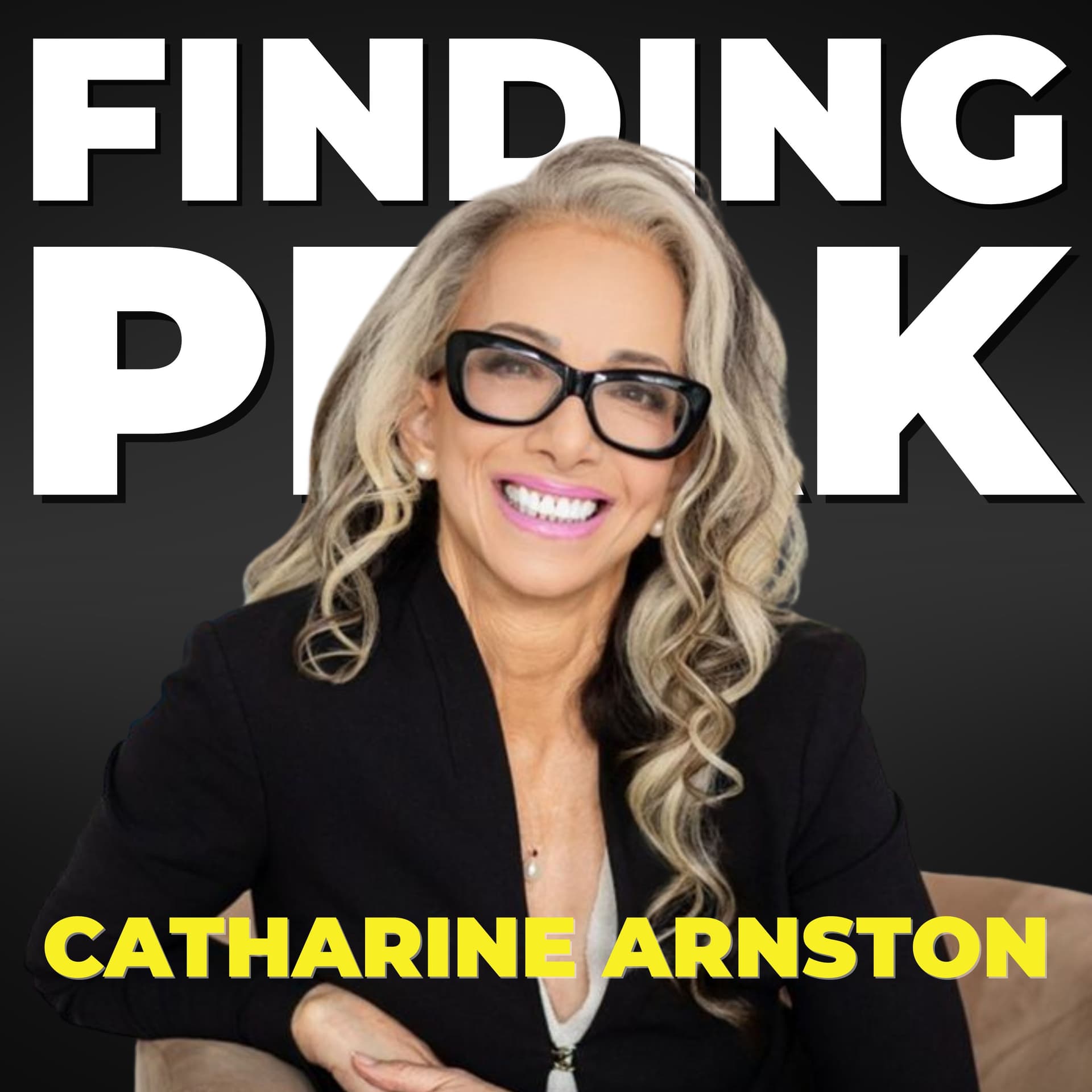
She Built a Multi-Million Dollar Company From a Family Crisis | Catharine Arnston
Episode Overview In this episode of Finding Peak, Ryan Hanley interviews Catharine Arnston, the founder of ENERGYbits®, who shares her remarkable journey of building a multi-million dollar company stemming from a personal family health crisis. The discussion covers topics such as cellular energy, entrepreneurial burnout, and the power of a simple superfood—algae.
Key Points and Discussions
Background and Motivation
- Catalyst for Change: Catharine's journey began when her sister was diagnosed with breast cancer and advised by her oncologist to adopt an alkaline diet. This prompted Catharine to research and ultimately discover the health benefits of algae.
- Transition into Entrepreneurship: With no prior knowledge in nutrition or business, Catharine embraced her passion and became a self-taught expert in algae and its health benefits. She believes that entrepreneurship is about problem-solving and serving others.
Algae as a Superfood
- Nutritional Benefits: Algae, particularly spirulina and chlorella, are touted as nutrient-dense foods that can enhance cellular energy and overall health.
- Spirulina: Known for its high protein content and energy-boosting properties.
- Chlorella: Aids in detoxification and provides a rich source of chlorophyll.
- Mitochondrial Health: Catharine emphasizes the importance of mitochondria in cellular function and how algae can support mitochondrial health by providing essential antioxidants.
Entrepreneurial Insights
- Burnout and Balance: Catharine discusses the common struggles of burnout in entrepreneurship, mentioning the need for realistic expectations and the importance of self-care.
- Building a Brand vs. Selling Products: She differentiates between transactional selling and brand building, likening brand building to a long-term relationship that requires dedication, trust, and time.
- Adapting to Market Needs: The conversation highlights the necessity for entrepreneurs to stay in tune with market demands and consumer needs, especially as their target audience evolves.
Marketing and Education
- Educating Consumers: Catharine stresses the importance of educating consumers about the benefits of algae and the science behind it. She highlights her use of various marketing strategies, including social media, to spread awareness.
- Navigating the Market: Discussing the challenges of gaining consumer trust, Catharine emphasizes the need for businesses to provide clear and trustworthy information to distinguish themselves in a crowded market.
Key Takeaways
- Passion Drives Success: Catharine's personal connection to her business fuels her motivation and resilience.
- Health as Wealth: The conversation reinforces the idea that maintaining health through natural means can enhance productivity and quality of life.
- Continuous Learning: Entrepreneurs must be lifelong learners, adapting their knowledge and skills to meet changing market demands and consumer needs.
- Community and Connection: Building a brand involves creating a community around shared values and trust, which requires commitment and consistent engagement.
Connect with Catharine Arnston
- Website: [ENERGYbits](https://www.energybits.com/)
- Instagram: [@energybits](https://www.instagram.com/energybits/)
- Discount Code: Use "ryanhanley" for a 20% discount on ENERGYbits products.
Recommended Tools for Growth
- OpusClip: AI video editing tool - [Opus](https://link.ryanhanley.com/opus)
- Riverside: Podcast recording and editing software - [Riverside](https://link.ryanhanley.com/riverside)
- WhisperFlow: Voice typing tool - [WhisperFlow](https://link.ryanhanley.com/whisperflow)
- CaptionsApp: Social media video creation tool - [CaptionsApp](https://link.ryanhanley.com/captionsapp)
- GoHighLevel: Business workflow management - [GoHighLevel](https://link.ryanhanley.com/gohighlevel)
- Perspective.co: Funnel builder for lead generation - [Perspective.co](https://link.ryanhanley.com/perspective)
Conclusion This episode of Finding Peak provides valuable insights into the intersection of health, entrepreneurship, and the transformative power of passion-driven business. Catharine Arnston's story serves as a testament to resilience, the importance of nutritional wellness, and the impact of building a brand rooted in education and community.
---
For more episodes and insights, visit [Finding Peak](https://www.findingpeak.com).
Written by AI. May contain mistakes. Listen to the episode to check what was said.
Transcript
Automatic transcript. May contain errors.0:28Want to make a difference in your community but not sure how? confidently start fundraising right now. Whether it's creative, local, or critical, your cause matters. And there's a reason why GoFundMe has backed my millions and chosen by fundraisers everywhere. It works and it matters. GoFundMe helps you make a real difference. Start your GoFundMe today at GoFundMe.com. That's GoFundMe.com. G-O-F-U-N-D-M-E.com. This is a commercial message brought to you by GoFundMe. There was this little voice inside me that just said, you got to do something about this. I had no money, no education, but I just felt compelled to follow this little voice.
1:09And the trouble is there's so much noise in the marketplace and there's so many expectations of your friends, your parents, your fellow entrepreneurs, the government, the economy. And it's really easy to get pulled in so many different directions that you ultimately don't go anywhere. My suggestion, just turn everything off. Don't listen to anybody for any reason except yourself.
1:39I think that as an entrepreneur, we all know that you have too much to accomplish and not enough time to do it in. And so burnout is pretty easy to hit. and what I like to try to help people learn to do, at least from a nutritional perspective in the algae, is how not to get burned out because ultimately being an entrepreneur, I feel, is a marathon, not a sprint and particularly if you're building a brand, you can't build a brand overnight. So finding ways to accomplish your goal and not die in the process. Yes. Because I saw a quote recently that really resonated with me. Whether you're an entrepreneur or you have a vision, it's about being of service, but it's not about servitude.
2:33And so I think in many cases, those of us with a big vision end up sliding into the servitude because we do have to sacrifice stuff. But you don't have to get to servitude. You need to pull it back to service. and be realistic about what it's going to take so that you don't give up. Well, I think that's a wonderful place to begin. How did you get into this space to begin with? Energy bits, building this business, focusing on this particular topic. As a little girl growing up, this was your wildest dream. What was the journey that got you there? Yeah. Well, I knew as much about algae as anybody else that currently does, which is zero.
3:16why why would I right and I'm Canadian by birth and I mentioned that because all my education was there and I was pursuing a business career I had an MBA I have an MBA and I only fell into this because my younger sister who I'm very close to in Canada developed breast cancer and her oncologist told her to change her diet to an alkaline diet because it would help with her healing didn't tell her what it was or why specifically it was good for her so I'm just a good researcher and I love my sister. So she said, what's an alkaline diet? And I don't know, but I found out like that's what any entrepreneur would, Hey, well, give me a problem.
3:51I'll solve it for you. Um, and so as I found foods for her, it led me to algae. Well, actually it was a plant based diet because of the phytonutrients and the chlorophyll that builds your immune system. And there's a lot of other sort of nuances, but, um, this was 17 years ago, plant-based nutrition wasn't on anybody's radar. I've, uh, I think I do believe honestly that sometimes being an entrepreneur is just part of your DNA. And I'm just always been a problem solver, get out there, make it happen kind of person. So when I learned about all the powerful nutrients in plants, I thought somebody needs to tell the world and it made no sense to me, but I decided I was going to be the one to do that.
4:32I had no money, no education, not no nutrition education whatsoever, but I have, I've always been very passionate about my choices. So I had passion in spades and went to school, got a health coaching certificate, try to get people to learn about the importance of eating vegetables. Of course, every mother has been trying to tell their children that. So when I saw how difficult it was for people to eat vegetables, but I saw the science of how important it was, again, my little entrepreneurial brain said, you can find a solution. We don't know what it's going to be, but you can find a solution.
5:08That's what an entrepreneur does. They don't have the answers, but they have the desire to find them. That's the difference between just your average person and an entrepreneur. Everybody can know that they don't know stuff, but the entrepreneur says, I got to do something and they will find the solution. So I just dug into everything I found for my sister when I was helping her. And when I got To algae, it turned out it was the most nutrient-dense food in the world, documented in 100 ,000 studies for all the health benefits from increased energy, increased focus, reduced diabetes, reduced any kind of chronic disease, yada, yada, yada.
5:47It's been used safely for 60 years in Asia, where it's a multi-billion, billion-dollar agricultural crop. They take it every day there. It's been endorsed by NASA, the United Nations. The only problem with algae, so it seemed, was twofold. The quality of it sold in America was not very high because it was mostly grown in China and India. And nobody knew about it. Nobody knew what it did. Nobody had been educated. So I decided I would do that. And that was basically 15 years ago. And I have since then poured myself into the science, understanding what this stuff is, why it works so well. Why does it give people energy?
6:27Why does it stop them from being sick? Why does it improve their longevity, their efficacy, their sports performance? Why, why, why, why? And I have all the answers now. And it's all science-based. But then in the process, I decided, well, it's not enough to know the answers. You have to help people understand the answers, understand why this is good for them. So then I had to pursue all the branding and the social media and the marketing. And that's what you do when you're an entrepreneur. Every time you hit a roadblock, I won all sorts of awards. I was on Shark Tank. I won a national award from Entrepreneur Magazine, same award that Daniel Labinsky won from Kind Magazine, Kind Bars.
7:09But if you can't get people to understand your product and understand your message, having a solution isn't enough. You have to move it out into the marketplace. And so entrepreneurs, we have to teach ourselves. We have to always realize we have a blind spot here. We have a blind spot there. And then pursue whatever avenue you need to follow to resolve the blind spot. I had to teach myself supply chain management. I had to teach myself graphic design, package design, management, finance. Yes, I have an MBA, but certainly not in finance. So this is the hallmark of an entrepreneur. You have an idea and you realize there's, you know, there's a lot of stuff you have to do to get the idea out to the marketplace.
7:57But you just hunker yourself down and you just tackle one problem after another. And the difference with me and many, many entrepreneurs may be the same is I didn't have any funding. We're completely self-funded, bootstrapped. And so in a bigger organization or one that is funded well, you might hire one person to do the marketing and somebody else to do the supply chain, somebody else to do the graphic design, somebody else. And so you all work together simultaneously to take this thing to market. When you're a solo entrepreneur, you don't have the luxury of all that. So I had to do everything myself.
8:34Sometimes I had to do it in consecutive. First get the science, then get the package, get the product, get the branding. And now, after 15 years, it's finally all blending together. But it's because I refused to give up, because I saw what was needed. And while the market was not aware they needed it, I knew they needed it. And it was proven in other markets around the world what this stuff did and how big it grew as an opportunity. And I remind my consumers when I'm on consumer podcasts and entrepreneurs, you need to do the same thing. There are other precedents in my situation, not for algae, but people didn't know about chia or matcha or kiwa or bone broth or, you know, lots of other healthy things that had been around in other countries for centuries.
9:29and with entrepreneurs, you, you do need to do a little reality test to find out, is this thing that you have as a dream that you think is going to change people's lives? Is it legitimate? Has it been used in another form, maybe another country for another reason? And if you get, yes, if you get to yes, then your challenge is to how to take that knowledge and reinterpret it for, in this case, the American marketplace. as North America is different from China, is different from, you know, South America. So you have to be prepared to know that you have a lot of work to do. Yeah. And not be dismayed by it, but be fueled by it, by the challenge of, look, I did it.
10:24You know, somebody gets it. Yeah. So there's a lot to unpack there, but that was amazing. One spot that I'm really interested in is, so you're driven by love for your sister and, you know, to go out and find the solution and to help her and support her. So you develop an interest in the topic. And a lot of people develop interest in a lot of topics. However, as I think you rightly pointed out, how the entrepreneur sees the world is through this filter of curiosity where it's not just interest, but it's taking it a step deeper. So how did you or explain your process or maybe even looking back how you would recommend today how someone who has the true entrepreneurial spirit is looking at their set of interests that they may have or an interest.
11:19How do you determine, okay, this particular interest has the potential of becoming a product? That's a big leap, oftentimes a leap of faith in some regards. Oh, it was a huge leap of faith for me. Absolutely. Yeah. So I'd love for you to talk through that transition from interest and developing knowledge and expertise in a field or an activity or a product to actually productizing it and turning it into something you can sell.
11:50If you know me, you know I'm prone to shiny object syndrome. And to be honest with you, I was drowning in marketing tools. ConvertKit for emails, HubSpot for CRM, landing page software, automation, webinar software. I was paying over$500 a month and spending half my day just switching between these different platforms. Then I discovered GoHighLevel. One platform, one login, everything I need to run Finding Peak. The podcast, the newsletter, speaking business, coaching business, all of it. Over a million and a half businesses have already made the switch. and now I know why. If you're tired of juggling tools, I got a special 14-day free trial deal for listeners.
12:36No questions asked, no contracts, cancel any time you want. Simplicity scales. Go high level is the answer. To get the deal, click the link in the description, whether you're listening on Apple or Spotify or even watching on YouTube. This, my friends, is the way.
12:58Well, the leap of faith was huge. And I'm just explaining what happened to me. And so there was this little voice inside me that just said, you got to do something about this. I had, remember, I had no money, no education, but I just felt compelled to follow this little voice. And the trouble is, there's so much noise in the marketplace and there's so many expectations, your friends, your parents, your fellow entrepreneurs, the government, the economy. And it's really easy to get pulled in so many different directions that you ultimately don't go anywhere. You get into a freeze state. And so my suggestion for those who are interested in following the way I did it was just turn everything off.
13:49don't listen to anybody for any reason except yourself but be aware that you have to listen closely to what makes you feel um peaceful and joyful and energized uh um and um because and not from an egotistical way because you're i would tell people your ego will shout your your soul your always whispers and um even if it doesn't make any sense i would urge people to listen to that because that's the, that's truth speaking through you and to you. If you want to do something because you want to show off to your big brother or you want to show off to somebody, that's your ego. And so you have to really honor what, why it is you want to do what you want to do.
14:38Um, and if it's from a good place and from the heart and from integrity, uh, I say go for it, but be aware it's could be quite a journey. And I used to speak at conferences for entrepreneurs. And I used to also say, you have to decide when you start a company and there's no wrong answer. Do you want to start the company because you want to sell stuff or because you want to build a brand? Building a brand is so hard. And the analogy I make is selling stuff is kind of like speed dating, very transactional, nothing wrong with it. And maybe you transact, transact, and then you sell the company and you maybe do it again.
15:18Building a brand is like falling in love. It's a lot of work. It takes a lot of time. You have to build trust. You have to keep showing up over and over and over again. It's not transactional. I decided I wanted to build a brand because building a brand is also about building a community. And that takes time. It's like raising a family takes time. Your kids have to trust you. So there's no wrong answer, but it will change the trajectory and your choices depending on whether you want to just be trans, not just, but be transactional and sell stuff and then flip it or you want to build a brand. And so building a brand is a marathon.
16:00Selling stuff is a sprint. And so it requires different activities, different speed levels. um and so for me i was building a brand and i knew it was going to take a long time i had no idea it would take quite this long i figured you know five maybe 10 years and i'm into 15 and we're just really starting to see a lot of wind beneath our our wings and we would be doubling revenue every every year for the last four years so what what what got me going was being able to shut out all the noise, all the expectations from my family, my friends, the media, and quietly sit with what, why I wanted to do this particular thing.
16:43And I will tell you, that's kept me going all of these years through the difficult times. And I not once ever thought of giving up. Not once. People ask me that all the time. When did you want to throw in the towel? Never. Not once. Do you think that if you had decided early on, hey, I'm just going to productize this and go the transactional path. Do you think that that path is easier to give up on than if you're going to brand? I guess what I'm saying is if you're pouring your heart and soul into a brand, does that create more of a feeling of connection and an ability to ride out the downtrofts or does it not really matter?
17:29or, you know, do you understand what I'm saying? Yeah. Yeah. I think it totally changes things because when, if it's a transactional and selling stuff, you make short-term decisions and you're, it's like following the stock market and doing daily trades. Uh, and so you, it's, it's very cyclical emotionally as well as financially. And I think it drives you to make some poor decisions because you're on such a tight timeline and you, which is unfair to yourself, quite honestly, because whatever plan you have, I promise you it will take at least five times longer than you think because you're passionate about it.
18:08But remember, whether it's consumer or B2B, all those businesses, all those people, their lives are already full. Is there room for one more new idea? And if so, how do you get your one idea noticed more than the other millions of one ideas that are trying to get noticed? And so if you are deciding that it's a brand, it takes the pressure off of you from saying, I didn't achieve my goal this week or this month. But if you know it's part of the long plan, when things don't work out, you go, well, it wasn't a disaster. I learned from it. And then you go back and you try again with a slightly different approach.
18:51But if you're so transactional and put yourself under such pressure, A, your health suffers, your mental health suffers, your physical health suffers, your family suffer. And, you know, again, this wasn't about servitude. Suffering shouldn't have to be a daily diet. Yes, there's some, you know, compromises, but you should still be enjoying the process. And if there isn't, and if your enjoyment, sort of like relationships, if you're in a relationship and slowly, you know, there's less, more unhappy moments than happy moments, then maybe it's time to exit. And a business is the same way. If it's not giving you the joy, maybe either your approach to it needs some adjustment, or maybe it's just not the right one or the right time.
19:42So you brought up a really interesting point that I wanted to double click on, which is this idea of your idea is really just one idea of many in someone's life, right? And I think oftentimes when, you know, I do a lot of coaching of startup founders and leaders, and when they're very early, it's tough for them to wrap their head around this idea that you brought up, which is you're not just bringing this new thing to market and it's additive to everyone's life, right? We all often are maxed on the number of brain cycles that we spend in a day. And what essentially you have to do is give your consumer, customer, client, et cetera, a reason to remove one thing from their life and insert more.
20:28Exactly. And to me, and this is why I love you. So it's a two-step process. Yeah, yeah, go ahead. No, please. Yeah, so it's not just telling them about you. You have to tell them about you. Then they have to think, well, that's sort of interesting, but then I have to remove that. And what are the implications of that, both financially, emotionally, lifestyle? There's a million decisions. This is why it's so hard for people to change, to make changes in their life, whether it's their diet, their lifestyle, where they live. And so it's way more than just marketing to them, or in my case, we educate, we try not to say we market, because that means they have to change something else to make room for this new concept, this new product, how they're going to do it.
21:12It's peeling an onion. It's not just here I am by me, right? It's here I am. How am I better than that? So here's my other suggestion to entrepreneurs. Go where the market you are a need to have, not a nice to have. And it has taken us a long time to find our sweet spot for the customer because they tend to be 40 and over because after 40, this is when they're having health issues. They are very motivated to unwind those health issues, whether it's diabetes, brain fog, weight gain, heart disease, cancer, very motivated. When you're younger, you think you're impenetrable, like everything's going great.
21:58It will always go great. Well, it doesn't work that way. You just hate to tell people. So we have doubled down in this particular age group because they respond best to our product and our message. And the other thing you have to realize, whether you're a company or a product, there's a classic cycle. You have early adopters and you could be in the early adopter stage for one year or for 10 years or forever. Sure. But if it catches on, then you start going up the scale where you get into the main, the larger audience, whether, again, it's B2B or B2C. And as you move up that cycle, your messaging changes, the distribution models for your messaging changes.
22:43But when you're in the early adopter stage, you have to stay very focused on those early adopters and get the ones that need your product. because that's the only way to sustain yourself. And you'll learn from them too. They'll tell you things that will actually improve whatever it is you're doing, whether it's the packaging or the messaging or the blend of the product. But you have to be prepared for that cycle and be needed. There's a great book, I don't know if you've read it, which describes from a tech perspective, the cycle that you're describing. I have it on my shelf. it's called crossing the chasm by Jeffrey Moore.
23:25And, and, and what it, what it does. And, and, and I, I promise there's a question in this little diatribe. So just a second. What he explains in that book is what he calls the chasm, right? Which is you have your early adopters and your innovators, and that's on the left side of the curve that you're describing. Those are the people who they just, they've been dying for a new algae-based longevity product that, you know, blah, blah, blah. I love it. They try everything. They got a cabinet full of supplements and they just, you know, they're the ones that go on. They're the biohackers for us. Yeah.
24:00Yeah. It's the biohackers. And you realize that your product and market for whatever reason, man, it's working with them and you got, and that's great. And then as you discussed, right, there's this chasm from those individuals to the standard 47-year-old guy or gal who, you know, is looking to, maybe they just went pre-diabetic and they're looking for some natural solutions to help with that. And like, and now, as you mentioned, maybe your messaging has to change to get to them. And then here's where my question lies. So I have found that a lot lot of entrepreneurs, and this is not just mine, this is whatever.
24:40As long as we've been talking about entrepreneurship, this has been a problem. How do you maintain your relationship with those innovators and early adopters while messaging to and starting to bring in that early majority and late majority consumer, which takes your business to the next level? Because I know a lot of entrepreneurs struggle with that because they feel like they're going to lose those people who got them there if they start to transition to that other group? Does that make sense? Yeah, it's a great question. And it's a very big issue. And I've struggled with it as well. And so here's how I've managed it.
25:17First of all, for probably for the first seven years, six years, I was just by myself, just me. And then for the first eight years, I started hiring interns. Of course, I had to teach them everything. So they really didn't know anything except what I taught them. So for the, literally for the first 10, it was me in a, but I was still sort of quote, a solopreneur. Once you start making traction in the marketplace, you have to change your management style and become a leader because now you are delegating and leading people who have expertise in areas that you didn't have or didn't have enough of.
25:53And this coincides exactly with what you're talking about. Because I dove into the science because I was determined to give my biohacker community the hardcore science. In fact, I taught myself everything, but then I got my PhD last year in natural health. So I was so married with the science and they loved the science. But as we started growing and reaching more general consumers, they didn't know the science. They didn't really want the science. They just want to know that it worked. And so I had to start hiring people who were experts in the more consumer marketing area, uh, to, who would massage my science into a more general message so that we could communicate to them.
26:39I continued, uh, with the hardcore science because it also gave me insights that could then be massaged into the more general stuff. But it was a very difficult transition because A, you're transitioning from doing everything yourself, owning everything. And of course, that's seven days a week, 12 hours a day, to then managing, first of all, finding the right people, managing them, giving them the bandwidth to do stuff without you. For an entrepreneur, it's very hard to let go of the reins so that you can start building. And the way we did that, just so you know, so I recorded 200, and I'm going to do another 100, one-minute videos that we run on our website, Instagram, everywhere.
27:23One minute, maybe a couple or a minute and a half on algae for brain health, algae for gutta. You have to think. I have 15 years of research, and I was creating one-minute videos because I had to, I don't was they dumbed them down, but I had to neutralize them so they would be impactful for someone who didn't want that much science. So A, it's learning how to hire in these areas that will address consumer. We started doing retargeting and we'd never done any advertising for the 13 of the 15 years, no advertising ever. But I got the word out about my products and what it did through podcasts. I've been on 350 podcasts, maybe 400 by now.
28:07So that was how we generally built the awareness on the science. But to get it to the larger group, we had to trim down the science, hire people that had more of a consumer marketing approach, do consumer events, make it more playful. Consumers want things to be playful, fun, playful, beautiful graphics. science-based people want stuff to be really serious and very detailed so they're completely opposite so you have to observe where you are on that growth plane and start creating new content for the new audience being aware it's going to take you a while I mean I have some videos of those little one minute videos on TikTok that have three million views so we're somebody seems to be connecting with it, but it's takes longer when you're doing consumer because, um, they, uh, now there, you may not be a need to have like you are for your early adopters.
Read the full transcript
29:07So you have to build that into your schedule of planned success. Yeah. I think that's, I really like that where you went with that was outsourcing that expertise. Cause I think, uh, I think a lot of people flail there and they think that their nerdiness for the topic that generated them so much interest in innovators and early adopters is going to automatically translate to that bigger community and I think that advice you gave is absolutely worth its weight in gold and and guys listening like this is really important because I think we all get stuck here um we get stuck in our zone of genius and think that everyone who ever buys our product is going to want to be as nerdy about it as we are.
29:49It's like, no, your nerdiness is the reason you created the product. That doesn't mean people who just want to go, you know what? My doctor said I need to get some, you know, some more like photo, you know, whatever in my body and algae is the best form. Okay. I chat GBT did. It said it's the best form. Like, you know, this seems like a good product. They can still be a customer of yours and have no deeper information than that. That's right. All the benefit from it. And it's a skill. And I think that's a wonderful way of approaching it. I'm really glad you went. I'd like to make a suggestion.
30:19If anyone, if you, I think it's on, uh, um, it's not Netflix. I'm trying to remember the movie. Anyways, the movie is called Very Ralph and it's the documentary about Ralph Lauren. And I loved it because Grant he's in fashion, of course, but all the things that he experienced were exactly what I was experiencing. He had, he just started, he started with making ties himself. Why ties? Because it was very European. And of course, at that time in the 40s, everyone in America was wearing skinny ties. And he tried to get into Bloomingdale's and long story short, he eventually hired all designers. He had the eye.
31:03So his eye for excellence in design got him started. But when he started actually making clothes and making and expanding, he He outsourced everything. Well, he hired designers. But it was him that made the final choices. And he built an empire based on understanding his customer and what they were trying to achieve in their lifestyle. It's an absolutely fabulous film. I saw it on an airplane. Very Ralph. Please go and watch it. It's very entertaining. we'll find it and I'll have it linked up below in the description, whether you're watching on YouTube or wherever you're listening to the podcast.
31:44Cause that's, that's a wonderful take. And I think a lot of, a lot of entrepreneurs that I meet, you know, I'll ask them like, what's the last like documentary, what's the last documentary business otherwise that you watched. And I find a lot of people will listen to podcasts for hours and hours yet they'll completely skip biographical books or autobiographical books from, you know, uh, from people who, who have done what they're trying to do, or they, they won't watch any documentaries on around the topic or the ideas that they're trying to do. And there's so much to be extracted from these, from these stories.
32:20And, you know, you, you know, Damon John is a very similar thing, right? He started making hats, started making hats and then, you know, it was literally sewing patches on hats himself and then going out in street corners and then that turned into shirts, which turned into jeans. And then, you know, then he's got it. Want to make a difference in your community, but not sure how? Go to GoFundMe.com right now and start a GoFundMe. Seriously, your next fundraiser doesn't have to start in a school parking lot or a church basement. You can start a GoFundMe today in just minutes. Fundraise for yourself, a friend or family member or an organization.
32:55All that matters is that you care about them. GoFundMe is the trusted place to fundraise for what you care about. With no pressure to hit your fundraising goal, but tons of tools to help you reach it, you can confidently start fundraising right now. Whether it's creative, local, or critical, your cause matters. And there's a reason why GoFundMe has backed my millions and chosen by fundraisers everywhere. It works and it matters. GoFundMe helps you make a real difference. Start your GoFundMe today at GoFundMe.com. That's GoFundMe.com. G-O-F-U-N-D-M-E.com. This is a commercial message brought to you by GoFundMe.
33:34You know, his story is his story. But it's this idea of being able to bring in outside help. And to your point, understand what your customers want. Why do you feel, I feel this, I'll say, I feel that once we get past the early adopter phase of our business, many entrepreneurs lose sight of who their customers actually are. How do you continue to stay tapped into, not just the nerdy innovators who want to go deep into the science of your product, but how do you also stay connected to that next version who is just a 45-year-old CEO who wants to feel a little better and is looking for an easy way of getting some extra photonutrients into their body, etc.?
34:22How do you stay connected with that individual? Is their need changes as well? Yeah, well, that's a great question too. And so my answer is you have to learn to be comfortable with being uncomfortable. So that means you constantly have to be pushing yourself out there into markets that you know nothing about so that you can see how they operate and see where you fit in. So you mentioned the CEO, whether it's an entrepreneur or whatever. So we just launched a new program for executive wellness, because the reality is once you become an executive at a company, small or large, particularly large ones, you're probably 50 or 60.
35:01And I can promise you, you have chronic health conditions. And so when you have a chronic disease, whether it's heart disease, cancer, diabetes, it's not only your big problem, it's the company's problem, too. Because if you're an executive and they lose you for two weeks, two months, two years, it's hard on the company. So I've been, from scratch, I created an executive wellness program that we're going to start pushing out. We've got three events coming up in the next four months. And we'll see what happens. But you have to keep going out there. I mentioned I was Canadian. I'm also a middle child.
35:42anybody who's a middle child knows that middle child and actually Canadians were very subdued. We don't like the attention. We're not big, bold, you know, chest pounders. But I have had to push myself out there and to learn how to be in the spotlight because people resonate with me. They like my presentations. I've just hired a new role called chief of staff. They're going to get me on bigger stages, you know, TV, uh, because I have to be an entity. I have to be a brand myself, which is nothing I've ever wanted. I've never wanted to be famous. Never. Maybe some people do. I never did, but I had to learn to be comfortable being uncomfortable because I will do anything to grow my company.
36:29Well within, you know, that's legal. Um, and so you won't get caught up for at least. Yeah, yeah, yeah. You do something and then you beg for forgiveness afterwards. So you have to just keep saying, well, who else needs this? And where do I find them? And how will I find them? And you just have to go out a lot and experiment with things. So that's what I've been doing is constantly trying new market segments. Some will work out, some won't, but, um, uh, and, and observing what other brands in the larger audiences are doing. Like I, I'm not a Kardashian and I'll never be a Kardashian, but they've had a huge success with skims and they're very involved with, obviously they bring tens of millions of followers wherever they go.
37:19And we don't have that kind of following, but there's lots of other consumer brands who I respect, in my case, Aloe, the fitness company, or places like Aura Ring, and observe what they're doing. How do they communicate? I will say when you go into the consumer market, your marketing materials need to be as short as possible. Like we're talking two to five words. When you're in the medical area like we are, it's the opposite. You need lots of detail. And we still do the kind of medically related, the American Natural Path Medical Association. We do lots of sort of holistic health and whatever.
38:03And when I go to one of those shows, all the vendors, their booths are loaded with literature. It's just you can't read anything because there's too much of everything. I can tell that they're never going to make it in the consumer world. When we go, we stand out because we've now crafted a consumer branding and consumer branding. Look at Nike. Look at Apple. There's how many words on their ads? Like one or two. Granted, they're multi-billion dollar companies, but they understand that consumers have a very limited time span and they're bombarded with so much. So with consumers, you need to give them beautiful images and very little text.
38:46And it's the opposite when you're doing something that's technical or scientific. So you have to be able to do both if you want to go into both markets. It's hard.
39:02What if I told you that every no you've gotten in the last 30 days was preventable? What if every I need to think about it was actually your fault? What if every can you send me more information meant you screwed up that sales call? You'd probably get pissed, right? It certainly pissed me off when I realized this is what was happening to my own sales team. And you should be angry because anger creates action. And action is what you need right now. Now, your conversion rate is stuck at 20 to 30 % because you're using a broken script and a broken process. Meanwhile, your competitors are gaining ground.
39:40But wait, you have a secret weapon. The one call close system I'm going to teach you. My clients who I work with one-on-one are hitting 80 plus percent conversion rates. Same leads, same market, different words. Now, here's the deal. I'm giving away the entire system for free. Not because I'm nice, because I know once you see the results, you'll want to work with me. So click the link below, get the workbook, and start experiencing sales conversion rates most believe are impossible. This is the way.
40:24so i want to change directions a little bit because one of the mantras of this show is your health is a competitive advantage in business health and fitness is very important to me and i am absolutely a dabbler i love to unfortunately i am one of those people who has a cabinet full of half full supplement bottles from things that I tried and was like, nah, this is nonsense. And I, for some reason, almost like a, almost like a, like a warning graveyard. I keep those half full bottles, like on the second shelf. And it's like a reminder, don't be a moron and keep buying things like, you know, be a little, you know, whatever.
41:04For some reason, Instagram around 9 45 PM has me dialed on supplement marketing, just dialed. It's like, it knows that's like a weak point for me, but that all being said, I'm super interested in what your product does. Uh, 44 years old going on 45. Uh, just to give you my background is we don't know each other as much to give you context. I had a major, I was an athlete my entire life, then let myself go. And in 2017 had a, essentially I passed out before a speaking engagement. Gosh, hydrated stress, not taking care of myself, probably 25 pounds overweight, drinking too much, poor diet, not exercising enough, overstressed, no mental health regime in any regard.
41:48And just the stress of the moment put me on the ground before I walked out. And thank God I was able to pull myself together and at least perform the gig. Although I would tell you it's bottom three of all the performance I've ever given for obvious reasons. um uh i i got it done um but said to myself this this can never happen again i'm in my mid 30s like there's literally no reason for me in this be in this place and i have since that time been very focused on physical fitness and and as i've shared on the show and i promise i'll get through this context um many times with the audience is today i view that very much as a competitive advantage i can get up early i can stay up late if i need i can go an entire day if needed obviously i don't recommend that for people.
42:31I think the whole hustle culture grind is a very, very tiny, small window of a season in growing a business. And if you are continuing to live that lifestyle, post that very small initial phase, you're most likely doing something wrong. It doesn't mean you don't have to work hard, but you get my point. So I'm very much in a healthy, I like the word harmony, right? Finding harmony in your life. Balance is a tough word, but harmony for me is what I'm trying to go for. Okay. All that being said, I look at what you've created and I'll tell you, there's one, I want you to dive into the product in particular, but there's one piece that I'm very interested in.
43:09It's actually a really recent post on your Instagram channel, which guys I'll have linked up and everything. So anything we talk about guys, just scroll down and you'll find the links. But I've in the research I've been doing recently, I'm very dialed into this idea that a large part of our aging and the energy loss is a lack of, or it's a lack of performance from a mitochondria. And of the, of the bit of the tiny bit that I know versus you of, uh, uh, algae in particular is it's food for mitochondria. And I'd love for maybe you to start in that idea and then we can go wherever you like. This is mostly a selfish question.
43:48Yeah, no, no, it's great. And the pharmaceutical industry is spending billions of dollars to figure out how to fix and repair and protect the mitochondria. So if people don't know what mitochondria are, they're in all of your cells and they effectively generate what's called cellular energy, also known as ATP. And the analogy I make for people is that in a building, you can't do any work if you don't have any lights. But if you have a storm or your lights go out, you're stuck. So if you have a power outage or your light bulbs just aren't working. So you call maintenance and they come and repair it and turn the lights.
44:23So you're good on the building. In your body, these things called mitochondria are not just the lights. They're also the electricity. They're the source of electricity and they generate all of your cellular energy. And when I say cellular energy, it's not energy for running to the store or doing a great workout. It's your neurotransmitters, your lymphatic system, your heartbeat, your lungs, your digestive system, your metabolics, everything requires cellular energy. Now, if you have less cellular energy, it doesn't take a lot, you know, Einstein to figure out we have less cellular energy, nothing's going to work very well.
45:02Because, and the trouble is, as you get older, these little mitochondria that are inside your cells, they get damaged easier, and they die. So it's like having your lights go out. And when your lights go out, you obviously have less energy. So this contributes to brain fog, to contribute to weight gain, to heart disease, because these little mitochondria just, they're gone. They're just, and it happens, it's documented in science that after 40, you have fewer and fewer mitochondria. And the ones that are there are damaged, and it's called mitochondria dysfunction. So when you have lots of mitochondria, and I tell people, I never eat alone, I always eat with my mitochondria because they're affected by the food that you give them and the nutrients that they get from you.
45:50And there's a number of things that happen in the mitochondria. They have their own DNA, by the way. Most people don't know this because we have our regular DNA. It's called regular DNA. There's 22 ,000 of those. They last a lifetime. Your mitochondria DNA lasts an average of 10 days. Why? Because a byproduct of this stuff called cellular energy, ATP, are free radicals and free radicals are very damaging. And you've heard of antioxidants and normally antioxidants have extra electrons that neutralize free radicals. But in the mitochondria, that's the only cell in your body. And by the way, you have 2 million mitochondria per cell in your brain.
46:33Think about that. 2 million of mitochondria per cell in your brain. And there's like 5 million in your heart, blah, blah, blah. Anyways. So when they get damaged or when there's all these free radicals and the mitochondria DNA are located right where the free radicals are, they're getting fried all the time. And the antioxidants can't get in there normally because it has two membranes. It's like being in the ICE unit. Normally, antioxidants can get into a regular cell and get out just like proteins can get in and get out. With mitochondria, there's two membranes. I can tell you where the second membrane came from.
47:07It's all evolutionary science, but it prevents virtually all antioxidants from getting in there. But there are a few that can. One is chlorophyll, one is glutathione, and the master one is called, it's a long word, sorry about it. It's called superoxide dismutase, also known as SOD. It gets into the inner membrane of the mitochondria, neutralizes the free radicals so that it doesn't harm the the mitochondria. Now, the good news is your body makes this stuff for you from the moment you're born, just like it makes melatonin and hormones for women, estrogen or men and testosterone. But after the age of 30, eventually 40, your body slows down the production of this stuff called SOD until you hit 40 and then 45.
47:54So you're right at the cusp, Ryan, and you basically have none. And the best way I describe to people what this SOD, superoxidismutase, does for you is you've all seen those golf umbrellas, right? They're ginormous. And whether you're golfing or shopping and you get stuck in a rainstorm, you pop that thing up, boom, you could get like 10 people under one of those golf umbrellas. Now, you haven't stopped the rain, but you've stopped getting wet. Superoxidismutase is the same way. It doesn't stop the reign of free radicals, which are a natural byproduct of ATP production, but it converts them to oxygen and water.
48:33So it protects the mitochondria from damage. And that works for you from the moment you're born till 30. By the time you're 40, that golf umbrella is about the size of a totes umbrella. By the time you're 45 and then 50, it's about the size of a cocktail umbrella. So now, while the free radicals never stopped, now they are hitting the mitochondria and they are dying and getting damaged. And so you have less energy to think. You have less energy to fight diseases. You have less energy to get your metabolic health working. Nothing works properly. So the great news is, well, the unfortunate news is this stuff called superoxygenase isn't found in any other food in medicinal quantities.
49:15There's a small amount in wheatgrass, but it gets damaged in the stomach lining. The highest concentration is found in both spirulina and chlorella, particularly spirulina, which is a blue-green algae. And it's so helpful because as soon as you start taking this stuff, all the nutrients, it has the highest protein in the world, three times the amount of the protein at stake, 40 vitamins and minerals, but it has this critical antioxidant that gets back into your system and literally turns the lights back on because it stops the free radicals. It neutralizes them so their mitochondria are protected and they can grow back.
49:53And as soon as they start growing back, your lights come back on. For women, a lot of it's brain fog. This is why women, and they also suffer more from dementia and Alzheimer's. For men, it could be more physical. It could be anything. But as long as your mitochondria are working again, so are you. They keep you alive, the mitochondria. So you need to keep them alive. But there's nothing on the market that I'm aware of that's as effective as spirulina and this particular antioxidant. And we've done all kinds of little small clinical trials ourselves. By the way, there's 25 ,000 studies documenting the importance of superoxidinismitase for protecting your mitochondria, reducing inflammation, protecting your brain, preventing heart disease.
50:39Like it's, it's, it's, it's a gold mine, uh, in terms of protecting your longevity and your energy. And I don't know if, um, you're aware of my age, but, um, I'm now entering my 70th at seven zero. I mean, I'm not, I just turned seven, 69 last week. And I got my PhD, I got my PhD last year. I was on. You look phenomenal. I don't mean that in a, I mean that in the most, uh, you look amazing for geez. I know. Right. I got to get them on some scyreia. I know. I tell you. For men, by the way, your hair grows so fast. This is all my own hair. There's no extensions. I don't use Botox. So this is my own skin.
51:21This is my own teeth. I sleep well. I poop well. I know a sample size of one, but I take no medications. I take no other supplements. I was like you, Ryan, when I first started health coaching. I bought everything in fact I I was funny because I used to have a microwave and I but I don't never used it so I used to put all my supplements on that little spinny thing in the in the microwave finally I decided I'm not taking them anymore I don't need them I just so it simplifies your life and algae tablets are food so it's a whole food it's not a supplement supplements are made from extracts and they're mixed they're made in factories with high heat which deactivates most of the nutrients.
52:07What makes us special is we don't use high heat, so we preserve this particular antioxidant and pigments. Most of the other cheaper ones use high heat to dry it because they're cheaper, so they have to get to market quickly, so blah, blah. So it's amazing what this stuff does, and it's very unknown outside of the medical pharmaceutical community, but I'm doing everything I can to help people. I say SOD is your SOS because it literally protects your mitochondria from damage and helps it regrow. So, and there's obviously more science in there, but that's basically the bottom line. And you'll feel the impact.
52:46We call our spirulina energy bits because it gives you energy mentally and physically. And half an hour, you'll feel more alert. It's just, it doesn't take long. I love that you have mentioned multiple times brain fog because I think for a lot of people, especially when they hit 40 and get into their mid 40s in particular, brain fog is something that they start to live with. And they just think like, this is just what it is now. You know, it takes me a while to get going in the morning. I mean, you hear all these sayings and all these like kind of glib cliches that people will throw out. And, you know, I've said it on the show a million times.
53:23I refuse to go quietly into the night, right? Like I am going to fight aging, kicking and screaming. And I don't mean from a, you know, robotic plastic, you know, kind of way. I mean, like taking just a small amount of time to, to do research, to, to, to try things into, into start natural. Like this is the part that drives me crazy. Like I do take some supplements. I don't take a ton, right? I, like I said, I try a lot, but I don't, I don't, I try to keep it to a minimum as much as I can places where I struggle maybe in my diet to get things, but always try to go natural first. And, but, you know, I had this experience recently and I did share it on the show where I had this testosterone scare and where I like, it was like, I ran into a vat of molasses, no energy, no libido, brain fog.
54:16Like I didn't recognize myself. And, you know, I went and saw my doctor and, you know, she's like, well, oh, it could be a bunch of things. She's like, you know, weren't you diagnosed with ADHD? And I, and I was at that time, I wasn't taking any medication. She's like, well, let's, let's get you on Adderall. And I think maybe it might have something to do with your cholesterol, which my cholesterol is genetically high. Let's get you on Libitor. And I'm like, wait a minute. So your, your recommendation for my, and I'm not trying to knock my GP, but this is the experience that a lot of people have.
54:49If they're not crazy, like you and I, and like to dive deep into the research of this stuff. Right. Right. Like you, you, if I didn't know, I would have said, well, hey, maybe this is the answer. Let me just pop some Adderall and Lipitor and I'll feel fine. And I wouldn't have, uh, but my, my point in saying that is, you know, and I don't take this whatever direction you want. It doesn't have to become negative, but I just, I'm very interested in your thoughts on maybe, maybe a better way of positioning this isn't why aren't people taught natural, uh, uh, ways of solving maybe how do people who, who are interested in energy bits, but also want to take that journey further into other places of, of natural ways of getting like, how do they go down this journey?
55:31If someone came to you and they said, I want to go down, maybe not quite as deep as you did, but I want to follow your rabbit hole. Like how do they get this education into their life? How do they know who to trust on some of this stuff? Because, obviously you have proven in spades, not only in your marketing, but just in the time we've been together, how knowledgeable you are. But there's a lot of brands out there that you just have no idea. Maybe you hit Amazon and it says so-and-so and you don't know what you're buying. How do you figure out where to go with this? Yeah, it's very tough. So a couple of things, there are associations, like I mentioned, when functional medicine is a term that is used to describe physicians who've been taught to use food and herbs as the first line of defense, not medicines.
56:22And so you can go to the Institute for Functional Medicine, you can Google their website, you'll start to see some of the key doctors that are referenced, like Dr. Mark Hyman is very, very reliable. And you can go to different shows like the Dave Asprey biohacking show. These or the American Natural Path show. So you don't have to actually go to the show. I mean, you could if you wanted to, but you could just go on the association and start seeing what names are being featured. And then I would suggest go to Amazon and buy their books and teach yourself some of what they're speaking about at these expensive conferences.
57:02You can spend$22 on a book and learn a lot. I need to write my book. Or you could just go online and Google their name and start reading their blogs and see what topics come out. If you want to go deeper down the rabbit hole, there's something called PubMed, where there's millions of scientific papers about millions of topics. That's how I taught everything I know, really. It's very time-consuming, but if you want to go down that route, you could do that. But you could go online and Google the doctors, get their books, just like you taught yourself business. There's, you know, there's endless, millions of great business books and strategy books.
57:48And there's also maybe not millions, but certainly tens of thousands in this functional health preventative wellness category. So you can start learning. There's a great show coming up. I'm speaking at it called Eudaimonia. it's in West Palm in November and they have 150 speakers. It's very experiential. You'll meet great vendors. You'll get speakers. But if you, you'll start seeing the same people, the same cast of characters. And I'm delighted to be now included in the group of these people because I just keep showing up and I keep providing science that nobody else is providing. You'll start to see where the truth is.
58:30Um, and, uh, because learning is so, is a powerful tool. Give yourself a backdrop. Cause if somebody starts saying something, wait a second, that doesn't make sense. Cause I learned in the book of blah, blah, blah. You'll be able to detect reality from market spin a lot easier. So, and I pride myself and our company on providing education and data and we source everything so people know I've got the scientific reference. So they know I'm not, you know, because if I can't, my goal is to help people be better and to live longer better and do it in a way that's uncomplicated and natural. I will tell you, the best things for you are natural and usually very inexpensive or free.
59:19We have a discount code for your community. And so when you buy a large bag and use the discount code, If you took 10 tablets a day of energy bit spirulina in the morning and chlorella pulls out toxins at night. Nonetheless, it's a dollar a day. You can't. And this will correct so many. It's not the algae that's correcting the health issue. It's the nutrients in the algae that can't be found anywhere else. So algae is very affordable. But what are my other go tos? Sleep. Does it cost you anything to sleep? No. But you have to have high quality sleep, which means you have to have good sleep aesthetics.
59:54It means you have to have a dark room. You have to have, you know, I wear an iPad, eye mask, keep it cool, keep it, have a routine every night that's so, and never apologize for going to bed early or because your body, that's when your body repairs itself is when you're sleeping. So sleep is free. Oh, movement, also free. whether you're walking or running or lifting weights. I mean, you could lift a rock outside if you didn't have weights. That's free. Breath, that's free, whether you're just doing deep inhales or meditation. And the other thing is, and I know the poor son's been beat up so much, but it's actually important for you.
1:00:38And if you want to learn about, there's a guy by the name of Jack Kruse, K-R-U-S-E, who has a two-hour video he gave a lecture at the Vermont Nutritional something or other in 2017. And he talks about how important it is to get sunlight into your eyes in the early morning. Because the early morning is when you get the most red light. I'm a big fan of red light devices, but so if you can't get to the red light from the sun, that would be another option. But back 2 ,000 years ago, the Indians used to get up at sunrise to do yoga. Why? Well, it was good for them, but it was to get the red light from the early moments of the sun, which is very healing and it generates energy for your mitochondria.
1:01:25So the things that are best for you are either free or very affordable, but it takes discipline to follow them because it's easy to pop a pill. But unfortunately, the pill, the medications, what they do is they mask the symptoms. you had symptoms they're going to help with the symptoms they're not helping with the cause of the symptoms the cause of the symptoms is what you want to ultimately gain because or the correct because that will cascade and remove the symptoms but it takes it takes extra work and nine times out of ten it comes down to something going off with your mitochondria and that's why i love your Alina so much because that's that gets to the root cause.
1:02:09Yeah, I love that. And I'm glad you brought the sleep part. It's, you know, I know guys who have this terrible sleep schedule, yet they'll take all these pills to mask the fact that they just didn't get good sleep. And I'm like, you know, you could cut your pill budget in half if you just got like seven to eight hours of decent sleep a night. Like I'm not even asking for a lot, just like seven to eight hours of deep of decent sleep, like half of the need for those would go away. Like you wouldn't even want them. Your body wouldn't even crave them. And then, you know, now you, you reap the full benefit of things like energy bits because it's not making up for the bad.
1:02:47It's, it's amplifying and clearing even, even more of what you have there. So I'm with you. I'll leave you with this. Cause I know we're, we're, we're getting up against a number when you're talking about sleep. I recently, um, because of actually Dave Asprey, added a PMF mat to my bed and doing grounding work while you sleep. And I keep, I have a whoop. So not only, you know, so when, so when I talk about stuff with people, a lot of my buddies will be like, oh, you know, what do you think you are a fitness guru or whatever? They love to give me crap, which it's all fun. I love, I love ball busting, but I also will tell them like, look, I literally, I have data, like I have data to show you when I added the PMF mat, my sleep scores have consistently gone up five or six points a night.
1:03:32Yeah. So there's something happening there, right? And because they think it's nonsense and whatever. It's not nonsense. And the trouble is new ideas get challenged and laughed at. There's a set series of steps for every new idea. And it's always ridiculed. They ignore it. And then And finally they go, I guess you were right. I sleep on a grounding mat. And the chlorella algae, which we call recovery bits, it has a green label. It has the highest tryptophan in the world, which is a precursor to melatonin that helps you sleep. So we generally recommend the spirulina in the morning or afternoon before a workout because it gives you energy, focus, and satisfies your hunger.
1:04:14And then the chlorella, by the way, they're very tiny tablets about the size of a baby aspirin. But you need at least 10. 30 is better. and when you take them, you can eliminate, especially spirulina, you can eliminate five other supplements. You don't need a multivitamin. You don't need CoQ10. You don't need fish oil. You don't need collagen. You don't need biotin. And chlorella, if you take chlorella every day, it has the highest chlorophyll in the world. You don't have to ever eat another vegetable in your life. What do vegetables do? They give you chlorophyll and phytonutrients and they improve bowel movements.
1:04:43What does chlorella do? Give you phytonutrients, fiber, and improve bowel movements. So if you don't like vegetables, you are in luck because these two algae will fuel your brain, protect your health, remove the toxins, improve your sleep, and give you basically optimal performance and optimal life from food. It's a first life on earth for a billion years ago, and it's still here. So it's doing something right. This has been a wonderful conversation. I appreciate you so much. I'm so glad we got a chance to chat. the company's energy bits i'm gonna have it uh links to instagram i'll have links to your website yes is there any place else that you'd like people to connect with you if they want to dive deeper or if they want to uh try energy bits and get involved yeah well if you're going to try them use the 20 discount code that we have for your community which is ryan hanley all one word we do sell on amazon there's no discounts there but some people just prefer to sell on amazon and if you do have a a particular question just email us at customer care at energy bits.com we do all of our own customer care.
1:05:48I have written the 600 answers. Personally, I wrote every single one because I used to do customer care too. Cause remember I was a solo entrepreneur. We're, we were all hands-on. We're here to help. We don't outsource it to a third party because we're all about, you know, giving people back their life and to do it in a way that's effortless and natural. And so, um, because we need entrepreneurs, we're the ones that are changing the world. I want you to stay healthy. I want you to stay motivated. I want you to stay happy because if we... Well, I appreciate that so much. And when you do write that book, give me a call.
1:06:22I got an open invitation to come back on. I'd love to have you. Thank you so much.
1:06:40transform as markets do the same. So instead of just riding an index, they can seek to outperform it by adapting to market conditions and pursuing new opportunities as they emerge. And while you get the potential outperformance of an actively managed fund, you can still buy and sell it on your terms, just like any other ETF. Markets can change in real time. Make sure your ETF can too. Learn more at fidelity.com slash active ETFs. Before investing in any exchange traded fund, you should consider its investment objectives, risks, charges, and expenses. Contact Fidelity for a prospectus, an offering circular, or if available, a summary prospectus containing this information.
1:07:19Read it carefully. While active ETFs offer the potential to outperform an index, these products may more significantly trail an index as compared with passive ETFs. ETFs are subject to market fluctuation and the risks of their underlying investments. ETFs are subject to management fees and other expenses. Fidelity Broker Services, LLC, member NYSE, SIPC. Got a jam-packed gift list this year? Let Half Price Books help take the pressure off. Our shelves are full of great gifts that'll have you checking that list off in no time. Games, toys, comics? Check. Gifts for record collectors? Check. We even have gifts for regular collectors.
1:07:55Head to your local Half Price Books or search millions of items online. And while you're there, you might as well pick up a gift for yourself. You know, for all the hard work. Find a store near you or shop online at hpb.com. At Capella University, learning the right skills could make a difference. That's why our business programs teach you relevant skills you can take from the course room to the workplace. A different future is closer than you think with Capella University. Learn more at capella.edu.
From the publisher
Replace your entire marketing stack with one powerful platform. Start your free GoHighLevel trial (no contracts) → https://link.ryanhanley.com/gohighlevel
Download Free Inbound Sales Domination Workbook: https://game.findingpeak.com/masterclose/
Join our community of fearless leaders in search of unreasonable outcomes...
- Want to become a FEARLESS entrepreneur and leader? Go here: https://www.findingpeak.com
- Listen to Audio version: https://linktr.ee/ryan_hanley
If you've ever felt like you're running on empty, this episode is for you. We dive deep into the science of cellular energy and how you can leverage a simple, ancient superfood to unlock limitless energy, focus, and drive.
In this video, you will learn:
- How a personal health crisis led to a multi-million dollar business.
- The truth about burnout and how to avoid it.
- The ancient superfood that can double your energy and focus.
- Why building a brand is like falling in love (and why it's worth it).
- How to turn your passion into a profitable business.
Use the code "ryanhanley" for a 20% discount.👇
- Website: https://www.energybits.com/
- Instagram: https://www.instagram.com/energybits/
Recommended Tools for Growth
- OpusClip: #1 AI video clipping and editing tool: https://link.ryanhanley.com/opus
- Riverside: HD Podcast & Video Software | Free Recording & Editing: https://link.ryanhanley.com/riverside
- WhisperFlow: Never waste time typing on your keyboard again: https://link.ryanhanley.com/whisperflow
- CaptionsApp: One app for all your social media video creation: https://link.ryanhanley.com/captionsapp
- GoHighLevel: It's time to take your business workflow to the Next Level: https://link.ryanhanley.com/gohighlevel
- Perspective.co: The #1 funnel builder for lead generation: https://link.ryanhanley.com/perspective
--
Recommended Tools for Growth
- OpusClip: #1 AI video clipping and editing tool: https://link.ryanhanley.com/opus
- Riverside: HD Podcast & Video Software | Free Recording & Editing: https://link.ryanhanley.com/riverside
- WhisperFlow: Never waste time typing on your keyboard again: https://link.ryanhanley.com/whisperflow
- CaptionsApp: One app for all your social media video creation: https://link.ryanhanley.com/captionsapp
- GoHighLevel: It's time to take your business workflow to the Next Level: https://link.ryanhanley.com/gohighlevel
- Perspective.co: The #1 funnel builder for lead generation: https://link.ryanhanley.com/perspective
--
Episodes You Might Enjoy:
- From $2 Million Loss to World-Class Entrepreneur: https://lnk.to/delk
- From One Man Shop to $200M in Revenue: https://lnk.to/tommymello
- Is Psilocybin the Gateway to Self-Mastery? https://lnk.to/80upZ9
Hosted by Simplecast, an AdsWizz company. See pcm.adswizz.com for information about our collection and use of personal data for advertising.
This show is part of the Unplugged Studios Network — the infrastructure layer for serious creators. 👉 Learn more at https://unpluggedstudios.fm.
Advertising Inquiries: https://redcircle.com/brands
Privacy & Opt-Out: https://redcircle.com/privacy


