
In short
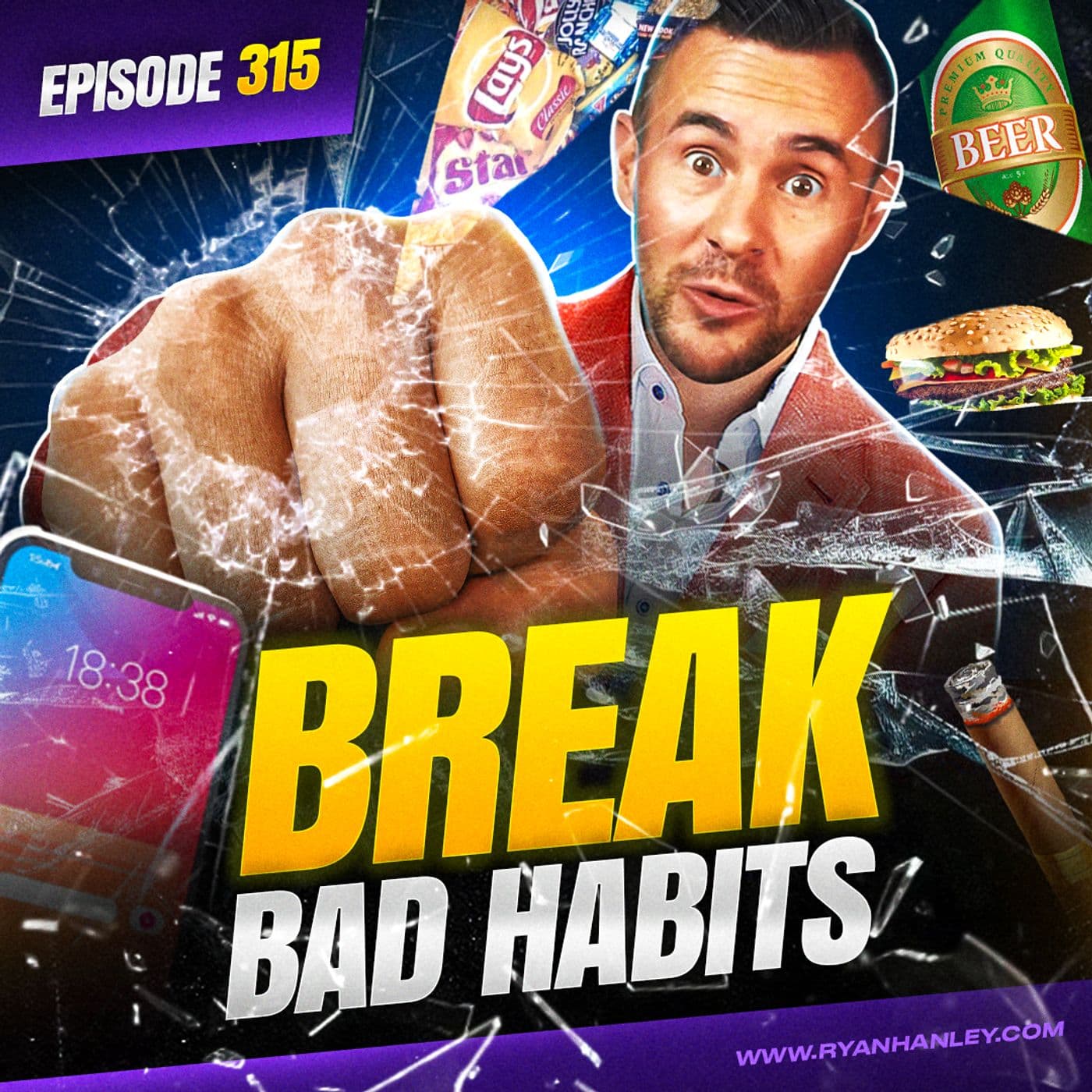
Podcast Episode Summary: STOP Using Willpower to Break Bad Habits - Ryan Hanley
Podcast Title Finding Peak w/ Ryan Hanley
Episode Overview In this episode, Ryan Hanley delves into breaking bad habits using a systematic approach based on the habit loop concept popularized by Charles Duhigg. He challenges the conventional wisdom of relying merely on willpower and introduces a strategic method for redefining habits for lasting change.
Key Concepts
- Habit Loop: Every habit consists of three parts:
- Cue: The trigger that initiates the habit.
- Routine: The behavior that follows the cue.
- Reward: The benefit gained from the routine that reinforces the habit.
- Limitations of Willpower: Traditional reliance on willpower is insufficient for long-term change. Instead, understanding the triggers and mechanics of habits offers a more sustainable solution.
- Neuroscience of Habits: Habits are wired into our brains, and they can be rewired through systematic changes in behavior and positive reinforcement.
Actionable Steps to Break Bad Habits
- Identify Triggers:
- Journal your habits to understand what situations or emotions prompt bad behaviors.
- Replace Routines:
- Swap bad habits with positive routines that fulfill similar needs; for example, engage in physical activity instead of reaching for junk food when stressed.
- Celebrate Small Wins:
- Recognize and reward yourself for successfully replacing a bad habit, which triggers dopamine release and reinforces the new behavior.
Seven-Day Habit Breaker Challenge Ryan introduces a challenge to help listeners implement these strategies:
- Write down the habit you want to break.
- Identify its trigger.
- Replace it with a positive routine.
- Celebrate your small wins.
- Share your progress on social media or directly with Ryan.
Key Takeaways
- Habits Define Identity: Your habits shape who you are.
- Reward Mechanism: Dopamine plays a crucial role in reinforcing both good and bad habits.
- Strategic Brain Hacking: It’s about leveraging brain chemistry rather than relying solely on willpower.
Notable Quotes
- “Your habits are who you are, period.”
- “Celebrate your small habit victories. You’re hacking your brain to expect a reward from good habits instead of bad.”
- “It’s not about willpower. It’s about strategically leveraging your brain's chemistry to work for you.”
Show Structure
- 00:00 - Introduction to breaking bad habits
- 04:42 - Explanation of the habit loop (cue, routine, reward)
- 07:19 - Importance of celebrating habit wins
- 09:59 - Introduction to the 7-Day Habit Breaker Challenge
Additional Resources
- Website: [Ryan Hanley](https://go.ryanhanley.com/)
- Apple Podcast: [The Ryan Hanley Show](https://podcasts.apple.com/us/podcast/the-ryan-hanley-show/id1480262657)
- Spotify: [The Ryan Hanley Show on Spotify](https://open.spotify.com/show/5AZFuTiQsgS9hMQDDdtlOr?si=98432b7806534486)
Conclusion Ryan Hanley encourages listeners to take control of their habits through systematic change rather than relying on willpower. With actionable strategies and the seven-day challenge, he invites everyone to embark on a transformative journey towards better habits and self-actualization.
Written by AI. May contain mistakes. Listen to the episode to check what was said.
Transcript
Automatic transcript. May contain errors.0:28Hey, this is Michael Rosenbaum. used to think I just needed more willpower. I told myself tomorrow I'll quit scrolling Instagram. I'll stop eating junk food. I'll go to the gym. But every day I failed and I hated myself for it. Then I realized something. The problem wasn't me. It wasn't that I was weak or lazy. The real problem, I was stuck in an invisible cycle that nobody talks about. When I discovered one thing that changed everything, I broke every bad habit I ever struggled with. And today I'm going to show you exactly how you can do it to stick with me until the end, because I'll reveal the overlooked strategy that rewires your brain to break bad habits without relying on willpower.
1:21In a crude laboratory in the basement of his home.
1:37Hello, everyone, and welcome back to the show. Today, we're talking about habits, and this one can't be overstated. Your habits are who you are, period. You're not an athlete if you don't work out or make time to do athletic things. You're not a leader if you don't make time to lead your people and your company. You're not a good parent if you aren't present and involving yourself in your kids' lives. But we all allow ourselves at different times to get sucked into bad habits. I'll say things like, I'm just not focused right now, or work is super busy, so I can't insert whatever. These trite little excuses that we make are bad habits in and of themselves.
2:15Today, we're going to fix our bad habits once and for all, because today we're going to discuss a simple, overlooked strategy for replacing bad habits with good that nobody he talks about. And if you're not subscribed here on YouTube or wherever you listen to the show, make sure that you do that. And if you're watching on YouTube, leave a comment below with the one habit you want to break, but just haven't been able to. Let's get a feel for what everyone is struggling with. Regardless of what you're doing, you're building a habit. Every single action you repeat, whether good or bad, is wiring your brain to make the behavior automatic.
2:48You don't choose whether or not to build a habit. You only choose whether it's one that helps you or one that holds you back. According to a study in the European Journal of Social Psychology, it takes an average of 66 days for behavior to become automatic. That means every time you repeat a bad habit, you're reinforcing it, making it harder to break it later on. But what if you could rewire your brain? So breaking bad habits became effortless. What if instead of fighting against your habits, you made them work for you. Today, I'm going to reveal a simple three-step system used by top psychologists that almost guarantees success.
3:29But first, you need to understand why habits are so hard to break. If breaking bad habits was easy, we'd all be waking up at 5 a.m., eating clean and hitting the gym like superheroes. But the truth is, your brain is actually working against you. Let me explain here. Every habit, good or bad, is controlled by something called the habit loop. This is a cycle that runs on autopilot in your brain. And if you don't know how to break it, hack it, you'll stay stuck repeating the same patterns over and over again. So here are the three stages of the habit loop. First, there's the cue, the trigger. Something in your environment or emotions triggers the habit.
4:10The second step is routine or the action. You perform the habit automatically. And third, there's the reward. Your brain gets a dopamine hit reinforcing the loop. So let's take a habit like checking your phone first thing in the morning. The cue, you wake up. The routine, you grab your phone and start scrolling. The reward, a dopamine hit that makes your brain crave it again tomorrow. This is why bad habits feel automatic. Your brain doesn't care if the habit is good or bad. It only cares about the reward, which gives us the opportunity to hack our brains. And I know this firsthand because I'm dealing with it right now.
4:46I've got multiple projects coming to a head all at once. I'm building Linkora, I'm running this podcast, I'm creating my course, Master of the Clothes, I'm preparing for my TEDx talk, and I'm writing my book, The Civilized Savage. This isn't a normal workload, it's a grind. And to get it all done and done well, I've been pushing myself hard, early mornings, late nights, back-to-back focused sprints. But here's what happens when you push at that level. Your willpower starts draining fast. And when willpower drains, old habits creep in. I've caught myself making bad food choices, death scrolling social media, skipping workouts.
5:22I see what's happening. I'm reinforcing behaviors that if left unchecked could become bad habits. Yes, the work needs to get done. And yes, this is just a short season of intensity. But if I allow myself to use as an excuse for developing habits that won't serve me long term, I'll come out of this season worse than I started. And then what was it all for? So the question is, how do you break the cycle? How do you stop bad habits from taking root? Because if willpower alone won't save you, what will? The answer is rewiring the habit loop. And that's exactly what I'm going to show you next. A simple three-step system used by top psychologists to break any bad habit for good.
6:05We're going to learn how to hack our brains. All right, we've dissected why bad habits form and how... The holidays are here and that means it's the most wonderful time of the year to save with Rakuten. Use Rakuten to stack cash back from your favorite stores on top of holiday sales. That's savings on savings. With Rakuten, you can get cash back on gifts for everyone on your list. From toys for the kids to kitchen gear for the person who loves to cook to electronics for everyone. You can even save on something for yourself. Just shop the stores you love and cash back is automatically added to your account.
6:44And you can get paid with gift cards, PayPal, or check. Or eligible American Express card members can even choose to earn membership rewards instead of cash back. It's truly a no-brainer. Join for free today and get a new member bonus after minimum qualifying purchases. Just go to Rakuten.com, download the app, or install the browser extension. That's R-A-K-U-T-E-N. Terms and conditions apply. Hiring isn't just about finding someone willing to take the job. You need the right person with the right background who can move your business forward. If you want candidates who truly match what you're looking for, trust Indeed Sponsored Jobs.
7:24With Indeed Sponsored Jobs, your post stands out to quality candidates who actually fit the role. According to Indeed data, 90 % are more likely to be hired and trusted by 1.6 million companies. Spend more time interviewing candidates who check all your boxes. Less stress, less time, more results. Now with Indeed Sponsored Jobs. And listeners of this show will get a$75 sponsored job credit to help your job get the premium status it deserves at indeed.com slash podcast 13. Just go to indeed.com slash podcast 13 right now and support our show by saying you heard about Indeed on this podcast. Indeed.com slash podcast 13.
8:02Terms and conditions apply. Hiring, do it the right way with Indeed.
8:09Our brains get hooked. Let's get to the meat and potatoes of this bad boy. Here's a three-step system to break any habit by playing the dopamine game to your advantage. using this chemical to hack your brain. Step number one, we have to identify the trigger. Every habit starts with a cue, a trigger that sets the routine in motion. It could be stress, boredom, or specific like environmental things. So what's an example of that? Notice you reach for junk food when you're stressed. This means stress is your trigger. Spend a day or two journaling your habits. You can just keep the journal in your pocket.
8:42When do they occur? What emotions and situations precede you taking action on a bad habit. Once you know that, you can move on to step two. Once you know what your triggers are or your cues, you can move on to step number two. We need to replace the routine. Once you've identified these triggers, it's time to swap your routine. Instead of indulging in a bad habit, replace it with a positive one that provides a similar reward. So an example of this, when stress hits and you crave junk food, replace that urge with a brisk walk, 10 pushups or a quick workout. Now, both activities can alleviate stress and trigger a dopamine release.
9:18The key is to ensure the new activity satisfies the same need as the old habit. And now, from my experience, this can take some work. You want to marry the good habit to the bad habit so that you don't feel the need to go back to the bad habit. And sometimes, at least when you take your first try at this, the good habit may not properly replace that particular bad habit. So keep working at it. Keep iterating. Once you've figured out which old habits or bad habits can be replaced by good ones, we get to move on to step number three, the overlooked secret strategy to rewiring your brain. Celebrate small wins.
10:02This is the killer overlook strategy. Each time you successfully replace a bad habit with a good one, acknowledge it. Celebrate it. the celebration triggers a dopamine release, reinforcing the new habit. And most people overlook this step because it feels like work or worse. They feel like they don't deserve to celebrate. Celebrating your small habit victories has nothing to do with deserving. You're hacking your brain to expect a reward from good habits instead of bad. Now, in my own journey, juggling multiple projects like Linkora, my podcast, my book, I have faced the pull of all the bad habits.
10:38To combat this, I've started celebrating small wins, like choosing to cook home over DoorDash or getting a workout in despite the hectic schedule that I've discussed. This might sound stupid, but when I complete a good habit, one of the ways that I reward myself is with some Wu-Tang and some positive self-talk like you're the fucking man. Or I'll set a five minute timer to scroll X, which is like mental candy for me. This might sound trivial, but it's backed by neuroscience. Dopamine is released not just by the reward itself, but by the anticipation of the award. Celebrating small wins creates a positive feedback loop, making you more likely to repeat the good behavior.
11:17So, you know, we can take David Goggins, for instance. Goggins is known for his extreme endurance, right? And he emphasizes in everything he does mental toughness. The rub with Goggins is he doesn't rely on external rewards. Instead, he derives dopamine from overcoming these challenges and pushing his limits. This internal celebration reinforces his positive habits. And he talked about this on a podcast with Andrew Huberman, right? And he talked about this on a podcast with Andrew Huberman. The reason that he prefers internal rewards over external rewards is the internal rewards are always with him.
11:57But you have to find the reward that delivers enough dopamine at the right time to reinforce your good habits. You are not David Goggins and neither am I. By implementing these steps, you're identifying your triggers, replacing your routine and celebrating small wins. You're not just breaking bad habits. You're rewiring your brain for the positive ones. Remember, it's not about willpower. It's about strategically leveraging your brain's chemistry to work for you. hacking your brain. Do not forget to celebrate your small victories. Each time you successfully replace that bad habit with a good one, acknowledge it.
12:36This celebration triggers the dopamine release. Do not overlook this step. You don't have to live with bad habits. We all have the power to change our bad habits, regardless of how much motivation or willpower we have. It's simply hacking your brain. Now, the real question is, will you take action or will you let another day slip by? So here's a seven day habit breaker challenge. One, write down the habit you want to break. Two, identify its trigger. Three, replace it with a positive routine. Four, celebrate your small wins. And five, post your progress. You can use this video, drop a comment or DM me on Instagram and LinkedIn.
13:20in. Let me know how you're doing. The best time to change was yesterday. The second best time right now. Rewire your brain, change your life. My friends, comment below with one habit that you're committing to changing this week. And if this video helped you share with friends who are struggling with bad habits too, this is the way.
13:52in a crude laboratory in the basement of his home.
14:12If you like the show, please take a moment to rate, review, and subscribe. It really does help the show to grow. Thank you for listening.
From the publisher
In this episode of the Ryan Hanley Show, Ryan dives deep into the fascinating world of habits and how to break the bad ones using the principles around the 3 steps habit loop. Inspired by the habit loop concept popularized by Charles Duhigg, Ryan explains how our daily behaviors are controlled by cues, routines, and rewards. He emphasizes that understanding these habit triggers is crucial for lifelong learning and self-actualization.
Ryan also explores the limitations of willpower and why traditional wisdom and willpower only get us so far. He introduces a new perspective on study motivation and the psychology of willpower, supported by findings from social psychology and cognitive science. Ryan provides actionable steps to increase willpower and practical tips on how to get more willpower by hacking the brain's chemistry and forming tiny habits.
For those struggling with habits to reduce anxiety, this episode offers insightful advice on rewiring your brain to enjoy positive habits that serve you well in the long run. Join Ryan as he challenges you to take control of your habits and change your life with a simple, overlooked strategy that doesn’t heavily rely on willpower.
Don't miss the seven-day habit breaker challenge at the end, where Ryan encourages you to identify your triggers, replace them with positive routines, and celebrate small wins—all crucial steps to master the habit loop and achieve self-actualization. Be sure to share your progress and comments, embracing the spirit of this transformative journey!
🎯 Takeaways:
- This overlooked strategy is the KEY to breaking bad habits regardless of willpower or motivation.
- Replace your bad habits with positive routines that provide similar rewards and satisfaction.
- Identify the triggers behind your bad habits and journal them to gain insight into what prompts these behaviors.
💬 Sound Bites:
- "Your habits are who you are, period."
- "Celebrate your small habit victories. You're hacking your brain to expect a reward from good habits instead of bad."
- "It's not about willpower. It's about strategically leveraging your brain's chemistry to work for you, hacking your brain."
📖 Chapters:
00:00 "Breaking Bad Habits"
04:42 "Break Bad Habits: 3 Steps"
07:19 "Celebrate Habit Wins for Success"
09:59 "7-Day Habit Breaker Challenge"
📌 𝗙𝗢𝗟𝗟𝗢𝗪 𝗠𝗘 𝗢𝗡:
Website: https://go.ryanhanley.com/
Course Page: https://masteroftheclose.com/
Apple: https://podcasts.apple.com/us/podcast/the-ryan-hanley-show/id1480262657
Spotify: https://open.spotify.com/show/5AZFuTiQsgS9hMQDDdtlOr?si=98432b7806534486
Instagram: https://www.instagram.com/ryan_hanley
--
Recommended Tools for Growth
- OpusClip: #1 AI video clipping and editing tool: https://link.ryanhanley.com/opus
- Riverside: HD Podcast & Video Software | Free Recording & Editing: https://link.ryanhanley.com/riverside
- WhisperFlow: Never waste time typing on your keyboard again: https://link.ryanhanley.com/whisperflow
- CaptionsApp: One app for all your social media video creation: https://link.ryanhanley.com/captionsapp
- GoHighLevel: It's time to take your business workflow to the Next Level: https://link.ryanhanley.com/gohighlevel
- Perspective.co: The #1 funnel builder for lead generation: https://link.ryanhanley.com/perspective
--
Episodes You Might Enjoy:
- From $2 Million Loss to World-Class Entrepreneur: https://lnk.to/delk
- From One Man Shop to $200M in Revenue: https://lnk.to/tommymello
- Is Psilocybin the Gateway to Self-Mastery? https://lnk.to/80upZ9
Hosted by Simplecast, an AdsWizz company. See pcm.adswizz.com for information about our collection and use of personal data for advertising.
This show is part of the Unplugged Studios Network — the infrastructure layer for serious creators. 👉 Learn more at https://unpluggedstudios.fm.
Advertising Inquiries: https://redcircle.com/brands
Privacy & Opt-Out: https://redcircle.com/privacy


