
In short
Football Daily Podcast Episode Notes
Episode Title
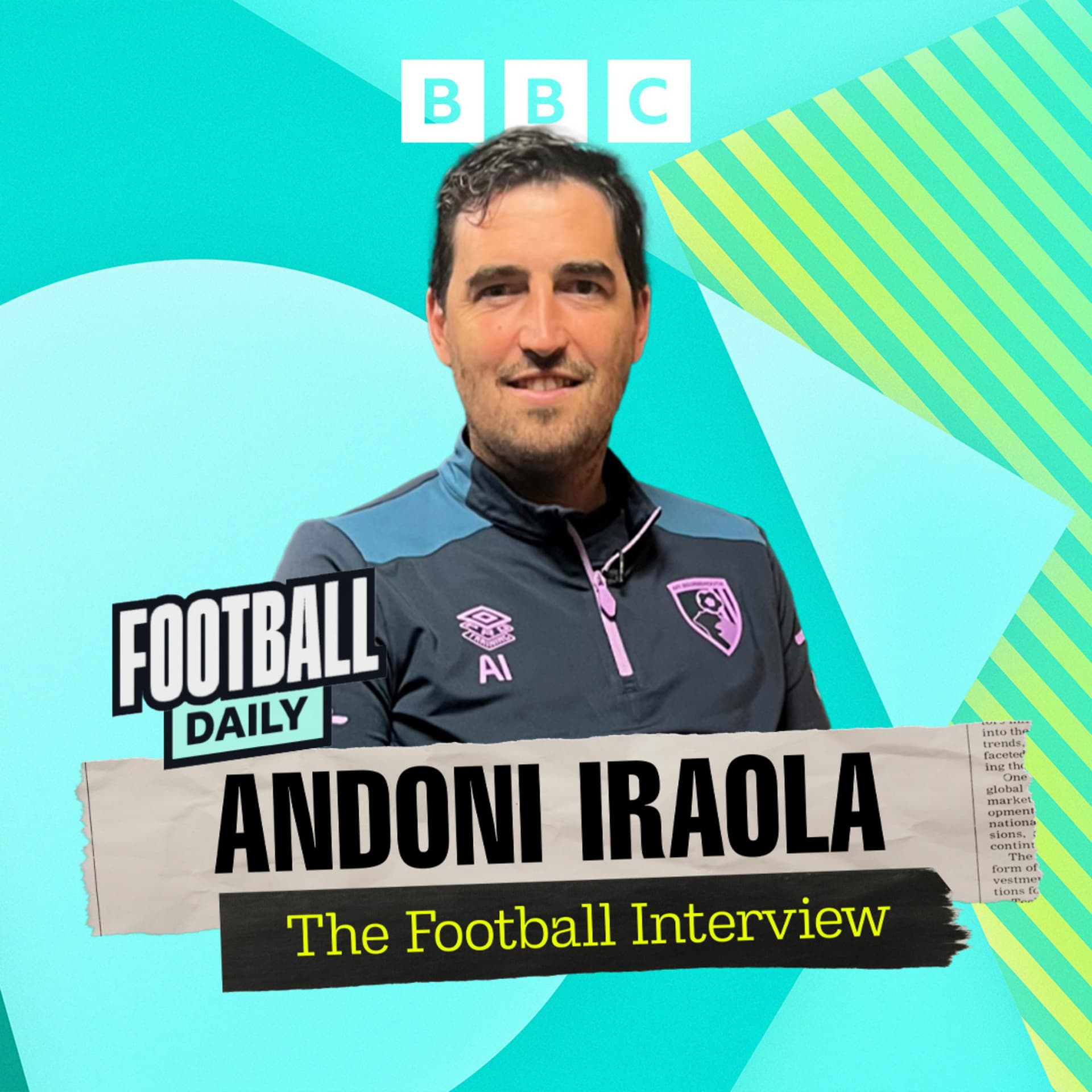
Andoni Iraola - The Football Interview
Podcast Description The *Football Daily* podcast offers the latest news, insights, and analysis from various football leagues, featuring big-name guests and discussing both domestic and international football.
---
Guest Overview
- Andoni Iraola: Manager of AFC Bournemouth
- Interviewer: Kelly Somers
Episode Focus
- Personal journey of Andoni Iraola, from his roots in the Basque region of Spain to his managerial role at Bournemouth.
- Insights into his love for football, experiences as a player, and life outside football.
---
Key Discussion Points
Early Football Memories
- First Instincts of Passion: Football started as a hobby for Iraola in San Sebastian, where he played on the beach.
- First Teams:
- Started with a school team.
- Joined Antiguoco, a local neighborhood team, before moving to Athletic Club at age 16.
Influential Figures
- Famous Peers: Played alongside football stars Mikel Arteta and Xabi Alonso in his youth.
- Key Managers:
- Ernesto Valverde: Significant mentor and manager during his formative years at Athletic Club.
- Marcelo Bielsa: Influential in shaping his understanding of the game.
- Carlo Ancelotti: Respected for his managerial style and relationship with players.
International Experience
- Move to America: Iraola reflects on his time in the U.S. as pivotal for his understanding of football, particularly influenced by coach Patrick Vieira.
Personal Life Insights
- Family Dynamics:
- His wife and children are not heavily focused on football, providing him an escape from the sport.
- Emphasizes the importance of family support in his career.
- Day-to-Day Life: Enjoys normal activities, reading, and exploring nature in Bournemouth on his off days.
Future Aspirations
- Legacy: Aims to be remembered as a good person and manager, with lasting relationships at clubs he's been a part of.
- Personal Goals: Prioritizes the well-being and future of his children over professional achievements.
Fun Facts
- Enjoys spontaneous family trips without strict plans.
- Acknowledges the balance between professional pressures and personal life.
---
Key Takeaways
- Transition from Passion to Profession: Iraola highlights how his love for football transformed into a career, altering his perception of the game.
- Influential Relationships: Strong emphasis on the impact of mentors and peer relationships throughout his career.
- Family Support: His family's involvement and support are crucial to his personal well-being and career choices.
- Long-Term Vision: Focus on building a legacy of positive relationships and ensuring a good life for his family.
---
Conclusion Andoni Iraola's interview provides a candid look into his life as a football manager and individual, illustrating the balance between professional aspirations and personal life, while also reflecting on the critical relationships that have shaped his journey in football.
Written by AI. May contain mistakes. Listen to the episode to check what was said.
Transcript
Automatic transcript. May contain errors.0:00Kelly Somers:This BBC podcast is supported by ads outside the UK.
0:30Kelly Somers:the highest B2B return on ad spend of major ad networks. Spend$250 on your first campaign on LinkedIn ads and get$250 credit for the next one. Just go to linkedin.com slash broadcast. That's linkedin.com slash broadcast. Terms and conditions apply. What they are ultimately trying to create is going to replace humans. What it's doing is parboiling the inside of your brain. This could be a turning point in the history of social media. Welcome to The Interface, the show that explores how tech is rewiring your week and your world. Coming up next in our latest episode, we look at the secret meetings at the world's biggest AI summit, the truth about the mystery of a brain-melting weapon, and the lawsuit that could shift the future of social media.
1:17Kelly Somers:Listen on BBC.com or wherever you get your podcasts.
1:28Kelly Somers:Interview on the Football Daily Podcast and BBC iPlayer. I'm Kelly Summers and this season I'll be interviewing some of the biggest names in football, asking them the questions they don't normally get asked as I try to find out more about the person behind the player. The first half will be on football, the second on their life away from the pitch. This isn't just any interview, this is the Football Interview and this episode is with Bournemouth boss Andoni Irayola.
1:58Kelly Somers:Andoni, let's start by you telling me your name, where you're from and your coffee order.
2:05Andoni Iraola:My name is Doni Iraola. I'm from Usurville, that is a small town next to San Sebastian in the Basque country. And my coffee order here, especially since I live abroad, now I ask for a flat white always.
2:19Kelly Somers:Oh, flat white, good choice. That's mine as well. That seems to be very common in football circles, we've noticed. Let's start by talking about football because that's why you're here. What does football mean to you?
2:29Andoni Iraola:I think football was my hobby and it has become now a professional thing. I still love the game but once you become professional and it's not just poor passion, I think it changes a little bit. You see football like an ideal world when you are out of the game and you would love to work there. and when it becomes your everyday work, it's just a work also.
3:01Kelly Somers:But you still love it?
3:02Andoni Iraola:Yes.
3:04Kelly Somers:And what's your earliest memory of playing football?
3:06Andoni Iraola:I think probably my best memories are on the beach, on the beach in San Sebastian. We used to play there in the school with the school team when I don't know, we started at five, six, seven year old and you can play every two weeks because of the sea. One weekend you cannot play, there is no beach and the next one there is beach and you can play. Because of the tides in the sea? So we had to play there once every two weeks and for us it was the game of the month. Every time we could play there and we had to go there. It's lovely memories.
3:36Kelly Somers:You talk there about playing on the beach, but can you remember the first proper team that you played for? What was it called?
3:42Andoni Iraola:I started with the school team, let's say. The first proper team is Antiguoco. It's also a neighbourhood team there, not a big club. and then I moved to Athletic Club once I was 16 already. So I didn't grow up thinking I was going to become a football player. It came quite late. I was decent, obviously. I was good, but no, until I wasn't 16, I didn't really realise, OK, this can be a little bit more than just your hobby and maybe you have a chance. So I think it was good, yeah.
4:15Kelly Somers:Can you remember that moment where you thought,
4:17Andoni Iraola:Yes.
4:17Kelly Somers:I can have a chance?
4:18Andoni Iraola:Yes, yes. I was worried when I had this opportunity. I live more or less one hour from Bilbao. I had to move also and I had to change schools and live alone, let's say, in their academy. I was a little worried, like maybe I don't have the level to play with these guys. And when I arrived there and I could say, OK, I can survive here probably. Maybe I have a chance, but I think it was quite late, yes.
4:48Kelly Somers:Early on in your career you crossed paths and played with some pretty famous other managers. Can you tell us about that?
4:55Andoni Iraola:Yes, now it's incredible because when we were seven, eight, nine, I played with Miquel Arteta, I played with Xavi Alonso, we were more or less the same age. Playing sometimes against because I was in a school, they were in other schools when we were playing there in the beach and then after we played together in a small club also in Antiguoco and now it's amazing that we see each other in the football pitches, I don't know, 30, almost 40 years later.
5:23Kelly Somers:Are there any managers in particular that have had a big impact on your career?
5:27Andoni Iraola:Yes, in my case there is especially Ernesto Valverde, a very clear one, because he was the one when I moved there to the Athletic Club with 16 in the under-18s. He was the manager, he was also my manager when I was in the second team of the Athletic club. He was the first one who gave me the chance to do my debut. And even after he was my manager when I left the club, I don't know, 12, 14 years later, he came back after managing other clubs and he has been really influential in my career. And today he still is our manager. Athletic club is my team and for me, it has been probably the key figure if we talk about like a manager that has influenced your career.
6:13Kelly Somers:You've mentioned Valverde, but if I could push you for three, who else? Three?
6:17Andoni Iraola:Well, it's difficult. I've had very good managers. A lot of people ask me about Marcelo Bielsa. I feel very lucky to have had him for two seasons. Someone that watches the game in a different way and I think it's very useful when you are going to transition to the managerial career. And then I always, I've never had him, but I've always liked when we face them, Carlo Ancelotti. For someone who has been so brilliant, has won so many things in big clubs, it's very normal when you speak with him, when you face him, it's how everyone talks very well about him, the players, and it's someone that I always had a good feeling with him, yes.
6:59Kelly Somers:You've managed in a number of different countries during your playing and managerial career, but which one would you say has perhaps had the biggest impact on you as a manager?
7:07Andoni Iraola:I would say probably my year and a half I spent in America. Probably not the biggest league, not the best moments of my career because I was probably already on my decline as a player, but it was the moments where I realised I was going to retire and I started thinking the game in a different way. I had also Patrick Vieira as a coach, he showed me a different style of play because he was coming from the City Academy, more positional play, I was used to a different style of play and probably it was an experience that has helped me a lot after in management and yes, I feel lucky to have had that experience at the end.
7:56Kelly Somers:on the Football Daily. Join myself, Mark Chapman, Rory Smith and Chris Sutton to look back at the biggest stories from the weekend's football. I think that's a really measured, mature assessment of the situation. This is football shepherds, so we should probably find someone to shout at. I think that's the way... Well, Chris looks like he's about to shout at you for describing that point as mature and measured. The Monday Night Club, only on the Football Daily. Listen on BBC Sounds.
8:27Kelly Somers:Let's go away from football a little bit and talk about Andoni Uriola as a person. Let's go back to the very beginning as well. What was it like growing up at home? Talk to me about your family and the environment you were in.
8:38Andoni Iraola:I used to go to school always on the train. Since I was 10, 11 years old I used to go alone. There I took the train every morning and go to San Sebastian to the school. And after the school, normally I had to take a bus also to go to the training place. And after I finished the training is when my father normally came to take me. And both of my parents were working. They have been working always. And yes, I've been used also to move myself since I was quite young. And I think it has been good also for my independence. You know, even when I moved, I was 16, I had to go to a new place. kind of living alone and it's not the easiest thing but I think it has been good for me.
9:25Kelly Somers:Did you have any brothers or sisters or anyone else at home? I asked you an only child, who were you playing football with at home then or was it just out on the beach?
9:32Andoni Iraola:Just on the beach, yes. You know what happens in Spain, when you have a school, you have your morning, you have your lunch and then you have two hours, that is free, some people go home, back home and then they come from the afternoon, afternoon, evening classes. So it's like two halves of the day. And then in between I used to play football all the time. It's two hours and I stayed there because I couldn't go back home. So I stayed there playing football and just good moments.
9:58Kelly Somers:You mentioned there that football has obviously been a massive part of your life forever. But finish this sentence for me. If I hadn't been a professional footballer or a manager, I would have been…
10:09Andoni Iraola:I started two careers. I haven't finished any. I had to leave them both. I started engineering, too ambitious because I was already playing football. I moved to Lowe. I've done more than half of the career, but I didn't finish it also. But I didn't really enjoy any of them.
10:28Kelly Somers:Tell me how you escape from football. When you're not here, when you're not thinking about it, how do you get away from it?
10:33Andoni Iraola:For me, it's quite easy because I have my wife and two kids and they are not much into football. and you will be surprised that once I leave this work environment, I go home and sometimes we don't speak anything about football all the day. Is that good for you? It's very good for me. And even the off day, they already have the plans for me. You know, with the kids, we have to go somewhere or even if the kids have a school, we have to go to eat in this restaurant or to buy something, that place because my wife is kind of waiting for my off day. and everything is set normally and the plans are already done.
11:11Kelly Somers:I read that they've travelled around with you wherever you've been because of course you've been in different countries. Is that why it's so important for you to have them with you?
11:19Andoni Iraola:Yes, my family for me is very important. I think they are sacrificing a lot because at the end I'm living my dream, let's say, of going from country to country to the best clubs. I have the opportunity to go and they have to come with me. I have very clear that I couldn't do this without them. If they tell me one day, no, I want to go back home, I'm leaving. It doesn't matter where I am. It doesn't matter. And we will go back home. And I know that there will be a moment in my career that I will have to be like not the protagonist and probably when my kids are older and they want to have their own, you know, you won't be the boss anymore.
12:00Kelly Somers:I won't be the boss anymore.
12:01Andoni Iraola:And I would be happy and we will go back home and I will I will be like, yes, like behind, like a supporting team behind and I know that this moment will arrive.
12:15Kelly Somers:Okay, so say there was one day where your wife didn't plan anything for you on your day off. What would you do for yourself?
Read the full transcript
12:21Andoni Iraola:I live in a place, Bournemouth is for nature, for walks, for, it's one of the best places probably of the country, you know.
12:31Kelly Somers:I read that you are big into reading. Yeah, I'm big into reading. Is that still, is that still a way you escape?
12:37Andoni Iraola:Yes, for me, reading is a big help because you forgot a little bit about everything else that is happening around you. You are into the book and whatever you read, 30 minutes, one hour, two hours, whatever. Normally, if you are at the end of the books, you go on a longer read. At the beginning, normally, the books are a little bit more difficult, but it's something that has helped me. I think even from the mental side, I think is I use the reading and I use the bike. Sometimes when I am too... Not at the same time. But I use the two ways I kind of forget a little bit about the problems that you always have when you are a manager, there are always problems.
13:23Andoni Iraola:And I think my two ways of, yes, for getting a little bit about the football stuff.
13:29Kelly Somers:What are you most proud of?
13:31Andoni Iraola:Probably about the good relationship I have right now with all the clubs I've been. As a player, as a manager, I go back now to every of the clubs that I've been in and it would be a lovely moment. To see good people. I've been lucky. and I think the most important thing when I come to a new club is this. When I leave, I hope everyone has good things to say about me. When I come back ten years later, I still have a relationship with people inside the club. It has happened like this in all the clubs I've been in and I hope I can continue like this.
14:15Kelly Somers:So you want to be a good manager but a good person first?
14:18Andoni Iraola:Yes, because you are not going to be successful every time, you know. Sometimes it's going to work, sometimes it's not going to work. But even in places that it's not going to work, I hope I live like good relationships.
14:31Kelly Somers:Tell me one thing about yourself that will surprise me.
14:36Andoni Iraola:This is the most difficult one, because for me I do quite normal things. People get surprised how I go on holidays for example. Every time I go on holidays we rent a car and we go now in the city and sometimes we don't have a hotel at night. So we go day to day even with my wife, with the kids and I enjoy to visit the countries like this without a fixed plan and a little bit more open and probably is the first thing I would think of.
15:12Kelly Somers:Yes, I guess you like living quite a normal life outside of football, because football can be quite different.
15:17Andoni Iraola:Very, very normal.
15:18Kelly Somers:If you could only achieve one more thing in your career, Antony, what would it be?
15:22Andoni Iraola:Football-wise.
15:23Kelly Somers:Whatever. Go where you want with it. Maybe there's another career that you're still looking at.
15:29Andoni Iraola:No, I wouldn't go football. I would go probably to the personal life. No, I think especially when you are a father, now your focus is more on your kids. I would love that my kids have a good life. They've been following me for some years and I hope I can give them a good life or at least prepare them for life as good as I can. This would be my biggest desire.
15:57Kelly Somers:Andoni, thank you so much. That was really insightful. Thank you.
16:12Kelly Somers:What they are ultimately trying to create is going to replace humans. What it's doing is parboiling the inside of your brain. This could be a turning point in the history of social media. Welcome to The Interface, the show that explores how tech is rewiring your week and your world. Coming up next in our latest episode, we look at the secret meetings at the world's biggest AI summit. the truth about the mystery of a brain-melting weapon, and the lawsuit that could shift the future of social media. Listen on bbc.com or wherever you get your podcasts.
From the publisher
AFC Bournemouth boss Andoni Iraola sits down with Kelly Somers to talk about falling in love with football and growing up in the Basque region of Spain. From playing with Mikel Arteta and Xabi Alonso at school, learning from Marcelo Bielsa and moving to New York, it’s been quite a journey to the English south coast for the former Athletic Club man. He also discusses his life away from the pitch, switching off from football and the how he wants to be remembered when he leaves Bournemouth.