
In short
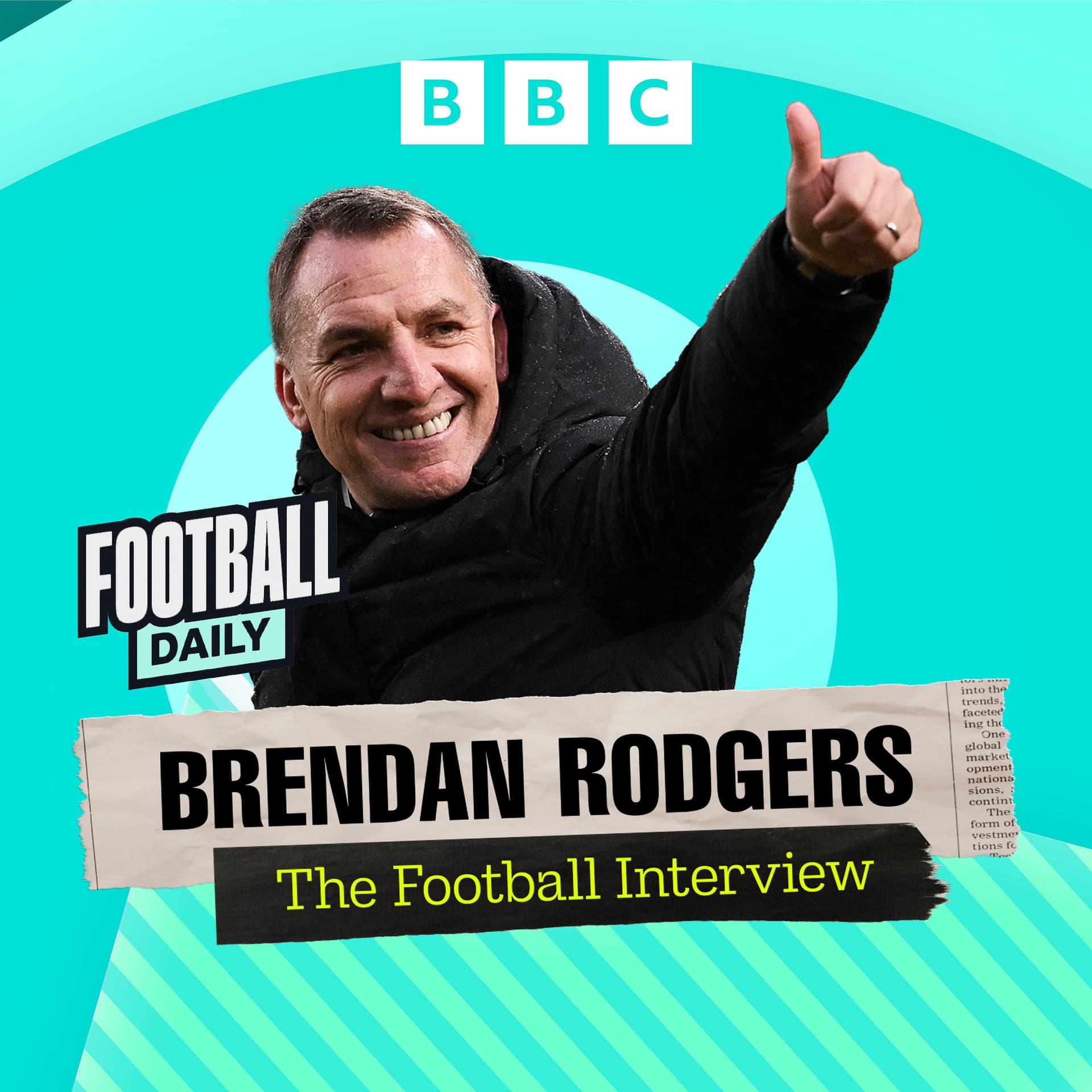
Football Daily: Brendan Rodgers – The Football Interview
Episode Overview In this episode, Kelly interviews Brendan Rodgers, the manager of Celtic FC. Rodgers shares insights into his footballing journey, the unique pressures of managing Celtic, and his aspirations for the future.
Key Themes and Discussions
The Early Days in Football
- Influence of Childhood:
- Football has been a lifelong passion for Rodgers, beginning in his youth.
- A significant injury at a young age led to him becoming left-footed, which shaped his early playing career.
- First Experiences:
- Rodgers recalls his first attempts at football at the age of 13 with local teams, despite not having a formal team during primary and secondary school years.
- His dreams of becoming a professional footballer were nurtured through various trials, including a trial at Manchester United.
Transition to Coaching
- Early Coaching Aspirations:
- After realizing his playing career wouldn't reach the heights he hoped, Rodgers transitioned to coaching.
- He sought to understand youth development by learning from clubs in Spain and the Netherlands, emphasizing a top-to-bottom philosophy in player development.
Notable Coaching Career Highlights
- Chelsea Experience:
- His time at Chelsea, under Jose Mourinho, marked a significant turning point in his coaching career, giving him exposure to elite players and high-stakes environments.
- Management Success:
- Achieved notable successes at Swansea City, Liverpool, and Celtic, including leading Swansea to their first Premier League promotion through the Championship play-offs in 2011.
Unique Pressures at Celtic
- Managing Expectations:
- Rodgers describes the intense pressure of managing Celtic, where there is an expectation to win every match, often accompanied by a demand for a specific style of play that reflects the club's historical significance.
- Comparison to Other Clubs:
- He compares the pressures at Celtic to those experienced during his time at Liverpool, highlighting that the expectations at Celtic are uniquely high.
Career Reflections
- Proudest Achievements:
- Becoming a manager is his most significant achievement, given his unconventional path to that role.
- Winning major trophies, including the FA Cup with Leicester and championships with Celtic, are milestones that hold great personal significance.
- Future Aspirations:
- Rodgers expresses a strong desire to reach 1,000 games as a manager, viewing this as a testament to resilience and success in the profession.
Key Takeaways
- Football as a Life's Passion: Brendan Rodgers illustrates how football has been a significant influence and shaping force in his life.
- Coaching Philosophy: His experiences abroad have shaped his approach to coaching, focusing on fostering young talent and maintaining a holistic club philosophy.
- Understanding Pressure: Managing a club like Celtic comes with unique pressures that exceed typical managerial expectations in other leagues.
- Career Goals: Achieving longevity in management is a priority for Rodgers, with a specific goal of reaching 1,000 games, signifying his commitment to the profession.
Conclusion Brendan Rodgers' journey through football, from player to manager, is marked by passion, learning, and an ongoing quest for excellence in a high-pressure environment. His reflections provide valuable insights into the realities of coaching at elite levels, particularly at a storied club like Celtic.
Written by AI. May contain mistakes. Listen to the episode to check what was said.
Transcript
Automatic transcript. May contain errors.0:00This BBC podcast is supported by ads outside the UK. We focus on the part of the internet that most people don't know about. It's called the dark web. Undercover in the furthest corners of the dark web, US special agents are on a mission to locate and rescue children from abuse. Move in now. Police! From the BBC World Service, World of Secrets, the darkest web follows their shocking investigations. Listen on BBC.com or wherever you get your BBC podcasts.
1:00This isn't just any interview, this is The Football Interview.
1:14Brendan, lovely to get to sit down and chat with you, away from the pressure, I'm guessing, of what it must be like up here for you in Scotland. Yeah it's very intense and obviously huge expectations at Celtic but it's an amazing club and a privilege to manage here and obviously live up here as well. The question that I always start with in these interviews is we're here because of football your whole life has been governed by football what does it mean to you? Football for as long as I've known it has been my life and I would say to my kids and and would often pick up the size five football and I would tell them, see that ball there, that's taken me around the world and given me the most amazing life.
2:03And that has purely been from when I was a child, just loving the game and watching the game. I have a photograph when I was young where I was only maybe about two or something where I broke my leg. It's actually how I became left-footed because I used to kick the ball with my right foot and then my brother pushed me out of the pram and I broke my leg but whilst it was in Plastiparas they said I always wanted the football. So you had to learn to do it with my left foot. I had to, I would then start it kick with my left foot and then when I got the Plastiparas off I was all left-footed and then very, very lucky to then have spent my life in football.
2:47So as long as I've known it, it's always been a part of my life. Can you remember the first proper team you played for? Yeah, yeah. I didn't play my first 11-a-side game until I was 13. My primary school, we love football, but we never had a primary school team in Carnaloch, where I'm from. I never had a team in secondary school. But it was through friends at secondary school, they played for a team called Star United, which was in Ballymena and they asked me to come along and play for them. That was a year older and that was virtually my first game. What were those years like going through the system and when you realised that maybe you could make it as a player?
3:32I'd always hoped that I could and obviously when you get through those age groups before you play you're always wondering when is the chance going to come because I wasn't playing in teams. I remember my mum and daddy used to read the Shoot magazine and there was the Bobby Charton Soccer School. I must have just annoyed the life out of them that I needed to get to Bobby Charton Soccer School. And you got that? And, yeah, I was able to go there in the hope that maybe I could be picked up. So the whole dream was to be able to move across to England and be full-time. So you were just a young boy with this dream of being a footballer but it didn't go probably the way that you would have hoped at that point I'm guessing.
4:21No, I think my youth career, as I say I started at 13 very quickly, my first club that I went to was Manchester United so I got picked up within a matter of months of playing to go on trial at Manchester United and then I'd been to a number of clubs, I became an international player for Northern Ireland which was an amazing feeling and then I end up, I went to Reading, so yeah I went through, I got to the age where and also at that age when I stopped playing I recognised I probably wasn't going to be the player that I'd hoped I was going to be, someone and then said to me about the next best thing to play in is coaching.
5:10And then I moved into coaching young. And the start of your coaching journey was quite interesting, wasn't it? Where did you go to kind of learn your craft? I'd been out to Spain. I'd been to Barcelona because I was always interested in youth. I tried to earmark clubs that really had that, what you would say, the top-to-tail philosophy. So from the very top of the club right through to the bottom, there's a there's a sort of synergy there so going to spain and also that's married in with my beliefs and then the game and a technical game so i'd been to spain the barcelona's valencia's uh sevilla as well i'd been there and then obviously i i was in holland as well and uh went to the Rigs of Ajax had been to FC20 as well so for me it was the start point was really saying that the European game and how they develop young players in Europe shouldn't be any different to how we develop our own players The Football Interview on the Football Daily Podcast and BBC iPlayer
6:24We focus on the part of the internet that most people don't know about. It's called the dark web. Undercover in the furthest corners of the dark web, US special agents are on a mission to locate and rescue children from abuse. Move in now. From the BBC World Service, World of Secrets, the darkest web follows their shocking investigations. Listen on bbc.com or wherever you get your BBC podcasts.
6:57We are back with the Fantasy 606 Podcast. Whoa, whoa, Chris, I've got to stop you there. We have changed our name this season to the FPL Podcast from BBC Sports. All you need to do is search for FPL, and if you already subscribe to our podcast, you don't need to do anything at all. Chris, have a guess what the code to join the BBC Sport League is. Is it 5E? It's BBC FPL Oh yeah Come and play the game with us As we continue to teach Chris About Fantasy Premier League The FPL Podcast from BBC Sport Listen on BBC Sounds The Football Interview On the Football Daily Podcast And BBC iPlayer I was going to come on to you going to Chelsea Would you say that was your first big coaching job?
7:47Yeah, I think it shone the light on me probably a lot more. Being at Reading was brilliant as a club that looked after me as a young player, ended up being an academy manager there, had a great spell of nearly 14 years then. But then going to Chelsea with Jose coming in as well, where they wanted to go to as a football club, how they wanted to transform the youth development section. Yeah, there's absolutely no doubt because when I went in there, I think I was only in the door and for two, three weeks, there was like four or five real high profile coaches that were linked with my job. And I'd never obviously had that before at Reading at all.
8:37And I remember actually going to Jose on it. And he said, listen, and when you're at the biggest clubs and the top clubs, you will have at least 12 names linked with your job. And he says, it will be the same with me as a manager. Don't worry, work well, work hard and it will be OK. That must have been an incredible learning ground and taught you so many things that you probably still use today. Yeah, I think the opportunity to work with world-class players. you know we had some brilliant youth players there and then I had the chance then to move closer with the first team. At that time John and Frank and Ashley Cole and all these guys just to be around that to see how they live their life every day see how they train how they operate it set the bar for me because everything they wanted to do was world class.
9:33And you've been at such a variety of different clubs since then going from starting out as a manager to Watford you've been Swansea, Liverpool, Celtic twice as well. How would you sum up kind of your coaching journey and has it surpassed all of your expectations? I think when I first started out, if I would have been sat here after this duration and managed the clubs I've had, I'd been really proud of that. You know, starting as a manager at 35 and... What was that like in itself? Yeah, that was... Especially without the playing background, that was always going to... You know, I really had to earn my stripes as a coach because I didn't come with that background.
10:17Once I became the manager, you really realise that, I always say, once the curtain goes back, the lights are shining on you as the manager. It's a different world. You can be so close as the assistant or first team coach, but being the actual lead and the guy responsible, it's a different job altogether. If you could relive one match, what would it be? I think the game that always stands out because it was a game that really propelled me was the playoff final. Swansea versus Reading. It was obviously against my old club. But taking Swansea into the Premier League as the first Welsh club to arrive in there and knowing how much it meant to people at that time.
11:06it's the best game in football to win isn't it I think in terms of the it's the worst game to lose the best game to win isn't it yeah 100 % I think that to go up out of the championship if you knew that winning it by the playoffs you would take it over even winning the league because the whole the whole drama around it and the whole Wembley day and that was that was special and as I said I've been fortunate enough to have won trophies up here with Celtic which means everything to me. Winning the FA Cup for the first time in Leicester's history was special. But I feel that game just changed it for me going into the Premier League and then we did well in the Premier League.
11:48This is a question I always ask as well. Has there been a turning point in your career? Because it feels like your career has taken some incredible turns in general. But I wondered if there's one when you sit here today that you look back on and think if that hadn't happened, I might not be sitting here now. Yeah, I think I go back to my youth again. My cousin, Ciaran, Ciaran McMullen, in the little village where I was from, because he played for the local football team, and they would meet outside the pub. I wasn't allowed to go in the pub, of course, when I was younger. But we would be stood outside, and the team would meet there, and then they would travel to play games.
12:30and guys would come out of the pub and just go past me and go into the car. But he always made sure I get in a car and see the football. And I never, ever forgot that. Never ever forgot that. And so that point there, if he doesn't take that time and that care to look after me and put me, because then for the remaining years of my childhood and that got me started in football. I might have went into Gaelic football or hurling or something else, but to this day I'll always appreciate that. You've managed numerous clubs in England in the Championship and in the Premier League, some of the biggest clubs, and now you manage one of the biggest clubs in Scotland as well.
13:20How does the pressure compare? What is the pressure like managing Celtic?
13:27it's a real unique pressure in terms of pressure Celtic is right up there with the most pressurised jobs in football even when I was manager at Liverpool you might have drawn with Manchester United and okay you wanted to win but it wouldn't maybe sometimes have been the worst result with Celtic it's the expectation to win every single game and not just win the game but to do it in a style that is synonymous with the club because the club was the first British team to win what would be the Champions League the European Cup and they did so in a style and that set the DNA for this club so it's not just about winning and people will tell and coaches and managers will say it's only about winning but at Celtic it really is more than that.
14:27The mental fortitude you need to show here as a player as a manager under the the spotlight is huge and you know you can go to you know quite a lot of teams in the Premier League and it would be nowhere near it would be like a holiday compared to managing Celtic and Rangers for that matter. What's the proudest thing that you've achieved in your career? I think becoming a manager in the first place. I would have to say, yeah, because my journey was different. The path to get to becoming a manager, that's the biggest achievement for me. And hopefully I can continue to be that and be as successful as I possibly can and by that I mean helping players develop, helping them improve, helping the conditions in their life and if that allows me to win trophies a long way then great but being a manager is my big highlight.
15:32If you could only achieve one more thing in your career what would it be? Reach a thousand games. Oh you didn't even have to hesitate then? No because that was where it all started. it. I think when I became a manager at Watford I went to a great event that the LMA obviously do a brilliant job for us managers and I went to one of their events many many years ago and on the stage that night was guys that were being inducted into the 1000 club and I remember sat there thinking wow they've done 1000 games and I was maybe only about 20 odd games and I thought wow what uh you know to be able to do 1000 games it's it's a it's a symbol of resilience and perseverance and and people actually liking what you do so for me if I could do one thing and that's what all started I'm 800 odd games now and so I've still get quite a few more to go but that would be the one career thing to be able to do Brendan thank you so much for your time it's been fascinating and not too many games to go until you get to that thousand well a few more to go but hopefully I can I can reach them Five Live Sports Go to the end zone touchdown NFL touchdown Philadelphia great play design I think you just have to go out there and be the best that you can be We're going to go out there and lay it all on the line.
17:04A 12-yard touchdown run. 105 yards on the return. Where speed, power, and skill collide. And the Eagles have beaten the Chiefs convincingly in Super Bowl 59. Five lives full. NFL. Listen on BBC Sounds.
17:28We focus on the part of the internet that most people don't know about. It's called the dark web. Undercover, in the furthest corners of the dark web, US special agents are on a mission to locate and rescue children from abuse. Move in now. Police! From the BBC World Service, World of Secrets, the darkest web follows their shocking investigations. Listen on BBC.com or wherever you get your BBC podcasts.
From the publisher
In this week’s edition of the Football Interview, Kelly talks to Brendan Rodgers. He talks about the ‘unique pressure’ of managing his current club Celtic, his hope of managing 1000 games and how winning the Championship play-off with Swansea City in 2011 and taking them into the Premier League propelled his career to another level.