
In short
Podcast Notes: Football Daily - Ole Gunnar Solskjaer - The Football Interview
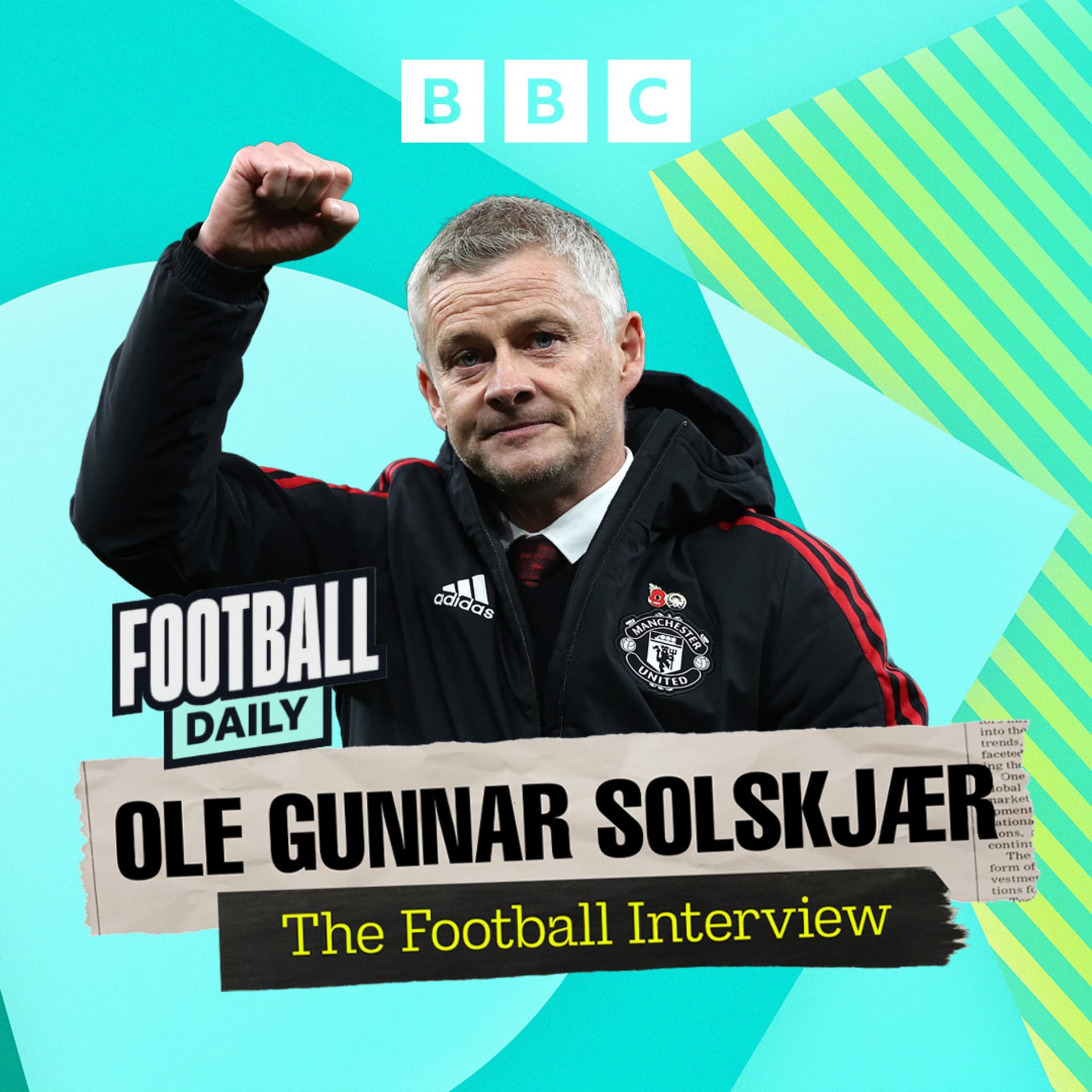
Episode Summary In this episode of the Football Daily podcast, host Kelly Somers interviews Ole Gunnar Solskjaer, the former player and manager of Manchester United. The conversation covers Solskjaer's journey from childhood in Norway, through his military service, to his football career marked by significant achievements with Manchester United. They discuss his experiences as a player under Sir Alex Ferguson, his management style, and reflections on his tenure as manager at United.
Key Themes and Discussions
Early Life and Introduction to Football
- Passion for Football:
- Solskjaer expresses a lifelong love for football, recalling that it has always been a significant part of his life.
- He fondly remembers his early days kicking a ball and playing football during school breaks.
- Family Influence:
- Discusses his family's support and mentions that he has passed the love of football onto his children.
- Notably, his daughter played for Manchester United Women's team, making them a unique father-daughter duo in the club's history.
Military Service
- Impact of Army Experience:
- Solskjaer describes his time in the army as a period that fostered his independence and maturity.
- He mentioned playing football during his army service, which kept him connected to the sport.
Football Career Highlights
- Transition to Professional Football:
- After returning from the army, Solskjaer returned to football and eventually caught the attention of Manchester United scouts.
- He shares a pivotal moment of scoring two goals for Norway against Azerbaijan, which led to his signing with Manchester United.
- Memorable Achievements:
- Highlights the emotional experience of the 1999 Champions League final, where he scored a crucial goal that changed the course of the match and his career.
- Reflects on the significance of that moment not just for him but for the fans who cherish it.
Management at Manchester United
- Transition from Player to Manager:
- Solskjaer discusses his early interest in management, rooted in childhood experiences of organizing teams with friends.
- He highlights his decision to pursue management after an injury cut his playing career short.
- Challenges and Responsibilities:
- Describes the pressures of managing a high-profile club like Manchester United, particularly during tough times.
- Reflects on the mixed results during his managerial tenure and the impact of competing against top managers like Jurgen Klopp and Pep Guardiola.
- Legacy and Future Aspirations:
- Acknowledges the challenges of not winning a trophy as a manager, expressing a desire to continue his career in football management, potentially with the national team.
Key Takeaways
- Football as a Lifelong Journey:
- Solskjaer emphasizes the deep-rooted connection he has with football, highlighting its role in shaping his identity and career.
- Resilience and Adaptability:
- His experiences in the army taught him resilience, which he applied during his football career as both a player and manager.
- Perspective on Pressure:
- Solskjaer views pressure as a privilege, demonstrating a mature understanding of the demands of being a football manager.
- Focus on Development:
- He expresses enthusiasm for nurturing young talent in management, indicating a commitment to contributing positively to the sport.
Conclusion This episode provides a comprehensive insight into Ole Gunnar Solskjaer’s life, revealing his journey from a young football enthusiast to a prominent figure in football management. His reflections on identity, pressure, and legacy offer valuable lessons for aspiring players and coaches alike.
Written by AI. May contain mistakes. Listen to the episode to check what was said.
Transcript
Automatic transcript. May contain errors.0:00The Football Interview on the Football Daily Podcast.
0:30Let's start with football. Why football? Why did you end up in the game? Because football is the best game in the world. I think it's such an easy game. It connects everyone. But for me, I can't remember life without football. Since I was young, my mum and dad, they told me. One of the first things I kicked was one of the lamps. So I just enjoyed kicking and it's given me my life, everything. What was it like growing up in your household? What can you remember? So, no, me as a kid, obviously school, football, every recess or every break. Did you work hard at school? I was decent at school, yeah, and my best subject was maths.
1:12So I was, if I wasn't a footballer, I probably would be an accountant or something with numbers or maths. Wow, really? Probably, yeah. And you're a dad now? Yeah. Three children? Yeah. And you've passed a football bug on, I hear? Well, I think they're environmentally damaged. Yeah, they all play football. And a little bit of history. Your daughter made an appearance for Manchester United Women's, didn't she? And I think you're the only father-daughter combination to have both played for Manchester United. I think we are, yeah. That must be incredibly proud. What was that like for you? I was really, really proud when it was an FA Cup game.
1:49We drove down. Really good to see her because the passion is football. She loves football. and they love football and they enjoy it and it's because they love it. Does your wife like football or does she have no choice? We met on the football pitch more or less. So yes, she was a very talented footballer. So we used to have in Christensen every Tuesday and Thursday like a talent group that used to train at seven in the morning, seven till eight before school. And she was in that, who wakes up at seven just to go or wakes up at six to train football. You go there to impress or be close to someone that you have a keen eye on.
2:30So that's the reason I got up in the morning really to play football with Celia. Tell me one thing about yourself that might surprise me. I used to, yeah, well, I'm surprised you by saying I would be an accountant, but I used to read and speak backwards. I was quite good at that, reading backwards. How does that come about? I don't know. It's just that's probably my sense of like organizing, seeing structures. More or less every car I drive and you look at the license plates, how can I rearrange those letters or that number or something? Your brain's always going, isn't it? My brain's always going, yeah, most of the time.
3:15Can you remember a moment where you thought, okay, this could not only be something I enjoy, but potentially I could make it here? Not really, because as a kid I always used to score goals. But when I got to 15, 16, I was a very late developer. So then I thought, nah, I'm not going to make it in football. I'm just going to enjoy playing football. Then I went into the Army when I was 19 to 20. Obviously that says, OK, you're probably not going to be a footballer. But when I got back from the Army at 20, I went for it a couple of years and then suddenly I was in the UN21 national team and playing for Molde and did well.
3:58That's quite a journey isn't it and that's quite a change to go from football, army, football. What did being in the army kind of do for you? Made me more independent, I had to grow up, suddenly I wasn't living with my mum dad and my sister anymore so yeah I think I became a lot more mature I learned a lot socializing with people from all different places in the country we're placed there together in the room of six or eight and we've just got to get on and it was it was a great year actually is it mandatory to go into the army was it yes yeah yeah so you always knew you were gonna have to do it yeah unless you have a special talent or maybe you're in the national teams and all this no I know I didn't because of all things in the army we had a like an army football team as well we had a training session maybe once or twice we had to there was like a Norwegian championship of our army teams and I was not in in the team in my camp no and that's another thing that okay I know I'm better than him.
5:07I know I'm better than him. I will be better than him, but it's other people's view on what, or I wasn't maybe strong enough or big enough in that team that the way he wanted to play. So that it was a kind of a revenge, you know, when you, when you look back and okay, they didn't believe in me, but I showed all of them. And you had an illustrious playing career, but of course it's headlined by Manchester United. Yeah. Talk to me about the first time you knew of a possibility to come over here to England to one of the most decorated clubs in the world? It was. So for Norway, this is probably one of the most important games in my career.
5:47We played Norway against Azerbaijan and I scored two very good goals. Coincidentally, Jim Ryan, the assistant manager, he was watching Ronnie Onsen, who we signed. He was sat next to Mark McGee, at that time Wolverhampton manager chatting as they do. Mark McGee is looking for a centre forward. Jim Ryan's watching the game. I scored two goals. Perfect. So he thinks, okay, Wolverhampton will probably sign this boy. He rang Sir Alex that night and said, I think I found one and it won't be expensive. It's a cheap one, but we've got to be quick because Wolverhampton are also signing centre-forward so it went really really fast.
6:30That must have been a whirlwind for you. Brilliant absolutely top but you're never 100 % sure until you sign the deal so but I more or less knew so before my last game for Molde I said to Oge Harreit who was the coach says if I score today I'm gonna take my shirt off throw it in into the stands and run off the pitch. He said oh no you can't do that but wait until 10 minutes before full time. And that's exactly what happened. I think I scored the fifth goal, 5-1. And I just threw the shirt in the, ran off the pitch and we had no subs ready to come on. So we had to play a few minutes with 10 men.
7:09Yeah, it was a whirlwind over time. The media were like outside my house or apartment and wanted interviews. And I just tried to stay away from all that. Was that all new, like a whole new level of fame? Of course, because 18 months before Man United, I played for Klaus Negen in my local team in front of 50 people. So of course it was a big, like, big step up in attention. But I think I've been quite okay in handling these situations. I always ask players, and with you it feels even more prominent, because you've played in some of the biggest games. Yeah. If you could relive one game from your career, what would it be?
7:45Of course, the Champions League final in 1999. I thought you might say that. I was 80 minutes on the bench, like really unhappy with the manager, why don't you put me on really, we're losing the game and it's so, football is so emotional and it's like I'm, you're so low and you're so, you want to get on the pitch. So 80 minutes of real agony but then I managed to play 15 minutes and those 15 minutes I'd really love to play again. It changed history of course, changed my life. It didn't make me a better footballer, but of course that changed my life as in we made history and I was the one that was fortunate enough to score that goal.
8:27And so many men have come up to me and said, thank me for giving them the best moment of their lives. Don't tell my wife, please, will you? You mentioned before that you were annoyed with Sir Alex. Obviously, you would have always wanted to start, but you gained this incredible reputation, didn't you? Yeah. As a super sub, I know every footballer wants to start every game. How did you embrace that? I had discussions with Sir Alex. I signed a long-term contract. So what I did was I put my career in his hands, really. And I more or less said to myself, just do your best. I've seen so many strikers sulking when they're on the bench.
9:04And I felt, OK, they've played 70, 80 minutes. Defenders are tired. I come on. I can make a difference. I'm fresh. as long as my head is fresh and my mentality is good. If we were winning 1-0, I was never going to come on. So I never hoped that we were... On 0-0, I was like, don't score, don't score until he puts me on. 1-0 down, yeah, definitely I'm coming on. 2-0 up, yeah, he'll always give me the 15, 20 minutes just to make me feel part of it. So he was very good at giving me enough minutes. But I knew at 1-0, just sit down, Ole, you're not going to come on. So, 1-0 down against Bayern. I was like, come on then, it's like 20 minutes, no.
9:49Like 88 minutes I think I came on. Yeah, it's one of the 13, 15 minutes, best minutes of my football career. When did management become the thing? You know, when I was a kid, I was very into football. I used to, me and my cousin, we always used to buy the Rothmans football yearbook every year. and that was our bible. We knew every player in every division in England and we used to make our own game like a management game. That was the probably prequel to the championship manager game, we should have copyrighted that one. We were really like nerdy, freaky into that football and I was always playing the computer games, the management games instead of the FIFA where you you play.
10:35I've always been into coaching or management and picking teams. I used to coach my, call it in the local streets, the younger boys. We used to make a team for these tournaments and I was the boss. How old were you at this point? 13, 14. So probably I would, I would, I've always had this manager in me. Then I played at Man United and I didn't know if I had the personality to be a manager. Say the players in the 80s, 90s, it is different to managing now. Then I got injured and that's the moment where I decided, oh, I need to stay in the game. That's the time where I decided, okay, I start all these coaching courses and starting to write whatever Sir Alex says.
11:26And since I read somewhere that you wrote everything, you kept a notebook? Not everything, but yes, I did suddenly start to try to, instead of just being the player that was told and now I'm learning from the best teacher in the world. And how does he get the best out of all these players? What tactically, changing his staff, changing the players. So I just started keeping more an eye on him and that part of football. It's the biggest club in the world, one of the biggest clubs. You knew that as a player. But as a manager, that pressure, particularly when things aren't maybe going right, must be really tough.
12:03I remember one game, Everton. I'm stood there in my technical area. Fourth official next to me, Carlo Angelotti, comes across. So he's more or less in my technical area. And so the fourth official says, Carlo, you need to get back into your technical area unless you want Oli's job. and Carlo, as Carlo is, he's always got a comment and a smile. He said, no, no, no, too much pressure. Too much pressure. That job is too much pressure. So he walked back to his technical area and I thought, you know, pressure is a privilege. He's always said that as well. And I felt privileged to be the manager of Man United.
12:45But of course, it's not the same as playing. As a player, you just do your job. Suddenly now you're the manager. You're the face of everyone. You think about all these supporters, players, everything surrounding Man United. But that pressure is a privilege because I was allowed to do that and I was allowed to deal with it in my way. And that was having great staff around us, environment in and around the club was very positive. But in the end, it doesn't matter if you enjoy coming to work every day, training sessions, you need results. and we unfortunately had a very bad six-week spell and that's that's too long at a club like Man United and they made a change which which is fine reflect back on it sorry how do I say this then it was sad we lost to Watford of course and I knew this is more or less the end drove my family to the airport.
13:46They went back to Norway actually and I was going to work. I got a text, Ollie, I need to see you in my office. And I knew what was going to happen. So I rang my wife straight away. I'll be back. I'll catch you up. I'll probably be back home before you. Did it feel a bit sudden? I think it's sudden, but it's not surprising. If you don't get results, you do make a change at football but I felt we had something going. Do you feel like when you look back on your period in charge that now people understand given what's happened to Manchester United since and their struggles they look back on that fondly do you think you're given maybe the credit that you deserve for your time?
14:27It's not about getting the credit but it was a difficult, not difficult, it was the worst time to be the manager of Man United. You have Jurgen Klopp with his Liverpool team and you have Pep Guardiola with his City team. Just the two best managers in the world at the time. Exactly, best managers in the world at the time, probably the two best teams in the world at the time. But we got second and third. So, you know, with the staff, we had something going, but we couldn't take the next step. So, and then hopefully we can get back as a club later on. If you could only achieve one more thing in your career, what would it be?
15:01Not lifting a trophy for Man United. that's one of the things that I will as a manager. I was going to say, you've forgotten a few. As a manager, that's something that doesn't play on my mind, but that's something that I would have liked to achieve. Hopefully we can do well in the World Cup with Norway, but then maybe to be the next one, who knows? You've always set targets. The next Norway manager? Next Norway manager, my friend Ståle is there now, we're playing really well, we're going to the World Cup. I do really, really like managing. It's a great, great job being the manager of young men, ambitious young men that want to achieve something together.
15:50Oli, thank you for your time and best of luck with whatever comes next. Pleasure, thank you.
16:00Welcome to Terlanders. I'm Greg James. He's Felix White. Hello. And that is England's greatest ever bowler, Jimmy Anderson. Hello. We've finally got our break on BBC iPlay. It's lovely to be here. England haven't won a test match in Australia since the 2010-2011 series, which is a long time ago. Give us a few reasons as to why it's so difficult. The wickets are different, the ball's different, and the heat as well. The media coverage over there is so much bigger than a test series in England, for example. And cricket over there is huge. Plus, Australia are amazing in their own country. Tailenders.
16:33Watch on iPlayer. Listen on BBC Sounds.
From the publisher
In this week’s edition of the Football Interview, Kelly Somers speaks to former Manchester United player and manager, Ole Gunnar Solskjaer. They discuss how he went from being in the army at the age of 20 to winning the Champions League with Man Utd. They also reflect on Sir Alex Ferguson impacting his journey into management and how his tenure as Man Utd manager came to a close.