
 Ask ChatGPT

 Fresh Air
22 Oct 2026 · 44m · 14 chapters
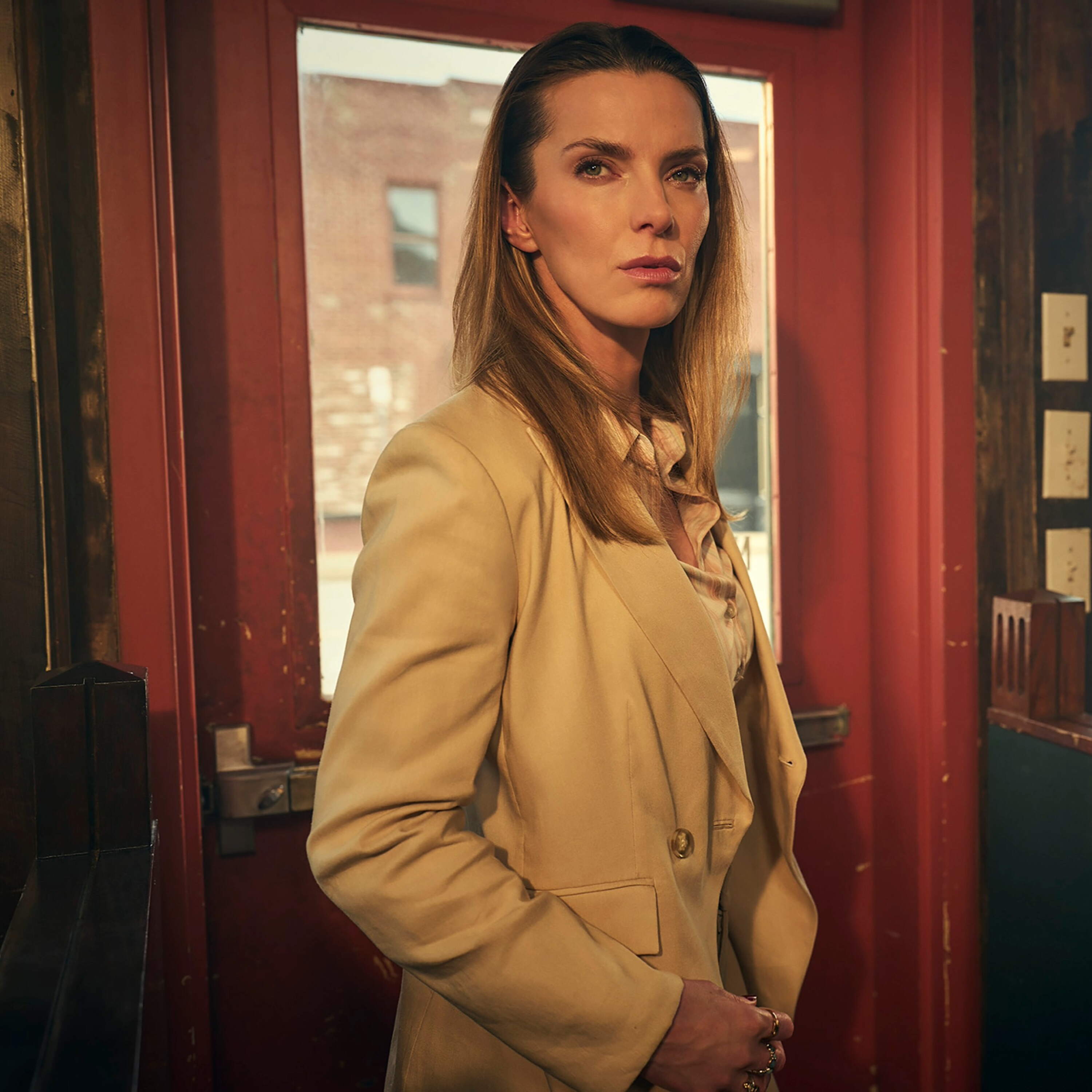
Betty Gilpin is seeking anti-algorithm, weird roles – and it's working
In short
Fresh Air interviews Emmy-winning actor Betty Gilpin about her new FX crime noir series The Lowdown (season 2) and her recent Emmy win for Apple TV’s Widow’s Bay. In The Lowdown, Gilpin plays Ginger, a public defender who teams up with Ethan Hawke’s Lee, a Tulsa investigative journalist/bookstore owner, to fight corruption. She calls the show “zany noir” and says it’s anti-algorithm: it avoids safe, familiar “vanilla” storytelling and instead embraces strange, subversive choices. She also argues the series uses male stars to ask vulnerable questions rather than just pose. Notable examples include a first-episode awards scene where Lee gives a rambling acceptance speech on mushrooms and meets Ginger at the bar. Gilpin’s background: Glow (Emmy-nominated role as wrestler Liberty Bell), Widow’s Bay (guest Emmy), plus films Office Romance and The Social Reckoning; she’s also the author of All the Women in My Brain and Other Concerns.
Written by AI. May contain mistakes.
Chapters
0:26
Betty Gilpin's Roles and Achievements
Discussion of Betty Gilpin's Emmy win and her roles in various shows.
“Last month, Betty Gilpin won an Emmy Award for her guest performance in the critically acclaimed and popular Apple TV show Widow's Bay, a horror comedy about an island town that may actually be cursed.”
1:48
Exploring The Lowdown
Betty Gilpin describes her character in The Lowdown and her experience on set.
“Gilpin plays Ginger, a public defender who asks Lee for help.”
3:34
Character Evolution in Roles
Gilpin reflects on the evolution of her roles and how they relate to her identity.
“I have been healed, radically healed by a statue.”
5:48
The Impact of Masculinity
Discussion on masculinity's representation and vulnerability in performances.
“And watching this, I was really struck by how much I look like myself.”
8:08
Widow's Bay Overview and Characters
Betty Gilpin shares insights about her character in Widow's Bay.
“need a nap and I'm better than you, but instead sort of use their status and time and age and ability in this business to ask vulnerable questions instead of like calm, cool answers.”
10:24
Challenges of Unique Storytelling
Gilpin discusses the challenges and rewards of creating unique content.
“Your character at this point is later in the episode.”
13:09
Reflections on Emmy Win
Betty Gilpin reflects on her Emmy win and its significance.
“And the people that are out there who are like, I'm actually going to go the other way and make something so inexplicable and strange and me and weird and, you know, unrecognizable.”
14:00
Betty Gilpin's Emmy Experience
Betty reflects on winning her first Emmy and the significance of recognition in her career.
“I know that, like, people who make TV shows, you know, it's a years-long, extremely difficult, arduous process where people, you know, fry their personal lives and brains.”
20:27
Growing Up in a Theatrical Family
Betty shares stories of her upbringing with actor parents and how it shaped her outlook on performance.
“She stars in the new season of the TV series The Lowdown.”
22:42
The Impact of Acting and Imagination
Discussing the contrast between her parents' approach to acting and the current industry landscape.
“So even though they were telling you don't be an actor, you know, they were showing you why you should.”
Show all 14 chapters
25:17
O'Mary: Broadway Debut and Legacy
Betty talks about her Broadway debut in O'Mary, its challenges, and the connections to her family's history.
“I actually just saw Bowen Yang in O'Mary last night.”
28:00
Betty Gilpin on Her Acting Journey
Learn about Betty Gilpin's experiences and the roles that shaped her career.
“You know, in addition to O'Mary and Widow's Bay, I would add Death by Lightning.”
29:47
Exploring GLOW and Acting Realities
Betty discusses her experience on GLOW and the nature of acting.
“At NPR, there's a little something for everyone.”
42:00
Exploring 'Once Upon a Time in Harlem'
A review of the documentary that showcases the Harlem Renaissance's influential figures and their legacies.
“Greaves filmed the occasion, but never made it into a finished movie.”

Ask about this episode
Get the gist, explore an idea or ask about something said.
 Claude
On Fresh Air, what are the key points of this episode?
Searching your listeningTranscript
Automatic transcript. May contain errors.
0:00Ann Marie Baldonado: This message comes from Capella University. That spark you feel? That's your drive for more. Capella University's FlexPath Learning Format lets you earn your degree at your pace, without putting life on pause. Learn more at capella.edu.
0:15Betty Gilpin: This is Fresh Air. I'm Terry Gross. The FX series The Lowdown just started its second season and has added Emmy Award-winning actor Betty Gilpin to the cast. She spoke with Fresh Air's Ann Marie Baldonado. Last month, Betty Gilpin won an Emmy Award for her guest performance in the critically acclaimed and popular Apple TV show Widow's Bay, a horror comedy about an island town that may actually be cursed. Gilpin plays a woman living in the early 1700s whose story is a vital part of the island's dark history. But even in a hoopskirt, dealing with what might be a satanic deadly curse, Gilpin manages to bring humor and intelligence to her performance.
1:03Betty Gilpin: In fact, most of her characters seem to understand things that the people around them don't. The characters she plays are often more complicated than they first appear. In the Netflix series Glow, she plays a former soap opera star and new mom who reinvents herself as a professional wrestler. The role earned Gilpin three Emmy nominations. Now she's joining Ethan Hawke in the second season of The Lowdown, the FX crime noir drama created by Sterling Harjo, who also created the show Reservation Dogs. Hawke plays Lee, a self-appointed investigative journalist slash bookstore owner, out to take down corruption in Tulsa.
1:48Betty Gilpin: Gilpin plays Ginger, a public defender who asks Lee for help. In this scene from this season's first episode, they're both at an awards ceremony. Lee is receiving a local journalism award, and he's just given a rambling acceptance speech while on mushrooms. The two of them meet at the bar.
2:09Ann Marie Baldonado: Your speech was the first time that I wasn't bored all night. Thank you. So good. Yeah, it was good, right? It was great. Ah, thanks. What brings you here? What do you do? Public defenders have a table, but I have free drinks. Okay, what do you do? Public defender. That's a public defender table. I get it, I get it, I get it. Wow, so we're kind of in the same ballpark, you know?
2:38Betty Gilpin: I mean, career-wise.
2:44What?
2:44Ann Marie Baldonado: Are we all in the same ballpark career-wise? Defend the innocent. Protect the truth. Serve justice. You wrote an article about a sensitive, rich, white guy.
2:54Betty Gilpin: I wrote an expose on the fragility of the male ego.
2:58Ann Marie Baldonado: No, yeah, I know that you wrote a puff piece. It's not.
3:01Betty Gilpin: Oh, wow. There's a lot of backstory. Gilpin's films include Office Romance from earlier this year and The Social Reckoning, which is in theaters now. She is also the author of an extremely funny and insightful collection of essays called All the Women in My Brain and Other Concerns. Betty Gilpin, welcome to Fresh Air. Thank you so much for having me.
3:27Ann Marie Baldonado: I'm so honored to be here.
3:29Betty Gilpin: And congratulations on your Emmy Award.
3:31Ann Marie Baldonado: Oh, thank you. Thank you so much. You'll find me much changed. The unfillable hole has been filled. I have been healed, radically healed by a statue.
3:40Betty Gilpin: Exactly. Just kidding. Yeah. I'm going to start by asking you about The Lowdown. I've heard you refer to this show as zany noir, which I think is a good description. What do you to this show and this role?
3:55Ann Marie Baldonado: You know, I have two young children, five-year-old and a two-year-old daughters, and I have had the privilege of working a lot the past five years and being away a lot, which was really hard for my family and filming, you know, in everywhere but New York where we live. And I had promised my husband and children, I was like, I'm not going to take another job for a long time. It's just going to be us. And then I got the offer for The Lowdown, you know, which films in Tulsa. And my husband and I watched five minutes of the first episode of the first season. And he was the one that paused it and was like, you have to do this show.
4:35Ann Marie Baldonado: And I'm so, so, so glad that I did. It was just one of the creative experiences of my life.
4:42Betty Gilpin: I was looking at the poster for this season of The Lowdown, and it's very much a noir poster. It has a huge image of Ethan Hawke's face in the middle, and then you're on the side in a blue dress looking very much like a female character in a film noir. But this is a take on noir. It plays with the genre and is subversive in a way. What did you and show creator Sterling Harjo think about your character and how she relates to kind of, you know, the tropes femme fatale in noir or ideas of like women who need to be saved? Funnily enough, I don't think I've played less of an archetype before.
5:25Ann Marie Baldonado: Like, I think a lot of my career, you know, 20 years of playing wives and girlfriends and femme fatales and calming wives and evil mistresses. And it's almost like one of the many benefits of aging is that you sort of age out of being an archetype. Like, your id sort of seeps through whether you like it or not. And watching this, I was really struck by how much I look like myself. I'm used to seeing a very different person, you know, with lighting and hair and makeup and costumes. I'm used to feeling pretty removed from the character I play because a lot of times my character is a sort of fantasy.
6:09And I was like, oh, am I entering the era where I recognize myself in a way that was very emotional?
6:16Ann Marie Baldonado: Like if I had a zit that day, it's on the screen. The wrinkles are showing and I have wrinkled clothes. And it just it was very emotional for me in a really exciting way.
6:26Betty Gilpin: This is a tiny bit of a spoiler, but in the first episode when you shot someone, you're in a Weezer T-shirt. You're like a very normal person.
6:36Ann Marie Baldonado: Yes, totally. And also something about being an actress for 20 years, this weird thing has happened where because part of my job is to sort of outsource the femininity of whatever character I'm playing to different departments, costumes, hair, makeup. As a result, my femininity on my own. I don't own jewelry. I'm not stylish. I'm sort of like a human goodwill bin of like abandoned old Navy clothes. And then always play women who are like holding crystal goblets and like everything just so.
7:11Betty Gilpin: You've said that shooting the show is the freest you have ever felt at work. What do you mean by that? How is it different?
7:19Ann Marie Baldonado: I mean, I think my favorite kind of people to work with are people with high confidence, low ego, people who are really good at their jobs and know they're really good at their jobs, come to set with a million ideas and are willing to abandon all of them for the best idea in the room. And that was everybody on this job. I think something kind of profound is happening in a conversation about masculinity in this show. You know, I think that my industry really leans towards kind of fantasy and wish fulfillment a lot of content that's designed for you to watch on your phone on the toilet and be like, oh, I wish I were that guy or I wish I were that girl.
8:01Ann Marie Baldonado: And for an actor, especially somebody like Ethan Hawke or Tommy Lee Jones, male movie stars at the height of their game, to not kind of play the hits and not just be cool and posing and like sleepy status acting like I need a nap and I'm better than you, but instead sort of use their status and time and age and ability in this business to ask vulnerable questions instead of like calm, cool answers. That felt really rare to me.
8:31Betty Gilpin: Now, your last TV role was in the show Widow's Bay, which was a huge hit just earlier this year. It won 14 Emmys, including the Emmy you won for Outstanding Guest Actress in a comedy series. Widow's Bay is part horror, part comedy. Actually, it's a lot of horror. And it's about a mayor of a remote New England island town who's trying to bring tourism back to the town. But scary supernatural things keep happening. People are in danger. They're dying. And it might have to do with a curse that started hundreds of years ago. And you are in a very important episode that's a flashback episode set in 1702.
9:16Betty Gilpin: You play the character Sarah Westcott Warren, who's brought to the island to be the second wife of the founder of the town. His first wife died and left four children. How would you describe your character?
9:30Ann Marie Baldonado: I had gotten the offer for that job, and then they gave us the pilot script and then episode six. When I was watching the show, I was learning with the audience in real time what was really happening in the show. But I was like, okay, maybe that it sounds like my character's job is to not know much about this haunted island. And she thinks it's her pride and prejudice. So I'm just going to treat this like it's a 1702 rom-com and then be as shocked as my character when it's less When Harry Met Sally, more exorcist goes camping. I would say that, you know, my character is the surrogate for the audience.
10:11Ann Marie Baldonado: Like you're sort of seeing it through her eyes of she's from off island and experiencing this as what she thinks is her love story. And then she's sorely mistaken.
10:21Betty Gilpin: Well, I want to play a scene from the show. Your character at this point is later in the episode. She's witnessed her husband kill a man and hide his body. She's witnessed people try to kill her husband, but he doesn't die. And he then traps her in their house. and she manages to escape. So in this scene, she's running to see the people in the town that she trusts. She's going to tell them that they tried to kill her husband, Richard, but it didn't work. She's bursting into the room. Here's the scene.
10:58Ann Marie Baldonado: Richard is alive!
11:03Betty Gilpin: Yes, we noted that with some distress. Be not afraid. This committee can be trusted.
11:10Ann Marie Baldonado: Then you all must listen. He is not consorting with the devil. He is the devil. I saw him struck with a knife again and again, but he died not for the good of every man, woman, and child. You must make haste and stop him immediately.
11:26Ann Marie Baldonado: There is a secret tunnel that leads to the house. There is a well at the far southeastern edge that will grant a serve you passage. You must send ten good, strong men.
11:38Ann Marie Baldonado: A merchant sailing vessel is due to depart this evening with a berth for you, Honor. You've got to be saved. But we need your help.
11:51Pour this in his drink and he will be helpless as a babe.
11:57Ann Marie Baldonado: No, I cannot go back there. You must or he shall know. You said he must be stopped. Now you bear the burden as well.
12:08Betty Gilpin: Consider the welfare of your children.
12:11Ann Marie Baldonado: My children, I have but just met them. Sarah, please.
12:17Betty Gilpin: You are our only hope against this darkness. That's a scene from Widow's Bay. You just met those kids.
12:27Ann Marie Baldonado: Yeah, I had but just met them. It's so funny. You know, they had shot all nine of the other episodes before we came and, you know, shot our weird 1702 indie in the middle of their season. So we kept kind of Hamish Linklater, who plays my husband, we were sort of like shoulder tapping the crew being like, is this a comedy or is it horror? What did the other people do when they were here? and Katie Dippold, who is the creator. It was really profound to work with somebody like that who had taken such a risk. And I think that with Sterling Harjo too, with the lowdown, I feel like there are many parallels between Widow's Bay and lowdown that they're so sort of anti-algorithm.
13:09Ann Marie Baldonado: I think there's an understandable pull in my industry to make things that are kind of like a gleaming vanilla car commercial, Like super safe, super familiar, appeal to the masses because it's really hard to get something made. And the people that are out there who are like, I'm actually going to go the other way and make something so inexplicable and strange and me and weird and, you know, unrecognizable. And then for that to kind of explode into the zeitgeist, it's sort of like it's one of those moments where you're like, oh, there's more weird me's out there than I thought there were. It's like a faith in humanity.
13:51Betty Gilpin: Yes. Because Widow's Bay was very popular and critically acclaimed.
13:56Ann Marie Baldonado: Yes. Yeah. And as well it should be. And, you know, I feel a little embarrassed that that's my Emmy because I worked for seven days on it. I know that, like, people who make TV shows, you know, it's a years-long, extremely difficult, arduous process where people, you know, fry their personal lives and brains. and sob through notes and forget to book doctor's appointments for themselves because they are working all hours making this possible. And then, you know, I came in and memorized some lines and crossed my eyes and left, and I got a trophy.
14:32Betty Gilpin: Now, you were nominated for three Emmys in the past for your role on the show, Glow. But last month, you won your first Emmy for Outstanding Guest Actress in a comedy series. If it's okay with you, I want to play part of the speech you gave. you wrote it in the form of a poem and here's a little part of it.
14:54Ann Marie Baldonado: Look, my family has nurses, a priest and a teacher. I'm a spray tanned narcissistic society leecher. But I want to thank all of the actors I've met. Old ladies in dressing rooms, hot guys on sets. What a privilege to spend this life laughing at Crafty, watching Shakespeare in theaters half full and drafty. Our business is stupid, but actors are the bomb. From Martindale to Milioti, my dad and my mom, to be cringe and elitist, which you're free to find fault in, let's all lean towards Sam Shepard and less towards Sam Altman. Thank you, Cosmo. My family, my daughters.
15:32Betty Gilpin: That's you thanking the rest of your family. That's my guest, Betty Gilpin, accepting her Emmy Award. What was it like winning the Emmy? And I ask that because in your book, you write a lot about how that kind of recognition or wanting it or staying in the work to get it is dangerous. I think you call it being validation drunk.
15:52Ann Marie Baldonado: Yeah. I mean, I feel very lucky that it's happened now and not 10, 15 years ago. I think while I'm so happy and excited and feel so lucky, there was not one cell in me that was like, yes, finally. It was just a really nice night. And then I was excited to go home to my daughters. I mean, I think from growing up with my parents being actors to many different degrees of success depending on the year and seeing some of the most incredible performances in theaters half full and drafty, as my nerdy poem said. And I always knew there was not a merit-based correlation between good work and recognition.
16:44Ann Marie Baldonado: So I feel so lucky that I fell in love with it as a connection-first art form, that it was me being in my parents' dressing rooms during, like, tech rehearsals, and it was people gossiping in weird Shakespeare clown makeup.
17:03Betty Gilpin: Well, in your speech, you mentioned your mother and father who are both working actors in New York still and when you were growing up. And you write about them a lot in your book. Do you mind reading a little excerpt you have about them?
17:21Ann Marie Baldonado: Sure. Oh, my God.
17:22Betty Gilpin: Well, this is on page 17.
17:25Ann Marie Baldonado: To explain away some of my blendered brain, you should know my parents are actors. I remember thinking it was like they had Santa DNA. Theater mostly. Those were the days before the internet could catapult your identity across state lines quicker than an unaffordable flight could. So in the 90s, New York actors mostly did plays about tense dinners and episodes of Law & Order. So that's what my parents did. I was aware and proud of the hum of magic around their profession. smug that it was different from Isabel G.'s dad's job that seemed to mute his identity into Eeyore with a tie. But it also seemed normal to me, like it was our version of the family farm or donut shop, a shop I was desperate to inherit one day.
18:14Ann Marie Baldonado: Their carny status also bled into our minivan lives, infusing the mundane with grandeur and banana peels. Playdate guests were either enthralled and begged to return or exhausted and never came back.
18:28Betty Gilpin: That's a little bit from all the women in my brain and other concerns. So what kinds of roles did your parents have when you were a kid?
18:39Ann Marie Baldonado: Gosh, so many. I mean, I would say my dad was sort of stern lawyer types, butler's lawyers, And, you know, like a reliable, smart man who knew the way. And my mom is just farce incarnate. She's the funniest person on earth. So much of my O'Mary performance is just plagiarism from Anne McDonough. I think it was, was it an Agatha Christie play where she was a maid and it was certainly was not in the script. It didn't make any sense for this part to be funny. But she just had to exit. And she just slowly pulled up her dress so you could see her knees. And she sort of, like, pointed her pelvis towards her male scene partner and kind of, like, reverse crab walked away from him in, like, a weird, haunted, sultry, farcical made way.
19:43Ann Marie Baldonado: And it brought the house down in a not comedy. I mean, it was people couldn't breathe. they were laughing so hard. You know, I think it was a profound and strange way to grow up. I saw my parents put themselves in many different people's shoes. And it expands the possibility of your life and makes you curious about the different lives that your parents have and that you could have. And I wanted to have all of them. And now I'm addicted to it.
20:13Betty Gilpin: Oh, I should point out that your dad, Jack Gilpin, is currently in the Gilded Age as the butler named Church. Yes, yep, yes, yeah. Yeah, he's Church. My guest is actor Betty Gilpin. She stars in the new season of the TV series The Lowdown. More after a break. I'm Anne-Marie Baldonado, and this is Fresh Air. Stay tuned for the following announcements and messages from our sponsors.
20:41Ann Marie Baldonado: This message comes from the new podcast Straight Up, After Hours with Vlad and Kelly, the pop culture show where hosts break down the stories the Internet can't stop talking about with a cocktail recipe to match the mood. Listen wherever you get your podcasts. This message is brought to you by Pushkin Industries. Michael Lewis's new audio book looks at the early days of Trump's Department of Government efficiency, as told by the public servants at Targeted. Get Blockers on Blockers.fm. Available now.
21:09Betty Gilpin: On the latest episode of Sources and Methods, a blue tsunami, earthquake, avalanche, Democrats swept the midterms. What does this mean for President Trump's ambitions overseas? And why is Iran paying such close attention to the changeup on Capitol Hill? Listen this week to Sources and Methods, the national security podcast from NPR. Can you describe where you lived in New York when you were little?
21:38Ann Marie Baldonado: Yeah, I grew up in the South Street Seaport. My dad and his college buddy bought this old ice factory. It was an ice factory in the 1800s, this four-story building. They bought it for, you know, two cents in the 70s, and that's where I grew up. We were the only occupied building on the block then. And his college friend was the dad of my childhood best friend. She was born a month after me. And we grew up together in like a haunted old ice factory. It was an amazing place to grow up. And it was when it was still a fish market.
22:11Betty Gilpin: Well, and you joke, I don't know if it's true, you joke that you couldn't eat seafood for a while because it always smelled like fish. Yes. Oh, yeah, yeah, yeah.
22:18Ann Marie Baldonado: Yes, yeah. The fish market. There was just dead fish everywhere. And yes, we all smelled, my little school uniform smelled like, you know, abandoned cod. It was not great.
22:31Betty Gilpin: Well, you say that your parents didn't want you to be an actor when you were younger, but it was like they were the best commercial for being an actor and living an actor's life. And even the way you talk about your dad would break down movie scenes for you to examine to sort of he would show you these great moments and it would be like a master class on acting. So even though they were telling you don't be an actor, you know, they were showing you why you should.
22:58Ann Marie Baldonado: Yeah. Yeah. You know, they were doing the same thing with my brothers who, you know, had no interest in becoming actors. I think it was just what they were passionate about. And, you know, my favorite was them, you know, watching Law and Order at night and being like, oh, that's so-and-so. I did a Neil Simon play with him in 1979. And it's just sort of like the TV was their yearbook of people that they had loved or idolized or lost. It was just all about people. It was never about posing or climbing. And I think that the industry has changed so much and it being a lot less about your imagination and more about how you seem.
23:48Ann Marie Baldonado: And I don't know. I feel very lucky that I was raised to think it was all about imagination.
23:55Betty Gilpin: I want to ask you a little bit about O'Mary. You were an actor for many years in New York, but O'Mary was your Broadway debut. And O'Mary is the play written by Cole Escola, who reimagines President Lincoln's wife, Mary, as a frustrated cabaret singer. Cole Escola wrote the play and originated the role, and you were the first person to replace them in the role. How did that come about?
24:22Ann Marie Baldonado: A total insane fluke of the timeline of the world. Cole and I had never met, but they followed me on Instagram. I have a private Instagram, and it's me and my trailer basically in various jobs in my career in various crazy costumes. And I'm pretending that I am a sort of half Blanche Dubois, half Valerie Cherish from the comeback character of a regional theater actress losing her mind in her dressing room at half hour before some play that she's about to do. And I guess Cole thought, well, she may just be demented enough to replace me in O'Mary and to be the guinea pig to see if it would work without Cole.
25:10Ann Marie Baldonado: And, yeah, they offered me the part. It was so insane that day getting that call. And it was the experience of my life. I actually just saw Bowen Yang in O'Mary last night. and I went with Cole and Maya Rudolph and John Cameron Mitchell, Jane Krakowski.
25:28Betty Gilpin: Oh, well, we should tell everybody that, you know, Cole did the show. When they left, you were the first replacement. And now it's become this thing where all of these wonderful actors, comedians, performers have come in and you've mentioned a lot of them. So you all went together to watch Bo and Yang do it.
25:49Ann Marie Baldonado: Yeah, and it was so joyful because, I don't know, there are so many jobs, Maya and I were talking about this after, there are so many jobs that feel like you're being asked to do 5 % of what you can do. And that can be really, really hard and sad. And then Mary Todd in Cole's play, you're being asked to do 105 % of what you can do. And as a result, you know, it's your soul's dream come true, but your personal life's nightmare and your physical health's nightmare. And you're basically having to live at 10 % battery except for the 85 minutes of the show. You're kind of having to live as like a lonely, you know, weak, weird monk.
26:34Ann Marie Baldonado: When I emailed all the former Marys to organize last night, I was like, only we know what it's like if you were given a Yorkie cocaine and told that Yorkie to go on his Hamlet's understudy inside the Coliseum. Like, it just feels crazy. So to be with five other people who knew exactly what that was and to sit and watch Bowen, I mean, you simply must go see Bowen Yang in this play. I was just so blown away.
27:06Betty Gilpin: Now, a few lovely things about your role. It turns out the theater where O'Mary is performed was the theater where your father made his Broadway debut in the 1970s. And also when you were a kid, your mother played Abraham Lincoln's sister-in-law, I think, in a play at Lincoln Center, which makes it sound like this, you know, full circle moment for you.
27:27Ann Marie Baldonado: Yes, totally. Yeah. She was in a play called Abe Lincoln in Illinois. She played Abe's sister. And yeah, I remember Sam Waterston was Abe Lincoln. But yeah, being backstage with all these hoop skirts in Lincoln World and then being back in Lincoln World in Cole's version of it, it felt like the drunkest time machine possible.
27:54Betty Gilpin: What do you think it is about you that makes you seem perfect for period pieces where you wear hoop skirts? You know, in addition to O'Mary and Widow's Bay, I would add Death by Lightning. That's a TV show where you played President Garfield's wife. Do you think it's something about your diction or physical comportment or your ability to like convey being trapped?
28:15Ann Marie Baldonado: You know, I think I can probably credit my mom's whimsy and dad's diction. And, you know, I went to theater school where we trained for four years and were told, like, get ready for all the Shakespeare parts. And my experience was I graduated and it was all about being, you know, it was the era of the pixie dream girl. And now, I don't know, I think often my training, I don't know, in gravitas or something palpable, self-loathing and pain in my eyes translates to oldie timey.
28:54Betty Gilpin: My guest is actor Betty Gilpin. She stars in the new season of the show The Lowdown. She just won an Emmy for her work on the acclaimed show Widow's Bay. More after a break. This is Fresh Air. Stay tuned for the following announcements and messages from our sponsors. This message comes from BetterHelp. Your brain has limited storage. So why is it still holding on to that embarrassing moment from years ago? BetterHelp is an online therapy platform that gives you space to talk about what's taking up too much of yours. BetterHelp is now in network with more than 125 health plans, with many co-pays as low as$15 for eligible members.
29:35Betty Gilpin: And if you don't have eligible insurance, you can still get 20 % off your first month. Visit BetterHelp.com slash NPR. Cost and coverage may vary. Discount cannot be combined with insurance. At NPR, there's a little something for everyone. If you need advice for that big life change, try listening to Life Kit. If you want to know more about that new TV show, check out Pop Culture Happy Hour. And if you want to dive deeper into your favorite podcasts and enjoy perks like bonus episodes, archive access, and more, check out NPR+. Find out more and support the shows you love at plus.npr.org. Happy fall!
30:12Betty Gilpin: Yes, the days are getting shorter and colder, and the rain can be a drag. But this is also the perfect time of year to get cozy. LifeKit has lots of ideas so you can embrace the change of seasons, with episodes on everything from making soup to exercising outdoors. Listen to the LifeKit podcast in the NPR app or wherever you get your podcasts. Now, when you were young, your parents said you have to go to college before you start acting. But you started acting soon after, right? And you were starting with plays?
30:47Ann Marie Baldonado: Yeah, I went to Fordham at Lincoln Center and I started acting professionally. Yeah, I cheated the rules a little bit, like my sophomore year. I still graduated. But yeah, my first job was a dead body on Law and Order. Actually, maybe it was my parents came and took me out to lunch and they were on their way to an audition. and they sort of flippantly said, oh, there's a part for a sarcastic 17-year-old. And I was a college student, so I was, of course, stoned. I had had a gravity bong hit at, you know, 8 a.m. that morning, and I had the confidence of a stoned person. I was like, I'm coming with you.
31:29Ann Marie Baldonado: I'm going to put my name on the sign-in sheet. And I would never, ever have the courage to do this now, but I just showed up to this audition with no knowledge of what it was or what I think I got sides, I guess, or the scene from the waiting room and just put my name on the sign and sheet and walked in. It's so crazy. And I got the part. And the person who played my brother is my husband. And we have two kids. It's crazy. It's crazy. Crazy.
31:57Betty Gilpin: Is it hard to play a Law and Order corpse? I mean, I don't want to be too graphic, but you were, you know, Vincent D 'Onofrio finds you.
32:08Ann Marie Baldonado: Naked in an oil barrel. Yeah. Yes, and he and I are working together right now. And I was like, oh, God. You know, this is now 21 years after that. And, yeah, we're doing a TV show together. And I was like, do I say that? He's seen so many dead bodies. There's no way that he'd remember. And immediately he was like, I found you in an oil barrel. I was like, oh, God, no. I'm so sorry. No, it was my honor to be a dead body. I did have one alive line. I was Fran Drescher's daughter, but then I got a gunshot to the neck pretty quickly.
32:46Betty Gilpin: I mean, in that episode, it's like not only Vincent D 'Onofrio and Fran Drescher, Blazer Mom, but then Rita Moreno is also in your episode.
32:55Ann Marie Baldonado: Oh, I didn't remember that. And the guy who kills me is Shane McRae, who is in this season of The Lowdown. Yeah, it can feel like being an actor is a series of controlled connections. Like your job is to hyperconnect with people and then say goodbye to them. And now having done this for 21 years, it feels like I have cousins all over. Well, maybe not cousins. Cousins with sexual tension. And shared drama all over this industry. And it feels so wonderful. It's such a privilege. And that's what I was trying to convey in my silly little poem.
33:40Betty Gilpin: I want to ask you about the show Glow, which is the Netflix series about women's wrestling in the 1980s. And you called that show the best job you'll ever have. And say that it was somewhere where everybody kind of got to do their dream. Can you talk about why?
33:59Ann Marie Baldonado: Well, Liz Flahive and Carly Munch are the creators, and they were playwrights first, and they were staff writers on Nurse Jackie, a show I came on to in the fifth season. Then it was the biggest TV job I'd ever gotten, and I was very, very, very, very grateful for the health insurance, and I was so grateful to be on that show. And then Liz and Carly to then be in their show that they made on their own, Glow, which was about women playing archetypes to the mezzanine and then their real lives behind those archetypes. It just felt like this meta gift of like, yes, these are the things I think about every day.
34:46Ann Marie Baldonado: And the sort of strangeness of doing your passion very publicly for a living as a woman. It just felt, I don't know, like the exact right allegory to help me process how I felt about being an actress. It was such a gift.
35:04Betty Gilpin: I want to play a scene from GLOW. This was a breakout role for you, and you played Debbie, a soap star who left work to have a baby and start a family. But then as the show begins, she finds out that her best friend, played by Alison Brie, is having an affair with her husband. So she decides to leave him and return to work. So she joins the wrestling show and becomes the star, really, as the character Liberty Bell. Here's a scene from late in the first season. your character is talking to Allison Breeze's character, Ruth.
35:41Ann Marie Baldonado: He wants to work things out. Wants me to come home and try. Go to therapy. So, are you going to? What about the show? I don't know, okay? I mean, we might not even have a show.
36:01Betty Gilpin: Well, you'll get something else. You always have. You know what the craziest part of this whole mess is? That I actually like wrestling. Really? Yeah.
36:21Ann Marie Baldonado: I don't know. It's like I'm back in my body. It doesn't belong to Randy or Mark. And I don't know. I'm, like, using it. For me. And I feel like a superhero.
36:41Betty Gilpin: That's a scene from Glow. I was wondering if that's kind of what acting is like for you. Like being in your body. Like she was talking about wrestling.
36:51Ann Marie Baldonado: Gosh, I haven't heard. So nice. Allie, I love you. I talk to her every day. She or she or date to the Emmys. Yes, yes, yeah. Because she's one of the loves of my life. Yes. I mean, that was the first time where my body's requirement in a role was something beyond like looking good in the wide shot. I had never done anything athletic before, ever. And so I trained for this, did wrestling training, did strength training and got as strong as possible and gained muscle. And it was really the first time I thought about my body being a functional, powerful thing. And it completely changed the way I thought about approaching a part, that it could be a head-to-toe thing versus a neck-up thing.
37:47Ann Marie Baldonado: I had an acting teacher once tell me that I was a good actor from the neck up and scared Betty from the shoulders down. And he was right on. I just felt so disconnected from my body. And, you know, not that that's all fixed now, but wrestling really helped just to be as simultaneously stupid and powerful as possible. You know, I think I had assigned it in my mind that wrestling is, you know, macho and hyper-masculine and these guys must have huge egos. And it's all about vulnerability. You know, it's not going to look real unless you make your partner look like the strongest person who's ever touched you.
38:34Ann Marie Baldonado: That's what makes a good actor, that they understand that the best version of something is finding music between you versus you looking like the coolest poster possible. and yeah wrestling felt like kind of this meta exercise of reminder that like our job is to take care of each other in these scenes and to find it together.
39:00Betty Gilpin: Well Betty Gilpin thank you so much for joining us.
39:04Ann Marie Baldonado: Thank you so so much for having me. It is an honor.
39:07Betty Gilpin: Betty Gilpin stars in the new season of the FX series The Lowdown. She spoke with Fresh Air's Anne-Marie Boldonato. Coming up critic at large John Powers reviews the new documentary Once Upon a Time in Harlem. This is Fresh Air.
39:23Ann Marie Baldonado: Stay tuned for the following announcements and messages from our sponsors.
39:27Betty Gilpin: I'm Kevin Roos. And I'm Casey Newton. And together, we've been tech journalists for decades. Now, we're your hosts of Machine Gods, a new podcast from NPR that makes sense of what AI means for your work, your life, and all of our futures. Twice a week, we'll be exploring the biggest moves in tech and give you unmatched access to the real titans of industry. Listen to Machine Gods from NPR on the NPR app or wherever you get your podcasts. Want to survive the holiday conversation? Come prepared. Pop Culture Happy Hour gets you up to speed on the movies, music, and TV shows everyone is talking about.
40:01Betty Gilpin: This way you'll have a hot take at the table instead of quietly eating a dinner roll. Listen to Pop Culture Happy Hour on the NPR app or wherever you get your podcasts.
40:12Ann Marie Baldonado: This message comes from Rinse. With Rinse, your laundry will come back fresh, folded, and ready to wear right on schedule. One tap or text is all it takes. No calling, no reminders. Same as always. Rinse. It's time to be great. More at Rinse.com.
40:28Betty Gilpin: The new documentary, Once Upon a Time in Harlem, was half a century in the making. It was shot by director William Greaves in 1972 and finished by his son David 50 years later. The film is the record of a 1972 cocktail party that brought together the surviving members of the Harlem Renaissance, the legendary cultural explosion whose peak was in the 1920s. Our critic at large, John Power, says that this movie doesn't just let us see artists and intellectuals we've only heard about or read. It reminds us that the racial questions they raised back in the 1920s are still urgent today. We spend our lives swimming in an ocean of footage.
41:13Betty Gilpin: Crimes, meals, ugly cats, parachute jumps, public rudeness, private sex. Seemingly everything is now recorded and shared with the world. It wasn't always so. It's a thrill when someone uncovers footage of great people from the past whose achievements feel almost mythological. This is part of the magic of Once Upon a Time in Harlem. a new documentary that had its beginnings in 1972, when filmmaker William Greaves hosted a cocktail party at Duke Ellington's townhouse. As his guests, he invited the surviving members of the Harlem Renaissance, the blossoming of artistic and intellectual life that took off after World War I and flowered into the mid-1930s.
42:03Betty Gilpin: Greaves filmed the occasion, but never made it into a finished movie. Half a century later, his son David, one of the cameramen at the party, took that footage and completed the job. The result is a wonder, like watching a 50th college reunion set on Mount Olympus. Here is a party packed with legends, some born not long after the Civil War, nearly all blessed with a sense of style. They range from 85-year-old musician U.B. Blake and painter Aaron Douglas, known as the father of African-American art, to poet Arna Bontomps and photographer James Van Der Zee, whose gorgeous black-and-white stills are interspersed throughout.
42:49Betty Gilpin: It's an imposing crew. As Blake jokes, to be here with all these intelligentsias, I'm afraid to open my mouth. Greaves' camera follows his guests as they mingle and drink, capturing eddies of chit-chat filled with terrific stories, personal preening, and jokes about Marcus Garvey. Artist Romare Bearden boasts that his new book is becoming a bestseller. Ida Mae Cullen frets that her late husband, the poet County Cullen, is being neglected. Even as actor Lee Whipper, 96, talks about working in minstrel shows, the elegant society editor Jerry Major recalls being spat on by a white patron at the Cotton Club.
43:35Betty Gilpin: David Greaves and his editors give all this talk unobtrusively nifty themes and echoes. For instance, Blake says that contrary to popular opinion, it's not true that he won't shake hands with a white man. He just won't extend his hand first. Later, we hear a story of how Bill Bojangles Robinson stuck out his hand to shake with Charles Lindbergh after his famous flight, only to have the racist aviator turn away from him. And this gets its payoff when Bearden points out that the greatest artistic tribute to Lindbergh was none other than the Lindy Hop, a dance created in Harlem, to music, I would add, by Eubie Blake.
44:18Betty Gilpin: Langston Hughes, who died before this party, was a leading light of the Renaissance and preached, as Arna Bontamps tells us, that black artists should claim a new freedom. And Langston, in the midst of all of that, wrote a piece. He summarized his reaction by saying that we young Negro artists who create now are not going to listen to one or the other. We're going to be ourselves and not going to try to please white people or black people. But we're just going to be us. and it struck a very responsive chord, I think, became sort of the slogan for the Harlem Renaissance. Reeves himself was born in Harlem in the late 20s and dreamed of being an actor, even studying the method alongside Marlon Brando.
45:09Betty Gilpin: But realizing that black actors wouldn't get good roles, he turned to making documentaries and directed scores of films during the Civil Rights era that captured the lives of actual black people who were vastly more diverse and interesting than the fictional ones on stage and screen. You feel his sensitive touch in Once Upon a Time in Harlem, whose guests are no monolithic troupe of geriatrics. These are sharp individuals of great distinction, with the big egos and big opinions that come with that. They still argue, sometimes angrily, over 1920s questions that remain vexing in the 2020s. Should black artists see themselves as black artists, or American artists, or just artists?
45:56Betty Gilpin: Should black thinkers tell the truth as they see it, or try to promote the race? If I can't do something that's going to help us, the journalist major says, I'm not going to do something that's going to hurt us. The film is rich with inspiring sections, from its discussion of the importance of women to the Renaissance, Zora Neale Hurston's dazzling brilliance is duly celebrated, to moments when you feel the valiant souls of those we're watching. Few things are more stirring than seeing activist Richard B. Moore, who initially comes off a bit cold, spontaneously recite by heart Claude McKay's sonnet, If We Must Die, a poem that ends, like men will face the murderous, cowardly pack, pressed to the wall dying, but fighting back.
46:47Betty Gilpin: Early in the film, we hear from Regina Andrews, a librarian who helped encourage and promote the Harlem Renaissance. She says of that legendary time, it was hard not to be caught up. You got pulled along in a way. You just couldn't stop yourself. Watching Once Upon a Time in Harlem, I got pulled along too. John Powers reviewed the new documentary Once Upon a Time in Harlem. It's now playing in theaters. Fresh Air's executive producer is Sam Brigger. Our technical director and engineer is Audrey Bentham. Our interviews and reviews are produced and edited by Phyllis Myers, Roberta Shorrock, Anne-Marie Baldonado, Lauren Krenzel, Teresa Madden, Monique Nazareth, Susan Yakundi, Anna Bauman and Nico Gonzalez-Whistler.
47:35Betty Gilpin: Our digital media producer is Molly C.V. Nesper. Thea Chaloner directed today's show. Our co-host is Tanya Mosley. I'm Terry Gross.
47:45Ann Marie Baldonado: Stay tuned for the following announcements and messages from our sponsors. This message comes from Capella University. That spark you feel? That's your drive for more. Capella University's FlexPath learning format lets you earn your degree at your pace, without putting life on pause. Learn more at capella.edu.
48:04Betty Gilpin: On the latest Planet Money podcast, protesters in France are asking their government for more money for schools and for pensions. No, why not? There is a bunch of money in the world. Don't say there's no money. There is so much money. She's right. There is money, but maybe not for France. Why does the market seem to be turning on France? And what can the rest of us learn from this? Listen to Planet Money on the NPR app or wherever you get your podcasts.
From the publisher
"There's an understandable pull in my industry to make things that are kind of like a gleaming vanilla car commercial, like super safe, super familiar, appeal to the masses. And [then there are] people that are out there who are like, I'm actually going to go the other way,” she tells Fresh Air’s Ann Marie Baldonado. Gilpin won an Emmy for her guest role in the horror-comedy Widow’s Bay, and now she currently stars in the noir series The Lowdown. She talks about growing up with actor parents, aging out of archetypal roles, and the 105% it takes to play Mary Todd Lincoln in “Oh, Mary!” on Broadway.
Also, John Powers reviews the documentary Once Upon a Time in Harlem.
Subscribe to our free weekly newsletter
Follow us on Instagram
Subscribe to our YouTube channel
Check out the Fresh Air Archives
See pcm.adswizz.com for information about our collection and use of personal data for sponsorship and to manage your podcast sponsorship preferences.
NPR Privacy Policy
More from Fresh Air
All episodes
We use cookies.They keep VO running smoothly and help us improve it. Privacy policy