
 Ask ChatGPT


In short
Fresh Air interviews filmmaker Martin McDonagh about his new comedy-drama Wild Horse Nine. The film is set in 1973, just before the CIA-assisted coup in Chile that overthrew Salvador Allende. Two CIA agents in Santiago—Chris (John Malkovich) and his younger protégé Lee (Sam Rockwell)—travel to Easter Island (Rapa Nui) after Chris, terminally ill, starts blurting out what he did. Their boss (Steve Buscemi) fears Chris will expose CIA secrets. McDonagh says he began with “regret” and built the story around guilt, conscience, and revenge, continuing themes from In Bruges and The Banshees of Inisherin. He links the CIA plot to what he learned as a teen (including a Clash song about Allende and Victor Jara). He also discusses his Catholic upbringing and distrust of confession. Notable example: in In Bruges, a hitman’s guilt over killing an innocent child parallels Wild Horse Nine’s conscience-driven conflict.
Guests
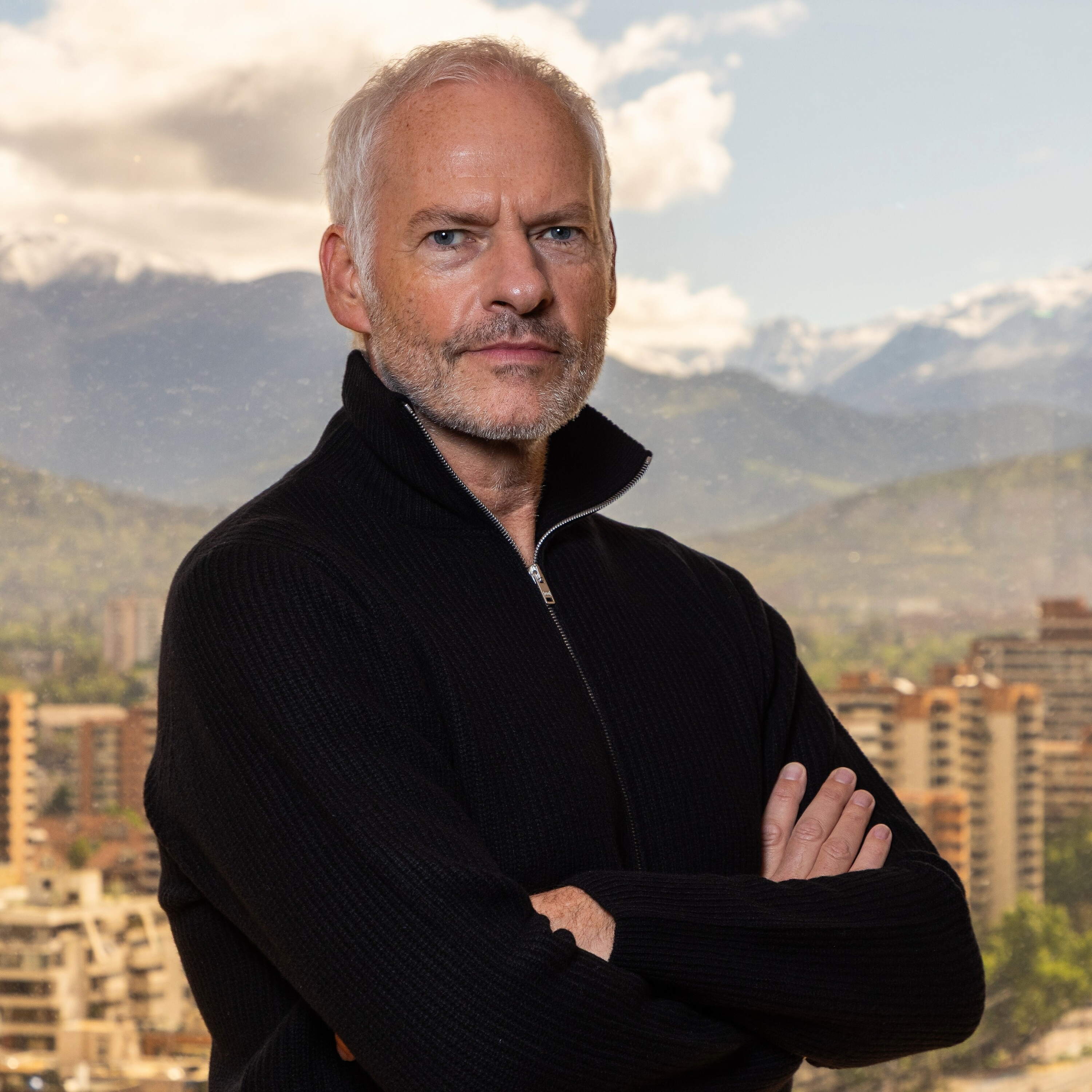
Martin McDonagh (writer/director).
Written by AI. May contain mistakes.
Chapters
0:28
Exploring Wild Horse Nine
Discussion of McDonagh's new film and its themes.
“It's set in 1973, just before the CIA-assisted coup that overthrew the democratically elected socialist president of Chile, Salvador Allende.”
1:04
CIA Agents in 1973 Chile
Overview of the film's setting and main characters.
“Chris has convinced Lee to come with him to Easter Island.”
1:46
Flirting and Foreshadowing
A scene at the Santiago airport that hints at deeper themes.
“I hope they're going to be extraordinarily mysterious.”
3:21
Themes of Guilt and Regret
McDonagh discusses the core themes of guilt and regret in his film.
“Your country's going to be absolutely fine.”
4:12
Conscience and Morality in Film
Exploring the moral dilemmas faced by characters in McDonagh's films.
“Like, do CIA hit men who participate in coups kill lots of people, as John Malkovich kind of brags about?”
5:06
Male Friendships Explored
Analyzing the portrayal of male friendships in McDonagh's work.
“So in Bruges, Banshees and the new movie Wild Horse 9, they seem like a trilogy.”
6:13
CIA Influence and Personal Connection
McDonagh shares his interest in the CIA and its historical actions.
“I think it's more the truth of how we can speak with each other when you don't have to worry about being macho or tough or any of those things.”
7:41
Religious Iconography in McDonagh's Films
Discussion on the use of religious themes and imagery in his work.
“I mean, you're from England, from an Irish family.”
11:18
Guilt Imposed by the Church
McDonagh reflects on the guilt instilled by his Catholic upbringing.
“But, you know, cinematically, I think that's, you know, I've left the Catholic Church a long time ago, but I still find all of that very, very interesting and visually stimulating.”
12:20
Questioning Faith and Authority
Discussing how punk rock and personal experiences led to questioning faith.
“um all that stuff that i think that's the first time when you can't it you're getting smarter and you realize that if these guys care that much about you know you touching yourself some evening then what are they doing?”
Show all 21 chapters
13:32
Exploring Themes in In Bruges
Analysis of guilt and morality in the film In Bruges.
“I was like proper Catholic little kid around the age of 10 or 11 or 12.”
14:00
Exploring Guilt and Innocence in 'Wild Horse Nine'
Discover the complex themes of guilt, innocence, and character motivations in the film 'Wild Horse Nine'.
“And when he shot and killed him, the bullet also killed a young boy who Colin Farrell's character didn't know was there because he was standing behind the priest.”
21:45
Martin McDonagh's Journey to Finding His Voice
Learn about Martin McDonagh's evolution as a playwright and filmmaker, influenced by theatrical giants.
“And if you don't have eligible insurance, you can still get 20 % off your first month.”
25:04
Character Dynamics and Radical Choices in Storytelling
Explore the motivations behind character decisions and the narrative surprises in McDonagh's films.
“It's a weird one, but, you know, Christopher and John, I mean, they're two actors that I've adored since childhood, really.”
28:00
Exploring the Themes of 'Wild Horse Nine'
Martin McDonagh discusses the complex characters and themes in his film.
“So everything that happened that Brendan puts into play after that, as radical and as dangerous and as violent as it might seem, isn't as violent and dangerous as the place he's in at the beginning of the film.”
35:00
Martin McDonagh's Background and Inspirations
McDonagh shares insights about his upbringing and the influences on his work.
“When you started writing, you were living with your brother in an apartment together.”
42:01
Exploring the Shadows of Poe and Conan Doyle
Discusses the literary contributions and mysteries surrounding Poe and Conan Doyle.
“And what do the things we can't stop talking about say about us?”
42:57
Emily Ogden's Perspective on Poe
Maureen Corrigan reviews Emily Ogden's unconventional biography of Poe.
“Poe died under mysterious circumstances at age 40, leaving a legacy of essays, eerie poems, and short stories.”
44:24
Conan Doyle's Legacy in Detective Fiction
Explores Sir Arthur Conan Doyle's impact on detective fiction and his characters.
“the edges of human experience, to madness, to loneliness, to pain, and the causing of pain.”
46:26
Lindsay Fitzharris and the Real-Life Inspirations
Discusses Lindsay Fitzharris's new book connecting real doctors to Sherlock Holmes.
“would attain that rarest form of literary immortality.”
48:34
Upcoming Guest: Mona Chalabi
Teases an interview with journalist Mona Chalabi about financial security.
“She reviewed Darkness Becomes Bright by Emily Ogden and Sleuth Hound by Lindsay Fitzharris.”

Ask about this episode
Get the gist, explore an idea or ask about something said.
 Claude
On Fresh Air, what are the key points of this episode?
Searching your listeningTranscript
Automatic transcript. May contain errors.
0:00This message comes from NPR sponsor, the official Gilded Age podcast from HBO. Unpack each episode of the Gilded Age and hear from the people who bring 19th century New York to life. Watch the official Gilded Age podcast on HBO Max or listen wherever you get podcasts. This is Fresh Air. I'm Terry Gross. The films In Bruges, The Banshees of Inishiran, and Three Billboards Outside Ebbing, Missouri were written and directed by my guest Martin McDonough. Now he has a new film he's written and directed called Wild Horse Nine. It's a comedy drama that continues some of the themes at the center of In Bruges and Banshees, conflicts between two longtime male friends, conscience, guilt, sin, revenge, the possibility of redemption, the inevitability of death, and the immortality of great art.
0:48It's set in 1973, just before the CIA-assisted coup that overthrew the democratically elected socialist president of Chile, Salvador Allende. The two main characters are CIA agents based in Santiago, Chile. Chris, played by John Malkovich, and the younger agent he mentored and works with, Lee, played by Sam Rockwell. Chris has convinced Lee to come with him to Easter Island. Chris has terminal cancer and knows he has little time left. He's become a loose cannon, blurting out in public places stories about the CIA that sound far-fetched, but he was really part of. Their boss, played by Steve Buscemi, is afraid Chris will reveal some of the CIA's most closely held secrets.
1:33Early in the film, Chris and Lee are at the Santiago airport on their way to Easter Island. Chris starts flirting with two young Chilean women heading there too. Easter Island, boy. The heads. You know what I hope? I hope they're going to be extraordinarily mysterious. It's actually called Rapa Nui. How's that, miss? Easter Island. Its indigenous name is Rapa Nui. Yeah. Oh, he believes this. You shouldn't even know the word indigenous at your age. We are going to Easter Island, all right? In Nidilis. Okay. Girls, can I ask you something? How do you like your new president? Your new left-wing president?
2:29What did I say about before, Chris? Yes, we like him. Everybody likes him. Not everybody. That wouldn't be true. Well, enjoy him while you can, ladies. And what's that supposed to mean, enjoy him while you can? I'm not saying nothing. I'm just saying enjoy him while you can, that's all. And who the f*** are you? The CIA? We are the CIA, actually. We're totally the CIA. We're not the CIA, obviously. Yes, we are, I swear. He's just being shy. We came down here to destabilize your democracy, and it is going great. So we decided to take a little side trip to Easter Island and see the big heads. How about we board an airplane, Chris?
3:13The girls don't believe me about destabilizing their democracy thing. Of course they don't, because it isn't true. Your country's going to get... Your country's going to be absolutely fine. Martin McDonough, welcome to Fresh Hair. It's a pleasure to have you on the show. Thanks, Terry. If I understood correctly, when you started to write the screenplay for this, at the top of your first page, you wrote guilt and revenge? Regret. Regret. Okay. Yeah, yeah. So have guilt and regret been on your mind a lot? Have you been atoning for a lot of things lately? Me personally? No, it was all about John Malkovich's character in the movie.
3:56And just to remember, you know, despite all the comedy scenes that I knew I was going to write, all the craziness of the journey that the two characters were going to go on, that fundamentally the film had to be about those two things, guilt and regret. I'd add conscience. Like, do CIA hit men who participate in coups kill lots of people, as John Malkovich kind of brags about? Do they have a conscience? Can Malkovich, can his character gain a conscience? And conscience figures into your other movies too. Yeah, yeah, very much. And I do wonder if I've given him more conscience and worries about what he's done than CIA people do in the real world.
4:45I don't really know. But yeah, I think guilt, conscience, all those things kind of come into most of my films. Definitely in Bruges was all about guilt and conscience too. Colin Farrell's character is dealing with that from the very first minute till the end. So I guess it kind of is a through line. Maybe it's an Irish Catholic thing. Maybe it's just me. So in Bruges, Banshees and the new movie Wild Horse 9, they seem like a trilogy. I'm not sure if you intended it that way. But all three of them are about, you know, similar themes, but particularly about male friendships between an older and a younger man, maybe a couple of decades younger.
5:32And that's obviously a theme that interests you, male friendship of two different generations and the conflicts between them, what makes them friends and what makes them uncomfortable or unbearable to each other at the same time. I guess I am interested in male friendship when it's not a buddy, you know, bromance type thing, when it's a bit more when you're open to the sensitivity of male friendships and the gentleness. Yeah, conflict. Yeah, but it's not that that I'm probably trying to get at, I don't think. I think it's more the truth of how we can speak with each other when you don't have to worry about being macho or tough or any of those things.
6:23So it's more about that, I think, than anything else. I will mention that in Banshees of Vinicharian that Brendan Gleeson's character cuts off a finger every time he's spoken to by his friend because he's tired of him and he wants to focus on his art. So if that's not tension and conflict, I'm not sure what is. Well, yeah, you've got me there, Terry. I know I do. But I would say that that's the sort of outlier of the three movies. You know, that's the one that's at the end of a friendship. That's like the disintegration and death of a friendship, whereas the other two were sort of right in the middle of the love affair, if that's not too strong a word for it.
7:12This one particularly, like if the last one was all about the end, this is all about being in the middle of, you know, two guys who are still very affectionate towards each other, have an unspoken love, I guess, for each other. And that was definitely the thing to explore. And one of the beautiful things about John Malkovich and Sam Rockwell playing the parts is that, you know, they do love each other off screen and they don't hide on screen how much affection they have for each other. What got you thinking about the CIA? I mean, you're from England, from an Irish family. And the new film is set in 1973, right before the CIA assisted coup.
7:55The Kennedy assassination figures into the movie. So these are things like before you were born in a country that you weren't living in. But still, it seems interesting to me that you were so interested in that chapter of American history and the CIA. Well, I think I learned about the CIA's involvement in Chile back when I was in my sort of mid-teens. There was a song by The Clash that kind of talked all about Allende and Victor Jara and the Santiago Stadium and the horrors therein. And as a kid growing up in London, in the West, obviously, I was fascinated by that, by the fact that we're not really taught about that.
8:40We're not taught about the horrors that our side perpetuates in the world. And I don't know if it's like being, you know, a London Irish kid that meant I was more questioning of those sorts of things. But I think that's a part of it. I think when you're you've got an Irish background, you distrust what you're taught about Ireland from the UK's perspective as a kid growing up in a UK school. And I think when you have that, you start to question what you're being taught about everything in the world. So I guess my eyes were opened about what the American government was doing in Chile, in the Congo, in Guatemala, all of those places as a teen.
9:22And that remained with me. And when I decided to write something about Easter Island, it was only when I started thinking about the CIA of it that things started to fall into place. Easter Island is a dependency of Chile, as you know. So that kind of freed up this story I was telling. In the three films that we've been mentioning, In Bruges, Banshees of Inesherin, and the new one, Wild Horse Nine, they all start with some kind of religious iconography, like a really large statue of the Madonna. In Bruges, they're in and out of churches, sightseeing. and in Banshees, there's so many like crosses and crucifixion images and the Madonna.
10:09And I'm wondering, I know you grew up Catholic. You grew up in London in an Irish neighborhood and an Irish family. Were you exposed to a lot of, you know, like Christian iconography? And where did you find beauty and were there images that really scared you? Because, you know, images of like saints and the crucifixion, they're bloody. A lot of children find them really terrifying. Yeah, I never had that. I always kind of liked the bloody ones. But, yeah, I mean, I was brought up Catholic, so I went to Catholic churches and beautiful Catholic churches throughout my childhood. And even now, if I'm in a foreign town or in the countryside, I'll always go into a church and have a look around.
10:57So I'm always drawn to it. I'm always drawn to Catholic imagery, especially. But and in art galleries, I remember we went into an art gallery in Bruges and it's all of that medieval, you know, Catholic art that we actually use in the film. And it's kind of horrific. There's beheadings and boilings and, you know, all of the Hieronymus Bosch is not a walk in the park. But, you know, cinematically, I think that's, you know, I've left the Catholic Church a long time ago, but I still find all of that very, very interesting and visually stimulating. So, yeah, I think it's always going to be a part of me and probably a part of my art, I think.
11:43But especially when you're talking about subject matter, like, as I say, regret and guilt and, as you say, conscience. What were some of the things that you were made to feel guilty about by the church when you were growing up? And I assume that includes some things like you should feel guilty about and some things like maybe you shouldn't feel guilty about. well of course they made you feel guilty about every single thing that's possible to feel guilty about um but i guess it's when you hit your teens it's it's you know and your sexual awakenings and um all that stuff that i think that's the first time when you can't it you're getting smarter and you realize that if these guys care that much about you know you touching yourself some evening then what are they doing?
12:37I think that's the straw that broke the camel's back for me. It's kind of like when I thought, well, shouldn't you be doing something about, you know, world politics or war or, you know, leave me alone in my bedroom to do what I want? And I think that's when things started to go wrong for me with the Catholics. So was it like a heart split or like you decided like you're not going to church? Did you tell your parents like you've given up on Catholicism because you like to touch yourself in your bedroom? I definitely didn't mention that part. Not to my mom anyway. No, I think the consciousness about that arose.
13:23I think I kind of kept quiet about my disdain for it. I think they were still forcing me and my brother to go to church. I was in the choir, you know. I was like proper Catholic little kid around the age of 10 or 11 or 12. But I think it was like, you know, getting into punk rock and that kind of music, which at that age, that also led to a questioning of all of that. I want to ask you something about Ambrouge. So Colin Farrell and Brendan Gleeson play hitmen, and Farrell is a hitman who was sent to kill a priest. And when he shot and killed him, the bullet also killed a young boy who Colin Farrell's character didn't know was there because he was standing behind the priest.
14:14And the boy was carrying a list of pretty innocent things that he wanted to tell the priest during confession. and Farrell's character can't live with himself, but he can't die by suicide because that's a sin. And after that incident, their boss sends them both to Bruges in Belgium for a couple of weeks without really explaining why. While they're in Bruges, they go sightseeing in very old churches and cathedrals. They look at Christian iconography. There's a scene in which Farrell and Gleeson are talking about how they reconcile being hitmen. But Farrell can't get relief from the guilt he feels about killing the boy.
14:54And we don't really know why he was assigned to kill the priest and whether he was a good man or a bad man, this priest. But he does feel guilt about killing the boy. But because of the choices I made and the course that I put into action, a little boy isn't here anymore. I'll never be here again. I mean here in the world, not here in Belgium. Well, you'll never be here in Belgium either, will you? I mean, he might have wanted to come here when he got older. I don't know why. And that's all because of me.
15:34He's dead because of me. And I'm trying to... I'm trying to get my head around it, but I can't. I will always have killed that little boy. that ain't ever going away. Ever. Unless maybe I go away. Don't even think like that. Was that intentional to think about what a character would feel guilty about and what they'd be fine with? Yes, definitely. And I think killing a child is always about killing innocents And I think there was probably a bit more of a backstory in the original script about the priest and what he'd been like as a character. But weirdly, you know, none of that made the finished film.
16:28And I didn't mind that because I'm vehemently not on the side of priests anymore. You know, I question and suspect them at every turn. And that's part of why Colin Farrell's character doesn't feel guilt about that guy. How seriously did you take confession when you were still in the church and not questioning it yet? Very, very. And again, it was around the age of 13 or 14 that I just started thinking, why am I talking to this man and telling him my private stuff? Like I would spend most confessions trying to think up things that I hadn't even done to have something to say because we had to go like every two or three weeks.
17:18And there's nothing that a 12 or 13-year-old kid does that is really worth confessing. And I think all of my – I still feel guilty every day and I never do anything wrong. It's good to have a conscience and guilt about stuff that you feel that's wrong. But all of my art, I think most of the plays, you know, the priests never come out of it well because I distrust and am angry about everything that they did in Ireland, in UK and all over America, all over the world, you know. When you wanted to become a writer, first a playwright and then a filmmaker, did that seem like an impossible journey? yeah very much so I think my first love was movies and my first attempt at writing was screenplays but that was like I left school very young at the age of sort of 16 or so and I didn't really write at school but then fell in love with the attempt at it after I left I read a lot I watched an awful lot of movies around that time but never really thinking that it was a possibility.
18:27But then I kind of landed on trying to write plays. And at least in London at that time, there was places for you to send a brand new play that would read it, you know, without having an agent or any of that. So I stuck at that for a while. Again, it seemed like a dream. But the more I stuck at it, the better the work got. And because I was writing plays, which wasn't the art form I ever really cared about or loved at the time. I think I was able to bring a sensibility from the movies I liked onto my stage work. And what does that mean? What was the sensibility and how did it translate to theater?
19:07I always think of like theater dialogue. This is changing. But theater dialogue being like more formal, less idiomatic. I think that that changed, especially like with David Mamet and other contemporaries. So it's not a thing like it was before. But was that your feeling? Funny you should say that, that I was, I think, 14 when I went to see Al Pacino in American Buffalo. And I didn't know anything about David Mamet at that time. I was a big fan of Al Pacino. And that just blew my mind. I didn't think the plays could be like that. that they could be so sort of aggressive in their dialogue content.
19:50I think that was the first thing that taught me that plays could be something more exciting than the other things I was seeing on stage at the time. And I think that allowed me into reading Harold Pinter. And, of course, Mamet was a big devotee of Pinter. And I think it was Pinter especially that taught me that British plays, or plays per se, could have a danger and an excitement and a truth that was different to the rest of the theatre I was reading and seeing at the time. My guest is Martin McDonough. He wrote and directed the new film Wild Horse Nine, as well as Banshees of Inishirin, In Bruges, and Three Billboards Outside Ebbing, Missouri.
20:40We'll hear more of the interview after a break. And you can keep up with Fresh Air by subscribing to our podcast. And leave us a review. It helps a lot. Thank you. I'm Terry Gross, and this is Fresh Air. Stay tuned for the following announcements and messages from our sponsors. This message comes from the UPS Store. The UPS Store is open this holiday to help make sure your small business can stay at its best. During the holiday, customers have access to professional printing, packing and shipping, shredding, mailbox services, notarizing services, and everything else your small business could need.
21:13Find nearby locations and keep tackling important tasks at the upsstore.com. Most locations are independently owned. Products, services, pricing, and hours of operation may vary. See Center for details. This message comes from BetterHelp. Your brain has limited storage. So why is it still holding on to that embarrassing moment from years ago? BetterHelp is an online therapy platform that gives you space to talk about what's taking up too much of yours. BetterHelp is now in network with more than 125 health plans, with many co-pays as low as$15 for eligible members. And if you don't have eligible insurance, you can still get 20 % off your first month.
21:53Visit betterhelp.com slash NPR. Cost and coverage may vary. Discount cannot be combined with insurance. This message comes from Rinse. A well-designed life doesn't run on default settings. You chose the walkable neighborhood. your coffee order became oddly specific. You spent three weeks choosing your mattress, but your laundry routine, that one somehow escaped the redesign. Should that really be the one update you skipped? Consider this the patch. Rinse picks up your laundry and dry cleaning, cleans it expertly, and delivers it back. Sign up today at rinse.com. Rinse. It's time to be great. Hi, this is Molly C.V.
22:33Nesper, digital producer at Fresh Air. And this is Terry Gross, host of the One of the things I do is write the weekly newsletter. And I'm a newsletter fan. I read it every Saturday after breakfast. The newsletter includes all the week's shows, staff recommendations, and Molly picks timely highlights from the archive. It's a fun read. It's also the only place where we tell you what's coming up next week, an exclusive. So subscribe at whyy.org slash fresh air and look for an email from Molly every Saturday morning. Early on you were inspired by an emulated Mamet and Pinter But it was when you started writing about Irish characters That you really found your voice And can you talk a little bit about the difference between Writing in the voice that you heard growing up In your family and in your neighborhood Versus like a British Pinter or American Mamet kind of voice well yes that's a good question i think when i was when i discovered those two guys everything i was writing was sort of a cheap imitation of them but when i tried to use their approach to dialogue which i think is a heightening and a theatricality combined with a strange truth that they found about how weird it is the weird way that we speak.
23:58We speak in half sentences and non sequiturs and all of that. It was only when I tried to transplant that to the accents of my uncles that I was hearing all around me, something got freed in me. It felt like I was doing something that was new and that wasn't a copy of Pinter or Mamet. And it was a heightening. I don't think you can ever write exactly how people speak, and I've never really tried to. But it captured a poetry that I think Pinter and Mamet captured in their idioms. Now, also, like you've written for Christopher Walken and John Malkovich, and they both have such idiosyncratic ways of phrasing their sentences.
24:49So I don't know if you wrote the part specifically for them or cast them after the fact. No, not in those two cases, no. You didn't write it for them? No. So how did their way of speaking change the way you heard your lines? It's a weird one, but, you know, Christopher and John, I mean, they're two actors that I've adored since childhood, really. you know, and nothing is changed or tailored to the way they deliver a line. But somehow, like right now, I can't imagine anyone else but John Malkovich playing this part because they stick exactly to the lines as written, but they make it entirely their own.
25:33You know, they've done that through all of their lives, I guess. And there's just an immense joy to it. But I mean, I always write for Sam Rockwell, weirdly. This was written for Sam, but not for John. But right now I can't hear, you know, anyone else in it but John. And I love that. So in Banshees of Inner Sheeran, Brendan Gleeson is trying to break up with his longtime friend Colin Farrell. And he thinks Farrell is boring and he doesn't want to waste his time having idle, boring conversations with Colin Farrell's character anymore. and he's not succeeding in getting Colin Farrell to get the point here that he no longer wants to be friends.
26:22So at some point he tells him, I'm going to cut off a finger every time you try to talk to me just to prove I really mean it. And no one takes him seriously. He's a fiddle player. I mean, that's his joy is playing fiddle at the pub and writing songs. Colin Farrell wants to apologize and like get things back on track with their friendship. He doesn't know what he's apologizing for, but just in case he did something wrong. Why did you have him go to such an extreme? I mean, I don't even know how he would do it. How he would cut? Yeah, like what tool he would use, how he would endure the pain of cutting off his own finger.
27:09We had a nice pair of shears. So I think there's a, I think Brendan and I kind of worked it out. You kind of have to hold it with your elbow and kind of push it down. Anyway, I think it's funny that Brendan and I talked about how radical his character is being towards Colin's character. And, you know, I mean, it's an awful thing to threaten. It's an awful thing to start going through with. but we realized that even before the story starts Brendan's character is probably suicidal and part of that is that he's not doing the art as well enough as he wants to and in his probably unstable mind Colin's character is another factor that's stopping him from being an artist which has led him to a place of potential suicide So everything that happened that Brendan puts into play after that, as radical and as dangerous and as violent as it might seem, isn't as violent and dangerous as the place he's in at the beginning of the film.
28:16That as dangerous as he was being and as awful as he's being, it's not actually necessarily the truth of how he feels about Colin. It's just the most radical thing he can do to free himself to be the person he wants to be. But just in storytelling terms, I found it fascinating. I never sort of do a treatment or know what's going to happen in a story until it happens. So I remember I was like 20 pages, 25 pages into that story. And Brendan's character on the page made that threat. And it was a surprise to me. And that took the story in a whole different to a different place. And and I kind of loved that.
29:00It made it radical. It made it dark and dangerous. But don't forget that if Colin had done what he was told after that, after one finger, you know, it would have been a happy ending and everyone could have lived happily ever after. Brendan, as you know, is a fiddle player and he did manage to play one tune without his forefinger after the – you see it in the film and that's Brendan playing. And so the story could have been happier after that point. But the nature of Colin's character, he's always in his ear. He never listens. And that's the dichotomy, I guess, at the heart of the story. I'm on both of their sides.
29:46I can see it from both of their points of view. So in Banshees, Brendan Gleeson is trying to end his longtime friendship with Colin Farrell. and there's a scene in which he explains he wants to devote his time to playing fiddle and writing a great song. And Farrell thinks it's important being nice and he says niceness lasts. You, calm darling. Do you know what you used to be? No, Parag, what did I used to be? Nice. You used to be nice. Didn't you not? And now, do you know what you are? Not nice. Ah, well. I suppose niceness doesn't last then, does it, Parik? But will I tell you something that does last?
30:32What? And I don't say something stupid like music. Music lasts. Knew it! And paintings last. And poetry lasts. So does niceness.
30:45Do you know who we remember for how nice they was in the 17th century? Who? Absolutely no one. Yet we all remembered the music of the time. Everyone to a man knows Mozart's name I don't, so there goes that theory And anyway, we're talking about niceness Not what's his name My mummy, she was nice I remember her And my daddy, he was nice I remember him And my sister, she's nice I'll remember her forever I'll remember her And who else will? Who else will what? Remember Siobhan and your niceness. No one will. In 50 years' time, no one will remember any of us. Yet the music of a man who lived two centuries ago...
31:35Yet, she says, like he's English. Come on, Borek. I don't give a feck about Mozart or Borvalvin or any of them funny name feckers. I'm Borek Sulewan. and I'm nice. In reality, you know, even though Colin Farrell's character says, I'm nice, niceness lasts, it doesn't. He does things that aren't nice. He seeks revenge in a terrible way. Yeah, I think that's sort of the dichotomy at the heart of the story is all the questioning that I had as a writer is like, is he really nice? Like if he was, if he really cared about the other person's wishes, then he would listen more to what he's being asked to do.
32:27So the whole, I think, crux of the story is that if you're selfish in that way, is that nice? Are you being a proper friend? If your friend asks you to stop, why wouldn't you stop if it's not some kind of insecurity or egoism on your part, I guess? Because he means so much to Colin Farrell. He's like his only real friend and it's been going on for so long and he can't comprehend why Brendan Gleeson would want to break up the relationship. absolutely but I mean I think the whole film is sort of written from about a breakup of mine like a proper love breakup that happened as suddenly as what happens in the story and your natural instinct when that happens is to try and hold on and find out why and how and if it can be solved or resolved but in a lot of breakups you can't and you don't know why and you'll never know why and I think that was sort of what at the heart was at the heart of what I was trying to get at, you know, but just made it a platonic story instead of a love story.
33:31And you feel wounded in a situation like that. Completely and broken. And you need, how can you not want to find out why and how? But that's not what life is like, I guess, in terms of breakups, romantic breakups. My guest is Martin McDonough. He wrote and directed the new film Wild Horse Nine. We'll be right back. This is Fresh Air. Stay tuned for the following announcements and messages from our sponsors. This message comes from Rinse. With Rinse, your laundry will come back fresh, folded, and ready to wear right on schedule. One tap or text is all it takes. No calling, no reminders. Same as always.
34:12Rinse. It's time to be great. More at Rinse.com. Hey, it's Mike Danforth, executive producer of Wait, Wait, Don't Tell Me. Here's a great way to get the perks of being an NPR producer without doing any of the work. Join NPR+. With NPR +, you get extended interviews, inside looks at your favorite shows, and more. All while supporting NPR and never having to pull an all-nighter. Or if you work on one of the new shows, an all-morninger. Sign up at plus.npr.org. Happy fall! Yes, the days are getting shorter and colder, and the rain can be a drag. But this is also the perfect time of year to get cozy.
34:52LifeKit has lots of ideas so you can embrace the change of seasons. with episodes on everything from making soup to exercising outdoors. Listen to the Life Kit podcast in the NPR app or wherever you get your podcasts. When you started writing, you were living with your brother in an apartment together. Your parents had already moved back to Ireland. I think you were in your 20s at this time. And your brother, I saw one of his films. I saw Calvary. Oh, that's a very good one, yeah. Oh, yeah, it was great. Right. And Brendan Gleeson is in it and Domhnall Gleeson, his son, is in it too. And they're both great in it.
35:29But anyways, you were writing together and you described it as like a – I think you called it like a writer's frat house. Well, frat house would be too strong a word. Maybe the writer of the article described it that way. Yeah, maybe, maybe. It was probably the saddest, loneliest frat house there's ever been. There wasn't a lot of anything in that house. But yeah, I'd be downstairs writing. He'd be upstairs. I'd be downstairs writing a play. He'd be upstairs writing a film. We'd meet for a sandwich and watching, you know, a terrible soap opera on TV and then go our separate ways for the rest of the afternoon.
36:08So it was, yeah, it was a place I'd never want to go back to, but it served its purpose. Would you describe the neighborhood where you grew up? And I ask because setting is so important to your films. Like Three Bullboards is set in Ebbing, Missouri. Your new movie is set on Easter Island. Banshees is set on an island off of an imaginary island off of the mainland of Ireland. And in Bruges is set in Bruges. a surprise um so i mean like setting shows up in the title often not only in the script itself so where like tell us where you are from like the first setting that you knew oh me personally it's in a small working class area of of southeast london uh called the elephant and castle weirdly and even though it's like a little working class London neighbourhood, every little house on my little block was Irish, you know, so obviously the kids are kind of London Irish kids but all of the families were from Dublin or from the west of Ireland.
37:26Four, no, eight little prefabricated bungalow houses, each with a little garden. So you could hear, you know, the kids playing in the next door garden. You could hear the Irish accents of calling the kids home. We'd play football in the streets. It was kind of idyllic, you know, because I've got cousins who grew up in – who at least started their lives in tower blocks in London. And growing up in a little bungalow with, you know, Irish neighbors like that was a beautiful way to come into the world, I think. Do memories still stick in your mind from that? Well, like, because all of the neighbors were Irish, it felt like that's what, and all of my uncles and aunts around in different other pockets of London were Irish.
38:18That sounded like the natural accent to be surrounded by, you know. Also, especially growing up then, there was a lot of prejudice against the Irish in London. I'm sure there probably still is. so that kind of feeling of being an outsider within your own community too was probably part of it and you know from mum and dad they were always very proud to bring us up as Irish kids and as a team you sort of kick against that a little bit too until you find the Irish sensibility that you like you know I didn't want to go and study Irish dancing like my mum wanted me to do or go to play Irish football or any of that stuff.
39:03Or listen to traditional Irish music? Well, I'd hear that because they'd play it all the time. People like the Chieftains would be on all the time. And you'd hear that from the other houses on the block. But as a kid, I sort of kicked against that. But it wasn't until I started hearing the Pogues when I was in my early teens who used Irish traditional music but brought a punk rock sensibility to it, that's when everything fell into place for me about not just music but an Irish sensibility and a London Irish sensibility that I could run with and be especially proud of. And make your own. Do your version of it.
39:43Yeah, I think I followed in the footsteps of Shane McGowan and the Pogues in theatre as much as anything. And we forget that back in Ireland when the Pogues first came out, They were disrespected by a lot of the media who thought they were rowdy drunks who were, you know, portraying Ireland in a bad light. You know, I remember those days very specifically. And that was all part of it, you know, to have a bit of a punk rock ethos. Do you feel like you still have a punk rock sensibility? I mean, I think it's leveled out over the years. Because, you know, Wild Horse Nine has a bit of a, it's probably the most political thing I've done.
40:22And it's probably got the most anger in it. And I guess those are sort of punk rock sensibilities there. Martin McDonough, thank you so much for doing this interview. I really appreciate it. Thank you so much, Terry, for having me. I enjoyed it very much. Martin McDonough wrote and directed the new film Wild Horse Nine. After we take a short break, Maureen Corrigan will review new books about Sir Arthur Conan Doyle and Edgar Allan Poe. This is Fresh Air. Stay tuned for the following announcements and messages from our sponsors. This message comes from Rinse. Your dog believes you are magnificent, capable of anything.
41:02Your dog has watched you spend hours a week moving fabric between machines and has never once lost faith. The question was never whether you could become the person your dog thinks you are. It's what's in the way. Turns out, just the laundry. Not anymore. Rinse picks up your laundry, cleans it expertly, and delivers it back while you get on with being magnificent. Sign up today at Rinse.com. Rinse. It's time to be great. This week on Shortwave. What is something found on both true crime TV shows and real life investigations? Questionable forensics. And it's almost always accepted by lay jurors as providing an objective scientific truth.
41:48Interrogating junk science. That's on Shortwave from NPR. Why are we all obsessed with the same show? Why does something happen online suddenly feel like it says something about real life? And what do the things we can't stop talking about say about us? I'm Brittany Luce, and on It's Been a Minute, We look beyond what's happening in culture to get at what it means and why it might matter to you. Listen to It's Been a Minute on the NPR app or wherever you get your podcasts. Both Edgar Allan Poe and Sir Arthur Conan Doyle explored the shadow side of human behavior in their works, and both writers have generated mountains of literary criticism.
42:28Our book critic Maureen Corrigan says that two new smart books about Poe and Conan Doyle remind us that there's still a lot left to discover. Edgar Allan Poe is our founding literary enigma. Born in Boston in 1809 to actor parents, he was orphaned and taken in around age three by the prosperous Allan family of Virginia. What followed was a short, troubled life. Poe died under mysterious circumstances at age 40, leaving a legacy of essays, eerie poems, and short stories. Among his triumphs is the detective story, which Poe invented. The greatest mystery Poe generated, however, remains unsolved, that of the source of his almost supernatural talent and its lasting hold on readers.
43:25Many biographers and critics have tried to crack that mystery. But if I were rash enough to speak for Poe, I think he might give Emily Ogden's slim, strange new book, Darkness Becomes Bright, His Blood-Red Waxen Seal of Approval. Ogden, who's a professor at Poe's alma mater, the University of Virginia, says she fell under his spell when she had to teach his work. Here's how Ogden explains her project.
44:24the edges of human experience, to madness, to loneliness, to pain, and the causing of pain. You need to follow him. Ogden's book is an unconventional mix of biography, exploration of the obsession he inspired in translators like Charles Baudelaire, and her own account of how Poe's work infiltrates her thoughts. She frames darkness becomes bright with a true-life incident drawn from the diary of one of Poe's friends, a Philadelphia engraver named John Sartain. In 1849, an agitated Poe turned up at Sartain's workshop and insisted they go on a midnight ramble to the Fairmont Water Works, an early municipal water facility.
45:20There, for hours, on a platform high above the Schuylkill River, Sartain kept his friend from jumping. Ogden incisively explores how Poe's work emerged both because of and despite such personal torments. Sir Arthur Conan Doyle regarded Poe as unsurpassable when it came to detective fiction. Poe, wrote Doyle, was the father of the detective tale and covered its limits so completely that I fail to see how his followers can find any fresh ground which they can confidently call their own. Fortunately, Doyle needed to supplement his unprofitable medical practice, so he tried his hand at a mystery story anyway and published his first Sherlock Holmes adventure A Study in Scarlet, in 1887.
46:20In total, 59 more tales would follow, and Holmes and Dr. Watson would attain that rarest form of literary immortality. People so believe in their existence that letters from hopeful clients still arrive at 221B Baker Street. Conan Doyle and his characters have been so thoroughly excavated by scholars, it's hard to believe any clues have been missed. But I've learned not to underestimate medical historian Lindsay Fitzharris. Her non-fiction book, The Facemaker, about pioneering World War I plastic surgeon Harold Gillies, was one of my top books of the year in 2022. In her new book, Sleuth Hound, Fitzharris delves into the story of two doctors, surgeon Joseph Bell and early forensics expert Henry Duncan Littlejohn, who made such lasting impressions on one med student at Edinburgh's Royal Infirmary, that along with a ballistics expert named Dr.
47:30Watson, he gave them all a second life in literature. Bell is the best-known figure, nicknamed the Demon of Diagnosis. He could tell a patient's occupation by reading the scars on his hands. What Fitzharris illuminates is Bell's investigative work with Little John on some of Scotland's most horrific murder cases, even, she says, the Jack the Ripper case. Along the way, Fitzharris gives readers brief but fascinating histories of, among other things, toxicology, anesthesiology, and the field of public health. Both these revelatory books delve into figures whose stories have been oft-told. And yet, as Poe's detective story, The Purloined Letter, suggests, sometimes telling details still hide in plain sight, waiting to be discovered.
48:33Maureen Corrigan is a professor of literature at Georgetown University. She reviewed Darkness Becomes Bright by Emily Ogden and Sleuth Hound by Lindsay Fitzharris. How much money would it take for you to stop worrying about money? Tomorrow's guest, Pulitzer Prize-winning journalist Mona Chalabi, spent five years following 10 Americans, from those struggling to get by to those earning hundreds of thousands of dollars a year. Her new book, 10 Lives, explores why financial security can feel so elusive. I hope you'll join us. Fresh Air's executive producer is Sam Brigger. Our technical director and engineer is Audrey Bentham, with additional engineering today from Diana Martinez.
49:17Our interviews and reviews are produced and edited by Phyllis Myers, Ann Marie Bildonato, Lauren Krenzel, Teresa Madden, Monique Nazareth, Thea Chaloner, Susan Yakundi, Anna Bauman, and Nico Gonzalez-Whistler. Our digital media producer is Molly C.V. Nesper. Roberta Shorrock directs the show. Our co-host is Tanya Mosley. I'm Terry Gross. Stay tuned for the following announcements and messages from our sponsors. This message comes from Google Workspace with Gemini. One subscription that does it all. personalized AI and premium business versions of Gmail, Google Docs, Drive, and more. Try it free for 14 days at goo.gle slash workspace with Gemini.
50:00This message comes from NPR sponsor Charles Schwab. When is the right time to sell a stock? How do you protect against inflation? Financial decisions can be tricky, and often your own cognitive and emotional biases can lead you astray. Financial Decoder, an original podcast from Charles Schwab, can help. Join host Mark Reepy as he offers practical solutions to help overcome the cognitive and emotional biases that may affect your investing decisions. Download the latest episode and subscribe at schwab.com slash financial decoder.
From the publisher
Filmmaker and playwright Martin McDonagh talks about his new movie, Wild Horse Nine. It’s a dark comedy about two CIA agents (Sam Rockwell, John Malkovitch) who travel to Easter Island before the 1973 coup d’etat in Chile. McDonagh also wrote and directed The Banshees of Inisherin, In Bruges, and Three Billboards Outside of Ebbing, Missouri. He spoke with Terry Gross about the themes across his work – male friendship, guilt, regret, redemption, and mortality.
Maureen Corrigan reviews new books about Edgar Allen Poe and Sir Arthur Conan Doyle.
Subscribe to our free weekly newsletter
Follow us on Instagram
Subscribe to our YouTube channel
Check out the Fresh Air Archives
See pcm.adswizz.com for information about our collection and use of personal data for sponsorship and to manage your podcast sponsorship preferences.
NPR Privacy Policy
More from Fresh Air
All episodes


We use cookies.They keep VO running smoothly and help us improve it. Privacy policy