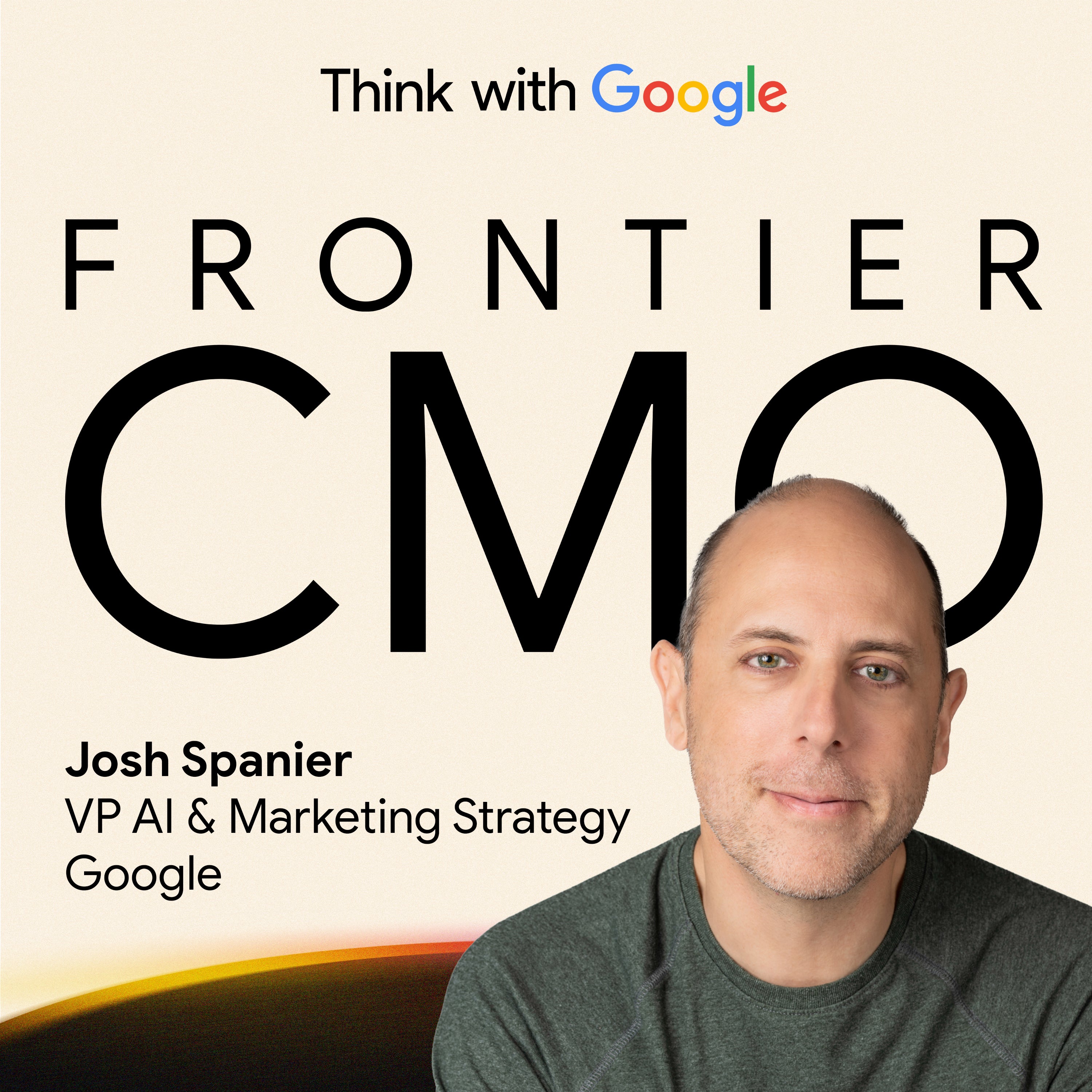
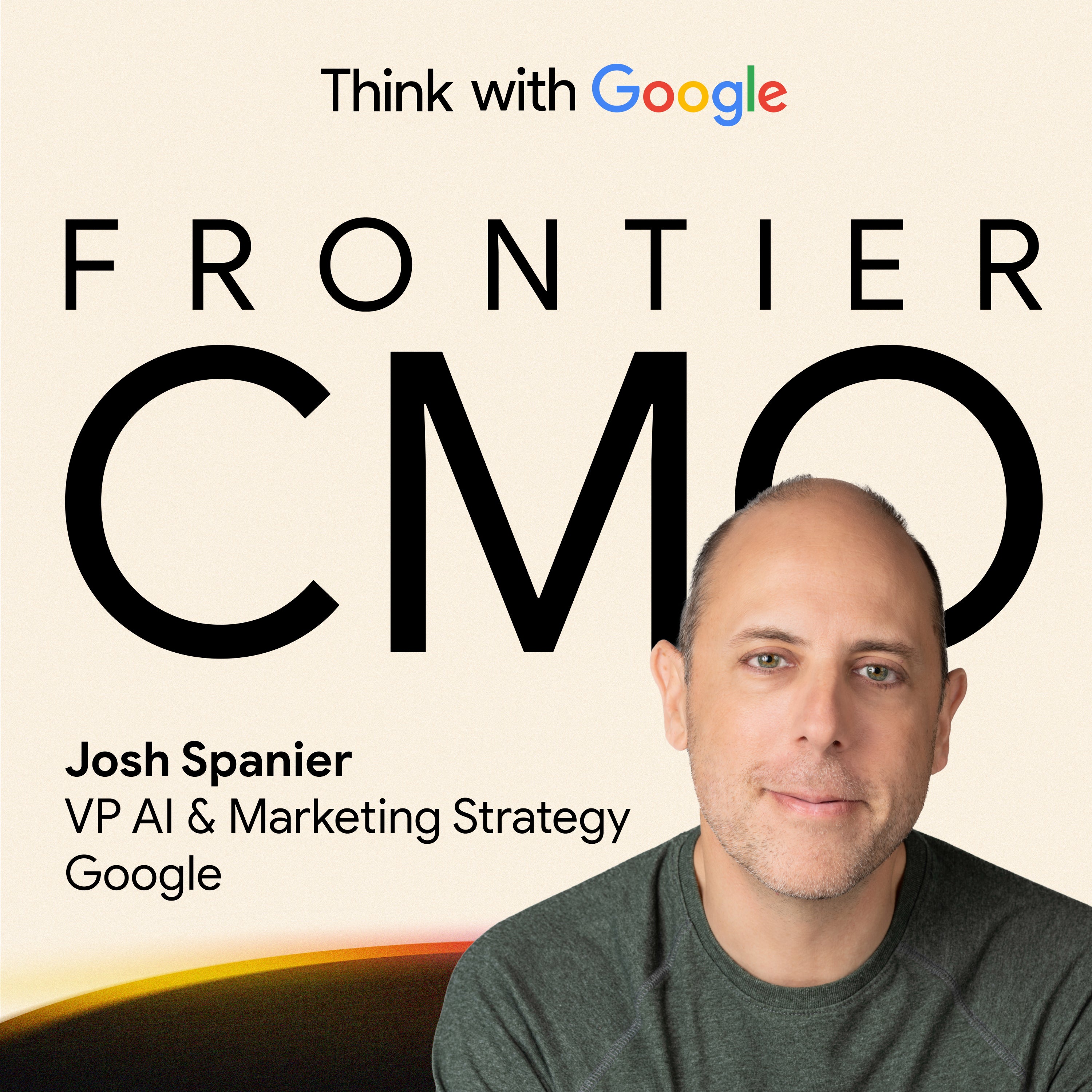
 Frontier CMO Podcast by Think with Google
15 Oct 2026 · 24m

 Add vo to ChatGPT or Claude to ask about everything you hear
vo listened to this episode to put together the overview and transcript, so there may be the odd mistake.
How Rho (digital healthcare) builds a “brand with substance” by centering patient trust, reducing friction to care, and aligning brand and performance marketing—using clinician-backed messaging and AI-enabled growth analytics.
Will Flaherty, SVP of Growth at Rho. Career in growth/marketing roles at SeatGeek (early marketing hire; scaled performance marketing) and Rent the Runway (subscription transition), then joined Rho (then Roman) in 2018.
Healthcare marketing must sell trust; brand is the product’s substance and consistent experience. Trust is built first via human storytelling (celebrity/patients) and then through actions like insurance navigation. Rho blurs brand vs performance by integrating creative, compliance/legal, and metrics.
Super Bowl ad featuring Serena Williams centered on Rho’s GLP-1 weight-loss journey; “rate management” to check/fight insurance coverage; AI tools that answer marketer questions (e.g., ad response geography, retention).
0:00Serena has been just a phenomenal advocate for our brand. She's unparalleled in terms of her excellence. She still needed help and support. It's given consumers a license to say, I might benefit from this.
0:17What does the future of healthcare look like? Could your doctor's office one day be just a few clicks away, powered by AI, but still feel human? My guest today is Will Flaherty, SVP of Growth at Rho, a company trying to rethink not only how healthcare is delivered, but how it's marketed. In less than a decade, Rho has gone from startup to taking some very big swings, including putting Serena Williams at the center of a Super Bowl ad around its GLP-1 weight loss medications. Healthcare might be one of the hardest things to market. Because of the heart of it, you're selling trust. So how do you earn that trust and keep it?
0:52Let's find out together. Here's my conversation with Will.
1:00Will, welcome to Frontier CMO. So glad you're here. You work at Rho. I know Rho. I don't know if everyone else knows Rho. So what is Rho? Tell me about it. So Rho is a digital healthcare platform that really helps patients access the most effective treatments in the most convenient way possible. We do that by really compressing down all the disparate elements of a traditional healthcare journey. So interaction with the doctor, pharmacy, labs, diagnostics, monitoring into one really incredible digital experience that's easy for a patient to use. It's accessible, affordable, and they can access from the comfort of their home.
1:38So this is like telehealth in the future, today, now. Today, now, a patient can go to Rowe, interact with a physician, a physician can assess their condition. If appropriate, write a prescription, then our pharmacies can fulfill that and send that straight to the patient's store. And then if you think about specialty care, most geographies in the U.S. do not have any type of obesity medicine trained doctor. If they do, the wait times and ability to go actually see them at an appointment is, you know, quite prohibitive. So all of those those same tenets of access, ability to kind of give people incredible care without judgment or concern for where they are.
2:13I think that's what what consumers seek. Are you a challenger brand to the health care industry, do you think? We want to approach it in a fundamentally different way. And I think the main focus is patient centricity. If you think about the traditional health care system, in many cases, those businesses are built, you know, at the end of the day not to serve a patient. They're meant to serve a different stakeholder, an employer, a health center. system, pharmacy benefits manager, there are all these players in the system. For us, all the decisions we make, the way that we build the product, the way that we market our products, has the patient at the center.
2:44The other reality is most of our patients are paying out of pocket for our services. And so they're also voting with their wallets, right? If we're not building something that really meets their needs, they can take their business elsewhere. And in the traditional space, oftentimes you're stuck going to the provider that's in your network, the hospital that's in your area. And that doesn't drive any type of incentive for those services to really build for the needs of the patient and listen to the patient as their primary customer. So what I like about what you're describing, and we'll get into the brand part of it in just a minute, is there's a mission there in kind of making the world a better place, right?
3:21Like, do you feel that yourself? I feel that myself. And I think we see that when we talk to our patients. What we really want to do is enable someone to live a better life, relieve the pain and stress in their joints, you know, be able to kind of move around and play with their grandkids. You need to build trust, right? I work at Google. Data privacy, data integrity is incredibly important. It's we put over everything else in health care, in medicine, in being vulnerable with someone. Trust must be the center of what you're doing. So can you just talk a little bit about how you take a startup, which no one has ever heard of, and actually create a sense of trust and keep that going?
3:56Yeah, I think there's the balance of how do you build enough trust for someone to start their journey with you? And I think we think a lot about how we put our brand in marketing. I think one beauty of our marketing is whether we feature a celebrity in an ad or we feature our own patients, there's a commonality in how they tell their story. The real kind of human thread that ties all the stories together helps make consumers more comfortable to give us a shot. Once they've signed up, then we have to build and compound trust through our actions each and every day. How do we deliver incredible care?
4:31How do we make sure we're there to answer questions they have as they go through their journey? You know, for example, in our rate management offering, we help consumers navigate the insurance system. So if they have coverage for GLP-1s, we'll do what we can to check their coverage, fight for coverage if they have it. And then in the long run, you know, we think that when we have an incredible trusted relationship with a patient, they're more likely to talk about it, tell friends, tell others. And so you can build trust. It takes a long time to build trust. You can lose it very quickly. I'm going to put you on the spot in just a second.
4:59Earlier this year, in an earlier episode of Frontage CMO, I interviewed Benoit from Liquid Death. And Liquid Death is a very young company, very challenger brand, operating in a very old category. I kind of feel there's some similarities here. You're a young company operating in a relatively staid conventional category as well. Just distill down the Roe marketing playbook, this modern, progressive, smart marketing playbook into a minute. Yeah, we want to drive incredible value for our consumers in how they can interact and engage with health care. We want to give them really convenient access to the most effective treatments.
5:36And I think that we can do that through our platform or our overall offering better than the incumbent system. in ways that are more accessible, in many cases, more affordable. That's a structural advantage, right? There's substance in what we do. That makes then the job of how do we market this, certainly not easy, but it helps quite a bit, right? One of the themes of Frontier CMO has been the expansion of the CMO's responsibilities beyond just ads and classic storytelling. Tell me about your day or tell me about your week. What are you primarily focused on? I think there's something we can learn from that.
6:09I will spend time with, you know, our channel folks thinking about, OK, we're advertising across different platforms like Google. And so we'll spend a good amount of time just saying, well, you know, where are we? How are we performing? How are our marketing messages, how are consumers reacting to them? But we'll spend a great amount of time with our creative teams. We are constantly thinking about how we create new campaign materials that break through. What might be things that we want to pull into our marketing messaging in the future? spending time with a lot of different functions and different teams to make sure that what we are saying in marketing and that kind of first touchpoint or that pre-conversion touchpoint is mirrored and mapped through to what they experienced on the other side.
6:46Is there anything you've learned in the last just couple of weeks, all these different teams, all these different functions, all these different disciplines, which has been surprising or a change from maybe two or three years ago? The exciting thing for us is, especially in the last two or three years, as we've done more to to build the road brand. We've really just blurred the lines between what is performance, what is brand. The creative folks in our team that are developing our television ads or other marketing assets, they are thinking about what is success and what are the metrics around conversion response as much as someone who's managing a Google account or a television campaign.
7:22Inside of Google marketing, one thing that's worked really well for us, we've had and brought in our finance partners, our compliance partners, and our legal partners into the core creative process. And I'm just interested, because I think we were chatting about something similar, about you're operating in a really regulated and complex space, right? Always got to do the right thing by the customer absolutely every time. What's one of the things that's worked for you in sort of your creative process and how you actually get work out in the world? One thing that really has helped us deliver incredible creative is how we collaborate with all sorts of stakeholders inside our org, not just a creative team and an insights team, but also with partners like our regulatory partners and our medical partners.
8:03So one tenet of our ad program is we want to make sure every message we put in market is, you know, clinically sound, medically backed, scientifically accurate. And so as part of that, you know, we have clinicians that we have looking at our ads, giving us feedback, and it's really powerful and helps us improve the ads because in many cases, they have unique experience working with patients each and every day. What are the concerns that a patient might have when they present to the doctor and say they're looking for help? What are the hesitations and barriers that they often say in clinical practice that's inhibiting someone from starting a journey?
8:38That feedback is incredibly important to not only, again, make sure that an ad is clinically accurate, but that it speaks to the core concerns that patients represent in a real interaction. So you have clinicians within the creative process? Yes. Okay. In marketing, more voices sometimes is painful because everyone has an opinion. but that sounds like it's clearly working for you guys. I think, you know, ultimately for us, it's just a table stakes thing. We find it critically important to have that perspective imbued in all of our ads. I love that. I think good ideas can come from anywhere. They always say, but when you protect the creative, when you protect the idea, when you protect the messaging platform and make it this sort of thing on an ivory tower, you got to look at it from every angle and actually have people input across the board.
9:18Totally. Sounds smart. One of the things I'm really interested in is sort of the evolvement of how we all consume all our media, not just ads, but, you know, we're all watching YouTube or Netflix with our devices open. And, you know, in Google, we say streaming, scrolling, shopping and searching continuously, right? All in one fell swoop. It's changing, I think, how website design is created, how people are interacting with apps. And I'm just fascinated in anyone who's got information or data and how quickly we're processing and how you have to serve things up to get that connection. Yeah. I mean, one thing, for example, traditionally a marketing team might say, hey, we're going to launch a large campaign.
9:52We need to redesign the homepage, right? The first instinct might be to go redesign the desktop experience, right? Largest format, most pixels to play with, traditionally kind of what you think of a homepage. Fast majority of consumers that respond to that campaign are going to see that on their phone. So we've kind of inverted that. You know, our first principle of design is let's go build this incredible magical experience on the phone for the phone screen. Then as a secondary priority, let's think about how it looks on the desktop. When you guys do your work, when you're working inside of Rho, So how are you using AI as part of the marketing function now?
10:25I'd say one is on our growth team, it's really just compressed down the gap between seeking an insight and actually having that answer, right? So we have kind of our business intelligence tool set up where we can ask kind of a common natural language question of what was the geographic distribution of people that responded to a certain television ad? What is the retention rate on a certain product or from a certain marketing activity or channel? Those are things that are questions that kind of quickly pop into the mind of a marketer. But in the past, you might need help from a data analyst, someone who can run a SQL query for you.
11:00That's really compressed down. And so that's led us to make smarter decisions. It's improved the velocity and pace of decision-making as one. And I'm assuming your team is the one building those tools and systems. You're not renting them from an agency at the moment. We're really unique in that not only do we have an incredible data team at Rowe that is thinking about kind of company-wide ability to access information and business intelligence and access AI tools. But we've also taken great pain to build a kind of internal growth data team. So we have a team of folks that are kind of dedicated to growth and marketing who, you know, their mandate and mission is to help empower our teams to find that information.
11:37So kind of those two layers of support, organizationally, it's a priority. And then within our team, it's a priority and something we've resourced and really kind of built infrastructure and people around. So when I first heard about Roe, because someone was talking about finasteride and propecia and those sorts of drugs. I mean, the hair loss ones, not saying anything, but it just came up in conversation. I guess I'm just interested, was there a moment earlier on you've been, you're the SVP of growth, right? You're not the chief marketing officer. And as I understand, you don't have a chief marketing officer.
12:07You're the SVP of growth. Your whole career has near enough been in sort of growth roles. What you're describing there, that building of trust, helping people get the insurance that they sort of they're paying for and don't realize they can they can activate. That all sounds like a larger version of marketing than what most people think about marketing today when they think about ads and think about just conversions. How do you define growth? How do you define your role here? At Rowe, our growth team, we're golden. Not only how do we bring patients into Rowe, but how do we retain them? Your brand is not just what you put in ads.
12:36It's the substance of a product. And consumers are smart. Consumers spend a lot of time researching products and services, particularly in healthcare. But it's really more than just, hey, let's go make a really great engaging ad. We've got to really deliver on all those things consistently over time to, one, win the trust of the consumer in the first place, and then, of course, retain them over time. So with AI in mind, how has your recruiting changed for those disciplines? What do you look for? I think a willingness and eagerness to use those tools. We want to hear people talking about how they apply it in their day-to-day.
13:05We expect everyone on our growth team from the most senior to the most juniors to be using AI tools. In many cases, if appropriate, they have agentic coding tools. They've been building dashboards or utilities that automate some piece of their job that was previously mundane or manual. And I think the reality is we don't want anybody having to do something that is rote, that doesn't allow them to think. And additionally, say on the creative side, I see incredible impact just in these tools, helping, again, arm our designers, editors, copywriters with superpowers. We've not historically done a lot of kind of a one-shot AI ad creation.
13:43We use them more as a thought partner and a collaborator than, you know, somebody we would hand our entire process off to. So the most recent agent I built was last weekend. It was to help my son in English class. He's winning a book. And for whatever reason, the whole sort of lesson guide is from 2015. And he's really in 2026. So I wanted to basically, I built a little agent which basically does a quiz for him. and whether he wants to read the latest chapters. It's so easy. And I'm kind of really surprised that so many CMOs and senior marketers don't recognize that you've got to hone your own skills and actually develop and learn these things.
14:19Otherwise, your teams know you're not using them. They don't. My recent project is my dad just turned 70 and he and I went on a trip to Alaska to go fishing. I built a website that is a companion for the trip. So every day it broke out our itinerary. And one of the cool features is I used AI tools to generate a podcast that we would play at the start of every drive. That experience then actually allowed us to say, well, wait a second, could we use this for audio generation in other places? And we do quite a bit of health educational content on our website. Can we make audio versions of our articles that are explaining common questions that consumers have around health care?
14:57And so if you're not doing that kind of weekend tinkering, it's hard to make those connections or certainly won't make them as quickly. And so I just cannot encourage folks enough to experiment and encourage our teams to experiment. Some of the folks that maybe have the least technical background on our team have built some of the most impressive apps, utilities and tools through AI. So tell me about your partnership with Serena Williams. Serena has been just a phenomenal advocate for our brand. And when we realized there was an openness to her going on a weight loss journey with Roe, we jumped to that opportunity.
15:29Because I think what we saw then in the potential, and we've seen this play out, is that she's unparalleled in terms of her excellence and the respect that people around the globe have for her. She's accomplished everything that you could imagine. You think about her work ethic to do that and accomplish that. There's no question around how hard she works, how much she trains. But at the same time, she still needed help and support. It's given consumers a license to say, I might benefit from this. Let me go talk to a doctor. And then start that journey, start that exploration. I think that's an incredible outcome of that campaign.
16:04When it comes to the measurement of this, right, you launch a program, Super Bowl or otherwise. And there is always a pressure inside an organization. And you're the head of growth, SVP of growth. What is this doing for me right now? What are you looking at? How do you manage that? Because you're not going to see some returns immediately. It's not a question of, is this a performance investment or a brand investment? It's really a question of what is the time horizon we need to see? for that investment to pay off. And Super Bowl is a really great example. It's a really large, you know, bolus of spend on one day.
16:35Would we expect that the Super Bowl would pay off that night, that next morning? Probably not. But we know what we're looking for. We know we're saying, okay, how is it moving the way in which our brand is perceived, the way in which our brand is recalled, the degree at which consumers are searching for our brand specifically on Google. When we look at those metrics and we look at a longer time horizon, we feel really good about that type of investment. It does need to come out in the overall business. So at the end of the day, when we look at three months, six months, a year down the road, we need to be better off for having made that investment.
17:06So I think we're we want to be intellectually honest in how we're judging it. But, you know, have everyone aligned that we need to give time for that investment to pay off. So, well, you've had a long career, started out in management consultancy, but then you sort of transitioned into growth roles. So you spent a year in the management consultancy and then you moved to Seatkeep, right? I went to SeatGeek. I just saw the company as a consumer, like they're doing, you know, really cool consumer internet things. And I just started talking and ended up joining as really the first marketing hire at SeatGeek.
17:39And one of SeatGeek's early breakthroughs is we had built an incredible mobile app experience for shopping for tickets, better than anything else in the marketplace. And so when we launched that and we realized the ability to advertise an app, we realized we actually could grow the business and grow the business profitably by investing in paid marketing. When I joined in late 2011, I kind of just gravitated to that opportunity because that was the lever that was at our disposal to grow the business. From there, ended up scaling our performance marketing team. I think there the lesson was, particularly in an early stage company, find the levers that grow the business, even if it's not something you had experience in.
18:14And I think even now and today with AI and other tools, the ability to move quickly up a learning curve is all the greater. The thing that drew me to join Rent the Runway in 2017 was they had begun to transition their model from kind of a one-time event rental. How do we transition that into something that's more of a subscription? And so I think I was kind of drawn to that opportunity to learn how to grow and scale a subscription business. But then the folks at Roe reached out. At the time, Roe, we were known as Roman, just focused on men's sexual health. But even then, in 2018, you could see the potential in what the company was building to really treat a much broader range of conditions and have a really, really large impact.
18:52And so, drawn to that, I joined Grow and have been there ever since. So, as you think about over your career, and I'm a little older than you, which is fine. I'm not jealous at all. Do you consider yourself a digital native or do you see the way you think about problems and scaling technology differently from other CMOs or from sort of maybe prior generations of marketers? I think I'm fortunate and lucky in that the, you know, I remember a time before the internet, you know, the iPhone came out when I was in college. And so I think the neat thing that I feel like is I've seen some platform shifts.
19:27I've seen the shift of e-commerce going from something primarily on a web browser on your desktop onto your phone. Or going from mobile web into people actually buying and transacting with apps. And then how those types of business can be grown and promoted. Through now, all ahead to seeing how AI is changing the way that consumers access information, that brands speak to consumers. The neat lesson there is that these platform shifts happen. They meaningfully change the way that consumers access information and products and the way that brands speak to consumers and find them. Leaning into these platform shifts, understanding how they impact your business.
20:01I think that's when the learning is most accelerated, which makes now an incredibly exciting time as a marketer because AI is driving such incredible transformation in the way that consumers access information and products and the way that we can speak to them. It is absolutely exciting time as a marketer. One of the things that marketers have struggled with is this transition of fear. They've had a fear of what is AI going to do to them instead of asking the question, what can I do with AI? There is a mindset around the transition to mobile and social and programmatic and the acceleration of marketing trends that you've seen in your career, starting in the middle of the early 2000s to today, where AI is just an extension of that.
20:41It's not this fundamental change of everything. It's just another platform shift. We've gone through prior ones. We can embrace that. Will, let's do a little signal or noise. I'm going to ask you a question. Tell me if this is a signal or a noise. Okay. Physical doctor waiting rooms will be largely obsolete for primary care by 2035. Signal or noise? I think signal, there will always be things you'll need to go see the doctor for in person. But increasingly, technology is getting better and better to treat a broader range of conditions, diagnostics, remote monitoring. So I think we're bullish around the breadth of what telemedicine can treat in the long run.
21:15Okay. GLP-1 medications are the single biggest preventative public health breakthrough since vaccines. Signal or noise? There's some signal to that. The health impacts of GLP-1s are tremendous. They've really enabled so many Americans and people around the world to live a better, healthier life. The most valuable healthcare company by 2035 will be an app-first consumer platform. Again, I think there's some signal to that only to say that when we look today at the scale at which telemedicine already provides care, even ourselves, you know, the breadth and scale of patients that we treat, you know, rival that of a large health system in a major U.S.
21:53city. Well, let's do a quick CMO download. What was the last thing you searched for? I searched for the score of the Houston Astros game last night. They sadly lost. That's my team. But we'll see. Your favorite must listen podcast, business and personal. Business, I really enjoy. There are some really great podcasts that cover kind of entertainment and media. So The Town from Matt Bellany and Puck, Lightship Partners, really incredible technology media analysts. I have some really great podcasts I listen to weekly. Odd Lots from Bloomberg. They do really good kind of fun, quirky coverage of entertainment and economics and business.
22:30And then personally, I've really enjoyed the Publicatory Finds Out podcast. so that he's at Publix, or he's a sports journalist that's kind of brought the, you know, tenets of like deep investigative journalism to sports. What's your guilty pleasure genre or category of videos to watch on YouTube? Two, I'd say one are cooking videos. The other one is I like to watch kind of travel videos, like flight review videos. And this started in COVID when I loved to travel, but you can't fly. Right. Will, thank you so much for being here on Frontier CMO. I've loved this conversation. Super insightful and interesting.
23:03Congratulations on the success of Roan. looking forward to staying connected. Thank you for having me. Before we wrap, I want to leave you with three takeaways. Think of these as your field notes from the frontier. First, care about your consumer. Healthcare is profoundly personal. The mission of Roe is to de-stigmatize the journey, whether it's weight loss, hair growth, or sexual performance. Whatever your category, build around making a person's life better, not the product. Second, remove the friction. In just a few clicks, Rho connects patients to care. No waiting room, no judgment, no bureaucratic hoops to jump through.
23:37Think about where your customer hesitates, gets confused, or drops off, and make that experience easier. And third, invite experts into the room. Rho opened up their creative process, bringing in clinicians with their creatives, making their ideas and campaigns more effective and more empathetic. And that's a wrap. Be sure to follow, rate, and review Frontier CMO on YouTube or wherever you get your podcasts. For more research, case studies and tools to help you lead to the next platform shift, visit thinkwithgoogle.com and we'll be back with another leader operating at the frontier. Until then, keep moving, stay sharp and stay out front.
Could your doctor's office be just a few clicks away?
In this episode of Frontier CMO, host Josh Spanier sits down with Will Flaherty, SVP of Growth at Ro, the digital healthcare platform rethinking not only how care is delivered but how it's marketed. Will explains how Ro earns trust in one of the hardest categories to market, why the brand rejects fear-based messaging in favor of uplifting human stories, and what it took to put Serena Williams at the center of a Super Bowl campaign. He also shares how Ro erased the line between brand and performance, why clinicians sit inside the creative process, and how a little weekend AI tinkering can spark big ideas for the business.
Tune in for a master class in marketing when the product you're really selling is trust.
00:00 – Introduction: Will Flaherty, SVP of Growth at Ro
01:00 – Reinventing Healthcare Through Digital Access
03:20 – Building Trust in Healthcare Marketing
05:00 – Ro’s Challenger Brand Marketing Playbook
06:00 – Blurring the Lines Between Brand and Performance Marketing
07:30 – Bringing Medical Experts Into the Creative Process
09:20 – Designing for a Mobile-First Consumer
10:15 – How Ro Uses AI to Drive Marketing Decisions
11:50 – Redefining Growth Beyond Customer Acquisition
12:45 – Using AI to Empower Marketing Teams
15:10 – Serena Williams and the Power of Authentic Storytelling
16:05 – Measuring Super Bowl Campaign Success and Long-Term ROI
17:15 – Career Lessons from SeatGeek, Rent the Runway, and Ro
19:00 – Embracing AI as the Next Major Platform Shift
20:45 – Signal or Noise: The Future of Healthcare
21:45 – CMO Download: Podcasts, Search, and YouTube
23:05 – Three Key Takeaways for Marketers
Scan the code with your iPhone camera
Listen in the app.