Ask ChatGPT
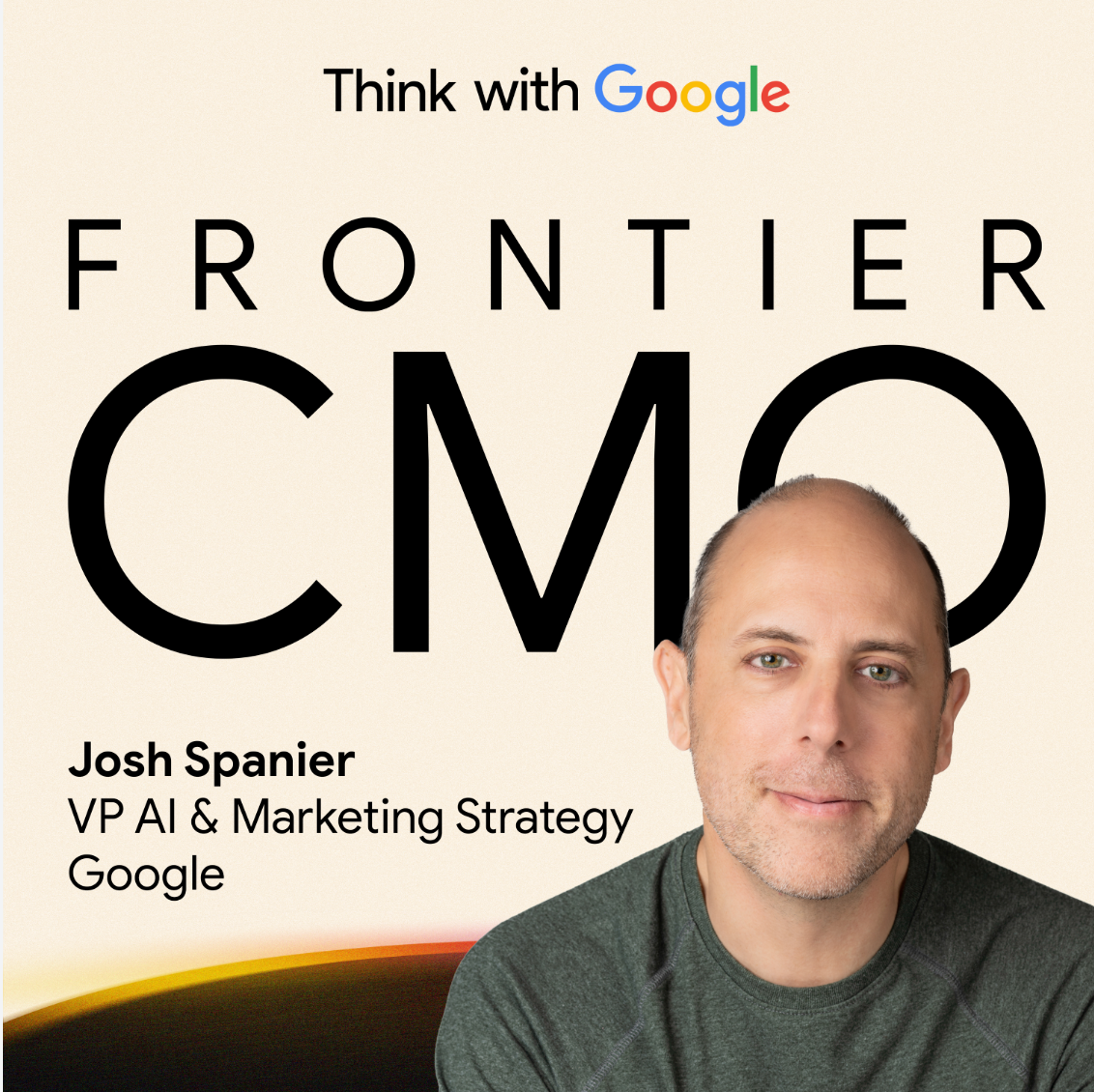
 Frontier CMO Podcast by Think with Google
1 Oct 2026 · 29m · 12 chapters
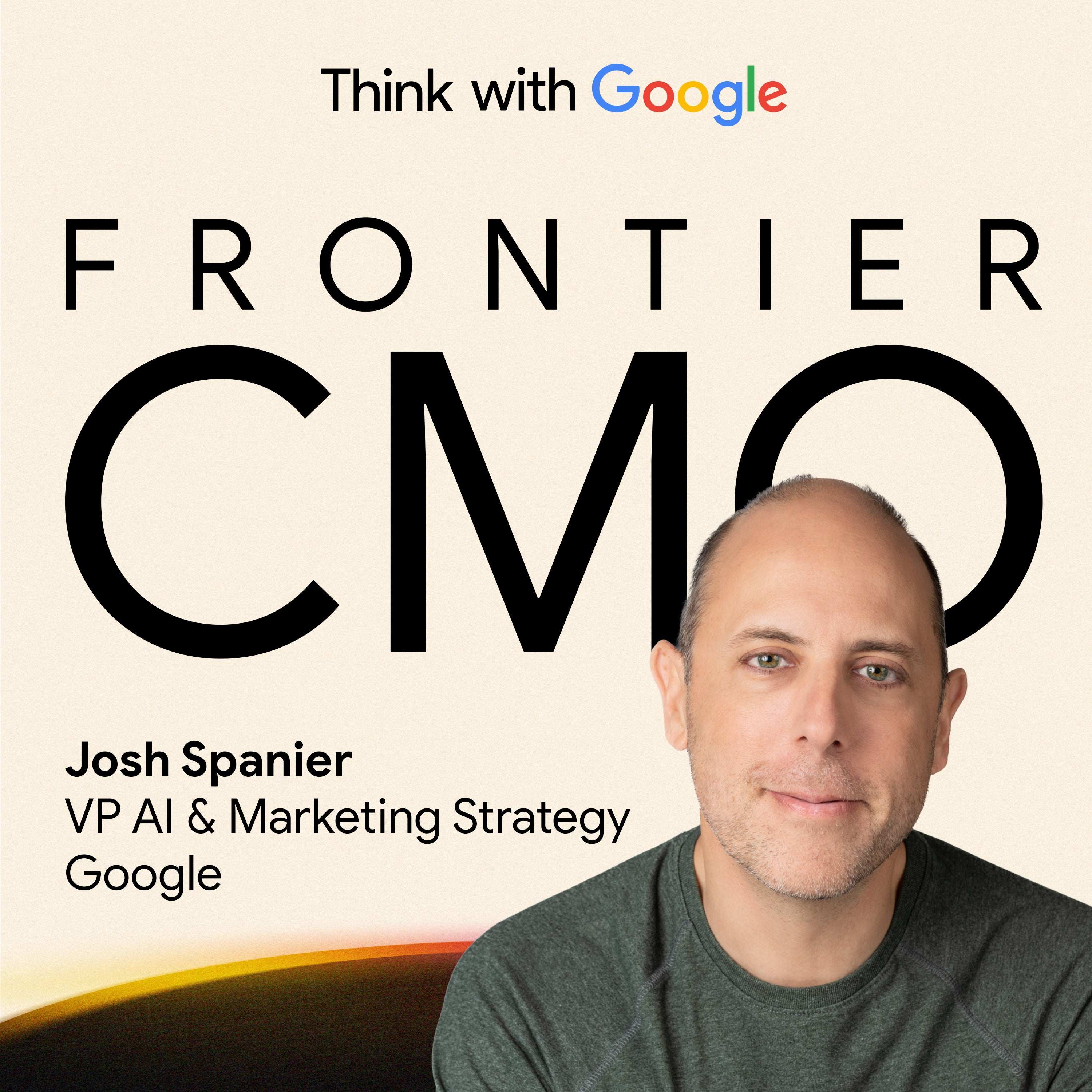
AT&T’s customer-obsessed transformation and how Kellen Smith-Kenny scaled differentiation in a commoditized telecom market, centered on the AT&T Guarantee and supported by real-time “trench warfare” execution and AI-driven marketing.
Kellen Smith-Kenny, Chief Marketing Growth Officer at AT&T; previously worked at Sprint (via a creative agency) and earlier roles at Accenture, Microsoft, Capital One, Uber, and Hilton. She has a background in coding (first four career years) plus economics/computer science studies.
AT&T’s brand had been lost after acquiring WarnerMedia and DirecTV; divestitures enabled focus on connectivity. Differentiation plus a healthy brand improves conversion, multi-product “convergence,” retention, and cheaper acquisition. The AT&T Guarantee proactively credits customers for outages/service delays.
Guarantee credits a full day of service for minor outages (e.g., 20 minutes) without customer action; customers affected by outages showed higher Met Promoter Score. AI pilots reduced production timing 62% and production cost 93%, and increased video view-throughs 50% and site visits 20%.
Written by AI. May contain mistakes.
Kellen discusses her journey and the changes at AT&T since her joining.
“You're the Chief Marketing Officer and Growth Officer for AT &T.”
Kellen explains the significance of employee belief in company purpose.
“And so when we rolled out our purpose of connecting people to greater possibility with simplicity, expertise, and inspiration, we needed to make sure that our own employees felt it would be simpler.”
Kellen shares lessons learned from her experiences at Hilton and Uber.
“I spent three or four years working on the business, going to Kansas City a lot.”
Kellen details the AT&T guarantee and its customer benefits.
“And the second is that you offer differentiated products.”
Kellen discusses strategies for differentiation in a competitive sector.
“Hey, we see that you've experienced a network interruption and we're going to credit you for a full day of service.”
Learn how AT&T's leadership embraced customer obsession to enhance service and reduce churn.
“We knew that it had the power to both persuade prospects to come.”
Explore AT&T's historical role in AI and its future plans for AI integration.
“I love that phrase of having a story problem versus a storytelling problem.”
Discover how AT&T utilizes AI in marketing and the significant improvements achieved.
“If you look at the role that AI plays in marketing, for years, we've used AI and ML to optimize our paid media.”
Understand the challenges and strategies for fostering an AI-friendly culture within AT&T.
“So I'm wondering how it's been for you guys.”
Gain insights from Kellen's professional experiences at leading companies and their impact on his approach.
“a skill at surrounding yourself with super smart people that possess different talents.”
Reflect on Kellen's views on significant trends and statements in the marketing industry.
“So, Kellen, I want to finish up by asking you some signal or noise questions.”
Learn crucial strategies for enhancing customer relationships and loyalty.
“Before we wrap, I want to leave you with three takeaways.”

Get the gist, explore an idea or ask about something said.
 Claude
On Frontier CMO Podcast by Think with Google, what are the key points of this episode?
Searching your listeningAutomatic transcript. May contain errors.
0:00The truth is, you have to build both the brand and differentiation, and you have to do that real-time trench warfare.
0:12When you host a podcast about marketing, you encounter a range of leadership styles. There are the highly visible CMOs, of course, generating headlines and sometimes building a very visible personal platform. There are also operational architects, the CMOs who stay almost entirely focused inward on the growth of their businesses, rallying their teams, and just let the balance sheet tell the story. Today, we're diving deep into the world of architect supreme, Kellen Smith-Kenny. She is the chief marketing growth officer at AT &T, where she's transforming one of America's most iconic companies and putting the customer back at the center of how AT &T grows.
0:53Kellan has been putting in the work for six years at AT &T, and she has so much we can learn from. What does it really take to move our 150-year-old company and rewire it around the customer? Let's find out. Here's my conversation with Kellan.
1:12Kellan, welcome to Frontier CMO. I'm incredibly excited to have you. You're the Chief Marketing Officer and Growth Officer for AT &T. It's an incredibly important company in the history of the United States to 100 million Americans every day. Let's learn together. Thank you so much for having me. AT &T is a 100-year-old company, or 150 years, and it has a reputation for being this large bureaucratic sort of a legacy old-school company. Let's go back a little bit, six and a half years. You joined AT &T. What needed to change? And talk a little bit about this transformation you've been leading. So when I first joined, we had acquired an entertainment company in WarnerMedia.
1:49We had acquired a distribution company in DirecTV. And there was a recognition that the essence of the company, the essence of our brand had gotten a bit lost. We needed to find our way back to the thing that was going to make us famous, the thing that we could be known for. And in the subsequent two years after joining, we ended up divesting of DirecTV and we divested of WarnerMedia. And we began to focus exclusively on building the nation's best connectivity provider. And that meant we needed to rapidly expand fiber. We needed to offer fiber internet products to homes and to businesses. And we needed to scale the terrestrial cellular network.
2:35That represented a level of freedom in terms of helping to go back and peel away all of the layers, all of the M &A that had happened over the past 150 years and allowed us to recenter ourselves on both the company's origin story, but also our ambition for the future. So job number one for me was I needed to come in and work cross-functionally across all of my peers, product, technology, finance, corporate strategy, business development, et cetera. And we needed to make sure that we had a clear understanding of who we wanted to be, what we wanted to be famous for, and how we were going to make that real for both employees first and customers second.
3:16One of the things that we learned in the process as we pulled together individuals from all corners of the company, whether it was retail reps or tech installers, the people who really were interfacing with customers, they needed to believe it was true first. And so when we rolled out our purpose of connecting people to greater possibility with simplicity, expertise, and inspiration, we needed to make sure that our own employees felt it would be simpler. We needed to make sure they felt that their expertise could really shine. And we needed to make sure that they felt inspired in their roles day in and day out.
3:52It is tough to inspire customers if you're not feeling inspired yourself. And so we rolled that out. And from there, it started gathering a tremendous amount of momentum. And then we started stacking up what are the wins and what are the bold moves we can put out on the board that demonstrate we really are the company that connects people to greater possibility. And as you would expect, that's when my remit also began to expand. So that was a really good answer. Very clear. What went wrong? What didn't work? Or what did you learn about AT &T was doing that was just so fundamentally broken you had to fix it?
4:25So when I joined AT &T, this wasn't the first time I'd had the opportunity to help reposition a company and help a company reunite with its purpose. I had done this at Hilton and I had done this at Uber. Both at Hilton and at Uber, one of the things that I personally learned was that my desire for speed, pace, I just wanted to go as fast as humanly possible. And what I learned the hard way in both of those cultures was you needed to be patient. When I got to AT &T, I think I was a little too patient. I think I probably needed to hit the accelerator a bit more because a lot of the bold moves that we ended up rolling out took a lot longer than in hindsight I wish they would have taken.
5:08But I demonstrated the patience that I needed to have in some of the other environments, but too much patience. I think that the organization needed maybe a bit more urgency for me because when we did roll out these old moves, one of them was the AT &T guarantee. The amount of success that the company enjoyed as a result of that was tremendous. Kellen, just unpack for me, what is the AT &T guarantee? The AT &T guarantee is a promise we make to customers that we will guarantee the connectivity they depend on, the deals they want, and the prompt and friendly service they deserve, or we'll make it right proactively.
5:50One of the things that really strikes me is in a incredibly commoditized category, I think it seems like you've built a way of building differentiation for AT &T, and that's led to business success. Can you just talk a bit more about the differentiation strategy that you've identified? And I think the guarantee is part of that, right? Absolutely. First of all, you speak of telecommunications as if you know it intimately. I know you spent a little bit of time at Sprint. Tell us about kind of what you learned when you were there. So I worked at a creative agency in San Francisco and we won the Sprint business.
6:21We were a small little agency and we were not set up and prepared for the unbelievable intensity of the cellular business. I spent three or four years working on the business, going to Kansas City a lot. But at the time, we just didn't understand that every day, literally every minute of the hour, someone was looking at the metrics. We were used to building campaigns over the course of weeks and months, not day to day to day. We had the wrong sort of creative teams who weren't geared towards retail. It was unrelenting. And my biggest memory of it was being exhausted by it the whole time. And I'm fascinated to hear about how do you keep your energy level up, given all that.
6:54I also want to hear about the differentiation piece. You literally said it perfectly. The competition in this sector is fierce, unlike anything I have ever encountered in my past lives. And I've been in professional services, software, financial services, transportation, travel, hospitality. And when I was inside those organizations, I thought, oh man, ride share is really competitive. Uber versus Lyft. Hospitality is really competitive. Hilton versus Marriott. But there is nothing that compares to the level of competitiveness and responsiveness that you experience when you're inside telecommunications.
7:31It's just the fact that we're inside a mature, highly penetrated industry that is becoming increasingly commoditized. And the truth is you have to build both the brand and differentiation, and you have to do that real-time trench warfare. Failure in the quarter is not an option. You have to lean in. You have to make sure that your offers are competitive. And so we've tried to build an awareness and appreciation for what we call demand generation activity. And differentiation is the best form of demand generation that we can think of. When I'm having conversations with my colleagues, I try to break it down into just inalienable truths.
8:14First is you build a compelling company. And the second is that you offer differentiated products. And what we know from empirical evidence, both within our category and beyond, is when a company is highly considered, one, you're way better at attracting new customers, and two, you're better at retaining existing customers, and three, you have more durable economics. And this is where my team, hat tip to them, they have done tremendous work because AT &T has empirical evidence that unequivocally proves that when our brand is healthy, when AT &T is experiencing more love in the marketplace from our customers, our prospects, four things happen.
8:58Number one, we convert more readily. Number two, we converge our customers more, which means they buy multiple products from us, both wireless and wireline services. Number three, we retain much more successfully. And SHERN is the hero metric within our industry. Finally, we acquire customers less expensively. And by less expensively, I mean much less expensively. That sort of served up the fact base that we really do need to lean into differentiation. So give me an example of a product that you guys know is being differentiated and is actually driving the business. So I'll talk about the guarantee.
9:34So we knew three things about the customers going in, that the core value proposition for telecommunications is one, I want a network that gives me rock solid reliability, not secure. Two, our sector is very much known for the incredible deals we offer on devices, i.e. phones. And three, will I receive a high quality of service if anything should go wrong? So those three things, that was not new. Our industry has been well aware of them for the past several decades. But we said we actually want to tackle it. And when we rolled out the AT &T guarantee a year and a half ago, we were able to say, we will guarantee the network you depend on, the deals you want, and the prompt and friendly service you deserve, or we'll make it right.
10:22And what that means is that we will proactively, should you experience a minor outage, it could even be 20 minutes. we recognize that a 20 minute outage impacts your day. We will credit you for a full day of service and you don't need to do anything to receive it. We will proactively notify you. Hey, we see that you've experienced a network interruption and we're going to credit you for a full day of service. It will be applied to your next bill that takes away all of the onus, all of the effort, all of the friction from the customer. And it leaves them feeling like this is a company that truly cares about me because they did the right thing without me having to ask.
11:01Interestingly, what we have found is that customers who have experienced an outage or who had to wait longer than five minutes to speak to technical support, they're actually demonstrating higher levels of Met Promoter score than the customers who we didn't mess up for. And that's because when you make it right, you're sending them a strong signal that we value you and we care about you and we're the type of company that you can trust. So I love that insight. What you're describing, those two things I want to build on. One is fundamentals of marketing, like at the frontier, beyond the frontier, the fundamental is marketing.
11:38What do your customers think, feel, and do? What do they need? That doesn't change. That will never change. That's a great example of just, you've got to build for your customers first. But second, can you talk a little bit more about being the customer advocate and persuading AT &T, you had to go into some C-suite at some point and tell people, we want to highlight when we've messed up, even when people haven't noticed we've messed up, and then we're going to reimburse them for that mess up. How did that conversation go? The first thing we did when we were ideating the guarantee was we showed people stimulus of brands they loved.
12:14There had been this preconceived notion within AT &T that if we need to fix the brand, we'll just fix it with advertising. We got the 60 senior most executives of AT &T together and we asked them, tell us about a brand you love. And they all told us about a brand they love and we said, why do you love them? And literally zero of the 60 people said because of the advertising. They all talked about a product or experience or a customer service mishap that they were able to turn into this lifelong sense of appreciation and loyalty for a company. And we held the mirror up and we said, if this is what worked on you, don't you think the same would work on customers?
12:52We can't leave it all to brand marketing, advertising and messaging. And that got heads nodding. We then started to inculcate the notion that every single customer touch point would either polish or tarnish the brand. And what if we could take the moments that were the most tarnishing for AT &T now and turn them into this moment that would polish? And we got heads nodding again. And then we spent multiple workshops eye-dating using stimulus of the most loved companies out there. We looked at Patagonia and we looked at Nordstrom and we looked at REI and they were famous for their quality guarantees.
13:27And we said, what would it look like if AT &T had a guarantee that wasn't just on par with what Nordstrom or Patagonia or REI is doing, but it was superior? And that's when we started thinking about how we could leverage technology to make it proactive, to make it even less frictionful than a traditional retailer. And that was when we knew we had unlocked a little bit of magic. We put it into research, and I'm not exaggerating, Josh. When the research came back, we literally needed a new scale to plot the impact of guarantee. We had 28 different ideas that we put into research, and the index on this thing was like 400.
14:04It was beyond our wildest imagination. So we knew that we were onto something. We knew that it had the power to both persuade prospects to come. And we knew that we had something special that would keep existing customers with us. And we had a small session. It included our CEO or CFO or chief strategy officer, our operational leaders, our technology leader. And we said, all hands in, are we prepared to put everything on the line and make this and bring this to life? there was nervousness throughout the organization but eventually when they saw how we were going to improve our network reliability how we were going to improve the customer service experience they realized the percentage of time that we would actually have to make it right was so tiny that we could stand behind it and guarantee it and then not only that the make it right motion that we were adopting, we knew was not just the best in the industry, but we now believe we have the best guarantee in all of America on any product because of the way we take care of the customers.
15:08This feels like work at the frontier, which is really compelling. And it's solving a whole bunch of your business problems of reducing churn and giving your sales teams motivated. How has it impacted your marketing team? We like to think of the guarantee as the spark that lit a fire, both within the marketing and growth organization, but across the entire company. It has emboldened everybody inside of AT &T to be much more customer obsessed and to literally stop a meeting, stop a decision, stop a product, stop a partnership if it's not in service of the customer. It's given people both validation and proof that when you start with the customer, it works.
15:48This is, I think, a great example of being a chief growth officer. It's not just for marketing. It's not just for the immediate bottom line, the marketing delivery. It's getting the entire company galvanized. And this is why you're on the C-suite, right? A hundred percent. When we began embarking on the journey, we pulled in everybody. It was really our chief technology officer at the end of one of our meetings who said, I get it now. If we don't build something that customers will rave about, the marketing team doesn't have a storytelling problem. They've got a story problem. We had to actually fix the story.
16:21And hearing the chief technology officer say that, hearing the COO reinforce that, hearing the CFO say, I am willing to stroke a check to make it right for customers if it allows us to improve churn and accelerate acquisition, that built a company of believers. and it's a massive business unlock. When you can shift the entire organization and they feel like their fingerprints are on the launch of something like that, it is a catalyst for all of the future innovation to come. I love that phrase of having a story problem versus a storytelling problem. That's a really powerful, important insight in how we think about marketing and the role for marketing.
17:01As I understand it, AT &T was involved in the creation of AI, like back in the day with Bell Labs or something. So tell me a little bit about that And then let's talk about how you're using AI in your job and with your teams. You absolutely said it. Our Bell Labs scientists were there at Dartmouth College when the entire concept of artificial intelligence was born and generative AI was sort of a glimmer in their eye. And so, yeah, we do like to say that AT &T was amidst the founding fathers of the AI revolution. We do believe that we are going to be the AI-grade network with security built in that customers will need as the rising demand for network connectivity surges.
17:41We're expecting that by 2030, anywhere from 60 to 70 % of the traffic on our network will be AI initiated. So it is a big, big part of how AT &T is thinking about planning for and preparing for the future and serving customers in the way that they need so that they can really scale with the opportunity that AI presents. And so how's that manifesting inside of your marketing group today? You know, it's interesting. If you look at the role that AI plays in marketing, for years, we've used AI and ML to optimize our paid media. For years, we've been using it to optimize the customer lifecycle management.
18:21For years, our network organization has been using AI to prepare for storms, to redirect radios on the tops of towers to make sure that we're maximizing coverage for customers to redeploy energy usage across our network. And we're partnering with Google on how to make sure that when somebody calls into a customer care center, that we are routing them as efficiently, effectively as possible. So that's the stuff that's been around for years. With generative AI, the possibilities are endless. One of the things that we've recently done is we've stood up a small business campaign. We did it in a number of weeks.
18:59What we saw was that it reduced our production timing by 62%. It reduced our cost to produce by 93%. We saw video view-throughs increase by 50%, and we saw site visits increase by 20%. When you think about what's possible, and that was just one of our first trial runs with small business. Last year, we ran a pilot on the consumer side of our business where we were using AI to personalize content served up to customers exposed to it in certain digital channels. And we saw an uplift in the performance of that creative. Not only that, but then when we started to look at some of the winning messages, we learned things.
19:39We were marketing things to customers that nobody on my team would have ever thought would have resonated. And they were some of the most compelling things at getting existing customers to add a second or third line. So you're really able to extract a level of insight that frankly just wasn't accessible years ago. How have you got your team to embrace this AI moment? Even inside of Google, we've had to work hard to get our teams to not be fearful of the technology and to actually start using it and stuff. So I'm wondering how it's been for you guys. I don't want to sit here and say it's been all sunshine, rainbows, and unicorns.
20:15There have definitely been tough moments and tough conversations. I would say there is a natural curiosity that exists within the organization. They are hungry for point solutions. They are hungry for things that can make them as individuals more efficient and more effective. I suspect as they start to get traction, people are going to feel that sense of FOMO. What I've noticed as a leader, for better or worse, is that FOMO of X, Y, and Z bank is doing it or A, B, and C insurance company is doing it. That's not creating FOMO. But I think when we have it inside the company deploying, I think that will make people much more hungry and much more on the front of their seat leaning up.
20:53Kellen, you have a minor in computer science and a major in economics. I looked it up and I'm just wondering today as a CMO operating at the Frontier, should that be reversed? Do you think you should have a major in computer science and the minor in economics or are you good with where it's at? What would you recommend? I'm great with where it's at. And you're right. You did do your homework because I spent the first four years of my career actually coding, hands-on keyboard, coding, functioning as a tech consultant, working on product. I can confidently say that coding is a nice to have, not a need to have.
21:29What I would say is much more important is making sure as marketers, we're cultivating leaders and contributors that have strong analytical horsepower, pattern recognition, a customer-centric orientation, and an ability to ask really good questions. In addition to that, if you're going to be good at asking really good questions, you need to have a knack for creating the psychological safety where you can get the provocative answers to those good questions. You want to make sure that you're the type of leader, you're the type of teammate where everybody can bring their very best ideas. And so So I would say the kind of final skill that I think is most critical is you need to have a skill at surrounding yourself with super smart people that possess different talents.
22:15Some of those people need to be AI native. Some of those people need to be coders. But do I think a marketer needs to be a coder? I don't. Kelly, you've had a successful career. You've worked at some of the biggest, most important companies in the world. And I'd kind of like to get 30 seconds on each one. I'm going to run through them. What's one thing you learned from that? company that you brought through to today? We'll just start off at the beginning. So you spent three or four years at Accenture. What's one thing you learned from your time at Accenture back in the day? One of my big personal learnings about myself as a professional that I picked up at Accenture is I am not somebody who is motivated by output, but I am deeply inspired by driving outcomes.
22:59So activity, checking boxes, not for me. Impact, I'm all in. That's a great one. So Microsoft, you spent four years at Microsoft. What did you learn up in Seattle? I love Seattle. I miss Seattle. What I would say about Microsoft, I was there during the Windows Vista and then eventually Windows 7 era. Windows Vista is one of the most famous fails in the history of technology launches. And what I learned there is we were far too focused on the competition. It was Apple at the time. We got distracted. My key lesson was obsess over the customer, not the competition. Obsess over the customer, not the competition.
23:37I love that. Okay. Capital One, what's in your wallet? What did you learn at your time at Capital One? At Capital One, it was such a rigorous culture and everybody there really knew the business goal. They knew the core economics. Where we had work to do was to really increase people's EQ, to help them understand what was motivating customers. So while I was there, I learned both know the business cold and challenge the status quo, leveraging human insight. Okay. You spent some time at Uber while Travis Kalanick was the CEO, right? Correct. What did you learn at Uber? At Uber, we learned you've got to be willing to disrupt yourself.
24:15Imagine if Uber was still a black car company, no X, no pool, no transit, no driverless, no Eats. There would literally be know Lime because Lime was an offshoot of Uber. So all of those things that led to the extraordinary growth and global expansion of Uber was all because they were brave enough to disrupt themselves and envision a future. Okay. That's a very positive, good learning. What do you learn from your time at Hilton? So Hilton for many years in a row was voted the number one best place to work in the world. It was very intentional when I chose to move from Uber to Hilton. I was really in search of culture.
24:52But what I learned is that 80 % of culture is who you hire. 20 % is what you reward and tolerate. And what I mean by that is that Hilton was exceptional at hiring warm, high integrity people who just at their core, they love to serve guests. And that created a contagious, incredible culture that made everybody operate at their absolute best. I'm going to ask about AT &T as well. So what's the one thing that you've learned from your time at AT &T? I've been blown away with the courage that this company has shown. There is courageousness and a willingness to pivot when the dynamics shift, when it no longer makes sense to own DirecTV and WarnerMedia.
25:38I've also learned the importance of a crystal clear vision that will stand the test of time. For the past several years, we've made it clear to every single member of our organization that AT &T is going to be the number one provider of connectivity across all transport types. And that has given people the clarity they need to focus on doing the job in a manner that really future-proofs our business. Thank you. That's a wonderful answer. So, Kellen, I want to finish up by asking you some signal or noise questions. So, is this a signal or is this just noise? Give me your gut instinct. AI is the biggest communications breakthrough since the telephone.
26:18Signal, signal for sure. The telephone pioneered real-time human-to-human voice connectivity and solved for distance. AI now represents an entirely new paradigm of communication at scale. It solves for context that can enable seamless dialogue between non-human entities. So I say signal for sure. Okay. This is not aimed at you specifically as an individual. Signal or noise? CMOs should be considered for CEO roles. Oh, I would say signal, but it depends. Signal if we're talking about a world or a scenario where product cycles compress and tech becomes table stakes. in that situation, customer insight, brand moats win, and that would favor marketing.
27:04But noise, if we're talking about a world, a company, or a scenario where capital is tight or operations start to break, those situations, I think finance or operations take the wheel. Signal or noise. The Dallas Cowboys are a wildly successful business, but a terrible team. oh signal that they're a wildly successful business noise that they that they don't have the potential to measure up because i think this is going to be their year josh said every cowboy fan for 30 years i know and i'm a convert i only became a cowboy fan when i moved to dallas six years ago and i'm still all in on the cowboys america's team go boys okay here we go signal or noise, CMOs are becoming celebrities.
27:54Noise. I would say celebrity status is not where the leverage is for high-impact CMOs. I completely and utterly agree. Kellan, this has been really fun. I really enjoyed it. Thank you for making the time. Before we wrap, I want to leave you with three takeaways. Think of these as your field notes from the frontier. First, be radically proactive. When something goes wrong, don't make the customer chase you. Own it. Make it right. and use that moment to build trust. Done right, you don't just retain customers, you build trust and loyalty that can last a lifetime. Second, fix the story, not just the storytelling.
28:32Great brands aren't built on advertising alone. It takes an entire organization to deliver something truly differentiated. When product, tech, operations, and marketing unite around a shared promise, that's when your marketing team has a great story to tell. And third, use AI to uncover creative customer insights. Faster and cheaper is great, but the bigger opportunity is using AI to learn what customers actually respond to and turn those insights into real growth. Now that's a bell worth ringing. Be sure to follow, rate, and review Frontier CMO on YouTube or wherever you get your podcasts. For more research, case studies, and tools to help you lead through the next platform shift, visit thinkwithgoogle.com.
29:14We'll be back with another leader operating at the frontier. Until then, keep moving, stay sharp, and stay out front.
How do you transform one of the world's most iconic telecom giants into a modern, customer-obsessed growth powerhouse?
In the latest episode of Frontier CMO, host Josh Spanier welcomes Kellyn Smith Kenny, Chief Marketing & Growth Officer at AT&T, for an inside look at AT&T's multi-year reinvention. Kellyn shares how she bridged creative storytelling with financial accountability, gained unanimous C-suite buy-in to become more customer-centric, and established a sustainable competitive moat in connectivity.
Tune in for a master class about CMOs as the voice of the customer.
00:00 – Rebuilding AT&T Around the Customer
04:00 – Why Moving Faster Mattered
05:00 – The AT&T Guarantee
06:00 – Differentiating in a Commoditized Category
09:00 – Turning Customer Problems Into Loyalty
12:00 – Building a Brand Beyond Advertising
15:00 – Fixing the Story, Not the Storytelling
17:00 – AT&T’s AI Legacy and Future
18:00 – How AI Is Transforming Marketing
20:00 – The Skills Marketers Need in the AI Era
22:00 – Career Lessons From Accenture, Microsoft, Uber & More
26:00 – Signal or Noise + Three Takeaways