
 Ask ChatGPT
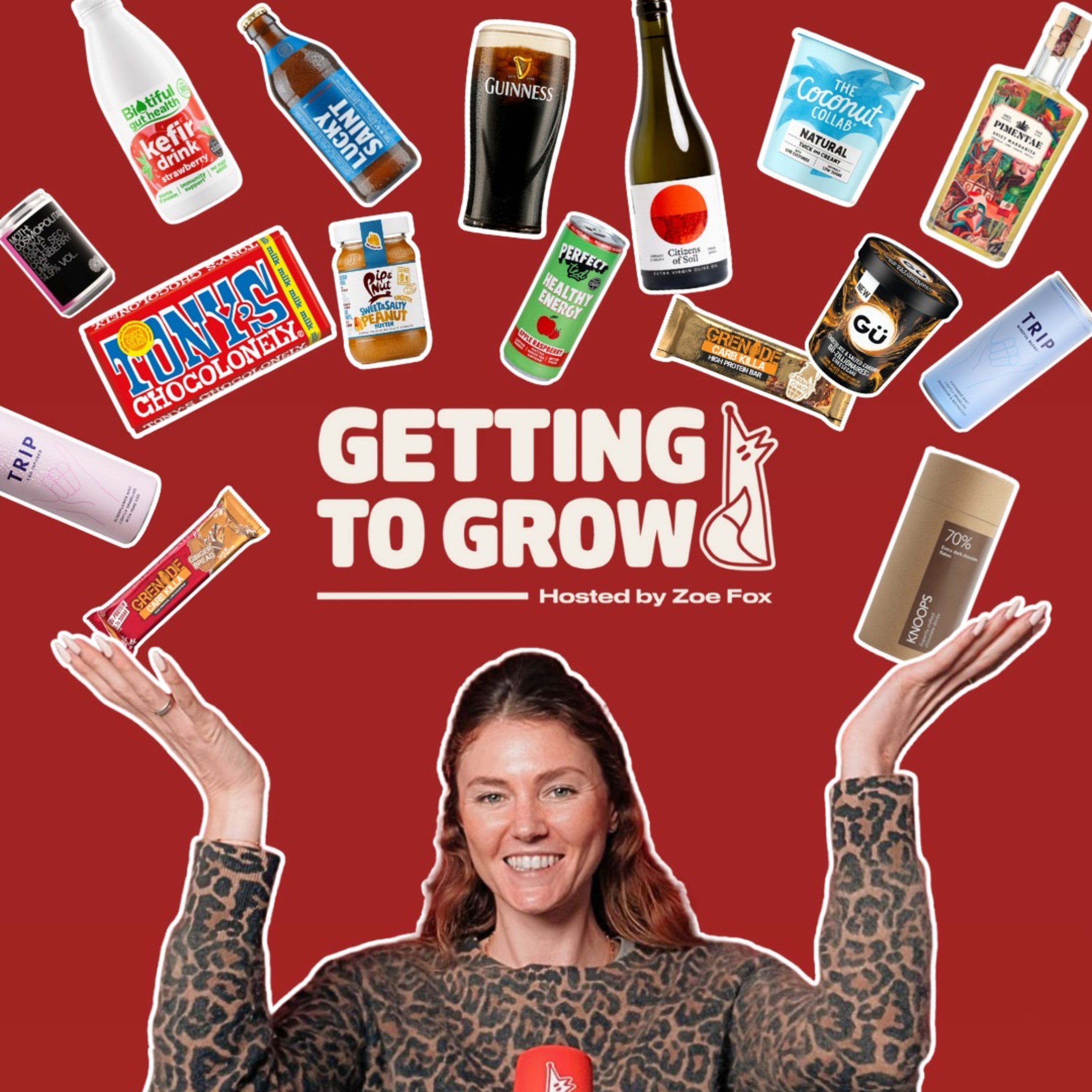

- Podcasts
- Getting to Grow
- How a Serial Founder Built 3 Food Brands To 50 Million LIVE AT LUNCH! Festival
Getting to Grow21 Oct 2026 · 53m · 23 chapters
How a Serial Founder Built 3 Food Brands To 50 Million LIVE AT LUNCH! Festival
In short
Founder Jim (Goo, Coconut Collab) explains how he built multiple UK food brands by “playing to win,” staying customer-focused, and choosing niche opportunities that scale. He recounts Goo’s early manufacturing/listing disasters, then how Coconut Collab expanded from coconut yogurt into coconut water and wholesale. He also discusses Spooners (cookie dough desserts) and why it’s succeeding in mainstream retail.
Guest backgrounds
Jim founded Goo (sold in 2010) and later founded Coconut Collab (coconut-based dairy-free products). He also oversees Spooners, which he says grew from a US cookie dough opportunity and is now expanding in the UK. No other guest is interviewed in the transcript.
Key claims
Winning mindset (“to win” vs “not to lose”); customer obsession and being “open for business” drive growth; product quality and keeping promises build loyalty; coconut water uses young coconuts for natural sweetness (no added fructose claim); supermarket “rate of sale” matters more than just spending.
Notable examples
Goo launched in a heatwave; Sainsbury’s/Waitrose threatened delisting; coconut yogurt had early production failures; coconut water launched into drinks fast and is in Costco/Amazon; Spooners uses a “chill desserts” fixture and benefits from supermarket traffic; new Spooners “Nutty” stuffed cookie dough.
Written by AI. May contain mistakes.
Chapters
0:46
The Launch of Goo: A Rocky Start
Discussion about the challenges faced during the launch of Goo.
“What do you understand about food businesses today that you had no idea at the beginning of a journey when you started Goof?”
1:38
Playing to Win vs. Playing Not to Lose
Exploring the mindset difference in entrepreneurial vs. corporate environments.
“job can feel really overwhelming and that's exactly where sam comes in he really just gets it it's not just about ticking boxes it's about connecting the right people with the right opportunities.”
2:30
Lessons from Early Business Failures
Sharing insights on business failures and the importance of persistence.
“through retail and wholesale channels, there isn't any one better place to help you supercharge your brand.”
8:37
Building the Coconut Brand
Discussion on the strategy behind launching the coconut brand.
“But apparently it was quite big in Australia, because it's so funny enough whenever I go to Australia people say oh I saw you on telly, but it wasn't big in the UK.”
9:44
The Evolution of Coconut Products
Insights into the growth and improvement of coconut-based products.
10:54
Challenges and Triumphs in Entrepreneurship
Discussion on the obstacles faced and successes achieved in building the brand.
“Because although you're an entrepreneur, you're basically good at, well, two things, getting shit done and you're endlessly optimistic in terms of solving problems and breaking doors down.”
12:56
Creating a Winning Team and Culture
Exploration of how team dynamics contribute to business success.
“but the most important thing is it's a great product and that's why it's done well What's been one of your favourite things about building Coconut Club to date?”
14:00
Building a Winning Team
The importance of teamwork and a customer-focused approach in business.
“grown is that, and you know this Suri, we've got a fantastic team behind us and we play to win, we go for it and what does that mean?”
16:15
The Coconut Water Innovation
Discussion on the launch and unique qualities of their coconut water product.
“And that's what I think makes us successful.”
20:14
Building Brand Loyalty
How product quality and customer experience contribute to brand loyalty.
“And I think, on what we know from, we've been on the market for like three months.”
Show all 23 chapters
23:05
Entrepreneurial Insights
Lessons learned from the entrepreneurial journey and the importance of adaptability.
“I remember we launched our chocolate pots which are also fantastic if you haven't tried them and when we couldn't get listed, we were just listed in the Cardo I think right at the start.”
25:12
Future Visions for Spooners
Exploration of future ambitions and new ideas for the business Spooners.
“Don't sell better or less by a hundred people hell.”
28:01
The Nature of Winning in Business
Explore the importance of resilience and the winning mindset in entrepreneurship.
“That's what's fun, that's what people enjoy doing.”
28:48
Introducing Spooners: A New Venture
Learn about Spooners, its origins, and its unique positioning in the UK market.
30:02
Spooners Product Overview
Dive into the product offerings of Spooners and their appeal across demographics.
31:33
Market Strategy and Consumer Appeal
Understand the marketing strategy behind Spooners and its first mover advantage.
“which is called the Nutty and it's a kind of it's called stuffed cookie dough.”
34:14
Investing in Growth: Money vs. Market Share
Discuss the relationship between financial investment and sustainable business growth.
“So it's got that kind of pick up appeal, which I think is why it's working.”
36:54
Creating Value Beyond Inspiration
Explore the value of building a brand and the creative journey over imitation.
“And looking at other businesses, if it's today at lunch, or whether it's kind of ones that you see out about, what other bands are you admiring at the moment?”
39:22
Reflecting on Legacy and Future Aspirations
Contemplate what legacy means and the desire to continue building in entrepreneurship.
“I don't know, I'd figure it out, I'd figure it out.”
42:07
Entrepreneurial Mindset and Risk
Learn about the importance of mindset and the risks involved in starting a business.
43:19
The Power of Manifestation in Business
Discover how believing in your success can lead to actual achievements in entrepreneurship.
“all the entrepreneurs that I've spoken to on getting to grow, they all take the risk.”
45:51
Focusing on Your Own Path
Understand the value of maintaining focus on your own business rather than comparing with others.
“What do you think is another big opportunity in F &B that people are playing into?”
49:10
Networking and Opportunities in the Food Industry
Explore the significance of networking and connections in the food and drink industry.
“But the real thing going on here is that is the connections that people are making.”

Ask about this episode
Get the gist, explore an idea or ask about something said.
 Claude
On Getting to Grow, what are the key points of this episode?
Searching your listeningTranscript
Automatic transcript. May contain errors.
0:00I launched Goo. I launched it in a heatwave. It was a complete disaster for the first three months. So after Goo, you could have done anything. You could have gone into any category, any flavour, anything else. Why the coconut? Because I like niches. I like discovering something that can grow into something big. And what were you seeing in coconut at the time that I guess other people weren't seeing? I think the thing about working for an entrepreneurial business is that we play to win. Winning is really important. If you talk to people in big companies, they play not to lose. And there's a big difference between playing to win and playing not to lose.
0:41Actually being open for business and being customer focused is the key to winning. What do you understand about food businesses today that you had no idea at the beginning of a journey when you started Goof? Companies rather being obsessed with how they are in the company and politics and all that shit, focus on building something and winning. That's what's fun, that's what people enjoy doing. Say tomorrow I gave you 10 million pounds. What would be the first thing you would do with the money to grow Streenism Coconut Lab? Frankly, I'd give it back to you and I'd say, you idiot, go and keep it yourself.
1:20What other bands are you admiring at the moment? do you remember the music artist prince he was asked who inspired him and he said not inspired by anybody else before we get into today's episode i want to give a shout out to a special sponsor sam lawrence recruitment we all know that finding the right people or the right job can feel really overwhelming and that's exactly where sam comes in he really just gets it it's not just about ticking boxes it's about connecting the right people with the right opportunities. He takes the time to understand you and exactly what you're looking for, whether you're building a team or taking that next career leap.
1:58So definitely get in touch. Trust me, you'll be glad you did. Charlie is a three-time founding member of Startup Brands, taking each from 0 to 1 million within 18 months across different categories, channels and countries, including launching operations in the US and Australia. He is now the founder of Plugin Brands, an award-winning outsourced FMCG sales agency working with the fast growth food and drink brands and Dive-In Agency, a tick-top shop agency helping brands turn social commerce into real revenue. With a background in go-to market strategy, brand development and distribution through retail and wholesale channels, there isn't any one better place to help you supercharge your brand.
2:38Charlie and the Plugin Brands team work with a host of brands including Moju, Muller, Clipper T, Who Gives a Crap and Lovecorn. So if you're in need of an extra pair of hands to really step on your growth this year, Charlie is the guy you need to be in touch with. Now, if you're running a product business and your inventory lives across spreadsheets, emails and about six different systems, this one's definitely for you. Unleashed is an inventory management platform built for manufacturers, wholesalers and retailers, giving you one source of truth across your stock, orders and operations. It automates the repetitive stuff too, things like purchase orders, stock updates, low stock alerts, so that your team can focus on growing the business, not firefighting.
3:20They're already trusted by brands like Candy Kittens, Perfect Head, Burrow Broth and Refai, and they integrate with tools you're already probably using, including Shopify, QuickBooks and Salesforce. So if you're scaling a product business and want to get your operations under control head over and start a free 14-day trial and as a getting to grow listener you'll get one month free using the code gtgpod getting to grow is also brought to you by the coconut collab and full disclosure as i'm sure most of you are aware i work there so i know how much love goes into everything that we make we're all about creating delicious dairy-free plant-based treats that do not compromise on taste from our creamy yogurts our indulgent desserts everything's made with coconuts and a whole lot of care.
4:04If you're looking for something naturally good but seriously tasty and my favourite is just our natural coconut yogurt, I have it most mornings with granola and lots of honey. Trust me, you're going to absolutely love it. Welcome to Getting To Grow Live. We are, this is my first time here at lunch. We're doing it. Very, very excited that they gave me the space to speak to some amazing founders. Yesterday I had Jamie Lang and today I have the amazing James are but as I said he is my employer so I do have to ask him very nice questions but Jim obviously you you founded Goo I did and he'll be here today actually I've seen a few good yeah I've seen a few good ones around and so after so why Goo why what was going on in that time and how did kind of the idea of product and Goo come to life right okay so for all Goo people in the auditorium check into your history.
5:03So we're talking 25 years ago for starters so it's a long time ago. I was a bit younger, I was in my 30s. I didn't want to work for a big company for much longer so I always knew I had to find something to do. I wasn't going to be a chairman of a public company or anything like that and I've always liked business and stuff so in fact Goo was my third business I had two businesses before that I had a business at school doing publishing and then I had I won't go into any more details on that and then I had a shoe business at university selling this kind of stuff So Goo was my third business and yeah I mean it was simple because I just thought the world needed really good chocolate desserts and then obviously there's a big difference between an idea and a business so there was a lot in between but I launched Goo.
6:15I think what's kind of interesting is that the things that we all know it's a successful business and went amazing. But the things that didn't go so well, I launched it in a heat wave. It was a complete disaster for the first, yeah, for the first three months. Both Sainsbury's and Waitrose threatened to delist it within, I'd say, the second month. I remember I had to really plead for them to keep it in the range because they were throwing away more than they were selling. Bear in mind, we just had a heatwave, chocolate puddings don't sell when it's above 25 degrees. But actually before that I had a really big disaster because we only worked out how to make it within a week of launching.
7:04So it was lastminute.com and anybody who started a business will know that these businesses, it doesn't matter what they're called, how big they are now, they're all started with a with a bowl of a ball of string basically and goo is no exception but anyway it then went on to be a fabulous business and the rest is history and goo is so well known in the UK like most people when I'm selling coconut or kind of where I am myself I always say you know you've had a goo and they're like oh my gosh do I like you created a real love brand and I think that's what you've done with coconut as well it's such like people really have they have a strong opinion of it when they come and taste it and try that I love it and you know so many people come up to us about oh I have this at home or I'd buy it for my daughter like the best friend loves it you really have created such a love brand yeah so after goo you could have done anything you could have gone into any category any flavor anything else why the coconut well that's good question.
8:08I was, so I was 40, hang on a sec, I was 44 when I sold Goo, 2010 and I didn't want to kind of do nothing and all my friends were working and although I had a bit of money in the bank I wanted to work and I started doing some TV presenting for Sky, a show that no one here would have heard of, called Cookster Market. I'm not familiar. It was a blockbuster. Not. But apparently it was quite big in Australia, because it's so funny enough whenever I go to Australia people say oh I saw you on telly, but it wasn't big in the UK. But anyway that was good fun, I realised I didn't really want to be TV presenter and I came back to thinking actually I really enjoy building grants I mean that's what I kind of part of what I you know that's part of my my job if you like so you know why coconut because I like niches I like kind of I like discovering something that can grow into something big so in a big category but you know maybe a small kind of innovation in a big category that can grow into something and I just thought when I started tasting coconut products I thought you know what this could actually it tastes it tastes really good compared to most non-dairy stuff I thought this could actually blow up into something much bigger and and it did and and so I tend to kind of go for things that you know start small but then you get a good team of people behind you you've got a nice product really good product that's key good brand and then basically blow it up and what were you seeing in coconut at the time that i guess other people weren't seeing well uh so coconut water hang on we've just launched this it's bloody good by the way We're a bit late to the party on on the coconut water but I would say we've done it better than anyone else so you know you're going to be seeing this a lot more.
10:36Obviously the brands well known now. I started playing around with the coconut milk and I had a guy who I worked with from the product side who is very good and we we just found actually he's here today he's for Dave it's somewhere here but yeah yeah and then we developed this yogurt and it was really good but we had tons of problems with it bit like goo you know right at the start we couldn't make it we could make it and then it would kind of fall apart after a day or so we had the same problems with the coconut yogurt but you know the whole thing about people with their own businesses is they solve problems.
11:24Because although you're an entrepreneur, you're basically good at, well, two things, getting shit done and you're endlessly optimistic in terms of solving problems and breaking doors down. I know you're particularly good at bashing doors down um so i knew that we could work it out and we did and was coconut collab was always going to be a genuinely like best alternative or did you see like a much bigger opportunity from the start or did you kind of not really have a plan like where were in the early days was it like this is what i want to create um and this is end goal or was it like i'm taking you day.
12:07I mean when you say an alternative I've never described our product as a yogurt alternative. I mean you wouldn't say I work for a yogurt alternative company. No, it's partly good coconut. It's just really good yogurt. It happens to be made with coconut. So it appeals to a lot of people who are looking for something healthy and sustainable and really good and tastes great. The good thing about our coconut yogurt as you know is that it's thick and creamy, it's really tasty, it's kind of naturally anti-inflammatory. Honestly it's good for the planet if that's important to you it's important to me.
12:56but the most important thing is it's a great product and that's why it's done well What's been one of your favourite things about building Coconut Club to date? Well look I mean I really enjoy hanging out with much younger people I'm on my last nine I'm on my back nine as we say from a golfing kind of point of view but I'm working with people on their front line like you and I think the thing about working for a entrepreneurial business is that we play to win okay winning is really important we play to win if you talk to people in big companies they play not to lose and there's a big difference between playing to win and playing not to lose.
13:52In the whole way you approach problems, in the way that you go for it and I think one of the reasons why the company has grown is that, and you know this Suri, we've got a fantastic team behind us and we play to win, we go for it and what does that mean? It means that we get everything right. You know what, the last two years we have got a lot right and we went through a bit of a rough patch with some kind of dodgy people in the business but they're gone now. You know we've got rid of them, adios. Adios. And now we've got a really good team of people who play to win and we're winning. 100 % we are so lucky and it's a very special like episode because I get to sit down with like founder but also like boss ultimately and your work we do have such an amazing team and it's why I've been here coming up to nine years it's just men and soul I know yeah god I know most prison sentences are shorter literally and then we've got Angel who's been here forever Claire as well which we get on to as spooners yeah so yeah no we it is amazing to you i all like you get really excited to go to the office and i don't think i've ever had some day scaries in my whole like nine years of working coke maps no like i'm so excited on monday because i'm like oh who is what we're gonna do today like it's your everyday dipper yes i agree and and i'm saying that it sounds a bit self-indulgent and stuff we are very very customer orientated and i know you are and and um you know so so you know people come in the office say I've got a customer and what they really want is this and we kind of think rather than saying oh we can't do that no no no no no you know have you thought about blah blah blah we kind of always have a look at it because actually being open for business and being customer focused is the key to winning so I think we're quite we're good at getting shit done and find the loads of people who are good at getting shit done.
16:04But we're very responsive and entrepreneurial. I really like that kind of, I see it in other startup businesses. It's a winning formula, believe me. And that's what I think makes us successful. Yeah, because sure, we're very customer obsessed, which is so important because we really reacted to our customers as well. But we've just launched Coconut Wholesale, which you can all see. Bye. Like a hell yeah. and coconut water is now actually becoming a really big part of coconut cloud story you know it entered the drinks category for the first time within three months of launch within three months of watch um and you know you said you might have been a bit late to the party which you said earlier but why did we launch coconut water well that's a good question sorry the reason we look the first thing to say is that we are probably the second largest bar of coconut water in the UK.
17:05So behind Vagcoco we buy the second amount so and we we use it in our yogurts. So our yogurts have always been a blend of coconut milk and coconut water and the reason we use coconut water in our yogurts is because it's very pure but it's naturally sweet and that gives a really nice round kind of flavor to our yogurts which other people if you don't have coconut water in your yogurts doesn't taste as good. So we know about the we've known about coconut water for a long time and and then again one of these kind of if you like seminal moments in our business where suddenly thinking, hang on a sec, well we tried coconut milk to be fair, that wasn't a huge success as you know, the world is full of coconut milk print, it was difficult to, I think we were late to the party on that.
18:07The thing about the coconut water is that we found a new kind of angle in a market that's actually moving quite fast. So and because we're a brand that's respected and it's got a lot of traction in the kind of, in consumers' minds. We found that we've got a rent-free space in people's heads in terms of good quality coconut stuff. I think when we launched this, and it's very pure, it's from Vietnam, it's from the Mekong Delta, which is the best place actually to grow coconuts. to grow coconuts and we use young coconuts so they're naturally sweet and a very quick crash course in coconut water. The more mature a nut, basically the water inside the coconut goes into the flesh and that means that if you want good quality coconut cream use a mature nut but if want good coconut water use a young nut.
19:14Okay coconuts typically are about 18 months from start to finish and our coconut water is from young nuts. That doesn't sound too weird but our coconut milk is from older nuts and our angle is that we're using these younger nuts which are naturally sweet. Whilst I know our competitors and the big one in particular of Vita Coco uses mature nuts which makes it less sweet so they have to add fructose to it and and that's a huge opportunity for us because actually no one knows or no one's really aware they add fructose I'm sure they are but but they've kind of kept it in a nice little secret uh and that's not going to stay that way from now on by the way we're making a big thing Our coconut water is the real deal.
20:14It's really good. Yeah, 100%. And I think, on what we know from, we've been on the market for like three months. We're not in the big multiples yet, but it's really building traction. A lot down to your customers. It's in Costco now. It's on Amazon. It's getting fantastic reviews on Amazon. and you know what it's a big market that's growing fast so i think it's going to be a big product for us and i think i'll go to not more too as well it's about like nothing added nothing taken away yeah like we are just like harnessing the power of the coconut and in a world where there's so much process like oh process this odd process that uh we we've literally just done what the coconut in general to do, which was give us really naturally speak coconut water.
21:05They haven't added anything, but we're sort of taking anything away. It's 100 % coconut water. And that's even reflecting in like even of our packaging where this is so, this is as pure as it gets. Like that is literally the coconut that we found. You were out in Vietnam, whacked us the top of the machete, heated the hot hot plate, stamped it on, and then that's the product. That's right. I remember the kind of steam rising from the coconuts as we put the branding iron with our logo onto that, onto the coconuts. Fantastic. It's totally, totally authentic, totally pure. It's brilliant. I love it.
21:43Yeah, it is fantastic. Actually, today here at lunch, we've had so many people come over and say how delicious it is. I've been trying it. You're having a look. Would you like to try a coconut water? Are you sure? Okay, we've got loads of it and it is delicious. And we've had lots of people coming up to us saying, oh my gosh, I love it, I've seen it in Costco, I've seen it on Amazon, I've seen it on Cardone, and they're really loving that. And you're right, we are getting lots of traction with it, but I think that's due to the product policies. Like, it is so fantastic. And when people try it next to our competitors, they are quite blown away.
22:20Yeah, look I mean I think the same thing with GOO and a lot of other successful brands is the reason these brands work is because they look great, they make a promise if you like and they taste great, they keep a promise and if you make a promise and you keep a promise that's the way you build loyalty. That's the key to brand success and it's the same with this. It's the same with our yoghurt. Where you've got a good product and it looks good, people try it, they talk about it, they tweet about it, whatever, and then it builds momentum and that's always the case. I remember we launched our chocolate pots which are also fantastic if you haven't tried them and when we couldn't get listed, we were just listed in the Cardo I think right at the start.
23:15Cardo have always been fantastic listing our products and but gradually it's like it built and it's like and now it's like huge it's everywhere you know that because it's a great product. Our natural yogurts are exactly the same it's a fantastic product. By the way our protein yogurt fantastic if you haven't tried it. I eat about a pot day. And the innovator of it is just there. Over here. Take your power, take your power. And it is very, very good. And if you were, so in five years' time, what do you want the Coconut Collab to become? Well, that's interesting. I mean, the way I look at it is that the bigger it gets, the more goodness, if you like.
24:10I know that sounds like a kind of typical woke answer from a greedy entrepreneur, but actually goodness is baked into our business model. So the more we sell, the bigger we get, the more people we employ, the more coconuts we use, and actually it's a very virtuous business model. It's really good. We're a British company, we're based just up the road in London Bridge. It's exactly, frankly, what this country needs more of, which is go getting innovative companies, building British, making Britain great, if you like. And so what do I want in five years time? I want this company to be bigger, more successful, launching great innovative products as we are now.
25:04and having exactly the same conversation here as we are now about being positive about the future and uh asking some questions about like kind of your journey as an entrepreneur from at the start to now you've built goo came like a lab and spooners which you're going to be coming on to what do you understand about food businesses today that you had no idea at the beginning of journey when you started Goo? I mean look the first point is I have been if you like I've been the if you like the architect but I haven't built this companies the companies have built on the back of the people who are in them so I think if I have a skill it's about spotting an opportunity I'm good at spotting opportunities and I think I'm good at getting great people into a business and I'm interested in, I'm kind of curious, I'm always kind of peeling the onion and therefore always kind of looking at what could be.
26:15So you know, apart from that you know I'm a pirate, I like doing things in a slightly different way, I'm not at all formal, I like professional stuff, I don't like sloppy stuff but yeah I really like doing things in a slightly unconventional way and I would never have as I say I was never going to succeed in a big company I remember I had a boss once he was called Russell and he was a nightmare and he got me into his office and he said you know Jim I really want you to wear you're sticking out in the crowd you know every it is you're not quite right for this company what you need to do is you need to wear rather than colorful shirts you need to wear a white shirt every day and by the way you need to wear a very plain tie and then he said and fair enough I thought you know fair enough but then he said and you need to shave all the way down to your neck because you've got a bit of hair showing on your neck.
27:31And I just thought, fuck off, Russell. This is... It's time to go. Do you know what I mean? I'm not going to have some... Don't sell better or less by a hundred people hell. Exactly. You know, it's like... And going back to the key thing, which is companies rather being obsessed with how they are in the company and you know the politics and all that shit. Focus on building something or winning. That's what's fun, that's what people enjoy doing. Everyone likes to win. Winning is infectious but it also if you win it means you've lost because no one wins the whole time. You've got to lose quite a lot of matches to win, that's okay.
28:18is fine. You kind of, we've lost, we've lost a few battles over the years. We've won loads as well as you said. We've won more and that's the thing if you play to win and you're good and you've got a good product, good team and everything else, you will ultimately prevail. And speaking of Spooners, which is the latest venture. Right. Now is Spooners the last business or is there another one after Spooners do you think? I'm sure there will be lots of new ideas but let's just talk about Spooners the second I mean Spooners came out of having a business in America so we've still got a share of business in America it's quite a small business but anyway I just spent a lot of time in the States and obviously cookie dough is huge in America and I just thought you know it could be really big in the UK and it's kind of Bellinger has kind of made it if you like well known in the UK but not in there not in the desserts category or anything so it felt like a really good opportunity and we again we just kind of slightly went for it and you know Claire kind of basically really took it under her umbrella and and made it made it effectively her own business and and built a business within a business and and you know she's been very successful we've got the same ingredients great product nice brand that stands out kind of you know really going for it what we've discovered is that actually it's it's actually very democratic spooners so everyone doesn't matter where where you live in the uk what your background is everyone loves a sweet treat and it's quite a young vibe um so we're kind of getting new people into the desserts category um and it and it's obvious why because even if you're a health nut you still want a bit of a treat um so it gives you that kind of if you like a sugar treat that's when you should have sugar you know not not when you're drinking coconut water by the way but when you're having spooners that's perfect have a sugar hit then fine um so yeah no so far so good go and check out the products they're fantastic um and it's building much of space 100 % and actually in a world of lots of like processed snacks and foods spooners is everything that you would find in the kitchen cupboards so if you were making kind of homemade trickies at home you know it's flour butter it's all the stuff that you kind of have at home so it makes it like a good treat but not at the detriment of like you know inhaling lots of stuff you don't kind of algae process exactly yeah no totally totally rare and what's your favorite spoonies product?
31:28Well my favorite is the one we've just launched which is called the Nutty and it's a kind of it's called stuffed cookie dough. Stick it to the oven 10 minutes, stick your spoon in, you get this kind of molten kind of beautiful kind of stuff. It's perfect. It's just like kind of I I remember when I used to bake with my mum and bake cookies and it's exactly that kind of vibe. But it's delicious and it's going to be big. Definitely, it is going to be big. And all the buyers that are walking around today, you've got to come to our stand. I know, hi there. How is out there? Do you see everything? Where's Cookie Lowe over there?
32:20which he needs to go, yeah there we go, go out and run to the cooby loan. Whoa, I didn't know they were walking around today. We need to take spooners on stilts, okay? Next year. The spooner man. We did, Claire did an amazing pitch actually earlier over the innovation stage and we hear about the results in circa an hour actually. Oh wow, okay. So we'll go over and have a listen. Wow, okay, good luck. I think that what Claire said actually, which I thought was a really good way to put it, and I hadn't thought about it like that before, was it was like, you know, the moment where you're, we've finished skippering, but you're like licking the bowl, you're licking that end bit that you can't, that hasn't before been packaged or sold.
33:06It's that bit that you've bought to market. Totally. In the Spooner will cook it over all that. I agree. Yeah, it is really delicious. Yeah. And in terms of spooners, like kind of mass market, where has the product surprised you? And has it been something like anything on the journey so far that has surprised you about spoonings?
33:32I think, I mean, the thing about spooners is that everyone knows about cookie dough. but you tend to buy cookie dough in these kind of specialist bakeries or you know it's not an obvious place in the supermarket to buy it so we're kind of you know to coin a phrase we kind of got first mover advantage and that's why I think it's kind of taken off because everyone's heard of it but it wasn't readily available in the supermarket and it now is and and the thing about the desserts fixture the chill desserts fixture in tesco or sainsbury's or whatever does have a lot of traffic you know it's a big category so you've got people going in to buy let's say my old brand goo or whatever and then they come across this stuff and say oh yeah i'm going to try that it's bit like Krispy Kremes when it first came over.
34:33I said, oh, got to try that. So it's got that kind of pick up appeal, which I think is why it's working. And say tomorrow I gave you 10 million pounds because I wanted to. Okay, thank you. You're very welcome. What would be the first thing you would do with the money to grow screeners and coconut flour? Where would you put the cash? it's interesting because you see i don't see business in that way i don't think it's a a direct link between money and growth i know it's an important element of it i'd frankly i'd give it back to you and i'd say you idiot go and keep it yourself but and there's still i work on the money front but i i'm not saying you're not i don't know No, no, no, no, I get you.
35:27I like the idea but the good thing about this country is that one of the things, certainly in the food industry, buying market share is more of an American thing. In the UK you have to earn your market share and what that means is that every element of the of the mix has got to be right. Yeah, you've got to have a bit of loot because then you can advertise and build brand awareness. But money is the lubricant, if you like. There are plenty of people who've had plenty of money and they've just wasted it because they don't know how to spend it. And in this country, you need everything's got to be right.
36:16And then basically more people buy it, you know what the kind of measure of success is, it's rate of sale in the supermarket. Rate of sale is number of units per store per week. It sounds a bit boring, but that's what drives the industry. That's what drives success. And the more products you have with a high rate of sale, the more success you can get. And okay, if you advertise it, you spend a ton of money on advertising that will help your rate of sale but it's not a given it's not a given that's why i say that i give you your money back because to be honest i think the the businesses that i've built i wouldn't say the money has been the key thing behind the the success the money's come because of the fact that it's earned it's it's earned it's right to be successful and successful businesses tend to be profitable for these.
37:12And looking at other businesses, if it's today at lunch, or whether it's kind of ones that you see out about, what other bands are you admiring at the moment? Do you remember the music artist Prince? You remember him? Yeah, yeah, yeah. He was brilliant, Purple Rain. He was asked who inspired him, and he said, I'm not inspired by anybody else. I mean, that's a bit arrogant. But it's a bit like when people ask me who my business idol is. I don't have a business idol, Zoe. I have people who have a big impact on me, but they're my family, the people I work with. So I don't tend to look at other brands and say, God, I really want to be that other brand or they're amazing.
38:00There are lots of good brands. We all know what they are. but but yeah the the thing that I find enjoyable is creating something brilliant and building something brilliant if I was given something brilliant I'd kind of felt that I've missed out on a lot of the journey do you know what I mean and I know it sounds a bit of a cliche but it's the journey that's kind of interesting and that's what makes it worthwhile when you built something from the basement up that's what's really great and I'm sure you know whenever I talk to other entrepreneurs they say you know you tend to get corporate people who say yeah I'm really inspired by such and such or such and such you talk to entrepreneurs they're more interested in in possibilities what hasn't been done before what hasn't been created before and therefore what can be so I wouldn't say they would say oh well you know maybe I'm wrong but personally I don't think it's x y and z I kind of quite like creating the creative process itself if there was something that was next on your list is there anything that you've seen and you thought oh I'd like to go into that list why would I announce that and bet I know If I was going to do that No I'm going to keep it to ourselves So then if it looks good we'll go for it But I'll tell you later Okay deals And if you lost everything tomorrow So you woke up And some of your spoons wasn't there Coconut wasn't there And everything you built today wasn't there What would you have been most proud of That you built And what would you do Ah oh god Well the first thing is that, look I said I'm on the back nine of my career, so what would I do?
40:09I don't know, I'd figure it out, I'd figure it out. It would be a loss but it wouldn't be the end of the world for me. I think I've got that kind of survival gene and I'd work it out. But honestly, I don't collect things, I don't wear a fancy watch. My wife drives a nice car but I don't and frankly I don't really care. So I would want to, probably want to build something again. And by the way I'm 60 now, I mean I know I don't look it but I am 60 and I want to keep on working into my 70s. So I worry about when you stop working you lose so much of what especially if you've enjoyed your life or your business life which I I enjoy my business a lot.
41:10You know, it's a big part of my, I suppose it's a big part of my life. So I don't want to lose that. I want to carry on building stuff. Not in a chaotic way, but you know, and I've never, I always think you've got to focus on what you do. I mean, my worst thing would be becoming a non-exec director of another company. I can't think of anything worse where you go and tell you go give people's advice they don't listen to you they go and do something else and then when when someone asks you what you do at past you say oh yes I'm a non-exec director of this company and this company what the fuck no it's much better whatever you do commit do it and build it yourself and the last thing to say is and I do I do kind of admire Apple who are fantastic a brilliant company and Apple will always say you know well we didn't get into AI because we're just focused on building iPhones and if you listen to that guy Tim Kirk who actually if I have one if I have one business idol it is Steve Jobs the guy who built Apple but I love listening term he's a genius but um Tim Cook would say well you know we just focus on iPhones and that's why we're so good at it um and I I actually do think that you know it's okay to have you know coconut collab spooners maybe one other business I think it's okay as long as it it kind of makes vague sense between them and you know you know in our business that we have a lot of things that we we share um so there we've got different products and they're different consumers and stuff there's a lot which is shared and the culture is very similar um so yeah i mean i i i wouldn't discount building another business it's great fun but it's whiskey but who knows maybe it works maybe it doesn't we'll see i think that's the that's the big thing being an entrepreneur is that you all the entrepreneurs that I've spoken to on getting to grow, they all take the risk.
43:26And I think lots of people are scared to take the risk to start a business. Because it is scary. Like, you know, it could be all your life savings. You might have to be mortgaged. You might have children. And if it doesn't work, you might end up being worse off because you're just funny. And that's quite a scary, that's a scary jump to take. Yes. So what would you say to someone that's maybe listening or has an idea for a business and is thinking, I'd love to start but I'm terrified of it not winning basically okay so that's a really good question and funny enough I was talking about that with my coach I have a coach who's American she lives just outside New York we do a call every week and we talk about this kind of stuff and basically what she would say and I totally agree to this is that a lot about time is there's a kind of weird thing and kind of you know it kind of moves vaguely in a straight line but but actually the most important thing is your mindset and get into a mindset where you actually believe that what you're doing is already successful.
44:44That gives you the confidence then to be successful. So in other words, think about, think about, you know, where we are now. Look, our coconut water business has just launched, okay? So it's, we've sold about 400 ,000 quid in three months. I know it's going to be a big success. I'm now thinking that coconut water is going to be like, you know, we're going to be a massive player in coconut water and that mindset of believing in something, the commitment behind it, the belief behind it, will make it successful do you see what I mean I think it's called manifesting but manifesting is a big part of entrepreneurship it's it's thinking now that you've already achieved what you're trying to achieve because that will give you the confidence and the belief to actually make it work and if you look at successful entrepreneurs they are amazing manifestos if you really you know that they're they're talking as if their business is already a great success which is what it needs and that's what makes it infectious that's why you're successful because when you're talking to their your customers they can see that your success where you believe in it they buy into that so people honestly this kind of mindset is so infectious and that and the mindset is what makes it successful does that make sense yeah yeah it makes sense and actually if you are a founder and you don't believe in it it's never going to work to flip it like those businesses are never going to succeed don't do it yeah if you don't believe in it don't do it Yeah, for sure.
46:46It's never ever going to work. No.
46:50What do you think is another big opportunity in F &B that people are playing into? Whether it's product, whether it's trend, whether it's kind of something in the retail space. Oh, got it. You see, I'm afraid I'm just like a, in some ways, I'm a bit like a kind of hamster on a wheel. so I can only really see what I'm doing. I suppose a little bit outside our field of vision, so maybe in desserts, maybe in yogurts. I can't really, I don't really picture things outside that. So I'm the wrong person to ask. Okay, let me flicker. What do you think, okay, you might say the same thing and tell you that you don't know, what's really overdone?
47:42uh yeah well i mean look i uh what is overdone jimmy lang said yesterday creating bars because i don't want to see any more coating nails yeah i mean there are a lot of things that i'm not really into um If I look in my... yeah, what am I not into? A lot of cereal I'm not into.
48:13Yeah, there's a whole pile of stuff I'm really not into myself. But going back to what I was saying earlier, I didn't really focus on that. I just follow my nose a bit like... yeah I just follow my nose in terms of what I'm interested in and that's going to lead me to turning over the page you know peeling the onion and is this something that's going to grow so yeah I don't really know Zuri as I say I don't really focus on other people's stuff I just tend to focus on my stuff that's an amazing trait because comparison is like a really big thief of joy as well so to be able to like really just hone in on what you're doing is for lots of people really difficult because of social media is half the battle like we can always look online and go all our brands doing that well i'm comparing them to them and it's tough for lots of people so if you can have that like laser focus it's quite unique no no i i like kind of hearing how people have figured out the problem or if they've got something that you know we could learn from I found that very interesting um I um I love listening to podcasts I I like your podcast and and listening to other people and you you kind of learn from that but in terms of products I I um yeah I kind of tend to follow my nose to be honest yeah and speaking of lunch we are today but why is lunch so important for the food and drink industry
49:53Well, obviously lunch is brilliant. But the real thing going on here is that is the connections that people are making. And that's the key thing. And I met my business partner at GOO at one of these events. And I always think that, and I'll tell you basically what happened was that I was looking for a manufacturer to make choppy desserts he was looking for his next kind of gig in terms of or he'd lost a lot of customers in the airline business just after 9-11 and the airlines were kind of shattered so he was looking for a new kind of thing and we just met at one of these shows so I think they're brilliant for making connections and I really I mean I'm quite hungry at the moment i'm going to go on a big walk about and eat funny so grabs and and do you remember that show billions do you remember that show billions is a brilliant show and i've got the the guy in it he's i can't remember what his name was but he said when i've when i'm investing in a food business i stick it in my mouth it's like if you want to if you want to see what a good investment eat it or drink it and then is that and then it's his it's that which gets into you know if you want to invest in a food business eat it and it's like when i'm doing a sell i'd never not do a sell without products exactly if i'm gonna buy it then you'd taste it yeah exactly um if you could sum up lunch in just a few words what would you say well i mean look um it's a great place to meet people we've been doing it for a while now we we started in the business design center up in islington um it's a it's a new kind of area of business for us because traditionally we were selling more in supermarkets and then you kind of got us into more convenience and out of home as we call it so yeah it's great love it yeah it's a fun place to bigs um well look thank you jim so much for doing like podcasting me here at ludge it's been it's been fab and obviously i love sitting down with you anyway because it's yeah it's always fun to close i feel like we've got a good record i can ask you lots of things and hopefully you're very honest with me which is great so thank you so much thanks really enjoyed it and well done with this business getting to grow it's another it's yeah it's great you've done great yeah it's fun to have us down here well done um thank you so much okay
52:53Thank you.
From the publisher
How do you build a food brand from scratch, survive a disastrous launch and go on to build three successful brands?In this live episode of Getting to Grow, recorded at Lunch!, Zoe Fox sits down with James Averdieck, the founder of Gü, Coconut Collaborative and Spooners, to talk about what it really takes to build, grow and scale food and drink brands. He is also Zoe’s boss, so the questions were kept nice. The answers weren’t.James launched Gü about 25 years ago, in a heatwave, when chocolate puddings don’t sell. It was a complete disaster for the first three months, and both Sainsbury’s and Waitrose threatened to delist it. He went on to sell the business in 2010 at age 44, then moved into coconut, a niche inside a big category that he believed could grow into something much bigger. Today he’s behind Coconut Collaborative, which has just launched coconut water, and Spooners, a cookie dough brand that took a first-mover position in the UK supermarket desserts aisle.The conversation also covers why James believes money doesn’t build brands, why you have to earn your market share in the UK rather than buy it, and why rate of sale is the number that drives the industry. He explains the difference between playing to win and playing not to lose, why he has no business idols, and why he’d turn down a hypothetical £10 million. He also shares his view on manifesting and mindset for anyone scared to start a business.In this episode:How James launched Gü and survived a disastrous first three monthsHow near-delisting from Sainsbury’s and Waitrose almost ended the brandWhy he moved from desserts into coconut after selling GüWhy he doesn’t call Coconut Collaborative a “yogurt alternative”How Coconut Collaborative launched coconut water and reached about £400k in sales in three monthsHow Spooners found a gap in the cookie dough marketWhy rate of sale is the metric that matters in UK supermarketsWhy money is the lubricant, not the engine, of growthWhy entrepreneurial teams play to win and big companies play not to loseWhy being customer-focused is the key to winningWhy James has no business idols and follows his nose insteadWhy he would hate being a non-exec directorHow mindset and manifesting help founders build confidenceWhy trade shows like Lunch! matter for making connectionsWhat James would do if he lost everything tomorrowWhether there’s another business after SpoonersIf you’re interested in entrepreneurship, food and drink, FMCG, consumer brands, retail, product development, startups or business growth, you’ll enjoy this conversation.Follow Zoe FoxInstagram: https://www.instagram.com/gettingtogrow/LinkedIn: https://www.linkedin.com/in/zoe-foxgettingtogrow/coconut collab:https://www.instagram.com/coconutcollab/?hl=enhttps://coconutco.co.uk/
More from Getting to Grow
All episodesWe use cookies.They keep VO running smoothly and help us improve it. Privacy policy