In short
Global News Podcast Episode Summary
Episode Title
A Special Report from Mexico on the Deadly Drugs Trade
Episode Overview In this episode, the podcast provides a detailed report from Culiacán, Sinaloa, Mexico, amidst escalating violence attributed to the drug cartels. Correspondent Quentin Sommerville shares firsthand accounts of the brutality and fear faced by local residents. The episode also covers several other significant global news stories, including a violent incident off the coast of Cuba, a breakthrough in HIV treatment, a police crackdown in Nepal, and a unique robotics performance with the Danish National Symphony Orchestra.
---
Key Topics Discussed
- Drug Violence in Mexico
- Location: Culiacán, Sinaloa
- Current Situation: Following the death of drug lord El Mencho, violence has surged as cartels vie for territory and power.
- Witness Accounts:
- Descriptions of gruesome scenes—paramedics frequently encountering murder victims.
- Reports of body messages left to intimidate rivals and residents.
- Impact on Residents:
- Fear permeates daily life; families are mourning innocents caught in crossfire.
- A peaceful protest by relatives of victims highlights the communal grief and demands for justice.
- Cartel Dynamics:
- Interviews with cartel members reveal a lack of remorse for civilian casualties.
- Descriptions of the fentanyl trade and its implications on both local and US communities.
- Cuba-US Relations Tension
- Incident: Cuban coastguard shot and killed four individuals on a US-registered speedboat.
- Cuban Government's Stance: Claims the individuals were terrorists with violent histories.
- US Response: Secretary of State Marco Rubio announces an investigation, indicating heightened scrutiny on Cuba's actions.
- Breakthrough in HIV Treatment
- Clinical Trial Results: A new single tablet combining two treatments shows promise for long-term HIV survivors who previously faced complex medication regimens.
- Significance: This advancement could significantly improve quality of life for individuals with drug resistance.
- Nepal's Deadly Crackdown
- Context: An investigation into the violent suppression of Gen Z protests reveals orders for live ammunition were given during the protests.
- Casualties: 19 people were killed, igniting public outrage leading to the resignation of the Prime Minister.
- Accountability Issues: Lack of response or accountability for police actions during the crackdown.
- Robotics and Performance Art
- Event: Denmark's National Symphony Orchestra conducted by a robot.
- Performance Insights: Musicians noted the robot's precision but lamented its lack of emotional expression compared to human conductors.
- Public Reception: The innovative use of technology in art raises questions about the future of human-machine collaboration.
---
Key Takeaways
- Violence in Culiacán reflects ongoing challenges with drug cartels in Mexico, showcasing the devastating impact on local communities.
- International incidents, like the Cuba shooting, underscore rising tensions and complex geopolitical relationships.
- Breakthroughs in HIV treatment illustrate advancements in medical science, providing hope to those affected by the virus.
- Government accountability remains a critical issue in Nepal after the violent crackdown on protests.
- Innovation in the arts prompts discussions about the potential and limits of technology in human expression.
---
Conclusion The episode encapsulates significant global issues, from violent drug wars to medical advancements, and underscores the importance of accountability in governance and the evolving relationship between technology and art. Listeners are encouraged to stay informed about these critical affairs shaping the world today.
Written by AI. May contain mistakes. Listen to the episode to check what was said.
Chapters
Tap a time to open that second in VOEscalation of Drug Cartel Violence
1:30 to 2:20
Overview of the violent situation in Mexico following a drug lord's death.
“and a new daily single tablet that could help long-term survivors of HIV.”
On-the-Ground Report from Culiacan
2:20 to 3:50
A firsthand report detailing the brutal realities of cartel violence.
“He was killed on Sunday in an operation to arrest him and his death has led to violence across the country.”
Interviews with Paramedics
3:50 to 5:00
Paramedics share their harrowing experiences responding to cartel violence.
“It's just before eight in the morning here in central Kulia Khan, just outside one of the main shopping malls and another body on the pavement.”
Witnessing Civilian Casualties
5:00 to 6:40
Reports of innocent civilians affected by the ongoing violence in Culiacan.
“And he's promised that as well as bombing the cartels at sea, he's going to tackle them on land.”
Inside the Drug Trade: Fentanyl Smuggler Interview
6:40 to 8:00
A smuggler discusses the fentanyl trade and its consequences.
“It's seven hours since the peace march, and the sun is setting here in Kuleyakan, and they almost made it through the day without a killing, but just in front of me is a young man who's just been gunned down.”
Families Searching for the Missing
8:00 to 9:50
Mothers searching for their loved ones lost to cartel violence.
“has cost the lives of tens of thousands here and in the United States.”
Paramedics Encounter a Rare Survivor
9:50 to 11:00
Paramedics respond to a scene where a victim is still alive.
“We've been following these paramedics for a week.”
Cuba's Response to US-Violence Incident
11:00 to 14:02
Discussion on Cuba's recent violent incident involving US citizens.
“The Interior Ministry said it was determined to protect Cuban territorial waters, Our North America reporter Simi Jolla Osho told my colleague Anne Soy what more we know.”
New HIV Treatment Breakthrough
14:02 to 15:10
Learn about a new treatment that simplifies HIV medication for long-term sufferers.
“which combines two current treatments, is highly effective at keeping the virus suppressed.”
Exploring 'Famous Last Words' Concept
15:10 to 18:02
Discover the unique format of interviews that allow individuals to share their final thoughts.
“So they also can't take the newer medications.”
Show all 16 chapters
Reflections on Life and Legacy
18:02 to 19:43
Understand the significance of how final words can shape one's legacy.
“if they know that this is only going to be aired after they pass?”
US-Zimbabwe Health Assistance Fallout
20:42 to 25:16
Analyze the implications of the US's withdrawal of health assistance to Zimbabwe.
“Search for World of Secrets wherever you get your BBC podcasts.”
Nepal's Deadly Gen Z Protests
25:16 to 28:00
Examine the events leading to the violent crackdown on protests in Nepal.
“A BBC Eye investigation has revealed Nepal's top police officer gave the order allowing the use of live fire during last year's deadly crackdown on Gen Z protests, one of the worst in the country's history.”
Violence in Nepal: The Aftermath of Orders
28:00 to 29:19
Learn about the violent events in Nepal following police orders and their consequences.
“These were the exact words used, voiced by an actor.”
Evolution of the Eye: A Surprising Study
29:20 to 30:46
Discover how a new study sheds light on the evolutionary origins of the eye.
“probably thinking horror or sci-fi film, not important human ancestor.”
Robots in Symphony: Exploring Human-Machine Interaction
30:47 to 32:30
Examine the challenges robots face in replicating the nuances of human conductors.
“Now, if you're a fan of classical music, you'll know that a conductor does a lot more than just keep an orchestra in time.”
Transcript
Automatic transcript. May contain errors.0:00This BBC podcast is supported by ads outside the UK.
0:06Quentin Sommerville:I'm Sam Peranti, and for the past seven years I've been granted access to a team of US special agents. Their job? To track down those who create and trade in sickening images on the dark web. When I hug my kids, that's your fuel, that's your why. From the BBC World Service, World of Secrets, the darkest web tells their story. Search for World of Secrets wherever you get your BBC podcasts. This is not the future we were promised. Like, how about that for a tagline for the show? From the BBC, this is The Interface, the show that explores how tech is rewiring your week and your world. This isn't about quarterly earnings or about tech reviews.
0:52It's about what technology is actually doing to your work and your politics, your everyday life. and all the bizarre ways people are using the internet. Listen on BBC.com or wherever you get your podcasts. This is the Global News Podcast from the BBC World Service. I'm Will Chalk and this edition is being recorded in the early hours of Thursday the 26th of February. Coming up, we've got a special report from a Mexican city which has been turned into a war zone by drug cartel violence. Cuba says it's killed four people travelling in an American-registered speedboat and a new daily single tablet that could help long-term survivors of HIV.
1:42Also in this podcast, the BBC investigates last year's deadly crackdown on Nepal's Gen Z protests. And what would your last words be? It is an opportunity to shape your legacy the way you want to, as opposed to just being defined by the obituaries. We hear from the creator of a Netflix series where celebrities record messages to be played after they die.
2:11We're starting with a special report from Mexico, following the death this week of one of the country's most wanted drug lords, known as El Mencho. He was killed on Sunday in an operation to arrest him and his death has led to violence across the country. We've had standoffs between the drug gangs and the Mexican army. Businesses have been torched and roads blockaded, with the government coming under increasing pressure from Donald Trump to do more to control the cartels. There are also the constant battles within the drug gangs themselves for control. Our correspondent, Quentin Somerville, recently returned from the state of Sinaloa and its capital, Culiacan, which is dominated by the drug wars.
2:53A warning, his report features graphic descriptions of violence from the start.
3:01Quentin Sommerville:We're just tearing through central Culiacan with the paramedics driving at speed. And we're heading towards the scene of a shooting. We just arrived at the scene. We're actually inside the cordon now. It's a garage. A relative has just arrived. One murder, six shots in all body. So, Hector, as paramedics, there's nothing you can do. You mainly see bodies, the dead. Yeah, it's a hard, hard job, hard job. So it was, in fact, one person that was killed, the owner of the garage, was found dead in his office. I can see a photograph of them now covered in a blanket, just his feet showing. And somewhat awfully typical for these men that, as paramedics, there's no help that they can provide, really, because they're dealing with execution-style killings and murders, and it's only dead bodies, time after time.
4:08Quentin Sommerville:It's just before eight in the morning here in central Kulia Khan, just outside one of the main shopping malls and another body on the pavement. This one is very grisly. It's a man who's been tortured. There's a message taped to his body. It seems to have photographs and some writing, but clearly a message has been sent. It gives you an idea of the extent, the brutality, the viciousness of the infighting within the Sinaloa cartel at the moment. Meeting with the cartels is difficult at the best of times, but now even more so because they're right in the crosshairs of the United States and President Trump.
4:53Quentin Sommerville:He's labelled them terrorist groups. He says their product, fentanyl and other drugs, are a weapon of mass destruction. And he's promised that as well as bombing the cartels at sea, he's going to tackle them on land. So they're feeling under threat like never before. I'm about to go and meet with a group. I'm going to have to leave my phone behind.
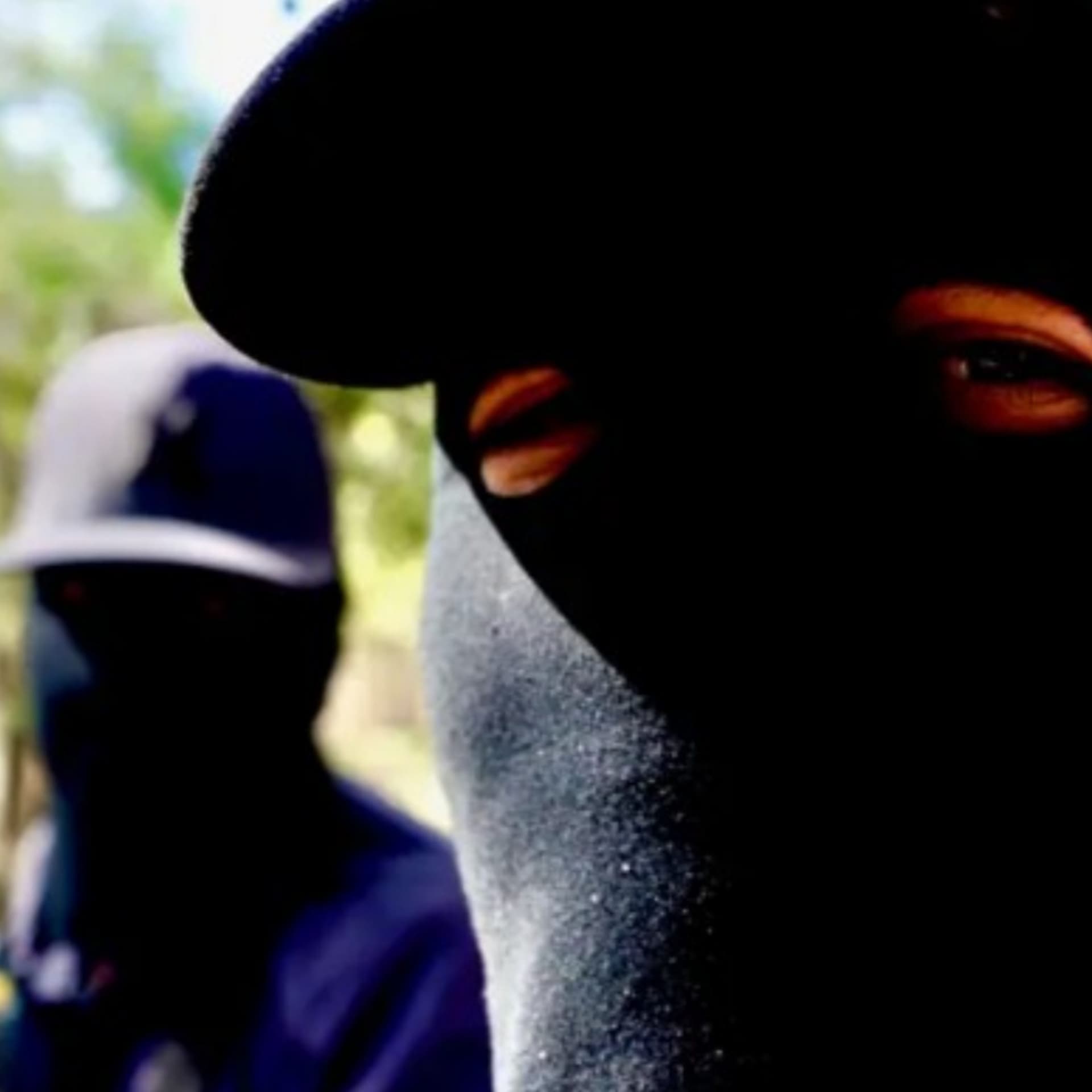
5:19Quentin Sommerville:These men are vicious criminals fighting for an illegal drugs business worth billions. They've gone to war after the son of one of their leaders betrayed another. This power struggle is a fight to the death and they show little remorse. They insisted we disguise their voices. The civil war in the cartel has created a bloodbath in Culiacan. Women are being killed. Kids are being killed. Do you feel guilty about that? Yes. A lot of times innocent people die. Children die. There is a lot of death of innocent people. A lot of people will keep dying because the cartel is still fighting and it's going to keep getting worse.
6:01Quentin Sommerville:This war will continue. Nothing will come down until there is only one faction left.
6:14Quentin Sommerville:There's a small protest taking place outside the main cathedral on this beautiful sunny day in Culiacan. Lots of relatives of the victims of the cartel violence are here. They're wearing white. Some are carrying pictures of their loved ones. They're all sexes, ages. gives you a sense of how all-encompassing the violence is here. The chant here is, they took them away alive, we want them back alive.
6:49Quentin Sommerville:It's seven hours since the peace march, and the sun is setting here in Kuleyakan, and they almost made it through the day without a killing, but just in front of me is a young man who's just been gunned down. He's 16 years old, he was on his bike, He's wearing blue jeans and he's got a light blue T-shirt on. He's still tangled up in his bike. He's lying dead there on the pavement.
7:15Quentin Sommerville:The family are here. They're on the other side of the police state, but I can hear those screams and wails from here. It seems that the kid was shot 10 or 12 times. The cartel is strong in this neighbourhood and uses young men as spotters. its spies are ever-present, and no one was willing to answer our questions. You can follow me. In a cartel-owned basement, we meet a fentanyl smuggler. He has six kilos of the powder in tightly pressed bundles, each worth at least$20 ,000. What we have here is fentanyl. This product is ready to be sent to the United States and pressed into pills. The drug that he's holding and the battle to control it has cost the lives of tens of thousands here and in the United States.
8:07Quentin Sommerville:He doesn't take any responsibility. There is no shame for what he does. Even though President Donald Trump refers to us as terrorists, I would just remind him that as long as there are consumers, we're going to keep doing this. But that doesn't necessarily make us terrorists. No one forced them to start using this stuff. Even though the government has intensified their search, when it comes to production, we've never stopped. Sometimes we do scale back because the government gets too close, so we lay low for a few days. But once that problem passes, we either continue or move to other areas. I'm with a group of women, Madras and Lucha, mothers fighting back.
8:51Quentin Sommerville:they're here, we're about half an hour outside of Kuliakan in the grounds of a half-built church they're looking for lost sons, lost brothers who are victims of cartel violence now the women are heading into some rough ground and fields beyond they have shovels, they have pickaxes, they have machetes The woman leading the search here today is Rinalda de Rudo. Her son disappeared back in 2019 and she won't stop searching for him. I wake up every day and I ask God, tell me why I'm here. And what gives me strength is realising that no one else is going to look for them. I realise it because no one is moving to search for the disappeared in Sinaloa and a mother will always look for her child no matter if it's to the ends of the earth she will look
10:06Quentin Sommerville:We responded to two people injured they were asking for help at the incident Paramedics Julio and Hector have been called to another cartel shooting but this one is different. We've been following these paramedics for a week. We've been to multiple call-outs with them. This is the first time they've arrived at a scene and the person has still been alive. Decapitating the Sinaloa cartel's leadership may yet destroy it but for now there is only violence.
10:43That was Quentin Somerville reporting from Mexico. Well, we're going to stay in the region for the next story because relations between Cuba and the US were already frosty to say the least. Now, Cuba says it's killed four people who were travelling in an American-registered speedboat off the Cuban coast. The Interior Ministry said it was determined to protect Cuban territorial waters, Our North America reporter Simi Jolla Osho told my colleague Anne Soy what more we know. All the information we know and have received has come from the Cuban government. They said that their border guard troops detected a boat inside Cuban territorial waters.
11:26When they approached the boat for identification, those on board opened fire, injuring one of their commanders. And so they fired back, killing four people and injuring six others who were then evacuated for medical treatment. They've released more details to say that all those on board were Cubans living in the US. Some of them had a known history of criminal and violent activity. They have since detained some of them. And when questioned, those detained said that they were trying to infiltrate the island and unleash terrorism. This is very unusual, isn't it? Well, it's not irregular for Cuban Coast Guard vessels to intercept foreign or US flagged boats like this one was.
12:12This was registered to the US state of Florida. Sometimes they may suspect that the people on board are smuggling items or picking up migrants or people attempting to reach the island or leave the island illegally. But yes, we haven't received any recent reports of guards opening fire on people on board and people on board being killed. The U.S. Secretary of State, Marco Rubio, said that the U.S. is going to investigate to find out what happened and will respond accordingly. Suffice it to say, it is highly unusual to see shootouts in open sea like that. It's not something that happens every day.
12:50It's something, frankly, that hasn't happened with Cuba in a very long time. But we're going to find out. We're not going to base our conclusions on what they've told us. Well, given that the U.S. Secretary of State is even commenting on this, what does this mean for the relations between the two countries? This is a very sensitive time for an incident like this to happen. The relations between the U.S. and Cuba has been very volatile. President Trump has focused on a sort of maximum economic pressure approach to Cuba. He's blocked all Venezuelan oil shipments to the country, which has worsened Cuba's deepening fuel crisis, affecting its hospitals and its food supplies.
13:33Even the Cuban government, in its statement about this boat incident, alluded to these tensions. Simi Jolla, our show there, speaking to Anne Soy. Now, we try and bring you as much good news as possible here on the Global News Podcast. So how's this? A medical breakthrough that could help long-term survivors of HIV. Some of those living with the virus take up to 11 pills a day, often at morning and night. But this could now be replaced by a single daily tablet. A British clinical trial on more than 500 people across 15 countries found that a new tablet, which combines two current treatments, is highly effective at keeping the virus suppressed.
14:12Professor Chloe Orkin is the lead researcher. For most people living with HIV, it's very simple. They take a single tablet every day or two monthly injectables. But there's a group of people who have not been able to benefit from medical advances, allowing them to take a single pill a day. And these are typically people who were diagnosed very early on in the HIV epidemic when we were learning how to treat HIV and we gave inadequate pills and that led to the development of resistance to different types of HIV drugs. So the result of this is that these individuals, unlike everybody else, have to take lots of pills and in many cases twice a day still for their HIV.
14:59So effectively, time has stood still for these individuals. But also some people who were born with HIV have been living with HIV for a long time and have resistance. So they also can't take the newer medications. And one of the big concerns about them being on these complex regimens is that they have drug interactions with other commonly prescribed medications. So this is a very new combination with a new class of drug, which is giving them the opportunity to take a single tablet. Professor Chloe Orkin from London's Queen Mary University. You might have been watching Famous Last Words on Netflix.
15:39It was originally Danish, but has now gone international. It involves an interview with a prominent person, recorded privately, and stored away and only broadcast when they die. The last section of the recording is the person speaking to camera on their own, leaving a message that no one else hears until it gets a posthumous airing. Last year, the programme aired an interview with the British anthropologist Jane Goodall after her death. Here she is speaking to host Brad Fulchuk. This is a moment right now as people are watching this where maybe the biggest story in the world is that you've passed away.
16:13I think a lot of people will be talking about who you were. So who would you say you were? I would say I was somebody sent to this world to try to give people hope in dark times. Because without hope, we fall into apathy and do nothing. and in the dark times that we are living in now, if people don't have hope, we're doomed. Well, there is now a new episode. It's Eric Dane, star of the US medical drama Grey's Anatomy, who died last week from motor neurone disease. He addressed his daughters at the very end of his interview. Fight, girls, and hold your heads high. Billy and Georgia, you are my heart.
17:03You are my everything. Good night. I love you. Those are my last words. Mikkel Bondersen is the producer who took the Danish concept to Netflix. He's been talking to Evan Davis about the inspiration behind the series. What makes the show so different is that in the actual space, it's only the interview of Brad and the guest. Nobody else is in the space. All the cameras are robotic. And actually, the guest doesn't meet anyone else apart from makeup and sound. And at the beginning of the interview, when the guest sits down, Brad makes it very clear that this interview is only to be aired once the person has passed.
17:48So they're, in essence, speaking to the audiences from the grave. So it gives them permission to reflect on life in a very different way. and also, frankly, say whatever they want to say. Do you think you get a very different look at someone's life if they know that this is only going to be aired after they pass? Absolutely. It changes the entire dynamic of the interview format. Because if I were to ask you, Evan, who were you? Not who are you, but who were you? That question in and of itself really changes everything. I think it would really change the way you view it. Although a lot of this, you know, would depend on my trust of you and Brad and the team, that the confidence I'm bestowing in you by giving you my really personal last words, that those are going to not somehow drift out into the public domain before I die.
18:39That is true. But we obviously have an incredibly airtight system to prevent any of that happening. And the other thing I think that's important I've been told to think about is that the star of the show is the interviewee. It is an opportunity to shape your legacy the way you want to, as opposed to just being defined by the obituaries and the general public. And I think if we look at the impact that Eric's last words has had, that is a big part of the legacy he leaves behind. And what a beautiful and courageous way to leave this world. This is an exercise anyone can do, isn't it? I mean, anyone can make a video now.
19:22And indeed, people should perhaps be encouraged to make videos of themselves for those they leave behind. If that were to happen, I think it would be an incredible thing to do. If we can get into that mindset of that people will hear this, and of course, post-humanists hear this, but also really leave behind sort of the lessons that we take with us, I think it would be an incredible thing to do. Danish producer Mikkel Bondersen. Still to come on this podcast one of the most complex robots ever built takes on a new challenge an orchestra
19:58Yes, it's actually very strange because you're not met with a face you're just met by this blue strip around a face-like figure And why you might have more in common with one-eyed cyclopses than you think
20:19Quentin Sommerville:I'm Sam Peranti, and for the past seven years I've been granted access to a team of US special agents. Their job? To track down those who create and trade in sickening images on the dark web. When I hug my kids, that's your fuel. That's your why. From the BBC World Service, World of Secrets, the darkest web tells their story. Search for World of Secrets wherever you get your BBC podcasts.
21:12And all the bizarre ways people are using the internet. Listen on BBC.com or wherever you get your podcasts. Available now on the documentary from the BBC World Service. Criminals in China are planting hidden cameras in hotel rooms, secretly filming and live streaming guests without their knowledge. Footage of people having sex is then sold online. Can this booming spike on porn industry be stopped? Listen now by searching for the documentary wherever you get your BBC podcasts.
22:11work. And join me for a separate episode where I answer listener questions on how to make those markets work for you. Follow Merrin Talks Money on Apple Podcasts, Spotify or wherever you listen.
22:24This is the Global News Podcast. The United States is going to wind down health assistance to Zimbabwe after negotiations over funding collapsed. The US Embassy in Zimbabwe said Washington had offered$367 million over five years to support Zimbabwe's priority health programs. They include HIV treatment and prevention, as well as tuberculosis and malaria. But the Zimbabwean authorities rejected it, saying Washington was demanding too much sensitive health data in return. In effect, they said they were being asked to provide the raw materials for scientific discovery without assurance they'd be able to access the products that came from it.
23:07Rashida Ferrand is a professor at the London School of Hygiene and Tropical Medicine. She's lived in Zimbabwe for the past 20 years and her research focuses on HIV in children and young adults. She thinks the impact will be severe. It's a rocket science to see that this will create a lot of uncertainty and anxiety for people who work within HIV programmes and for patients who are accessing care. And it puts the country in a really untenable situation to be in a way held hostage through this health colonialism. So why exactly did the government in Harare pull out of the deal? Our correspondent there is Shingai Nyoka.
23:45Zimbabwe essentially is saying that the US's demands are an unequal exchange, that they're lopsided, that Zimbabwe is being asked to share sensitive data in terms of its biological resources, biological samples related to disease control over an extended period of time without any real guarantee that Zimbabwe would benefit from any kind of research in terms of vaccines and treatments. And the concern that they expressed was that these samples would be used in the US for research and have potentially commercial value for the U.S., but then there's no guarantee that if in future there is some kind of an epidemic, that Zimbabwe or any African country would be able to have access to the results of that research.
24:36Zimbabwe has made significant progress over the last 20 or so years, largely due to the assistance that it's received from the U.S. They are effectively supplying medication to about 1.2 million people They've spent about$2 billion in the health sector over the last 20 years. And the criticism that the U.S. ambassador gave as a response to Zimbabwe deciding to terminate the talks is that they also wanted the Zimbabwean government to step up in terms of funding its own health programs. And so that's the concern that doctors now have, is will Zimbabwe be able to fill that gap? Shingai Nyoka in Harare.
25:19A BBC Eye investigation has revealed Nepal's top police officer gave the order allowing the use of live fire during last year's deadly crackdown on Gen Z protests, one of the worst in the country's history. 19 people were shot dead on September 8th. The public outrage over the killings and the unrest that followed led to the resignation of the Prime Minister. Sabina Shrestha reports. Camera footage shows a group of girls on the side of the road in their school uniform. They're shouting, Gen Z, here we come. It's the morning of September the 8th, 2025, what soon would be known as one of the deadliest days of protest in Nepal's history.
26:04It all began months earlier on social media. The global Nepo baby trend came to Nepal. This trend, says 26-year-old Gen Z activist Raksha Bum, exposed the luxurious lifestyle of politicians' children. It showed the difference between the lifestyles of the politicians and their families and normal people. Our generation was exasperated by the behaviour of leaders who have been here forever. Discontent on social media grew. The government banned Facebook, YouTube, Instagram, X, LinkedIn and WhatsApp. Young people quickly found other ways to communicate. Using the Discord app, they planned an anti-corruption protest.
Read the full transcript
26:49At 9am in central Kathmandu, tens of thousands poured into the street. This footage shows teenage boys in matching blue T-shirts, emblazoned with a school logo chanting for the Prime Minister to resign. Raksha Bham stands on the back of a pickup truck with a microphone in her hand. She tells crowds of schoolchildren and young people to raise their voices in peace. By nightfall, 19 people will have been shot dead in Kathmandu, including 17-year-old Sri Amjala Ganga Karki is his mother. He told us about the protests the day before. I told him not to go. He said, I'll be in my uniform. As we are minors, nobody will do anything to us.
27:37But how did a peaceful Gen Z protest end in bloodshed? The BBC forensically examined more than 4 ,000 videos and photos, along with exclusive testimonies, to piece together what happened that day. According to internal police documents seen by the BBC, permission to use live ammunition was granted at 12.40 on police radio. These were the exact words used, voiced by an actor. Curfew already in place. No further need to obtain permission. Deploy necessary force. The man who gave this order was Chandrakubir Kapung, Nepal's inspector general of police. He has denied responsibility. Nepal police told the BBC that the order had already been cleared by a government security committee.
28:22Less than two hours later, after at least four people are shot dead. Sriyam can be seen in the crowd. A group of protesters ahead of him pelt the police with stones. But Sriyam turns away from the violence. Unarmed, he holds his hand in the air and then is shot in the back of the head. Over the next 48 hours, Parliament, along with hundreds of other buildings, are set alight. 13 ,000 inmates break free from prison. Three police officers and at least 50 more Nepalis are dead. Then the Prime Minister results. Shriyam's mother again. For them, it was just a student who died. For us, the world we knew has fallen apart.
29:08An official inquiry into the violence is yet to report its findings. No one has been held accountable for these deaths. Sabina Shrestha. Now hear the words one-eyed cyclops and you're probably thinking horror or sci-fi film, not important human ancestor. But a new study suggests our eyes evolved from these creatures and we share these roots with all other vertebrates. The BBC science presenter Marnie Chesterton has been looking over the research. You need three things for an eye. You need some molecule that detects light, you need some sort of cup shape that allows you to sense direction of light and ideally you'd like a lens like we've got.
29:51When this all started, what we descended from, or rather the origin of the eye, was very primitive. It didn't have the lens. This new work proposes that there was something 560 million years ago. And so if you go back then, there's a blob and it's at the bottom of the ocean and it's buried in the sand. And so it's got one eye on the top of its head because that's the bit that's not buried in the sand so it's the best place to put it then it has descendants its descendants can swim and then suddenly if you're swimming around actually it's more useful to have your eyes on either side so the eye on the on the top kind of slips down the sides over evolution and and that's a better design uh what this new work is saying is that our eyes didn't evolve from primitive pairs of eyes, they actually, a more complex version came down from that one ancestral eye.
30:45Marnie Chesterton. Now, if you're a fan of classical music, you'll know that a conductor does a lot more than just keep an orchestra in time. Their gestures and facial expressions also help shape the dynamics, phrasing and emotions of the piece. So not that easy for a robot to replicate, you might think. Well, it's something that's been put to the test at Denmark's National Symphony Orchestra as part of a series of concerts exploring the boundaries between human and machine. This report from Alice Adderley.
31:19Picture the scene in a Copenhagen concert hall. A silver humanoid form moves its robotic arms rhythmically up and down and the musicians follow it until it abruptly brings them down and the music stops. At a rehearsal before Wednesday evening's performance, members of the orchestra praised its capacity to keep the rhythm absolutely precise, but said it lacked other qualities. Here's violinist Christina Astrand.
31:50Yes, it's actually very strange because you're not met with a face, you're just met by this blue strip around a face-like figure. It's got a small red butterfly on. That makes it a little human but we tend to get information from facial expressions and arms that make phrases and so on and that's not present here but I can't stop smiling at it it's so funny. According to the Danish Technological Institute the new Maestro is among the most advanced types of robots available they say they've just taken possession of it so wanted to do something truly spectacular with the robot to see what else it can be used for in the future.
32:29Alice Adderley. And that is all from us for now. If you want to get in touch, you can email us at globalpodcast at bbc.co.uk. You can also find us on X at BBC World Service. Use the hashtag Global News Pod. We have a sister podcast, The Global Story, which goes in-depth and beyond the headlines. That's also available wherever you get your podcasts. This edition of The Global News Podcast was mixed by Sydney Dundon. The editor is Karen Martin and I'm Will Chalk. Until next time, goodbye.
33:29Quentin Sommerville:From the BBC World Service World of Secrets, the darkest web tells their story. Search for World of Secrets wherever you get your BBC podcasts.
From the publisher
We hear from a Mexican city in Sinaloa state where one of the big drug cartels is locked in its own civil war. Our correspondent Quentin Sommerville visited the state capital, Culiacán, where he witnessed scenes of brutal violence that have brought pain and terror to residents. Also: Cuba says its coastguard has killed four people on board a US-registered speedboat, in an exchange of fire off the Cuban coast. It said those on the boat were Cubans, living in the US, with a history of violent activity - and "terrorist" intentions. The American Secretary of State, Marco Rubio, called the shootout "highly unusual" and said the US would conduct its own investigation into the incident and not rely on the Cuban version of events. A British clinical trial on more than 500 people across 15 countries found that a new tablet to treat HIV - which combines two current treatments - is highly effective at keeping the virus suppressed. A BBC Eye investigation has revealed that Nepal’s top police officer gave the order allowing the use of live fire during last year’s deadly crackdown on Gen Z protests - one of the worst in the country's history. And the robot that conducted Denmark's National Symphony Orchestra. We have the verdict on its performance.
The Global News Podcast brings you the breaking news you need to hear, as it happens. Listen for the latest headlines and current affairs from around the world. Politics, economics, climate, business, technology, health – we cover it all with expert analysis and insight. Get the news that matters, delivered twice a day on weekdays and daily at weekends, plus special bonus episodes reacting to urgent breaking stories. Follow or subscribe now and never miss a moment. Get in touch: globalpodcast@bbc.co.uk