
In short
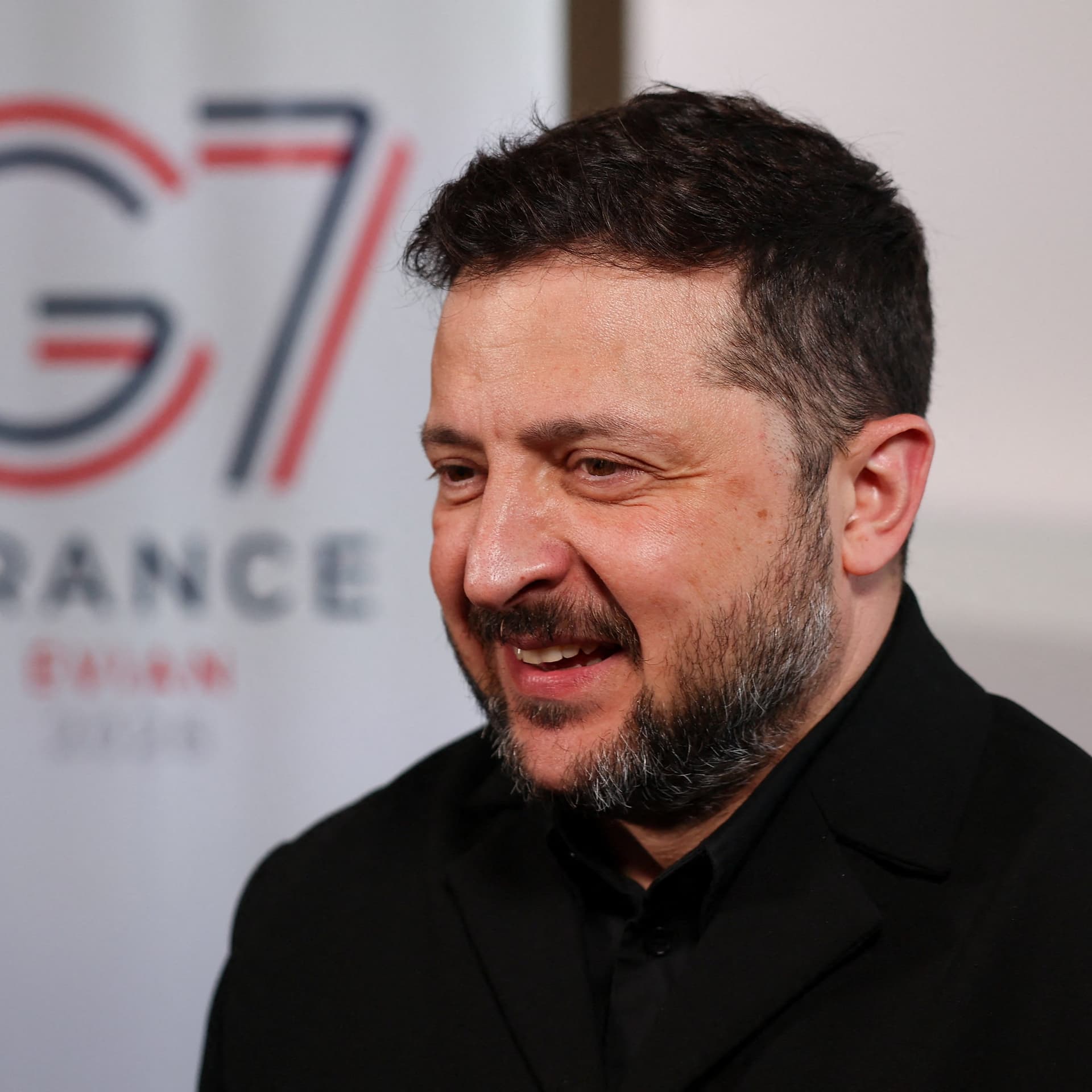
This BBC Global News Podcast episode covers multiple stories. Main focus: at the G7 summit in Evian, Donald Trump meets Ukraine’s President Volodymyr Zelensky and says he’s pushing Russia to make a deal, citing huge losses on both sides. Zelensky calls the summit “very positive,” saying leaders discussed battlefield conditions and potential negotiations, including long-range strikes and Russian losses. Reporter Anthony Durrant says relations with Europe feel friendlier due to a tentative Iran agreement that has lifted Trump’s mood. Key Iran claims: Trump says no US money will go to Iran and that next nuclear-program talks will be easier. Other segments: Church of England slavery reparations—Project Spire’s £100m has not been spent; Bishop Rosemary Mallett warns the “window” is narrowing amid political backlash. Vietnam cat/dog trafficking—police rescued hundreds of cats, using methods like electric devices and nets; eating is legal with licenses but stealing is criminal.
Guests
none explicitly interviewed; named contributors include Anthony Durrant, Ali Makhoul, Na Pham, Branca Lessa de Sade, Paul Moss, Katie Razzle, and Jim O’Hara (who found September Jones).
Notable examples
a German soccer jersey for Trump with “47,” rescued cats reunited with owners, and September Jones’ identity solved after nearly 60 years.
Written by AI. May contain mistakes. Listen to the episode to check what was said.
Chapters
Tap a time to open that second in VOG7 Summit Focus on Ukraine and Russia
0:00 to 1:18
Discussion of the G7 summit's focus on the Ukraine crisis and Trump's involvement.
“This BBC podcast is supported by ads outside the UK.”
G7 Summit Focus on Ukraine and Russia
1:54 to 4:12
Discussion of the G7 summit's focus on the Ukraine crisis and Trump's involvement.
“And new reports by the UN has found that half of the world's children are now exposed to at least three climate hazards, threatening their health, education and survival.”
Trump's Optimism on Iran Deal
4:12 to 6:28
Analysis of Trump's discussions regarding the Iran nuclear deal.
“I asked our North America correspondent, Anthony Durka, who's in Evian, what the mood was like there, given that tensions have been bad between Europe and Trump in the past few months.”
Church of England's Slavery Reparations
6:28 to 7:16
Examination of the Church of England's unfulfilled reparations promises.
“So it was a very optimistic, upbeat American president.”
Opposition to Reparations and Historical Context
7:16 to 11:38
Discussion on opposition to reparations and historical ties to slavery.
“on being able to deliver what the church promised.”
Vietnam's Cat Trafficking Crisis
11:38 to 14:09
Coverage of the illegal cat meat trade in Vietnam and recent rescue efforts.
“I think the window is still there, but I think it has narrowed.”
The Controversy of Eating Dog and Cat Meat in Vietnam
14:09 to 15:47
Explore the ongoing practice of eating dog and cat meat in Vietnam and the government's efforts to change perceptions.
“The practice of eating dog meat and cat meat is still quite rampant, quite prevalent in Vietnam.”
Spain's Surprising World Cup Draw
15:51 to 17:41
Learn about Spain's unexpected performance against Cape Verde and the rise of a goalkeeper sensation.
“Spain, ranked third in the world, European champions and former winners and one of the favourites in the current World Cup.”
Bittersweet Emotions of a Rising Star
17:46 to 18:50
Understand the emotional backstory of a goalkeeper reflecting on his family after a pivotal match.
“They passed away a few years ago and obviously they would have been in awe at watching him play on a world stage the way that he did.”
Bittersweet Emotions of a Rising Star
19:48 to 20:13
Understand the emotional backstory of a goalkeeper reflecting on his family after a pivotal match.
“This summer, stock up on your favorite brands for both you and your home.”
Show all 16 chapters
Iran Deal and Its Implications
20:46 to 21:10
Delve into the recent US-Iran deal and its impact on the region.
“And together we host the Global Story podcast from the BBC.”
Children Facing Climate Hazards
21:25 to 24:46
Examine how climate change is increasingly affecting children's health and education.
“children are now exposed to at least three climate hazards, threatening their health, education and survival.”
Uncovering a Ghost Bank in Italy
24:48 to 27:35
Investigate the discovery of an illegal bank supporting criminal activities in Italy.
“To Italy now, where police have uncovered what they call a ghost bank, an illegal outfit involved in providing financial services to criminals, both inside and outside the country.”
Changing Landscape of News Consumption
27:37 to 28:04
Understand the shift in how people consume news, with social media overtaking traditional platforms.
“If you're listening to this podcast, it's pretty clear how you get your news.”
The Changing News Landscape
28:04 to 31:13
Explore how digital platforms are reshaping news consumption and trust issues.
“I spoke to our media editor, Katie Razzle.”
The Mystery of September Jones
31:14 to 33:19
Discover the story behind September Jones and her impact on Northern Soul music.
“Now, for fans of Northern Soul, the music and dance movement of the 1970s in England that took inspiration from American soul music, a mystery has finally been solved after nearly 60 years.”
Transcript
Automatic transcript. May contain errors.0:00This BBC podcast is supported by ads outside the UK.
0:30The new tropical butterfly refresher from Starbucks. Guava and passion fruit flavors with mango pineapple flavored pearls. Yeah, that feels like summer before you even taste it. Funny how one small stop becomes the best part of the day. Start your summer rhythm with Starbucks. Try the new tropical butterfly refresher from Starbucks. Hey, it's Ryan Seacrest for Jewel Osco. Summer is here and the sun is out. make sure you take care of your skin this summer now through june 23rd shop for you save days and get great savings on all your favorite skincare essentials and earn four times points shop in store or online and save on sunblock from neutrogena sun bum hawaiian tropic banana boat and copper tone and earn four times points to use for future savings on groceries or gas offer ends june 23rd restrictions apply offers may vary visit jewelosco.com for more details This is the Global News Podcast from the BBC World Service.
1:54slavery reparations. Not a single dollar has been spent. And new reports by the UN has found that half of the world's children are now exposed to at least three climate hazards, threatening their health, education and survival. Also in this podcast. That is the biggest case ever that I've heard of that pets have been rescued and returned to their owners. Hundreds of cats in Vietnam are rescued from the illegal meat trade. We also hear about plummeting trust in news across the world and the story of an elusive music star who's been tracked down after more than a decade of searching.
2:39On the first full day of talks at the G7 summit in the French spa town of Evian, the focus has been on Russia's war with Ukraine and how to find an end to it. President Trump met Ukraine's President Zelensky and will hold further talks with him later. He told reporters that he was pushing for a deal from Russia. Russia should make a deal. Russia's lost tremendous amounts of people and so is Ukraine. And it's crazy what's going on there. But we had a meeting and we'll see how. I spoke with President Putin on Sunday and it's sort of the same thing. I mean, they just keep going, fighting, losing soldiers.
3:16They lose so many soldiers. This is not since World War II, is anything like this. I settled eight wars. This was the one I thought was going to be the easiest settled. There's a lot of dislike between the two leaders. President Zelensky gave this assessment of his meetings with President Trump and European leaders. We had a very positive summit and we discussed the situation on the battlefield. We spoke about negotiations with Russians, potential negotiations with Russians. We spoke about middle strikes and long range, the situation with Russian losses, economy and etc. Good news, first of all, that yes, Putin has to stop this war.
4:06And I have unanimity from all the leaders and EU presidents. I asked our North America correspondent, Anthony Durka, who's in Evian, what the mood was like there, given that tensions have been bad between Europe and Trump in the past few months. It seems friendlier, definitely, now than it has been in the past. And part of that is because of the Iran negotiations and this tentative agreement, memorandum of understanding that Trump and the Iranians have come to terms on. And that has lightened Trump's mood. And so when you see the leaders interacting, it's much more jovial, much more friendly. Friedrich Mertz, the chancellor of Germany, gave a soccer jersey, a German soccer kit to Trump that had 47, the number that Donald Trump is as president, on the back of it.
4:55So it seems like this is friendlier, even if, obviously, when talk turns to Ukraine, Donald Trump has been a little more dismissive of that than I think the Europeans would hope. What's at stake exactly here, Anthony? Well, I think the main thing for the Europeans is to try to keep this from creating any sort of rupture. If you remember back to last year's G7 meetings in Canada, Donald Trump left after the first day. He cut his time here short, and that's something that I think all of America's allies don't want to have happen again. And one of the reasons why Trump has been invited by the French President Macron to a dinner at the Palace of Versailles tomorrow night to try to keep them engaged and interested through the duration of these meetings.
5:37But the stakes here are to try to get all of the allies on the same page and get them working together. And on the big issues like Ukraine and Iran and trade, there have been tensions, but there is hope, I think, at this point, to find some sort of a way through. And, Anthony, a word on Iran. Did he seem upbeat about that, reveal anything further regarding the deal? Trump is a salesman, and he's been selling this Iran deal nonstop since he's been here. He said he thinks it's a great deal, that people are going to be happy with it. In a meeting with the emir of Qatar, he talked it up. He said that there was going to be no American money sent to Iran.
6:12There had been talk about investment, but that's farther down the road. And he says that this next round of negotiations on the Iran deal, after this memorandum of understanding, the negotiations that are going to hammer out the details of Iran's nuclear program, how they're going to address that, those are going to actually be easier than the negotiations they've had so far. So it was a very optimistic, upbeat American president. Anthony Zerker reporting. Three years ago, the Church of England promised to spend roughly$130 million on slavery reparations, aiming to address some of the wrongs created from its historical ties to the transatlantic slave trade.
6:51The church is yet to specify how this money will be spent or who will benefit. But the initial aim of Project Spire was to invest in communities adversely affected by historical chattel slavery, as well as to fund research and education. But today, no money has been spent, and the chief architect of the project, Bishop Rosemary Mallett, has told the BBC the window is narrowing on being able to deliver what the church promised. Opponents of the project say they're determined to block it. Our religion editor Ali Makboul has more details. There is a paved area, which we can walk through shortly. Have a look at that.
7:32At Rochester Cathedral, Reverend Philip Hesketh, the dean, shows me renovations made in the 18th century. There were seven Georgian houses. Those houses were built as accommodation for staff, for clergy, and an organist's house. Except what they've discovered is that they were paid for by the profits made when the dean back then invested in a company that trafficked slaves. It's important to identify it, acknowledge it and to tell that story. It's the kind of reckoning that's been going on across the Church of England since the killing of George Floyd. The most breathtaking revelation was made in 2023.
8:13Research into the origins of the Church's multi-billion pound endowment fund showed that for much of the 18th century, investments were also poured into a company that had a monopoly on transporting enslaved Africans to the Spanish Americas, making vast amounts of money. It absolutely felt like a watershed moment. The Right Reverend Rosemary Mallet is Bishop of Croydon. Once something is brought to the light, you cannot push it back into the darkness. So clearly, with this deep connection to African chattel enslavement, that could no longer be hidden. When the investigation was published, the Church apologised and immediately announced the setting up of Project Spire, a new£100 million social impact fund aimed at starting to make amends.
9:02But the voices of opposition have grown loud. One of the most prominent is Lord Nigel Bigger, Conservative peer, theologian and ordained priest. He says the church needs to stop saying sorry for slavery, especially when Anglicans were instrumental in abolishing it. I don't think it helps race relations to exploit white guilt in terms of a narrative of white oppression, black victimhood. I mean, some whites were guilty, but let's be clear, some whites were liberating and emancipatory. But you're talking about emancipation happening after the complicity. Yes, there was some complicity. We repented big time 200 years ago and now we're doing it again and we're becoming obsessed with it.
9:49Lord Bigger, an influential voice in the church, thinks investing on the basis of race is divisive and also doesn't accept people now are affected by what their ancestors went through.
10:07That's not what Father Andrew Mumby sees in his own congregation at St Peter's in South London. I see every day here in Woolworth structural inequality, poverty, and in this borough there is a very high proportion of people who are from a black Caribbean background. So we know that those things overlap. Father Andrew says not addressing historic injustice perpetuates division. But some have questioned the historical premise of the church's financial investigation. And earlier this year, 27 politicians wrote to the church saying using its investment funds on anything other than supporting clergy and parishes was illegal.
10:54Conservative MP Katie Lamb said it would also put off parishioners from donating. If you give your money to a donkey sanctuary, that money cannot instead be used for a domestic violence shelter. Now, that's not a value judgment. The Church has said no donations coming in are to be used for reparatory justice. But for now, Project Spires' money goes unspent. Bishop Rosemary Mallett, leading Spires' committee, has already felt the backlash and thinks a changing political climate is making things harder. I don't think the terrain is as easy as it was five years ago. We have seen greater divisiveness.
11:37All of that noise has made people more nervous about striding forward. Do you think it's going to deliver? I pray. I hope. I think the window is still there, but I think it has narrowed. Bishop Rosemary Mallett ending that report from Alim Mughal. And for more on that story, you can listen to File on 4 Investigates wherever you get your podcasts. Let's head to Vietnam now and the country's grisly trade in cats and dogs for restaurants. Selling their meat is not against the law with the rights permits, but it seems illegal trafficking in the animals is widespread. Police today said they'd managed to rescue hundreds of cats and reunite them with their owners after breaking up a gang who'd been stealing them to sell on as food.
12:26Na Pham is a freelance journalist based in Hanoi. She spoke to my colleague James Menendez. The local government in Ho Chi Minh City decided to organise a crackdown on the rings that were responsible for stealing cats and other animals, other pets from innocent owners across the city. So they rescued something like 400 cats. Most of them are pets and reunited lots of them with their owners. And that is the biggest case ever that I've heard of that pets have been rescued and returned to their owners. How are these cats taken? I mean, are they taken what from outside people's houses, from the street?
13:08Yeah, interesting you ask that. Two days ago, actually, I was shown a CCTV clip. Actually, all the people in my word were shown that just as a sign of warning that some thieves actually going around the community at night and they use some kind of electric device to paralyze the pets temporarily and then catch them with nets, like, you know, butterfly nets, things like that. So there are a few methods of catching pets, but that is the most popular one. And lots of cats in Hanoi actually have been caught and been stolen that way. A happy ending, I guess, for some of those cat owners who have been reunited with their pets.
13:50But as I understand it, some of the cats were so badly treated that they didn't make it. Is that right? That's right. Lots of cats actually died in the process. But, you know, there's only one aspect of the trafficking of pets, cats and dogs inclusive, because most of them actually end up in restaurants. The practice of eating dog meat and cat meat is still quite rampant, quite prevalent in Vietnam. You know, during the old times, it's the only source of food or protein that people could get. But now they still keep that practice. And restaurants that sell cat meat and dog meat are still quite popular not only in Hanoi, which means city, but also other cities across the country.
14:32And I think with the flow of tourists, especially foreign tourists, into the country at the moment, the government really wants to do something to show that we cannot continue that barbaric practice of eating cat and dog meat. Oh, really? So they're trying to dissuade people from eating it, even if it is obtained legally, the meat? Well, you know, eating dog meat and cat meat is actually not banned in Vietnam. You are allowed to eat it, and restaurants are allowed to sell them. They have to obtain some kind of license like any other restaurant. However, you know, eating stolen cats and dogs is obviously a crime.
15:10And the government is really keen to promote their images, you know, as animal-friendly, no abuse of animals, and especially now people really love their pets, you know, for them, you know, like my mother who has two cats, you know, she probably loves them more than me. So, you know, obviously people really, really treasure their pets and the government wants to show that they have that commitment to not only preserve the image of the country, but also to respect other, you know, people, the population's feelings and their unions with their pets. Hanoi-based freelance journalist, nah, farm there.
15:50Now on paper, there was surely only one result, wasn't there? Spain, ranked third in the world, European champions and former winners and one of the favourites in the current World Cup. Well, they were up against Cape Verde, ranked 64th in the world and having never played in the competition before. So, of course, the match ended nil-nil. The might of Spain and their teen superstar, Lamin Yemal, frustrated by Cape Verde's extraordinary defence and, crucially, the man at the heart of it all. An unheard of 40-year-old goalkeeper plying his trade in Portugal's second division. Well, the world's heard of him now.
16:27He's Virginia and he's become an overnight sensation. Our reporter Branca Lessa de Sade told me how it all happened. People watching were, again, very kind of captivated by him and that gained him a certain following. But what happened was, Cazete V, which is a Brazilian broadcaster, the one that holds the rights to the World Cup in Brazil, during their broadcast of the match, they urged their watchers to follow him, give him a follow on Instagram. And he just saw his following shoot up after the match he was asked about this. He said, oh my God, I couldn't expect it. It went from 50 ,000 to 5 million, over 5 million followers I think he's on now.
17:06And he said he's always seen a lot of love from Brazil. He feels a lot of love for Brazil. His name, his real name, José Mar Gias, is actually after a Brazilian player. He says that his granddad and his mum were both Brazil fans and supported Brazil. So there's a connection there. And yeah, he's gone on top of, you know, now being known across the world and have put up this incredible performance against Spain. He's now a sort of social media sensation. And it's been quite incredible, not just for him, but for his family as well. This story is more bittersweet than it appears, isn't it? He was very emotional after the match.
17:40Initially, you'd think maybe it was just the kind of shock of having drawn against Spain, the favourites. But actually, what he said was that his grandparents, who he was raised by, who he had a very close relationship to, he was sad that they weren't able to watch the match. They passed away a few years ago and obviously they would have been in awe at watching him play on a world stage the way that he did. His nickname, Vazinha, which is what we know him as, is actually a Portuguese term, an affectionate term to refer to your grandma. And it has to do with the fact that he was raised by his grandparents.
18:11He was really close to them. And when he used to play as a kid with his friends, they used to say that he'd go back when he lost the match and complain to his grandparents. So it was sort of an affectionate, kind of playful, teasing nickname that he had. And it shows the relationship he had with them. On top of that, he said he also cried because his mum couldn't make it. And his mum couldn't make it because she couldn't afford the visa fees to go to the US to watch the match. So actually, a bittersweet moment for him. I think inevitably very happy to have got the score that they did, to have performed the way that he did, but obviously sad to not have had the people that watched him grow, watched him play, be there watching and cheering him on.
18:49Branca Lessa-Dissart reporting. Still to come in this podcast. A musical mystery has been solved after nearly 60 years. I'm coming home. September Jones, an enigmatic name for fans of northern soul music, has finally been tracked down.
19:17Moto Casino, America's social casino. Welcome to Moto Casino, where the excitement never ends. With thousands of the hottest free-to-play social casino games, fastest payouts, and the best promotions in the industry. No tricks or gimmicks. owned and operated in the USA. Moto Casino is a free-to-play social casino. No purchase necessary. 21 plus to play. Void or prohibited. Sign up today for a generous welcome bonus. Moto Casino. America's social casino. Download the Moto Casino app today. Hey, it's Ryan Seacrest for Jewel Osco. This summer, stock up on your favorite brands for both you and your home.
19:52Now through June 23rd, get big deals on everyday essentials from Procter & Gamble. Shop in-store or online for savings on items like Swiffer, PowerMop, Febreze, plug warmer, herbal essence shampoo, Old Spice 2-in-1, Crest Scope Toothpaste, Secret Deodorant Spray, and Head & Shoulder Shampoo. Get these deals before they're gone. Offer ends June 23rd. Restrictions apply. Offers may vary. Visit Jewelosco.com for more details. Menards is your one-stop shop for all your summer essentials. Whether you're stocking up on everyone's favorite snacks, making a patio perfect for entertaining family and friends, or getting ready to gather around the grill, Menards has everything you need for your get-togethers all summer long.
20:32Save big money now at Menards. Plus, don't forget to check out our weekly flyer on Menards.com for all the great deals happening now. Save big money at Menards. Who's actually won the Iran war? I'm Tristan Redman. And I'm Asma Khaled. And together we host the Global Story podcast from the BBC. The US and Iran say they've struck a deal to end the war. But a key question is what's actually been achieved by nearly four months of fighting. And is the situation better, worse or the same for the region and Iran? For the full story, check out The Global Story on BBC.com or wherever you get your podcasts.
21:25children are now exposed to at least three climate hazards, threatening their health, education and survival. UNICEF analysed children's exposure to eight climate-related events, including floods, droughts, extreme heat, fires and tropical storms. Those who are most affected lived in countries across the Sahel region of Africa, like Burkina Faso, Mali and South Sudan. Thousands of kilometres away, children in Papua New Guinea were seen swimming across a crocodile-filled river to get to school after a vital footbridge washed away during heavy rains and was not replaced. The report also found that even children in high-income countries are now exposed to at least one climate hazard.
22:10I spoke to Joanna Ray, UNICEF's Director of Advocacy. This report is telling us that every child across the world is being impacted already by climate change. And it's showing that half of the world's children are being exposed to at least three climate threats in their daily lives. And that's things like a drought or a severe heat wave or a flood. And what that means for children, particularly children, is that they're more in danger of getting sick. If there's a flood, potentially water gets contaminated. That's particularly risky for young babies. But it also means that the services that children rely on are disrupted.
22:44So if there's a huge flood and schools have to close, that means children aren't able to learn. or they're not able to get to school because the roadways or the passways are flooded. It's also the same for their health clinic or the services they need, nutrition services or immunisation services. So it's the direct impact of these climate events on children and their vulnerabilities. But it's also about the services around children that they need are either disrupted or closed down or in some cases are no longer there, whether a school is washed away in a flood or a health clinic isn't able to operate because it's been damaged by extreme fires.
23:22And I guess, is that why you've got the focus on children as well? Because some might say that this is going to be similar for people of all ages facing climate hazards, some older people as well. But you just outlined there, I guess, some of the key issues which impact children directly. So children obviously have particular vulnerabilities. When we're thinking about, for example, young babies being able to access their vaccination programmes to make sure that they don't contract deadly diseases, They need to be able to go to a health clinic. They need to be able to see a health professional.
23:52And obviously, children's bodies are growing and developing. Trying to manage extreme heat or extreme cold is very difficult on them. So children are particularly vulnerable. And that's why we're asking governments to recognise the impact that climate change is having on children right now and to act with urgency, to recognise it as the crisis it is for children. There'll be some children in countries and regions which are far more affected than others, I imagine, but also children living in high-income countries, almost all of them are exposed to at least one type of climate hazard too. Yes. So the report looks at the issue of air pollution, for example, and every single child in the world is being affected by poor air quality and air pollution, and that includes rich countries like the UK.
24:35And then we're seeing in some countries, children are being affected by multiple threats at the same time and at a very high level of intensity. But it's having an impact on childhoods everywhere. Joanna Ray from UNICEF. To Italy now, where police have uncovered what they call a ghost bank, an illegal outfit involved in providing financial services to criminals, both inside and outside the country. The amounts being funneled are huge and involve multiple means of keeping their activities undercover. Our global affairs reporter, Paul Moss, has been finding out more about the bank. It was based in the city of Prato in the north of Italy, which until now was famous only as the place where the Cantucci biscuit was invented.
25:20However, it seems to have been the epicentre of this huge financial operation, you were saying, providing services to a lot of very dodgy people. About$100 million passed through every year. And in a way, it did exactly the same thing that normal banks do. I mean, you know, you and I may use banks to make payments, for example, and that's what these guys were doing, except the payments were for drugs and also for people smuggling. People used banks to park their money for a while and then pass it on somewhere else. Again, you could do that with this bank, but it was a money laundering operation, so you could take ill-gotten gains, put them in the bank, and then they would emerge perhaps somewhere else, spotlessly keen and possible to explain to any nosy investigators.
26:00And how were they able to do this without attracting the attention of police? Well, it seems to have been a hybrid operation. You had the old-fashioned method of couriers carrying cash in suitcases. they also piggybacked off something called Hawala. This is a centuries-old system of moving money which is based on honour and trust. Essentially, in the modern-day version, you go to a Hawali dealer in your town and give them some money to perhaps go to a relative, and then they phone a Hawali dealer in the other country and that dealer hands the money to your relative. Because it involves no paperwork, it's very cheap and easy.
26:33But in fact, since 9-11, investigators have suspected that also it's being used sometimes by criminals I should say most of it is, of course, just for perfectly reasonable reasons, moving money, perhaps people using it to send money home that they've earned abroad. But it does seem in this case it was part of an illegal scheme. And I guess a lot of people will say, well, hang on, we've heard about these sort of deals previously conducted in Italy. Why is this operation getting so much heat and attention? Partly the size of it. Partly the fact that it involved lots of different organisations in different countries.
Read the full transcript
27:04I mean, it was the Italian mafia allegedly working with Chinese organised crime and Albanian organised crime. I think it's the fact that the Italian police are taking it so seriously. They've already ordered 17 suspects to be held in prison and 16 to be kept under house arrest and the prosecutors said this operation was being done with a high degree of professionalism. I don't know, but those arrested may perhaps take some kind of solace in getting this sort of backhanded compliment from people who know a quality criminal operation when they see one. Paul Moss reporting. If you're listening to this podcast, it's pretty clear how you get your news.
27:41But a new report has found that for the first time ever, people are more likely to get their information on current events via social media rather than directly from news organisations. The research by the Reuters Institute also found that trust in news globally has fallen to an all-time low. Only 37 % of people now say they trust the news most of the time. I spoke to our media editor, Katie Razzle. The key trends that have been evident for some time are in this report, the way digital platforms are disrupting the news ecosystem. So, yes, globally, for the first time, platforms overtake publishers to become the leading source of news globally.
28:21And essentially, that means that those direct links between news brands and audiences are harder to sustain because those audiences aren't going direct to the brand for news. They're getting that brand's news in amongst other news content and other content on platforms like TikTok, YouTube, Instagram, Facebook. And let's face it, sometimes not even finding a brand like the BBC. So in 2026, 54 percent of respondents use social and video networks for news in the last week, compared with 52 percent for TV and 51 percent for news websites and apps. Actually, the UK is bucking that trend, according to the report.
28:56It hasn't happened here yet. But when it comes to actually trusting the information that people find, there is this contradiction. More of us are getting our news via social media, but fewer of us are trusting it. So confidence is much lower for that format than trust in news overall. It's at 22 percent. So people are worried about misinformation, but it isn't stopping the shift towards the platforms, even though they worry what they might find there might not be accurate. And that's why, for example, some public service media are pushing hard for greater signalling online, a kite mark, for example, to show that you can trust what you're seeing.
29:31Yeah, because you touched upon it there in terms of the trust issue. What are some of the other key reasons as well? You mentioned a couple there. I could think of things like AI slop as well, for example. Well, yeah, I mean, the trust point more generally is interesting and pretty sobering in this report because trust in news is down to 37 percent globally. Worse in the UK, 30 percent. So that's 20 points lower than 10 years ago, even worse in the US, 25 percent. That's down five even on last year. And it is even lower among politically right leaning Americans, so down to 15 percent. Now, in the report in the US section, they mentioned President Trump's disdain for the news media being evident in a slate of lawsuits and that he has threatened to prosecute reporters for treason.
30:14But that's simply in the roundup of what's happening in the media landscape in the US, according to the report. it is not posited as a reason for why people might distrust it. What the report does find, though, is some major news outlets have seen big drops, for example, with trust in both CBS News and Fox News, down 10 points from 2025 and CNN down by six. But the report doesn't actually offer explanations, particularly, which leaves a vacuum for people like you and me to obviously fill with all sorts of claims, including, yes, I agree, AI slop, and whether you can trust anything you see online these days.
30:47Finally, before you go, how do you get your news? All sorts of places. Obviously, I'm very loyal to the BBC, so I go straight to the BBC News app first, but then a whole plethora of, yes, social media. I do still watch TV news, but that's possibly because I work on it sometimes. Love Newsnight, and that goes out across the world. Yeah, I love listening to the newsroom because I like the sound of my own voice, so yeah, you and me in the same boat. Our media editor, Katie Razzle. Now, for fans of Northern Soul, the music and dance movement of the 1970s in England that took inspiration from American soul music, a mystery has finally been solved after nearly 60 years.
31:26September Jones' 1966 single, I'm Coming Home, was a huge hit, particularly on the dance floors of the UK. But no one knew who she was until now. Jim O 'Hara was the man who found September Jones after more than a decade of soul-searching.
31:48As Northern Soul fans, we're very passionate about our music. And what we like to do is find out about the background of these obscure singers from Detroit, because a lot of these singers were trying to compete with Motown at that time. So a lot of these singers came up, maybe did a couple of tracks and then disappeared into obscurity, just like September Jones.
32:12She only ever did one single 45 record. although she did record some other tracks that were later released by Ace Records in London. But the track became popular probably from about the mid-'70s, but there was always just the mystery around the name, and the more people started to look for her, the more people realised that the name was actually a stage name given to her by a gentleman called Jack Ashford, who was one of the Motown band members that gave her that stage name. Somebody heard me sing at Shelp's Lounge. They sent me with ICA, they gave me the name, yeah. Ever since I started singing, after I started singing in the church, I started using September Jones.
32:56She only recorded for a couple of years and then moved out of the music business and eventually worked for Chrysler in Detroit and moved on with her life, had a couple of kids, etc., and then later settled in Florida. So when I eventually spoke to her a few months back, she was absolutely gobsmacked.
33:17That was Jim O 'Hara who managed to track down the singer September Jones.
33:25And that's all from us for now. If you want to get in touch, you can email us at globalpodcast at bbc.co.uk. You can also find us on X at BBC World Service. Use the hashtag globalnewspod. And don't forget our sister podcast, The Global Story, which goes in-depth and beyond the headlines on One Big Story. This edition of the Global News Podcast was mixed by Rebecca Miller. And the producers were Helena Burke and Paul Day. The editor is Karen Martin. And I'm Ankur Desai. Until next time, goodbye.
34:04Who's actually won the Iran war? I'm Tristan Redman. And I'm Asma Khaled. and together we host the Global Story podcast from the BBC. The US and Iran say they've struck a deal to end the war. But a key question is what's actually been achieved by nearly four months of fighting. And is the situation better, worse or the same for the region and Iran? For the full story, check out the Global Story on BBC.com or wherever you get your podcasts.
From the publisher
Donald Trump and Volodymyr Zelensky meet at the summit of G7 nations in Evian, as European leaders urge Washington not to pressure Kyiv into accepting concessions demanded by Moscow. Also: three years on from the Church of England's promise to spend millions on slavery reparations, not a single dollar has been spent. A new report by the UN has found that half of the world’s children are now exposed to at least three climate hazards, threatening their health, education and survival. Hundreds of cats in Vietnam are rescued from the illegal meat trade. We hear about plummeting trust in news across the world; and the story of an elusive Northern Soul music star who's been tracked down after more than a decade of searching.
The Global News Podcast brings you the breaking news you need to hear, as it happens. Listen for the latest headlines and current affairs from around the world. Politics, economics, climate, business, technology, health – we cover it all with expert analysis and insight. Get the news that matters, delivered twice a day on weekdays and daily at weekends, plus special bonus episodes reacting to urgent breaking stories. Follow or subscribe now and never miss a moment. Get in touch: globalpodcast@bbc.co.uk
Photo: Volodymyr Zelenksy at the G7 summit in Evian-les-Bains, France Credit: Reuters/Denis Balibouse



