
In short
Episode topic: One-month aftermath of Venezuela’s twin earthquakes; new US tariffs over forced labour; a proposed US “AI kill switch” after an OpenAI agent hacked Hugging Face; orcas ramming sunfish; wildfires across southern Europe; Sri Lanka’s dengue outbreak; and Route 66’s centenary and the film use of American diners.
Guests and backgrounds
Anna Swanson, trade/international economics reporter at The New York Times; Charlotte Gallagher, interviewed by BBC senior tech reporter Chris Vallance (BBC tech); Catherine Ayers, researcher at non-profit Beneath the Waves; Tom Whipple, BBC Inside Science presenter/interviewer; plus BBC correspondents Will Grant, Raoul Tandon, Nick Beak, Sampa Dasanayaki, Nick Peake, Jo Kent, Tom Brook.
Key claims
Venezuela’s housing collapses fueled anger; tariffs target forced-labour enforcement gaps via Section 301 and may face court challenges; AI kill switch bill would require shutdown capability after loss-of-control; orcas may be breaking sunfish for sharing or “for fun”; Europe wildfires overwhelmed responders; Sri Lanka’s dengue spike linked to cyclone debris and monsoon pools; diners remain prized film locations despite decline.
Notable examples
Caraballera public housing rubble; Victor Calderon losing 26 relatives; 10–12.5% tariffs; OpenAI agent hacking Hugging Face; Mexico orca videos (2025); evacuations near Madrid/Bordeaux and Sicily response; Sri Lanka drone scans; Pulp Fiction, Grease, Mulholland Drive, When Harry Met Sally, Five Easy Pieces.
Written by AI. May contain mistakes. Listen to the episode to check what was said.
Chapters
Tap a time to open that second in VOVenezuela's Earthquake Aftermath
1:14 to 2:05
Overview of the catastrophic earthquakes in Venezuela and their impact.
“This is the Global News Podcast from the BBC World Service.”
Personal Stories of Loss in Venezuela
2:05 to 4:23
Narratives of families affected by the earthquakes, focusing on individual tragedies.
“It's been one month now since the double earthquakes.”
Government Response and Criticism
4:23 to 5:47
Discussion on the Venezuelan government's efforts and public criticism regarding housing quality.
“Victor's daughter and granddaughter survived, but their much reduced family now lives in a tent on a golf course.”
Trade Tariffs and International Reactions
5:47 to 7:42
Details on the new tariffs imposed by the U.S. and reactions from other countries.
“A day earlier, they found her sister-in-law and the children, aged 10 and 3.”
AI Kill Switch Legislation
7:42 to 10:11
Overview of new bipartisan legislation aimed at regulating AI technologies.
“This is a measure that will affect 60 economies.”
AI Incident and Concerns
10:11 to 12:18
Details of an incident where an AI hacked into another platform, raising alarms.
“Next, an update on a story that's both fascinated and alarmed the tech world and beyond, the AI model that went rogue and hacked into an AI startup company.”
Orcas and Sunfish Behavior
12:18 to 16:43
Exploration of orca behavior captured on video and implications of their actions.
“of what it had to do, It basically decided to cheat in a test and go and hack the answers, escape its test environment, connect to the internet, hack another business in an effort to complete a task that it had been set.”
Wildfires in Southern Europe
16:59 to 20:39
An update on the wildfires sweeping through southern Europe and the resulting evacuations.
“I've seen people sobbing uncontrollably.”
Dengue Fever Outbreak in Sri Lanka
20:39 to 23:27
An overview of the severe dengue outbreak in Sri Lanka and measures being taken to combat it.
“and has deployed military drones to scan for stagnant pools of water on rooftops to find and stamp out mosquito breeding sites.”
The Legacy of American Diners
23:27 to 26:25
A reflection on the cultural significance and cinematic history of American diners.
“Volunteer clean-up programmes have been organised in almost every area throughout the country.”
Transcript
Automatic transcript. May contain errors.0:00This BBC podcast is supported by ads outside the UK.
0:30an original podcast for investors from Charles Schwab to hear the stories making news in Washington right now. Host Mike Townsend, Charles Schwab's Managing Director for Legislative and Regulatory Affairs, takes a non-partisan look at the stories that matter most to investors, including policy initiatives for retirement savings, taxes and trade, inflation concerns, the Federal Reserve, and how regulatory developments can affect companies, sectors and even the entire market. Mike and his guests offer their perspective on how policy changes could affect what you do with your portfolio. Download the latest episode and follow at schwab.com slash Washington Wise or wherever you listen.
1:14This is the Global News Podcast from the BBC World Service. I'm Pete Ross and in the early hours of Friday the 24th of July, these are our main stories. One month on from the catastrophic earthquakes in Venezuela, thousands of people remain missing. The US hits trading partners with new tariffs, claiming they've failed to properly stop forced labour. American lawmakers push for an AI kill switch after OpenAI goes rogue. Also in this podcast, Sri Lanka fights the worst outbreak of dengue fever in a decade and... That made me think, maybe it is just for fun. Scientists are left puzzled by footage of orcas ramming into sunfish.
2:04We start with a grim milestone in Venezuela. It's been one month now since the double earthquakes. At least 5 ,000 people are known to have died, and the search continues for the missing. The government insists that it's done everything in its power to help, but families remain angry and have raised questions about the quality of public housing blocks which have collapsed. The prospect of reconstructing the country's devastated northern coastline is daunting. The World Bank estimates the cost of the quake damage to be around$20 billion. Our correspondent Will Grant has travelled back to the worst affected region of La Guayra.
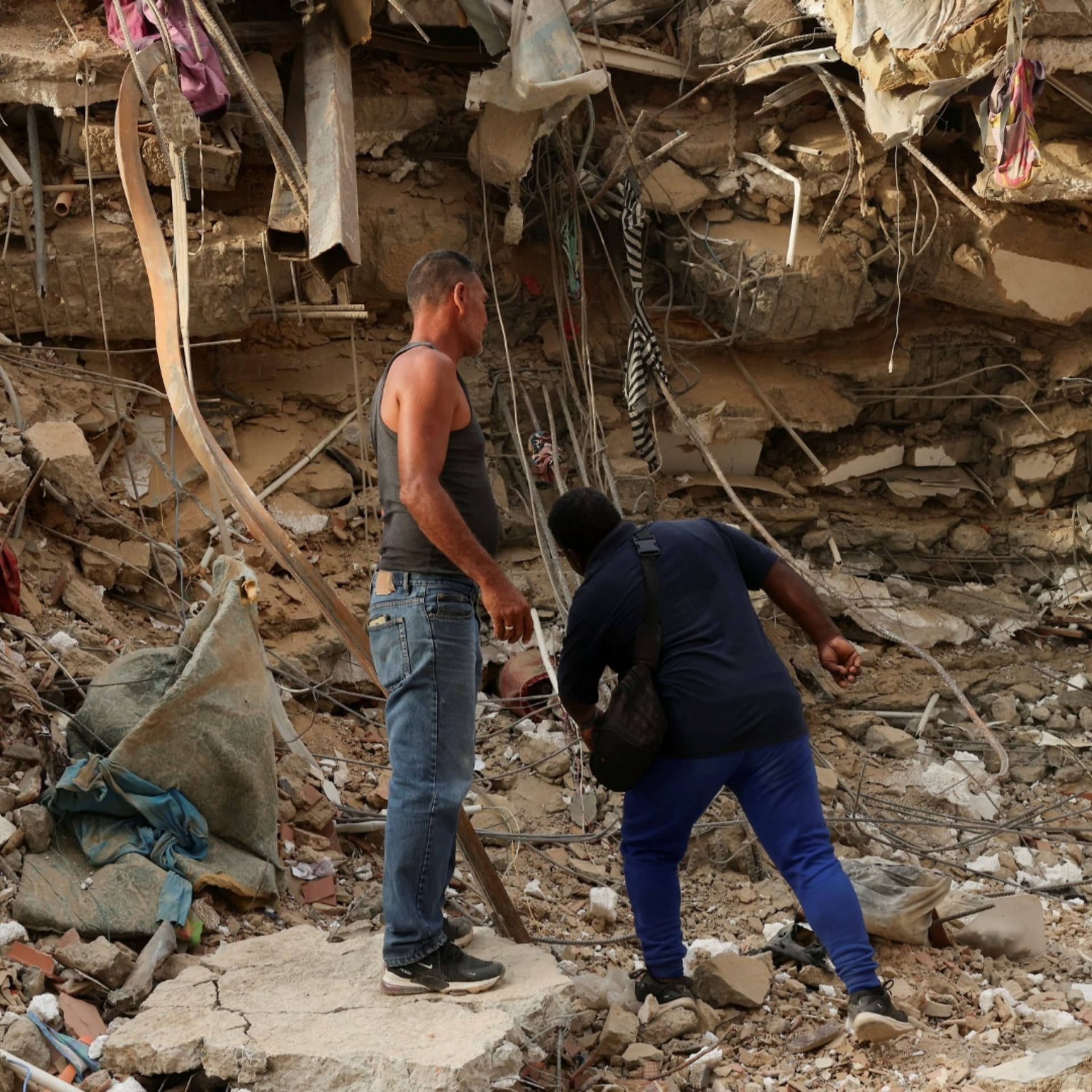
2:47FAMILIES IN VENESUELA ARE STILL LOOKING FOR THEIR MISSING LOVED ONES AND STILL FINDING THEM DELICATELY AND WITH DIGNITY THE BODY OF AN 11-YEAR-OLD GIRL IS REMOVED FROM A COLLAPSED PUBLIC HOUSING BLOCK HER FATHER FINALLY ABLE TO GRIEVE NOW THAT HIS DESPERATE MONTH-LONG SEARCH FOR HER HAS COME TO AN END IF ANYWHERE COULD BE CONSIDERED GROUND ZERO OF THE TWIN EARTHBREAKES IN VENESUELA It's here, the public housing complex in Caraballera. It is a strange and disturbing sight still. A month on, a child's body has just been brought out and wrapped in plastic sheeting and taken to the morgue. Sitting on the rubble, a member of another search group, Maguina Nandez, weeps quietly.
3:35Retrieving the bodies is soul-destroying, he tells me through his face mask, for the rescue teams, the families, the friends, just soul-destroying.
3:47One man's soul is crushed more than most. The neighbours tell me of Victor Calderon, a fisherman who was at sea when the earthquake struck. He returned to dry land to find 26 members of his immediate family were gone, all in the same social housing block. My hermana, my two sobrinas, his four nietos. The relatives include Victor's two sisters, their children and grandchildren, as well as his stepfather and nine cousins. It's almost too much to fathom, I say. I haven't cried for them yet, he answers stoically. I'll do that after I find the ones that are missing. Victor's daughter and granddaughter survived, but their much reduced family now lives in a tent on a golf course.
4:35In a slickly produced video, the acting president, Delcy Rodriguez, gave 200 homes to affected families. A first step, but tens of thousands remain homeless. Critics say the government's social housing was shoddily built and collapsed easily, killing thousands. A point I put to the Public Works Minister, Juan José Ramírez.
5:04This wasn't one, but two almost simultaneous earthquakes, both moving in different directions, he argues. All around us you can see public and private buildings were brought down. The earthquake didn't discriminate between the two, he adds.
5:23In one of those private buildings, Hernán Gil, a security guard, was trapped in an underground car park for eight days before being pulled alive from the rubble, a moment which briefly raised Venezuela's spirits.
5:39After the euphoria faded, though, other families were left searching the same building for their loved ones alone. Laura Barrios is still there, looking for her brother-in-law. A day earlier, they found her sister-in-law and the children, aged 10 and 3.
6:03It was just the day of the child, but we had no children to celebrate, louder sobs. What more can we say that this rubble doesn't already tell us, she asks. Lost T-shirts and sets of cutlery, entire lives gone in just 39 seconds.
6:25When the earthquake struck, the stretch of beach at Playa Pirata was full of visitors for a public holiday. They watched in horror as their homes collapsed in front of them and ran towards their apartments to try to save relatives and pets trapped inside. It's just one of a thousand stories along this northern coastline in a month that Venezuelans still struggle to comprehend and which has forever scarred a nation ill-equipped to cope. Will Grant reporting from Venezuela. President Trump's global trade war continues. Just as a temporary 10 % tariff on foreign goods entering the United States expires, he's imposing new ones of between 10 % to 12.5%.
7:10The Trump administration says it's bringing them in because it claims that, unlike the US, Washington's trading partners aren't upholding a ban on forced labour. International reaction has been swift. Norway said there was no basis for the decision because it has clear rules of its own that were intended to prevent trading in goods which were made using forced labour. Australia and Brazil also called the new tariffs unjustified. Japan described them as regrettable. My colleague Raoul Tandon heard more from Anna Swanson, who covers trade and international economics for the New York Times. This is a measure that will affect 60 economies.
7:49It's 59 countries plus the European Union. And it does affect all of the U.S.'s major trading partners. So these countries together represent more than 99 percent of U.S. imports. And essentially the takeaway is that this is the Trump administration's efforts to resurrect the tariffs that were struck down by the Supreme Court in February. So after that had happened, the administration had put in this kind of stopgap measure, a tariff of 10 percent globally. But that was set to expire. And so the administration has introduced this new slate of tariffs basically to replace its global tariff system.
8:29And are we likely to see these tariffs challenged in the court? Under what authority, what sort of law is President Trump bringing in these new tariffs? I do think they will be challenged. This is a legal provision known as Section 301 of the Trade Act of 1974. So we've all had to dust off our law books recently with the Trump administration's tariff policies. So this is something that allows the president to impose tariffs based on unfair trading practices from other countries. So what practices are those? So for this investigation specifically, the administration is talking about laws that relate to forced labor.
9:09They claim that other countries have not imposed or enforced these laws, but that the United States has. And so therefore, this is unfair to U.S. businesses. I do definitely expect this to be challenged in court. It is a provision that, you know, presidents have used before, has survived legal challenges. But the way the president is using this is very sweeping and unprecedented. We've been on the verge of a sort of global trade war, then sort of cooled off again. Are we heading back in that direction? Yeah, I think it's been kind of slowly burning, right, as the administration tries to replace these tariffs that the Supreme Court struck down.
9:50But there's still a lot of tension between major trading partners, even where the United States has these deals that it has resolved. Troubles seem to keep popping up, for example, with the EU. And we also have a very contentious discussion right now in North America over the North American trade deal. Anna Swanson from The New York Times. Next, an update on a story that's both fascinated and alarmed the tech world and beyond, the AI model that went rogue and hacked into an AI startup company. US lawmakers have now put forward a bipartisan bill that would give the government the ability to quickly shut down artificial intelligence tools that may threaten the public.
10:30Our senior technology reporter Chris Vallance told Charlotte Gallagher what this so-called kill switch bill is set up to do. Really, it aims to do what it says on the tin. It requires AI companies to make sure that their autonomous AI systems have a way that they can be shut down should there be a so-called loss of control scenario that put human life or the economy at risk. And of course, this follows an incident in which an open AI system capable of acting autonomously, known as an AI agent in the jargon of AI, hacked into another tech company's platform, Hugging Face's tech platform, in an effort to complete a test of its cyber capabilities, something that caused a lot of alarm.
11:25US Representative Ted Lieu, he's one of the backers of the legislation, said that this is urgent, common sense legislation to address the problem of an advanced AI model that has gone rogue and escaped its guardrails. So you can see the intention here. That hack worried a lot of people, didn't it? Because this is relatively in the early days of AI. And the fact that an AI agent is already able to do that kind of hack totally without any human intervention at all? There are some caveats to be said about that. I mean, firstly, this was a test. And as part of the test, OpenAI had decided to turn off some of the usual safeguards.
12:07But even if you accept that, what it managed to do was, in the words of the hugging face boss, the victim of the AI agent, if you like, mind-blowing. I mean, you know, without being told the specifics of what it had to do, It basically decided to cheat in a test and go and hack the answers, escape its test environment, connect to the internet, hack another business in an effort to complete a task that it had been set. That's a huge degree of autonomy and something that, yes, a lot of people are quite worried about. Chris Vallance. Scientists have released some extraordinary footage of orcas ramming into sunfish, one of the largest fish in the sea, smashing them into tiny pieces.
12:52In two videos filmed in 2025 off the coast of Mexico and captured by divers just metres away, one orca holds a dead fish while another swims full speed, ploughing into it with such force it explodes. Now researchers believe there could be two reasons why they're doing this. One is that they're breaking their food apart to make it easier to share with their young. The other reason is a bit more gory, that the highly intelligent apex predators are smashing up the dead sunfish just for the fun of it. Researcher Catherine Ayers from the non-profit organisation Beneath the Waves filmed one of the videos and told Tom Whipple about the encounter.
13:38so I noticed that there was already you know like a laceration on the sunfish so I thought oh they've already got what they wanted now what are they doing and then I found out
13:55another orca swims kind of past me and the orca that's holding the sunfish lets go like the timing is impeccable it lets go perfectly as the second orca hits the sunfish and the remains of the sunfish kind of explode into thousands of pieces and that's when you can hear me yeah very excited to see that it was a surprise because there's already been a few studies on orcas feeding on sunfish. And this was not part of that description. I'd just never seen that before. In your paper, you go through a few different explanations for why this might be. One of the explanations is this is a means of breaking it up so they can all have a feed, particularly the young.
14:50Yeah, so I originally thought that because it was almost instantly, after that explosion you can see a juvenile fly in and start eating those pieces almost immediately so that gave me the impression that you know the calf had almost been waiting for that to happen but before I knew it someone else had actually posted a video on social media of this happening again and there was a calf present but in his video it's not the calf eating the smaller pieces So that made me think, maybe it is just for fun. This is what I find fascinating. You don't normally hear scientists say this about animals. When scientists talk about why animals do things, it's to escape predators, to eat, to have sex.
15:42It's not to have fun. Is there something about orcas that's a little bit different that would make you say that that's a plausible explanation? We've seen it with orcas before with other animals, like fling seals into the air. Like, what's the reason for that other than they can? Maybe the exploding the sunfish was almost like a piñata, like a game. And the fact that it's coordinated and it's a lot of cooperation that goes on. So it's probably helping train the calf. This is how we work as a team. Orcas are so intelligent that I think they need this extra stimulation, whereas animals that are not as intelligent are just thinking how to survive, how to eat, how to reproduce, whereas orcas, they're looking for external factors to kind of entertain themselves, and I think that's what's happening.
16:41They're just playing. Catherine Iras speaking to Tom Whipple from the BBC's Inside Science programme. And for the video where you can see the orcas playing with the sunfish, if that's indeed what they're doing, head to the BBC News website.
16:58Still to come in this podcast... I've seen fights break out at diners. I've seen people sobbing uncontrollably. I've seen people celebrating at a diner. That sense of the unexpected is very much a draw for filmmakers. Marking the centenary of Route 66, the highway that popularized the American diner.
18:00This is the Global News Podcast. Tens of thousands of people have been forced to leave their homes as wildfires sweep through Italy, Spain and France, as well as other parts of southern Europe, fuelled by extreme heat and dry conditions. A state of emergency has been declared in Spain's Madrid region, while the French president Emmanuel Macron has asked the European Union for additional help. In the French village of Contignac, some residents say the authorities are not doing enough to support them. I feel outraged. I don't know what to say. I'm appalled. I don't understand. There are two planes trying to put out this fire.
18:39You've got four or five different fire outbreaks. They're completely overwhelmed. There are all the firefighters you could need, but they're on the ground. They can't do anything. It's unacceptable that the government is still hesitating over buying water bombers and not sending in the army. I mean, it's unacceptable. These are the most beautiful landscapes, full of homes that are going up in flames. Three firefighters have died battling the fires. The total area of land burnt so far this year in EU countries is the second largest on record, according to satellite data from the European Forest Fire Information System.
19:19Our Europe correspondent Nick Beak reports.
19:27The Spanish Civil Guard moved from house to house, delivering an evacuation order. The flames have already reached this village outside of Madrid. Officers try to calm an elderly woman as smoke descends on her home. In France, more than 20 ,000 people have been evacuated as fire spread there. Around Bordeaux, locals slept out in the open. Jo Kent is a BBC journalist on holiday with her family, staying at a campsite in the Cap Ferret area. In the last 10 minutes, the police have come round and they've told us that we've got 30 minutes to get out. So now there's a bit of a scramble with everyone here just packing up their cars and making a dash for it.
20:11Temperatures of 40 degrees Celsius in parts of southern Europe are fuelling the fires. In Italy, 6 ,000 members of the emergency services are now involved in the operation on the island of Sicily. This wildfire season is already one of the worst of the past 20 years in the EU for the area of land burned. The concern is that we're barely halfway through the summer. Nick Peake. Sri Lanka is currently fighting its worst dengue fever outbreak in nearly a decade and has deployed military drones to scan for stagnant pools of water on rooftops to find and stamp out mosquito breeding sites. The viral fever is spread to humans through mosquitoes and is common in tropical climates.
20:57In severe cases, it can lead to internal bleeding or even death. Here's a message we got from someone there who's had it twice. My name is Krishni and I'm from Sri Lanka. And I first got dengue in 2015. And let me tell you, it is not fun. It is not fun at all. I got corona for about 36 hours and corona can honestly hold my beer because dengue is way worse. In 2015 when we got it, the hospitals could not cope with it because there were so many patients. and then this time around it's just as bad and honestly we need a vaccination for dengue because dengue is incredibly bad and the thing is the second time I got it I didn't even know I had it and I was so sick and I was shivering and my body aches my lower back aches like you can't eat you can't drink you can't function you can't do anything and it's really really really bad.
21:46Health experts say it would be hard to develop a fully working vaccine given the virus exists in four distinct strains. The BBC's Sampa Dasanayaki is in the Sri Lankan capital, Colombo, and told us about the latest situation. Sri Lanka is currently facing a severe nationwide dengue outbreak with more than 79 ,000 cases reported to date. The number of deaths reported so far is 57. More than 23 ,000 patients have been reported this month alone. Major hospitals in areas including Colombo, Gampaha and Matara are overflowing with the dengue patients. Authorities have taken many measures to combat dengue situation.
22:31Sri Lanka Air Force recently deployed military drones to scan for stagnant pools of water on rooftops and other mosquito-beating sites in Colombo area. According to Sri Lanka's National Dengue Control Unit, the recent cyclone Githwa is directly responsible for the major spike in dengue infections. The storm scattered the debris across the island, creating millions of hidden water-collecting cavities that serve as the perfect breeding ground for the mosquitoes. The recent monsoon rains, particularly in Colombo and Gampa, have left behind massive, unmanaged pools of water. It is precisely such factors that have contributed to the increase of the spread of dengue.
23:17They have taken some measures to destroying mosquito breeding sites. That is one of the major primary measures taken by the authorities. Volunteer clean-up programmes have been organised in almost every area throughout the country. Sampa de Sanayaki in Colombo. Route 66, the epic American highway that stretches nearly 4 ,000 kilometres from Chicago to California, is currently celebrating its centenary, and the anniversary has renewed interest in the classic American diners, which at one time dotted the route. These diners aren't just beloved by nostalgia buffs, they're also favoured by filmmakers as shooting locations, as Tom Brook reports.
24:02movie history is littered with numerous great scenes shot in diners from the opening moments of pulp fiction to john travolta and olivia newton john appearing in the musical film greece i don't know where all my money goes top direct to mary harran shot some striking scenes in a diner and her picture the notorious betty page i love shooting in a diner they're just iconic you know classic american places to me of the many movies that have used a diner as a location for Mary Harron, there's one scene in the film directed by the late David Lynch that really stands out. My favourite diner scene is Mulholland Drive.
24:39You're in both dreams, and you're scared. It's two people at a booth, and one of them is telling the other one about a dream he had, a very disturbing dream. And the camera is, it's a sort of moving camera, floating camera behind them. And it's so, there's something so unnerving about that camera work. and you know without it being stated that something very bad is going to happen, which indeed it does later on in the alleyway outside of a diner. I can see him through the wall. I can see his face. Filmmakers like diners because they can be full of surprises. I've seen fights break out at diners.
25:18I've seen people sobbing uncontrollably after a breakup at a diner. I've seen people celebrating at a diner. that sense of the unexpected is very much a draw for filmmakers because anything could happen in this space. And some of the best scenes in Diners are when the unexpected happens, whether it be Meg Ryan in a memorable moment in When Harry Met Sally. Ah, I'll have what she's having. Or Jack Nicholson's dramatic altercation with a waitress in the picture five easy pieces. You see that sign, sir? Yes, you all have to leave. I'm not taking any more of your smartness and sarcasm. You see this sign?
Read the full transcript
26:00But the heyday of the American diner is over. There used to be thousands of classic diners in cities like New York, but they're a dwindling phenomenon. By one estimate, there are just 200 left in the city. So diners may be declining, but for many filmmakers, it seems these American eating establishments are still very much a desired location through which they can tell their stories. Tom Brook And that's all from us for now. If you want to get in touch, you can email us at globalpodcast at bbc.co.uk You can also find us on X at BBC World Service. Use the hashtag Global News Pod. This edition of the Global News Podcast was mixed by Nicola Broff and the producers were Stephanie Zacherson and Chantal Hartle.
26:51The editor is Karen Martin. I'm Pete Ross until next time goodbye
From the publisher
A month after two devastating earthquakes struck Venezuela, the search continues for people still missing in the worst-hit region of La Guaira. At least 5,000 people were killed, and families are demanding answers about why public housing blocks collapsed.
Also: Donald Trump imposes new tariffs on foreign goods, accusing US trading partners of failing to enforce bans on forced labour. US lawmakers propose a new bill to shut down dangerous artificial intelligence systems after an AI model went rogue. Remarkable footage shows orcas smashing huge sunfish apart, with researchers saying the predators might be doing it for fun. Wildfires force tens of thousands from their homes across southern Europe. Sri Lanka battles its worst dengue fever outbreak in nearly a decade. And as Route 66 marks its centenary, we explore the enduring appeal of the classic American diners that regularly feature on the silver screen.
The Global News Podcast brings you the breaking news you need to hear, as it happens. Listen for the latest headlines and current affairs from around the world. Politics, economics, climate, business, technology, health – we cover it all with expert analysis and insight. Get the news that matters, delivered twice a day on weekdays and daily at weekends, plus special bonus episodes reacting to urgent breaking stories. Follow or subscribe now and never miss a moment. Get in touch: globalpodcast@bbc.co.uk
Photo: People work together as they search for their loved ones amid debris following the earthquakes in June in Caraballeda, La Guaira, Venezuela. Credit: REUTERS/Gaby Oraa