
In short
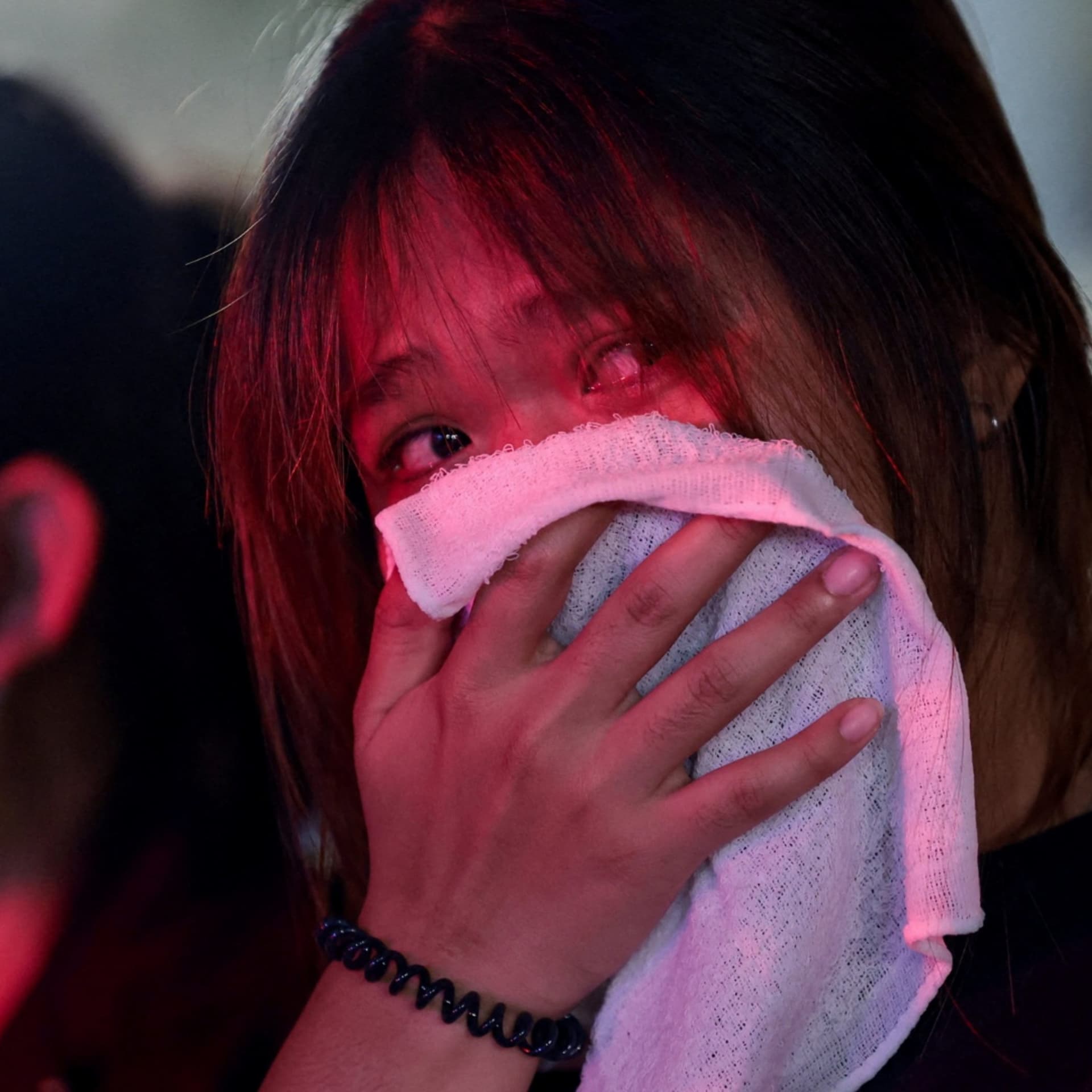
A roundup of world news. Main segments: (1) Bangkok bar fire in Thailand kills at least 27 and injures 60+; witnesses describe rapid flame spread, smoke, shattered narrow windows, and foam ceiling material igniting; investigation will examine blocked/insufficient exits and lighting; correspondent notes Thailand’s recurring building-safety failures and corruption/bribery risks. (2) Strait of Hormuz escalation: US says it struck Iranian air defenses/radar/coastal boats; Iran says the strait is closed; Trump says it’s open; UN urges de-escalation; traffic reportedly reduced/standstill. (3) US fentanyl case: Chinese national Zhang Zhidong (“Brother Wang,” “fentanyl king”) accused of supplying cartels; pleaded not guilty; arrest disrupts supply chain but replacement already in Mexico. (4) Ruth Ellis conditional pardon: granddaughter Laura Enston discusses abuse not properly presented at trial and family impact. (5) Dinosaur auction: Sotheby’s T-Rex “Gus” valued ~$30m; scientists warn private-market sales harm research; possible “category one” fossils must be offered to museums first. (6) Obituary: BBC Vatican expert David Willey.
Guests (named)
- Jonathan Head (BBC correspondent, Bangkok fire).
- Barbara Leaf (former US ambassador to UAE, Hormuz analysis).
- Nick Johnson (Washington correspondent, Hormuz/strikes context).
- Sean Yuan (reporter, fentanyl king investigation).
- Jane Hill (BBC interviewer, Ruth Ellis pardon).
- Esme Stallard (BBC science reporter, dinosaur Gus segment).
- Valerie Sanderson (BBC colleague, dinosaur segment).
- Alim McBool (BBC religion editor, David Willey obituary).
Written by AI. May contain mistakes. Listen to the episode to check what was said.
Chapters
Tap a time to open that second in VOBangkok Bar Fire Overview
1:28 to 2:10
Details of the bar fire in Bangkok that killed at least 27 people.
“A fire has killed at least 27 people in a bar in the Thai capital, Bangkok.”
Witness Accounts and Fire Details
2:10 to 5:48
Witness testimonies and details on the fire's rapid spread.
“My friend who was singing on stage said at first they noticed the smell of something burning.”
Safety Issues in Thailand
5:48 to 6:10
Discussion on persistent safety issues and previous tragedies in Thailand.
“there are presumptions that the same thing happens during inspections.”
US-Iran Tensions and Military Actions
6:10 to 9:27
Updates on US-Iran military actions and their implications.
“The US military says it's completed another wave of strikes on Iran aimed at continuing to degrade Tehran's ability to attack commercial ships in the Strait of Hormuz.”
Fentanyl Trade and Zhang Zhidong
9:27 to 14:02
Investigation into Zhang Zhidong's role in the fentanyl trade.
“days are up where the two countries should have more of a lasting peace agreement in place.”
Fentanyl and Personal Tragedy
14:02 to 14:59
Discussion about the impact of fentanyl on families and personal stories.
“You play a quite important role in fentanyl production.”
The Cartel's Resilience
14:59 to 15:21
Exploration of the cartel's operations and continuity despite arrests.
“We approached Zhang Zhidong's lawyer, but as the case is pending, he declined to comment.”
Global News Highlights
16:09 to 16:43
Brief overview of significant global news including Lindsey Graham's death.
“Because nothing here gets built without conversation.”
Lindsey Graham's Political Legacy
16:43 to 20:22
Analysis of Lindsey Graham's political career and influence on foreign policy.
“When you hear the phrase made in China, what do you think?”
Ruth Ellis and Her Legacy
20:22 to 22:44
Interview about Ruth Ellis and the impact of her execution on her family.
“Her family have campaigned for years to have her murder conviction overturned, arguing she was physically and emotionally abused.”
Show all 16 chapters
Revisiting Ruth Ellis's Trial
22:44 to 25:12
Discussion on the injustices faced during Ruth Ellis's trial and its implications.
“but I've got something I need to tell you.”
The Market for Dinosaur Fossils
25:12 to 27:35
Insight into the growing market for dinosaur fossils and its implications for science.
“67 million years ago, a T-Rex roamed the Earth.”
Challenges for Paleontologists
27:35 to 28:05
Discussion on the challenges paleontologists face with fossils in private hands.
“And Esme, there's even talk, isn't there, of a second extinction of dinosaurs?”
Fossil Discovery Challenges
28:05 to 28:43
Learn about the challenges of fossil discovery and how regulations are evolving.
Tribute to David Willey
28:43 to 29:55
Reflect on the impactful career of journalist David Willey and his contributions.
“That was Esme Stallard speaking to Valerie Sanderson.”
David Willey's Legacy in Vatican Reporting
29:55 to 30:45
Explore David Willey's significant experiences covering the Vatican and popes.
“We heard from the BBC's correspondent in Rome, that's David Willey.”
Transcript
Automatic transcript. May contain errors.0:00This BBC podcast is supported by ads outside the UK.
0:30No bouncing between tabs. And best of all, no spreadsheets. Stop managing software and start managing your business with one unified system. Try for free today at odoo.com. That's O-D-O-O dot com. Self-directed investing. Trading. Full-service wealth management. Automated investing. Financial planning. Thematic investing. Retirement planning. Phew. And to think, that's just a small taste of what Schwab offers. because Schwab knows that when it comes to your finances, choice matters. No matter your goals, investing style, life stage or experience, Schwab has everything you need, all in one place, so you can invest your way.
1:11Visit schwab.com to learn more. This is the Global News Podcast from the BBC World Service. I'm Charlotte Gallagher and in the early hours of Monday 13 July, these are our main stories. A fire has killed at least 27 people in a bar in the Thai capital, Bangkok. The US and Iran launch more attacks amid conflicting claims over whether the Strait of Hormuz is open or not. And we'll hear about the Chinese man accused of being Mexico's fentanyl king. Also in this podcast. As a family we now have been given permission to think about what life could have been like for us if Ruth had been reprieved. The granddaughter of the last woman to be executed in Britain tells us what her conditional pardon means for the family.
2:10we're beginning in the thai capital bangkok where a fire at a busy bar has killed at least 27 people and injured more than 60 some of those in hospital are in a critical condition others who are at the venue are still missing outside the bar these people are trying to find their friends. My friend who was singing on stage said at first they noticed the smell of something burning. Then a little after they saw the ceiling was on fire. Some people were injured because of the debris from the ceiling because it seems that the ceiling was made out of foam material to absorb sound. Thailand's Prime Minister Anutin Chan-wee Rang-Khun has been to the scene.
2:56I asked one musician that happened to be on the stage when the incident took place. He said that there was a fire at the cutout switch. And after that, things happened very quickly. And everybody tried to flee themselves from the smoke and the flame. Our correspondent, Jonathan Head, is outside the bar and has been telling me the latest. From outside, this is quite a substantial building. Very typical of the bars, you can find thousands of the kind all over Thailand. It would have been actually filled with tables. They're usually very crowded. So from outside this morning, we can see they put some police tape up there.
3:39There have been forensic inspectors going in and out throughout the morning. There is this awful smell, this acrid smell of burnt plastic. And you can see some of the furniture that's not been burnt piled up outside. a few completely melted musical instruments from the band that was on stage that had been left outside and all the windows there these very narrow windows have been shattered probably by the heat apart from that you don't really get a sense of the horrific scenes that onlookers witnessed when there were incredible jets of flame roaring out through the exits making it very hard for people to run out and when we saw from videotaping people racing out with their clothes on fire.
4:20So the fire clearly moved extremely quickly inside, what witnesses say. The power went out, the room filled with smoke. It made it very, very difficult in a large space packed with people and furniture to find their way out. And of course, as we know now, many people did not get out. Even those who sought safety in a bathroom did not survive. And this isn't the first fire of this kind in Thailand, is it? It's not, and it's indicative of persistent safety issues in Thailand, and that relates to things like road safety as well, building safety, accidents that should be entirely preventable continually happening.
5:01I mean, I covered a fire in a nightclub back in 2009, so 17 years ago, where 66 people died. It was found that the exits were blocked, there weren't enough of them and that the ceiling was insulated with incredibly inflammable material that ignited almost instantly. Now, we don't know the cause of this fire, but from what eyewitnesses are saying, again, from the moment it started, it moved very, very fast indeed and made it very difficult for people to get out. It's not clear how well illuminated the exits were or whether even all the exits were free to get out of. That will be discovered in the investigation.
5:38Bars in this country operates in a fairly casual legal environment where corruption is endemic. They often pay bribes to the police to be allowed to stay open when they shouldn't. And, you know, there are presumptions that the same thing happens during inspections. And we know this pub was inspected as recently as April and presumably was found to be up to standard. But the speed with which that fire spread last night and the difficulty people found in getting out suggests there were serious lapses. Jonathan Head. The US military says it's completed another wave of strikes on Iran aimed at continuing to degrade Tehran's ability to attack commercial ships in the Strait of Hormuz.
6:21It said the strikes hit Iranian military air defence systems, coastal radar sites and small boats. Iran says it has closed the strait and the latest strikes render futile recent diplomatic efforts. It's carried out more attacks itself, targeting US assets, with sirens and explosions heard in several Gulf states. But President Trump told NBC on Sunday that the crucial waterway was still open. It's open. We bombed the hell out of them last night. They're very, very evil and sick people. We had meetings with them for the last day. They agreed to a deal yesterday, a perfect deal for us. No nuclear, no this, no that, no nothing.
7:06They gave up everything. And then after that, they left the room. And then within an hour, they launched a drone and a ship. There are fears the military escalation over the strait could further undermine the efforts to extend the ceasefire between Iran and the US. Here's Barbara Leaf, a former US ambassador to the United Arab Emirates. The Iranians are determined, come what may, to exert control over it, not just in this 60 days, but forever after. So the two sides are in a state of controlled escalation, a sort of game of chicken, if you will. But there's real risk that it can become uncontrolled escalation.
7:49Oil prices began the week higher as news of the latest strikes came in. We've been getting more from Nick Johnson in Washington. These strikes have been steadily ratcheting up over the past few days in both intensity but also the number of munitions that have been used on both sides. And this all follows what the US says has been continued attacks by Iran on commercial shipping in the Strait of Hormuz. But in terms of the strait itself, there is an ongoing war of words between both Tehran and Washington. and Tehran says that the Strait of Hormuz is now entirely closed to shipping, whereas Washington and Donald Trump himself maintains that the Strait is completely open.
8:36So we've been in this situation before where Iran has said one thing about the Strait and the US has said another thing. So do we know if anything is moving at all? Looking at recent radar pictures, and don't forget some of these ships will have their transponders turned off anyway so they won't be able to be tracked. there is still some traffic moving slowly through the strait, but the traffic that is there is largely at a standstill at the moment. And don't forget, even though the Memorandum of Understanding was signed, which paved the way for the strait to remain open, it's still at a far reduced capacity, a far reduced amount of ships passing through the strait than had been previous to the war.
9:17But that Memorandum of Understanding is looking increasingly fragile day by day. It was signed, well, it's not even a month old. And it's still got over a month to go until those 60 days are up where the two countries should have more of a lasting peace agreement in place. But there's just absolutely no sign of that happening at the moment. And we've also heard from the UN about this escalation, haven't we? Yeah, that's right. So the spokesperson for the Secretary General, Antonio Gutierrez, has released a statement today basically urging both sides to step back to de-escalate and get back to the table and talk.
9:55Also, Donald Trump has been speaking to CNN. And again, as far as he concerned, he believes the Strait of Hormuz is open. But he also said that his explanation for the renewed strikes over the past day or so was because he said that actually Iran and the US had been very close to a deal over the weekend. And then Iran attacked a ship after they were so close to the deal and off we go again. Now, the president didn't release any further details about the nature of the deal they were supposed to be very close to. But the fact that he is still talking about talks, you know, he clearly is leaving that door still open for some sort of diplomatic solution to this.
10:36Nick Johnson. The synthetic opioid drug fentanyl kills tens of thousands of people in the US every year. One man said to have been behind a significant supply chain to the US via Mexico is Chinese national Zhang Zhidong, also known as Brother Wang or the fentanyl king. He's accused of building a criminal empire linking China's chemical factories with the drug cartels that are flooding the United States with the drug. He's awaiting trial in the US and has pleaded not guilty. Sean Yuan investigates his rise and fall and the impact his arrest will have on the trade. First thing they always tell me is, Miguel, are you sure this Sean is not an undercover DEA agent?
11:26And I say, no, he's a real journalist. This is Miguel Ángel Vega. He knows people I'll never meet on my own. Dangerous people. They tell me like, well, Miguel, if this man is not what he claims to be, I'm going to cut you in little pieces. You understand that? It's a little scary, but you know, this is what I do. Today, I'm going to meet with a cartoon member and I think he knows our subject. The subject we're investigating is Brother Wang, a Chinese national whose real name is Zhang Zhidong. News of Zhang Zhidong's arrest in November 2025 made headlines around the world.
12:07The United States government announced they'd caught one of the most wanted men. Miguel Ángel drives us to a safe house in a run-down part of the city. We knock on the heavy metal gate and enter a compound. We're introduced to Luis, obviously not his real name. An actor is speaking his words. One hot afternoon in 2019, Luis says he was at a ranch on the edge of the city. Then this man showed up. He came to talk to the bosses to offer his products. They opened the window to a new drug. The new drug was fentanyl, a synthetic opioid that has killed hundreds of thousands of Americans over the past decade.
12:47That's when it started generating jobs for us. People gave him affectionate nicknames. He was called number one, the king of fentanyl. How do you think he managed to become number one, become king of fentanyl? Well, mainly because of his brain, his intelligence more than anything. Miguel Ángel explains that a place like that could be attacked anytime. As we're leaving, he points out a house a few doors down, which is pierced with hundreds of bullet holes from a previous hit. Early the next morning, we meet a guy I'll call Enrique. We talk in our car as he's worried about being overheard. I cook fentanyl on ice.
13:29I am also responsible for transporting the liquids from China to Mexico and from Mexico City to Sinaloa. Brother Wang, he was very important. He was number one on the connection. I just want to know more about whether his arrest has disrupted the supply chain at all. Yes, the business is affected because he is the one with the connection over there. They took the man and that caused a mess. But they have more people, because you always have to have an ace up your sleeve. Have you found any person yet? They are talking about a person, but for my own safety, I can't say. Can you at least say if it's Chinese?
14:09Yes. You play a quite important role in fentanyl production. Does it trouble you to know tens of thousands of people are dying from it every year? Yes, of course. In fact, a relative of mine recently moved to the U.S. and died from an overdose. And that's when my conscience was shaken. But work is work, and we don't know another way to make a living.
14:40The band is playing Anako Corrido, a ballad about the city of Culiacan descending into hell due to cartel violence. Given what I saw in Kuriakhan, it's clear the system is built to survive the fall of any one person. And while demand largely from the US remains high, the flow of fentanyl will continue. Zhang Zhidong has pleaded not guilty and remains in federal custody in the US. We approached Zhang Zhidong's lawyer, but as the case is pending, he declined to comment. His replacement, as the cartel members made clear, is already in Mexico. Sean Yuan. Still to come in this podcast. People are buying dinosaur specimens on the private market, and particularly at auctions, for tens of millions of dollars.
15:28And this is really problematic. As a T-Rex skeleton is auctioned off, scientists say too many dinosaurs are ending up in private collections.
16:08We'll be right back. your TV catches up. Come on! Get a load of this guy. Catch up on a dog. Yeah, we've got thoughts. Too loud? In Chicago, you're gonna hear it. Because nothing here gets built without conversation. Nothing moves without connection. So, if you think you know AT &T, it might be time to rethink that. Because their network has improved, like, a lot. So Chicago can keep speaking its mind with AT &T Wireless and AT &T Fiber. Chicago won't stop talking. Our improved network backs it up. AT &T, connecting changes everything. AT &T Fiber, limited availability in select areas. When you hear the phrase made in China, what do you think?
16:49I'm Tristan Redman. And I'm Asma Khalid. And together we host the Global Story podcast from the BBC. And today on our show, we look at the origins and evolution of made in China because it actually wasn't inevitable. What we're talking about is the world's largest communist nation is at the beating heart of the capitalist system. For more, listen to The Global Story on bbc.com or wherever you get your podcasts. Decisions made in Washington can affect your portfolio every day. But what policy changes should investors be watching? Listen to Washington Wise, an original podcast for investors from Charles Schwab to hear the stories making news in Washington right now.
17:32Host Mike Townsend, Charles Schwab's Managing Director for Legislative and Regulatory Affairs, takes a non-partisan look at the stories that matter most to investors, including policy initiatives for retirement savings, taxes and trade, inflation concerns, the Federal Reserve, and how regulatory developments can affect companies, sectors, and even the entire market. Mike and his guests offer their perspective on how policy changes could affect what you do with your portfolio. Download the latest episode and follow at schwab.com slash Washington Wise or wherever you listen.
18:11This is the Global News Podcast. The US Republican Senator Lindsey Graham, who was a close ally of President Trump, has died age 71. His office said he'd had a brief and sudden illness. The South Carolina politician was one of Washington's most influential voices on foreign policy and a staunch supporter of both Ukraine and Israel. From Washington, our North America correspondent, Ionee Wells, reports. Lindsey Graham was a strong advocate for interventionist US foreign policy. Just this week, he had been working on a new Russian sanctions bill and in the Ukrainian capital, Kiev, to meet President Volodymyr Zelensky, who said he was deeply saddened by the news of his death.
18:54When some in the Republican Party were sceptical about continued financial and military support for Ukraine, Mr Graham argued for arming Kiev and further Russian sanctions. Mr Graham, who ran to be the Republican presidential nominee in 2015, had initially been a fierce critic of Donald Trump. After Mr Trump called for a shutdown of Muslims entering the US in December that year, here's how Lindsey Graham described him in an interview with CNN. I want to talk to the Trump supporters for a minute. I don't know who you are and I don't know why you like this guy. He's a race-baiting, xenophobic, religious bigot.
19:28He doesn't represent my party. After the US Capitol riots in 2021, he gave a speech to the Senate where he said, count me out, enough is enough. But he later became one of Mr Trump's strongest backers and supported him in the 2024 election campaign, where he was re-elected as a senator. Mr President, when you endorsed me early on, it changed everything. You're the gold standard in the Republican world. the most consequential endorsement I think in the history of politics and I'm going to help you change this world and change this country. Mr Trump said on social media that Mr Graham was one of the greatest people and senators he had ever known.
20:05Many diplomats and world leaders who knew him from many international visits have also paid tribute to him including Israel's Prime Minister Benjamin Netanyahu who calls him a beloved friend. That was irony Wells. Ruth Ellis was the last woman to be executed in the UK. She was hanged in London in 1955 for murdering her abusive lover, David Blakely. Her family have campaigned for years to have her murder conviction overturned, arguing she was physically and emotionally abused. Last week, she was given a posthumous conditional pardon. Ruth Ellis's granddaughter, Laura Enston, was in the House of Commons when the announcement was made, and she told the BBC's Jane Hill what that moment was like for her and her family.
20:52It was incredible. It really was just so surreal. And to hear the support, you know, once the announcement was made, it was just just unbelievable. I just can't believe we've managed to achieve what we've what we've done today. It's a really historic moment and incredibly profound for our family. Talk to us a little bit about that. Why has it been so important for your family? I know you were there with your brother today to fight for this. this whole thing has cast a long shadow over our family you know ultimately when ruth was executed she had two young children she had a 10 year old my uncle and she had a three-year-old daughter my mother georgina and ultimately you know i truly believe when that death sentence was handed out the clock was started on their lives too you can't even begin to imagine what those two children must have gone through and the impact it had on their mental health and you know ultimately my uncle committed suicide and my mother led a life of chaos she died at the age of 50 and the ripple effect is still being felt today it's been two generations you know we are still feeling the impact of the shame and embarrassment that ultimately we all grew up with and ultimately that shame and embarrassment was all based on a fictitious character you know ruth was portrayed at the time of the execution to be this cold-blooded killer you know social climber all these crazy headlines and that's the narrative I grew up believing and I spent 40 something years distancing myself from the story because I didn't want to be associated with that you know as a teenage girl I don't want to be associated with all the things that Ruth had been associated with.
22:25So did you sometimes not want people to know that she was your... People did not know when I started to lean in on this story when when the narrative changed there was a new book that was published a drama that was made the narrative completely changed and I felt completely re-educated. But I had to go around to people I've known 25 years to say, you know, we've been friends a long time, but I've got something I need to tell you. So some of your friends didn't know? The longest friends had no idea because I just didn't want to be tarnished with the same brush. What we now know is Ruth was on trial for so much more than just murder.
22:58She was on trial for her morality. She was really portrayed in a very sort of sordid light. She represented change. She was a single mother. She was a nightclub hostess, but ultimately she was doing incredibly well in the face of adversity. She'd been abused by every significant man in her life. She'd achieved so much. And don't forget, this is post-war Britain. So women were really being encouraged to go back to the home and be good old housewives. And Ruth was the antithesis of that and also how she looked. She was very glamorous, very sort of Marilyn Monroe-esque. She didn't look like the nice conventional mother that the government were really, really trying to push at the time.
23:36And so does today's announcement remove all that for you? 100%, 100 % because as a family we now have been given permission to think about what life could have been like for us if Ruth had been reprieved. My mother would never have led the life she did if Ruth had survived. You know, Ruth had been given a reprieve and ultimately 90 % of women in the 20th century were reprieved. But Ruth, she was on trial for so much more than what she'd done. And there will be people listening to you who have absolute sympathy for you. Why should you suffer? Why should your siblings suffer for something that's nothing to do with you?
24:12But they will also be thinking a man did die. He was shot dead. Correct. She killed somebody, you know, fact. And she admitted it. But what we now know is that in her trial, none of the trauma, none of the abuse that she suffered was presented properly in court. You know, her trial lasted just over a day. The jury took, I think, 14 minutes to find her guilty. She was executed three weeks later. There was no appetite to save her yet. All the evidence that was spitted into the application for her pardon was all there. Her medical records, extensive evidence to show the suffering and the abuse that she suffered.
24:53You know, she was abused by her father. She was abused by her first husband, then abused by David. That was a traumad woman on the stand. She'd recently suffered a miscarriage. He'd beaten her so badly. She was miscarrying. There's so much more that we now realise that she should never have been executed for what she did. Laura Enston speaking to Jane Hill. 67 million years ago, a T-Rex roamed the Earth. On Tuesday, the fossil of that dinosaur, named Gus, will be up for auction at Sotheby's. Gus has been valued at$30 million and could be sold for a record-breaking sum. The interest in this fossil underlines the huge problem museums face in trying to compete with private buyers.
25:38My colleague Valerie Sanderson asked our science reporter Esme Stallard, what's so special about Gus? He's 61 % complete, which is an incredibly high percentage figure for a fossil of this size. And also a lot of the smaller bones have been preserved. Also, this dinosaur comes with the copyright. That's really important for collectors and museums because it means that casts can be made of the fossils that then can be sold as replicas. So it's also another important part of the income. But in terms of why it's so expensive, I mean, obviously an impressive specimen, but we've also seen the value of dinosaurs go up quite significantly in the last few years.
26:18So most recently, there was one sold in 2024, Apex, which was a stegosaurus which holds the record sold for 44.6 million dollars and that was bought by a billionaire Kenneth Griffin and that indicates it's not just museums buying these dinosaurs anymore. Well you mentioned museums and museums and scientists are unhappy aren't they that these fossils are being sold on the private market? There are some newer museums which are opening up for example the Abu Dhabi National Museum which has bigger endowments they're able to compete but actually the prices as i said being pushed up by these ultra rich individuals and the concern is is it means that scientists at museums don't have access to these fossils professor suzanna maidman who's a researcher at the natural history museum explained to me why that is so important from a research perspective obviously there's no substitute for having the real fossil we're gonna you know do any sort of paleobiological study thing number one is we need to understand the anatomy, we need to know what's real and what's not.
27:16But it seems to me that people are moving away from viewing them as scientific objects and almost like we might view art. So people are buying dinosaur specimens on the private market and particularly auctions for tens of millions of dollars. And this is really problematic. And Esme, there's even talk, isn't there, of a second extinction of dinosaurs? So this is the counter argument coming from those paleo scientists that are trying to find these dinosaurs and the auction houses that are selling what they find their argument is that actually over time as fossils get exposed through you know the sort of elements wind and rain eventually if we don't manage to find them in time they can get destroyed i spoke to one fossil hunter or paleontologist that was down in the uk on the jurassic coast and he said that after a major storm what can happen is the fossil gets exposed unless you get there within kind of even within an hour the sea can sort of wash that fossil away so if they didn't go out hunting for them then scientists at museums wouldn't even have access to them one potential solution that's being trialed is that if you find what's called a category one fossil so for example something really rare like a new species you have to offer it up to sale to museums for at least six months before you go to the private market but ultimately this fossil is being sold in the US and it's an open market and so we don't know on Tuesday who it could end up going to.
28:43That was Esme Stallard speaking to Valerie Sanderson. Finally, to a career in journalism and broadcasting that lasted more than 50 years, 40 of them spent in Italy. The BBC's David Willey, who's died at the age of 93, developed an insider's knowledge of the Vatican, the centre of power in the Catholic Church. The BBC's religion editor, Alim McBool, looks back at his career. As a trainee in the late 1950s, David Willey covered the signing of the Treaty of Rome, which paved the way ultimately for the creation of the European Union. In the 60s, he reported from East Africa and Asia for the BBC. The first thing which hits you in China is the omnipresence of Mao Tse-tung, the 72-year-old Communist Party leader, who is the Chinese Revolution in person.
Read the full transcript
29:34Surely it's one of the 20th century's greatest personality cults. His writings are the Bible of modern China. To the Chinese, he's a sort of Shakespeare, Moses and successor to Karl Marx, all rolled into one. But it was David's many decades based in Rome that he's best remembered for, covering the assassination attempt on John Paul II. We heard from the BBC's correspondent in Rome, that's David Willey. Well, I've just been talking to a very high-ranking official at the Vatican to hear how they are reacting to today's assassination attempt. Apparently the Pope himself was perhaps the person who was least surprised of all at what happened today.
30:13He was very conscious of the risks that he'd been running, addressing these huge crowds, plunging into enormous crowds on his foreign travels. He became an authority on the papacies of four popes and writing books on both John Paul II and also Pope Francis. In 2003, he was awarded an OBE for services to broadcast journalism. David died of heart failure in Italy, the country that he made his home. Until the end, he remained incisive in his analysis and generous with his time and an invaluable resource for those reporters who came after him. Hello, can you hear me? This is David Willey in Rome. We're 123456.
30:56David Willey has had a preview and he joins us now. Exciting stuff, David. Amazing stuff. There's a papal document relating to the excommunication of Martin Luther.
31:10That was David Willey ending that report from Ali Mookball. And that's all from us for now. If you want to get in touch, you can email us at globalpodcast at bbc.co.uk. You can also find us on X. Use the hashtag Global News Pod. And don't forget our sister podcast, The Global Story. This edition of the Global News Podcast was mixed by Pat Sissons and produced by Stephen Jensen and Wendy Urquhart. The editor is Karen Martin. I'm Charlotte Gallagher. Until next time, goodbye.
From the publisher
Thai officials are investigating an explosive fire which tore through a bar in the capital Bangkok, killing at least 27 people. Dozens more were injured, many critically. Eyewitnesses say the fire started near the stage and spread across the ceiling, filling the room with smoke. Also: the US and Iran carry out more tit-for-tat attacks, amid conflicting claims over whether the Strait of Hormuz is open or not; an investigation into the Chinese man accused of being Mexico's "Fentanyl King"; the US Republican senator Lindsey Graham - who turned from being a critic of Donald Trump to one of his key allies - dies suddenly at the age of 71; we hear from the grandaughter of the last woman to be executed in Britain as she is granted a conditional pardon; and a T.rex fossil could become the most expensive ever.
The Global News Podcast brings you the breaking news you need to hear, as it happens. Listen for the latest headlines and current affairs from around the world. Politics, economics, climate, business, technology, health – we cover it all with expert analysis and insight. Get the news that matters, delivered twice a day on weekdays and daily at weekends, plus special bonus episodes reacting to urgent breaking stories. Follow or subscribe now and never miss a moment. Get in touch: globalpodcast@bbc.co.uk
Photo: A woman near the scene of the fire at a Bangkok bar. Credit: REUTERS/Chalinee Thirasupa TPXA



