
In short
Global News Podcast Summary
Episode Title
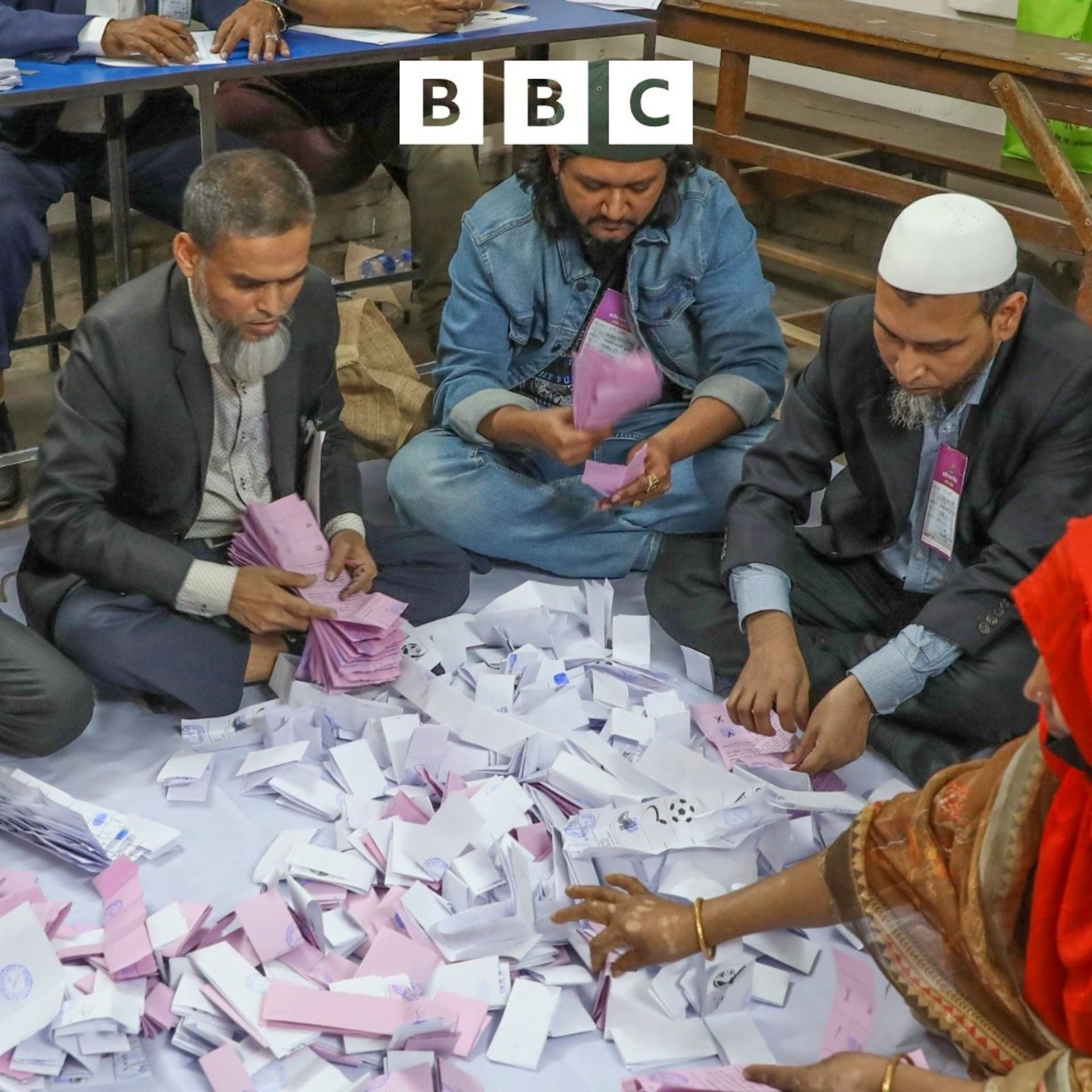
BNP Set to Win Election in Bangladesh
Episode Overview In this episode, the Global News Podcast covers significant global events and emerging stories, focusing on the anticipated landslide victory of the Bangladesh Nationalist Party (BNP) in the country's recent elections. Other news includes President Trump's revocation of a landmark climate regulation, CIA recruitment efforts targeting Chinese military personnel, and various cultural highlights including a film premiere at the Berlin Film Festival.
---
Key Topics Covered
- Bangladesh Elections
- BNP's Victory: The Bangladesh Nationalist Party is projected to win the first elections since the 2024 uprising that ousted authoritarian leader Sheikh Hasina.
- Election Context: The Awami League, Hasina's party, was barred from participating, raising questions about election integrity.
- International Reactions: U.S. and Indian leadership have congratulated the BNP, indicating a potential shift in regional relations.
- Political Dynamics:
- Tariq Rahman, the BNP leader, has transformed the party's image from a history of authoritarianism to a more liberal stance.
- The relationship with India is critical, as many voters historically associated India with Hasina's administration.
- U.S. Climate Policy Changes
- Trump's Deregulation Efforts:
- President Trump repealed the 2009 endangerment finding, which underpinned U.S. greenhouse gas regulations.
- Critics argue this move favors fossil fuel interests and undermines public health.
- Implications for U.S. Industry: The change could lead to less stringent emissions regulations for automakers, raising questions about the environmental impact and international market competitiveness.
- CIA Recruitment Video
- Targeting Chinese Personnel:
- The CIA's new recruitment video aims to attract disillusioned members of China's military and scientists to spy for the U.S.
- This reflects ongoing tensions between the U.S. and China, with Beijing responding critically to such recruitment efforts.
- Humanitarian Situation in Cuba
- Oil Blockade Impact:
- The U.S. has intensified its oil blockade against Cuba, causing severe shortages and humanitarian crises.
- Residents describe their day-to-day survival amidst constant power shortages and lack of basic services.
- Jim Ratcliffe's Controversial Comments
- Immigration Remarks:
- Jim Ratcliffe, co-owner of Manchester United, faced backlash for comments suggesting the UK was "colonized" by immigrants.
- The controversy has sparked discussions about immigration in the UK, an issue of significant concern among voters.
- Berlin Film Festival Highlight
- "No Good Men" Premiere:
- A romantic comedy set in an Afghan newsroom, directed by Shahbanu Sadat, challenges traditional narratives about Afghanistan.
- The film depicts daily life and humor amidst the struggles of a deeply patriarchal society.
---
Key Takeaways
- Political Shifts: The BNP's potential return to power indicates a significant change in Bangladesh's political landscape after years of authoritarian rule.
- Climate Policy Reversal: The U.S. climate change regulation changes could have long-lasting effects on public health and environmental policy.
- Geopolitical Tensions: The CIA's recruitment efforts reflect broader strategic goals to counter Chinese influence.
- Cuban Crisis: The humanitarian impact of U.S. policies on Cuba continues to deepen, creating severe living conditions for residents.
- Cultural Reflections: The film "No Good Men" exemplifies a new narrative approach to Afghan stories, moving away from war-centric themes.
---
Conclusion This episode of the Global News Podcast encapsulates crucial global developments, from political upheaval in Bangladesh to environmental policy shifts in the U.S. It highlights the interconnectedness of global events and their impact on local and international communities, reflecting on the complexities of modern geopolitics and social issues.
Written by AI. May contain mistakes. Listen to the episode to check what was said.
Chapters
Tap a time to open that second in VOBangladesh Nationalist Party's Election Prospects
1:14 to 2:16
Explore the BNP's expected landslide victory in Bangladesh's elections.
“I'm Alex Ritson and in the early hours of Friday the 13th of February, these are our main stories.”
The Political Landscape Post-Uprising
2:16 to 3:36
Understand the implications of the student-led uprising on Bangladesh's elections.
“The Prime Minister-in-waiting, Tariq Rahman, has been congratulated by the US Embassy in Dhaka and by the Indian Prime Minister Narendra Modi.”
India-Bangladesh Relations in Transition
3:36 to 5:09
Delve into the future of India-Bangladesh relations under a new government.
“he said he'd been waiting a very long time for this day.”
The BNP's Historical Context
5:09 to 6:12
Learn about the BNP's past and its efforts to rebrand itself for change.
“And that's a tightrope that Tadi Brahman will have to walk should he be the next prime minister, which seems very likely right now.”
Trump's Climate Policy Reversal
6:12 to 7:56
Analyze Trump's decision to revoke the endangerment finding on climate regulations.
“President Trump has revoked the 2009 endangerment finding on public health that underpins US regulations on greenhouse gas emissions.”
Impacts of Deregulation on the Automotive Industry
7:56 to 10:10
Examine the effects of the deregulation on American automakers and public health.
“in dismantling the apparatus of tackling climate change in the United States.”
Prospects for U.S.-Iran Nuclear Deal
10:10 to 12:00
Discuss the potential for a new nuclear deal with Iran amidst tensions.
“I think there's a move from the Trump administration to ensure that doesn't happen.”
CIA's Recruitment Strategy in China
12:00 to 14:00
Explore the CIA's efforts to recruit Chinese spies through media.
“I think it's very important that the President of the United States is saying that he wants a deal.”
CIA Recruitment Efforts in China
14:00 to 15:01
Learn about the CIA's attempts to recruit Chinese citizens and the challenges faced.
“following similar moves against high-ranking members of the PLA in recent years.”
Life in Crisis: Cuba's Fuel Shortage
15:24 to 18:53
Explore the severe daily challenges faced by residents of Havana amid a fuel crisis.
“The port of Havana has received some rare cargo, two ships carrying humanitarian aid sent by Cuba's ally Mexico.”
Show all 13 chapters
Immigration Debate in the UK
18:53 to 21:40
Discussion on immigration remarks by Jim Ratcliffe and the political backlash.
“The co-owner of Manchester United Football Club, Jim Ratcliffe, has apologised that his choice of language had caused offence after he suggested the UK had been colonised by immigrants.”
Trump Administration's ICE Actions
21:40 to 23:37
Analysis of the Trump administration's shift in ICE immigration enforcement in Minnesota.
“The Trump administration has declared an end to the surge of ICE immigration officers to Minnesota.”
Afghan Rom-Com: No Good Men
23:37 to 27:08
Insight into the creation of a romantic comedy set in an Afghan newsroom and its challenges.
“The Berlin Film Festival has got underway with an unusual world premiere, a romantic comedy set in an Afghan newsroom.”
Transcript
Automatic transcript. May contain errors.0:00This BBC podcast is supported by ads outside the UK.
0:30Listen now wherever you get your BBC podcasts.
1:00Listen on BBC.com or wherever you get your podcasts.
1:07This is the Global News Podcast from the BBC World Service. I'm Alex Ritson and in the early hours of Friday the 13th of February, these are our main stories. The centre-right Bangladesh Nationalist Party, or BNP, looks to be on course for a landslide election win. Donald Trump repeals a landmark climate ruling in what critics say is a gift to billionaire polluters. America's CIA spy agency targets potential sources in China's military with a new recruitment video. Also in this podcast. Everything is going down slowly in the country and daily life is complicated. I see no future. The only future is a change.
1:55The US blockade on Cuba bites hard for residents of Havana.
2:03The Bangladesh Nationalist Party, or BNP, is projected to be heading for a landslide victory in the first election since a student-led uprising deposed the authoritarian leader, Sheikh Hasina. The Prime Minister-in-waiting, Tariq Rahman, has been congratulated by the US Embassy in Dhaka and by the Indian Prime Minister Narendra Modi. Sheikh Hasina's Awami League was banned from taking part and an Islamist party says it has serious questions about the integrity of the election. Our correspondent Azadeh Mishiri is in Dhaka for us, so can we say the BNP has definitely won? So far that hasn't been officially announced by the Election Commission, but the BNP has told the BBC that they're confident of forming a new The government, the papers are certainly running with it, even if they are unofficial results.
2:53One newspaper, the Dhaka Tribune, has a major headline on the front page. BNP wins absolute majority. Now, that hasn't been declared yet, but people will be waking up here and seeing Therese Grafman, the leader of the BNP, as the next prime minister of Bangladesh. And it's a huge reversal in his fortunes, because in the last elections, the BNP boycotted those polls altogether. Thousands of their members and their supporters were jailed under Sheikh Hasina's increasingly authoritarian rule. And on top of that, Dave Grafman himself was in self-imposed exile for 17 years. So this is a very different morning for him.
3:36And yesterday, when I spoke to him moments before he cast his own vote, he said he'd been waiting a very long time for this day. The country had been waiting a long time. And he said he was feeling confident. He's going to be feeling a lot more confident this morning. Yeah. And messages of congratulations already from India and Pakistan. Yes. And there was a big question over the future of the India Bangladesh relationship and that that future depends heavily on who will lead the next government. And the BNP was seen to potentially have an easier relationship with India than Jamaat-e-Islami would have had.
4:14It's a complicated one because it's very important to people here. These elections wouldn't have happened without the student uprising that overthrew Sheikh Hasina. And yet, when you speak to voters, and I've been traveling in the country for the past few weeks speaking to people, most people still associate India with the Awami League, the party of the former government. and the fact that Sheikha Sina is in exile in India and that the country has so far refused any extradition requests. She has been sentenced to death here in absentia in the International Crimes Tribunal on Dhaka. The fact they haven't responded to those requests means that there's a lot of resentment and a lot of anger here about that.
4:56So even though the two countries have had a very good relationship in the past and that's benefited them in both ways, Most people you speak to want to make sure that the future government keeps India's influence in check. And that's a tightrope that Tadi Brahman will have to walk should he be the next prime minister, which seems very likely right now. Yeah, and after Sheikh Hasina's administration, her rule, it is going to take people in Bangladesh some time to trust any government, isn't it? That's true. And also the BNP, because they do have a history or reputation. This isn't a new party. They have been around since the 70s.
5:35Of course, they did suffer from politically motivated arrests. Independent human rights groups have tracked that. And so they suffered under Sheikh Hasina's rule. But they were in government at 1.2 in the early 2000s. And their tenure was marred by allegations of corruption, human rights abuses. And so they were never considered a party of change before. Tariq Rahman and his fellow candidates have worked very hard to rebrand as a secular, liberal party that can bring change to the country now. Azadeh Mishiri in Dhaka. President Trump has revoked the 2009 endangerment finding on public health that underpins US regulations on greenhouse gas emissions.
6:23The White House called the decision the largest act of deregulation in U.S. history and claimed it would end what Mr. Trump has described as the green scam. We are officially terminating the so-called endangerment finding, a disastrous Obama-era policy that severely damaged the American auto industry and massively drove up prices for American consumers. Prices went up incredibly for a worse product. this action will eliminate over$1.3 trillion of regulatory costs and help bring car prices tumbling down dramatically. The former president, Barack Obama, says this action will leave Americans less safe and less healthy.
7:08That is a view shared by many scientists and environmental groups who also accuse President Trump of siding with fossil fuel interests against overwhelming scientific evidence. The former US Secretary of State John Kerry served as a climate envoy in the Biden administration. There's a reason that we had an endangerment rule. The pollution, which is creating the crisis of climate, is dangerous. It's a killer. You know, this decision to just do away with it really takes Orwellian governance to a new height and that invites enormous damage to people and property all around the world. Our climate correspondent Matt McGrath told Oliver Conway about the significance of the announcement.
7:55The reversal of the endangerment finding, I suppose, can be seen as the boldest step taken by the Trump administration so far in dismantling the apparatus of tackling climate change in the United States. I think you have to see this in the light that the US Congress has been unable to pass any legislation because the political divides on this question have been so great for 20 or 30 years now. So the endangerment finding has become the bedrock of almost all action taken by the United States government, the federal government, to tackle climate change. So it not only deals directly with emissions from tailpipes and from cars, but it also allowed the government to regulate power plants, to stop methane emissions from oil and gas and a whole range of other regulations that they were put in place.
8:43So the removal of this, it's not just symbolic. I think it has real world implications and it has, you know, significant implications for U.S. automakers and for industry. And President Trump is selling it as an ability to cut red tape and reduce costs for the American consumer. That will be seen, I think, in the in the months and years to come. Yeah. Tell us more about what it means in practice for American businesses and people's health there. Yes, I think it's going to mean, I think on the car front, no one's quite certain what it will mean, because while it will remove all restrictions on carmakers and particularly their necessity to sell large numbers of electric cars, it doesn't necessarily mean that the standards that California applies will be washed away as well.
9:28that will still need to be tested in the courts. And it poses a big question, I think, for car makers. Are they going to make cars for a newly liberated American market where they don't need to make EVs or other cleaner cars? But what about the rest of the world? Will they be able to sell those cars in the rest of the world? So that, I think, remains one of the big questions. And I think the other big question is whether states will take legal action to try to overturn this overturning and whether or not we'll see a patchwork of regulations develop across the United States, some in, some out, some against, this reversal of this underpinning act on which all the climate action in the United States up to now has really rested.
10:07I guess it could also be reinstated by a future president. I think there's a move from the Trump administration to ensure that doesn't happen. They want to get into the Supreme Court very quickly. They want the Supreme Court to rule on this before the end of President Trump's term. If they rule in his favor, they believe it'll mean any future president will not be able to overturn this change. Matt McGrath. Can the US and Iran reach a nuclear deal? The head of the UN's nuclear watchdog, the IAEA, is Rafael Grossi, and he says such a deal is possible and urgently needed. He's called on negotiators from Tehran and Washington to seize the moment.
10:44President Trump has threatened once again to take military action if the talks fail and has sent warships to the Arabian Gulf. Mr Grossi spoke to our security correspondent, Frank Gardner. There are certain things that need to happen, of course, understanding concessions, a bit of flexibility, imagination, but it is absolutely possible to envisage a deal. How is this going to be any better than the 2015 JCPOA, the Vienna nuclear deal? Quite clearly it must, because whichever opinion you may have on the JCPOA, it is very clear that President Trump, he was very unhappy with it, He considered that the agreement had fundamental flaws.
11:23So, obviously, you need a different kind of arrangement that will get two things. One is credible assurances that whatever happens in Iran with regards to the nuclear program stays in peaceful uses. That's very important. Secondly, that Iran can legitimately claim that they are developing something in this area, which is squarely within the parameters of activity that is for peaceful uses. So making those points or those lines converge is the key to a good deal. Do you have a view on what could happen if America hits Iran again, if this deal doesn't happen? I think it's very important that the President of the United States is saying that he wants a deal.
12:14It has a powerful meaning that he prefers that a second episode of this kind would be much wider and with more consequences. So we want to spare the Iranian population and others who could be affected this possibility. My sense is that we have a window of opportunity, but windows of opportunity have a tendency to shut quite abruptly. So we need to seize the moment. IAEHE, Rafael Grossi, speaking to Frank Gardner. The US spy agency, the CIA, has stepped up its efforts to recruit Chinese spies. It's released a Chinese-language video directed at disillusioned personnel working for China's military, known as the PLA.
13:01It also targets Chinese scientists and other professionals to try to get them to spy for Washington. Beijing has called previous recruitment videos naked provocation. With more, here's Pete Ross.
13:18The US intelligence video titled Save the Future opens with footage of a fictional military officer taking part in what appears to be a kind of intelligence briefing, while expressing to the viewer his dissatisfaction with the country's top brass, complaining that the only thing our party leaders are interested in defending is their own pockets. Released on Thursday on YouTube and other social media, the CIA says it hopes the video will strike a chord and encourage actual military personnel and other Chinese citizens to, in the words of CIA director John Ratcliffe, improve their lives and change their country for the better.
13:56The move comes just two weeks after it revealed that China's President Xi Jinping purged two of the country's most powerful generals, following similar moves against high-ranking members of the PLA in recent years. And it's not the first time the CIA has released videos hoping to recruit Chinese citizens to Washington's cause.
14:23Last year it posted three videos that collectively racked up almost 100 million views, aimed at Chinese Communist Party officials and instructing them on how to contact the agency. It's all part of a CIA attempt to rebuild its spy network in China after it was decimated over a decade ago. Beijing is well aware of Washington's efforts. Last year, China's Ministry of State Security issued a warning on social media to be wary of foreigners bearing smiles and sweet talk as they might be spies. Pete Ross Still to come in this podcast. This woman, she is someone who believes because of her reality that she lives.
15:04She believes there is no good man in Afghanistan until she meets this journalist. So there are good men. A romantic comedy set in Afghanistan as its world premiere.
15:22This is the Global News Podcast. The port of Havana has received some rare cargo, two ships carrying humanitarian aid sent by Cuba's ally Mexico. Cuba is struggling with an acute fuel crisis. The Trump administration has imposed a virtual oil blockade on the island by threatening tariffs on any country that supplies it with oil. Cuba lost its biggest energy provider, Venezuela, after its president, Nicolas Maduro, was seized by US troops. And now Washington is threatening Havana. Mexico is reluctant to send oil because of the US threats, but Thursday's shipment brought powdered milk and beans.
16:02Daily life in Cuba is tough. The BBC's Aletheia Trujillo has been speaking to a resident of Havana who's asked that we do not disclose his name. My day-to-day life has been reduced, as the life of everybody else, to the survival between cycles of blackouts. That is now the situation. So it is very difficult to do anything else other than perform simple tasks in the house, trying to do something when the electricity is already connected. And how long does it last? How long does the blackouts last? It depends. 10, 12, 14 hours, 16 hours in a row. How are people just managing on a day-to-day basis?
16:49Surviving. People try to survive. Depending on the amount of money people have, they try to access to the services or the goods they need to the day-to-day life. You cannot accumulate too much food, for example, because of the lack of refrigeration capacity in the houses. And even if you have a good refrigerated storage, it depends on the availability of electricity. So food starts to rot. it reduces life to try to obtain the things you need for the day. Are schools open? How are hospitals functioning? Are those things functioning? I don't know. They publish some indications coming from the Ministry of Public Health.
17:34No psychological maneuvers will be performed. Only those for immediate saving of a life. And I mean, I see tourism isn't coming, so there is no money coming into the country. To use them now, it is not feasible. Nobody wants to be a tourist in a country in the middle of this situation. Lack of sanitation, serious problem of public health, nothing. You can see that in Havana. The buildings with electricity, those are the hotels. But you don't go to a country to visit a hotel. You go to a country to visit the country. The social situation is deteriorating rapidly also. You have now a situation of different nature of violence.
18:19In the night, you cannot walk in the street because they are all black. What kind of future are people thinking there is? Because this seems like a long-term situation, no oil, and the Americans seem to be putting a lot of pressure on the Cuban government. Everything is going down slowly in the country, and daily life is complicated. I see no future. The only future is a change. There is no other exit. Situation cannot continue like this. It cannot continue like this. A resident of Havana speaking to the BBC. The co-owner of Manchester United Football Club, Jim Ratcliffe, has apologised that his choice of language had caused offence after he suggested the UK had been colonised by immigrants.
19:09In a TV interview, the billionaire criticised what he had described as the huge level of immigrants coming in and gave incorrect population numbers. The British Prime Minister Keir Starmer described the claims as offensive and wrong and had called on him to apologise. Our correspondent Rob Watson has been following the story. The background to this is Sir Jim Ratcliffe, who is an interesting character in Britain. He was a big backer of Brexit. He's the co-owner of Manchester United. of course now living in a sort of tax exile in Monaco. But he's essentially sort of exploded this bomb by making these remarks about immigration.
19:47And the original remarks, claiming that Britain had been colonised by immigrants, had brought a sort of massive backlash from some of the supporters of Man United, as you explained, from some British politicians. I mean, he hasn't apologised as such for interfering in the debate. All he said is that he was sorry that if the kind of language he used offended people. But as you would imagine, it's opened up this huge question, not that it's one that ever goes away, Charlotte, about immigration and social cohesion in this country. Because immigration is something that voters, many voters are concerned about in the UK.
20:25But it seems that a lot of politicians and public figures really struggle to talk about it in a measured way. That is true. I mean, the Prime Minister got into trouble when he was talking about this danger of being a country of strangers, and he withdrew those remarks in May of last year. I mean, you have politicians from reform, the sort of centre-right party, a bit less reluctant to do so. But I think it's certainly true that polling suggests that this is a massively important issue for voters. It's the second most important issue behind the economy. And I've really been struck by a recent survey that suggests 84 % of people in this country feel that the country is divided.
21:1086 % feel there is tension between immigrants and people born here. And then the last bit of the survey for King's College that struck me was 50 % of people think UK culture is changing too fast. So I think the public are concerned about this issue massively, and some might say reasonably given the figures involved, but the sort of politicians are struggling, as it were, to get the right tone that somehow means that there can be a debate that everybody can join in. Rob Watson speaking to Charlotte Gallagher. The Trump administration has declared an end to the surge of ICE immigration officers to Minnesota.
21:47Senior border official Tom Homan said a significant reduction in the number of agents had already begun and would finish next week. State officials and protesters have called for ICE to leave Minneapolis after more than 3 ,000 armed officers were deployed there last month, and two American citizens, René Goode and Alex Pretti, were killed by federal agents. Here's our North America correspondent, Nedda Torfik. Many will see this announcement as the Trump administration trying to save face. The president's border czar Tom Homan declared victory in Minnesota despite the outrage caused when armed, massed immigration agents killed two U.S.
22:27citizens there. The incident sparked angry protests and widespread condemnation at home and abroad. Mr. Homan was sent in afterwards to calm the situation as calls ramped up for the Secretary of Homeland Security, Kristi Noem, to resign. She led the surge of thousands of ICE officers whose aggressive tactics were filmed by local residents. Mr. Homan claimed he had secured unprecedented coordination with local law enforcement agencies and vowed to carry on the president's immigration promises. But all to say we are backing down from immigration enforcement or the promise of mass deportations, you are simply wrong.
23:06Look at the data. Record number of arrests and deportations under President Trump's first year, and we'll continue that effort. However, Minnesota's Democratic Governor Tim Walz said no concession had been made to ICE. He called the surge of federal officers an unconstitutional assault on the state that had severely damaged its economy and people's sense of safety. Governor Walz said no one in Minnesota disagreed with targeted immigration enforcement, but that people were entitled to due process and to be treated humanely. Nedda Torfik. The Berlin Film Festival has got underway with an unusual world premiere, a romantic comedy set in an Afghan newsroom.
23:47It's called No Good Men, and the main character, a woman, is convinced there are no good men in Afghanistan. The writer, director and star is Shahbanu Sadat, and she's been speaking to James Menendez. When I had the idea, I thought it's a brilliant idea, but when we started to do the financing, I realised that a lot of funders, they are completely against it because they cannot imagine that a rom-com is going to happen in Afghanistan, you know, because there are all these many international films about Afghanistan that they are kind of misrepresenting Afghanistan. And they always tell the Afghan stories through war drama.
24:23So I thought I don't want to tell war drama because as a person living in Afghanistan at the time, I was interested to tell an insider perspective. And as an insider, you don't live a sad life 24 by 7. And there are also a lot of humour and comedy going on in your everyday life. I wanted to capture the real everyday life of an Afghan. So was it hard work getting the funding you needed to make it? Well, you tell me it took six years. Right. Yeah, it was really, it was really difficult. It was really difficult because not only the financing it, but also logistic wise, it was very difficult. because even though at the time when I was living in Afghanistan, I was working with this European company that they didn't want to take risk for European crew.
25:07So shooting in Afghanistan was not an option. And then politically, the situation of Afghanistan changed. I was evacuated to Germany. And then it was again, one more time, the big question, we had to shoot the film. Then I was looking like locking all locations in Jordan and then in Greece. And so we just, you know, take the challenge and shoot the film in Germany. And it has been shot and it's been made. and it's at the Berlin Film Festival. So just give us a summary of how the romance in the film works, how the comedy works. It's all said in a newsroom, isn't it? Yeah, it's happening in a newsroom because this protagonist, she's a camera woman and the male living role, he's a journalist and they work together.
Read the full transcript
25:51And this woman, she's someone who believes because of her reality, because of the reality that she lives, she believes there is no good man in Afghanistan until she meets this journalist. And little by little, you know, they fall in love. So there are good men. If I'm 100 % honest with you, I have all the reason to believe that there are no good men in Afghanistan because of my reality, but also because it's not only my opinion, it's the fact it's like a collective experience of so many women living in such deeply patriarchal society like Afghanistan, you know. And unfortunately, this is not only the story of Afghanistan.
26:24Patriarchy is the universal problem. I'm just telling the Afghan version of it, you know. And obviously no chance that the film will be seen in Afghanistan. I mean, I guess perhaps bootlegged versions, maybe. No, I actually think the opposite. I actually think that the Afghan audience, they're going to watch the film earlier than people in Europe going to watch it in the cinema. How? How, though? Because, I tell you, because in Afghanistan, we don't have a cinema industry, but it's a technology time, and everyone are, you know, having a smartphone and connecting to internet. And for some reason, I mean, don't ask me how, because I don't know, but they are like stealing the film and suddenly your film ends up in YouTube or they chop the film and they're going to watch it in TikTok, you know.
27:07Writer, director and star of No Good Men, Shahbunoo Sadat. And that's all from us for now. If you want to get in touch, you can email us at globalpodcast at bbc.co.uk. You can also find us on X at BBC World Service. Use the hashtag Global News Pod. And don't forget our sister podcast, The Global Story, which goes in-depth and beyond the headlines on one big story, available wherever you get your podcasts. This edition of the Global News Podcast was mixed by Derek Clark. The editor is Karen Martin. I'm Alex Ritz and until next time, goodbye.
27:58I want to put all the issues on the table that keep me up at night. The interview brings you conversations with the people shaping our world. From global leaders. I've much more than fulfilled the promises that I've made. To cultural icons. I'm just interested in how it feels to be playing songs that are 50 odd years old. Songs are like children. They're with you forever. The interview from the BBC World Service. Listen now wherever you get your BBC podcasts.
From the publisher
The Bangladesh Nationalist Party is claiming a "sweeping victory" after indications that it's heading for a landslide election win. It's the first poll since an uprising in 2024 that toppled the authoritarian leader, Sheikh Hasina. Also: President Trump has revoked an Obama-era law that underpinned US regulations on greenhouse gas emissions. Mr Trump said the move was the biggest act of deregulation in the country's history. The CIA has released a video designed to recruit disaffected Chinese military personnel, scientists, and other professionals as spies for the US. Jim Ratcliffe, who co-owns Manchester United Football Club, has apologised if his "choice of language" caused offence. He suggested the UK had been "colonised" by immigrants. And at the Berlin Film Festival, the world premiere of No Good Men, a romantic comedy set in a newsroom in Afghanistan.
The Global News Podcast brings you the breaking news you need to hear, as it happens. Listen for the latest headlines and current affairs from around the world. Politics, economics, climate, business, technology, health – we cover it all with expert analysis and insight. Get the news that matters, delivered twice a day on weekdays and daily at weekends, plus special bonus episodes reacting to urgent breaking stories. Follow or subscribe now and never miss a moment. Get in touch: globalpodcast@bbc.co.uk