In short
The episode covers: (1) China condemning the US blockade of Iranian ports in the Strait of Hormuz as “dangerous and irresponsible,” citing ship-tracking data showing at least four Iran-linked vessels crossing since Monday; China calls for a comprehensive ceasefire and safe passage. Notable examples include AIS spoofing allegations and tankers outbound from Iranian ports (e.g., Buchehr and Bandar Imam Khomeini) despite the blockade. (2) Evergrande founder Hui Ka Yan pleading guilty in Shenzhen to embezzlement and corporate bribery; Evergrande’s ~$300bn debt and China’s broader property-debt crisis are discussed. (3) A BBC investigation alleging Greek police recruited migrants as “mercenaries” to conduct pushbacks to Turkey, with claims of violence and masked men acting under orders; Prime Minister Kyriakos Mitsotakis says he’s unaware. (4) Lebanon/Israel talks in Washington on Hezbollah war; (5) Calabria brain-drain cash incentives; (6) mountain gorilla conservation in Uganda; (7) Pearl Fryer topiary legacy.
Guests
none named as interview guests; only correspondents/experts (Laura Baker, Michelle Fieser-Bachman, Frank Gardner, Nick Marsh, Jessica Parker, Hugo Bichega, Myra Anubi, Jamie Kumarasamy, Pamela Governale, Dr. Gladys Kalema-Zikuzoka, George Katemba, Alan, Carla Conti).
Written by AI. May contain mistakes. Listen to the episode to check what was said.
Chapters
Tap a time to open that second in VOChina Condemns US Blockade of Iranian Ports
0:45 to 1:54
Discussion on China’s condemnation of the US blockade in the Strait of Hormuz.
“But later, masked men are running down a track towards them And a good news story for some of Africa's endangered mountain gorillas We begin with the impact of the continuing blockades in the Strait of Hormuz.”
China's Diplomatic Position on Iran
1:54 to 4:30
Exploration of China's diplomatic efforts regarding Iran amidst the blockade.
“and restore normal navigation in the strait as soon as possible.”
Maritime Analysis of Tanker Movements
4:30 to 7:14
Analysis of tanker movements in relation to the US blockade and the response from Iran.
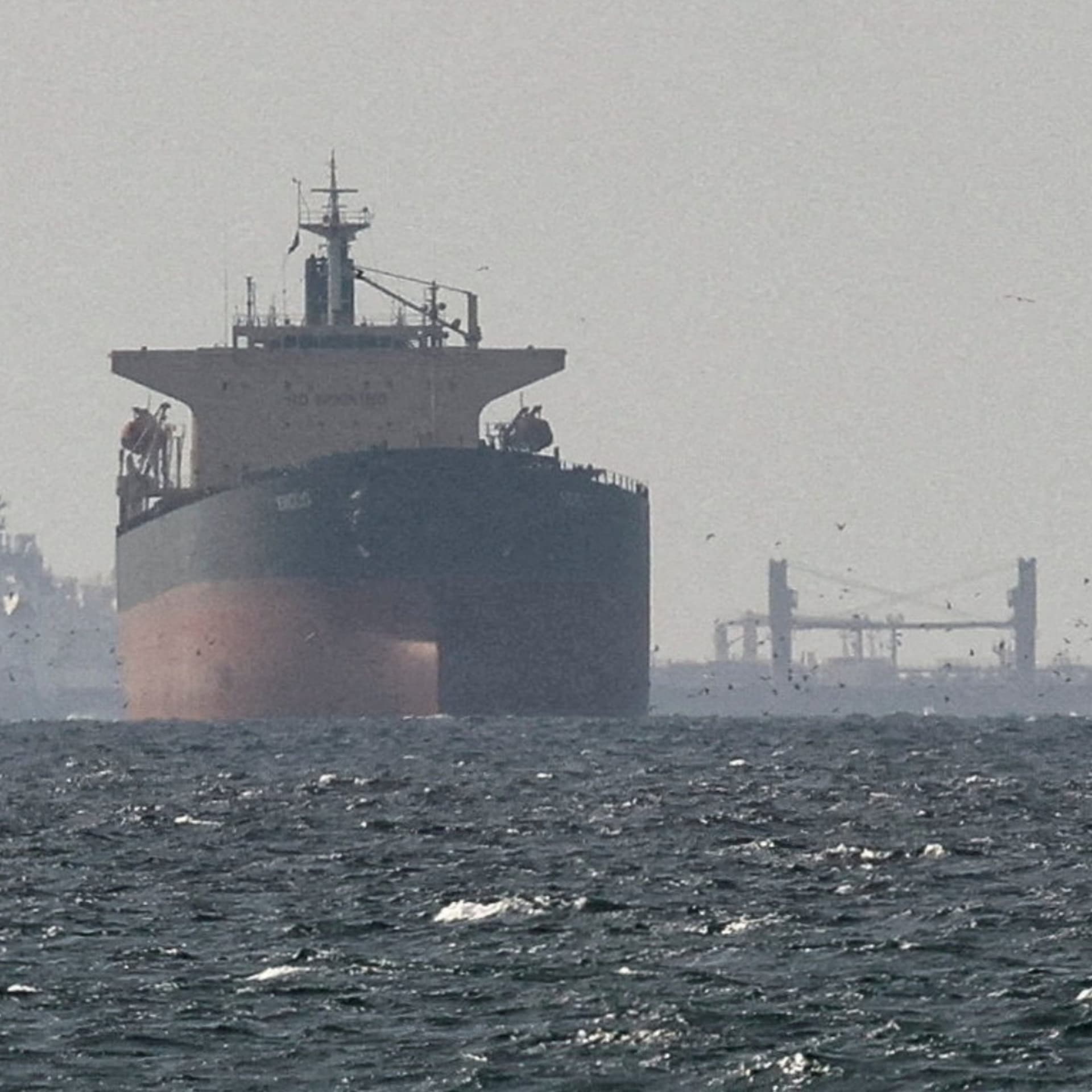
“Meanwhile, a number of tankers have passed through the Strait of Hormuz in what would appear to be a direct challenge to the US blockade, which began on Monday.”
Evergrande's Corporate Scandal
7:14 to 10:40
Details on the legal troubles of Evergrande's founder and implications for the economy.
“I'm not sure that's going to happen because Iran is incredibly resilient and able to take a lot of pain.”
Greek Police and Migrant Pushbacks
10:40 to 14:02
Investigation of illegal pushbacks conducted by Greek police against migrants.
“A BBC investigation has uncovered fresh, wide-ranging evidence that indicates Greek police have, for years, been recruiting migrants to force other migrants back across its river border with Turkey.”
Investigating Pushbacks at the Greek Border
14:02 to 17:44
Learn about the harrowing experiences of migrants facing pushbacks in Greece.
“But we can't just go down to that fence or the river to see what's happening.”
The Ongoing Conflict in Lebanon
17:45 to 19:24
Explore the current state of the war in Lebanon and its impact on civilians.
“the son of sharecroppers who became known as the Picasso of plants.”
Calabria's Innovative Scheme Against Brain Drain
19:25 to 24:04
Discover how Calabria is attempting to retain its young population through incentives.
“Because today in the morning, about four drone strikes on the cars.”
Conservation Success: Mountain Gorillas in Uganda
24:05 to 28:05
Learn about the conservation efforts that are helping mountain gorillas thrive.
“Africa's mountain gorillas have long faced serious threats from habitat loss, poaching and human encroachment.”
Impact on Mountain Gorillas
28:05 to 28:24
Learn about the successful conservation efforts that led to the recovery of mountain gorillas.
“They're going to end up making the gorillas sick or picking up diseases from wildlife in the forest.”
Show all 13 chapters
Pearl Fryer's Unique Topiary Art
28:24 to 29:45
Discover the life and extraordinary topiary creations of Pearl Fryer.
“He also had a distinctive life story, an African-American who grew up in the segregated South and who earned the nickname the Picasso of Plants.”
Pearl Fryer's Journey and Vision
29:45 to 30:56
Explore Pearl Fryer's journey from his humble beginnings to becoming a celebrated artist in his community.
“He didn't have formal training and he definitely broke all the rules.”
The Spirit of Pearl Fryer's Garden
30:56 to 31:43
Understand how Fryer's garden reflects his values of love and community spirit.
“I don't know exactly where the inspiration came from.”
Transcript
Automatic transcript. May contain errors.0:00This is the Global News Podcast from the BBC World Service. I'm Pete Ross and at 1400 Hours GMT on Tuesday 14 April, these are our main stories. China has condemned the US blockade of Iranian ports in the Strait of Hormuz as dangerous and irresponsible. Meanwhile, ship tracking data shows at least four Iran-linked vessels have crossed the strait since the blockade began on Monday. The founder of Evergrande, formerly China's biggest property developer, is in court on corruption charges. Also in this podcast, a BBC investigation uncovers evidence that Greek police are recruiting migrants to force other migrants from border crossings A woman films herself in front of a group of migrants huddled under a tree But later, masked men are running down a track towards them And a good news story for some of Africa's endangered mountain gorillas
1:03We begin with the impact of the continuing blockades in the Strait of Hormuz. As calls grow for Iran to reopen the Strait, there has also been widespread criticism of the decision by the US to blockade Iran's Gulf ports in Oman and the Indian Ocean. The Chinese Foreign Ministry spokesman Gua Jiakun called the action dangerous and irresponsible and said it would only exacerbate tensions and undermine the already fragile ceasefire agreement.
1:32China believes that only by achieving a comprehensive ceasefire and end of hostilities can conditions be fundamentally created to ease the situations in the strait. We urge all parties to abide by the ceasefire agreement, focus on the overall direction of dialogue and negotiations, take concrete actions to promote de-escalation and restore normal navigation in the strait as soon as possible. Many of the tankers that have made it through the Brizzy shipping channel since the start of the conflict more than six weeks ago have been bound for China. With the details, here's our China correspondent, Laura Baker.
2:10China's foreign ministry has once again called for a ceasefire and for restraint on all sides and for safe passage for all ships through the Strait of Hormuz during its regular briefing today. It is my understanding and it has been reported that China is trying to work behind the scenes to push Tehran toward the negotiating table. But these words come against a backdrop of yet another foreign leader, this time the Prime Minister of Spain, visiting Beijing. In the last few months alone, we've had the leaders of Britain, of Germany, of Finland, of Canada, all here trying to do a deal with China.
2:49And when it comes to Spain, the most vocal critic in Europe against US and Israeli actions in Iran has been Pedro Sanchez. and he did so again. Today, when he met with President Xi, he pushed China to take a bigger role on the world stage and to push for international order. For his part, President Xi said that chaos abounds and that the international order was crumbling. All of this comes as President Xi is positioning himself against the US as a stable power, a stable global power that is peaceful and is able to be a beacon of stability in the world. And I think when it comes to the likes of peace talks, Beijing wants to stay on the sidelines.
3:38It won't want to wade too far into any kind of conflict. It does have this policy of non-interference. So its leverage over Iran is limited. Tehran in the last week has called for both China and Russia to provide security guarantees in the event of any peace deal. That might be very difficult for Beijing to offer, but it will be cautiously right now trying to examine what position it takes in the weeks going forward. It does want an end to this war because of the global insecurity in terms of the economy, and it will not want this war to continue. However, it also has to balance that against its policy of non-interference and its wariness against getting involved in any foreign war.
4:30Laura Bikar in Beijing. Meanwhile, a number of tankers have passed through the Strait of Hormuz in what would appear to be a direct challenge to the US blockade, which began on Monday. BBC analysis suggests four Iran-linked ships were on the move. Michelle Fieser-Bachman is a senior maritime analyst at Wynward and has been tracking some of the ships in the region. I'm tracking three vessels with particular interest at the moment. Two of them are falsely flagged US sanctioned tankers that have called it Iran ports, one of them laden with Iranian clean petroleum products. Both were outbound transits breaching the blockade.
5:07One of them reached international waters when it reached the Gulf of Oman, hasn't signalled in six hours. The other one, Rich Stari, also, as I said, falsely flagged, That literally transited through the Gulf of Oman and has now turned around. At the same time, there was another bulk carrier that was signalling it had called it around previously. That transited last night. It reached outbound, reached the Gulf of Oman. Once it got into international waters, we haven't seen it signal for 12 hours. So this is a developing situation, but really interesting. So was there any attempt to intercept these tankers?
5:44A question for our security correspondent, Frank Gardner. I don't think there was. There may well have been discussions, radio two ways over the airwaves that we don't know about. But it's quite significant, this, because this was supposed to be a total blockade by the US of Iran's Gulf ports. In fact, of its entire coastline, including Shah Bihar, done further to the east. But two of those ships left Iran's ports of Buchehr in one case and Bandar Imam Khomeini in the other. So either the U.S. didn't know about it or chose to let them go for some reason. Now, it may be some are suggesting that these vessels had used something called spoofing.
6:30So every ship has something called an AIS, an automatic identifier system. it's basically a transponder that tells people where it is. And you can spoof that by trying to pretend that you're somewhere that you're not. I mean, for those of us who've done time covering the Israel-Palestine conflict, for example, I found that I might be in the middle of Israel and my phone is telling me I'm in Beirut. So these things happen sometimes. Now, it may be that that is what's behind it. But either way, there is clearly an inconsistency here in this blockade. The big picture, of course, is that this is a game of chicken.
7:10It's who blinks first. Will it be Iran? Will it be the US? And there are big pressures on both. So the US is hoping that it's putting the final squeeze on Iran's economy, that without it being able to export its oil, I mean, you can get a small amount out through the land borders, but it's a fraction of what you can get out by sea, that Iran's Islamic Republic government will finally cave in and agree to America's demands on the nuclear file primarily, but also relinquish its hold on the Strait of Hormuz. I'm not sure that's going to happen because Iran is incredibly resilient and able to take a lot of pain.
7:44Iran will be hoping that the effect of all of this on global energy prices, driving them up, not just prices, but shortages. People, you know, summer holidays in jeopardy because there might not be enough flights because there's not enough jet fuel. So they will be hoping that there's enough pressure in the United States that they start to look for a deal. And so it's a case of who holds out longest. Frank Gardner. What was once China's leading property developer Evergrande is at the centre of one of the country's biggest corporate scandals. Its founder Hui Ka Yan has pleaded guilty to a number of charges, including embezzlement of assets and corporate bribery.
8:24at a court in the southern city of Shenzhen. The company was once worth more than$50 billion. Our Asia business correspondent Nick Marsh told us more. Kuikuk Khaian was placed under police control in late 2023. By that point, Evergrande was already in serious trouble. It amassed absolutely enormous debts. It owed about$300 billion at one point to various banks and investors. He was charged with basically a series of fraud offences. He already admitted to and was fined for inflating the company's assets. And now he has pleaded guilty. He said he's expressed regret for the mismanagement and for this embezzlement.
9:08And he'll be sentenced presumably later this week. There hasn't been a verdict yet, but given that he's pleaded guilty, he'd imagine he'd be sentenced. A real fall from grace, really, for someone who was born into poverty in rural China, became China's richest man, Asia's second richest man, head of this absolutely enormous property giant. And now he's probably going to spend a significant amount of time behind bars. And what are the wider implications for the Chinese economy on this? A lot of people in China, if they can afford it, they invest in property as a kind of nest egg for retirement.
9:43Is that right? So this is going to have a big impact, I would have thought. Yeah, absolutely. I mean, this is a crisis that's been brewing for about five years at least. To put it very simply, too many property developers borrowed too much money to build too many houses that not enough people wanted to buy. You know, the government saw a bubble coming up. They cut off credit lines, so they said they couldn't take out any more loans. And all these companies then were just in absolutely huge amounts of debt. some collapse like everground that was liquidated two years ago some are still you know battling on but this has been a huge huge drag on the chinese economy because like you say people have thousands and thousands invested in these properties they're either not built or they've completely plummeted in value and therefore people won't spend and that this is a big long-term crisis that china is battling this latest guilty plea of hui kai yan i mean it is part of the government's response but it's only a very small part.
10:38It's going to take years to fix. Nick Marsh in Singapore. A BBC investigation has uncovered fresh, wide-ranging evidence that indicates Greek police have, for years, been recruiting migrants to force other migrants back across its river border with Turkey. So-called pushbacks are widely considered illegal under international law. The Greek Prime Minister told the BBC he was totally unaware of the allegations. Our Europe correspondent Jessica Parker has the story. A warning, her report does contain distressing scenes of violence. Hi, we are all coming from Turkey. A woman films herself in front of a group of migrants huddled under a tree.
11:18We have women, children here. It's June 2023. They're declaring that they've crossed the Evros River from Turkey into Greece and making an appeal. Please don't push back us. Please accept us. But later, there's panic. masked men are running down a track towards them. A report by the EU Border Agency's independent investigator found that, on the available evidence, the masked men are migrants themselves armed and acting under Greek police orders. Their job here? To force other migrants onto boats back to Turkey. This is a story about so-called mercenaries. Greece's north-eastern region of Evros.
12:08Folk musicians busk in local cafes. It's a borderland, lying on the outer edge of the European Union. Tensions have flared here in the past, as Greece has long grappled with waves of refugees and illegal migration, including here on the Evros River. Look to me. Look. Look. You, look. Our investigation began when we obtained disturbing images via a smuggler disgruntled with his associates. In one video, an unseen man points a stick at men sat on the ground. Some are stripped, bleeding or bruised. This video's unverified, but mirrors accounts we've gathered over months of migrants being robbed and beaten in a pushback operation where mercenaries work for Greek police.
13:02Near Paris airport, we meet a Moroccan who we're calling Marwan. He says he was recruited under duress to ferry migrants back to Turkey in 2020, plucked from a crowd of detained migrants by a Greek officer. He told me, you seem like a good guy and speak some English. Do you want to work with me? I felt forced to say yes because I was afraid he would beat me. What was the deal they offered you? 700 euros, papers to stay in Greece, and three mobile phones. Marwan denies being violent to anyone, but says he witnessed the worst beatings down by the river. The reason they beat them so much in that spot is to scare the migrants, so they won't try to come back to Greece again.
13:48We're driving along a highway that's very close to Greece's eastern border with Turkey. Now and then you can even catch glimpses of a grey border fence that marks where the River Evros runs. But we can't just go down to that fence or the river to see what's happening. It's a military zone. So we've had to find other ways of investigating this story.
14:16We've come to Turkey. I'm not going to say exactly where because the woman we're meeting really wants to remain fully anonymous. but she says she was pushed back from Greece in 2025. That's despite having lodged an asylum claim. What's more, she has the paperwork and time-stamped photos that we've seen to prove that she made it to Greece before she says she was arrested with her family, with her children, in the street by a policeman, before being handed over to masked men who took her to the Evros River. They were stripping and beating people. As these men hunted for valuables, she recalls, the children were not spared.
14:56My daughter was wearing a diaper. They took it off. She was terrified and crying. He was pushing her, pushing her while removing it. He didn't care if she was a child.
15:11I'm just printing off extracts from a disciplinary inquiry into alleged corruption in the Greek border force. At a hearing in 2024, as part of their defence, accused guards talk openly about the use of mercenaries, although they call them boatmen. Pakistanis, Syrians and Afghan, first brought in from around 2020, it's claimed because Covid and tensions with the Turkish side had made pushbacks more dangerous. One guard says there was information which they'd reported to their superiors that boatmen were going to the woods, raping the women and taking their money. We have been trying for weeks and weeks to get a response from the Greek government about all of this, but we've had nothing official back.
15:57So we've come to a summit in Brussels to see if we can speak to the Greek prime minister. Prime minister, has Greece been using migrants to do pushbacks in Evros? Prime Minister, why won't the Greek government talk to us? Prime Minister Kyriakos Mitsotakis didn't take any questions from reporters that morning, but did come back more than 12 hours later, and we were waiting. We've been investigating allegations that Greek authorities have been using migrants to push back other migrants to Turkey in Evros. Are you aware of these allegations? Will you be looking into them? I am totally unaware of these allegations, but I would like to make a point.
16:34Greece is protecting its borders. Hold on a second. It is my obligation to ensure that the borders of the European Union are protected. I'm going to be unapologetic about these policies, and I would like to inform you that all the members of the European Council, through their conclusions, have made it very, very clear that we will not allow a massive influx of migrants and refugees into the European Union, and we will not repeat the mistakes of 2015. So are you saying that pushbacks... Sorry, Prime Minister, but these allegations are very serious. Serious violence, mistreatment of people. He walked away.
17:17Radio Evros plays as we drive through this remote region. Borders and attitudes have hardened a decade on from the peak of the migration crisis. But there's more to this frontier than steel fences, a wild land with a river of secrets. That report by Jessica Parker.
17:44Still to come in this podcast, we remember the life and art of Pearl Fryer, the son of sharecroppers who became known as the Picasso of plants. There are topiaries that are made with juniper and holly and boxwoods, and they're in these whimsical, sculptural and otherworldly shapes.
18:11This is the Global News Podcast. As we record this podcast, Israel and Lebanon's ambassadors to the US are beginning direct talks in Washington about Israel's war with the Iranian-backed Lebanese group Hezbollah. It's the first face-to-face meeting between representatives of the two sites in decades. The US Secretary of State, Marco Rubio, is also attending the negotiations. But there are huge obstacles. The Lebanese government is seeking a ceasefire. Israel says it won't discuss one. And Hezbollah says the talks shouldn't be happening at all. Meanwhile, in Lebanon, more than 2 ,000 people have been killed and more than 1 million people have fled their homes, particularly in the south of the country.
18:52Israel has sent in troops there and says it intends to set up a long-term buffer zone. Our Middle East correspondent Hugo Bichega spent several days with emergency services in the southern city of Nabatea.
19:08Another day of war.
19:12The Lebanese are desperate for it to stop. The talks in the US, their main hope for a ceasefire. Here, there's no respite. With emergency teams being constantly attacked, every mission for these paramedics is risky. This is the first day of the war. You are a little bit concerned. Why? Because today in the morning, about four drone strikes on the cars. They are striking everywhere. The war has taken the life out of Nabatir. Suddenly, they find a pickup truck still burning after being hit by an Israeli airstrike and a body unrecognisable, completely charred. Even these men, so used to death, for a moment are shocked.
20:17in an empty village we meet a family hunkered down the war has forced one in five in this country to flee their homes but some have decided to stay i'm scared that if i leave we won't be able to come back and this is something that hurts me a lot
20:39In wars, defiance can quickly turn into despair
20:50Ali takes us to what is left of the paramedic station Destroyed by an Israeli airstrike So I'll show you here A colleague was killed He was here? Yes And Israel says some ambulances and some health facilities are being used by Hezbollah. This is a false claim. This is not true. They're trying to hide what they did by saying this. This is the only explanation. They've been saying this repeatedly. They don't have any evidence. And you haven't seen anything? If they have any evidence, let them show us. in parts of lebanon the rubble of the old war had yet to be removed when this new one started in a country that is a battleground for others the idea of a nation is also in ruins hugo buschega authorities in southern italy say they've come up with an unusual way to combat brain drain whereby educated skilled individuals migrate away from their home in search of better opportunities elsewhere.
21:58It's a pattern seen across the globe, particularly in poorer areas. The Italian region of Calibria is trying to counter the trend by offering cash incentives to students that are considering moving away, as Carla Conti explains. Brain drain in Italian takes the name fuga di cervelli, literally brains escaping. An escape they do, mostly the young, from regions in the country's south towards the more affluent north, both Italy's own and the wider Northern Europe. In Calabria, Italy's poorest region, a new scheme promises to tackle the issue by encouraging university students to stay by offering them a monthly salary.
22:38Described as a merit-based income, the plan would provide Calabrian residents enrolled at one of the region's three state universities with 1 ,000 euros per month, that's almost$1 ,200, provided they maintain high grades and have good attendance. The measure was devised by the region's governor, Roberto Chiuto, who stressed the importance of the scheme on a statement on social media. We must continue to create ever more opportunities for employment and development in our region. At the same time, we want to do everything we can to enable our young people to stay and study in Calabria, because the exodus of young people begins at university.
23:16Calabria's population has dropped by 6.4 % in the past decade, as thousands of residents seek better opportunities in central and northern Italy, as well as abroad. This is not a uniquely Italian problem, however. Across parts of Europe, including Romania, Portugal and Greece, poorer or less developed regions have long struggled to hold on to young, highly educated people, many of whom live for wealthier cities or countries in search of better career prospects and a higher standard of living. And like Italy, many European countries have tried various ways to counter the outflow, from financial incentives to regional investment schemes, often with mixed results.
23:56Calabria's scheme will come into force from the next academic year, but it remains to be seen whether Calabrians will be persuaded to stay. Carla Conte. Africa's mountain gorillas have long faced serious threats from habitat loss, poaching and human encroachment. For decades, their survival has hung in the balance. But in recent years, their numbers have been slowly increasing thanks to conservation efforts. The Bwindi Impenetrable Forest in Uganda is one of the few remaining places where the gorillas live in the wild. The BBC's Myra Anubi managed to find her way in and sent us this report.
24:39there's a group of about 13 of us trekking through the forest right now which includes guides rangers and of course tourists as well now we've been walking for probably about 20 almost 30 minutes now so we are firmly in gorilla territory for the full one hour The masks have to remain on, covering both the mouse and the noise. The guides tell us that we're getting closer to the gorillas and remind us to put on our face masks to avoid spreading any infections to them. We've just seen the first gorilla. It's sat down, consuming leaves, and it seems to be very comfortable around us. There's obviously about eight, ten of us with cameras.
25:31trying to get the very best pictures, videos that we can of these majestic beasts. There's only just over a thousand mountain gorillas left in the world, but numbers are slowly rising, and that's partly due to the work of conservationists such as Dr. Gladys Kalema-Zikuzoka, who's dedicated her life to saving them. I'd say that mountain gorillas are so special because they're so similar to us. They're really gentle giants. At the same time, they're so vulnerable. And so you just feel like you want to protect them. And the way she tries to protect gorillas is to make sure she looks after the people who live near the forest through her charity, Conservation Through Public Health.
Read the full transcript
26:19Farmers like George Katemba didn't make enough money to feed their family, so would poach in the forest for meat. And that could harm the gorillas. Sometimes we would set traps targeting other animals, but we would find the gorillas had been caught in them. This caused injuries and sometimes led to their death. But thanks to an initiative of Dr Gladys, he now grows coffee beans and gets paid a good price for his crop. The coffee is marketed as gorilla conservation coffee around the world. How has coffee farming changed your life? In the beginning, I stopped depending on poaching and hunting animals.
26:59Now, as you can see, my children have clothes. I can pay school fees and I have enough food to support my family. It has truly transformed my life.
27:13Dr Gladys also tries to make sure the local community is healthy. Her charity organises health visitors like Alan, who check on people's sanitation and provide advice on good hygiene. When I visit, I look at the drying rack, the drinking water, the waste management, the animal shelter and generally the areas where the person lives. Why is it important for homes to be clean and healthy? What difference does that make for the environment? It helps to create harmony between animals and the community and prevents the spread of diseases. Right now what we do is we improve the health and the livelihoods of the local communities because as long as people are poor, they're going to keep entering the forest to poach and collect firewood.
28:05They're going to end up making the gorillas sick or picking up diseases from wildlife in the forest. Since Dr Gladys started work over 30 years ago, the number of mountain gorillas has nearly doubled and they've been taken off the critically endangered list. Myra Anubi in the windy, impenetrable forest. The American landscape designer Pearl Fryer, who's died at the age of 86, had a very distinctive name and a very distinctive skill, topiary, the art of training, cutting and clipping shrubs and trees into distinctive shapes. He also had a distinctive life story, an African-American who grew up in the segregated South and who earned the nickname the Picasso of Plants.
28:49His most famous canvas was his topiary garden in South Carolina. Jamie Kumarasamy spoke to Pamela Governale from the Garden Conservancy, who knew Pearl Fryer and his garden well. It's really quite extraordinary to paint a picture. There are topiaries that are made with juniper and holly and boxwoods, and they're in these whimsical, sculptural and otherworldly shapes. They're all shapes and sizes. Some are 20 feet tall, and the property is about three acres. So picture a three-acre landscape of living sculpture in really bold and abstract forms. It's really quite extraordinary. The way you describe it sounds like someone describing an artist.
29:36He was a true, true artist. and had a real vision and was self-taught. So his garden is really what's considered a vernacular garden. It's shaped by a very personal vision. He didn't have formal training and he definitely broke all the rules. Tell us a bit about him and his history. He has an interesting history, doesn't he? So he was born in 1940 and he was born to a sharecropping family and he went to college. He worked in a can factory and he and his wife in the 80s, I think it was, were looking for a new home. And one neighborhood that they looked at turned him away, fearing that they would not keep up their yard.
30:25So in response, he set his sights on being the first Black recipient of the local garden club's Yard of the Month Award. so with no training in art or horticulture but with real instinct and true passion he created something that now has a ripple effect through his neighbourhood and through the community and through the region in a way that I've never seen before. And just to be clear, he won that Yard of the Month competition. He did, he did. I think he won it multiple times. Where did the inspiration come from? Do we know? I don't know exactly where the inspiration came from. You know, I think that he was a great observer and I think that he just, you know, was also a real experimenter.
31:13And he found plants that had been discarded by a local nursery and he took them and nurtured them and cut them and just used them to manifest his vision. Part of that vision are these giant letters, love, peace and goodwill. Yeah. Eight foot tall. Yeah, so special. That so captures his spirit. He really wanted to create a place that when people would visit, they would leave feeling better than when they arrived. And it really, you know, it's a place that has that kind of feeling. Pamela Gavranali. And that's all from us for now If you want to get in touch you can email us at globalpodcast at bbc.co.uk You can also find us on X at BBC World Service Use the hashtag Global News Pod And don't forget our sister podcast The Global Story which goes in-depth and beyond the headlines on one big story This edition of the Global News Podcast was mixed by Rebecca Miller and the producers were Judy Franco and Arian Kochi The editor is Karen Martin.
32:19I'm Pete Ross. Until next time, goodbye.
From the publisher
China has described the US blockade of Iranian ports as "irresponsible and dangerous". The measure came into force on Monday, after peace talks failed over the weekend. Beijing's foreign ministry said Washington's actions would undermine the current ceasefire and further jeopardise the safety of ships passing through the Strait of Hormuz. President Trump said he ordered the blockade to force Iran to give up its nuclear ambitions. Analysts say the move is also designed to put pressure on China -- the biggest buyer of Iranian oil. Also: A Chinese court says the founder of collapsed property giant, Evergrande, has pleaded guilty to a series of fraud charges at his trial; a BBC investigation uncovers fresh, wide-ranging evidence that indicates Greek police have, for years, been recruiting migrants to force other migrants back across its river border with Turkey; an unusual way to combat southern Italy's 'brain drain'; and a successful Ugandan conservation project helping Africa's mountain gorillas.
The Global News Podcast brings you the breaking news you need to hear, as it happens. Listen for the latest headlines and current affairs from around the world. Politics, economics, climate, business, technology, health – we cover it all with expert analysis and insight. Get the news that matters, delivered twice a day on weekdays and daily at weekends, plus special bonus episodes reacting to urgent breaking stories. Follow or subscribe now and never miss a moment. Get in touch: globalpodcast@bbc.co.uk